PSYCHOLOGY 8 th Edition David Myers Power Point


- Slides: 71
PSYCHOLOGY (8 th Edition) David Myers Power. Point Slides Aneeq Ahmad Henderson State University Worth Publishers, © 2006 1
States of Consciousness Chapter 7 2
Your Dream Journal and Theory Activity • Sigmund Freud said "Dreams are the royal road to the unconscious". Everybody dreams, though there are those who say they do not. This is perhaps because they cannot recall their dreams. Most dreams occur during REM sleep, which takes up about 25% of your total sleep time and occurs on an average of every 90 minutes. This exercise is designed to help you become more aware of your dreams, how often you dream, and what (if anything) can you learn from your dreams. 3
• First, staple several sheets of loose-leaf paper together, around 10 should suffice (not pages ripped out of a spiral notebook), or get a small steno pad. This is going to be your dream journal. You will be making entries in these as described below. • PART I. Dream Journal • Before falling asleep, DECIDE you are going to remember your dreams. Be patient; it may take a night or 2 for your unconscious to get the message. The most important thing to remember is that EVERYONE dreams and that once you believe you will remember them, you will! • Keep the journal and a pen close to your bed and write down dreams you recall immediately, without interpretation. You may have more than one entry per night (everyone dreams between 4 and 6 times) of varying lengths (REM sleep gets longer, therefore, your dreams get longer later on in the night). 4
• What should you record? Basically everything, uncensored, as you remember them. . . do not worry about proper English for this part. To be more specific write down any or all of the following: dialogue or any words the number and types of people (friends, strangers, relatives) objects the mood of the dream (happy, sad, scary, etc. ) settings themes events timing in the dream relations to the dream and you (are you an observer, participant, seeing yourself as player? ) If it's too difficult to record a part of the dream in writing, sketch a picture. The journal may be handwritten. If there any dream entries that you do not want read, please mark these "Personal" across the top of the pages. *****YOU NEED TO BRING THE COMPLETED DREAM JOUNRAL 5 THURSDAY*******
History of Consciousness 1. Psychology began as a science of consciousness. 2. Behaviorists argued about alienating consciousness from psychology. 3. However, after 1960, mental concepts (consciousness) started reentering psychology. 6
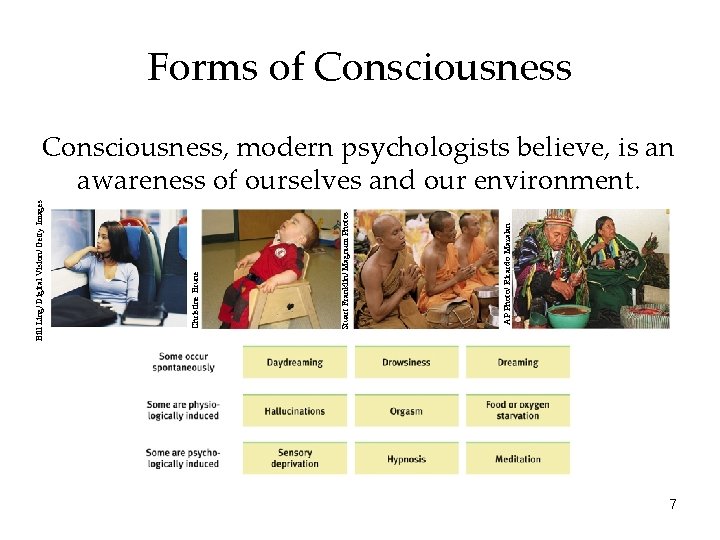
Forms of Consciousness AP Photo/ Ricardo Mazalan Stuart Franklin/ Magnum Photos Christine Brune Bill Ling/ Digital Vision/ Getty Images Consciousness, modern psychologists believe, is an awareness of ourselves and our environment. 7
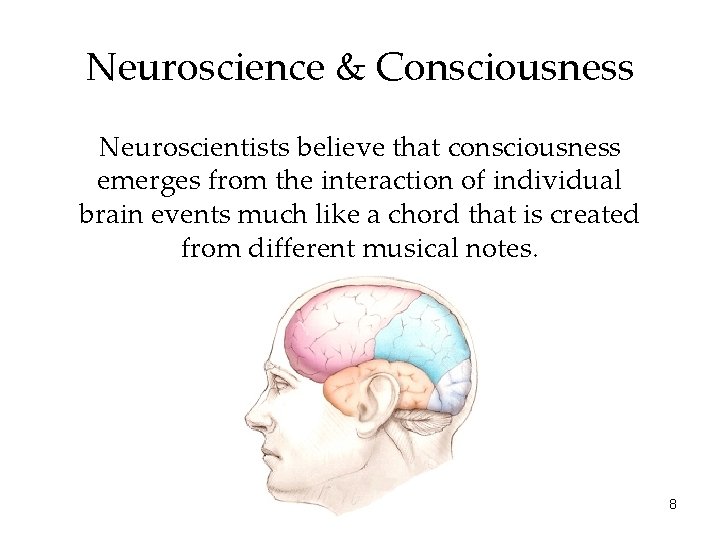
Neuroscience & Consciousness Neuroscientists believe that consciousness emerges from the interaction of individual brain events much like a chord that is created from different musical notes. 8
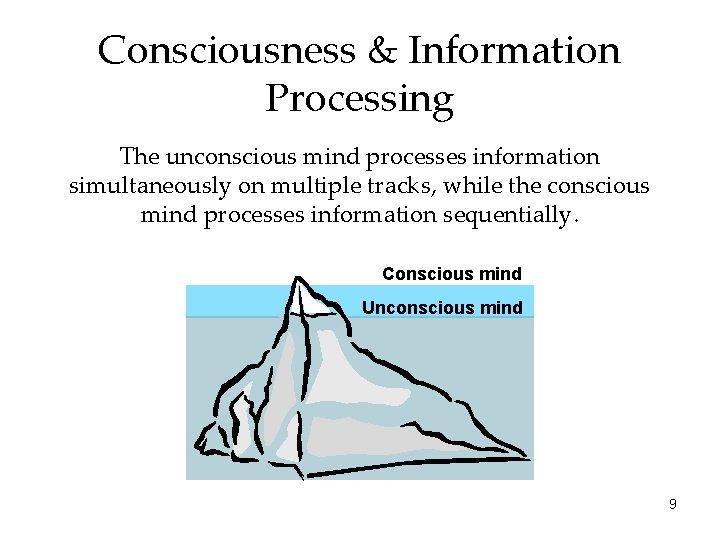
Consciousness & Information Processing The unconscious mind processes information simultaneously on multiple tracks, while the conscious mind processes information sequentially. Conscious mind Unconscious mind 9
You live in the past https: //www. youtube. com/watch? v=BTOODPf-iuc (7: 11) 10
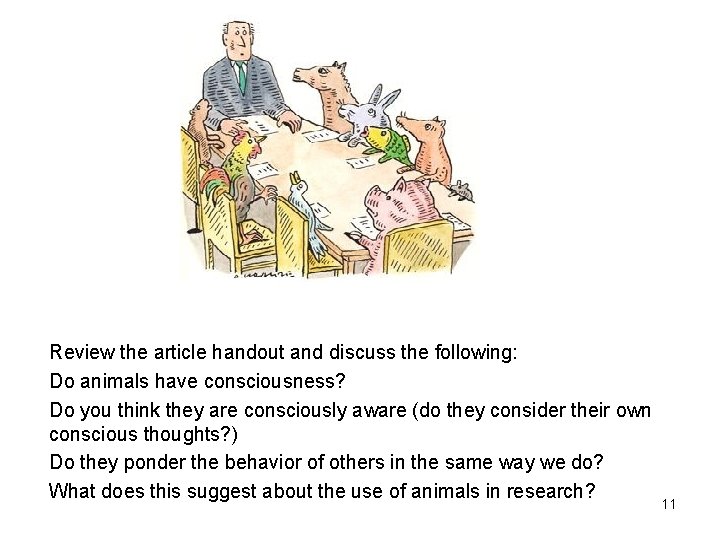
Review the article handout and discuss the following: Do animals have consciousness? Do you think they are consciously aware (do they consider their own conscious thoughts? ) Do they ponder the behavior of others in the same way we do? What does this suggest about the use of animals in research? 11
Sleep & Dreams Sleep – the irresistible tempter to whom we inevitably succumb. Mysteries about sleep and dreams have just started unraveling in sleep laboratories around the world. 12
Biological Rhythms Biological rhythms are controlled by internal “biological clocks. ” 1. Annual cycles: On an annual cycle, geese migrate, grizzly bears hibernate, and humans experience seasonal variations in appetite, sleep, and mood. Seasonal Affective Disorder (SAD) is a mood disorder people experience during dark winter months. 13
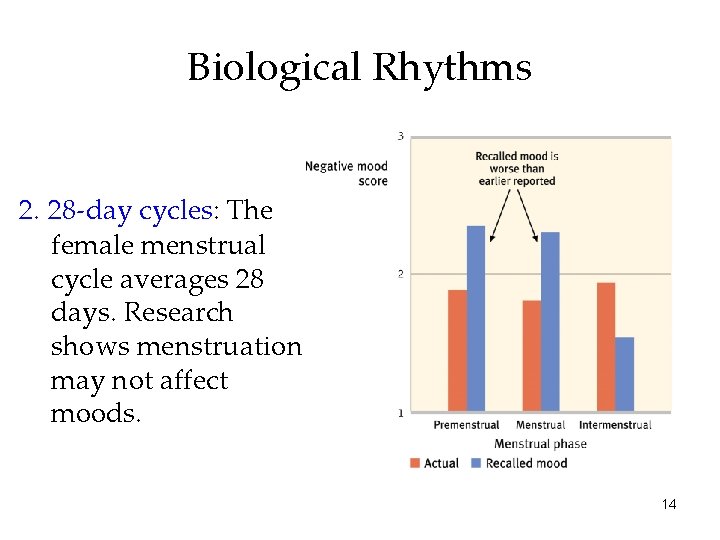
Biological Rhythms 2. 28 -day cycles: The female menstrual cycle averages 28 days. Research shows menstruation may not affect moods. 14
Biological Rhythms 3. 24 -hour cycles: Humans experience 24 -hour cycles of varying alertness (sleep), body temperature, and growth hormone secretion. 15
• 4. 90 -minute cycles: We go through various stages of sleep in 90 -minute cycles. 16
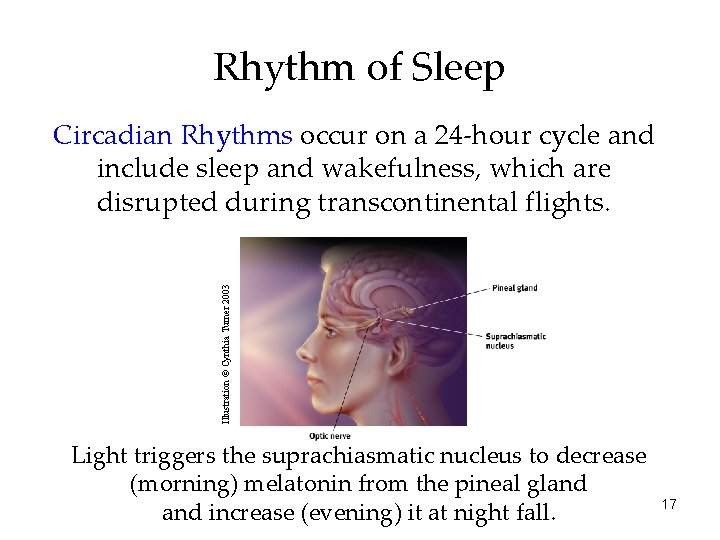
Rhythm of Sleep Illustration © Cynthia Turner 2003 Circadian Rhythms occur on a 24 -hour cycle and include sleep and wakefulness, which are disrupted during transcontinental flights. Light triggers the suprachiasmatic nucleus to decrease (morning) melatonin from the pineal gland increase (evening) it at night fall. 17
Importance of Sleep Activity • A National Sleep Foundation (NSF) poll found that 95% of Americans use technology within the last hour before lights out. • You will be provided with 1 of 9 reasons why it is a good idea to turn off technology. • You will read the information and create a short presentation to relay the information to your classmates. • You need to include: – the reason it is a good idea to turn off the technology, – a recommendation for how to make it a habit to turn off the technology well before bedtime, – and one image. • You have ten minutes for this activity. 18
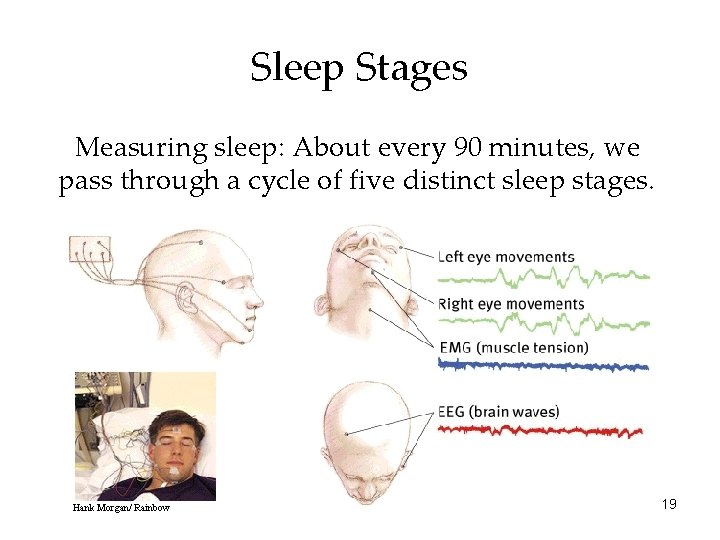
Sleep Stages Measuring sleep: About every 90 minutes, we pass through a cycle of five distinct sleep stages. Hank Morgan/ Rainbow 19
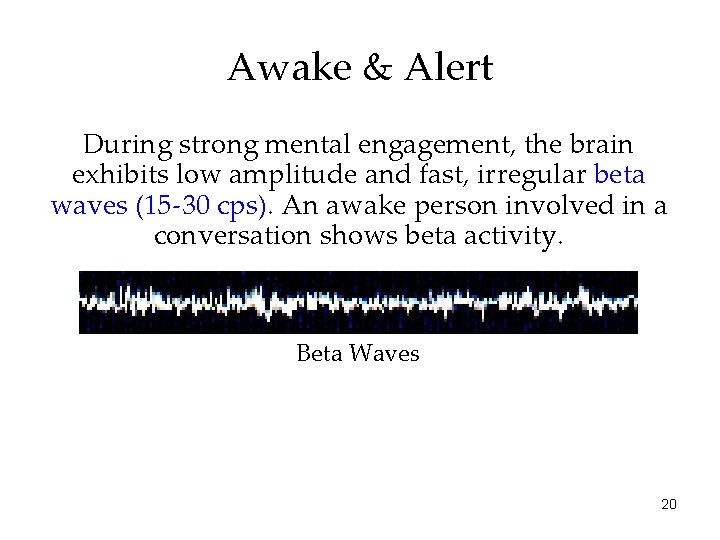
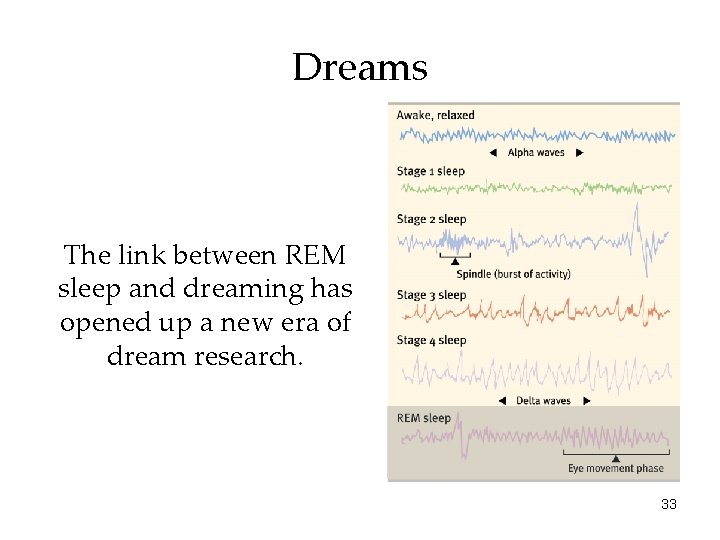
Awake & Alert During strong mental engagement, the brain exhibits low amplitude and fast, irregular beta waves (15 -30 cps). An awake person involved in a conversation shows beta activity. Beta Waves 20
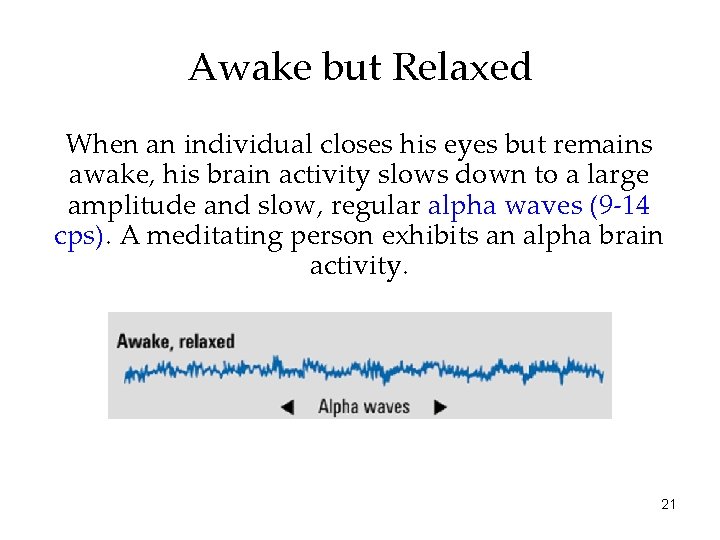
Awake but Relaxed When an individual closes his eyes but remains awake, his brain activity slows down to a large amplitude and slow, regular alpha waves (9 -14 cps). A meditating person exhibits an alpha brain activity. 21
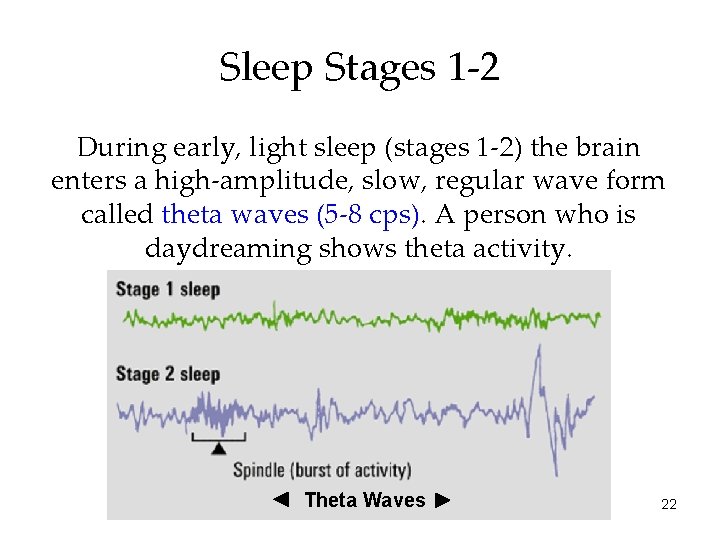
Sleep Stages 1 -2 During early, light sleep (stages 1 -2) the brain enters a high-amplitude, slow, regular wave form called theta waves (5 -8 cps). A person who is daydreaming shows theta activity. Theta Waves 22
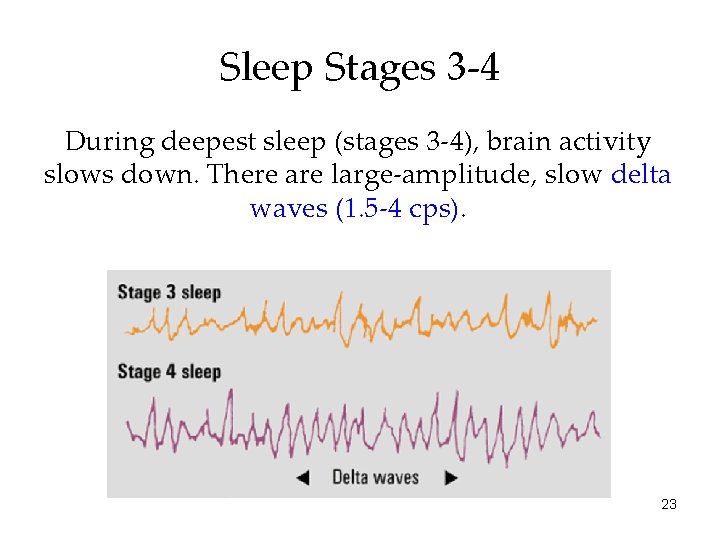
Sleep Stages 3 -4 During deepest sleep (stages 3 -4), brain activity slows down. There are large-amplitude, slow delta waves (1. 5 -4 cps). 23
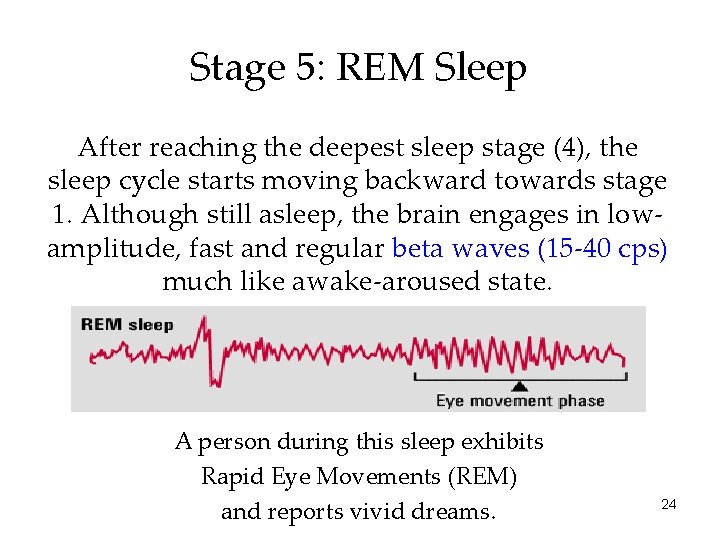
Stage 5: REM Sleep After reaching the deepest sleep stage (4), the sleep cycle starts moving backward towards stage 1. Although still asleep, the brain engages in lowamplitude, fast and regular beta waves (15 -40 cps) much like awake-aroused state. A person during this sleep exhibits Rapid Eye Movements (REM) and reports vivid dreams. 24
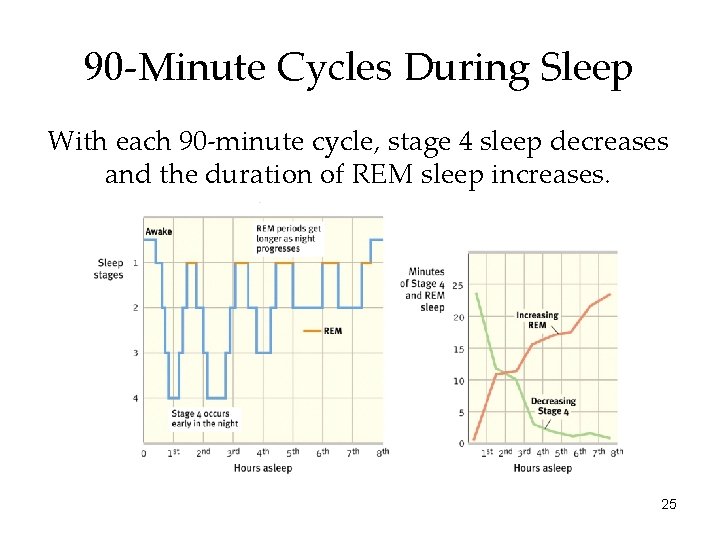
90 -Minute Cycles During Sleep With each 90 -minute cycle, stage 4 sleep decreases and the duration of REM sleep increases. 25
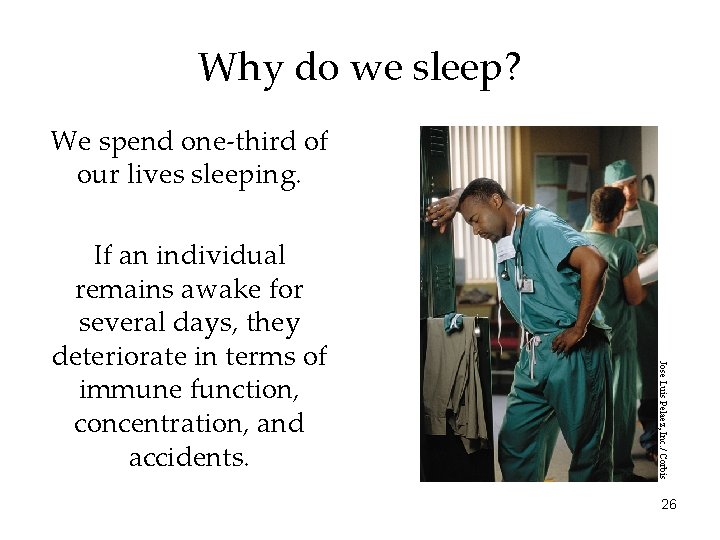
Why do we sleep? We spend one-third of our lives sleeping. Jose Luis Pelaez, Inc. / Corbis If an individual remains awake for several days, they deteriorate in terms of immune function, concentration, and accidents. 26
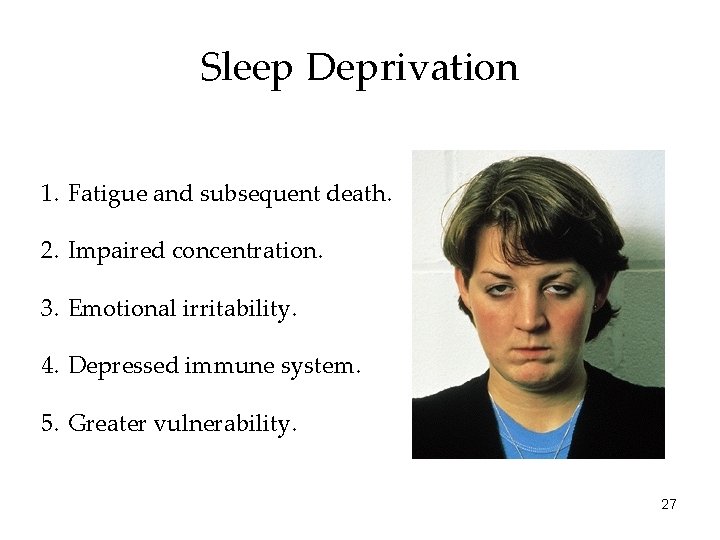
Sleep Deprivation 1. Fatigue and subsequent death. 2. Impaired concentration. 3. Emotional irritability. 4. Depressed immune system. 5. Greater vulnerability. 27
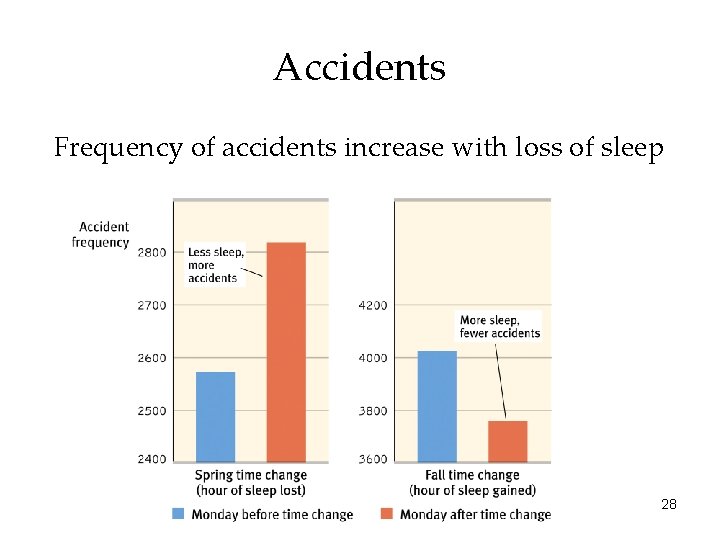
Accidents Frequency of accidents increase with loss of sleep 28
Sleep Theories 1. Sleep Protects: Sleeping in the darkness when predators loomed about kept our ancestors out of harm’s way. 2. Sleep Recuperates: Sleep helps restore and repair brain tissue. 3. Sleep Helps Remembering: Sleep restores and rebuilds our fading memories. 4. Sleep and Growth: During sleep, the pituitary gland releases growth hormone. Older people release less of this hormone and sleep less. 29
Sleep Disorders: Insomnia 1. Somnambulism: Sleepwalking. 2. Nightmares: Frightening dreams that wake a sleeper from REM. 3. Night terrors: Sudden arousal from sleep with intense fear accompanied by physiological reactions (e. g. , rapid heart rate, perspiration) that occur during SWS. 30
Sleep Disorders: Insomnia 4. Narcolepsy: Overpowering urge to fall asleep that may occur while talking or standing up. 5. Sleep apnea: Failure to breathe when asleep. 31
Sleep Disorder Activity • You will create a poster presentation answering the questions at the end of the handouts each table will be provided. You will need to answer each of the questions as well as include an image for your presentation. 32
Dreams The link between REM sleep and dreaming has opened up a new era of dream research. 33
What do we Dream? 1. Negative Emotional Content: 8 out of 10 dreams have negative emotional content. 2. Failure Dreams: People commonly dream about failure, being attacked, pursued, rejected, or struck with misfortune. 3. Sexual Dreams: Contrary to our thinking, sexual dreams are sparse. Sexual dreams in men are 1 in 10; and in women 1 in 30. 4. Dreams of Gender: Women dream of men and women equally; men dream more about men than women. 34
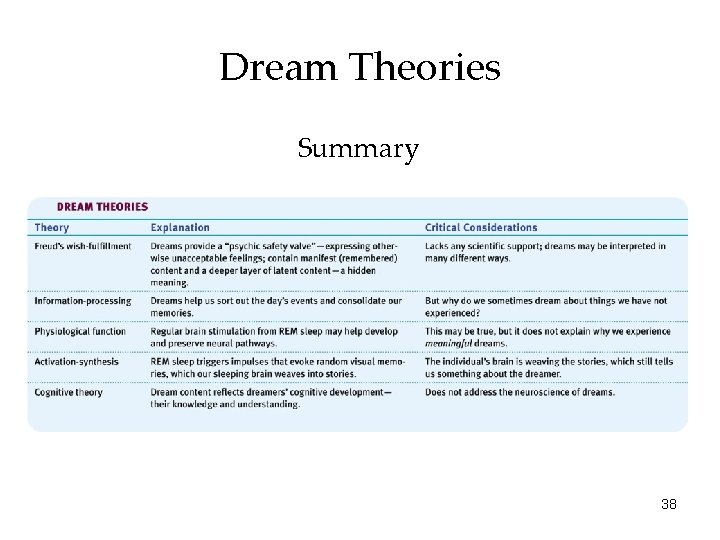
Why do we dream? 1. Wish Fulfillment: Sigmund Freud suggested that dreams provide a psychic safety valve to discharge unacceptable feelings. The dream’s manifest (apparent) content may also have symbolic meanings (latent content) that signify our unacceptable feelings. 2. Information Processing: Dreams may help sift, sort, and fix a day’s experiences in our memories. 35
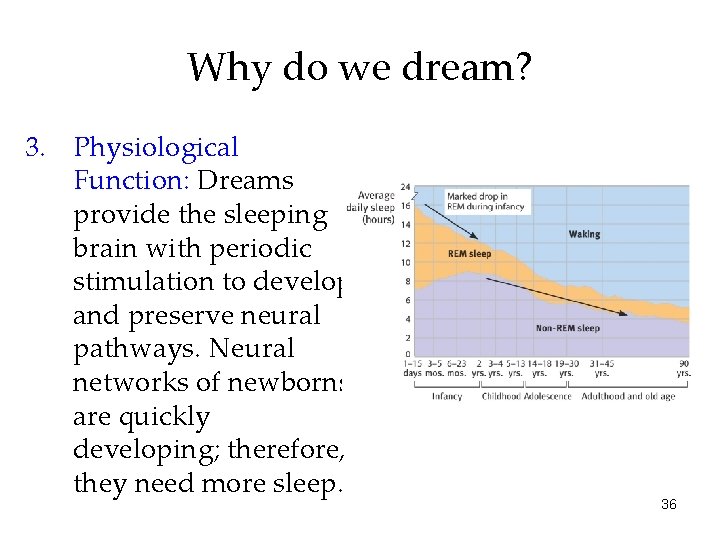
Why do we dream? 3. Physiological Function: Dreams provide the sleeping brain with periodic stimulation to develop and preserve neural pathways. Neural networks of newborns are quickly developing; therefore, they need more sleep. 36
Why do we dream? 4. Activation-Synthesis Theory: Suggests that the brain engages in a lot of random neural activity. Dreams make sense of this activity. 5. Cognitive Development: Some researchers argue that we dream as a part of brain maturation and cognitive development. All dream researchers believe we need REM sleep. When deprived of REM sleep and then allowed to sleep, we show increased REM sleep called REM Rebound. 37
Dream Theories Summary 38
Using your dream journals- on your own paper, answer the following questions. Analysis of your dreams (think of your dreams as a series of poems that you analyze) Once you have about 4 -5 dreams in your journal, try to analyze them using the following questions as guides (but feel to create your own "questions" also). • Were there any common threads, common ideas, running through the journal? • Are your dreams bizarre? Mundane? • Which dreams are most disturbing? Why? What do they mean to you? • What common symbols or objects did you record? What do you think these symbols mean? • Were you able to control your dreams as you remembered more and more of them? • How are your dreams relevant to your waking life? • Was the content of both journals identical on any days? What does this tell you? • What seems to be the main function of your dreams? • What did you learn about yourself by recording your dreams in a journal? 39
• PART III: Your Dream Theory • Working with the people at your table, come up with a dream theory to help explain why we dream, and the purpose of what we dream. Create a presentation to describe your theory, answering the following questions. Be sure to answer each of the questions, as well as to include at least 2 images. • 1) Identify your dream theory • a. Is it your own? If it is, you must show what it is better than the other theories. • b. Is it one that you have read? • c. Is it a combination of those you have read? • 2) Explain your theory • a. What is the purpose of dreaming according to your theory? • b. What do the “things” in your dreams mean? 40
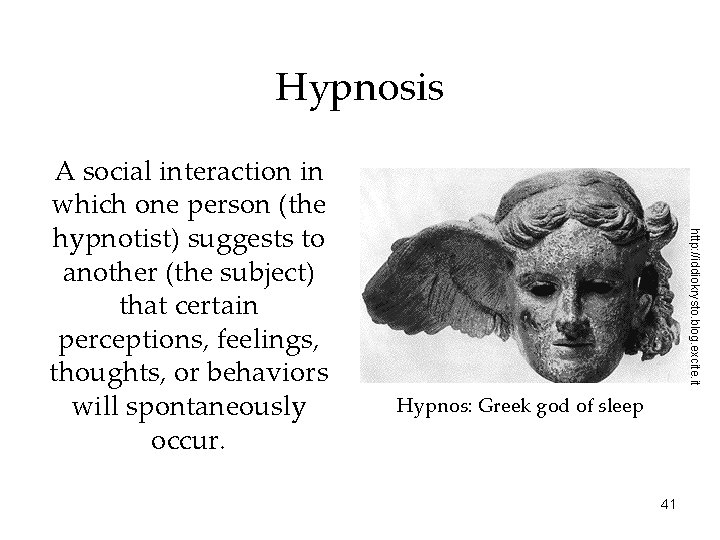
Hypnosis http: //iddiokrysto. blog. excite. it A social interaction in which one person (the hypnotist) suggests to another (the subject) that certain perceptions, feelings, thoughts, or behaviors will spontaneously occur. Hypnos: Greek god of sleep 41
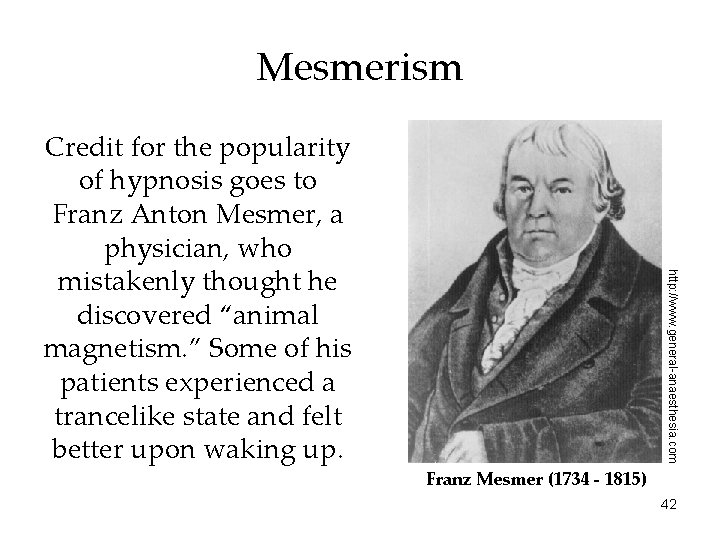
Mesmerism http: //www. general-anaesthesia. com Credit for the popularity of hypnosis goes to Franz Anton Mesmer, a physician, who mistakenly thought he discovered “animal magnetism. ” Some of his patients experienced a trancelike state and felt better upon waking up. Franz Mesmer (1734 - 1815) 42
Aspects of Hypnosis 1. Posthypnotic Suggestion: Suggestion carried out after the subject is no longer hypnotized. 2. Posthypnotic Amnesia: Supposed inability to recall what one experienced during hypnosis. 43
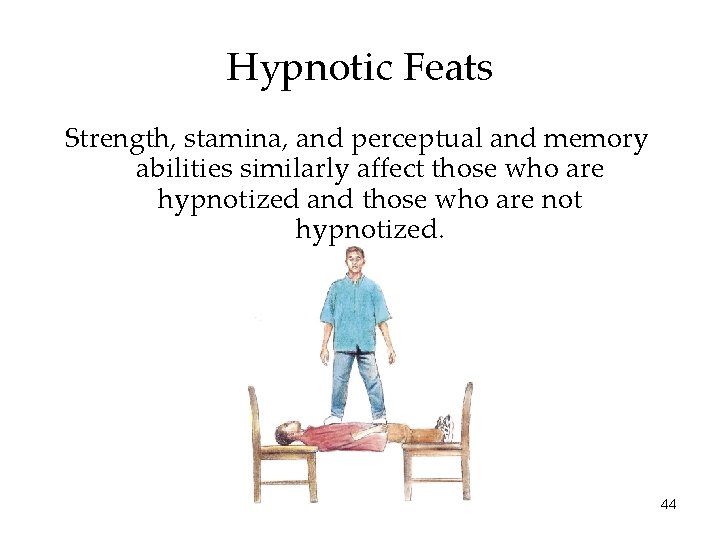
Hypnotic Feats Strength, stamina, and perceptual and memory abilities similarly affect those who are hypnotized and those who are not hypnotized. 44
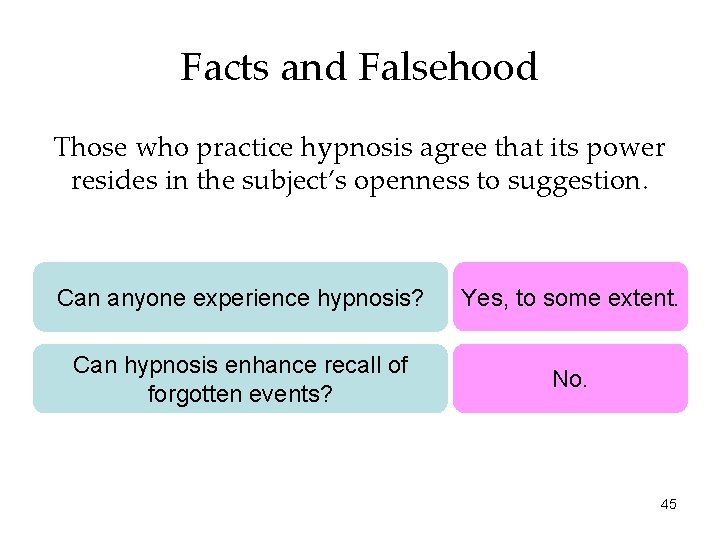
Facts and Falsehood Those who practice hypnosis agree that its power resides in the subject’s openness to suggestion. Can anyone experience hypnosis? Yes, to some extent. Can hypnosis enhance recall of forgotten events? No. 45
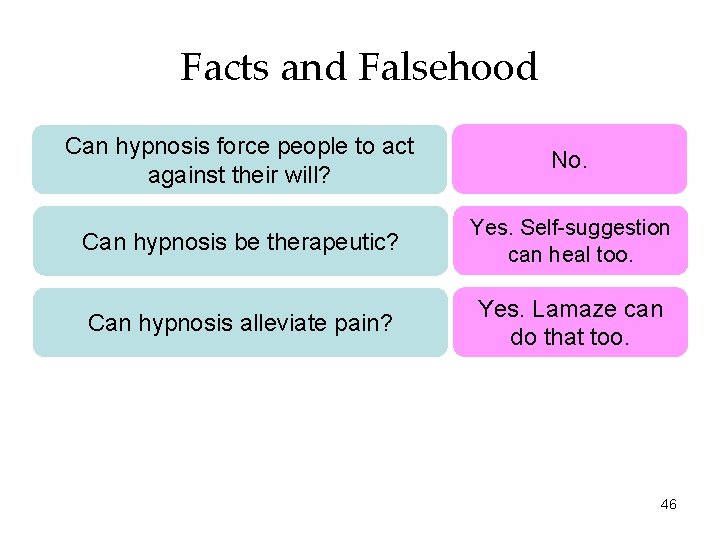
Facts and Falsehood Can hypnosis force people to act against their will? No. Can hypnosis be therapeutic? Yes. Self-suggestion can heal too. Can hypnosis alleviate pain? Yes. Lamaze can do that too. 46
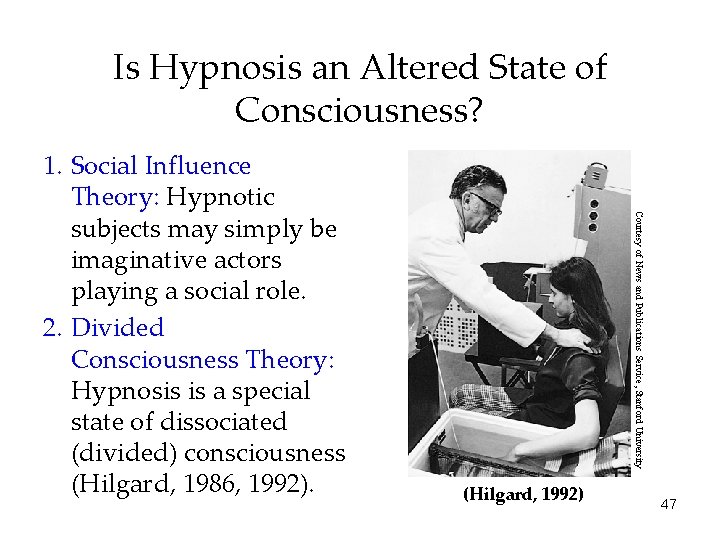
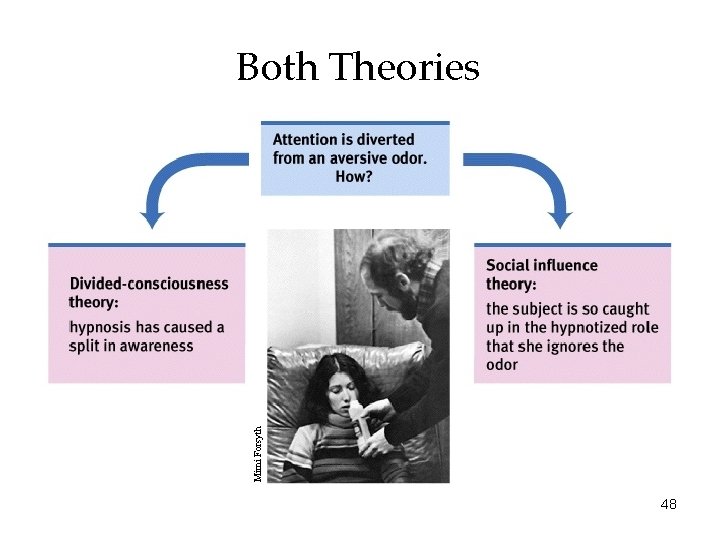
Is Hypnosis an Altered State of Consciousness? Courtesy of News and Publications Service, Stanford University 1. Social Influence Theory: Hypnotic subjects may simply be imaginative actors playing a social role. 2. Divided Consciousness Theory: Hypnosis is a special state of dissociated (divided) consciousness (Hilgard, 1986, 1992). (Hilgard, 1992) 47
Mimi Forsyth Both Theories 48
Hypnosis Facts. At your tables, utilizing your textbooks, you will work in groups to answer the following questions. You will need to include two facts, 1 direct quotation, and 1 image. • • • Table 1: What is hypnosis? Table 2: Can anyone experience hypnosis? Table 3: Who is susceptible to hypnosis? Table 4 Can hypnosis enhance recall of forgotten events? Table 5: Can hypnosis force people to act against their will? Table 6: Can hypnosis be therapeutic? Table 7: Can hypnosis alleviate pain? Table 8: Hypnosis as a Social Phenomenon Table 9: Hypnosis as Divided Consciousness 49
Drugs and Consciousness Psychoactive Drug: A chemical substance that alters perceptions and mood (effects consciousness). 50
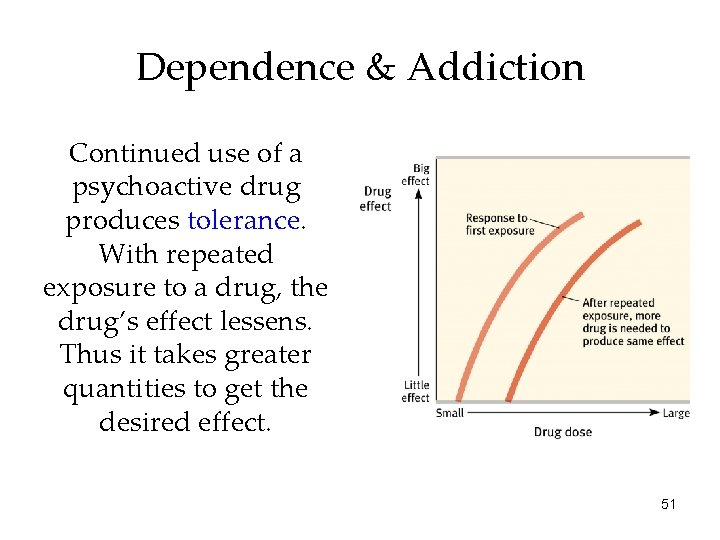
Dependence & Addiction Continued use of a psychoactive drug produces tolerance. With repeated exposure to a drug, the drug’s effect lessens. Thus it takes greater quantities to get the desired effect. 51
Withdrawal & Dependence 1. Withdrawal: Upon stopping use of a drug (after addiction), users may experience the undesirable effects of withdrawal. 2. Dependence: Absence of a drug may lead to a feeling of physical pain, intense cravings (physical dependence), and negative emotions (psychological dependence). 52
Misconceptions about Addiction is a craving for a chemical substance, despite its adverse consequences (physical & psychological). 1. Addictive drugs quickly corrupt. 2. Addiction cannot be overcome voluntarily. 3. Addiction is no different than repetitive pleasure-seeking behaviors. 53
Psychoactive Drugs Psychoactive drugs are divided into three groups. 1. Depressants 2. Stimulants 3. Hallucinogens 54
Depressants are drugs that reduce neural activity and slow body functions. They include: 1. Alcohol 2. Barbiturates 3. Opiates 55
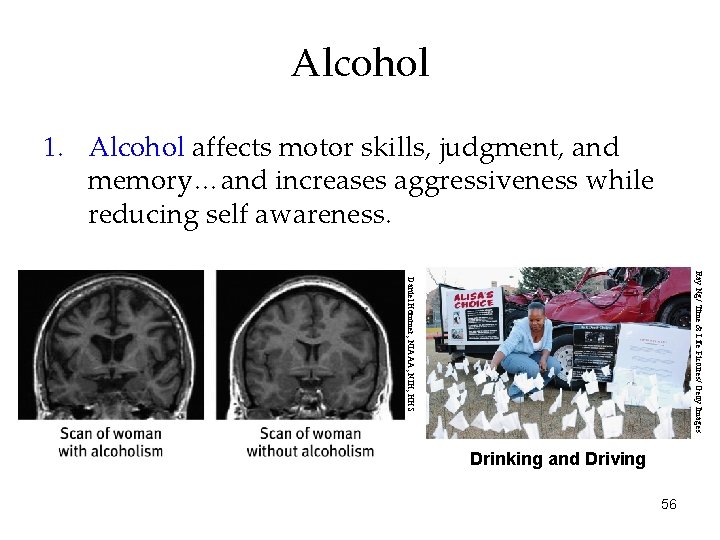
Alcohol 1. Alcohol affects motor skills, judgment, and memory…and increases aggressiveness while reducing self awareness. Ray Ng/ Time & Life Pictures/ Getty Images Daniel Hommer, NIAAA, NIH, HHS Drinking and Driving 56
Barbiturates 2. Barbiturates: Drugs that depress the activity of the central nervous system, reducing anxiety but impairing memory and judgment. Nembutal, Seconal, and Amytal are some examples. 57
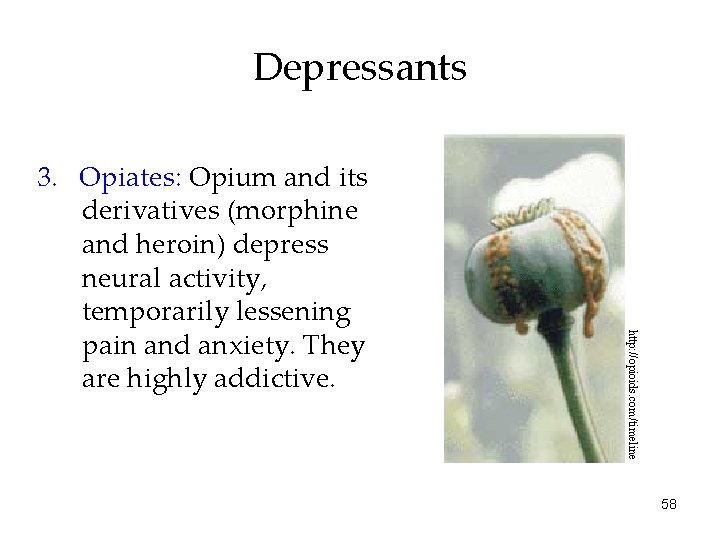
Depressants http: //opioids. com/timeline 3. Opiates: Opium and its derivatives (morphine and heroin) depress neural activity, temporarily lessening pain and anxiety. They are highly addictive. 58
Stimulants are drugs that excite neural activity and speed up body functions. 1. 2. 3. 4. 5. 6. Caffeine Nicotine Cocaine Ecstasy Amphetamines Methamphetamines 59
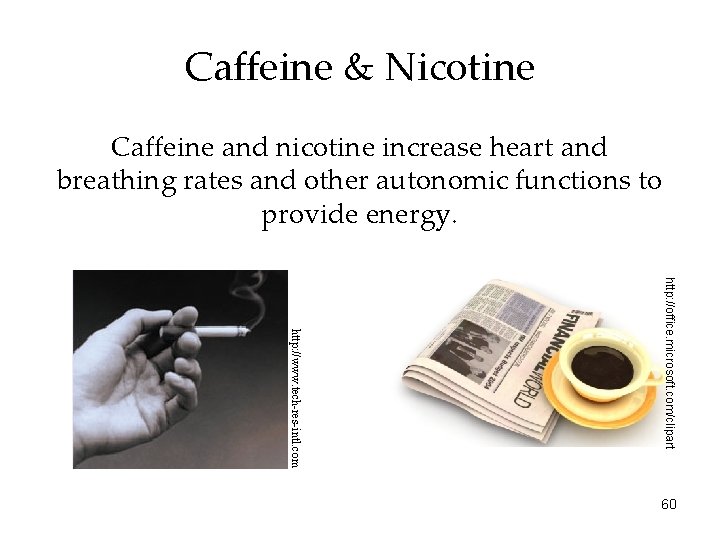
Caffeine & Nicotine Caffeine and nicotine increase heart and breathing rates and other autonomic functions to provide energy. http: //office. microsoft. com/clipart http: //www. tech-res-intl. com 60
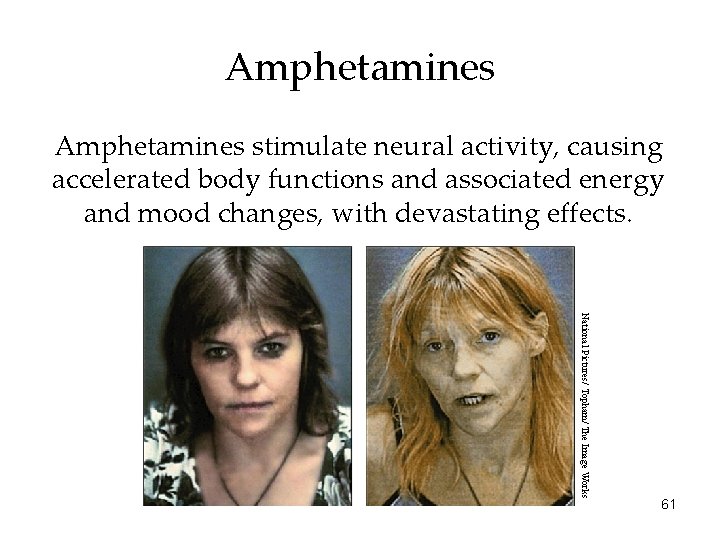
Amphetamines stimulate neural activity, causing accelerated body functions and associated energy and mood changes, with devastating effects. National Pictures/ Topham/ The Image Works 61
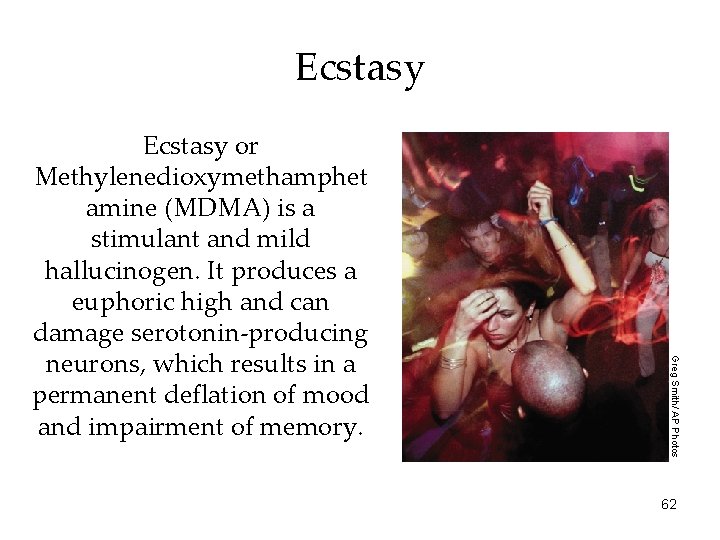
Ecstasy Greg Smith/ AP Photos Ecstasy or Methylenedioxymethamphet amine (MDMA) is a stimulant and mild hallucinogen. It produces a euphoric high and can damage serotonin-producing neurons, which results in a permanent deflation of mood and impairment of memory. 62
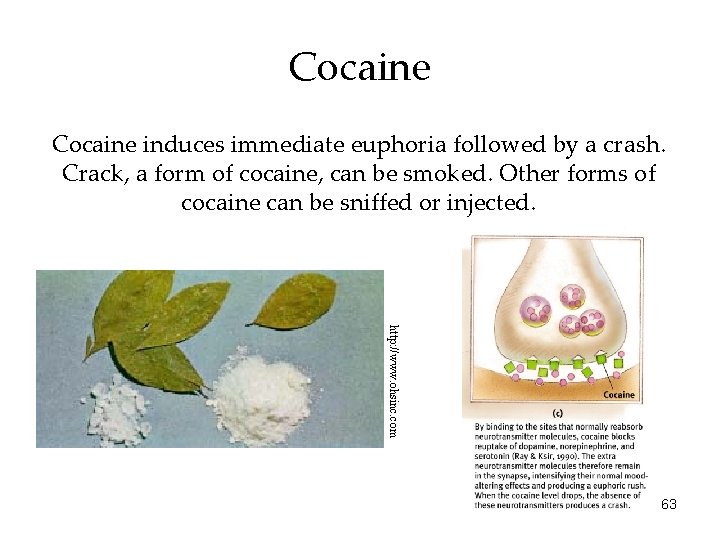
Cocaine induces immediate euphoria followed by a crash. Crack, a form of cocaine, can be smoked. Other forms of cocaine can be sniffed or injected. http: //www. ohsinc. com 63
Hallucinogens Ronald K. Siegel Hallucinogens are psychedelic (mindmanifesting) drugs that distort perceptions and evoke sensory images in the absence of sensory input. 64
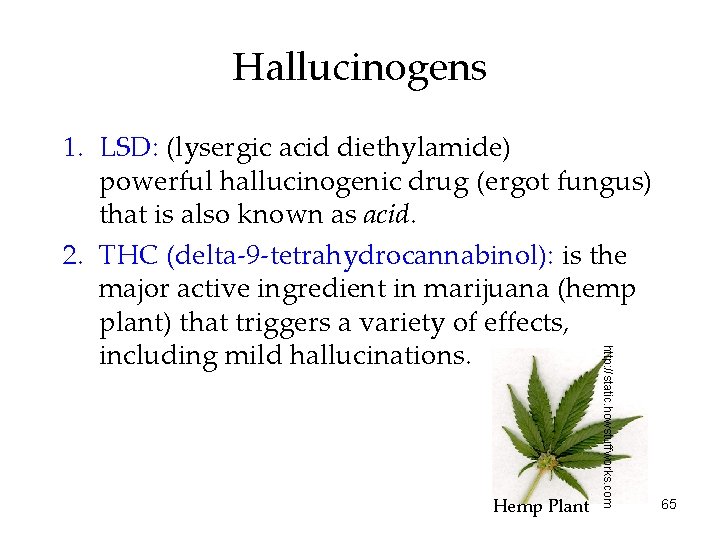
Hallucinogens Hemp Plant http: //static. howstuffworks. com 1. LSD: (lysergic acid diethylamide) powerful hallucinogenic drug (ergot fungus) that is also known as acid. 2. THC (delta-9 -tetrahydrocannabinol): is the major active ingredient in marijuana (hemp plant) that triggers a variety of effects, including mild hallucinations. 65
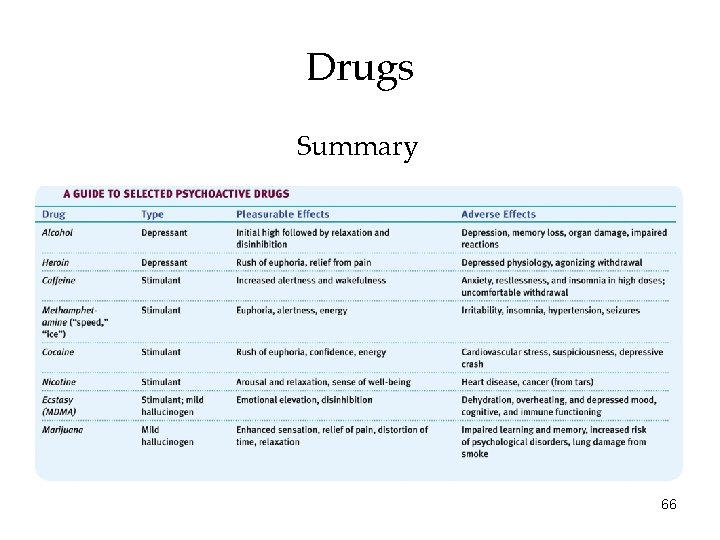
Drugs Summary 66
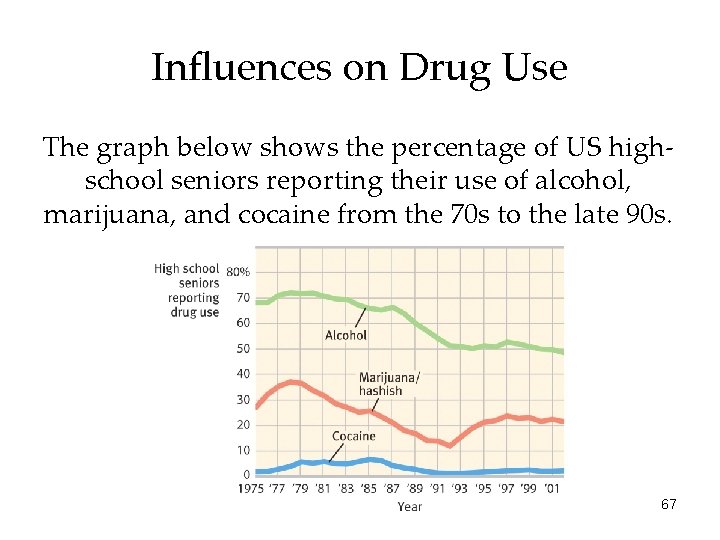
Influences on Drug Use The graph below shows the percentage of US highschool seniors reporting their use of alcohol, marijuana, and cocaine from the 70 s to the late 90 s. 67
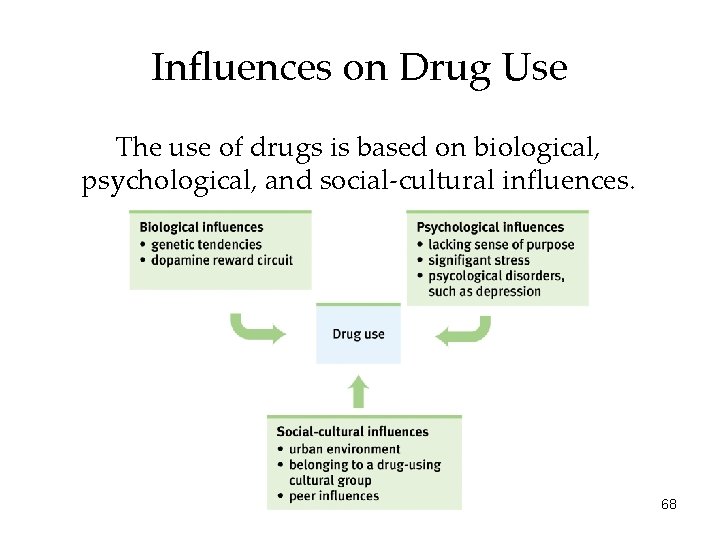
Influences on Drug Use The use of drugs is based on biological, psychological, and social-cultural influences. 68
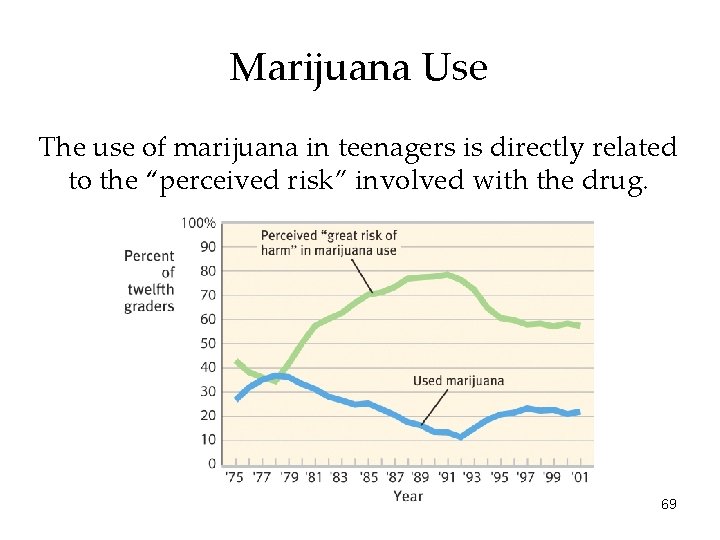
Marijuana Use The use of marijuana in teenagers is directly related to the “perceived risk” involved with the drug. 69
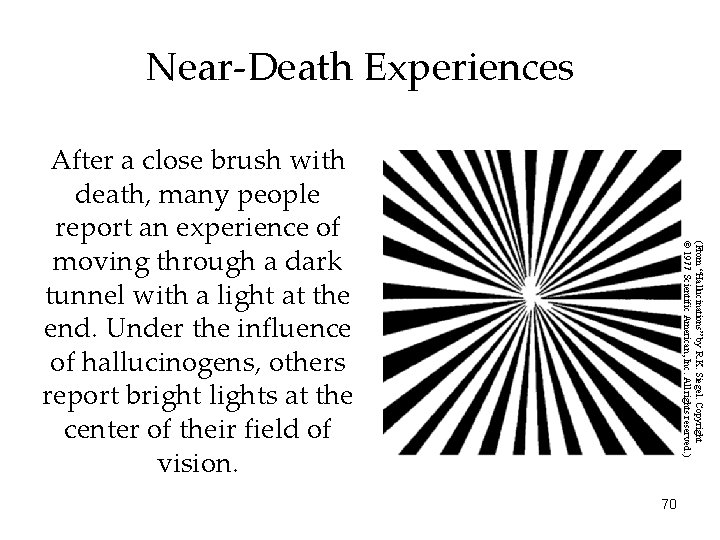
Near-Death Experiences (From “Hallucinations” by R. K. Siegel. Copyright © 1977 Scientific American, Inc. All rights reserved. ) After a close brush with death, many people report an experience of moving through a dark tunnel with a light at the end. Under the influence of hallucinogens, others report bright lights at the center of their field of vision. 70
Mind-Body Problem Near-death experiences raise the mind-body issue. Can the mind survive the dying body? 1. Dualism: Dualists believe that mind (nonphysical) and body (physical) are two distinct entities that interact. 2. Monism: Monists believe that mind and body are different aspects of the same thing. 71