
Myers Psychology for AP David G Myers Power

- Slides: 97
Myers’ Psychology for AP* David G. Myers Power. Point Presentation Slides by Kent Korek Germantown High School Worth Publishers, © 2010 *AP is a trademark registered and/or owned by the College Board, which was not involved in the production of, and does not endorse, this product.
Unit 11: Testing and Individual Differences
Unit Overview • • What is Intelligence? Assessing Intelligence The Dynamics of Intelligence Genetic and Environmental Influences on Intelligence Click on the any of the above hyperlinks to go to that section in the presentation.
What is Intelligence?
What is Intelligence? • Intelligence – Savant syndrome • Intelligence test
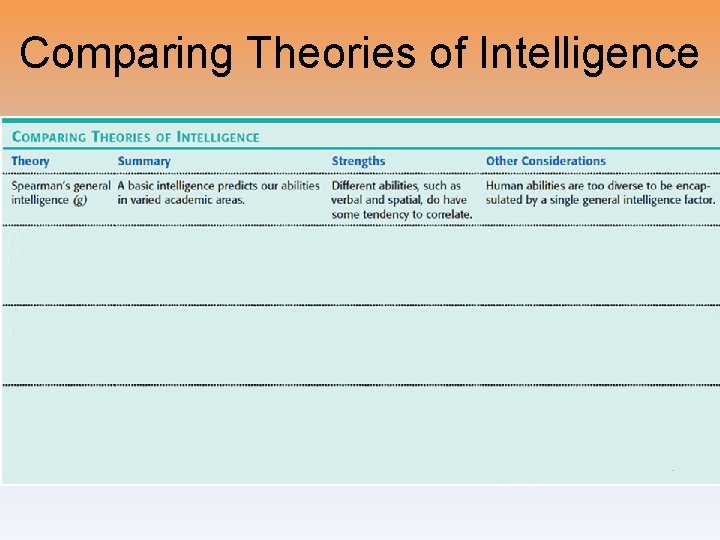
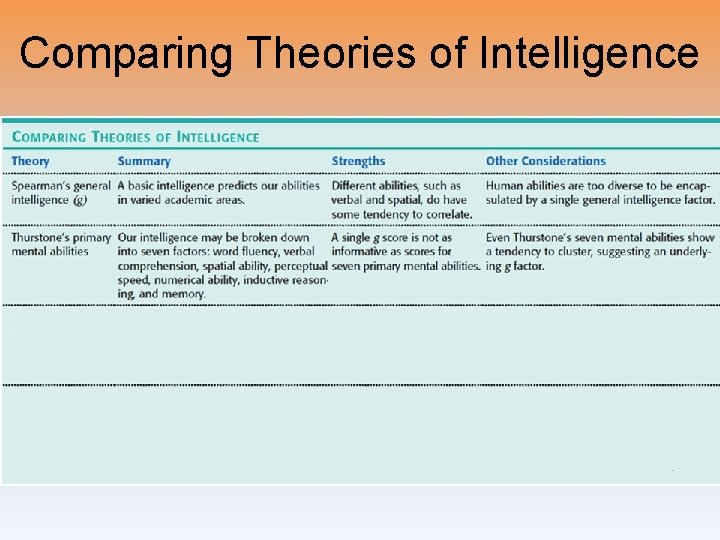
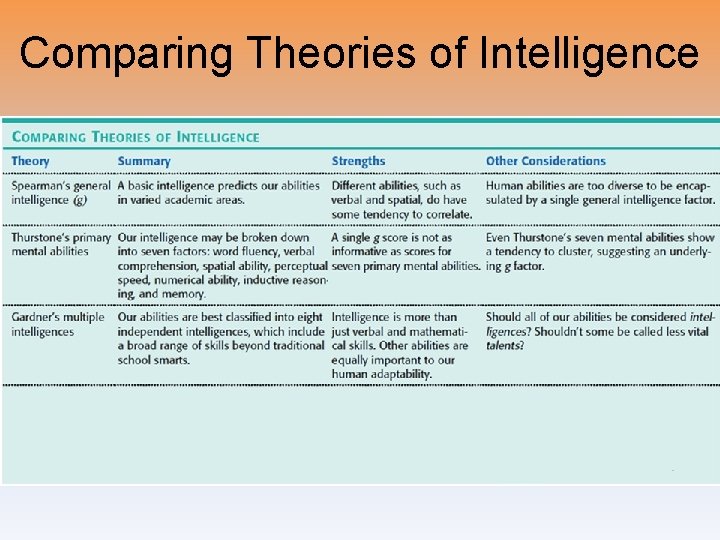
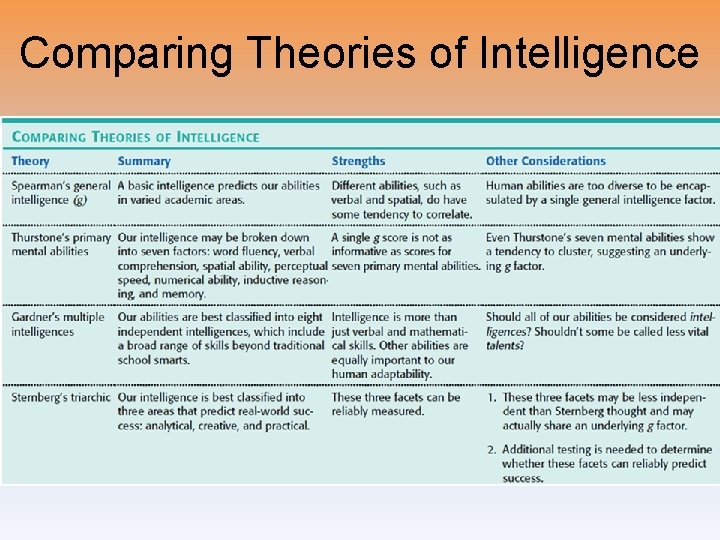
Is Intelligence One General Ability or Several Specific Abilities? • Spearman’s General intelligence (g) – Factor analysis – Comparison to athleticism g • Thurstone’s counter argument
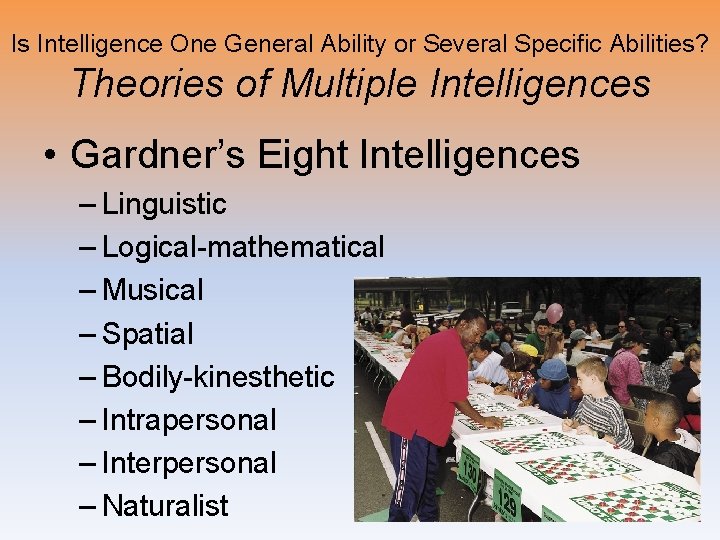
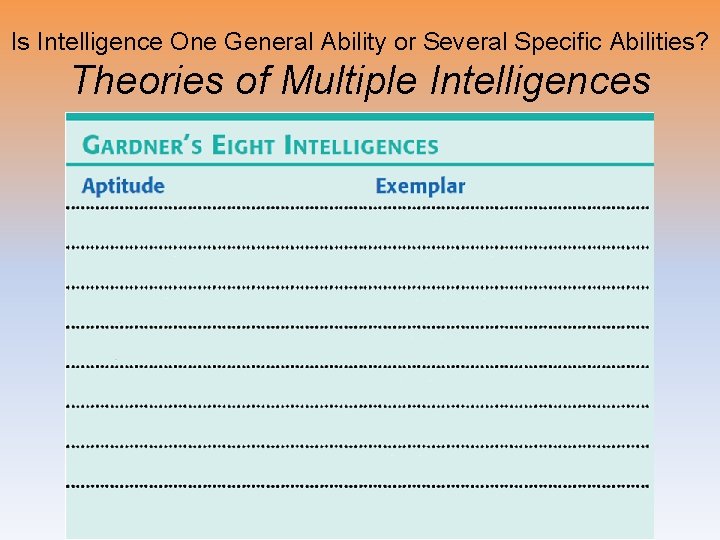
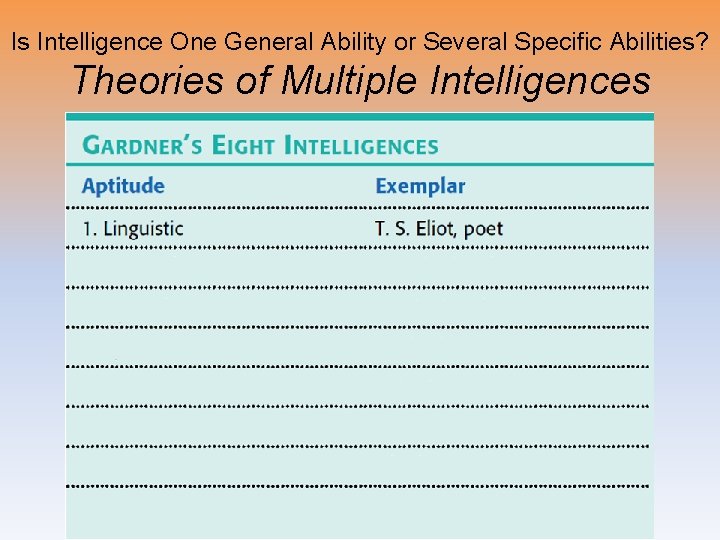
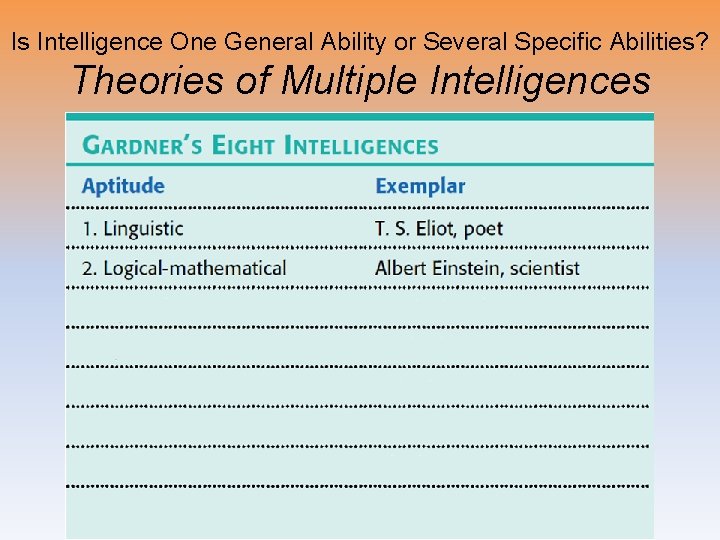
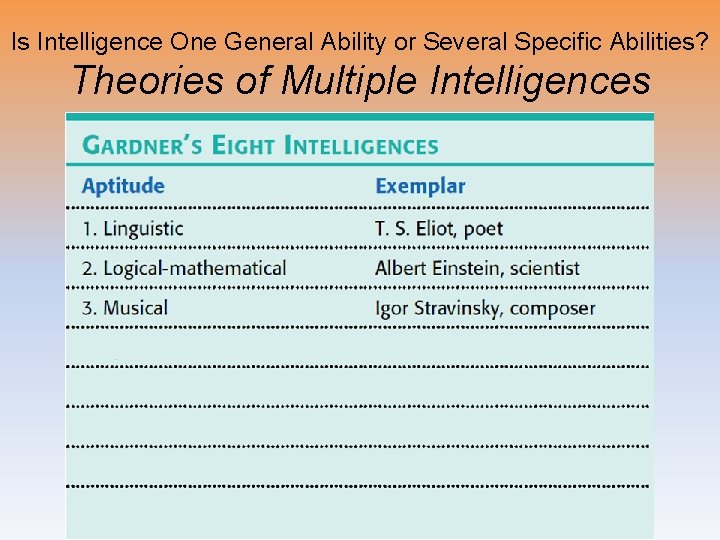
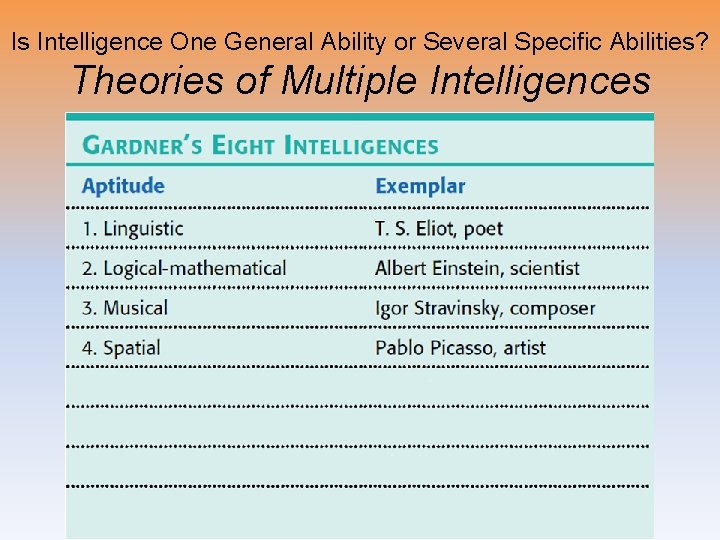
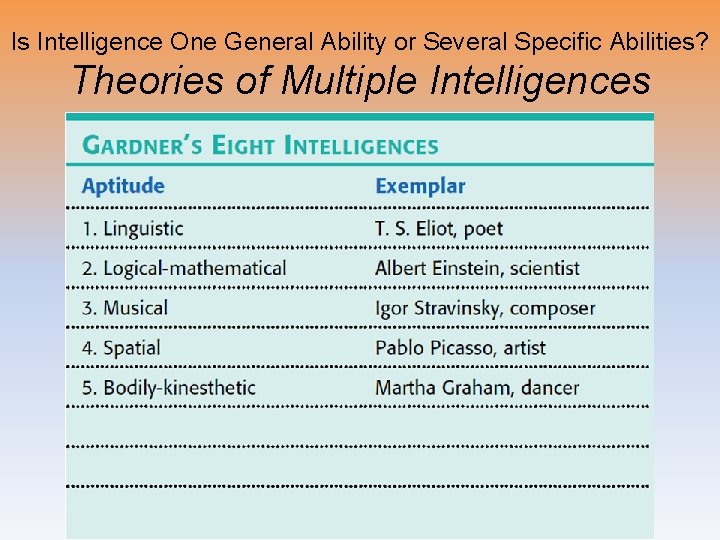
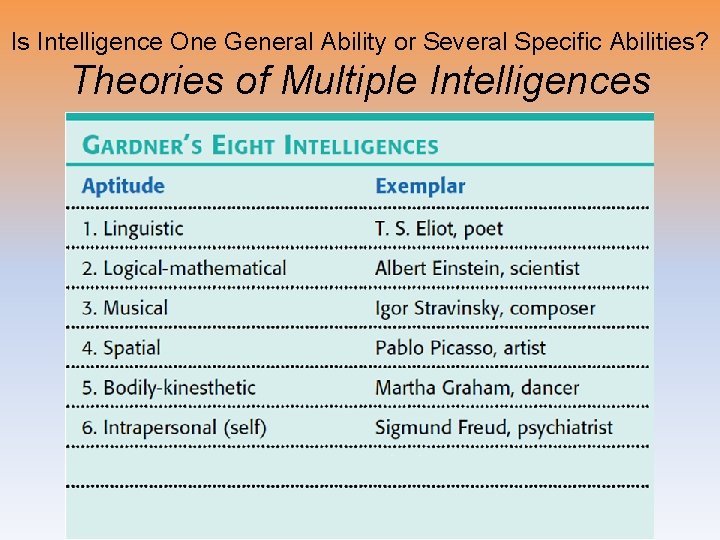
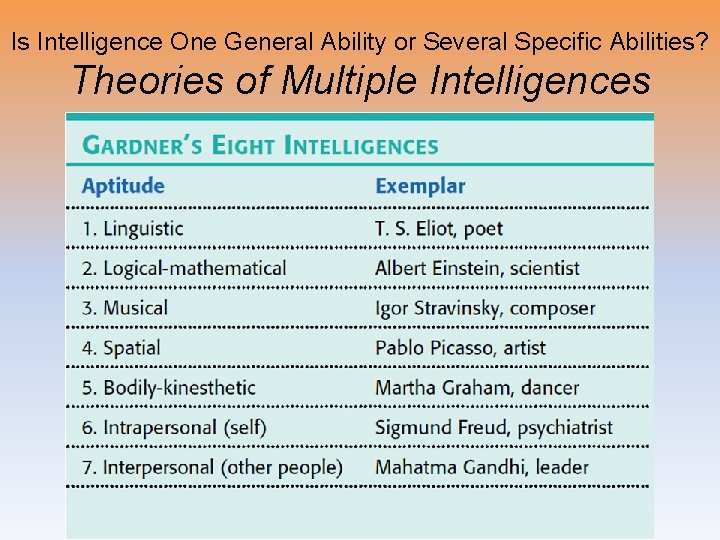
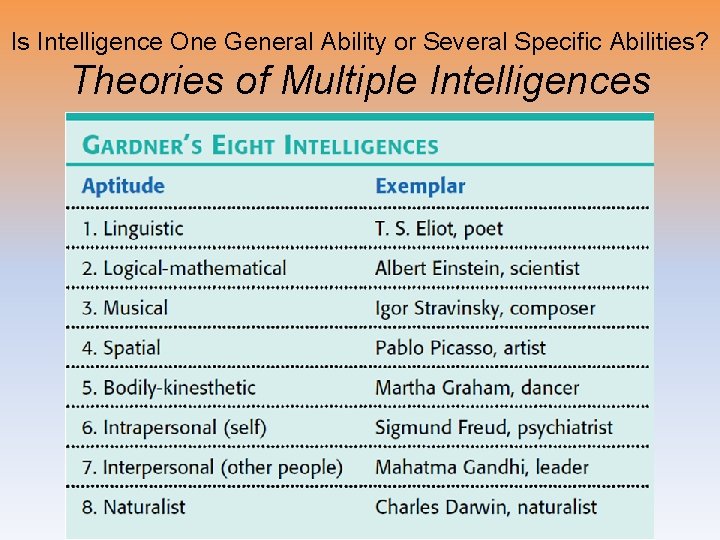
Is Intelligence One General Ability or Several Specific Abilities? Theories of Multiple Intelligences • Gardner’s Eight Intelligences – Linguistic – Logical-mathematical – Musical – Spatial – Bodily-kinesthetic – Intrapersonal – Interpersonal – Naturalist
Is Intelligence One General Ability or Several Specific Abilities? Theories of Multiple Intelligences
Is Intelligence One General Ability or Several Specific Abilities? Theories of Multiple Intelligences
Is Intelligence One General Ability or Several Specific Abilities? Theories of Multiple Intelligences
Is Intelligence One General Ability or Several Specific Abilities? Theories of Multiple Intelligences
Is Intelligence One General Ability or Several Specific Abilities? Theories of Multiple Intelligences
Is Intelligence One General Ability or Several Specific Abilities? Theories of Multiple Intelligences
Is Intelligence One General Ability or Several Specific Abilities? Theories of Multiple Intelligences
Is Intelligence One General Ability or Several Specific Abilities? Theories of Multiple Intelligences
Is Intelligence One General Ability or Several Specific Abilities? Theories of Multiple Intelligences
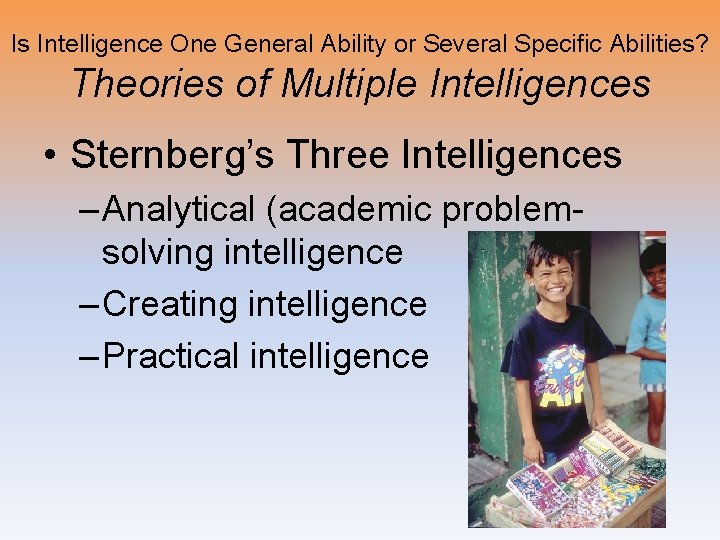
Is Intelligence One General Ability or Several Specific Abilities? Theories of Multiple Intelligences • Sternberg’s Three Intelligences – Analytical (academic problemsolving intelligence – Creating intelligence – Practical intelligence
Comparing Theories of Intelligence
Comparing Theories of Intelligence
Comparing Theories of Intelligence
Comparing Theories of Intelligence
Comparing Theories of Intelligence
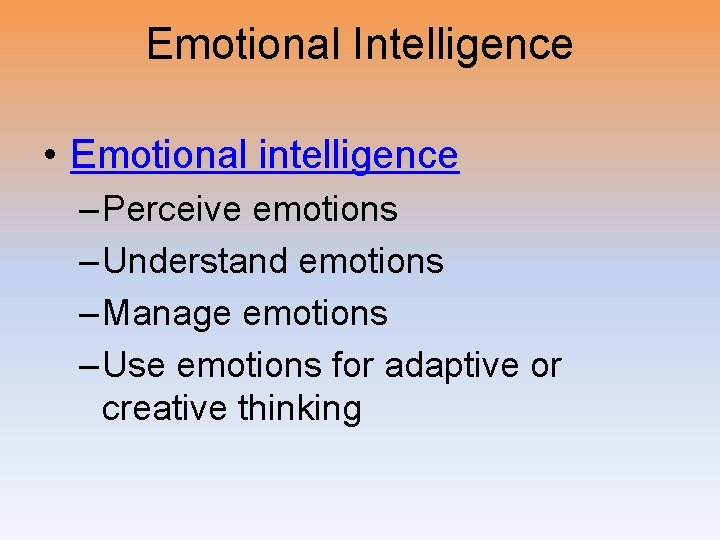
Emotional Intelligence • Emotional intelligence – Perceive emotions – Understand emotions – Manage emotions – Use emotions for adaptive or creative thinking
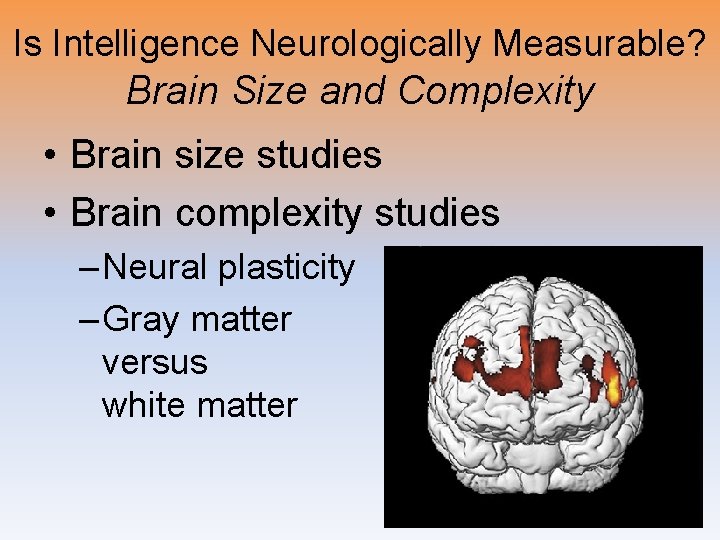
Is Intelligence Neurologically Measurable? Brain Size and Complexity • Brain size studies • Brain complexity studies – Neural plasticity – Gray matter versus white matter
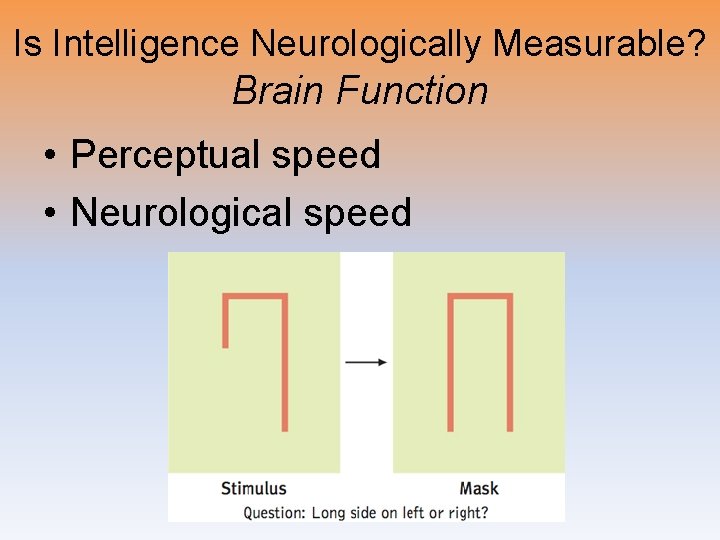
Is Intelligence Neurologically Measurable? Brain Function • Perceptual speed • Neurological speed
Assessing Intelligence
The Origins of Intelligence Testing • Francis Galton’s intelligence testing – Reaction time – Sensory acuity – Muscular power – Body proportions
The Origins of Intelligence Testing Alfred Binet: Predicting School Achievement • Alfred Binet – Indentifying French school children in need of assistance – Mental age – Chronological age
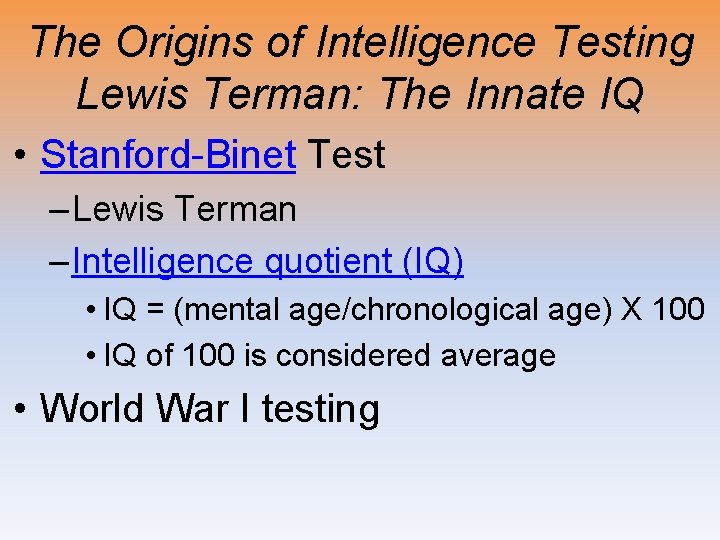
The Origins of Intelligence Testing Lewis Terman: The Innate IQ • Stanford-Binet Test – Lewis Terman – Intelligence quotient (IQ) • IQ = (mental age/chronological age) X 100 • IQ of 100 is considered average • World War I testing
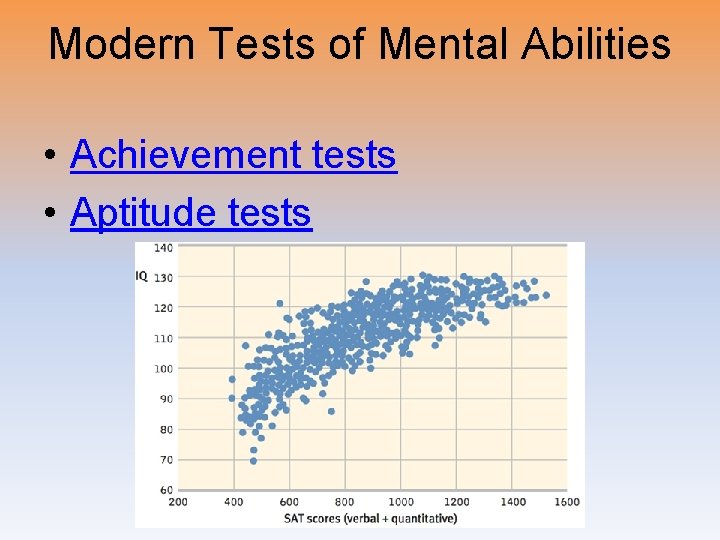
Modern Tests of Mental Abilities • Achievement tests • Aptitude tests
Modern Tests of Mental Abilities • Achievement tests • Aptitude tests
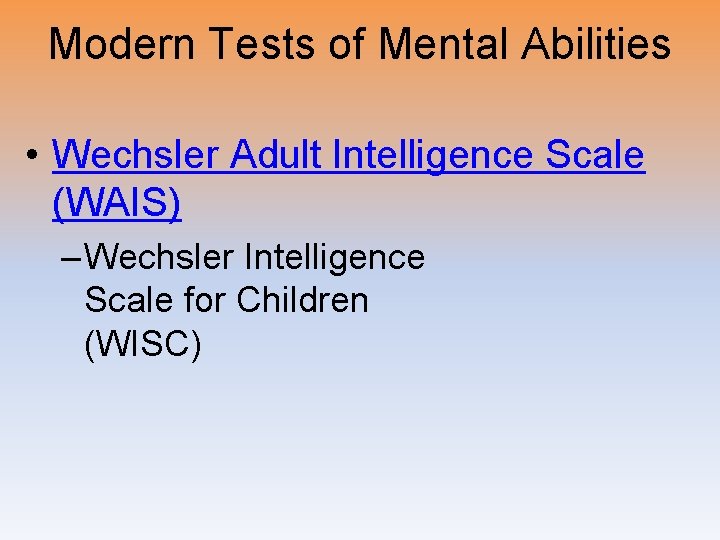
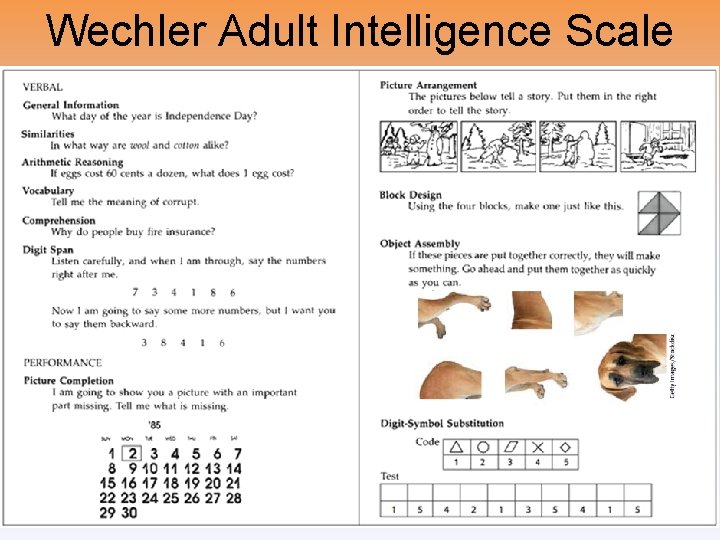
Modern Tests of Mental Abilities • Wechsler Adult Intelligence Scale (WAIS) – Wechsler Intelligence Scale for Children (WISC)
Wechler Adult Intelligence Scale
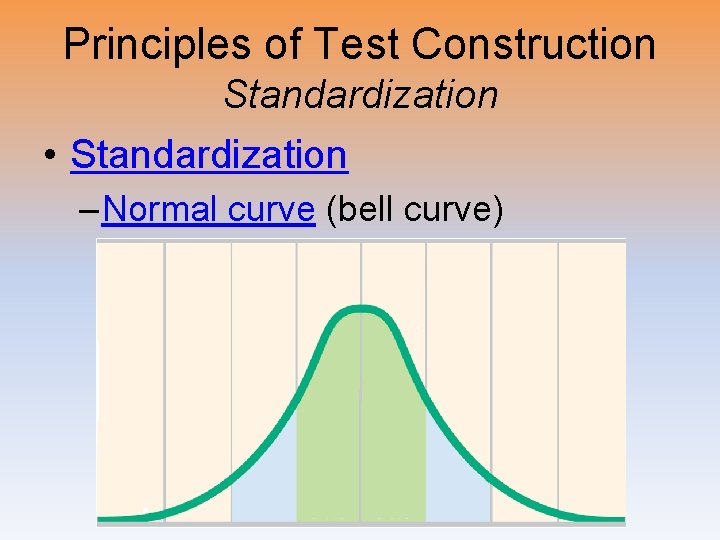
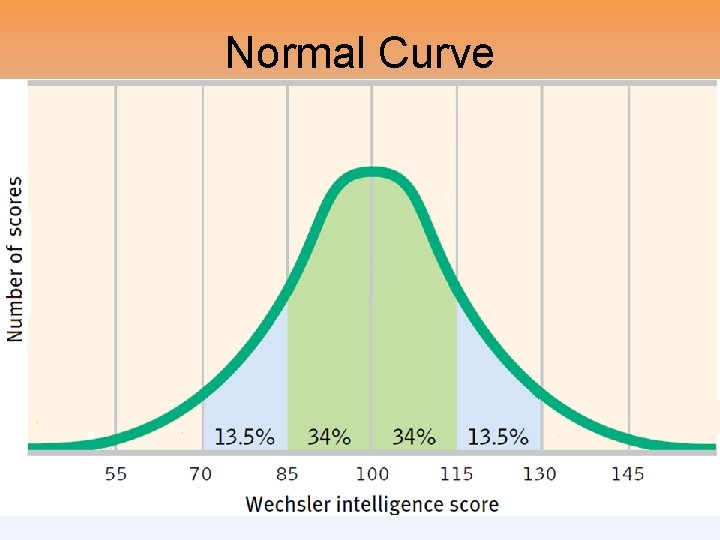
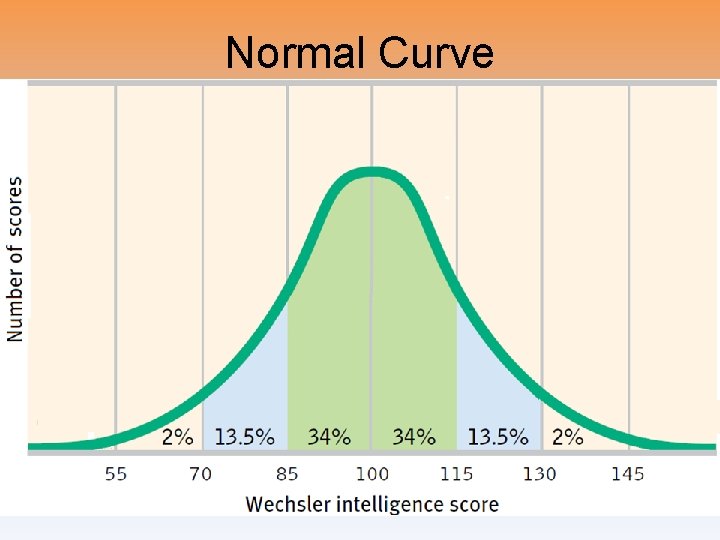
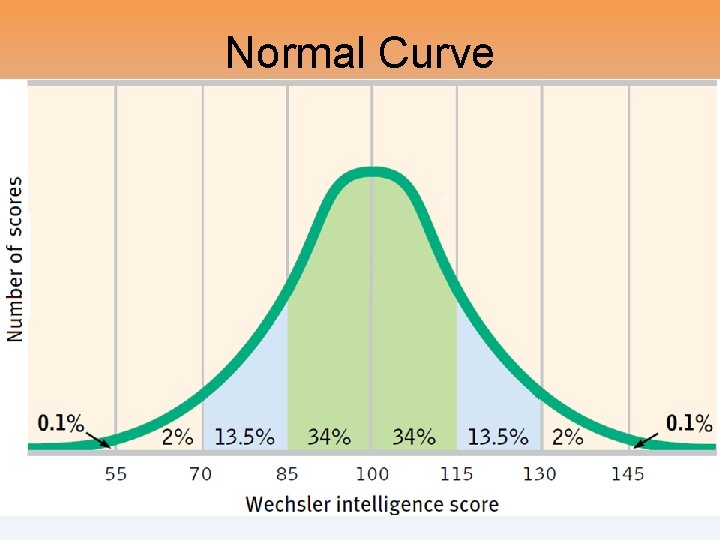
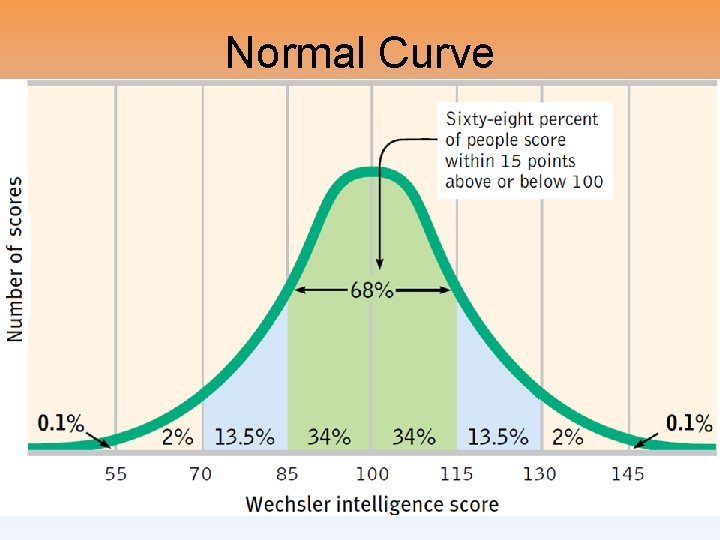
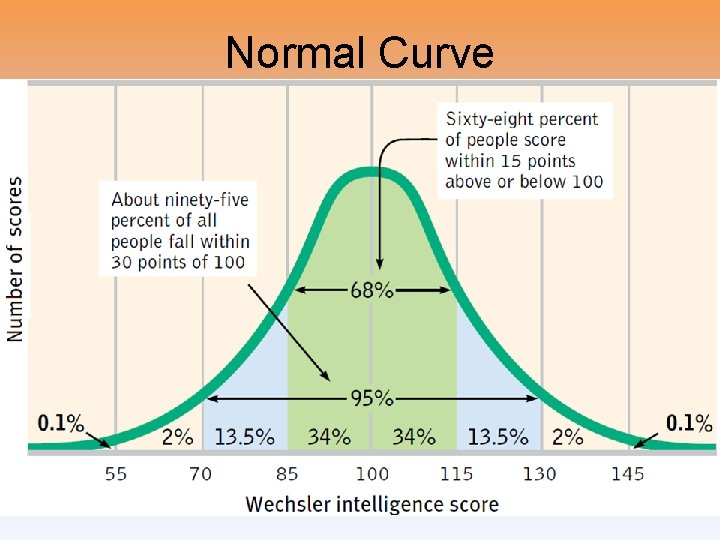
Principles of Test Construction Standardization • Standardization – Normal curve (bell curve)
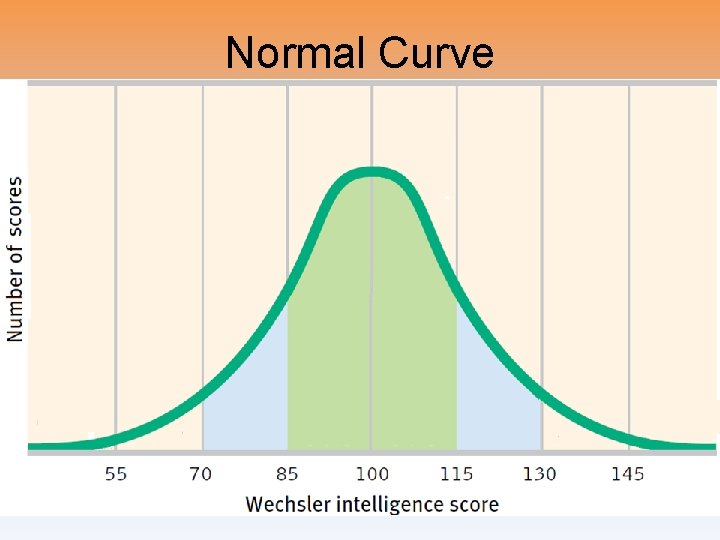
Normal Curve
Normal Curve
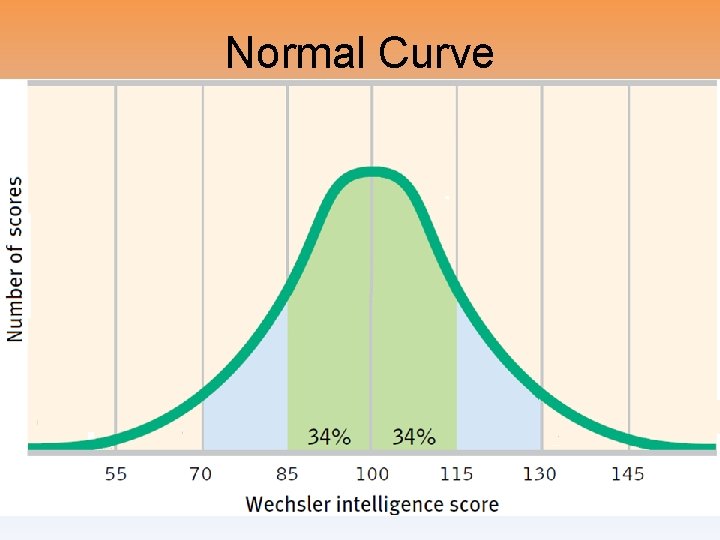
Normal Curve
Normal Curve
Normal Curve
Normal Curve
Normal Curve
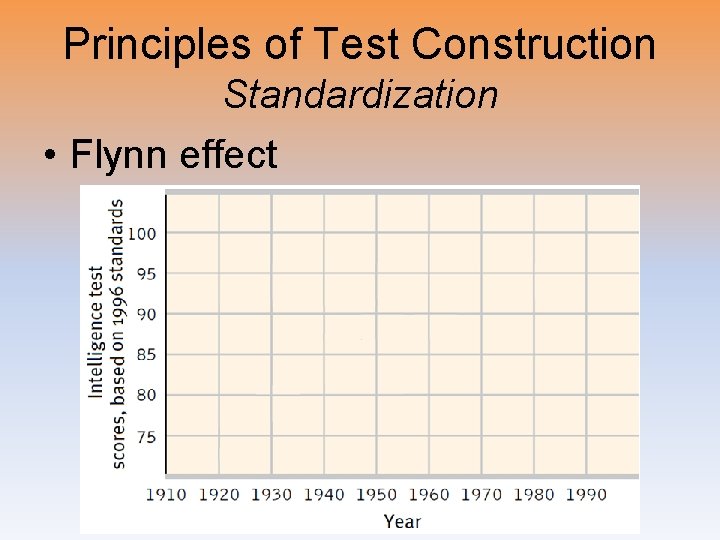
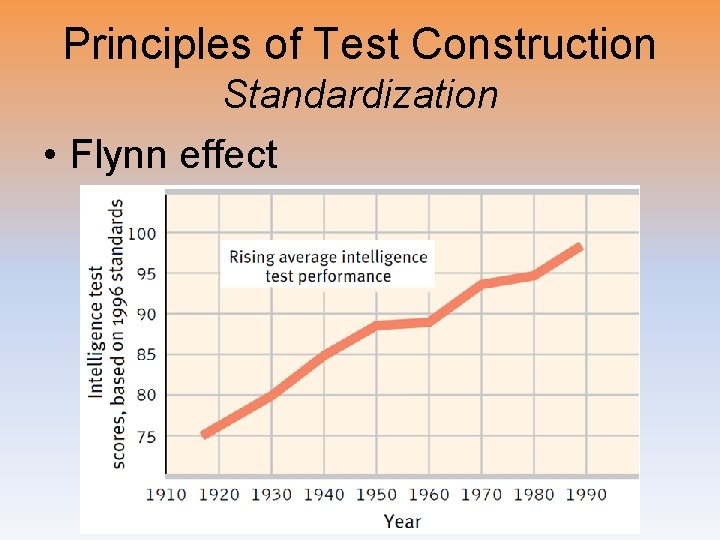
Principles of Test Construction Standardization • Flynn effect
Principles of Test Construction Standardization • Flynn effect
Principles of Test Construction Reliability • Reliability – Scores correlate – Test-retest reliability – Split-half reliability
Principles of Test Construction Validity • Validity – Content validity • Criterion – Predictive validity
The Dynamics of Intelligence
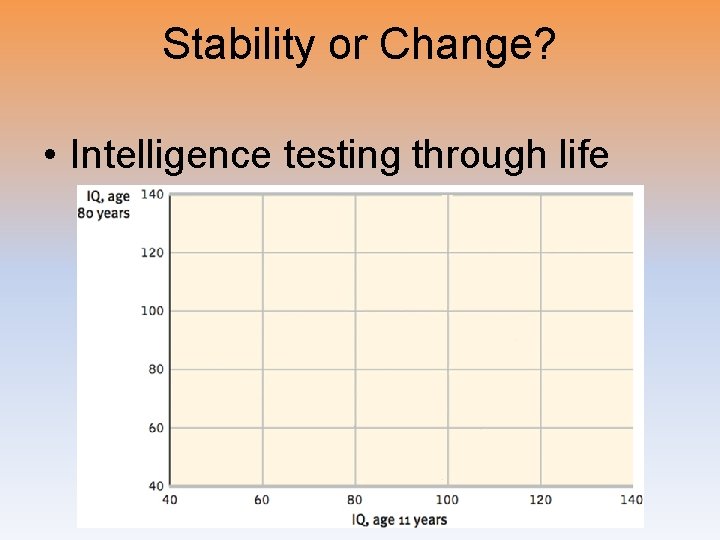
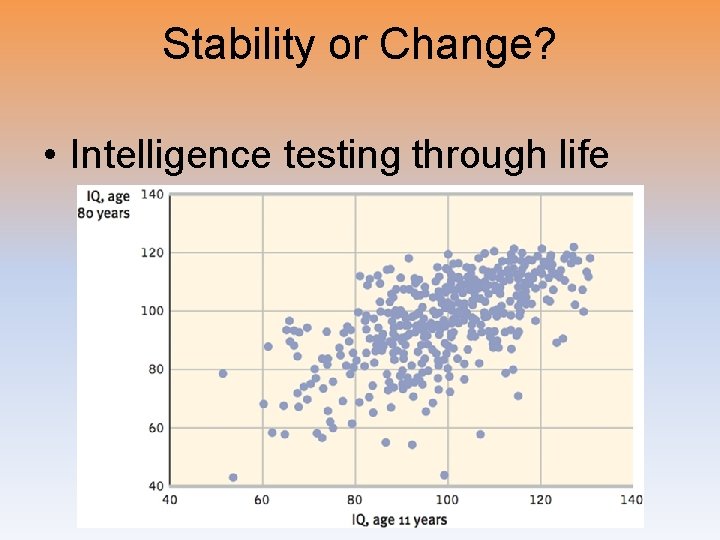
Stability or Change? • Intelligence testing through life
Stability or Change? • Intelligence testing through life
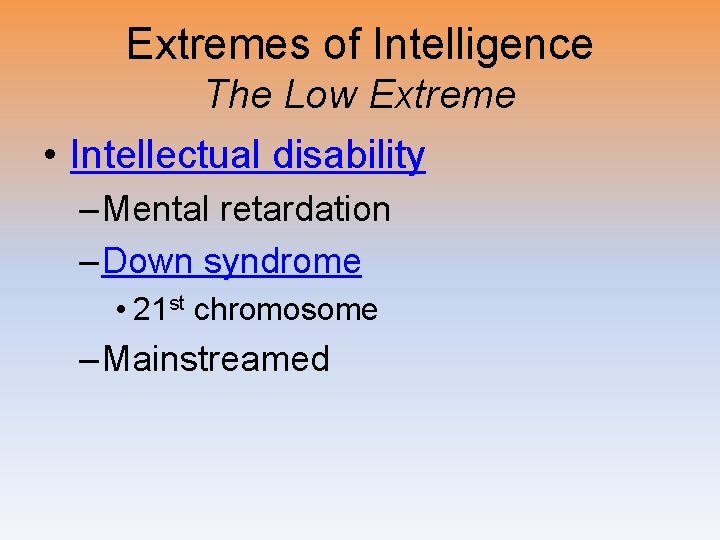
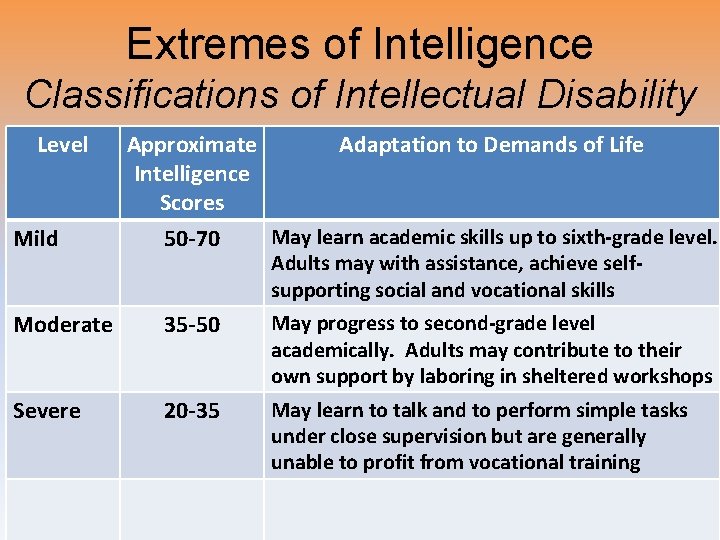
Extremes of Intelligence The Low Extreme • Intellectual disability – Mental retardation – Down syndrome • 21 st chromosome – Mainstreamed
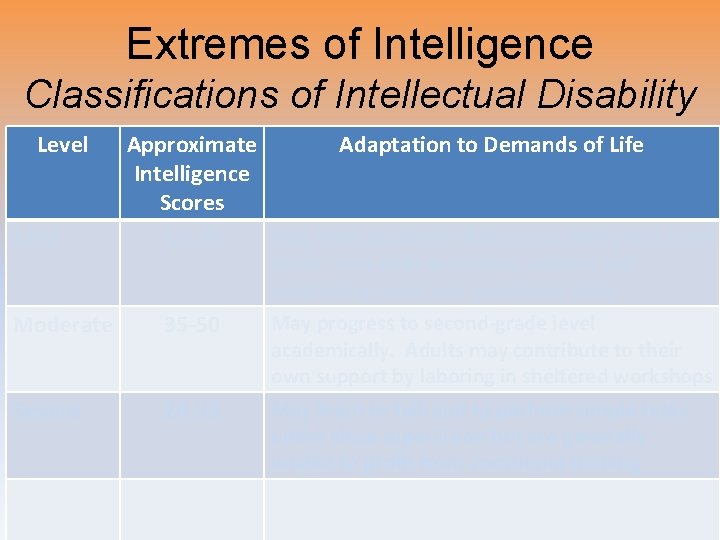
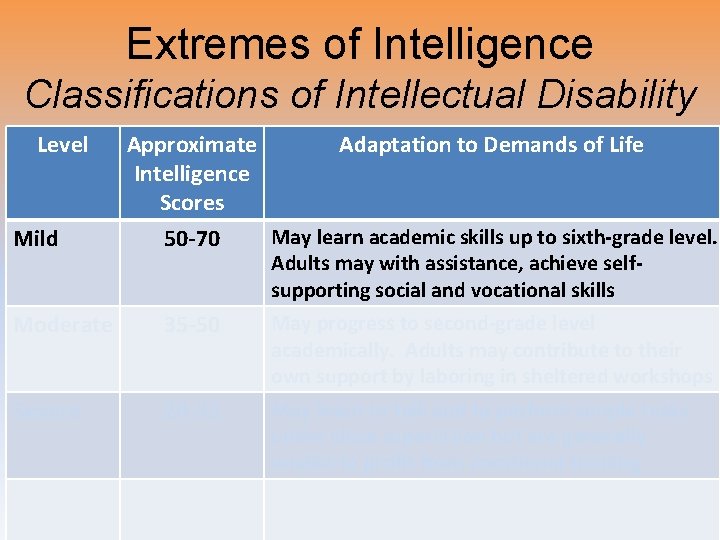
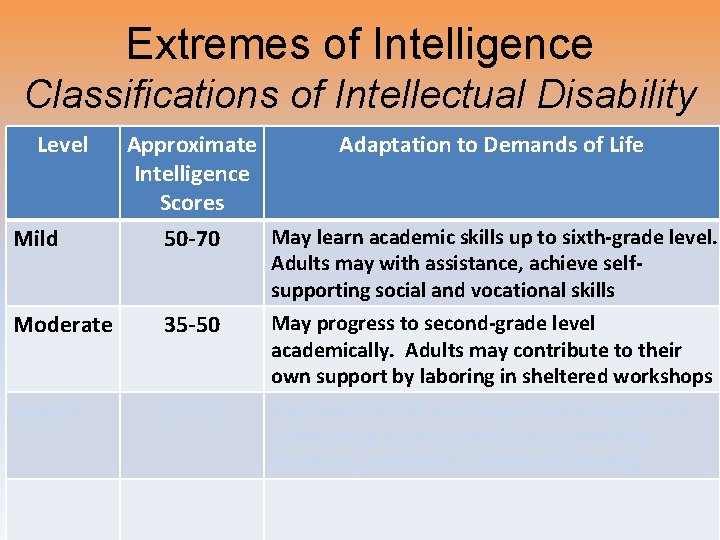
Extremes of Intelligence Classifications of Intellectual Disability Level Approximate Intelligence Scores Adaptation to Demands of Life Mild 50 -70 May learn academic skills up to sixth-grade level. Adults may with assistance, achieve selfsupporting social and vocational skills Moderate 35 -50 May progress to second-grade level academically. Adults may contribute to their own support by laboring in sheltered workshops Severe 20 -35 May learn to talk and to perform simple tasks under close supervision but are generally unable to profit from vocational training
Extremes of Intelligence Classifications of Intellectual Disability Level Approximate Intelligence Scores Adaptation to Demands of Life Mild 50 -70 May learn academic skills up to sixth-grade level. Adults may with assistance, achieve selfsupporting social and vocational skills Moderate 35 -50 May progress to second-grade level academically. Adults may contribute to their own support by laboring in sheltered workshops Severe 20 -35 May learn to talk and to perform simple tasks under close supervision but are generally unable to profit from vocational training
Extremes of Intelligence Classifications of Intellectual Disability Level Approximate Intelligence Scores Adaptation to Demands of Life Mild 50 -70 May learn academic skills up to sixth-grade level. Adults may with assistance, achieve selfsupporting social and vocational skills Moderate 35 -50 May progress to second-grade level academically. Adults may contribute to their own support by laboring in sheltered workshops Severe 20 -35 May learn to talk and to perform simple tasks under close supervision but are generally unable to profit from vocational training
Extremes of Intelligence Classifications of Intellectual Disability Level Approximate Intelligence Scores Adaptation to Demands of Life Mild 50 -70 May learn academic skills up to sixth-grade level. Adults may with assistance, achieve selfsupporting social and vocational skills Moderate 35 -50 May progress to second-grade level academically. Adults may contribute to their own support by laboring in sheltered workshops Severe 20 -35 May learn to talk and to perform simple tasks under close supervision but are generally unable to profit from vocational training
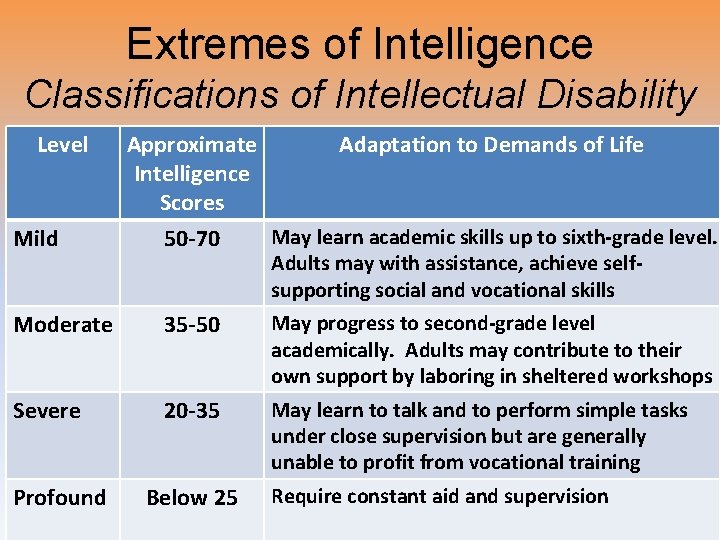
Extremes of Intelligence Classifications of Intellectual Disability Level Approximate Intelligence Scores Adaptation to Demands of Life Mild 50 -70 May learn academic skills up to sixth-grade level. Adults may with assistance, achieve selfsupporting social and vocational skills Moderate 35 -50 May progress to second-grade level academically. Adults may contribute to their own support by laboring in sheltered workshops Severe 20 -35 May learn to talk and to perform simple tasks under close supervision but are generally unable to profit from vocational training Profound Below 25 Require constant aid and supervision
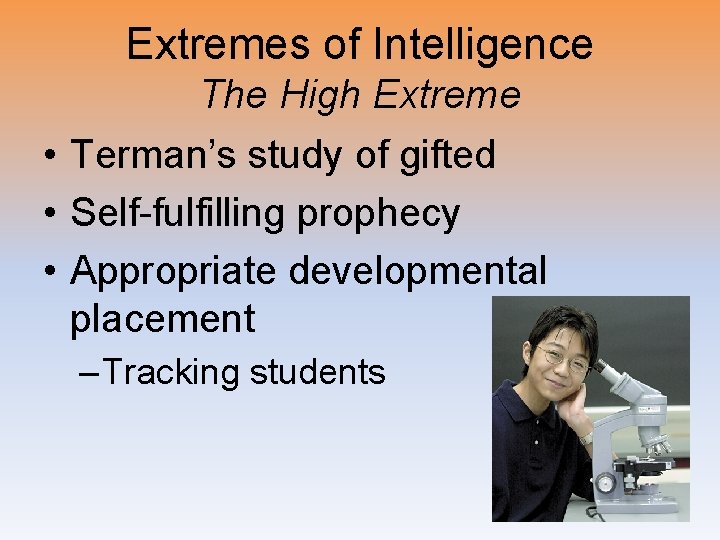
Extremes of Intelligence The High Extreme • Terman’s study of gifted • Self-fulfilling prophecy • Appropriate developmental placement – Tracking students
Genetic and Environmental Influences on Intelligence
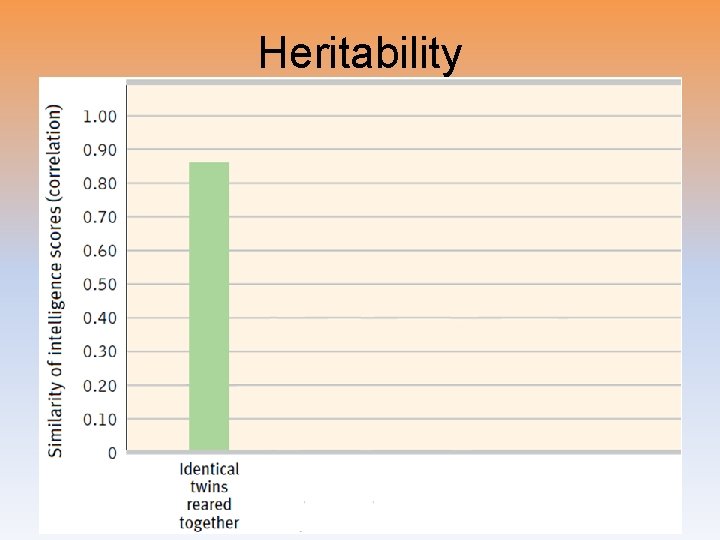
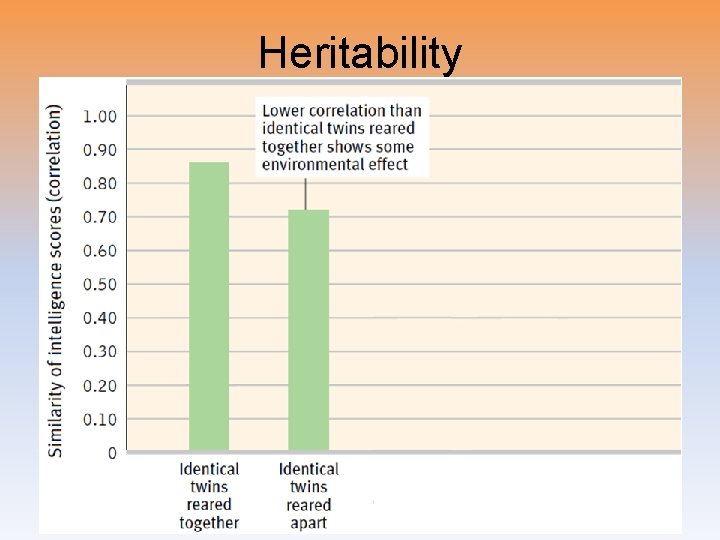
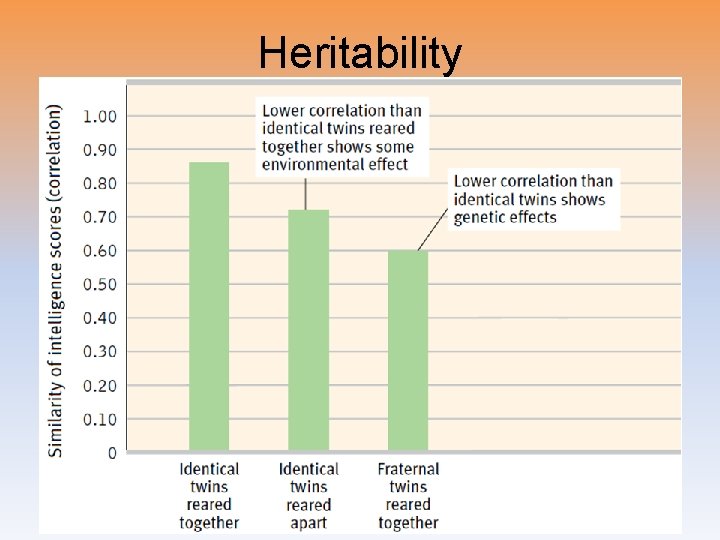
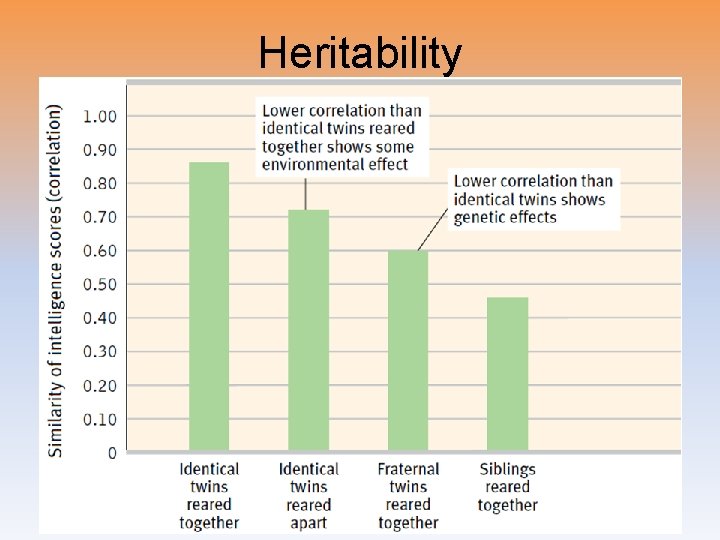
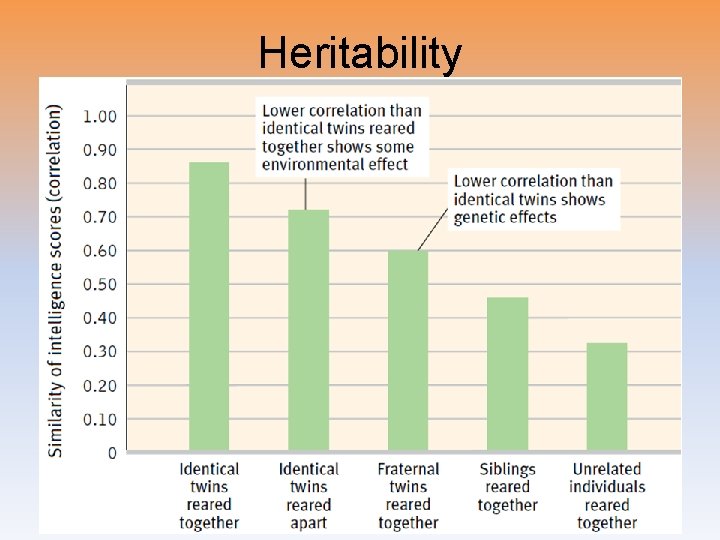
Twin and Adoption Studies • Identical twin studies – Polygenetic • Adoptive children studies
Heritability • Heritability
Heritability
Heritability
Heritability
Heritability
Heritability
Heritability
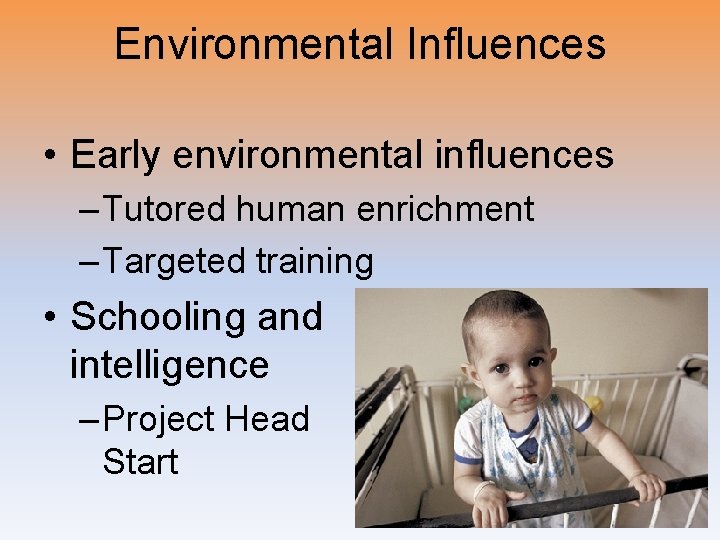
Environmental Influences • Early environmental influences – Tutored human enrichment – Targeted training • Schooling and intelligence – Project Head Start
Group Differences in Intelligence Test Scores Gender Similarities and Differences • • • Spelling Verbal ability Nonverbal ability Sensation Emotion-detecting ability Math and spatial aptitudes
Group Differences in Intelligence Test Scores Ethnic Similarities and Differences • Ethnic similarities • Ethnic differences
The Question of Bias • Two meanings of bias – Popular sense – Scientific sense • Test-taker’s expectations – Stereotype threat
The End
• Types of Files Teacher Information – This presentation has been saved as a “basic” Powerpoint file. While this file format placed a few limitations on the presentation, it insured the file would be compatible with the many versions of Powerpoint teachers use. To add functionality to the presentation, teachers may want to save the file for their specific version of Powerpoint. • Animation – Once again, to insure compatibility with all versions of Powerpoint, none of the slides are animated. To increase student interest, it is suggested teachers animate the slides wherever possible. • Adding slides to this presentation – Teachers are encouraged to adapt this presentation to their personal teaching style. To help keep a sense of continuity, blank slides which can be copied and pasted to a specific location in the presentation follow this “Teacher Information” section.
Teacher Information • Hyperlink Slides - This presentation contain two types of hyperlinks. Hyperlinks can be identified by the text being underlined and a different color (usually purple). – Unit subsections hyperlinks: Immediately after the unit title slide, a page (slide #3) can be found listing all of the unit’s subsections. While in slide show mode, clicking on any of these hyperlinks will take the user directly to the beginning of that subsection. This allows teachers quick access to each subsection. – Bold print term hyperlinks: Every bold print term from the unit is included in this presentation as a hyperlink. While in slide show mode, clicking on any of the hyperlinks will take the user to a slide containing the formal definition of the term. Clicking on the “arrow” in the bottom left corner of the definition slide will take the user back to the original point in the presentation. These hyperlinks were included for teachers who want students to see or copy down the exact definition as stated in the text. Most teachers prefer the definitions not be included to prevent students from only “copying down what is on the screen” and not actively listening to the presentation. For teachers who continually use the Bold Print Term Hyperlinks option, please contact the author using the email address on the next slide to learn a technique to expedite the returning to the original point in the presentation.
Teacher Information • Continuity slides – Throughout this presentation there are slides, usually of graphics or tables, that build on one another. These are included for three purposes. • By presenting information in small chunks, students will find it easier to process and remember the concepts. • By continually changing slides, students will stay interested in the presentation. • To facilitate class discussion and critical thinking. Students should be encouraged to think about “what might come next” in the series of slides. • Please feel free to contact me at kkorek@germantown. k 12. wi. us with any questions, concerns, suggestions, etc. regarding these presentations. Kent Korek Germantown High School Germantown, WI 53022 262 -253 -3400 kkorek@germantown. k 12. wi. us
Division title (green print) subdivision title (blue print) • xxx – xxx
Division title (green print) subdivision title (blue print) Use this slide to add a table, chart, clip art, picture, diagram, or video clip. Delete this box when finished
Definition Slide = add definition here
Definition Slides
Intelligence Test = a method of assessing an individual's mental aptitudes and comparing them with those of others, using numerical scores.
Intelligence = mental quality consisting of the ability to learn from experience, solve problems, and use knowledge to adapt to new situations.
General Intelligence (g) = a general intelligence factor that, according to Spearman and others, underlies specific mental abilities and is therefore measured by every task on an intelligence test.
Factor Analysis = a statistical procedure that identifies clusters of related items (called factors) on a test; used to identify difference dimensions of performance that underlie a person’s total score.
Savant Syndrome = a condition in which a person otherwise limited in mental ability has an exceptional specific skill, such as in computation or drawing.
Emotional Intelligence = the ability to perceive, understand, manage, and use emotions.
Mental Age = a measure of intelligence test performance devised by Binet; the chronological age that most typically corresponds to a given level of performance. Thus, a child who does as well as the average 8 -year-old is said to have a mental age of 8.
Stanford-Binet = the widely used American revision (by Terman at Stanford University) of Binet’s original intelligence test.
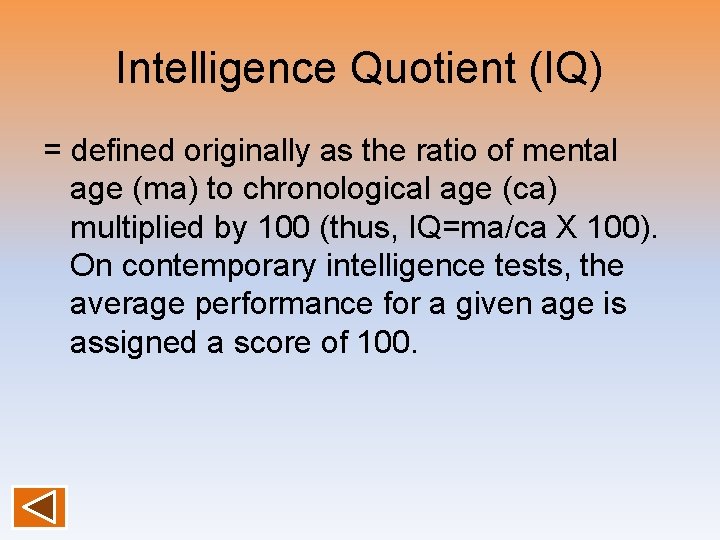
Intelligence Quotient (IQ) = defined originally as the ratio of mental age (ma) to chronological age (ca) multiplied by 100 (thus, IQ=ma/ca X 100). On contemporary intelligence tests, the average performance for a given age is assigned a score of 100.
Achievement Tests = tests designed to assess what a person has learned.
Aptitude Tests = tests designed to predict a person’s future performance; aptitude is the capacity to learn.
Wechsler Adult Intelligence Scale (WAIS) = the WAIS is the most widely used intelligence test; contains verbal and performance (nonverbal) subtests.
Standardization = defining meaningful scores by comparison with the performance of a pretested group.
Normal Curve = a symmetrical, bell-shaped curve that describes the distribution of many physical and psychological attributes. Most scores fall near the average, and fewer scores lie near the extremes.
Reliability = the extent to which a test yields consistent results, as assessed by the consistency of scores on two halves of the test, or on retesting.
Validity = the extent to which a test measures or predicts what it is supposed to.
Content Validity = the extent to which a test samples the behavior that is of interest.
Predictive Validity = the success with which a test predicts the behavior it is designed to predict; it is assessed by computing the correlation between test scores and the criterion behavior (also called criterion-related validity).
Intellectual Disability = (formerly referred to as mental retardation) a condition of limited mental ability, indicated by an intelligence score of 70 or below and difficulty in adapting to the demands of life; varies from mild to profound.
Down Syndrome = a condition of intellectual disability and associated physical disorders caused by an extra copy of chromosome 21.
Stereotype Threat = a self-confirming concern that one will be evaluated based on a negative stereotype.