POLYMER SOLUTIONSTHERMODYNAMICS Flory Huggins Theory Liquid lattice theory






- Slides: 41
POLYMER SOLUTIONSTHERMODYNAMICS Flory Huggins Theory (Liquid lattice theory)
Flory Huggins theory •
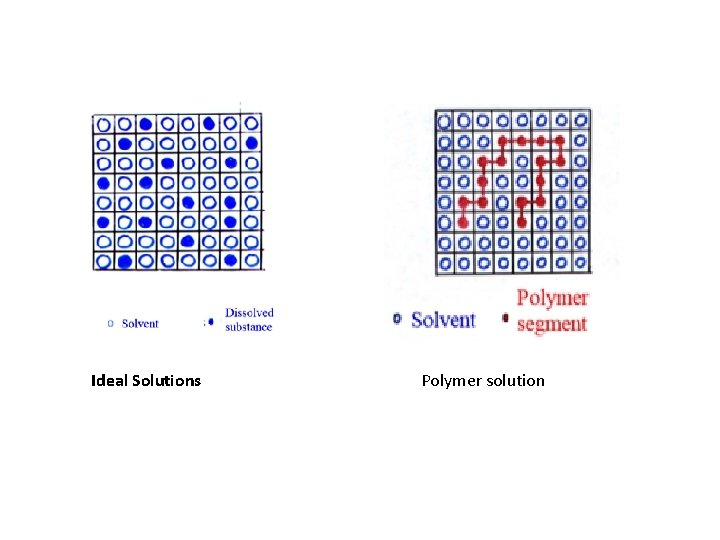
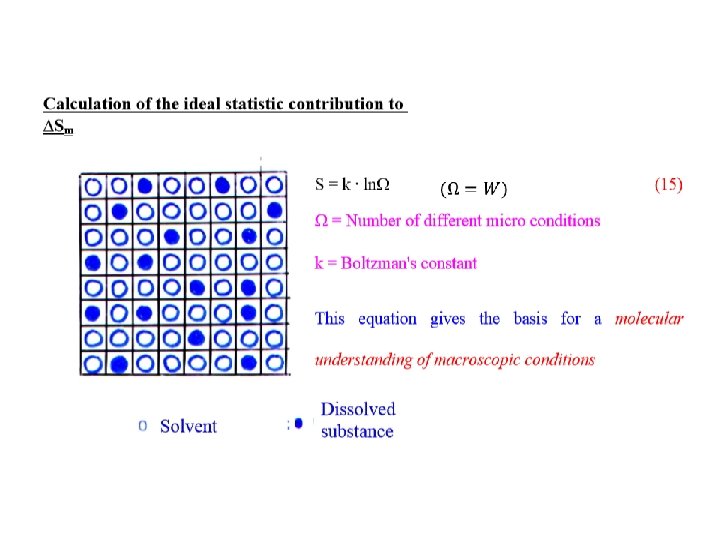
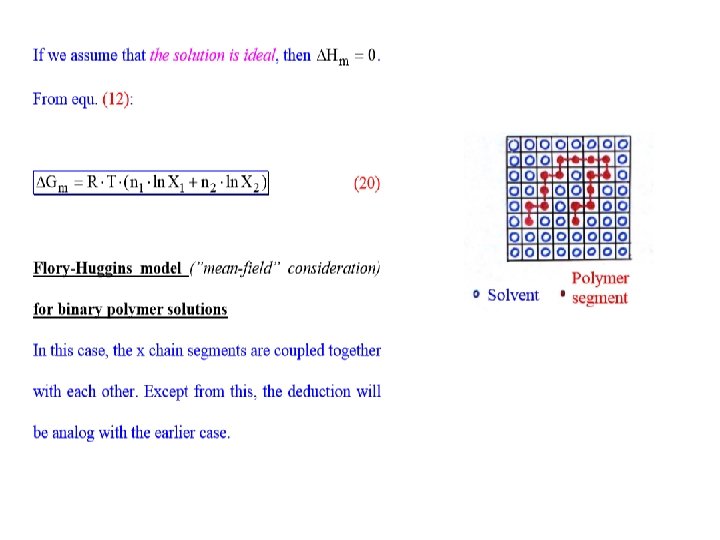
Flory Huggins theory • To deal with the drawback Flory Huggins proposed a simple solution theory that assumes the size of the segments of the polymer molecules and that of solvent molecules is fairly similar to each other as well as to the spaces within the solvent lattices • The lattice space in the solvent are occupied by the polymer like any low molecular mass solute. • It is a mathematical model to explain thermodynamics of polymer solution
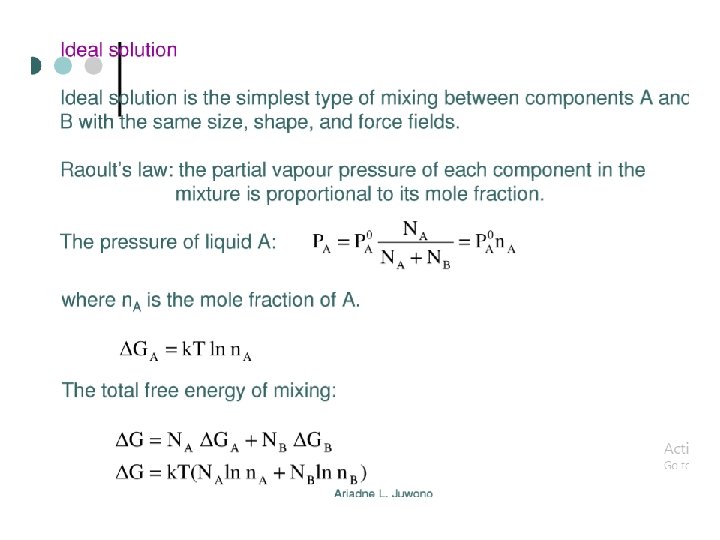
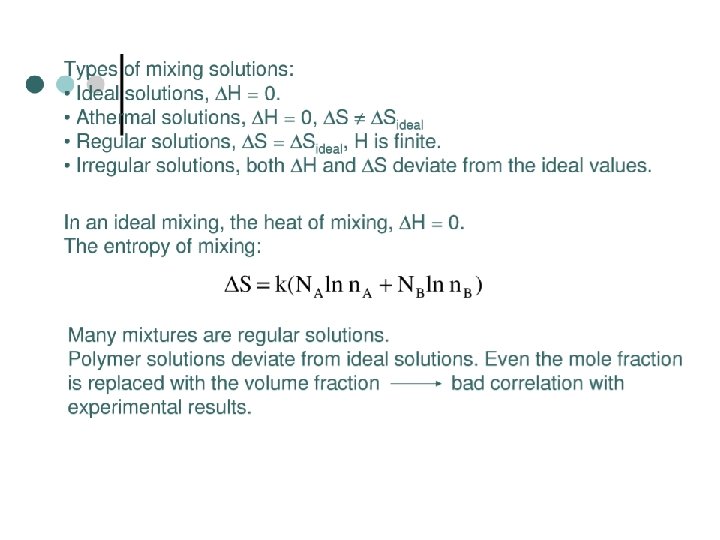
Ideal Solutions Polymer solution
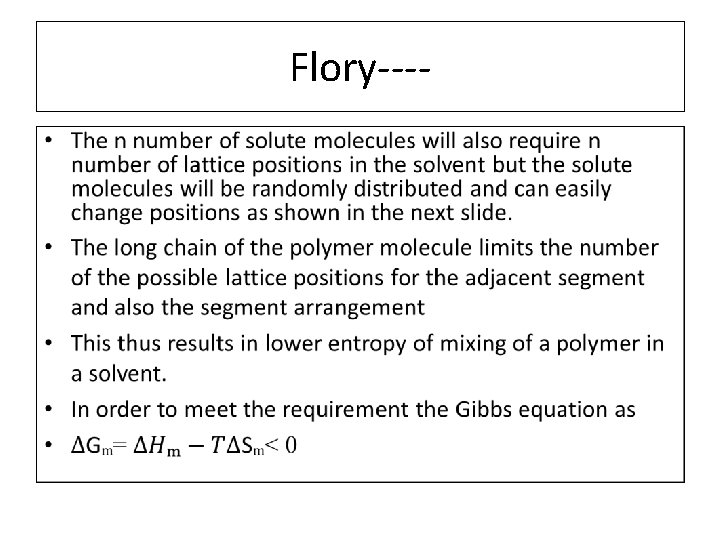
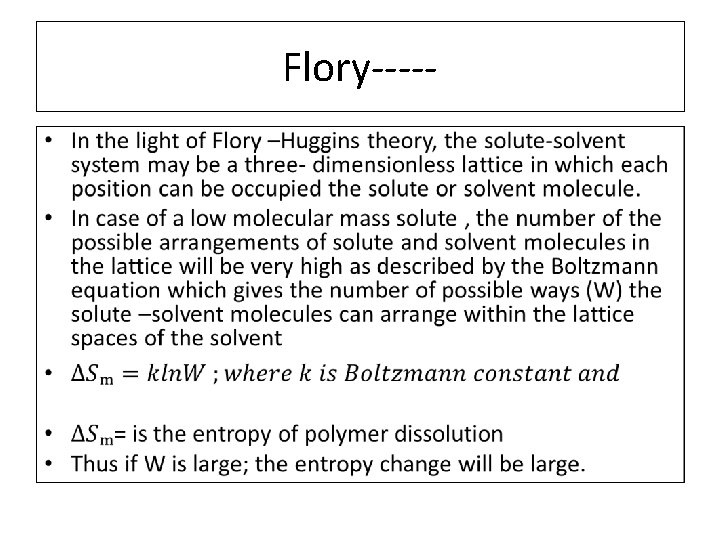
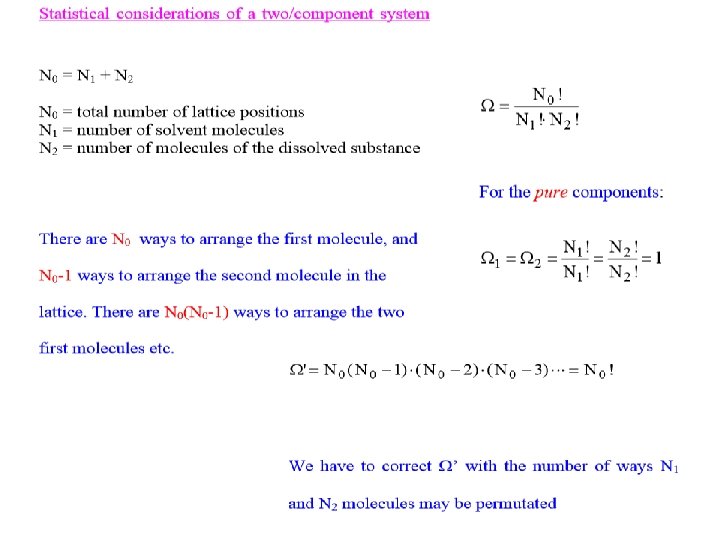
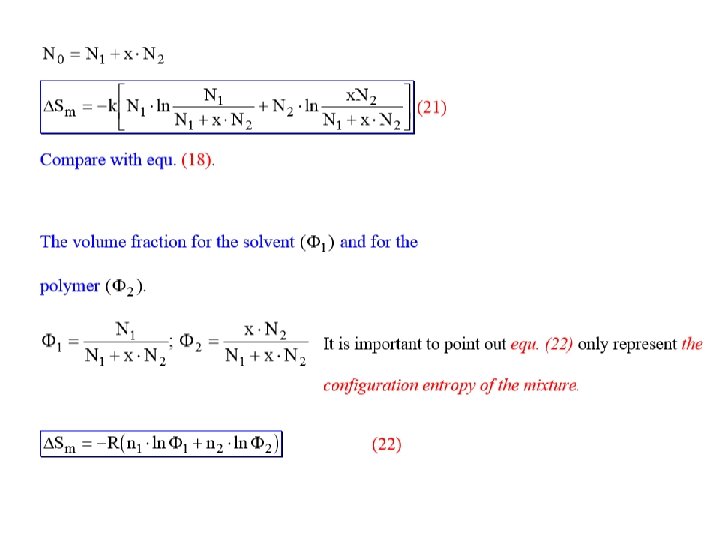
Flory----- • • When a Polymer undergoes dissolution in a suitable solvent, the magnitude of its entropy is very small compared to a low molecular mass solute. Due to its large size of the polymer molecules whereas small segments are covalently bonded to each other and are unable to accommodate in a well defined position within the solvent molecules. The movement gets ceased resulting in polymer molecules remaining close to each other. To calculate the entropy of the solution a polymer, each segment of the polymer molecule is equal to the size of the solvent molecule is assumed to occupy a position in the solvent lattice. This means polymer and solvent are of the same size and can replace each other in the lattice. Thus the number of segment molecules in a polymer (n) my be taken as the ratio of the volume of a polymer molecule and the volume of a solvent molecule. n number of segments of the polymer molecule will requires n number of consecutive lattice sites in order to accommodate the polymer molecule in the solvent lattice. The segments will remain together within the solvent lattice.
Flory--- •
Flory---- •
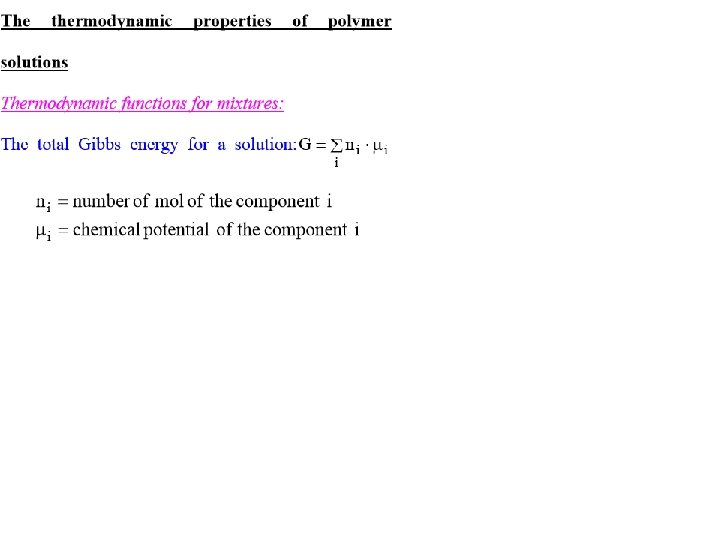
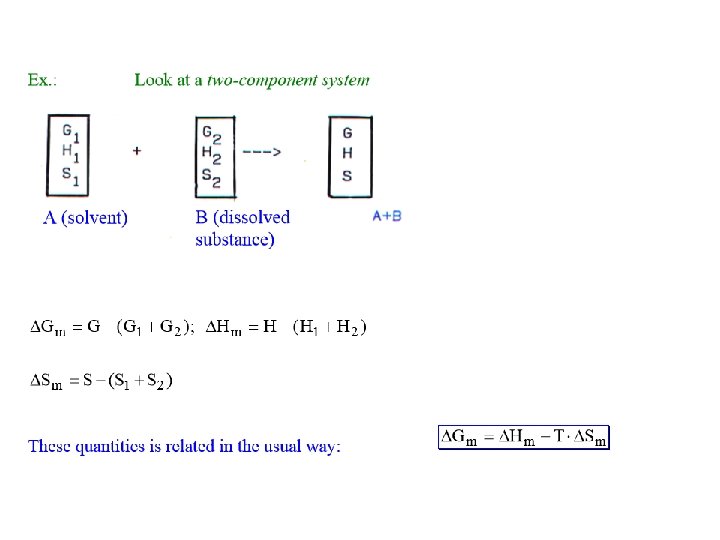
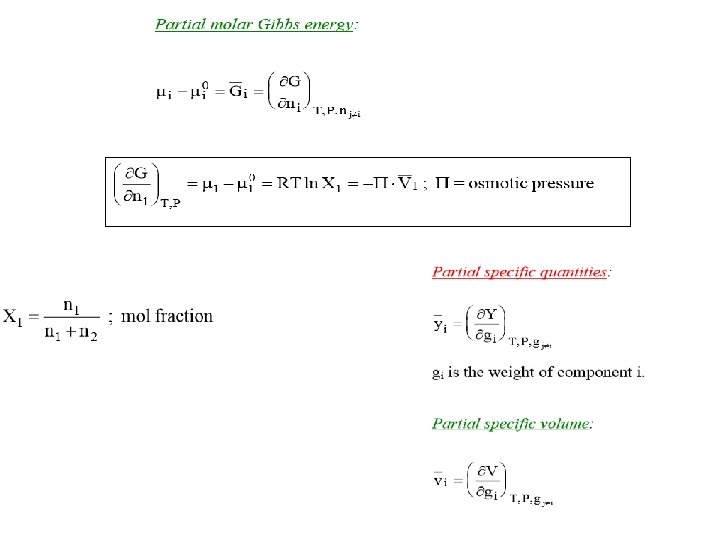
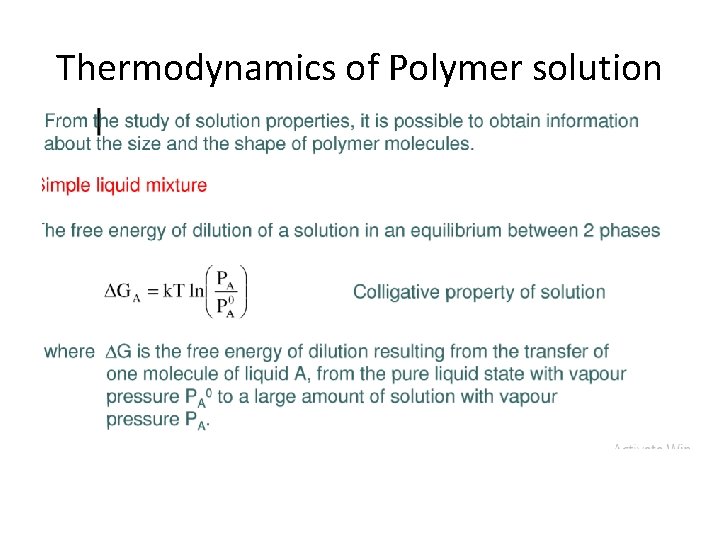
Thermodynamics of Polymer solution
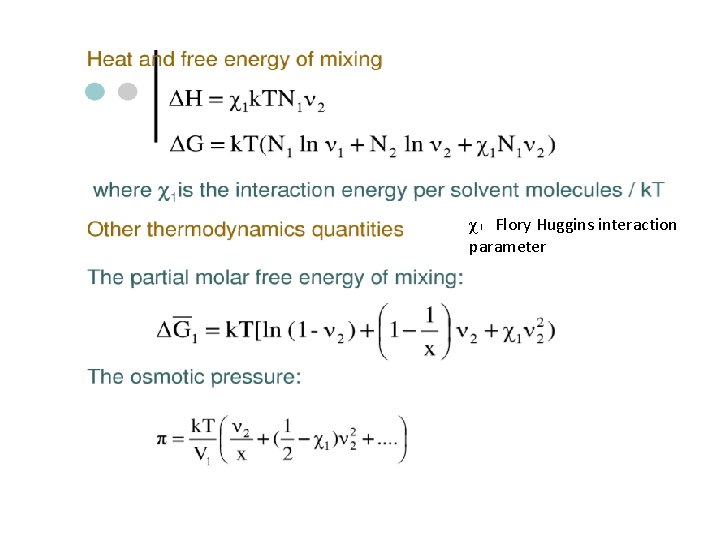
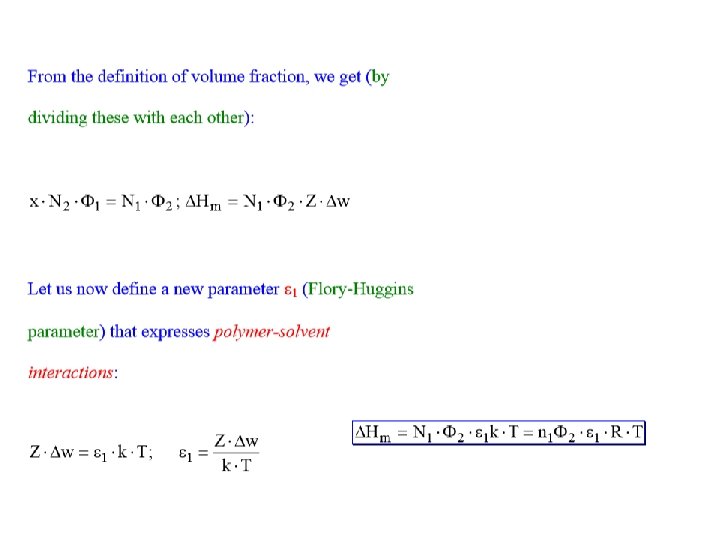
χ₁ Flory Huggins interaction parameter
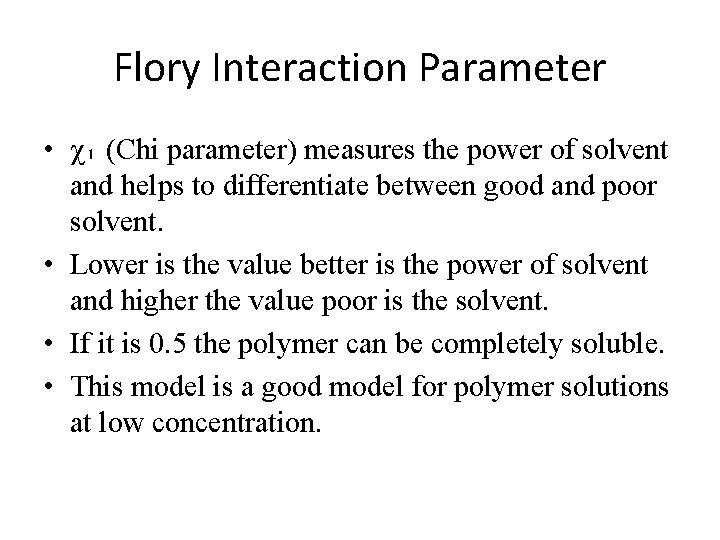
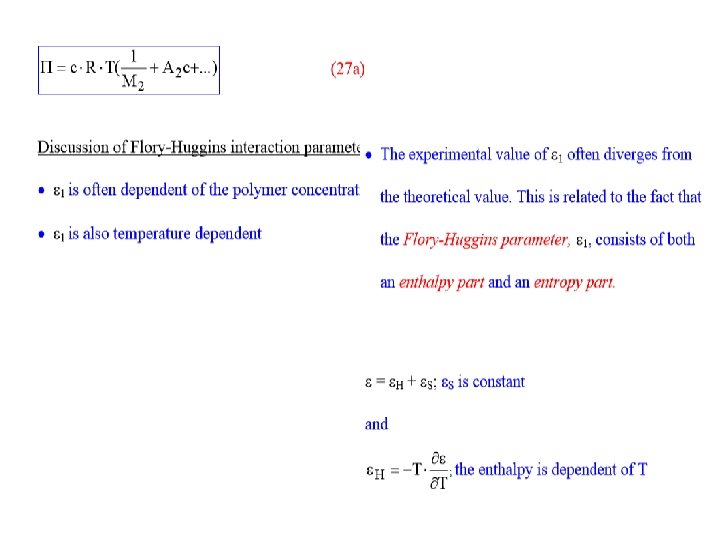
Flory Interaction Parameter • χ₁ (Chi parameter) measures the power of solvent and helps to differentiate between good and poor solvent. • Lower is the value better is the power of solvent and higher the value poor is the solvent. • If it is 0. 5 the polymer can be completely soluble. • This model is a good model for polymer solutions at low concentration.
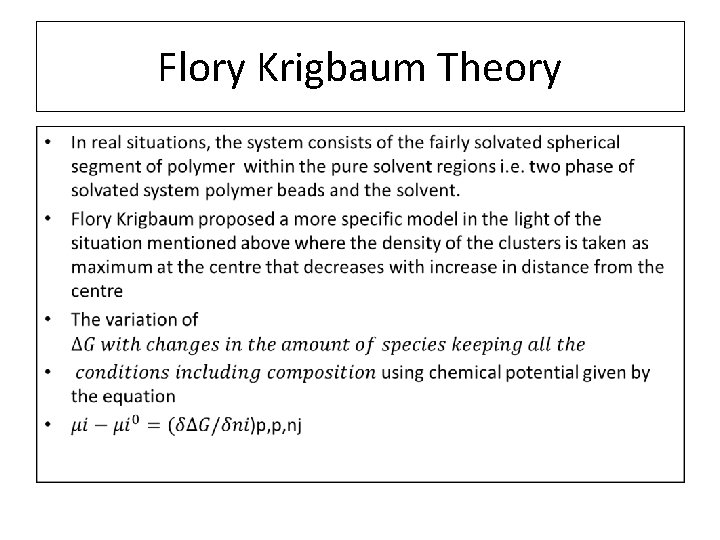
Flory Krigbaum Theory •
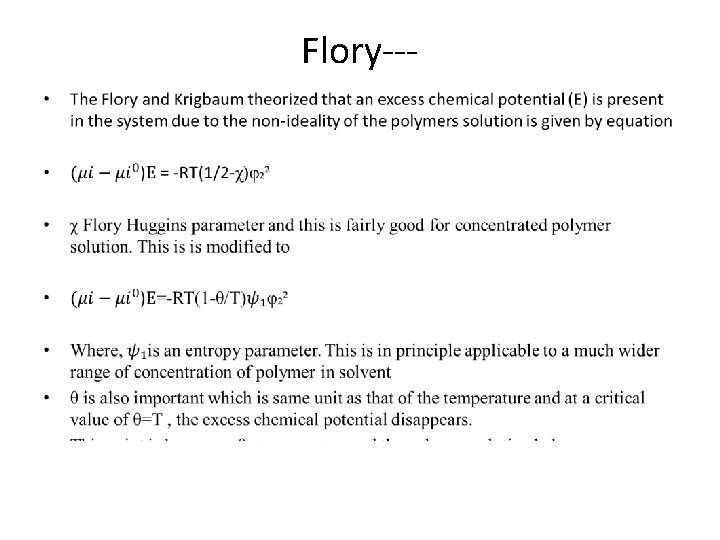
Flory-- •
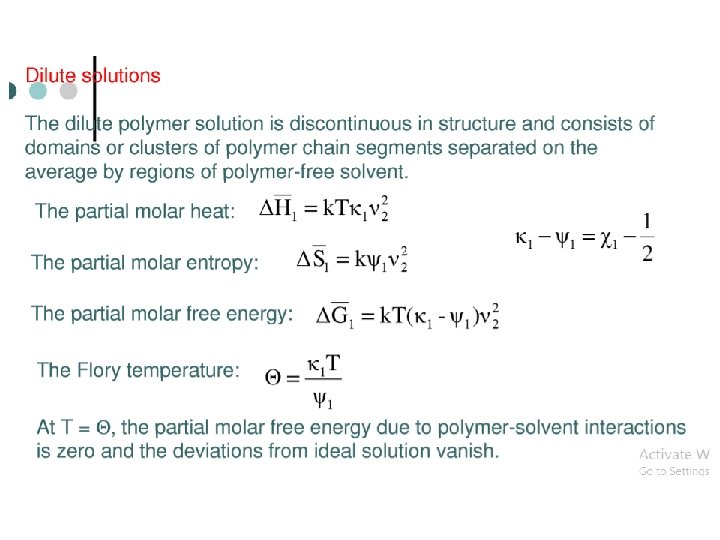
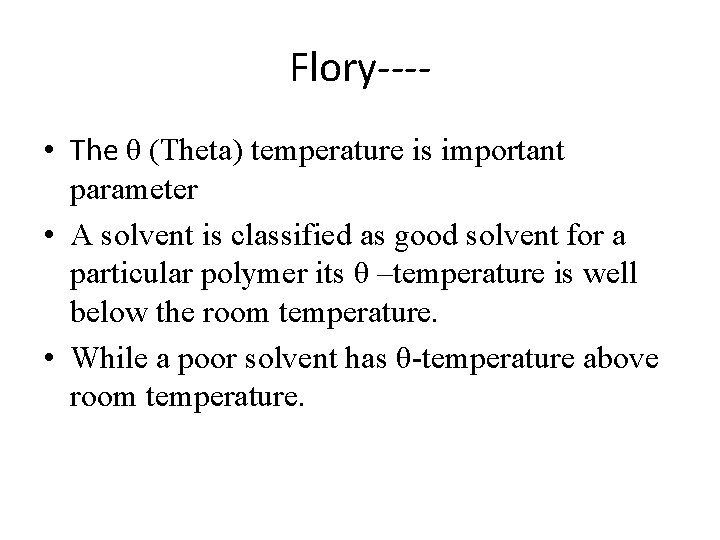
Flory--- • The θ (Theta) temperature is important parameter • A solvent is classified as good solvent for a particular polymer its θ –temperature is well below the room temperature. • While a poor solvent has θ-temperature above room temperature.
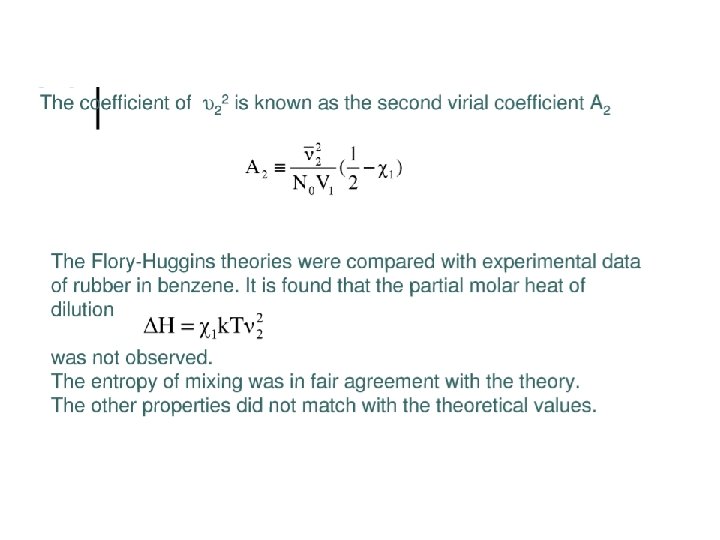
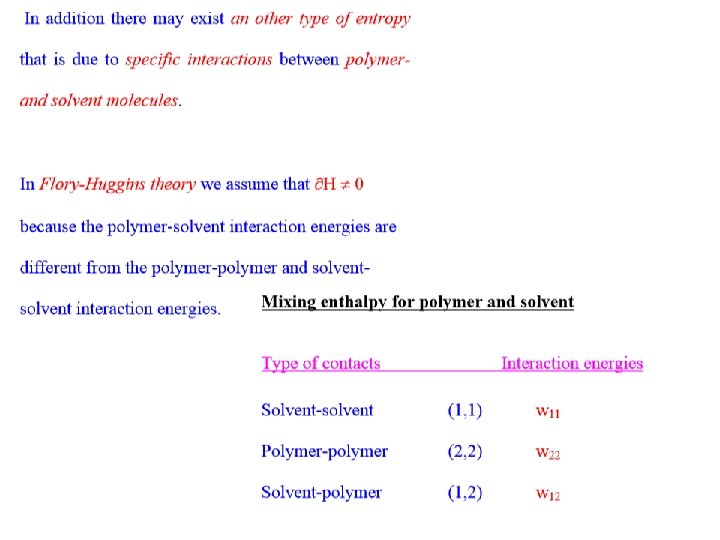
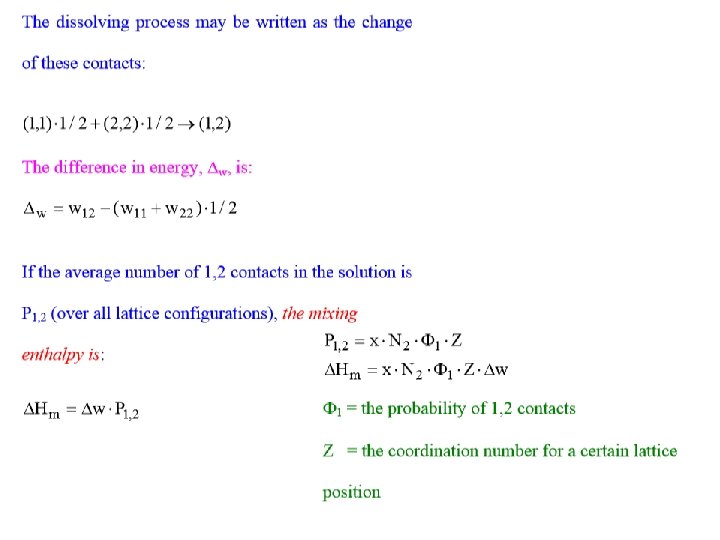
Limitations & Assumption Flory Huggins theory • Theory is applicable only to fairly concentrated polymer solutions as they are expected to have uniform segment density. • The dissolution of polymer in the solvent does not accompany change in volume as strong interaction cause decrease in volume. • The polymer segment & solvent molecule in solution do not prefer any particular arrangement to acquire lowest energy state. • χ does not depend on composition of the polymer solvent system • The polymer molecules are of same size.
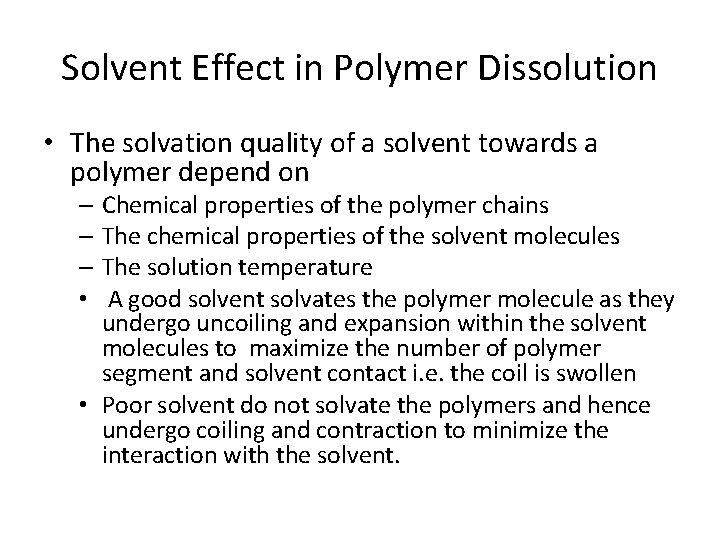
Solvent Effect in Polymer Dissolution • The solvation quality of a solvent towards a polymer depend on – Chemical properties of the polymer chains – The chemical properties of the solvent molecules – The solution temperature • A good solvent solvates the polymer molecule as they undergo uncoiling and expansion within the solvent molecules to maximize the number of polymer segment and solvent contact i. e. the coil is swollen • Poor solvent do not solvate the polymers and hence undergo coiling and contraction to minimize the interaction with the solvent.
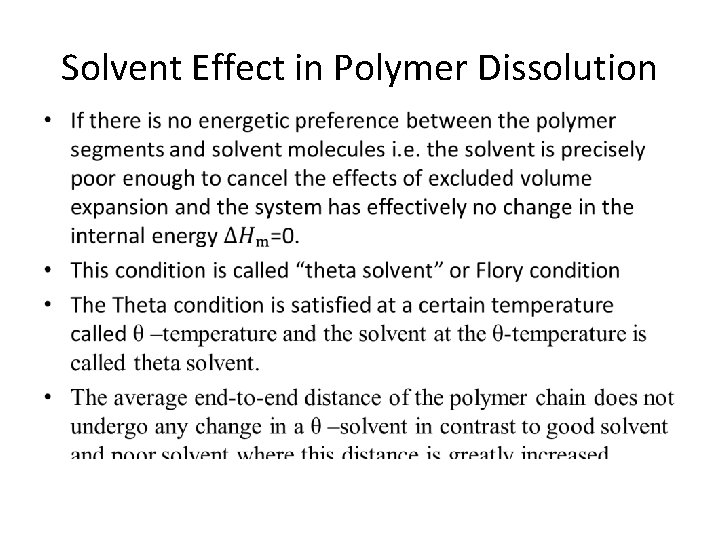
Solvent Effect in Polymer Dissolution •
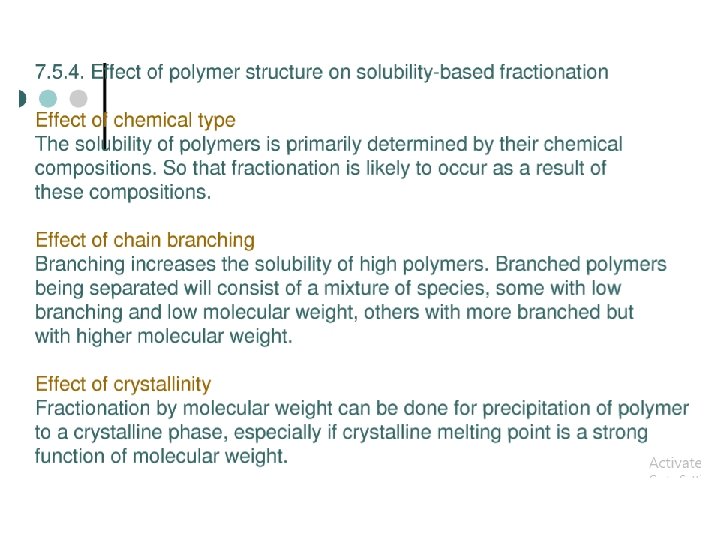
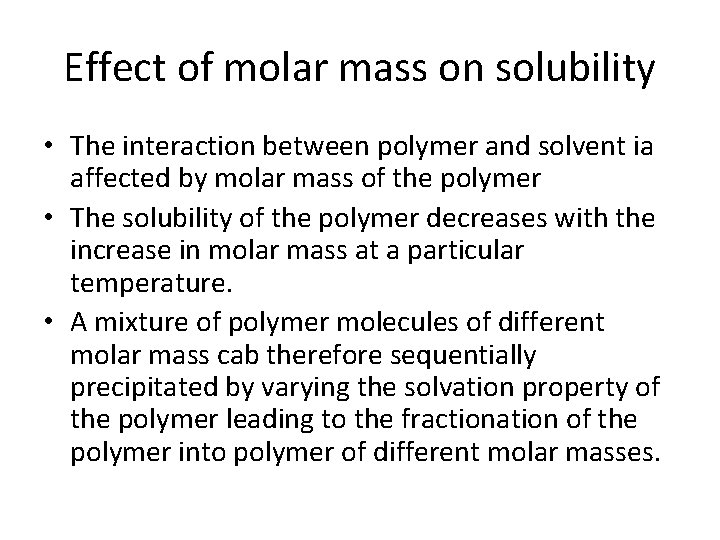
Effect of molar mass on solubility • The interaction between polymer and solvent ia affected by molar mass of the polymer • The solubility of the polymer decreases with the increase in molar mass at a particular temperature. • A mixture of polymer molecules of different molar mass cab therefore sequentially precipitated by varying the solvation property of the polymer leading to the fractionation of the polymer into polymer of different molar masses.
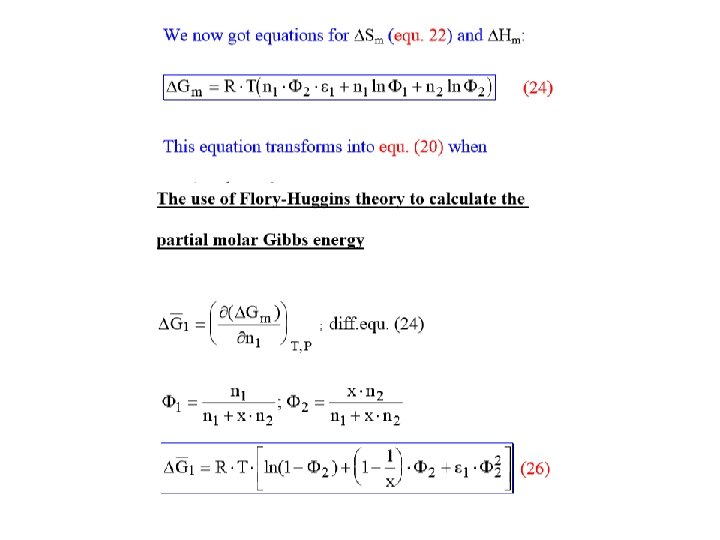
Details of Flory Huggins Theory (calculations)
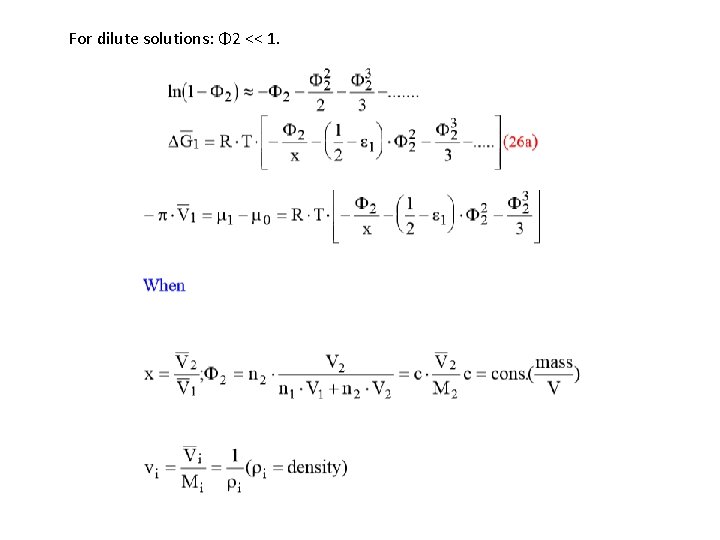
For dilute solutions: Φ 2 << 1.