Plant Identification Amy Jo Detweiler Jan Mc Neilan



- Slides: 74
Plant Identification Amy Jo Detweiler, Jan Mc. Neilan, Gail Gredler Horticulture Department
List 6 reasons why plant identification is important
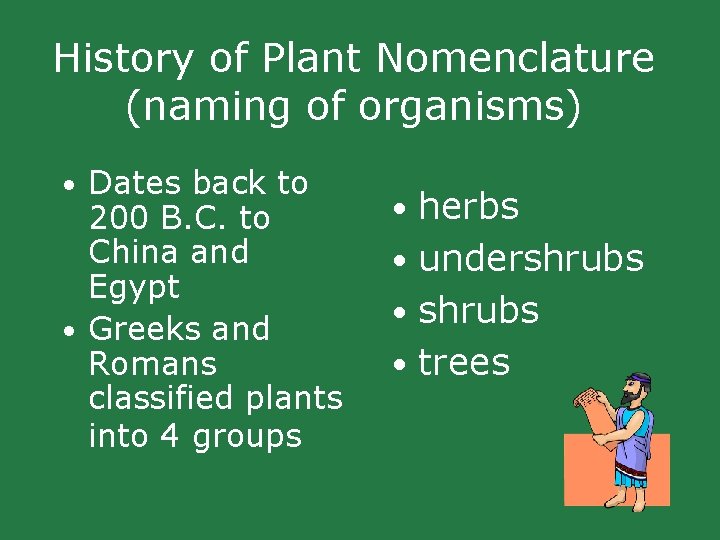
History of Plant Nomenclature (naming of organisms) • Dates back to 200 B. C. to China and Egypt • Greeks and Romans classified plants into 4 groups • herbs • undershrubs • trees
Listed plants using Latin terms, e. g. carnation would be
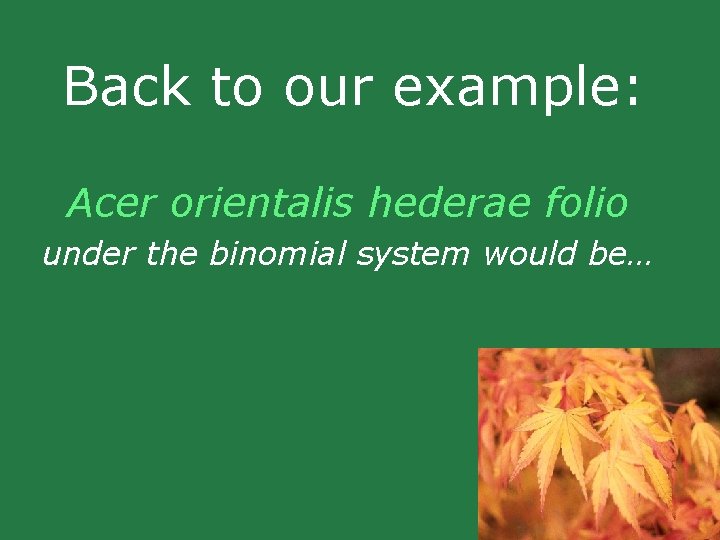
Another example: Oriental ivy-leaved maple
Binomial System of Nomenclature • system developed by Carl Von Linne or Linnaeus in the 1700’s used to methodically classify and name the whole of the natural world • Species Plantarum (1753) • system still in use today
Botanical nomenclature • language is mainly Latin with Greek and some other languages • these are “dead languages” whose words and meanings will likely change little over time
The names of plants • The scientific name for a plant consists of two words: 1. Genus or generic name 2. specific epithet species e. g. Quercus rubra
Back to our example: Acer orientalis hederae folio under the binomial system would be…
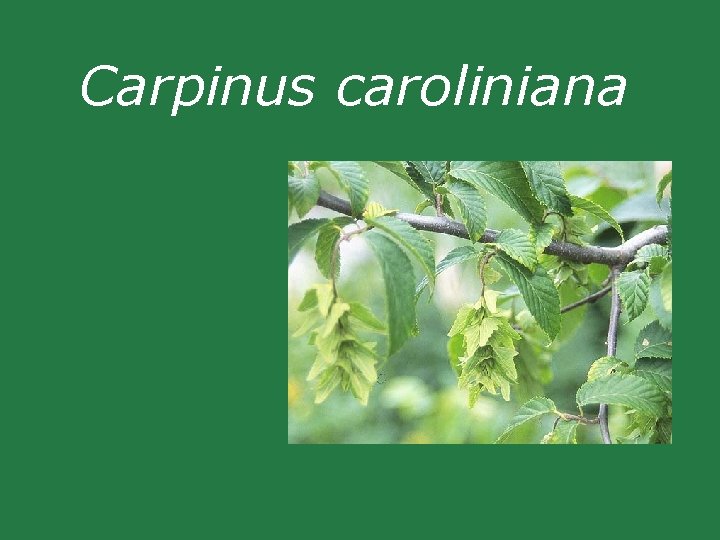
Carpinus caroliniana
Reasons not to use common names
Nymphaea alba European White Waterlily
• By using the binomial system of nomenclature, plant names are the same in all languages! • Every plant has a “first and last name” where the last name is written first.
Binomial Nomenclature clarifies plant i. d. • Deodar cedar • Atlas cedar
Plant Classification • There are over 1 million botanically different plants in existence named by the binomial system of nomenclature. • Modified by the International Congresses in Plant Taxonomy
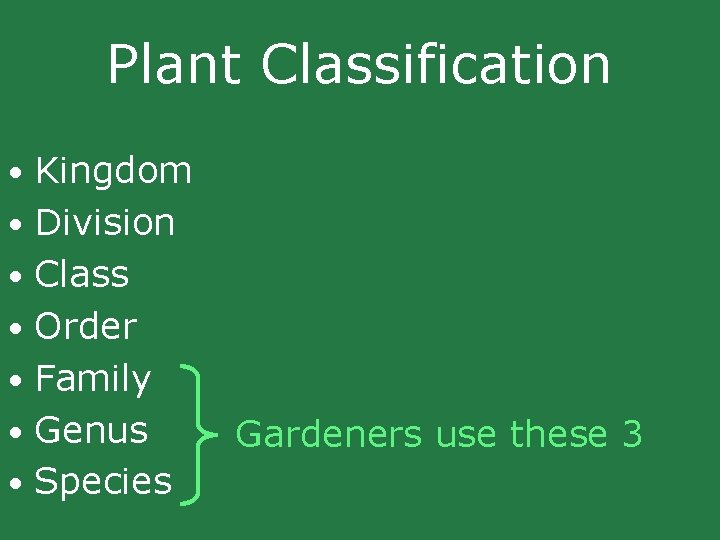
Plant Classification • Kingdom • Division • Class • Order • Family • Genus • Species Gardeners use these 3
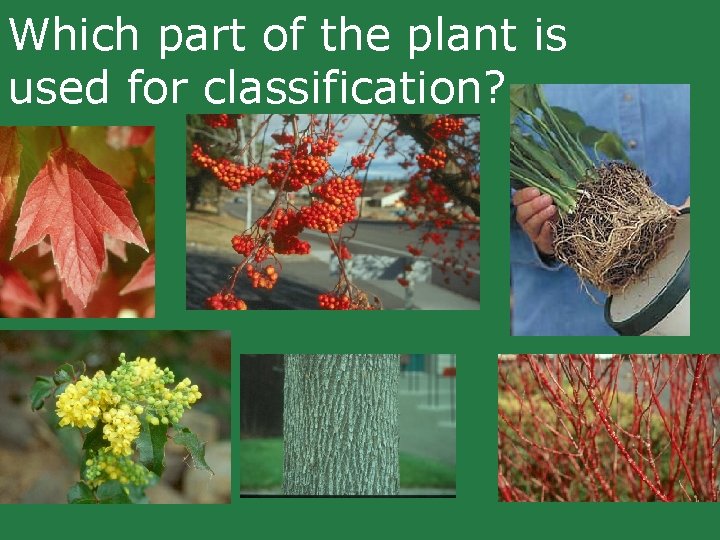
Which part of the plant is used for classification?
Plant Classification • Nearly all classifications are based on the ______ parts of the ___ and the ____.
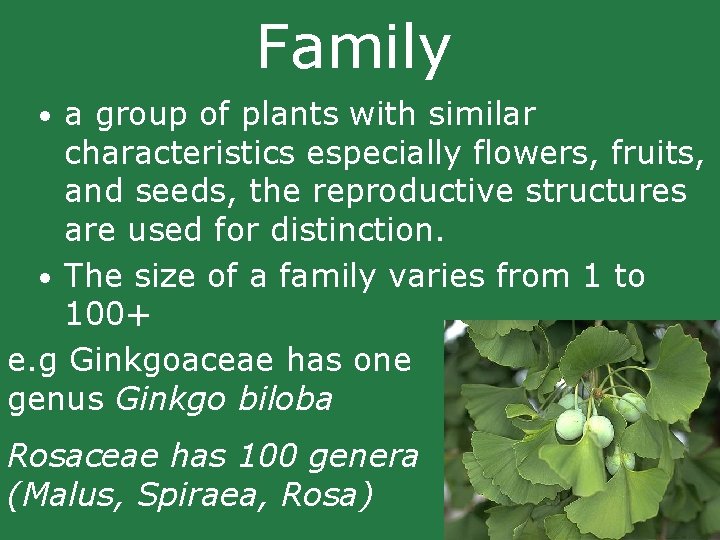
Family • a group of plants with similar characteristics especially flowers, fruits, and seeds, the reproductive structures are used for distinction. • The size of a family varies from 1 to 100+ e. g Ginkgoaceae has one genus Ginkgo biloba Rosaceae has 100 genera (Malus, Spiraea, Rosa)
Genus(plural genera) • a group of plants which is a closely related, definable group of plants exhibiting similar characteristics (flowers, fruit, stems, leaves, or roots) and genetic affinity
The genus is usually a noun, capitalized and can serve to describe one of the following: • a plants appearance-Hemerocallis (day and beauty) • supposed medicinal qualities. Pulmonaria (lungwort) • resemblance to body parts. Hepatica (liver) • honors a person by using their name – Kalmia (Peter Kalm)
Specific epithet • the second word in a scientific plant name, not capitalized and usually an adjective used to describe size, color, leaf shape, growth habit, origin of the plant or to commemorate a person.
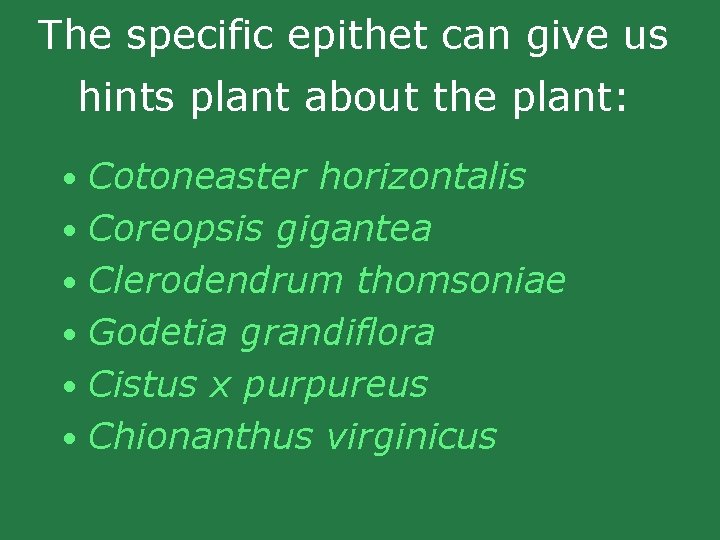
The specific epithet can give us hints plant about the plant: • Cotoneaster horizontalis • Coreopsis gigantea • Clerodendrum thomsoniae • Godetia grandiflora • Cistus x purpureus • Chionanthus virginicus
Species • the basis of the binomial system of nomenclature • a difficult word to define, a population of individuals within a genus that are capable ________________
Writing plant names correctly • scientific names should always be underlined or in italics • the genus is capitalized, the specific epithet is not • the name is only complete if it is followed by the name of the person who first described or named it
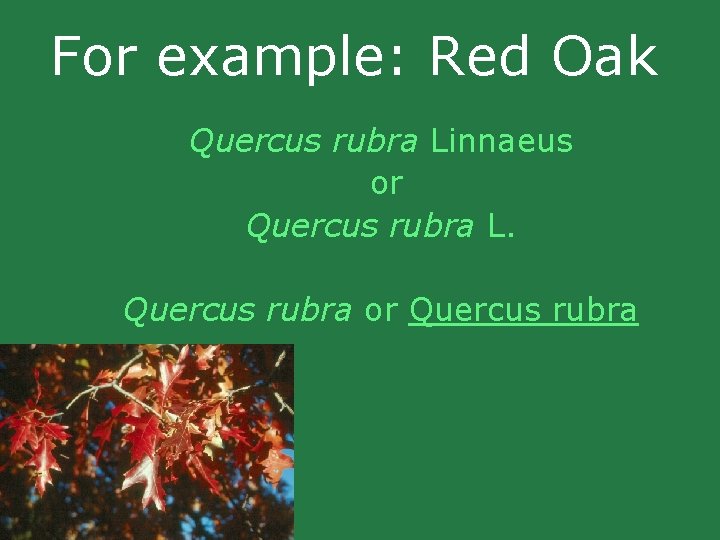
For example: Red Oak Quercus rubra Linnaeus or Quercus rubra L. Quercus rubra or Quercus rubra
Plant species can be divided more specifically into: • a cultivar • variety • hybrid • forma
Cultivar • “Cultivated variety” or horticultural variety • plants within a species that have been selected especially for a particular characteristic and are propagated, usually asexually to continue this trait(growth habit, flower, fruitless)
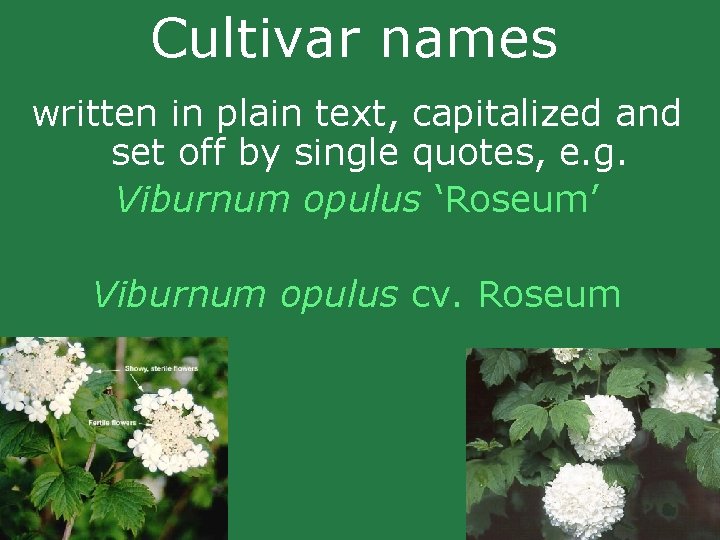
Cultivar names written in plain text, capitalized and set off by single quotes, e. g. Viburnum opulus ‘Roseum’ Viburnum opulus cv. Roseum
Variety • botanical or wild variety • a group of plants intermediate between species and forma and usually associated with inheritable differences. They are recognized as distinct populations breeding true to type
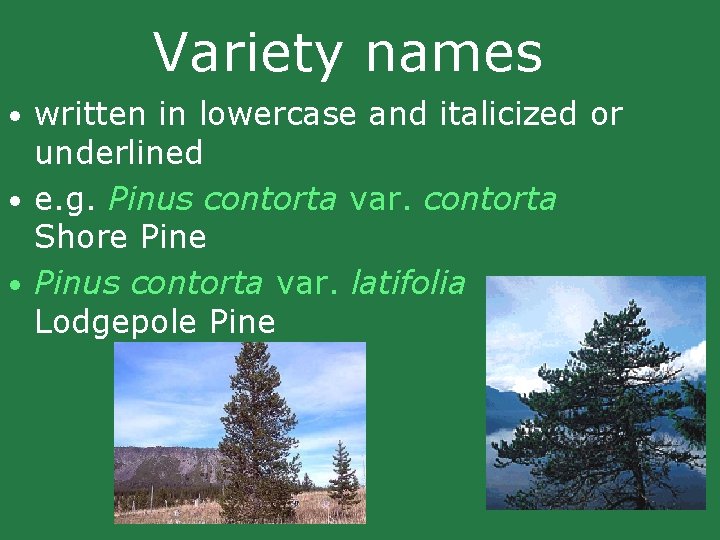
Variety names • written in lowercase and italicized or underlined • e. g. Pinus contorta var. contorta Shore Pine • Pinus contorta var. latifolia Lodgepole Pine
Hybrid • two closely related but distinct species will be interbreed to form a hybrid • are often sterile and produce no seed or fruit
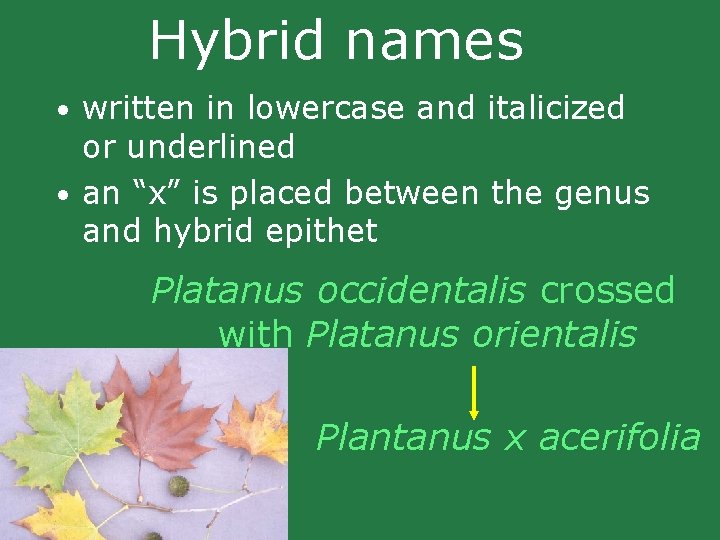
Hybrid names • written in lowercase and italicized or underlined • an “x” is placed between the genus and hybrid epithet Platanus occidentalis crossed with Platanus orientalis Plantanus x acerifolia
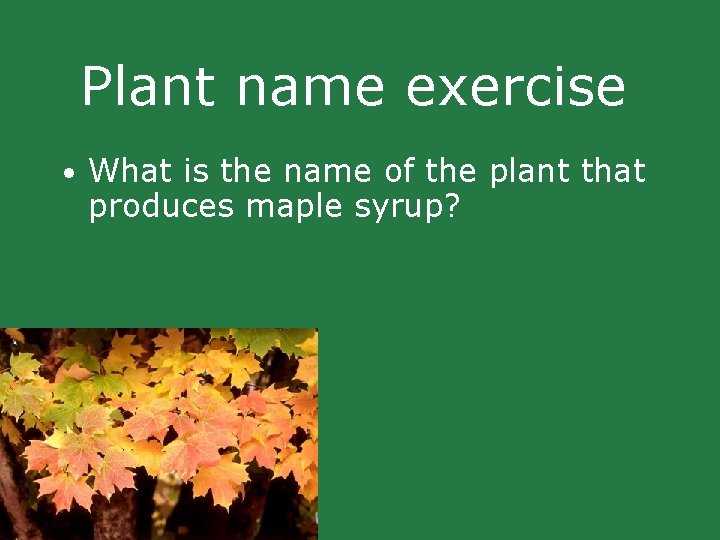
Plant name exercise • What is the name of the plant that produces maple syrup?
Integrated Approach to Plant Identification • Visual inspection of plant characteristics • Photographic references • Plant classification keys • Expert advice
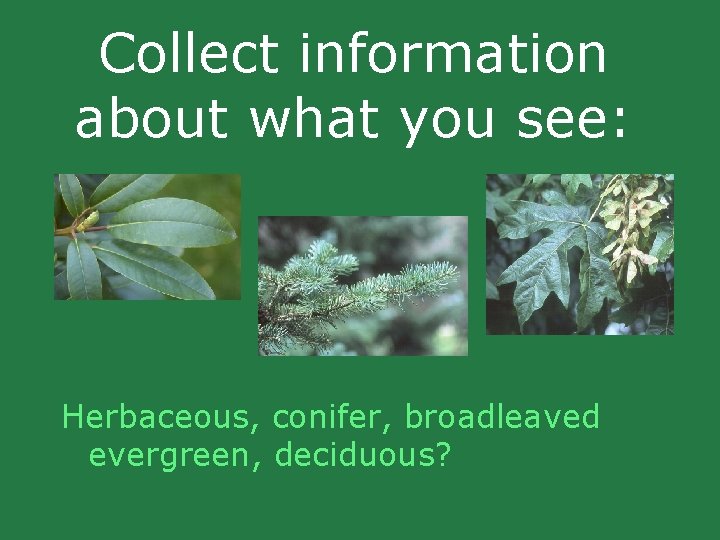
Collect information about what you see: Herbaceous, conifer, broadleaved evergreen, deciduous?
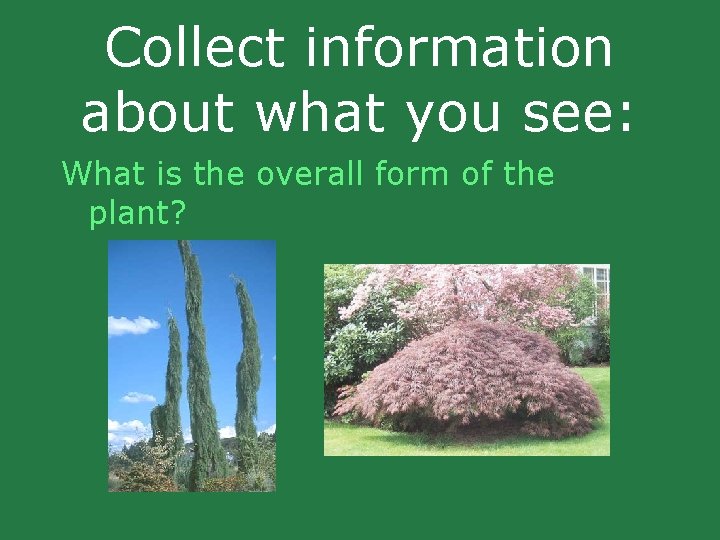
Collect information about what you see: What is the overall form of the plant?
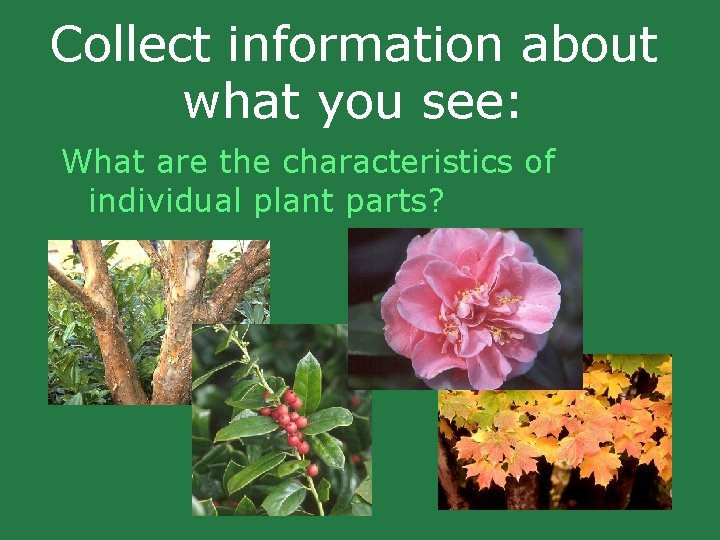
Collect information about what you see: What are the characteristics of individual plant parts?
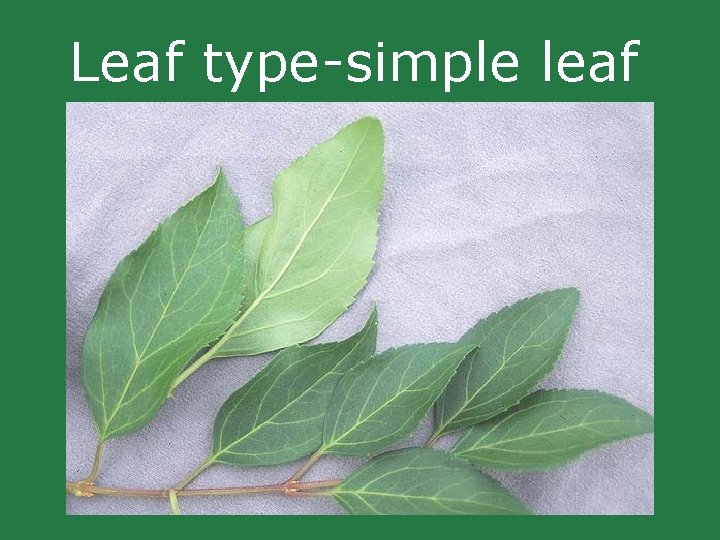
Leaf type-simple leaf
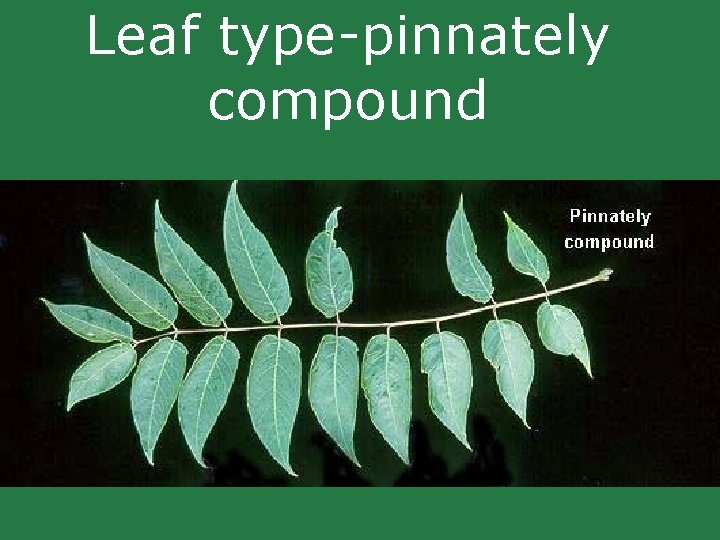
Leaf type-pinnately compound
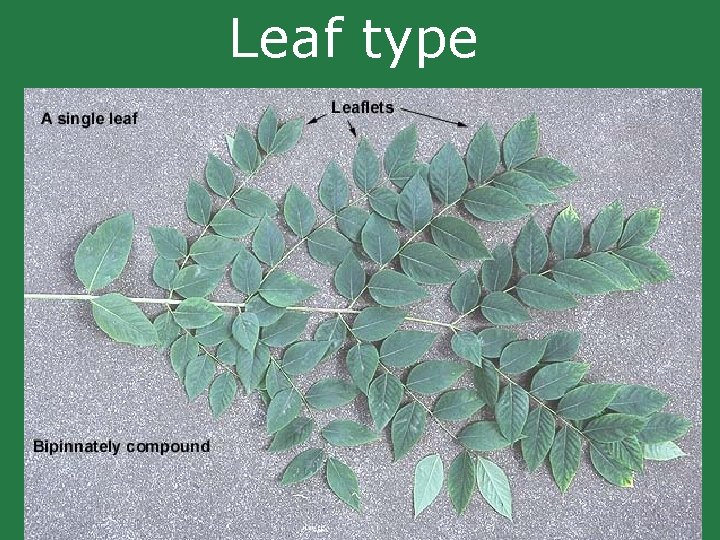
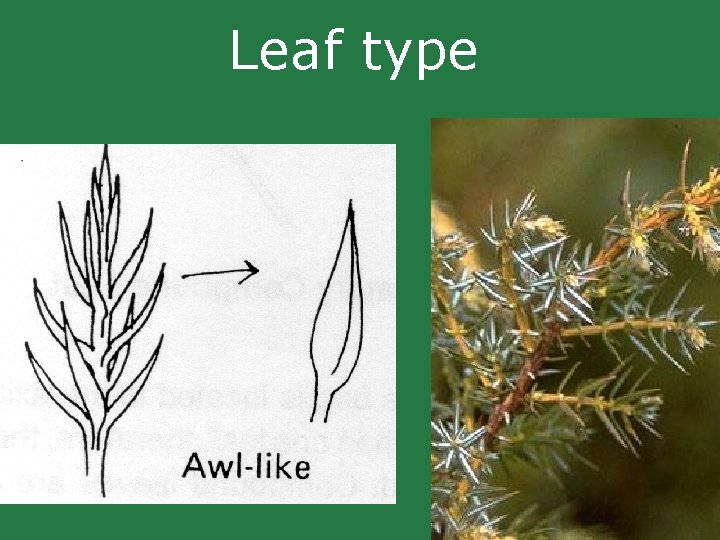
Leaf type
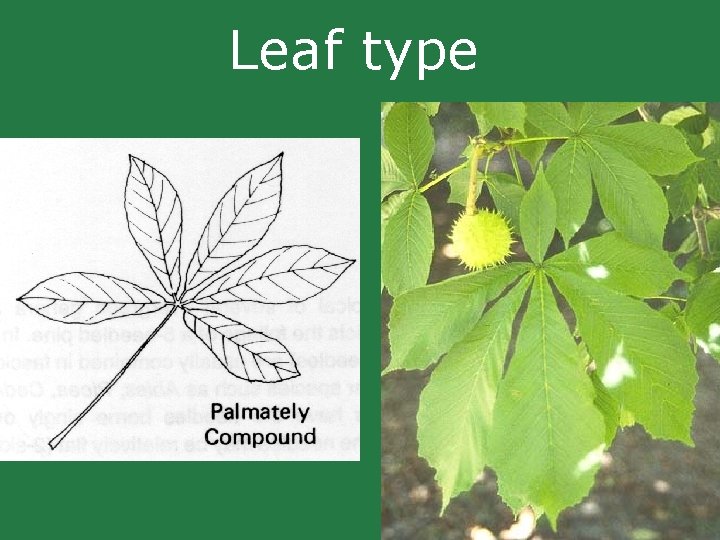
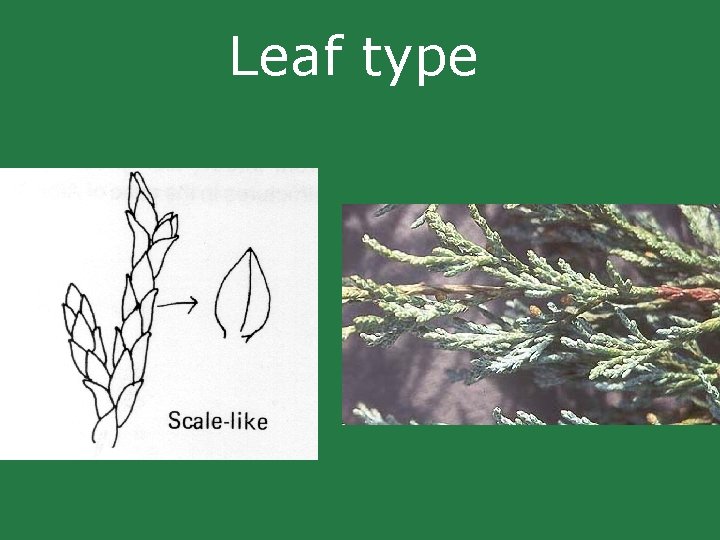
Leaf type
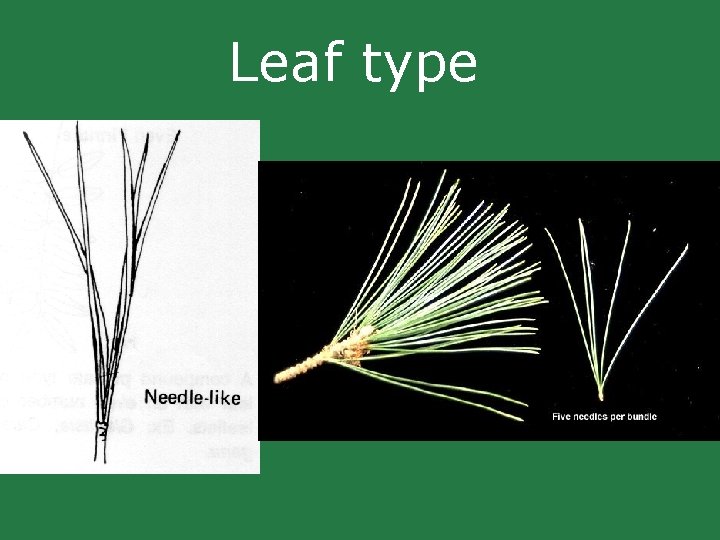
Leaf type
Leaf type
Leaf type
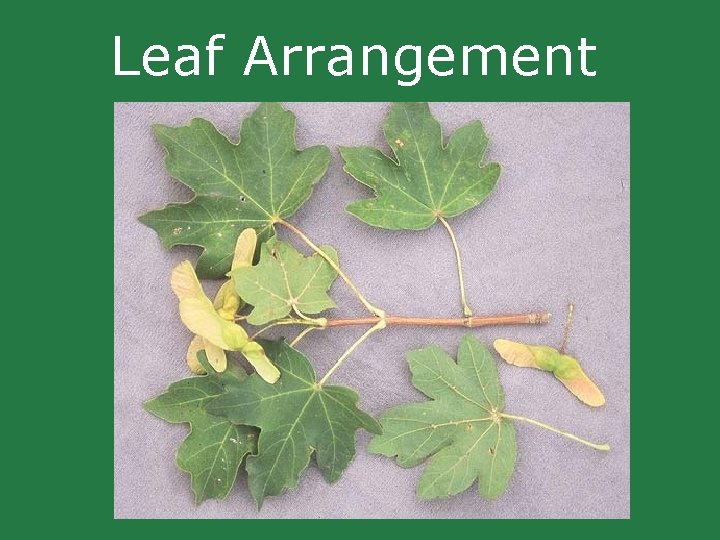
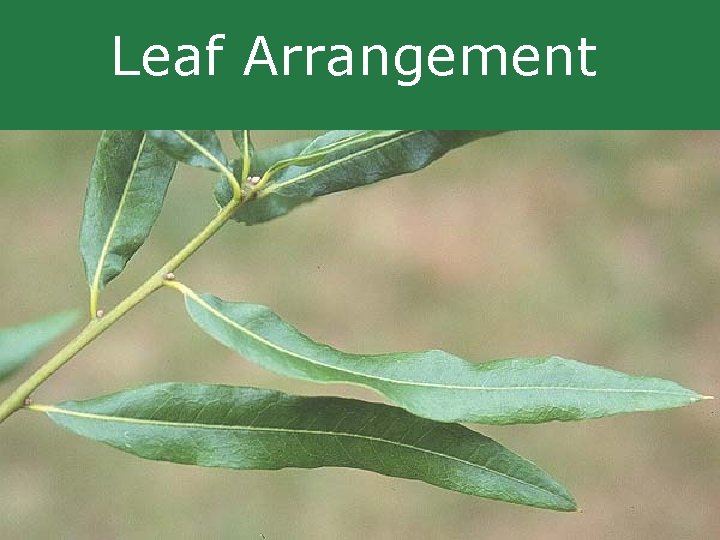
Leaf Arrangement
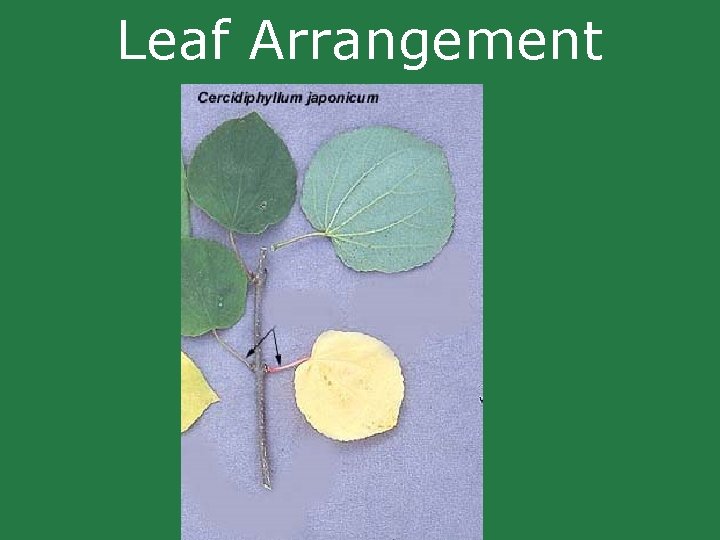
Leaf Arrangement
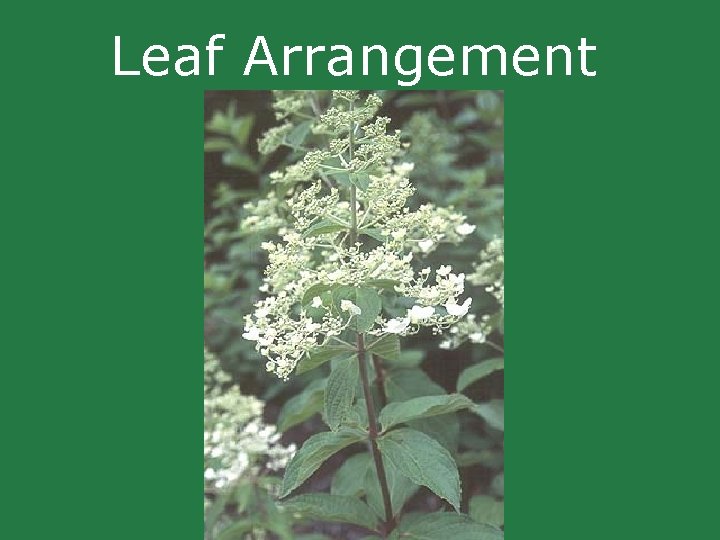
Leaf Arrangement
Leaf Arrangement
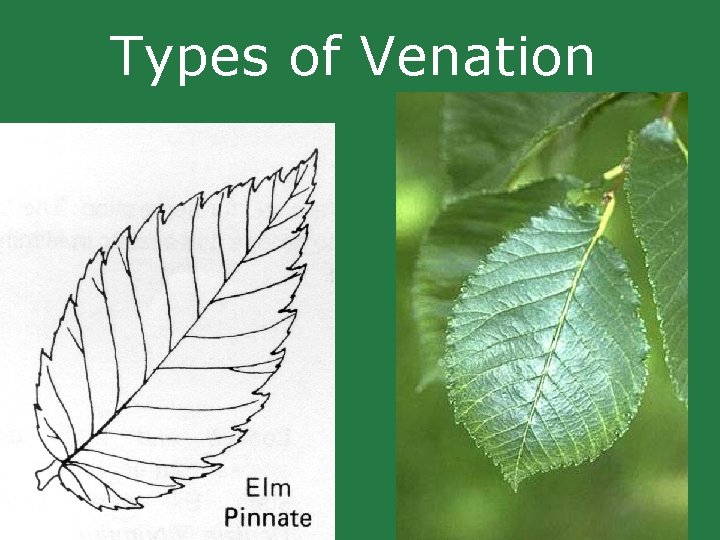
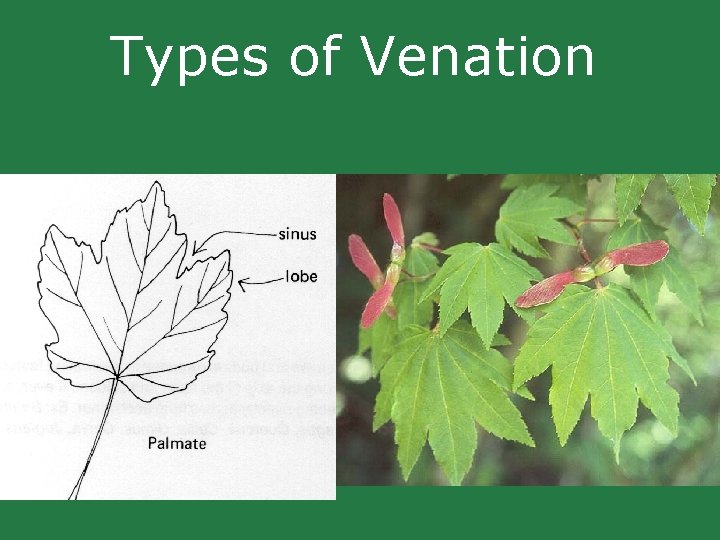
Types of Venation
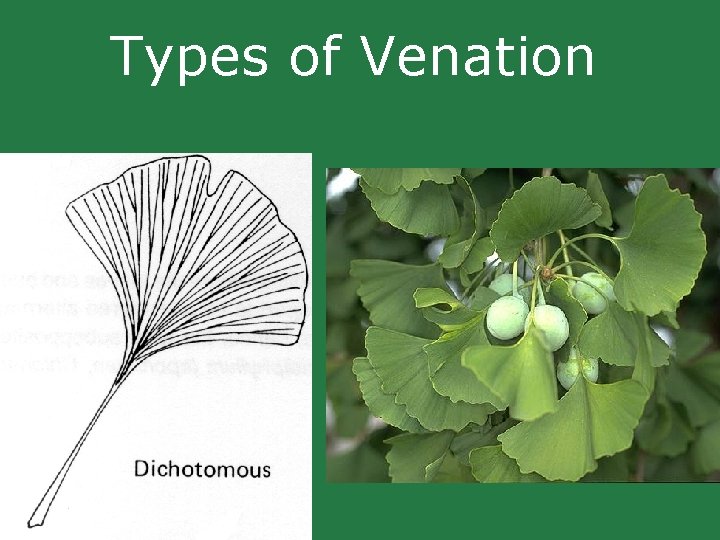
Types of Venation
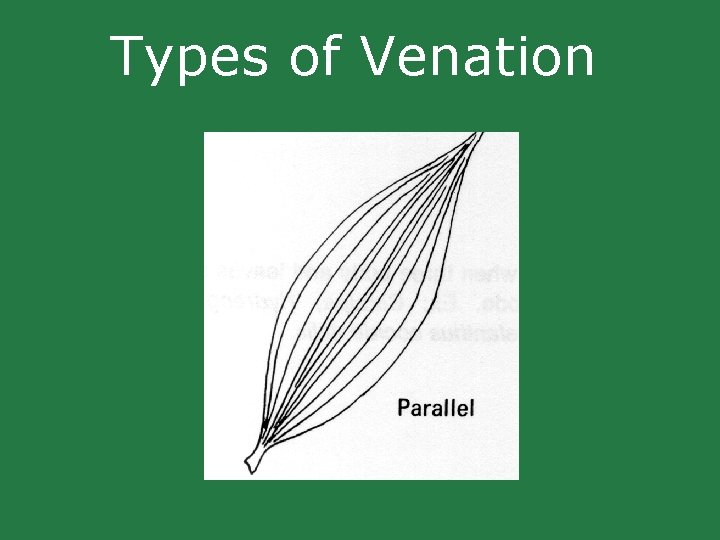
Types of Venation
Types of Venation
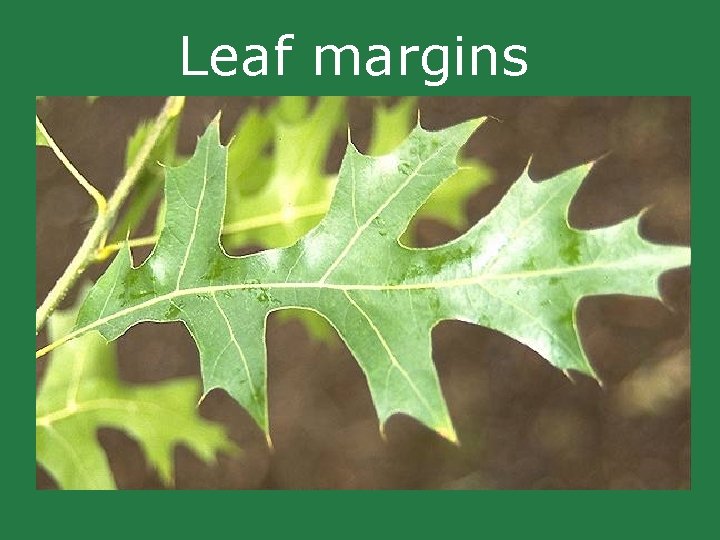
Leaf margins
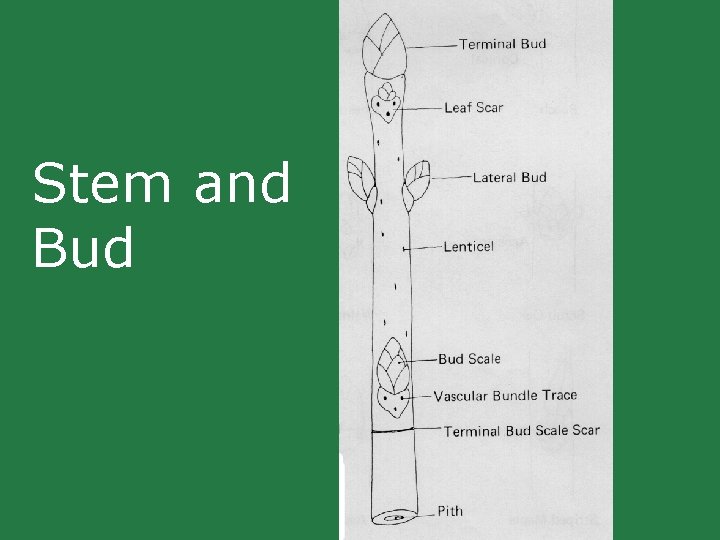
Stem and Bud
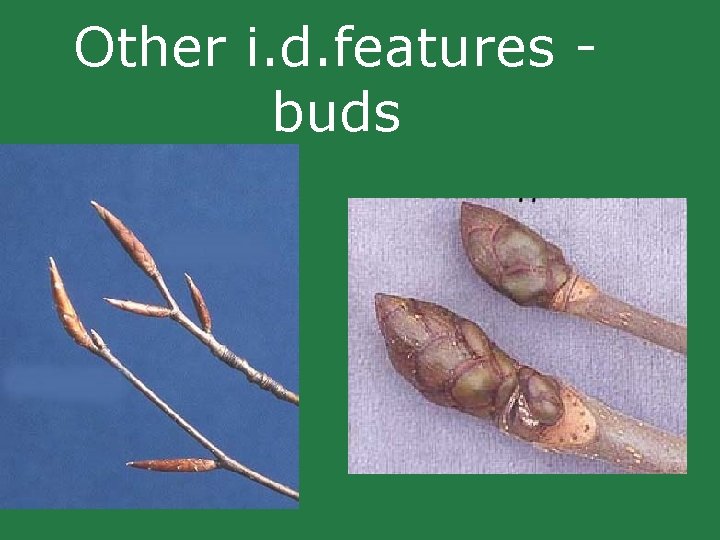
Other i. d. features buds
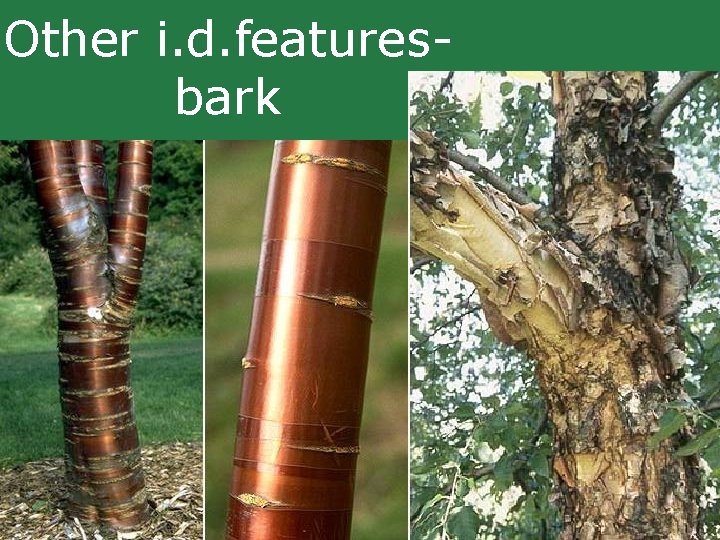
Other i. d. featuresbark
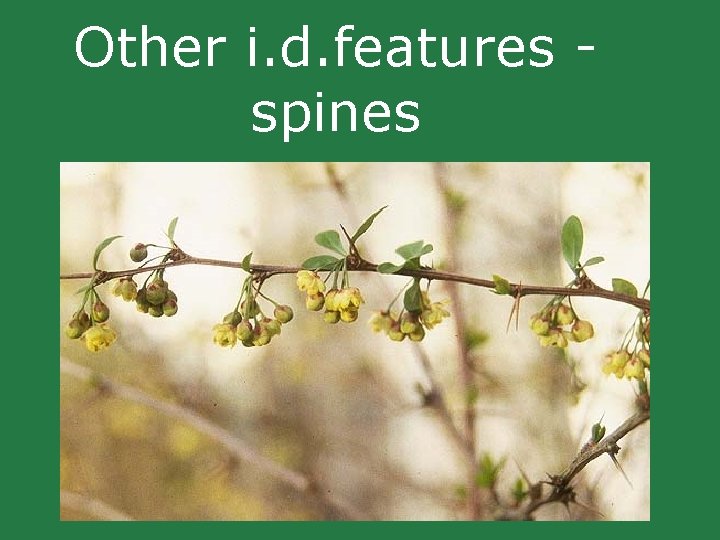
Other i. d. features spines
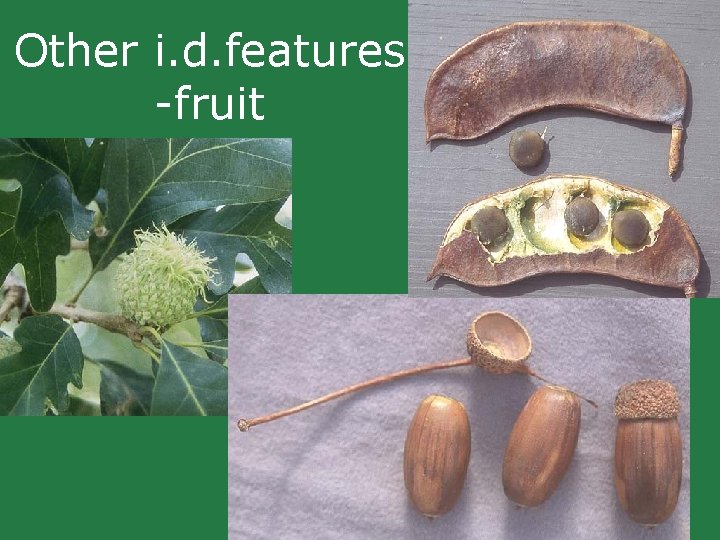
Other i. d. features -fruit
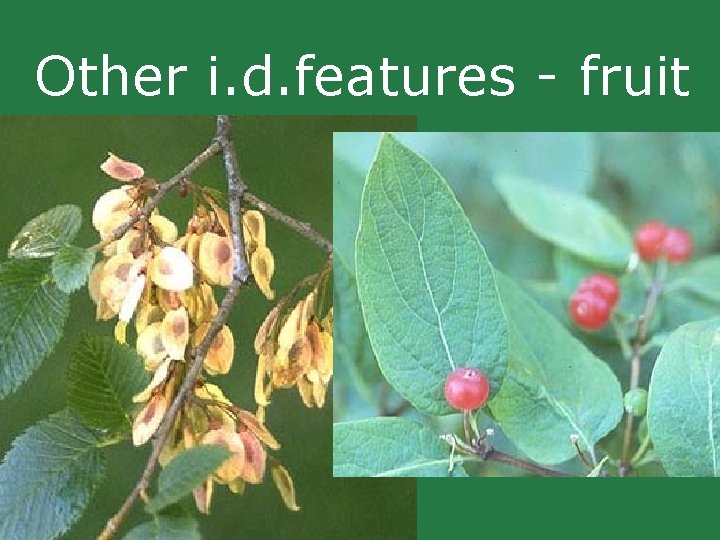
Other i. d. features - fruit
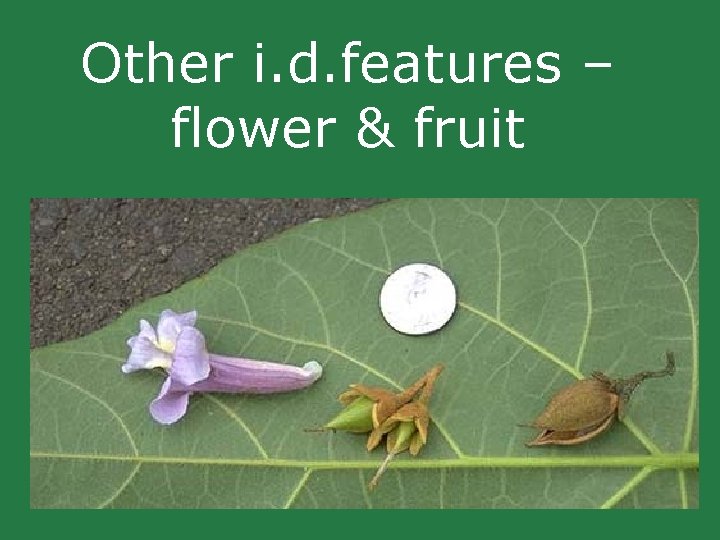
Other i. d. features – flower & fruit
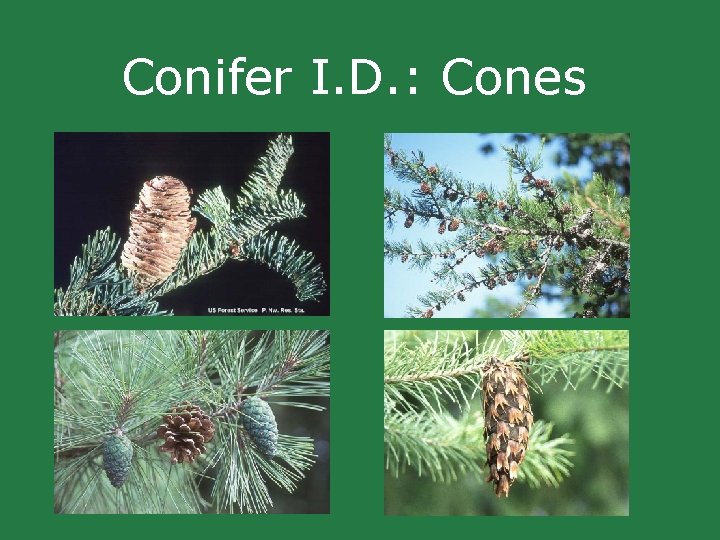
Conifer I. D. : Cones
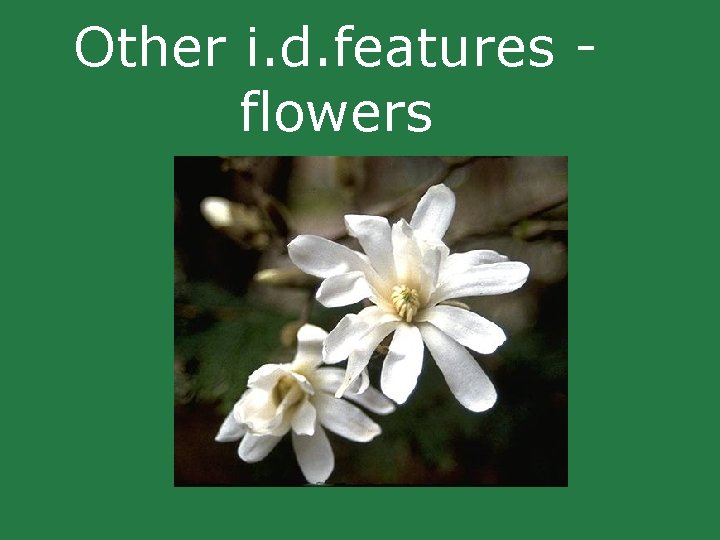
Other i. d. features flowers
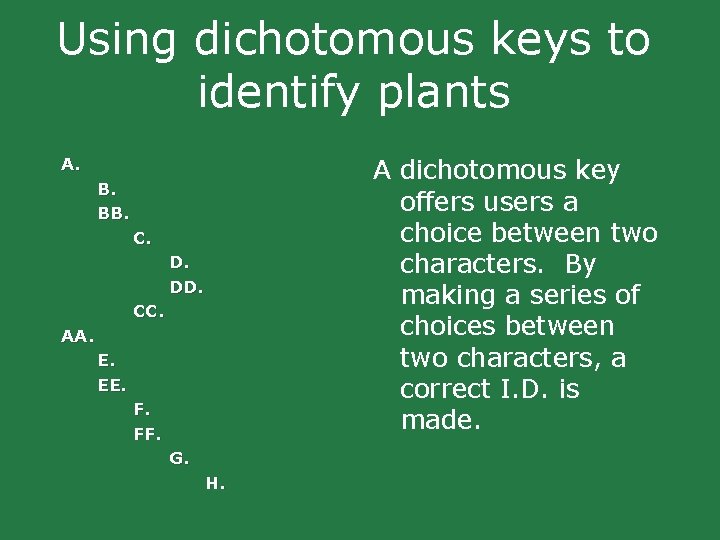
Using dichotomous keys to identify plants A dichotomous key offers users a choice between two characters. By making a series of choices between two characters, a correct I. D. is made. A. B. BB. C. D. DD. CC. AA. E. EE. F. FF. G. H.
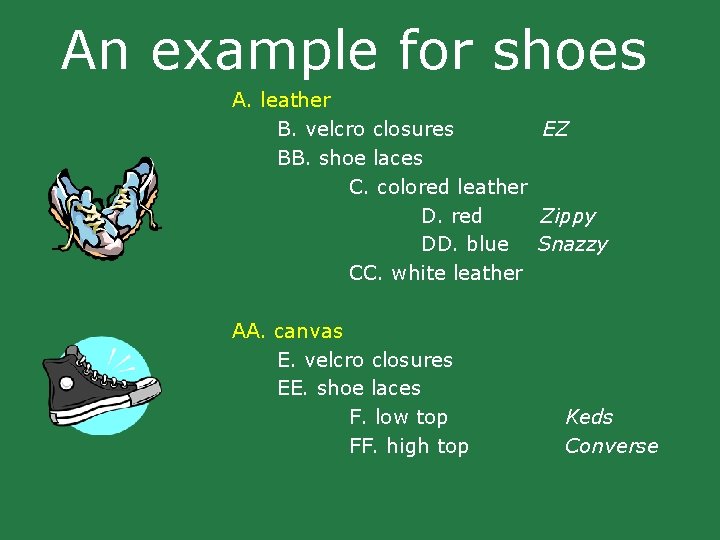
An example for shoes A. leather B. velcro closures EZ BB. shoe laces C. colored leather D. red Zippy DD. blue Snazzy CC. white leather AA. canvas E. velcro closures EE. shoe laces F. low top FF. high top Keds Converse
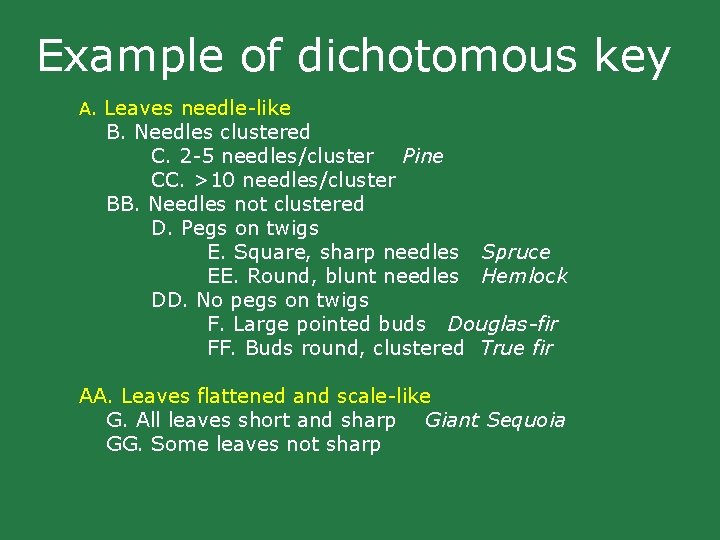
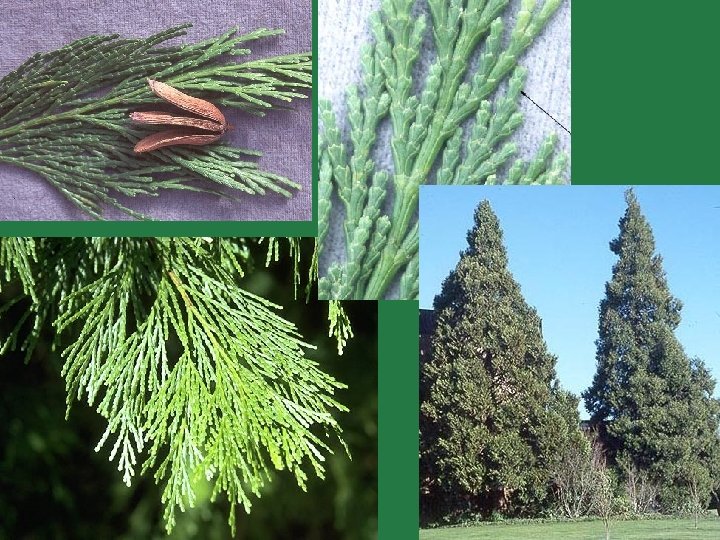
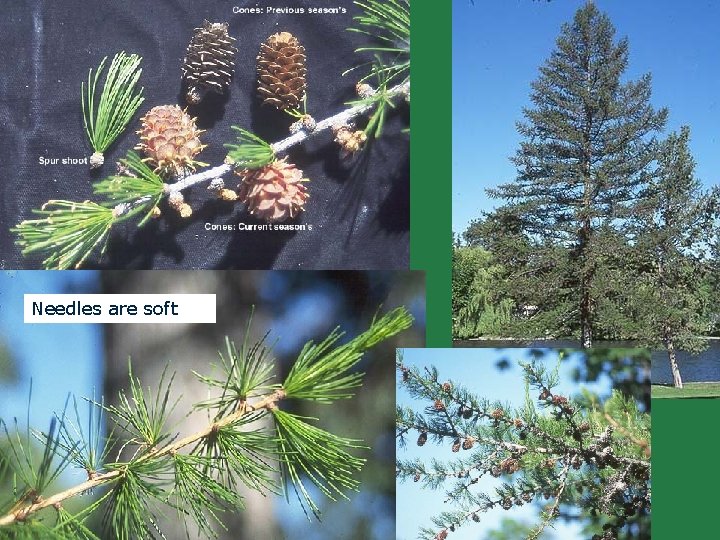
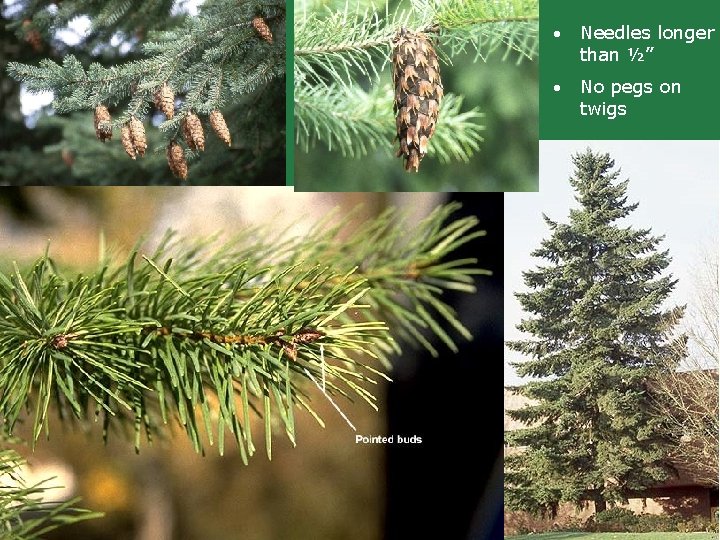
Example of dichotomous key A. Leaves needle-like B. Needles clustered C. 2 -5 needles/cluster Pine CC. >10 needles/cluster BB. Needles not clustered D. Pegs on twigs E. Square, sharp needles Spruce EE. Round, blunt needles Hemlock DD. No pegs on twigs F. Large pointed buds Douglas-fir FF. Buds round, clustered True fir AA. Leaves flattened and scale-like G. All leaves short and sharp Giant Sequoia GG. Some leaves not sharp
Needles are soft
• Needles longer than ½” • No pegs on twigs
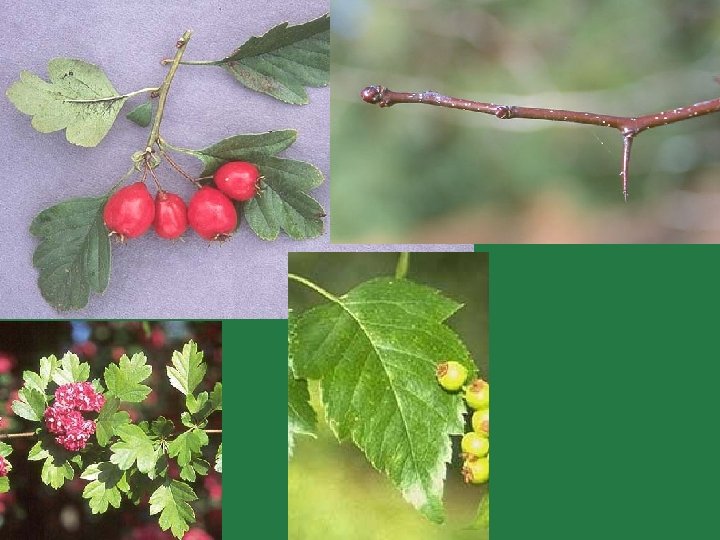
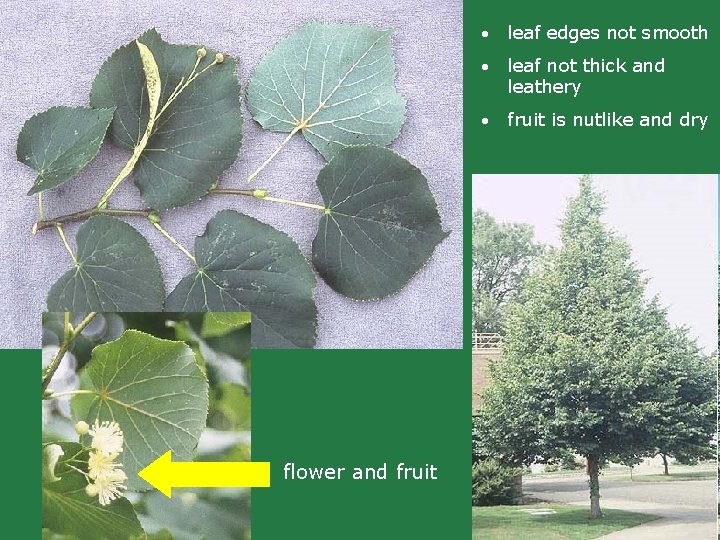
flower and fruit • leaf edges not smooth • leaf not thick and leathery • fruit is nutlike and dry
More resources Landscape Plants Images, Identification, and Information Volume 1 Copyright, Oregon State University, 1999 -2004 http: //oregonstate. edu/dept/ldplants
More resources
More resources