
Adult Male Hypogonadism Amy Neumeister MD FACP Objectives
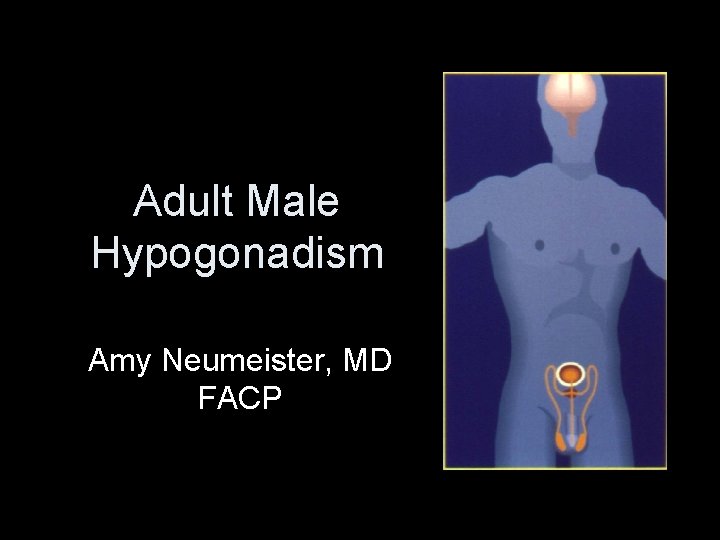
Adult Male Hypogonadism Amy Neumeister, MD FACP

Objectives: Adult Male Hypogonadism • • Screening Diagnosis/Differential Treatment Adverse events & safety monitoring
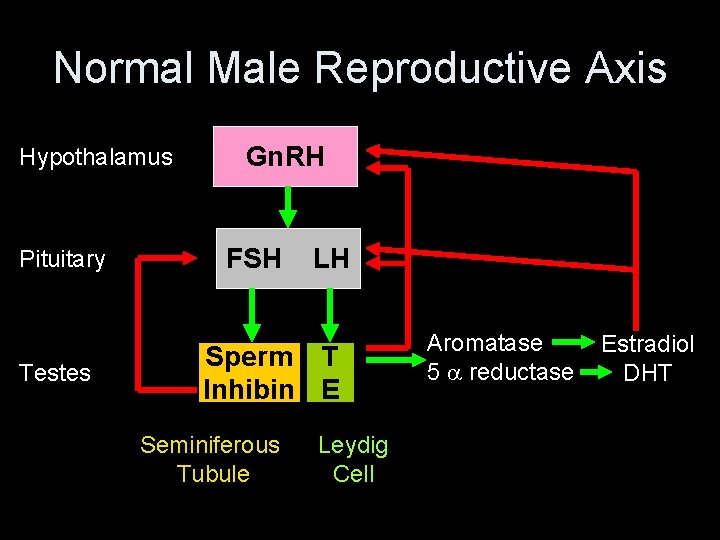
Normal Male Reproductive Axis Hypothalamus Pituitary Testes Gn. RH FSH LH Sperm T Inhibin E Seminiferous Tubule Leydig Cell Aromatase 5 reductase Estradiol DHT
Diagnosis of Hypogonadism • Failure of testes to produce – Physiologic levels of testosterone – Normal number of spermatozoa • Primary = testes failure • Secondary = pituitary or hypothalamic failure • Dual defects are possible (less likely)
Treatment of Hypogonadism Depends on the Cause • Primary hypogonadism – Generally permanent – Replace testosterone unless contradindicated – Fertility cannot be regained • Secondary hypogonadism – Distinguish cause – Evaluate for other hormone deficiencies first – Use testosterone + gonadotropins for fertility

Definition of Androgen Deficiency (AD) • Consistently low testosterone • Associated signs/symptoms • Evidence based review of literature – Data is weak at best
Don’t Screen Every Man for Low T • Don’t look for low T in men seeking care for unrelated reasons • Does not meet any criteria for general screening • No trials of efficacy or cost-effectiveness • Mortality impact of untreated low T unknown
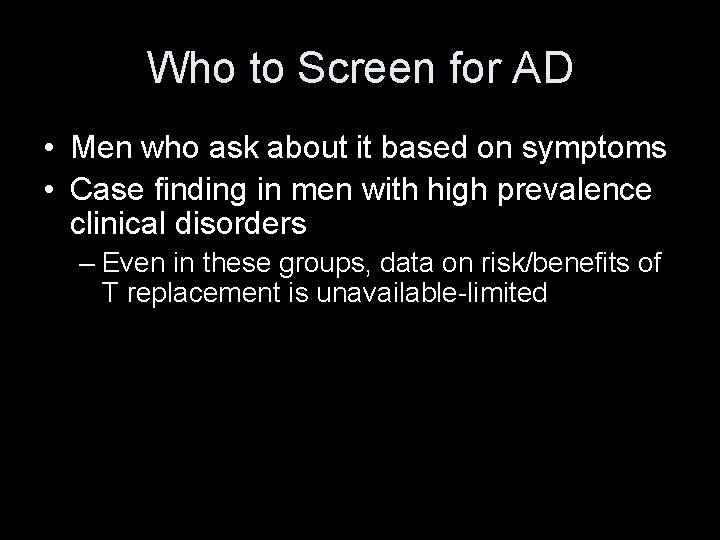
Who to Screen for AD • Men who ask about it based on symptoms • Case finding in men with high prevalence clinical disorders – Even in these groups, data on risk/benefits of T replacement is unavailable-limited
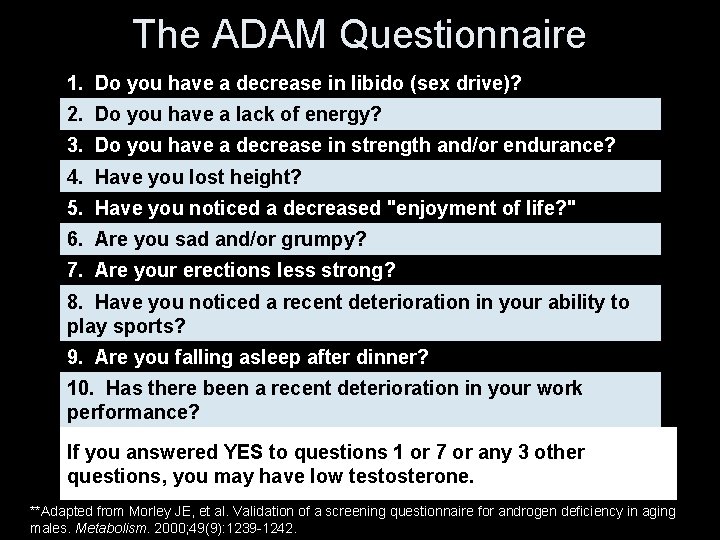
The ADAM Questionnaire 1. Do you have a decrease in libido (sex drive)? 2. Do you have a lack of energy? 3. Do you have a decrease in strength and/or endurance? 4. Have you lost height? 5. Have you noticed a decreased "enjoyment of life? " 6. Are you sad and/or grumpy? 7. Are your erections less strong? 8. Have you noticed a recent deterioration in your ability to play sports? 9. Are you falling asleep after dinner? 10. Has there been a recent deterioration in your work performance? If you answered YES to questions 1 or 7 or any 3 other questions, you may have low testosterone. **Adapted from Morley JE, et al. Validation of a screening questionnaire for androgen deficiency in aging males. Metabolism. 2000; 49(9): 1239 -1242.
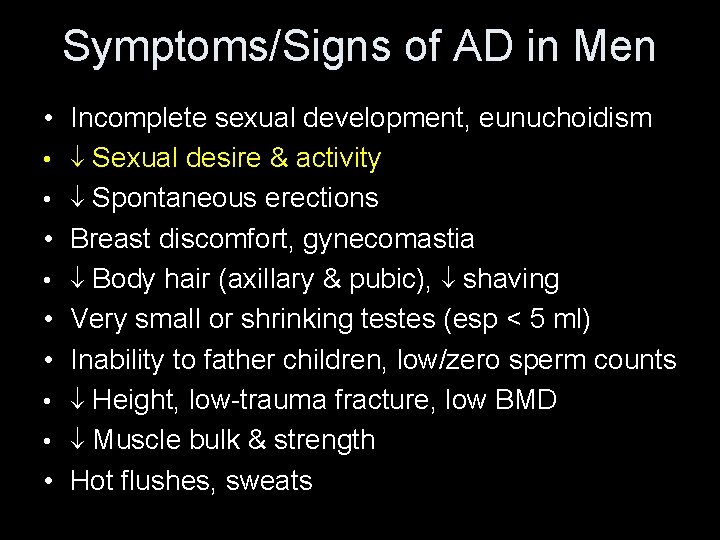
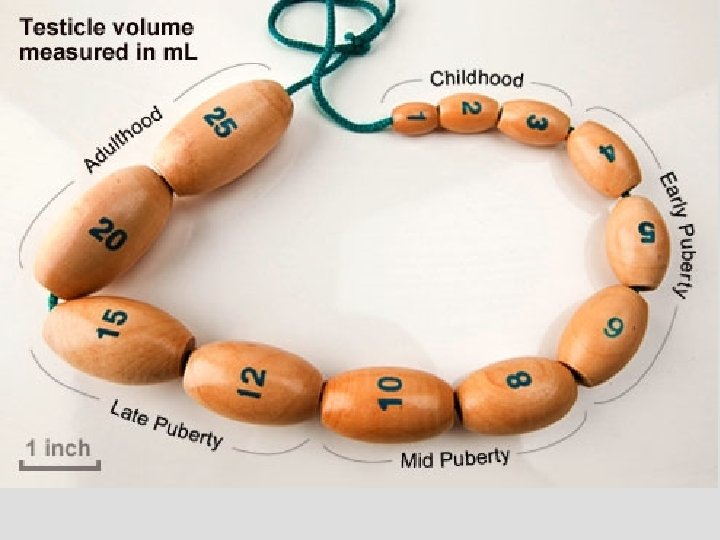
Symptoms/Signs of AD in Men • Incomplete sexual development, eunuchoidism • Sexual desire & activity • Spontaneous erections • Breast discomfort, gynecomastia • Body hair (axillary & pubic), shaving • Very small or shrinking testes (esp < 5 ml) • Inability to father children, low/zero sperm counts • Height, low-trauma fracture, low BMD • Muscle bulk & strength • Hot flushes, sweats
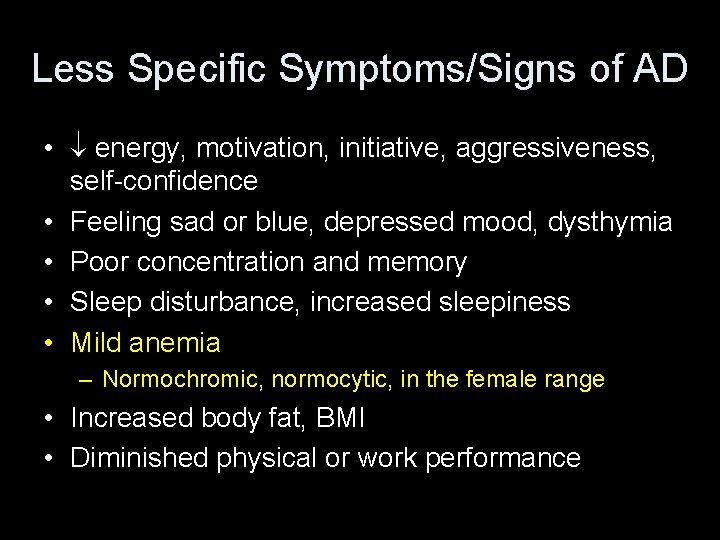
Less Specific Symptoms/Signs of AD • energy, motivation, initiative, aggressiveness, self-confidence • Feeling sad or blue, depressed mood, dysthymia • Poor concentration and memory • Sleep disturbance, increased sleepiness • Mild anemia – Normochromic, normocytic, in the female range • Increased body fat, BMI • Diminished physical or work performance
Conditions with a High Prevalence of Low T (Screening Suggested) • Sellar mass, radiation to sella, other sellar disease • On meds that affect T production or metabolism – Glucocorticoids, ketoconazole, opioids • • • HIV-associated weight loss ESRD and maintainence hemodialysis Moderate to severe COPD Osteoporosis or low trauma fracture (esp if young) Type 2 diabetes mellitus Infertility
Relevant Medical History • • • Puberty and sexual development Past/present major illnesses Past/present nutritional deficiency All prescription & nonprescription drugs Relationship problems Sexual problems Major life events Related family history Recent changes in body (breasts) Testicle problems

Physical Exam • • • Amount of body hair Breast exam for enlargement/tenderness Size and consistency of testicles Size of the penis Signs of severe & prolonged AD – – Loss of body hair Reduced muscle bulk and strength Osteoporosis Smaller testicles
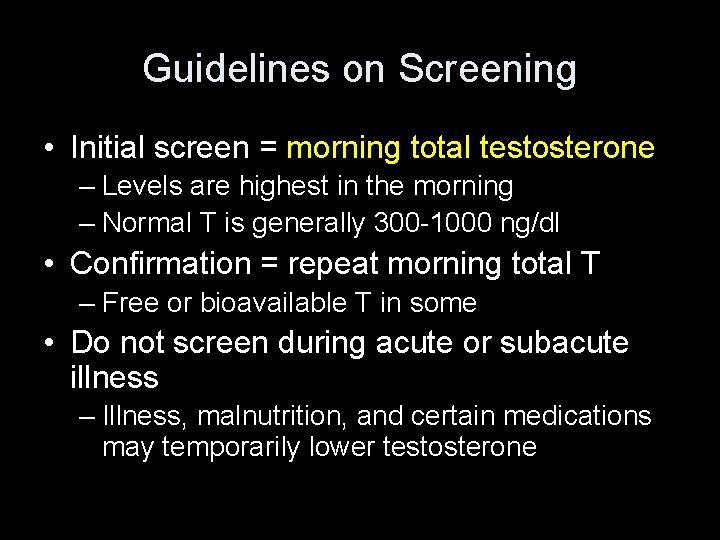
Guidelines on Screening • Initial screen = morning total testosterone – Levels are highest in the morning – Normal T is generally 300 -1000 ng/dl • Confirmation = repeat morning total T – Free or bioavailable T in some • Do not screen during acute or subacute illness – Illness, malnutrition, and certain medications may temporarily lower testosterone
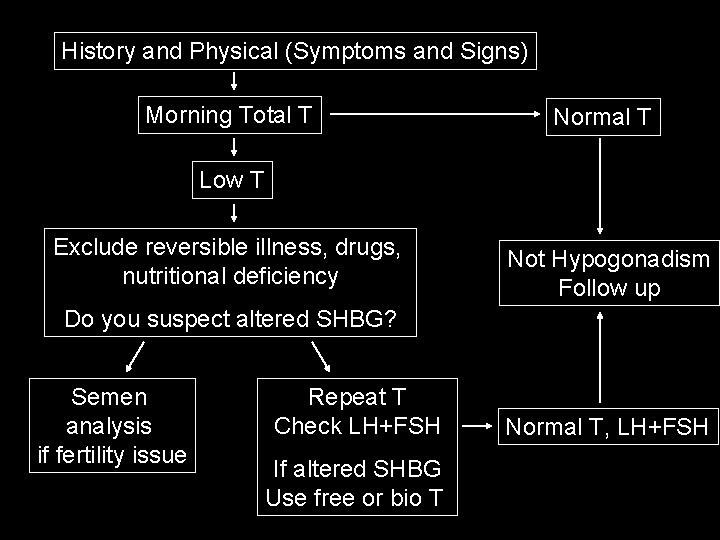
History and Physical (Symptoms and Signs) Morning Total T Normal T Low T Exclude reversible illness, drugs, nutritional deficiency Not Hypogonadism Follow up Do you suspect altered SHBG? Semen analysis if fertility issue Repeat T Check LH+FSH If altered SHBG Use free or bio T Normal T, LH+FSH
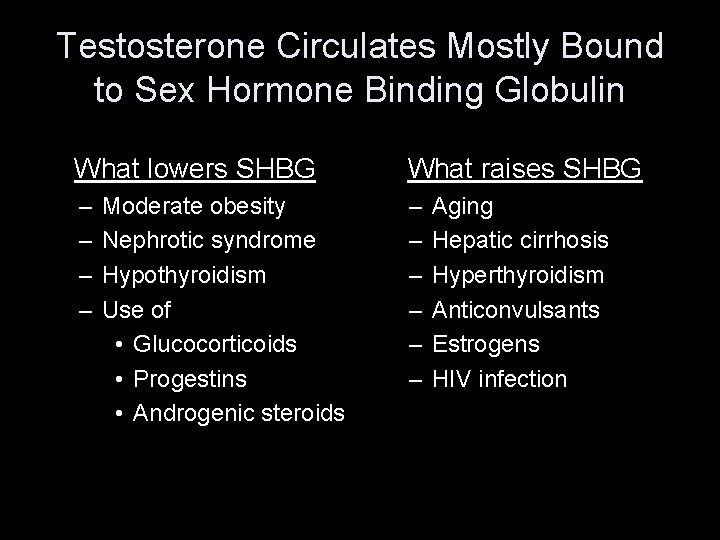
Testosterone Circulates Mostly Bound to Sex Hormone Binding Globulin What lowers SHBG What raises SHBG – – – – – Moderate obesity Nephrotic syndrome Hypothyroidism Use of • Glucocorticoids • Progestins • Androgenic steroids Aging Hepatic cirrhosis Hyperthyroidism Anticonvulsants Estrogens HIV infection
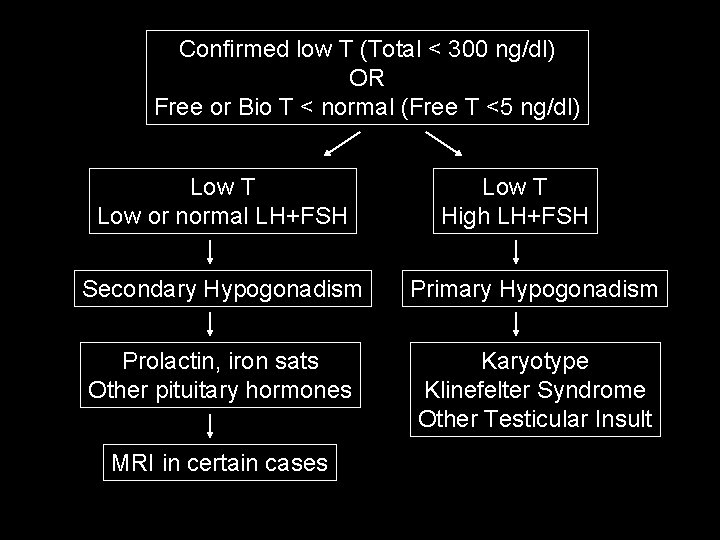
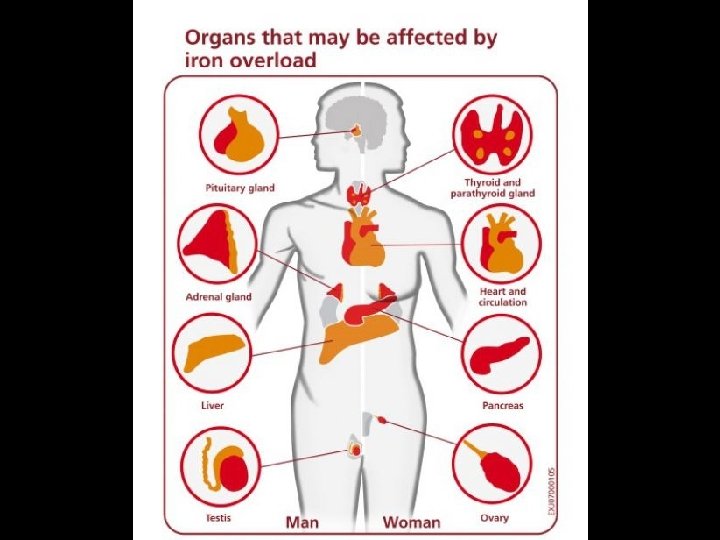
Confirmed low T (Total < 300 ng/dl) OR Free or Bio T < normal (Free T <5 ng/dl) Low T Low or normal LH+FSH Low T High LH+FSH Secondary Hypogonadism Primary Hypogonadism Prolactin, iron sats Other pituitary hormones Karyotype Klinefelter Syndrome Other Testicular Insult MRI in certain cases
Case • 52 y/o male with HTN asks for Viagra after 2 years of low libido • BP 150/99 • Slight gynecomastia, nl GU exam • T low, FSH &LH low, Prolactin very high • What is the best next step?
Best next step? A) B) C) D) Prescribe Viagra Testosterone replacement MRI pituitary Neurosurgery consult
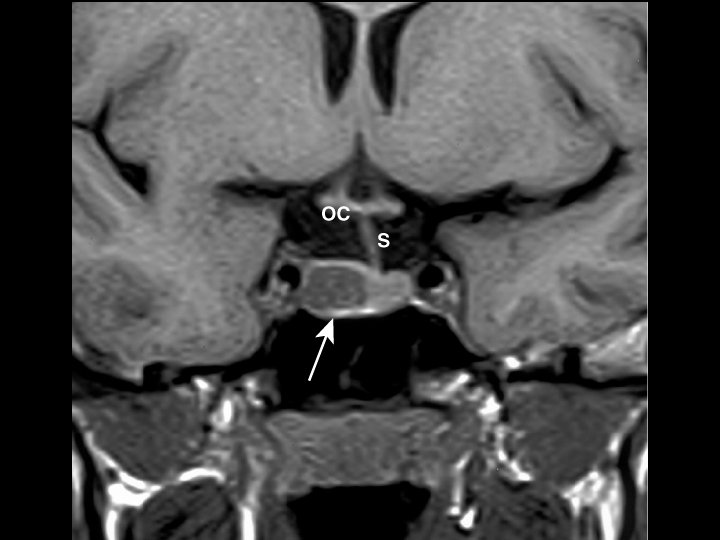
When Should You Get a Pituitary MRI? • Severe secondary hypogonadism – T <150 ng/dl • Symptoms/signs of tumor mass – HA, visual impairment, visual field defect • Persistent hyperprolactinemia • Panhypopituitarism • Cost-effectiveness is unknown – Don’t bother with a CT
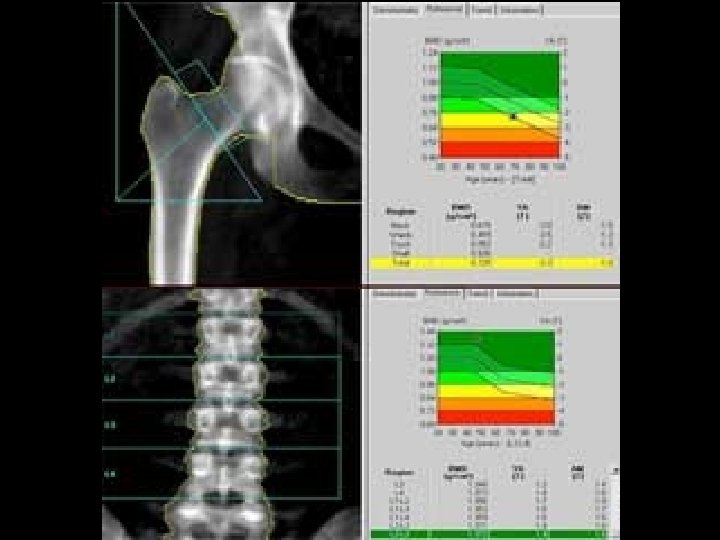
Should You Get a DXA? • Recommend DXA in men with – Severe androgen deficiency – Low trauma fracture • Cost-effectiveness is unknown
Goals of Testosterone Therapy • Improve/maintain secondary sexual characteristics • Improve libido and erections • Increase energy and well-being • Improve muscle mass and strength • Improve bone mineral density
Who Should be Treated with T? • Men with low T & signs/symptoms of AD • Men with low testosterone & low libido • Men with low testosterone & erectile dysfunction – After evaluation of underlying causes of ED – And consideration of other treatment for ED
Who Else Should be Treated with T? • Men with low testosterone, HIV infection & weight loss – Short-term treatment – For weight-maintenance, lean body mass, & muscle strength • Men with low testosterone & taking high dose glucocorticoids – Short-term treatment – For lean body mass and bone mineral density
What About Older Men? • Recommend against offering T to all older men with low T • Treat men with consistently low T and clinically significant symptoms – After explicit discussion of pros and cons • Task force disagreed on T level below which T should be offered to older men with symptoms – Depends on the severity of symptoms – Some T<300 – Some T<200
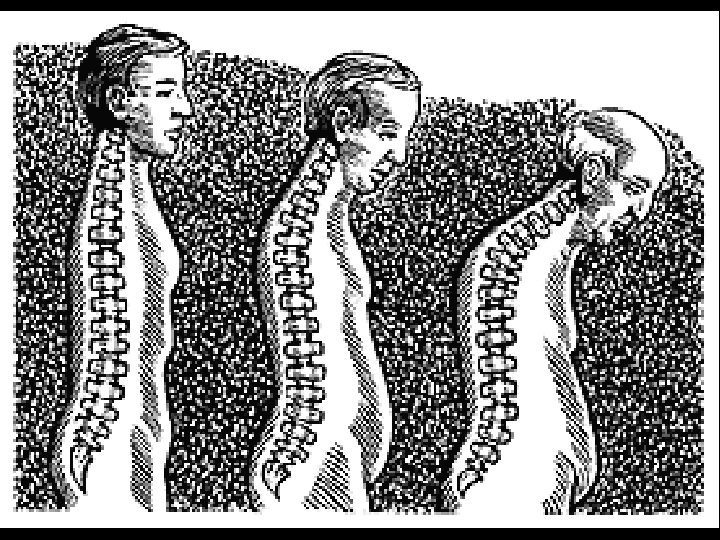
Case • 75 y/o male had a lower thoracic vertebral fracture after falling on a wet floor • Non-smoker, non-drinker, 1 glass milk/day • Poor energy • Libido and erections “not what they used to be” • T low x 2, LH and FSH “normal” • Anemic, normal calcium & phos • DXA T-score at L-spine -2. 6, at femur -1. 9 • What is the best treatment course?
Best treatment? A) B) C) D) E) Nasal calcitonin Bisphonate Testosterone replacement Calcium and Vitamin D Testosterone & bisphonate
Who should NOT receive testosterone therapy?

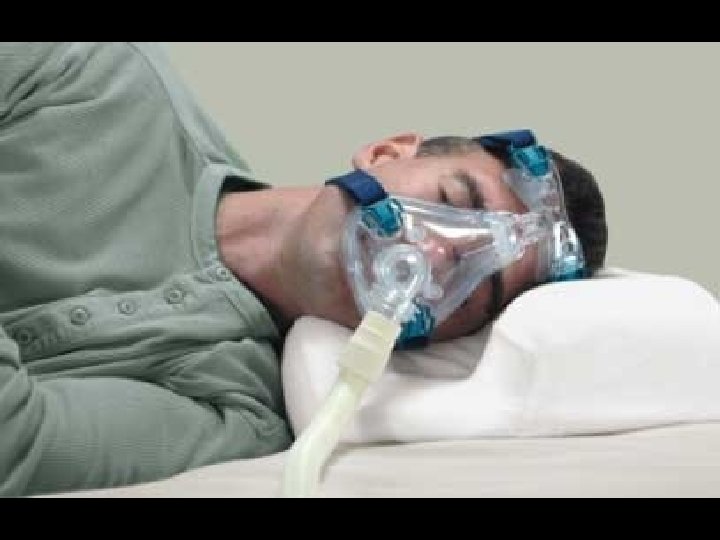
Contraindications to Testosterone Therapy • Breast or prostate cancer • Lump/hardness on prostate exam by DRE • PSA >3 ng/ml that has not been evaluated for prostate cancer • Severe untreated BPH (AUA/IPSS >19) • Erythrocytosis (hematocrit >50%) • Hyperviscosity • Untreated obstructive sleep apnea • Severe heart failure (class III or IV)
Testosterone for the Following Reasons May be Harmful • To improve strength/athletic performance • For physical appearance • To prevent aging
How Do You Give Testosterone? • Start at standard dose • Check levels • Therapeutic target – Serum testosterone in mid-normal range for healthy, young men • Target in older men – Considerable disagreement among experts – Total T in the lower part of the normal range for younger men – 400 -500 ng/dl
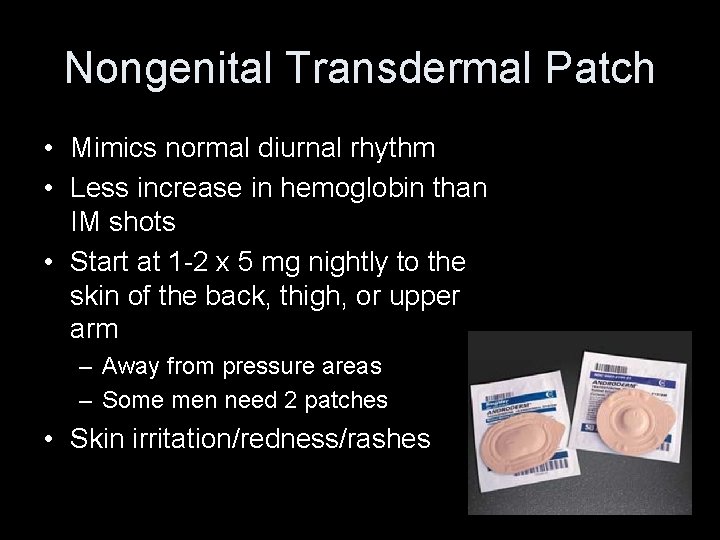
Nongenital Transdermal Patch • Mimics normal diurnal rhythm • Less increase in hemoglobin than IM shots • Start at 1 -2 x 5 mg nightly to the skin of the back, thigh, or upper arm – Away from pressure areas – Some men need 2 patches • Skin irritation/redness/rashes

Testosterone Gel • Starting dose 5 -10 grams daily • Skin tolerates it well • Potential transfer to others by skin contact – – Cover the application site Wash hands with soap and water after application Wash skin before skin-to-skin contact with others T levels maintained when skin washed 4 -6 hours after application
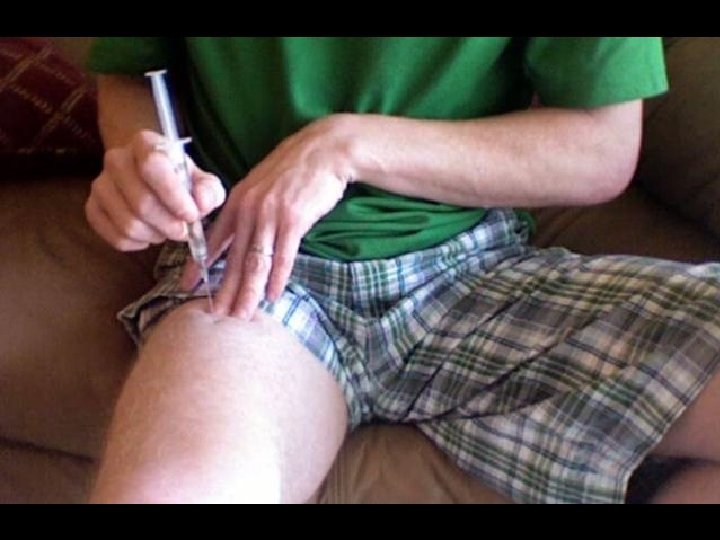
Testosterone Enanthate or Cypionate Injections (IM) • T levels are supraphysiologic, then gradually drop to hypogonadal range – Peaks and valleys – Fluctuation of mood or libido • Relatively inexpensive if self-administered • Start at 75 -100 mg IM weekly – Or 150 -200 mg IM every other week • Pain at injection site • Excessive erythrocytosis (esp in older pts)

Buccal, Bioadhesive T Tablet • Normalizes T and DHT • 30 mg to buccal mucosa twice daily q 12 h • Gum-related adverse events in 16% – Gum irritation • Examine gums and oral mucosa for irritation – Alteration in taste
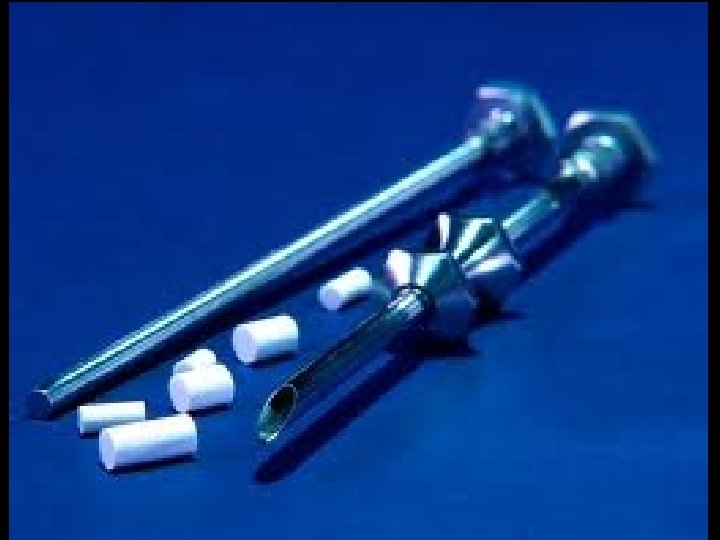
Testosterone Pellets • 4 -6 200 -mg pellets implanted sub. Q • Serum T peaks at 1 month and then is sustained in normal range for 4 -6 months • Requires surgical incision for insertion • Infection risk • Pellets may spontaneously extrude
Monitoring T Levels • Target the mid-normal range • Timing – Injections: mid-way between injections • Target 350 -700 ng/dl, adjust dose or frequency – Patch: 3 -12 hours after application – Gel: after 1 -2 weeks of treatment – Buccal tab: immediately before next tab
Safety Monitoring • Baseline – – Testosterone level DRE PSA Hematocrit • Follow-up ~3 months then annually – – Assess improvement/side effects Testosterone level DRE PSA • age- and race-appropriate interval – Hematocrit • If osteoporosis - DXA at 1 -2 years
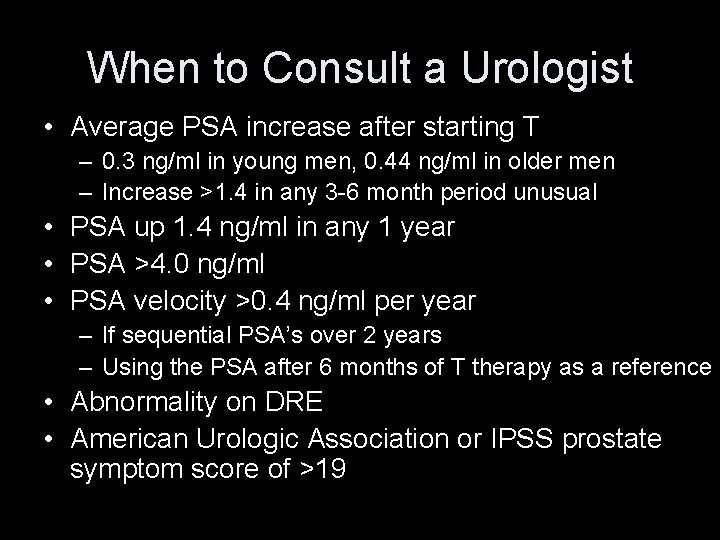
When to Consult a Urologist • Average PSA increase after starting T – 0. 3 ng/ml in young men, 0. 44 ng/ml in older men – Increase >1. 4 in any 3 -6 month period unusual • PSA up 1. 4 ng/ml in any 1 year • PSA >4. 0 ng/ml • PSA velocity >0. 4 ng/ml per year – If sequential PSA’s over 2 years – Using the PSA after 6 months of T therapy as a reference • Abnormality on DRE • American Urologic Association or IPSS prostate symptom score of >19
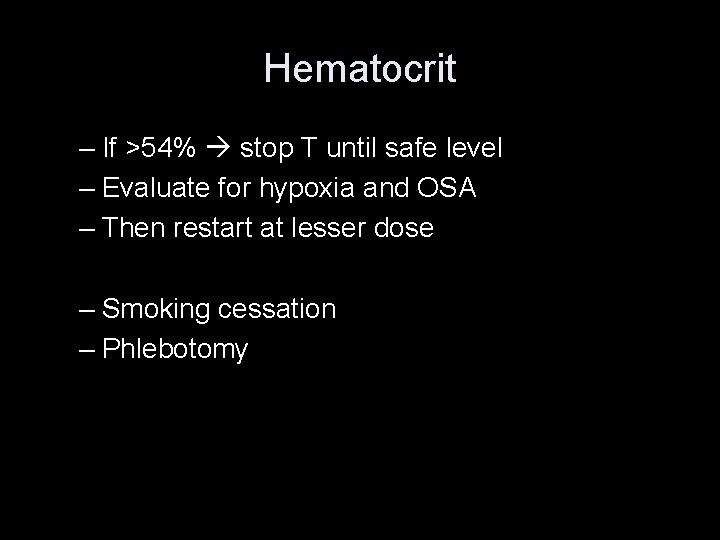
Hematocrit – If >54% stop T until safe level – Evaluate for hypoxia and OSA – Then restart at lesser dose – Smoking cessation – Phlebotomy
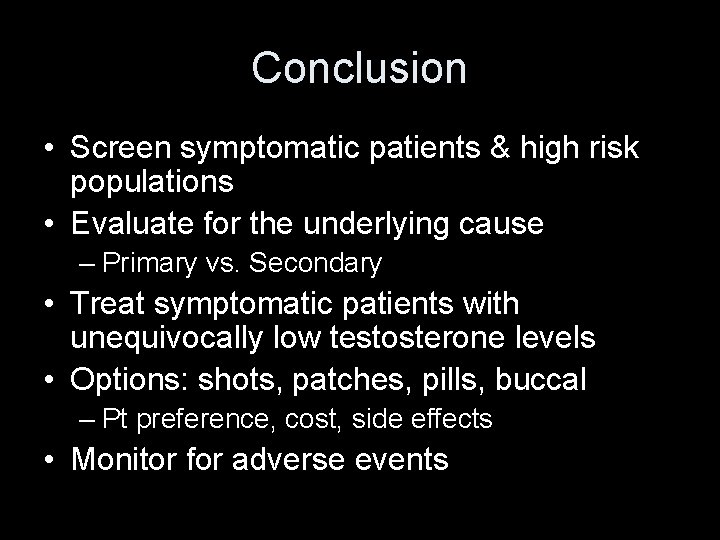
Conclusion • Screen symptomatic patients & high risk populations • Evaluate for the underlying cause – Primary vs. Secondary • Treat symptomatic patients with unequivocally low testosterone levels • Options: shots, patches, pills, buccal – Pt preference, cost, side effects • Monitor for adverse events

Thank You Questions?
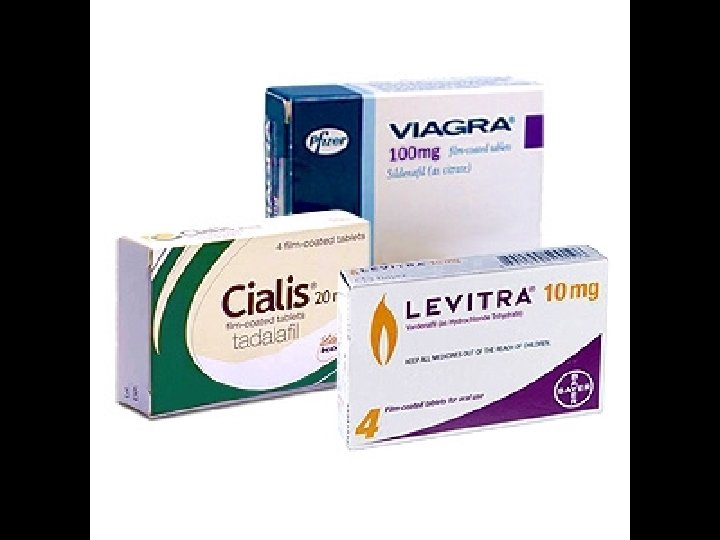
Case • • 60 y/o male c/o ED, gradual over years Same sexual partner x 25 years HTN & CABG ACE-I and beta blocker Mildly enlarged prostate on DRE Testosterone 310 and 350 (ref 280 -880) LH & FSH normal What should you try first?
What should you try first? A) B) C) D) E) Psychiatry consult IM injections of testosterone Decrease beta blocker Viagra Finasteride
Case • 35 y/o male’s wife called worried about her otherwise healthy husband’s sperm count • Trying to conceive x 2 years • Decreased sex drive x 1 year – pressure? • Exam normal • Afternoon T 240 (ref 280 -880) • Sperm count 15 million (ref >20 million) • Best next step?
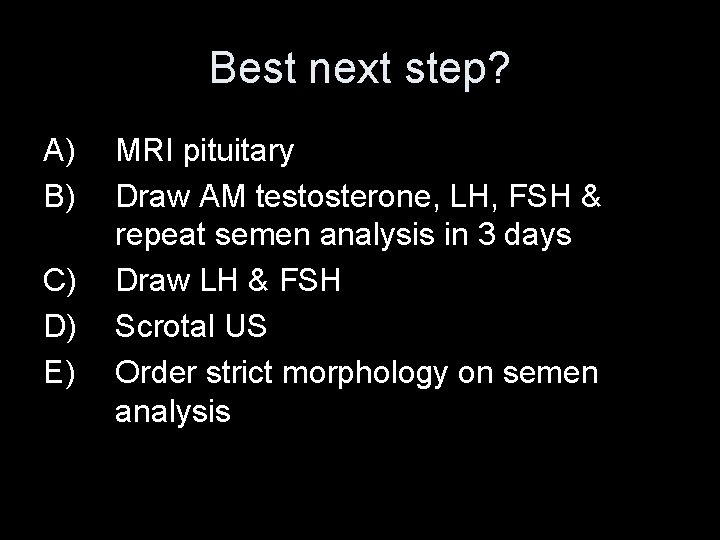
Best next step? A) B) C) D) E) MRI pituitary Draw AM testosterone, LH, FSH & repeat semen analysis in 3 days Draw LH & FSH Scrotal US Order strict morphology on semen analysis
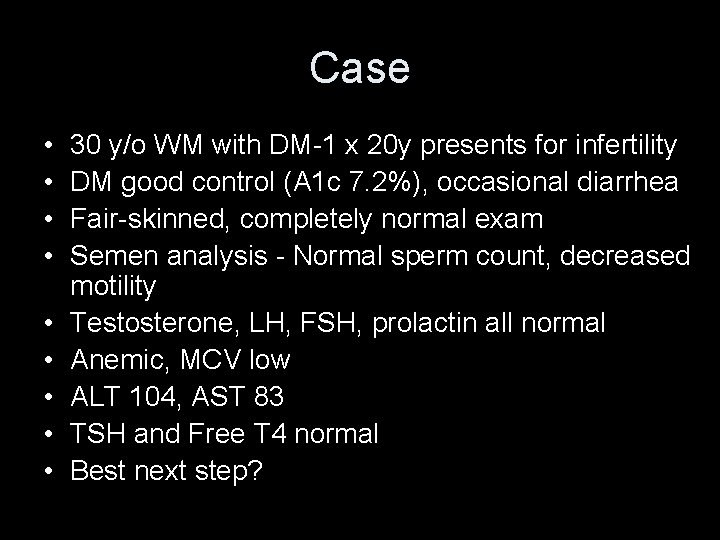
Case • • • 30 y/o WM with DM-1 x 20 y presents for infertility DM good control (A 1 c 7. 2%), occasional diarrhea Fair-skinned, completely normal exam Semen analysis - Normal sperm count, decreased motility Testosterone, LH, FSH, prolactin all normal Anemic, MCV low ALT 104, AST 83 TSH and Free T 4 normal Best next step?
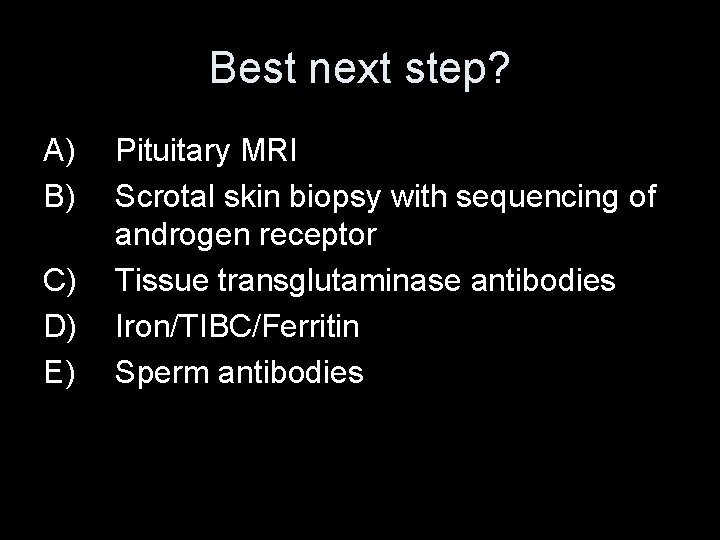
Best next step? A) B) C) D) E) Pituitary MRI Scrotal skin biopsy with sequencing of androgen receptor Tissue transglutaminase antibodies Iron/TIBC/Ferritin Sperm antibodies
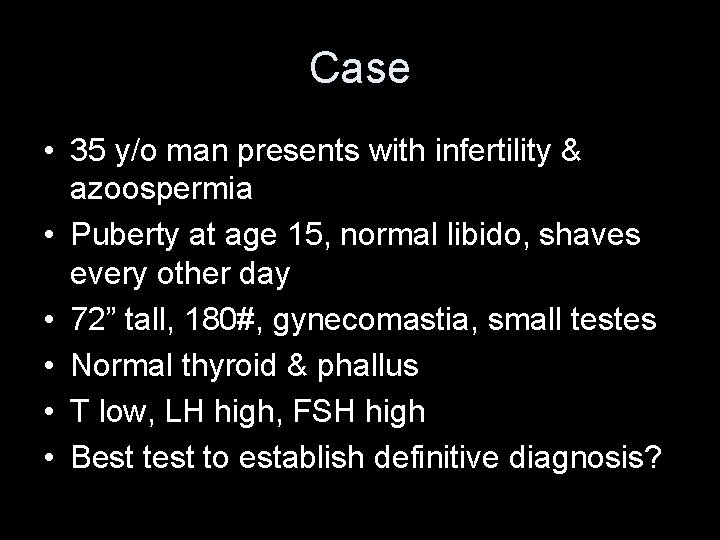
Case • 35 y/o man presents with infertility & azoospermia • Puberty at age 15, normal libido, shaves every other day • 72” tall, 180#, gynecomastia, small testes • Normal thyroid & phallus • T low, LH high, FSH high • Best to establish definitive diagnosis?
Definitive Diagnosis? A) Scrotal US B) Karyotype C) Ferritin D) LFT’s E) MRI pituitary
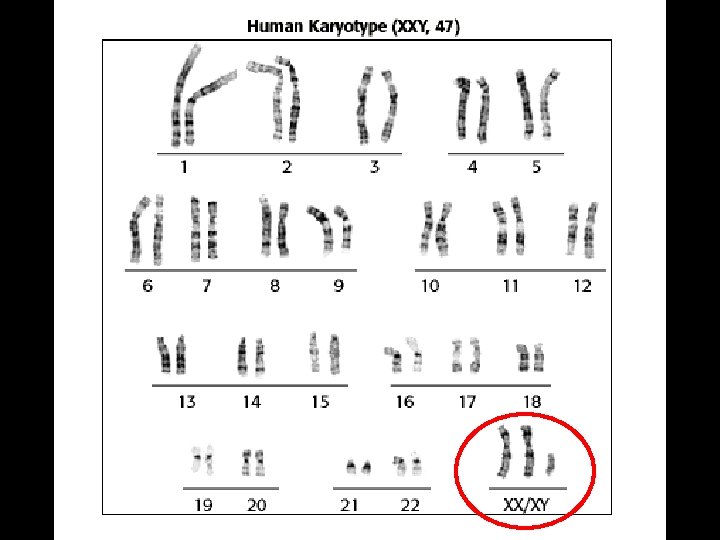
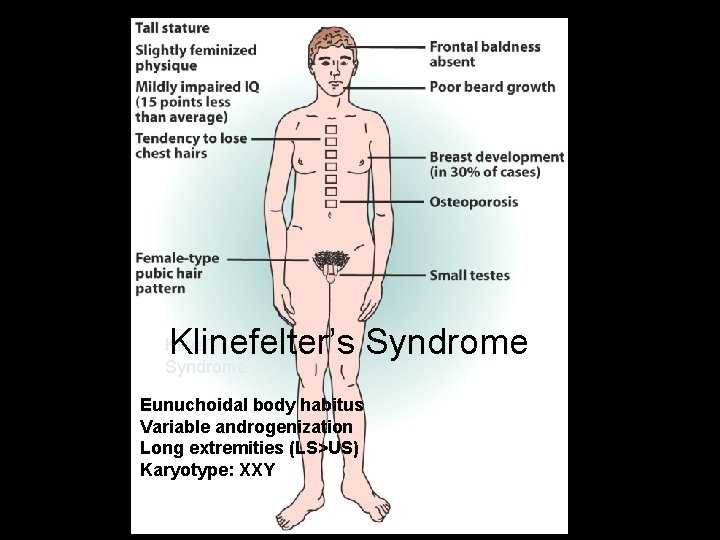
Klinefelter’s Syndrome Eunuchoidal body habitus Variable androgenization Long extremities (LS>US) Karyotype: XXY
Klinefelter’s Syndrome • Most common endocrine cause of primary hypogonadism • FSH always • T variably affected (T or normal) • Fertility rare (in mosaics only) • Treatment: T only if needed – Will not reverse infertility
Case • 36 y/o man has fatigue, infertility, poor energy x 6 months • Few morning erections, cannot sustain intercouse • Decreased shaving frequency • Generalized skin darkening despite no sun exposure • 4 months ago random BG was >200, started on DM diet and glipizide • Enlarged liver, tan without tan lines • Normal thyroid, breast, GU exam • Testosterone is low, TSH & Free T 4 normal
- Slides: 76