piano study in mixed accents Music 150 x
- Slides: 32
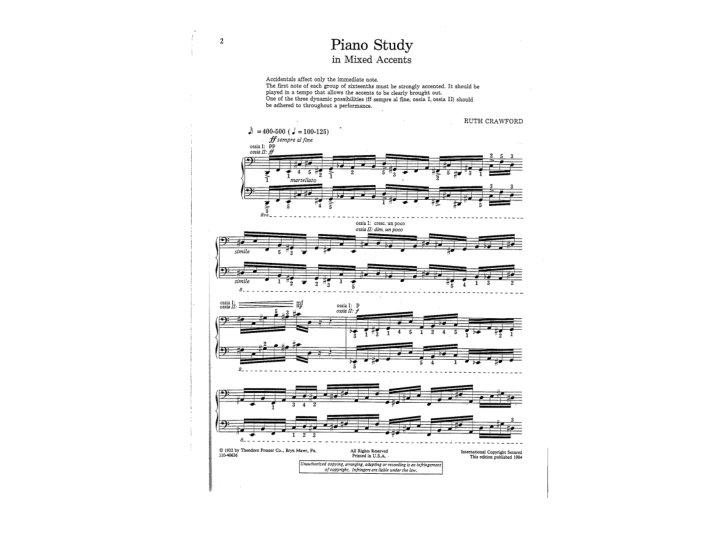
piano study in mixed accents Music 150 x UCSC Winter, 2011 Polansky 1/27/12
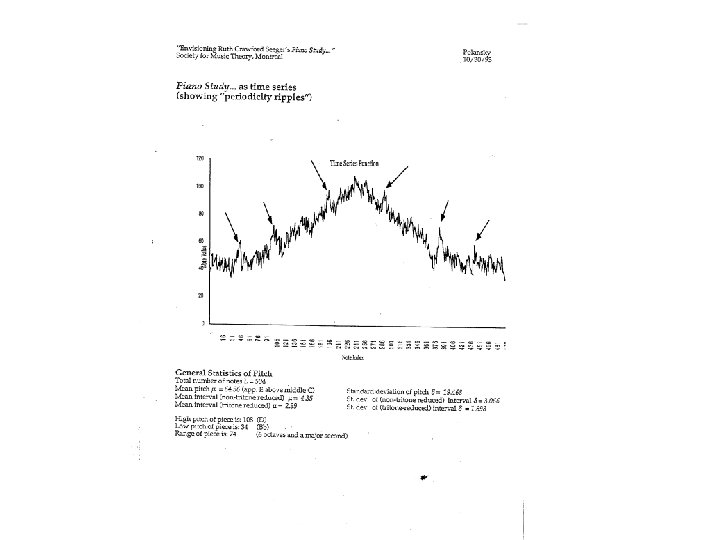
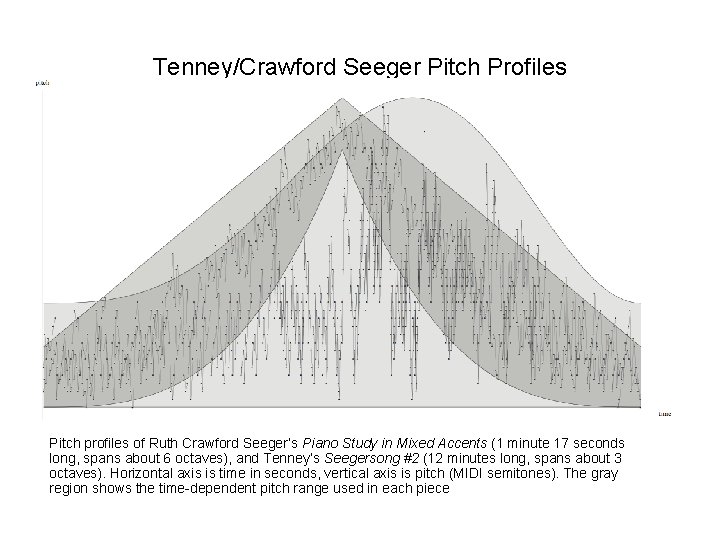
Tenney/Crawford Seeger Pitch Profiles Pitch profiles of Ruth Crawford Seeger’s Piano Study in Mixed Accents (1 minute 17 seconds long, spans about 6 octaves), and Tenney’s Seegersong #2 (12 minutes long, spans about 3 octaves). Horizontal axis is time in seconds, vertical axis is pitch (MIDI semitones). The gray region shows the time-dependent pitch range used in each piece
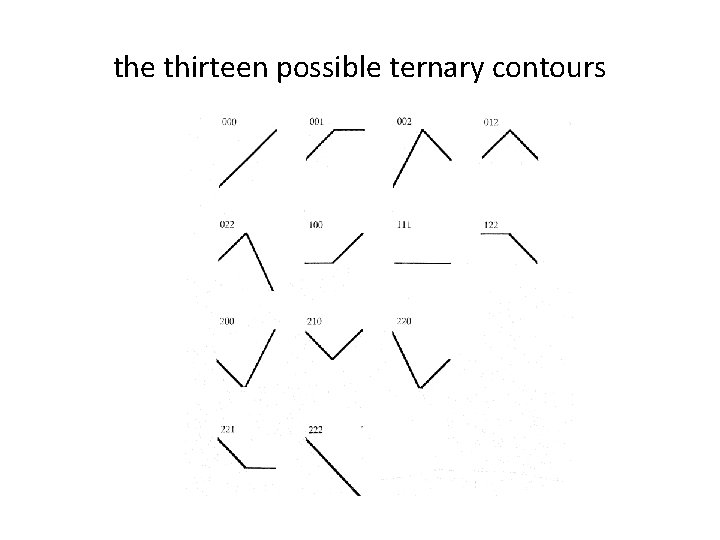
the thirteen possible ternary contours
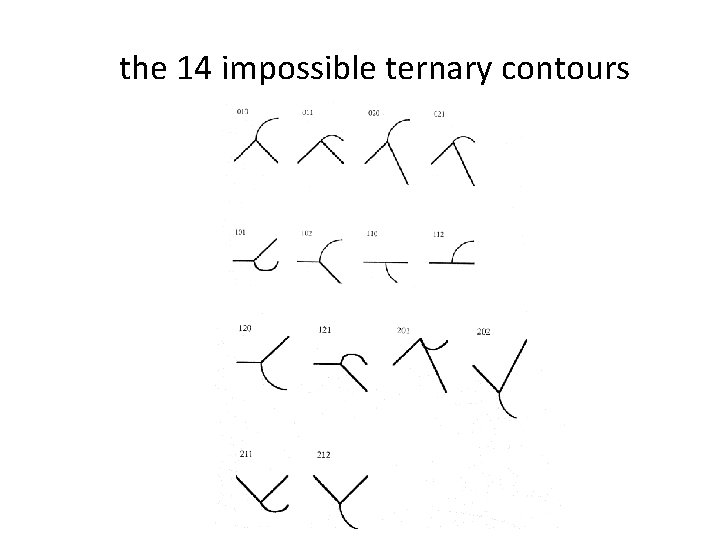
the 14 impossible ternary contours
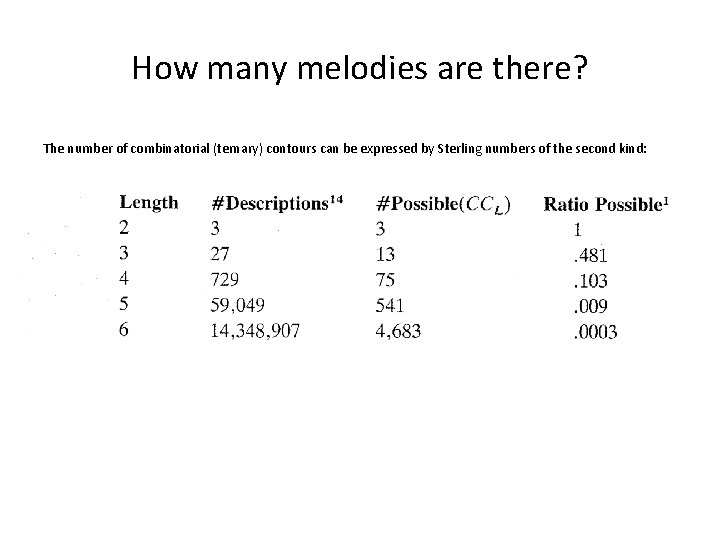
How many melodies are there? The number of combinatorial (ternary) contours can be expressed by Sterling numbers of the second kind: where S(L, h) is a Stirling number of the second
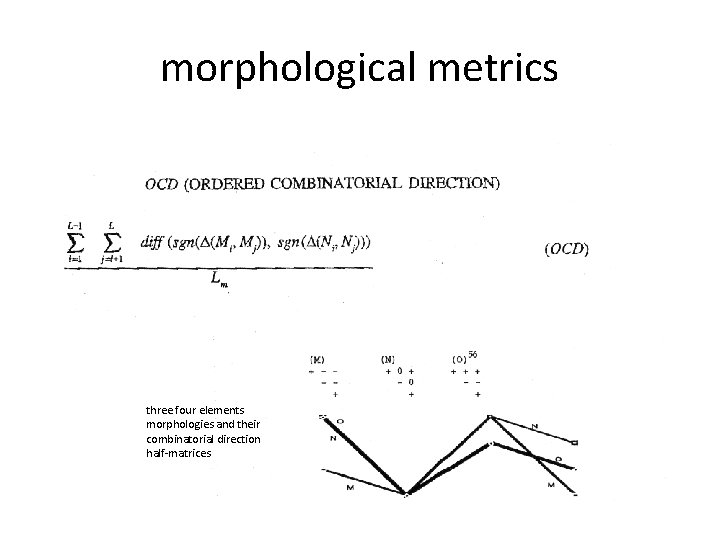
morphological metrics three four elements morphologies and their combinatorial direction half-matrices
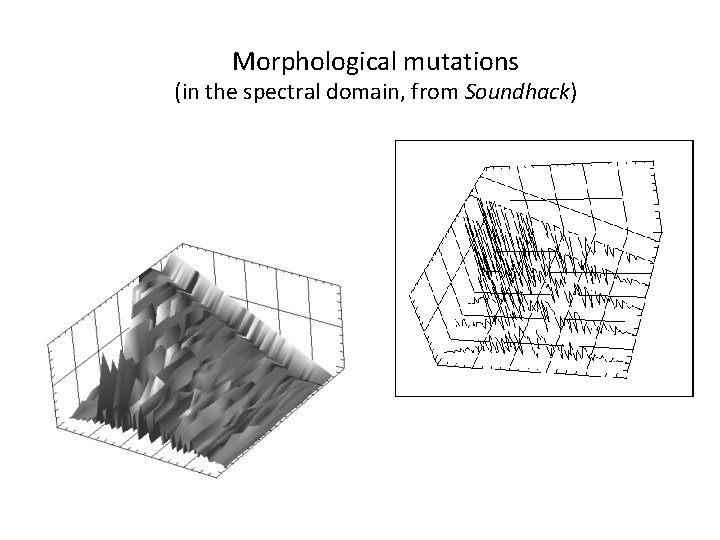
Morphological mutations (in the spectral domain, from Soundhack)
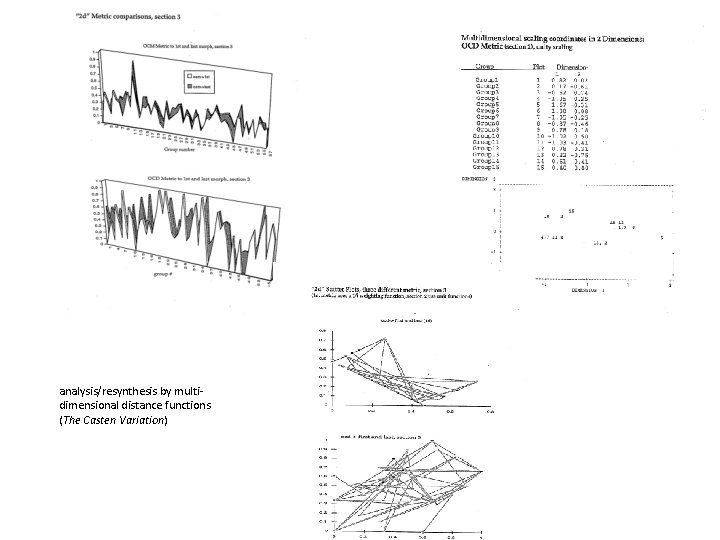
analysis/resynthesis by multidimensional distance functions (The Casten Variation)
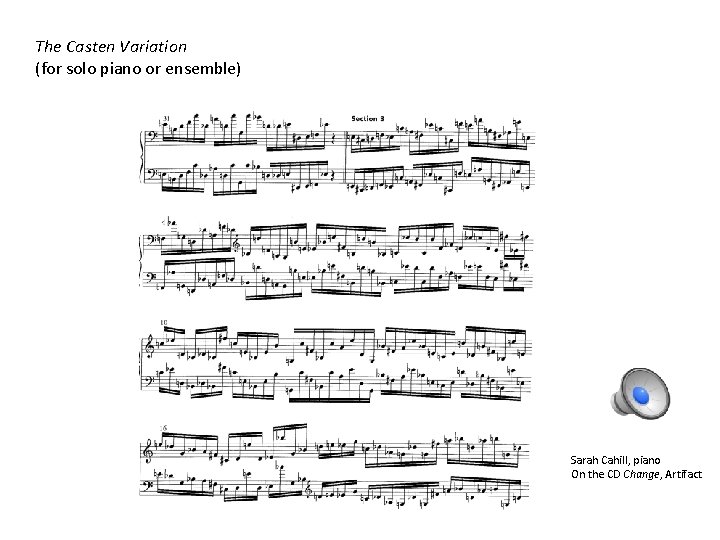
The Casten Variation (for solo piano or ensemble) Sarah Cahill, piano On the CD Change, Artifact
dissonant counterpoint algorithm
melodic dissonant counterpoint “Carl Ruggles has developed a process for himself in writing melodies for polyphonic purposes which embodies a new principle and is more purely contrapuntal than a consideration of harmonic intervals. He finds that if the same note is repeated in a melody before enough notes have intervened to remove the impression of the original note, there is a sense of tautology, because the melody should have proceeded to a fresh note instead of to a note already in the consciousness of the listener. Therefore Ruggles writes at least seven or eight different notes in a melody before allowing himself to repeat the same note, even in the octave. ” Henry Cowell, NMR, pp. 41 -42 “Avoid repetition of any tone until at least six progressions have been made. ” Seeger, Manual of Dissonant Counterpoint. ” p. 174.
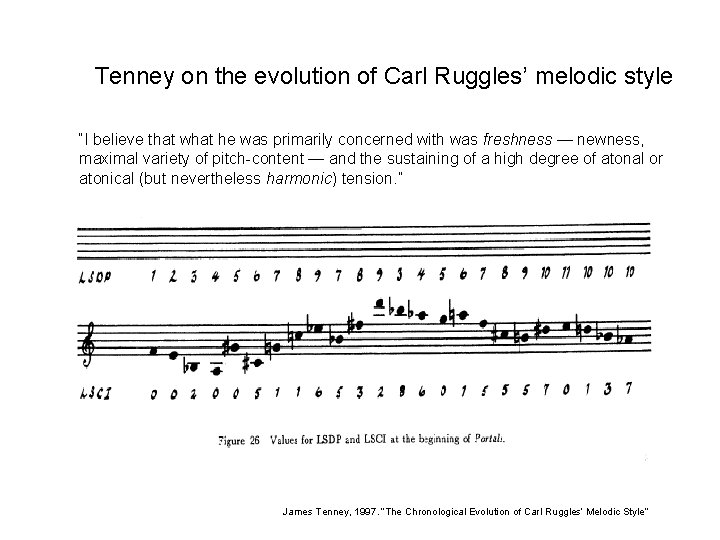
Tenney on the evolution of Carl Ruggles’ melodic style “I believe that what he was primarily concerned with was freshness — newness, maximal variety of pitch-content — and the sustaining of a high degree of atonal or atonical (but nevertheless harmonic) tension. ” James Tenney, 1997. “The Chronological Evolution of Carl Ruggles’ Melodic Style”
Statistical Feedback (Charles Ames) “Along with backtracking, statistical feedback is probably the most pervasive technique used by my composing programs. As contrasted with random procedures which seek to create unpredictability or lack of pattern, statistical feedback actively seeks to bring a population of elements into conformity with a prescribed distribution. The basic trick is to maintain statistics describing how much each option has been used in the past and to bias the decisions in favor of those options which currently fall farthest short of their ideal representation” Charles Ames “Tutorial on Automated Composition. ”
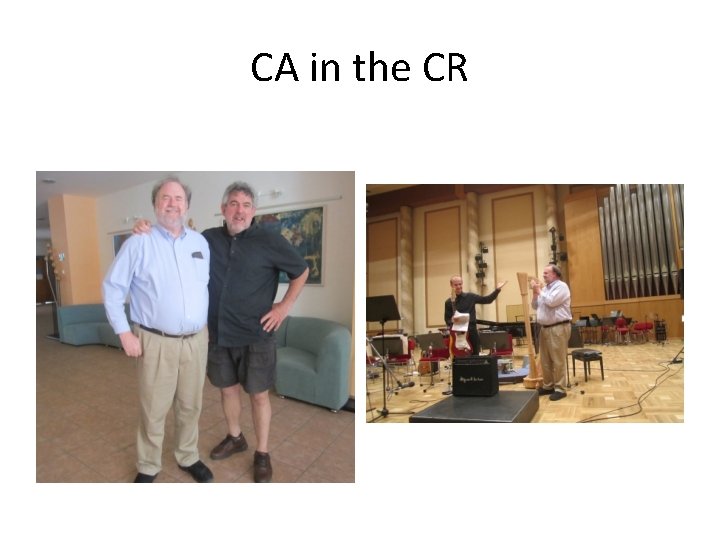
CA in the CR
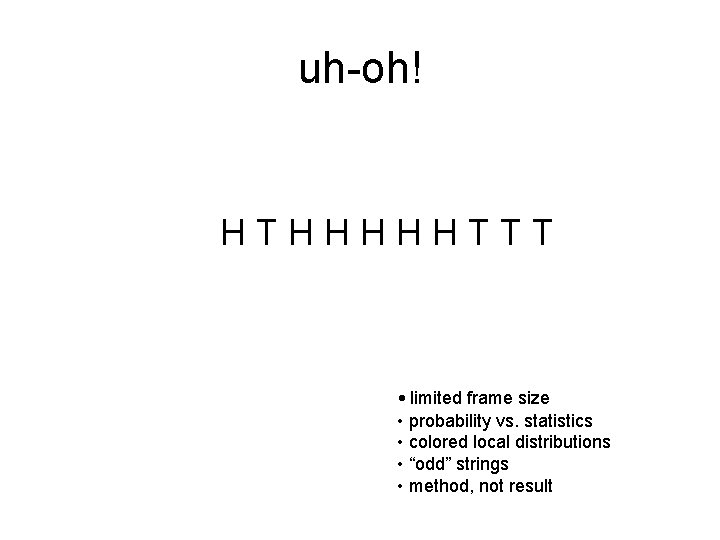
uh-oh! HTHHHHHTTT • limited frame size • probability vs. statistics • colored local distributions • “odd” strings • method, not result
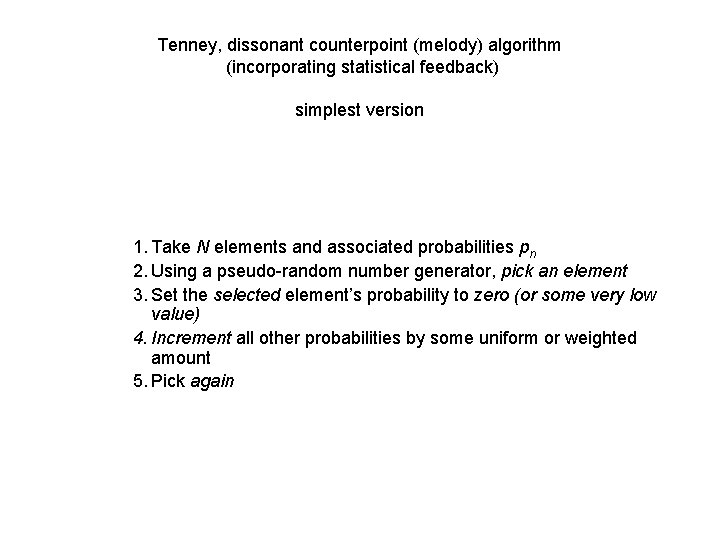
Tenney, dissonant counterpoint (melody) algorithm (incorporating statistical feedback) simplest version 1. Take N elements and associated probabilities pn 2. Using a pseudo-random number generator, pick an element 3. Set the selected element’s probability to zero (or some very low value) 4. Increment all other probabilities by some uniform or weighted amount 5. Pick again
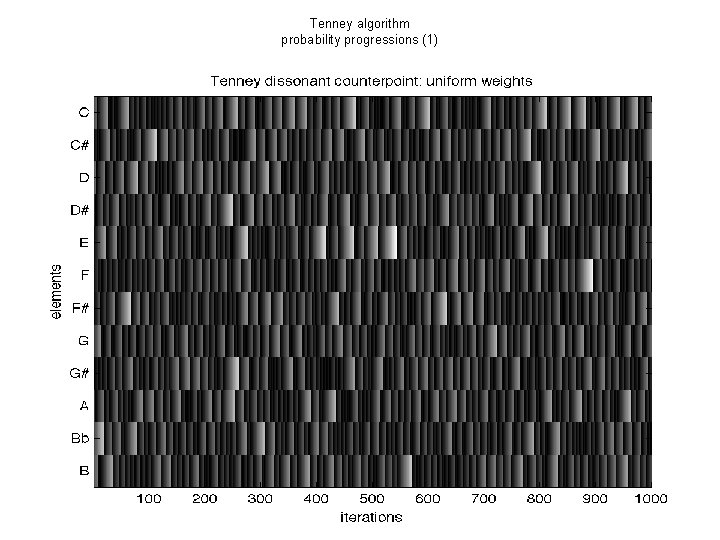
Tenney algorithm probability progressions (1)
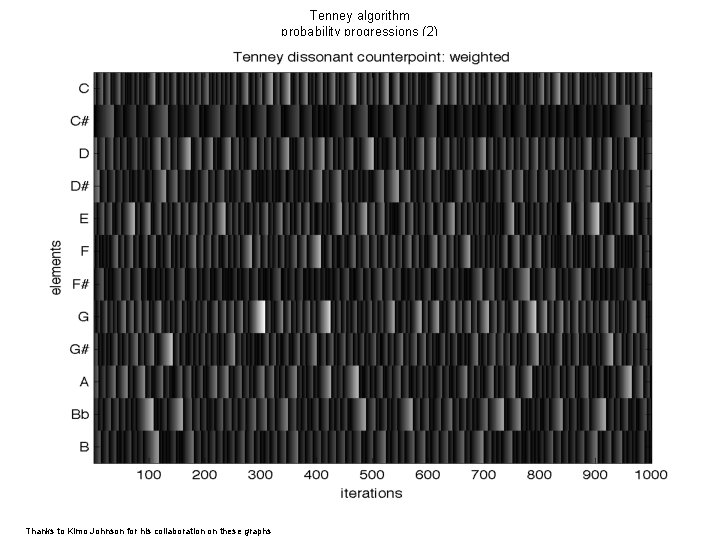
Tenney algorithm probability progressions (2) Thanks to Kimo Johnson for his collaboration on these graphs
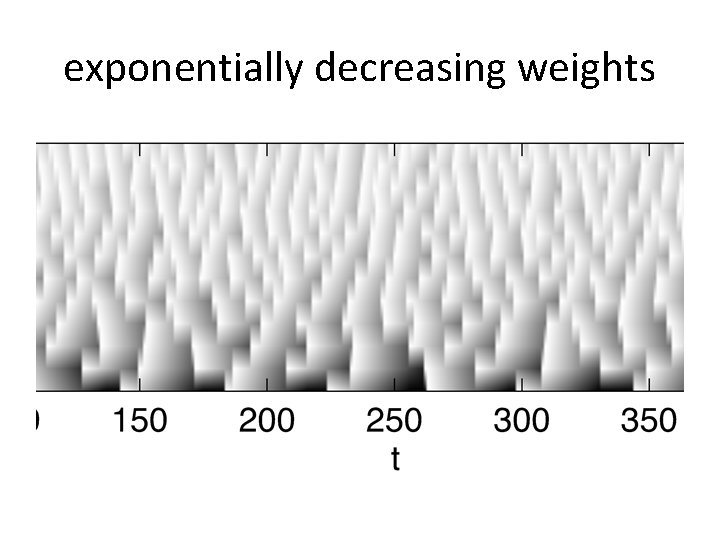
exponentially decreasing weights
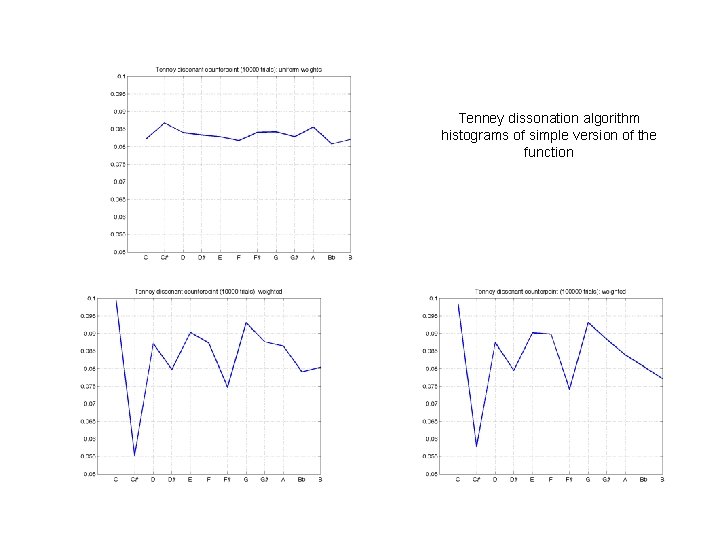
Tenney dissonation algorithm histograms of simple version of the function
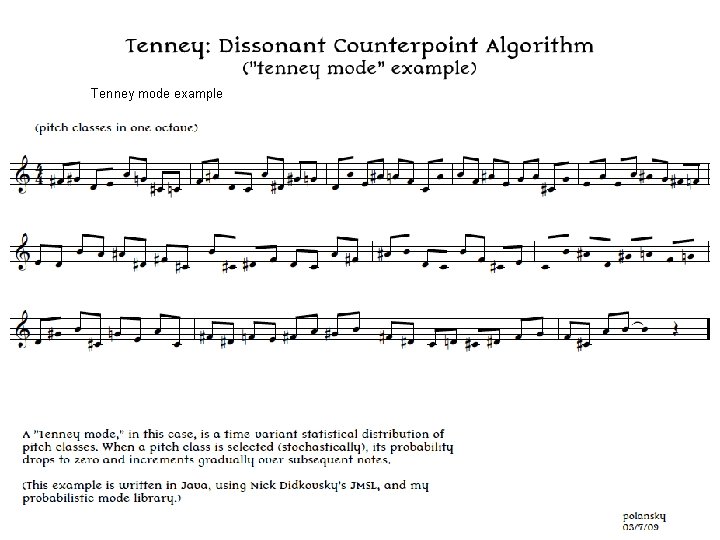
Tenney mode example
Mathematica Demo of DC alorithm By Mike Winter