Pediatric Respiratory Emergencies Nancy A Johnson RRTNPS Respiratory

- Slides: 67
Pediatric Respiratory Emergencies Nancy A. Johnson, RRT/NPS “Respiratory emergencies are 1 of the most common reasons parents seek evaluation for their children in the Emergency department” Emerg Med Clin North Am. 2016 Feb; 34(1): 77 -96. doi: 10. 1016/j. emc. 2015. 08. 006.
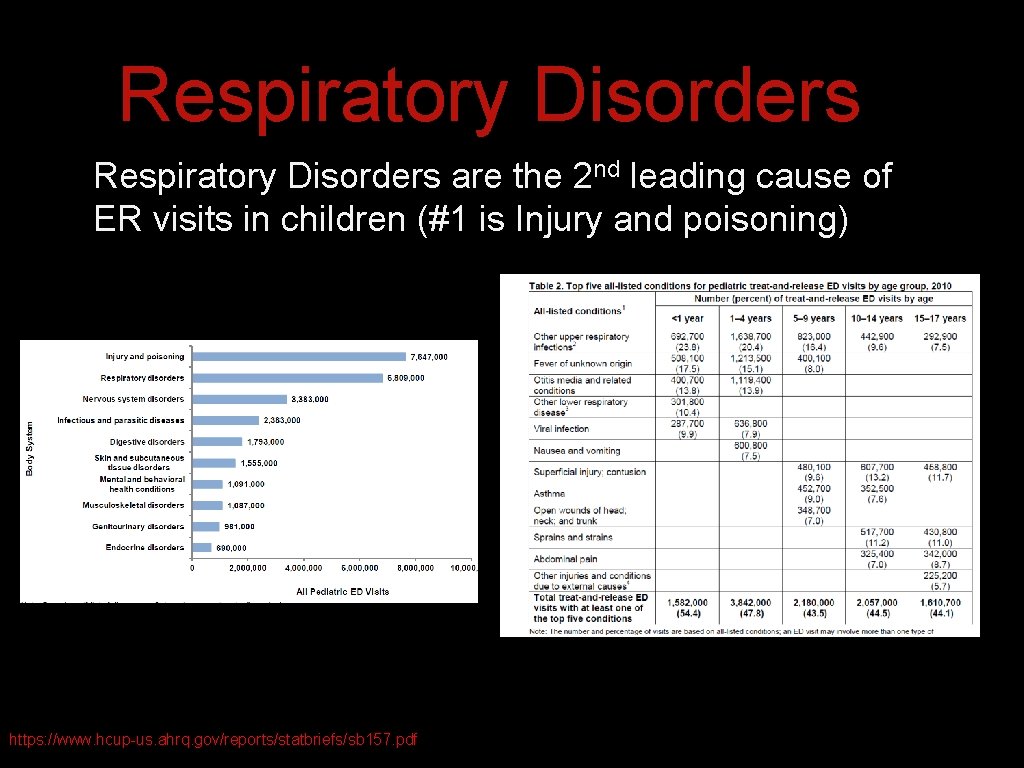
Respiratory Disorders are the 2 nd leading cause of ER visits in children (#1 is Injury and poisoning) https: //www. hcup-us. ahrq. gov/reports/statbriefs/sb 157. pdf
Objectives • Discuss the differences between pediatric and adult anatomy & physiology • How to properly assess a pediatric patient with respiratory distress and discuss emergency room presentation of common pediatric respiratory diseases • ABCDE tool for Assessment • Discuss Most Common Pediatric Respiratory Emergencies
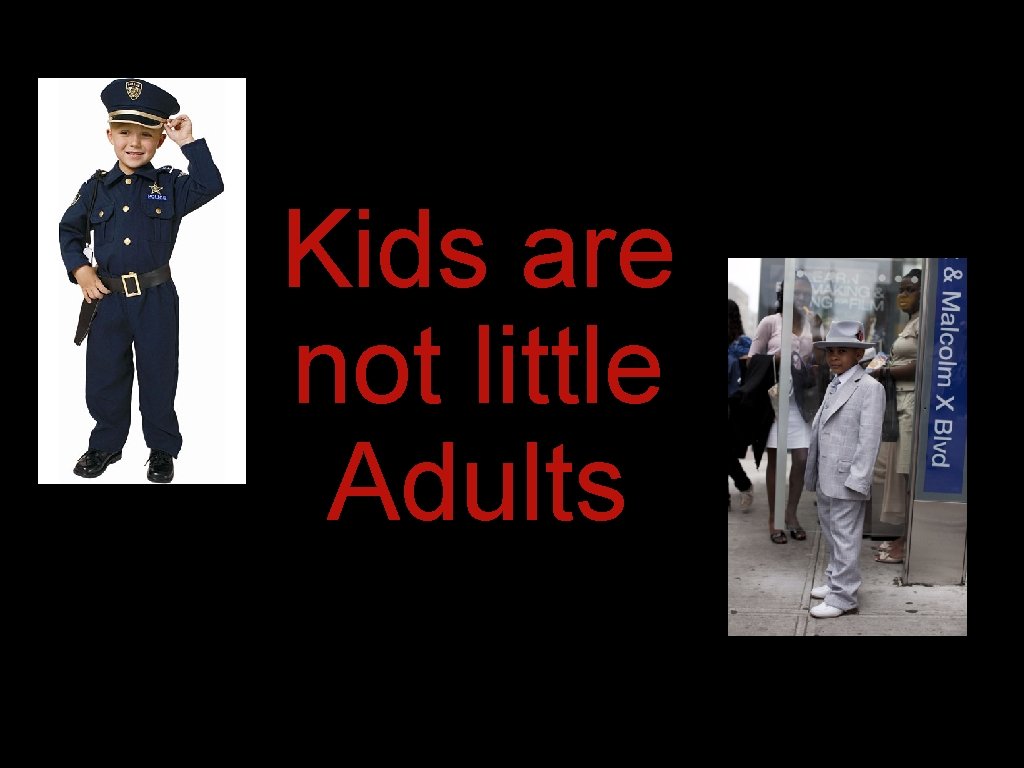
Kids are not little Adults
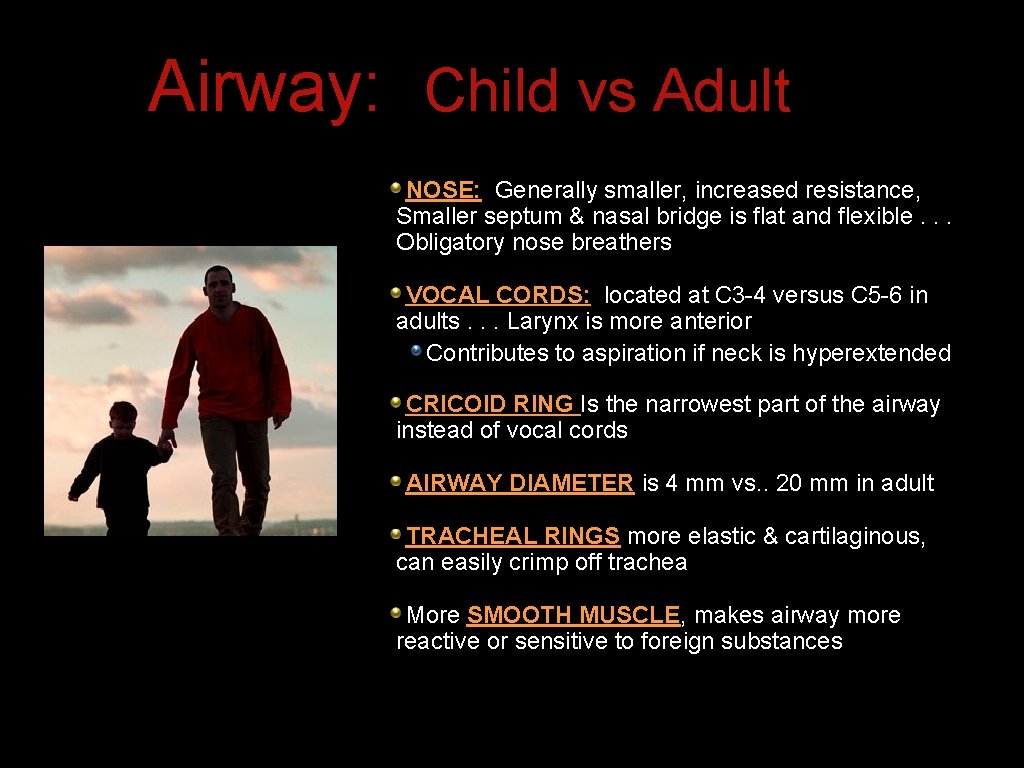
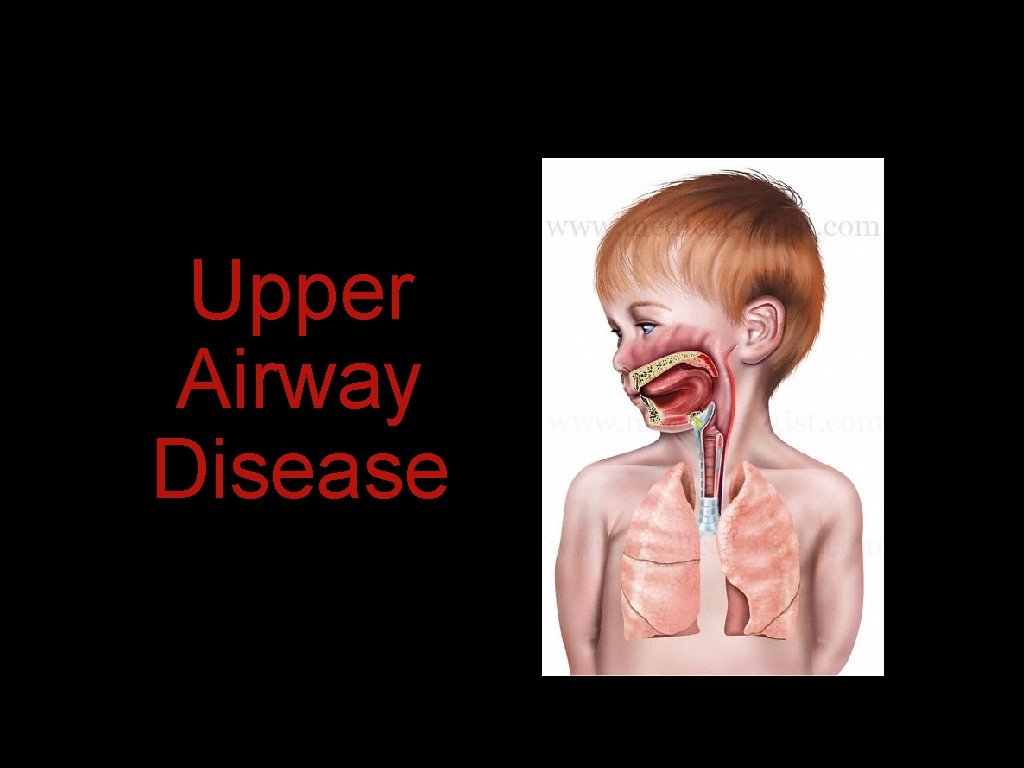
Airway: Child vs Adult NOSE: Generally smaller, increased resistance, Smaller septum & nasal bridge is flat and flexible. . . Obligatory nose breathers VOCAL CORDS: located at C 3 -4 versus C 5 -6 in adults. . . Larynx is more anterior Contributes to aspiration if neck is hyperextended CRICOID RING Is the narrowest part of the airway instead of vocal cords AIRWAY DIAMETER is 4 mm vs. . 20 mm in adult TRACHEAL RINGS more elastic & cartilaginous, can easily crimp off trachea More SMOOTH MUSCLE, makes airway more reactive or sensitive to foreign substances
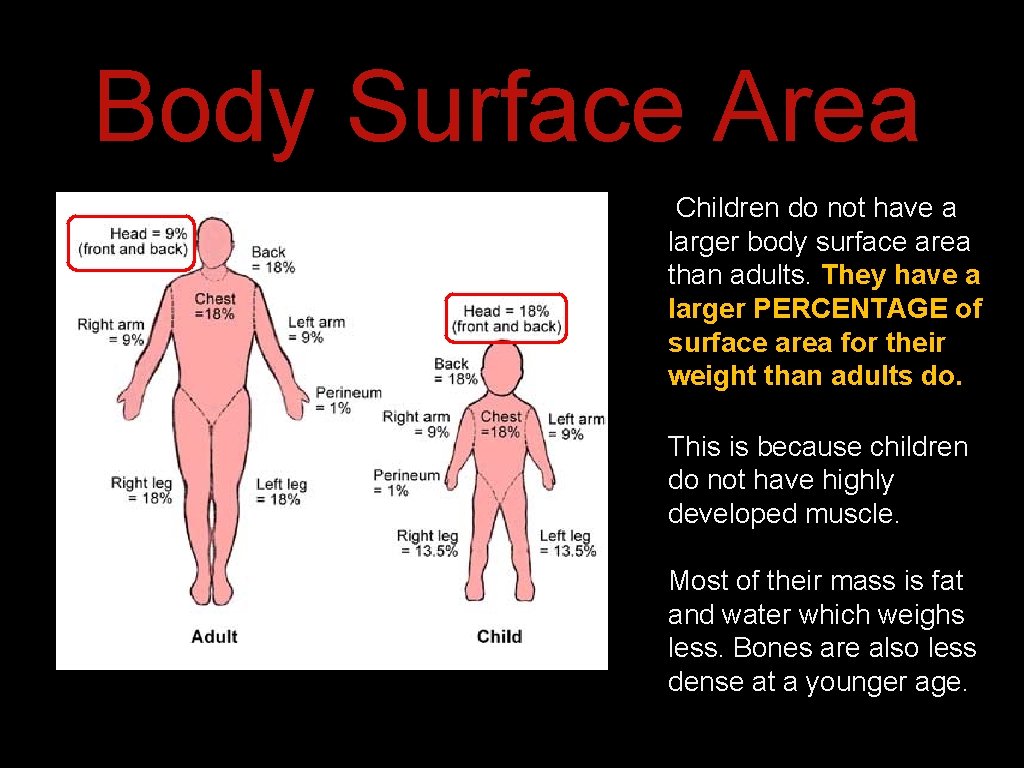
Body Surface Area Children do not have a larger body surface area than adults. They have a larger PERCENTAGE of surface area for their weight than adults do. This is because children do not have highly developed muscle. Most of their mass is fat and water which weighs less. Bones are also less dense at a younger age.
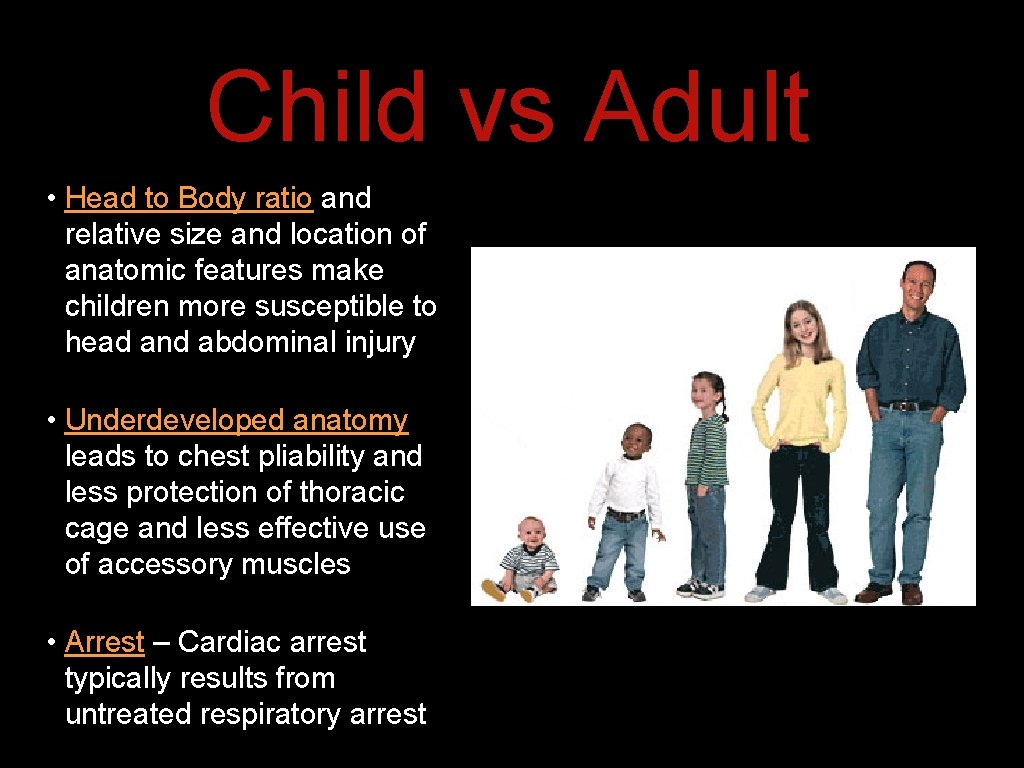
Child vs Adult • Head to Body ratio and relative size and location of anatomic features make children more susceptible to head and abdominal injury • Underdeveloped anatomy leads to chest pliability and less protection of thoracic cage and less effective use of accessory muscles • Arrest – Cardiac arrest typically results from untreated respiratory arrest
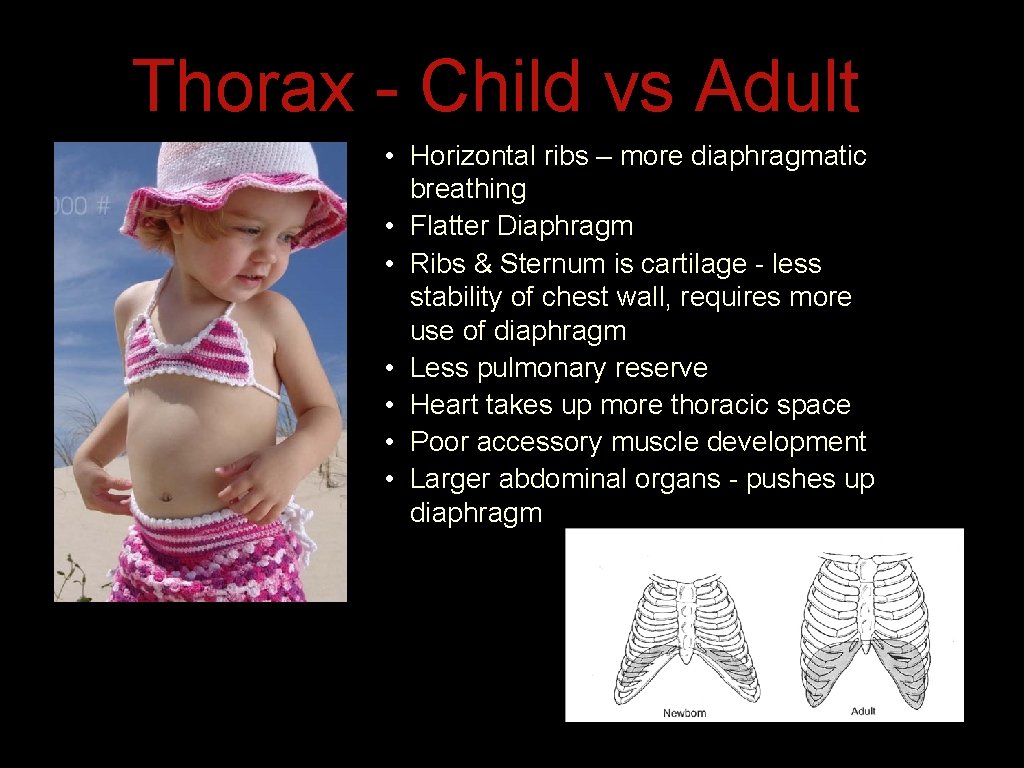
Thorax - Child vs Adult • Horizontal ribs – more diaphragmatic breathing • Flatter Diaphragm • Ribs & Sternum is cartilage - less stability of chest wall, requires more use of diaphragm • Less pulmonary reserve • Heart takes up more thoracic space • Poor accessory muscle development • Larger abdominal organs - pushes up diaphragm
Airway Urgencies can quickly progress to airway Emergencies
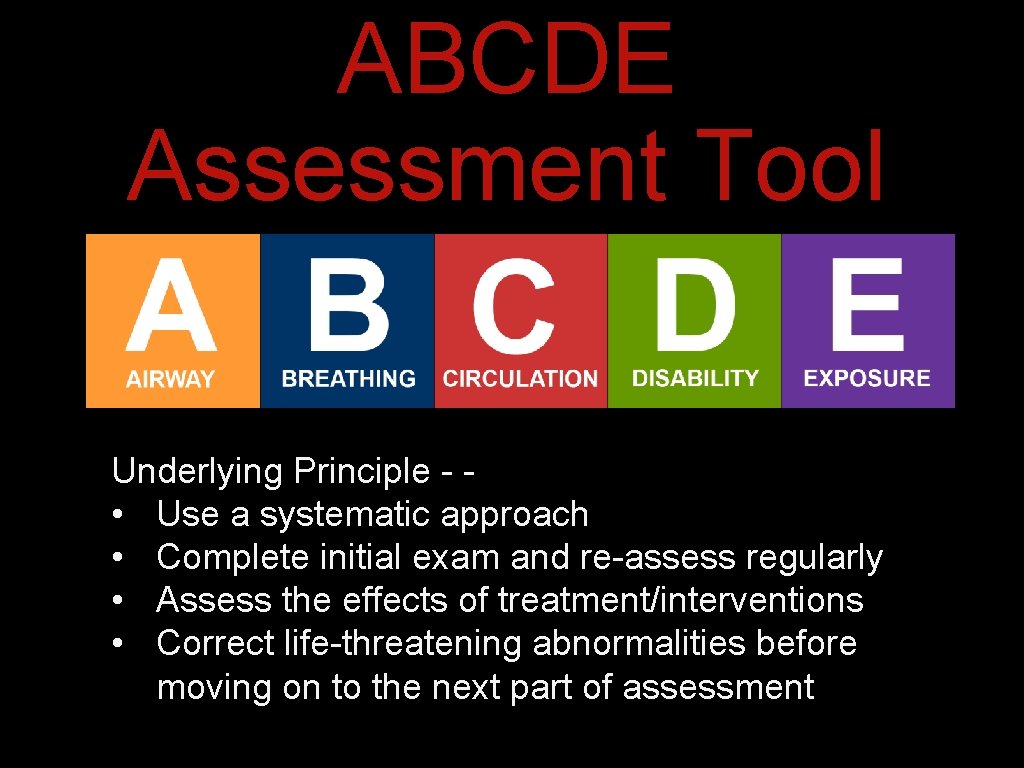
ABCDE Assessment Tool Underlying Principle - - • Use a systematic approach • Complete initial exam and re-assess regularly • Assess the effects of treatment/interventions • Correct life-threatening abnormalities before moving on to the next part of assessment
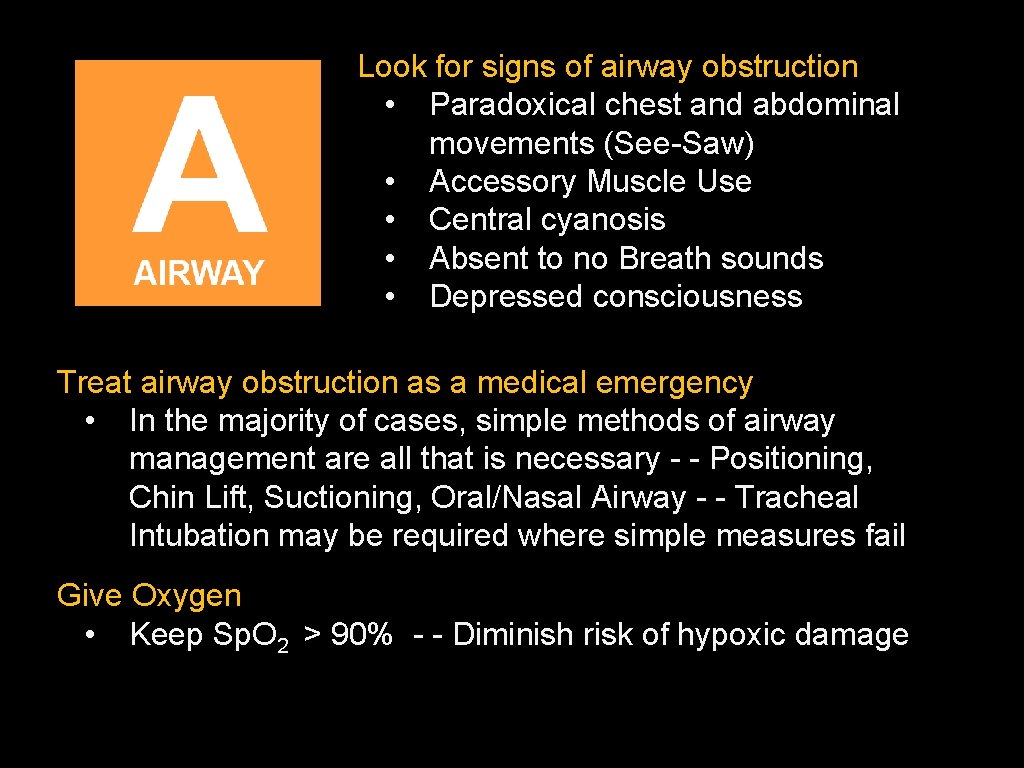
Look for signs of airway obstruction • Paradoxical chest and abdominal movements (See-Saw) • Accessory Muscle Use • Central cyanosis • Absent to no Breath sounds • Depressed consciousness Treat airway obstruction as a medical emergency • In the majority of cases, simple methods of airway management are all that is necessary - - Positioning, Chin Lift, Suctioning, Oral/Nasal Airway - - Tracheal Intubation may be required where simple measures fail Give Oxygen • Keep Sp. O 2 > 90% - - Diminish risk of hypoxic damage
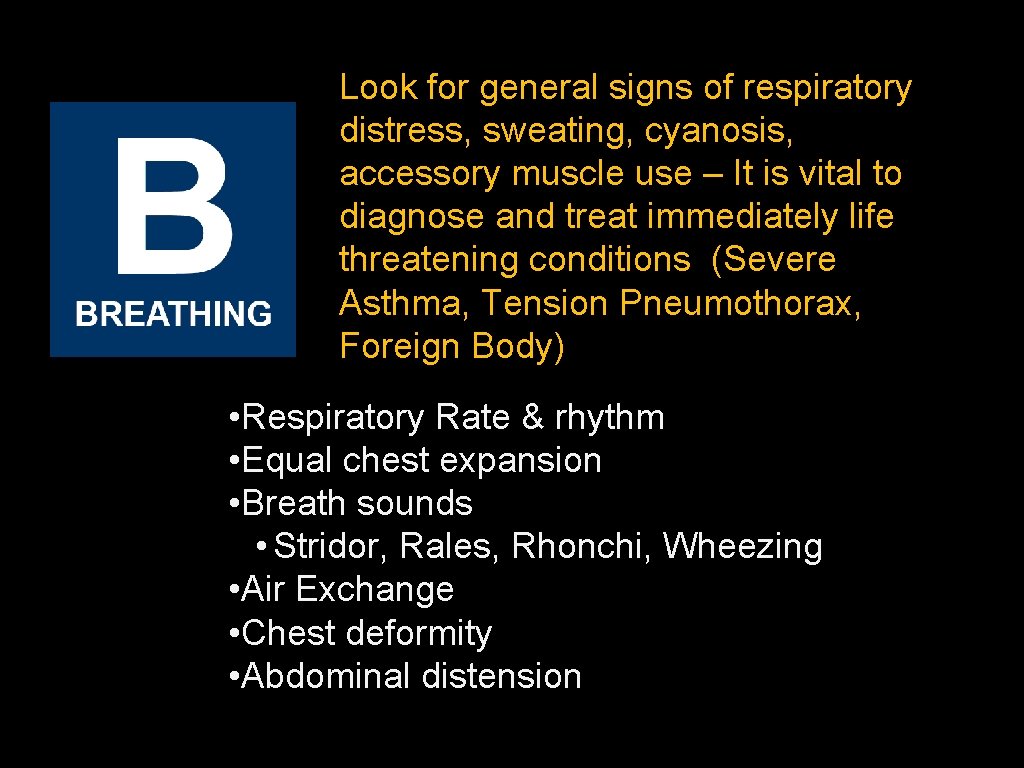
Look for general signs of respiratory distress, sweating, cyanosis, accessory muscle use – It is vital to diagnose and treat immediately life threatening conditions (Severe Asthma, Tension Pneumothorax, Foreign Body) • Respiratory Rate & rhythm • Equal chest expansion • Breath sounds • Stridor, Rales, Rhonchi, Wheezing • Air Exchange • Chest deformity • Abdominal distension
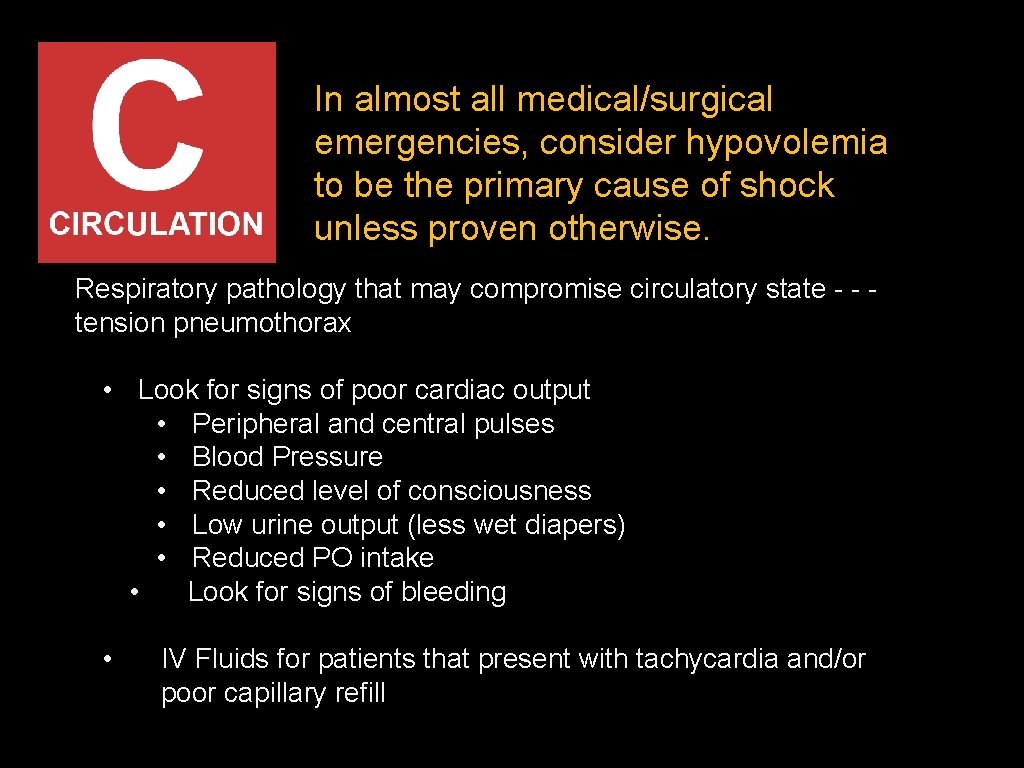
In almost all medical/surgical emergencies, consider hypovolemia to be the primary cause of shock unless proven otherwise. Respiratory pathology that may compromise circulatory state - - - tension pneumothorax • Look for signs of poor cardiac output • Peripheral and central pulses • Blood Pressure • Reduced level of consciousness • Low urine output (less wet diapers) • Reduced PO intake • Look for signs of bleeding • IV Fluids for patients that present with tachycardia and/or poor capillary refill
Signs of Disability - - coma/convulsion - Common causes of unconsciousness include profound hypoxia, hypercapnea, cerebral hypoperfusion or recent sedative/analgesic drug ingestion • Review ABC’s – exclude hypoxia and hypotension • Assess tone, Pupil size • R/O Accidental Ingestion – give appropriate antagonist where available • Monitor LOC • Blood Glucose Level D can also stand for signs of dehydration • Signs of shock have already been looked for while assessing circulation but specific examination for skin turger, sunken eyes, dry mucus membranes
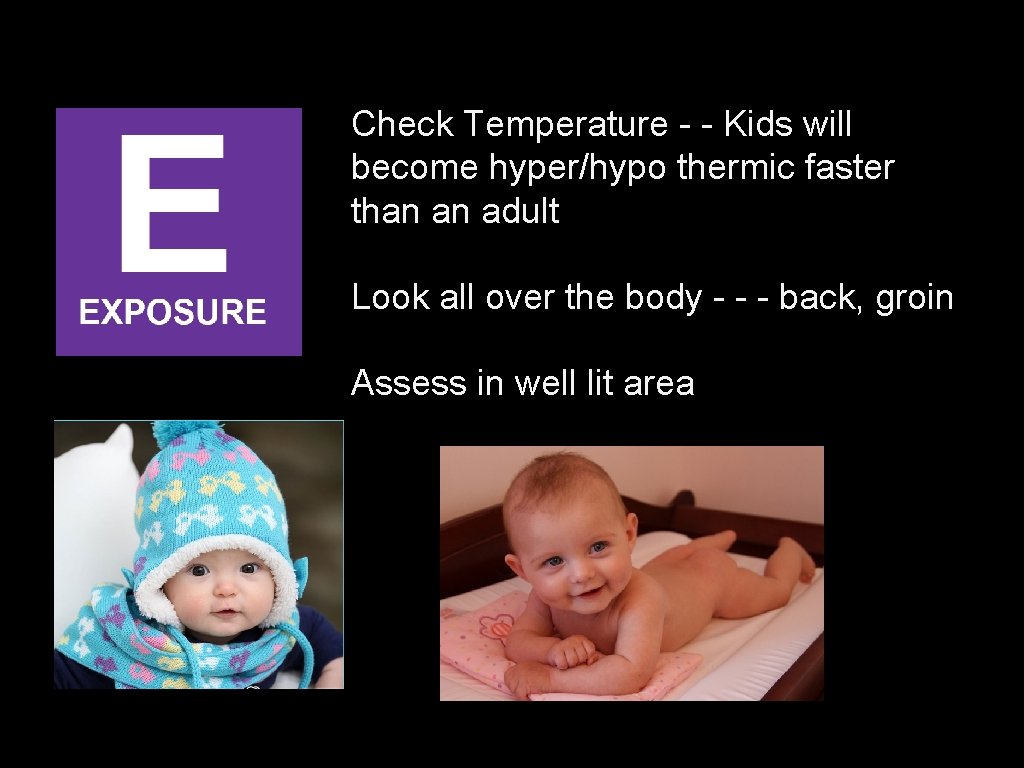
Check Temperature - - Kids will become hyper/hypo thermic faster than an adult Look all over the body - - - back, groin Assess in well lit area
Other than Trauma - - - 5 Most Common Respiratory Emergencies • • • Asthma Croup Bronchiolitis Epiglotitis Foreign bodies
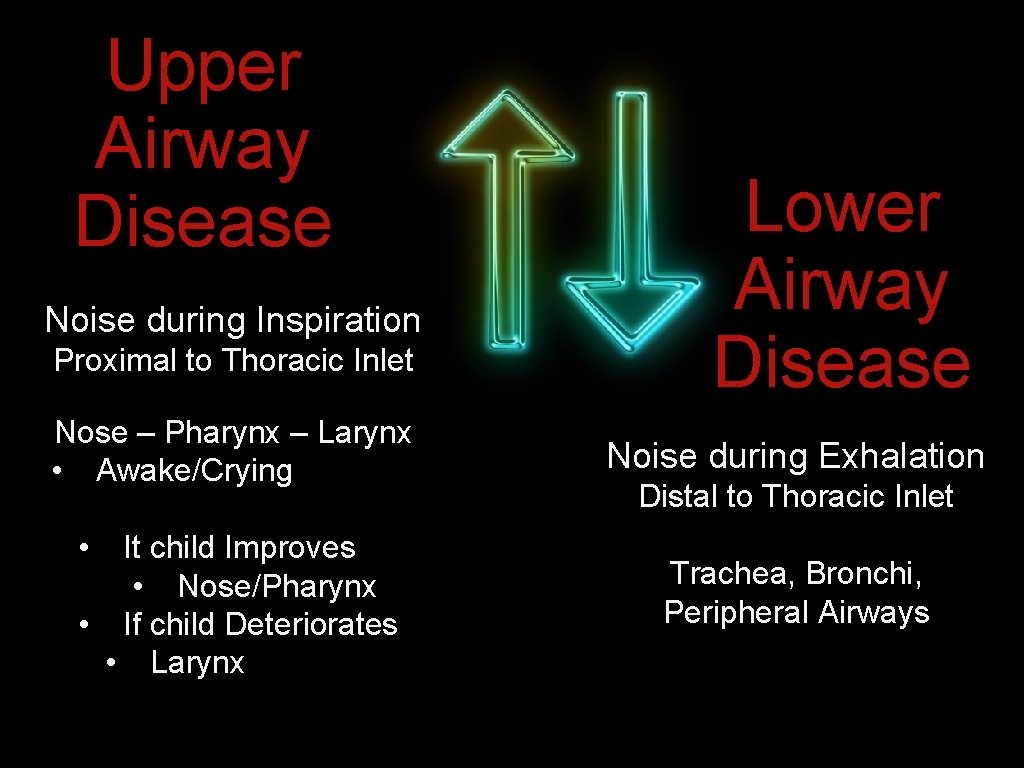
Upper Airway Disease Croup Noise during Inspiration Foreign Body Proximal to Thoracic Inlet Epiglottitis Bacterial Tracheitis Nose – Pharynx – Larynx • Awake/Crying • It child Improves • Nose/Pharynx • If child Deteriorates • Larynx Lower Airway Disease Asthma Bronchiolitis Noise during Exhalation Pneumonia Distal to Thoracic Inlet Foreign Body Trachea, Bronchi, Peripheral Airways
Upper Airway Disease
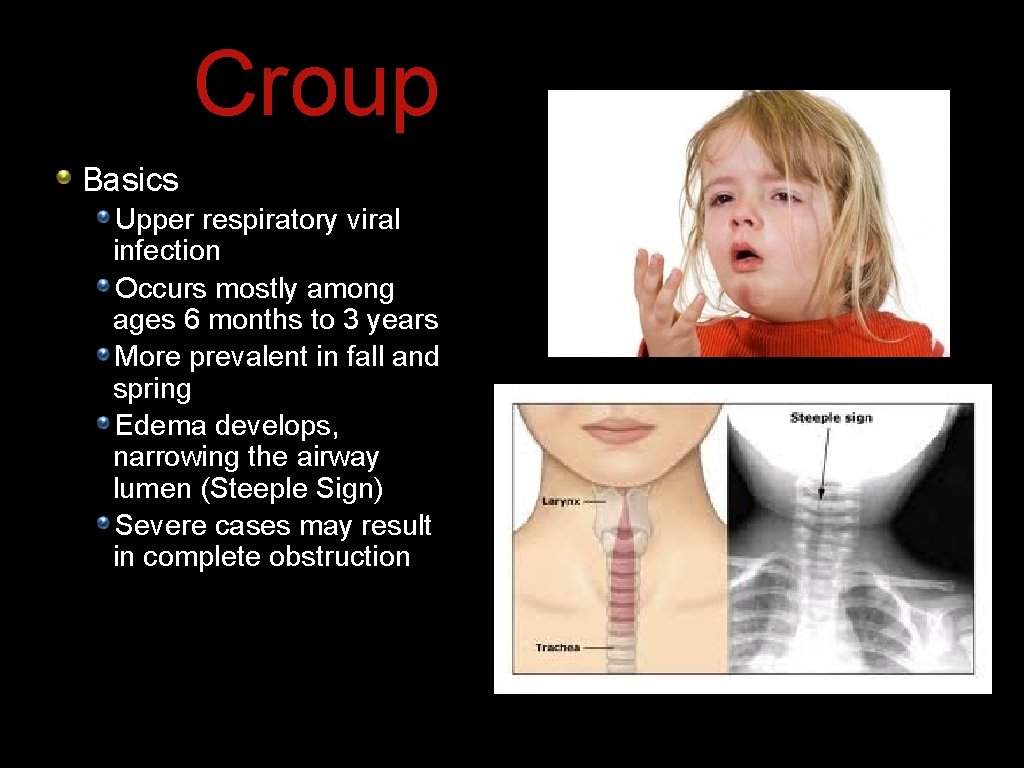
Croup Basics Upper respiratory viral infection Occurs mostly among ages 6 months to 3 years More prevalent in fall and spring Edema develops, narrowing the airway lumen (Steeple Sign) Severe cases may result in complete obstruction
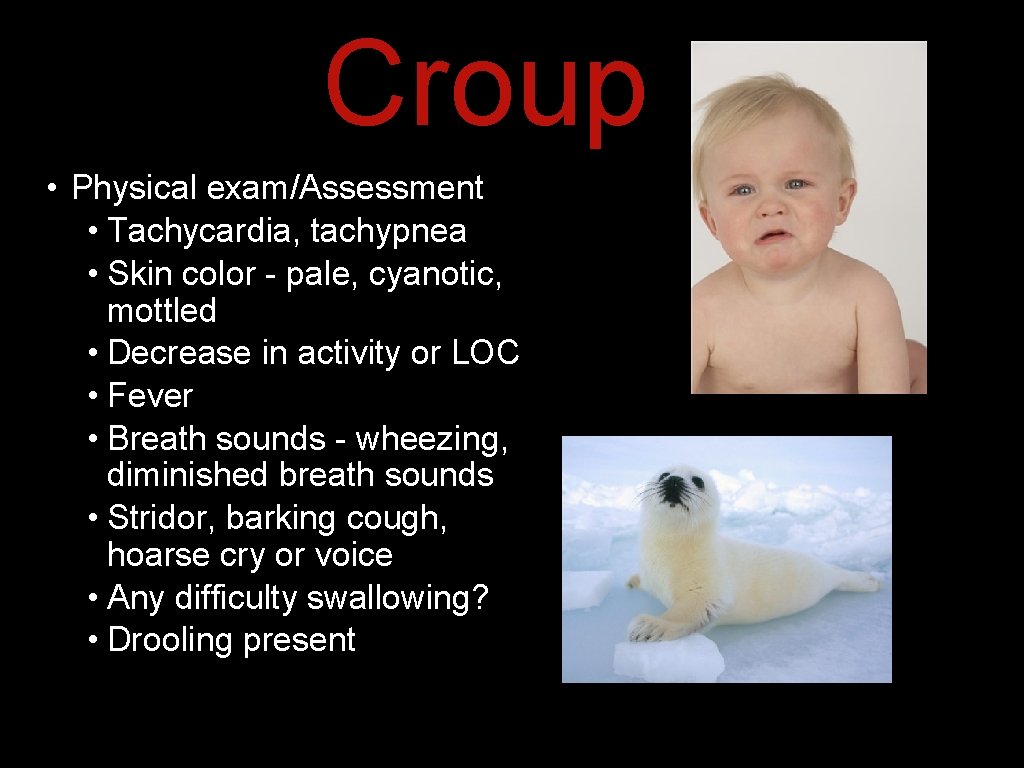
Croup • Physical exam/Assessment • Tachycardia, tachypnea • Skin color - pale, cyanotic, mottled • Decrease in activity or LOC • Fever • Breath sounds - wheezing, diminished breath sounds • Stridor, barking cough, hoarse cry or voice • Any difficulty swallowing? • Drooling present
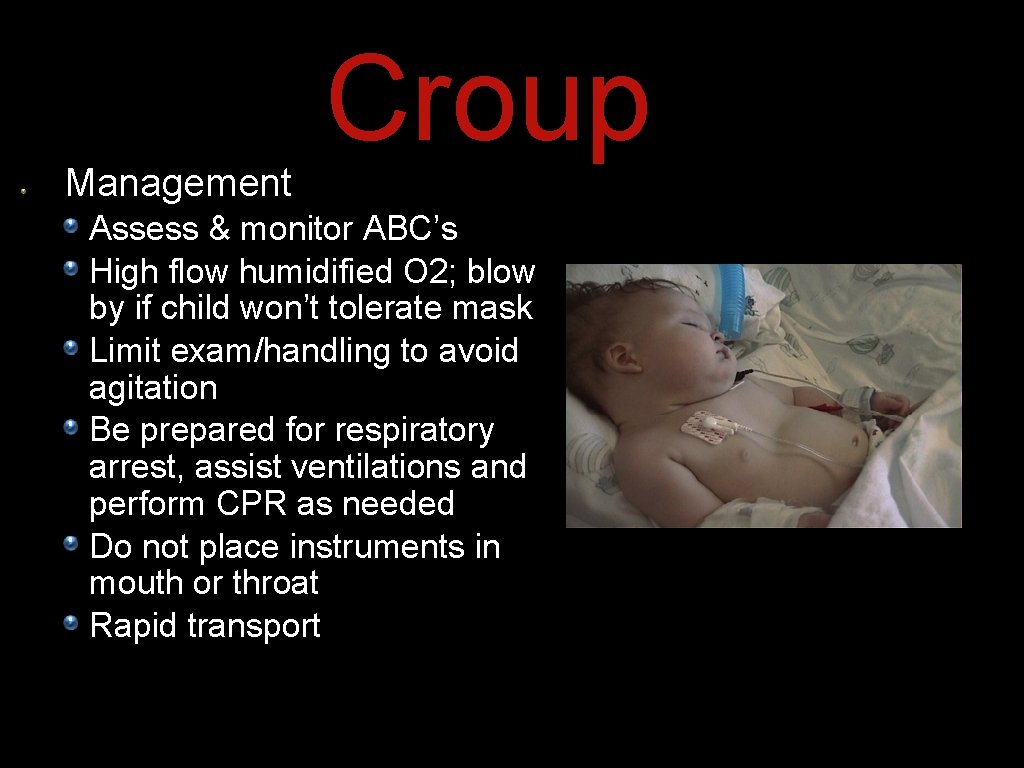
Management Croup Assess & monitor ABC’s High flow humidified O 2; blow by if child won’t tolerate mask Limit exam/handling to avoid agitation Be prepared for respiratory arrest, assist ventilations and perform CPR as needed Do not place instruments in mouth or throat Rapid transport
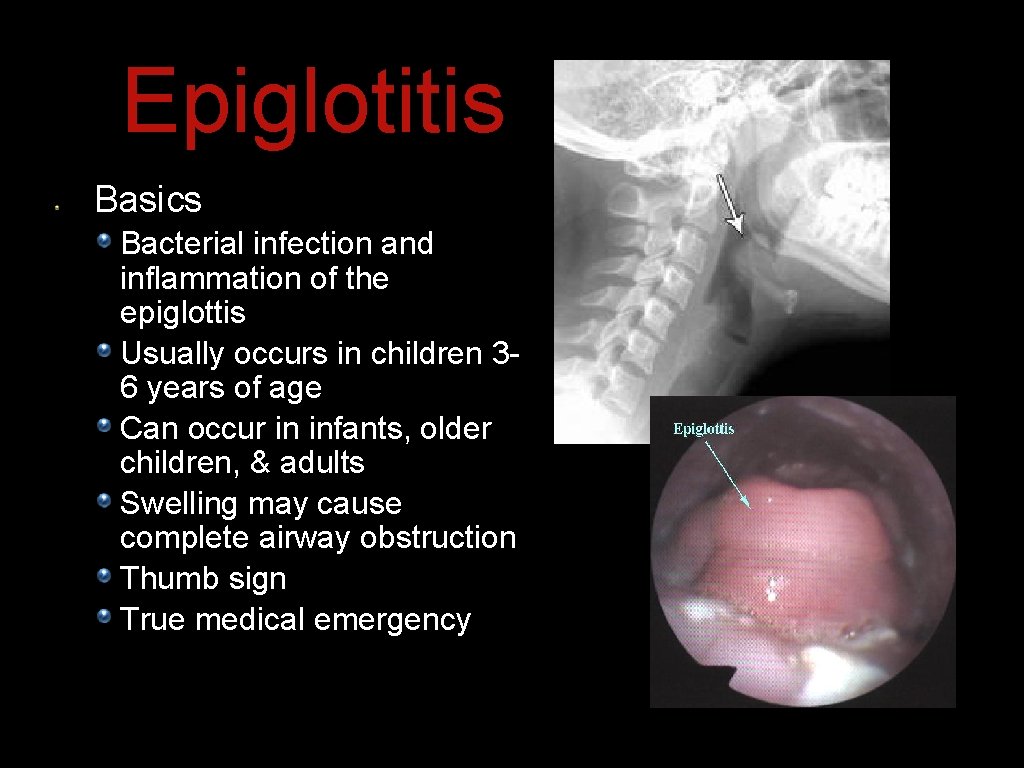
Epiglotitis Basics Bacterial infection and inflammation of the epiglottis Usually occurs in children 36 years of age Can occur in infants, older children, & adults Swelling may cause complete airway obstruction Thumb sign True medical emergency
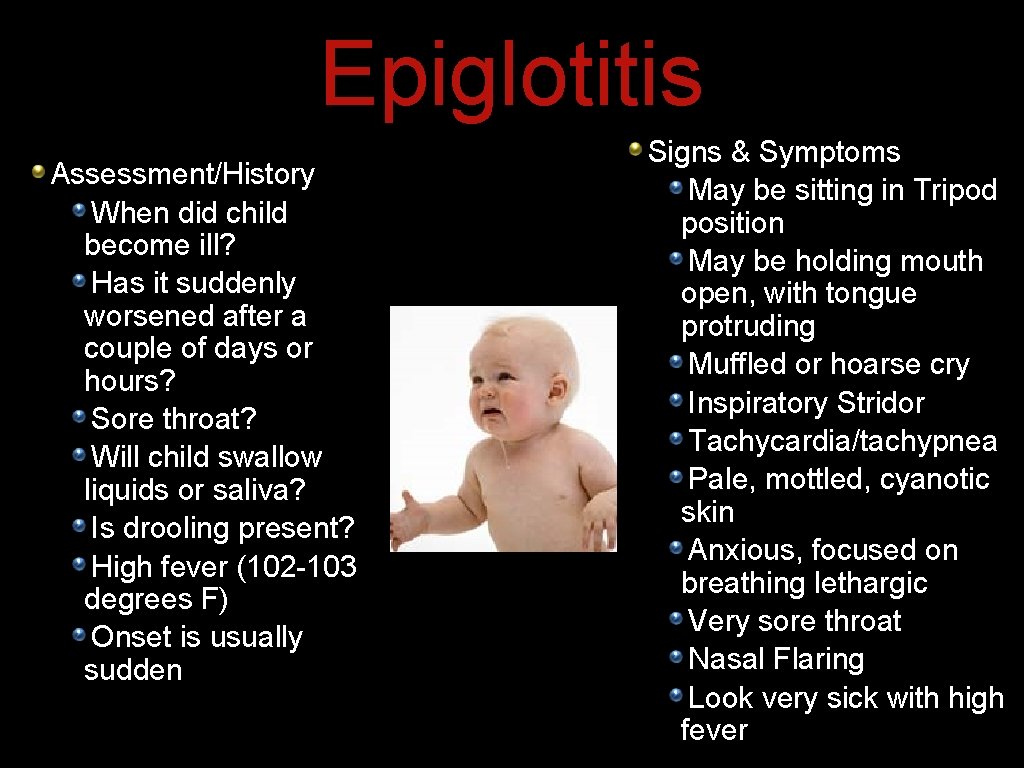
Epiglotitis Assessment/History When did child become ill? Has it suddenly worsened after a couple of days or hours? Sore throat? Will child swallow liquids or saliva? Is drooling present? High fever (102 -103 degrees F) Onset is usually sudden Signs & Symptoms May be sitting in Tripod position May be holding mouth open, with tongue protruding Muffled or hoarse cry Inspiratory Stridor Tachycardia/tachypnea Pale, mottled, cyanotic skin Anxious, focused on breathing lethargic Very sore throat Nasal Flaring Look very sick with high fever
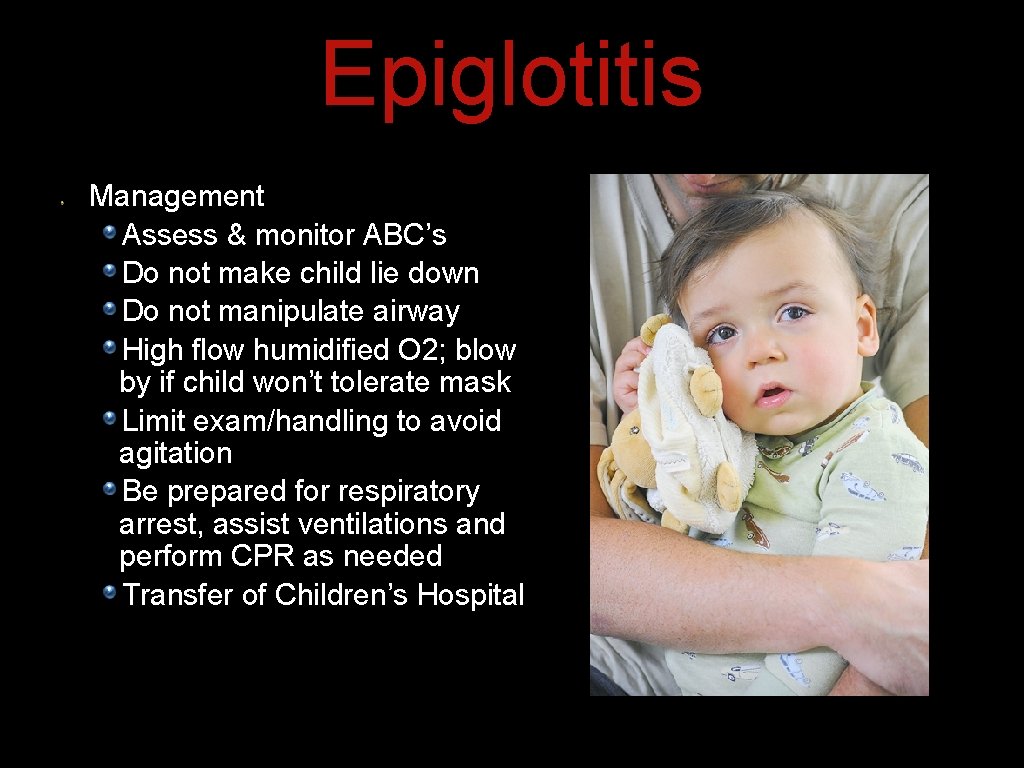
Epiglotitis Management Assess & monitor ABC’s Do not make child lie down Do not manipulate airway High flow humidified O 2; blow by if child won’t tolerate mask Limit exam/handling to avoid agitation Be prepared for respiratory arrest, assist ventilations and perform CPR as needed Transfer of Children’s Hospital
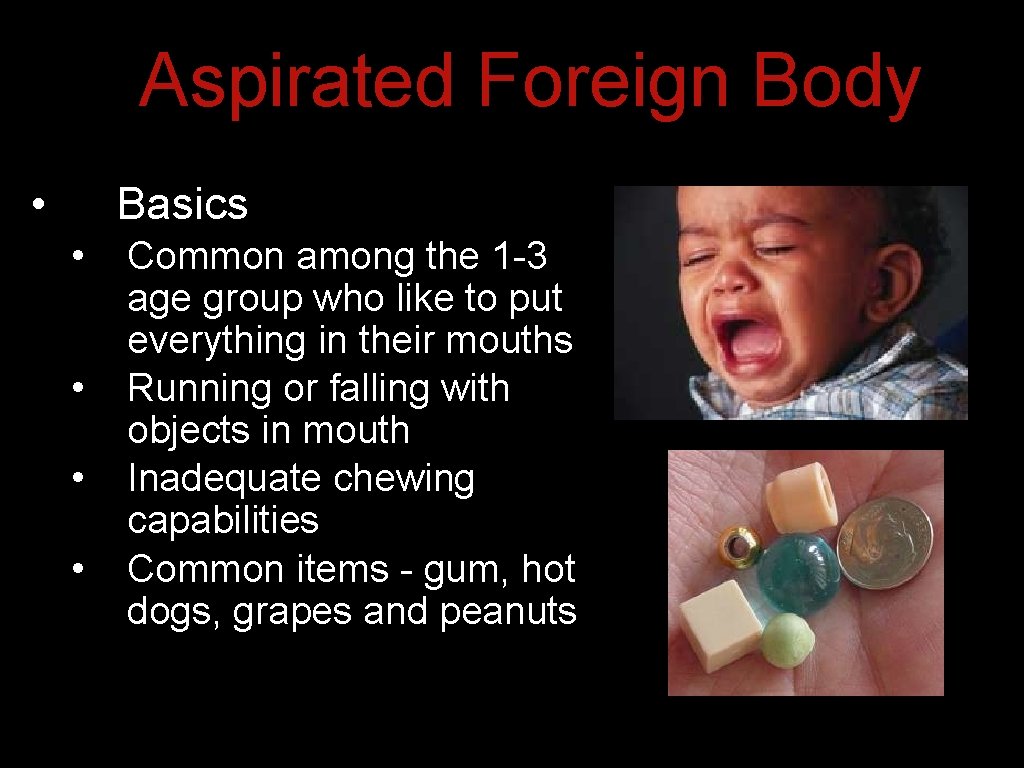
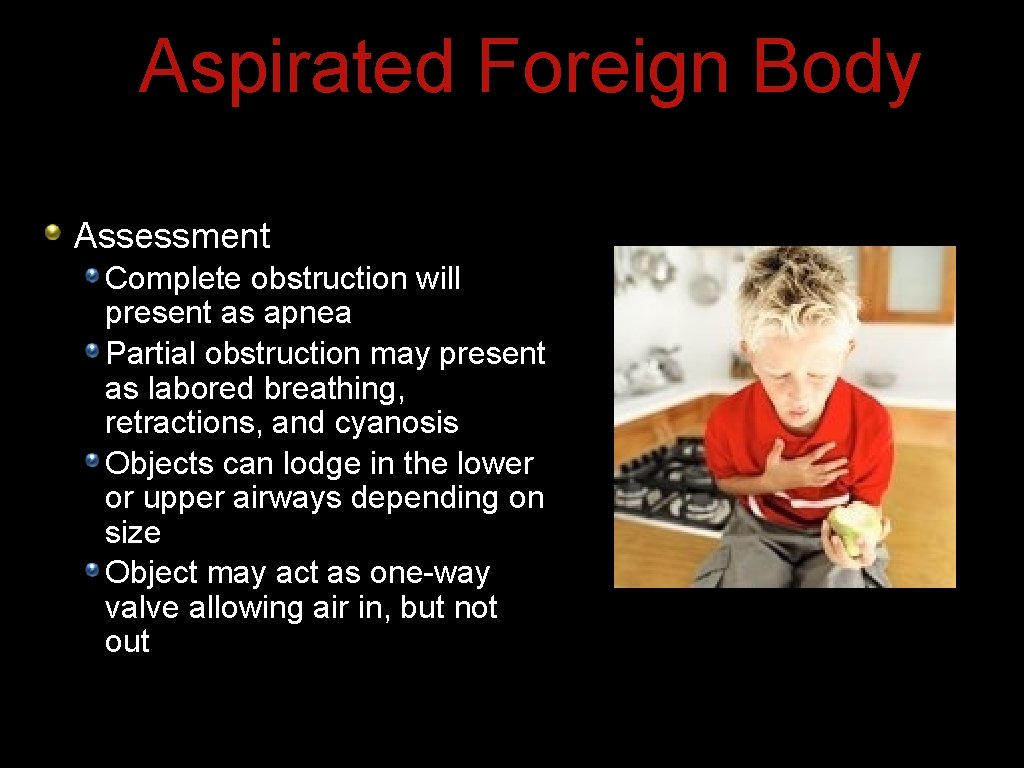
Aspirated Foreign Body • Basics • • Common among the 1 -3 age group who like to put everything in their mouths Running or falling with objects in mouth Inadequate chewing capabilities Common items - gum, hot dogs, grapes and peanuts
Aspirated Foreign Body Assessment Complete obstruction will present as apnea Partial obstruction may present as labored breathing, retractions, and cyanosis Objects can lodge in the lower or upper airways depending on size Object may act as one-way valve allowing air in, but not out
Aspirated Foreign Body Partial obstruction Make child comfortable Administer humidified oxygen Encourage child to cough Have intubation equipment available Transport to hospital for removal with bronchoscope Complete Obstruction Attempt to clear using BLS techniques Attempt removal with direct laryngoscopy and Magill forceps Cricothyrotomy may be indicated
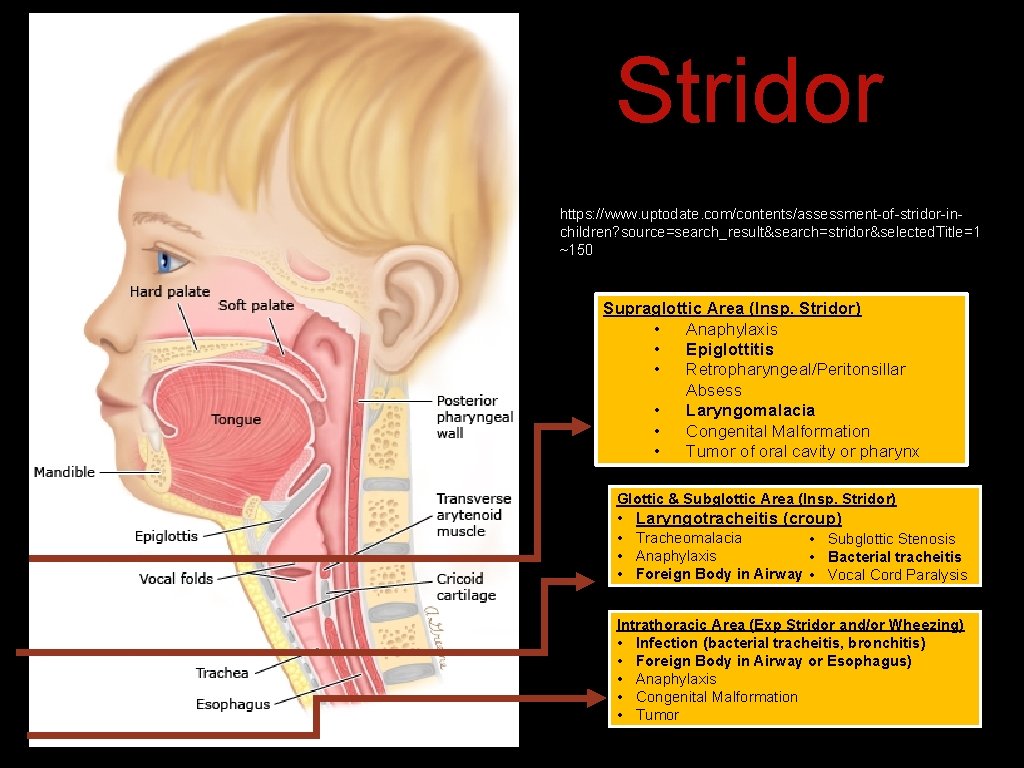
Stridor https: //www. uptodate. com/contents/assessment-of-stridor-inchildren? source=search_result&search=stridor&selected. Title=1 ~150 Supraglottic Area (Insp. Stridor) • Anaphylaxis • Epiglottitis • Retropharyngeal/Peritonsillar Absess • Laryngomalacia • Congenital Malformation • Tumor of oral cavity or pharynx Glottic & Subglottic Area (Insp. Stridor) • Laryngotracheitis (croup) • Tracheomalacia • Subglottic Stenosis • Anaphylaxis • Bacterial tracheitis • Foreign Body in Airway • Vocal Cord Paralysis Intrathoracic Area (Exp Stridor and/or Wheezing) • Infection (bacterial tracheitis, bronchitis) • Foreign Body in Airway or Esophagus) • Anaphylaxis • Congenital Malformation • Tumor
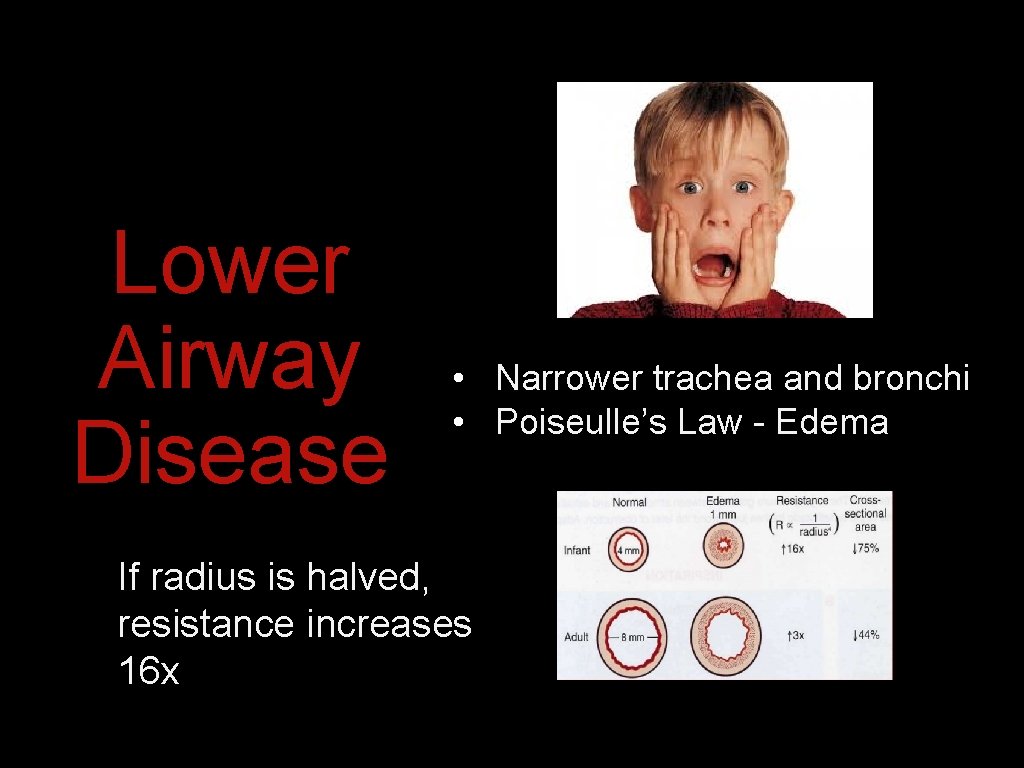
Lower Airway Disease • Narrower trachea and bronchi • Poiseulle’s Law - Edema If radius is halved, resistance increases 16 x
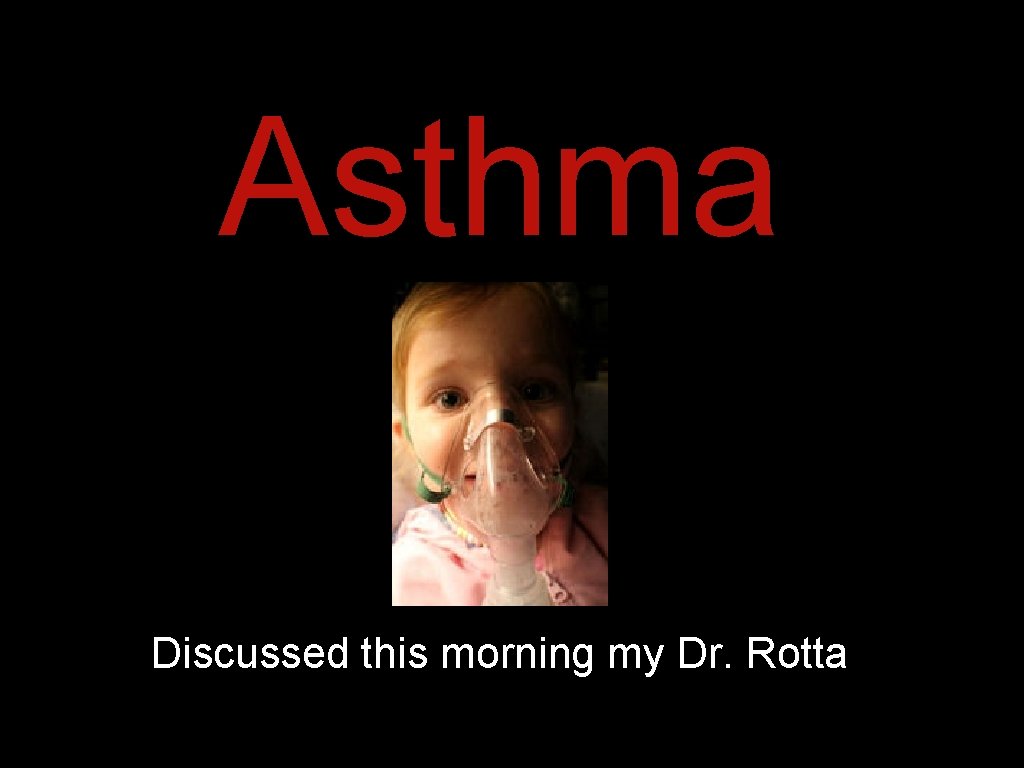
Asthma Discussed this morning my Dr. Rotta
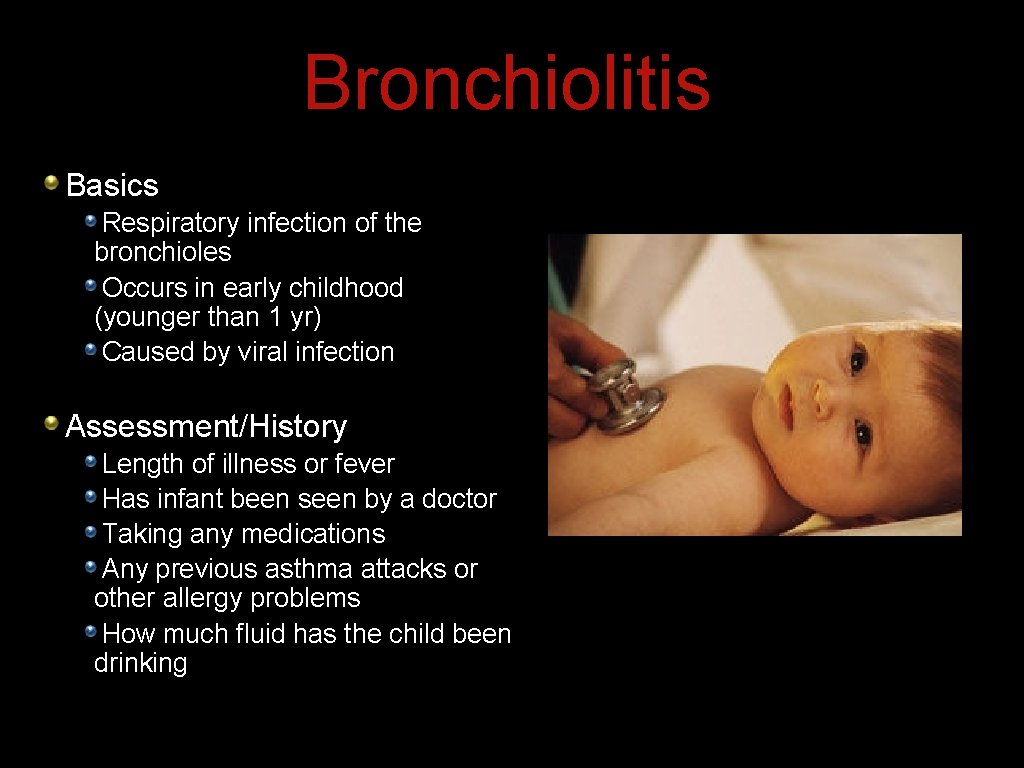
Bronchiolitis Basics Respiratory infection of the bronchioles Occurs in early childhood (younger than 1 yr) Caused by viral infection Assessment/History Length of illness or fever Has infant been seen by a doctor Taking any medications Any previous asthma attacks or other allergy problems How much fluid has the child been drinking
Bronchiolitis Signs & symptoms Acute respiratory distress Tachypnea May have intercostal and suprasternal retractions Cyanosis Fever & dry cough May have wheezes - inspiratory & expiratory Confused & anxious mental status Possible dehydration Management Assess & maintain airway When appropriate let child pick POC Clear nasal passages if necessary Prepare to assist with ventilations IV LR or NS TKO rate Intubate if airway management becomes difficult or fails
Other than the 5 Most Common Respiratory Emergencies • • Dehydration/ Shock Ingestions Anaphylaxis Seizures
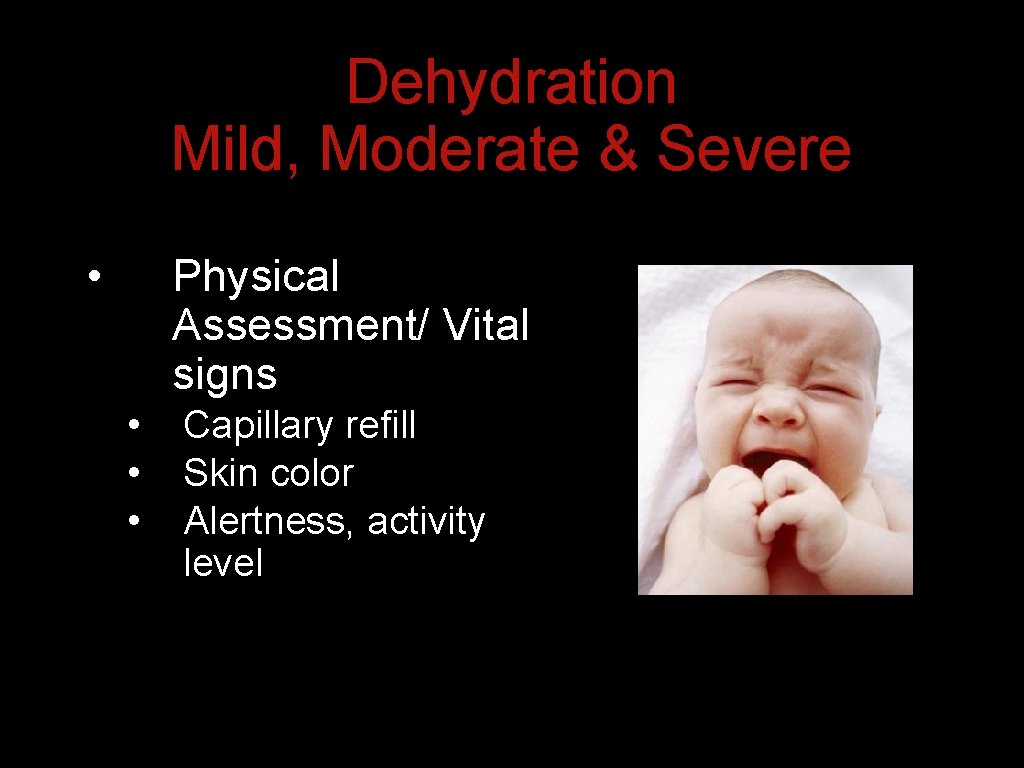
Dehydration Mild, Moderate & Severe • Physical Assessment/ Vital signs • • • Capillary refill Skin color Alertness, activity level
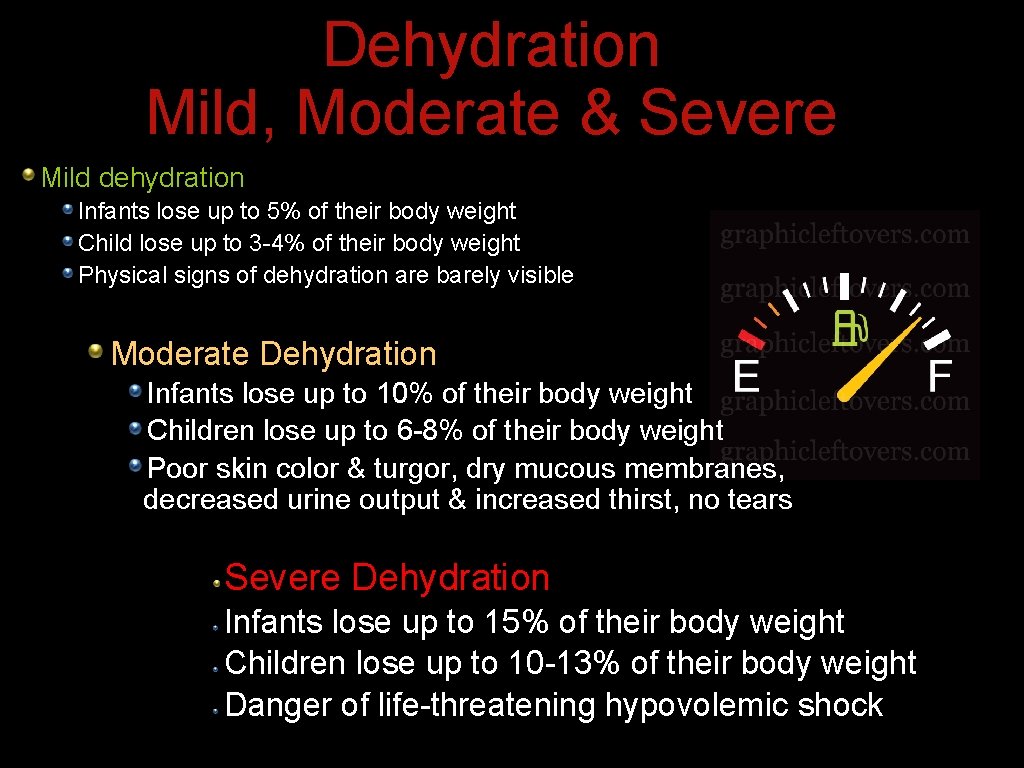
Dehydration Mild, Moderate & Severe Mild dehydration Infants lose up to 5% of their body weight Child lose up to 3 -4% of their body weight Physical signs of dehydration are barely visible Moderate Dehydration Infants lose up to 10% of their body weight Children lose up to 6 -8% of their body weight Poor skin color & turgor, dry mucous membranes, decreased urine output & increased thirst, no tears Severe Dehydration Infants lose up to 15% of their body weight Children lose up to 10 -13% of their body weight Danger of life-threatening hypovolemic shock
Dehydration Mild, Moderate & Severe Management If mild or moderate Give fluids orally if there is no abdominal pain, vomiting or diarrhea and is alert Severe High flow O 2 IV/IO with NS or LR Fluid bolus of 20 ml/kg IV/IO push Repeat fluid bolus if no improvement
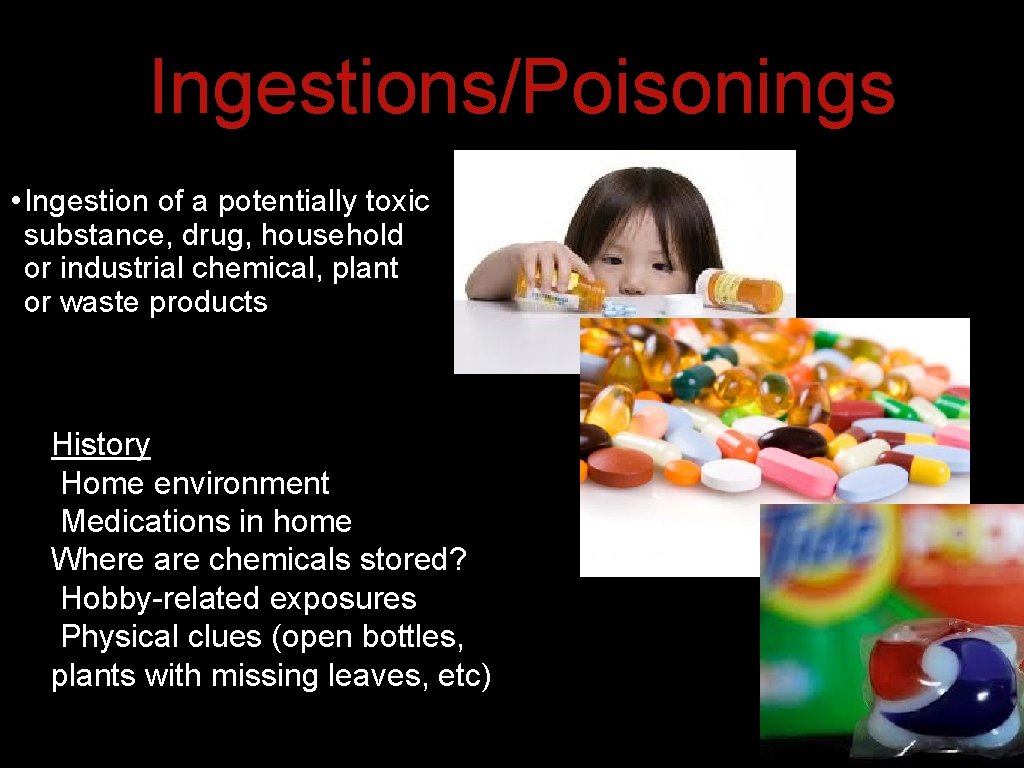
Ingestions/Poisonings • Ingestion of a potentially toxic substance, drug, household or industrial chemical, plant or waste products History Home environment Medications in home Where are chemicals stored? Hobby-related exposures Physical clues (open bottles, plants with missing leaves, etc)
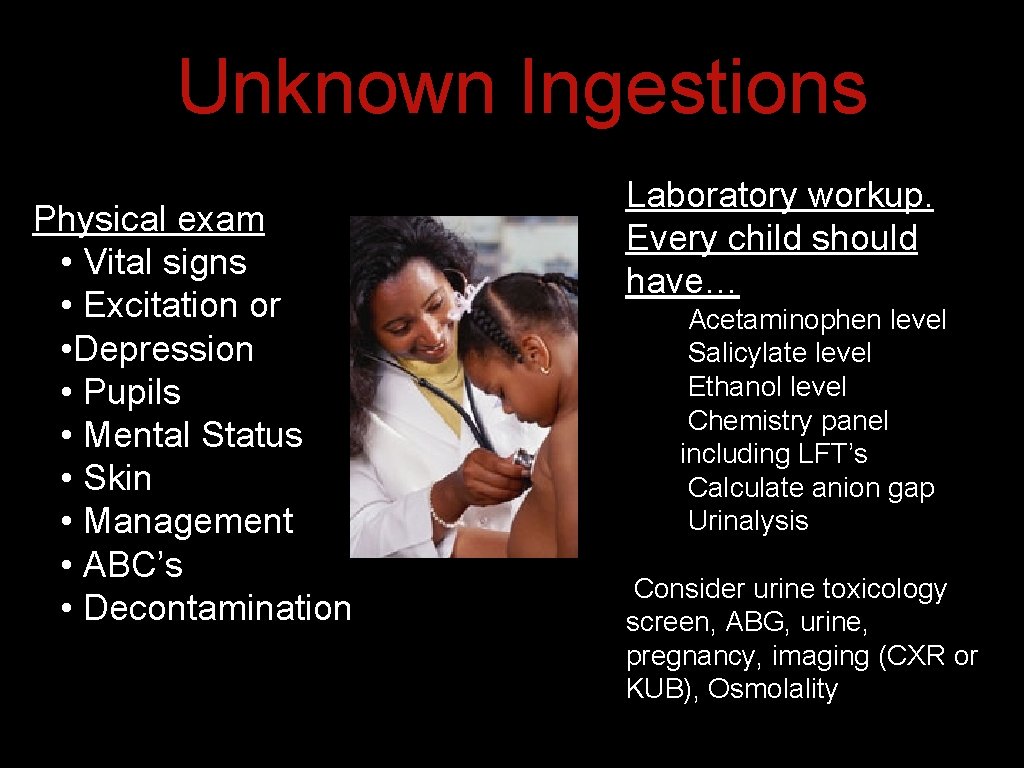
Unknown Ingestions Physical exam • Vital signs • Excitation or • Depression • Pupils • Mental Status • Skin • Management • ABC’s • Decontamination Laboratory workup. Every child should have… Acetaminophen level Salicylate level Ethanol level Chemistry panel including LFT’s Calculate anion gap Urinalysis Consider urine toxicology screen, ABG, urine, pregnancy, imaging (CXR or KUB), Osmolality
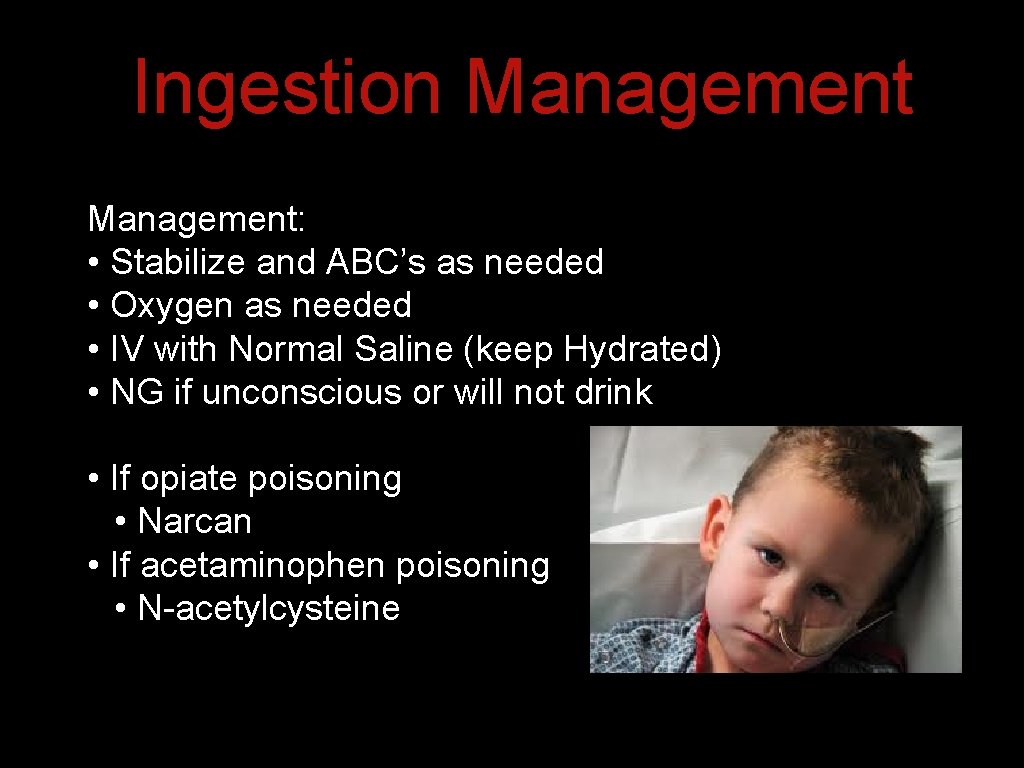
Ingestion Management: • Stabilize and ABC’s as needed • Oxygen as needed • IV with Normal Saline (keep Hydrated) • NG if unconscious or will not drink • If opiate poisoning • Narcan • If acetaminophen poisoning • N-acetylcysteine
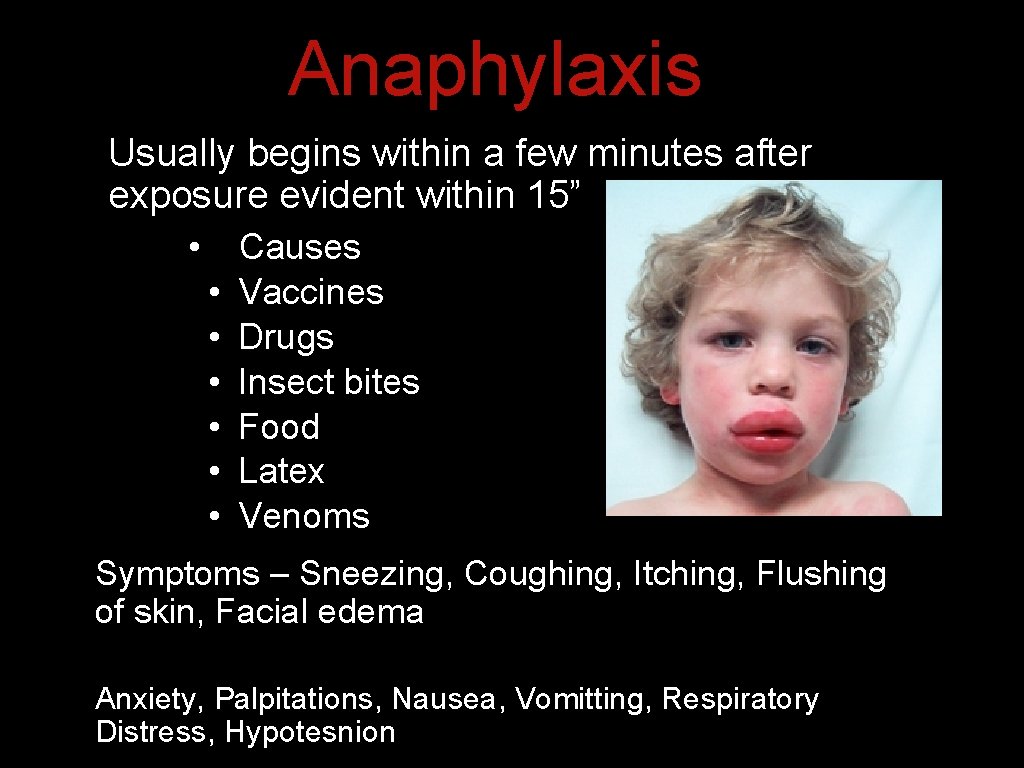
Anaphylaxis Usually begins within a few minutes after exposure evident within 15” • • Causes Vaccines Drugs Insect bites Food Latex Venoms Symptoms – Sneezing, Coughing, Itching, Flushing of skin, Facial edema Anxiety, Palpitations, Nausea, Vomitting, Respiratory Distress, Hypotesnion
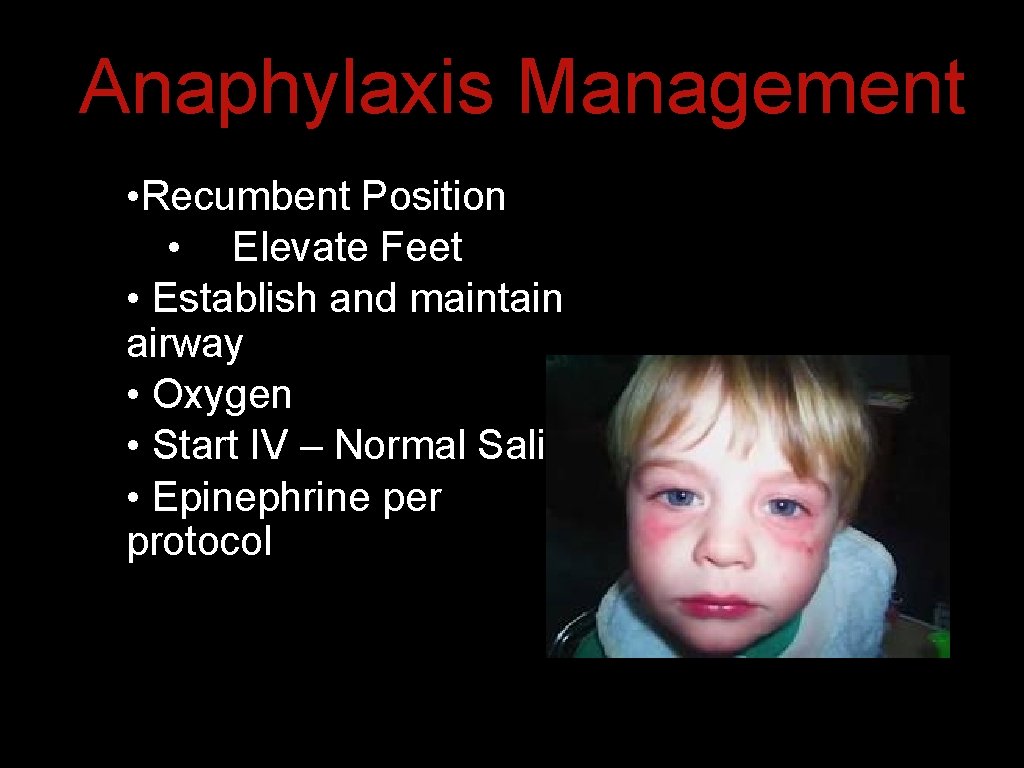
Anaphylaxis Management • Recumbent Position • Elevate Feet • Establish and maintain airway • Oxygen • Start IV – Normal Saline • Epinephrine per protocol
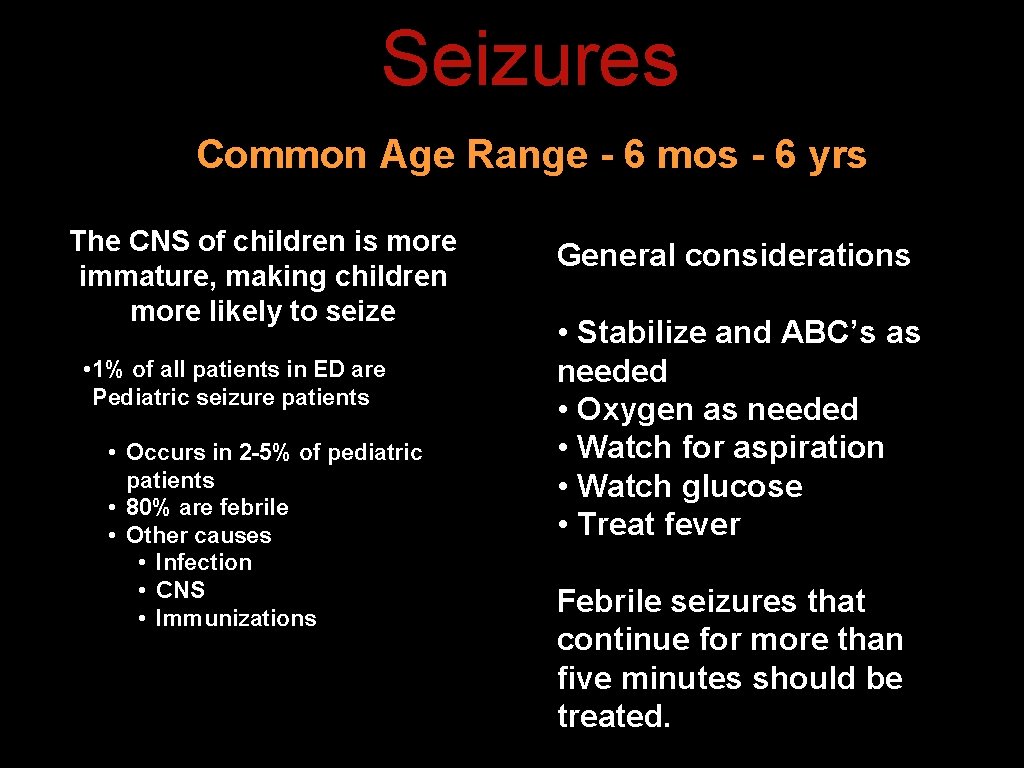
Seizures Common Age Range - 6 mos - 6 yrs The CNS of children is more immature, making children more likely to seize • 1% of all patients in ED are Pediatric seizure patients • Occurs in 2 -5% of pediatric patients • 80% are febrile • Other causes • Infection • CNS • Immunizations General considerations • Stabilize and ABC’s as needed • Oxygen as needed • Watch for aspiration • Watch glucose • Treat fever Febrile seizures that continue for more than five minutes should be treated.
Pediatric Trauma
Pediatric Trauma • Trauma is leading cause of death in children Most common mechanisms • MVA 43% • Burns 15% • Drowning 15% • Firearms 3% • Falls 2% • Most commonly injured body areas-head, trunk, extremities Head Abdomen Chest Extremities 48% 11% 9% 32%
Anatomic Characteristics of the Pediatric Patient and Significance to Trauma Care Large Volume of Blood in Head Cerebral edema develops rapidly Poor Muscular support in neck Flexion/extension injuries occur Decreased Alveolar surface area Injury leads to rapid compromise Increased Metabolic rate Higher oxygen demand Decreased airway caliber Increased airway resistance
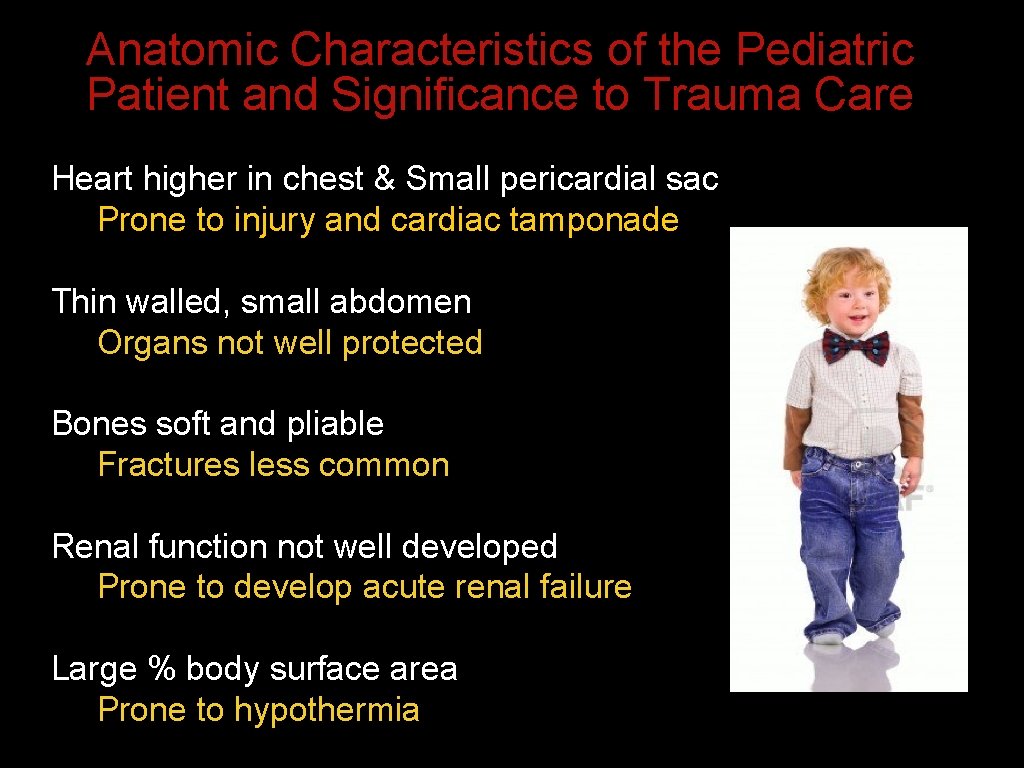
Anatomic Characteristics of the Pediatric Patient and Significance to Trauma Care Heart higher in chest & Small pericardial sac Prone to injury and cardiac tamponade Thin walled, small abdomen Organs not well protected Bones soft and pliable Fractures less common Renal function not well developed Prone to develop acute renal failure Large % body surface area Prone to hypothermia
Multi-System Injuries • Multi-system injury is the rule rather than the exception • Because of the smaller body mass, energy from linear forces (e. g. fenders, bumpers, falls) results in greater force applied per unit body area • Children have less fat, less elastic connective tissue and close proximity of organs, which leads to more multi-system organ injuries • The skeleton is incompletely calcified and more pliable • If the bones are broken, assume that a massive amount of energy was applied • Internal organs may be damaged without evidence of overlying bone fractures
Head, Face, and Neck Injuries Children prone to head injuries Be alert for signs of child abuse Facial injuries common secondary to falls Always assume a spinal injury with head injury Children are susceptible to the secondary effects of brain injury produced by hypoxia, hypotension, seizures and hyperthermia Open fontanels and mobile cranial suture lines are more tolerant of expansion of intracranial mass lesions, decompensations may not occur until the mass lesion has become large
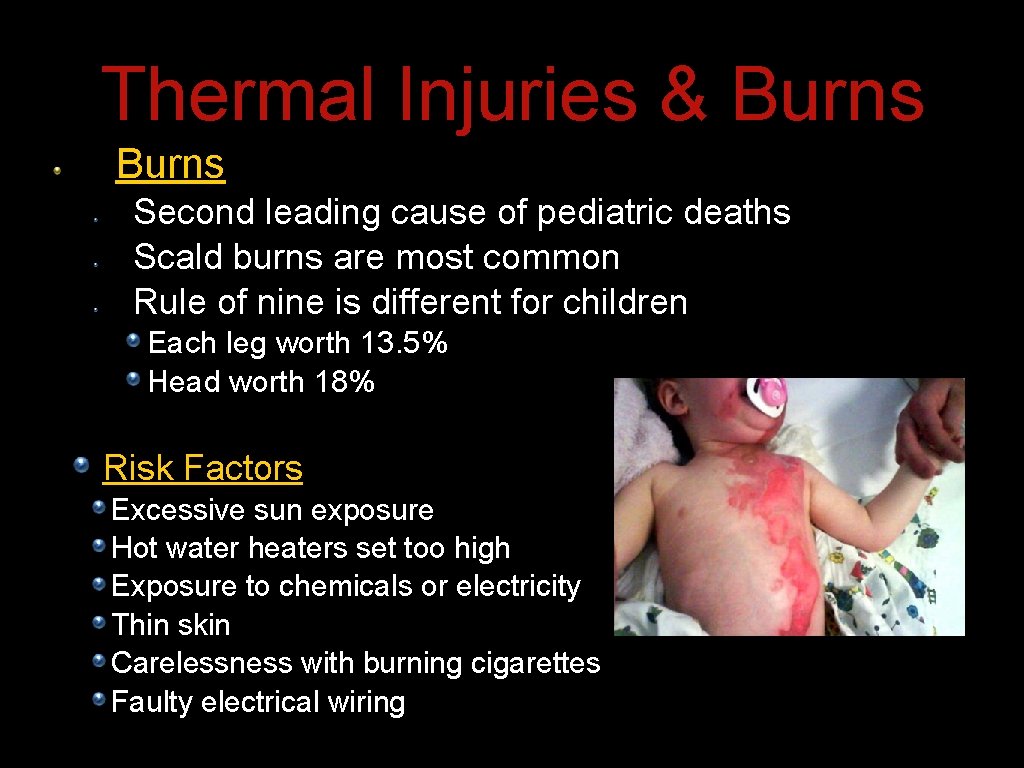
Thermal Injuries & Burns Second leading cause of pediatric deaths Scald burns are most common Rule of nine is different for children Each leg worth 13. 5% Head worth 18% Risk Factors Excessive sun exposure Hot water heaters set too high Exposure to chemicals or electricity Thin skin Carelessness with burning cigarettes Faulty electrical wiring
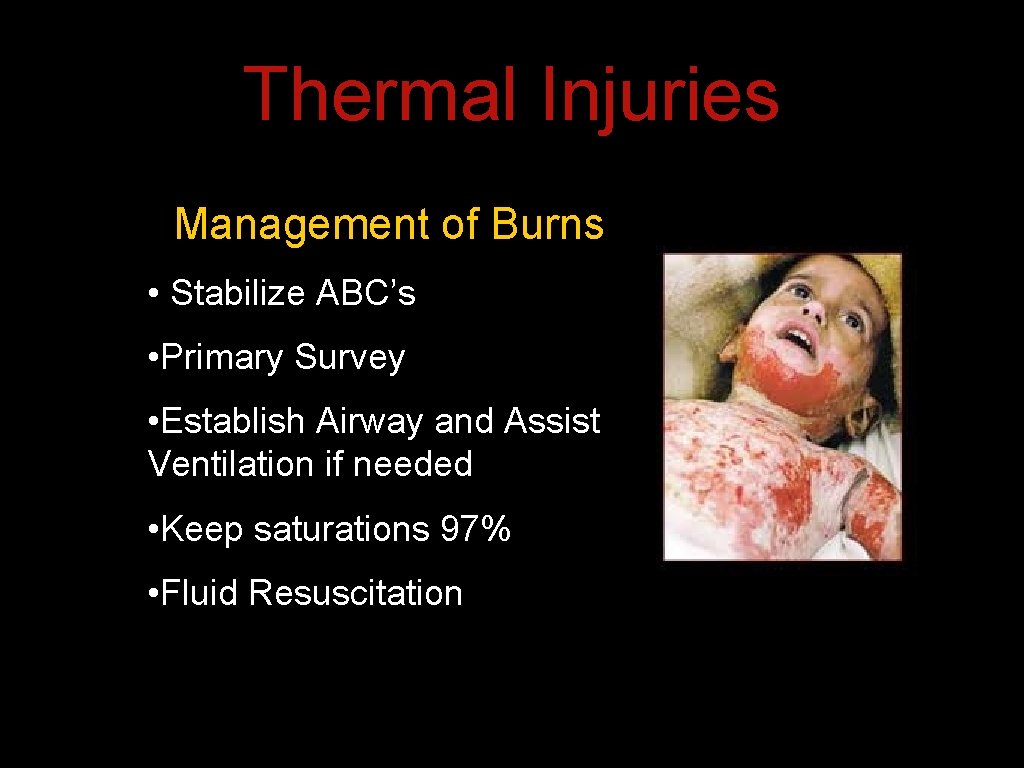
Thermal Injuries Management of Burns • Stabilize ABC’s • Primary Survey • Establish Airway and Assist Ventilation if needed • Keep saturations 97% • Fluid Resuscitation
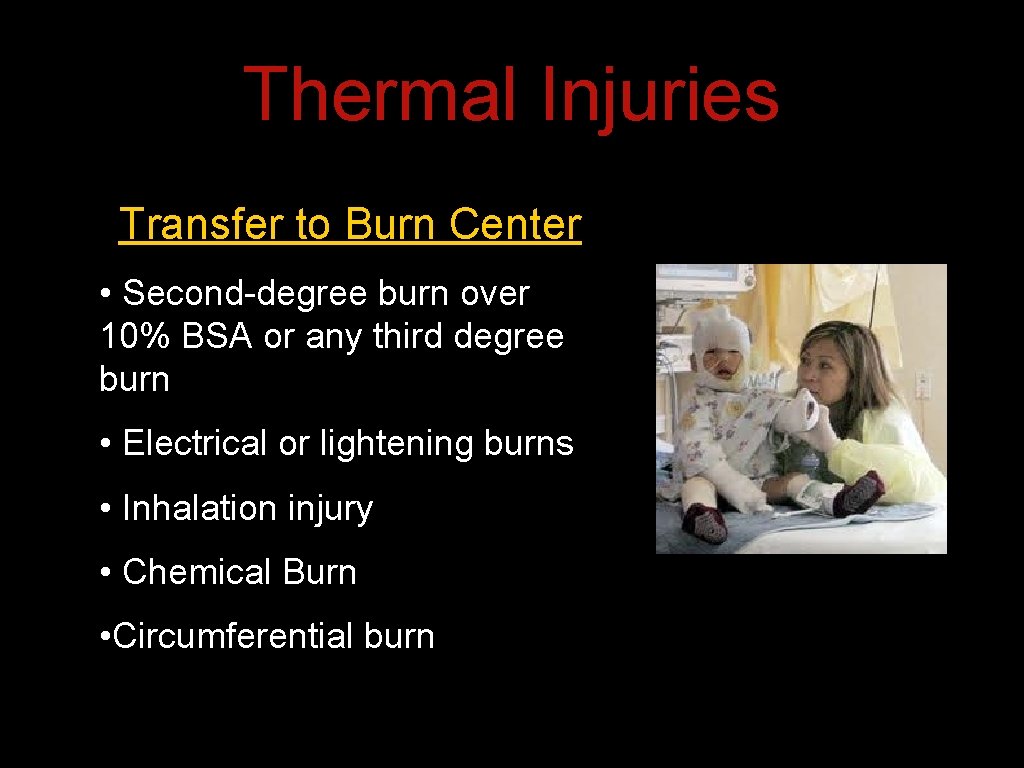
Thermal Injuries Transfer to Burn Center • Second-degree burn over 10% BSA or any third degree burn • Electrical or lightening burns • Inhalation injury • Chemical Burn • Circumferential burn
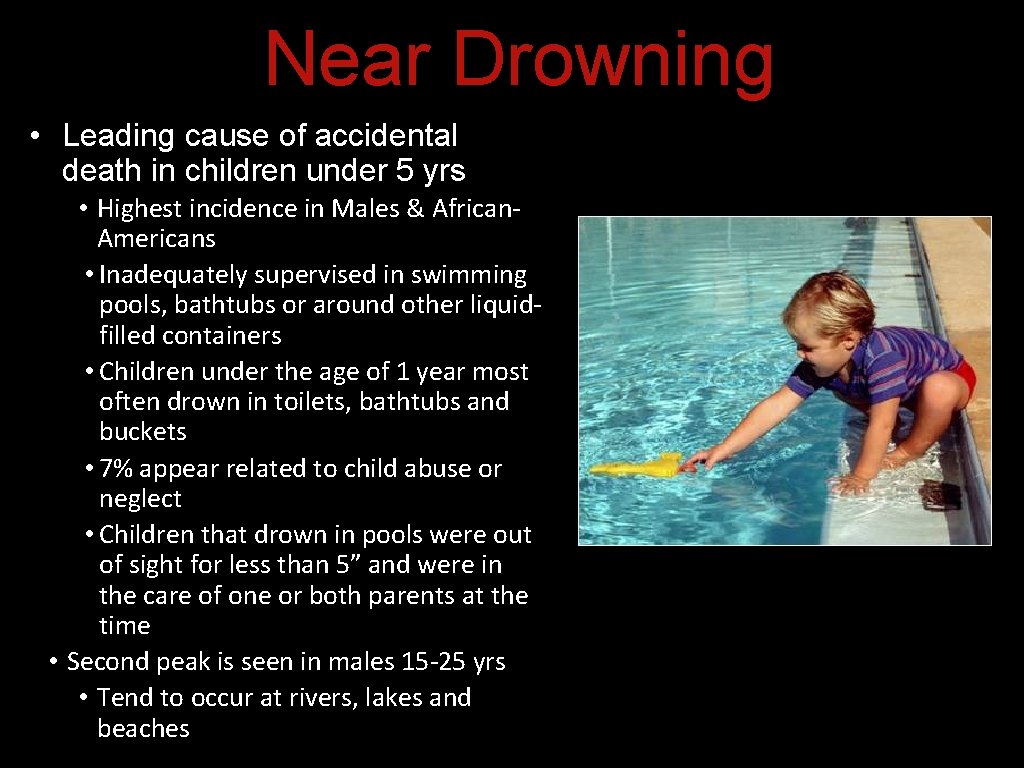
Near Drowning • Leading cause of accidental death in children under 5 yrs • Highest incidence in Males & African. Americans • Inadequately supervised in swimming pools, bathtubs or around other liquidfilled containers • Children under the age of 1 year most often drown in toilets, bathtubs and buckets • 7% appear related to child abuse or neglect • Children that drown in pools were out of sight for less than 5” and were in the care of one or both parents at the time • Second peak is seen in males 15 -25 yrs • Tend to occur at rivers, lakes and beaches
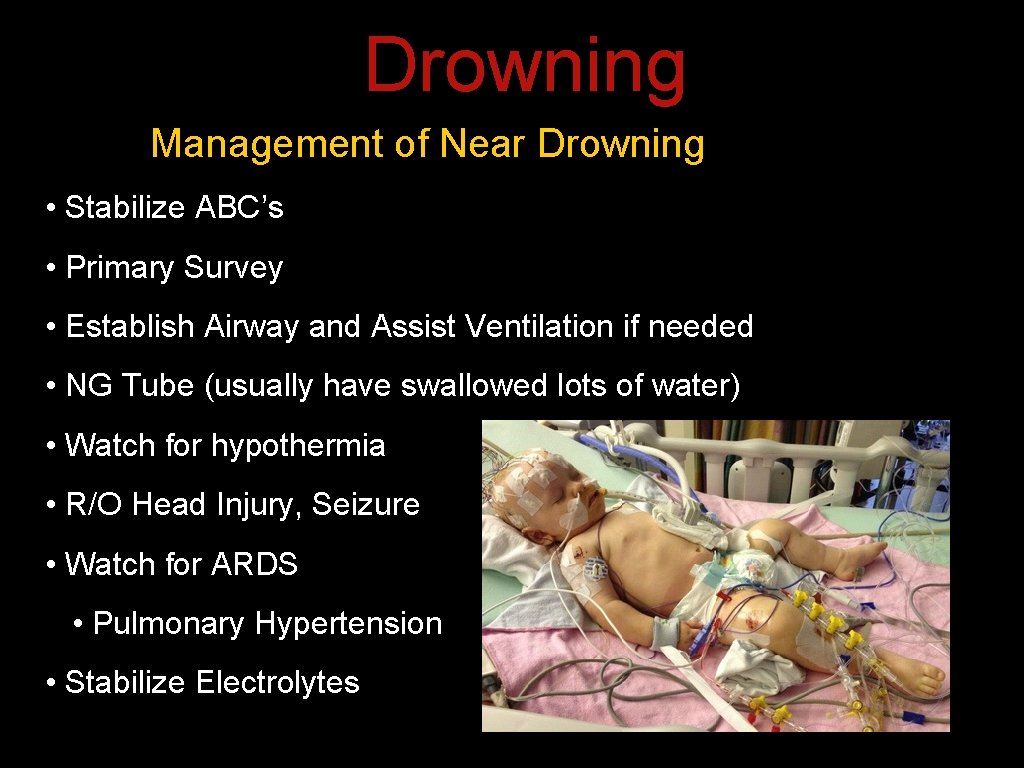
Drowning Management of Near Drowning • Stabilize ABC’s • Primary Survey • Establish Airway and Assist Ventilation if needed • NG Tube (usually have swallowed lots of water) • Watch for hypothermia • R/O Head Injury, Seizure • Watch for ARDS • Pulmonary Hypertension • Stabilize Electrolytes
Pediatric Airway
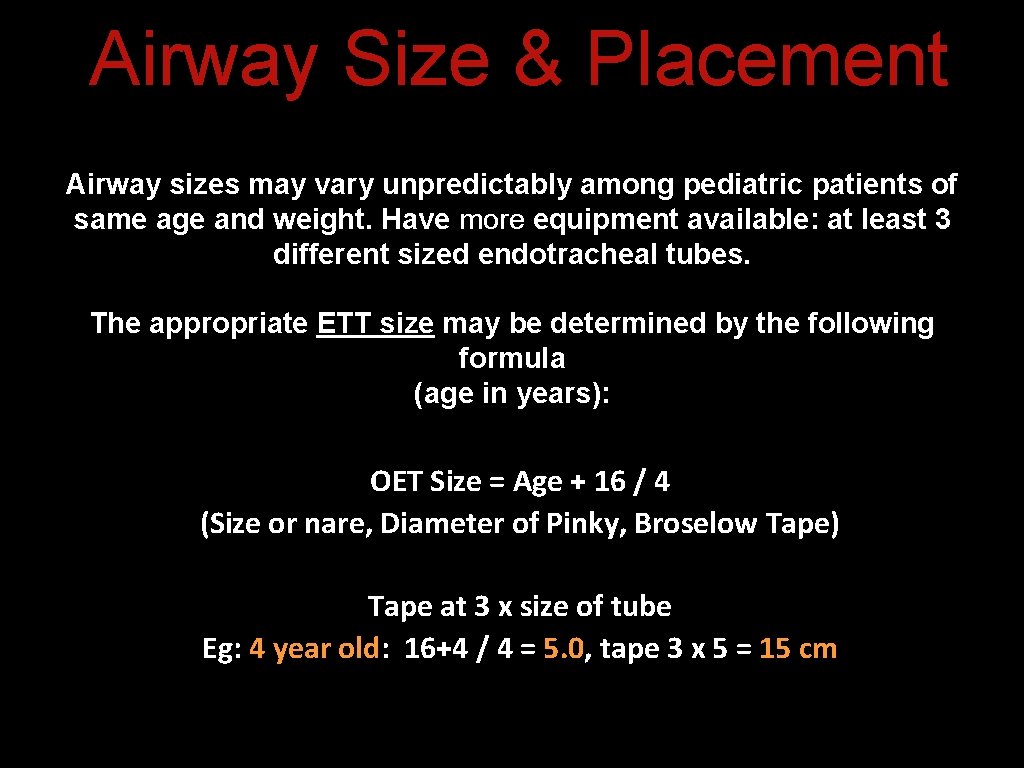
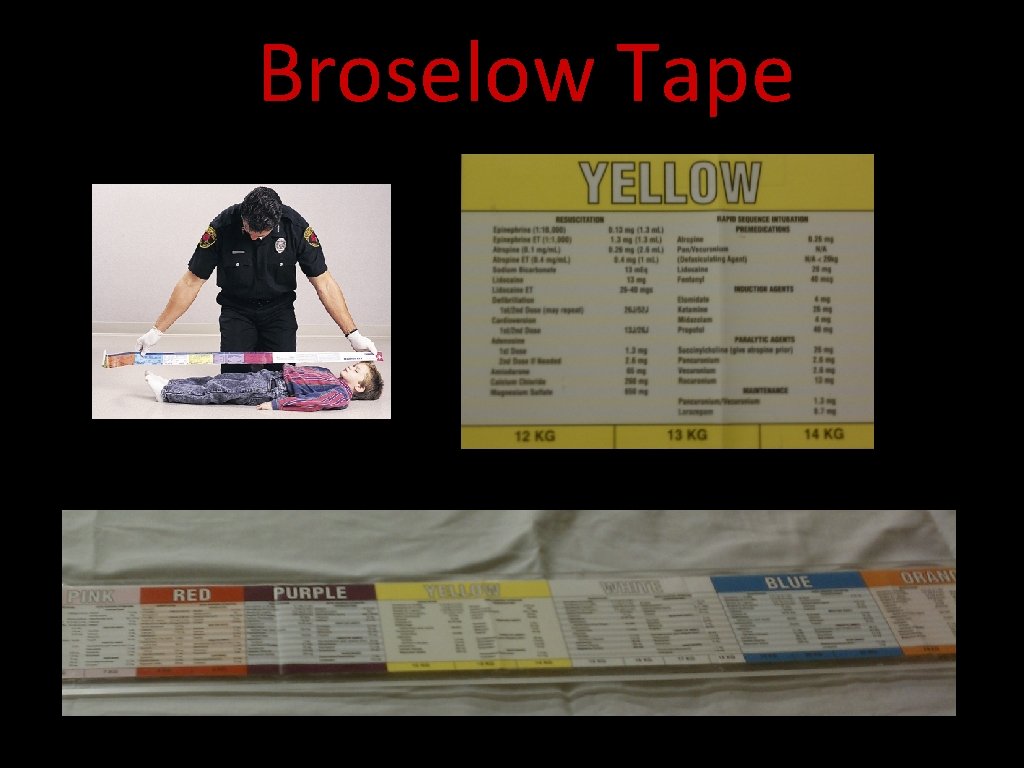
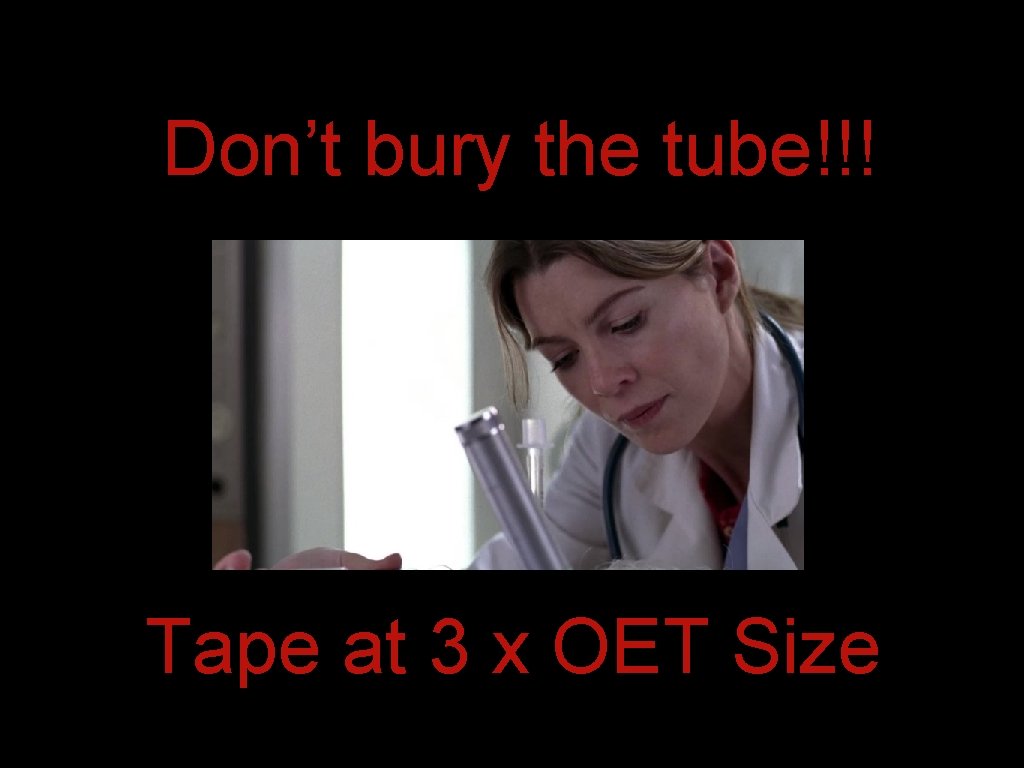
Airway Size & Placement Airway sizes may vary unpredictably among pediatric patients of same age and weight. Have more equipment available: at least 3 different sized endotracheal tubes. The appropriate ETT size may be determined by the following formula (age in years): OET Size = Age + 16 / 4 (Size or nare, Diameter of Pinky, Broselow Tape) Tape at 3 x size of tube Eg: 4 year old: 16+4 / 4 = 5. 0, tape 3 x 5 = 15 cm
Broselow Tape
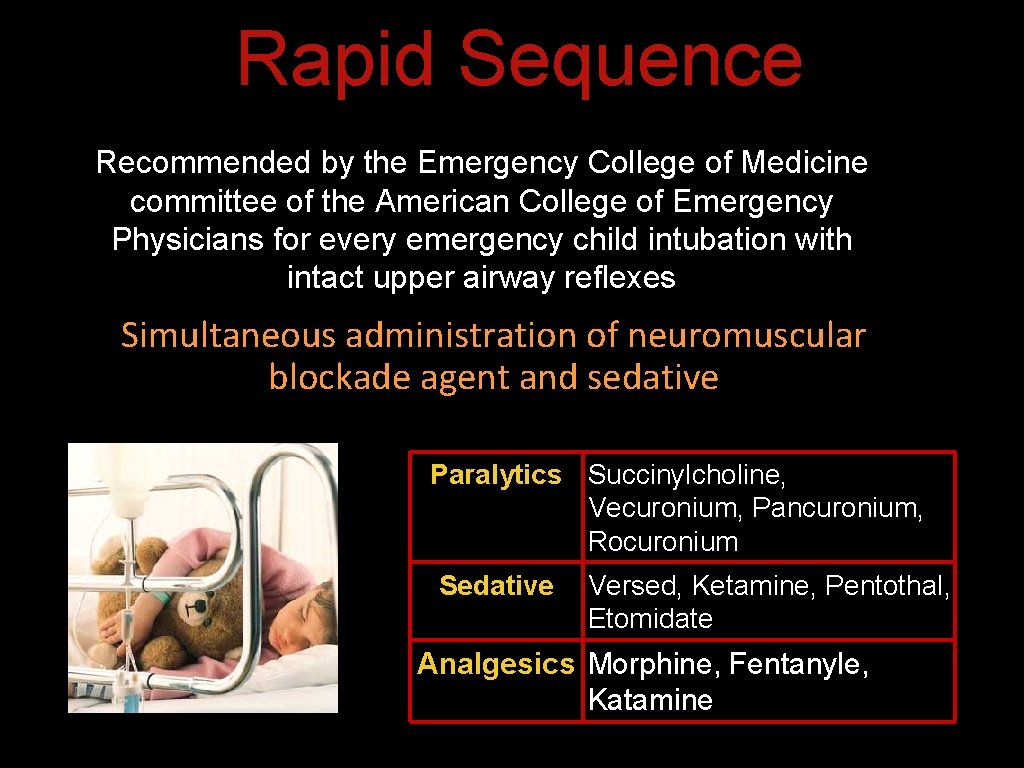
Rapid Sequence Recommended by the Emergency College of Medicine committee of the American College of Emergency Physicians for every emergency child intubation with intact upper airway reflexes Simultaneous administration of neuromuscular blockade agent and sedative Paralytics Succinylcholine, Vecuronium, Pancuronium, Rocuronium Sedative Versed, Ketamine, Pentothal, Etomidate Analgesics Morphine, Fentanyle, Katamine
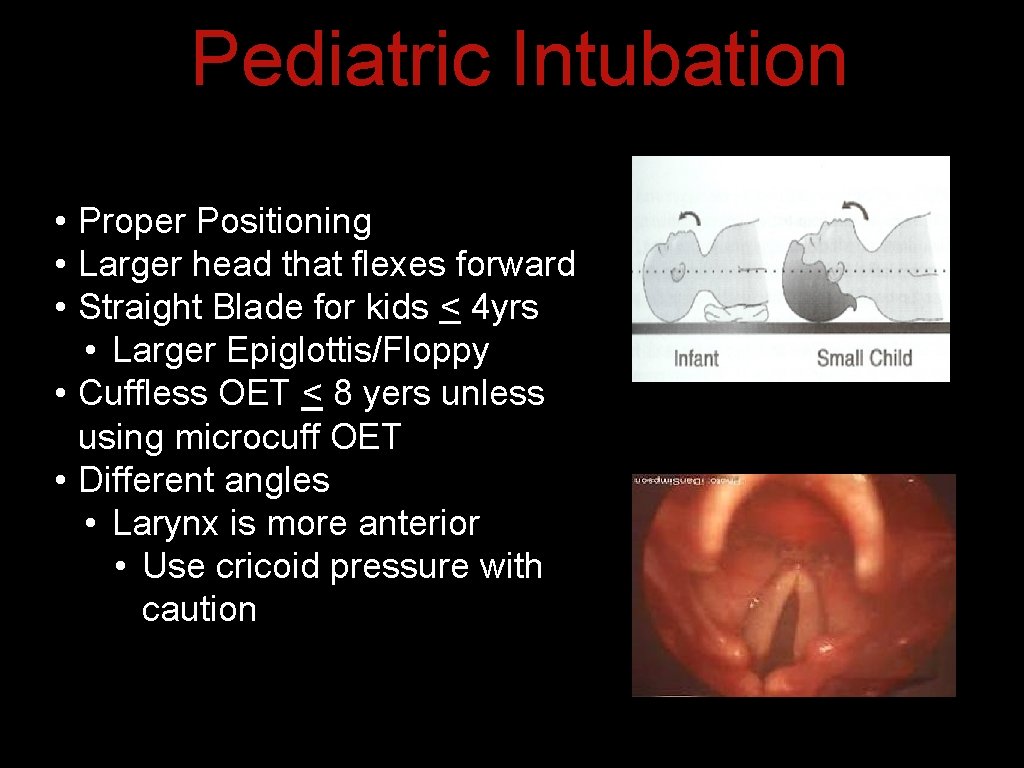
Pediatric Intubation • Proper Positioning • Larger head that flexes forward • Straight Blade for kids < 4 yrs • Larger Epiglottis/Floppy • Cuffless OET < 8 yers unless using microcuff OET • Different angles • Larynx is more anterior • Use cricoid pressure with caution
Don’t bury the tube!!! Tape at 3 x OET Size
Children 1 -5 months Common problems • • Bronchiolitis Foreign Body SIDS Vomiting and diarrhea/dehydration Meningitis Child abuse Household accidents
Children 6 -12 months Common problems • Febrile seizures • Vomiting and diarrhea/dehydration • Bronchiolitis or croup • Car accidents and falls • Child abuse • Ingestions and foreign body obstructions • Meningitis
Children 1 -3 years Common problems • • • Auto accidents Vomiting and diarrhea Febrile seizures Croup, meningitis Foreign body obstruction
Children 3 -5 years Common Problems • Croup, asthma, epiglottitis • Ingestions, foreign bodies • Auto accidents, burns • Child abuse • Drowning • Meningitis, febrile seizures
Children 6 -12 years Common Problems • Drowning • MVA's • Bike vs Motor Vehicle • Fracture • Sports Injuries • Abuse • Burns
Children 12 -15 year Common Problems • Asthma • Auto accidents, sports injuries • Drug and alcohol abuse • Sexual abuse, pregnancy • Suicide gestures
Take-a-ways • Kids can deteriorate quickly – you constantly have to be on your toes! • Anatomy and Physiology is different than adults - - Be aware of the differences and the impact disease can make • Use the ABCDE Assessment tool • Do a thorough systematic approach and reassess often
Take home note: Remember that an adequate airway and oxygen-rich approach may be the difference between life and death Sick pediatric patients can be terrifying, but they usually only have one thing wrong. Support their airway, breathing and cardiovascular status and their amazing bodies will usually take care of the rest