Optimization of the track reconstruction algorithm in a




- Slides: 23
Optimization of the track reconstruction algorithm in a pixel based calorimeter for proton computed tomography Author: Alba García Santos April 10, 2019 1
Index Introduction 2
Index Introduction Proton CT 3
Index Introduction Proton CT Research Objective 4
Index Introduction Proton CT Research Objective Current Algorithm 5
Index Introduction Proton CT Research Objective Current Algorithm New Ideas 6
Index Introduction Proton CT Research Objective Current Algorithm New Ideas Conclusions 7
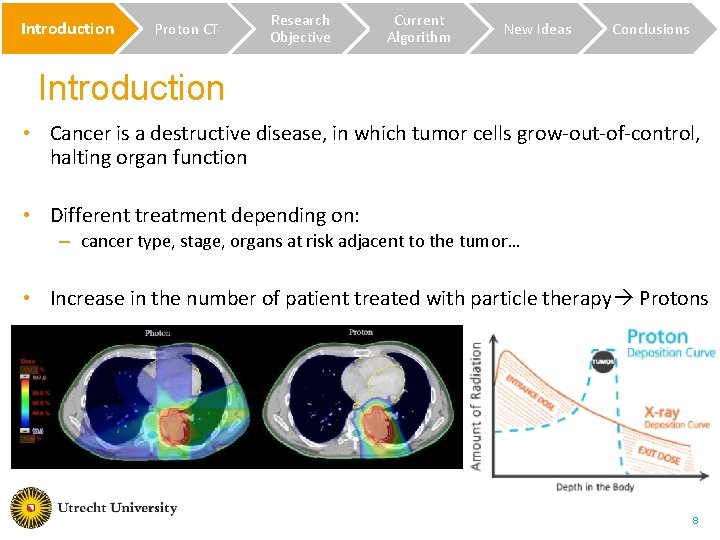
Introduction Proton CT Research Objective Current Algorithm New Ideas Conclusions Introduction • Cancer is a destructive disease, in which tumor cells grow-out-of-control, halting organ function • Different treatment depending on: – cancer type, stage, organs at risk adjacent to the tumor… • Increase in the number of patient treated with particle therapy Protons 8
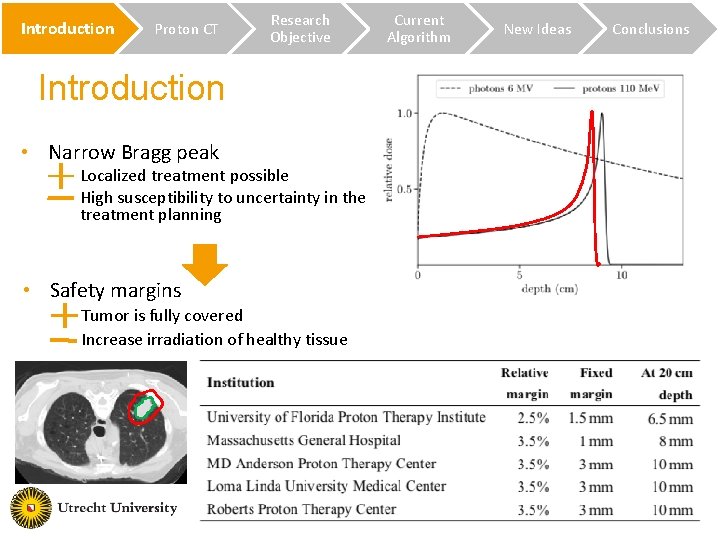
Introduction Proton CT Research Objective Current Algorithm New Ideas Conclusions Introduction • Narrow Bragg peak – Localized treatment possible – High susceptibility to uncertainty in the treatment planning • Safety margins – Tumor is fully covered – Increase irradiation of healthy tissue 9
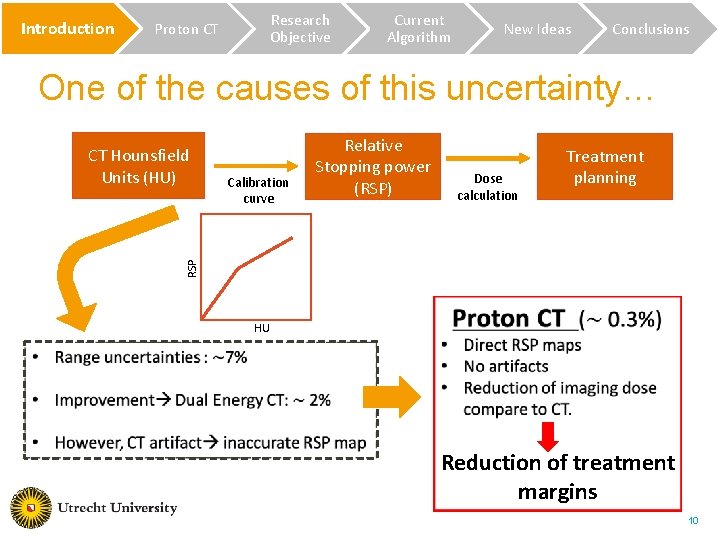
Introduction Research Objective Proton CT Current Algorithm New Ideas Conclusions One of the causes of this uncertainty… Calibration curve Relative Stopping power (RSP) Dose calculation Treatment planning RSP CT Hounsfield Units (HU) HU Reduction of treatment margins 10
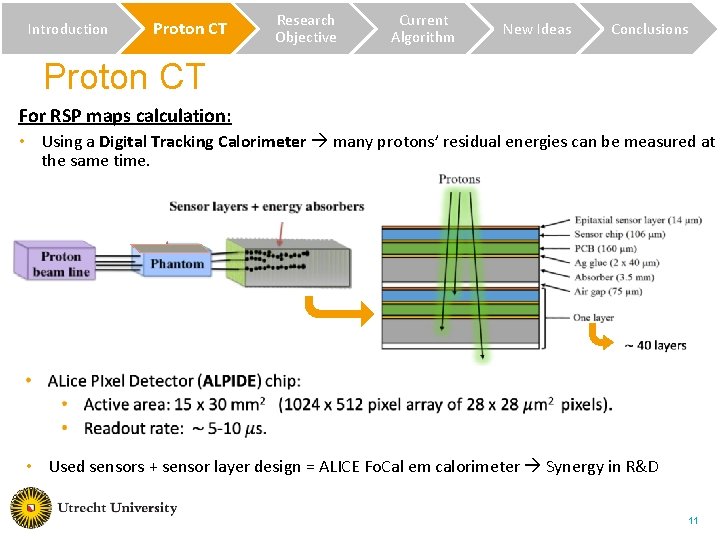
Introduction Proton CT Research Objective Current Algorithm New Ideas Conclusions Proton CT For RSP maps calculation: • Using a Digital Tracking Calorimeter many protons’ residual energies can be measured at the same time. • Used sensors + sensor layer design = ALICE Fo. Cal em calorimeter Synergy in R&D 11
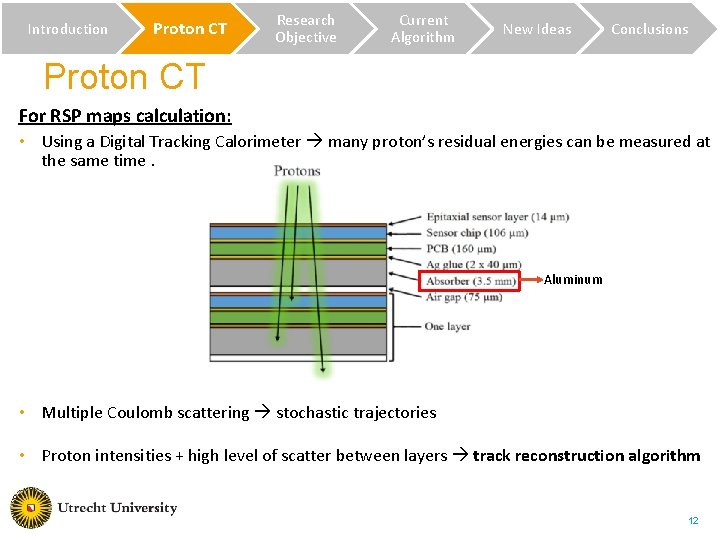
Introduction Proton CT Research Objective Current Algorithm New Ideas Conclusions Proton CT For RSP maps calculation: • Using a Digital Tracking Calorimeter many proton’s residual energies can be measured at the same time. Aluminum • Multiple Coulomb scattering stochastic trajectories • Proton intensities + high level of scatter between layers track reconstruction algorithm 12
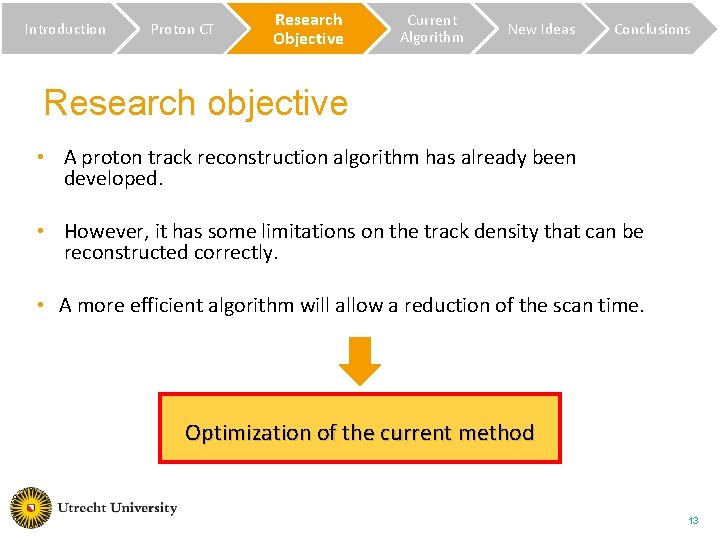
Introduction Proton CT Research Objective Current Algorithm New Ideas Conclusions Research objective • A proton track reconstruction algorithm has already been developed. • However, it has some limitations on the track density that can be reconstructed correctly. • A more efficient algorithm will allow a reduction of the scan time. Optimization of the current method 13
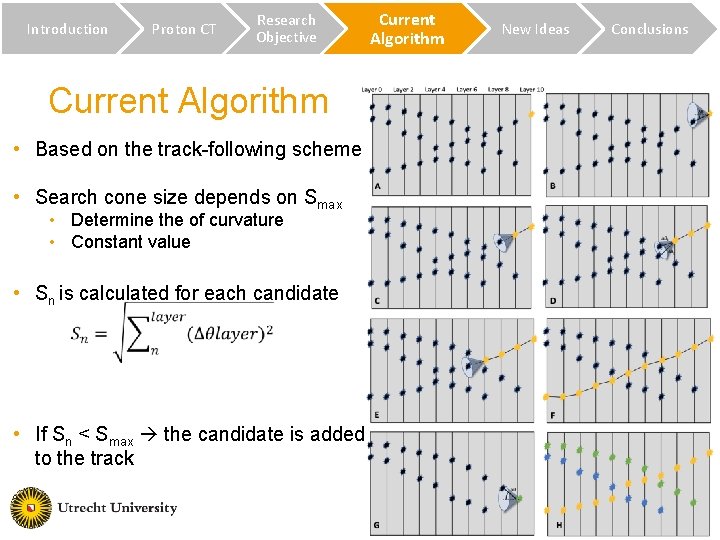
Introduction Proton CT Research Objective Current Algorithm New Ideas Conclusions Current Algorithm • Based on the track-following scheme • Search cone size depends on Smax • Determine the of curvature • Constant value • Sn is calculated for each candidate • If Sn < Smax the candidate is added to the track 14
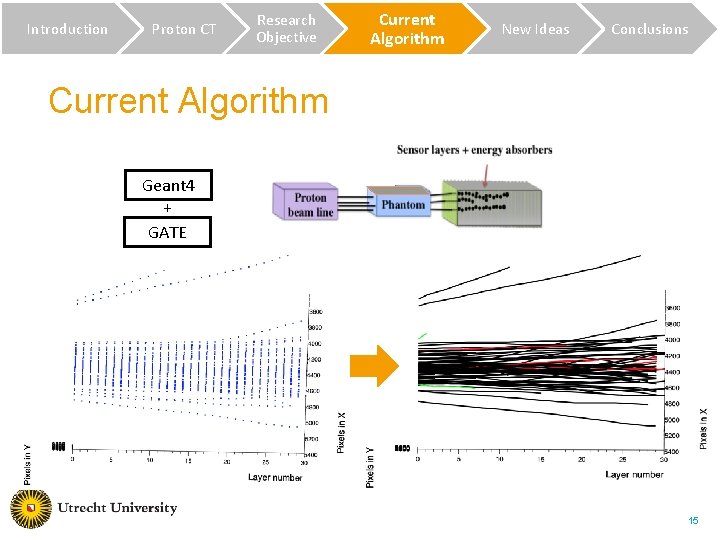
Introduction Proton CT Research Objective Current Algorithm New Ideas Conclusions Current Algorithm Geant 4 + GATE 15
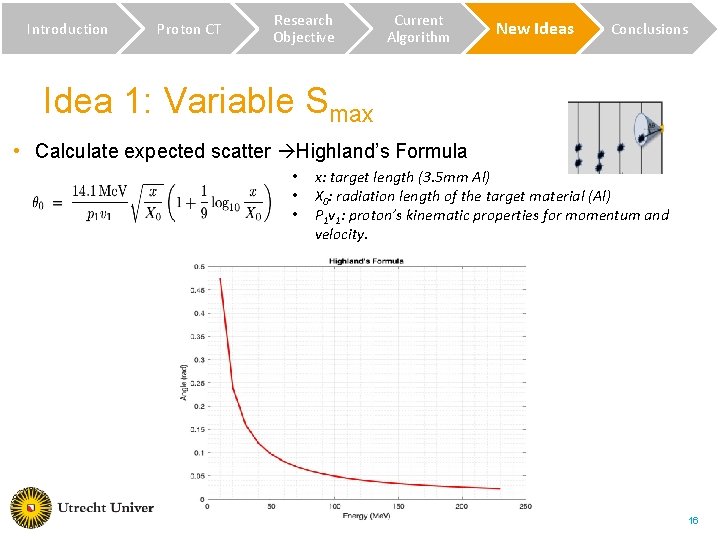
Introduction Proton CT Research Objective Current Algorithm New Ideas Conclusions Idea 1: Variable Smax • Calculate expected scatter Highland’s Formula • • • x: target length (3. 5 mm Al) X 0: radiation length of the target material (Al) P 1 v 1: proton’s kinematic properties for momentum and velocity. 16
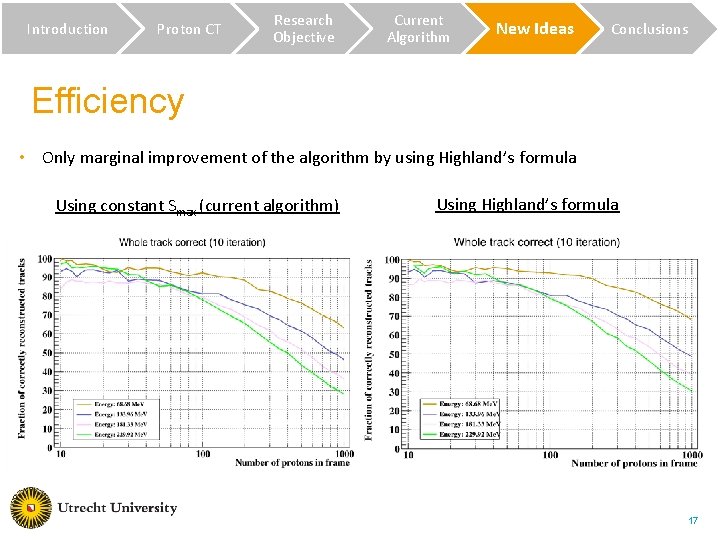
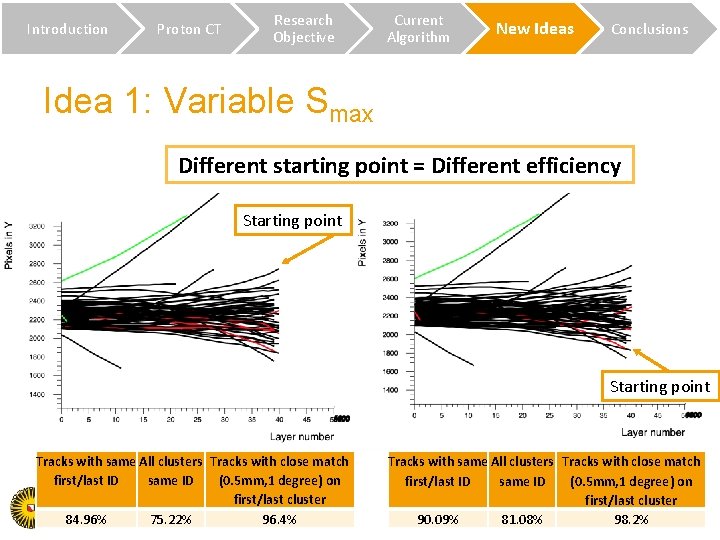
Introduction Proton CT Research Objective Current Algorithm New Ideas Conclusions Efficiency • Only marginal improvement of the algorithm by using Highland’s formula Using constant Smax (current algorithm) Using Highland’s formula 17
Introduction Proton CT Research Objective Current Algorithm New Ideas Conclusions Idea 1: Variable Smax Different starting point = Different efficiency Starting point Tracks with same All clusters Tracks with close match first/last ID same ID (0. 5 mm, 1 degree) on first/last cluster 84. 96% 75. 22% 96. 4% Tracks with same All clusters Tracks with close match first/last ID same ID (0. 5 mm, 1 degree) on first/last cluster 18 90. 09% 81. 08% 98. 2%
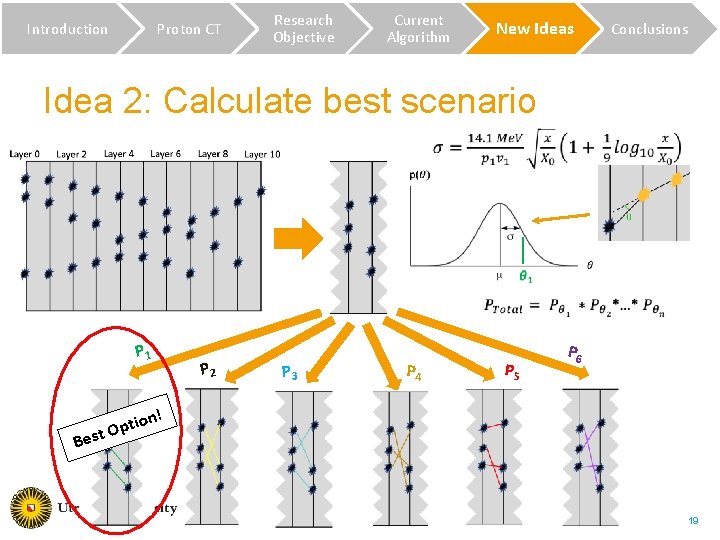
Introduction Proton CT Research Objective Current Algorithm New Ideas Conclusions Idea 2: Calculate best scenario P 1 P 2 P 3 P 4 P 5 P 6 on! i t p t. O Bes 19
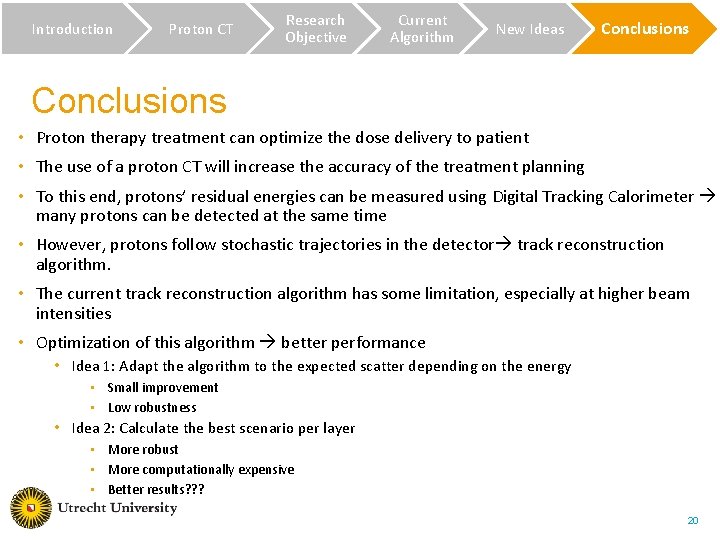
Introduction Proton CT Research Objective Current Algorithm New Ideas Conclusions • Proton therapy treatment can optimize the dose delivery to patient • The use of a proton CT will increase the accuracy of the treatment planning • To this end, protons’ residual energies can be measured using Digital Tracking Calorimeter many protons can be detected at the same time • However, protons follow stochastic trajectories in the detector track reconstruction algorithm. • The current track reconstruction algorithm has some limitation, especially at higher beam intensities • Optimization of this algorithm better performance • Idea 1: Adapt the algorithm to the expected scatter depending on the energy • Small improvement • Low robustness • Idea 2: Calculate the best scenario per layer • More robust • More computationally expensive • Better results? ? ? 20
Acknowledgement Thomas Peitzmann Dieter Röhrich Helge Egil Seime Pettersen Naomi van der Kolk Rene Barthel Ton van den Brink 21
Thank you for your attention! 22
23 23