Optics The light ray model A light ray


- Slides: 65
Optics
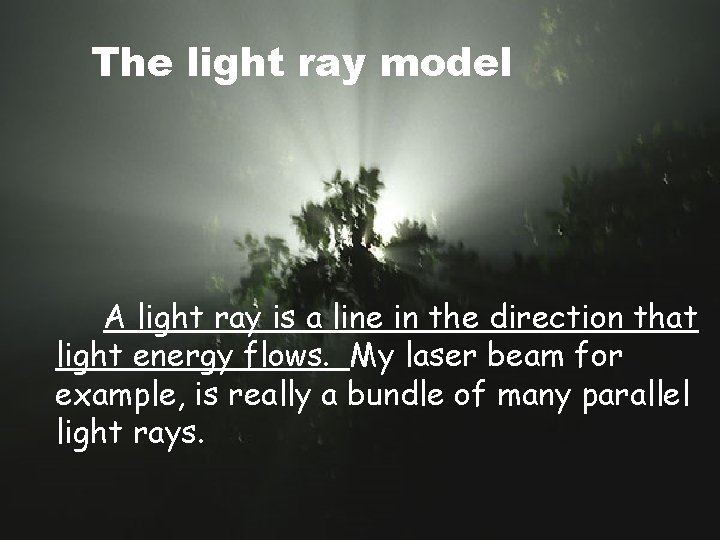
The light ray model A light ray is a line in the direction that light energy flows. My laser beam for example, is really a bundle of many parallel light rays.
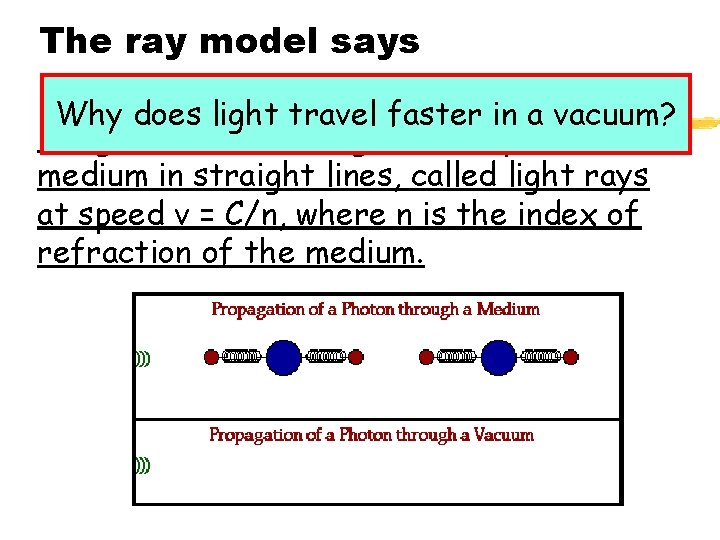
The ray model says Why does light travel faster in a vacuum? 1. Light travels through a transparent medium in straight lines, called light rays at speed v = C/n, where n is the index of refraction of the medium.
The ray model also says… 2. Light rays do not interact with each other. 3. A light ray continues forever unless it has an interaction with matter that causes the ray to change directions or to be absorbed.
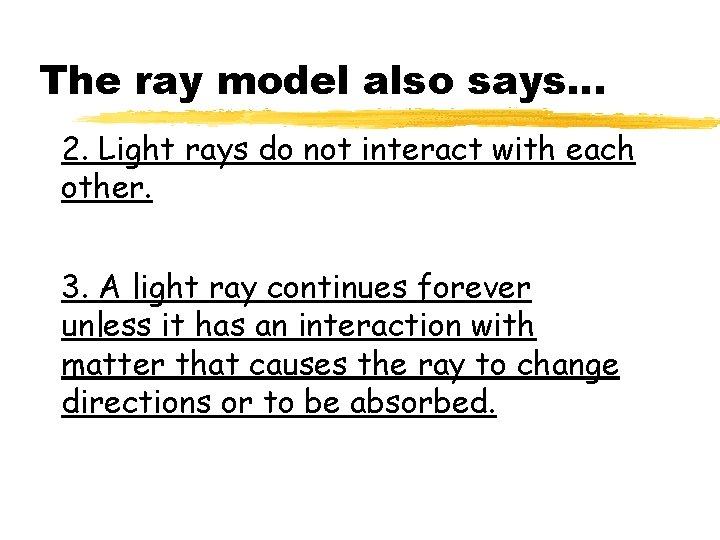
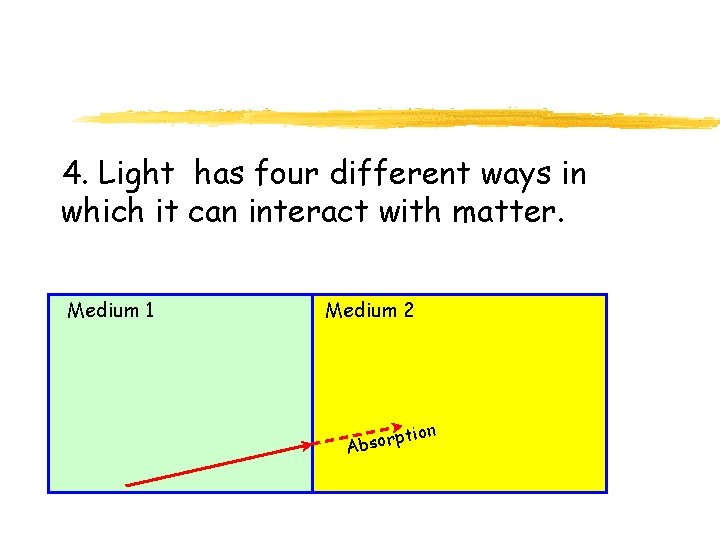
The ray model also says… 4. Light has four different ways in which it can interact with matter. Medium 1 ion t c e l f Re Medium 2
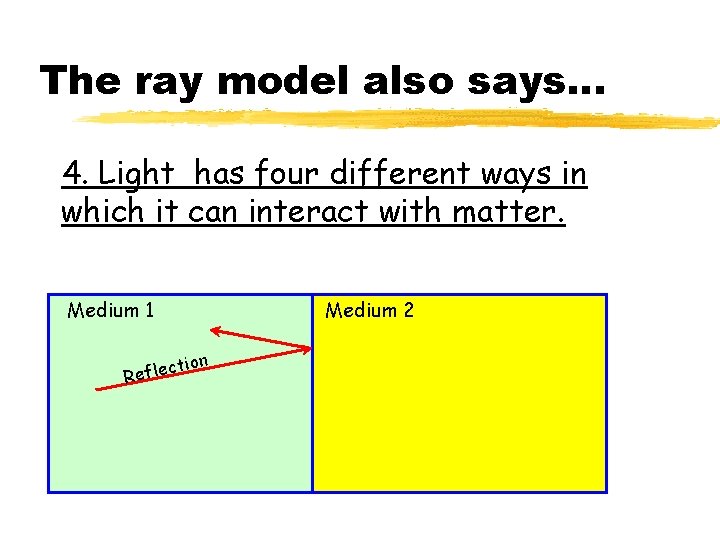
4. Light has four different ways in which it can interact with matter. Medium 1 Medium 2 Refraction
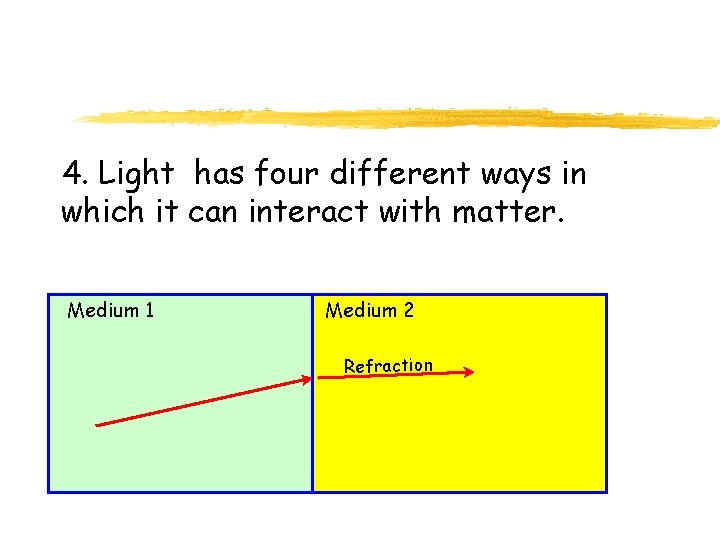
4. Light has four different ways in which it can interact with matter. Medium 1 S eri t t a c Medium 2 ng
4. Light has four different ways in which it can interact with matter. Medium 1 Medium 2 tion p Absor
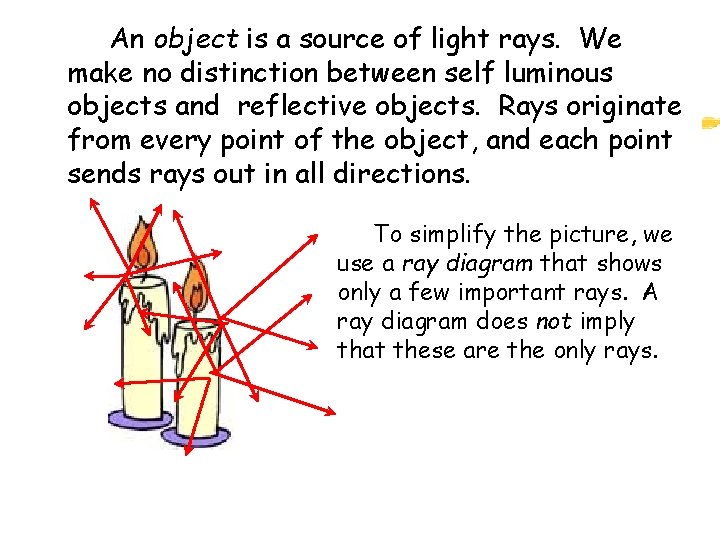
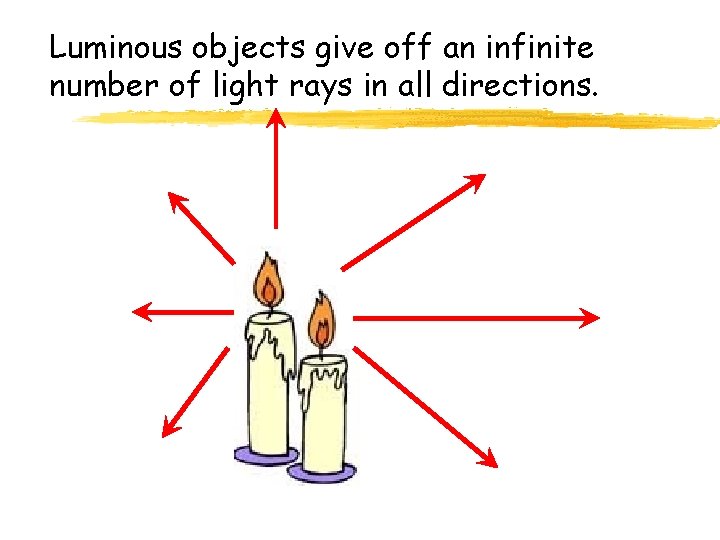
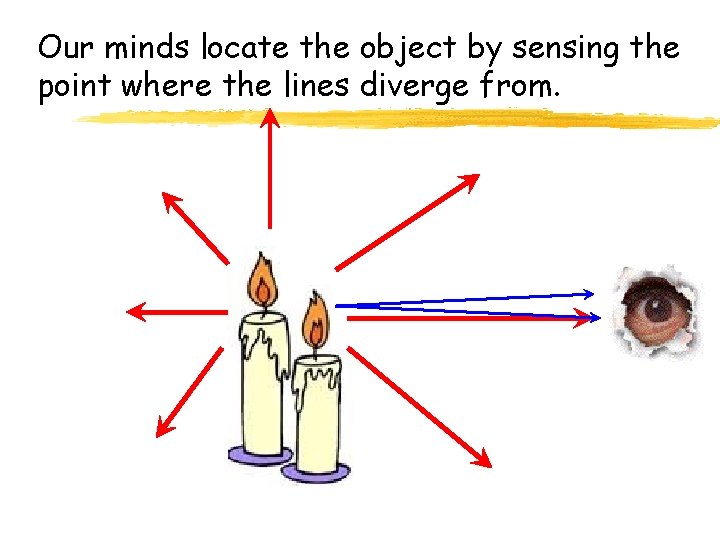
An object is a source of light rays. We make no distinction between self luminous objects and reflective objects. Rays originate from every point of the object, and each point sends rays out in all directions. To simplify the picture, we use a ray diagram that shows only a few important rays. A ray diagram does not imply that these are the only rays.
Luminous objects give off an infinite number of light rays in all directions.
Our minds locate the object by sensing the point where the lines diverge from.
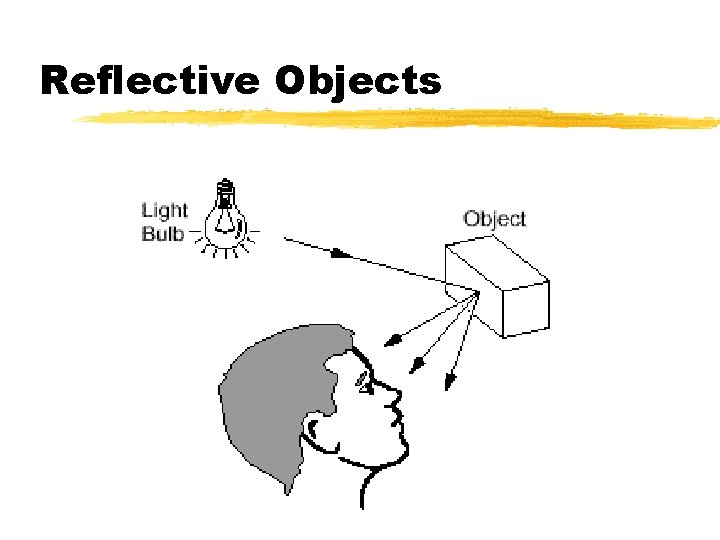
Reflective Objects
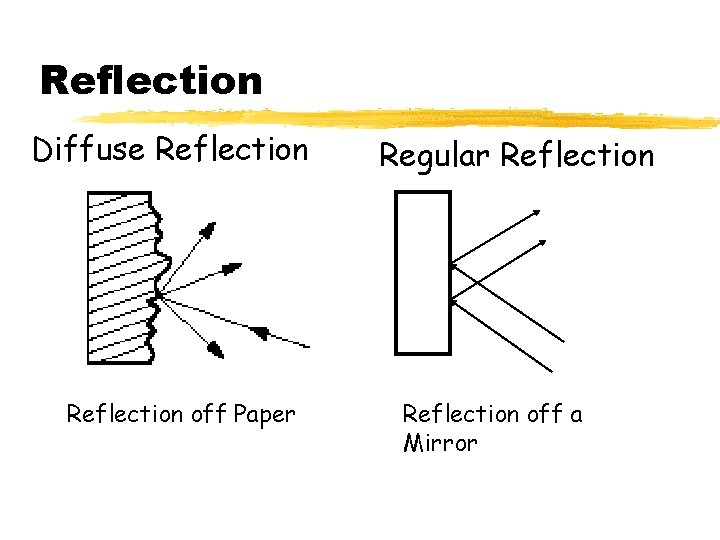
Reflection Diffuse Reflection off Paper Regular Reflection off a Mirror
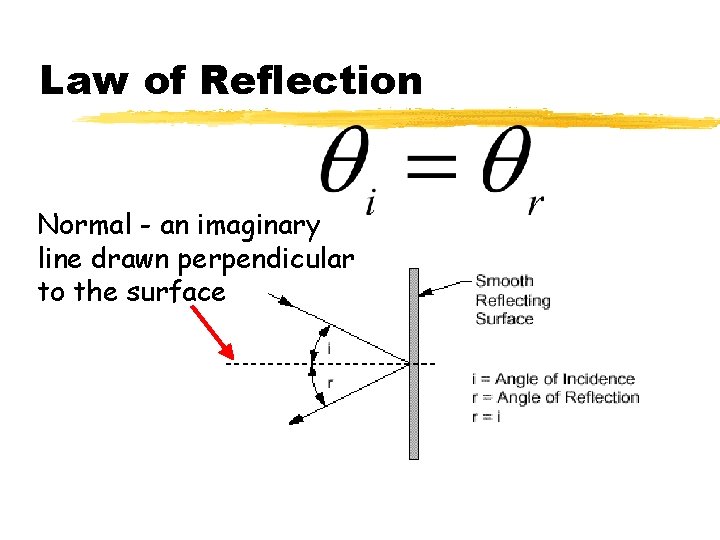
Law of Reflection Normal - an imaginary line drawn perpendicular to the surface
Reflection
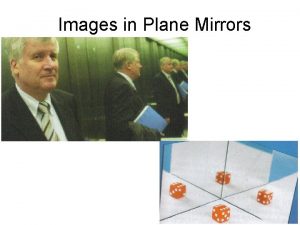
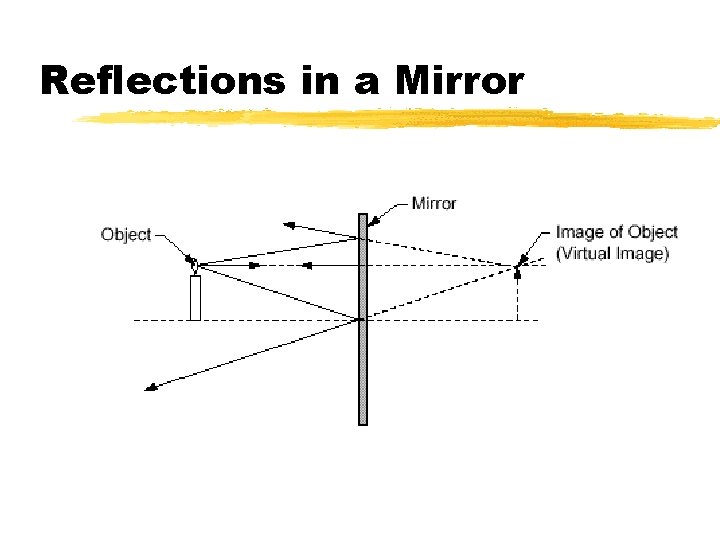
Reflections in a Mirror
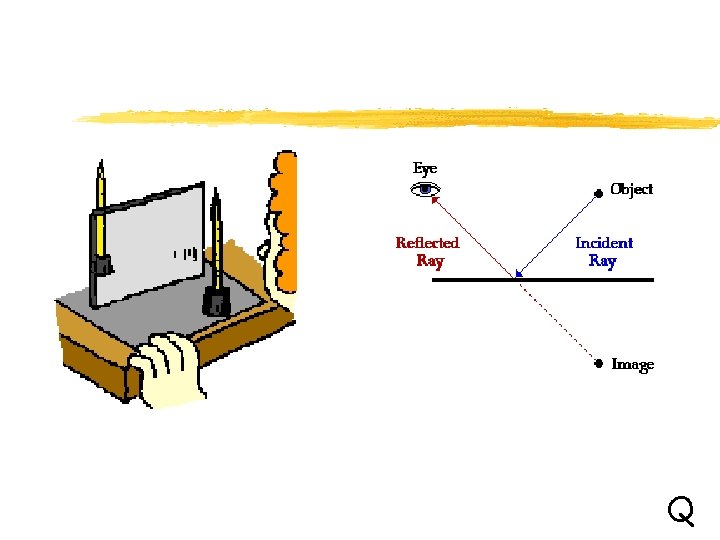
Q
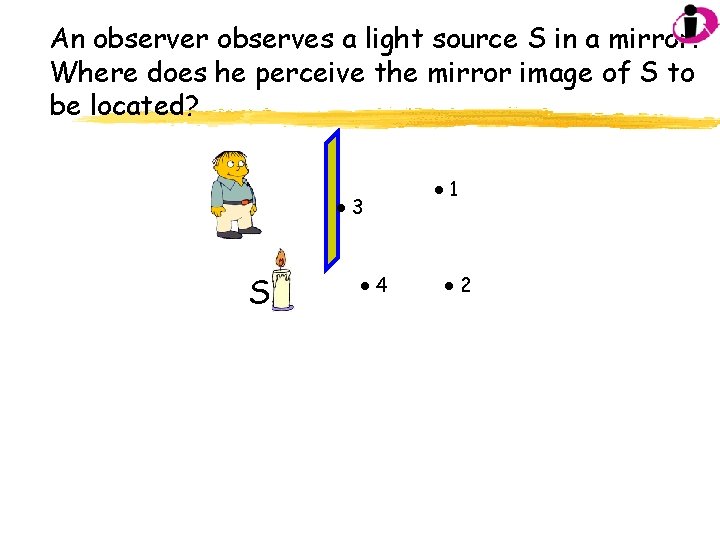
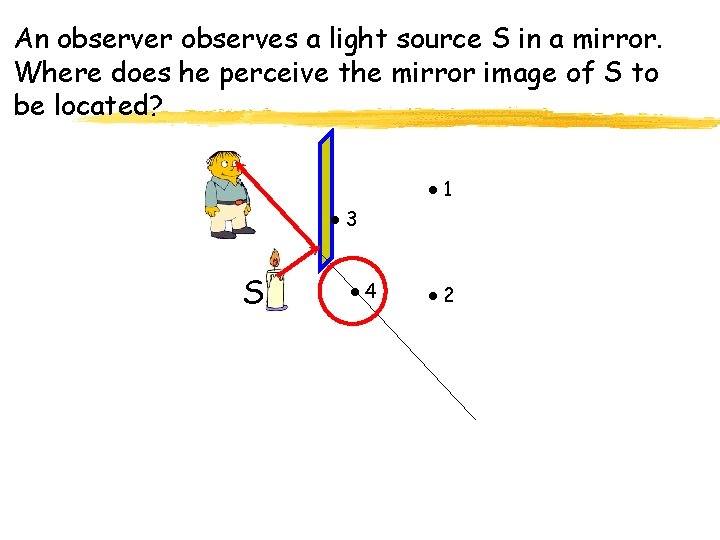
An observer observes a light source S in a mirror. Where does he perceive the mirror image of S to be located? ● 3 S ● 4 ● 1 ● 2
An observer observes a light source S in a mirror. Where does he perceive the mirror image of S to be located? ● 3 S ● 4 ● 1 ● 2
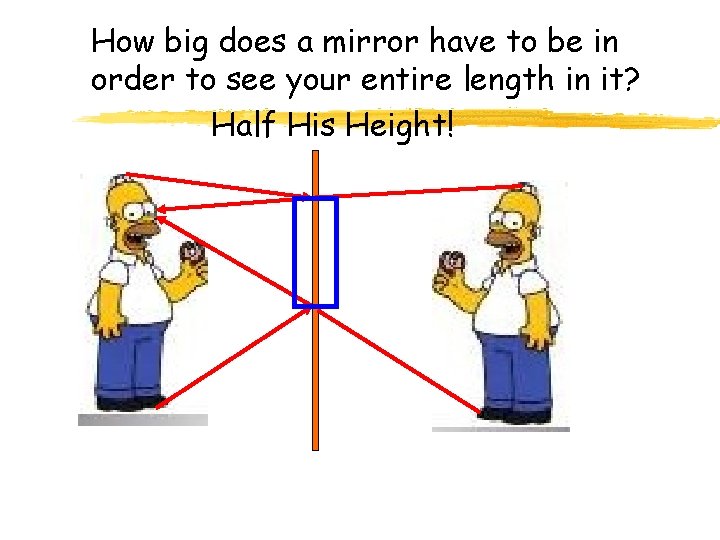
How big does a mirror have to be in order to see your entire length in it? Half His Height!
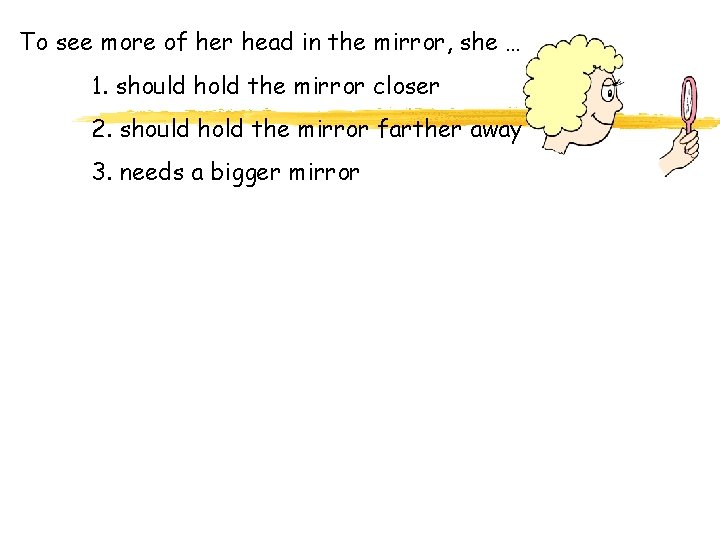
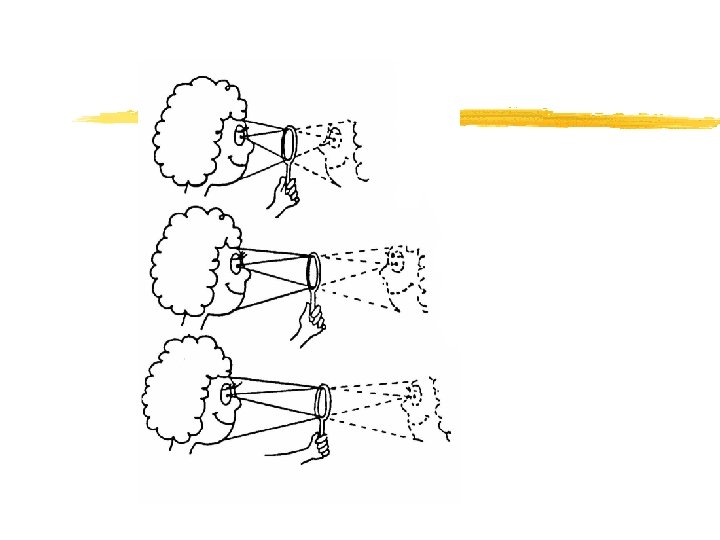
To see more of her head in the mirror, she … 1. should hold the mirror closer 2. should hold the mirror farther away 3. needs a bigger mirror
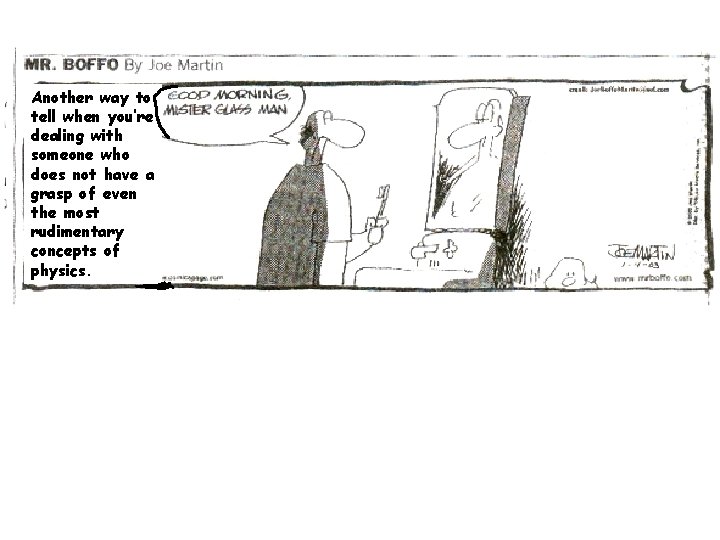
Another way to tell when you’re dealing with someone who does not have a grasp of even the most rudimentary concepts of physics.
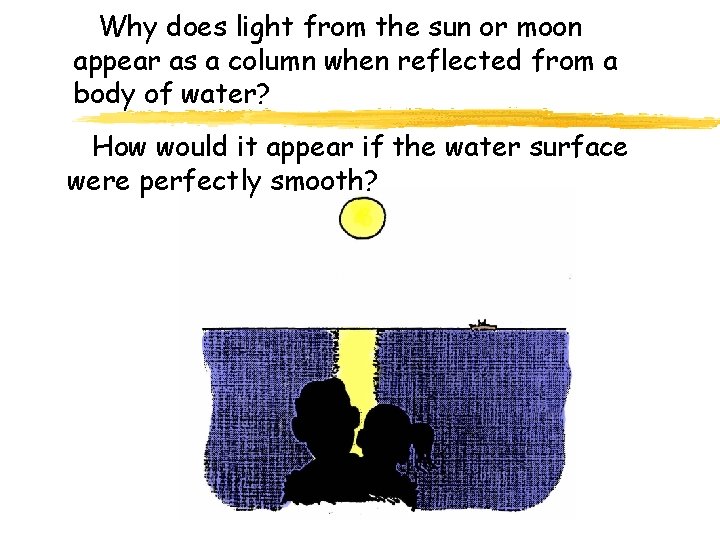
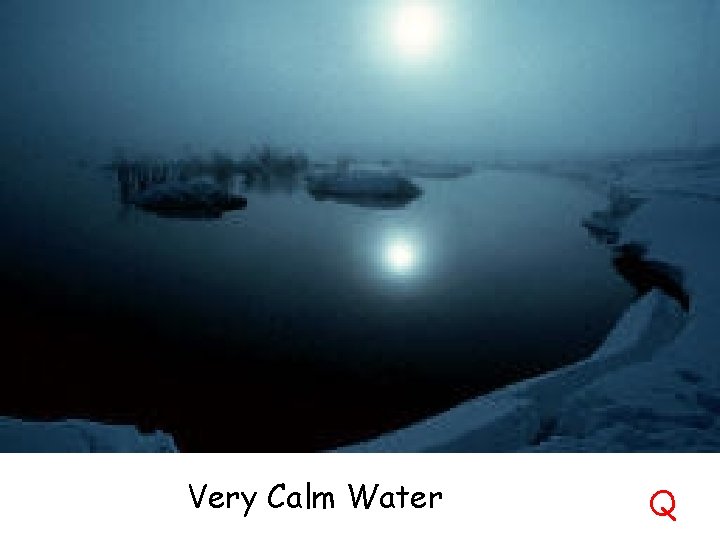
Why does light from the sun or moon appear as a column when reflected from a body of water? How would it appear if the water surface were perfectly smooth?
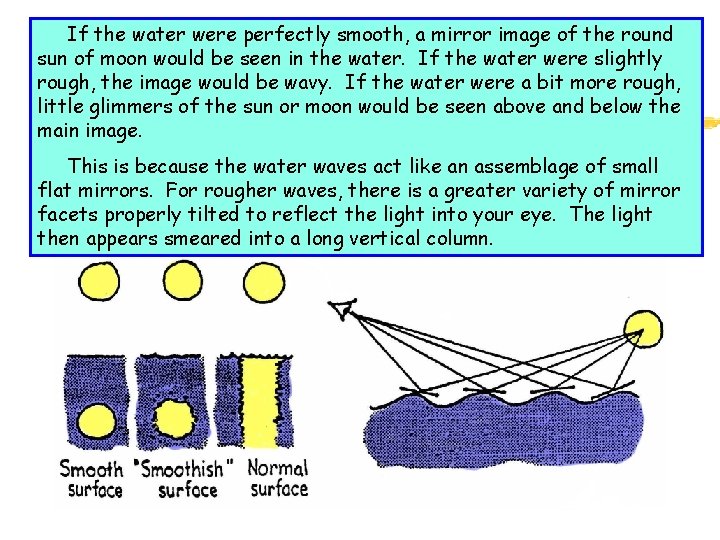
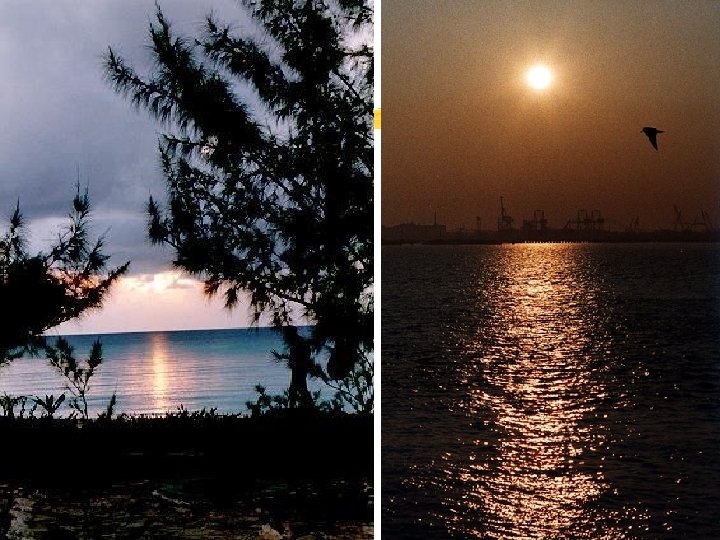
If the water were perfectly smooth, a mirror image of the round sun of moon would be seen in the water. If the water were slightly rough, the image would be wavy. If the water were a bit more rough, little glimmers of the sun or moon would be seen above and below the main image. This is because the water waves act like an assemblage of small flat mirrors. For rougher waves, there is a greater variety of mirror facets properly tilted to reflect the light into your eye. The light then appears smeared into a long vertical column.
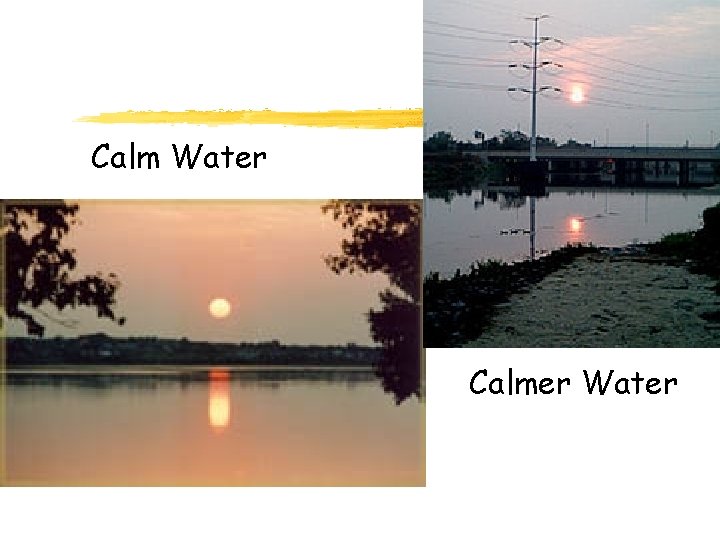
Calm Water Calmer Water
Very Calm Water Q
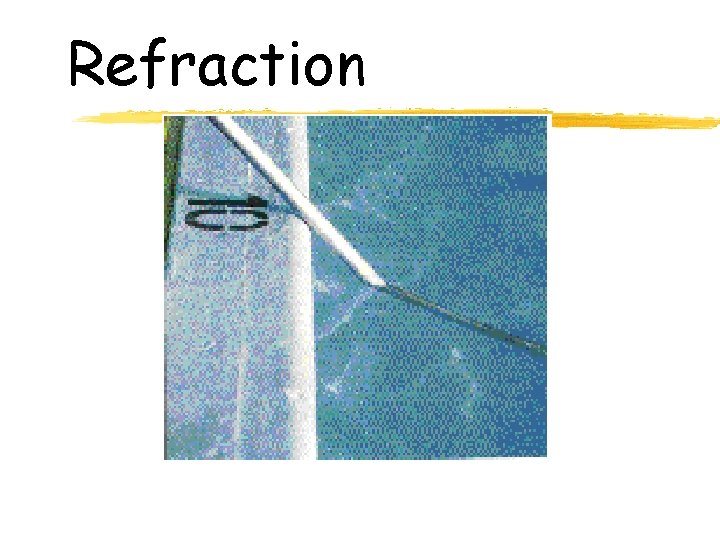
Refraction
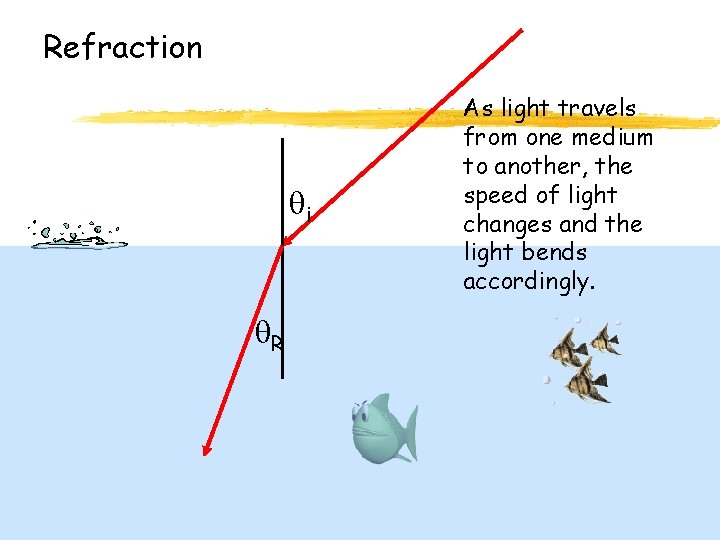
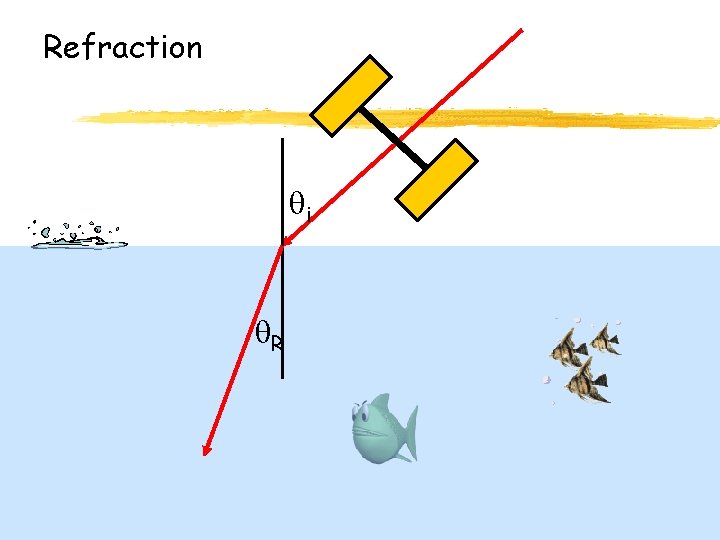
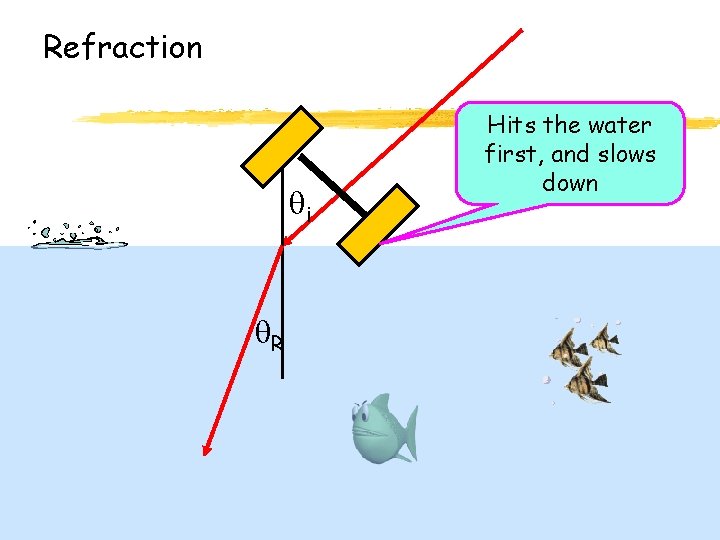
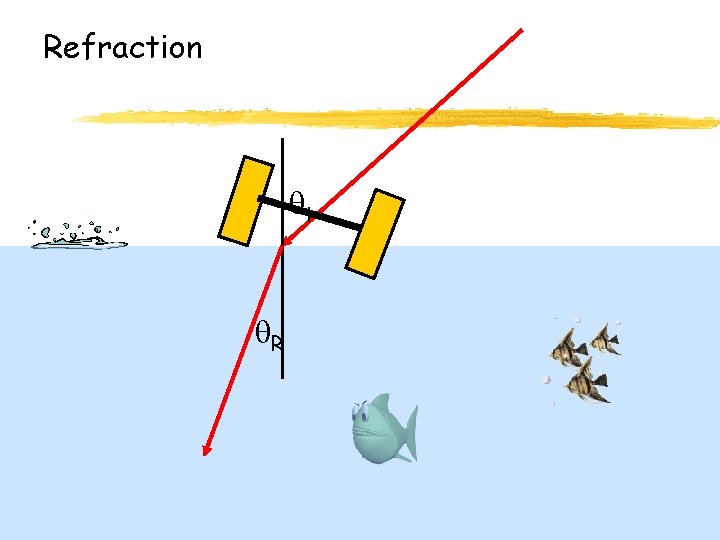
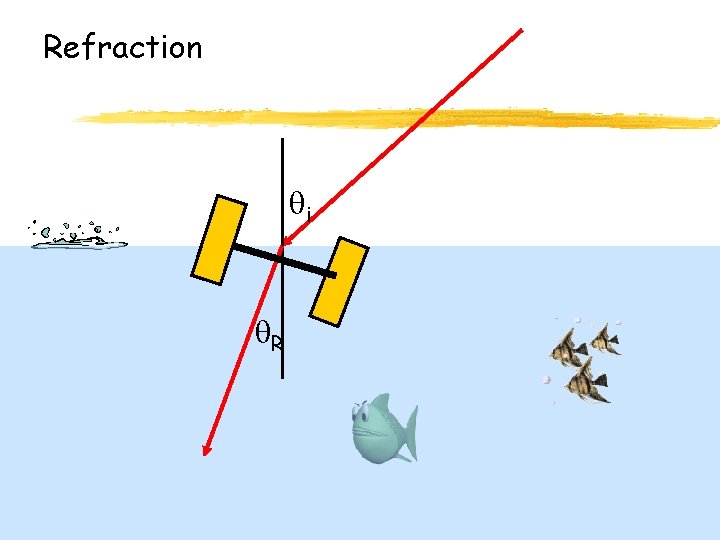
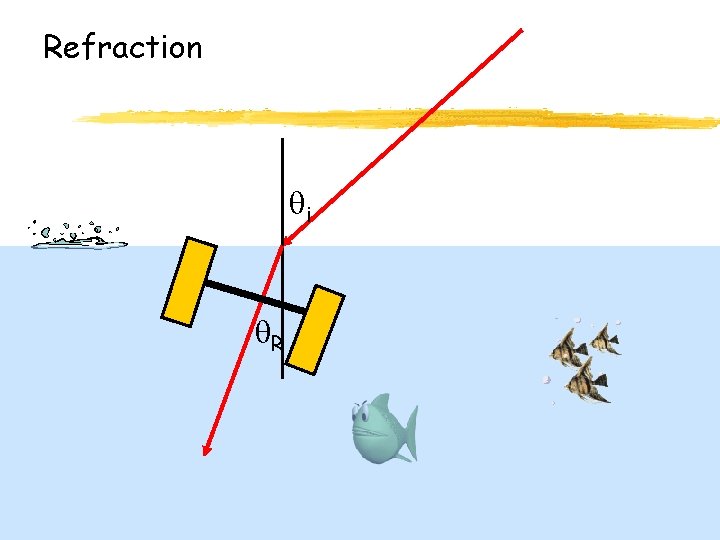
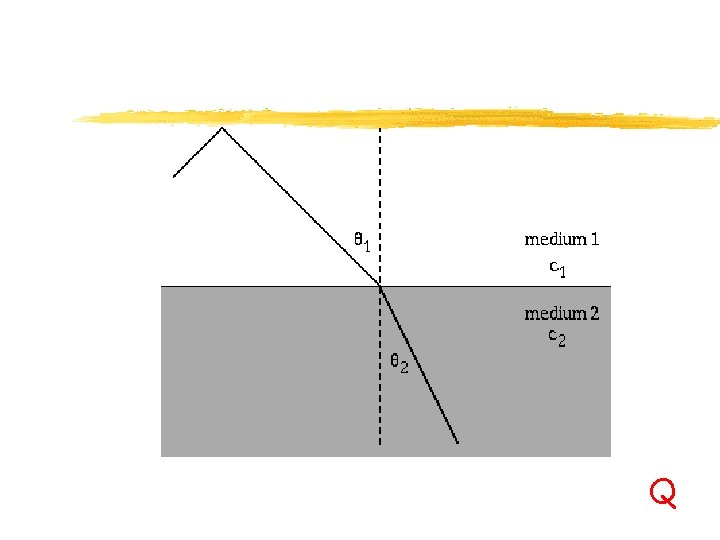
Refraction i R As light travels from one medium to another, the speed of light changes and the light bends accordingly.
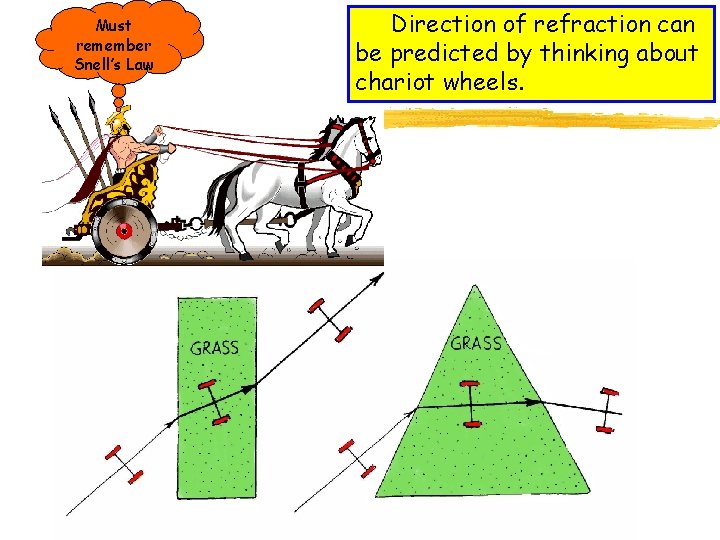
Must remember Snell’s Law Direction of refraction can be predicted by thinking about chariot wheels.
Refraction i R
Refraction i R Hits the water first, and slows down
Refraction i R
Refraction i R
Refraction i R
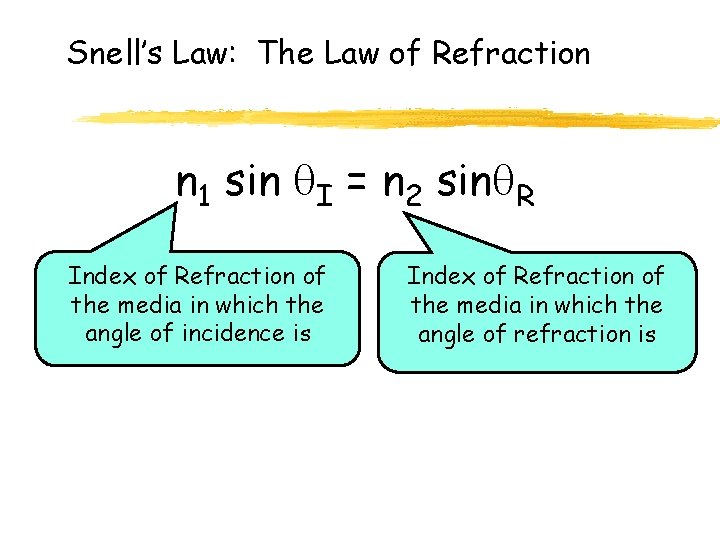
Snell’s Law: The Law of Refraction n 1 sin I = n 2 sin R Index of Refraction of the media in which the angle of incidence is Index of Refraction of the media in which the angle of refraction is
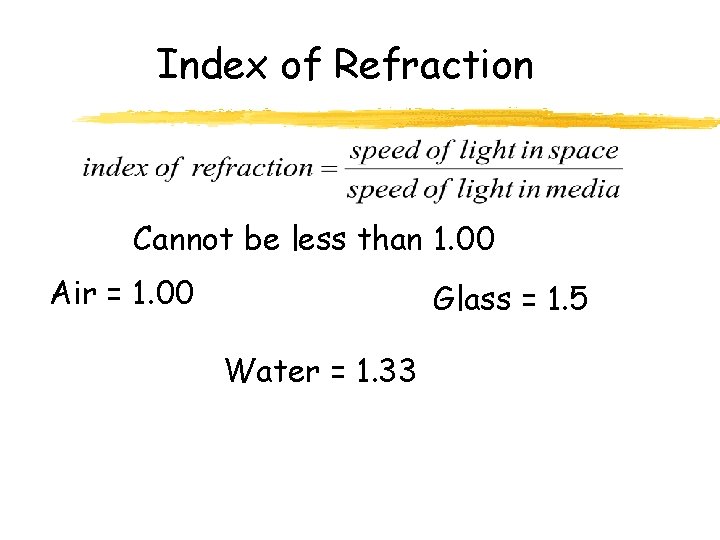
Index of Refraction Cannot be less than 1. 00 Air = 1. 00 Glass = 1. 5 Water = 1. 33
Q
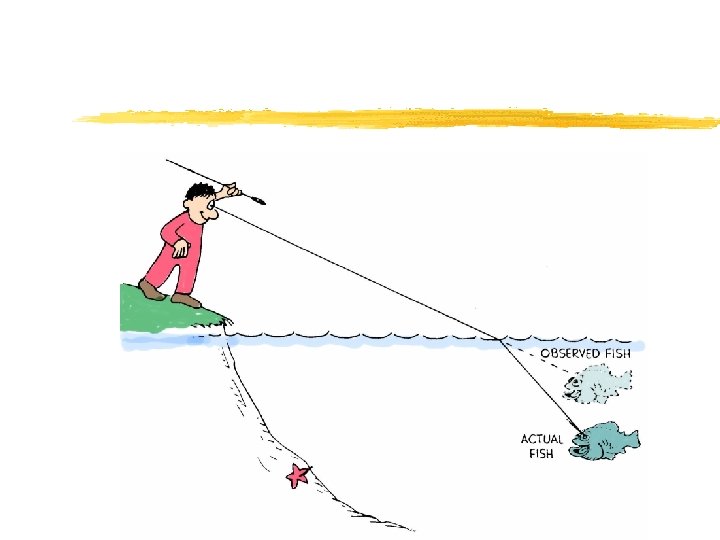
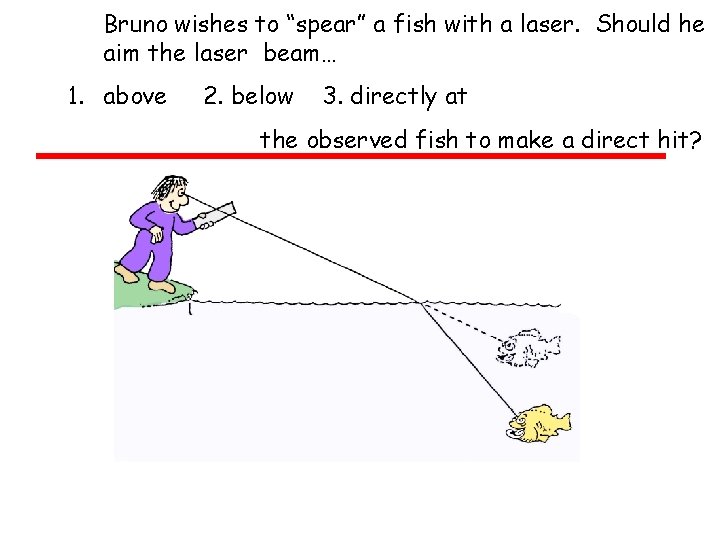
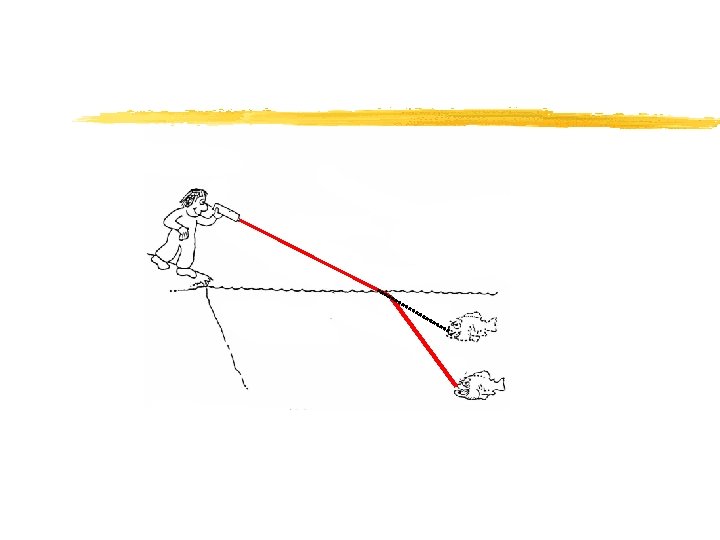
Bruno wishes to “spear” a fish with a laser. Should he aim the laser beam… 1. above 2. below 3. directly at the observed fish to make a direct hit?
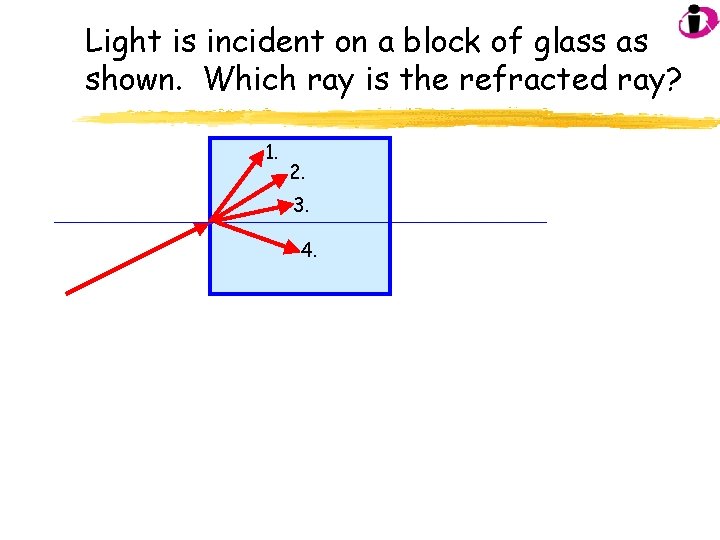
Light is incident on a block of glass as shown. Which ray is the refracted ray? 1. 2. 3. 4.
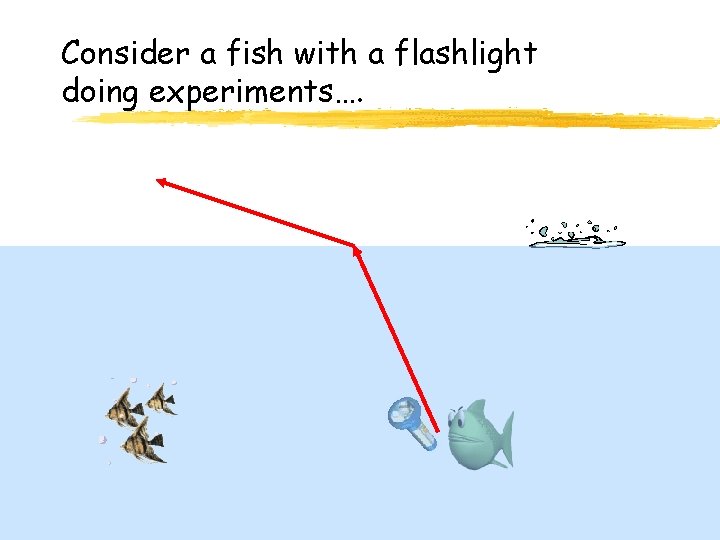
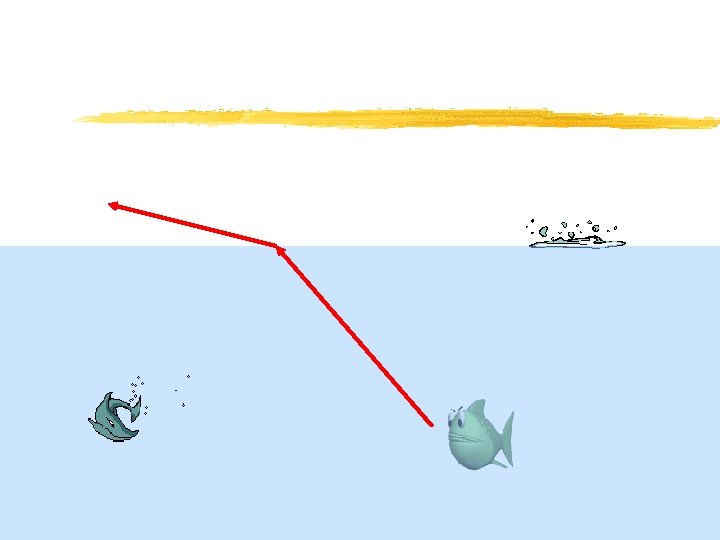
Consider a fish with a flashlight doing experiments….
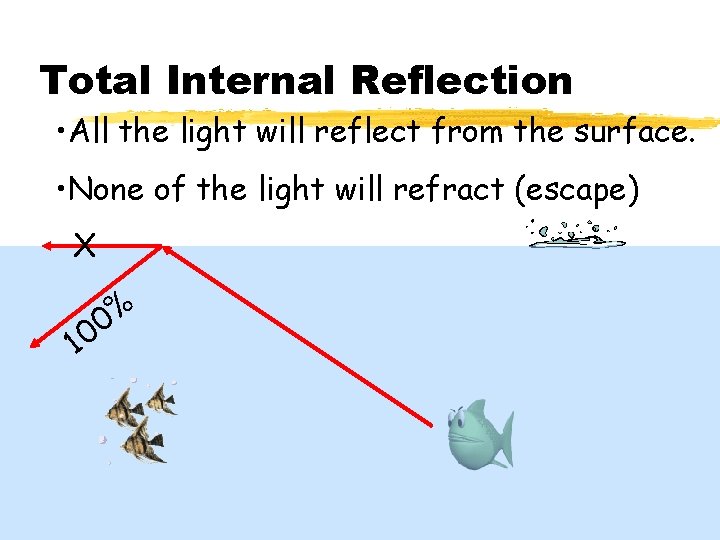
Total Internal Reflection • All the light will reflect from the surface. • None of the light will refract (escape) X % 0 10
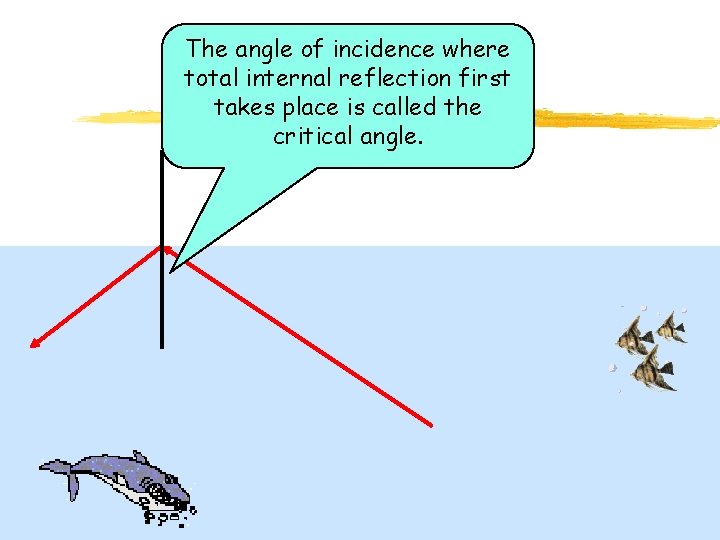
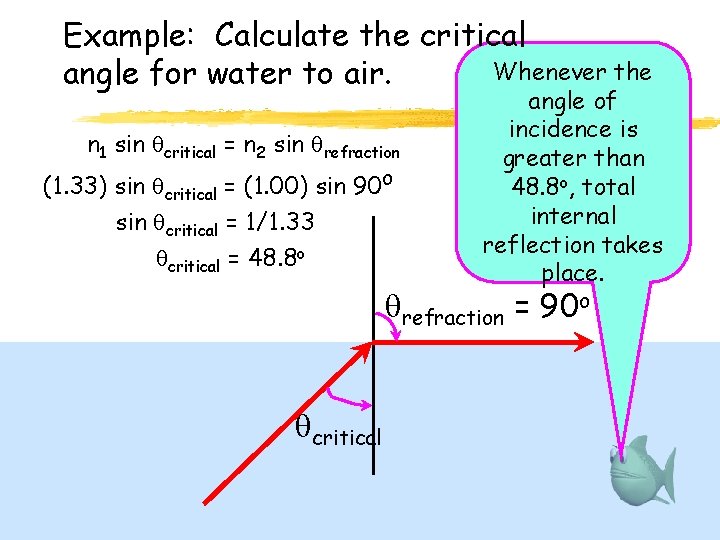
The angle of incidence where total internal reflection first takes place is called the critical angle.
Example: Calculate the critical Whenever the angle for water to air. n 1 sin critical = n 2 sin refraction (1. 33) sin critical = (1. 00) sin 90 o sin critical = 1/1. 33 critical = 48. 8 o angle of incidence is greater than 48. 8 o, total internal reflection takes place. refraction = 90 o critical
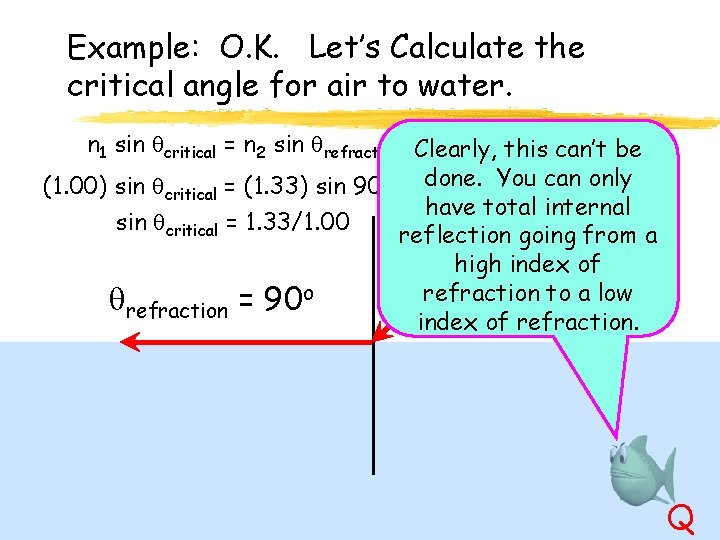
Example: O. K. Let’s Calculate the critical angle for air to water. n 1 sin critical = n 2 sin refraction Clearly, this can’t be (1. 00) sin critical = (1. 33) sin 90 o done. You can only have total internal sin critical = 1. 33/1. 00 reflection going from a high index of critical refraction to a low refraction = 90 o index of refraction. Q
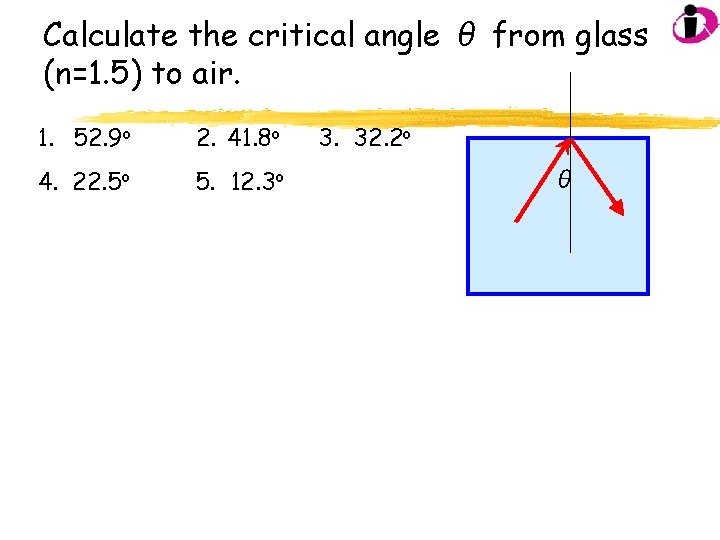
Calculate the critical angle θ from glass (n=1. 5) to air. 1. 52. 9 o 2. 41. 8 o 4. 22. 5 o 5. 12. 3 o 3. 32. 2 o θ
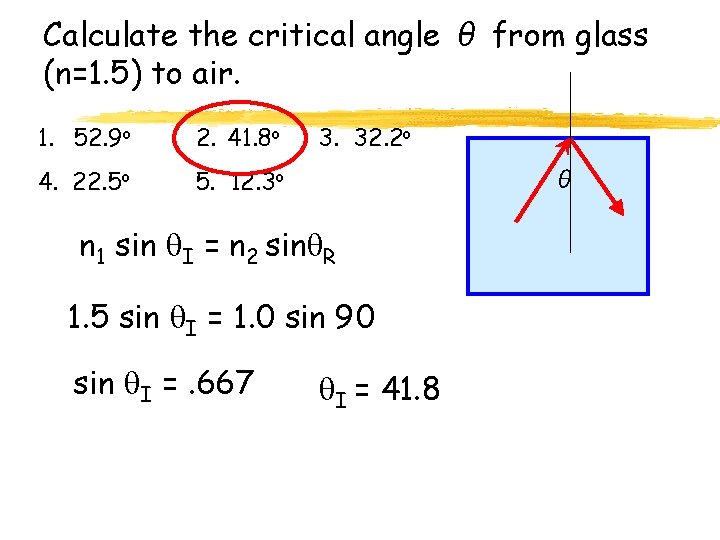
Calculate the critical angle θ from glass (n=1. 5) to air. 1. 52. 9 o 2. 41. 8 o 4. 22. 5 o 5. 12. 3 o 3. 32. 2 o θ n 1 sin I = n 2 sin R 1. 5 sin I = 1. 0 sin 90 sin I =. 667 I = 41. 8
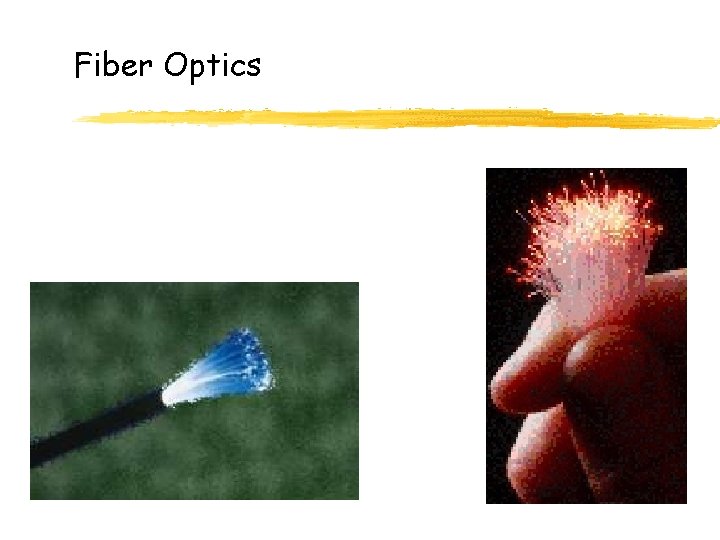
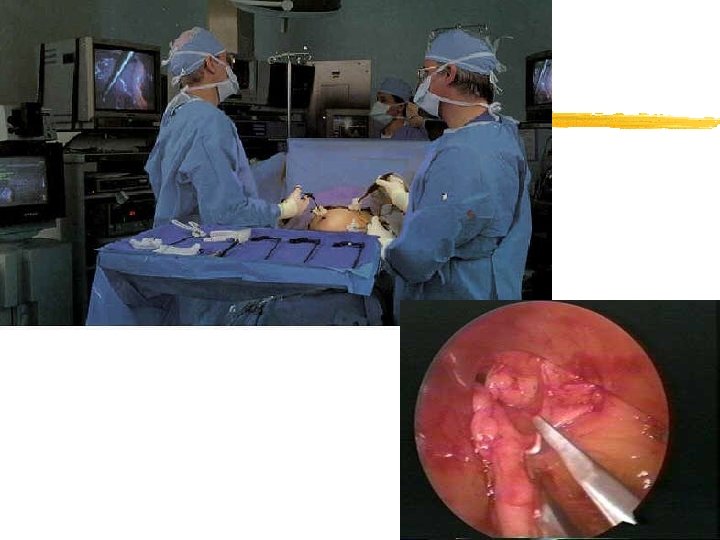
Fiber Optics
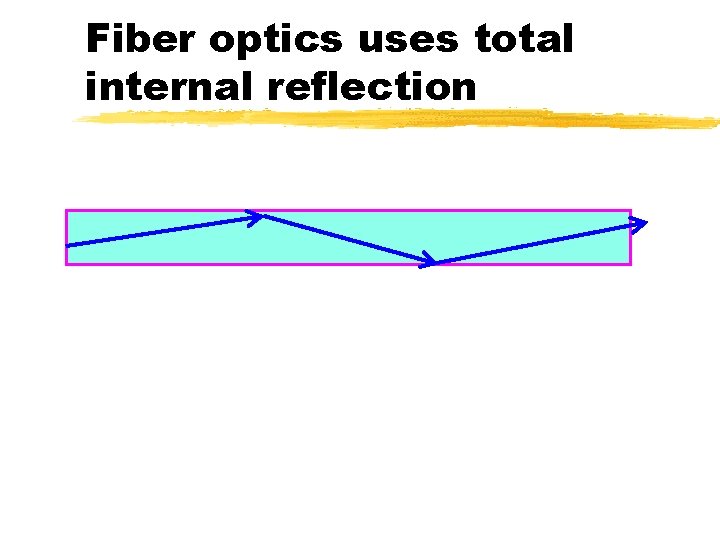
Fiber optics uses total internal reflection
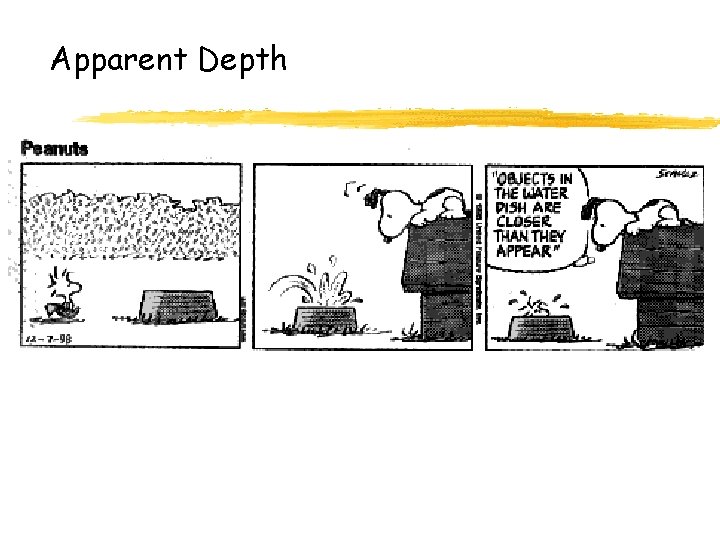
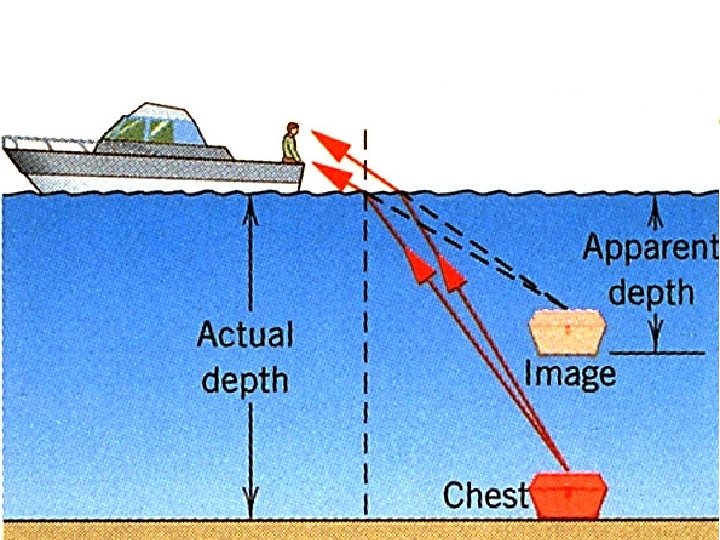
Apparent Depth
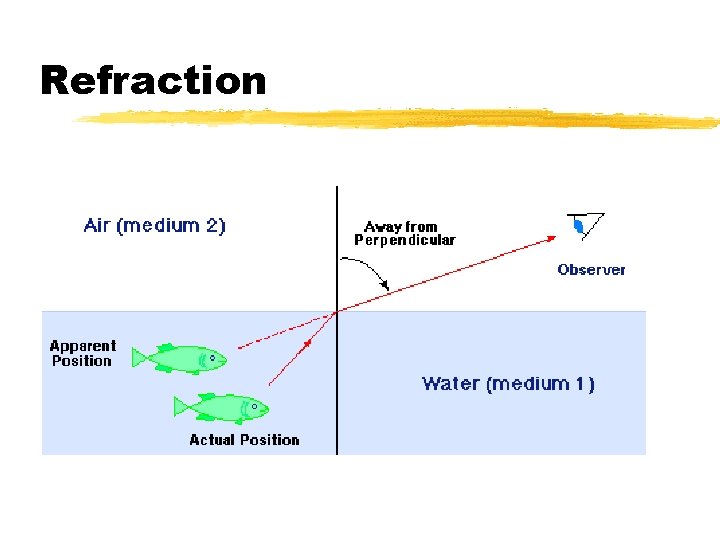
Refraction
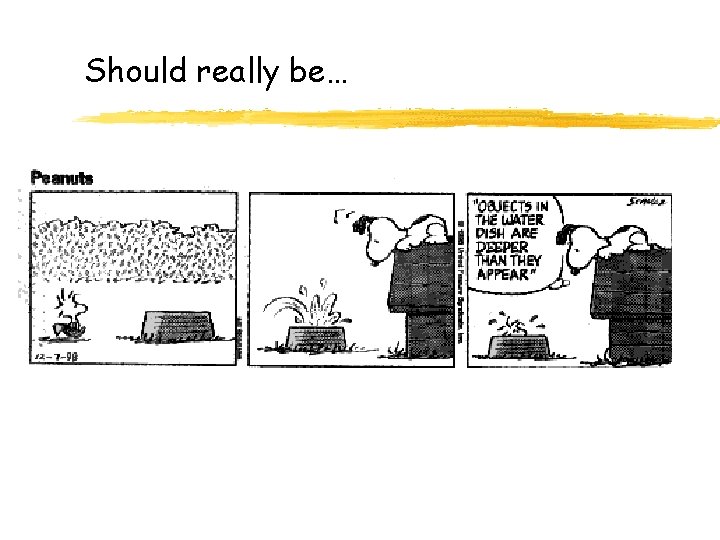
Should really be…