Motivation and Values Chapter 4 Opening Vignette Paula

- Slides: 35
Motivation and Values Chapter 4
Opening Vignette: Paula • What are Paula’s motivations for being a vegetarian? • How is vegetarianism being promoted and who is promoting it? • How is the beef industry responding to this movement toward a meatless diet? • How are values influencing individuals’ choices in consumption? 2
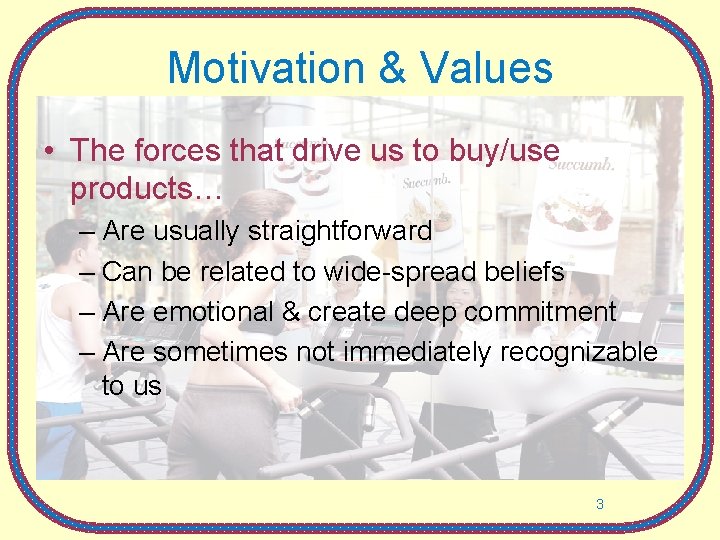
Motivation & Values • The forces that drive us to buy/use products… – Are usually straightforward – Can be related to wide-spread beliefs – Are emotional & create deep commitment – Are sometimes not immediately recognizable to us 3
The Motivation Process • Motivation: – The processes that lead people to behave as they do. It occurs when a need arises that a consumer wishes to satisfy. • Utilitarian need: Provides a functional or practical benefit • Hedonic need: An experiential need involving emotional responses or fantasies • Goal: – The end state that is desired by the consumer. 4
The Motivation Process • Drive: – The degree of arousal present due to a discrepancy between the consumer’s present state and some ideal state • Want: – A manifestation of a need created by personal and cultural factors. • Motivation can be described in terms of: – Strength: The pull it exerts on the consumer – Direction: The particular way the consumer attempts to reduce motivational tension 5
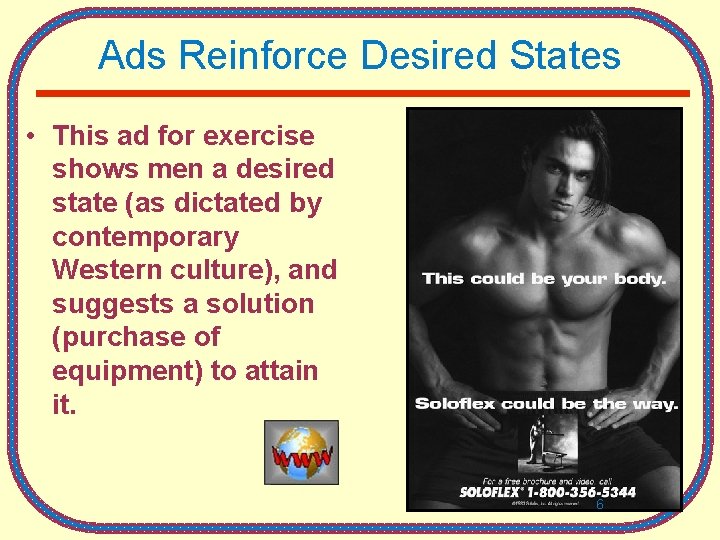
Ads Reinforce Desired States • This ad for exercise shows men a desired state (as dictated by contemporary Western culture), and suggests a solution (purchase of equipment) to attain it. 6
Motivational Strength • Biological vs. Learned Needs: – Instinct: Innate patterns of behavior universal in a species – Tautology: Circular explanation (e. g. instinct is inferred from the behavior it is supposed to explain) • Drive Theory: – Biological needs produce unpleasant states of arousal. We are motivated to reduce tension caused by this arousal. • Expectancy Theory: – Behavior is pulled by expectations of achieving desirable outcomes – positive incentives – rather than 7 pushed from within
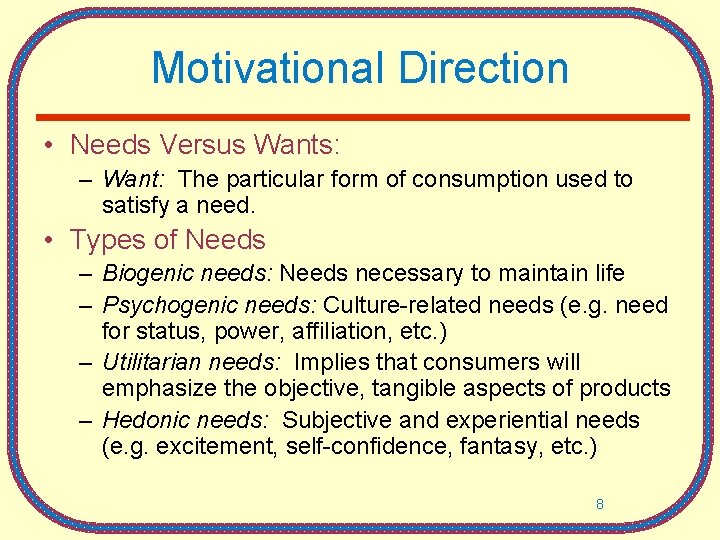
Motivational Direction • Needs Versus Wants: – Want: The particular form of consumption used to satisfy a need. • Types of Needs – Biogenic needs: Needs necessary to maintain life – Psychogenic needs: Culture-related needs (e. g. need for status, power, affiliation, etc. ) – Utilitarian needs: Implies that consumers will emphasize the objective, tangible aspects of products – Hedonic needs: Subjective and experiential needs (e. g. excitement, self-confidence, fantasy, etc. ) 8
Motivational Direction 9
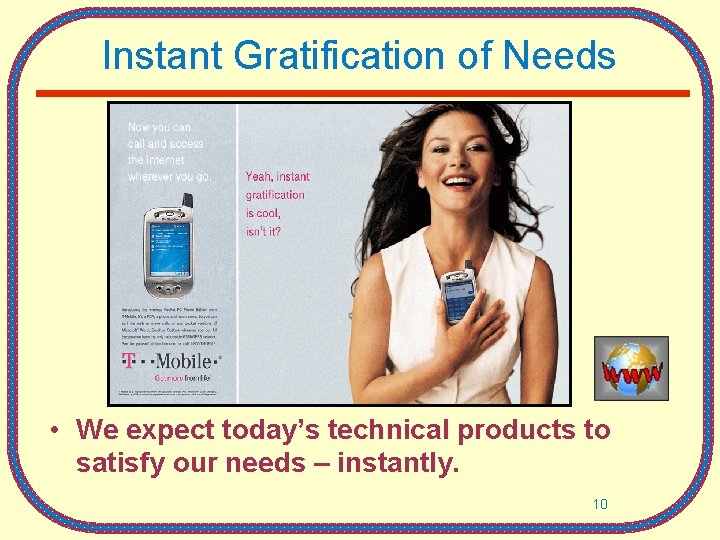
Instant Gratification of Needs • We expect today’s technical products to satisfy our needs – instantly. 10
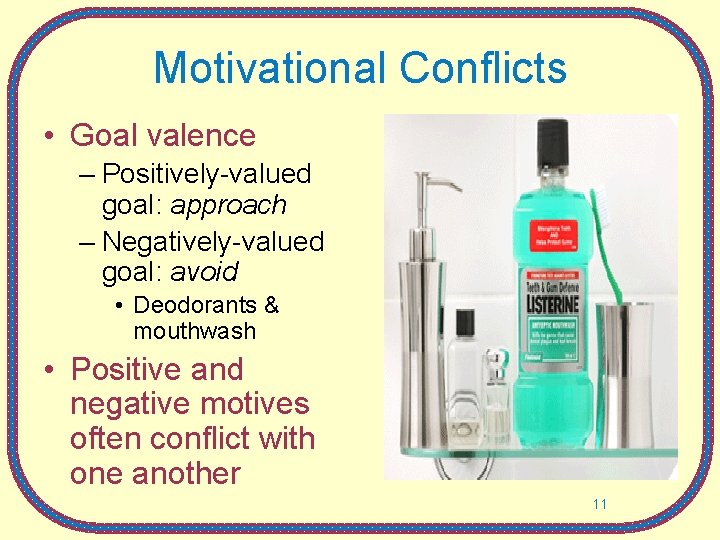
Motivational Conflicts • Goal valence – Positively-valued goal: approach – Negatively-valued goal: avoid • Deodorants & mouthwash • Positive and negative motives often conflict with one another 11
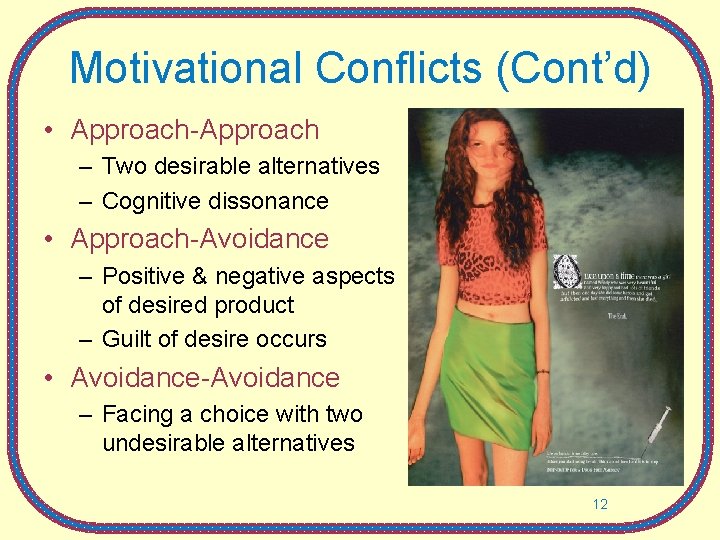
Motivational Conflicts (Cont’d) • Approach-Approach – Two desirable alternatives – Cognitive dissonance • Approach-Avoidance – Positive & negative aspects of desired product – Guilt of desire occurs • Avoidance-Avoidance – Facing a choice with two undesirable alternatives 12
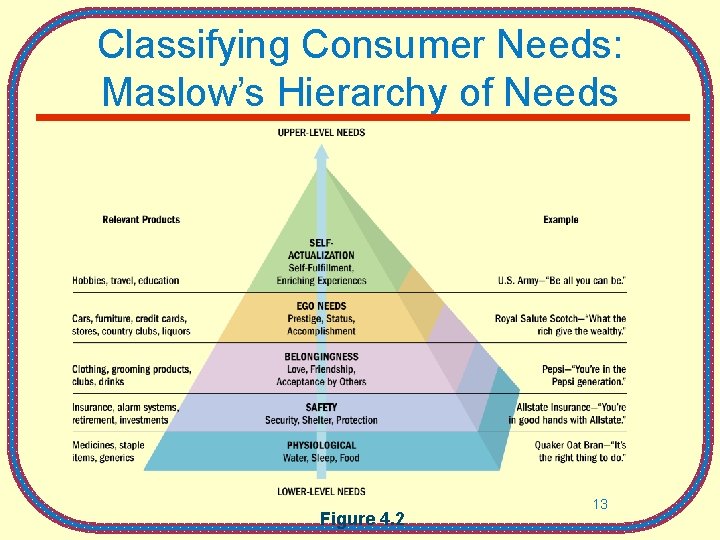
Classifying Consumer Needs: Maslow’s Hierarchy of Needs Figure 4. 2 13
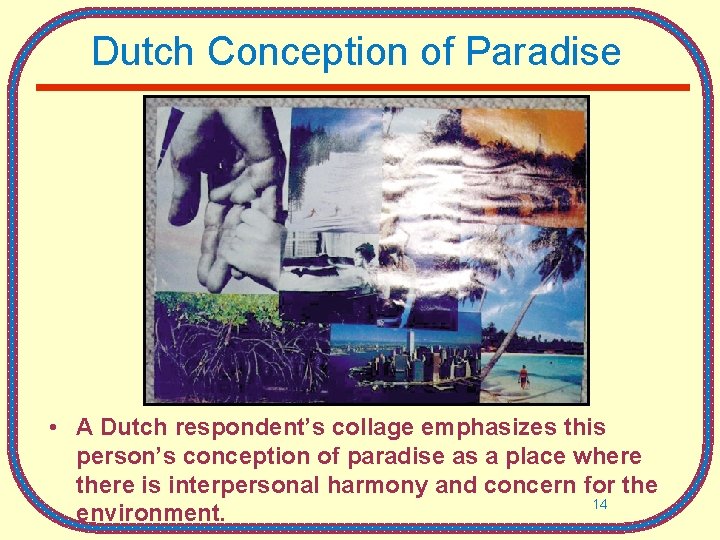
Dutch Conception of Paradise • A Dutch respondent’s collage emphasizes this person’s conception of paradise as a place where there is interpersonal harmony and concern for the 14 environment.
Criticisms of Maslow’s Hierarchy • The application is too simplistic: – It is possible for the same product or activity to satisfy every need. • It is too culture-bound: – The assumptions of the hierarchy may be restricted to Western culture • It emphasizes individual needs over group needs – Individuals in some cultures place more value on the welfare of the group (belongingness needs) than the needs of the individual (esteem needs) 15
Discussion • Devise separate promotional strategies for an article of clothing, each of which stresses one of the levels of Maslow’s hierarchy of needs. 16
Consumer Involvement • Involvement: – A person’s perceived relevance of the object based on his/her inherent needs, values, and interests. • Object: A product or brand • Levels of Involvement: Inertia to Passion – Type of information processing depends on the consumer’s level of involvement • Simple processing: Only the basic features of the message are considered • Elaboration: Incoming information is linked to 17 preexisting knowledge
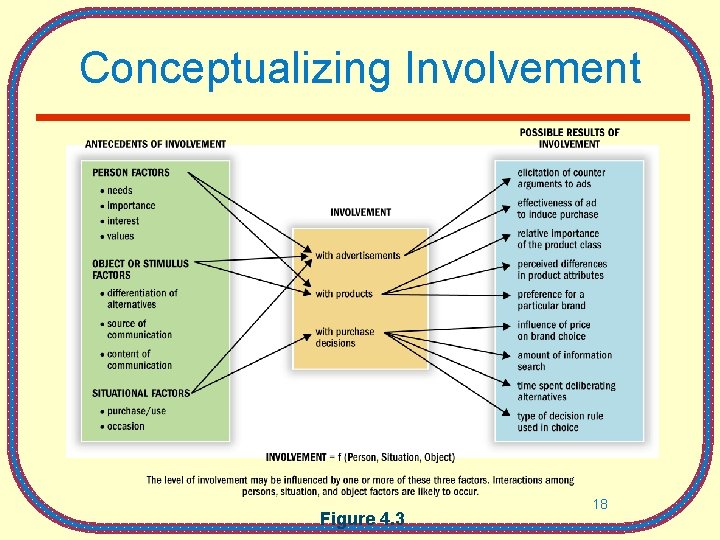
Conceptualizing Involvement Figure 4. 3 18
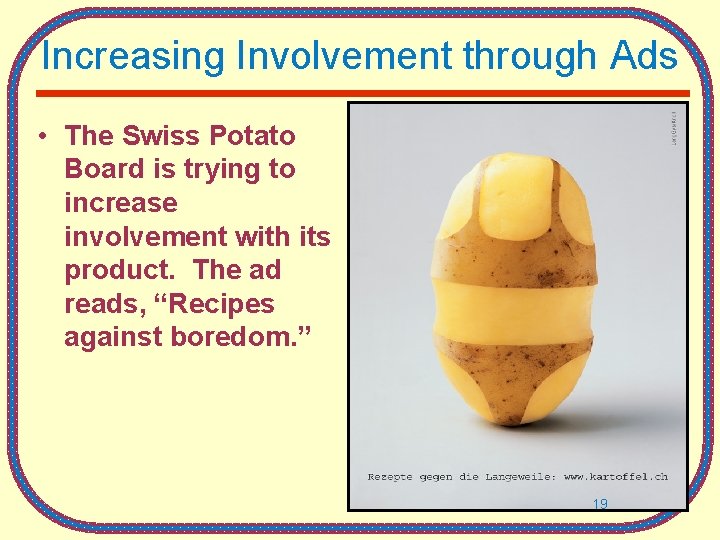
Increasing Involvement through Ads • The Swiss Potato Board is trying to increase involvement with its product. The ad reads, “Recipes against boredom. ” 19
Consumer Involvement (cont. ) • Involvement as a Continuum: – Ranges from disinterest to obsession • Inertia (Low involvement consumption): – Consumer lacks the motivation to consider alternatives • Flow State (High involvement consumption): – Consumer is truly involved with the product, ad or web site • Cult Products: – Command fierce consumer loyalty and perhaps worship by consumers who are highly involved in the product 20
Cult Products • Command fierce consumer loyalty, devotion, and worship – High involvement in a brand – E. g. , Apple computers, Harley-Davidson CLICK ON LOGO TO SEE VIDEO ABOUT CONSUMERS’ DEVOTION TO HARLEY DAVIDSON 21
The Many Faces of Involvement • Product Involvement: – Related to a consumer’s level of interest in a particular product • Message-Response Involvement: – (a. k. a. advertising involvement) Refers to a consumer’s interest in processing marketing communications • Purchase Situation Involvement: – Refers to the differences that may occur when buying the same product for different contexts 22
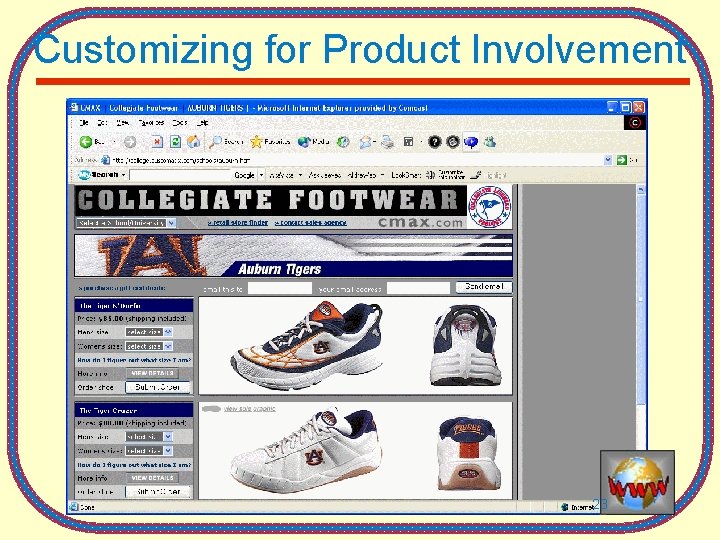
Customizing for Product Involvement 23
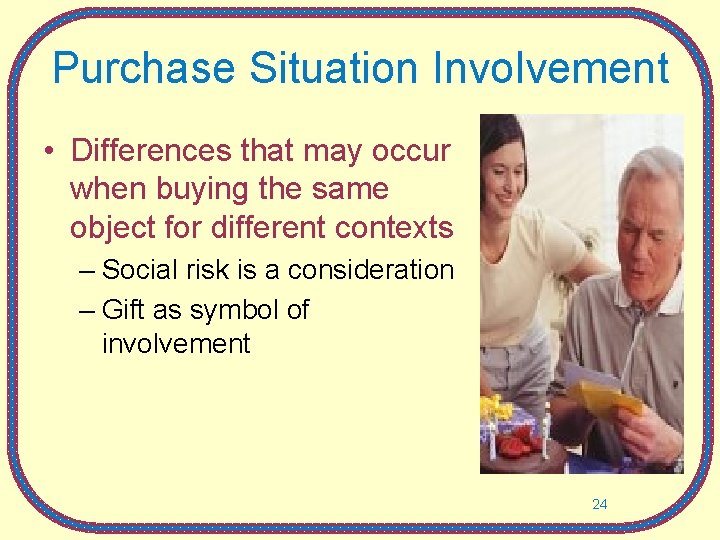
Purchase Situation Involvement • Differences that may occur when buying the same object for different contexts – Social risk is a consideration – Gift as symbol of involvement 24
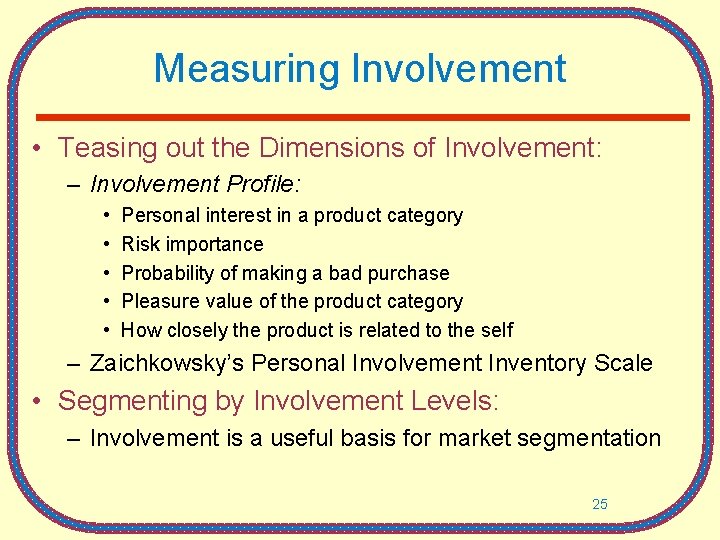
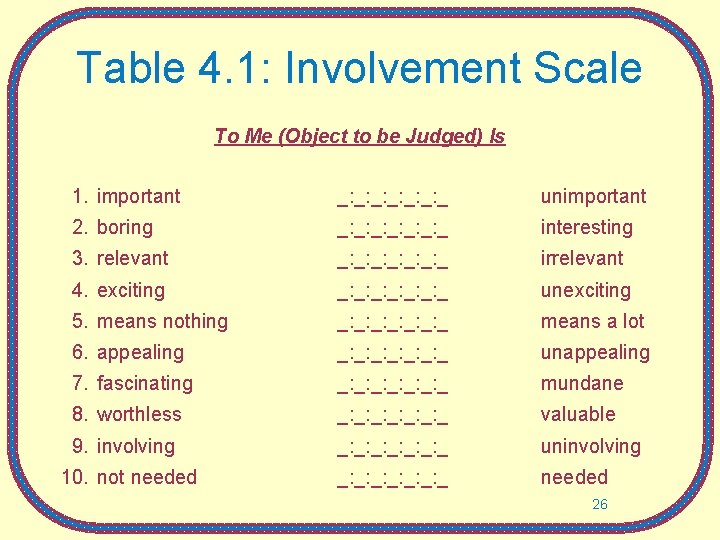
Measuring Involvement • Teasing out the Dimensions of Involvement: – Involvement Profile: • • • Personal interest in a product category Risk importance Probability of making a bad purchase Pleasure value of the product category How closely the product is related to the self – Zaichkowsky’s Personal Involvement Inventory Scale • Segmenting by Involvement Levels: – Involvement is a useful basis for market segmentation 25
Table 4. 1: Involvement Scale To Me (Object to be Judged) Is 1. important _: _: _: _ unimportant 2. boring _: _: _: _ interesting 3. relevant _: _: _: _ irrelevant 4. exciting _: _: _: _ unexciting 5. means nothing _: _: _: _ means a lot 6. appealing _: _: _: _ unappealing 7. fascinating _: _: _: _ mundane 8. worthless _: _: _: _ valuable 9. involving _: _: _: _ uninvolving 10. not needed _: _: _: _ needed 26
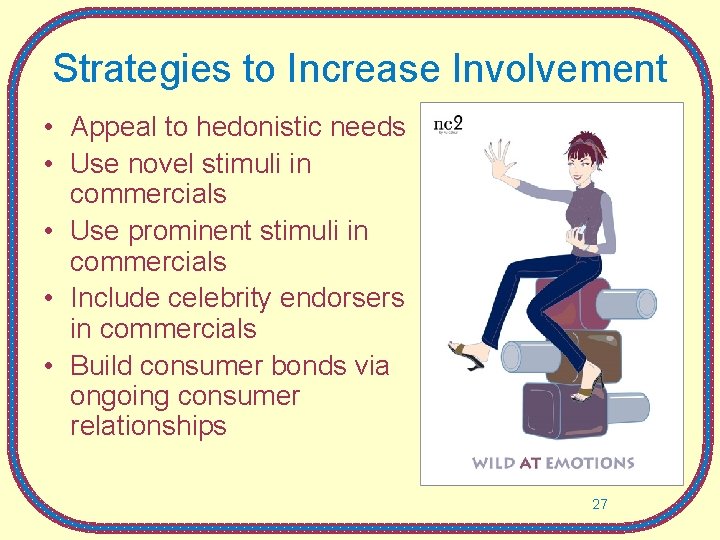
Strategies to Increase Involvement • Appeal to hedonistic needs • Use novel stimuli in commercials • Use prominent stimuli in commercials • Include celebrity endorsers in commercials • Build consumer bonds via ongoing consumer relationships 27
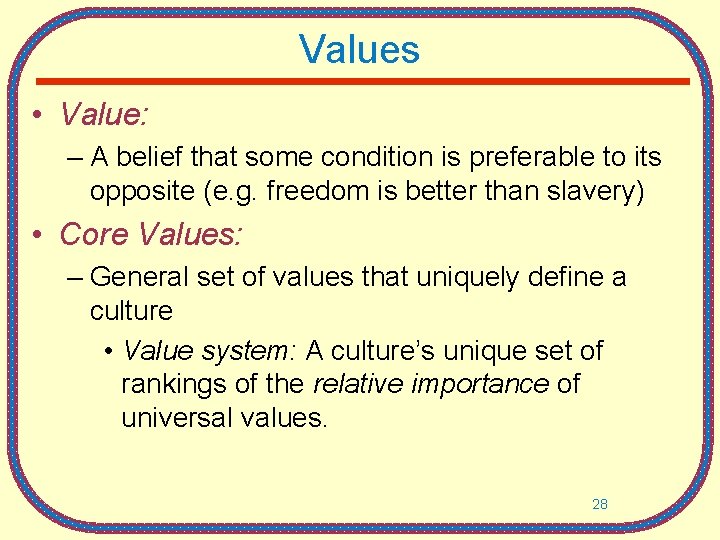
Values • Value: – A belief that some condition is preferable to its opposite (e. g. freedom is better than slavery) • Core Values: – General set of values that uniquely define a culture • Value system: A culture’s unique set of rankings of the relative importance of universal values. 28
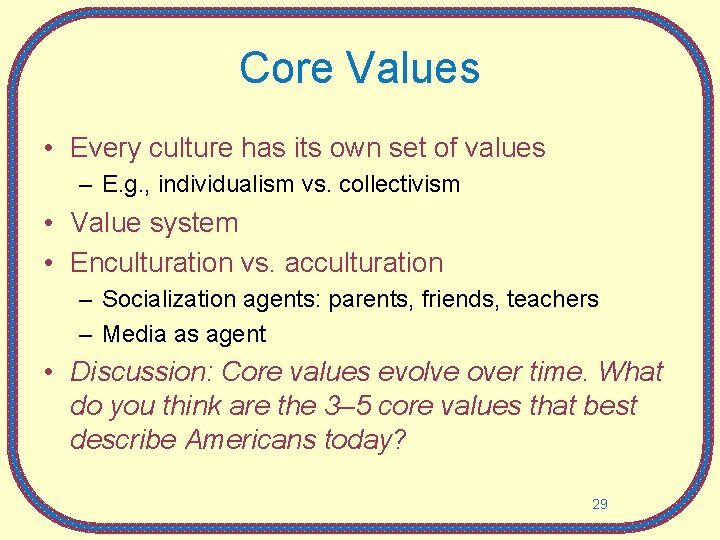
Core Values • Every culture has its own set of values – E. g. , individualism vs. collectivism • Value system • Enculturation vs. acculturation – Socialization agents: parents, friends, teachers – Media as agent • Discussion: Core values evolve over time. What do you think are the 3– 5 core values that best describe Americans today? 29
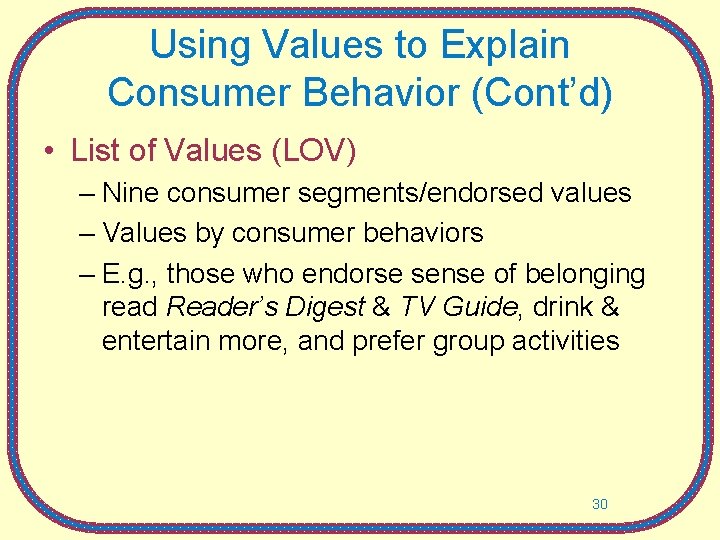
Using Values to Explain Consumer Behavior (Cont’d) • List of Values (LOV) – Nine consumer segments/endorsed values – Values by consumer behaviors – E. g. , those who endorse sense of belonging read Reader’s Digest & TV Guide, drink & entertain more, and prefer group activities 30
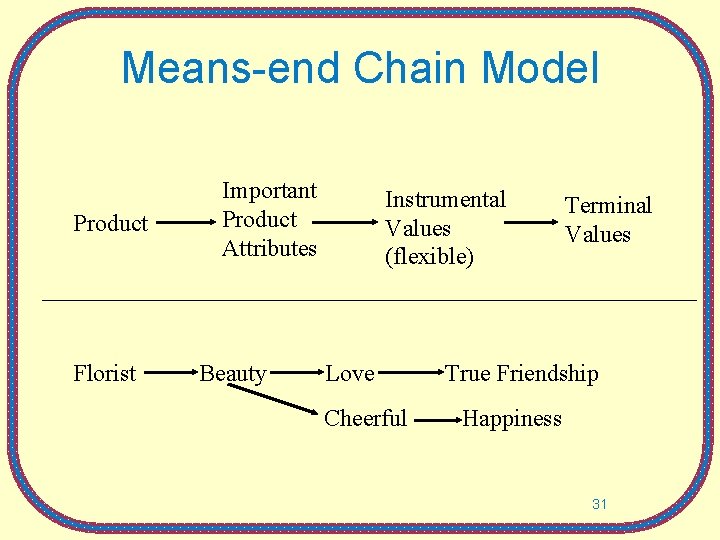
Means-end Chain Model Product Florist Important Product Attributes Beauty Instrumental Values (flexible) Love Cheerful Terminal Values True Friendship Happiness 31
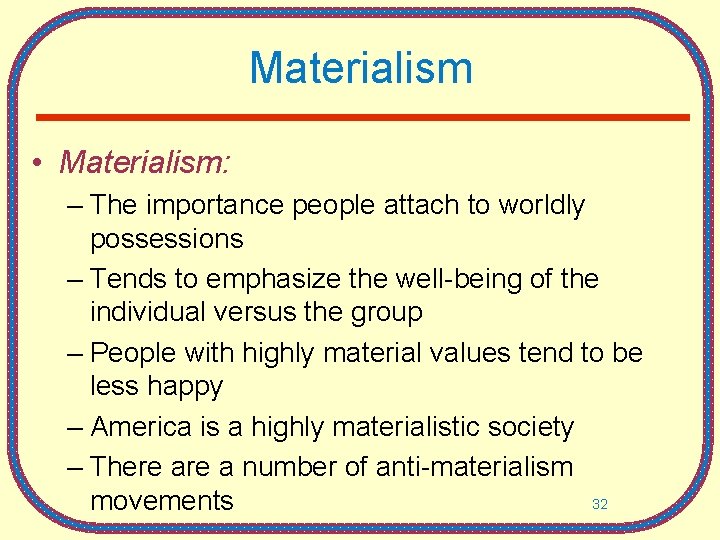
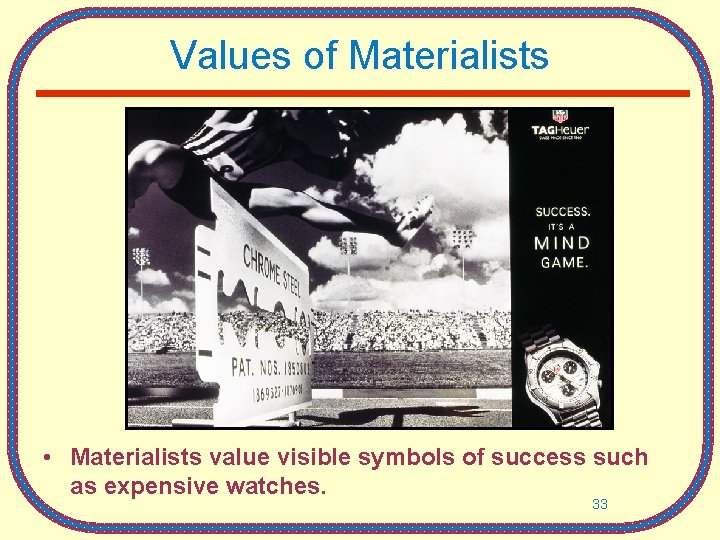
Materialism • Materialism: – The importance people attach to worldly possessions – Tends to emphasize the well-being of the individual versus the group – People with highly material values tend to be less happy – America is a highly materialistic society – There a number of anti-materialism 32 movements
Values of Materialists • Materialists value visible symbols of success such as expensive watches. 33
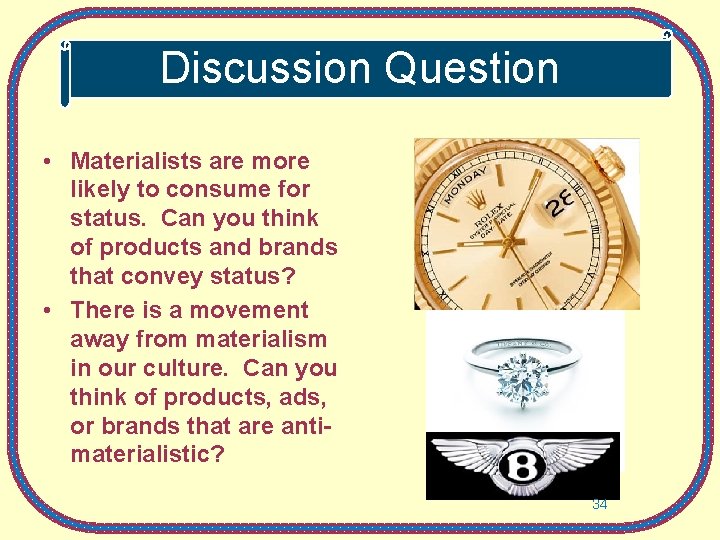
Discussion Question • Materialists are more likely to consume for status. Can you think of products and brands that convey status? • There is a movement away from materialism in our culture. Can you think of products, ads, or brands that are antimaterialistic? 34
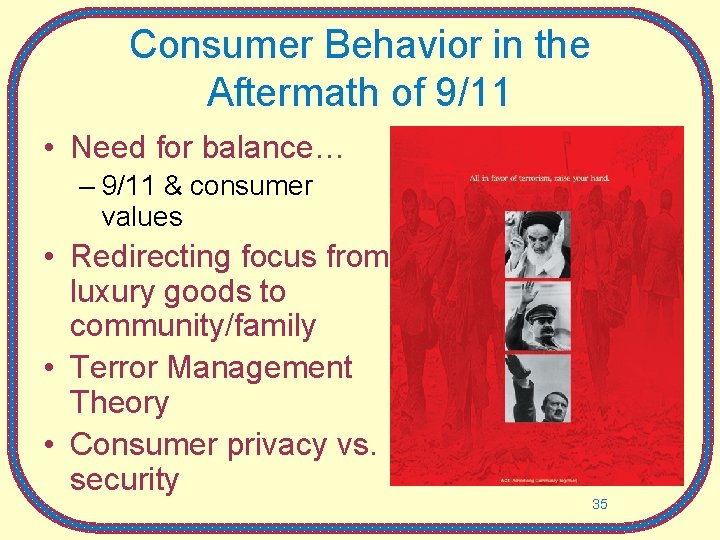
Consumer Behavior in the Aftermath of 9/11 • Need for balance… – 9/11 & consumer values • Redirecting focus from luxury goods to community/family • Terror Management Theory • Consumer privacy vs. security 35