
Personality and Lifestyles Chapter 6 Opening Vignette Jackie
- Slides: 30
Personality and Lifestyles Chapter 6
Opening Vignette: Jackie & Hank • How do Jackie, Hank, and Debbie want to spend their bonus money? • Why does Hank think of Debbie as a couch potato? • Both Jackie and Hank are planning outdoor adventures, but how are they different? • Do you think the differences between Jackie, Hank, and Debbie are attributable to personality, lifestyle, or both? 2
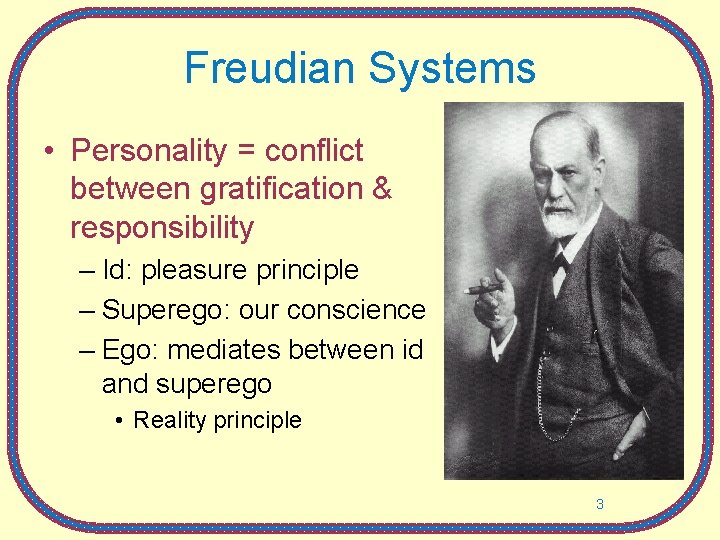
Freudian Systems • Personality = conflict between gratification & responsibility – Id: pleasure principle – Superego: our conscience – Ego: mediates between id and superego • Reality principle 3
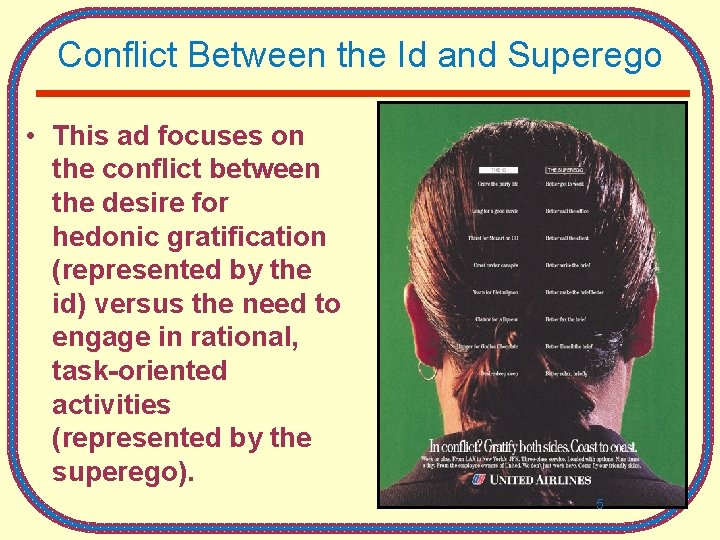
Conflict Between the Id and Superego • This ad focuses on the conflict between the desire for hedonic gratification (represented by the id) versus the need to engage in rational, task-oriented activities (represented by the superego). 5
Motivational Research • Motivational Research: – Attempts to use Freudian ideas to understand the deeper meanings of products and advertisements – Depth Interviews: Technique that probes deeply into a few consumers’ purchase motivations – Latent motives: Underlying motives • Appeal of Motivational Research – Less expensive than quantitative survey research – Uncovers deep seated needs which can be targeted with advertising – Findings seem intuitively plausible after the fact 6
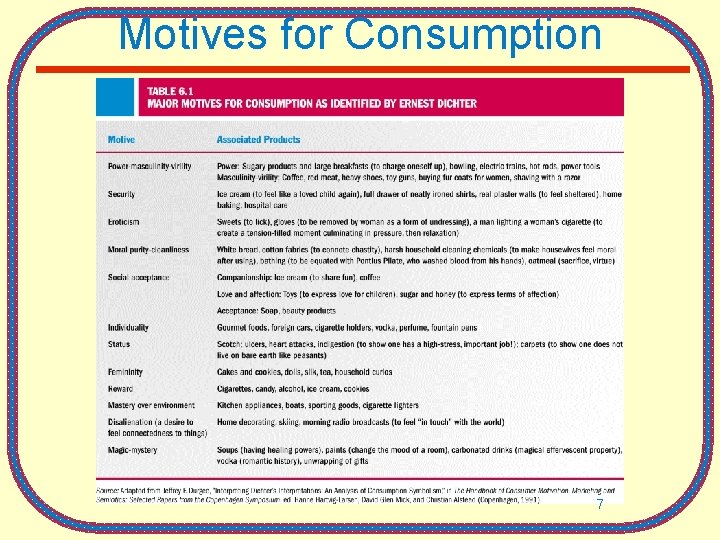
Motives for Consumption 7
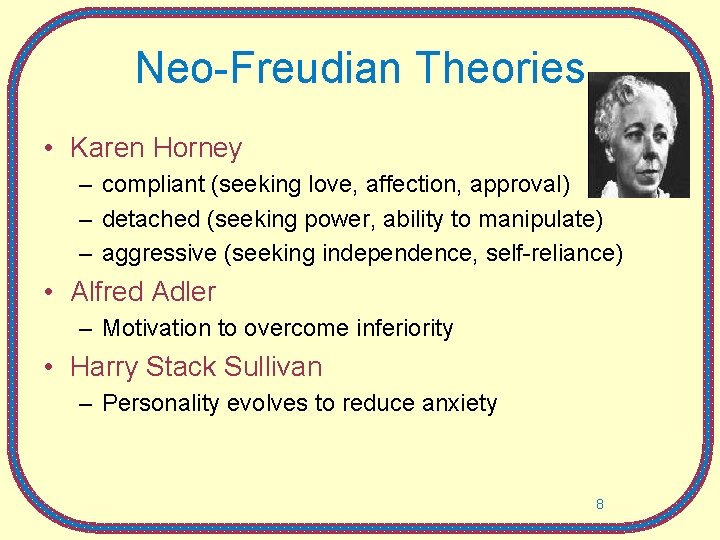
Neo-Freudian Theories • Karen Horney – compliant (seeking love, affection, approval) – detached (seeking power, ability to manipulate) – aggressive (seeking independence, self-reliance) • Alfred Adler – Motivation to overcome inferiority • Harry Stack Sullivan – Personality evolves to reduce anxiety 8
Trait Theory • Trait Theory: – An approach to personality that focuses on the quantitative measurement of personality traits • Personality Traits: – Identifiable characteristics that define a person. – Extroversion: Trait of being socially outgoing • Extrovert: A person that possesses the trait of extroversion – Introversion: Trait of being quiet and reserved • Introvert: A person that possesses the trait of introversion 9
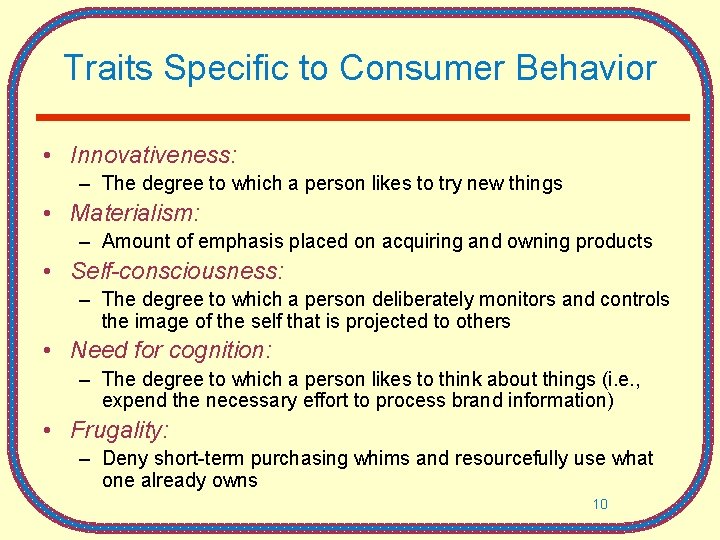
Traits Specific to Consumer Behavior • Innovativeness: – The degree to which a person likes to try new things • Materialism: – Amount of emphasis placed on acquiring and owning products • Self-consciousness: – The degree to which a person deliberately monitors and controls the image of the self that is projected to others • Need for cognition: – The degree to which a person likes to think about things (i. e. , expend the necessary effort to process brand information) • Frugality: – Deny short-term purchasing whims and resourcefully use what one already owns 10
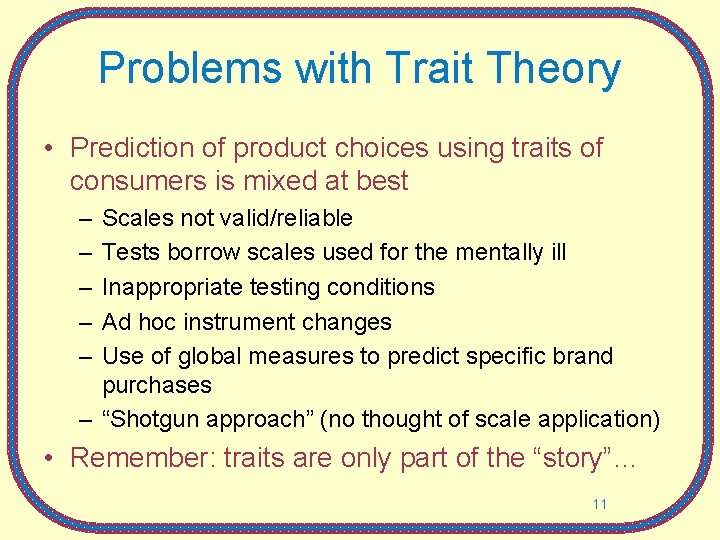
Problems with Trait Theory • Prediction of product choices using traits of consumers is mixed at best – – – Scales not valid/reliable Tests borrow scales used for the mentally ill Inappropriate testing conditions Ad hoc instrument changes Use of global measures to predict specific brand purchases – “Shotgun approach” (no thought of scale application) • Remember: traits are only part of the “story”… 11
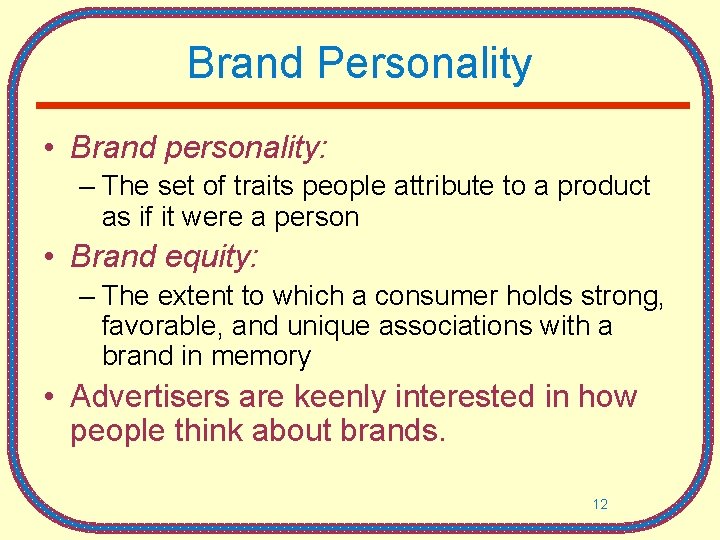
Brand Personality • Brand personality: – The set of traits people attribute to a product as if it were a person • Brand equity: – The extent to which a consumer holds strong, favorable, and unique associations with a brand in memory • Advertisers are keenly interested in how people think about brands. 12
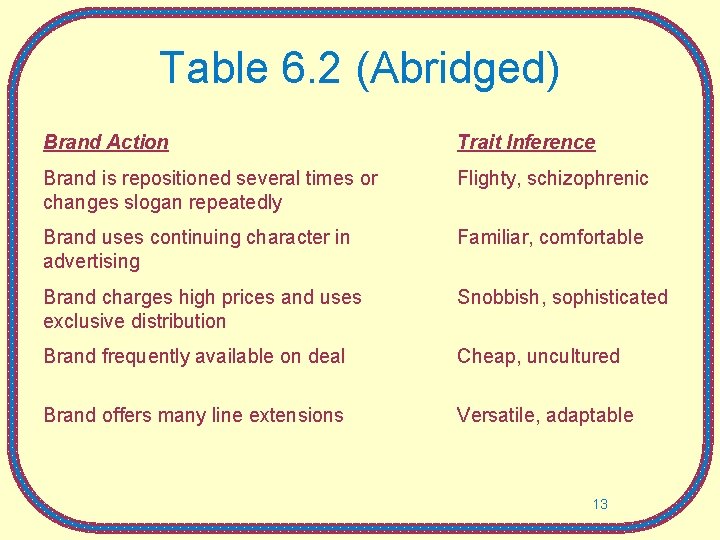
Table 6. 2 (Abridged) Brand Action Trait Inference Brand is repositioned several times or changes slogan repeatedly Flighty, schizophrenic Brand uses continuing character in advertising Familiar, comfortable Brand charges high prices and uses exclusive distribution Snobbish, sophisticated Brand frequently available on deal Cheap, uncultured Brand offers many line extensions Versatile, adaptable 13
Animism • Animism: – The practice found in many cultures whereby inanimate objects are given qualities that make them somehow alive • Two types of animism: – Level 1: People believe the object is possessed by the soul of the being (e. g. celebrity spokespersons) – Level 2: Objects are anthropomorphized, or given human characteristics. (e. g. Charlie the Tuna, Keebler Elves, or the Michelin Man) 14
Lifestyle: Who We Are, What We Do • Lifestyle: – A pattern of consumption reflecting a person’s choices of how he or she spends time and money • Lifestyle Marketing Perspective: – Recognizes that people sort themselves into groups on the basis of things they like to do, how they like to spend their leisure time, and how they choose to spend their disposable income • Lifestyles as Group Identities: – Self-definitions of group members 15
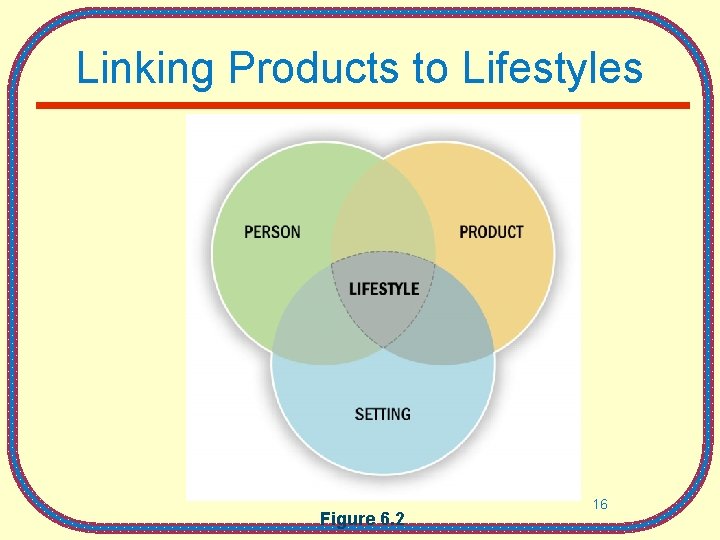
Linking Products to Lifestyles Figure 6. 2 16
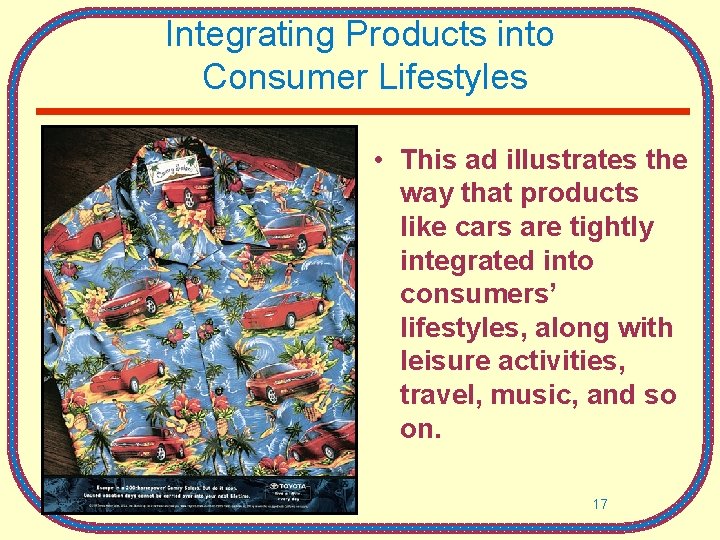
Integrating Products into Consumer Lifestyles • This ad illustrates the way that products like cars are tightly integrated into consumers’ lifestyles, along with leisure activities, travel, music, and so on. 17
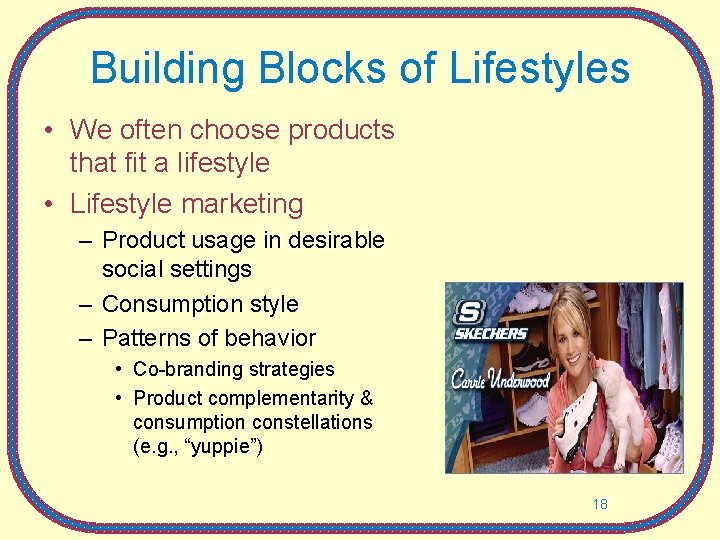
Building Blocks of Lifestyles • We often choose products that fit a lifestyle • Lifestyle marketing – Product usage in desirable social settings – Consumption style – Patterns of behavior • Co-branding strategies • Product complementarity & consumption constellations (e. g. , “yuppie”) 18
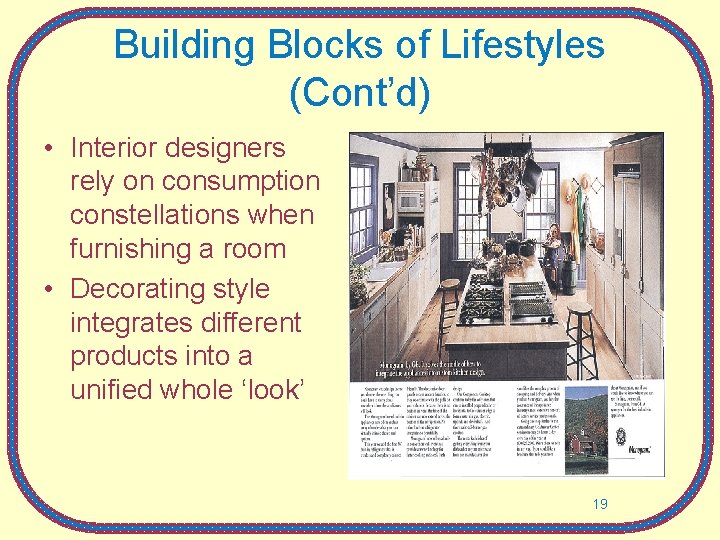
Building Blocks of Lifestyles (Cont’d) • Interior designers rely on consumption constellations when furnishing a room • Decorating style integrates different products into a unified whole ‘look’ 19
Psychographics • Use of psychological, sociological, & anthropological factors to: – Determine market segments – Determine their reasons for choosing products – Fine-tune offerings to meet needs of different segments • Consumers can share the same demographics and still be very different! 20
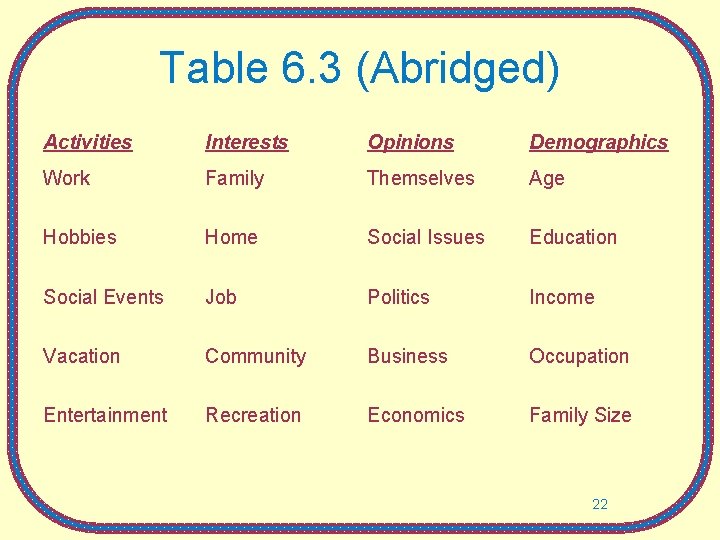
AIOs • AIOs: – Psychographic research groups consumers according to activities, interests, and opinions (AIOs) • 80/20 Rule: – Only 20 percent of a product’s users account for 80 percent of the volume of product sold – Researchers attempt to identify the heavy users of a product – Heavy users can then be subdivided in terms of the benefits they derive from the product or 21 service.
Table 6. 3 (Abridged) Activities Interests Opinions Demographics Work Family Themselves Age Hobbies Home Social Issues Education Social Events Job Politics Income Vacation Community Business Occupation Entertainment Recreation Economics Family Size 22
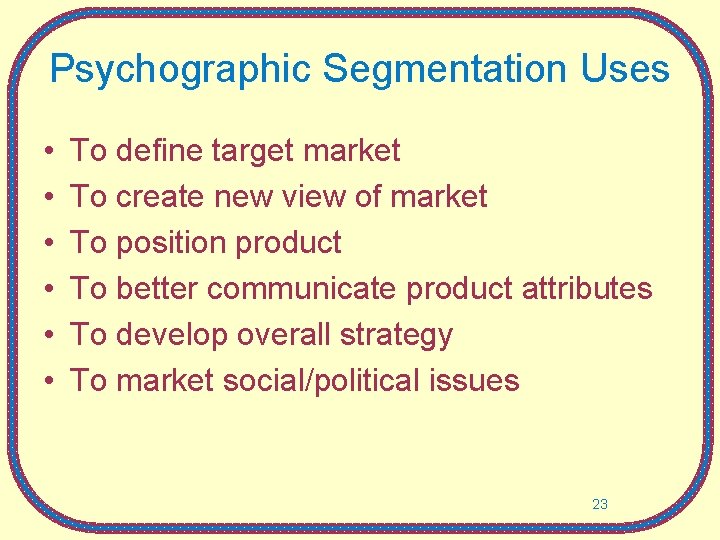
Psychographic Segmentation Uses • • • To define target market To create new view of market To position product To better communicate product attributes To develop overall strategy To market social/political issues 23
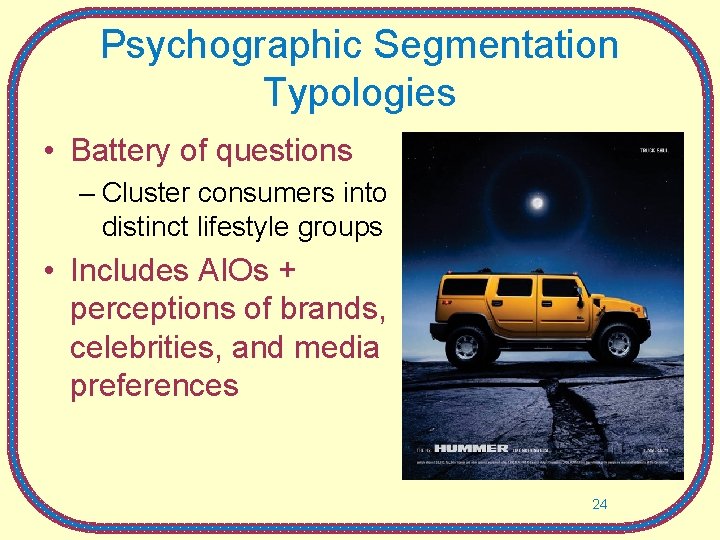
Psychographic Segmentation Typologies • Battery of questions – Cluster consumers into distinct lifestyle groups • Includes AIOs + perceptions of brands, celebrities, and media preferences 24
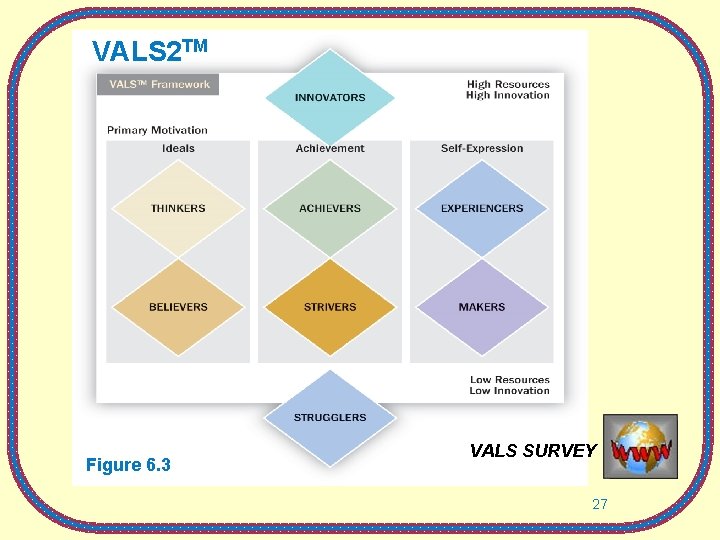
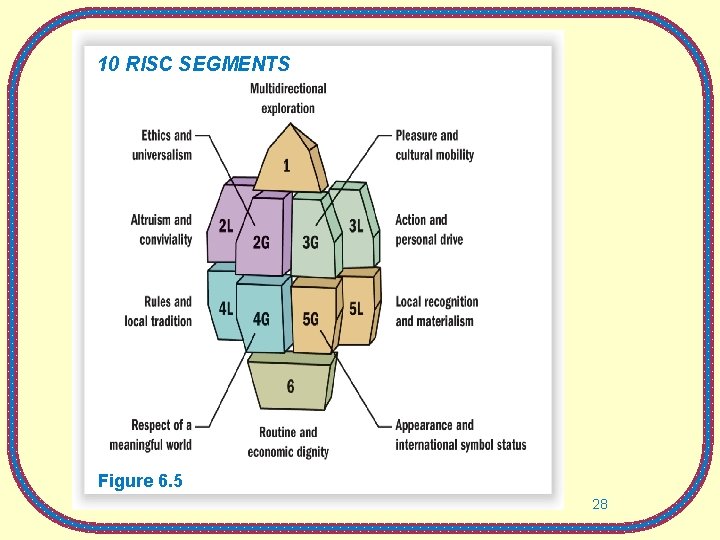
Psychographic Typologies • Wide variety, usually proprietary – www. environics. net – www. sric-bi. com/VALS/presurvey. shtml 25
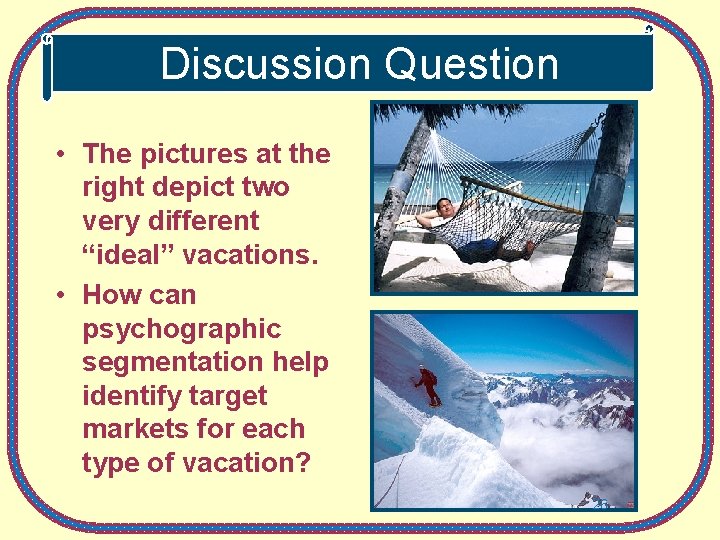
Discussion Question • The pictures at the right depict two very different “ideal” vacations. • How can psychographic segmentation help identify target markets for each type of vacation? 26
VALS 2 TM Figure 6. 3 VALS SURVEY 27
10 RISC SEGMENTS Figure 6. 5 28
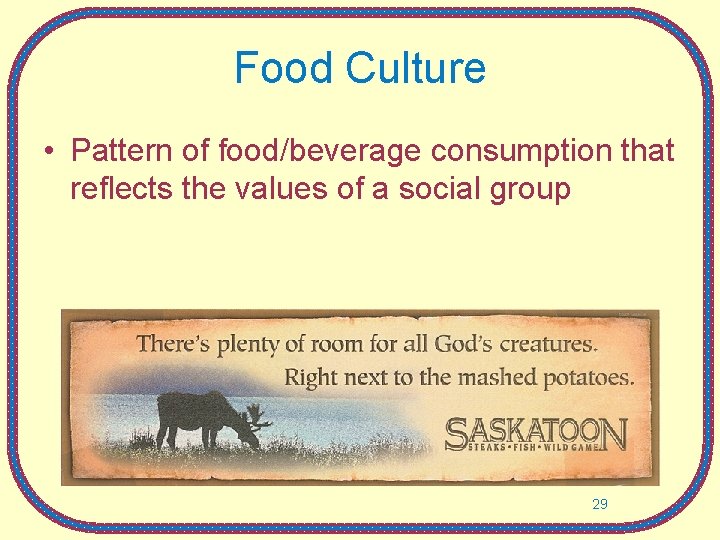
Food Culture • Pattern of food/beverage consumption that reflects the values of a social group 29
Geodemography • Consumer expenditures/socioeconomic factors + geographic information – “Birds of a feature flock together” – Can be reached more economically (e. g. , 90277 zip code in Redondo Beach, CA) • Discussion: Geodemographic techniques assume that people who live in the same neighborhood have other things in common as well. – Why do they make this assumption, and how accurate is it? 30
PRIZM • 66 clusters of U. S. zip codes – E. g. , “Young Influential, ” “Money & Brains, ” “Kids & Cul-de-Sacs” – Ranked by income, home value, & occupation • Maximize effectiveness, cost-efficiency, and impact of marketing communications 31