
Chapter 9 Motivation and Emotion Motives are hypothetical

- Slides: 36
Chapter 9 Motivation and Emotion
Motives are hypothetical states that activate behavior towards goals. Motives may take the form of: The “whys” of behavior. Motivation - the broad term used to explain the force that initiates, sustains, and determines the strength of our efforts toward specific goals. primary drives - sparked by physiological needs that have not been sufficiently met at any given moment. Needs: a state of deprivation • Physiological –needs necessary for survival (e. g. oxygen, food) and health
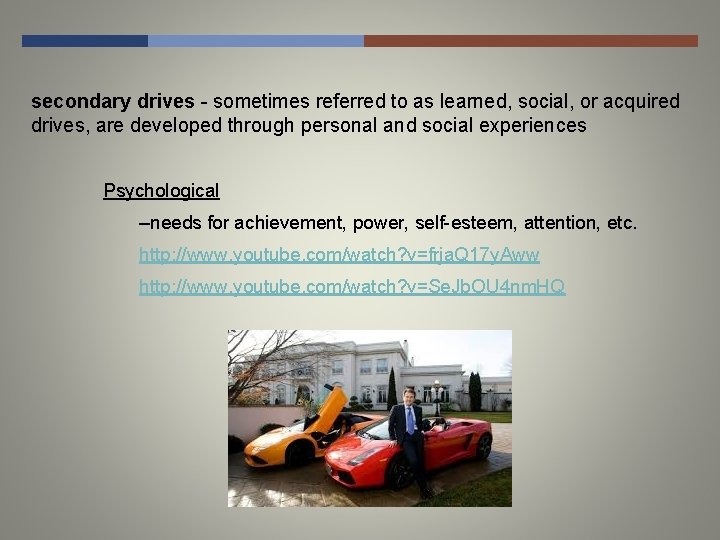
secondary drives - sometimes referred to as learned, social, or acquired drives, are developed through personal and social experiences Psychological –needs for achievement, power, self-esteem, attention, etc. http: //www. youtube. com/watch? v=frja. Q 17 y. Aww http: //www. youtube. com/watch? v=Se. Jb. OU 4 nm. HQ
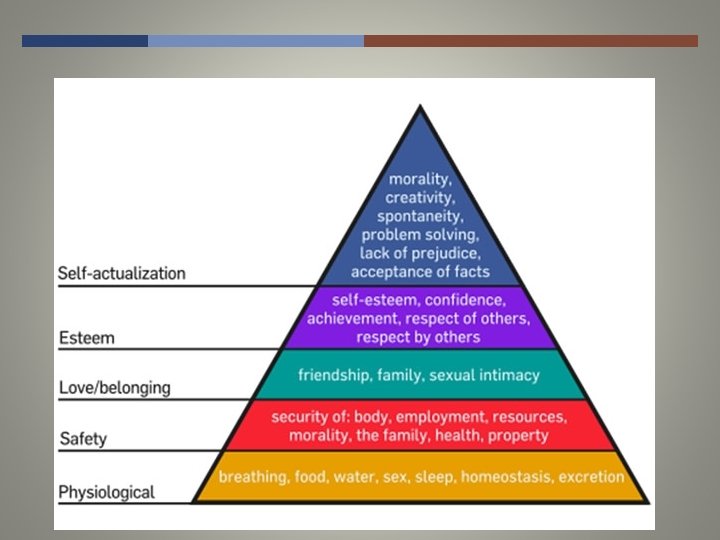
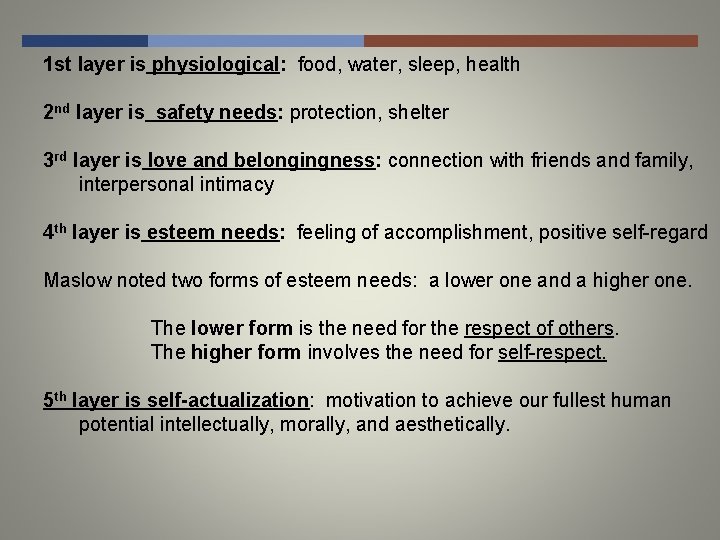
Psychologists do not agree about the precise nature of motivation so there are several theories. Abraham Maslow, a humanistic psychologist, believed that people are motivated by the conscious desire for personal growth. He proposed that humans are motivated innately to strive to reach their maximum potential or "best selves. " However, to continue to advance as an individual, a set of hierarchically dependent needs must be satisfied to enable that progression. Maslow’s hierarchy of needs theory arranged needs from basic physiological (such as hunger and thirst) through sophisticated self- actualization. • Self-actualization: –self initiated striving to become whatever we believe we are capable of being.
1 st layer is physiological: food, water, sleep, health 2 nd layer is safety needs: protection, shelter 3 rd layer is love and belongingness: connection with friends and family, interpersonal intimacy 4 th layer is esteem needs: feeling of accomplishment, positive self-regard Maslow noted two forms of esteem needs: a lower one and a higher one. The lower form is the need for the respect of others. The higher form involves the need for self-respect. 5 th layer is self-actualization: motivation to achieve our fullest human potential intellectually, morally, and aesthetically.
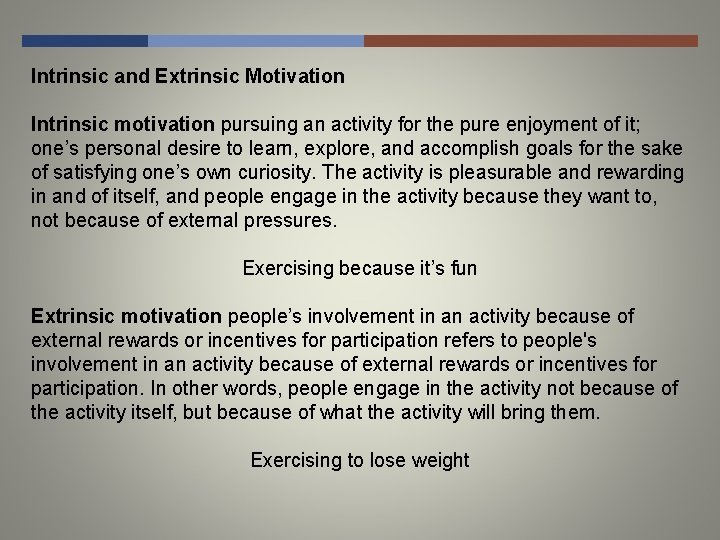
Intrinsic and Extrinsic Motivation Intrinsic motivation pursuing an activity for the pure enjoyment of it; one’s personal desire to learn, explore, and accomplish goals for the sake of satisfying one’s own curiosity. The activity is pleasurable and rewarding in and of itself, and people engage in the activity because they want to, not because of external pressures. Exercising because it’s fun Extrinsic motivation people’s involvement in an activity because of external rewards or incentives for participation refers to people's involvement in an activity because of external rewards or incentives for participation. In other words, people engage in the activity not because of the activity itself, but because of what the activity will bring them. Exercising to lose weight
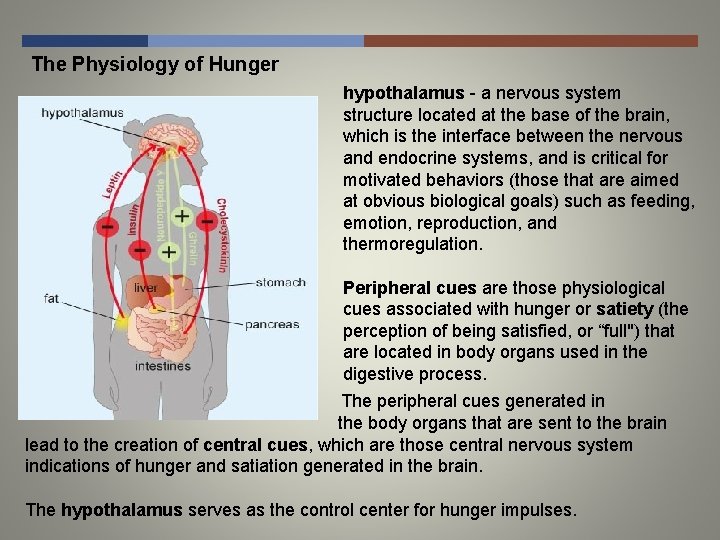
The Physiology of Hunger hypothalamus - a nervous system structure located at the base of the brain, which is the interface between the nervous and endocrine systems, and is critical for motivated behaviors (those that are aimed at obvious biological goals) such as feeding, emotion, reproduction, and thermoregulation. Peripheral cues are those physiological cues associated with hunger or satiety (the perception of being satisfied, or “full") that are located in body organs used in the digestive process. The peripheral cues generated in the body organs that are sent to the brain lead to the creation of central cues, which are those central nervous system indications of hunger and satiation generated in the brain. The hypothalamus serves as the control center for hunger impulses.
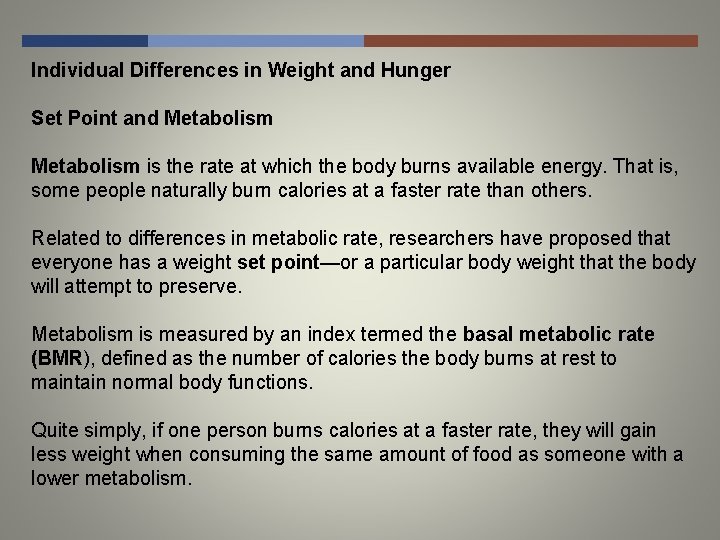
Individual Differences in Weight and Hunger Set Point and Metabolism is the rate at which the body burns available energy. That is, some people naturally burn calories at a faster rate than others. Related to differences in metabolic rate, researchers have proposed that everyone has a weight set point—or a particular body weight that the body will attempt to preserve. Metabolism is measured by an index termed the basal metabolic rate (BMR), defined as the number of calories the body burns at rest to maintain normal body functions. Quite simply, if one person burns calories at a faster rate, they will gain less weight when consuming the same amount of food as someone with a lower metabolism.
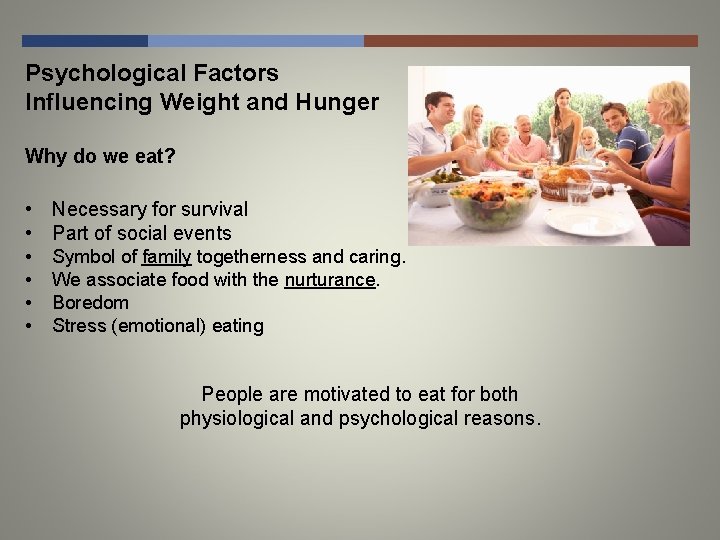
Psychological Factors Influencing Weight and Hunger Why do we eat? • • • Necessary for survival Part of social events Symbol of family togetherness and caring. We associate food with the nurturance. Boredom Stress (emotional) eating People are motivated to eat for both physiological and psychological reasons.
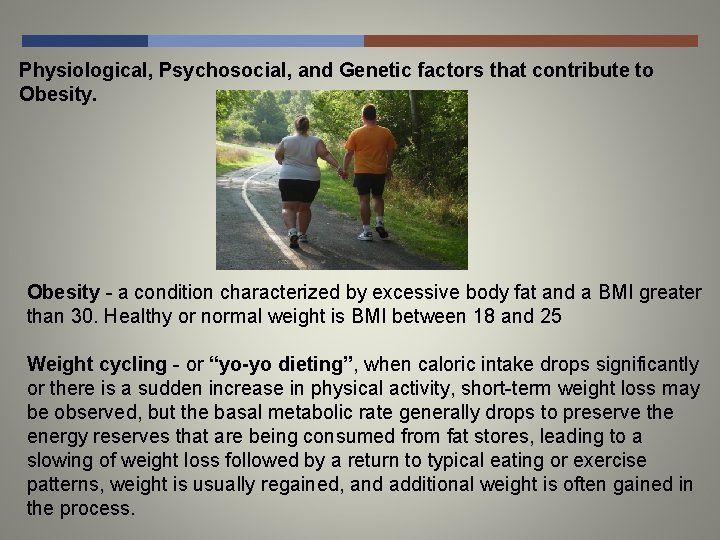
Physiological, Psychosocial, and Genetic factors that contribute to Obesity - a condition characterized by excessive body fat and a BMI greater than 30. Healthy or normal weight is BMI between 18 and 25 Weight cycling - or “yo-yo dieting”, when caloric intake drops significantly or there is a sudden increase in physical activity, short-term weight loss may be observed, but the basal metabolic rate generally drops to preserve the energy reserves that are being consumed from fat stores, leading to a slowing of weight loss followed by a return to typical eating or exercise patterns, weight is usually regained, and additional weight is often gained in the process.
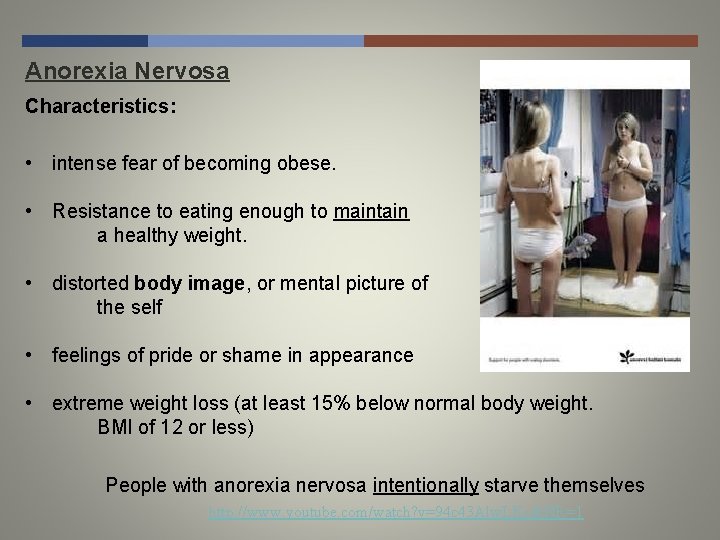
Distinctive Characteristics of Eating Disorders are a group of disorders marked by persistent, gross disturbances in eating patterns. Anorexia nervosa - a psycho-biological condition that is characterized by the following symptoms: an intense fear of becoming obese, an unhealthy body image (or mental picture of the self plus associated feelings of pride or shame in appearance), self-starvation and extreme weight loss. Anorexia is a life-threatening psychiatric eating disorder.
Anorexia Nervosa Characteristics: • intense fear of becoming obese. • Resistance to eating enough to maintain a healthy weight. • distorted body image, or mental picture of the self • feelings of pride or shame in appearance • extreme weight loss (at least 15% below normal body weight. BMI of 12 or less) People with anorexia nervosa intentionally starve themselves http: //www. youtube. com/watch? v=94 c 43 Alw. LKo&NR=1
Anorexia Nervosa Characteristics: • Obsessed with food and weight • belief that control over food is the same as being in control of one's life • lose a significant amount of weight-can drop 25% of weight in one year • Intense and overwhelming fear of becoming fat –even when close to death due to starvation • Elaborate or strange rituals surrounding the eating and preparation of food • Adhere to strict intensive and extensive exercise routines to keep off weight
Anorexia Nervosa Characteristics • Inappropriate use of laxatives, enemas or diuretics in effort to lose weight • Constantly cold • Preoccupied with food • Layer clothes to appear heavier Afflicts: –More common in females, often during adolescence –Males are diagnosed with the disorder as well –European American females of higher socioeconomic status.
Anorexia Nervosa Risks: • • malnourishment • • • loss of scalp hair premature risk of Osteoporosis and bone fractures menstrual cycle stops; men become impotent muscle atrophy mortality rate 10% damage to liver, heart, kidneys, respiratory system severe dehydration, possibly leading to shock appearance of fine baby-like body hair (lanugo) or greater amounts of hair on body or face Seizures due to fluid shifts due to excessive diarrhea inability to eat solid food
2. Bulimia Nervosa: an eating disorder characterized by the tendency to engage in recurrent cycles of binge eating (bingeing) and purging behaviors in an attempt to avoid the weight gain that is associated with bingeing. Bingeing is not just eating too much, it is an out-of-control frenzy of eating that leads one to eat a large amount of food, far more than a normal person would eat in any given time. There are two types of bulimics: those who actively purge and those who don’t purge. Non-Purging bulimics: • excessively or compulsively exercise • fast or highly restrict diet Purging bulimics actively force food back out of their bodies by: • Self-induced vomiting by gagging oneself or ingesting Ipecac syrup • laxatives, diuretics, enemas
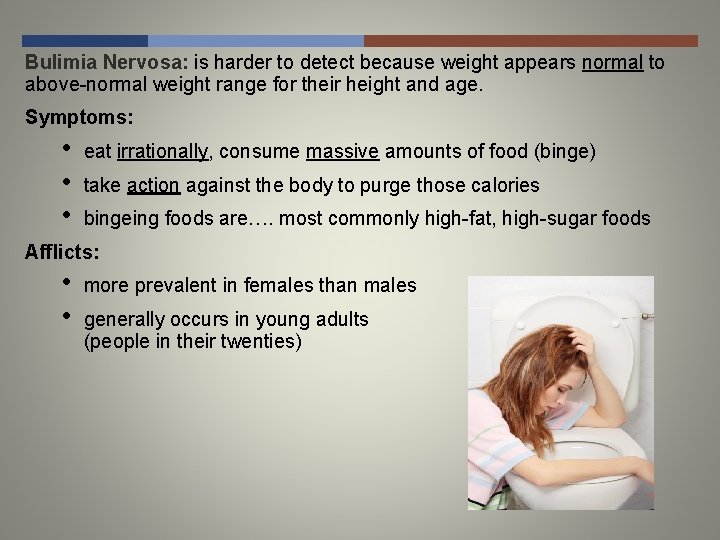
Bulimia Nervosa: is harder to detect because weight appears normal to above-normal weight range for their height and age. Symptoms: • • • eat irrationally, consume massive amounts of food (binge) take action against the body to purge those calories bingeing foods are…. most commonly high-fat, high-sugar foods Afflicts: • • more prevalent in females than males generally occurs in young adults (people in their twenties)
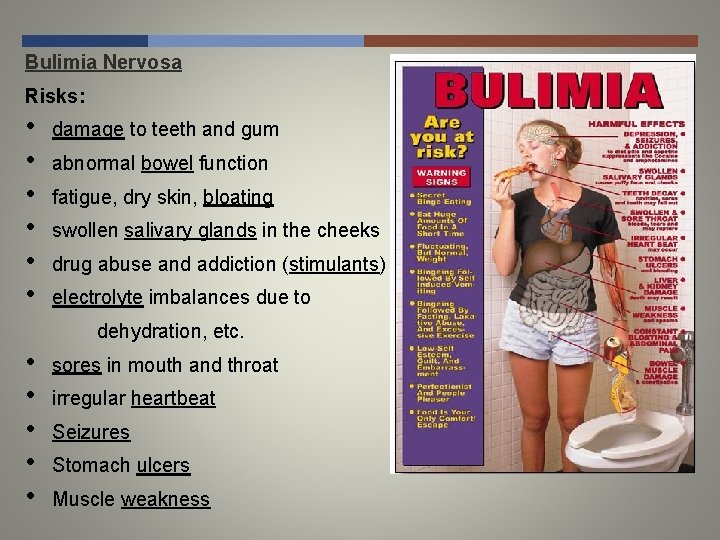
Bulimia Nervosa Risks: • • • damage to teeth and gum abnormal bowel function fatigue, dry skin, bloating swollen salivary glands in the cheeks drug abuse and addiction (stimulants) electrolyte imbalances due to dehydration, etc. • • • sores in mouth and throat irregular heartbeat Seizures Stomach ulcers Muscle weakness
Treatment for eating disorders: Treatment of bulimia is somewhat more successful than the treatment of anorexia. Anorexics believe there is nothing wrong with them, making treatment difficult. Both disorders can be notoriously difficult to cure. • the early stages (less than 6 months or with just a small amount of weight loss) may be successfully treated without hospitalization. Later stage anorexia and bulimia need hospital treatment. • inpatient treatment has highest success rate because patients can be monitored and protected from their urges • Identify and control triggers • nutrition therapy to change unhealthy eating habits. .
Treatment for eating disorders: • Psychotherapy to address underlying issues that may have led to the onset of the disorder (low self-esteem, high need to be in control of environment, perfectionistic, self-destructive) • Medications to treat psychological disorders that may be exacerbating the disorder (depression, obsessive-compulsive disorder, anxiety) • Recovery from eating disorder is roughly 50% • High relapse rate • Continued medical treatment, after the initial health disruption, to monitor progress or setbacks http: //www. dailymotion. com/video/x 44 dtz_thin-hbo-promo_people Dying to be Thin (HBO)
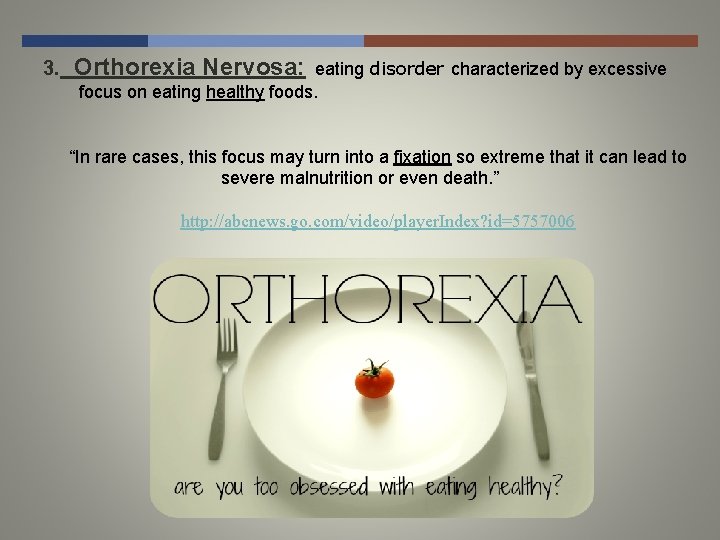
3. Orthorexia Nervosa: eating disorder characterized by excessive focus on eating healthy foods. “In rare cases, this focus may turn into a fixation so extreme that it can lead to severe malnutrition or even death. ” http: //abcnews. go. com/video/player. Index? id=5757006
Origins of Eating Disorders Psychodynamic theory • coping with sexual fear, regressing to life prior to puberty. • The family environment is negative. May have a history of child abuse. parents label child as overweight Exposure to high parental expectations. Sociocultural perspective • pro-ana pro-mia http: //www. youtube. com/watch? v=u. DY 1 pws-k. OE • Slimness is idealized. • BMI lower than 18. 5 is malnourished. • Recent Miss Americas come in at a BMI near 17 Genetic perspective • Tends to run in families. • Genetic factors might not directly cause eating disorders but are likely to involve obsessive and perfectionist personality traits.
Hunger motivation can contribute to successful weight management. Healthy weight management is based in promoting positive and appropriate views of weight and eating u. Accurate and appropriate body image u. Recognition of inappropriate eating cues u. View “food as fuel” u. Eating habits: be consistent in caloric intake (regular pattern; small meals) u. Regular physical activity u. Have a plan: regular goals, guidelines for eating in atypical situations u. Moderation
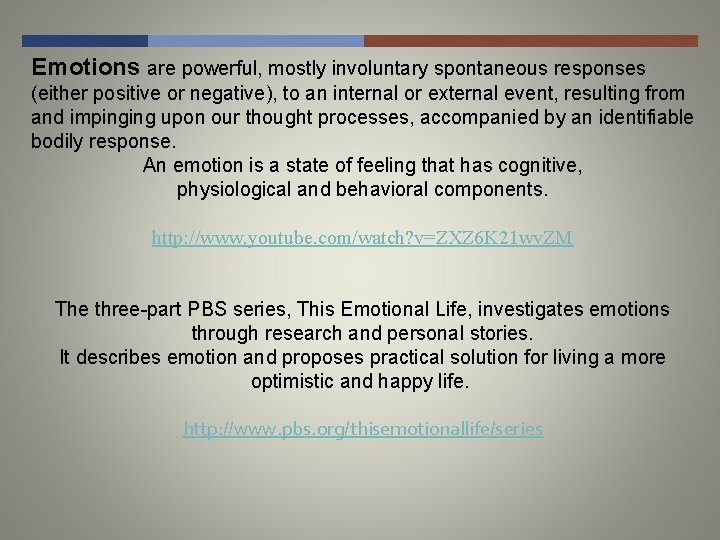
Emotions are powerful, mostly involuntary spontaneous responses (either positive or negative), to an internal or external event, resulting from and impinging upon our thought processes, accompanied by an identifiable bodily response. An emotion is a state of feeling that has cognitive, physiological and behavioral components. http: //www. youtube. com/watch? v=ZXZ 6 K 21 wv. ZM The three-part PBS series, This Emotional Life, investigates emotions through research and personal stories. It describes emotion and proposes practical solution for living a more optimistic and happy life. http: //www. pbs. org/thisemotionallife/series
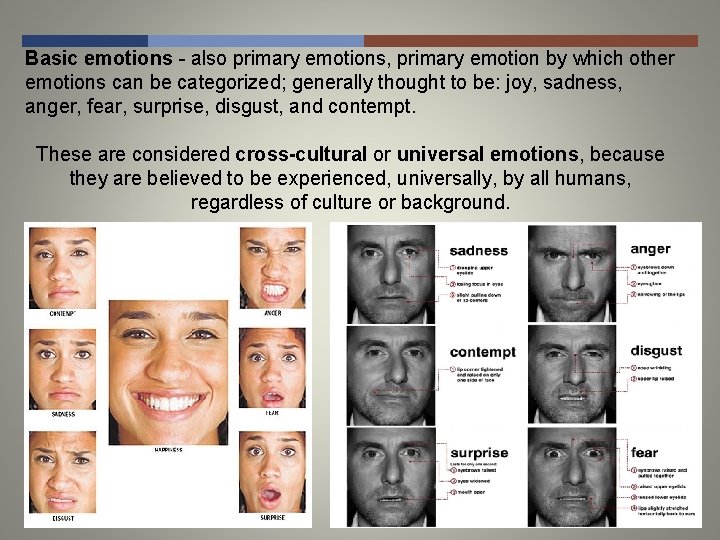
Basic emotions - also primary emotions, primary emotion by which other emotions can be categorized; generally thought to be: joy, sadness, anger, fear, surprise, disgust, and contempt. These are considered cross-cultural or universal emotions, because they are believed to be experienced, universally, by all humans, regardless of culture or background.
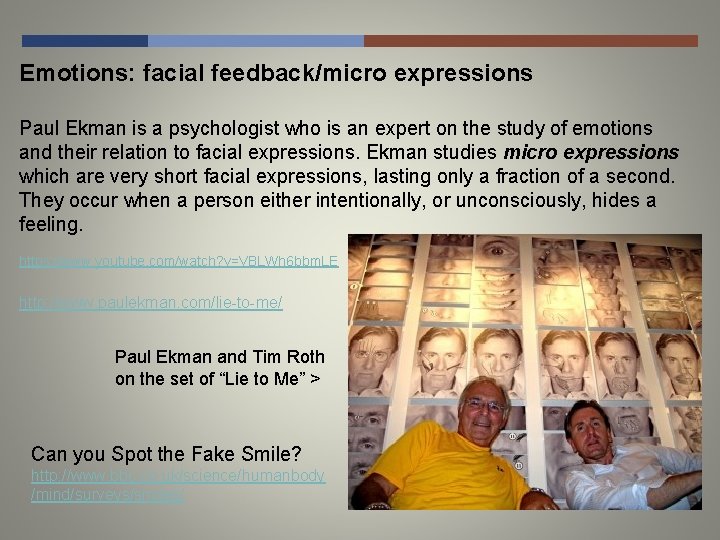
Emotions: facial feedback/micro expressions Paul Ekman is a psychologist who is an expert on the study of emotions and their relation to facial expressions. Ekman studies micro expressions which are very short facial expressions, lasting only a fraction of a second. They occur when a person either intentionally, or unconsciously, hides a feeling. https: //www. youtube. com/watch? v=VBLWh 6 bbm. LE http: //www. paulekman. com/lie-to-me/ Paul Ekman and Tim Roth on the set of “Lie to Me” > Can you Spot the Fake Smile? http: //www. bbc. co. uk/science/humanbody /mind/surveys/smiles/
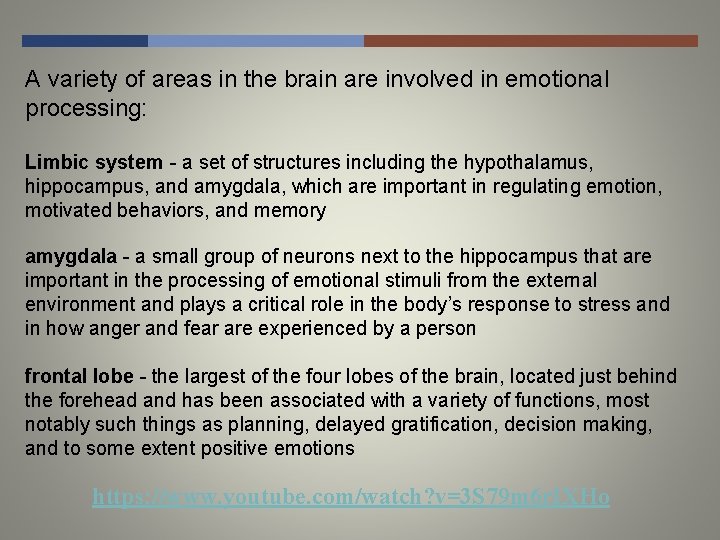
A variety of areas in the brain are involved in emotional processing: Limbic system - a set of structures including the hypothalamus, hippocampus, and amygdala, which are important in regulating emotion, motivated behaviors, and memory amygdala - a small group of neurons next to the hippocampus that are important in the processing of emotional stimuli from the external environment and plays a critical role in the body’s response to stress and in how anger and fear are experienced by a person frontal lobe - the largest of the four lobes of the brain, located just behind the forehead and has been associated with a variety of functions, most notably such things as planning, delayed gratification, decision making, and to some extent positive emotions https: //www. youtube. com/watch? v=3 S 79 m 6 r. IXHo
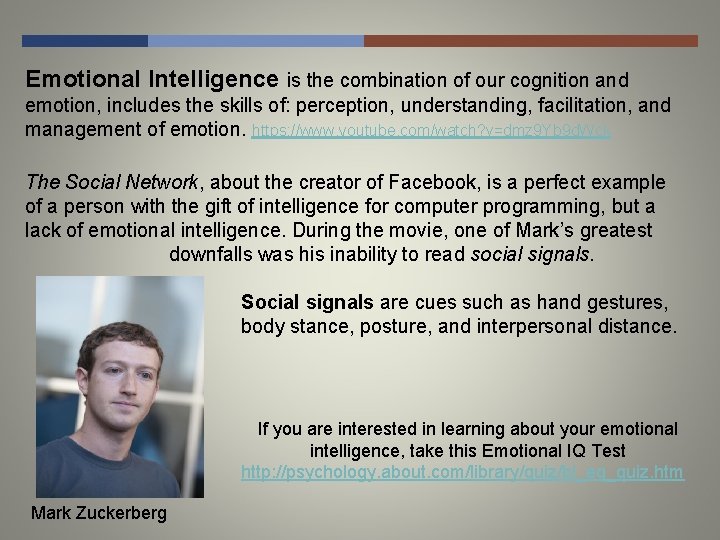
Emotional Intelligence is the combination of our cognition and emotion, includes the skills of: perception, understanding, facilitation, and management of emotion. https: //www. youtube. com/watch? v=dmz 9 Yb 9 d. Wck The Social Network, about the creator of Facebook, is a perfect example of a person with the gift of intelligence for computer programming, but a lack of emotional intelligence. During the movie, one of Mark’s greatest downfalls was his inability to read social signals. Social signals are cues such as hand gestures, body stance, posture, and interpersonal distance. If you are interested in learning about your emotional intelligence, take this Emotional IQ Test http: //psychology. about. com/library/quiz/bl_eq_quiz. htm Mark Zuckerberg
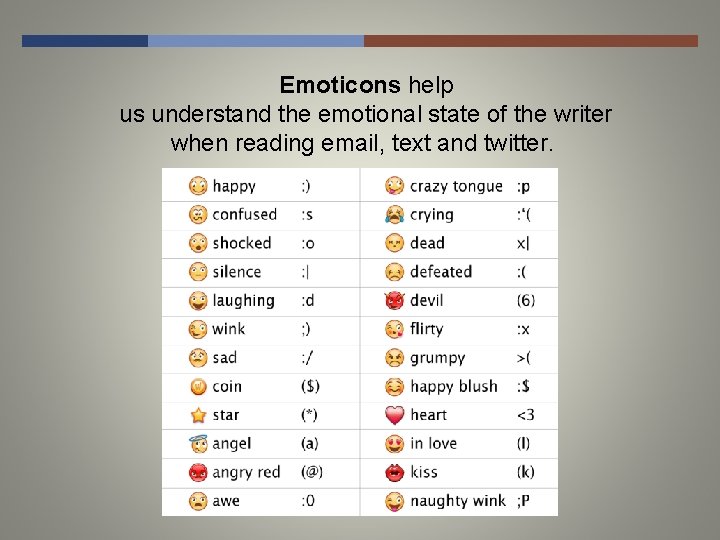
Emoticons help us understand the emotional state of the writer when reading email, text and twitter.
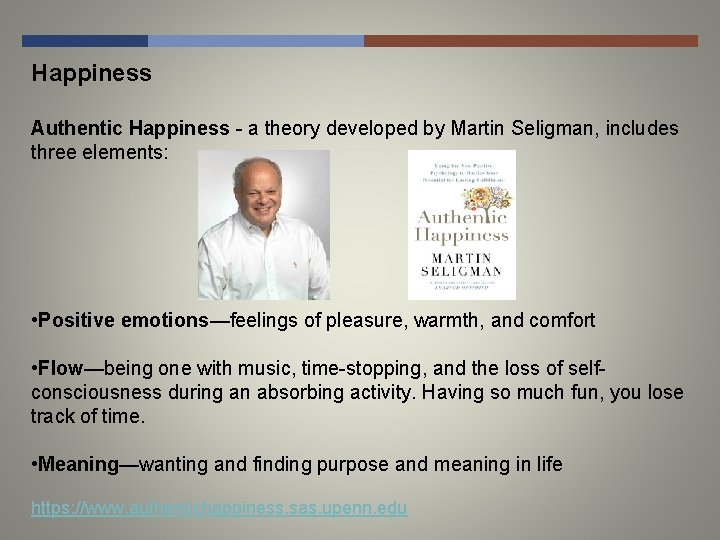
Happiness Authentic Happiness - a theory developed by Martin Seligman, includes three elements: • Positive emotions—feelings of pleasure, warmth, and comfort • Flow—being one with music, time-stopping, and the loss of selfconsciousness during an absorbing activity. Having so much fun, you lose track of time. • Meaning—wanting and finding purpose and meaning in life https: //www. authentichappiness. sas. upenn. edu
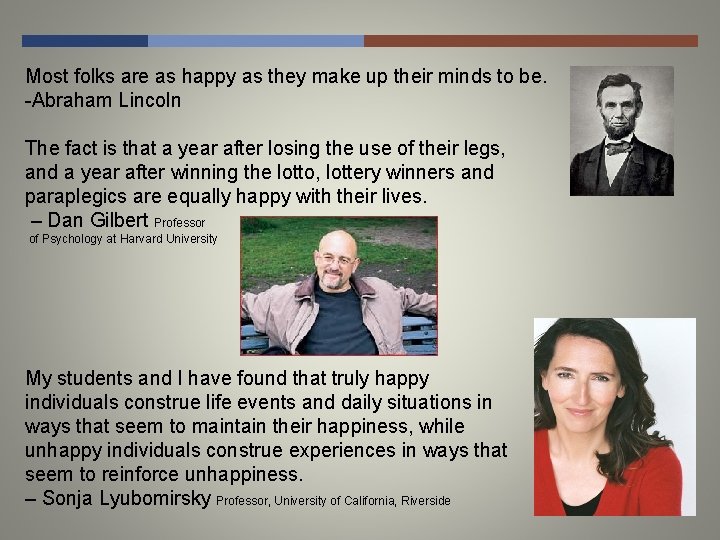
Most folks are as happy as they make up their minds to be. -Abraham Lincoln The fact is that a year after losing the use of their legs, and a year after winning the lotto, lottery winners and paraplegics are equally happy with their lives. – Dan Gilbert Professor of Psychology at Harvard University My students and I have found that truly happy individuals construe life events and daily situations in ways that seem to maintain their happiness, while unhappy individuals construe experiences in ways that seem to reinforce unhappiness. – Sonja Lyubomirsky Professor, University of California, Riverside
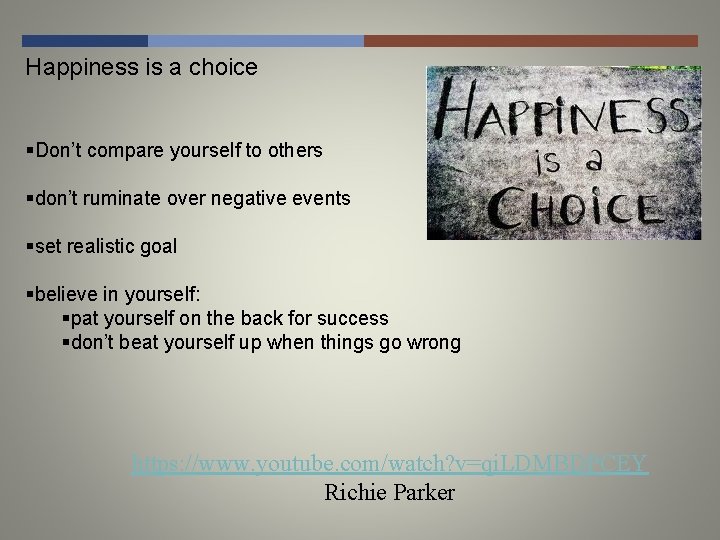
Happiness is a choice §Don’t compare yourself to others §don’t ruminate over negative events §set realistic goal §believe in yourself: §pat yourself on the back for success §don’t beat yourself up when things go wrong https: //www. youtube. com/watch? v=qi. LDMBDPCEY Richie Parker
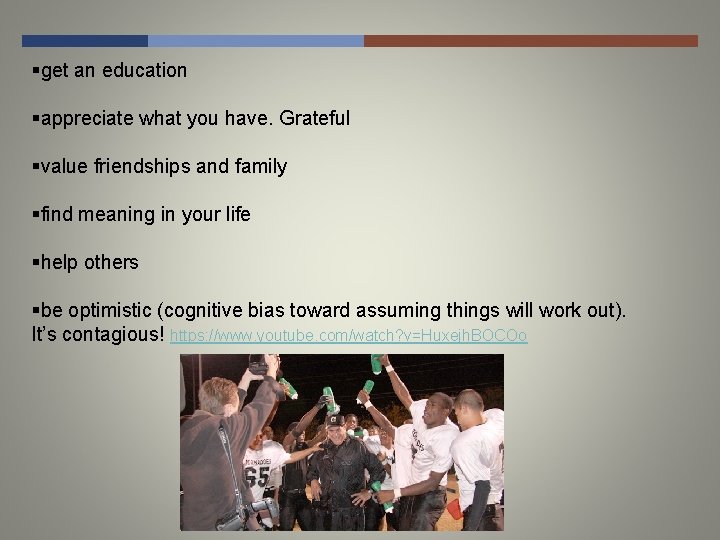
§get an education §appreciate what you have. Grateful §value friendships and family §find meaning in your life §help others §be optimistic (cognitive bias toward assuming things will work out). It’s contagious! https: //www. youtube. com/watch? v=Huxejh. BOCOo
Want to be part of an international research project on happiness? http: //www. trackyourhappiness. org/