Megaproject Governance and Leadership Designing Solutions for a
- Slides: 30
Megaproject Governance and Leadership: Designing Solutions for a Collective Action Problem Nuno Gil Professor of New Infrastructure Development Centre for Infrastructure Development, Manchester Business School Engineering Project Organizations Conference (EPOC) 2015 Edinburgh © Nuno A. Gil. All Rights Reserved
Empirical phenomena Megaprojects: a form of publicprivate partnership © Nuno A. Gil. All Rights Reserved
Theoretical lens Organizational and design theory © Nuno A. Gil. All Rights Reserved
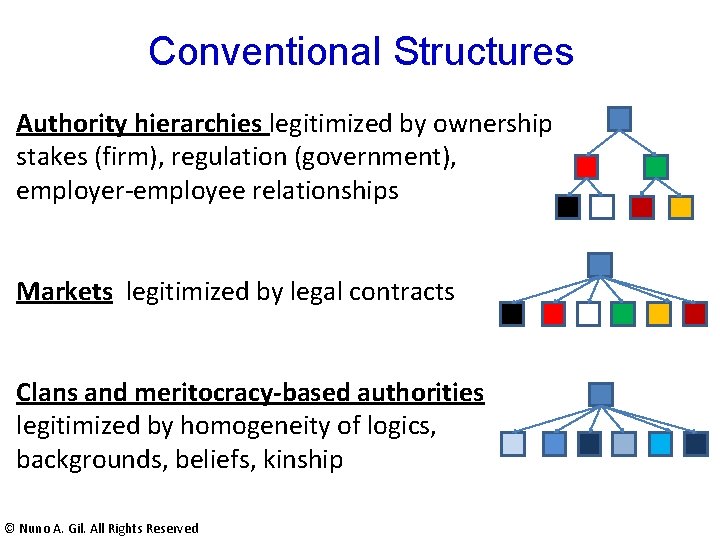
Conventional Structures Authority hierarchies legitimized by ownership stakes (firm), regulation (government), employer-employee relationships Markets legitimized by legal contracts Clans and meritocracy-based authorities legitimized by homogeneity of logics, backgrounds, beliefs, kinship © Nuno A. Gil. All Rights Reserved
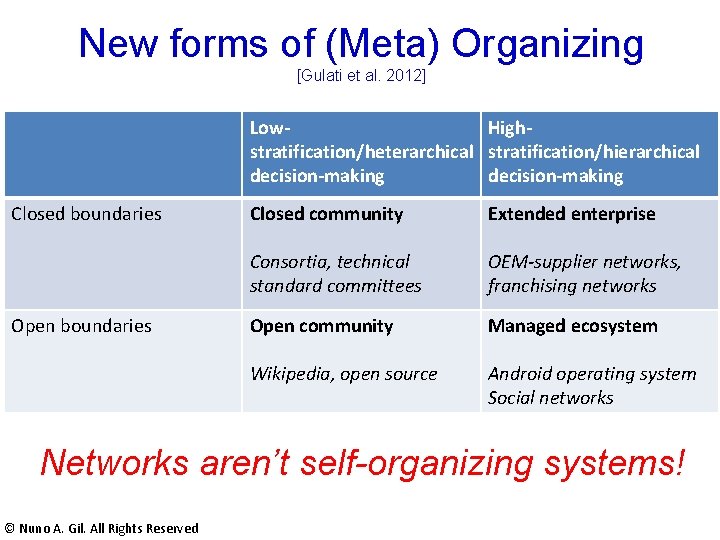
New forms of (Meta) Organizing [Gulati et al. 2012] Low. Highstratification/heterarchical stratification/hierarchical decision-making Closed boundaries Open boundaries Closed community Extended enterprise Consortia, technical standard committees OEM-supplier networks, franchising networks Open community Managed ecosystem Wikipedia, open source Android operating system Social networks Networks aren’t self-organizing systems! © Nuno A. Gil. All Rights Reserved
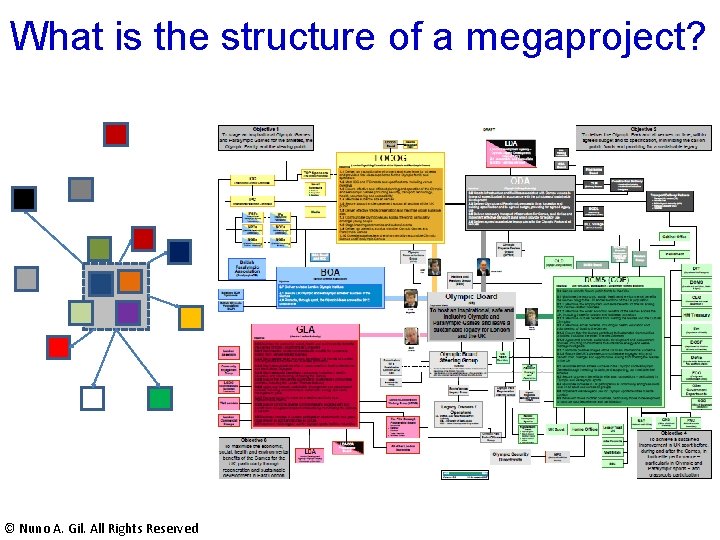
What is the structure of a megaproject? © Nuno A. Gil. All Rights Reserved
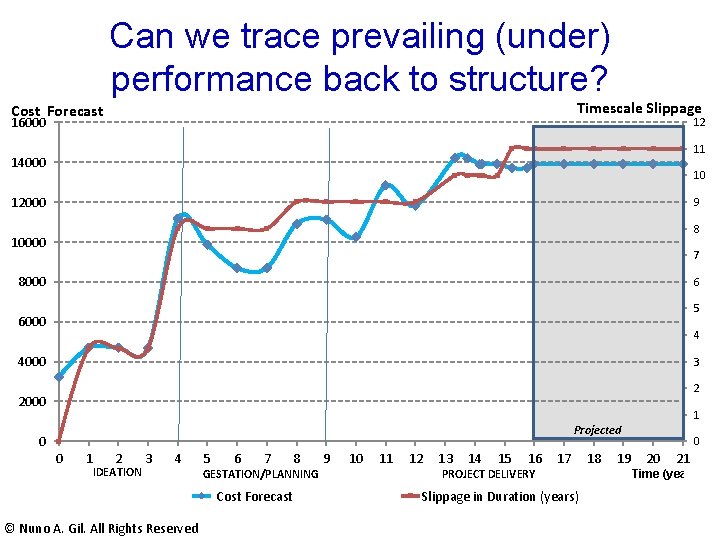
Can we trace prevailing (under) performance back to structure? Timescale Slippage Cost Forecast 16000 12 11 14000 10 12000 9 8 10000 7 8000 6 5 6000 4 4000 3 2 2000 1 Projected 0 0 1 2 IDEATION 3 4 5 6 7 GESTATION/PLANNING Cost Forecast © Nuno A. Gil. All Rights Reserved 8 9 10 11 12 13 14 15 16 PROJECT DELIVERY 17 Slippage in Duration (years) 18 19 0 20 21 Time (years)
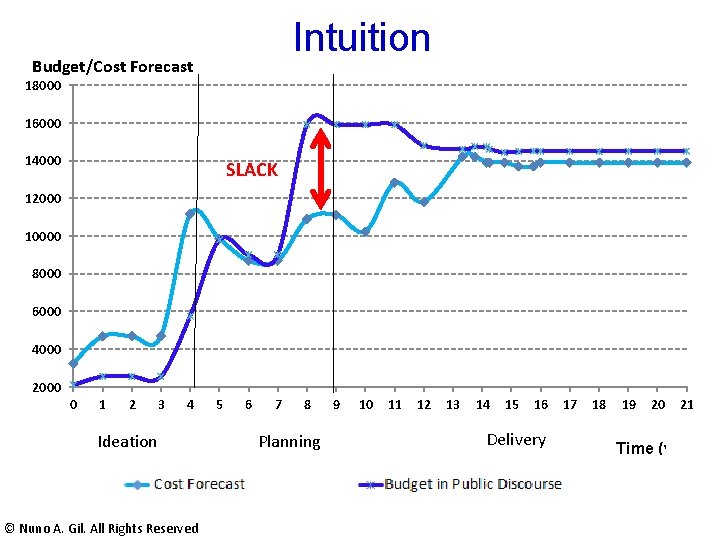
Intuition Budget/Cost Forecast 18000 16000 14000 SLACK 12000 10000 8000 6000 4000 2000 0 1 2 3 4 Ideation © Nuno A. Gil. All Rights Reserved 5 6 7 8 Planning 9 10 11 12 13 14 15 16 Delivery 17 18 19 20 21 Time (years)
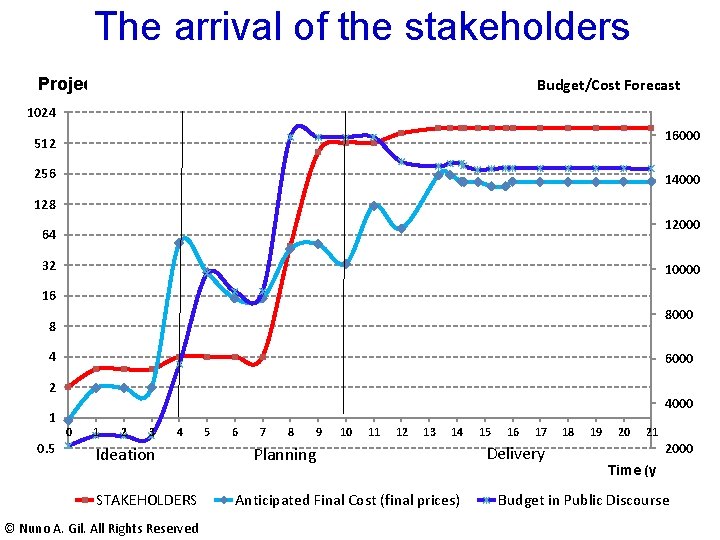
The arrival of the stakeholders Project Participants Budget/Cost Forecast 1024 16000 512 256 14000 128 12000 64 32 10000 16 8000 8 4 6000 2 1 0. 5 4000 0 1 2 3 4 Ideation STAKEHOLDERS © Nuno A. Gil. All Rights Reserved 5 6 7 8 9 10 11 12 13 14 Planning Anticipated Final Cost (final prices) 15 16 17 Delivery 18 19 20 21 2000 Time (years) Budget in Public Discourse
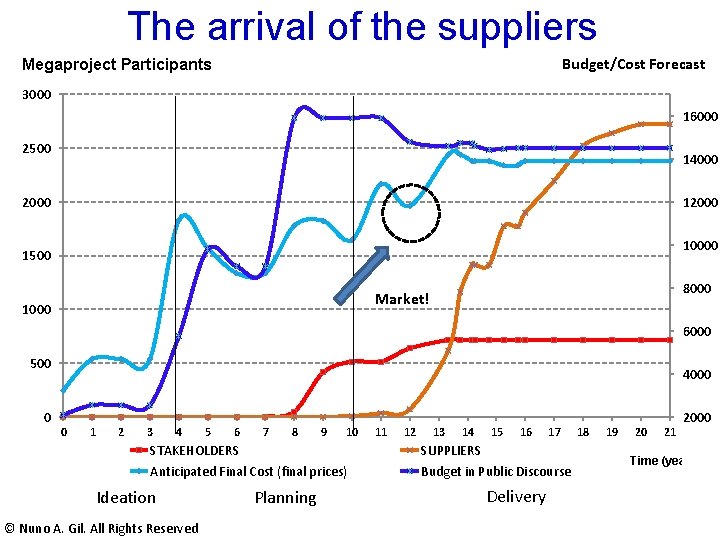
The arrival of the suppliers Budget/Cost Forecast Megaproject Participants 3000 16000 2500 14000 2000 10000 1500 8000 Market! 1000 6000 500 0 4000 0 1 2 3 4 5 6 7 8 9 10 STAKEHOLDERS Anticipated Final Cost (final prices) Ideation © Nuno A. Gil. All Rights Reserved Planning 11 12 13 14 15 16 17 SUPPLIERS Budget in Public Discourse Delivery 18 19 20 21 2000 Time (years)
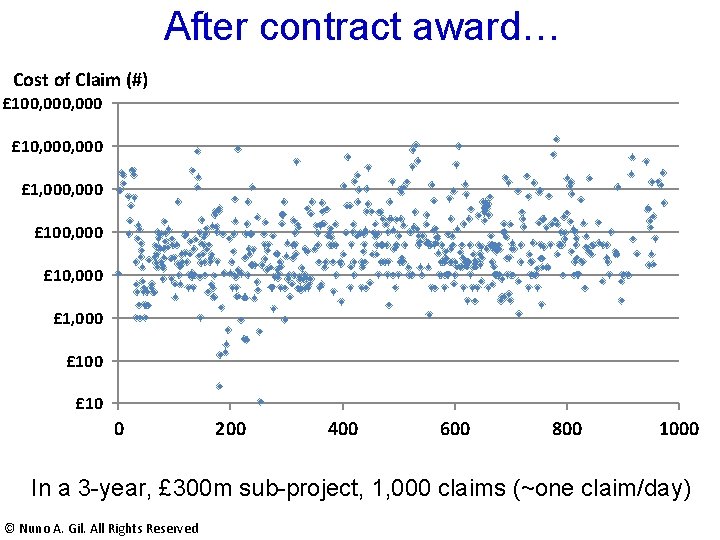
After contract award… © Nuno A. Gil. All Rights Reserved
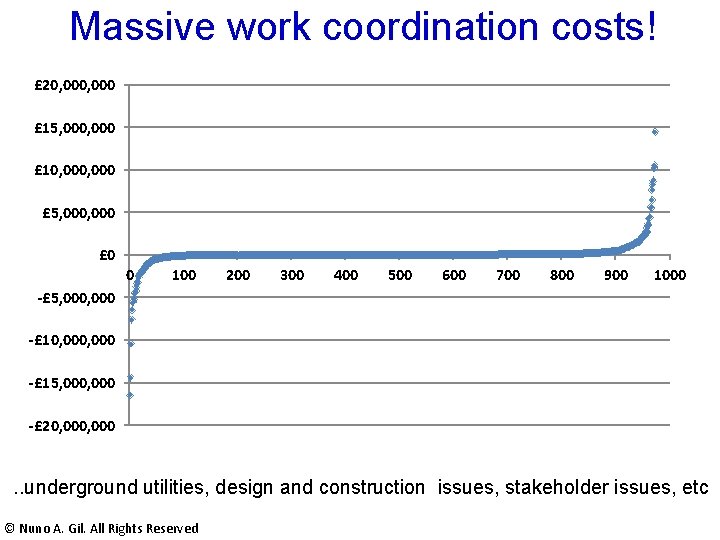
Massive work coordination costs! £ 20, 000 £ 15, 000 £ 10, 000 £ 5, 000 £ 0 0 100 200 300 400 500 600 700 800 900 1000 -£ 5, 000 -£ 10, 000 -£ 15, 000 -£ 20, 000 . . underground utilities, design and construction issues, stakeholder issues, etc © Nuno A. Gil. All Rights Reserved
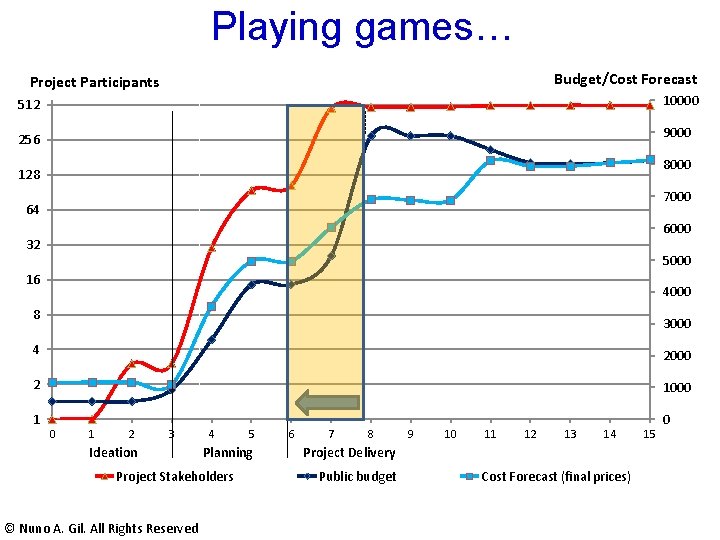
Playing games… Budget/Cost Forecast Project Participants 10000 512 9000 256 8000 128 7000 64 6000 32 5000 16 4000 8 3000 4 2000 2 1000 1 2 3 Ideation 4 Planning Project Stakeholders © Nuno A. Gil. All Rights Reserved 5 6 7 8 9 10 11 12 13 14 Project Delivery Public budget Cost Forecast (final prices) 15 0
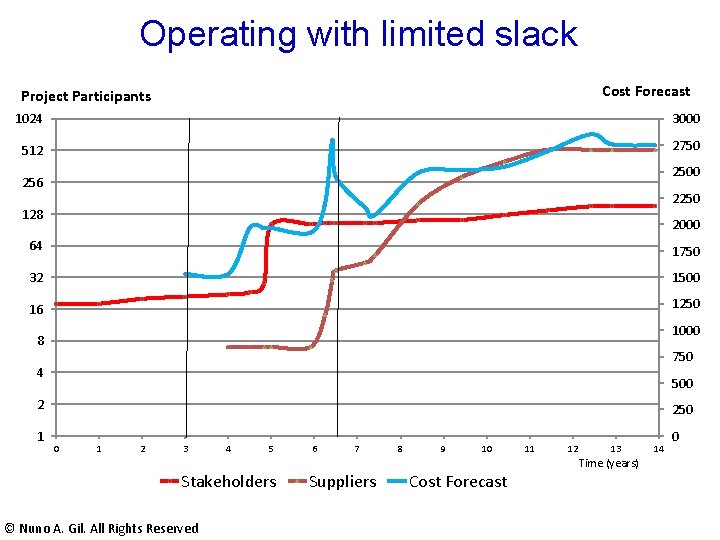
Operating with limited slack Cost Forecast Project Participants 1024 3000 512 2750 2500 256 2250 128 2000 64 1750 32 1500 16 1250 1000 8 750 4 500 2 1 250 0 1 2 3 4 5 6 7 8 9 10 11 12 13 Time (years) Stakeholders © Nuno A. Gil. All Rights Reserved Suppliers Cost Forecast 14 0
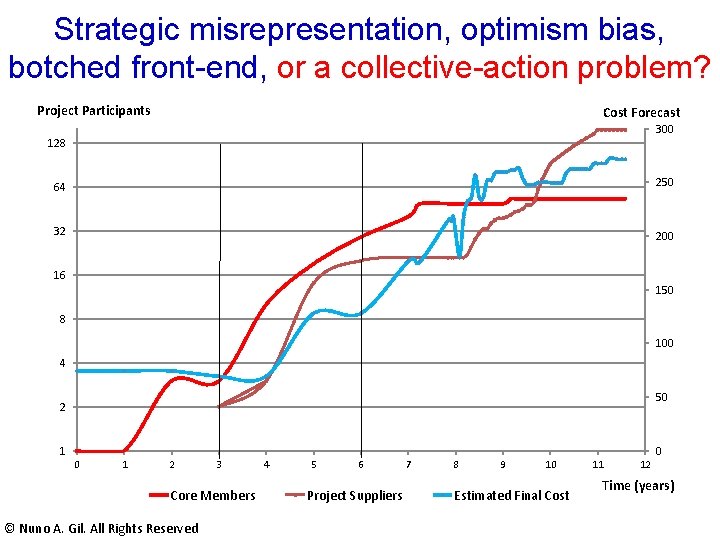
Strategic misrepresentation, optimism bias, botched front-end, or a collective-action problem? Project Participants Cost Forecast 300 128 64 250 32 200 16 150 8 100 4 50 2 1 0 1 2 3 Core Members © Nuno A. Gil. All Rights Reserved 4 5 6 Project Suppliers 7 8 9 10 Estimated Final Cost 11 12 0 Time (years)
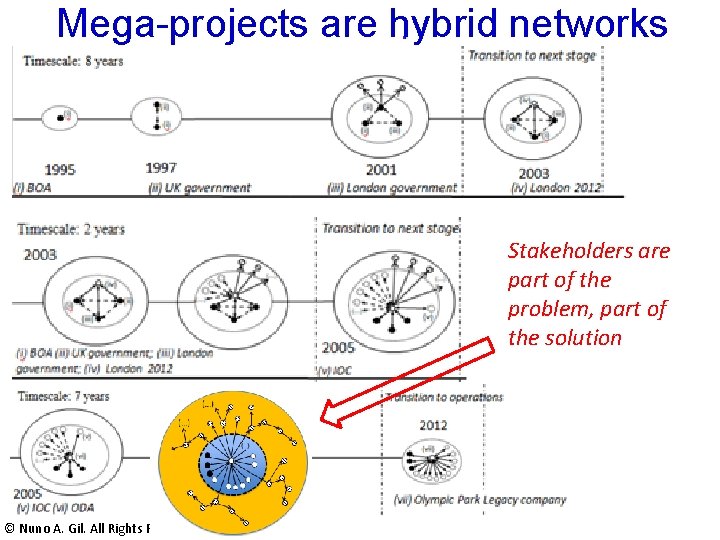
Mega-projects are hybrid networks Stakeholders are part of the problem, part of the solution © Nuno A. Gil. All Rights Reserved
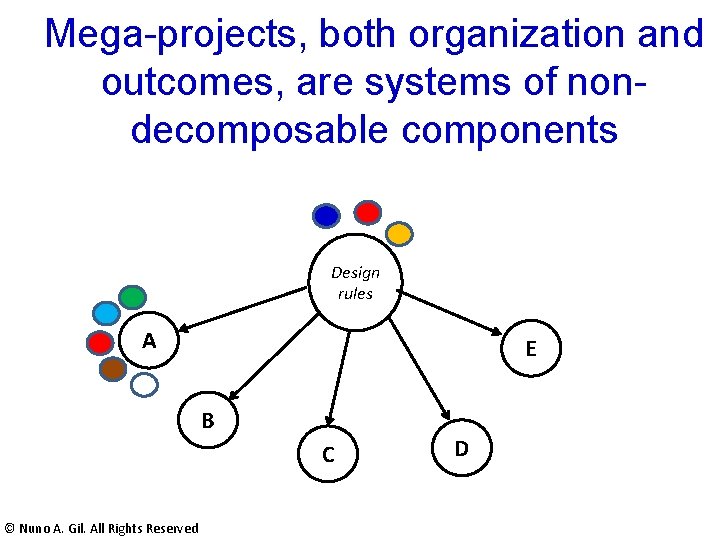
Mega-projects, both organization and outcomes, are systems of nondecomposable components Design rules A E B C © Nuno A. Gil. All Rights Reserved D
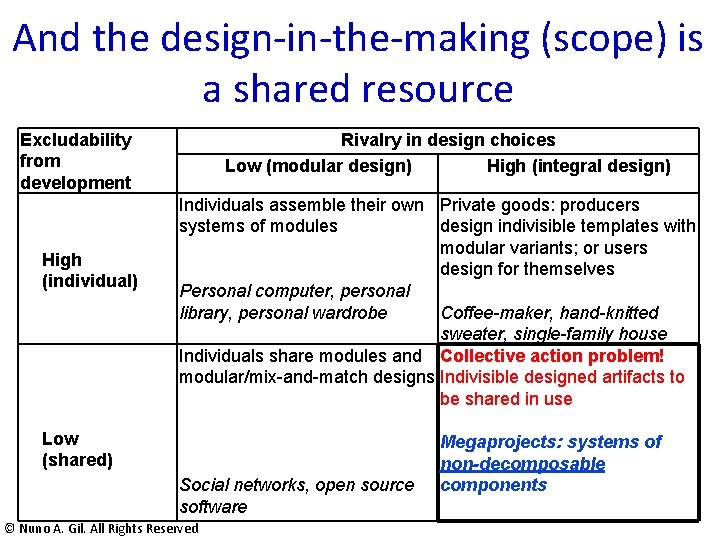
And the design-in-the-making (scope) is a shared resource Excludability from development High (individual) Rivalry in design choices Low (modular design) High (integral design) Individuals assemble their own Private goods: producers systems of modules design indivisible templates with modular variants; or users design for themselves Personal computer, personal library, personal wardrobe Coffee-maker, hand-knitted sweater, single-family house Individuals share modules and Collective action problem! modular/mix-and-match designs Indivisible designed artifacts to be shared in use Low (shared) Social networks, open source software © Nuno A. Gil. All Rights Reserved Megaprojects: systems of non-decomposable components
Implications © Nuno A. Gil. All Rights Reserved
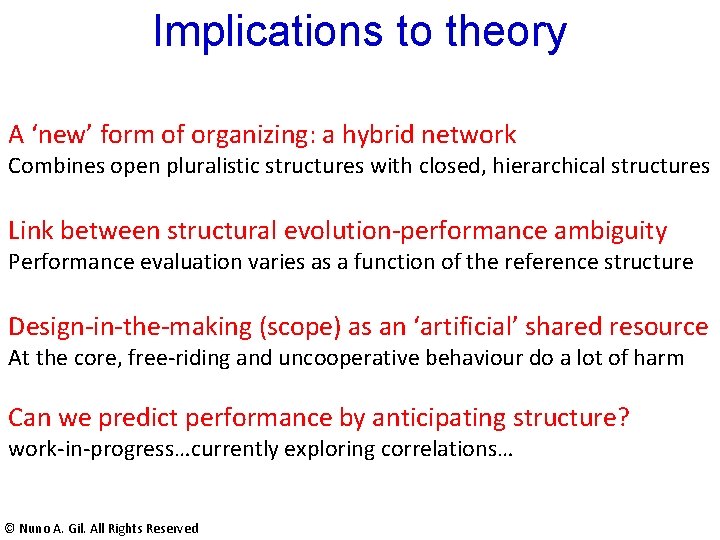
Implications to theory A ‘new’ form of organizing: a hybrid network Combines open pluralistic structures with closed, hierarchical structures Link between structural evolution-performance ambiguity Performance evaluation varies as a function of the reference structure Design-in-the-making (scope) as an ‘artificial’ shared resource At the core, free-riding and uncooperative behaviour do a lot of harm Can we predict performance by anticipating structure? work-in-progress…currently exploring correlations… © Nuno A. Gil. All Rights Reserved
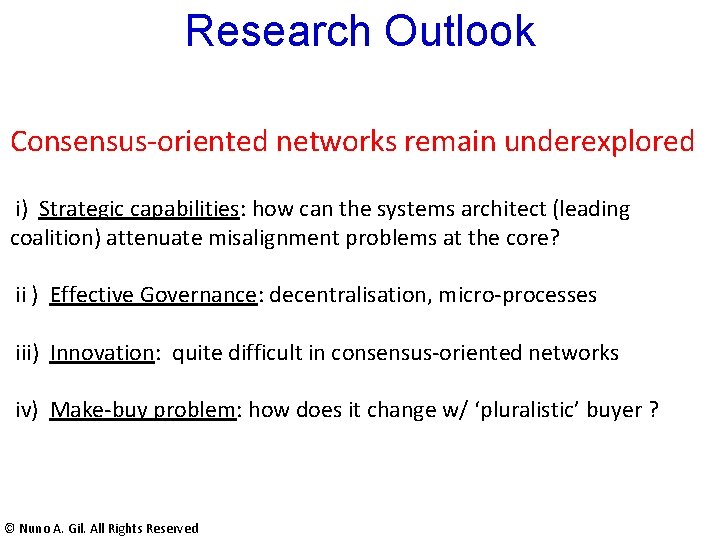
Research Outlook Consensus-oriented networks remain underexplored i) Strategic capabilities: how can the systems architect (leading coalition) attenuate misalignment problems at the core? ii ) Effective Governance: decentralisation, micro-processes iii) Innovation: quite difficult in consensus-oriented networks iv) Make-buy problem: how does it change w/ ‘pluralistic’ buyer ? © Nuno A. Gil. All Rights Reserved
So what? © Nuno A. Gil. All Rights Reserved
Manage performance expectations Delay public announcements of fixed budgets Introduce ‘soft’ openings (stagger expected opening date over a period of time. . . if at all possible…) • Easy to say, hard to actually do it …due to electoral cycles, markets’ appetite for bold announcements © Nuno A. Gil. All Rights Reserved
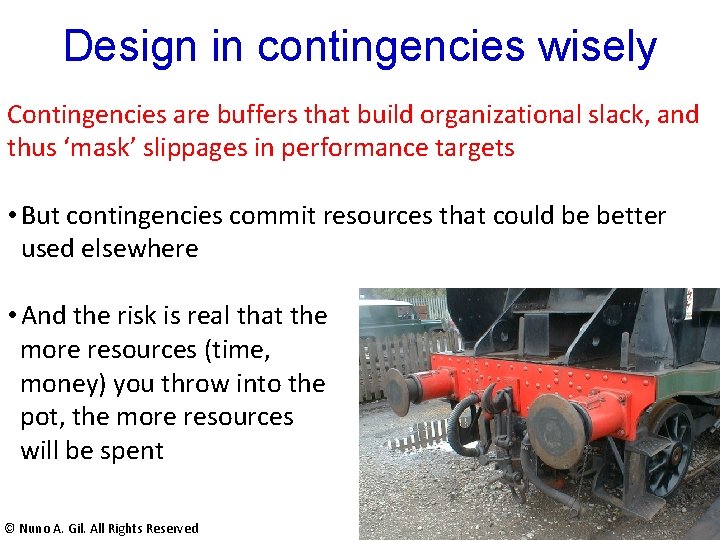
Design in contingencies wisely Contingencies are buffers that build organizational slack, and thus ‘mask’ slippages in performance targets • But contingencies commit resources that could be better used elsewhere • And the risk is real that the more resources (time, money) you throw into the pot, the more resources will be spent © Nuno A. Gil. All Rights Reserved
Flexible contracts aren’t a panacea Reimbursable contracts with built-in targets are more flexible to cope with pluralism => likelihood of litigation goes down And perception that in reimbursable contracts risks are shared potentially brings down the costs of the bids. BUT!!! • Uncertainty from unresolved controversies and work coordination problems is inevitable • And so is cost escalation © Nuno A. Gil. All Rights Reserved
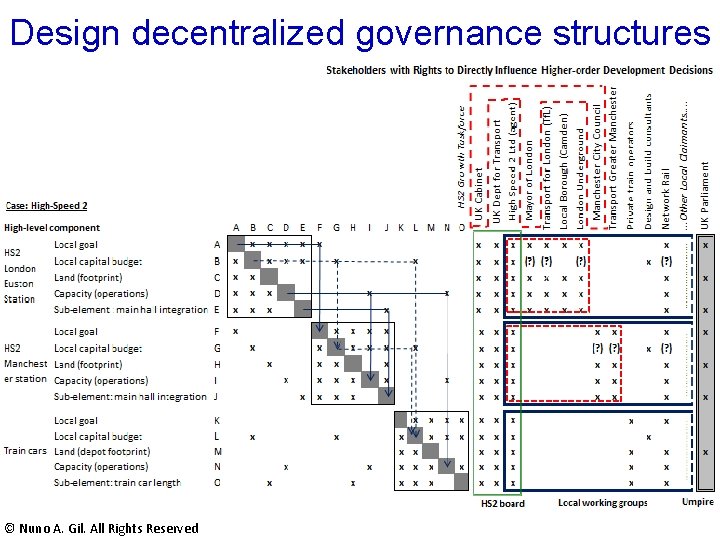
Design decentralized governance structures © Nuno A. Gil. All Rights Reserved
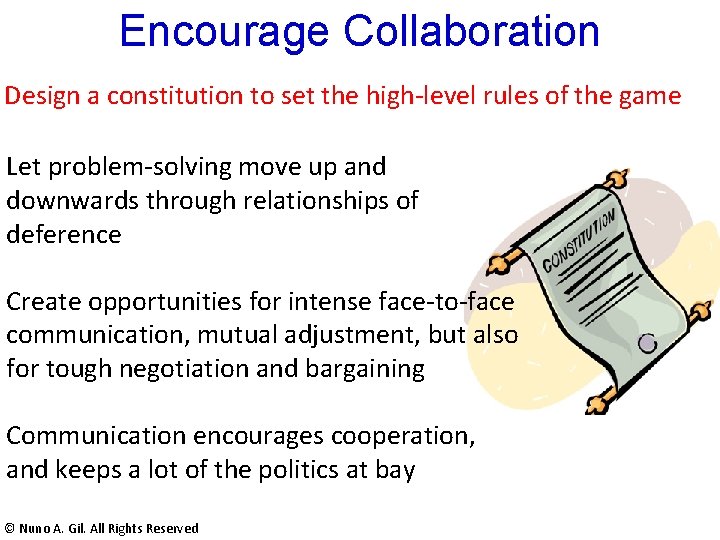
Encourage Collaboration Design a constitution to set the high-level rules of the game Let problem-solving move up and downwards through relationships of deference Create opportunities for intense face-to-face communication, mutual adjustment, but also for tough negotiation and bargaining Communication encourages cooperation, and keeps a lot of the politics at bay © Nuno A. Gil. All Rights Reserved
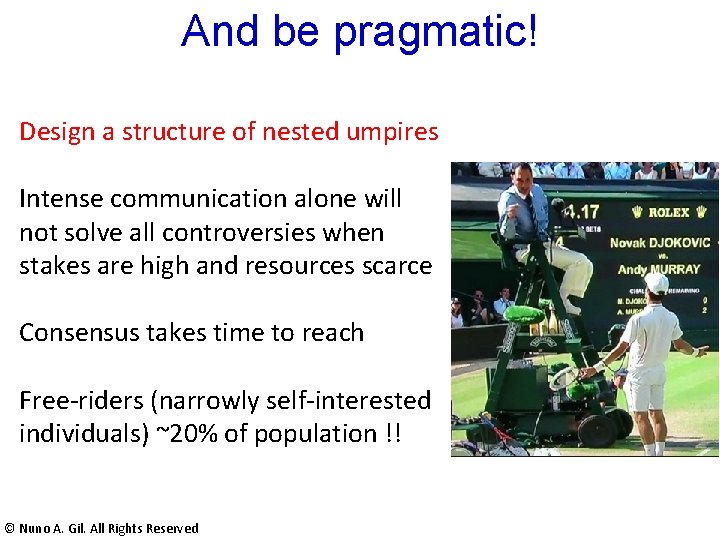
And be pragmatic! Design a structure of nested umpires Intense communication alone will not solve all controversies when stakes are high and resources scarce Consensus takes time to reach Free-riders (narrowly self-interested individuals) ~20% of population !! © Nuno A. Gil. All Rights Reserved
In conclusion Megaprojects create large arenas of collective action, and thus require robust consensus-oriented governance to: • Encourage social norms of collaboration to flourish • Prevent creation of a politically-charged organization © Nuno A. Gil. All Rights Reserved
Last Thought DATA, DATA! © Nuno A. Gil. All Rights Reserved