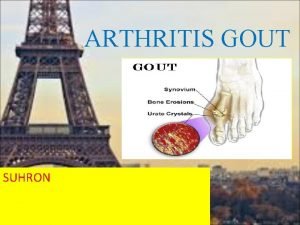
LSU Clinical Pharmacology Drug Therapy of Gout Reginald







- Slides: 82
LSU Clinical Pharmacology Drug Therapy of Gout Reginald D Sanders, MD
Drug therapy of gout - overview • what is gout? • what happens to patients with gout & why? • what drugs are available for managing gout? • how are those drugs used?
Drug therapy of gout We have excellent drugs for managing gout The drugs used in treating gout make sense!
Drug therapy of gout What Is Gout?
Drug therapy of gout Case Presentation
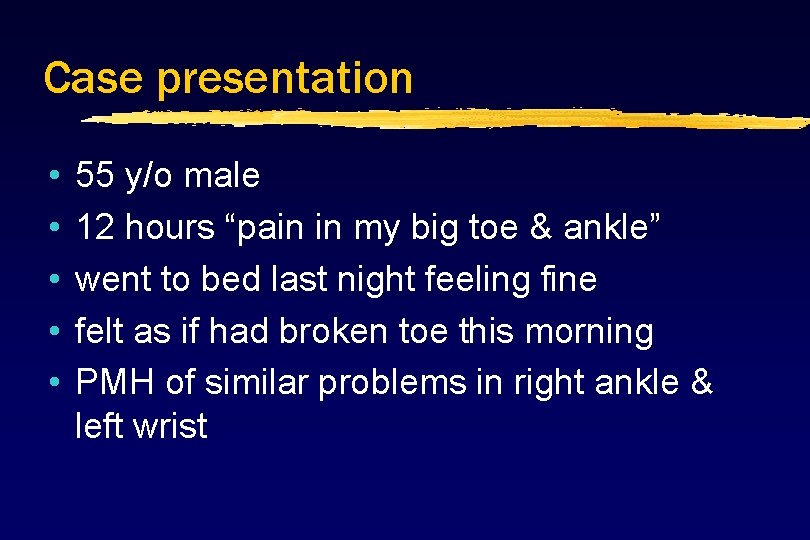
Case presentation • • • 55 y/o male 12 hours “pain in my big toe & ankle” went to bed last night feeling fine felt as if had broken toe this morning PMH of similar problems in right ankle & left wrist
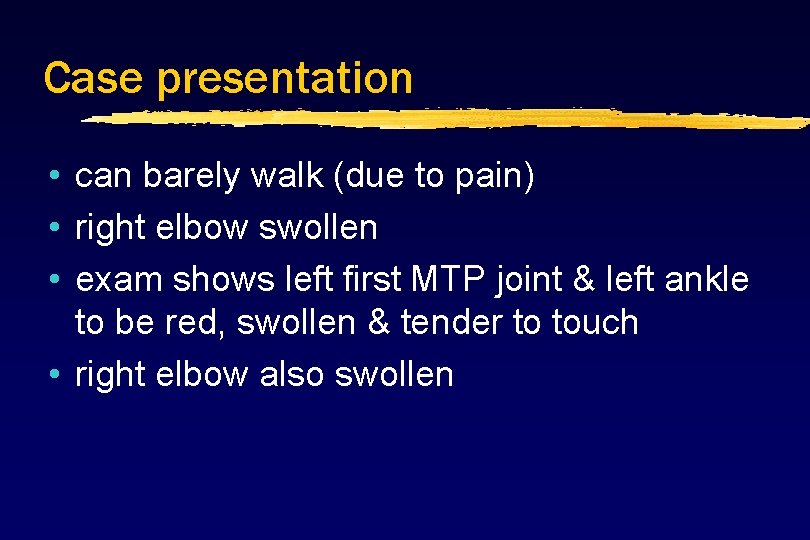
Case presentation • can barely walk (due to pain) • right elbow swollen • exam shows left first MTP joint & left ankle to be red, swollen & tender to touch • right elbow also swollen
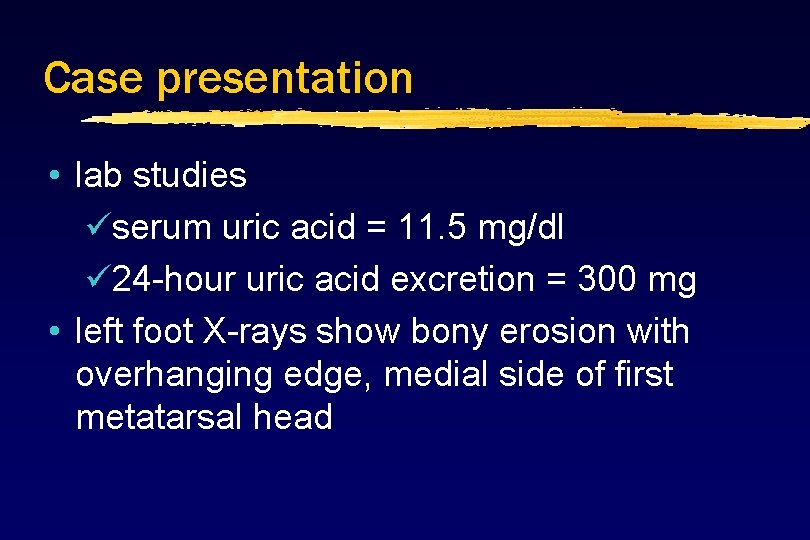
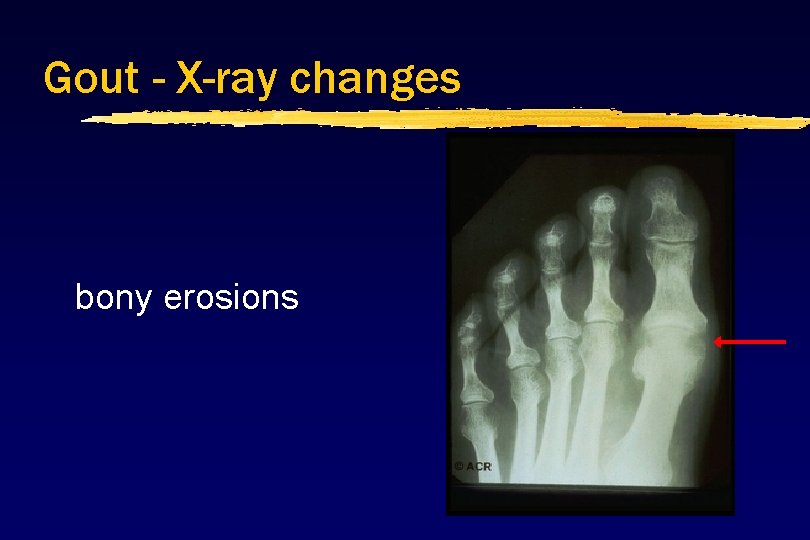
Case presentation • lab studies üserum uric acid = 11. 5 mg/dl ü 24 -hour uric acid excretion = 300 mg • left foot X-rays show bony erosion with overhanging edge, medial side of first metatarsal head
Case presentation What does he have? What can do we do about it?
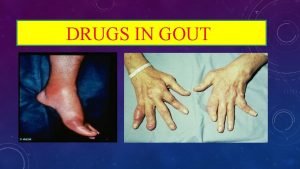
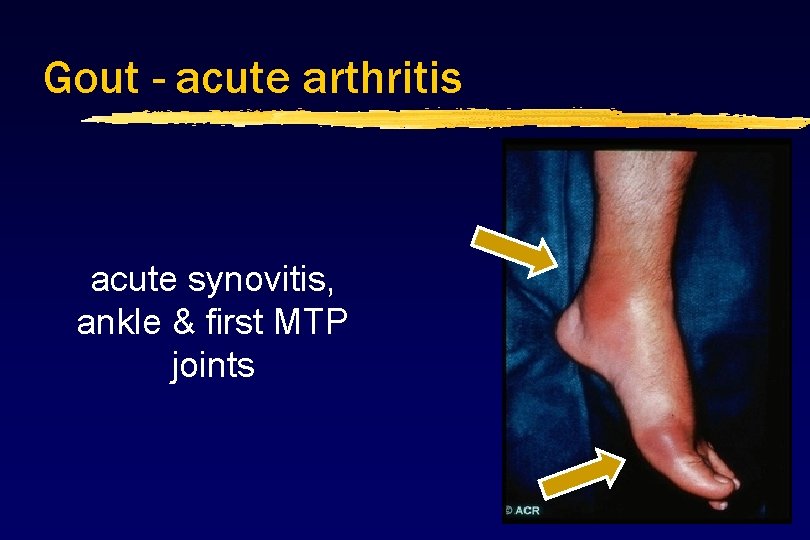
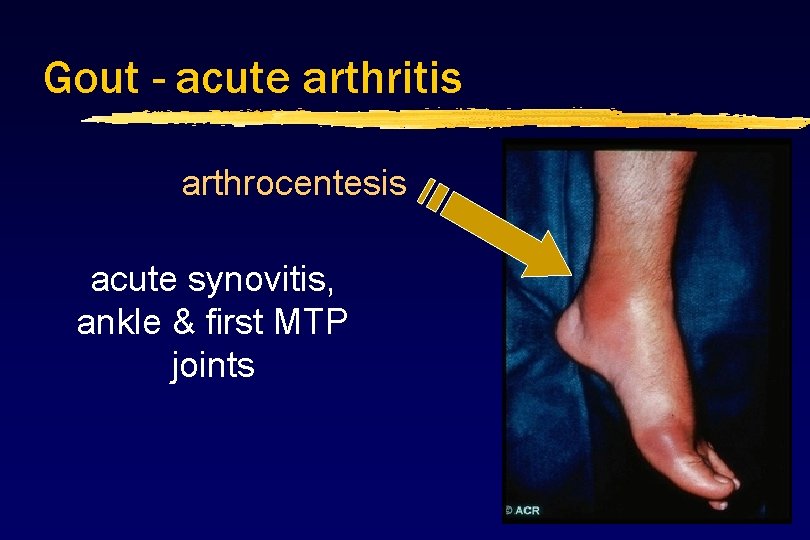
Gout - acute arthritis acute synovitis, ankle & first MTP joints
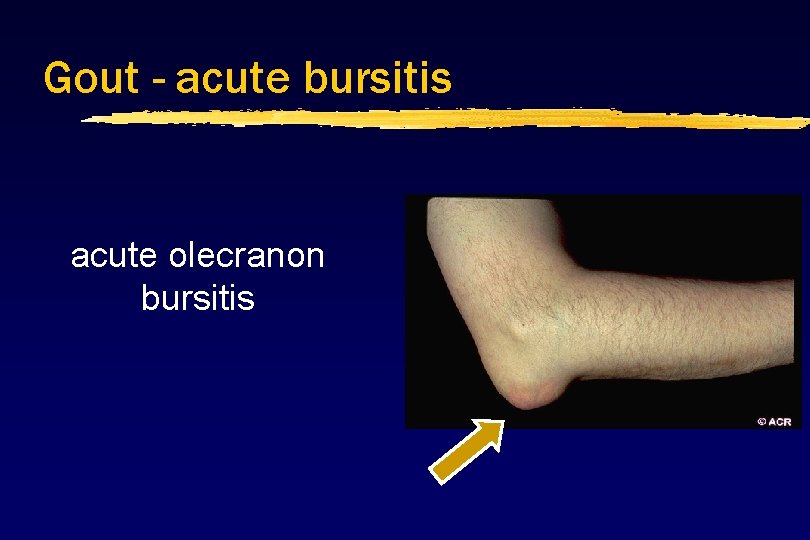
Gout - acute bursitis acute olecranon bursitis
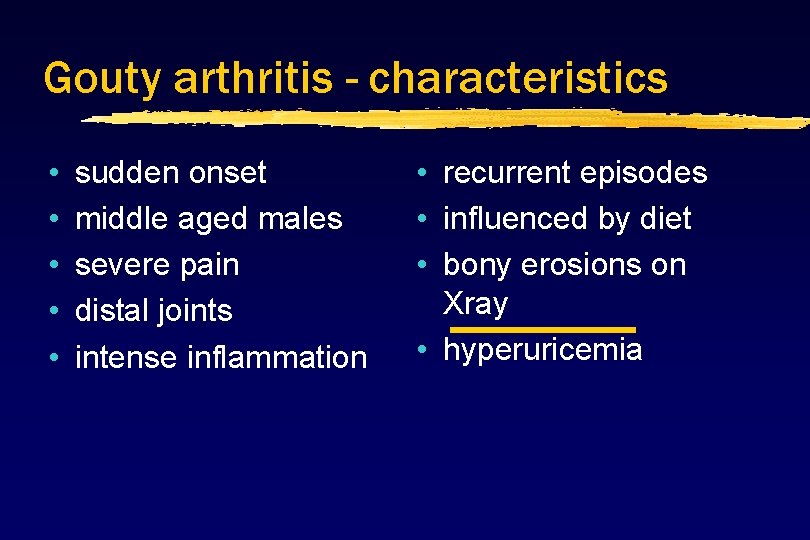
Gouty arthritis - characteristics • • • sudden onset middle aged males severe pain distal joints Intense inflammation • recurrent episodes • influenced by diet • bony erosions on Xray
Drug therapy of gout What Happens To Gout Patients & Why?
Gout - acute arthritis arthrocentesis acute synovitis, ankle & first MTP joints
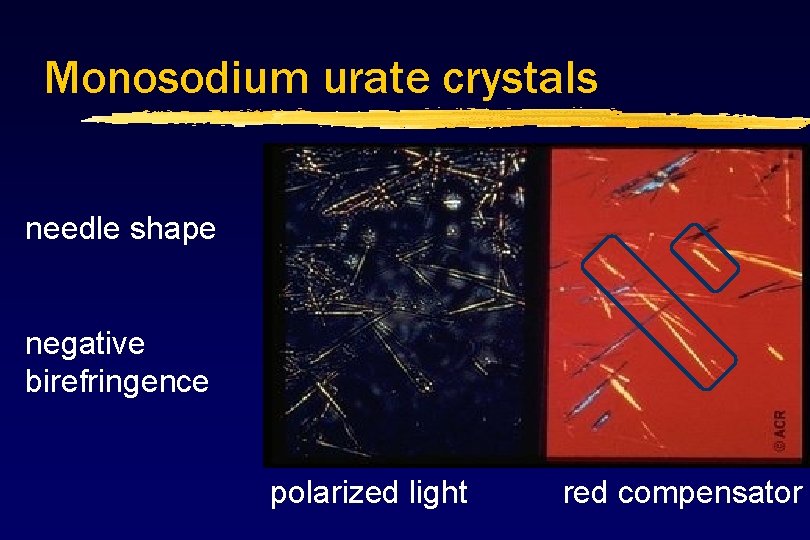
Monosodium urate crystals needle shape negative birefringence polarized light red compensator
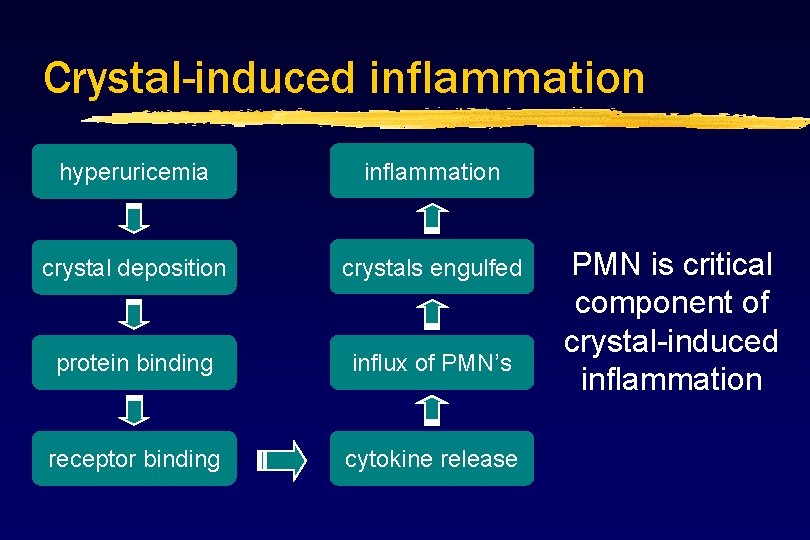
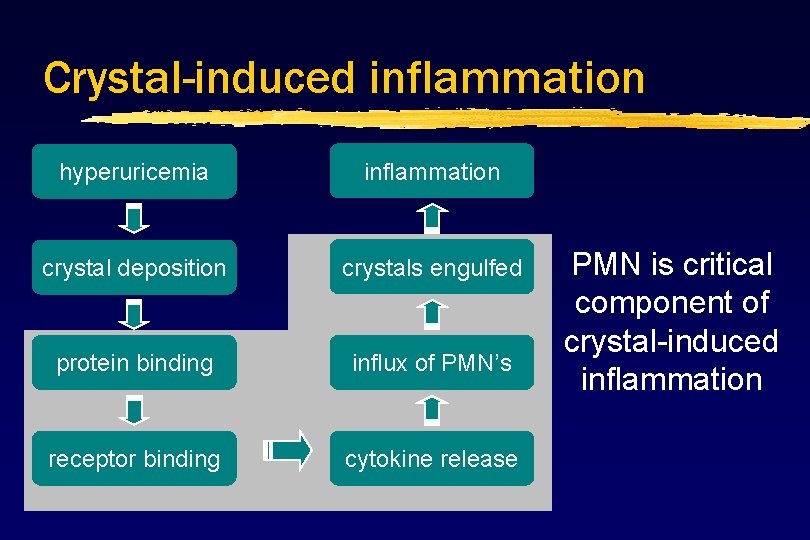
Crystal-induced inflammation hyperuricemia inflammation crystal deposition crystals engulfed protein binding influx of PMN’s receptor binding cytokine release PMN is critical component of crystal-induced inflammation
Gouty arthritis - characteristics • • • sudden onset middle aged males severe pain distal joints intense inflammation • recurrent episodes • influenced by diet • bony erosions on Xray • hyperuricemia
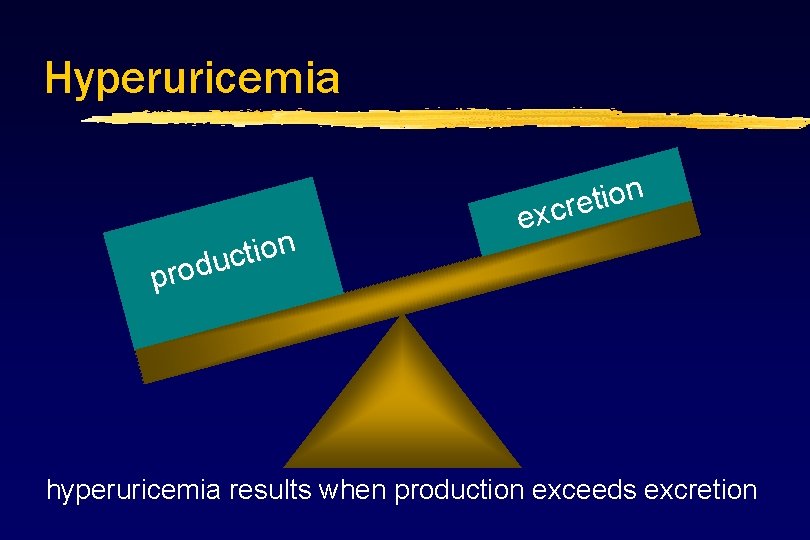
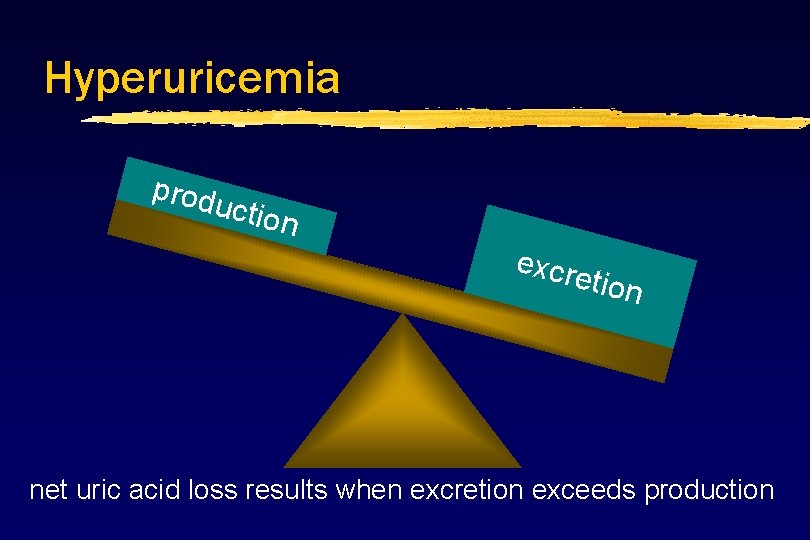
Hyperuricemia n o i t c odu n o i t e excr pr hyperuricemia results when production exceeds excretion
Hyperuricemia prod u ction excre tion net uric acid loss results when excretion exceeds production
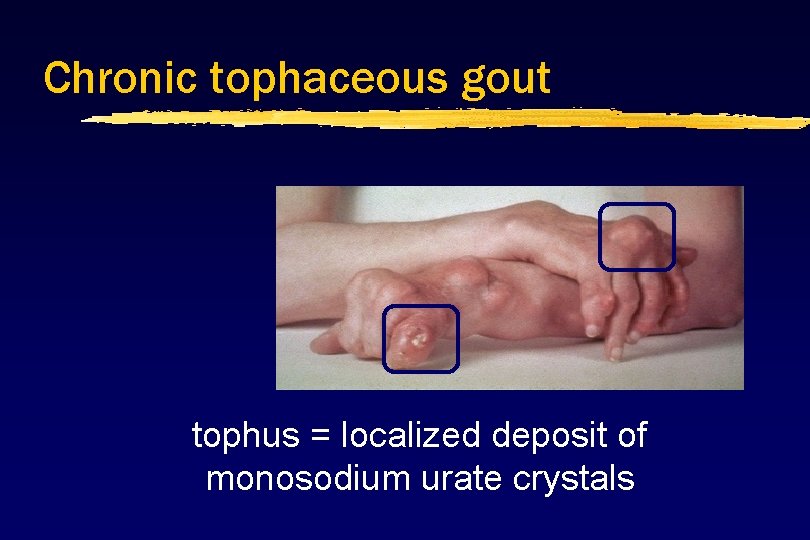
Chronic tophaceous gout tophus = localized deposit of monosodium urate crystals
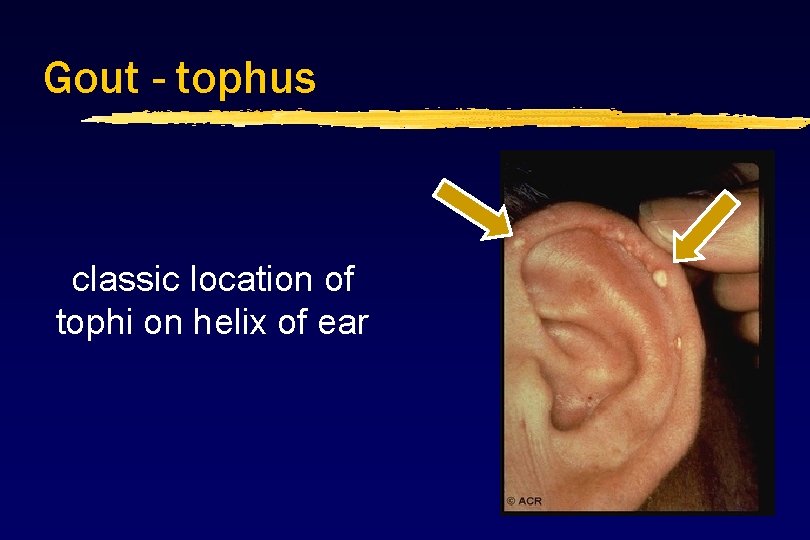
Gout - tophus classic location of tophi on helix of ear
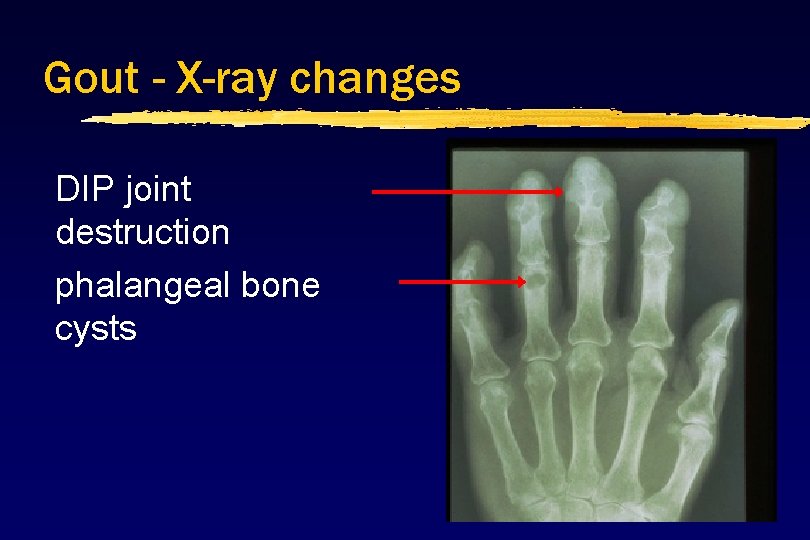
Gout - X-ray changes DIP joint destruction phalangeal bone cysts
Gout - X-ray changes bony erosions
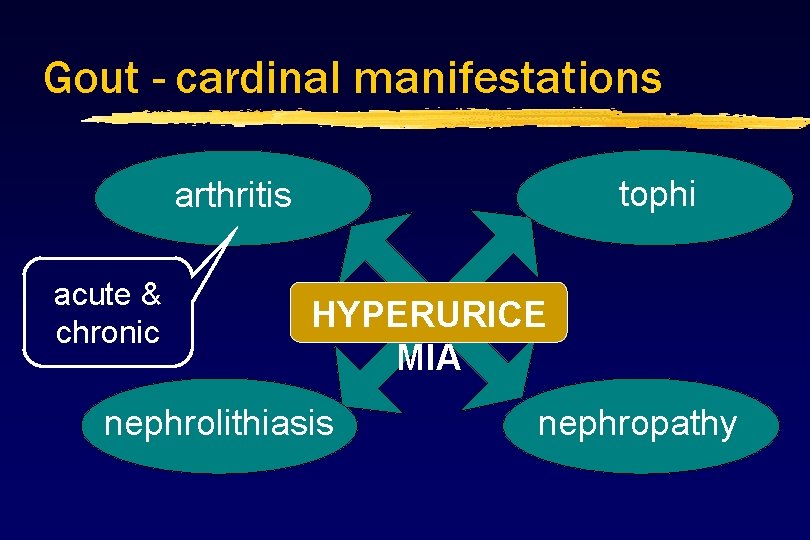
Gout - cardinal manifestations tophi arthritis acute & chronic HYPERURICE MIA nephrolithiasis nephropathy
Drug therapy of gout The Role of Uric Acid in Gout
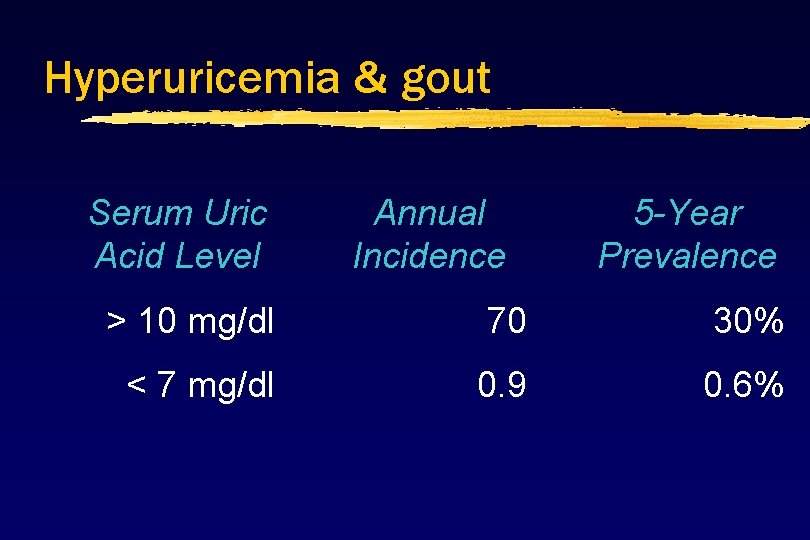
Hyperuricemia & gout Serum Uric Acid Level Annual Incidence 5 -Year Prevalence > 10 mg/dl 70 30% < 7 mg/dl 0. 9 0. 6%
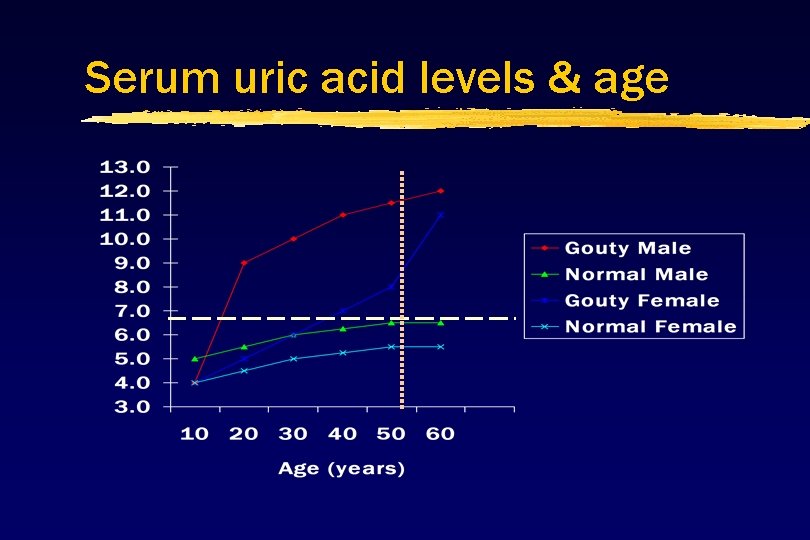
Serum uric acid levels & age
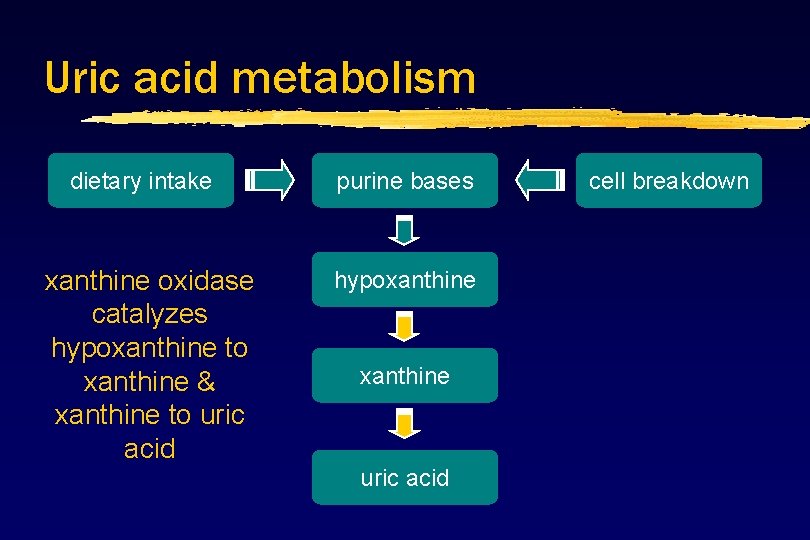
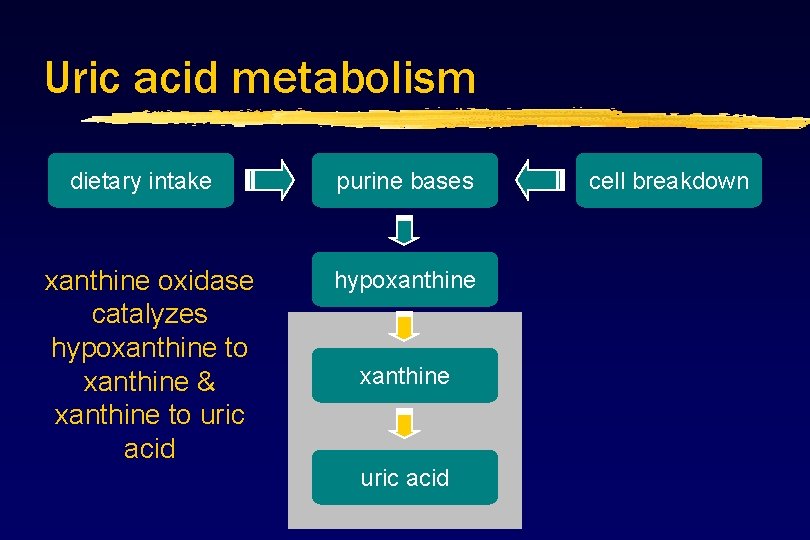
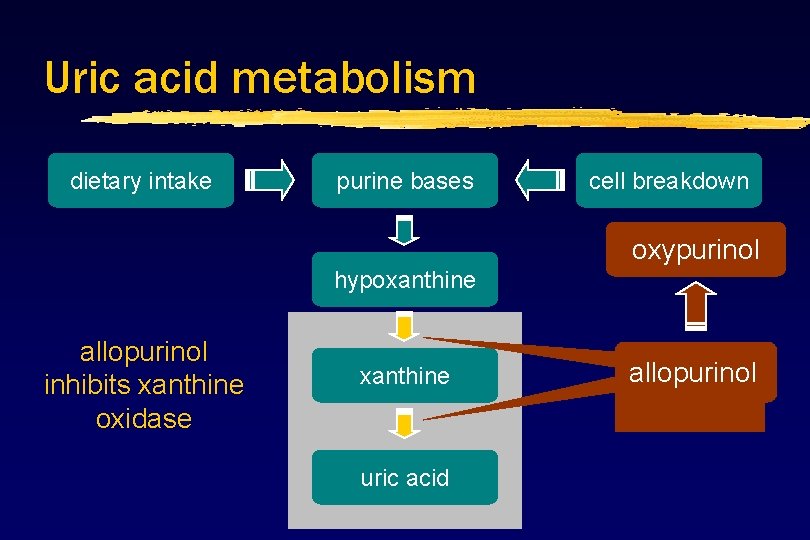
Uric acid metabolism dietary intake xanthine oxidase catalyzes hypoxanthine to xanthine & xanthine to uric acid purine bases hypoxanthine uric acid cell breakdown
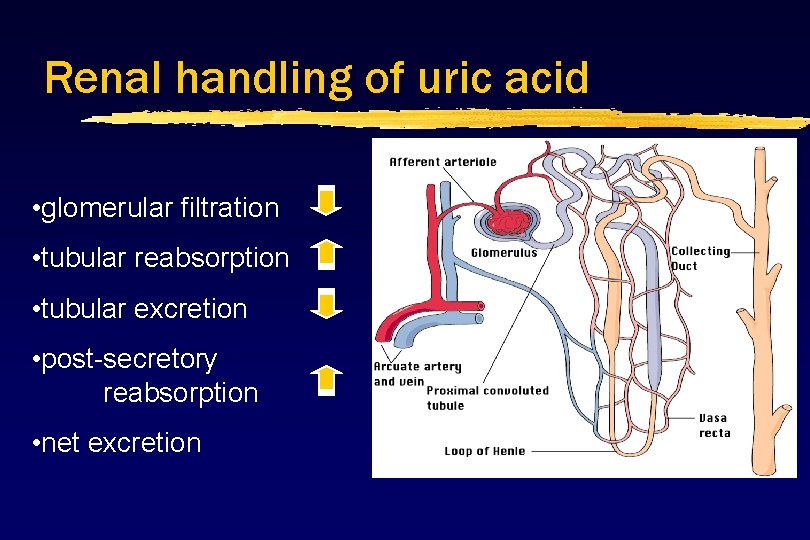
Renal handling of uric acid • glomerular filtration • tubular reabsorption • tubular excretion • post-secretory reabsorption • net excretion
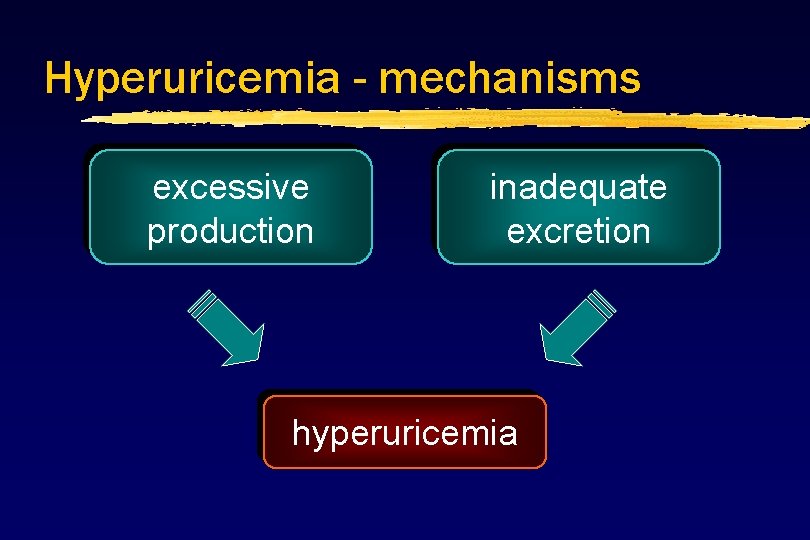
Hyperuricemia - mechanisms excessive production inadequate excretion hyperuricemia
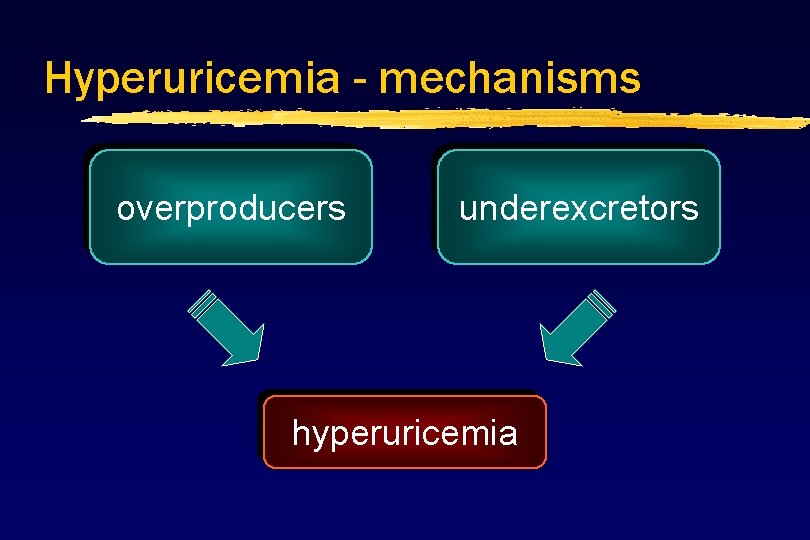
Hyperuricemia - mechanisms overproducers underexcretors hyperuricemia
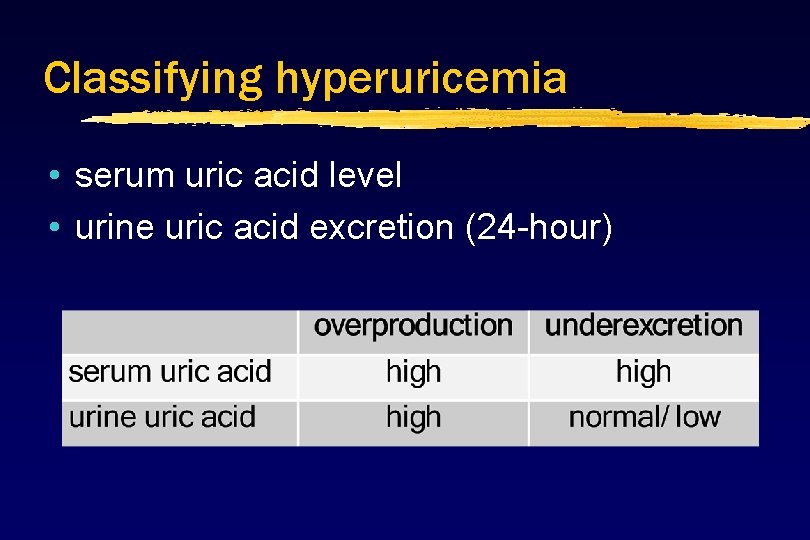
Classifying hyperuricemia • serum uric acid level • urine uric acid excretion (24 -hour)
Gout - problems • excessive total body levels of uric acid • deposition of monosodium urate crystals in joints & other tissues • crystal-induced inflammation
Drug therapy of gout What Drugs Are Available For Treating Gout?
Treating acute gouty arthritis what strategies might be effective?
Treating acute gouty arthritis • • colchicine NSAID’s steroids rest, analgesia, ice, time
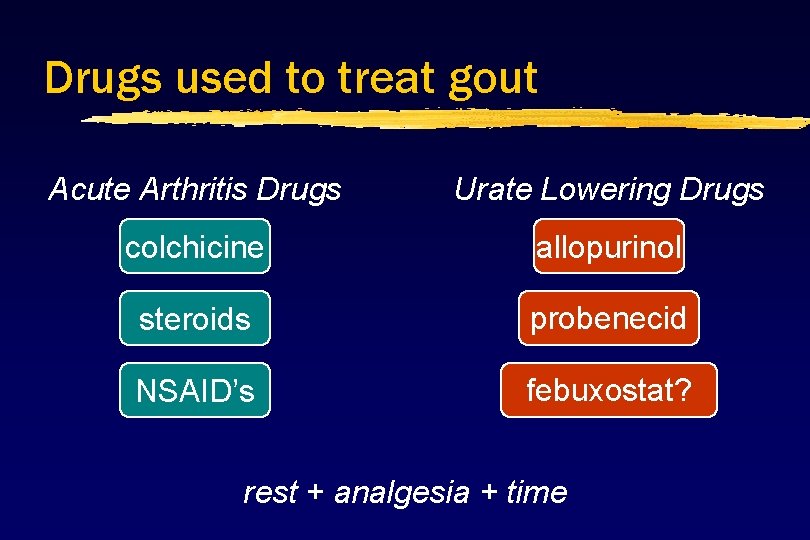
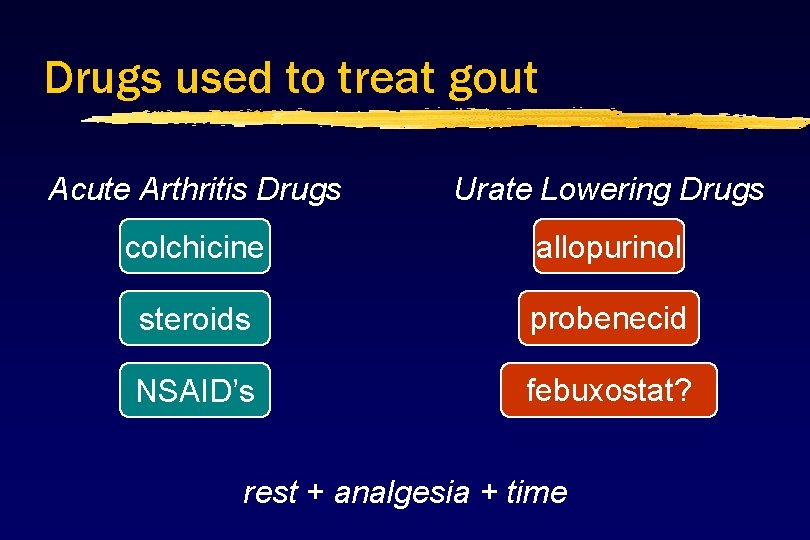
Drugs used to treat gout Acute Arthritis Drugs Urate Lowering Drugs colchicine allopurinol steroids probenecid NSAID’s febuxostat? rest + analgesia + time
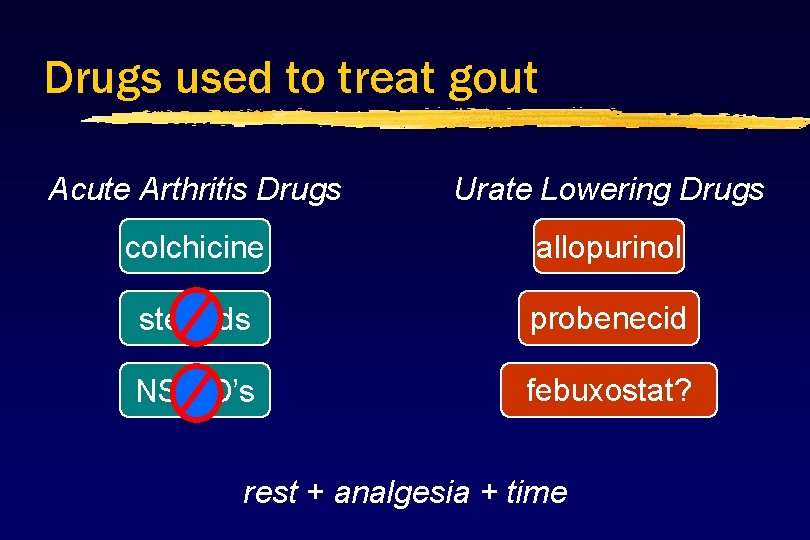
Drugs used to treat gout Acute Arthritis Drugs Urate Lowering Drugs colchicine allopurinol steroids probenecid NSAID’s febuxostat? rest + analgesia + time
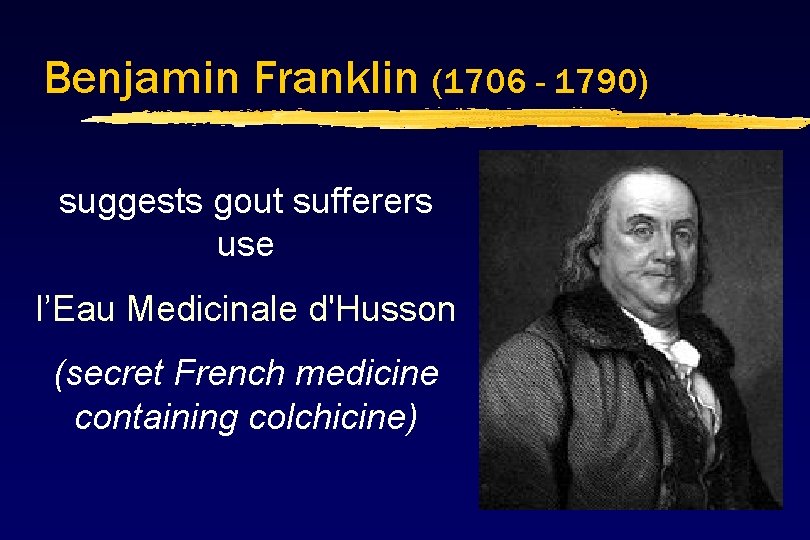
Benjamin Franklin (1706 - 1790) suggests gout sufferers use l’Eau Medicinale d'Husson (secret French medicine containing colchicine)
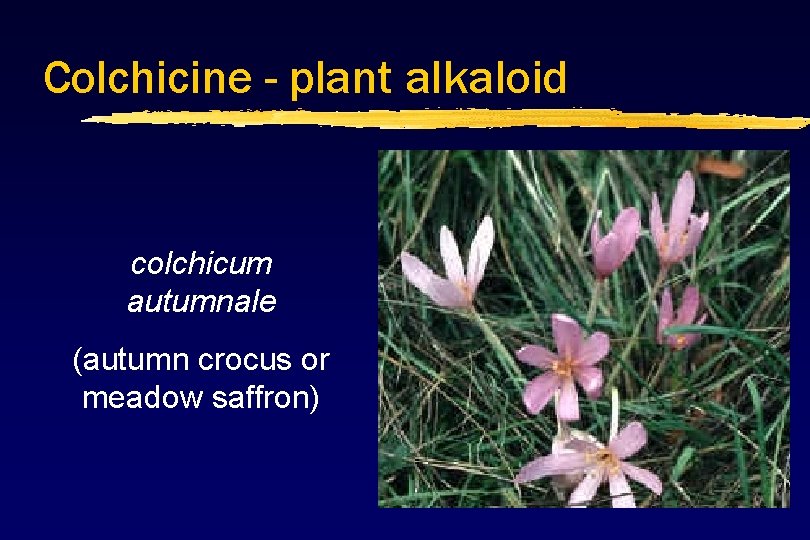
Colchicine - plant alkaloid colchicum autumnale (autumn crocus or meadow saffron)
Colchicine • • • “only effective in gouty arthritis” not an analgesic does not affect renal excretion of uric acid does not alter plasma solubility of uric acid neither raises nor lowers serum uric acid
Colchicine • mechanism of action poorly understood • reduces inflammatory response to deposited crystals • diminishes PMN phagocytosis of crystals • blocks cellular response to deposited crystals
Crystal-induced inflammation hyperuricemia inflammation crystal deposition crystals engulfed protein binding influx of PMN’s receptor binding cytokine release PMN is critical component of crystal-induced inflammation
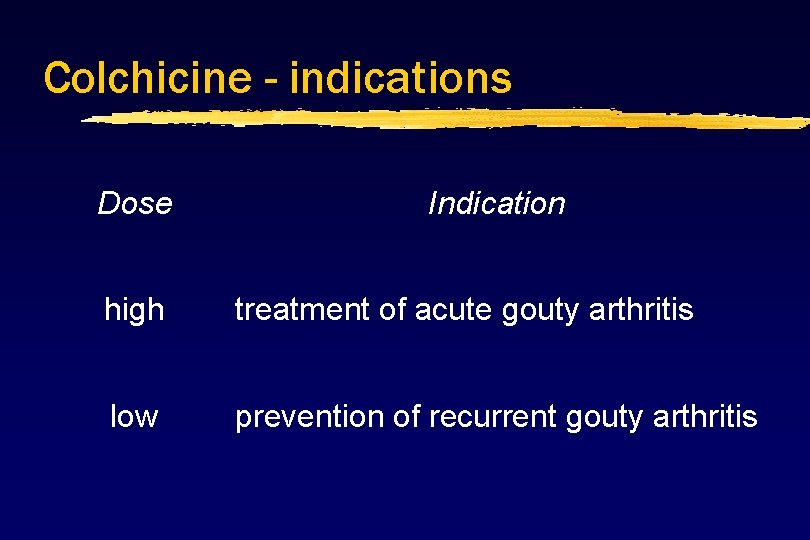
Colchicine - indications Dose Indication high treatment of acute gouty arthritis low prevention of recurrent gouty arthritis
Colchicine - toxicity • gastrointestinal (nausea, vomiting, cramping, diarrhea, abdominal pain) • hematologic (agranulocytosis, aplastic anemia, thrombocytopenia) • muscular weakness adverse effects dose-related & more common when patient has renal or hepatic disease
Treating acute gout What is the role of colchicine in treating acute gouty arthritis?
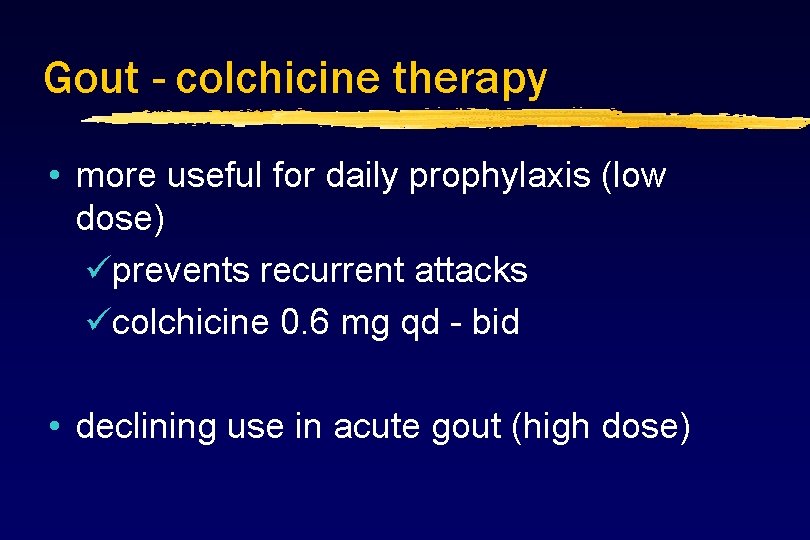
Gout - colchicine therapy • more useful for daily prophylaxis (low dose) üprevents recurrent attacks ücolchicine 0. 6 mg qd - bid • declining use in acute gout (high dose)
Drugs used to treat gout Acute Arthritis Drugs Urate Lowering Drugs colchicine allopurinol steroids probenecid NSAID’s febuxostat? rest + analgesia + time
Hyperuricemia - mechanisms excessive production inadequate excretion hyperuricemia
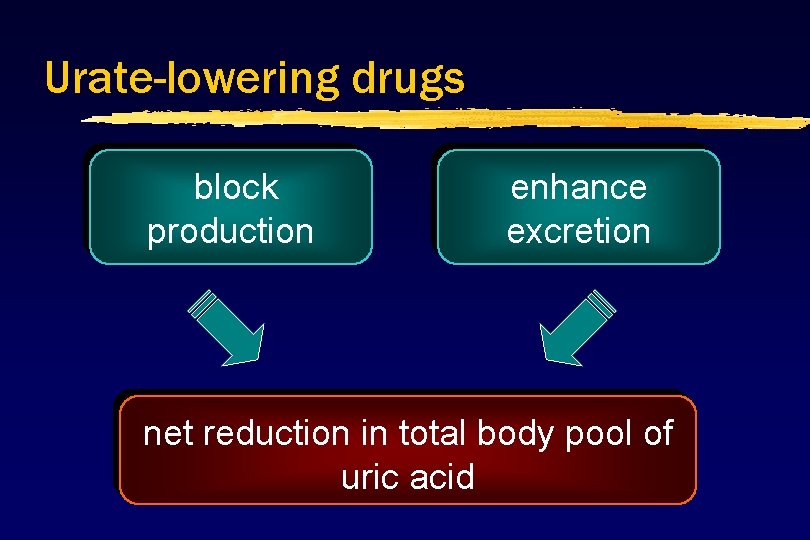
Urate-lowering drugs block production enhance excretion net reduction in total body pool of uric acid
Gout - urate-lowering therapy • prevents arthritis, tophi & stones by lowering total body pool of uric acid • not indicated after first attack • initiation of therapy can worsen or bring on acute gouty arthritis • no role to play in managing acute gout
Drug therapy of gout Drugs That Block Production of Uric Acid
Uric acid metabolism dietary intake xanthine oxidase catalyzes hypoxanthine to xanthine & xanthine to uric acid purine bases hypoxanthine uric acid cell breakdown
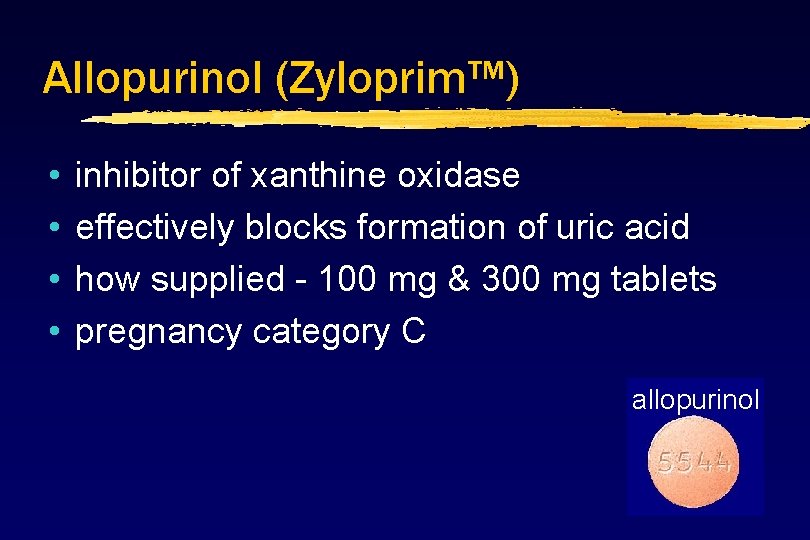
Allopurinol (Zyloprim™) • • inhibitor of xanthine oxidase effectively blocks formation of uric acid how supplied - 100 mg & 300 mg tablets pregnancy category C allopurinol
Chemical structures N N HN N NH O hypoxanthin e N N N O allopurinol H O N N N H N O H xanthine
Uric acid metabolism dietary intake purine bases cell breakdown oxypurinol hypoxanthine allopurinol inhibits xanthine oxidase xanthine uric acid allopurinol
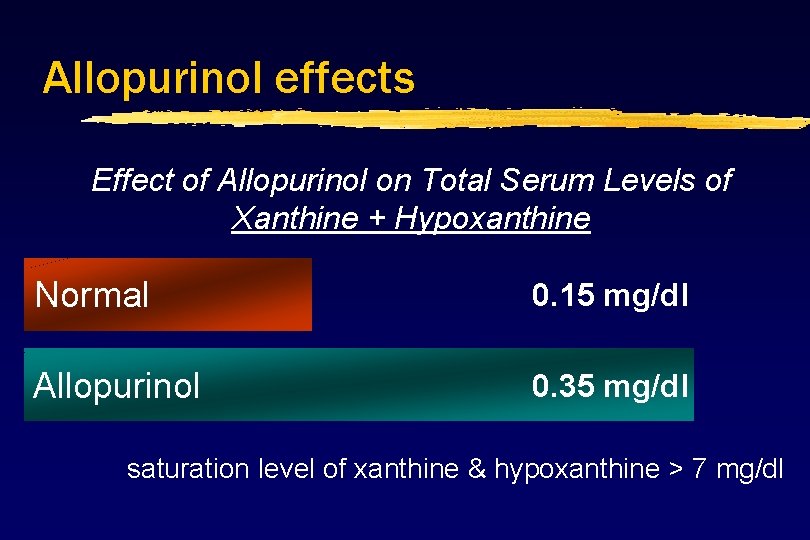
Allopurinol effects Effect of Allopurinol on Total Serum Levels of Xanthine + Hypoxanthine Normal 0. 15 mg/dl Allopurinol 0. 35 mg/dl saturation level of xanthine & hypoxanthine > 7 mg/dl
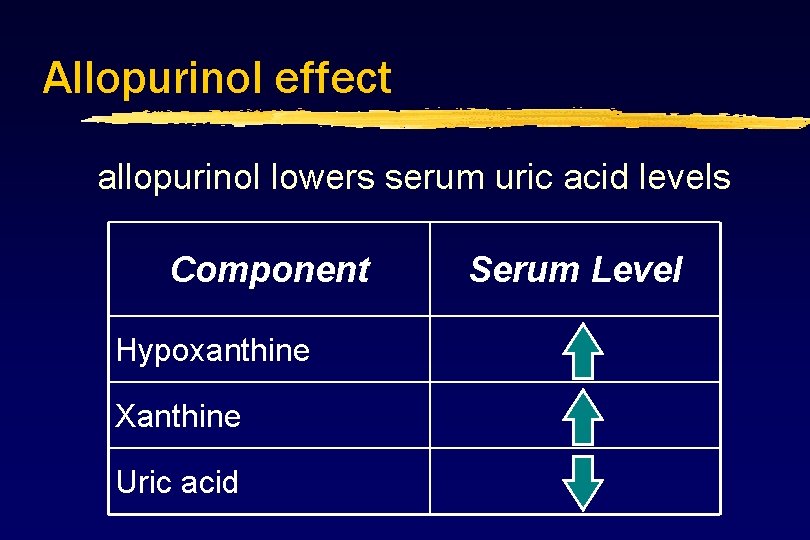
Allopurinol effect allopurinol lowers serum uric acid levels Component Hypoxanthine Xanthine Uric acid Serum Level
Allopurinol What are the clinical consequences of blocking production of uric acid?
Allopurinol • • • 90% absorption from the gut metabolized to oxypurinol once daily dosing lowers serum uric acid levels lowers urine uric acid levels side effects rare, but potentially lethal
Allopurinol - usage indications • management of hyperuricemia of gout • management of hyperuricemia associated with chemotherapy • prevention of recurrent calcium oxalate kidney stones
Allopurinol – black box warning THIS IS NOT AN INNOCUOUS DRUG. IT IS NOT RECOMMENDED FOR THE TREATMENT OF ASYMPTOMATIC HYPERURICEMIA ALLOPURINOL SHOULD BE DISCONTINUED AT THE FIRST APPEARANCE OF SKIN RASH OR
Allopurinol - common reactions • diarrhea, nausea, abnormal liver tests • acute attacks of gout • rash
Allopurinol - serious reactions • • fever, rash, toxic epidermal necrolysis hepatotoxicity, marrow suppression vasculitis drug interactions (ampicillin, thiazides, mercaptopurine, azathioprine) • death
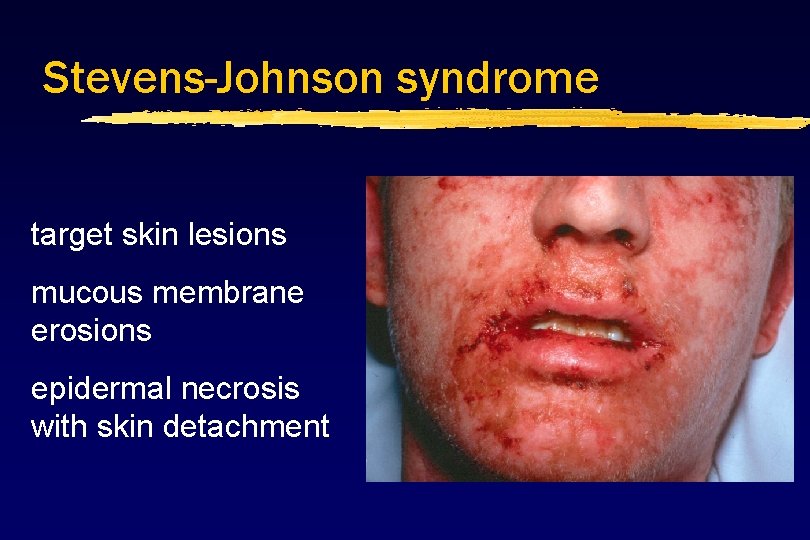
Stevens-Johnson syndrome target skin lesions mucous membrane erosions epidermal necrosis with skin detachment
Allopurinol hypersensitivity • • • extremely serious problem prompt recognition required first sign usually skin rash more common with impaired renal function progression to toxic epidermal necrolysis & death
Febuxostat • • • recently approved by FDA (not on market) oral xanthine oxidase inhibitor chemically distinct from allopurinol 94% of patients reached urate < 6. 0 mg/dl minimal adverse events can be used in patients with renal disease
PEG-uricase • investigational drug • PEG-conjugate of recombinant porcine uricase • treatment-resistant gout • uricase speeds resolution of tophi • further research needed
Drug therapy of gout Drugs That Enhance Excretion of Uric Acid
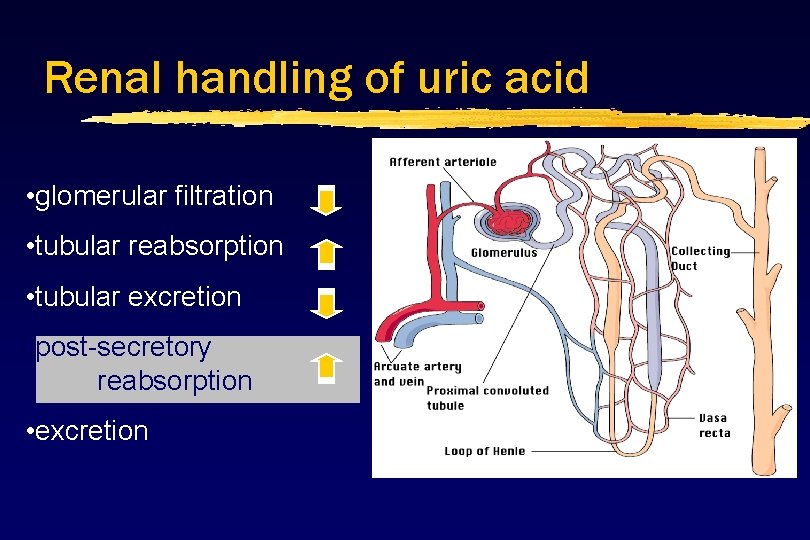
Renal handling of uric acid • glomerular filtration • tubular reabsorption • tubular excretion • post-secretory reabsorption • excretion
Uricosuric therapy • • • probenecid blocks tubular reabsorption of uric acid enhances urine uric acid excretion increases urine uric acid level decreases serum uric acid level
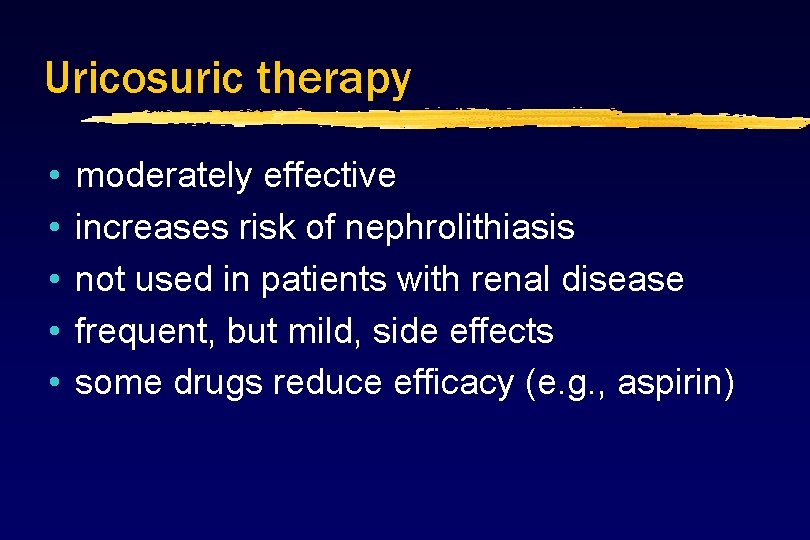
Uricosuric therapy • • • moderately effective increases risk of nephrolithiasis not used in patients with renal disease frequent, but mild, side effects some drugs reduce efficacy (e. g. , aspirin)
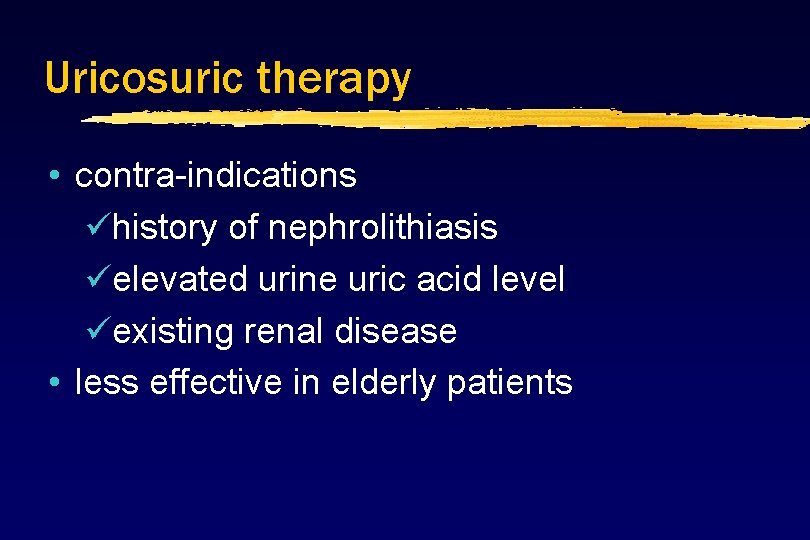
Uricosuric therapy • contra-indications ühistory of nephrolithiasis üelevated urine uric acid level üexisting renal disease • less effective in elderly patients
Choosing a urate-lowering drug excessive production inadequate excretion xanthine oxidase inhibitor uricosuric agent hyperuricemia
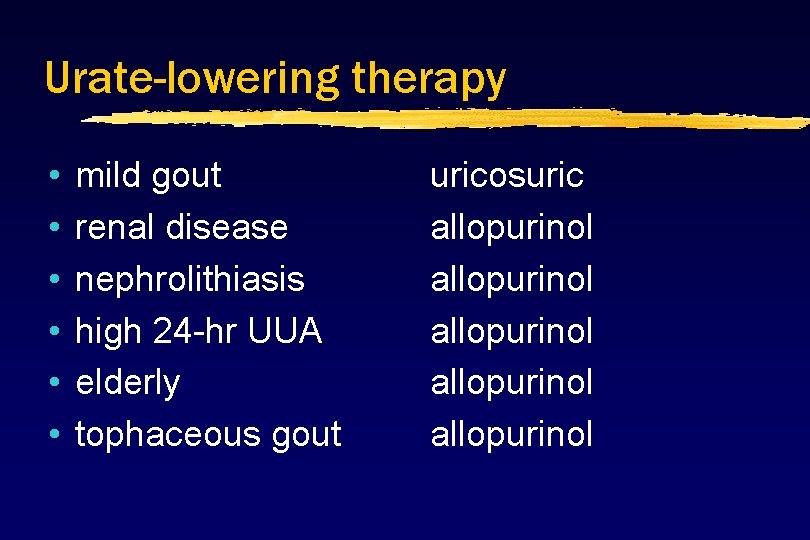
Urate-lowering therapy • • • mild gout renal disease nephrolithiasis high 24 -hr UUA elderly tophaceous gout uricosuric allopurinol allopurinol
Treating acute gout What is the role of uratelowering drugs like allopurinol or probenecid in treating acute gouty arthritis?
Urate-lowering therapy • • no anti-inflammatory activity can precipitate acute gout can prolong attack of gout advice?
Gout - rule #309 Concept “Don’t mess with the uric acid level” Don’t change your urate-lowering therapy during an acute gout attack
Gout - therapeutic problems • • renal disease nephrolithiasis transplantation allopurinol allergy
Drug therapy of gout Case Presentation
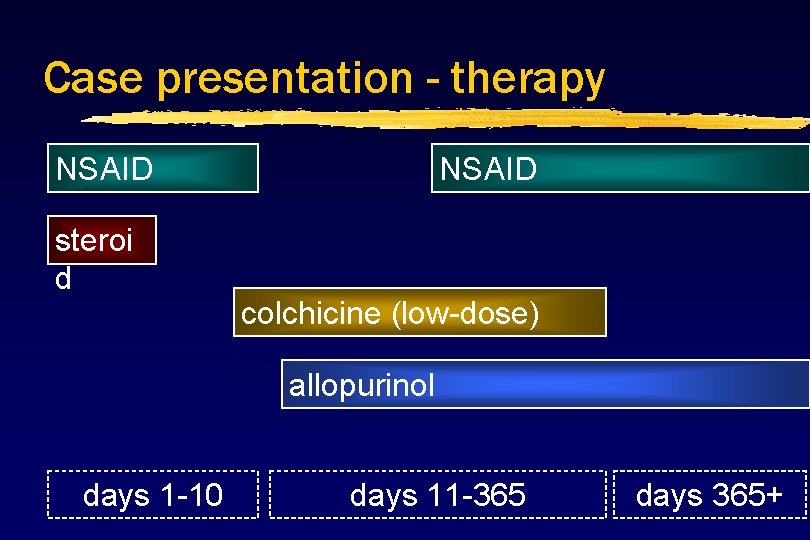
Case presentation - therapy NSAID steroi d NSAID colchicine (low-dose) allopurinol days 1 -10 days 11 -365 days 365+
LSU Clinical Pharmacology Drug Therapy of Gout Reginald D Sanders, MD