Lecture 5 Representation Learning KaiWei Chang CS UCLA
- Slides: 47
Lecture 5: Representation Learning Kai-Wei Chang CS @ UCLA kw@kwchang. net Couse webpage: https: //uclanlp. github. io/CS 269 -17/ ML in NLP 1
This lecture v Review: Neural Network v Recurrent NN v Representation learning in NLP ML in NLP 2
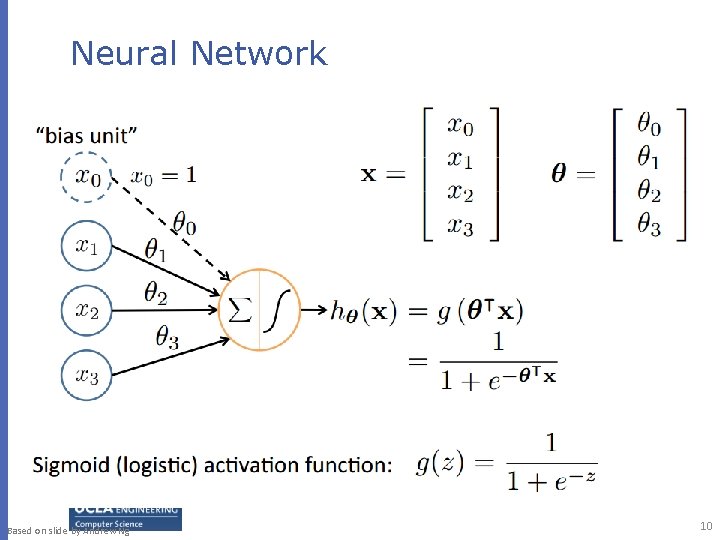
Neural Network Based on slide by Andrew Ng 10
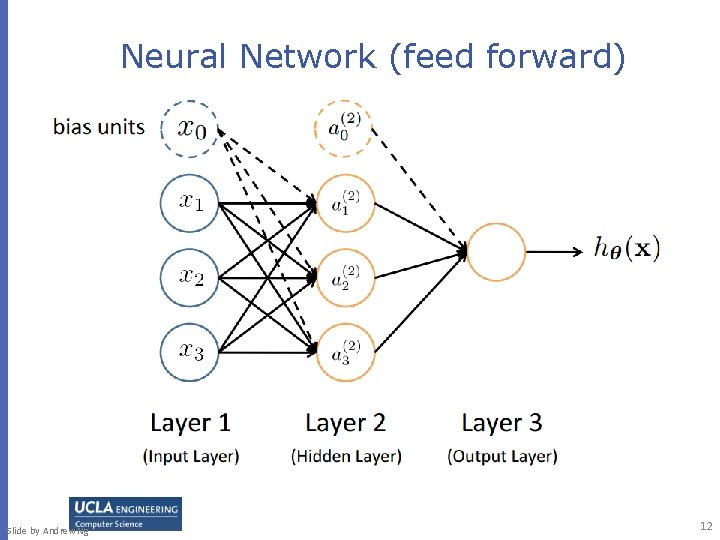
Neural Network (feed forward) Slide by Andrew Ng 12
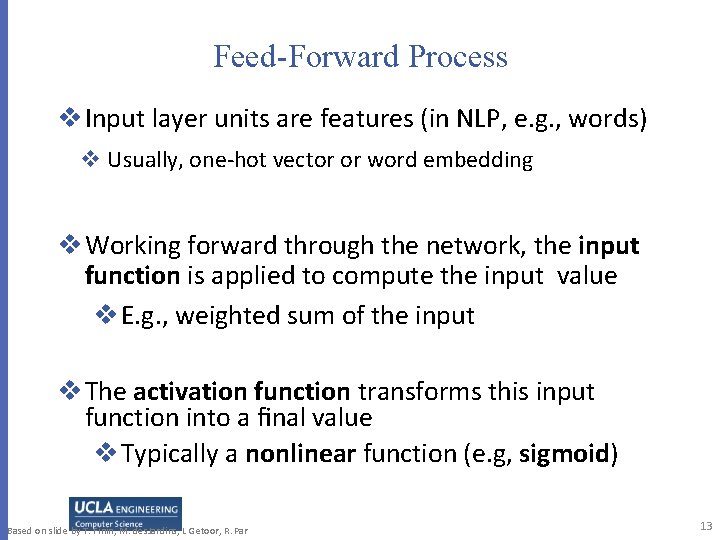
Feed Forward Process v Input layer units are features (in NLP, e. g. , words) v Usually, one-hot vector or word embedding v Working forward through the network, the input function is applied to compute the input value v E. g. , weighted sum of the input v The activation function transforms this input function into a final value v Typically a nonlinear function (e. g, sigmoid) Based on slide by T. Finin, M. des. Jardins, L Getoor, R. Par 13
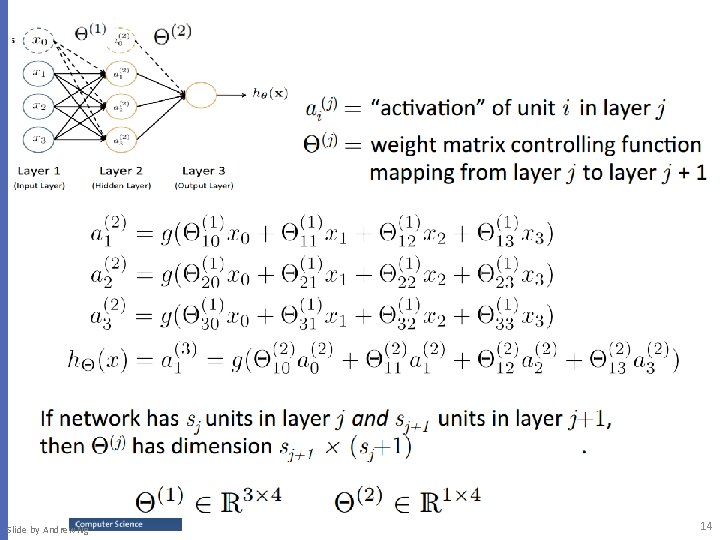
Slide by Andrew Ng 14
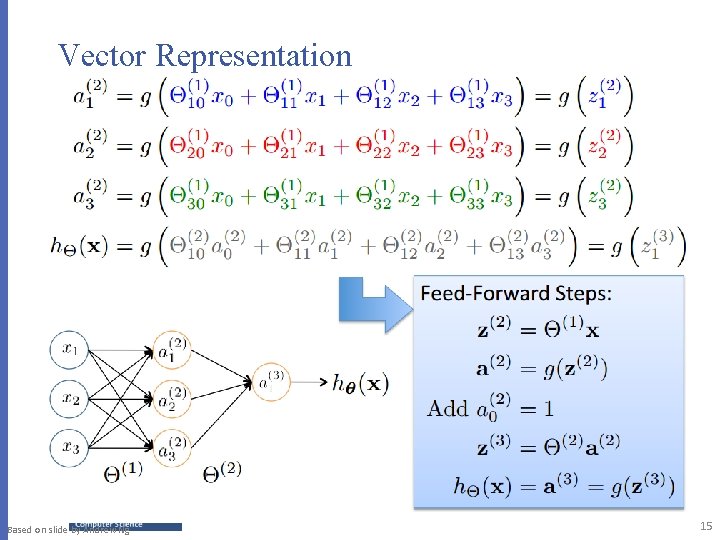
Vector Representation Based on slide by Andrew Ng 15
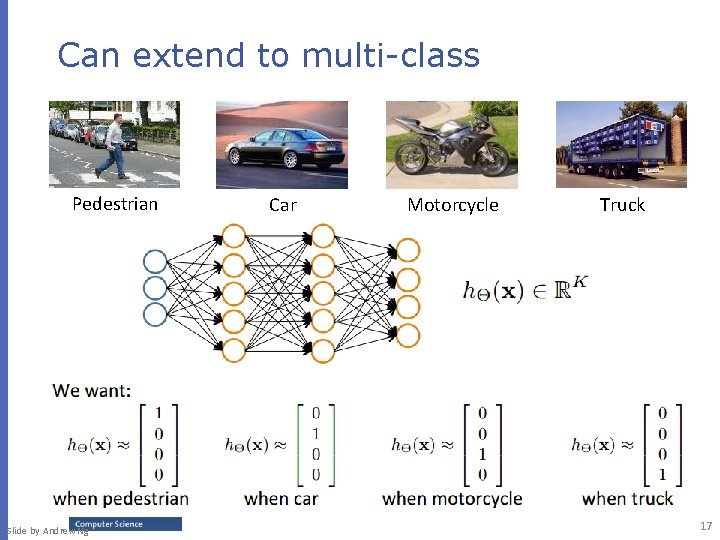
Can extend to multi-class Pedestrian Slide by Andrew Ng Car Motorcycle Truck 17
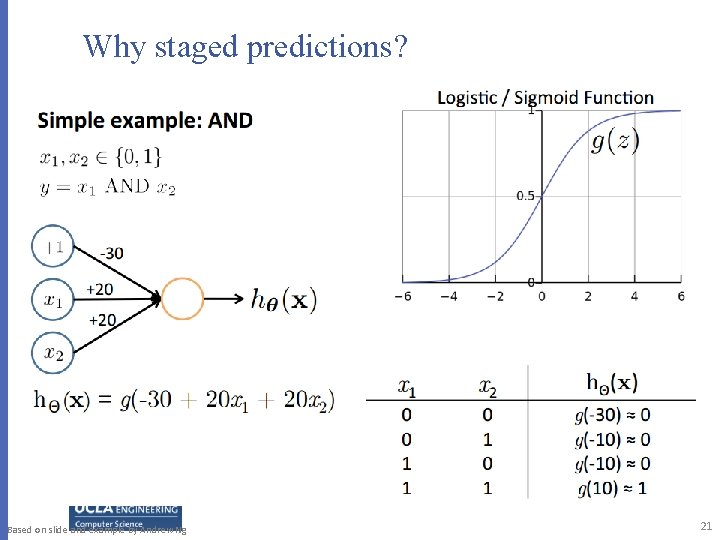
Why staged predictions? Based on slide and example by Andrew Ng 21
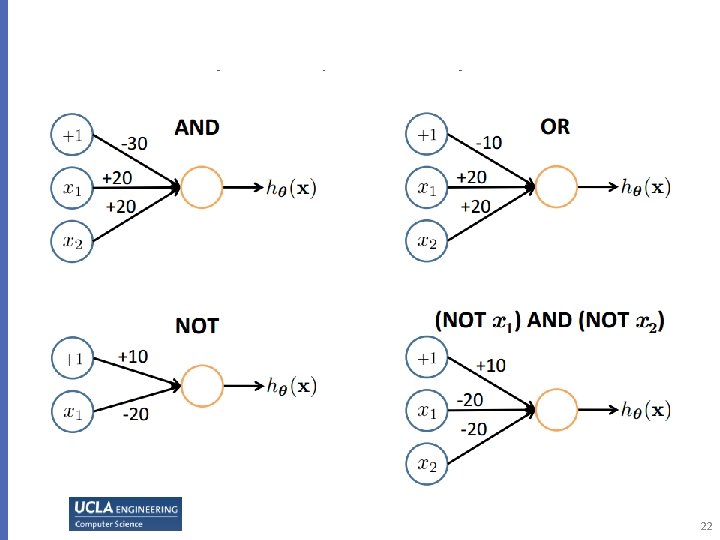
Representing Boolean Functions 22
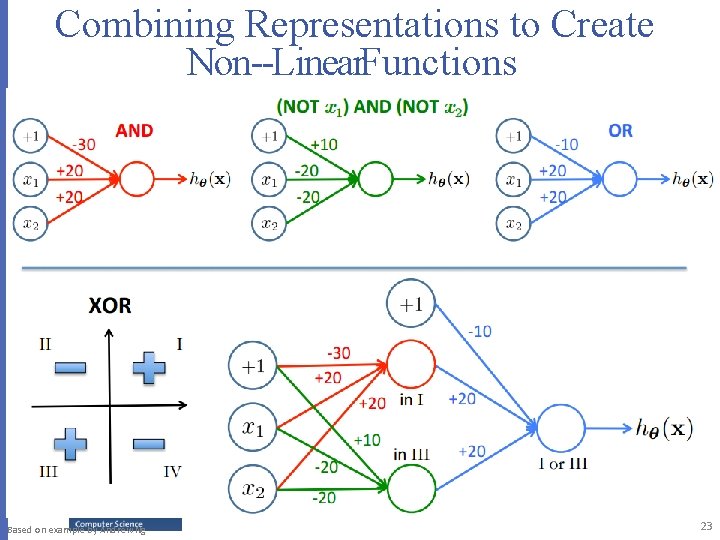
Combining Representations to Create Non Linear. Functions Based on example by Andrew Ng 23
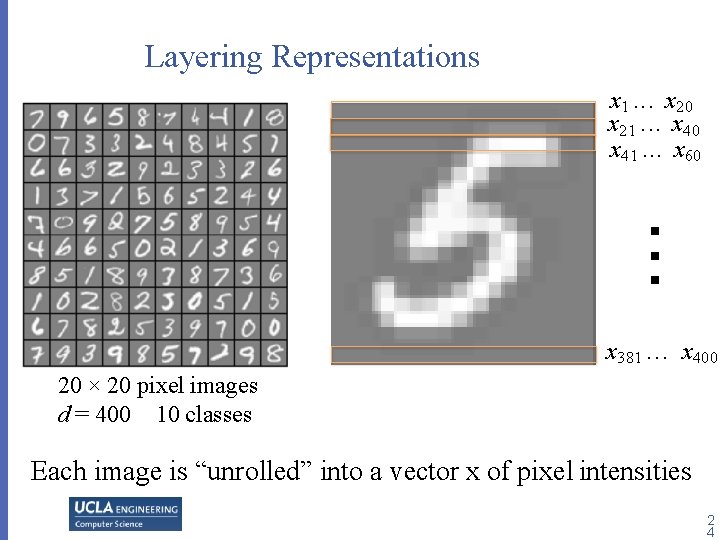
Layering Representations x 1. . . x 20 x 21. . . x 40 x 41. . . x 60 . . . x 381. . . x 400 20 × 20 pixel images d = 400 10 classes Each image is “unrolled” into a vector x of pixel intensities 2 4
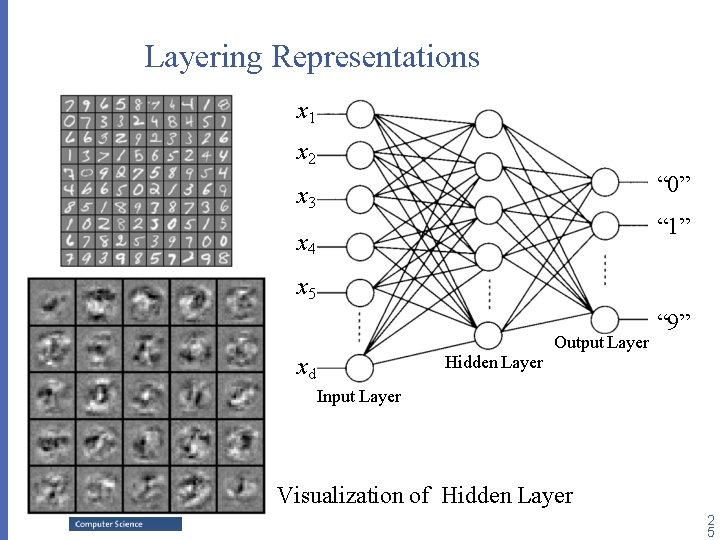
Layering Representations x 1 x 2 “ 0” x 3 “ 1” x 4 x 5 Output Layer “ 9” Hidden Layer xd Input Layer Visualization of Hidden Layer 2 5
This lecture v Review: Neural Network v Learning NN v Recursive and Recurrent NN v Representation learning in NLP ML in NLP 14
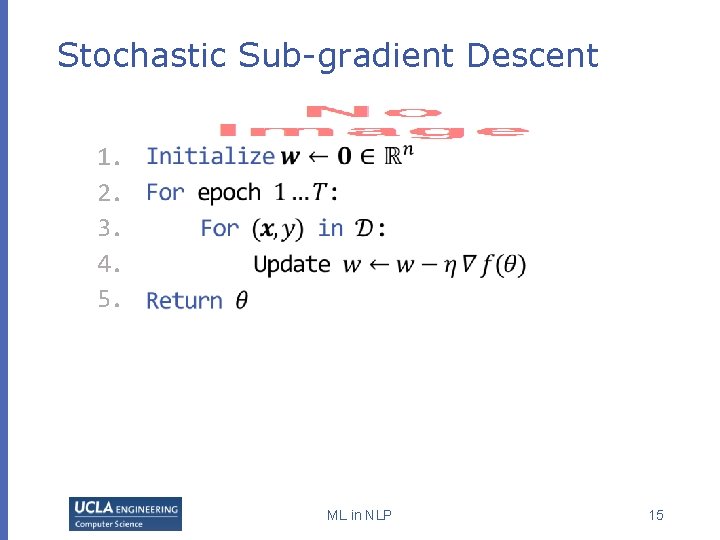
Stochastic Sub-gradient Descent 1. 2. 3. 4. 5. ML in NLP 15
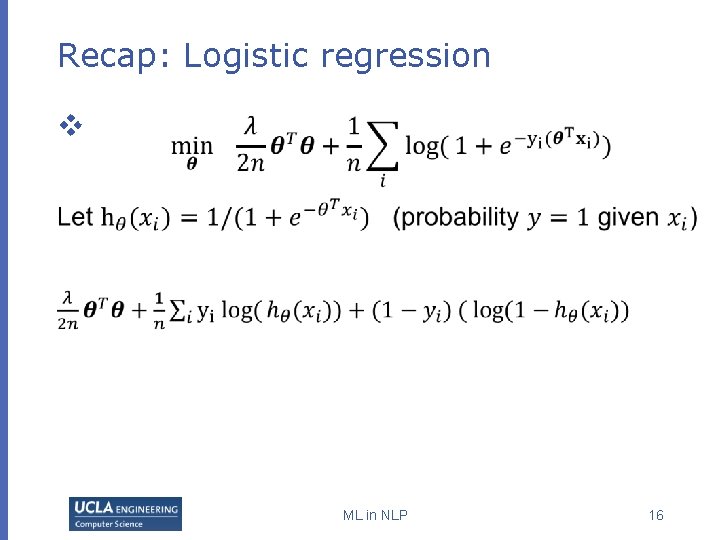
Recap: Logistic regression v ML in NLP 16
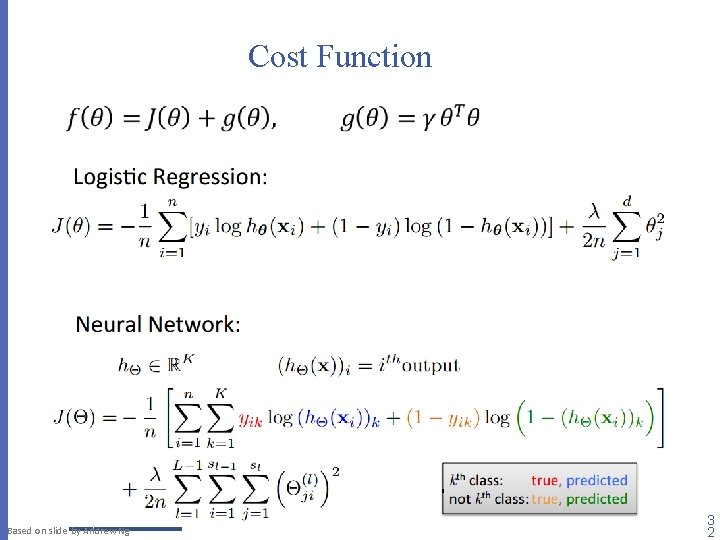
Cost Function Based on slide by Andrew Ng 3 2
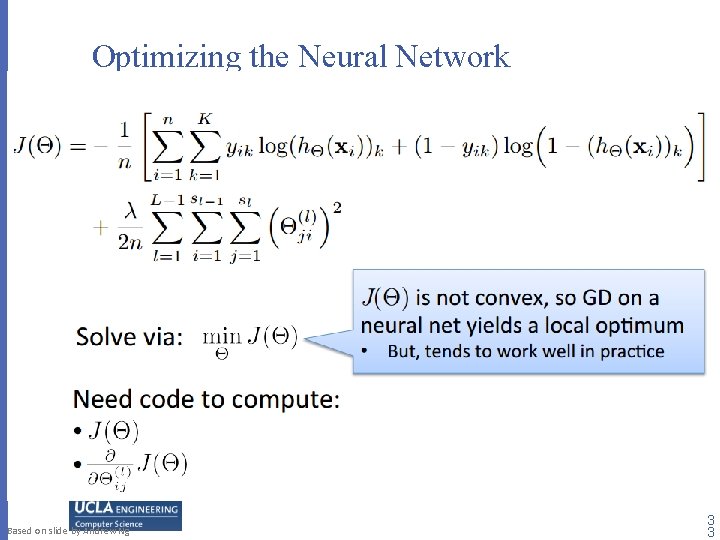
Optimizing the Neural Network Based on slide by Andrew Ng 3 3
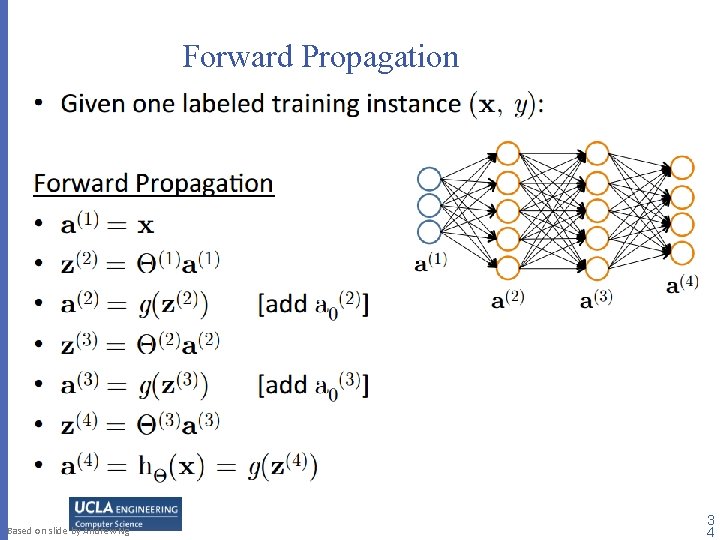
Forward Propagation Based on slide by Andrew Ng 3 4
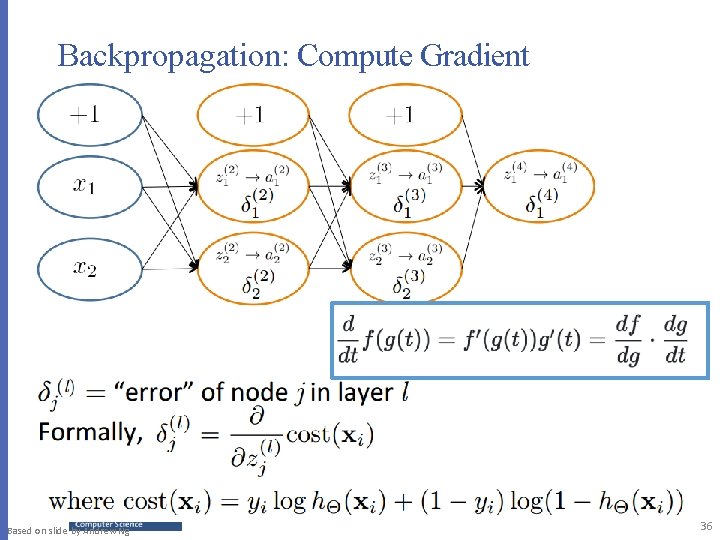
Backpropagation: Compute Gradient Based on slide by Andrew Ng 36
This lecture v Review: Neural Network v Recurrent NN v Representation learning in NLP ML in NLP 21
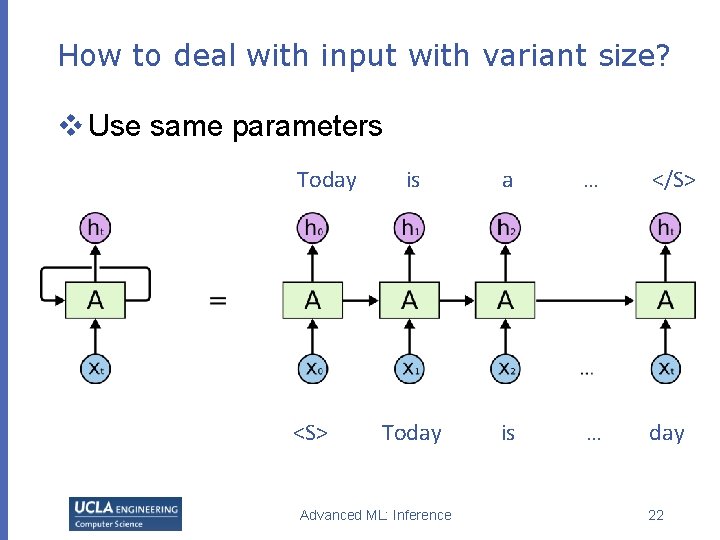
How to deal with input with variant size? v Use same parameters Today is a … </S> <S> Today is … day Advanced ML: Inference 22
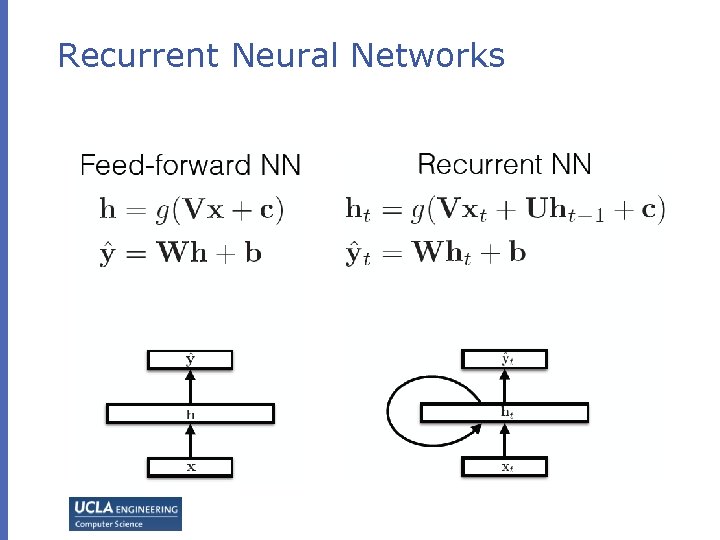
Recurrent Neural Networks
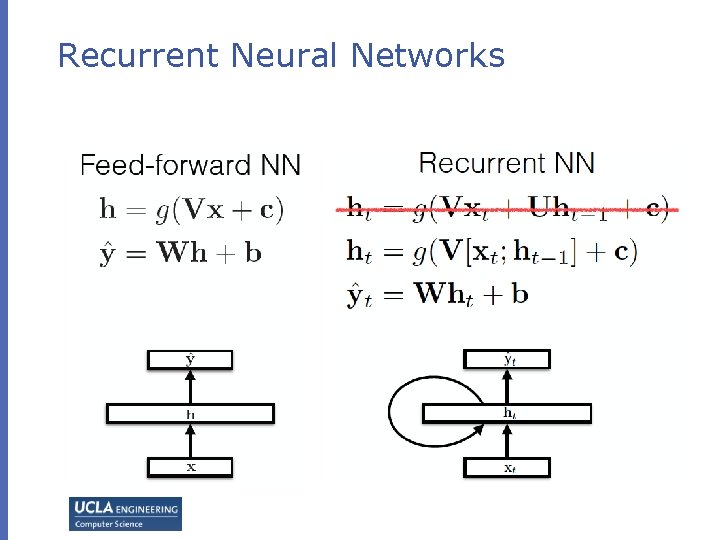
Recurrent Neural Networks
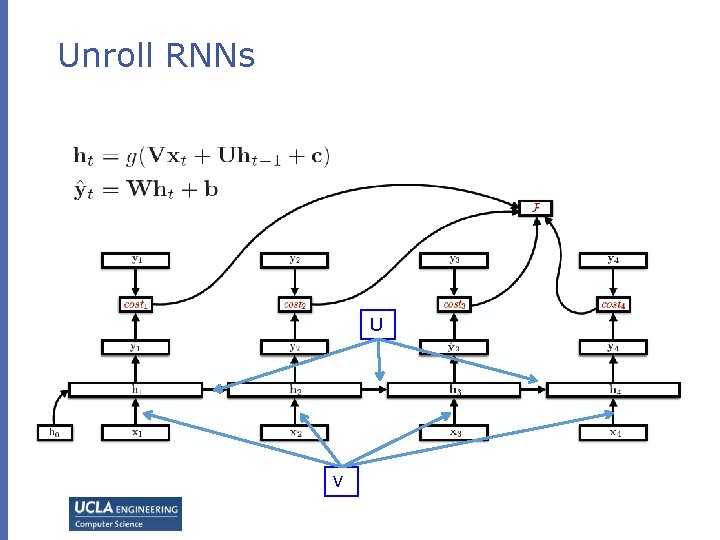
Unroll RNNs U V
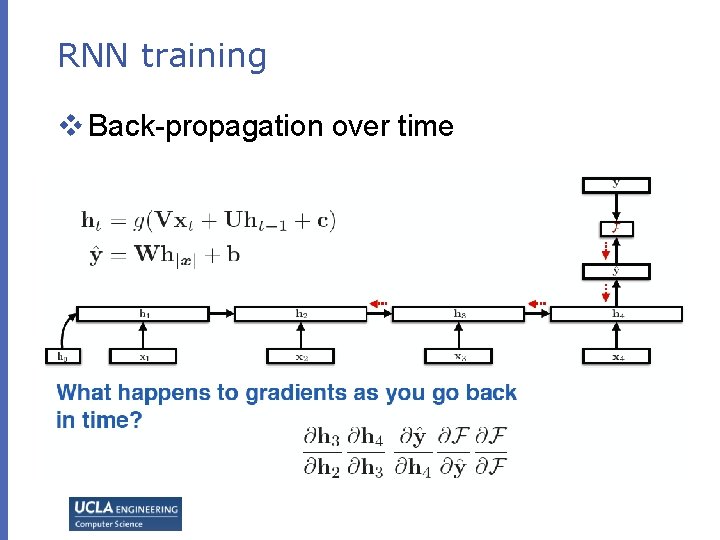
RNN training v Back-propagation over time
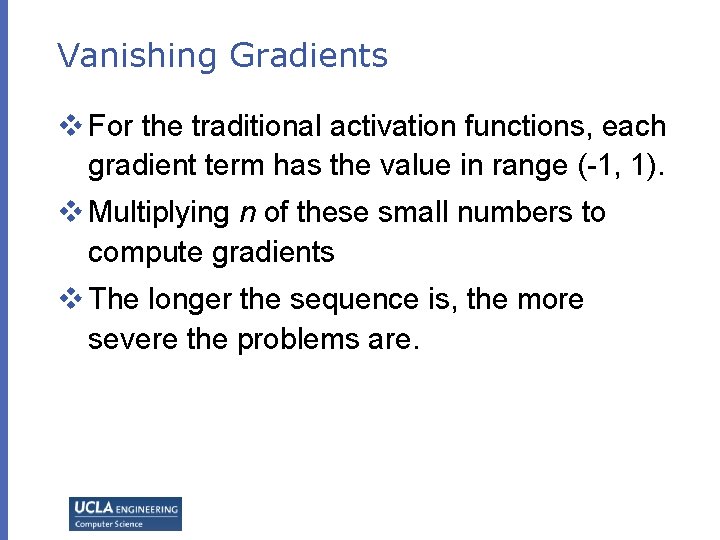
Vanishing Gradients v For the traditional activation functions, each gradient term has the value in range (-1, 1). v Multiplying n of these small numbers to compute gradients v The longer the sequence is, the more severe the problems are.
RNNs characteristics v Model hidden states (input) dependencies v Errors “back propagation over time” v Feature learning methods v Vanishing gradient problem: cannot model long-distant dependencies of the hidden states.
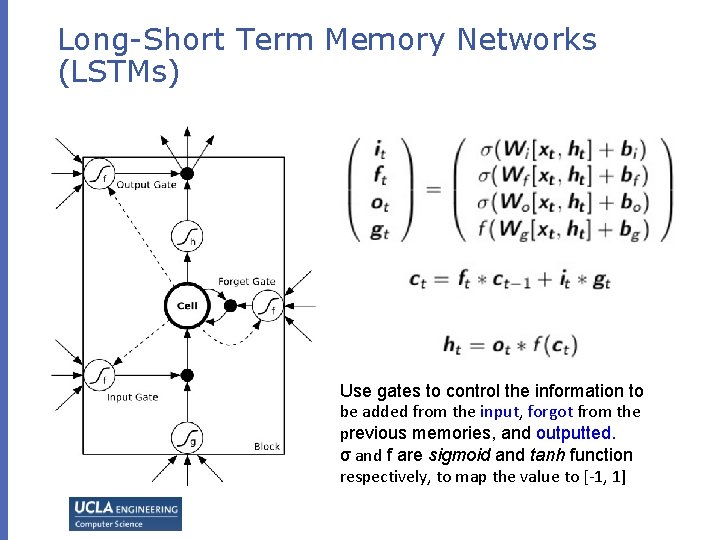
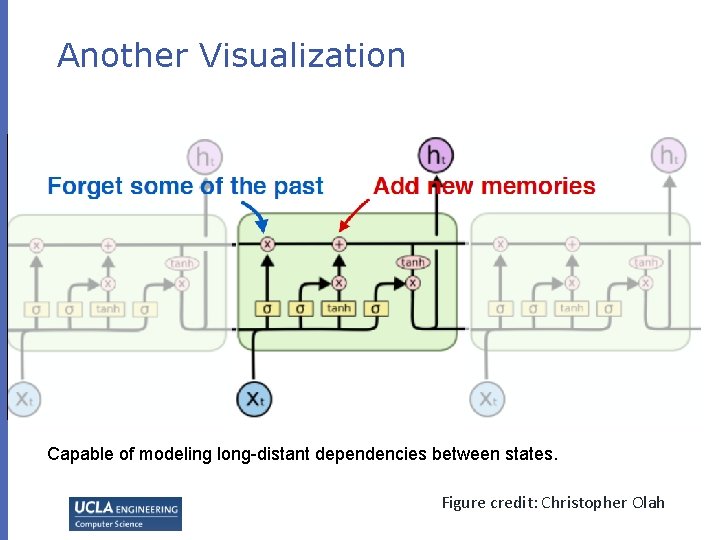
Long-Short Term Memory Networks (LSTMs) Use gates to control the information to be added from the input, forgot from the previous memories, and outputted. σ and f are sigmoid and tanh function respectively, to map the value to [-1, 1]
Another Visualization Capable of modeling long-distant dependencies between states. Figure credit: Christopher Olah
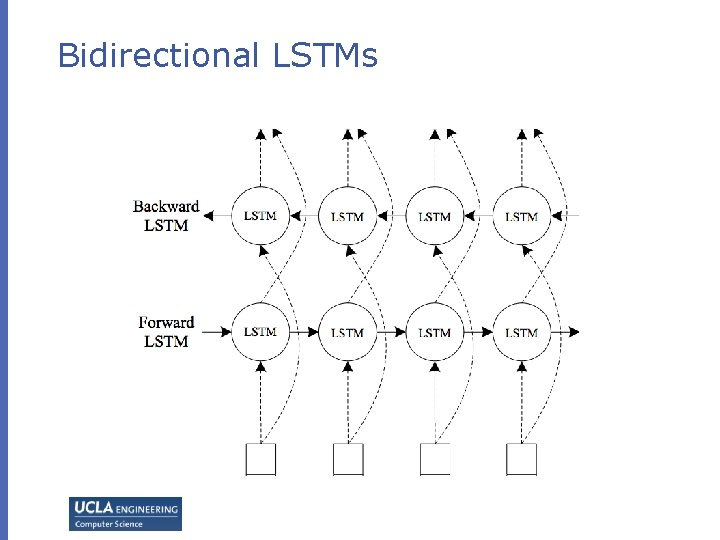
Bidirectional LSTMs
How to deal with sequence output? v Idea 1: combine DL with CRF v Idea 2: introduce structure in DL ML in NLP 32
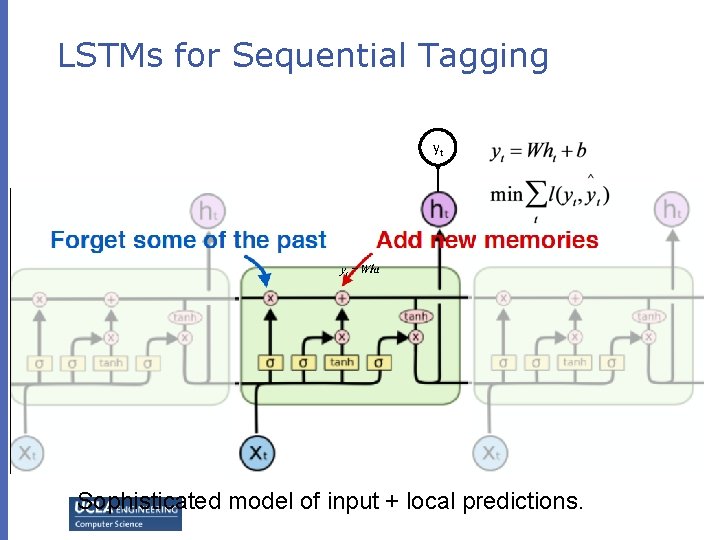
LSTMs for Sequential Tagging yt Sophisticated model of input + local predictions.
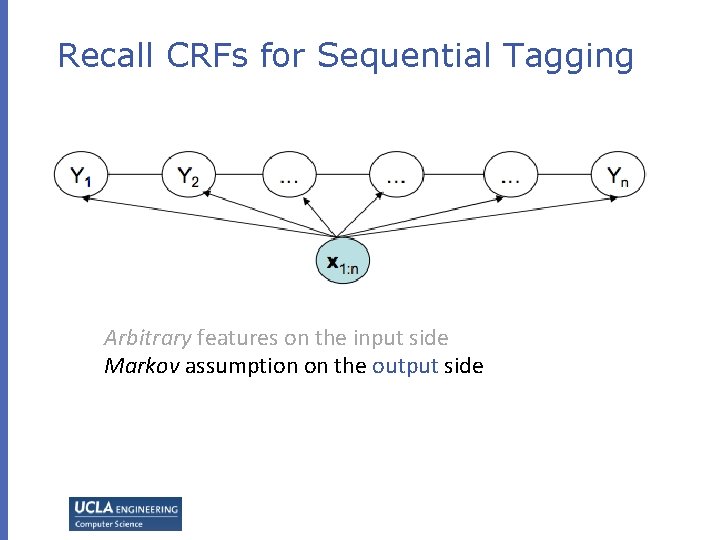
Recall CRFs for Sequential Tagging Arbitrary features on the input side Markov assumption on the output side
LSTMs for Sequential Tagging v Completely ignored the interdependencies of the outputs v Will this work? Yes. v Liang et. al. (2008), Structure Compilation: Trading Structure for Features v Is this the best model? Not necessarily.
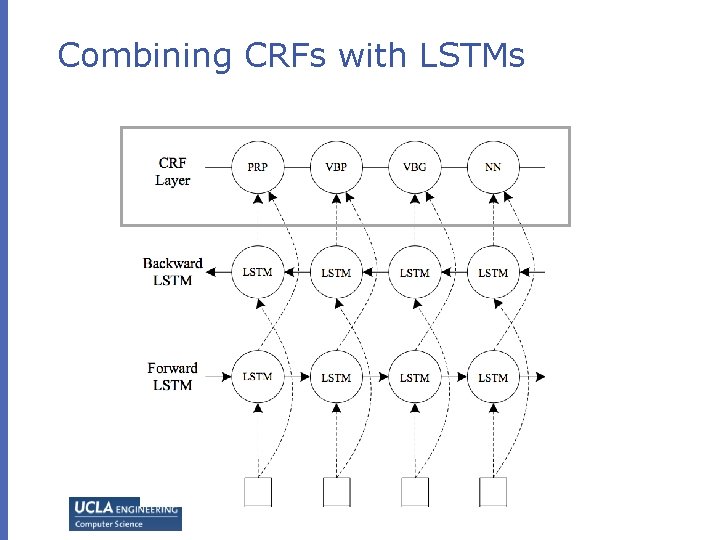
Combining CRFs with LSTMs
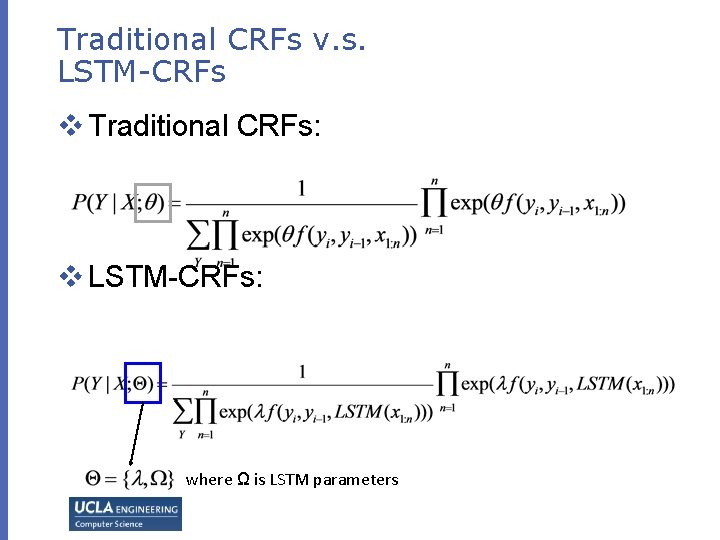
Traditional CRFs v. s. LSTM-CRFs v Traditional CRFs: v LSTM-CRFs: where Ω is LSTM parameters
Combining Two Benefits ● Directly model output dependencies by CRFs. ● Powerful automatic feature learning using bi. LSTMs. ● Jointly training all the parameters to “share the modeling responsibilities”
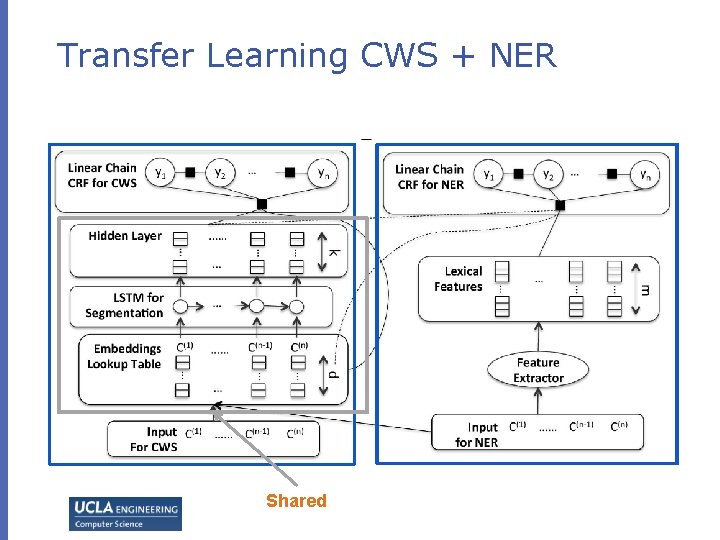
Transfer Learning with LSTM-CRFs v Neural networks as feature learner v Share the feature learner for different tasks v Jointly train the feature learners so that it learns the common features. v Use different CRFs for different tasks to encode task-specific information v Going forward, one can imagine using other graphical models besides linear chain CRFs.
Transfer Learning CWS + NER Shared
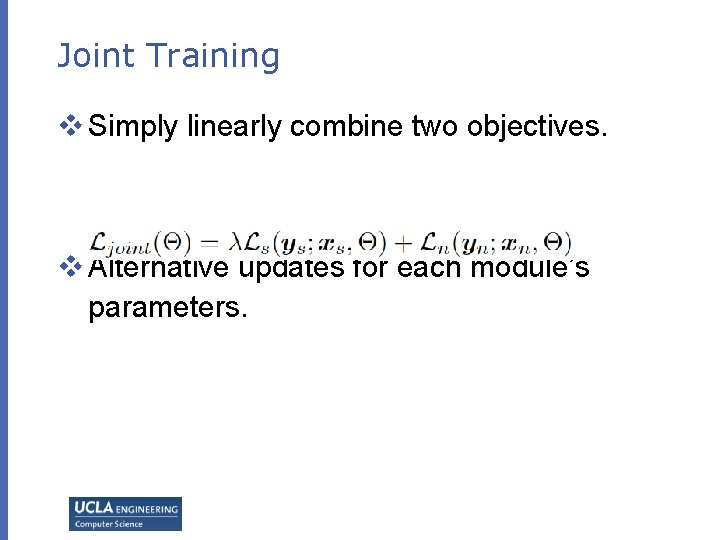
Joint Training v Simply linearly combine two objectives. v Alternative updates for each module’s parameters.
How to deal with sequence output? v Idea 1: combine DL with CRF v Idea 2: introduce structure in DL ML in NLP 42
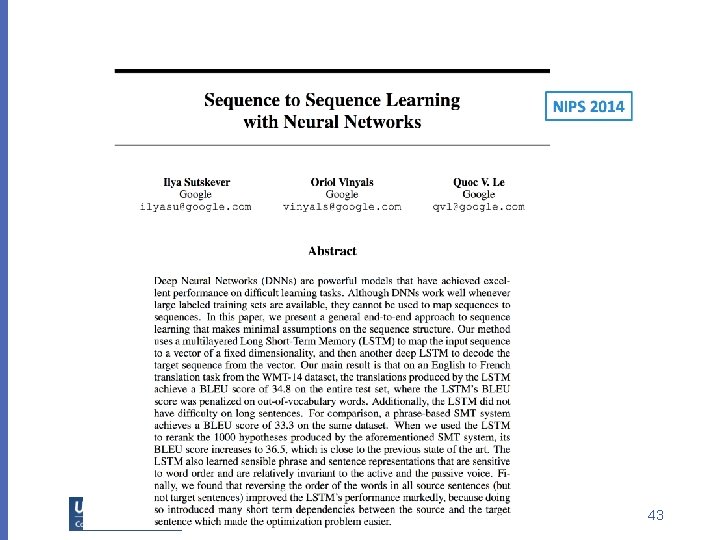
Advanced ML: Inference 43
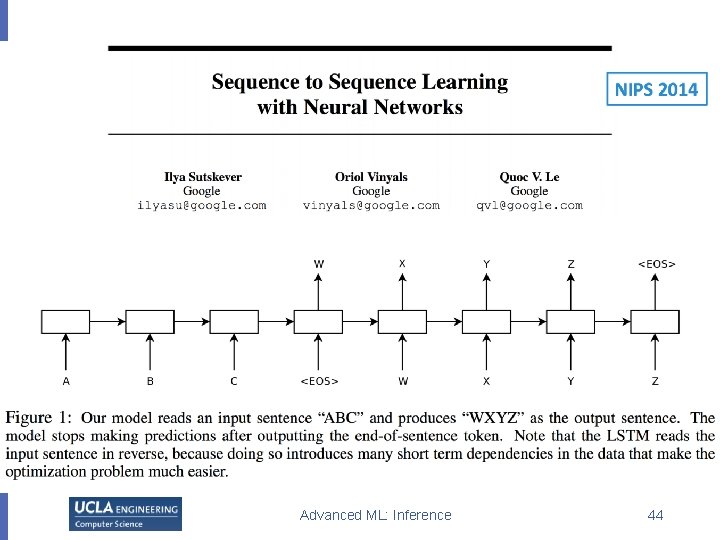
Advanced ML: Inference 44
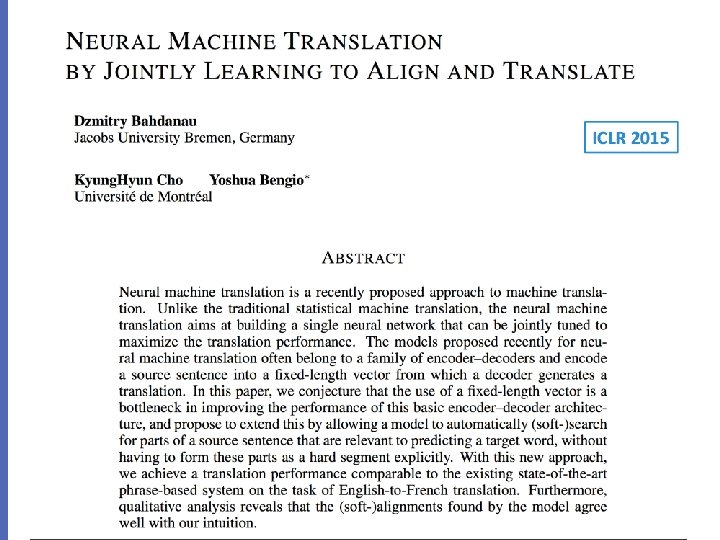
Advanced ML: Inference 45
Advanced ML: Inference 46
Advanced ML: Inference 47