Reza Mosalanejad Prof Johan Chang Overview Introduction TOF

- Slides: 19
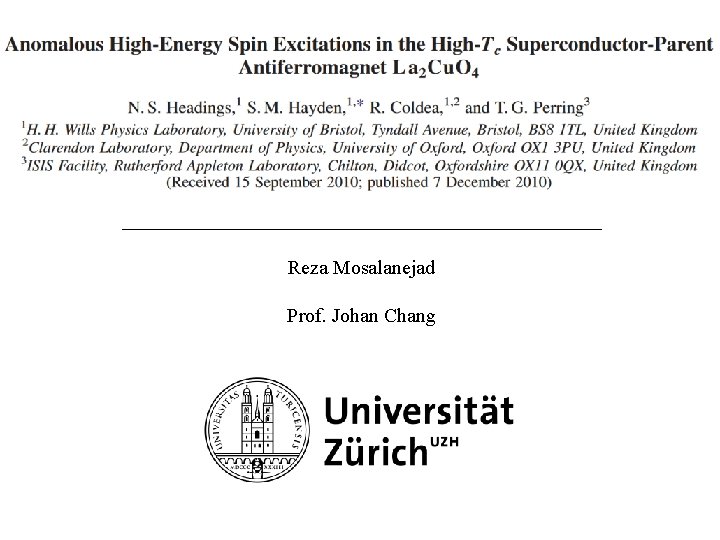
________________________ Reza Mosalanejad Prof. Johan Chang
Overview • Introduction • TOF INS • ISIS Facility • Motivation • Antiferromagnet Spectrum • Discussion • Summary & Conclusions University of Zurich - Physics Institute 2/17
Introduction University of Zurich - Physics Institute 3/17
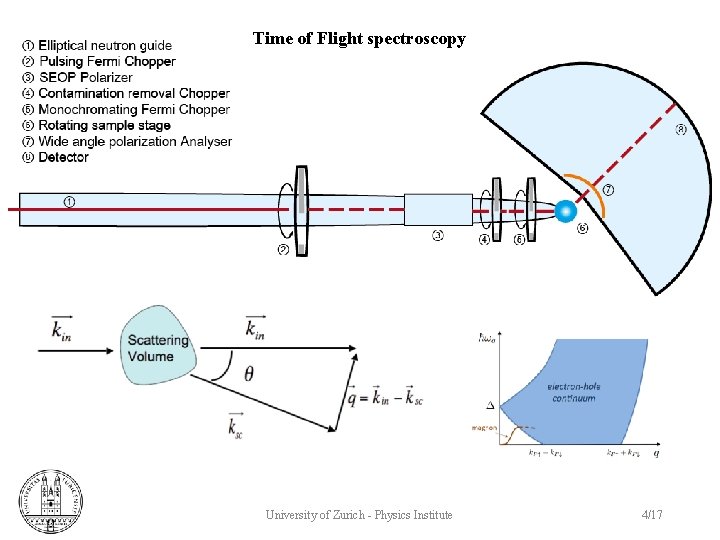
Time of Flight spectroscopy University of Zurich - Physics Institute 4/17
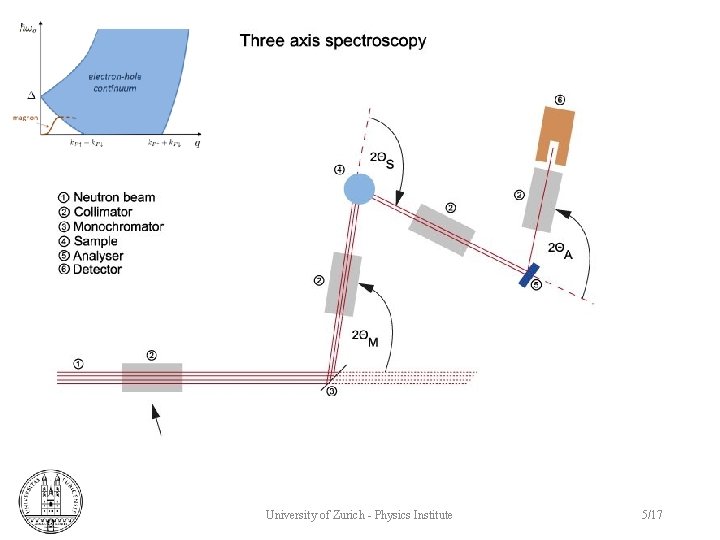
University of Zurich - Physics Institute 5/17
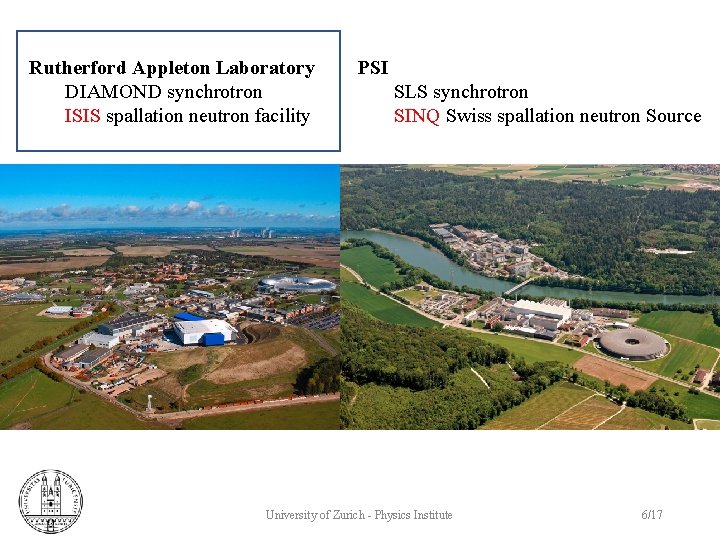
Rutherford Appleton Laboratory DIAMOND synchrotron ISIS spallation neutron facility PSI SLS synchrotron SINQ Swiss spallation neutron Source University of Zurich - Physics Institute 6/17
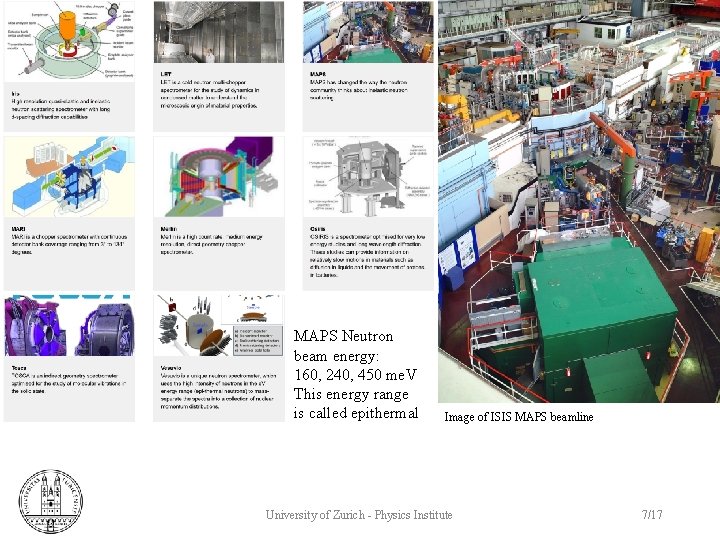
Image of SINQ Swiss spallation neutron Source MAPS Neutron beam energy: 160, 240, 450 me. V This energy range is called epithermal Image of ISIS MAPS beamline University of Zurich - Physics Institute 7/17
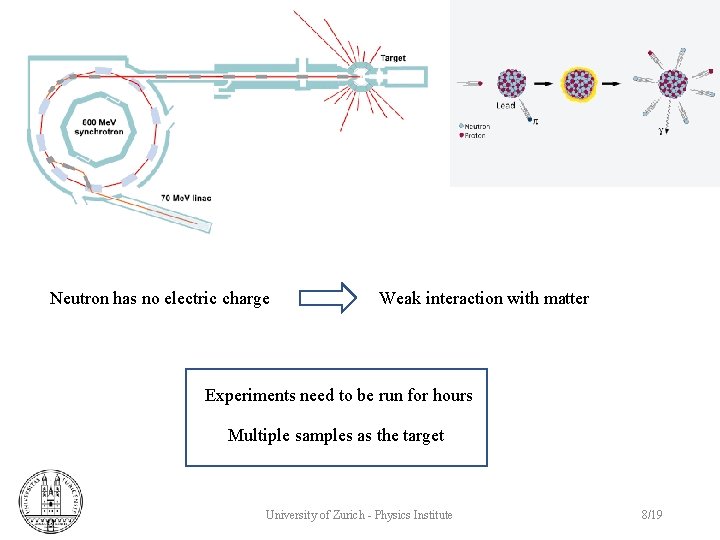
Neutron has no electric charge Weak interaction with matter Experiments need to be run for hours Multiple samples as the target University of Zurich - Physics Institute 8/19
Motivation University of Zurich - Physics Institute 9/19
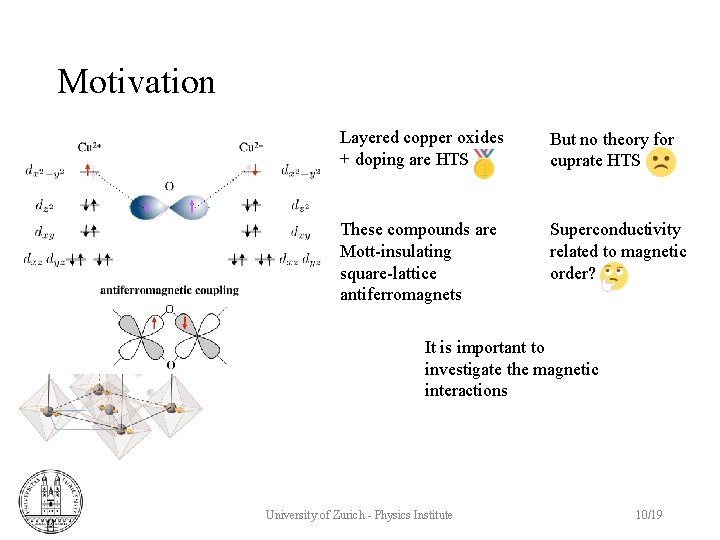
Motivation Layered copper oxides: YBCO, BSCCO, LCO, etc Layered copper oxides + doping are HTS But no theory for cuprate HTS These compounds are Mott-insulating square-lattice antiferromagnets Superconductivity related to magnetic order? It is important to investigate the magnetic interactions University of Zurich - Physics Institute 10/19
Antiferromagnet Spectrum University of Zurich - Physics Institute 11/19
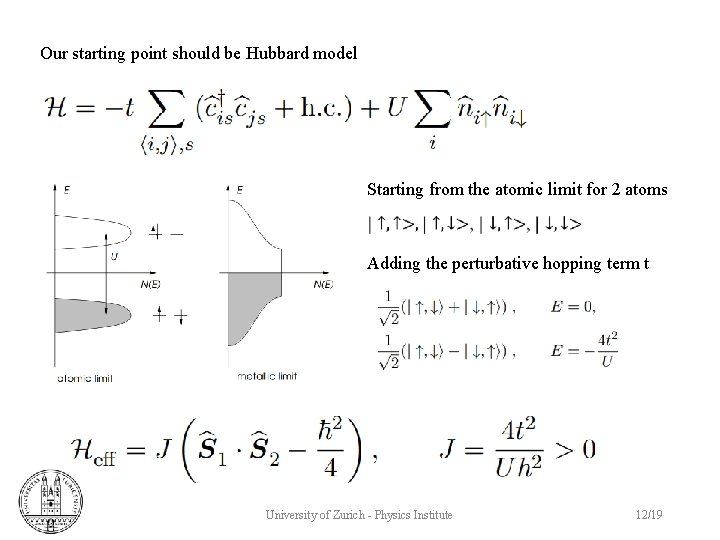
Our starting point should be Hubbard model Starting from the atomic limit for 2 atoms Adding the perturbative hopping term t University of Zurich - Physics Institute 12/19
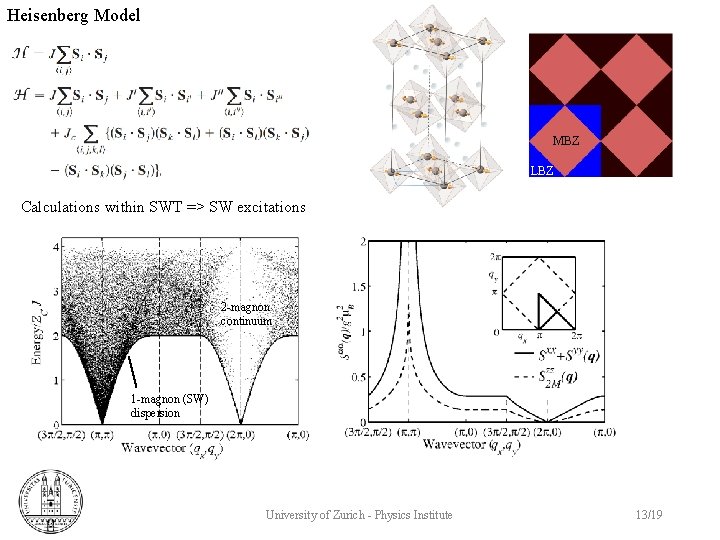
Heisenberg Model MBZ LBZ Calculations within SWT => SW excitations 2 -magnon continuum 1 -magnon (SW) dispersion University of Zurich - Physics Institute 13/19
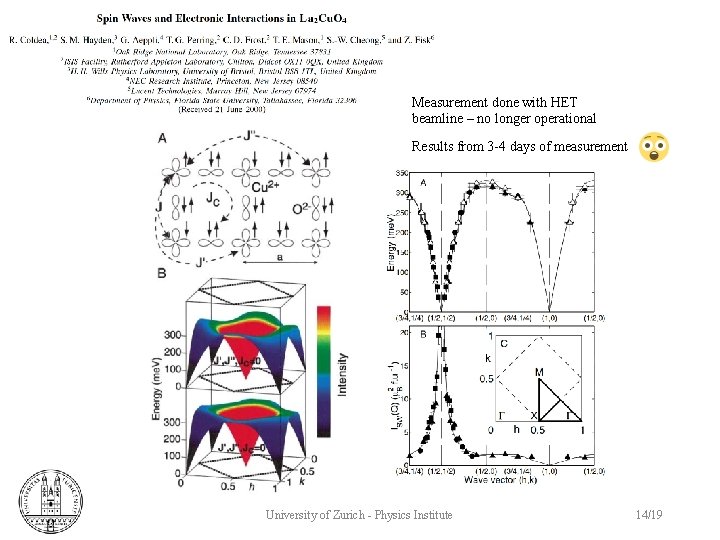
Measurement done with HET beamline – no longer operational Results from 3 -4 days of measurement University of Zurich - Physics Institute 14/19
Discussion University of Zurich - Physics Institute 15/19
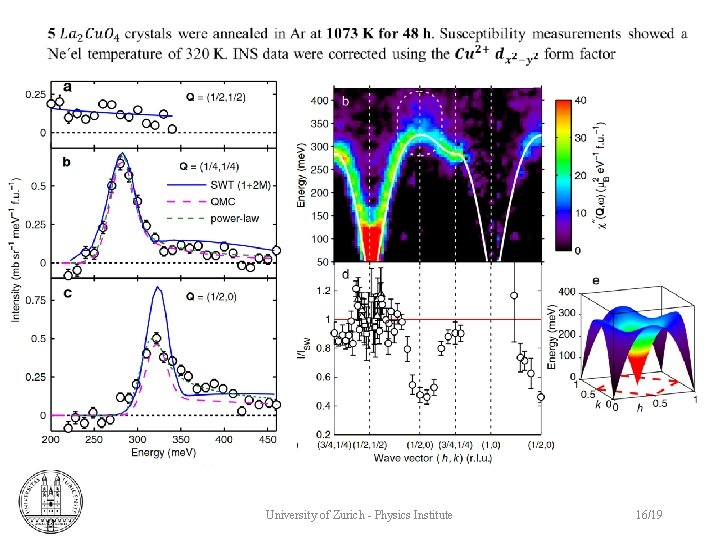
University of Zurich - Physics Institute 16/19
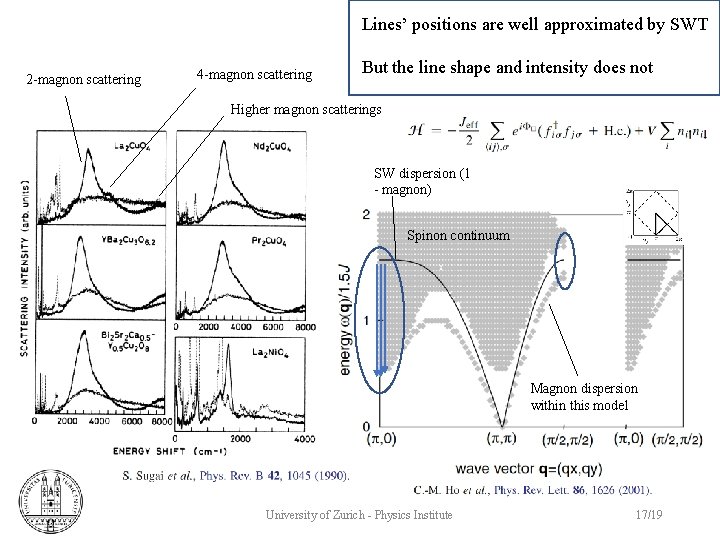
Lines’ positions are well approximated by SWT 2 -magnon scattering 4 -magnon scattering But the line shape and intensity does not Higher magnon scatterings SW dispersion (1 - magnon) Spinon continuum Magnon dispersion within this model University of Zurich - Physics Institute 17/19
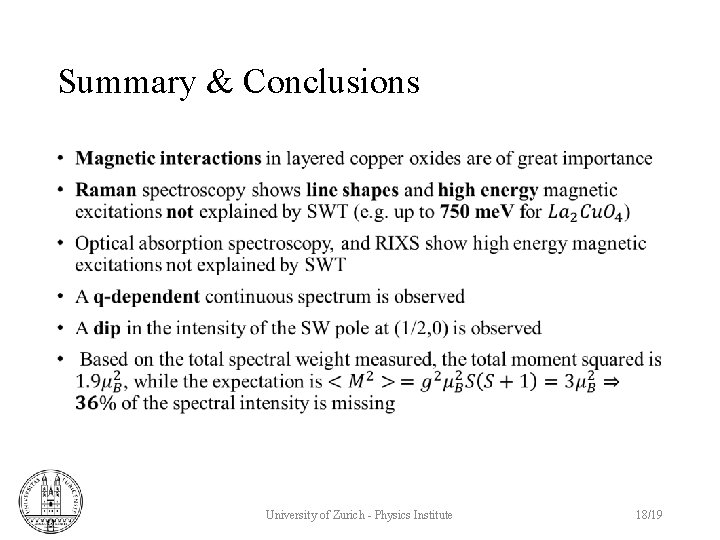
Summary & Conclusions • University of Zurich - Physics Institute 18/19
Thanks for your attention University of Zurich - Physics Institute 19/19