
an Endcap TOF and TRD for Identifying electrons
- Slides: 24
an Endcap TOF and TRD for Identifying electrons at EIC Zhangbu Xu (BNL) Prof. Ming Shao (Co-PI) Tonko Ljubicic, Bob Scheetz, Gene van Buren, Lijuan Ruan, Zhangbu Xu (BNL) Gerard Visser, Indiana University CEEM Geary Eppley, Frank Geurts, Bill Llope (Rice) Jerry Hoffmann, Jo Schambach (UT-Austin) Cheng Li, Hongfang Chen, Ming Shao (USTC/China) Subhasis Chattopadhyay (VECC) Richard Majka, Nikolai Smirnov (Yale) 1
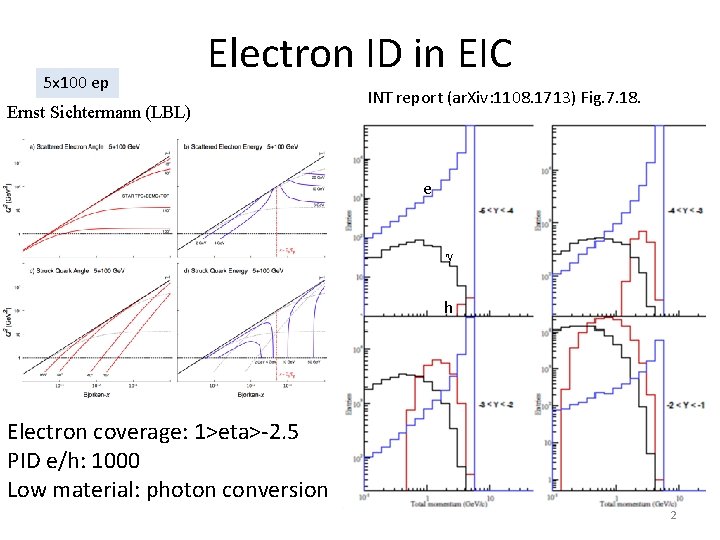
5 x 100 ep Electron ID in EIC Ernst Sichtermann (LBL) INT report (ar. Xiv: 1108. 1713) Fig. 7. 18. e h Electron coverage: 1>eta>-2. 5 PID e/h: 1000 Low material: photon conversion 2
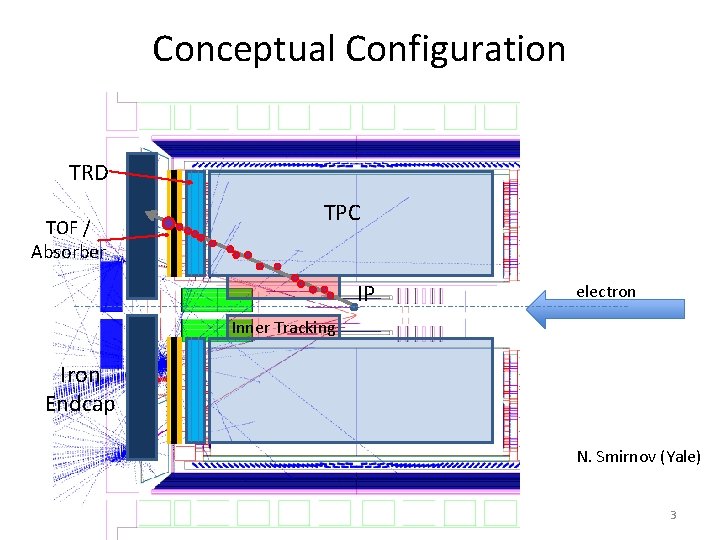
Conceptual Configuration TRD TOF / Absorber TPC IP electron Inner Tracking Iron Endcap N. Smirnov (Yale) 3
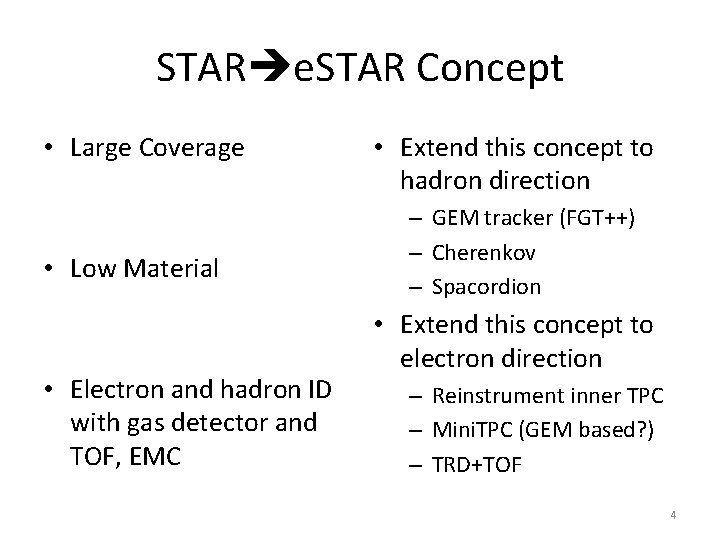
STAR e. STAR Concept • Large Coverage • Low Material • Electron and hadron ID with gas detector and TOF, EMC • Extend this concept to hadron direction – GEM tracker (FGT++) – Cherenkov – Spacordion • Extend this concept to electron direction – Reinstrument inner TPC – Mini. TPC (GEM based? ) – TRD+TOF 4
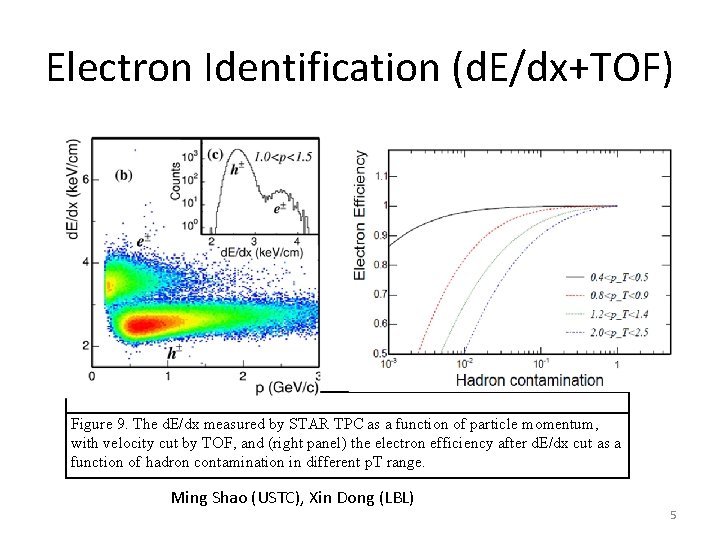
Electron Identification (d. E/dx+TOF) Figure 9. The d. E/dx measured by STAR TPC as a function of particle momentum, with velocity cut by TOF, and (right panel) the electron efficiency after d. E/dx cut as a function of hadron contamination in different p. T range. Ming Shao (USTC), Xin Dong (LBL) 5
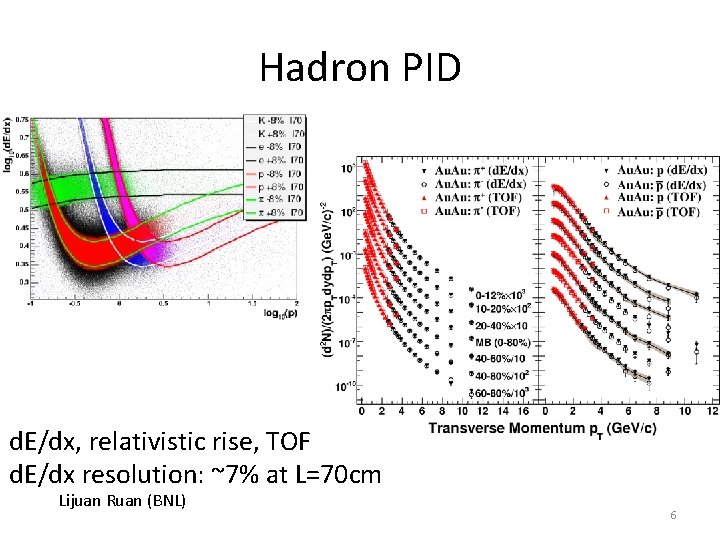
Hadron PID d. E/dx, relativistic rise, TOF d. E/dx resolution: ~7% at L=70 cm Lijuan Ruan (BNL) 6
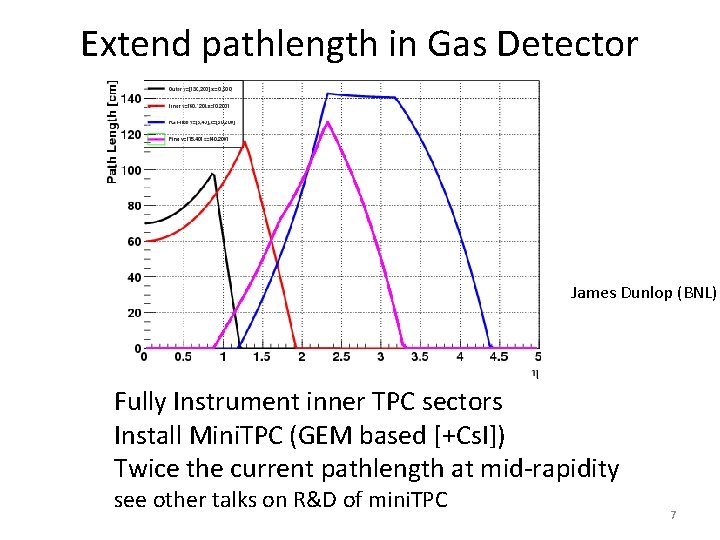
Extend pathlength in Gas Detector James Dunlop (BNL) Fully Instrument inner TPC sectors Install Mini. TPC (GEM based [+Cs. I]) Twice the current pathlength at mid-rapidity see other talks on R&D of mini. TPC 7
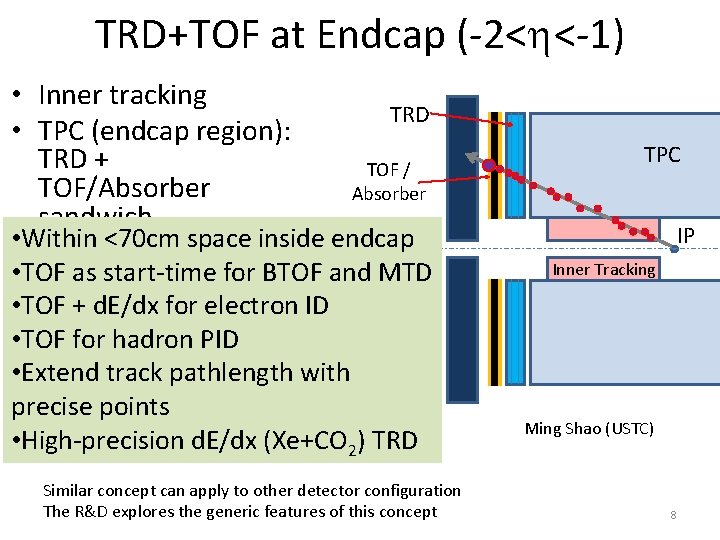
TRD+TOF at Endcap (-2< <-1) • Inner tracking • TPC (endcap region): TRD + TOF/Absorber sandwich TRD TOF / Absorber • Within <70 cm space inside endcap • TOF as start-time for BTOF and MTD • TOF + d. E/dx for electron ID Iron • TOF for hadron PID Endcap • Extend track pathlength with precise points • High-precision d. E/dx (Xe+CO 2) TRD Similar concept can apply to other detector configuration The R&D explores the generic features of this concept TPC IP Inner Tracking Ming Shao (USTC) 8
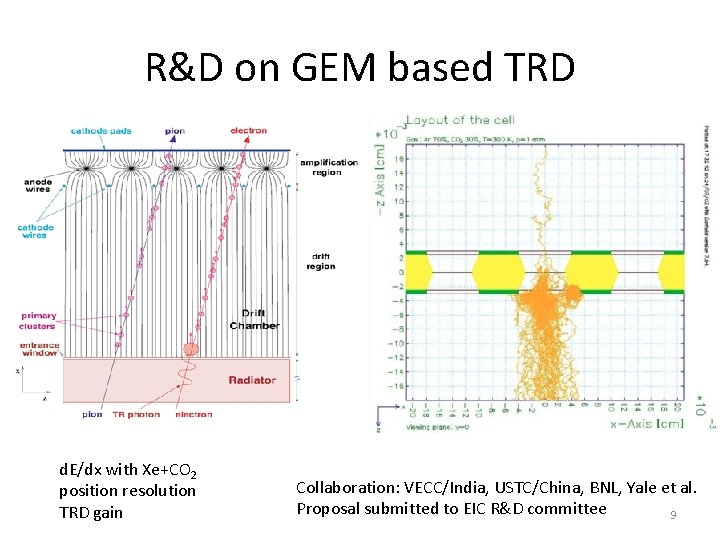
R&D on GEM based TRD d. E/dx with Xe+CO 2 position resolution TRD gain Collaboration: VECC/India, USTC/China, BNL, Yale et al. Proposal submitted to EIC R&D committee 9
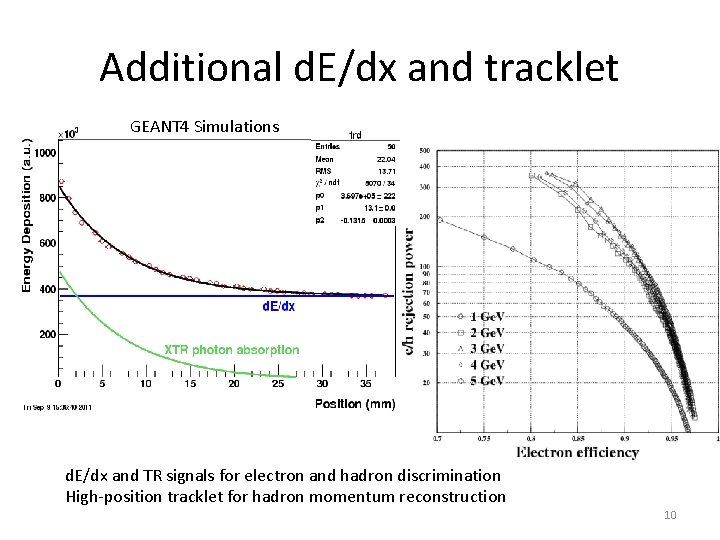
Additional d. E/dx and tracklet GEANT 4 Simulations d. E/dx and TR signals for electron and hadron discrimination High-position tracklet for hadron momentum reconstruction 10
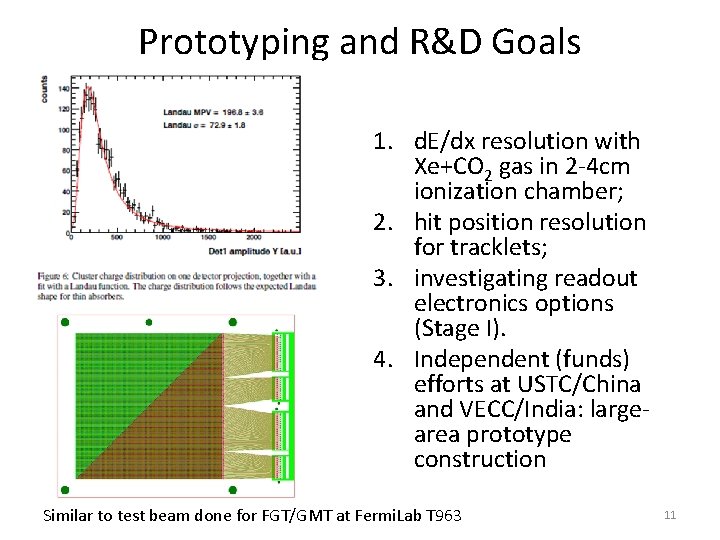
Prototyping and R&D Goals 1. d. E/dx resolution with Xe+CO 2 gas in 2 -4 cm ionization chamber; 2. hit position resolution for tracklets; 3. investigating readout electronics options (Stage I). 4. Independent (funds) efforts at USTC/China and VECC/India: largearea prototype construction Similar to test beam done for FGT/GMT at Fermi. Lab T 963 11
Electronics R&D Stage I • For the baseline stage we plan to use the currently existing electronics readout used for the “Forward Gem Tracker” (FGT) at STAR with modifications already made for the “GEM Monitor for the TPC” (GMT) detector also at STAR. This electronics system was designed for FGT’s and GMT’s GEM chambers and is based upon the APV frontend ASIC, custom STAR-specific electronics and the STARstandard DDL optical link. Such a system is already in use for the QA phase of the FGT detector and will be used in the physics production during the RHIC FY 12 run. Apart from installing the electronics on the prototype detector the 2 necessary modifications and thus milestones of Stage I would be: • Milestone 1: Modifications of the FGT/GMT readout system to enable at least 100 time samples readout. • Milestone 2: Modifications necessary to enable operation at collision frequencies of up to 15 MHz, as required by e. RHIC. 12
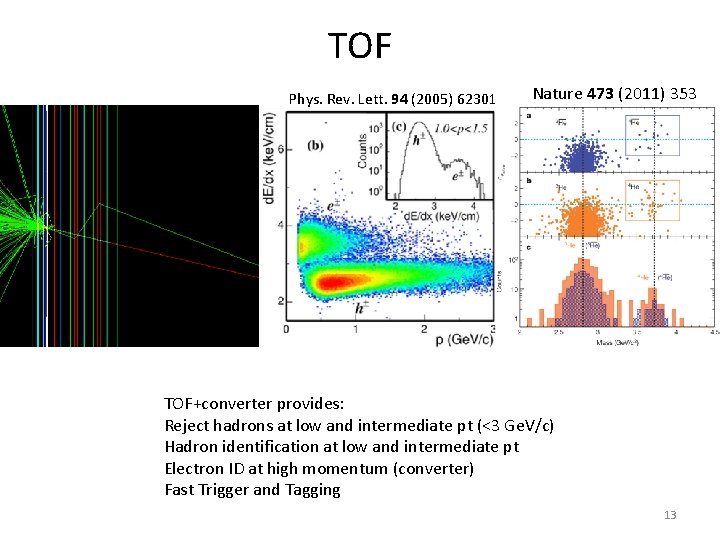
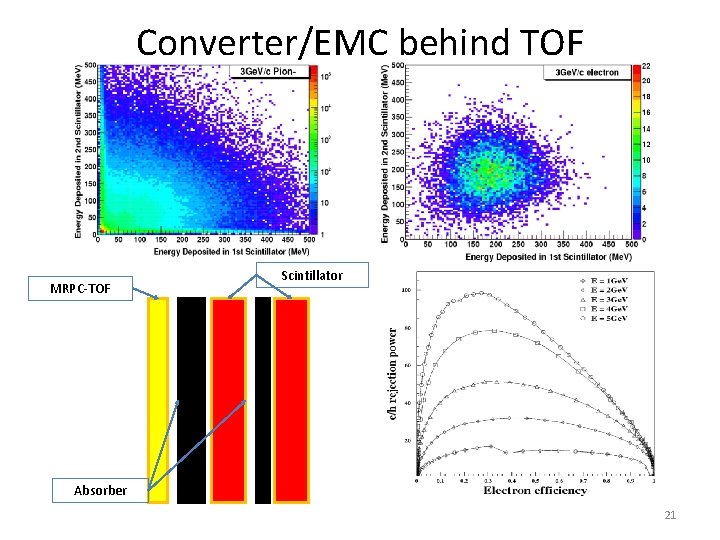
TOF Phys. Rev. Lett. 94 (2005) 62301 Nature 473 (2011) 353 TOF+converter provides: Reject hadrons at low and intermediate pt (<3 Ge. V/c) Hadron identification at low and intermediate pt Electron ID at high momentum (converter) Fast Trigger and Tagging 13
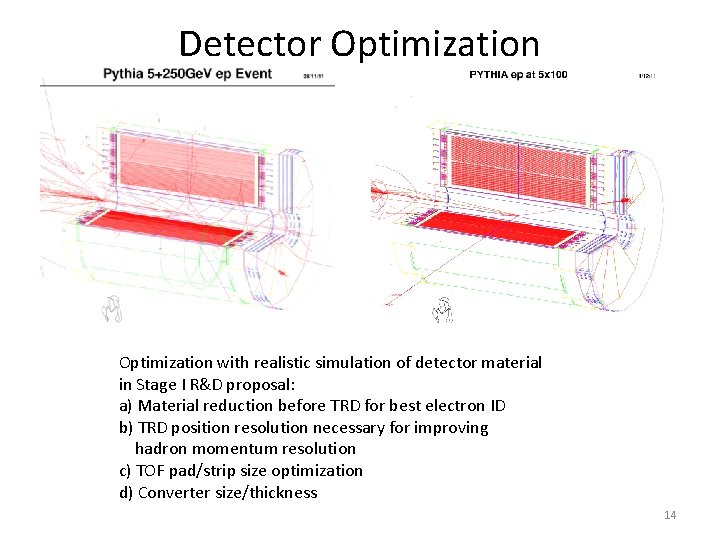
Detector Optimization with realistic simulation of detector material in Stage I R&D proposal: a) Material reduction before TRD for best electron ID b) TRD position resolution necessary for improving hadron momentum resolution c) TOF pad/strip size optimization d) Converter size/thickness 14
Collaboration Current Collaborators Tonko Ljubicic, Bob Scheetz, Gene van Buren, Lijuan Ruan, Zhangbu Xu (BNL) Had Major Responsibilities • STAR TPC/TOF/MTD/FGT Electronics/Upgrades Gerard Visser, Indiana University CEEM Geary Eppley, Frank Geurts, Bill Llope (Rice) • Detector R&D/Constructions STAR TOF/MTD/FGT/GMT Jerry Hoffmann, Jo Schambach (UT-Austin) Cheng Li, Hongfang Chen, Ming Shao (USTC/China) Subhasis Chattopadhyay (VECC) Richard Majka, Nikolai Smirnov (Yale) • GEM Related R&D FGT/GMT CBM Large-area GEM x-ray GEM • e. STAR taskforce 15
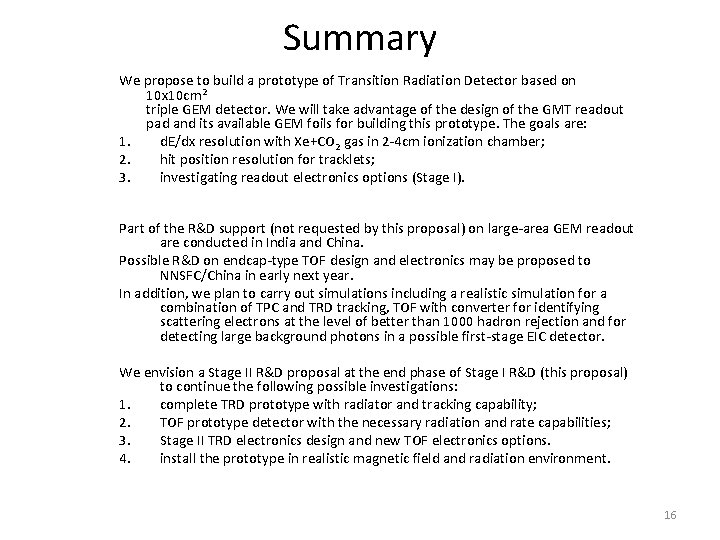
Summary We propose to build a prototype of Transition Radiation Detector based on 10 x 10 cm 2 triple GEM detector. We will take advantage of the design of the GMT readout pad and its available GEM foils for building this prototype. The goals are: 1. d. E/dx resolution with Xe+CO 2 gas in 2 -4 cm ionization chamber; 2. hit position resolution for tracklets; 3. investigating readout electronics options (Stage I). Part of the R&D support (not requested by this proposal) on large-area GEM readout are conducted in India and China. Possible R&D on endcap-type TOF design and electronics may be proposed to NNSFC/China in early next year. In addition, we plan to carry out simulations including a realistic simulation for a combination of TPC and TRD tracking, TOF with converter for identifying scattering electrons at the level of better than 1000 hadron rejection and for detecting large background photons in a possible first-stage EIC detector. We envision a Stage II R&D proposal at the end phase of Stage I R&D (this proposal) to continue the following possible investigations: 1. complete TRD prototype with radiator and tracking capability; 2. TOF prototype detector with the necessary radiation and rate capabilities; 3. Stage II TRD electronics design and new TOF electronics options. 4. install the prototype in realistic magnetic field and radiation environment. 16
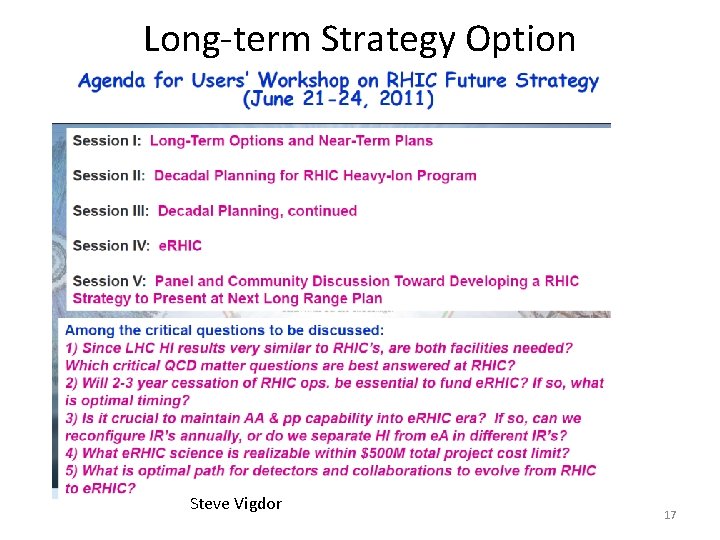
Long-term Strategy Option Steve Vigdor 17
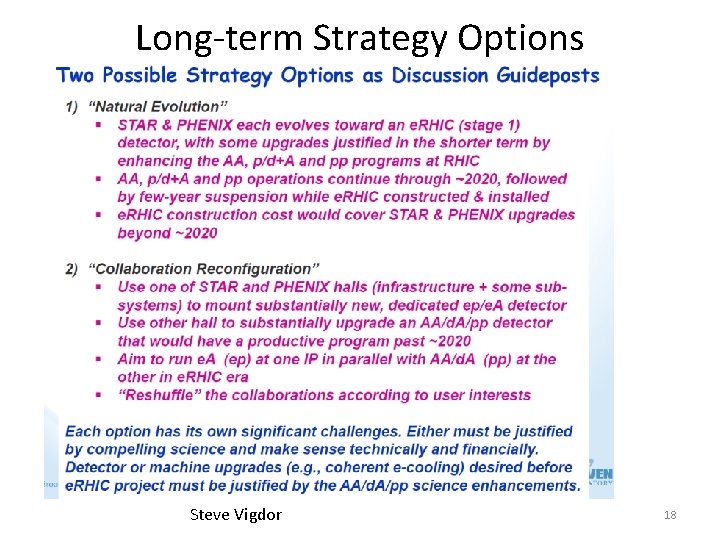
Long-term Strategy Options Steve Vigdor 18
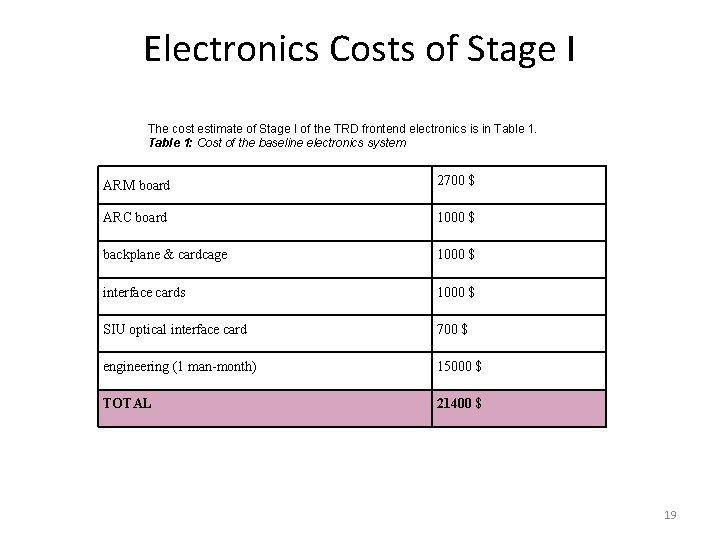
Electronics Costs of Stage I The cost estimate of Stage I of the TRD frontend electronics is in Table 1: Cost of the baseline electronics system ARM board 2700 $ ARC board 1000 $ backplane & cardcage 1000 $ interface cards 1000 $ SIU optical interface card 700 $ engineering (1 man-month) 15000 $ TOTAL 21400 $ 19
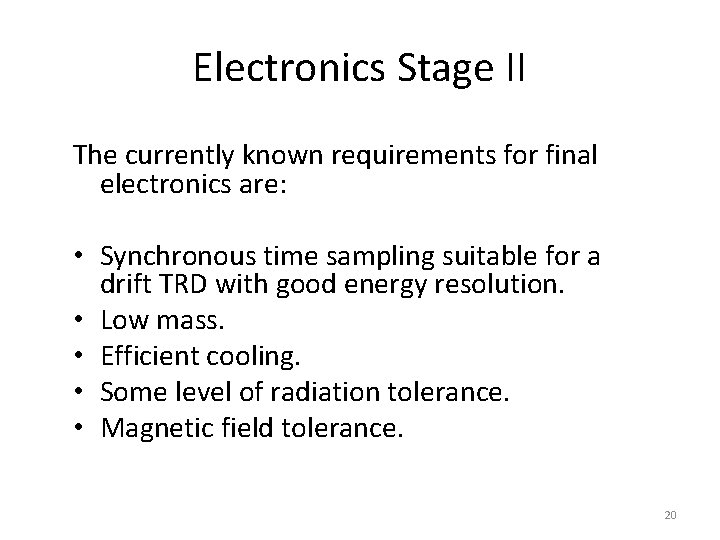
Electronics Stage II The currently known requirements for final electronics are: • Synchronous time sampling suitable for a drift TRD with good energy resolution. • Low mass. • Efficient cooling. • Some level of radiation tolerance. • Magnetic field tolerance. 20
Converter/EMC behind TOF MRPC-TOF Scintillator Absorber 21
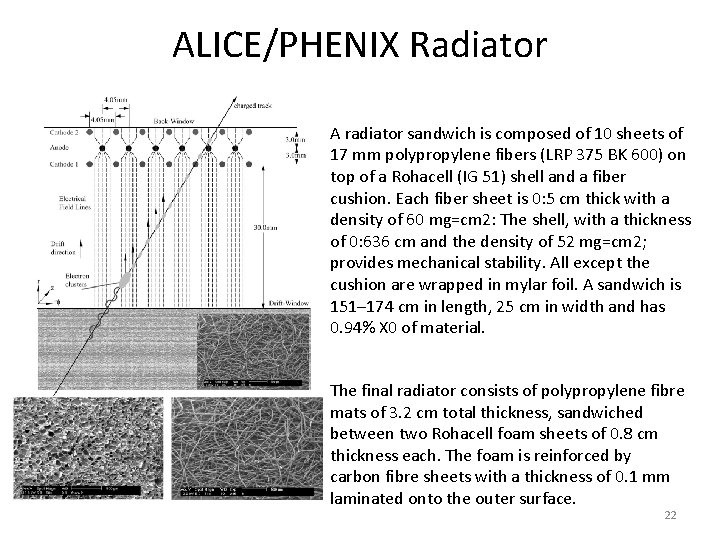
ALICE/PHENIX Radiator A radiator sandwich is composed of 10 sheets of 17 mm polypropylene fibers (LRP 375 BK 600) on top of a Rohacell (IG 51) shell and a fiber cushion. Each fiber sheet is 0: 5 cm thick with a density of 60 mg=cm 2: The shell, with a thickness of 0: 636 cm and the density of 52 mg=cm 2; provides mechanical stability. All except the cushion are wrapped in mylar foil. A sandwich is 151– 174 cm in length, 25 cm in width and has 0. 94% X 0 of material. The final radiator consists of polypropylene fibre mats of 3. 2 cm total thickness, sandwiched between two Rohacell foam sheets of 0. 8 cm thickness each. The foam is reinforced by carbon fibre sheets with a thickness of 0. 1 mm laminated onto the outer surface. 22
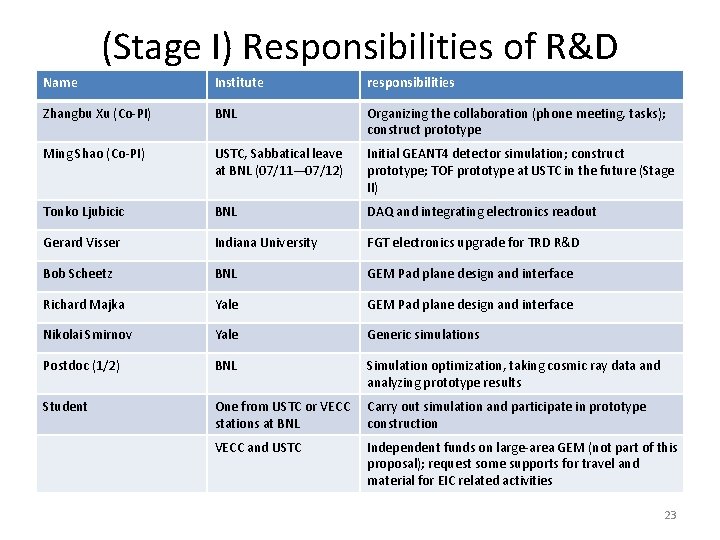
(Stage I) Responsibilities of R&D Name Institute responsibilities Zhangbu Xu (Co-PI) BNL Organizing the collaboration (phone meeting, tasks); construct prototype Ming Shao (Co-PI) USTC, Sabbatical leave at BNL (07/11— 07/12) Initial GEANT 4 detector simulation; construct prototype; TOF prototype at USTC in the future (Stage II) Tonko Ljubicic BNL DAQ and integrating electronics readout Gerard Visser Indiana University FGT electronics upgrade for TRD R&D Bob Scheetz BNL GEM Pad plane design and interface Richard Majka Yale GEM Pad plane design and interface Nikolai Smirnov Yale Generic simulations Postdoc (1/2) BNL Simulation optimization, taking cosmic ray data and analyzing prototype results Student One from USTC or VECC Carry out simulation and participate in prototype stations at BNL construction VECC and USTC Independent funds on large-area GEM (not part of this proposal); request some supports for travel and material for EIC related activities 23
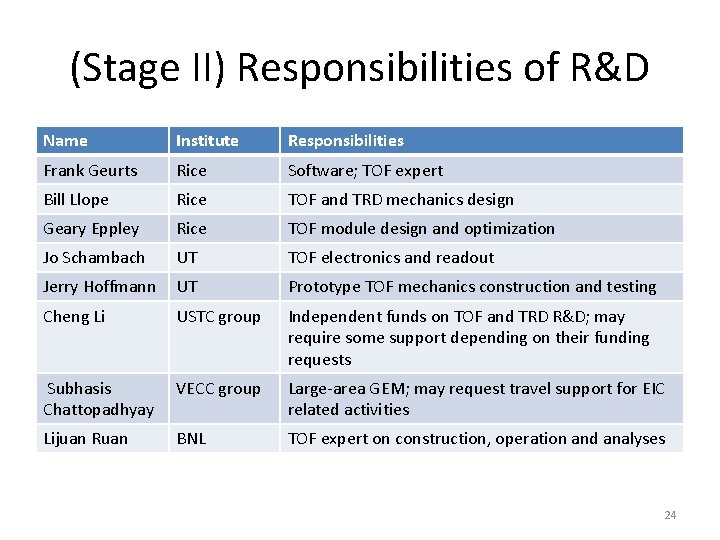
(Stage II) Responsibilities of R&D Name Institute Responsibilities Frank Geurts Rice Software; TOF expert Bill Llope Rice TOF and TRD mechanics design Geary Eppley Rice TOF module design and optimization Jo Schambach UT TOF electronics and readout Jerry Hoffmann UT Prototype TOF mechanics construction and testing Cheng Li USTC group Independent funds on TOF and TRD R&D; may require some support depending on their funding requests Subhasis VECC group Chattopadhyay Large-area GEM; may request travel support for EIC related activities Lijuan Ruan TOF expert on construction, operation and analyses BNL 24