Kharkiv National Medical University Department of Medical and
- Slides: 66
Kharkiv National Medical University Department of Medical and Bioorganic chemistry «Biological and Bioorganic Chemistry» Lecture 5 Heterocyclic Compounds. Structure, Properties and Biological Function of Nucleic Acids Lecturer: As. Professor, Department of Medical and Bioorganic Chemistry, , Ph. D. Kozub S. M. 1
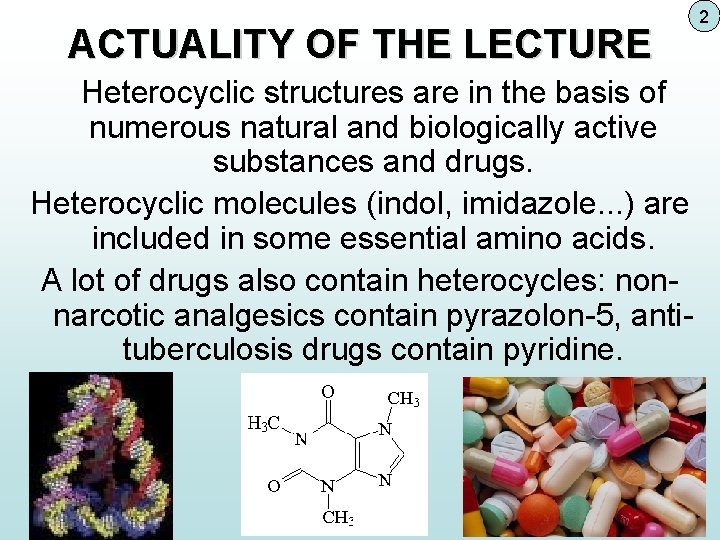
ACTUALITY OF THE LECTURE Heterocyclic structures are in the basis of numerous natural and biologically active substances and drugs. Heterocyclic molecules (indol, imidazole. . . ) are included in some essential amino acids. A lot of drugs also contain heterocycles: nonnarcotic analgesics contain pyrazolon-5, antituberculosis drugs contain pyridine. 2
3 Outline of the lecture 1. Classification of heterocycles. 2. Aromaticity of heterocycles. 3. Biologically important compounds with five-membered heterocycles. 4. Biologically important compounds with six-membered heterocycles. 5. The structure and biochemical functions of nucleosides, nucleotides and nucleic acids.
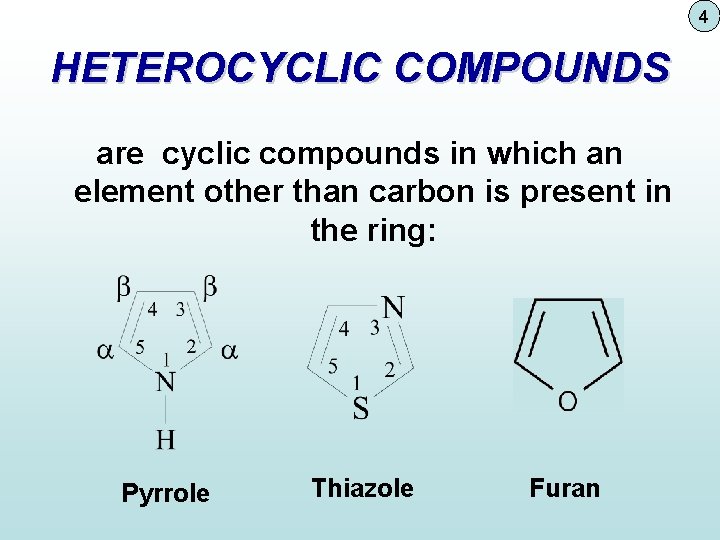
4 HETEROCYCLIC COMPOUNDS are cyclic compounds in which an element other than carbon is present in the ring: Pyrrole Thiazole Furan
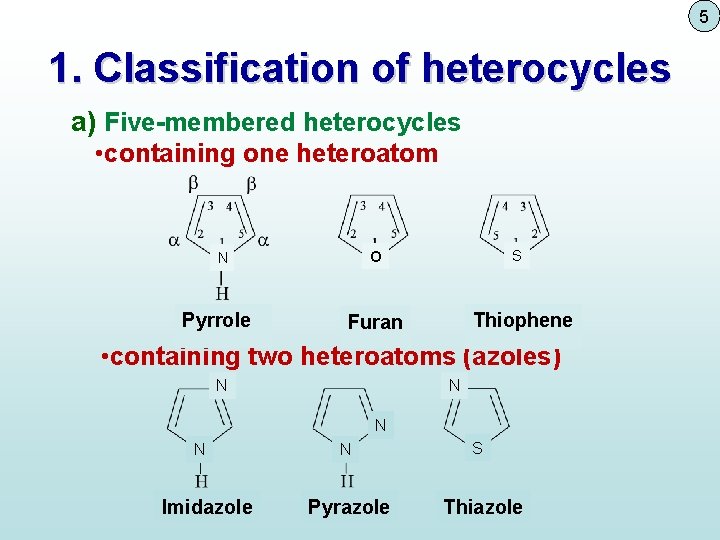
5 1. Classification of heterocycles а) Five-membered heterocycles • containing one heteroatom Pyrrole S O N Thiophene Furan • containing two heteroatoms (azoles) N N Imidazole N Pyrazole S Thiazole
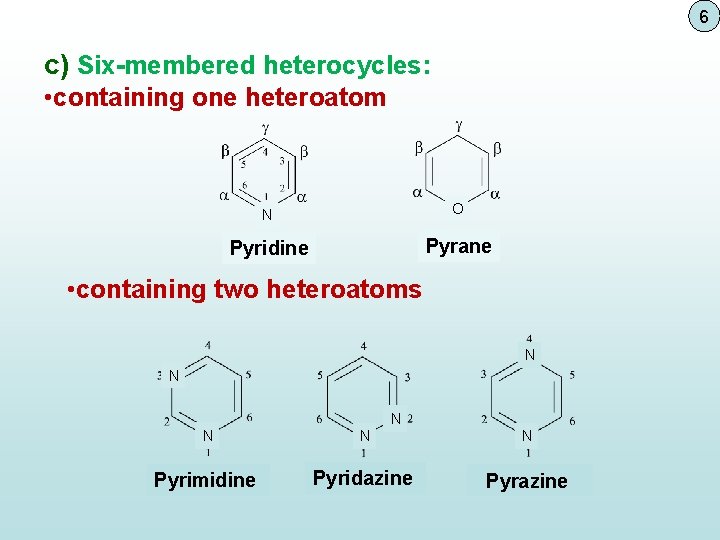
6 c) Six-membered heterocycles: • containing one heteroatom N O Pyridine Pyrane • containing two heteroatoms N N N Pyrimidine Pyridazine Pyrazine
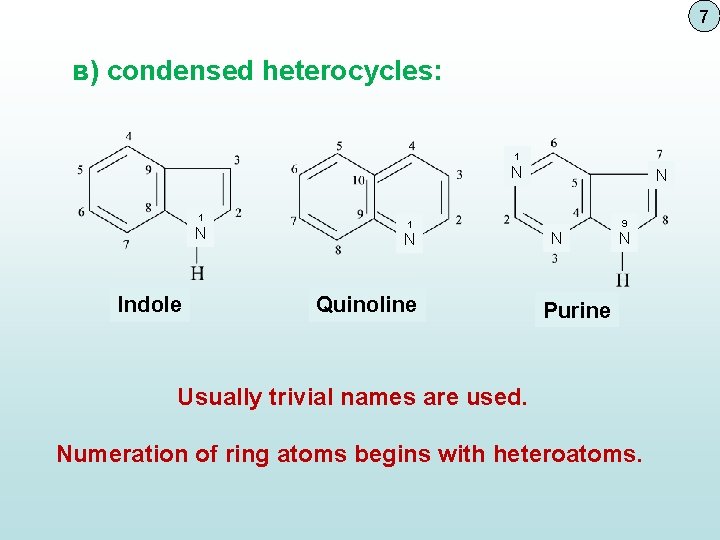
7 в) condensed heterocycles: 1 N Indole 1 N Quinoline N 9 N N Purine Usually trivial names are used. Numeration of ring atoms begins with heteroatoms.
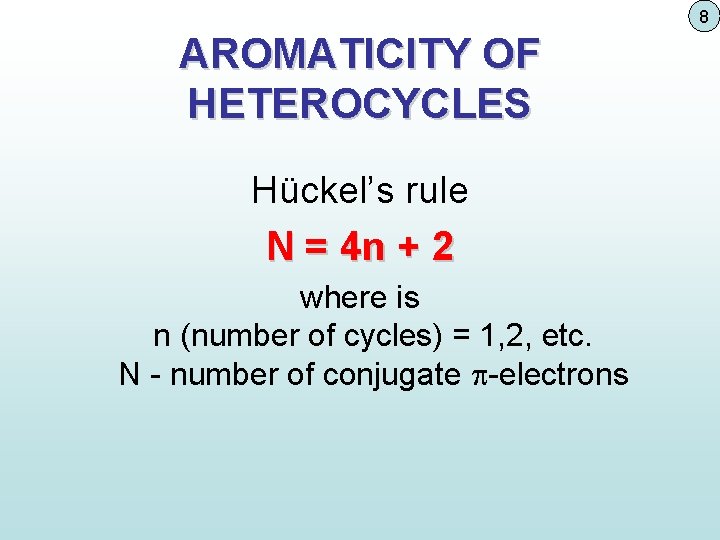
8 AROMATICITY OF HETEROCYCLES Hückel’s rule N = 4 n + 2 where is n (number of cycles) = 1, 2, etc. N - number of conjugate -electrons
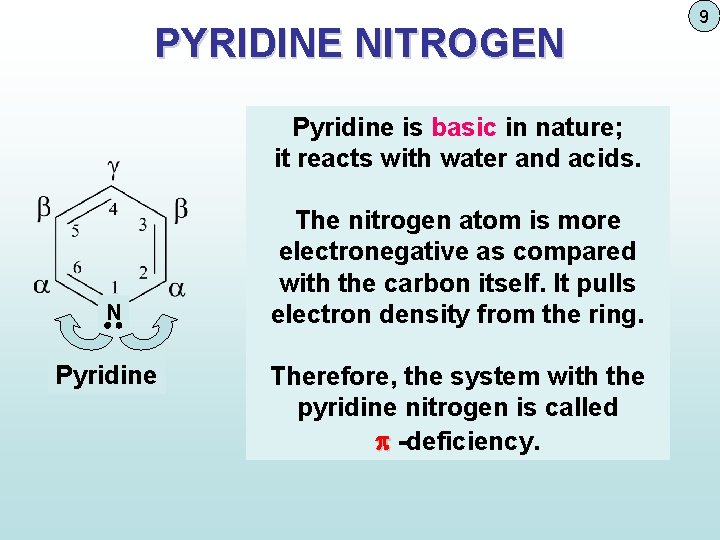
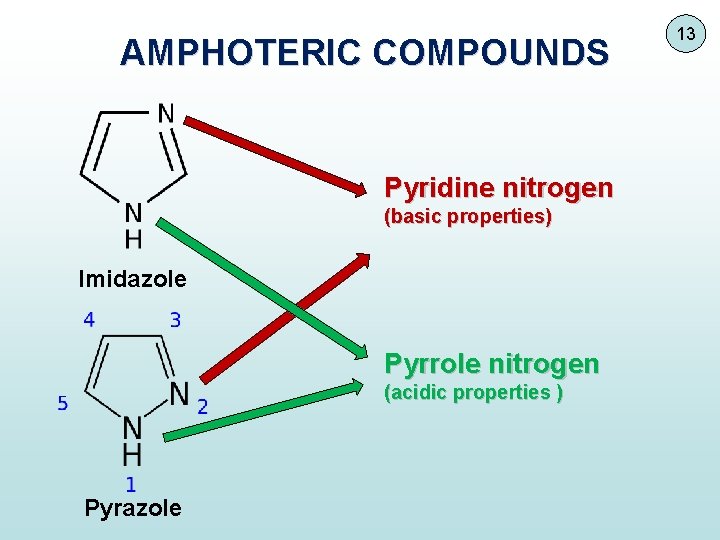
PYRIDINE NITROGEN Pyridine is basic in nature; it reacts with water and acids. N Pyridine The nitrogen atom is more electronegative as compared with the carbon itself. It pulls electron density from the ring. Therefore, the system with the pyridine nitrogen is called -deficiency. 9
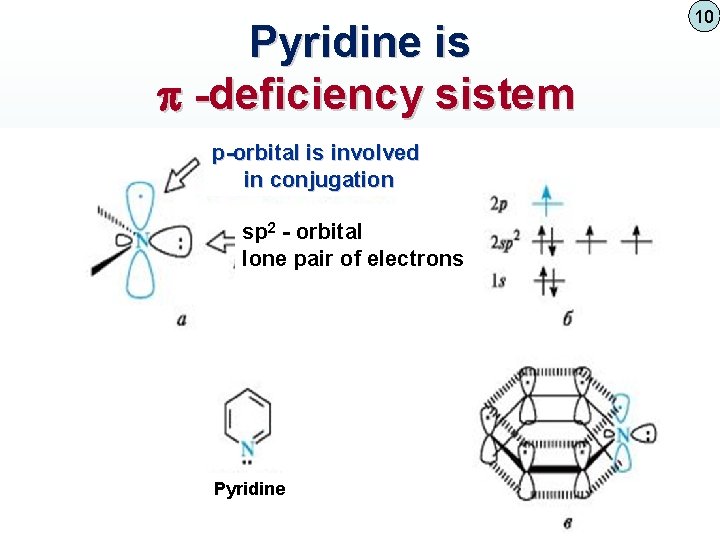
Pyridine is -deficiency sistem p-orbital is involved in conjugation sp 2 - orbital lone pair of electrons Pyridine 10
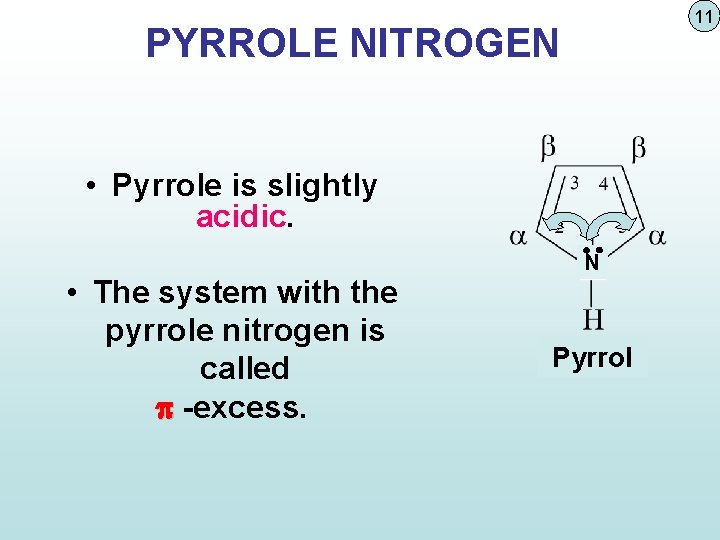
11 PYRROLE NITROGEN • Pyrrole is slightly acidic. • The system with the pyrrole nitrogen is called -excess. N Pyrrol
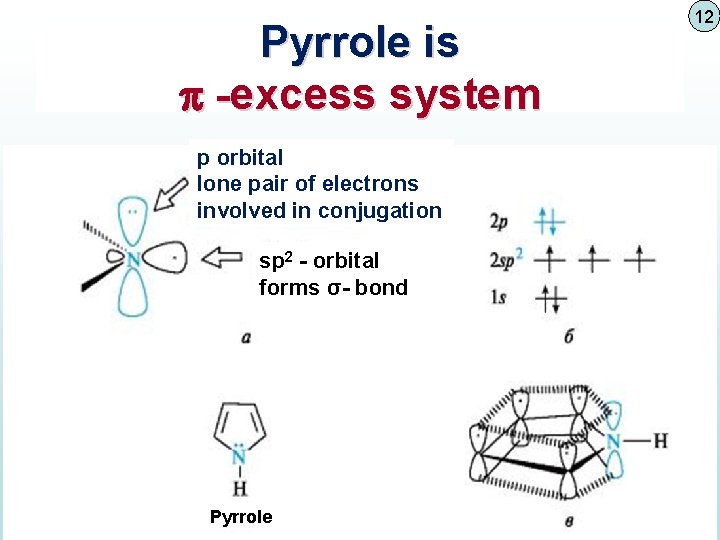
Pyrrole is -excess system p orbital lone pair of electrons involved in conjugation sp 2 - orbital forms σ- bond Pyrrole 12
AMPHOTERIC COMPOUNDS Pyridine nitrogen (basic properties) Imidazole Pyrrole nitrogen (acidic properties ) Pyrazole 13
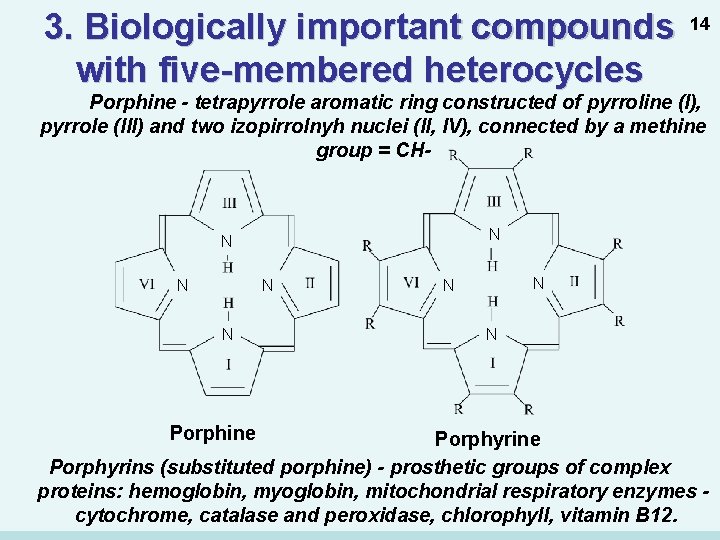
3. Biologically important compounds with five-membered heterocycles 14 14 Porphine - tetrapyrrole aromatic ring constructed of pyrroline (I), pyrrole (III) and two izopirrolnyh nuclei (II, IV), connected by a methine group = CH- N N N Porphine N N N Porphyrine Porphyrins (substituted porphine) - prosthetic groups of complex proteins: hemoglobin, myoglobin, mitochondrial respiratory enzymes cytochrome, catalase and peroxidase, chlorophyll, vitamin B 12.
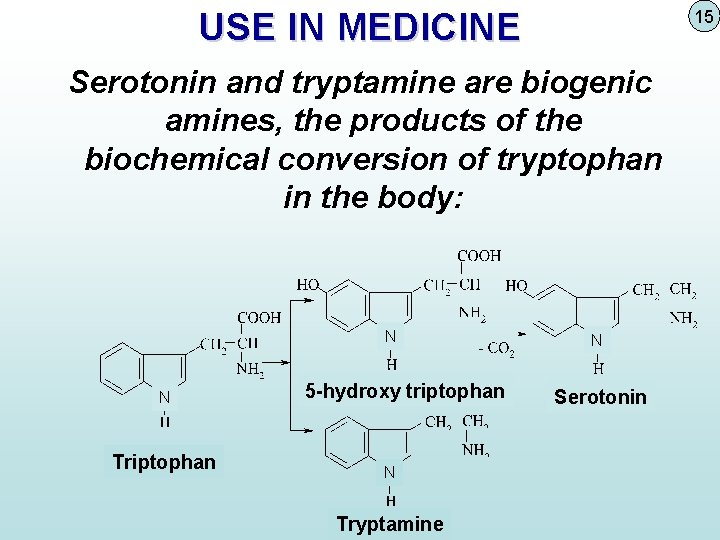
USE IN MEDICINE 15 Serotonin and tryptamine are biogenic amines, the products of the biochemical conversion of tryptophan in the body: N N Triptophan 5 -hydroxy triptophan N Tryptamine N Serotonin
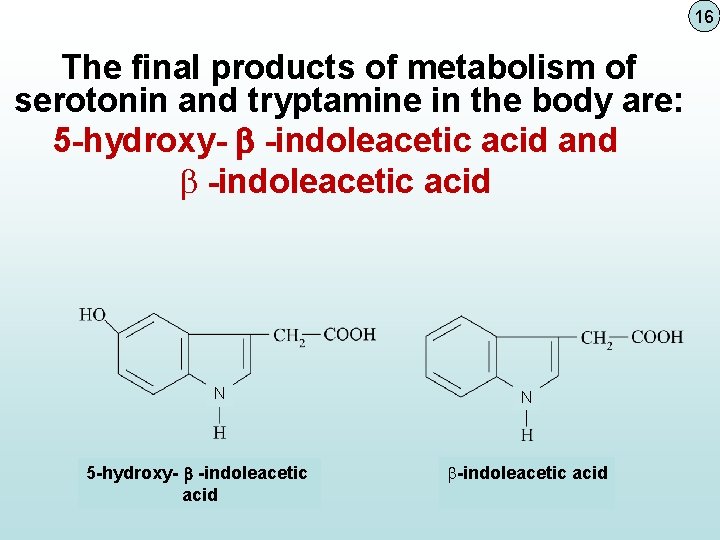
16 The final products of metabolism of serotonin and tryptamine in the body are: 5 -hydroxy- -indoleacetic acid and b -indoleacetic acid N 5 -hydroxy- -indoleacetic acid N b-indoleacetic acid
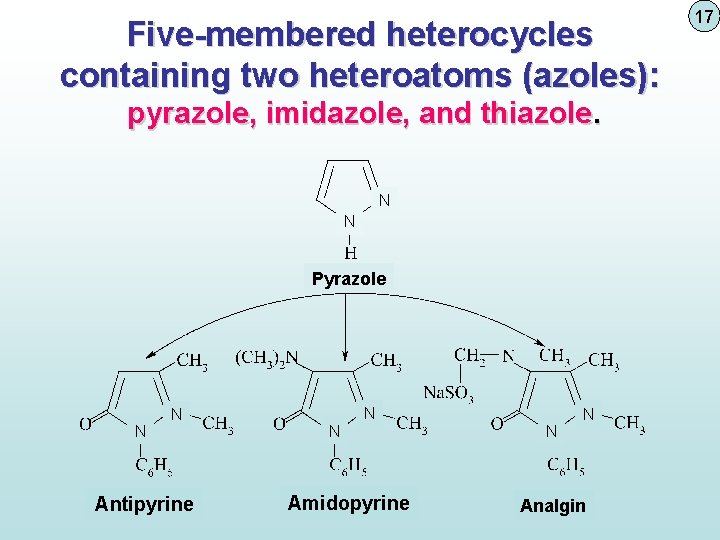
Five-membered heterocycles containing two heteroatoms (azoles): pyrazole, imidazole, and thiazole. N N Pyrazole N N Antipyrine N N Amidopyrine N N Analgin 17
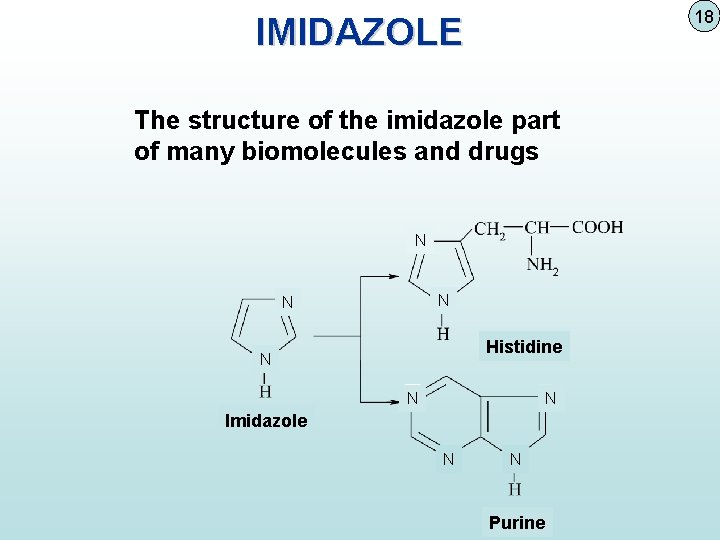
18 IMIDAZOLE The structure of the imidazole part of many biomolecules and drugs N N N Histidine N N N Imidazole N N Purine
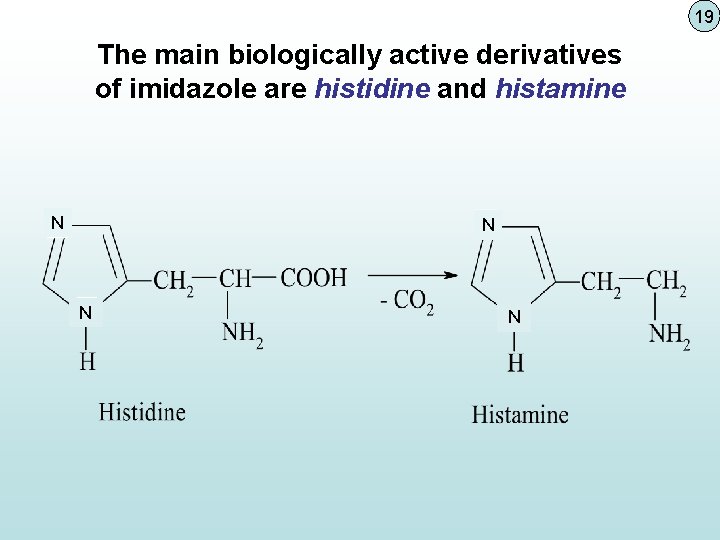
19 The main biologically active derivatives of imidazole are histidine and histamine N N
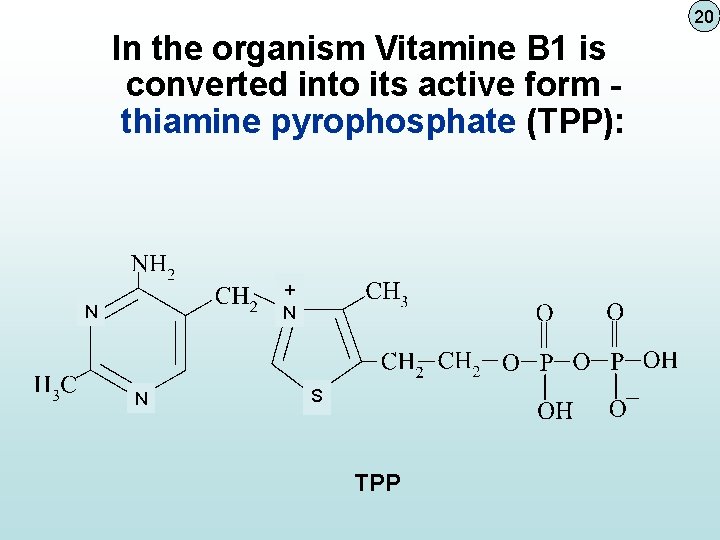
20 In the organism Vitamine B 1 is converted into its active form thiamine pyrophosphate (TPP): + N N N S TPP
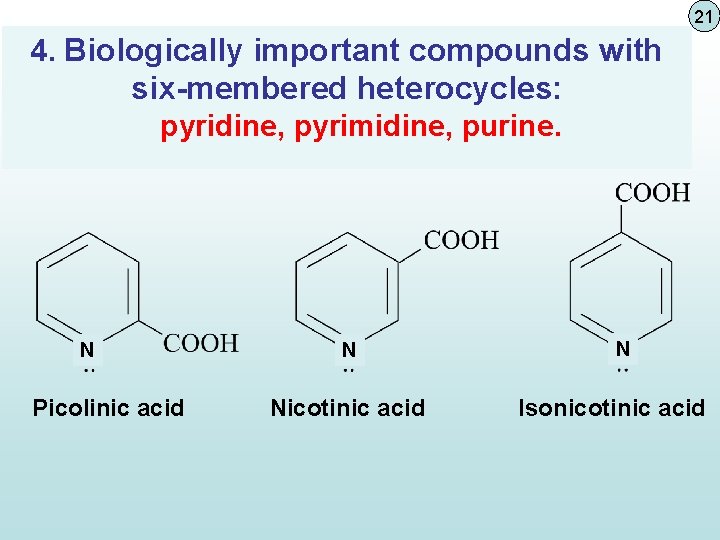
21 4. Biologically important compounds with six-membered heterocycles: pyridine, pyrimidine, purine. N Picolinic acid N Nicotinic acid N Isonicotinic acid
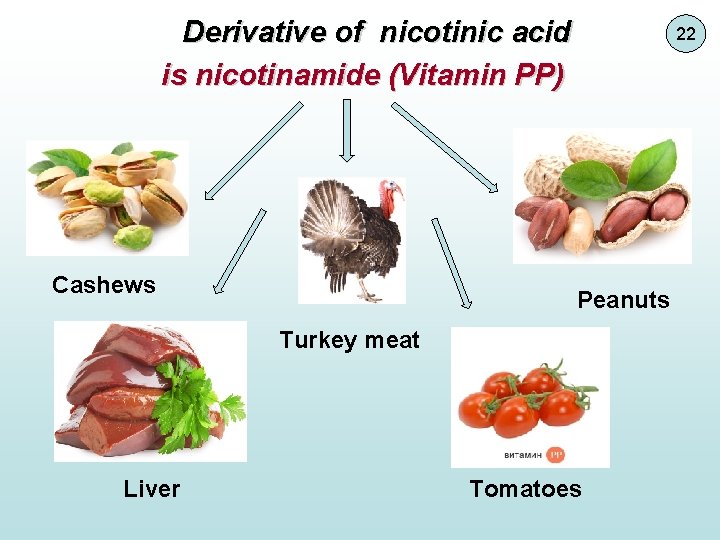
Derivative of nicotinic acid is nicotinamide (Vitamin PP) Cashews 22 Peanuts Turkey meat Liver Tomatoes
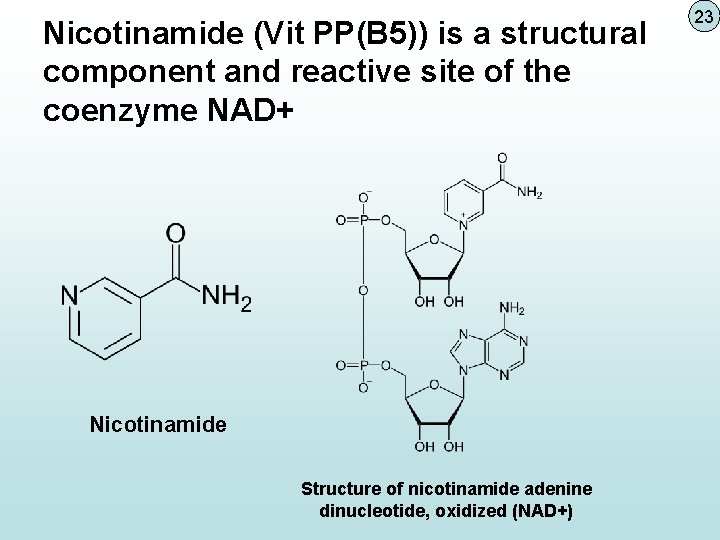
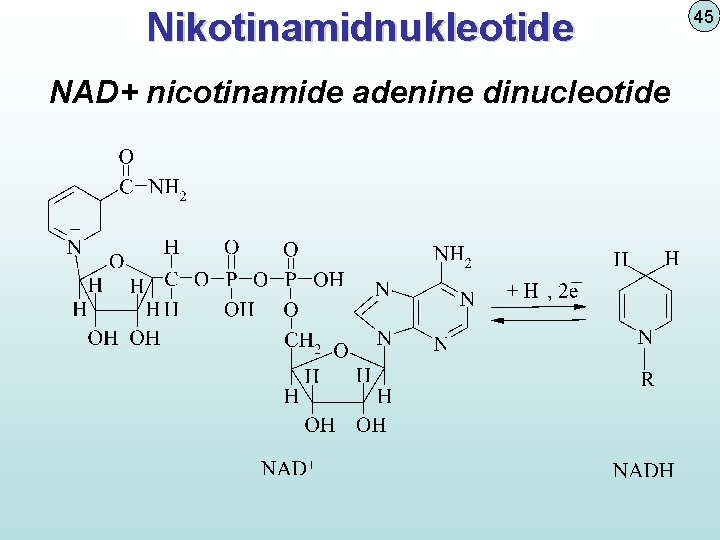
Nicotinamide (Vit PP(B 5)) is a structural component and reactive site of the coenzyme NAD+ Nicotinamide Structure of nicotinamide adenine dinucleotide, oxidized (NAD+) 23
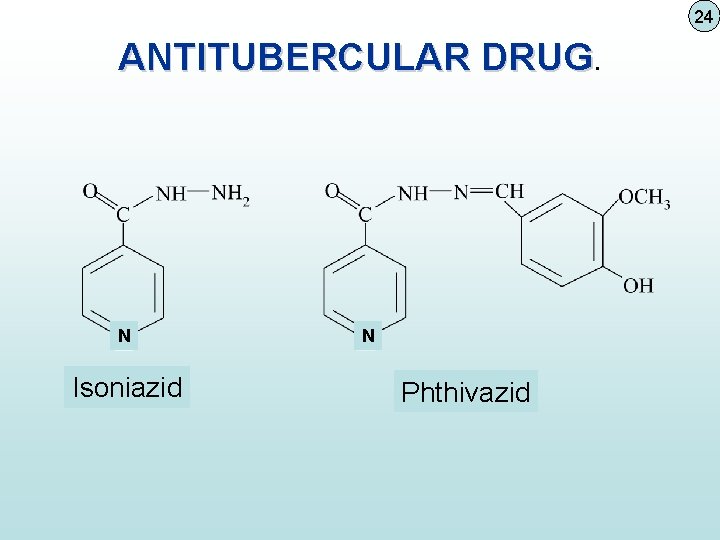
24 ANTITUBERCULAR DRUG. N Isoniazid N Phthivazid
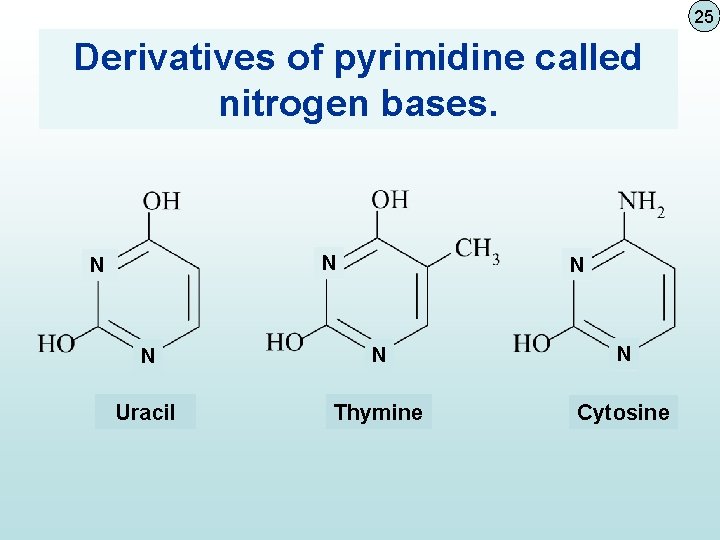
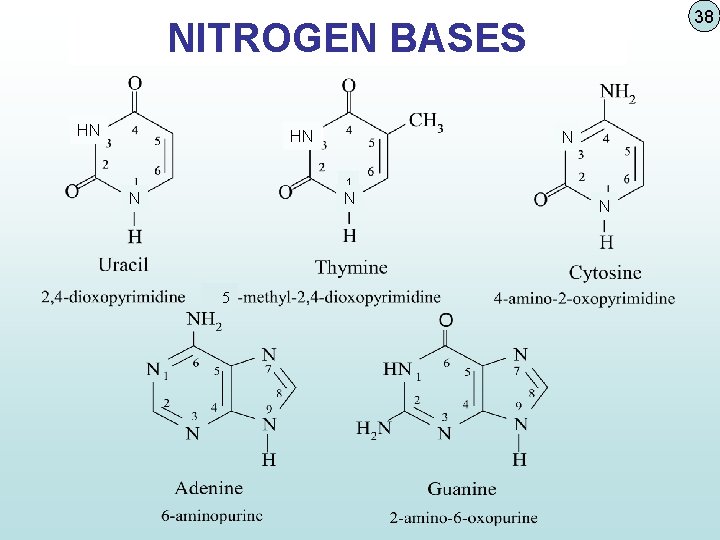
25 Derivatives of pyrimidine called nitrogen bases. N N N Uracil Thymine Cytosine
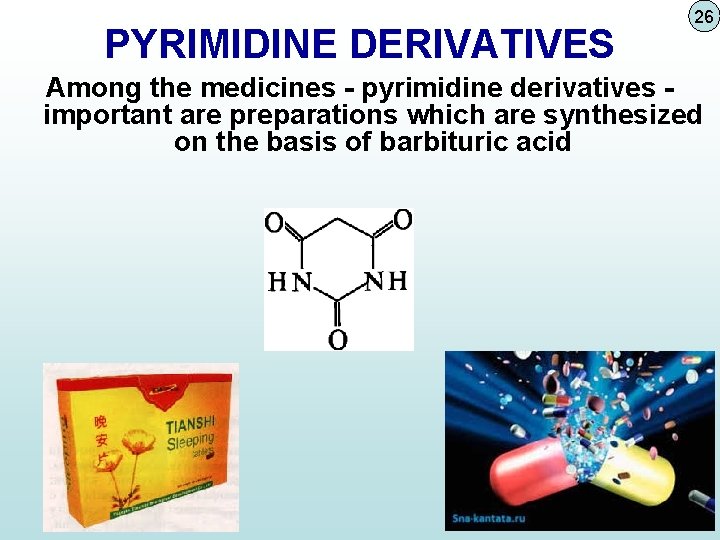
PYRIMIDINE DERIVATIVES 26 Among the medicines - pyrimidine derivatives important are preparations which are synthesized on the basis of barbituric acid
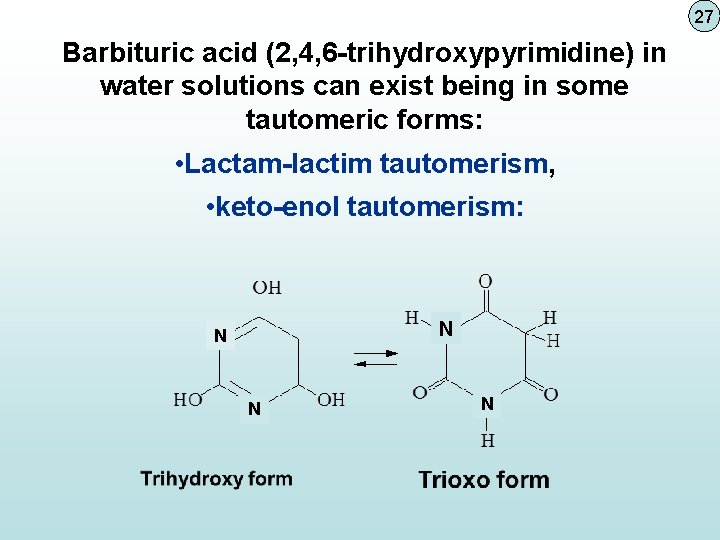
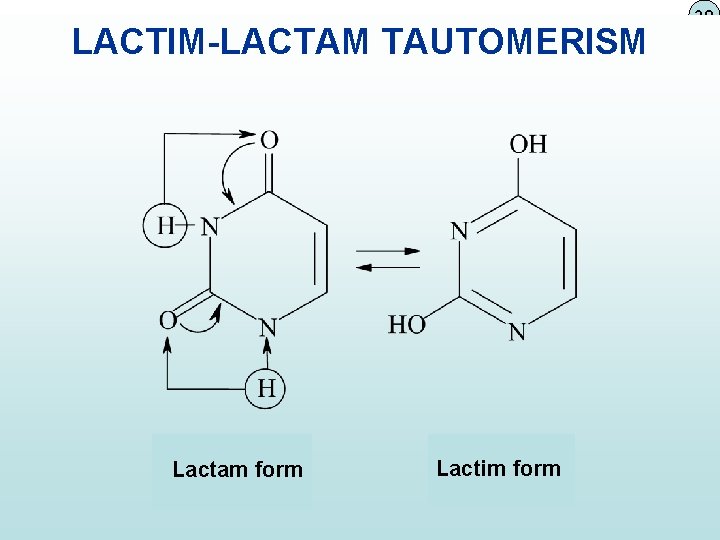
27 Barbituric acid (2, 4, 6 -trihydroxypyrimidine) in water solutions can exist being in some tautomeric forms: • Lactam-lactim tautomerism, • keto-enol tautomerism: N N
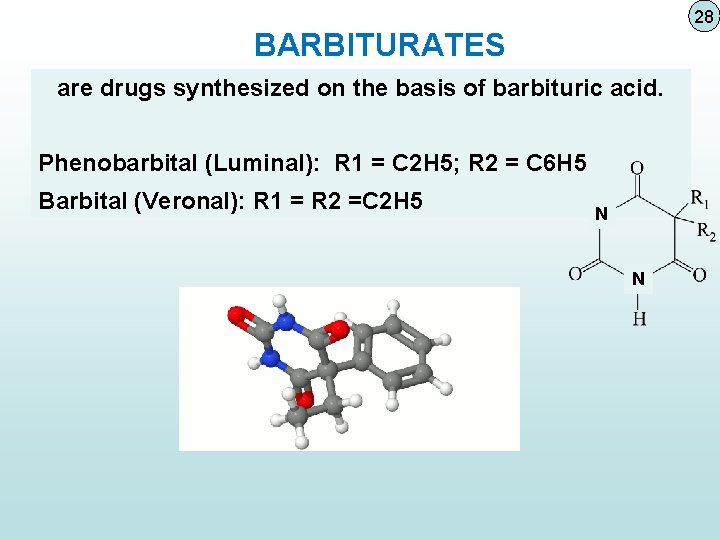
28 BARBITURATES are drugs synthesized on the basis of barbituric acid. Phenobarbital (Luminal): R 1 = C 2 H 5; R 2 = C 6 H 5 Barbital (Veronal): R 1 = R 2 =C 2 H 5 N N
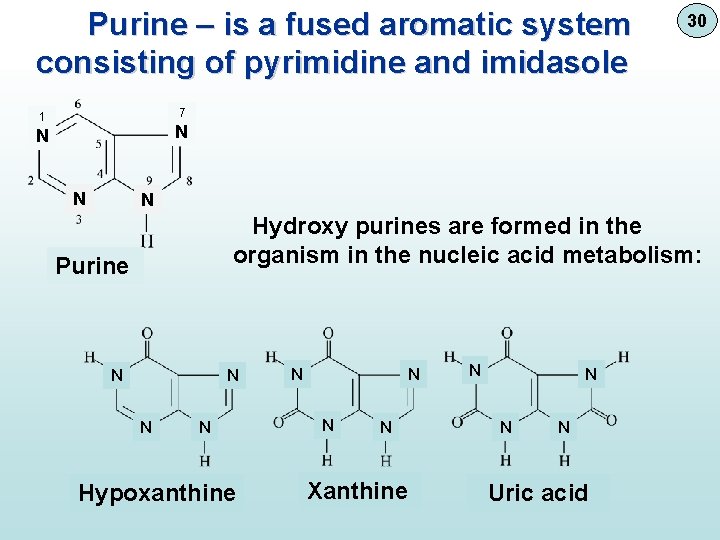
Purine – is a fused aromatic system consisting of pyrimidine and imidasole 29 30 7 1 N N Hydroxy purines are formed in the organism in the nucleic acid metabolism: Purine N N Hypoxanthine N N Xanthine N N Uric acid
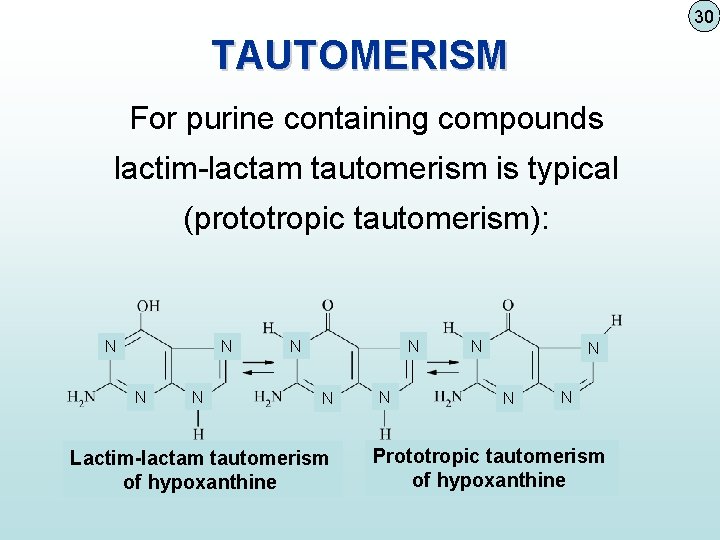
30 TAUTOMERISM For purine containing compounds lactim-lactam tautomerism is typical (prototropic tautomerism): N N N N Lactim-lactam tautomerism of hypoxanthine N N N Prototropic tautomerism of hypoxanthine
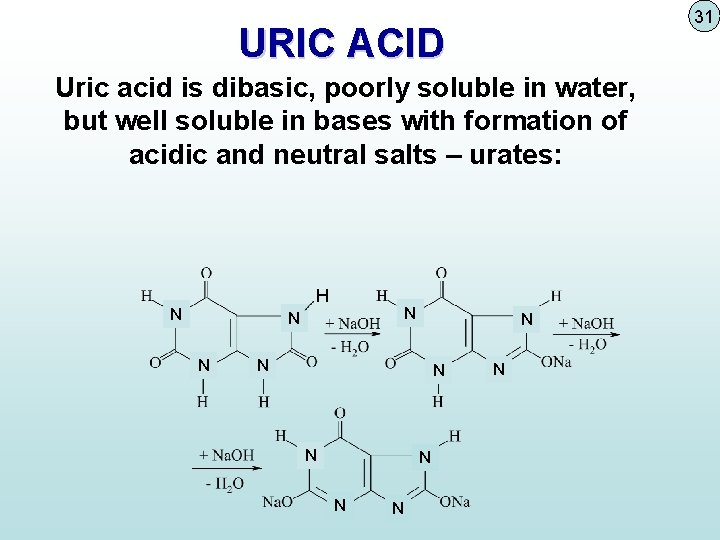
31 URIC ACID Uric acid is dibasic, poorly soluble in water, but well soluble in bases with formation of acidic and neutral salts – urates: H N N N
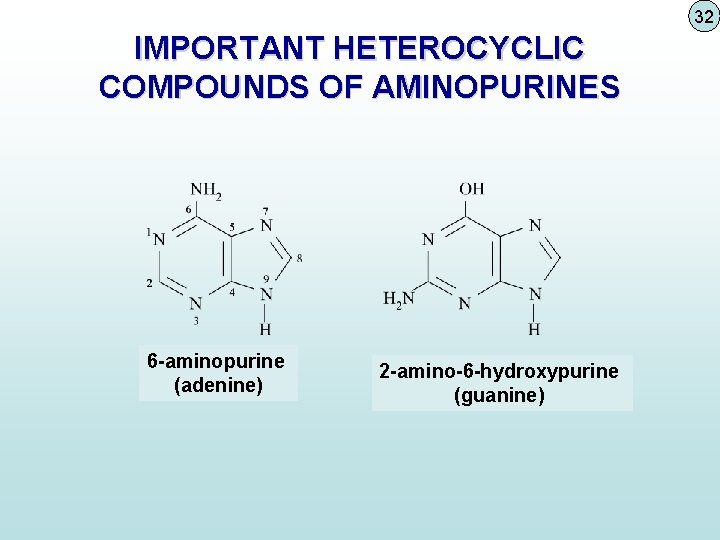
32 IMPORTANT HETEROCYCLIC COMPOUNDS OF AMINOPURINES 6 -aminopurine (adenine) 2 -amino-6 -hydroxypurine (guanine)
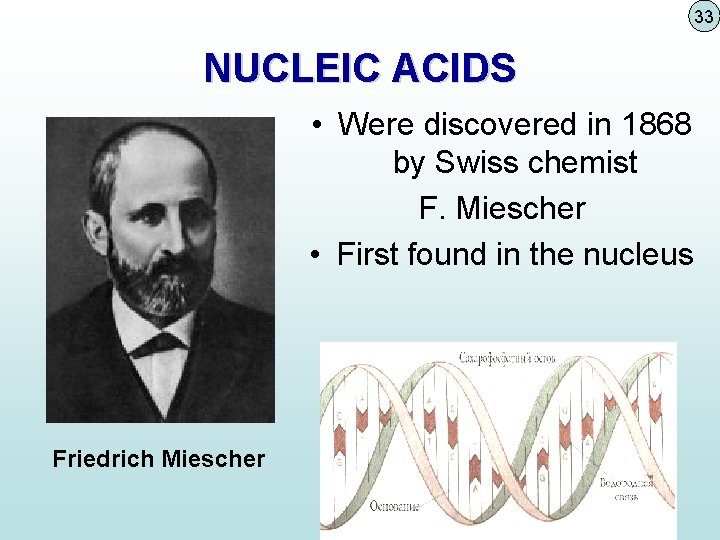
33 NUCLEIC ACIDS • Were discovered in 1868 by Swiss chemist F. Miescher • First found in the nucleus Friedrich Miescher
34 The role of nucleic acids People, animals, plants, and more all are connected by genetic material. Every living thing may look different and act different, but deep down — way deep down in the nucleus of cells — living things contain the same chemical “ingredients” making up very similar genetic material.
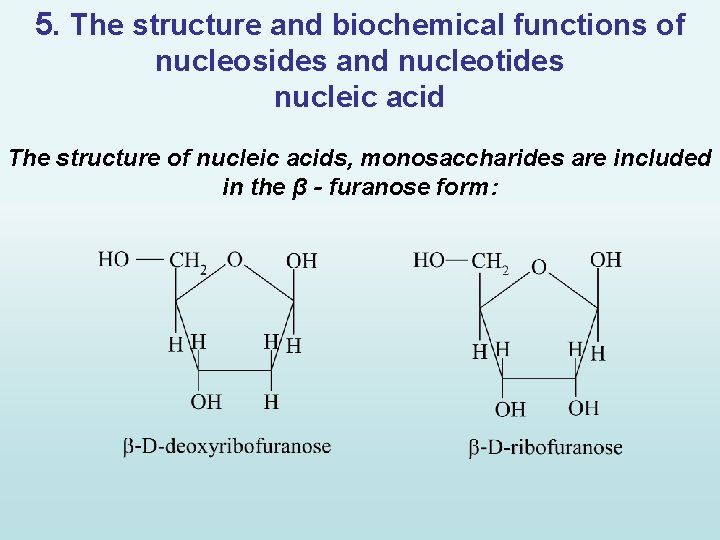
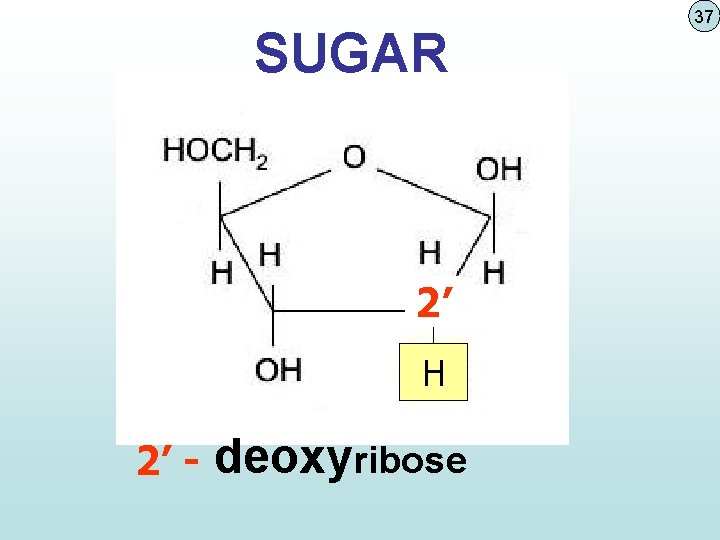
5. The structure and biochemical functions of 35 nucleosides and nucleotides nucleic acid The structure of nucleic acids, monosaccharides are included in the β - furanose form:
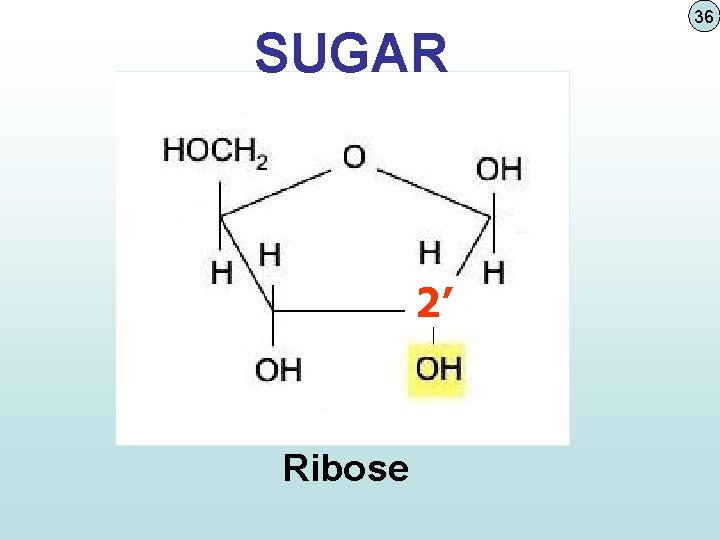
SUGAR 2’ Ribose 36
SUGAR 2’ H 2’ - deoxyribose 37
38 NITROGEN BASES HN HN N 1 N N 5 N
LACTIM-LACTAM TAUTOMERISM Lactam form Lactim form 39
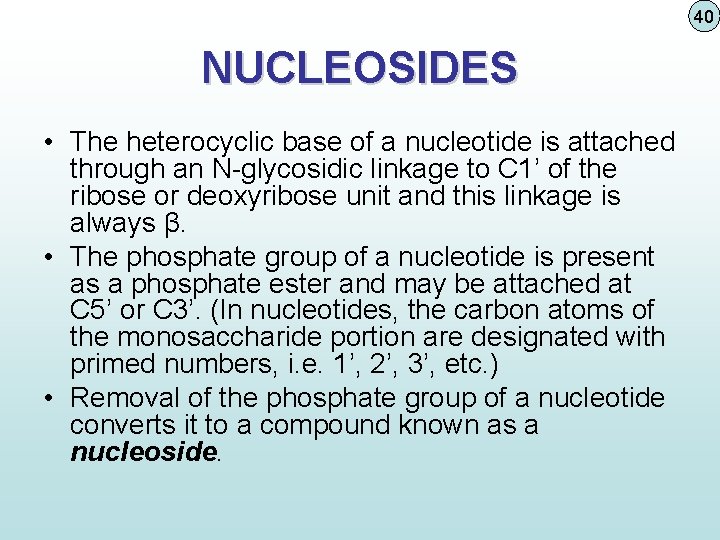
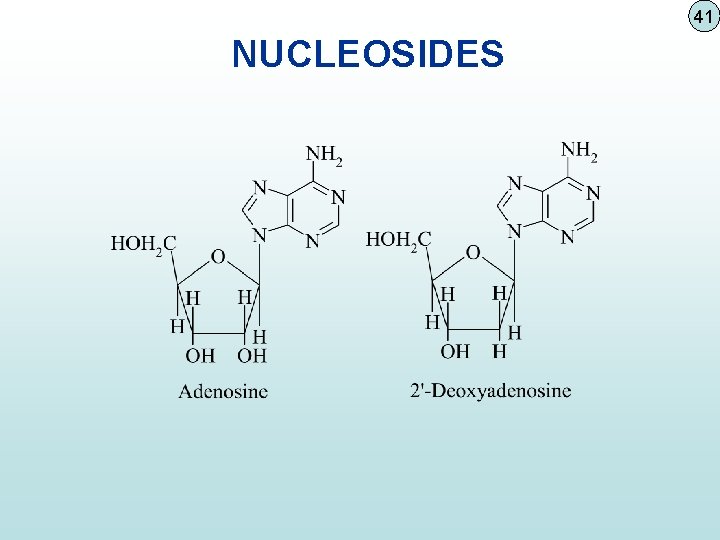
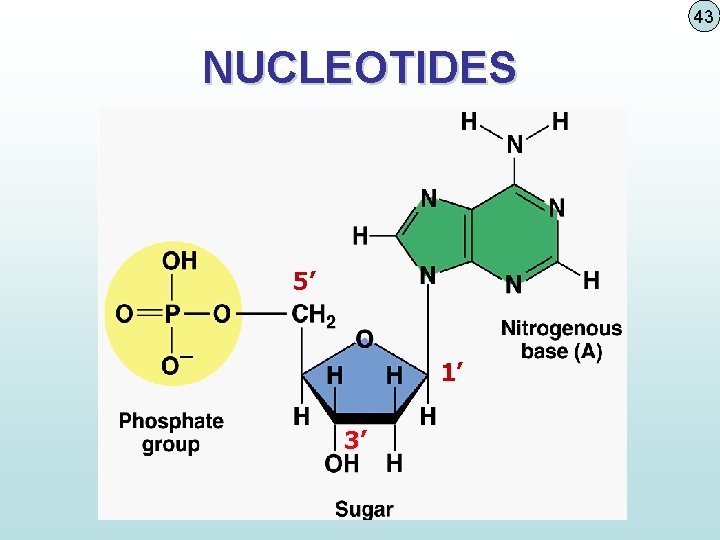
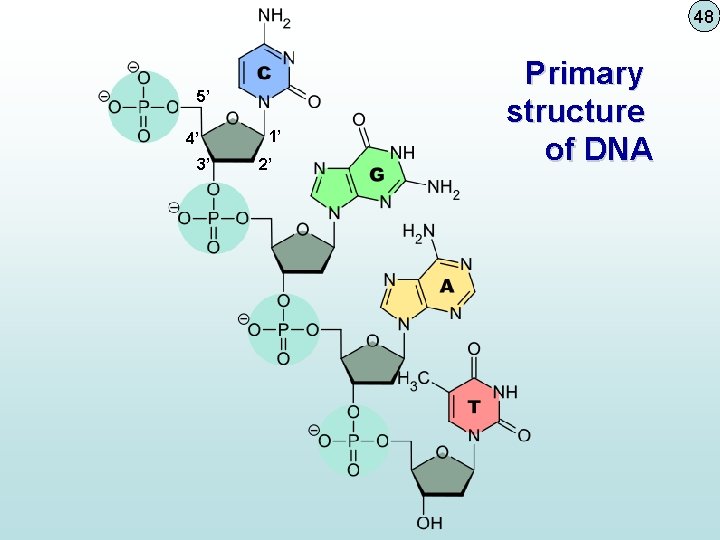
40 NUCLEOSIDES • The heterocyclic base of a nucleotide is attached through an N-glycosidic linkage to C 1’ of the ribose or deoxyribose unit and this linkage is always β. • The phosphate group of a nucleotide is present as a phosphate ester and may be attached at C 5’ or C 3’. (In nucleotides, the carbon atoms of the monosaccharide portion are designated with primed numbers, i. e. 1’, 2’, 3’, etc. ) • Removal of the phosphate group of a nucleotide converts it to a compound known as a nucleoside.
41 NUCLEOSIDES
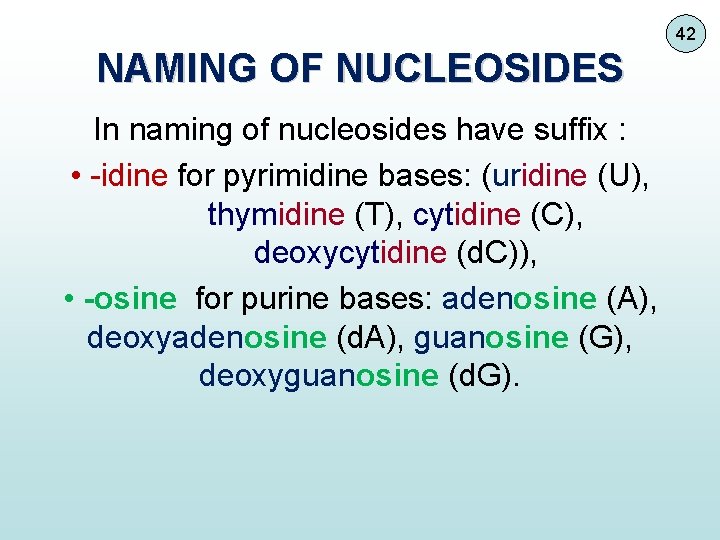
42 NAMING OF NUCLEOSIDES In naming of nucleosides have suffix : • -idine for pyrimidine bases: (uridine (U), thymidine (Т), cytidine (C), deoxycytidine (d. C)), • -osine for purine bases: аdenosine (А), deoxyаdenosine (d. А), guanosine (G), deoxyguanosine (d. G).
43 NUCLEOTIDES 5’ 1’ 3’
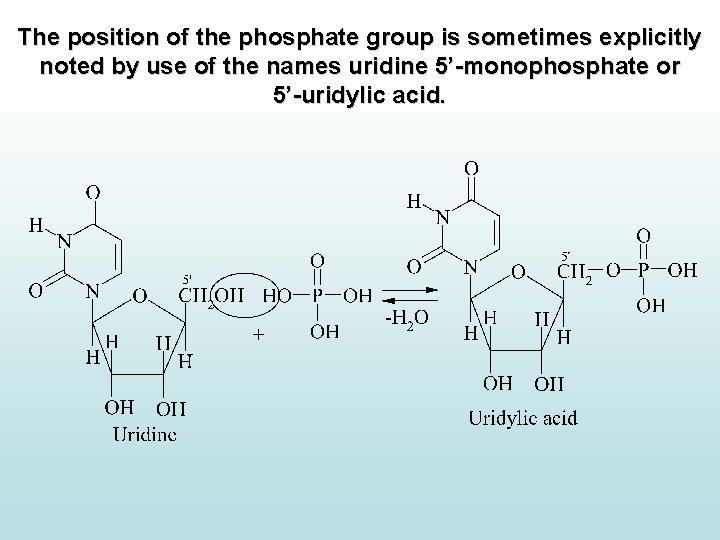
44 The position of the phosphate group is sometimes explicitly noted by use of the names uridine 5’-monophosphate or 5’-uridylic acid.
Nikotinamidnukleotide NAD+ nicotinamide adenine dinucleotide 45
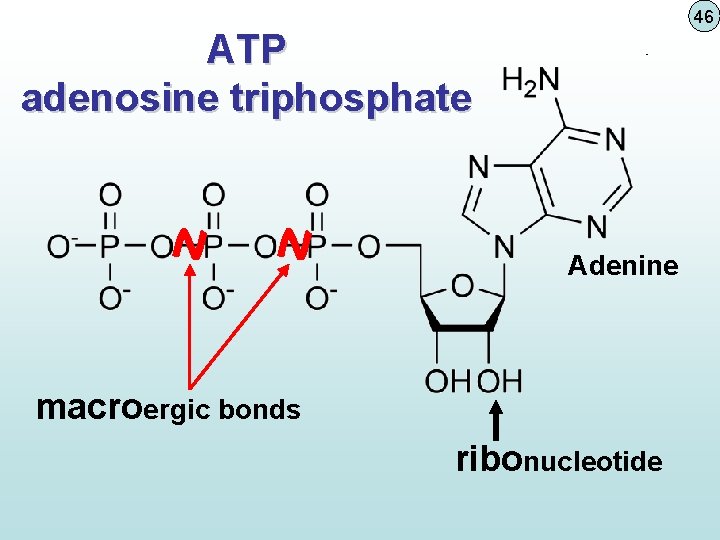
46 ATP adenosine triphosphate Adenine macroergic bonds ribonucleotide
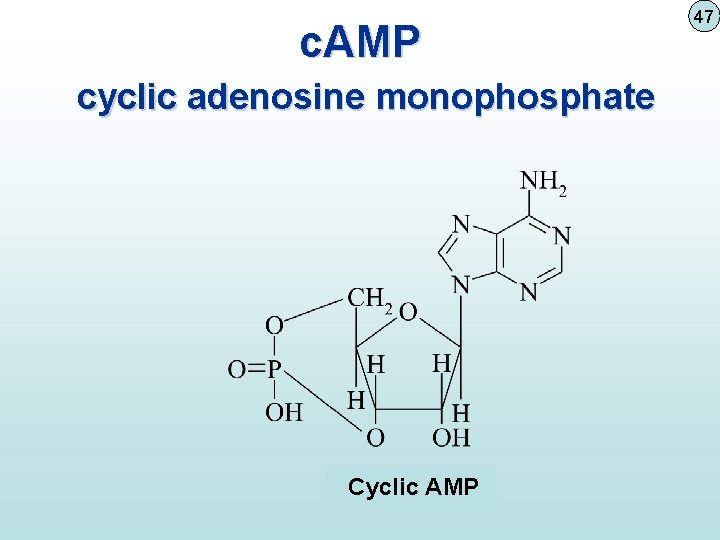
c. AMP cyclic adenosine monophosphate Cyclic AMP 47
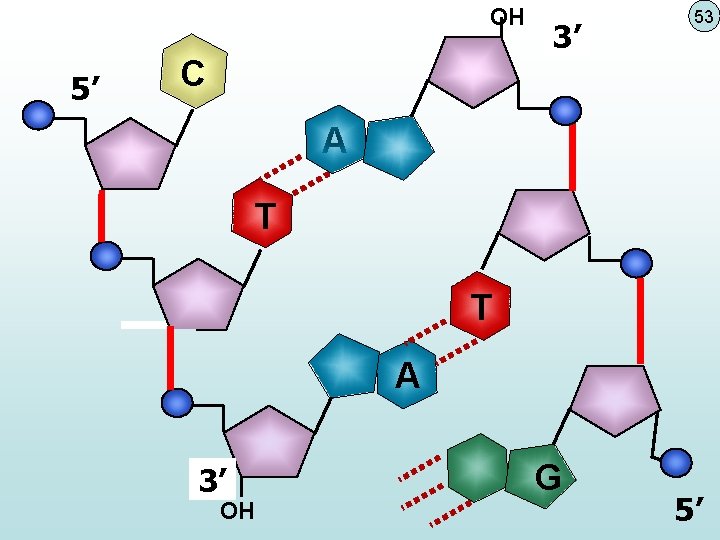
48 5’ 4’ 3’ 1’ 2’ Primary structure of DNA
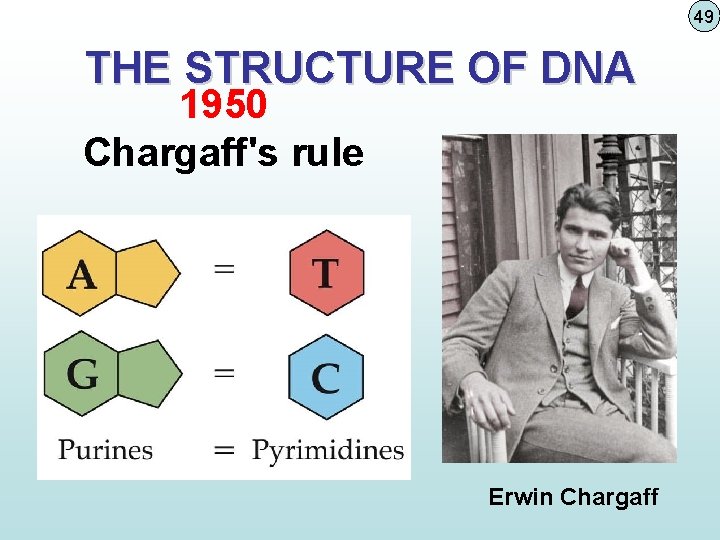
49 THE STRUCTURE OF DNA 1950 Chargaff's rule Erwin Chargaff
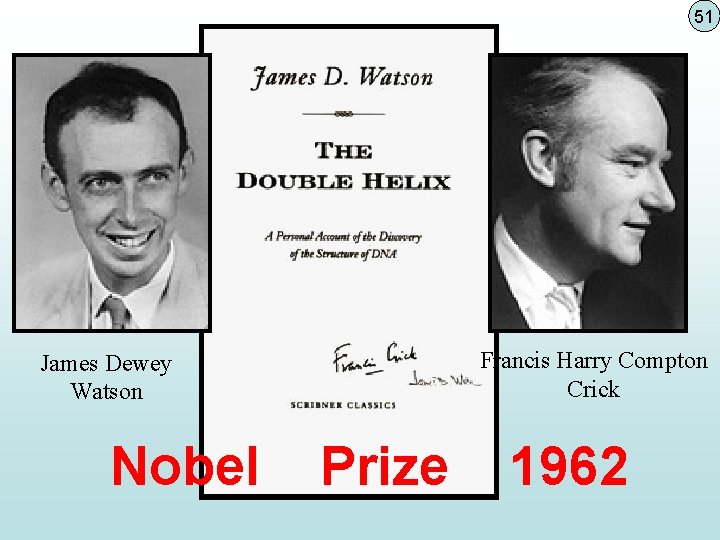
51 Francis Harry Compton Crick James Dewey Watson Nobel Prize 1962
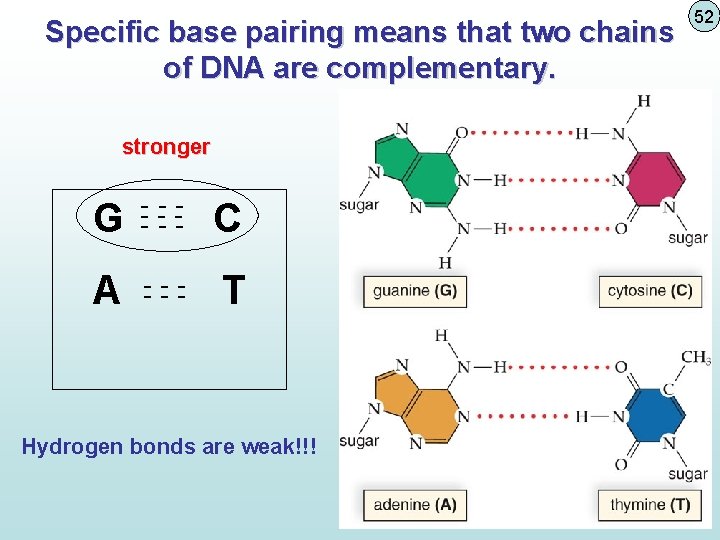
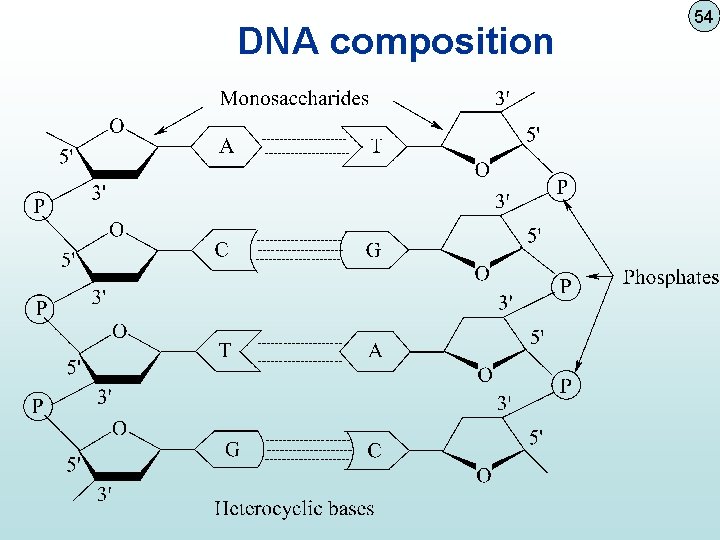
Specific base pairing means that two chains of DNA are complementary. stronger G -- -- ---- C A -- -- -- T Hydrogen bonds are weak!!! 52
DNA composition 54
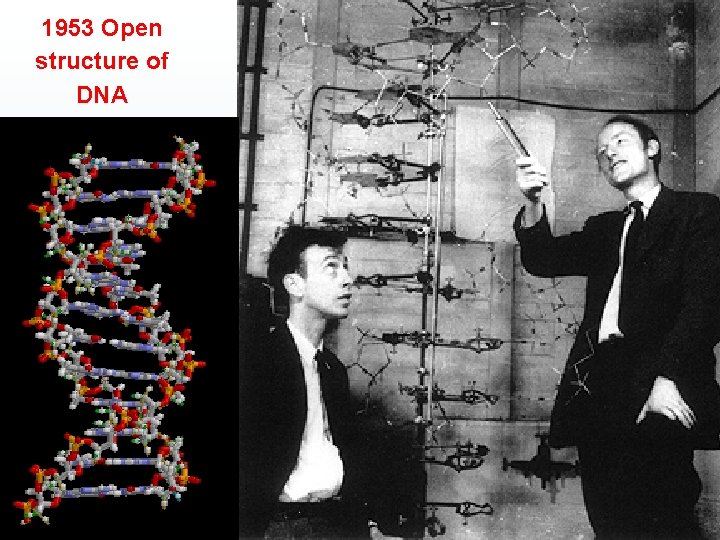
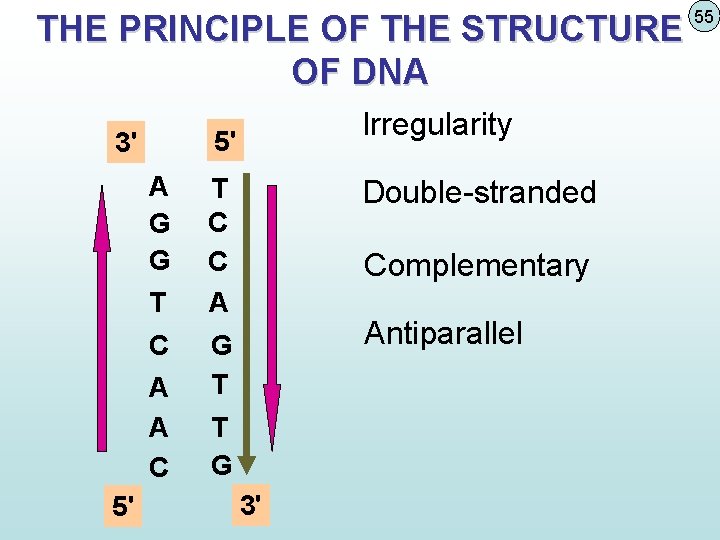
THE PRINCIPLE OF THE STRUCTURE OF DNA 5' 3' А G G Т C А А C 5' Irregularity Т C C А Double-stranded Complementary Antiparallel G Т Т G 3' 55
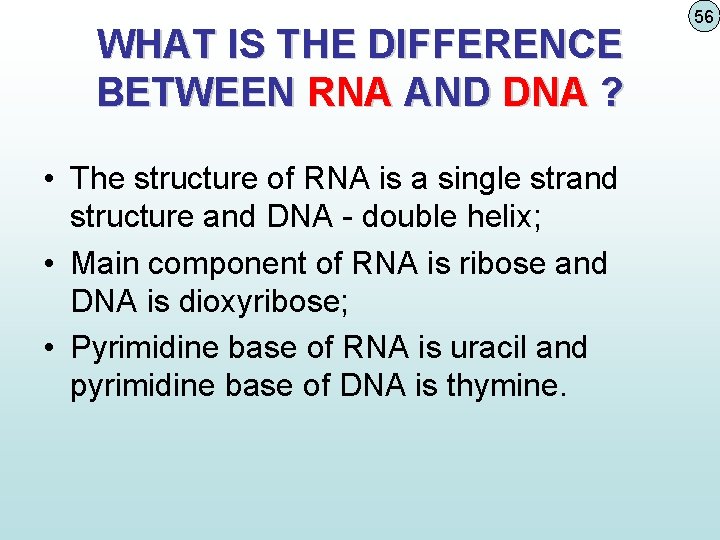
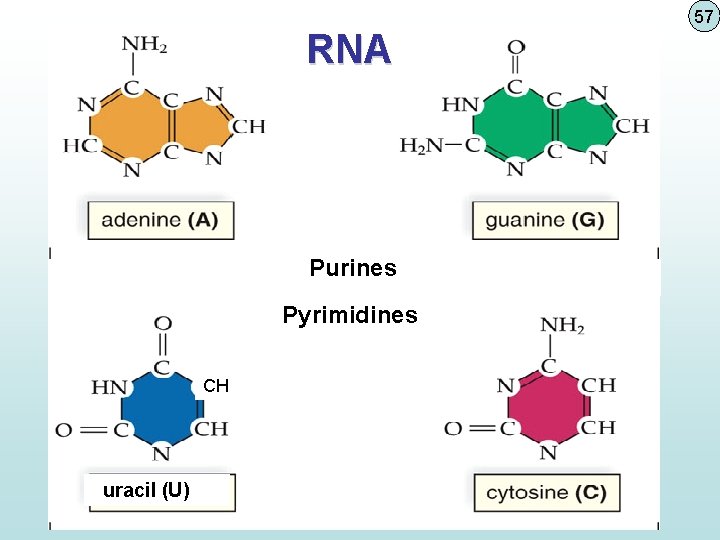
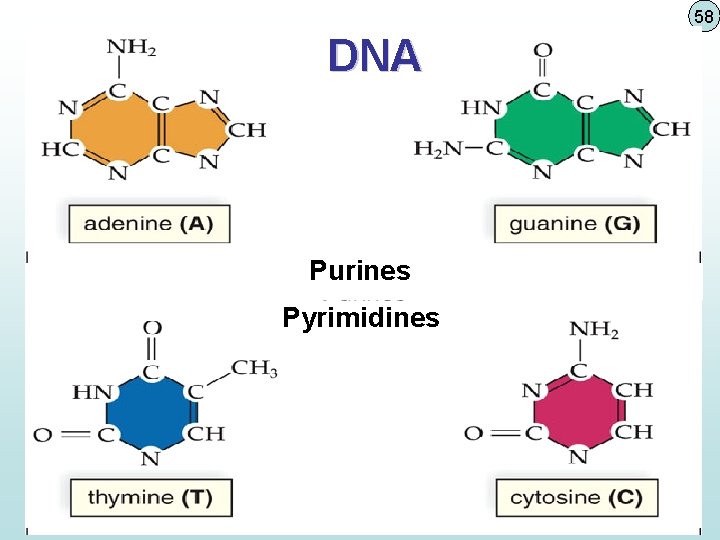
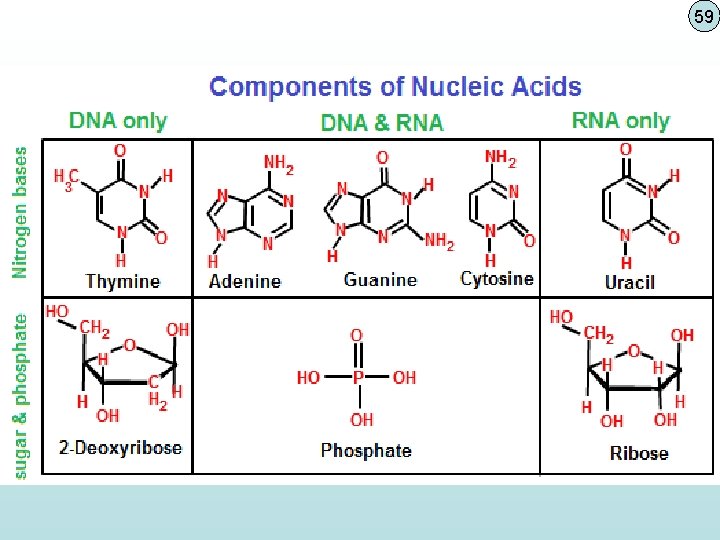
WHAT IS THE DIFFERENCE BETWEEN RNA AND DNA ? • The structure of RNA is a single strand structure and DNA - double helix; • Main component of RNA is ribose and DNA is dioxyribose; • Pyrimidine base of RNA is uracil and pyrimidine base of DNA is thymine. 56
57 RNA Purines Pyrimidines CH uracil (U)
58 DNA Purines Pyrimidines
59
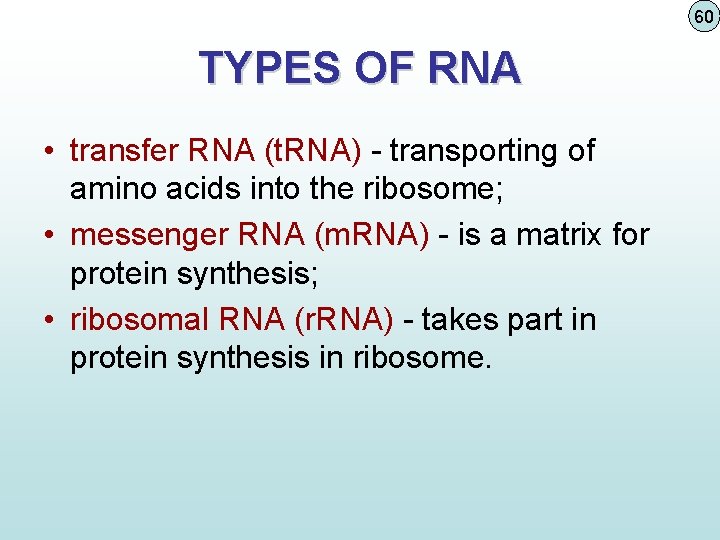
60 TYPES OF RNA • transfer RNA (t. RNA) - transporting of amino acids into the ribosome; • messenger RNA (m. RNA) - is a matrix for protein synthesis; • ribosomal RNA (r. RNA) - takes part in protein synthesis in ribosome.
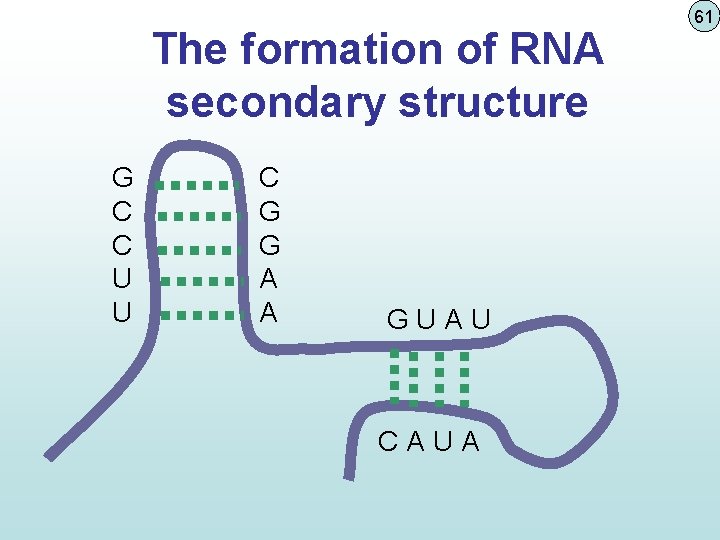
The formation of RNA secondary structure G C C U U C G G A A GUAU CAUA 61
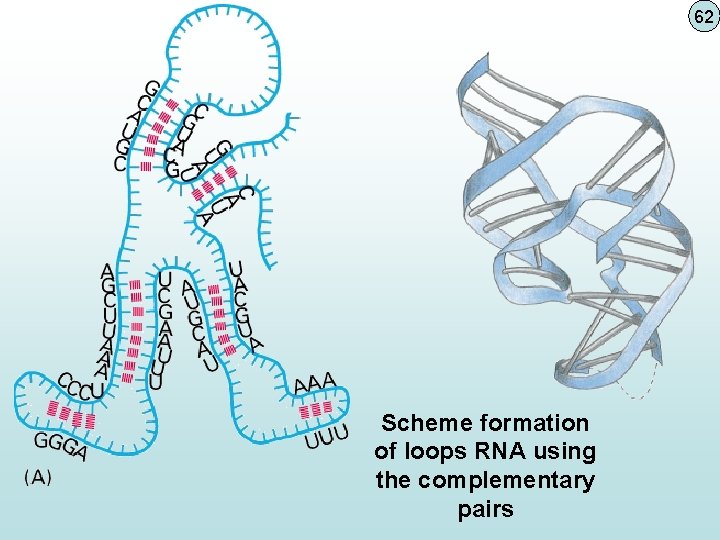
62 Scheme formation of loops RNA using the complementary pairs
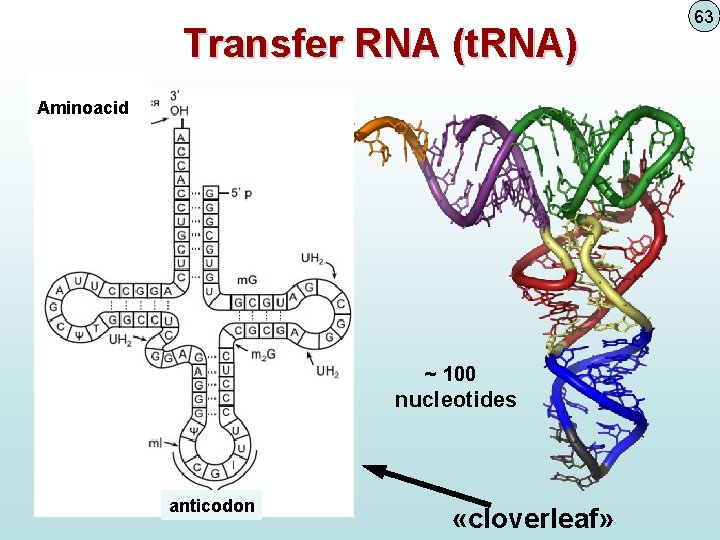
Transfer RNA (t. RNA) Aminoacid ~ 100 nucleotides anticodon «cloverleaf» 63
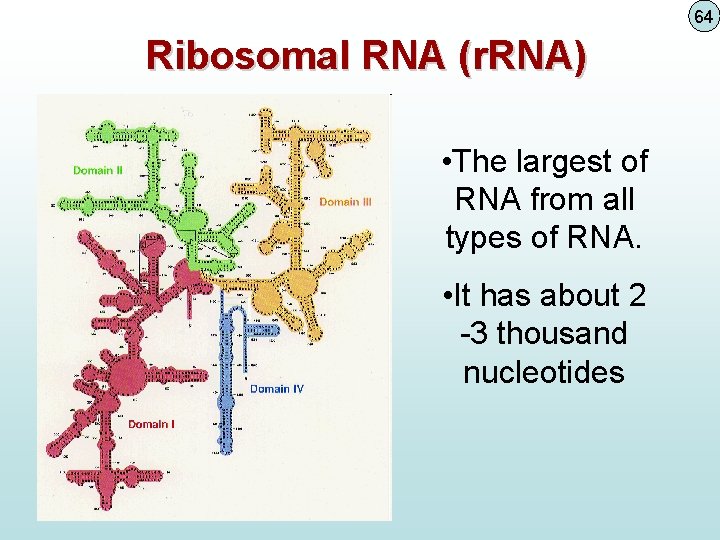
64 Ribosomal RNA (r. RNA) • The largest of RNA from all types of RNA. • It has about 2 -3 thousand nucleotides
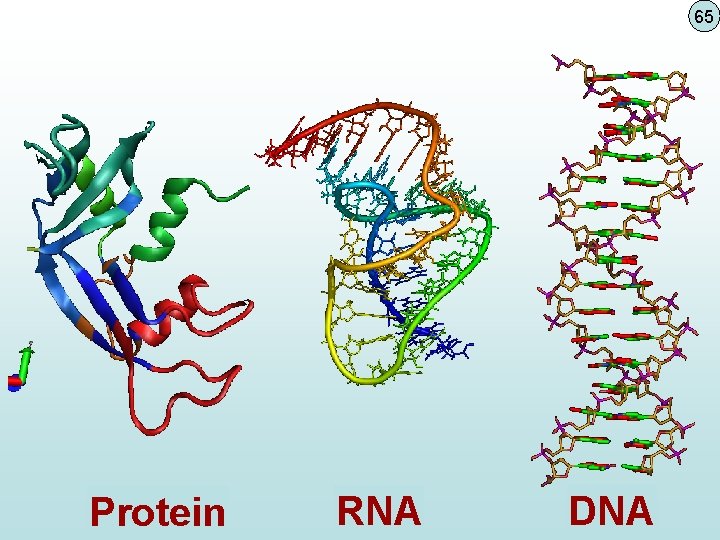
65 Protein RNA DNA
66