I nuovi anticoagulanti orali Fulvio POMERO Medicina Interna



- Slides: 47
I nuovi anticoagulanti orali Fulvio POMERO Medicina Interna S. Croce e Carle Cuneo
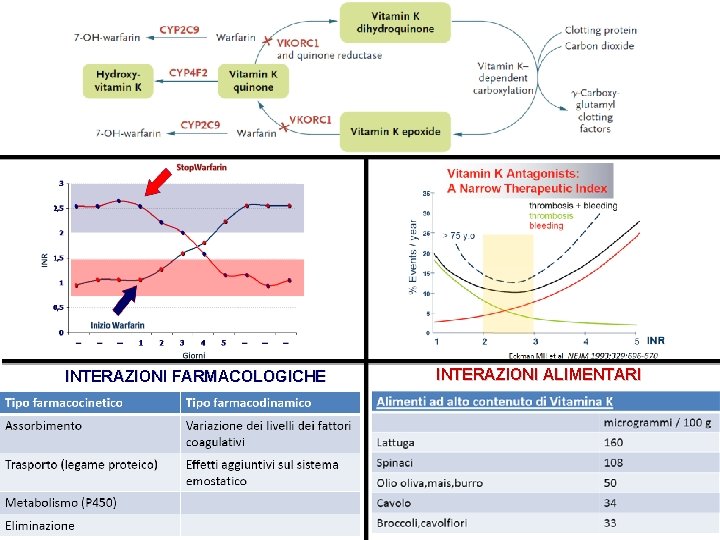
INTERAZIONI FARMACOLOGICHE INTERAZIONI ALIMENTARI
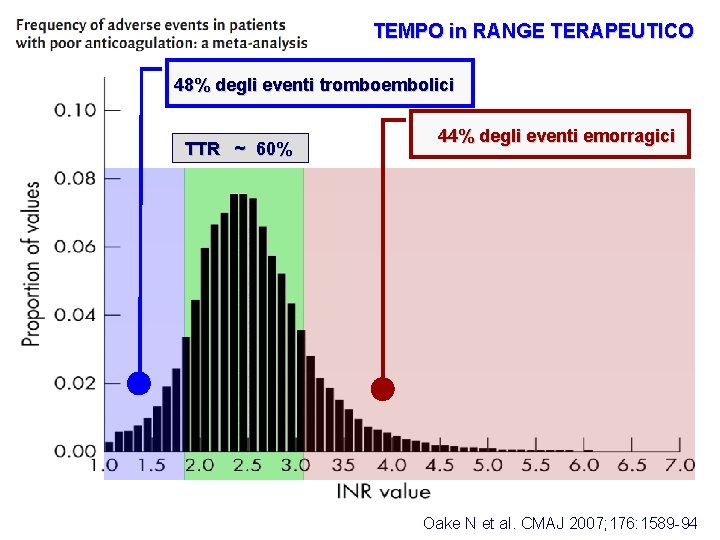
TEMPO in RANGE TERAPEUTICO 48% degli eventi tromboembolici TTR ~ 60% 44% degli eventi emorragici Oake N et al. CMAJ 2007; 176: 1589 -94
Schirmer SH et al. JACC 2010; 56: 2067 -76
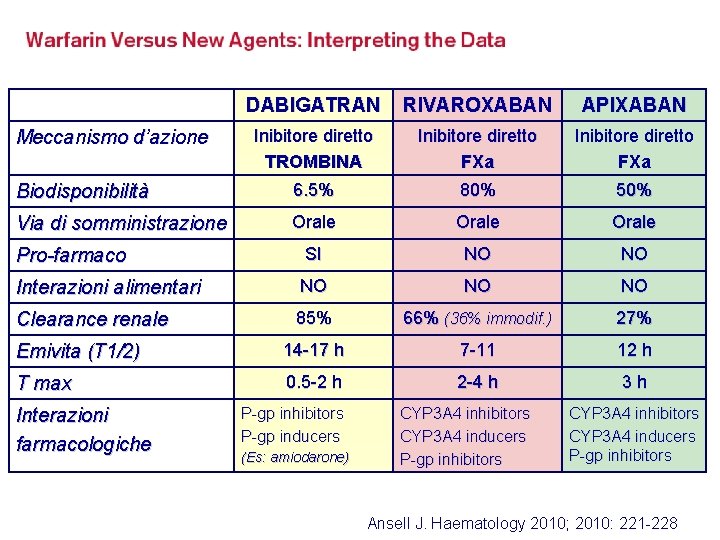
DABIGATRAN RIVAROXABAN APIXABAN Inibitore diretto TROMBINA Inibitore diretto FXa Biodisponibilità 6. 5% 80% 50% Via di somministrazione Orale Pro-farmaco SI NO NO Interazioni alimentari NO NO NO Clearance renale 85% 66% (36% immodif. ) 27% Emivita (T 1/2) 14 -17 h 7 -11 12 h T max 0. 5 -2 h 2 -4 h 3 h Meccanismo d’azione Interazioni farmacologiche P-gp inhibitors P-gp inducers (Es: amiodarone) CYP 3 A 4 inhibitors CYP 3 A 4 inducers P-gp inhibitors Ansell J. Haematology 2010; 2010: 221 -228
Profilassi in chirurgia ortopedica maggiore Eriksson BI et al. Annu Rev Med 2011; 62: 41 -57
EFFICACY Eriksson BIet al. Annu Rev Med 2011; 62: 41 -57
BLEEDING RISK Eriksson BIet al. Annu Rev Med 2011; 62: 41 -57
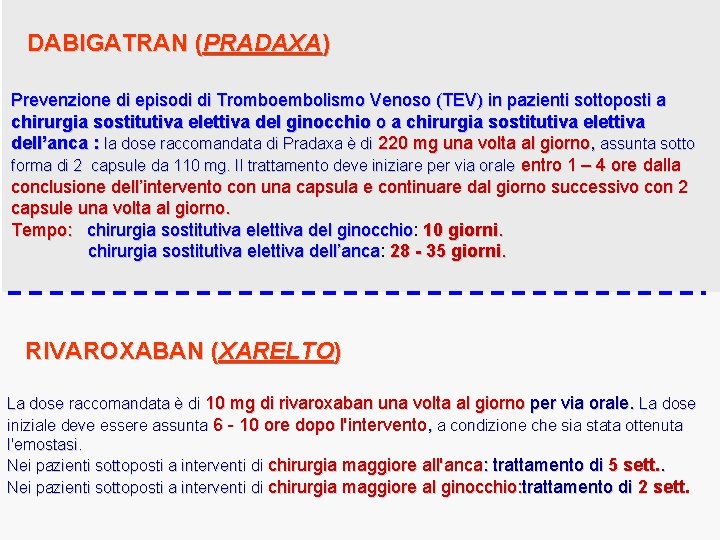
DABIGATRAN (PRADAXA) Prevenzione di episodi di Tromboembolismo Venoso (TEV) in pazienti sottoposti a chirurgia sostitutiva elettiva del ginocchio o a chirurgia sostitutiva elettiva dell’anca : la dose raccomandata di Pradaxa è di 220 mg una volta al giorno, assunta sotto forma di 2 capsule da 110 mg. Il trattamento deve iniziare per via orale entro 1 – 4 ore dalla conclusione dell’intervento con una capsula e continuare dal giorno successivo con 2 capsule una volta al giorno. Tempo: chirurgia sostitutiva elettiva del ginocchio 10 giorni. chirurgia sostitutiva elettiva dell’anca: chirurgia sostitutiva elettiva dell’anca 28 - 35 giorni. RIVAROXABAN (XARELTO) La dose raccomandata è di 10 mg di rivaroxaban una volta al giorno per via orale. La dose iniziale deve essere assunta 6 - 10 ore dopo l'intervento, a condizione che sia stata ottenuta l'emostasi. Nei pazienti sottoposti a interventi di chirurgia maggiore all'anca: trattamento di 5 sett. . Nei pazienti sottoposti a interventi di chirurgia maggiore al ginocchio: trattamento di 2 sett.
Terapia del TEV Eriksson BI et al. Annu Rev Med 2011; 62: 41 -57
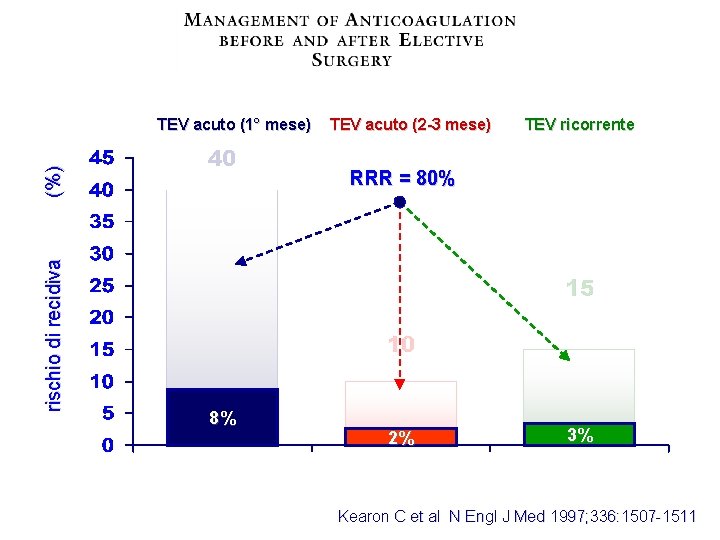
rischio di recidiva (%) TEV acuto (1° mese) TEV acuto (2 -3 mese) TEV ricorrente RRR = 80% 8% 2% 3% Kearon C et al N Engl J Med 1997; 336: 1507 -1511
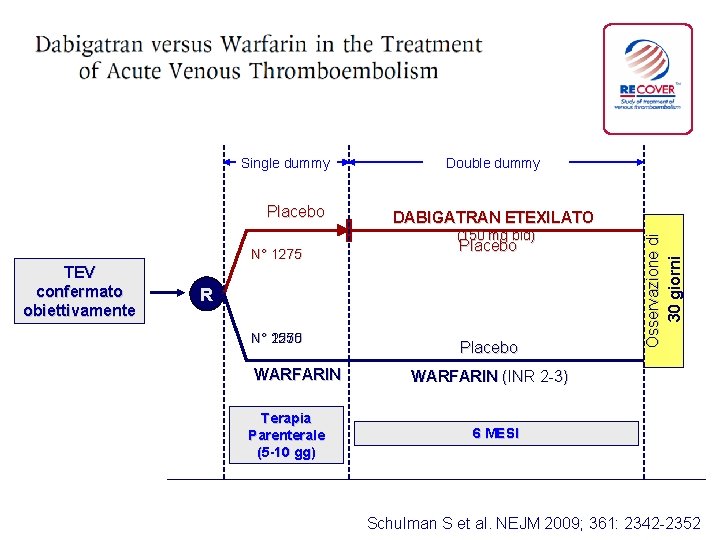
Placebo Double dummy DABIGATRAN ETEXILATO (150 mg bid) N° 1275 TEV confermato obiettivamente Placebo R N° 2550 N° 1275 WARFARIN Terapia Parenterale (5 -10 gg) Placebo Osservazione di 30 giorni Single dummy WARFARIN (INR 2 -3) 6 MESI Schulman S et al. NEJM 2009; 361: 2342 -2352
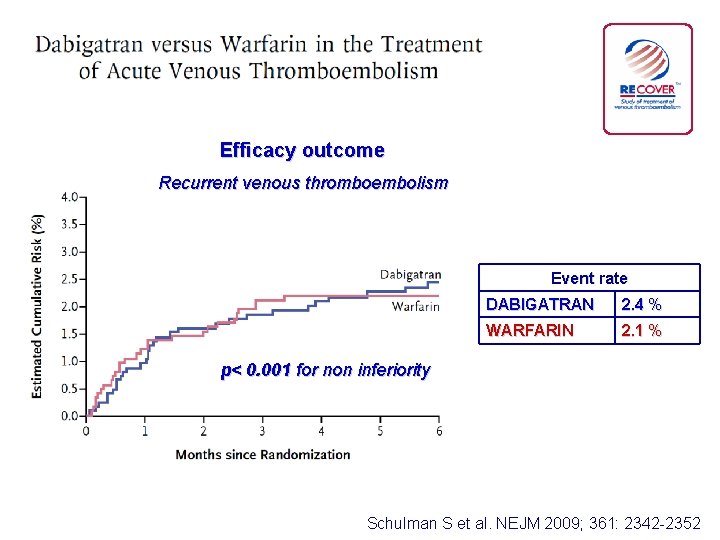
Efficacy outcome Recurrent venous thromboembolism Event rate DABIGATRAN 2. 4 % WARFARIN 2. 1 % p< 0. 001 for non inferiority Schulman S et al. NEJM 2009; 361: 2342 -2352
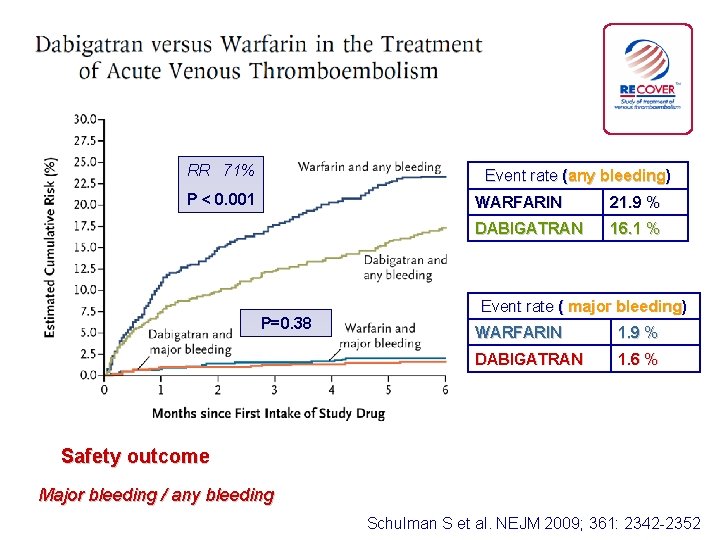
RR 71% Event rate (any bleeding) P < 0. 001 P=0. 38 WARFARIN 21. 9 % DABIGATRAN 16. 1 % Event rate ( major bleeding) WARFARIN 1. 9 % DABIGATRAN 1. 6 % Safety outcome Major bleeding / any bleeding Schulman S et al. NEJM 2009; 361: 2342 -2352
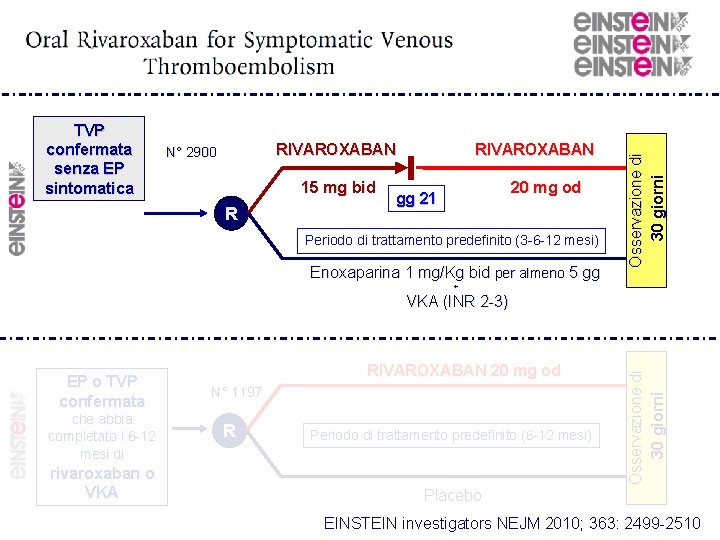
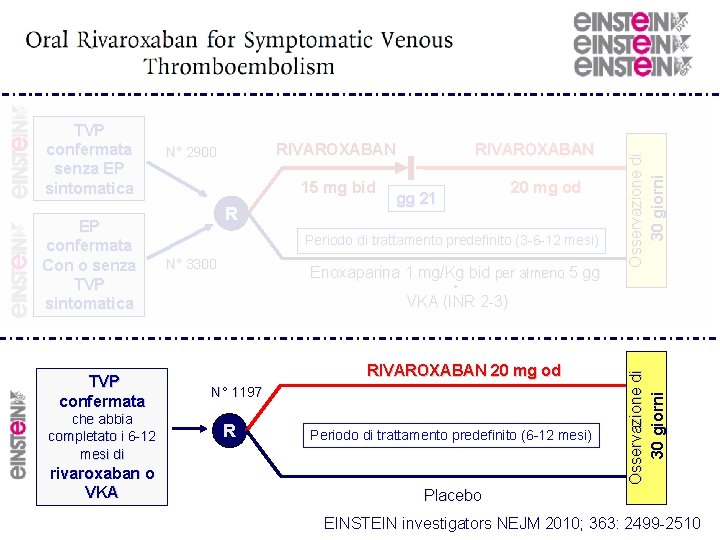
RIVAROXABAN N° 2900 15 mg bid R RIVAROXABAN 20 mg od gg 21 Periodo di trattamento predefinito (3 -6 -12 mesi) Enoxaparina 1 mg/Kg bid per almeno 5 gg Osservazione di 30 giorni TVP confermata senza EP sintomatica + EP o TVP confermata che abbia completato i 6 -12 mesi di rivaroxaban o VKA RIVAROXABAN 20 mg od N° 1197 R Periodo di trattamento predefinito (6 -12 mesi) Osservazione di 30 giorni VKA (INR 2 -3) Placebo EINSTEIN investigators NEJM 2010; 363: 2499 -2510
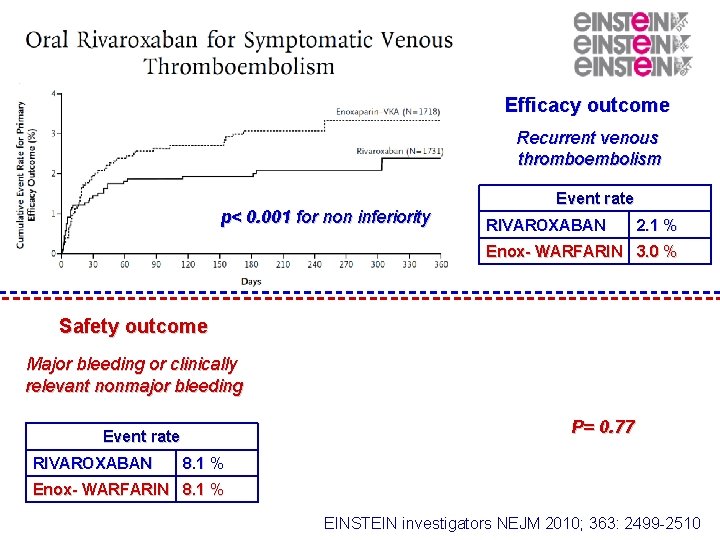
Efficacy outcome Recurrent venous thromboembolism p< 0. 001 for non inferiority Event rate RIVAROXABAN 2. 1 % Enox- WARFARIN 3. 0 % Safety outcome Major bleeding or clinically relevant nonmajor bleeding P= 0. 77 Event rate RIVAROXABAN 8. 1 % Enox- WARFARIN 8. 1 % EINSTEIN investigators NEJM 2010; 363: 2499 -2510
TVP confermata che abbia completato i 6 -12 mesi di rivaroxaban o VKA 15 mg bid R RIVAROXABAN 20 mg od gg 21 Periodo di trattamento predefinito (3 -6 -12 mesi) N° 3300 Enoxaparina 1 mg/Kg bid per almeno 5 gg Osservazione di 30 giorni EP confermata Con o senza TVP sintomatica RIVAROXABAN N° 2900 + VKA (INR 2 -3) RIVAROXABAN 20 mg od N° 1197 R Periodo di trattamento predefinito (6 -12 mesi) Osservazione di 30 giorni TVP confermata senza EP sintomatica Placebo EINSTEIN investigators NEJM 2010; 363: 2499 -2510
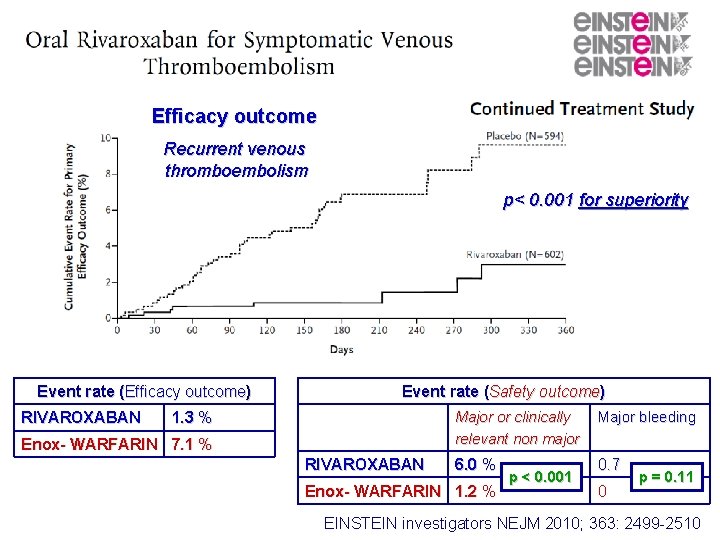
Efficacy outcome Recurrent venous thromboembolism p< 0. 001 for superiority Event rate (Efficacy outcome) RIVAROXABAN Event rate (Safety outcome) 1. 3 % Enox- WARFARIN 7. 1 % RIVAROXABAN Major or clinically relevant non major Major bleeding 6. 0 % 0. 7 Enox- WARFARIN 1. 2 % p < 0. 001 0 p = 0. 11 EINSTEIN investigators NEJM 2010; 363: 2499 -2510
Profilassi dello stroke nella Fibrillazione Atriale Eriksson BI et al. Annu Rev Med 2011; 62: 41 -57
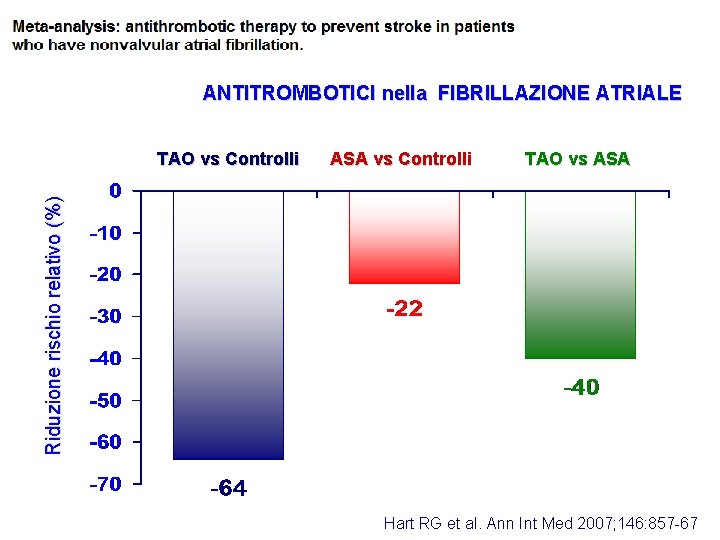
ANTITROMBOTICI nella FIBRILLAZIONE ATRIALE ASA vs Controlli TAO vs ASA Riduzione rischio relativo (%) TAO vs Controlli Hart RG et al. Ann Int Med 2007; 146: 857 -67
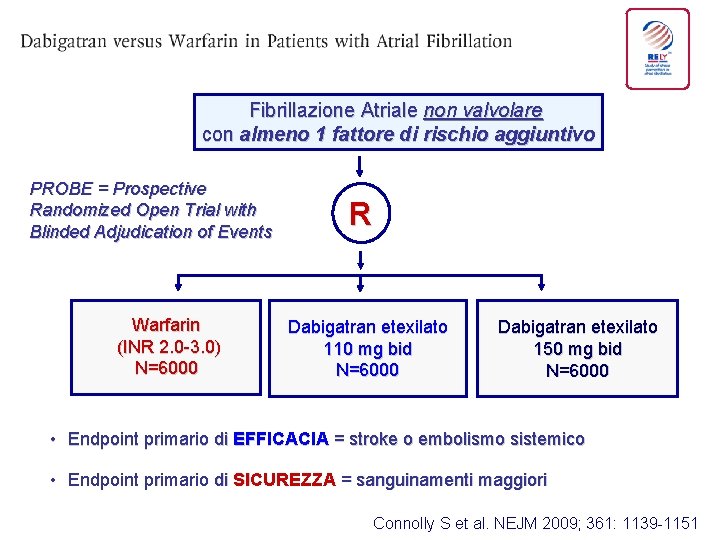
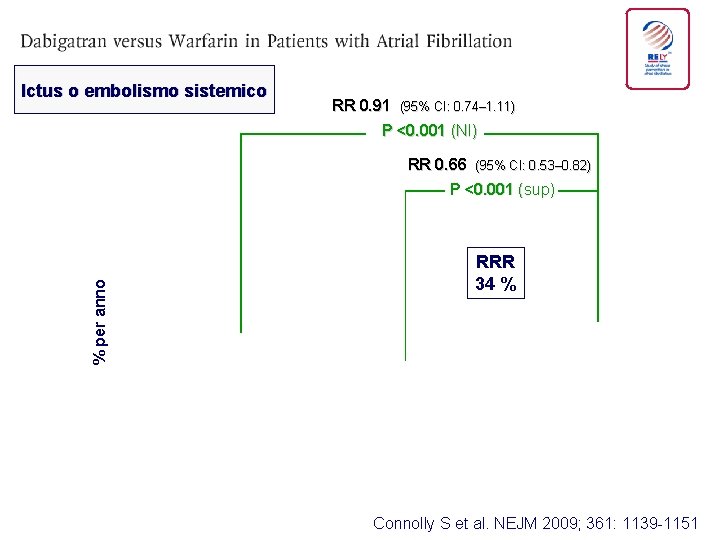
Fibrillazione Atriale non valvolare con almeno 1 fattore di rischio aggiuntivo PROBE = Prospective Randomized Open Trial with Blinded Adjudication of Events Warfarin (INR 2. 0 -3. 0) N=6000 R Dabigatran etexilato 110 mg bid N=6000 Dabigatran etexilato 150 mg bid N=6000 • Endpoint primario di EFFICACIA = stroke o embolismo sistemico • Endpoint primario di SICUREZZA = sanguinamenti maggiori Connolly S et al. NEJM 2009; 361: 1139 -1151
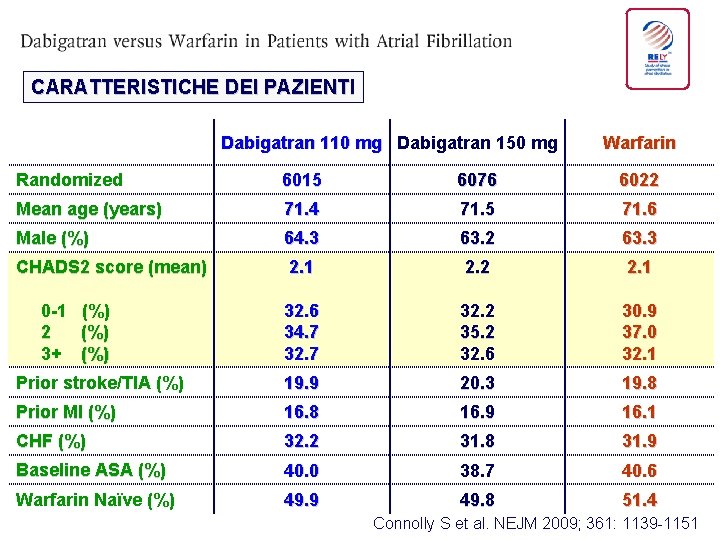
CARATTERISTICHE DEI PAZIENTI Dabigatran 110 mg Dabigatran 150 mg Warfarin Randomized 6015 6076 6022 Mean age (years) 71. 4 71. 5 71. 6 Male (%) 64. 3 63. 2 63. 3 CHADS 2 score (mean) 2. 1 2. 2 2. 1 0 -1 (%) 2 (%) 3+ (%) 32. 6 34. 7 32. 2 35. 2 32. 6 30. 9 37. 0 32. 1 Prior stroke/TIA (%) 19. 9 20. 3 19. 8 Prior MI (%) 16. 8 16. 9 16. 1 CHF (%) 32. 2 31. 8 31. 9 Baseline ASA (%) 40. 0 38. 7 40. 6 Warfarin Naïve (%) 49. 9 49. 8 51. 4 Connolly S et al. NEJM 2009; 361: 1139 -1151
Ictus o embolismo sistemico RR 0. 91 (95% CI: 0. 74– 1. 11) P <0. 001 (NI) RR 0. 66 (95% CI: 0. 53– 0. 82) % per anno P <0. 001 (sup) RRR 34 % Connolly S et al. NEJM 2009; 361: 1139 -1151
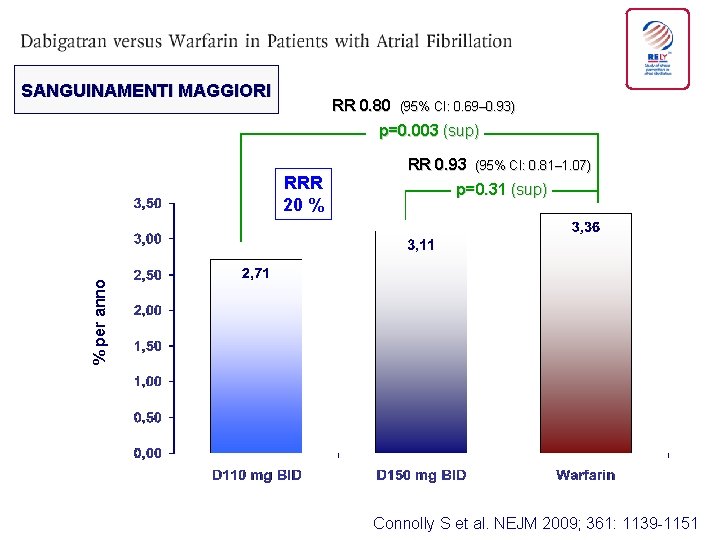
SANGUINAMENTI MAGGIORI RR 0. 80 (95% CI: 0. 69– 0. 93) p=0. 003 (sup) p=0. 31 (sup) % per anno RRR 20 % RR 0. 93 (95% CI: 0. 81– 1. 07) Connolly S et al. NEJM 2009; 361: 1139 -1151
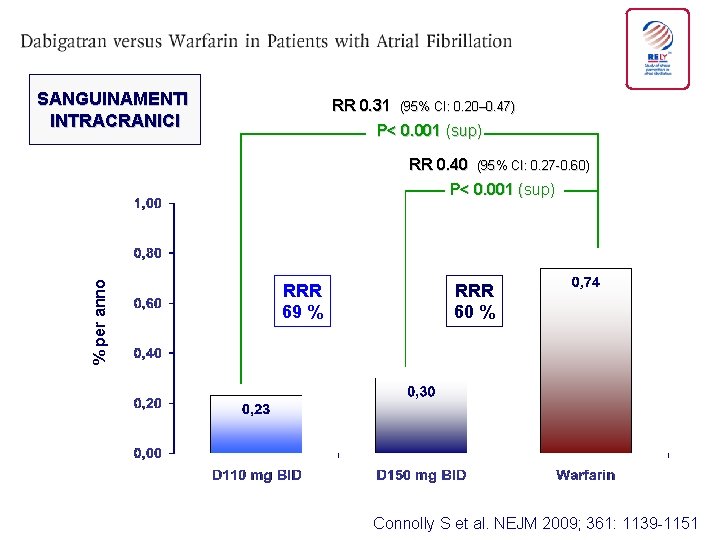
SANGUINAMENTI INTRACRANICI RR 0. 31 (95% CI: 0. 20– 0. 47) P< 0. 001 (sup) RR 0. 40 (95% CI: 0. 27 -0. 60) % per anno P< 0. 001 (sup) RRR 69 % RRR 60 % Connolly S et al. NEJM 2009; 361: 1139 -1151
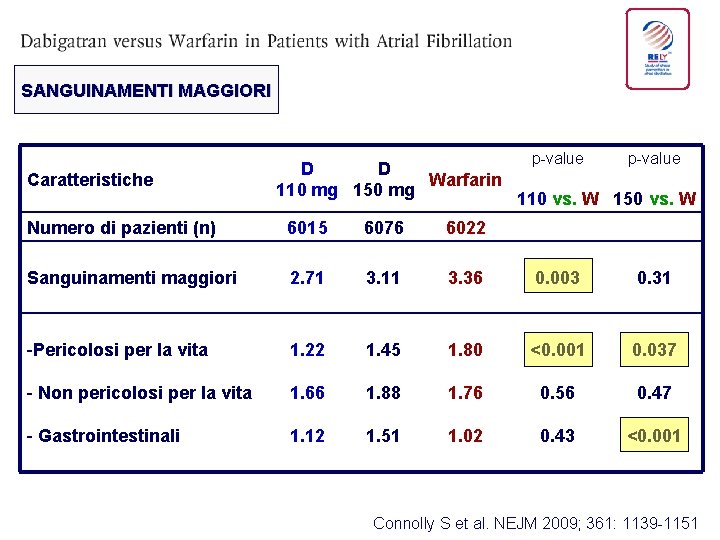
SANGUINAMENTI MAGGIORI Caratteristiche p-value D D Warfarin 110 mg 150 mg 110 vs. W 150 vs. W Numero di pazienti (n) 6015 6076 6022 Sanguinamenti maggiori 2. 71 3. 11 3. 36 0. 003 0. 31 -Pericolosi per la vita 1. 22 1. 45 1. 80 <0. 001 0. 037 - Non pericolosi per la vita 1. 66 1. 88 1. 76 0. 56 0. 47 - Gastrointestinali 1. 12 1. 51 1. 02 0. 43 <0. 001 Connolly S et al. NEJM 2009; 361: 1139 -1151
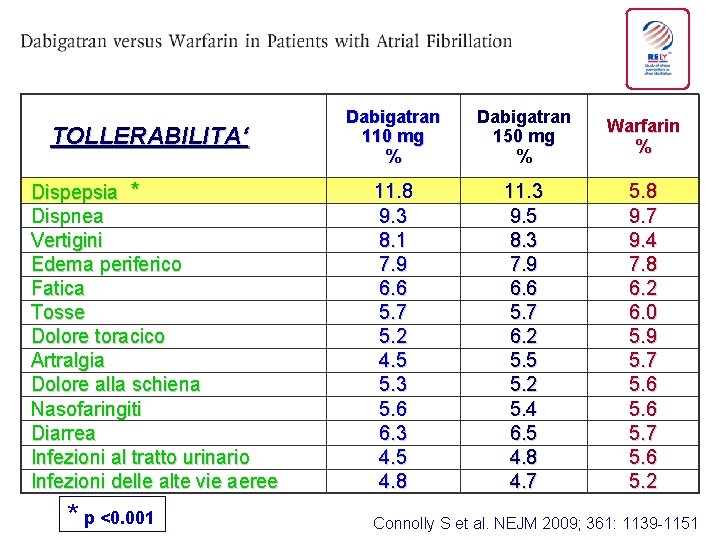
TOLLERABILITA‘ Dispepsia * Dispnea Vertigini Edema periferico Fatica Tosse Dolore toracico Artralgia Dolore alla schiena Nasofaringiti Diarrea Infezioni al tratto urinario Infezioni delle alte vie aeree * p <0. 001 Dabigatran 110 mg % Dabigatran 150 mg % Warfarin % 11. 8 9. 3 8. 1 7. 9 6. 6 5. 7 5. 2 4. 5 5. 3 5. 6 6. 3 4. 5 4. 8 11. 3 9. 5 8. 3 7. 9 6. 6 5. 7 6. 2 5. 5 5. 2 5. 4 6. 5 4. 8 4. 7 5. 8 9. 7 9. 4 7. 8 6. 2 6. 0 5. 9 5. 7 5. 6 5. 2 Connolly S et al. NEJM 2009; 361: 1139 -1151
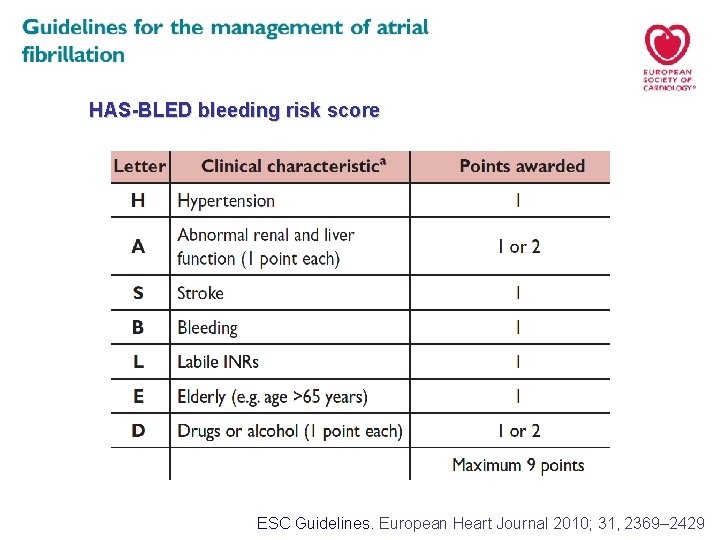
HAS-BLED bleeding risk score ESC Guidelines. European Heart Journal 2010; 31, 2369– 2429
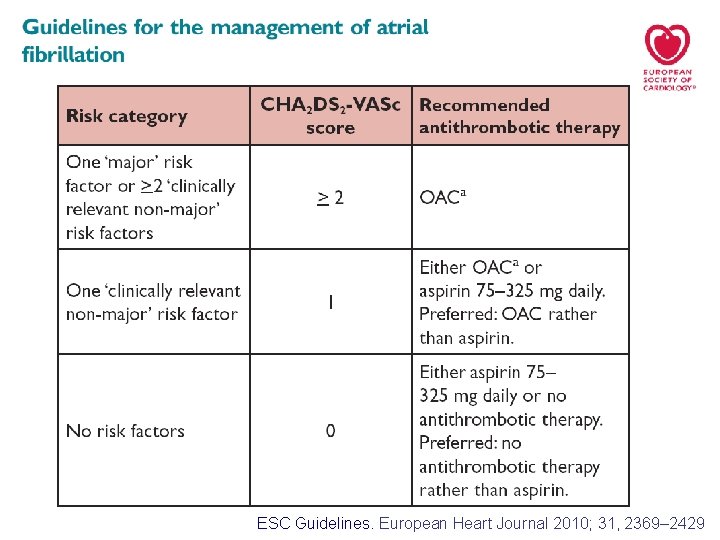
ESC Guidelines. European Heart Journal 2010; 31, 2369– 2429
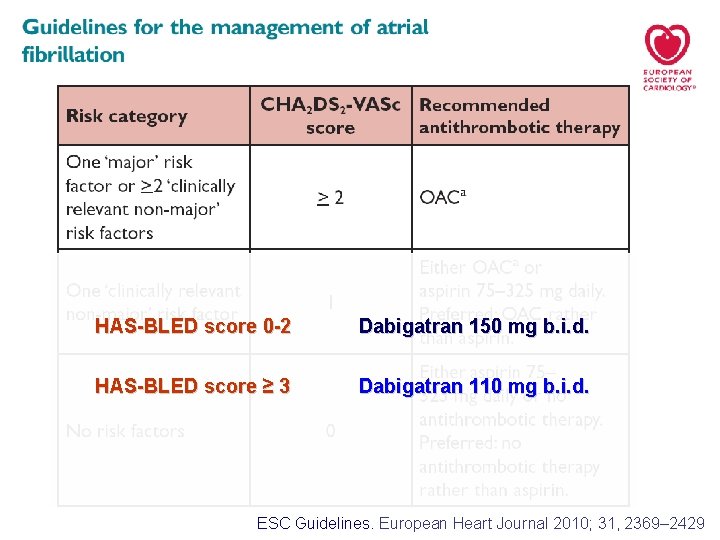
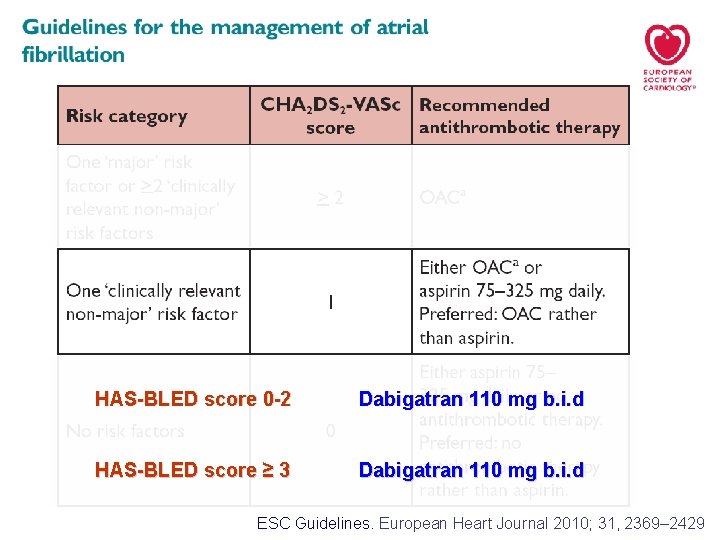
HAS-BLED score 0 -2 Dabigatran 150 mg b. i. d. HAS-BLED score ≥ 3 Dabigatran 110 mg b. i. d. ESC Guidelines. European Heart Journal 2010; 31, 2369– 2429
HAS-BLED score 0 -2 Dabigatran 110 mg b. i. d HAS-BLED score ≥ 3 Dabigatran 110 mg b. i. d ESC Guidelines. European Heart Journal 2010; 31, 2369– 2429
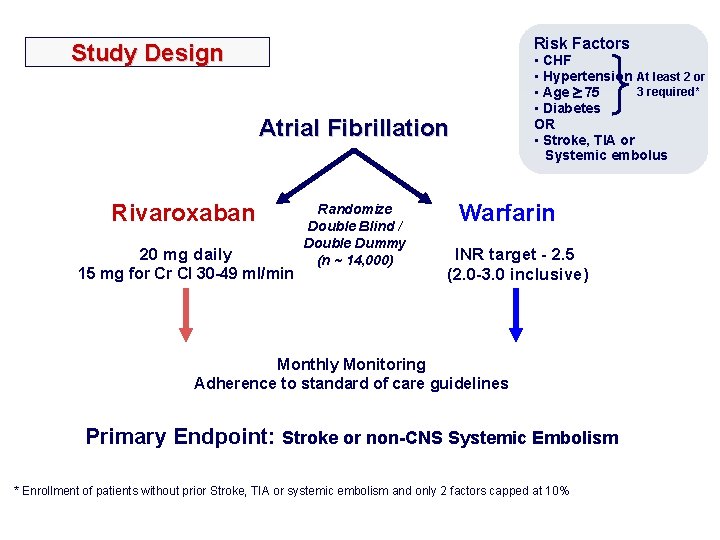
Risk Factors Study Design • CHF • Hypertension At least 2 or 3 required* • Age 75 • Diabetes OR • Stroke, TIA or Systemic embolus Atrial Fibrillation Rivaroxaban 20 mg daily 15 mg for Cr Cl 30 -49 ml/min Randomize Double Blind / Double Dummy (n ~ 14, 000) Warfarin INR target - 2. 5 (2. 0 -3. 0 inclusive) Monthly Monitoring Adherence to standard of care guidelines Primary Endpoint: Stroke or non-CNS Systemic Embolism * Enrollment of patients without prior Stroke, TIA or systemic embolism and only 2 factors capped at 10%
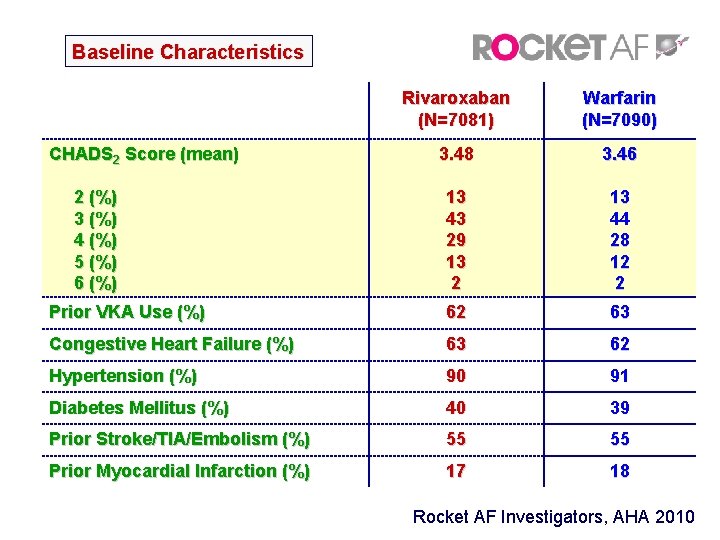
Baseline Characteristics Rivaroxaban (N=7081) Warfarin (N=7090) 3. 48 3. 46 2 (%) 3 (%) 4 (%) 5 (%) 6 (%) 13 43 29 13 2 13 44 28 12 2 Prior VKA Use (%) 62 63 Congestive Heart Failure (%) 63 62 Hypertension (%) 90 91 Diabetes Mellitus (%) 40 39 Prior Stroke/TIA/Embolism (%) 55 55 Prior Myocardial Infarction (%) 17 18 CHADS 2 Score (mean) Rocket AF Investigators, AHA 2010
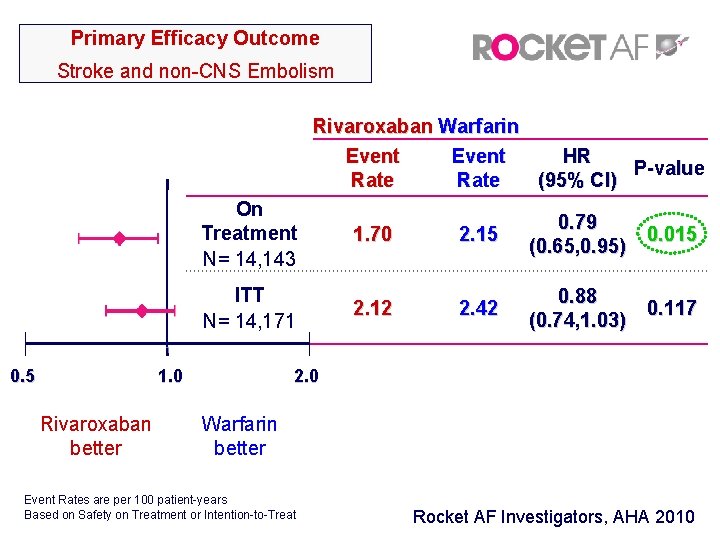
Primary Efficacy Outcome Stroke and non-CNS Embolism 0. 5 On Treatment N= 14, 143 1. 70 2. 15 0. 79 0. 015 (0. 65, 0. 95) ITT N= 14, 171 2. 12 2. 42 0. 88 0. 117 (0. 74, 1. 03) 1. 0 Rivaroxaban better Rivaroxaban Warfarin Event HR P-value Rate (95% CI) 2. 0 Warfarin better Event Rates are per 100 patient-years Based on Safety on Treatment or Intention-to-Treat Rocket AF Investigators, AHA 2010
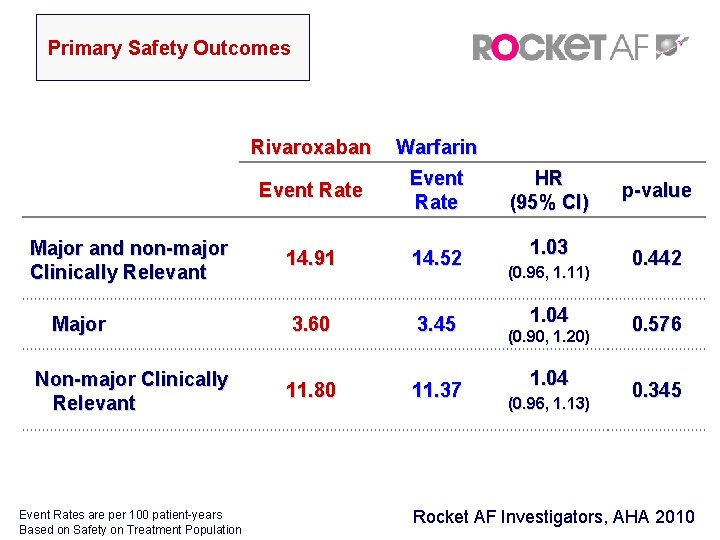
Primary Safety Outcomes Rivaroxaban Warfarin Event Rate Major and non-major Clinically Relevant 14. 91 14. 52 Major 3. 60 3. 45 11. 80 11. 37 HR (95% CI) 1. 03 (0. 96, 1. 11) 1. 04 (0. 90, 1. 20) p-value 0. 442 0. 576 Non-major Clinically Relevant Event Rates are per 100 patient-years Based on Safety on Treatment Population 1. 04 (0. 96, 1. 13) 0. 345 Rocket AF Investigators, AHA 2010
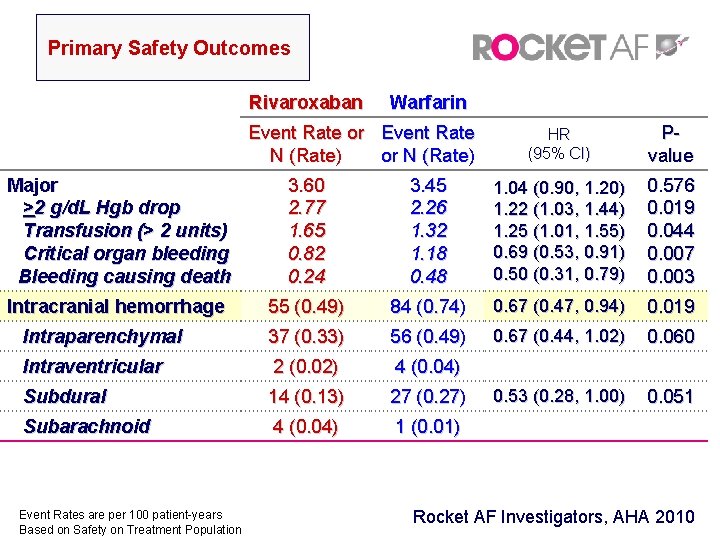
Primary Safety Outcomes Rivaroxaban Warfarin Event Rate or Event Rate N (Rate) or N (Rate) HR (95% CI) Pvalue Major >2 g/d. L Hgb drop Transfusion (> 2 units) Critical organ bleeding Bleeding causing death 3. 60 2. 77 1. 65 0. 82 0. 24 3. 45 2. 26 1. 32 1. 18 0. 48 1. 04 (0. 90, 1. 20) 1. 22 (1. 03, 1. 44) 1. 25 (1. 01, 1. 55) 0. 69 (0. 53, 0. 91) 0. 50 (0. 31, 0. 79) 0. 576 0. 019 0. 044 0. 007 0. 003 Intracranial hemorrhage 55 (0. 49) 84 (0. 74) 0. 67 (0. 47, 0. 94) 0. 019 Intraparenchymal 37 (0. 33) 56 (0. 49) 0. 67 (0. 44, 1. 02) 0. 060 Intraventricular 2 (0. 02) 4 (0. 04) Subdural 14 (0. 13) 27 (0. 27) 0. 53 (0. 28, 1. 00) 0. 051 Subarachnoid 4 (0. 04) 1 (0. 01) Event Rates are per 100 patient-years Based on Safety on Treatment Population Rocket AF Investigators, AHA 2010
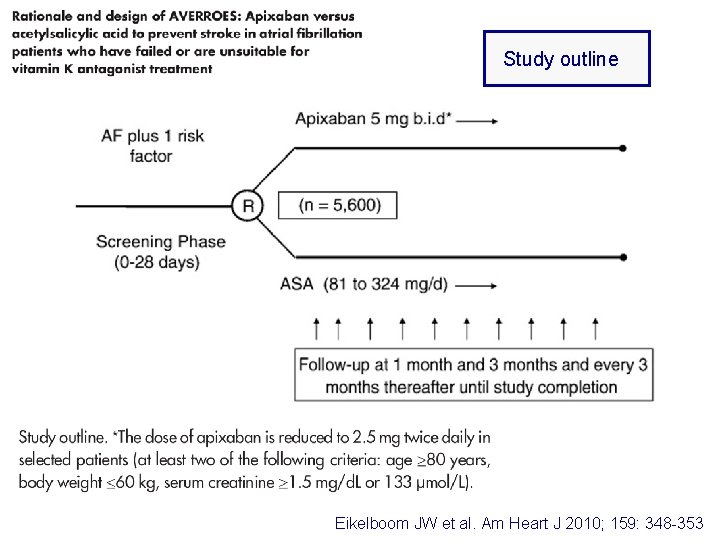
Study outline Eikelboom JW et al. Am Heart J 2010; 159: 348 -353
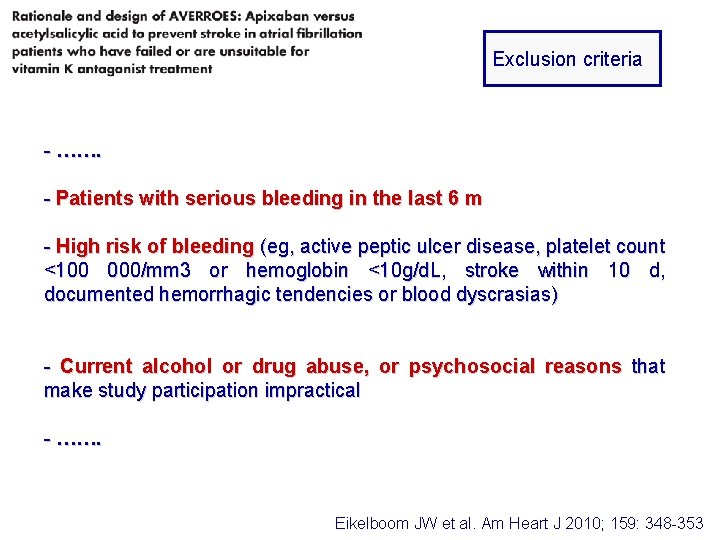
Exclusion criteria - ……. - Patients with serious bleeding in the last 6 m - High risk of bleeding (eg, active peptic ulcer disease, platelet count <100 000/mm 3 or hemoglobin <10 g/d. L, stroke within 10 d, documented hemorrhagic tendencies or blood dyscrasias) - Current alcohol or drug abuse, or psychosocial reasons that make study participation impractical - ……. Eikelboom JW et al. Am Heart J 2010; 159: 348 -353
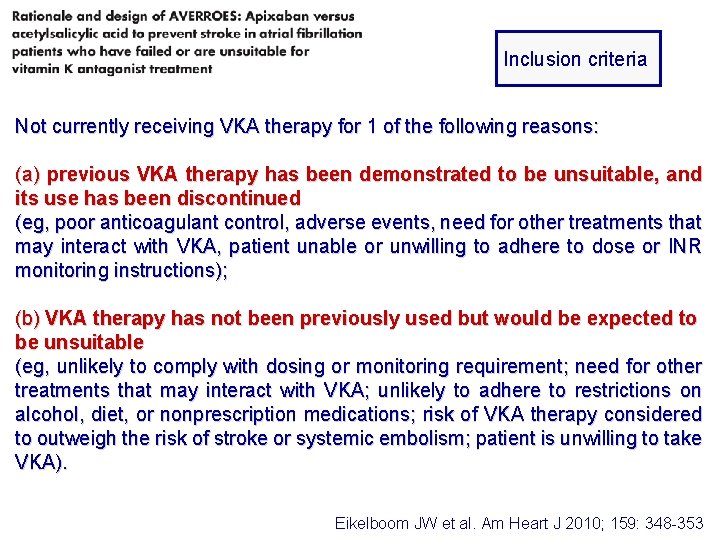
Inclusion criteria Not currently receiving VKA therapy for 1 of the following reasons: (a) previous VKA therapy has been demonstrated to be unsuitable, and its use has been discontinued (eg, poor anticoagulant control, adverse events, need for other treatments that may interact with VKA, patient unable or unwilling to adhere to dose or INR monitoring instructions); (b) VKA therapy has not been previously used but would be expected to be unsuitable (eg, unlikely to comply with dosing or monitoring requirement; need for other treatments that may interact with VKA; unlikely to adhere to restrictions on alcohol, diet, or nonprescription medications; risk of VKA therapy considered to outweigh the risk of stroke or systemic embolism; patient is unwilling to take VKA). Eikelboom JW et al. Am Heart J 2010; 159: 348 -353
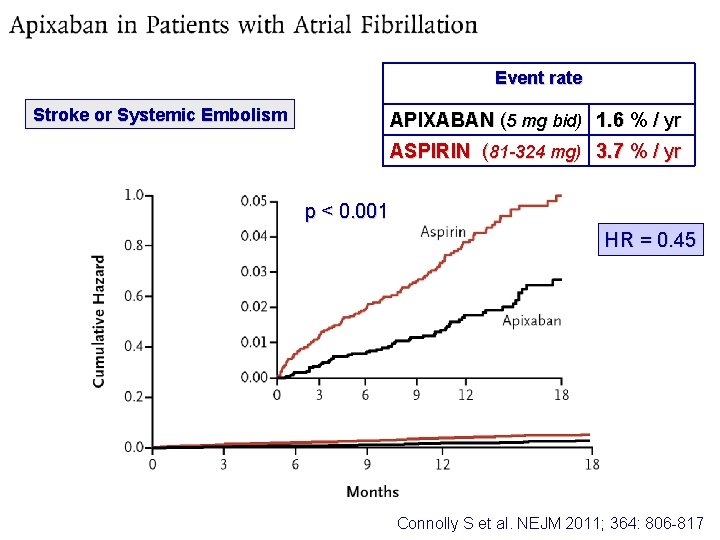
Event rate Stroke or Systemic Embolism APIXABAN (5 mg bid) 1. 6 % / yr ASPIRIN (81 -324 mg) 3. 7 % / yr p < 0. 001 HR = 0. 45 Connolly S et al. NEJM 2011; 364: 806 -817
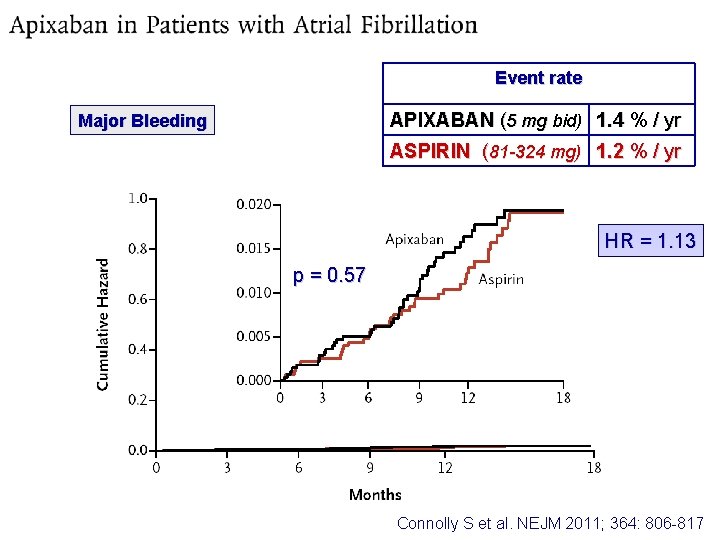
Event rate APIXABAN (5 mg bid) 1. 4 % / yr Major Bleeding ASPIRIN (81 -324 mg) 1. 2 % / yr HR = 1. 13 p = 0. 57 Connolly S et al. NEJM 2011; 364: 806 -817
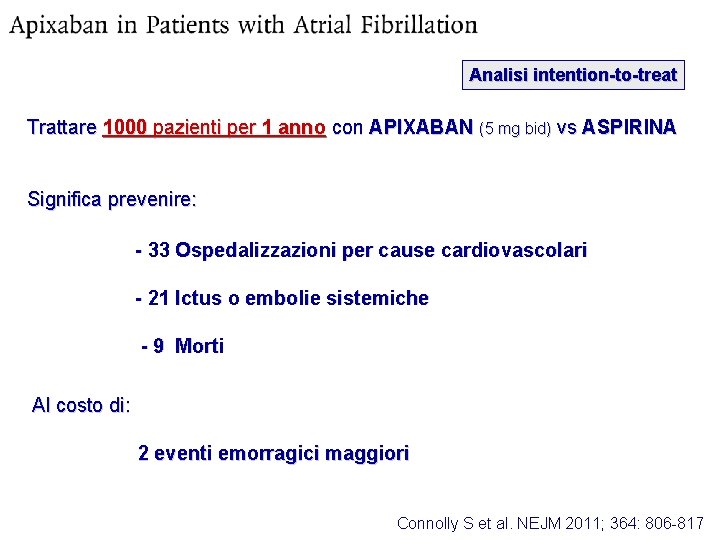
Analisi intention-to-treat Trattare 1000 pazienti per 1 anno con APIXABAN (5 mg bid) vs ASPIRINA Significa prevenire: - 33 Ospedalizzazioni per cause cardiovascolari - 21 Ictus o embolie sistemiche - 9 Morti Al costo di: 2 eventi emorragici maggiori Connolly S et al. NEJM 2011; 364: 806 -817
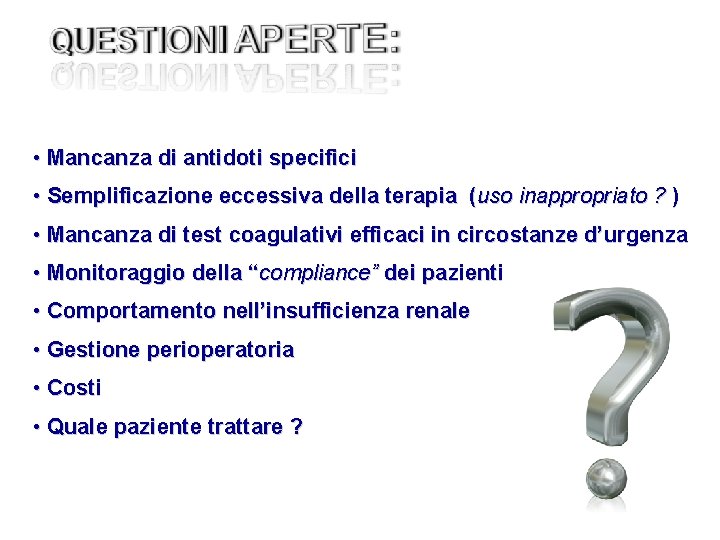
• Mancanza di antidoti specifici • Semplificazione eccessiva della terapia (uso inappropriato ? ) • Mancanza di test coagulativi efficaci in circostanze d’urgenza • Monitoraggio della “compliance” dei pazienti • Comportamento nell’insufficienza renale • Gestione perioperatoria • Costi • Quale paziente trattare ?