HW 4 Tutorial 4 WRF Chapter 18 WWWR
- Slides: 43
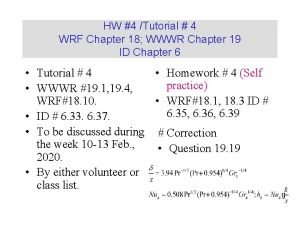
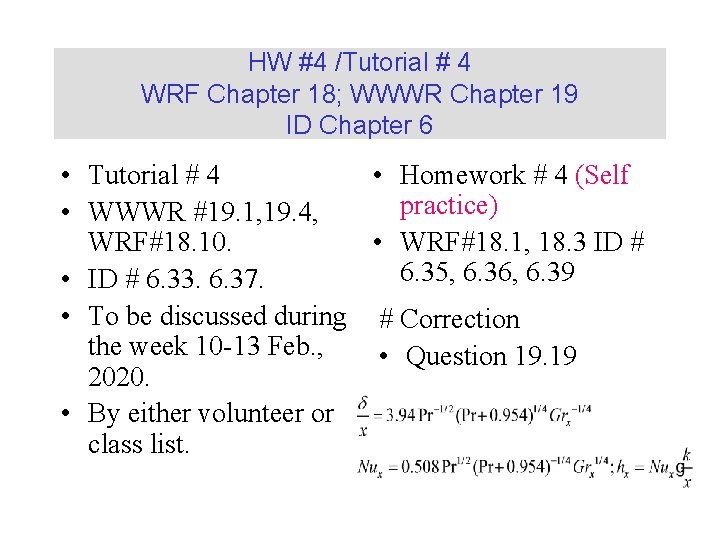
HW #4 /Tutorial # 4 WRF Chapter 18; WWWR Chapter 19 ID Chapter 6 • Tutorial # 4 • Homework # 4 (Self practice) • WWWR #19. 1, 19. 4, • WRF#18. 1, 18. 3 ID # WRF#18. 10. 6. 35, 6. 36, 6. 39 • ID # 6. 33. 6. 37. • To be discussed during # Correction the week 10 -13 Feb. , • Question 19. 19 2020. • By either volunteer or class list.
Convective Heat Transfer
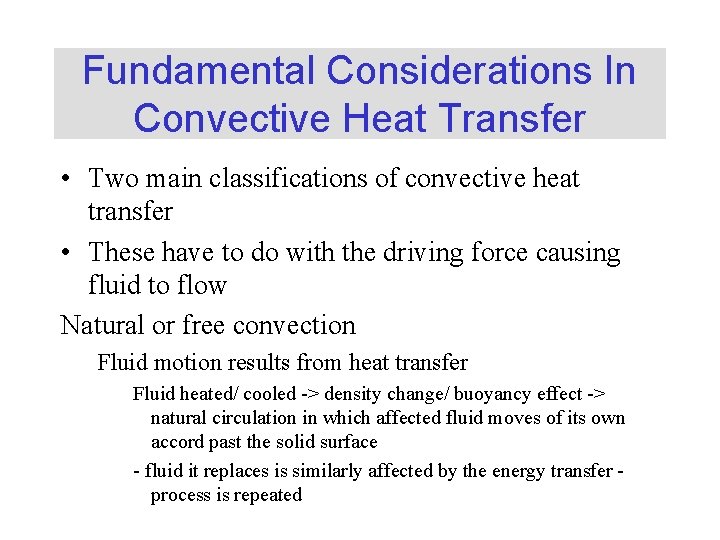
Fundamental Considerations In Convective Heat Transfer • Two main classifications of convective heat transfer • These have to do with the driving force causing fluid to flow Natural or free convection Fluid motion results from heat transfer Fluid heated/ cooled -> density change/ buoyancy effect -> natural circulation in which affected fluid moves of its own accord past the solid surface - fluid it replaces is similarly affected by the energy transfer process is repeated
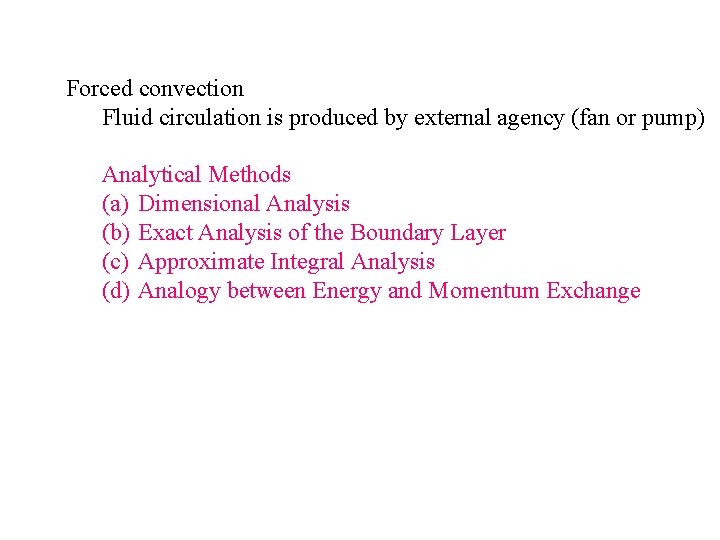
Forced convection Fluid circulation is produced by external agency (fan or pump) Analytical Methods (a) Dimensional Analysis (b) Exact Analysis of the Boundary Layer (c) Approximate Integral Analysis (d) Analogy between Energy and Momentum Exchange
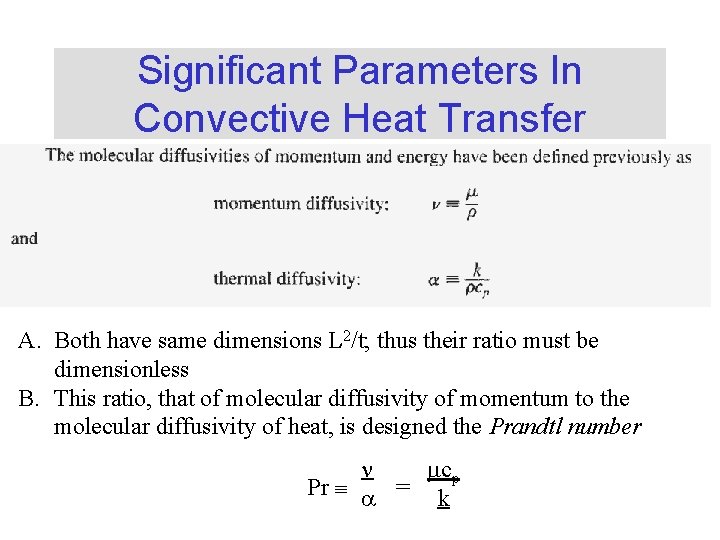
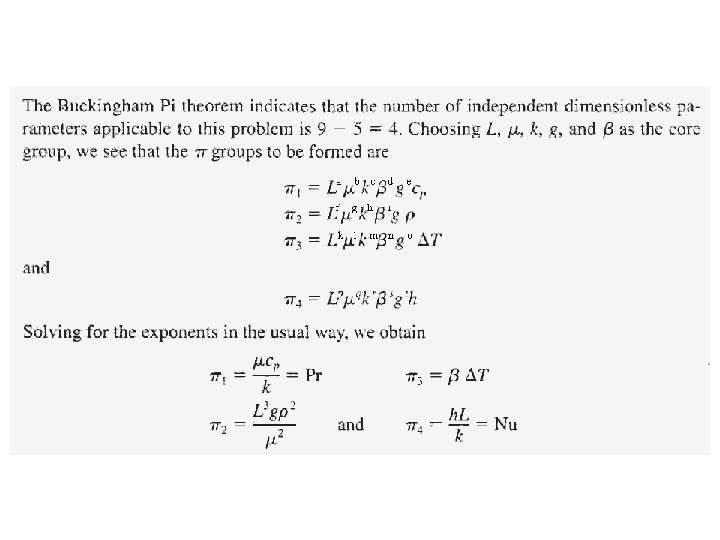
Significant Parameters In Convective Heat Transfer A. Both have same dimensions L 2/t; thus their ratio must be dimensionless B. This ratio, that of molecular diffusivity of momentum to the molecular diffusivity of heat, is designed the Prandtl number n mcp Pr º a = k
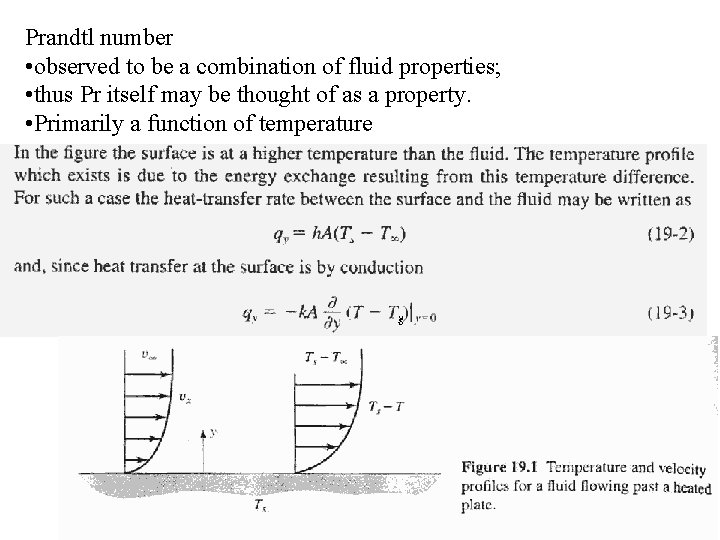
Prandtl number • observed to be a combination of fluid properties; • thus Pr itself may be thought of as a property. • Primarily a function of temperature s
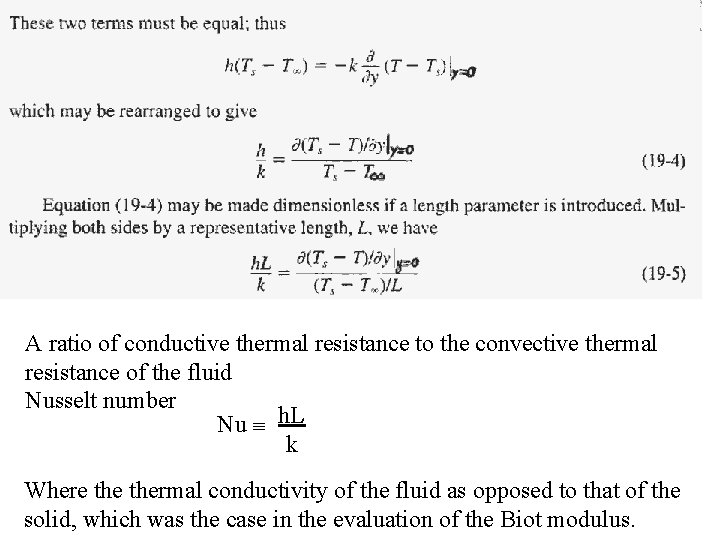
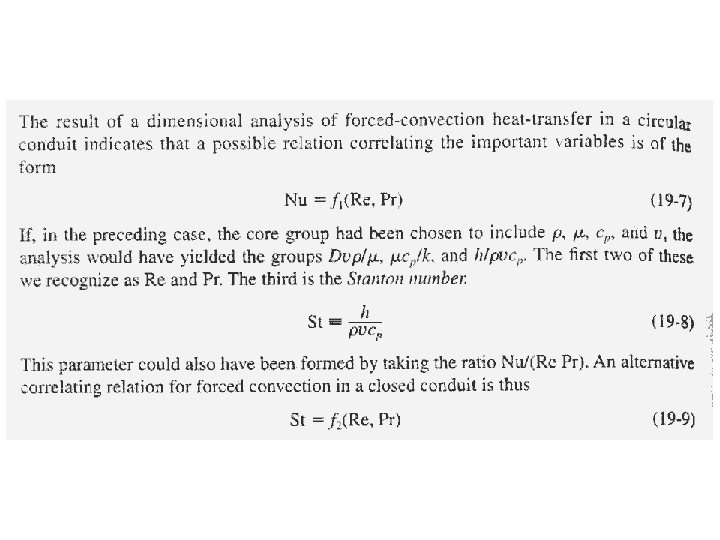
A ratio of conductive thermal resistance to the convective thermal resistance of the fluid Nusselt number Nu º h. L k Where thermal conductivity of the fluid as opposed to that of the solid, which was the case in the evaluation of the Biot modulus.
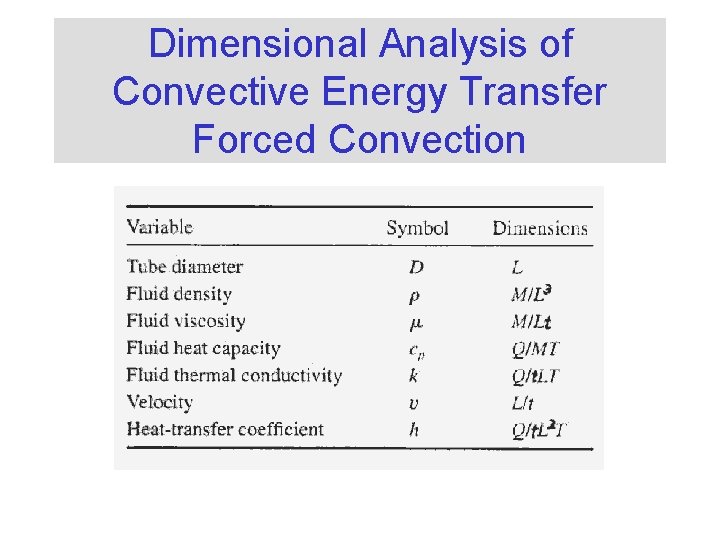
Dimensional Analysis of Convective Energy Transfer Forced Convection
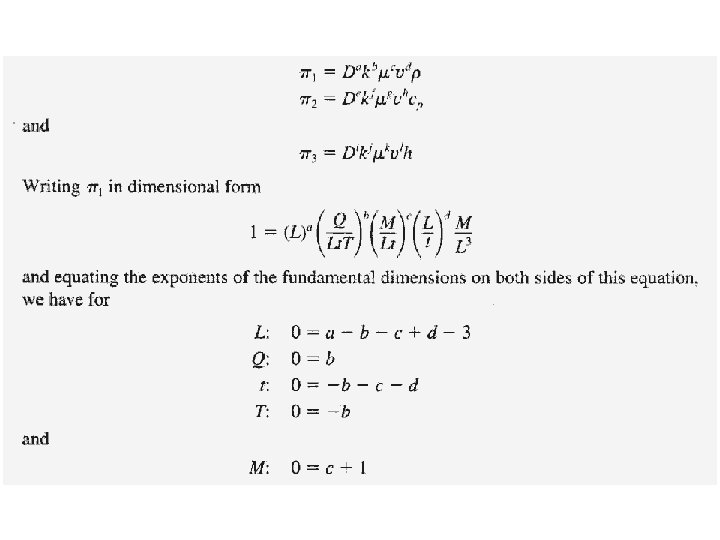
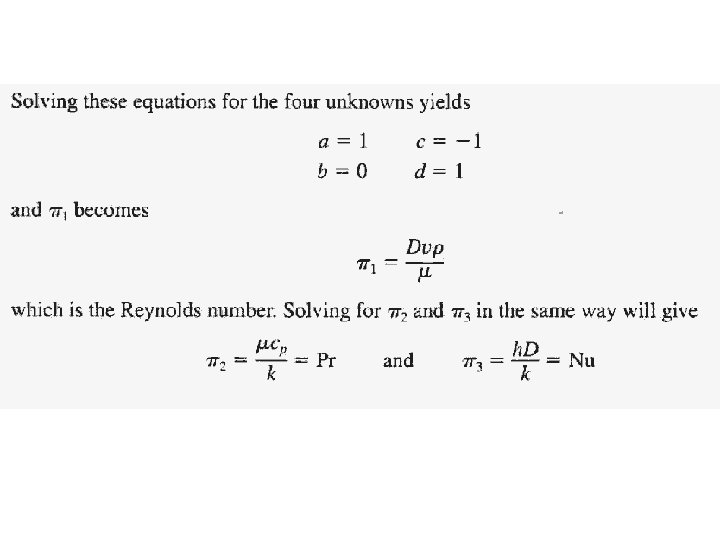
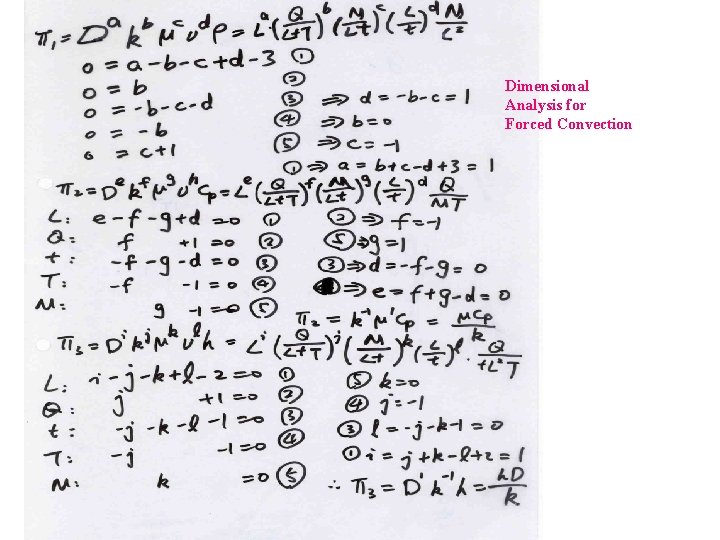
Dimensional Analysis for Forced Convection
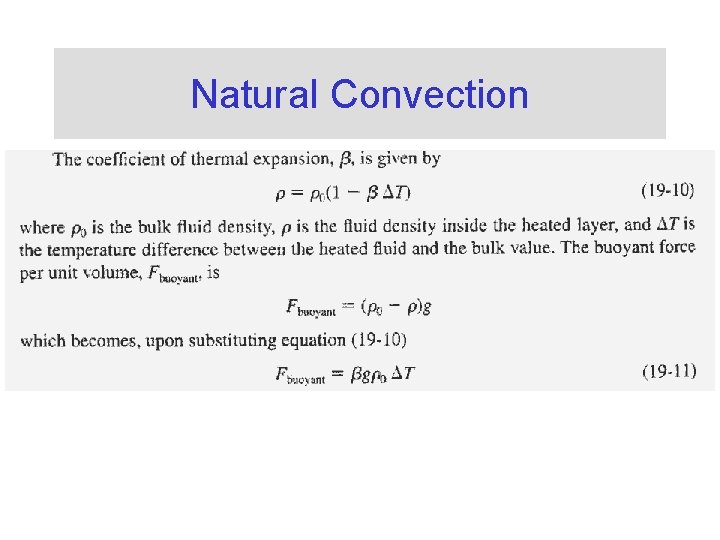
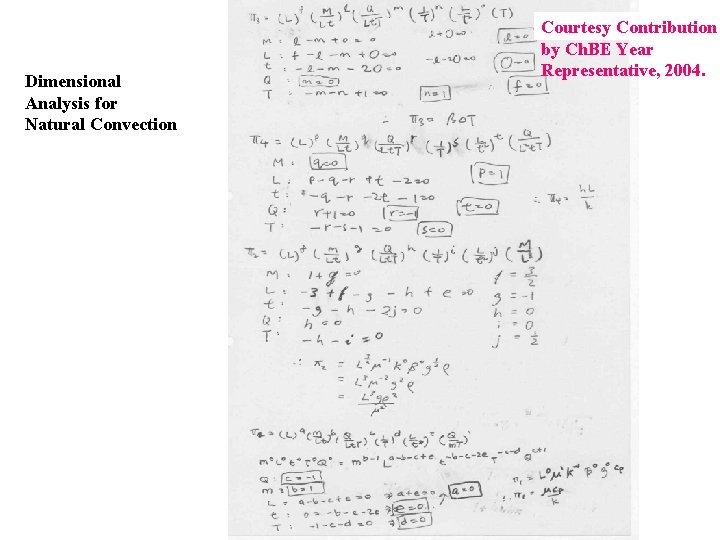
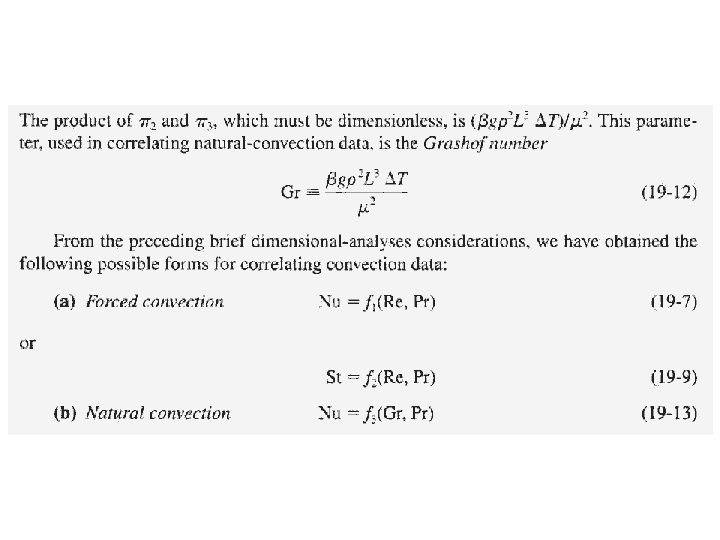
Natural Convection
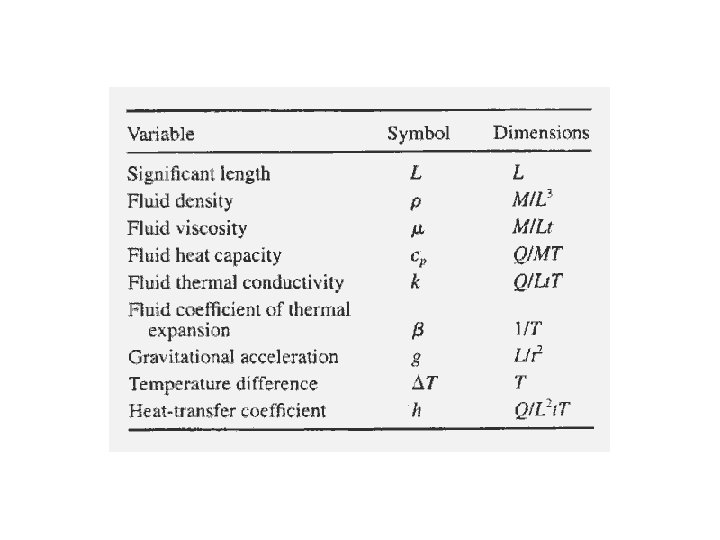
Dimensional Analysis for Natural Convection Courtesy Contribution by Ch. BE Year Representative, 2004.
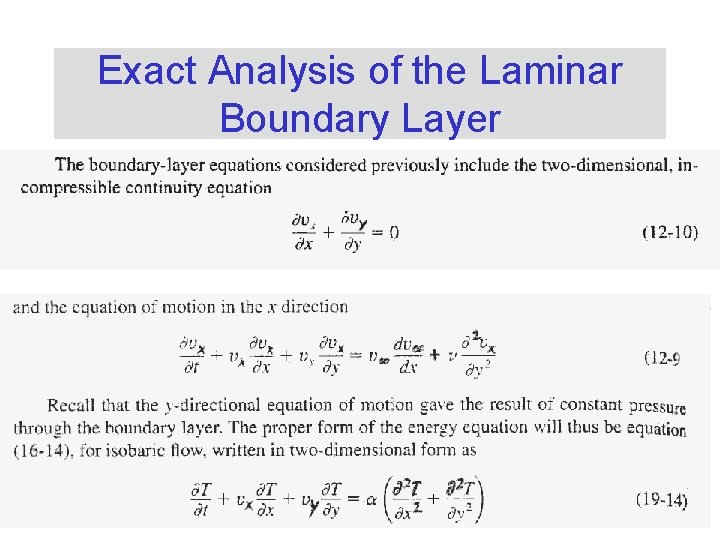
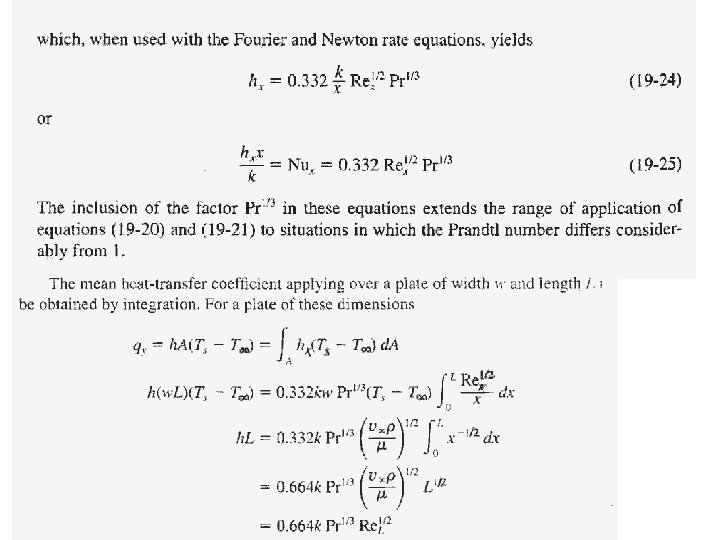
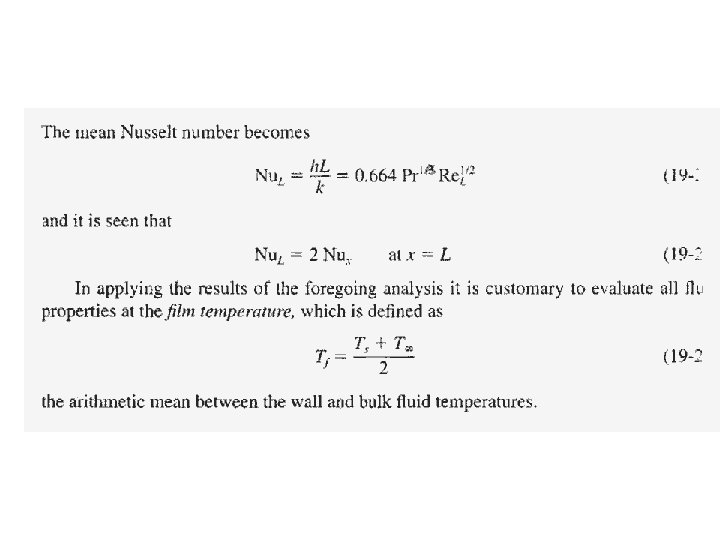
Exact Analysis of the Laminar Boundary Layer
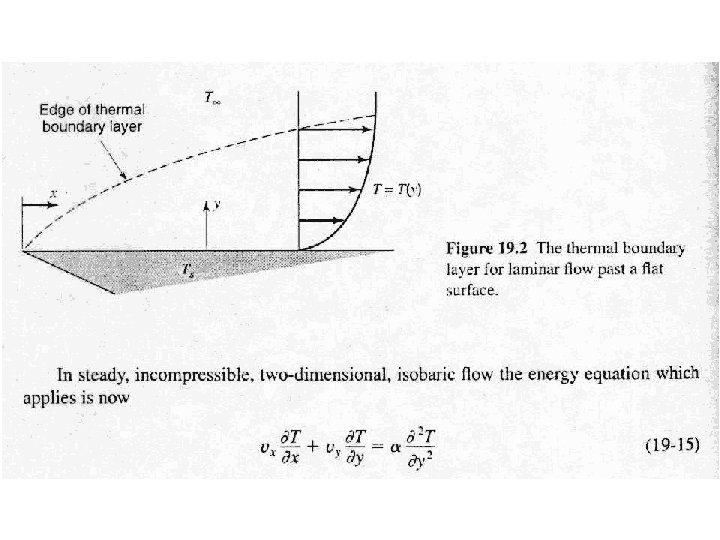
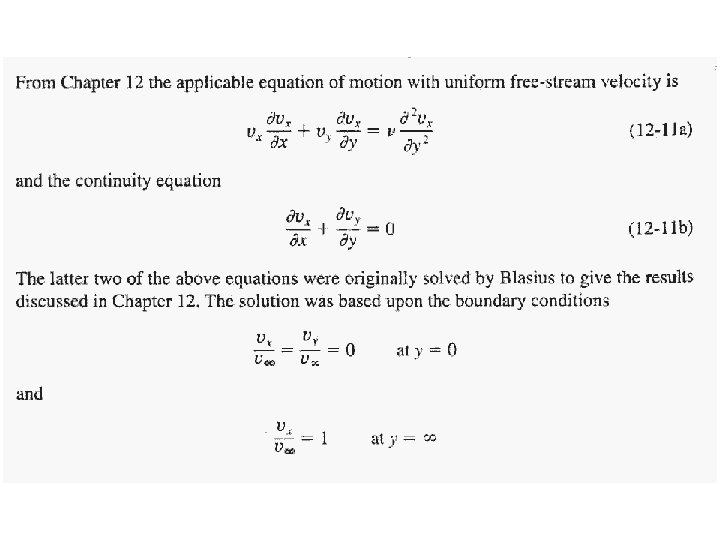
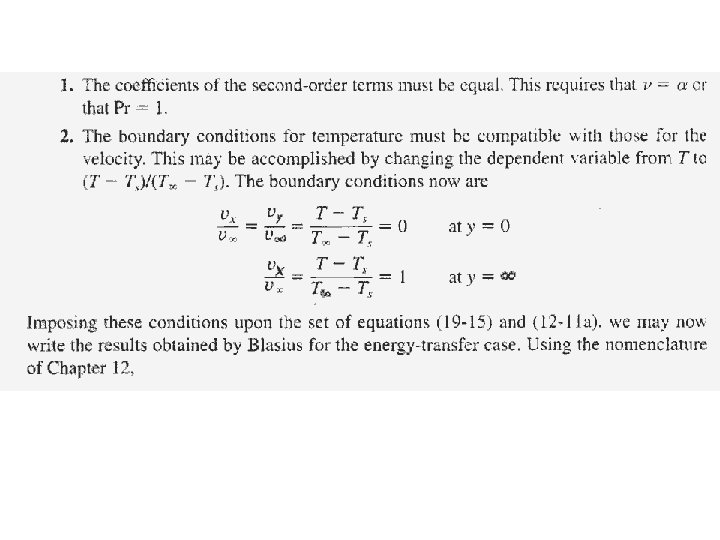
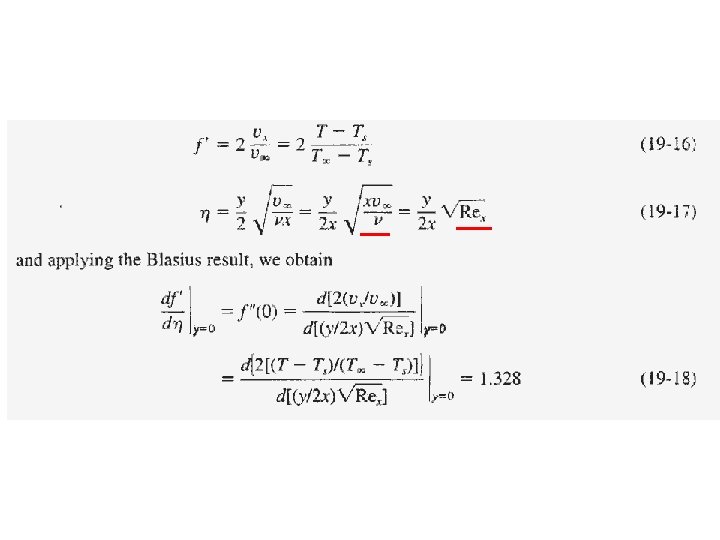
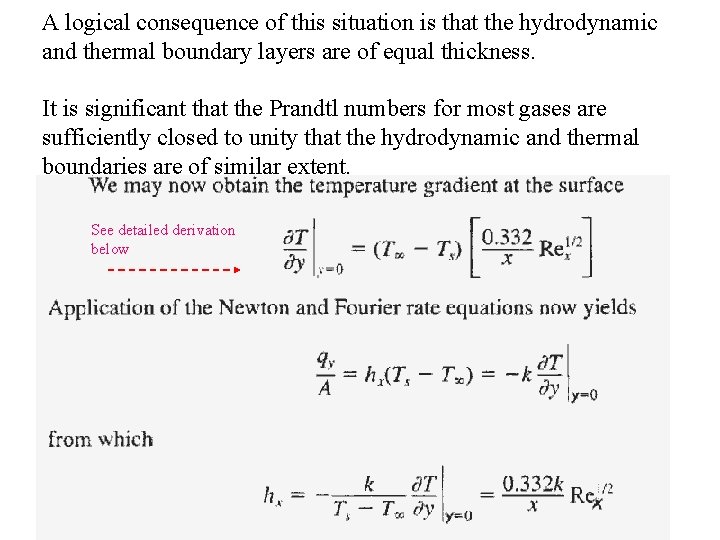
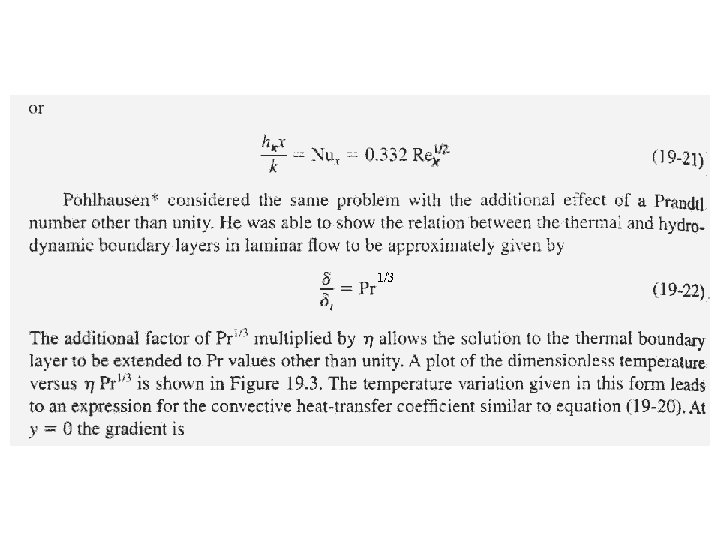
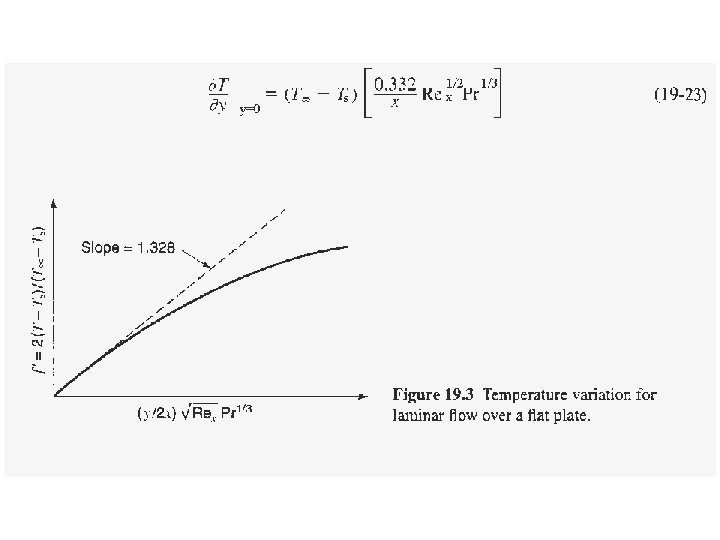
A logical consequence of this situation is that the hydrodynamic and thermal boundary layers are of equal thickness. It is significant that the Prandtl numbers for most gases are sufficiently closed to unity that the hydrodynamic and thermal boundaries are of similar extent. See detailed derivation below
Detailed Derivation
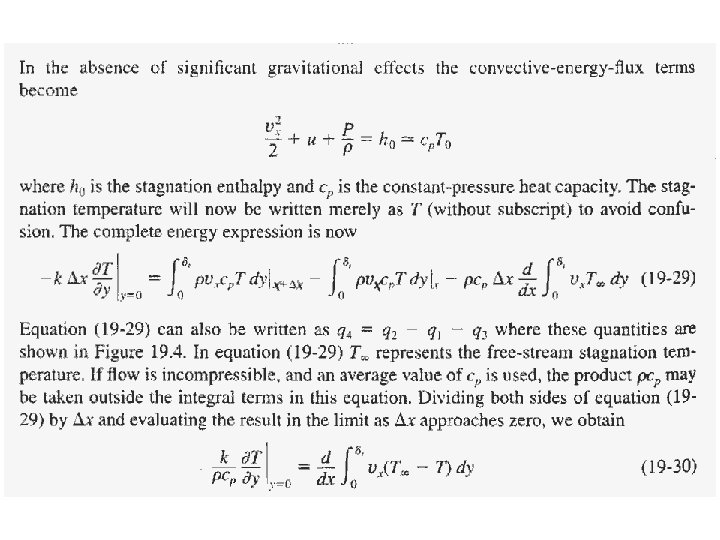
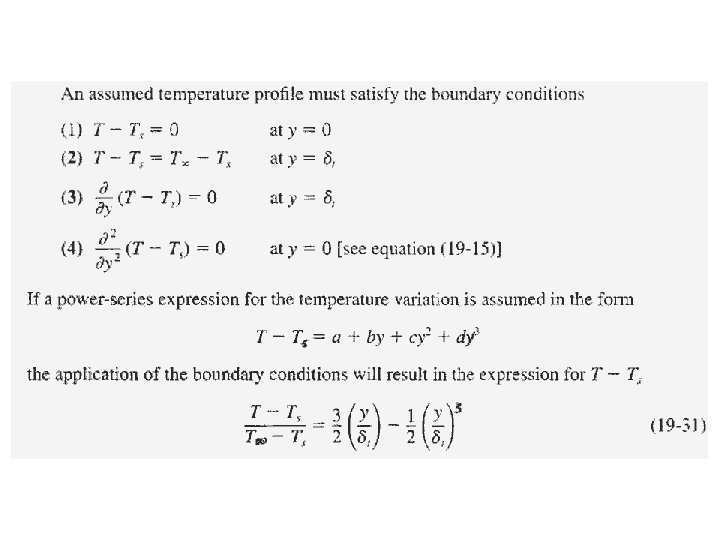
Approximate Integral Analysis of the Thermal Boundary Layer An approximate method for analysis of thermal boundary layer employs the integral analysis used by von Kármán for the hydrodynamic boundary layer.
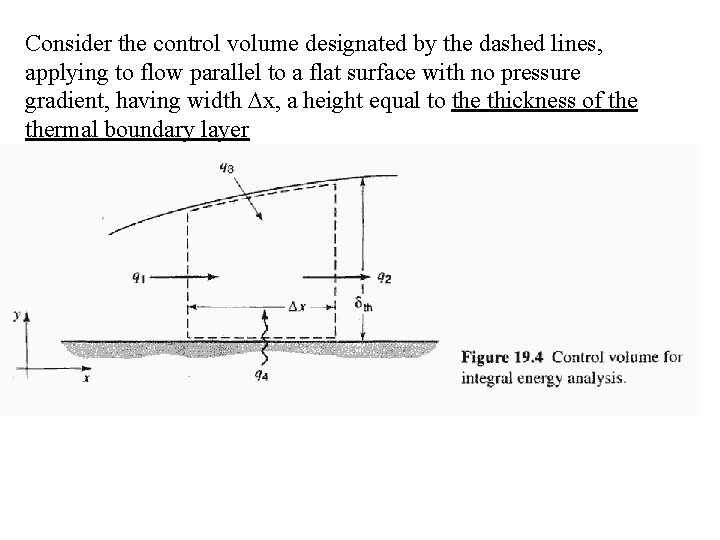
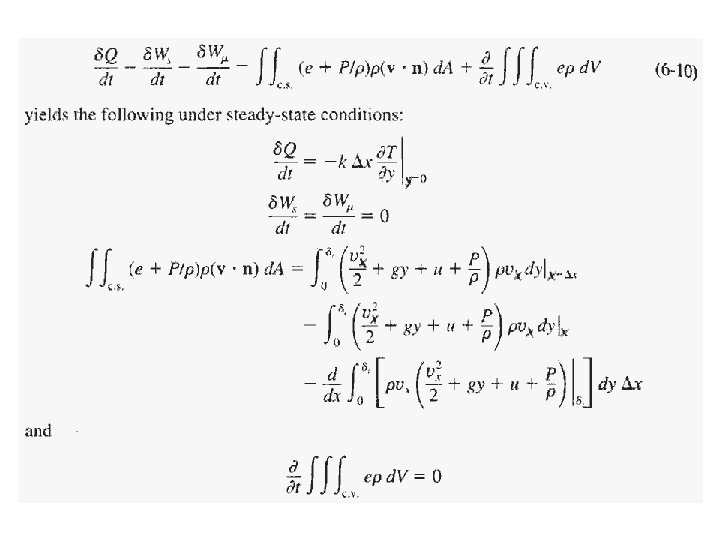
Consider the control volume designated by the dashed lines, applying to flow parallel to a flat surface with no pressure gradient, having width Dx, a height equal to the thickness of thermal boundary layer
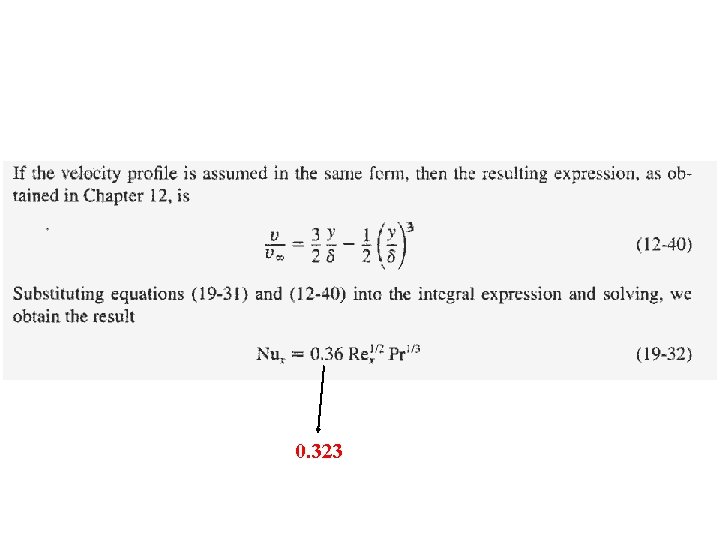
0. 323
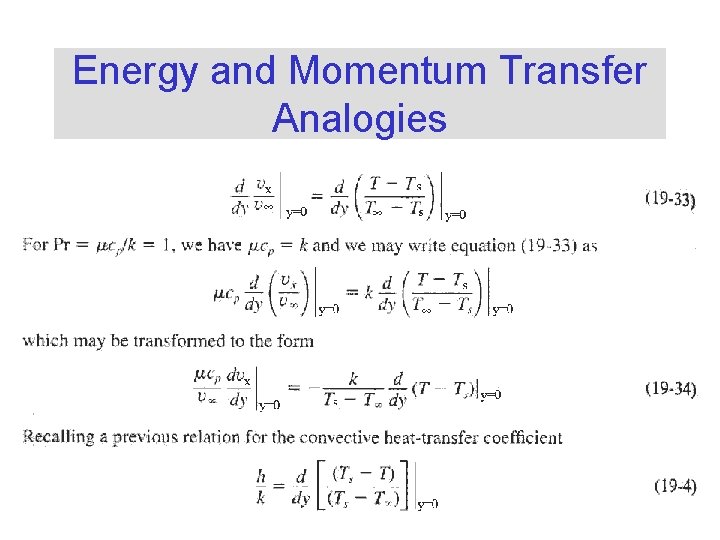
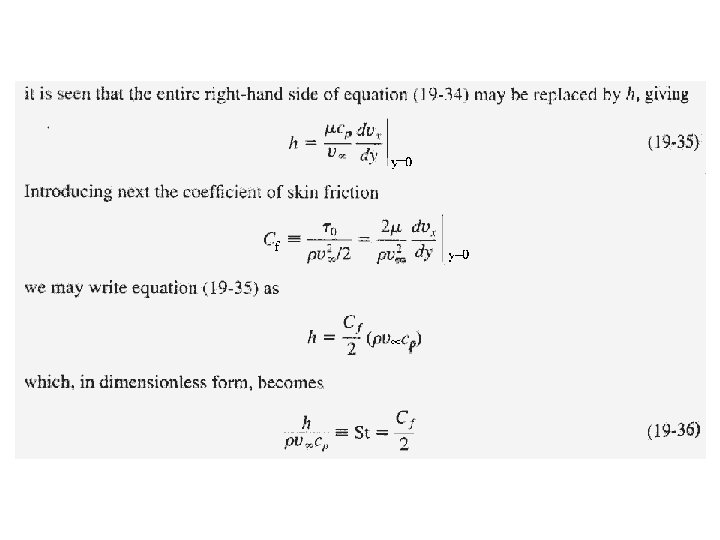
Energy and Momentum Transfer Analogies
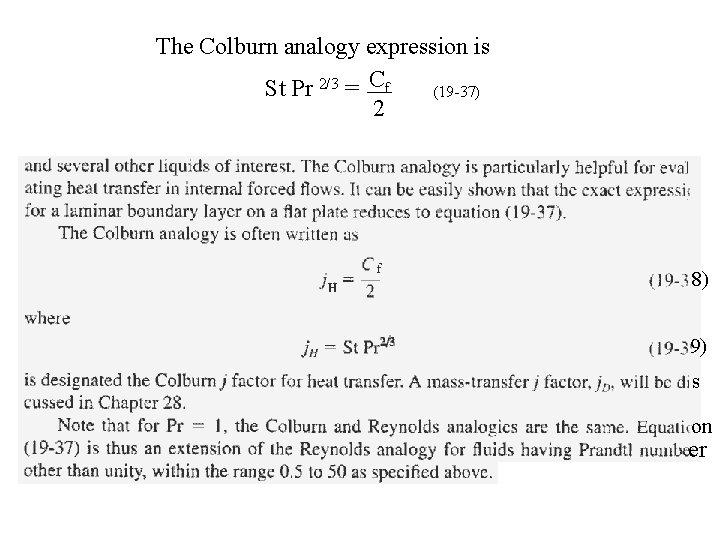
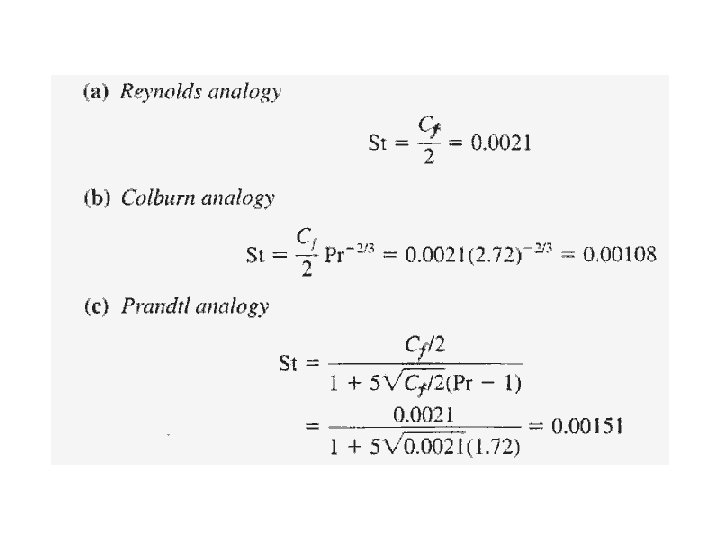
The Colburn analogy expression is St Pr 2/3 = Cf (19 -37) 2 8) 9) s on er
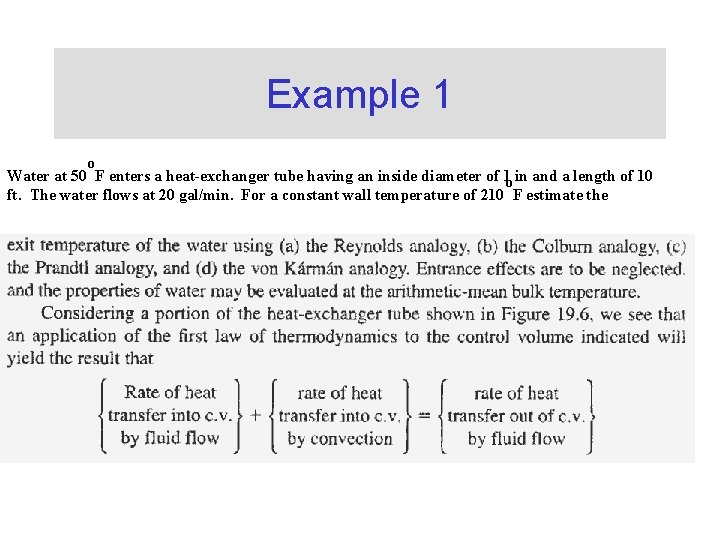
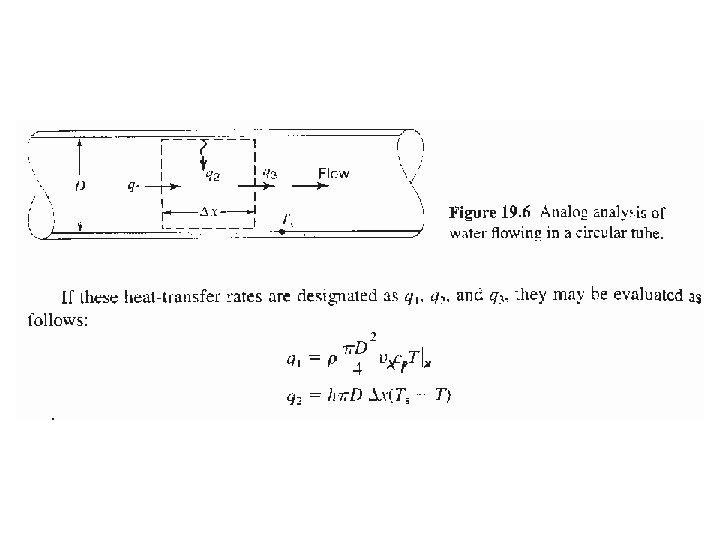
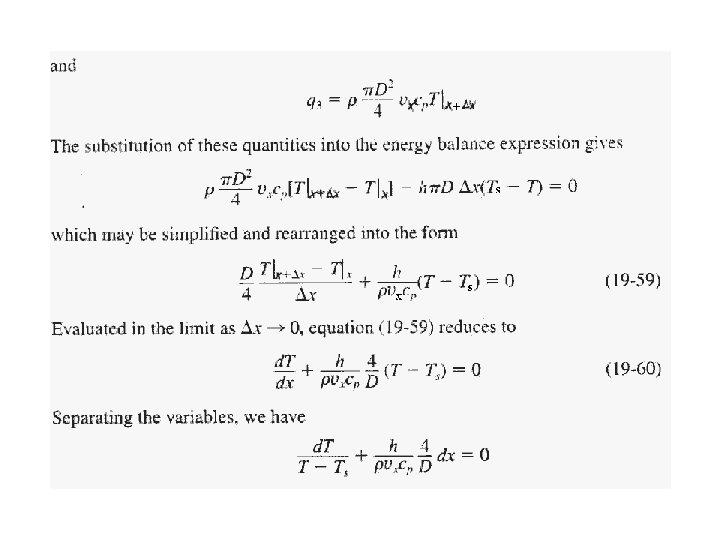
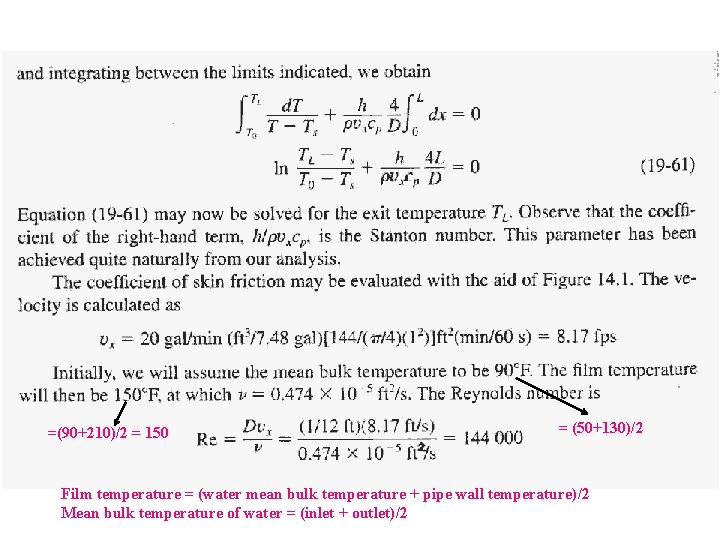
Example 1 o Water at 50 F enters a heat-exchanger tube having an inside diameter of 1 o in and a length of 10 ft. The water flows at 20 gal/min. For a constant wall temperature of 210 F estimate the
=(90+210)/2 = 150 = (50+130)/2 Film temperature = (water mean bulk temperature + pipe wall temperature)/2 Mean bulk temperature of water = (inlet + outlet)/2
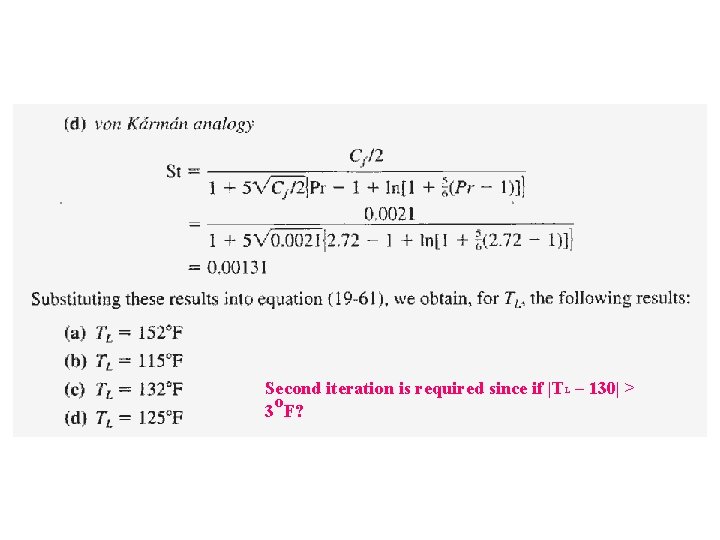
Second iteration is required since if |TL – 130| > o 3 F?