Genome Analysis of L donovani revealing the correlation

- Slides: 21
Genome Analysis of L. donovani : revealing the correlation of its pathogenesis and species-specific genes Presented by Dr. Monidipa Ghosh Assistant Professor Department of Biotechnology NIT Durgapur
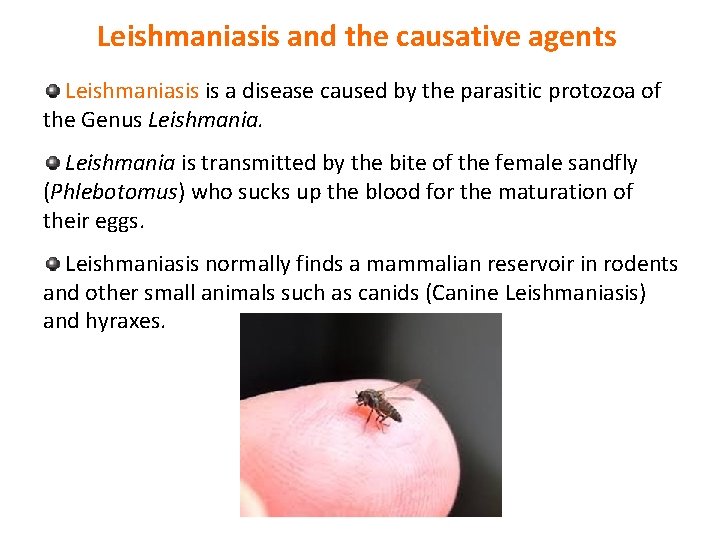
Leishmaniasis and the causative agents Leishmaniasis is a disease caused by the parasitic protozoa of the Genus Leishmania is transmitted by the bite of the female sandfly (Phlebotomus) who sucks up the blood for the maturation of their eggs. Leishmaniasis normally finds a mammalian reservoir in rodents and other small animals such as canids (Canine Leishmaniasis) and hyraxes.
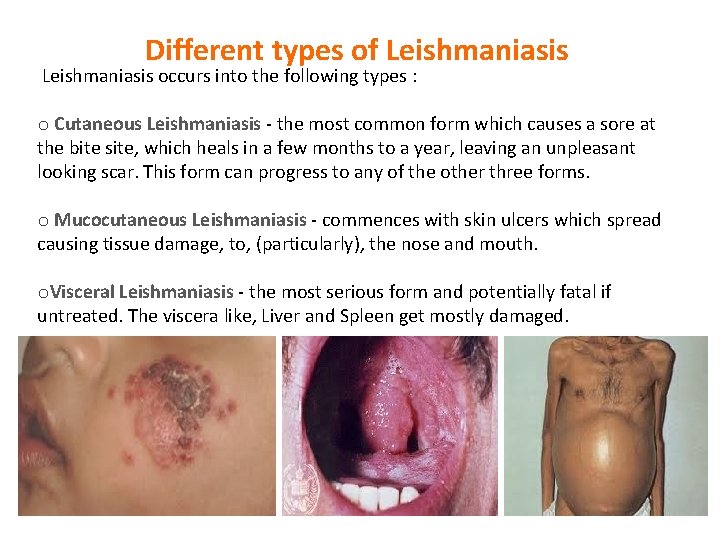
Different types of Leishmaniasis occurs into the following types : o Cutaneous Leishmaniasis - the most common form which causes a sore at the bite site, which heals in a few months to a year, leaving an unpleasant looking scar. This form can progress to any of the other three forms. o Mucocutaneous Leishmaniasis - commences with skin ulcers which spread causing tissue damage, to, (particularly), the nose and mouth. o. Visceral Leishmaniasis - the most serious form and potentially fatal if untreated. The viscera like, Liver and Spleen get mostly damaged.
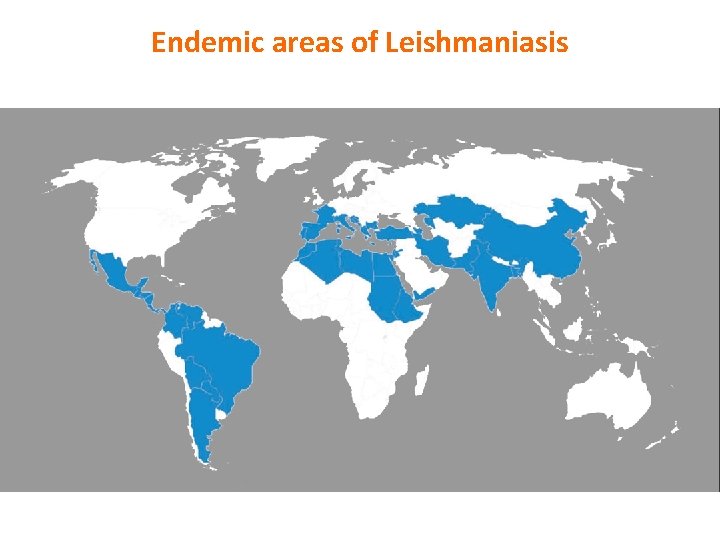
Endemic areas of Leishmaniasis
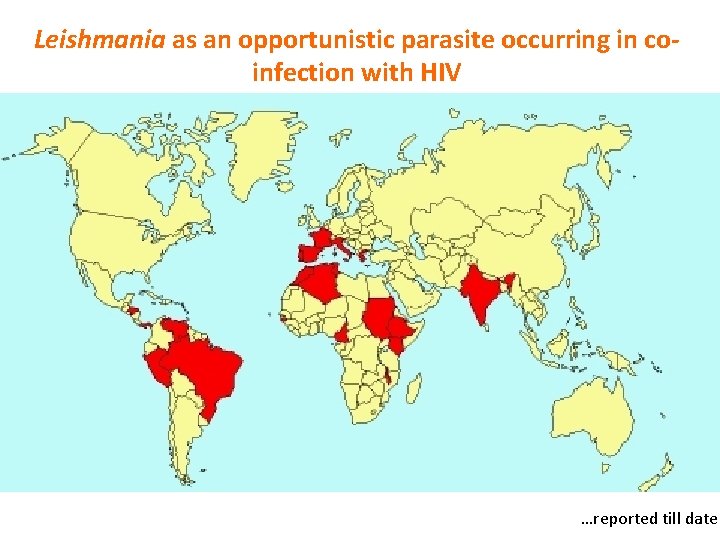
Leishmania as an opportunistic parasite occurring in coinfection with HIV …reported till date
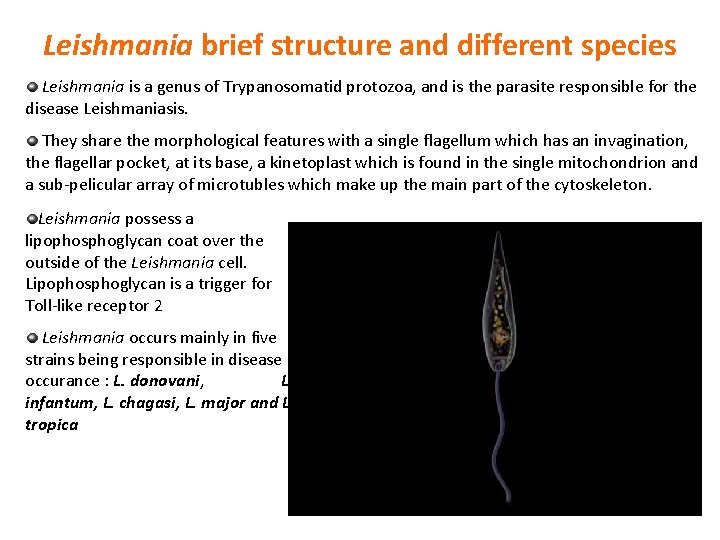
Leishmania brief structure and different species Leishmania is a genus of Trypanosomatid protozoa, and is the parasite responsible for the disease Leishmaniasis. They share the morphological features with a single flagellum which has an invagination, the flagellar pocket, at its base, a kinetoplast which is found in the single mitochondrion and a sub-pelicular array of microtubles which make up the main part of the cytoskeleton. Leishmania possess a lipophosphoglycan coat over the outside of the Leishmania cell. Lipophosphoglycan is a trigger for Toll-like receptor 2 Leishmania occurs mainly in five strains being responsible in disease occurance : L. donovani, L. infantum, L. chagasi, L. major and L. tropica
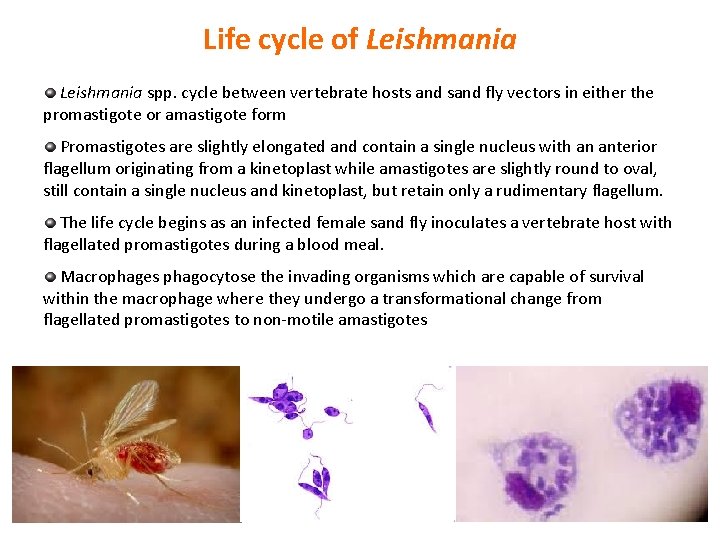
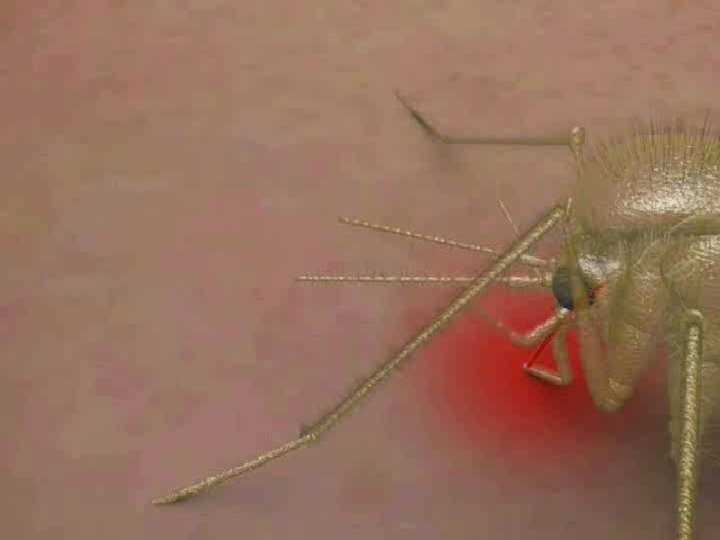
Life cycle of Leishmania spp. cycle between vertebrate hosts and sand fly vectors in either the promastigote or amastigote form Promastigotes are slightly elongated and contain a single nucleus with an anterior flagellum originating from a kinetoplast while amastigotes are slightly round to oval, still contain a single nucleus and kinetoplast, but retain only a rudimentary flagellum. The life cycle begins as an infected female sand fly inoculates a vertebrate host with flagellated promastigotes during a blood meal. Macrophages phagocytose the invading organisms which are capable of survival within the macrophage where they undergo a transformational change from flagellated promastigotes to non-motile amastigotes
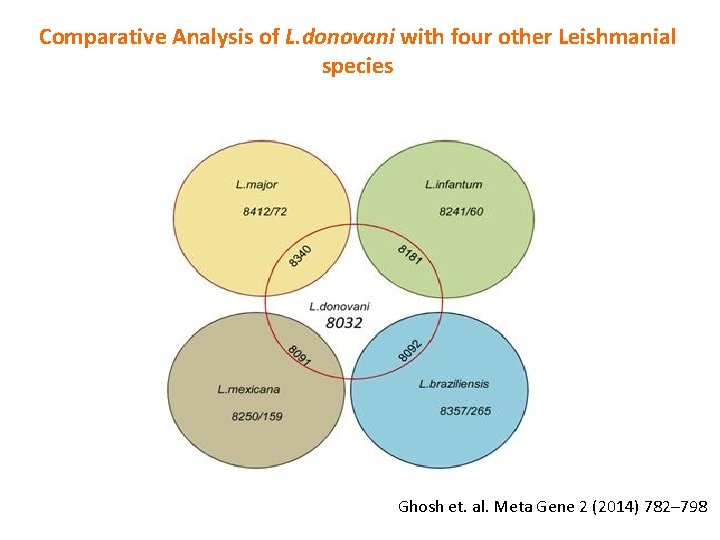
Comparative Analysis of L. donovani with four other Leishmanial species Ghosh et. al. Meta Gene 2 (2014) 782– 798
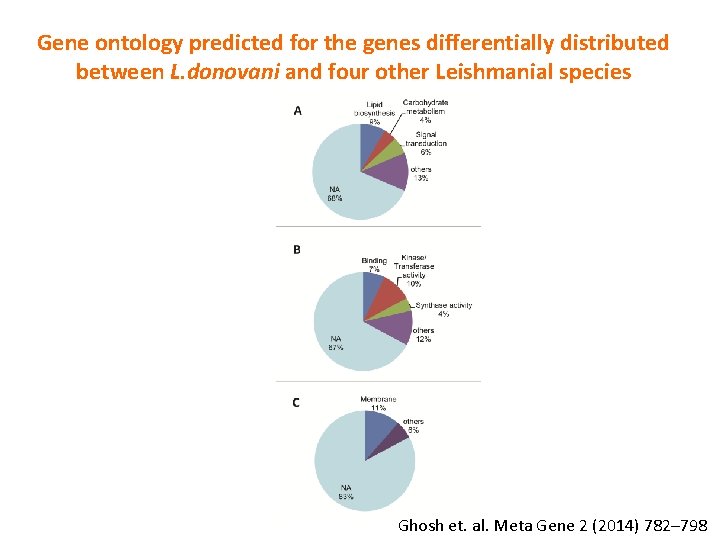
Gene ontology predicted for the genes differentially distributed between L. donovani and four other Leishmanial species Ghosh et. al. Meta Gene 2 (2014) 782– 798
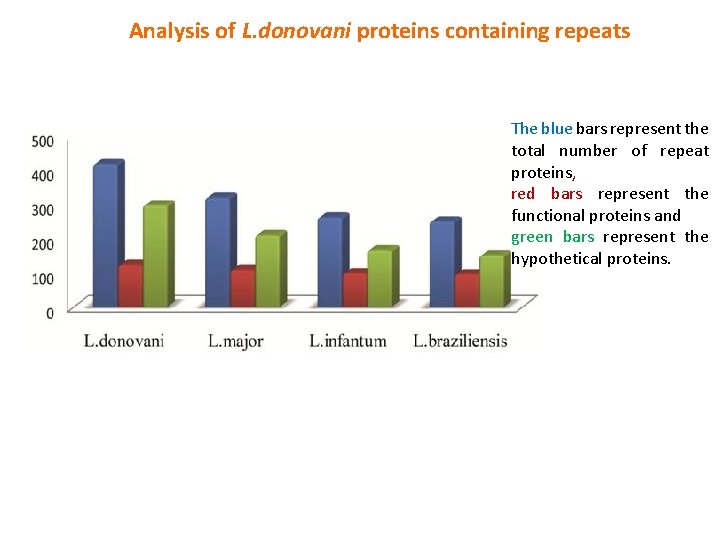
Analysis of L. donovani proteins containing repeats The blue bars represent the total number of repeat proteins, red bars represent the functional proteins and green bars represent the hypothetical proteins.
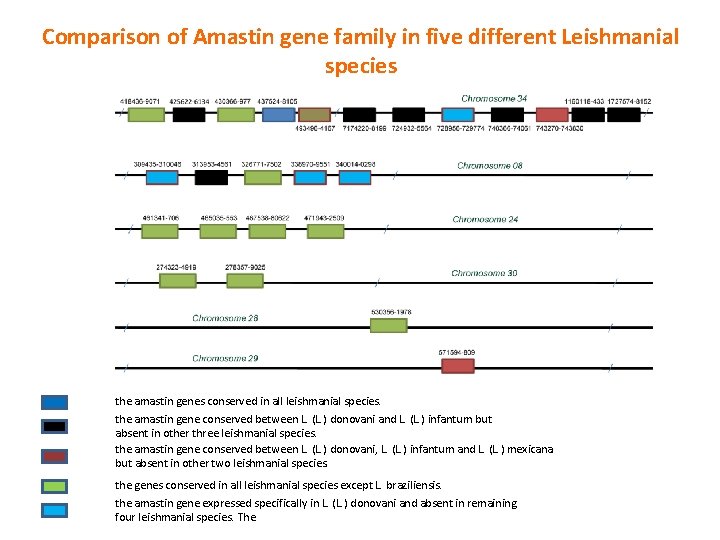
Comparison of Amastin gene family in five different Leishmanial species the amastin genes conserved in all leishmanial species. the amastin gene conserved between L. (L. ) donovani and L. (L. ) infantum but absent in other three leishmanial species. the amastin gene conserved between L. (L. ) donovani, L. (L. ) infantum and L. (L. ) mexicana but absent in other two leishmanial species. the genes conserved in all leishmanial species except L. braziliensis. the amastin gene expressed specifically in L. (L. ) donovani and absent in remaining four leishmanial species. The
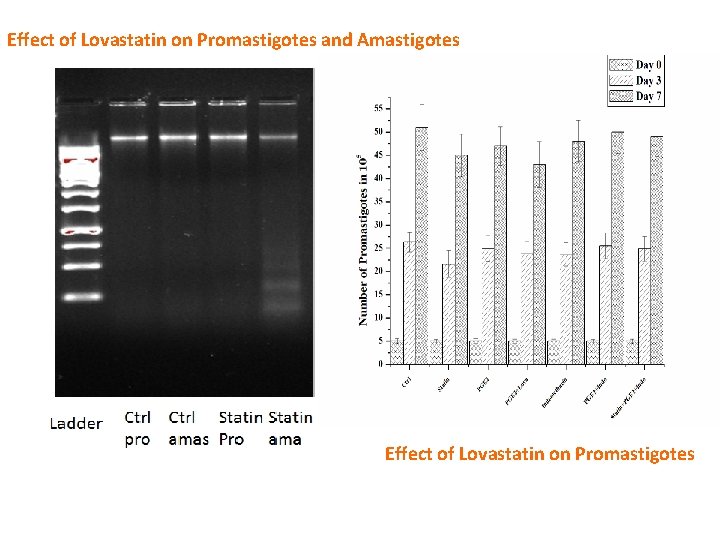
Effect of Lovastatin on Promastigotes and Amastigotes Effect of Lovastatin on Promastigotes
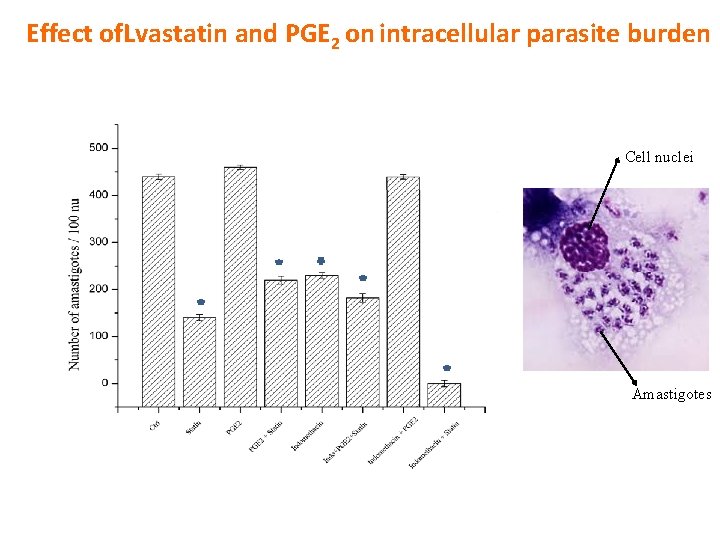
Effect of. Lvastatin and PGE 2 on intracellular parasite burden Cell nuclei Amastigotes
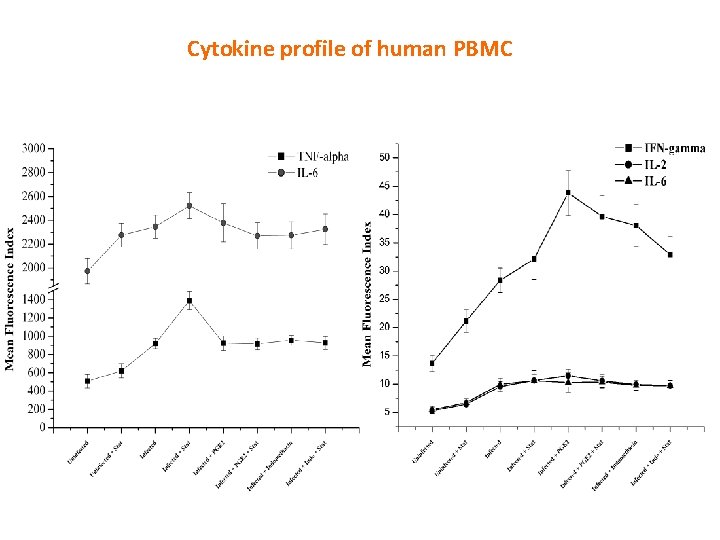
Cytokine profile of human PBMC
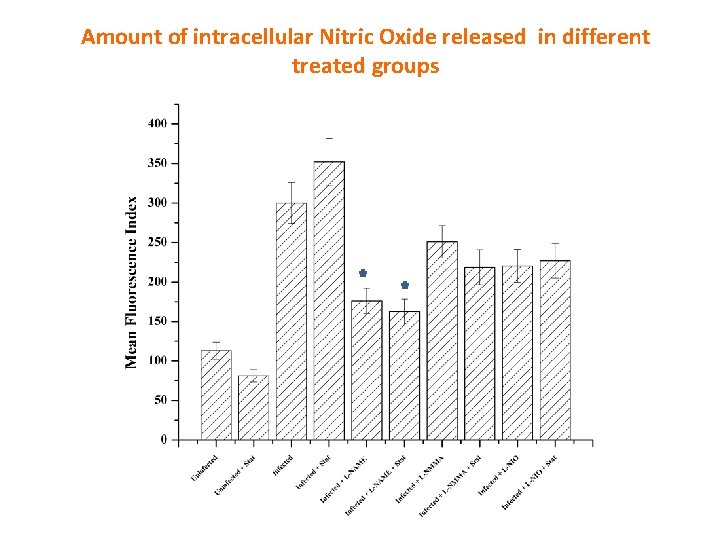
Amount of intracellular Nitric Oxide released in different treated groups
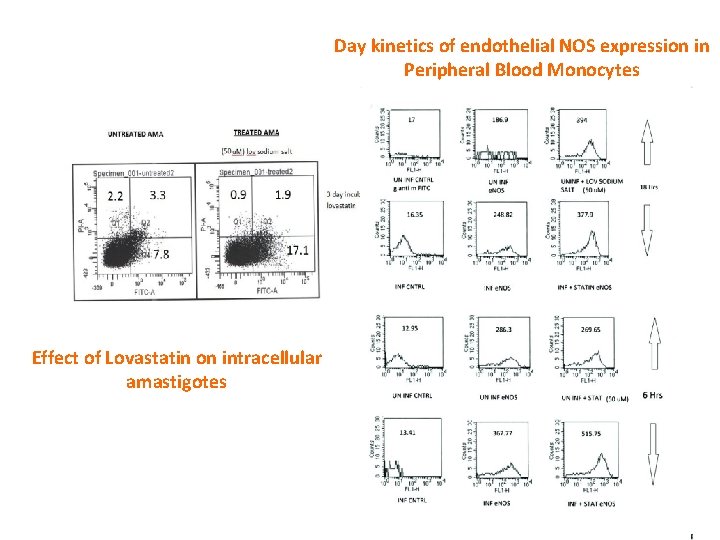
Day kinetics of endothelial NOS expression in Peripheral Blood Monocytes Effect of Lovastatin on intracellular amastigotes
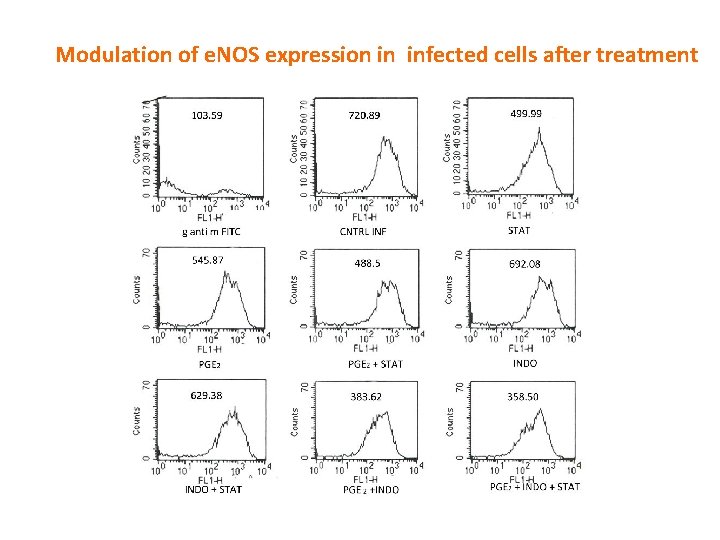
Modulation of e. NOS expression in infected cells after treatment
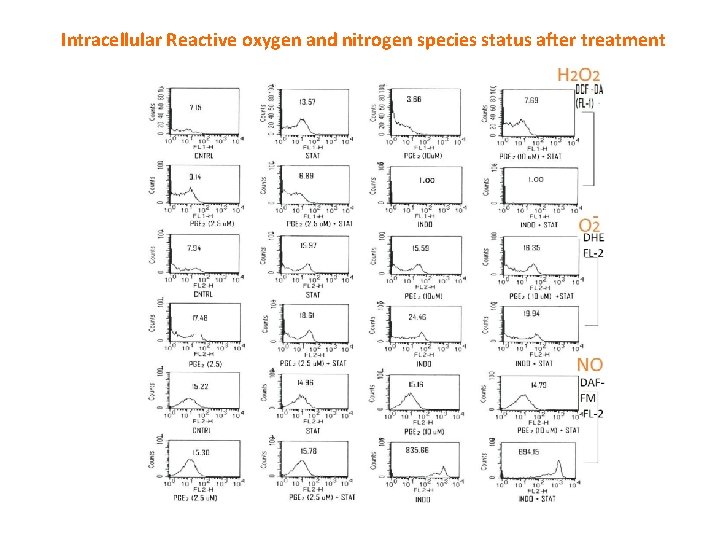
Intracellular Reactive oxygen and nitrogen species status after treatment
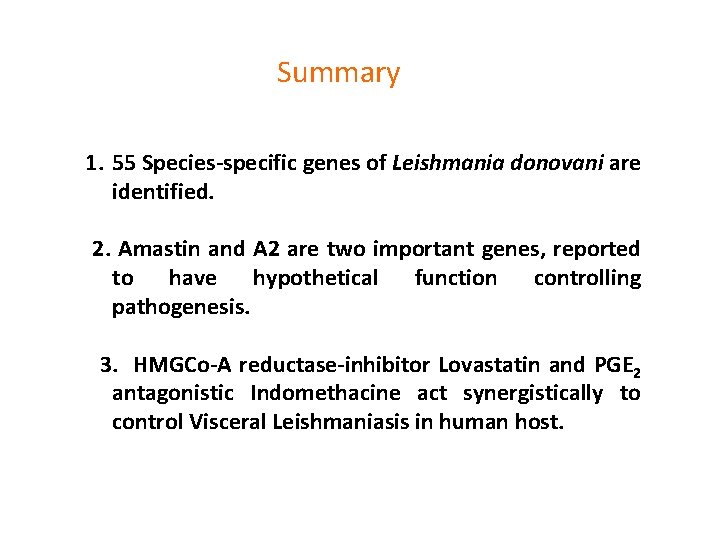
Summary 1. 55 Species-specific genes of Leishmania donovani are identified. 2. Amastin and A 2 are two important genes, reported to have hypothetical function controlling pathogenesis. 3. HMGCo-A reductase-inhibitor Lovastatin and PGE 2 antagonistic Indomethacine act synergistically to control Visceral Leishmaniasis in human host.
Thank You