Genital Herpes Clinical Update on Testing Treatment and

- Slides: 50
Genital Herpes: Clinical Update on Testing, Treatment and the Prevention of Transmission Gary A. Richwald, MD, MPH Clinical Virologist Former Director and Chief Physician Los Angeles County Sexually Transmitted Disease Program Consultant, American Social Health Association Medical Advisor – LA/Orange County HELP Groups E-Mail: drgary 1@comcast. net 1
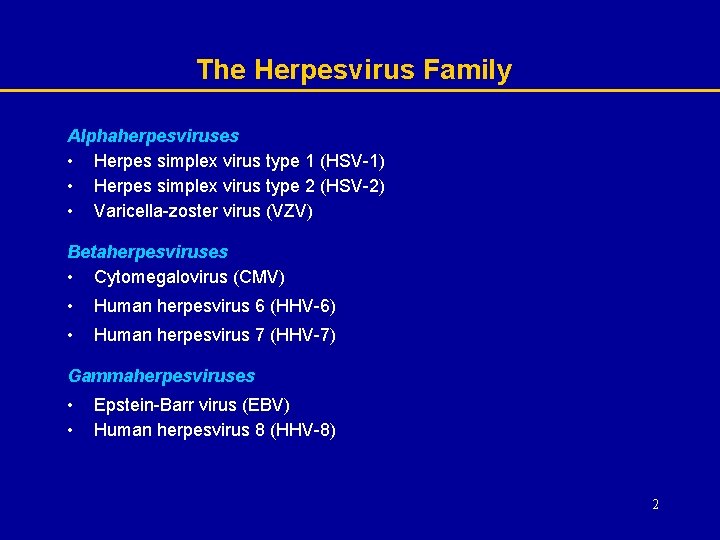
The Herpesvirus Family Alphaherpesviruses • Herpes simplex virus type 1 (HSV-1) • Herpes simplex virus type 2 (HSV-2) • Varicella-zoster virus (VZV) Betaherpesviruses • Cytomegalovirus (CMV) • Human herpesvirus 6 (HHV-6) • Human herpesvirus 7 (HHV-7) Gammaherpesviruses • • Epstein-Barr virus (EBV) Human herpesvirus 8 (HHV-8) 2
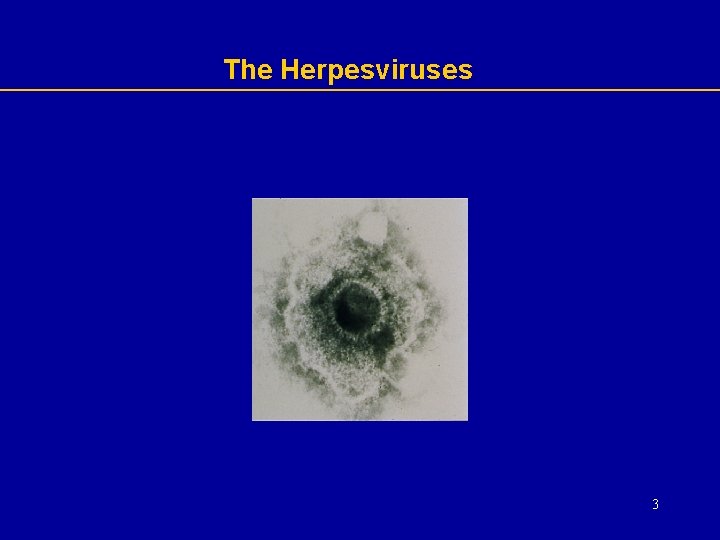
The Herpesviruses 3
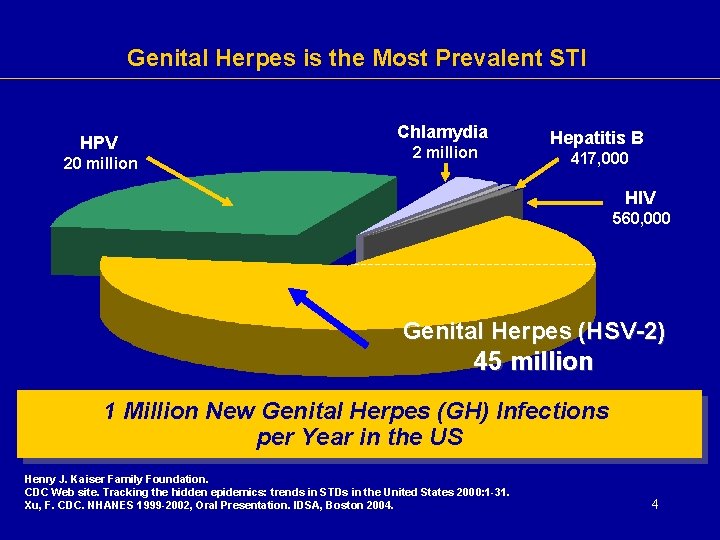
Genital Herpes is the Most Prevalent STI HPV 20 million Chlamydia 2 million Hepatitis B 417, 000 HIV 560, 000 Genital Herpes (HSV-2) 45 million 1 Million New Genital Herpes (GH) Infections per Year in the US Henry J. Kaiser Family Foundation. CDC Web site. Tracking the hidden epidemics: trends in STDs in the United States 2000: 1 -31. Xu, F. CDC. NHANES 1999 -2002, Oral Presentation. IDSA, Boston 2004. 4
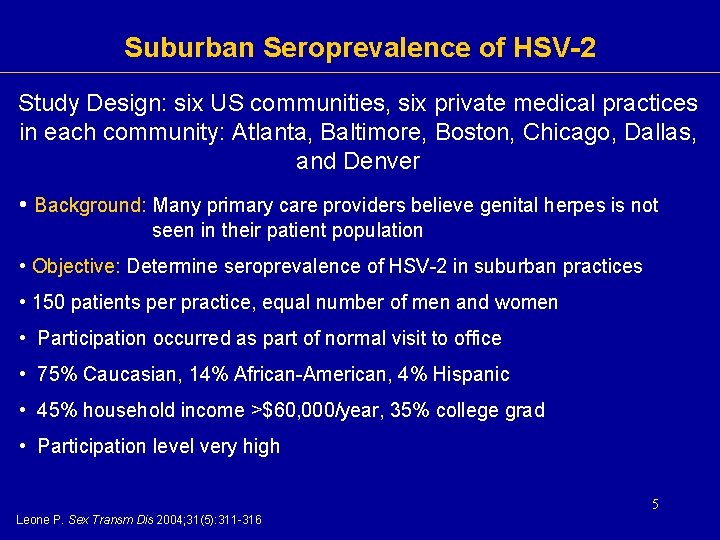
Suburban Seroprevalence of HSV-2 Study Design: six US communities, six private medical practices in each community: Atlanta, Baltimore, Boston, Chicago, Dallas, and Denver • Background: Many primary care providers believe genital herpes is not seen in their patient population • Objective: Determine seroprevalence of HSV-2 in suburban practices • 150 patients per practice, equal number of men and women • Participation occurred as part of normal visit to office • 75% Caucasian, 14% African-American, 4% Hispanic • 45% household income >$60, 000/year, 35% college grad • Participation level very high 5 Leone P. Sex Transm Dis 2004; 31(5): 311 -316
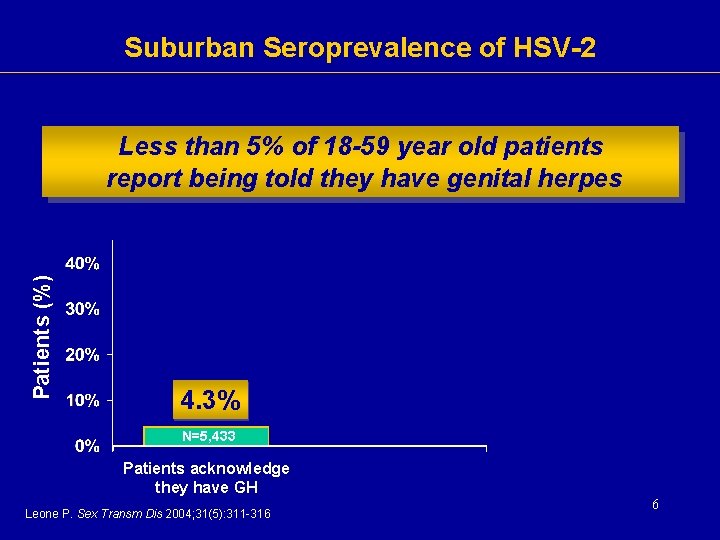
Suburban Seroprevalence of HSV-2 Patients (%) Less than 5% of 18 -59 year old patients report being told they have genital herpes 4. 3% N=5, 433 Patients acknowledge they have GH Leone P. Sex Transm Dis 2004; 31(5): 311 -316 6
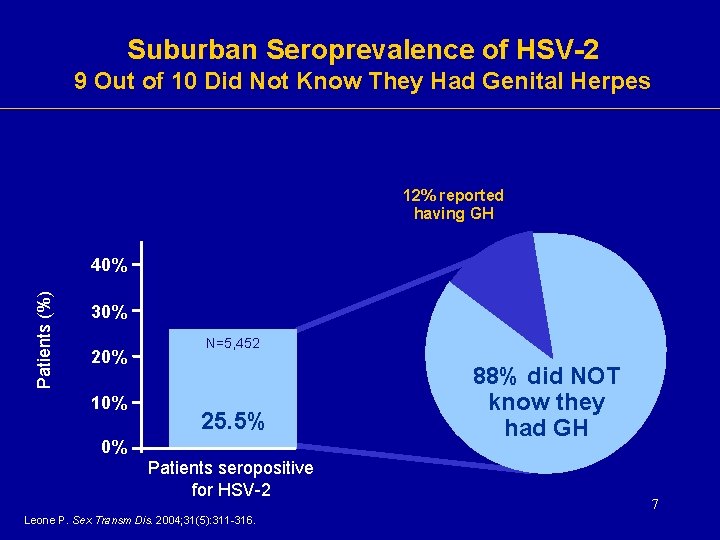
Suburban Seroprevalence of HSV-2 9 Out of 10 Did Not Know They Had Genital Herpes 12% reported having GH Patients (%) 40% 30% 20% 10% N=5, 452 25. 5% 0% Patients seropositive for HSV-2 Leone P. Sex Transm Dis. 2004; 31(5): 311 -316. 88% did NOT know they had GH 7
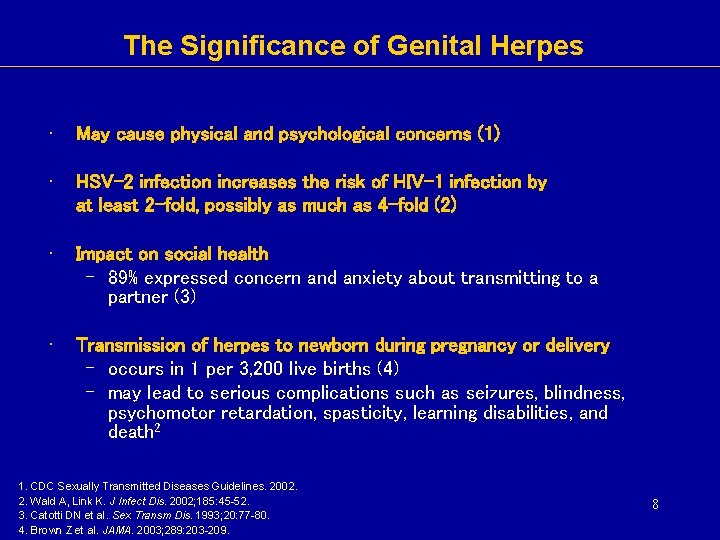
The Significance of Genital Herpes • May cause physical and psychological concerns (1) • HSV-2 infection increases the risk of HIV-1 infection by at least 2 -fold, possibly as much as 4 -fold (2) • Impact on social health – 89% expressed concern and anxiety about transmitting to a partner (3) • Transmission of herpes to newborn during pregnancy or delivery – occurs in 1 per 3, 200 live births (4) – may lead to serious complications such as seizures, blindness, psychomotor retardation, spasticity, learning disabilities, and death 2 1. CDC Sexually Transmitted Diseases Guidelines. 2002. 2. Wald A, Link K. J Infect Dis. 2002; 185: 45 -52. 3. Catotti DN et al. Sex Transm Dis. 1993; 20: 77 -80. 4. Brown Z et al. JAMA. 2003; 289: 203 -209. 8
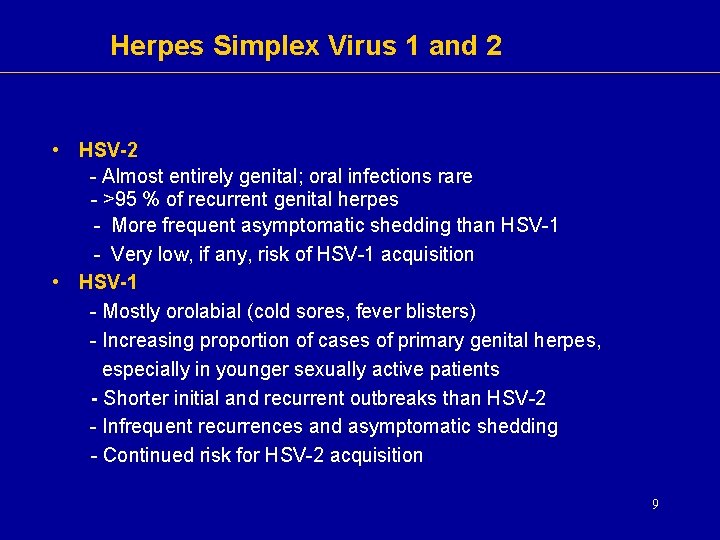
Herpes Simplex Virus 1 and 2 • HSV-2 - Almost entirely genital; oral infections rare - >95 % of recurrent genital herpes - More frequent asymptomatic shedding than HSV-1 - Very low, if any, risk of HSV-1 acquisition • HSV-1 - Mostly orolabial (cold sores, fever blisters) - Increasing proportion of cases of primary genital herpes, especially in younger sexually active patients - Shorter initial and recurrent outbreaks than HSV-2 - Infrequent recurrences and asymptomatic shedding - Continued risk for HSV-2 acquisition 9
Type-Specific Methods for Diagnosing Genital Herpes • Swab symptomatic area to detect virus – Culture – Polymerase Chain Reaction (PCR) • Draw blood to look for type-specific antibodies 10
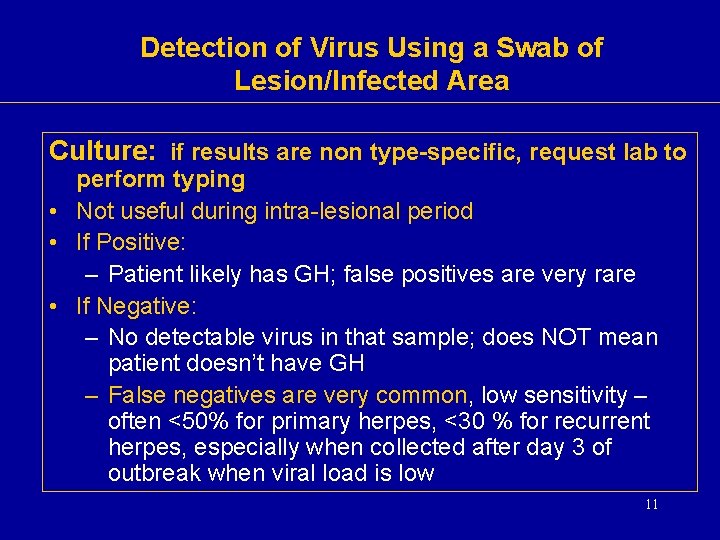
Detection of Virus Using a Swab of Lesion/Infected Area Culture: if results are non type-specific, request lab to perform typing • Not useful during intra-lesional period • If Positive: – Patient likely has GH; false positives are very rare • If Negative: – No detectable virus in that sample; does NOT mean patient doesn’t have GH – False negatives are very common, low sensitivity – often <50% for primary herpes, <30 % for recurrent herpes, especially when collected after day 3 of outbreak when viral load is low 11
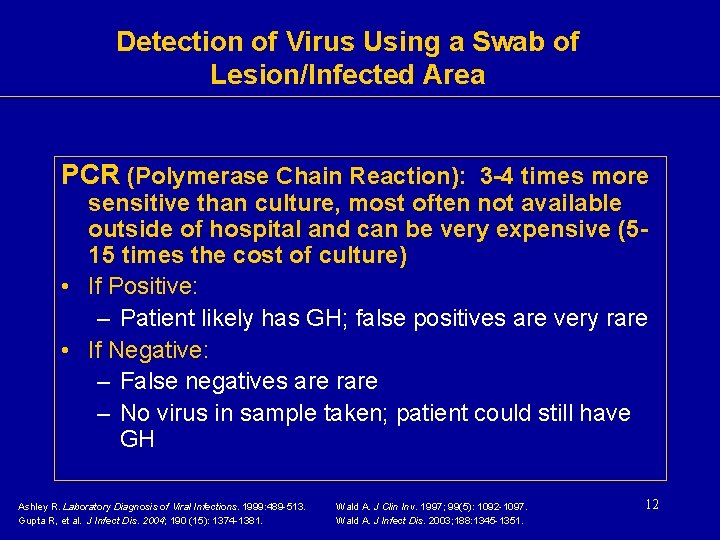
Detection of Virus Using a Swab of Lesion/Infected Area PCR (Polymerase Chain Reaction): 3 -4 times more sensitive than culture, most often not available outside of hospital and can be very expensive (515 times the cost of culture) • If Positive: – Patient likely has GH; false positives are very rare • If Negative: – False negatives are rare – No virus in sample taken; patient could still have GH Ashley R. Laboratory Diagnosis of Viral Infections. 1999: 489 -513. Gupta R, et al. J Infect Dis. 2004; 190 (15): 1374 -1381. Wald A. J Clin Inv. 1997; 99(5): 1092 -1097. Wald A. J Infect Dis. 2003; 188: 1345 -1351. 12
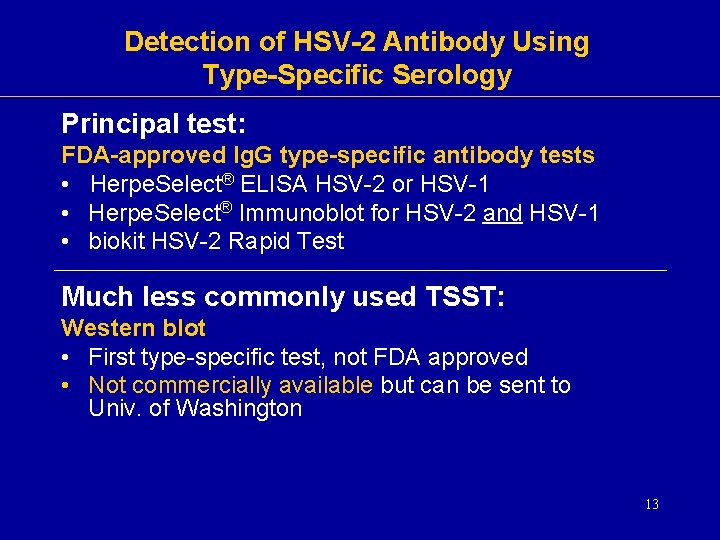
Detection of HSV-2 Antibody Using Type-Specific Serology Principal test: FDA-approved Ig. G type-specific antibody tests • Herpe. Select® ELISA HSV-2 or HSV-1 • Herpe. Select® Immunoblot for HSV-2 and HSV-1 • biokit HSV-2 Rapid Test Much less commonly used TSST: Western blot • First type-specific test, not FDA approved • Not commercially available but can be sent to Univ. of Washington 13
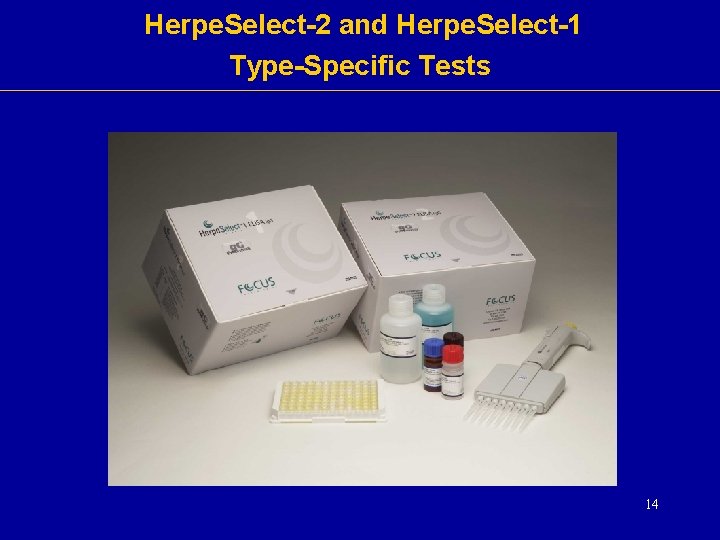
Herpe. Select-2 and Herpe. Select-1 Type-Specific Tests 14
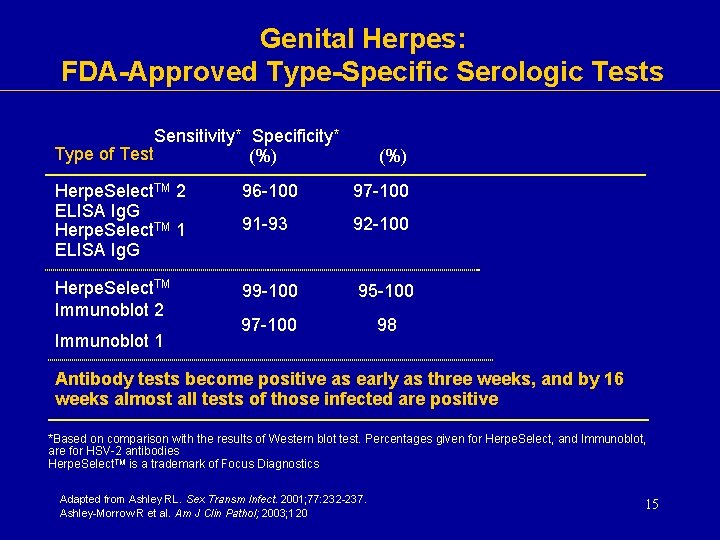
Genital Herpes: FDA-Approved Type-Specific Serologic Tests Sensitivity* Specificity* Type of Test (%) ` 2 Herpe. Select. TM ELISA Ig. G Herpe. Select. TM 1 ELISA Ig. G 96 -100 97 -100 91 -93 92 -100 Herpe. Select. TM Immunoblot 2 99 -100 95 -100 97 -100 98 Immunoblot 1 Antibody tests become positive as early as three weeks, and by 16 weeks almost all tests of those infected are positive *Based on comparison with the results of Western blot test. Percentages given for Herpe. Select, and Immunoblot, are for HSV-2 antibodies Herpe. Select. TM is a trademark of Focus Diagnostics Adapted from Ashley RL. Sex Transm Infect. 2001; 77: 232 -237. Ashley-Morrow R et al. Am J Clin Pathol; 2003; 120 15
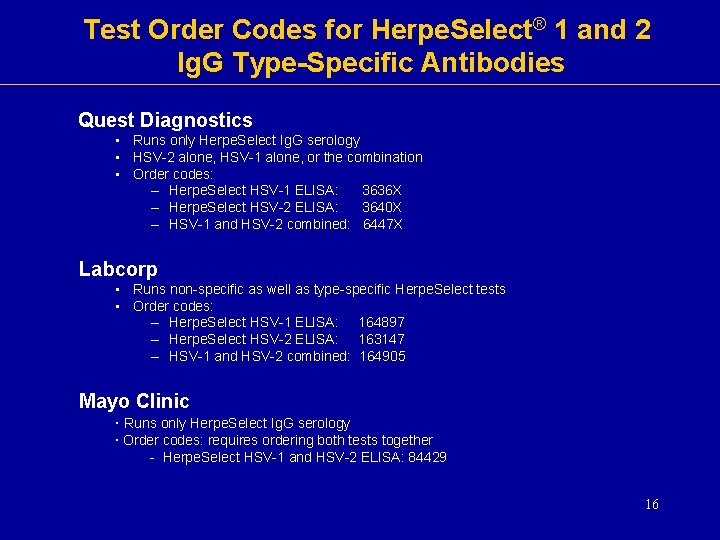
Test Order Codes for Herpe. Select® 1 and 2 Ig. G Type-Specific Antibodies Quest Diagnostics • Runs only Herpe. Select Ig. G serology • HSV-2 alone, HSV-1 alone, or the combination • Order codes: – Herpe. Select HSV-1 ELISA: 3636 X – Herpe. Select HSV-2 ELISA: 3640 X – HSV-1 and HSV-2 combined: 6447 X Labcorp • Runs non-specific as well as type-specific Herpe. Select tests • Order codes: – Herpe. Select HSV-1 ELISA: 164897 – Herpe. Select HSV-2 ELISA: 163147 – HSV-1 and HSV-2 combined: 164905 Mayo Clinic ∙ Runs only Herpe. Select Ig. G serology ∙ Order codes: requires ordering both tests together - Herpe. Select HSV-1 and HSV-2 ELISA: 84429 16
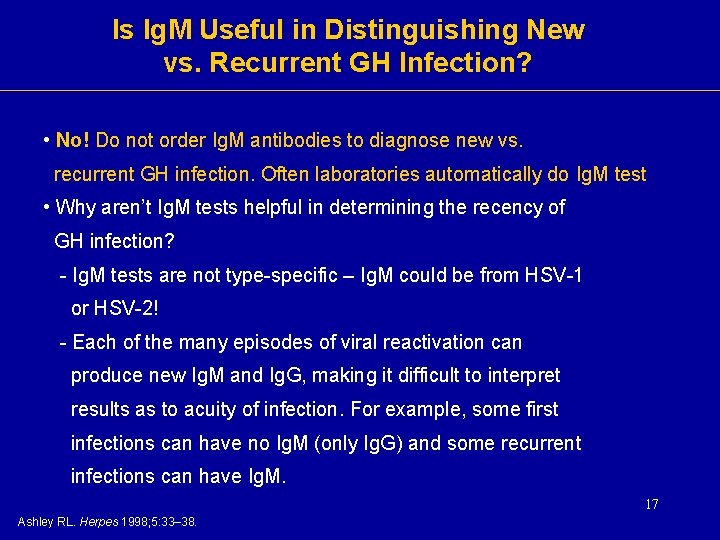
Is Ig. M Useful in Distinguishing New vs. Recurrent GH Infection? • No! Do not order Ig. M antibodies to diagnose new vs. recurrent GH infection. Often laboratories automatically do Ig. M test • Why aren’t Ig. M tests helpful in determining the recency of GH infection? - Ig. M tests are not type-specific – Ig. M could be from HSV-1 or HSV-2! - Each of the many episodes of viral reactivation can produce new Ig. M and Ig. G, making it difficult to interpret results as to acuity of infection. For example, some first infections can have no Ig. M (only Ig. G) and some recurrent infections can have Ig. M. 17 Ashley RL. Herpes 1998; 5: 33– 38.
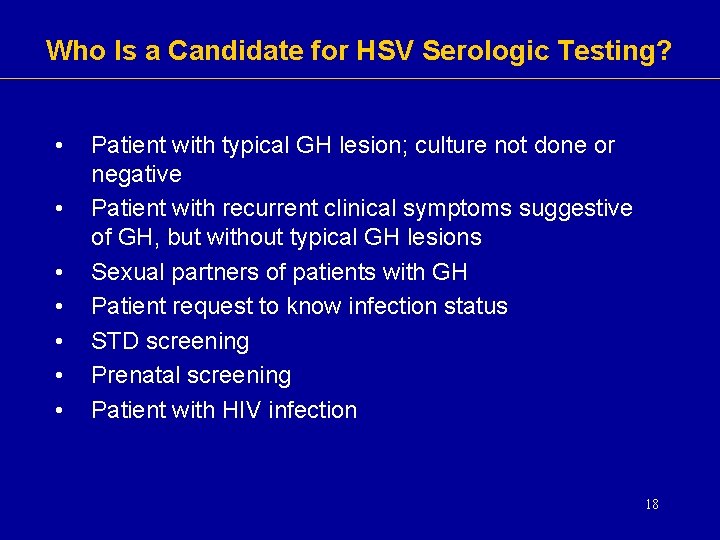
Who Is a Candidate for HSV Serologic Testing? • • Patient with typical GH lesion; culture not done or negative Patient with recurrent clinical symptoms suggestive of GH, but without typical GH lesions Sexual partners of patients with GH Patient request to know infection status STD screening Prenatal screening Patient with HIV infection 18
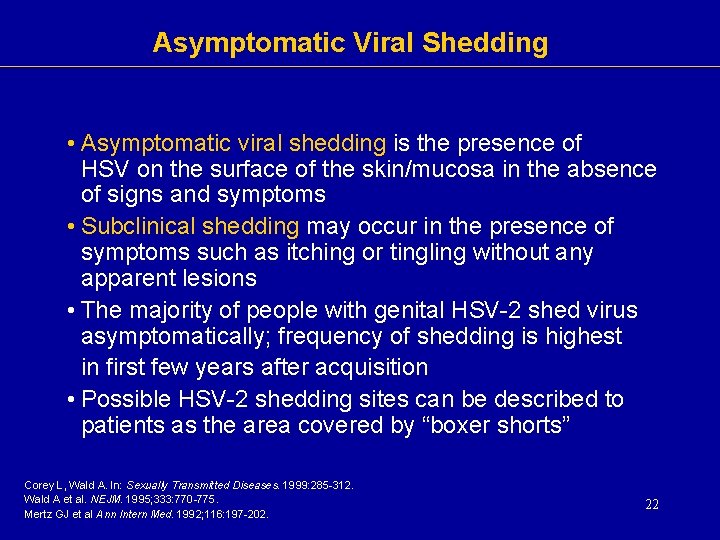
Asymptomatic Viral Shedding • Asymptomatic viral shedding is the presence of HSV on the surface of the skin/mucosa in the absence of signs and symptoms • Subclinical shedding may occur in the presence of symptoms such as itching or tingling without any apparent lesions • The majority of people with genital HSV-2 shed virus asymptomatically; frequency of shedding is highest in first few years after acquisition • Possible HSV-2 shedding sites can be described to patients as the area covered by “boxer shorts” Corey L, Wald A. In: Sexually Transmitted Diseases. 1999: 285 -312. Wald A et al. NEJM. 1995; 333: 770 -775. Mertz GJ et al Ann Intern Med. 1992; 116: 197 -202. 22
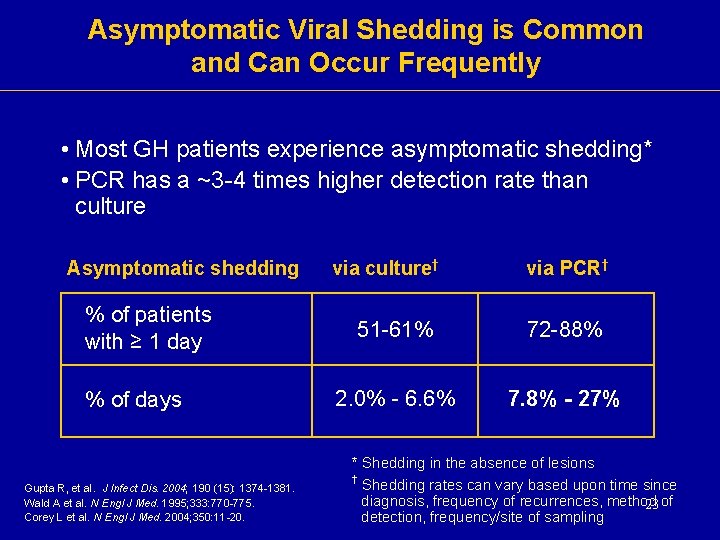
Asymptomatic Viral Shedding is Common and Can Occur Frequently • Most GH patients experience asymptomatic shedding* • PCR has a ~3 -4 times higher detection rate than culture Asymptomatic shedding % of patients with ≥ 1 day % of days Gupta R, et al. J Infect Dis. 2004; 190 (15): 1374 -1381. Wald A et al. N Engl J Med. 1995; 333: 770 -775. Corey L et al. N Engl J Med. 2004; 350: 11 -20. via culture† via PCR† 51 -61% 72 -88% 2. 0% - 6. 6% 7. 8% - 27% * Shedding in the absence of lesions † Shedding rates can vary based upon time since diagnosis, frequency of recurrences, method 23 of detection, frequency/site of sampling
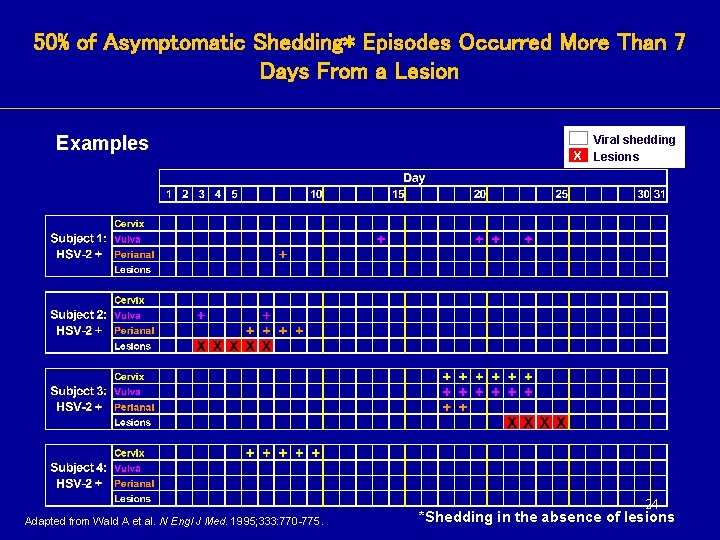
50% of Asymptomatic Shedding* Episodes Occurred More Than 7 Days From a Lesion Examples + Viral shedding X Lesions 24 Adapted from Wald A et al. N Engl J Med. 1995; 333: 770 -775. *Shedding in the absence of lesions
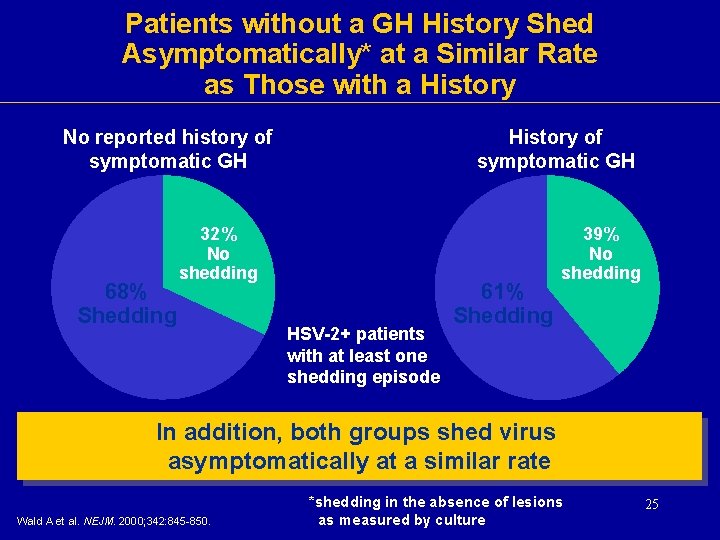
Patients without a GH History Shed Asymptomatically* at a Similar Rate as Those with a History No reported history of symptomatic GH 68% Shedding History of symptomatic GH 32% No shedding HSV-2+ patients with at least one shedding episode 61% Shedding 39% No shedding In addition, both groups shed virus asymptomatically at a similar rate Wald A et al. NEJM. 2000; 342: 845 -850. *shedding in the absence of lesions as measured by culture 25
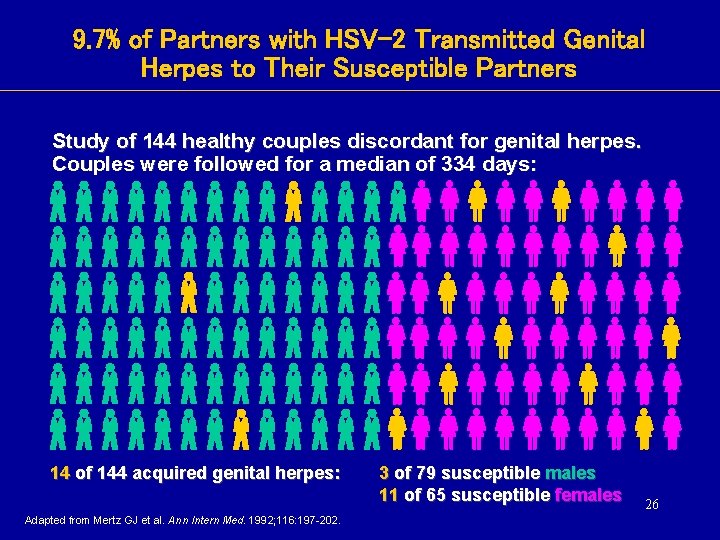
9. 7% of Partners with HSV-2 Transmitted Genital Herpes to Their Susceptible Partners Study of 144 healthy couples discordant for genital herpes. Couples were followed for a median of 334 days: 14 of 144 acquired genital herpes: Adapted from Mertz GJ et al. Ann Intern Med. 1992; 116: 197 -202. 3 of 79 susceptible males 11 of 65 susceptible females 26
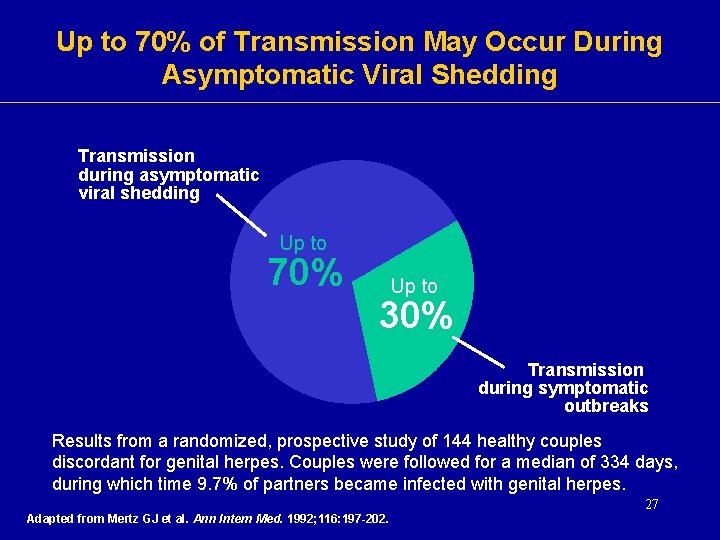
Up to 70% of Transmission May Occur During Asymptomatic Viral Shedding Transmission during asymptomatic viral shedding Up to 70% Up to 30% Transmission during symptomatic outbreaks Results from a randomized, prospective study of 144 healthy couples discordant for genital herpes. Couples were followed for a median of 334 days, during which time 9. 7% of partners became infected with genital herpes. 27 Adapted from Mertz GJ et al. Ann Intern Med. 1992; 116: 197 -202.
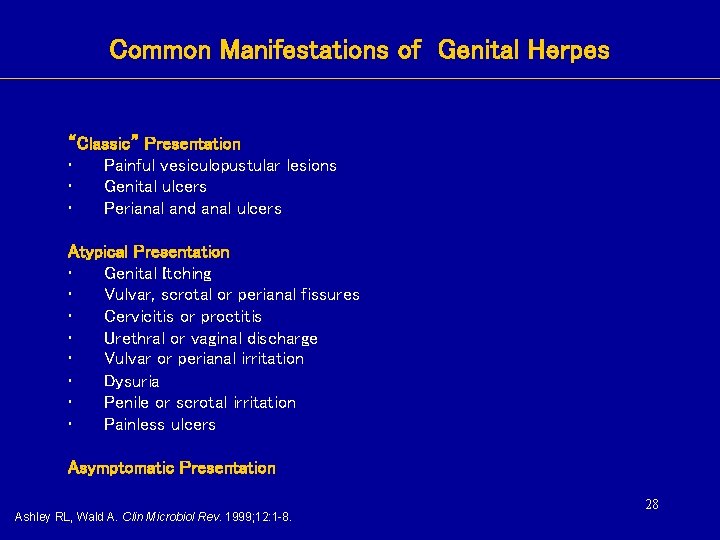
Common Manifestations of Genital Herpes “Classic” Presentation • Painful vesiculopustular lesions • Genital ulcers • Perianal and anal ulcers Atypical Presentation • Genital Itching • Vulvar, scrotal or perianal fissures • Cervicitis or proctitis • Urethral or vaginal discharge • Vulvar or perianal irritation • Dysuria • Penile or scrotal irritation • Painless ulcers Asymptomatic Presentation Ashley RL, Wald A. Clin Microbiol Rev. 1999; 12: 1 -8. 28
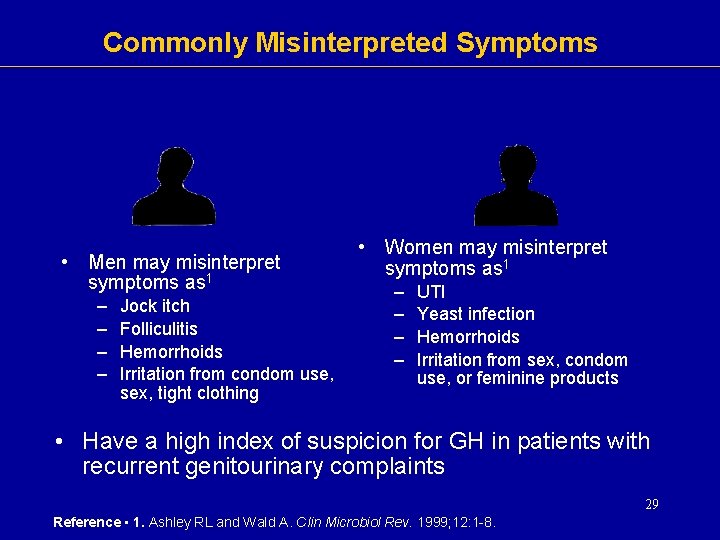
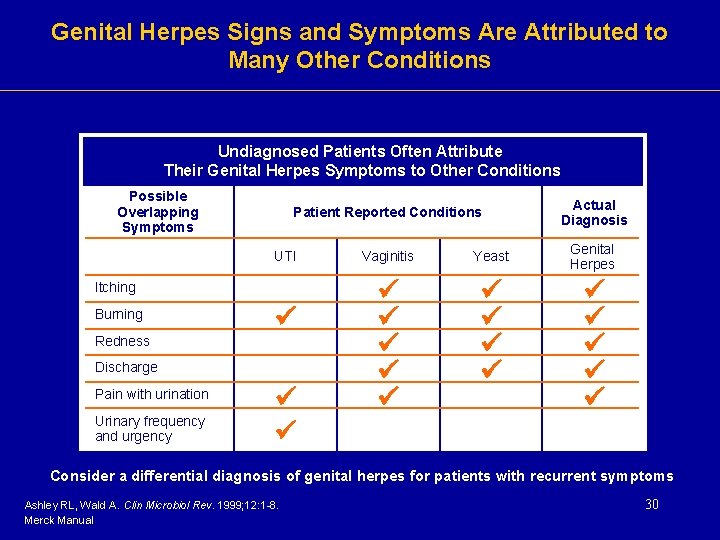
Commonly Misinterpreted Symptoms • Men may misinterpret symptoms as 1 – – Jock itch Folliculitis Hemorrhoids Irritation from condom use, sex, tight clothing • Women may misinterpret symptoms as 1 – – UTI Yeast infection Hemorrhoids Irritation from sex, condom use, or feminine products • Have a high index of suspicion for GH in patients with recurrent genitourinary complaints 29 Reference • 1. Ashley RL and Wald A. Clin Microbiol Rev. 1999; 12: 1 -8.
Genital Herpes Signs and Symptoms Are Attributed to Many Other Conditions Undiagnosed Patients Often Attribute Their Genital Herpes Symptoms to Other Conditions Possible Overlapping Symptoms Patient Reported Conditions UTI Itching Burning Redness Discharge Pain with urination Urinary frequency and urgency Vaginitis Yeast Actual Diagnosis Genital Herpes Consider a differential diagnosis of genital herpes for patients with recurrent symptoms Ashley RL, Wald A. Clin Microbiol Rev. 1999; 12: 1 -8. Merck Manual 30
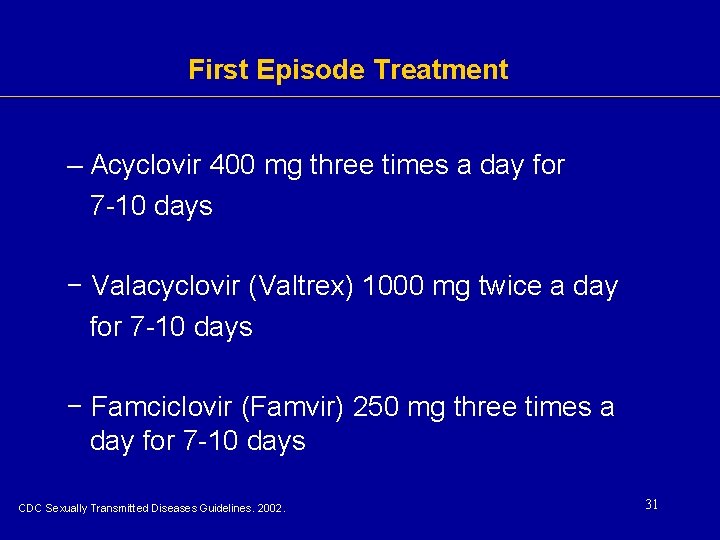
First Episode Treatment – Acyclovir 400 mg three times a day for 7 -10 days − Valacyclovir (Valtrex) 1000 mg twice a day for 7 -10 days − Famciclovir (Famvir) 250 mg three times a day for 7 -10 days CDC Sexually Transmitted Diseases Guidelines. 2002. 31
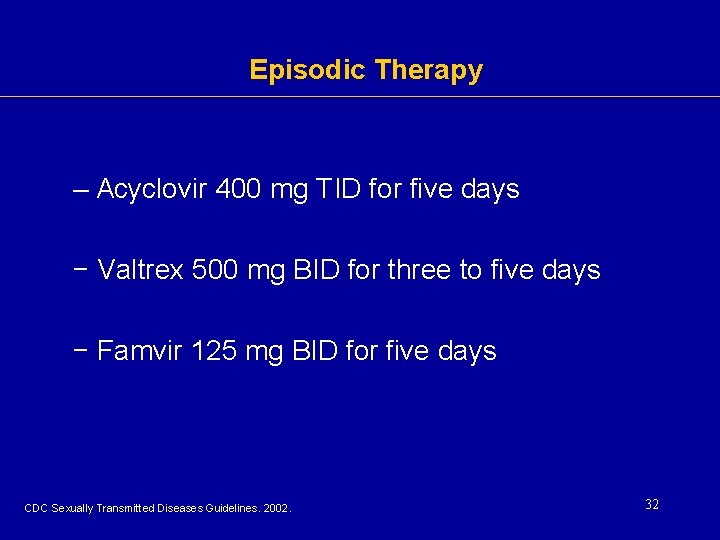
Episodic Therapy – Acyclovir 400 mg TID for five days − Valtrex 500 mg BID for three to five days − Famvir 125 mg BID for five days CDC Sexually Transmitted Diseases Guidelines. 2002. 32
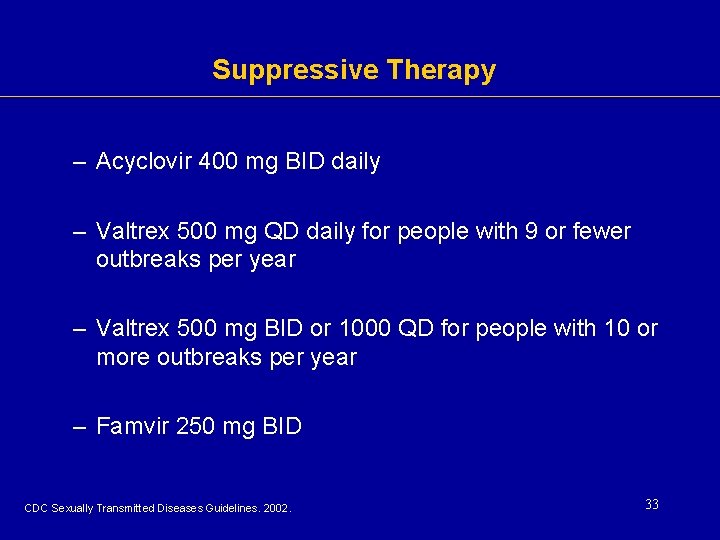
Suppressive Therapy – Acyclovir 400 mg BID daily – Valtrex 500 mg QD daily for people with 9 or fewer outbreaks per year – Valtrex 500 mg BID or 1000 QD for people with 10 or more outbreaks per year – Famvir 250 mg BID CDC Sexually Transmitted Diseases Guidelines. 2002. 33
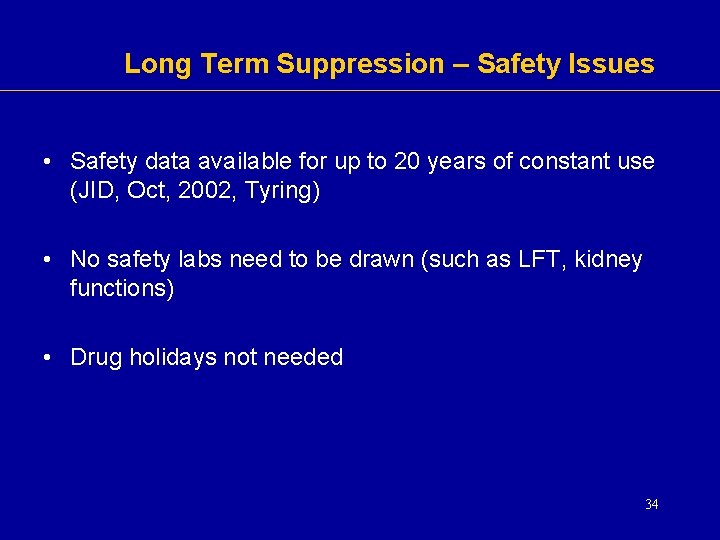
Long Term Suppression – Safety Issues • Safety data available for up to 20 years of constant use (JID, Oct, 2002, Tyring) • No safety labs need to be drawn (such as LFT, kidney functions) • Drug holidays not needed 34
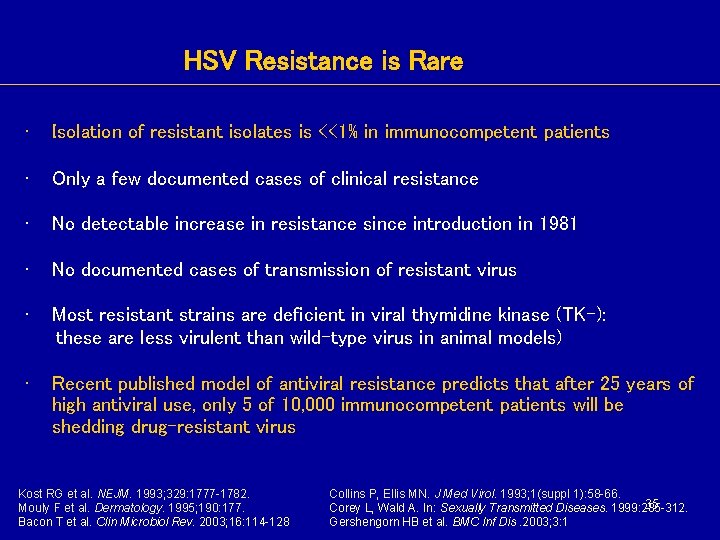
HSV Resistance is Rare • Isolation of resistant isolates is <<1% in immunocompetent patients • Only a few documented cases of clinical resistance • No detectable increase in resistance since introduction in 1981 • No documented cases of transmission of resistant virus • Most resistant strains are deficient in viral thymidine kinase (TK-): these are less virulent than wild-type virus in animal models) • Recent published model of antiviral resistance predicts that after 25 years of high antiviral use, only 5 of 10, 000 immunocompetent patients will be shedding drug-resistant virus Kost RG et al. NEJM. 1993; 329: 1777 -1782. Mouly F et al. Dermatology. 1995; 190: 177. Bacon T et al. Clin Microbiol Rev. 2003; 16: 114 -128 Collins P, Ellis MN. J Med Virol. 1993; 1(suppl 1): 58 -66. 35 Corey L, Wald A. In: Sexually Transmitted Diseases. 1999: 285 -312. Gershengorn HB et al. BMC Inf Dis. 2003; 3: 1
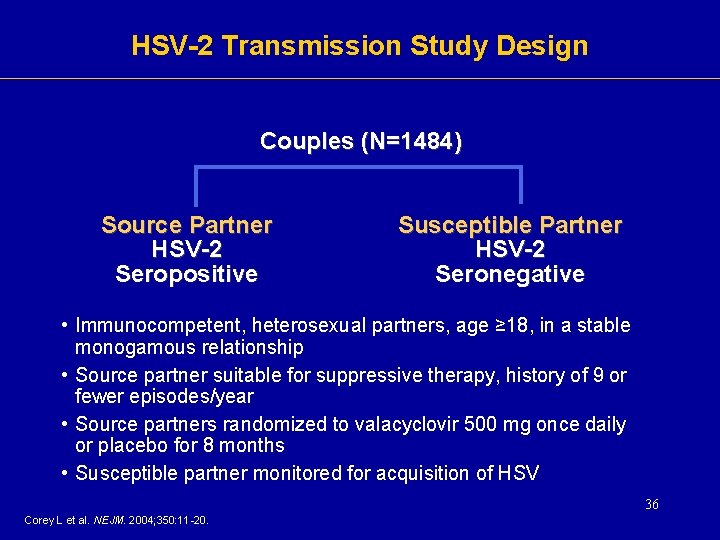
HSV-2 Transmission Study Design Couples (N=1484) Source Partner HSV-2 Seropositive Susceptible Partner HSV-2 Seronegative • Immunocompetent, heterosexual partners, age ≥ 18, in a stable monogamous relationship • Source partner suitable for suppressive therapy, history of 9 or fewer episodes/year • Source partners randomized to valacyclovir 500 mg once daily or placebo for 8 months • Susceptible partner monitored for acquisition of HSV 36 Corey L et al. NEJM. 2004; 350: 11 -20.
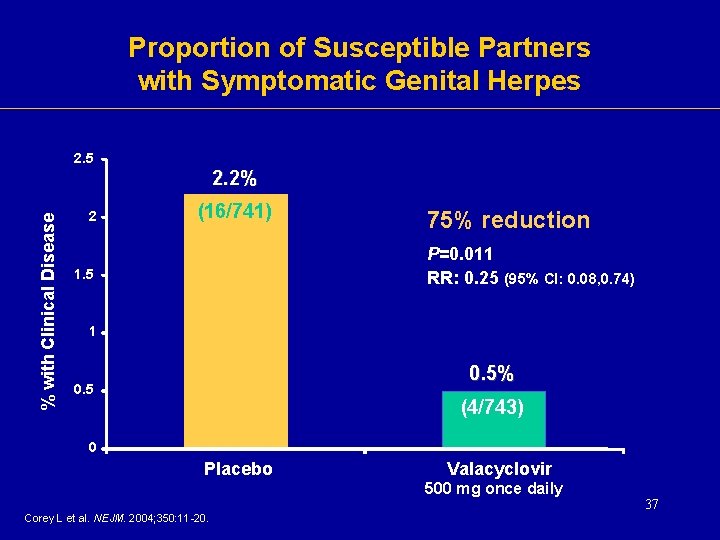
Proportion of Susceptible Partners with Symptomatic Genital Herpes 2. 5 % with Clinical Disease 2. 2% 2 (16/741) 75% reduction P=0. 011 RR: 0. 25 (95% CI: 0. 08, 0. 74) 1. 5 1 0. 5% 0. 5 (4/743) 0 Placebo Valacyclovir 500 mg once daily Corey L et al. NEJM. 2004; 350: 11 -20. 37
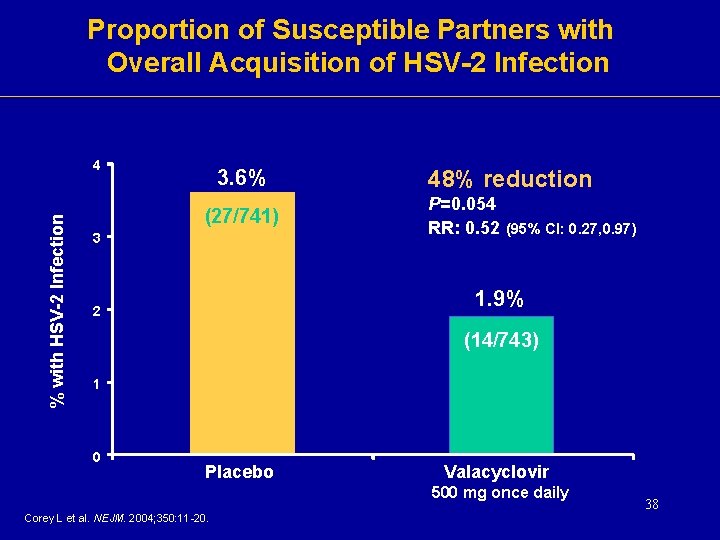
Proportion of Susceptible Partners with Overall Acquisition of HSV-2 Infection % with HSV-2 Infection 4 3. 6% (27/741) 3 48% reduction P=0. 054 RR: 0. 52 (95% CI: 0. 27, 0. 97) 1. 9% 2 (14/743) 1 0 Placebo Valacyclovir 500 mg once daily Corey L et al. NEJM. 2004; 350: 11 -20. 38
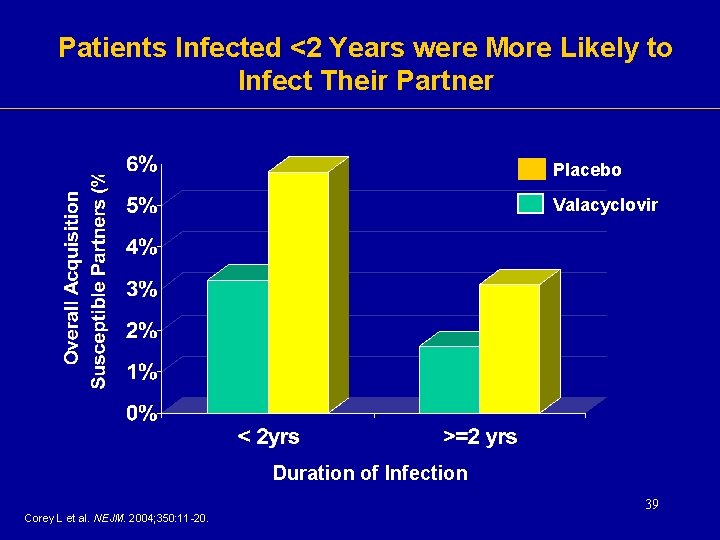
Patients Infected <2 Years were More Likely to Infect Their Partner Placebo Valacyclovir Duration of Infection 39 Corey L et al. NEJM. 2004; 350: 11 -20.
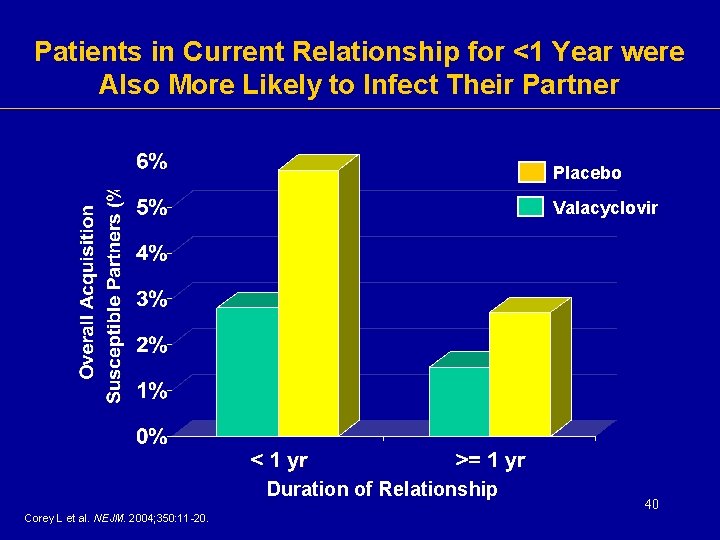
Patients in Current Relationship for <1 Year were Also More Likely to Infect Their Partner Placebo Valacyclovir Duration of Relationship Corey L et al. NEJM. 2004; 350: 11 -20. 40
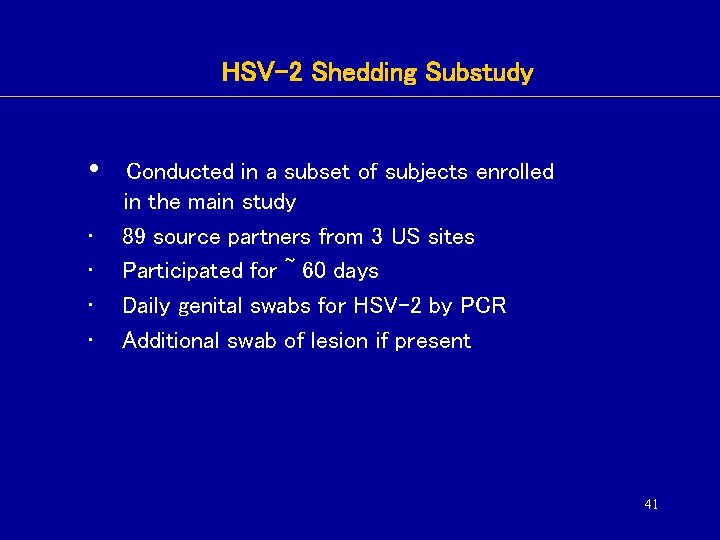
HSV-2 Shedding Substudy • • • Conducted in a subset of subjects enrolled in the main study 89 source partners from 3 US sites Participated for ~ 60 days Daily genital swabs for HSV-2 by PCR Additional swab of lesion if present 41
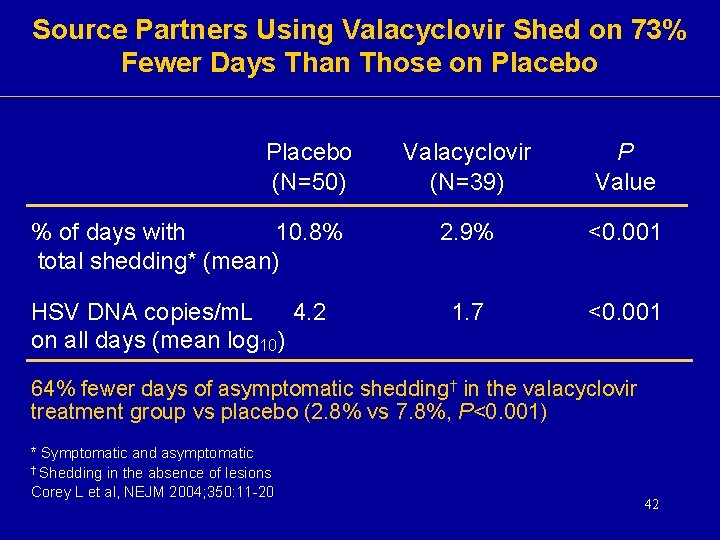
Source Partners Using Valacyclovir Shed on 73% Fewer Days Than Those on Placebo (N=50) % of days with 10. 8% total shedding* (mean) HSV DNA copies/m. L 4. 2 on all days (mean log 10) Valacyclovir (N=39) P Value 2. 9% <0. 001 1. 7 <0. 001 64% fewer days of asymptomatic shedding† in the valacyclovir treatment group vs placebo (2. 8% vs 7. 8%, P<0. 001) * Symptomatic and asymptomatic † Shedding in the absence of lesions Corey L et al, NEJM 2004; 350: 11 -20 42
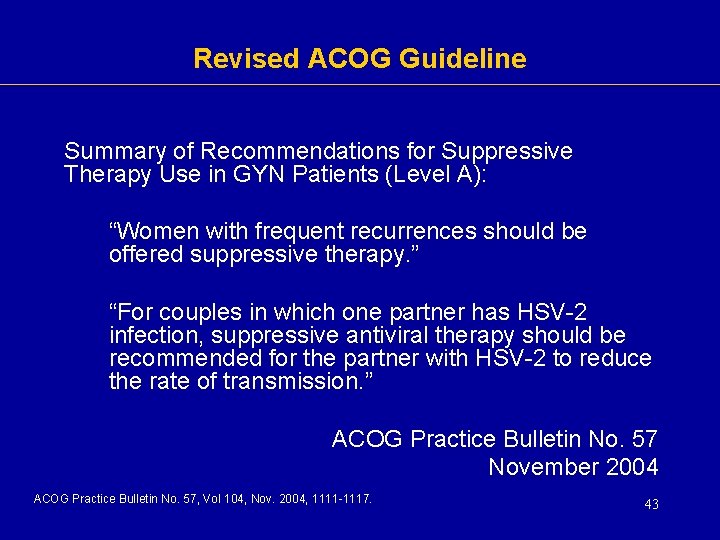
Revised ACOG Guideline Summary of Recommendations for Suppressive Therapy Use in GYN Patients (Level A): “Women with frequent recurrences should be offered suppressive therapy. ” “For couples in which one partner has HSV-2 infection, suppressive antiviral therapy should be recommended for the partner with HSV-2 to reduce the rate of transmission. ” ACOG Practice Bulletin No. 57 November 2004 ACOG Practice Bulletin No. 57, Vol 104, Nov. 2004, 1111 -1117. 43
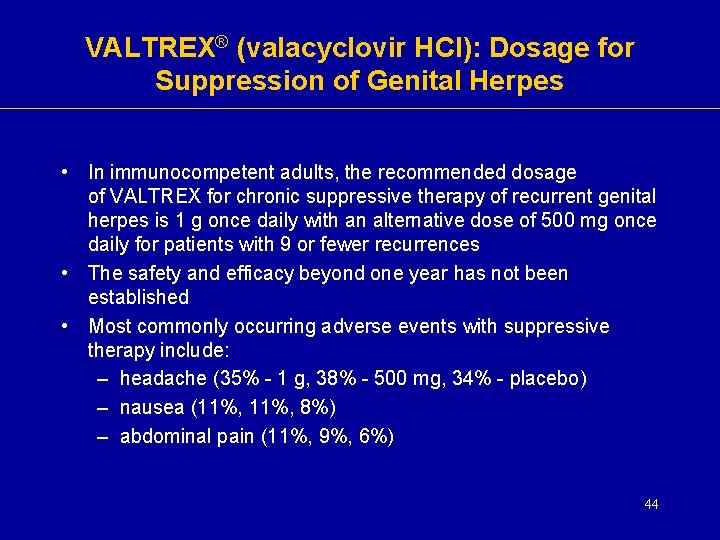
VALTREX® (valacyclovir HCl): Dosage for Suppression of Genital Herpes • In immunocompetent adults, the recommended dosage of VALTREX for chronic suppressive therapy of recurrent genital herpes is 1 g once daily with an alternative dose of 500 mg once daily for patients with 9 or fewer recurrences • The safety and efficacy beyond one year has not been established • Most commonly occurring adverse events with suppressive therapy include: – headache (35% - 1 g, 38% - 500 mg, 34% - placebo) – nausea (11%, 8%) – abdominal pain (11%, 9%, 6%) 44
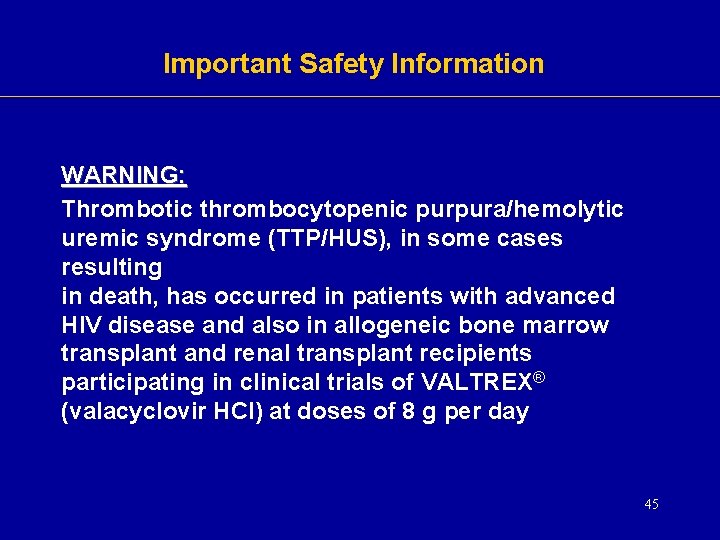
Important Safety Information WARNING: Thrombotic thrombocytopenic purpura/hemolytic uremic syndrome (TTP/HUS), in some cases resulting in death, has occurred in patients with advanced HIV disease and also in allogeneic bone marrow transplant and renal transplant recipients participating in clinical trials of VALTREX® (valacyclovir HCl) at doses of 8 g per day 45
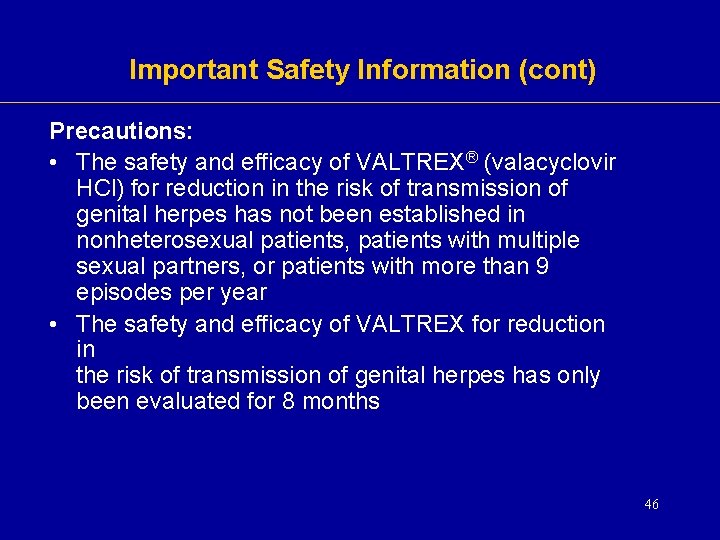
Important Safety Information (cont) Precautions: • The safety and efficacy of VALTREX® (valacyclovir HCl) for reduction in the risk of transmission of genital herpes has not been established in nonheterosexual patients, patients with multiple sexual partners, or patients with more than 9 episodes per year • The safety and efficacy of VALTREX for reduction in the risk of transmission of genital herpes has only been evaluated for 8 months 46
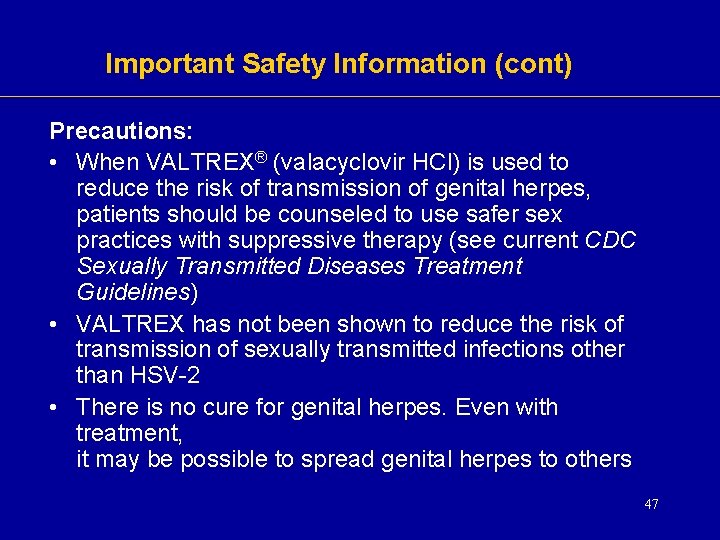
Important Safety Information (cont) Precautions: • When VALTREX® (valacyclovir HCl) is used to reduce the risk of transmission of genital herpes, patients should be counseled to use safer sex practices with suppressive therapy (see current CDC Sexually Transmitted Diseases Treatment Guidelines) • VALTREX has not been shown to reduce the risk of transmission of sexually transmitted infections other than HSV-2 • There is no cure for genital herpes. Even with treatment, it may be possible to spread genital herpes to others 47
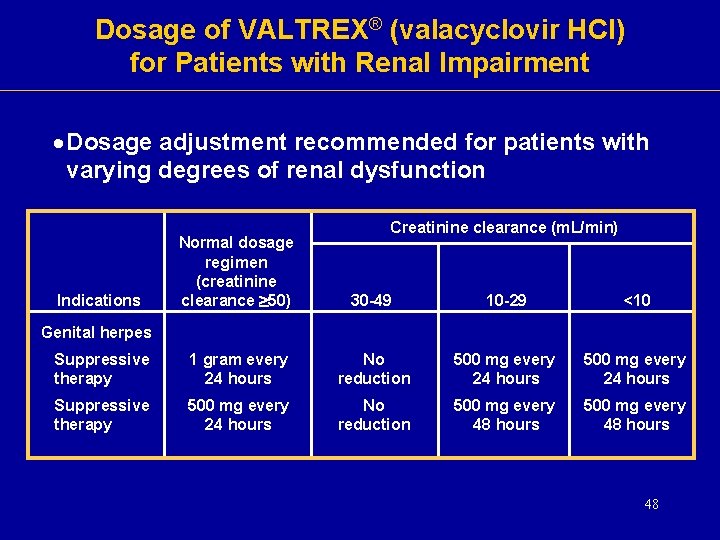
Dosage of VALTREX® (valacyclovir HCl) for Patients with Renal Impairment · Dosage adjustment recommended for patients with varying degrees of renal dysfunction Creatinine clearance (m. L/min) Normal dosage regimen (creatinine clearance 50) 30 -49 10 -29 <10 Suppressive therapy 1 gram every 24 hours No reduction 500 mg every 24 hours Suppressive therapy 500 mg every 24 hours No reduction 500 mg every 48 hours Indications Genital herpes 48
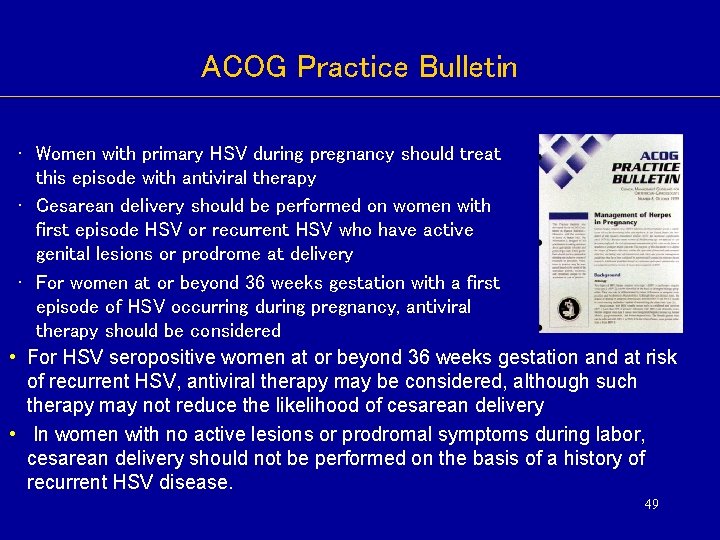
ACOG Practice Bulletin • Women with primary HSV during pregnancy should treat this episode with antiviral therapy • Cesarean delivery should be performed on women with first episode HSV or recurrent HSV who have active genital lesions or prodrome at delivery • For women at or beyond 36 weeks gestation with a first episode of HSV occurring during pregnancy, antiviral therapy should be considered • For HSV seropositive women at or beyond 36 weeks gestation and at risk of recurrent HSV, antiviral therapy may be considered, although such therapy may not reduce the likelihood of cesarean delivery • In women with no active lesions or prodromal symptoms during labor, cesarean delivery should not be performed on the basis of a history of recurrent HSV disease. 49
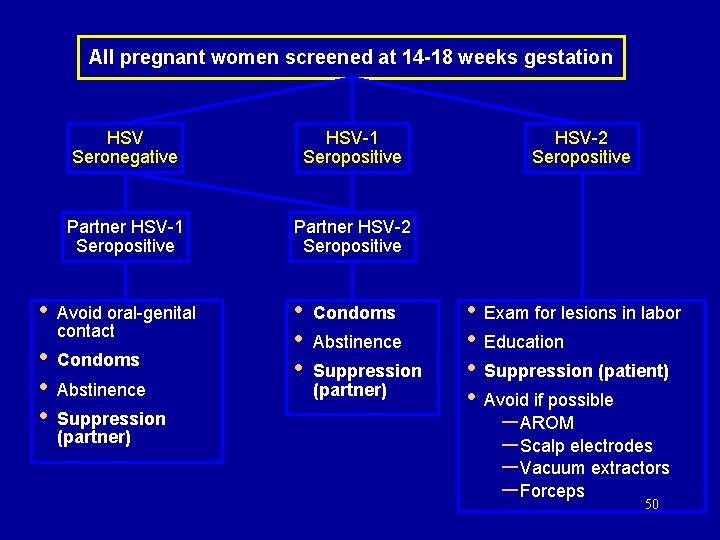
All pregnant women screened at 14 -18 weeks gestation • • HSV Seronegative HSV-1 Seropositive Partner HSV-2 Seropositive Avoid oral-genital contact Condoms Abstinence Suppression (partner) • • • Condoms Abstinence Suppression (partner) HSV-2 Seropositive • • Exam for lesions in labor Education Suppression (patient) Avoid if possible – AROM – Scalp electrodes – Vacuum extractors – Forceps 50
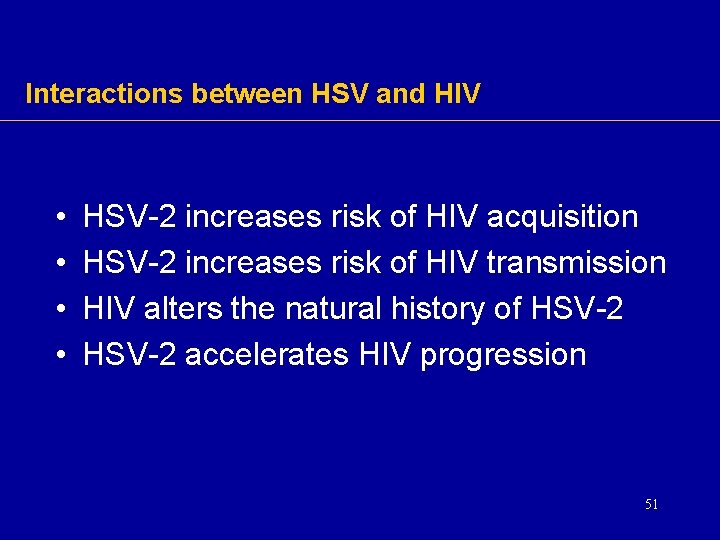
Interactions between HSV and HIV • • HSV-2 increases risk of HIV acquisition HSV-2 increases risk of HIV transmission HIV alters the natural history of HSV-2 accelerates HIV progression 51
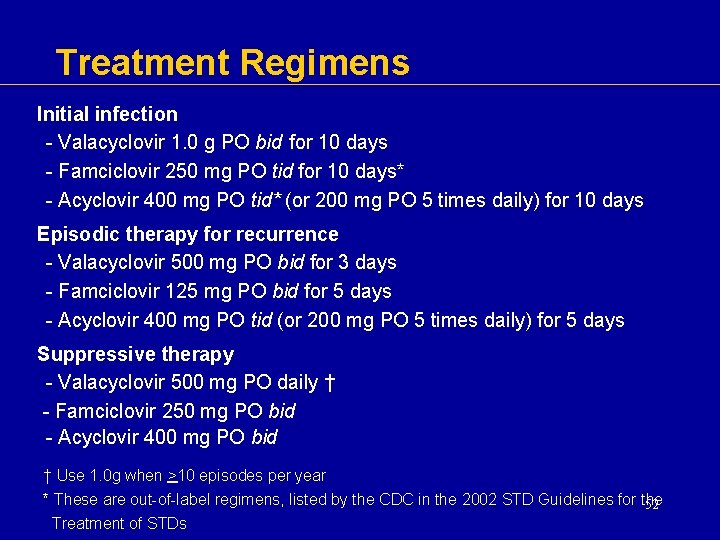
Treatment Regimens Initial infection - Valacyclovir 1. 0 g PO bid for 10 days - Famciclovir 250 mg PO tid for 10 days* - Acyclovir 400 mg PO tid* (or 200 mg PO 5 times daily) for 10 days Episodic therapy for recurrence - Valacyclovir 500 mg PO bid for 3 days - Famciclovir 125 mg PO bid for 5 days - Acyclovir 400 mg PO tid (or 200 mg PO 5 times daily) for 5 days Suppressive therapy - Valacyclovir 500 mg PO daily † - Famciclovir 250 mg PO bid - Acyclovir 400 mg PO bid † Use 1. 0 g when >10 episodes per year * These are out-of-label regimens, listed by the CDC in the 2002 STD Guidelines for the 52 Treatment of STDs
Gary Richwald, MD, MPH E-Mail: drgary 1@comcast. net 53