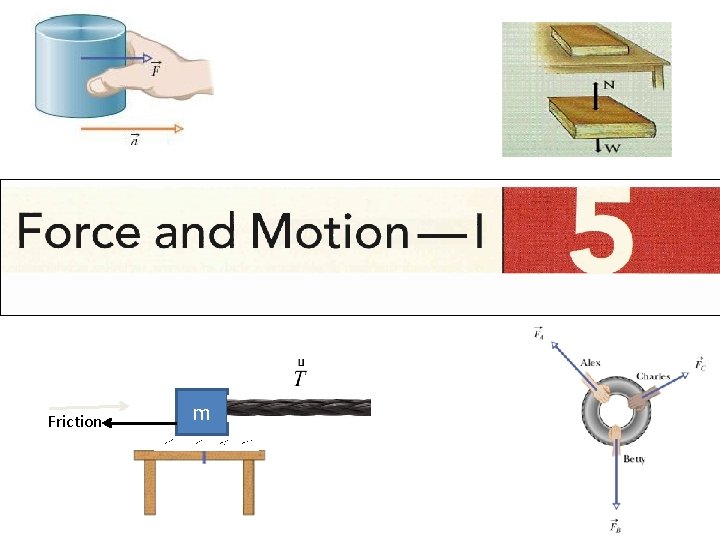
Friction m To study the motion of an
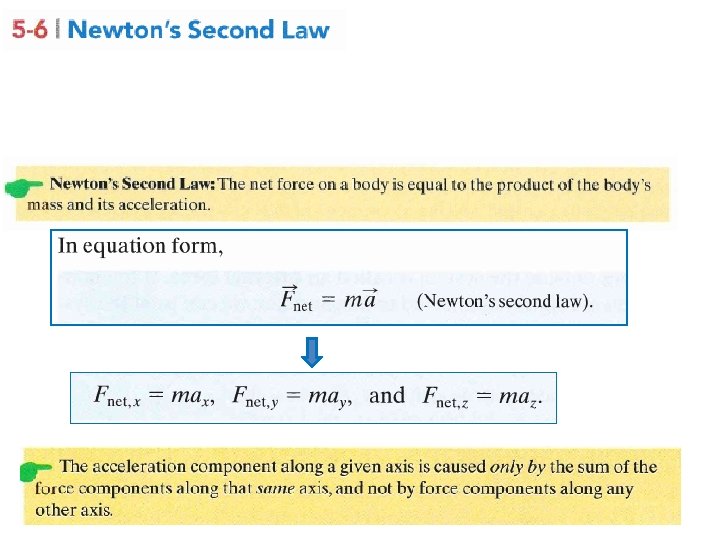
- Slides: 29
Friction m
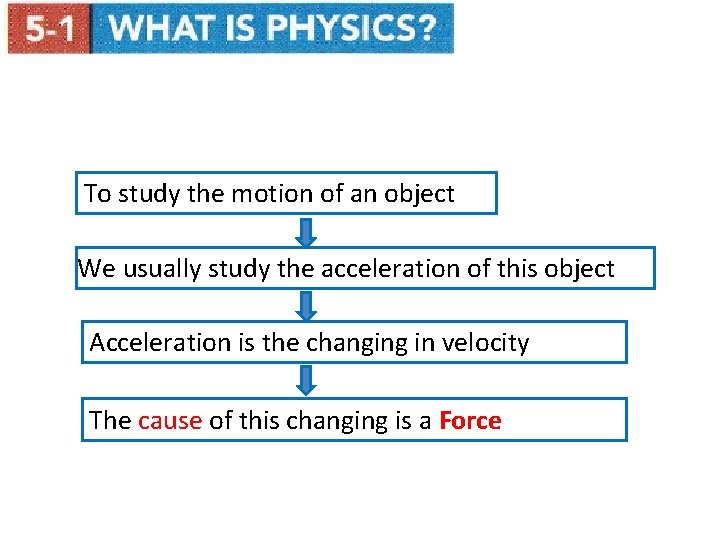
To study the motion of an object We usually study the acceleration of this object Acceleration is the changing in velocity The cause of this changing is a Force
The scientist who first understood the relation between a force and the acceleration it causes was Isaac Newton
Newtonian mechanics does not apply to : 1 - A very large speeds such as the speed of light, and instead it replaced with Einstein's mechanics. 2 - The scale of atomic structure, and instead it replaced with the Quantum mechanics.
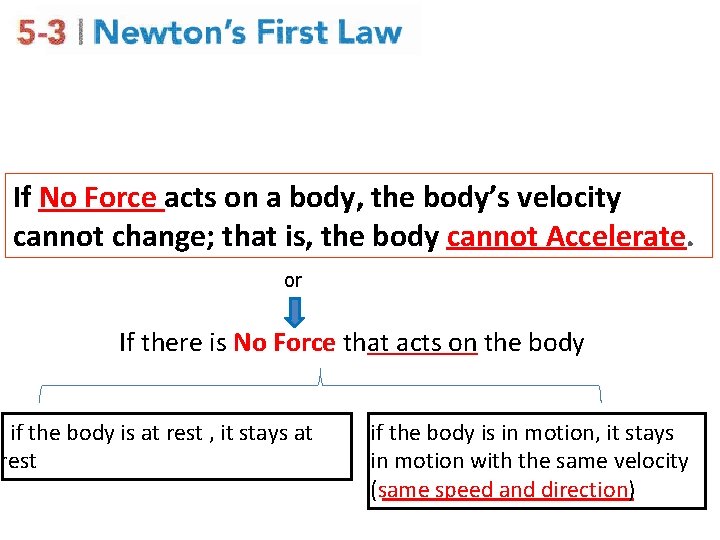
If No Force acts on a body, the body’s velocity cannot change; that is, the body cannot Accelerate. or If there is No Force that acts on the body if the body is at rest , it stays at rest if the body is in motion, it stays in motion with the same velocity (same speed and direction)
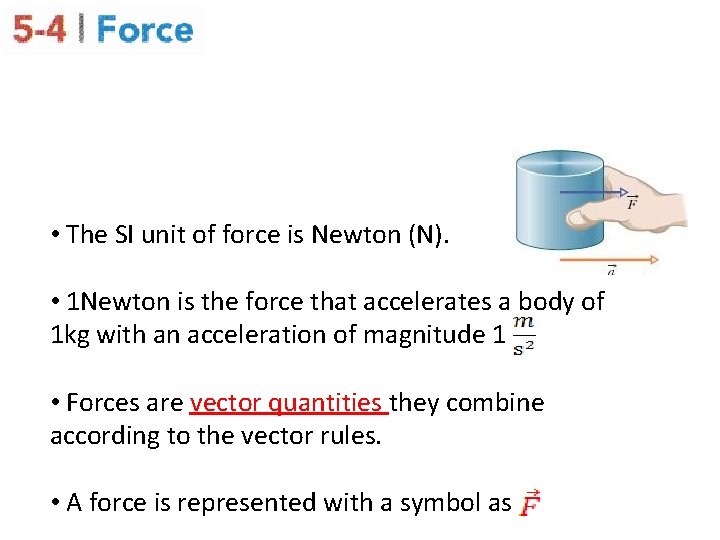
• The SI unit of force is Newton (N). • 1 Newton is the force that accelerates a body of 1 kg with an acceleration of magnitude 1 • Forces are vector quantities they combine according to the vector rules. • A force is represented with a symbol as
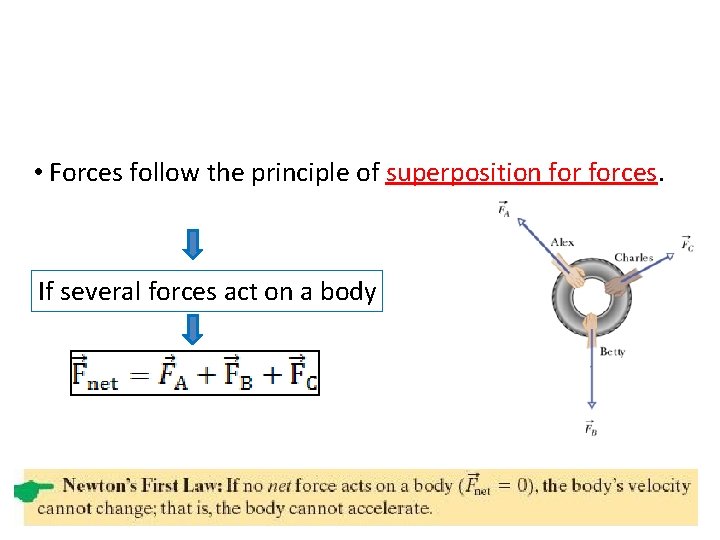
• Forces follow the principle of superposition forces. If several forces act on a body
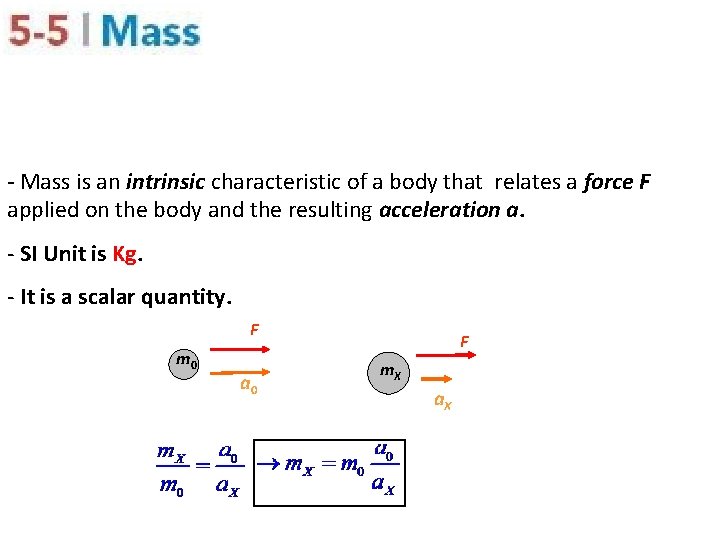
- Mass is an intrinsic characteristic of a body that relates a force F applied on the body and the resulting acceleration a. - SI Unit is Kg. - It is a scalar quantity. F m 0 a 0 F m. X a. X
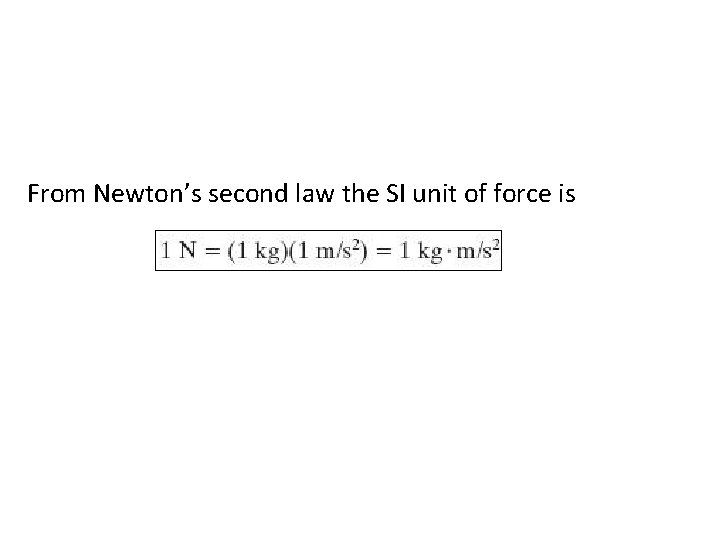
From Newton’s second law the SI unit of force is
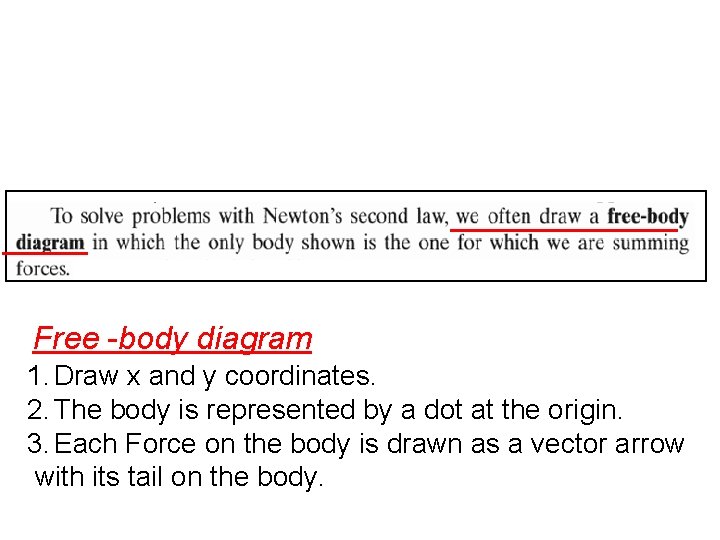
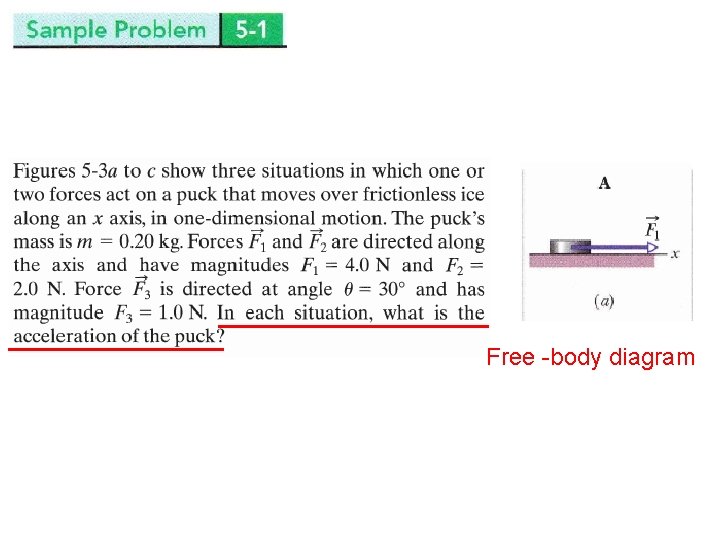
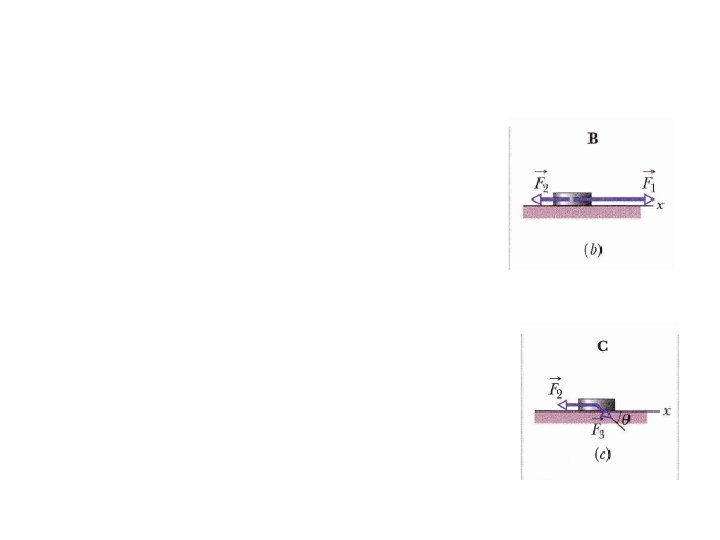
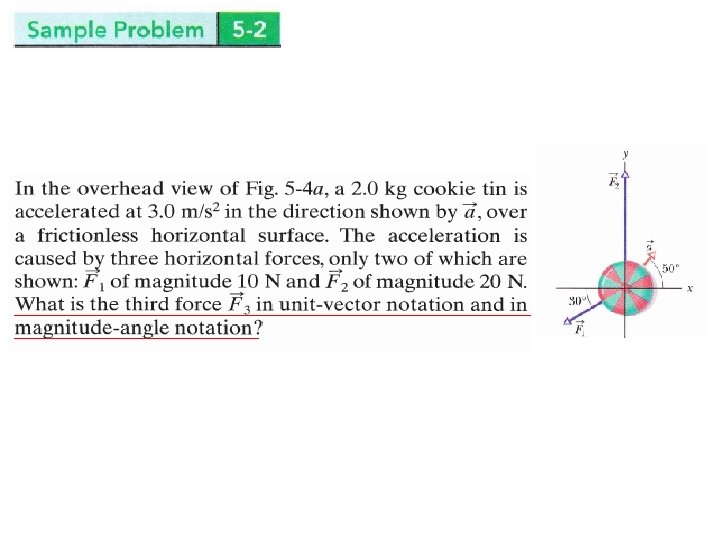
Free -body diagram 1. Draw x and y coordinates. 2. The body is represented by a dot at the origin. 3. Each Force on the body is drawn as a vector arrow with its tail on the body.
Free -body diagram
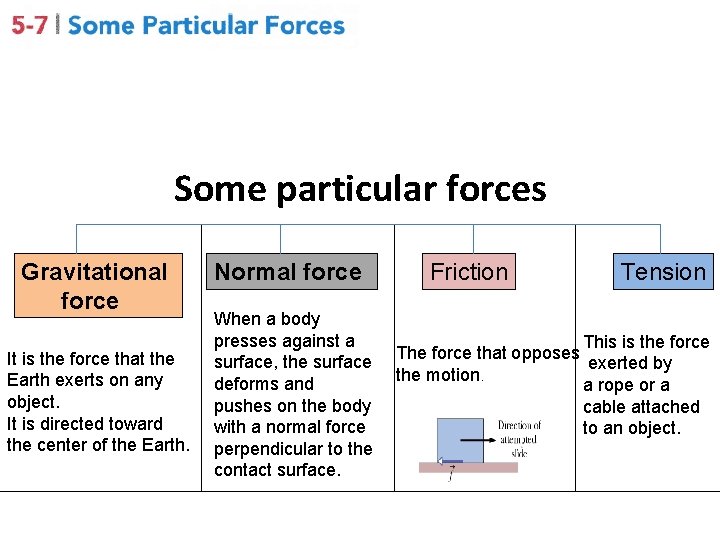
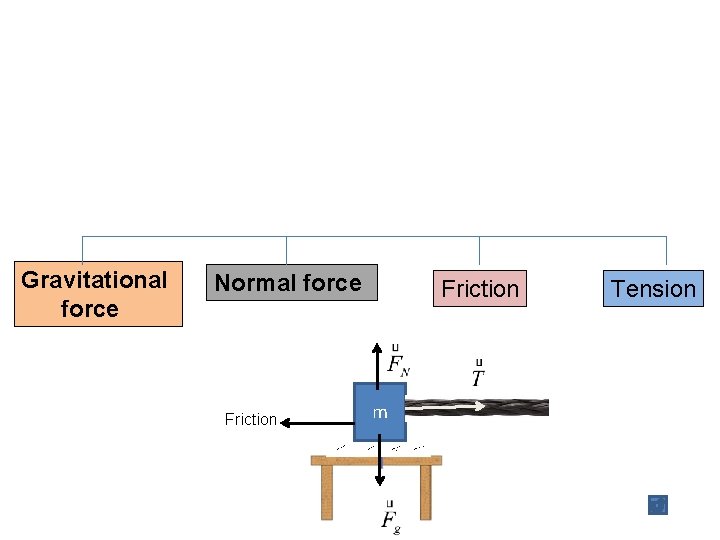
Some particular forces Gravitational force It is the force that the Earth exerts on any object. It is directed toward the center of the Earth. Normal force When a body presses against a surface, the surface deforms and pushes on the body with a normal force perpendicular to the contact surface. Friction Tension This is the force The force that opposes exerted by the motion. a rope or a cable attached to an object.
Gravitational force Normal force Friction m Tension
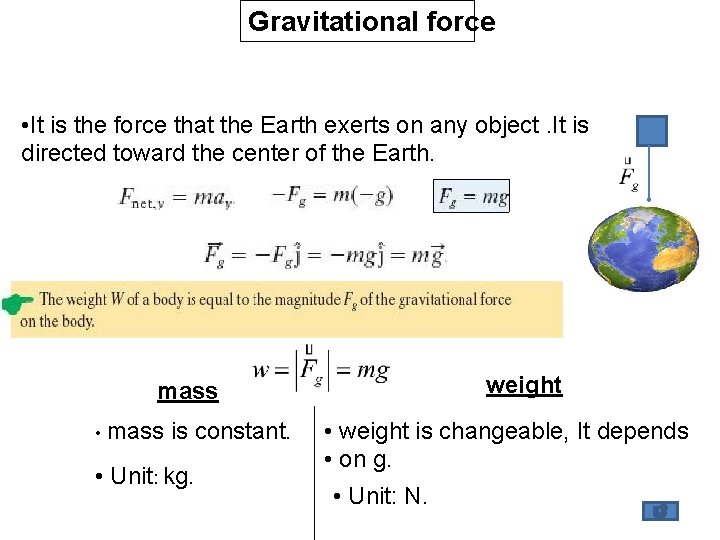
Gravitational force • It is the force that the Earth exerts on any object. It is directed toward the center of the Earth. weight mass • mass is constant. • Unit: kg. • weight is changeable, It depends • on g. • Unit: N.
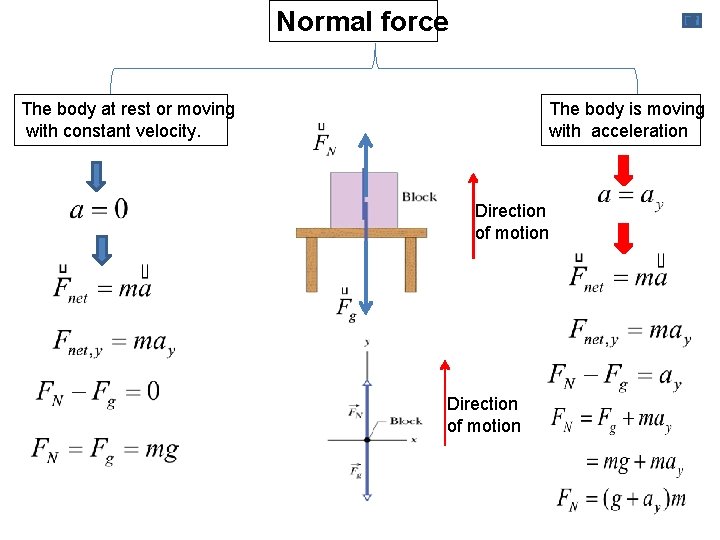
Normal force The body at rest or moving with constant velocity. The body is moving with acceleration Direction of motion
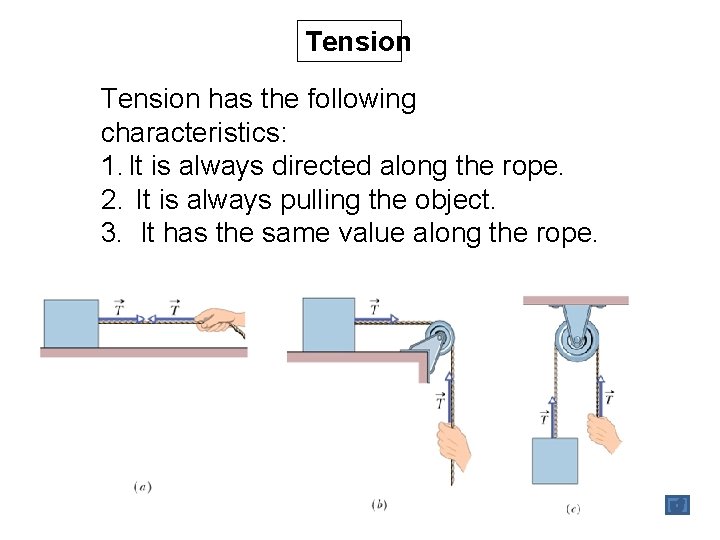
Tension has the following characteristics: 1. It is always directed along the rope. 2. It is always pulling the object. 3. It has the same value along the rope.
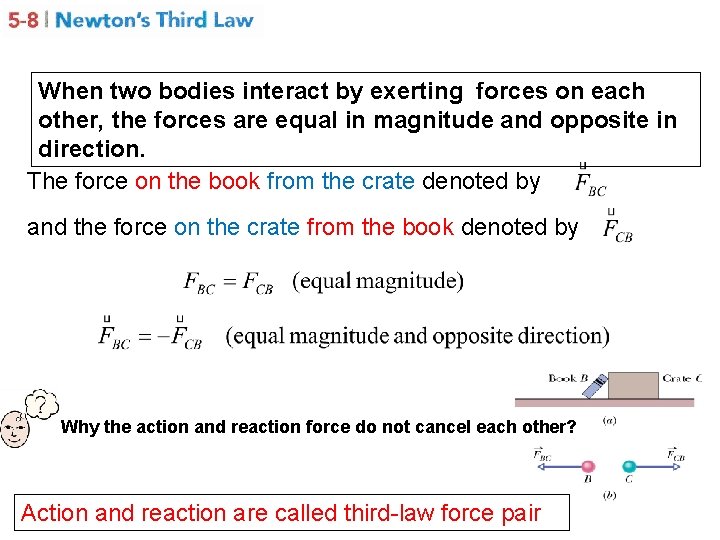
When two bodies interact by exerting forces on each other, the forces are equal in magnitude and opposite in direction. The force on the book from the crate denoted by and the force on the crate from the book denoted by Why the action and reaction force do not cancel each other? Action and reaction are called third-law force pair
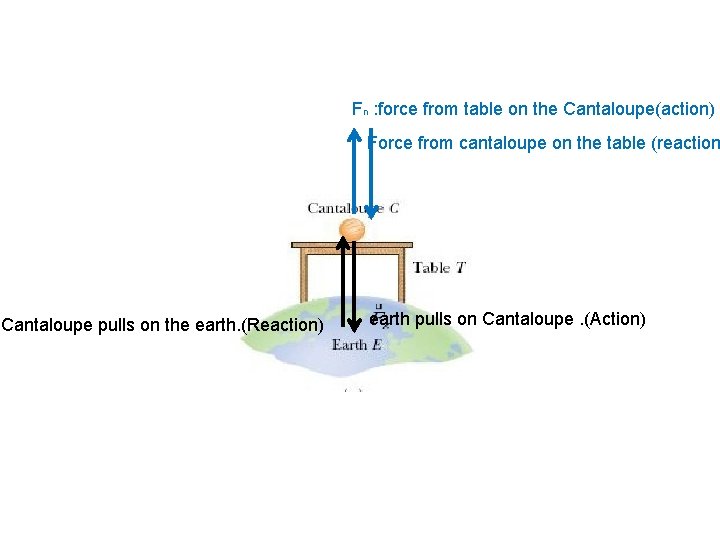
Fn : force from table on the Cantaloupe(action) Force from cantaloupe on the table (reaction Cantaloupe pulls on the earth. (Reaction) earth pulls on Cantaloupe. (Action)
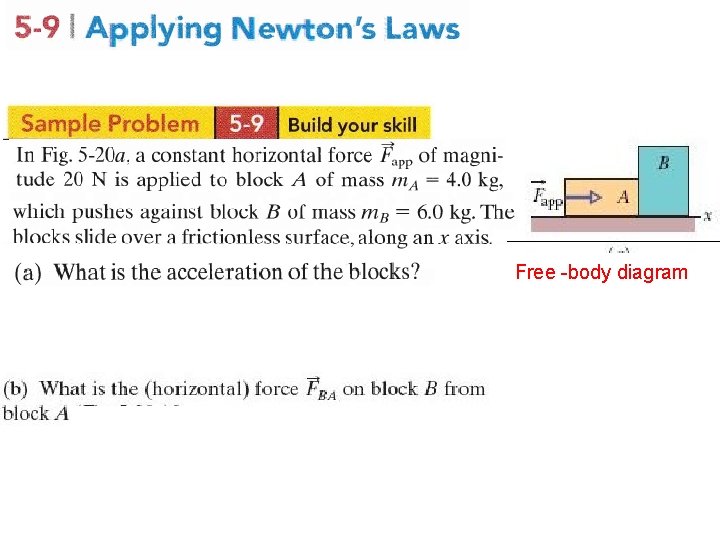
Free -body diagram
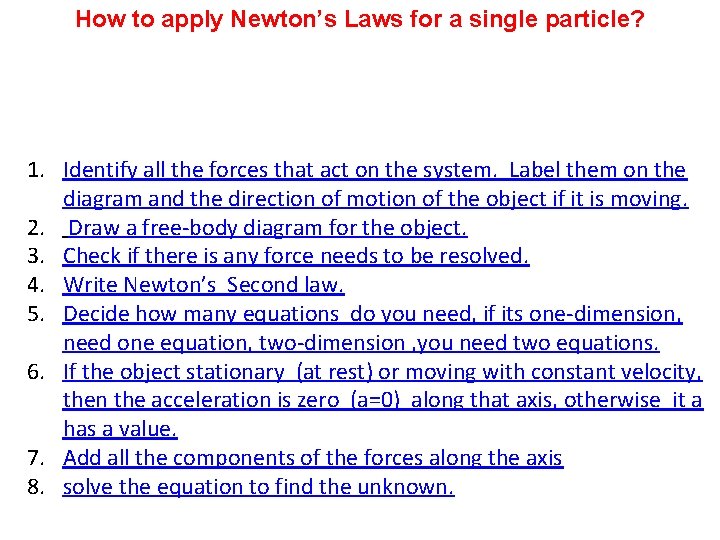
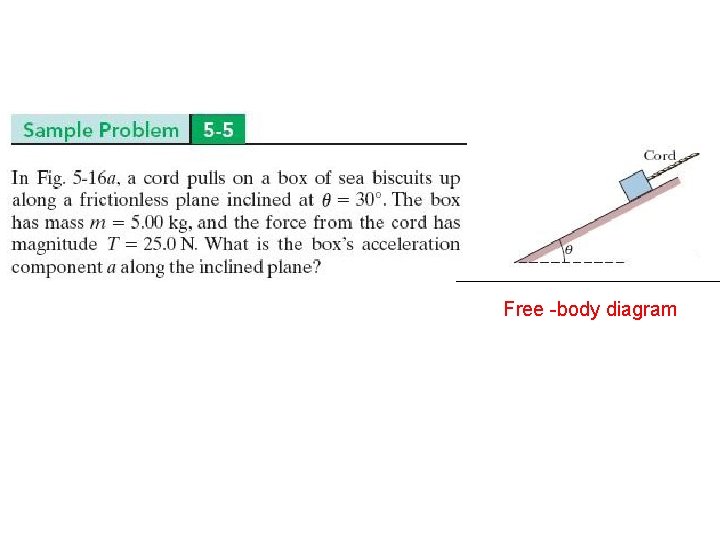
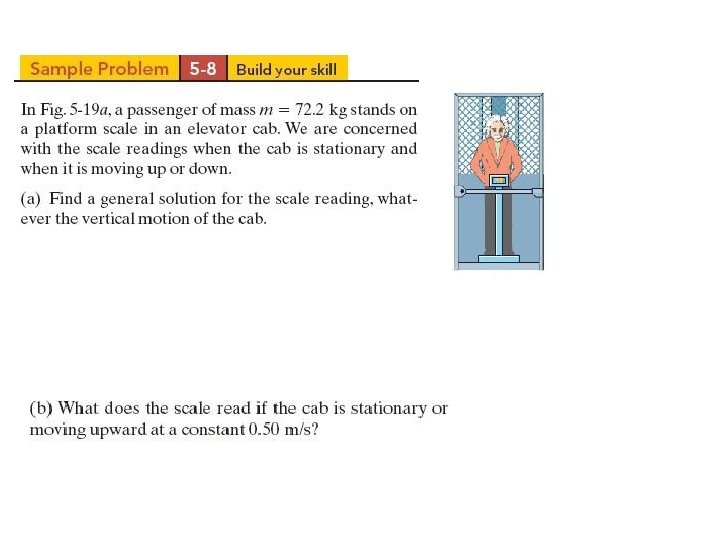
How to apply Newton’s Laws for a single particle? 1. Identify all the forces that act on the system. Label them on the diagram and the direction of motion of the object if it is moving. 2. Draw a free-body diagram for the object. 3. Check if there is any force needs to be resolved. 4. Write Newton’s Second law. 5. Decide how many equations do you need, if its one-dimension, need one equation, two-dimension , you need two equations. 6. If the object stationary (at rest) or moving with constant velocity, then the acceleration is zero (a=0) along that axis, otherwise it a has a value. 7. Add all the components of the forces along the axis 8. solve the equation to find the unknown.
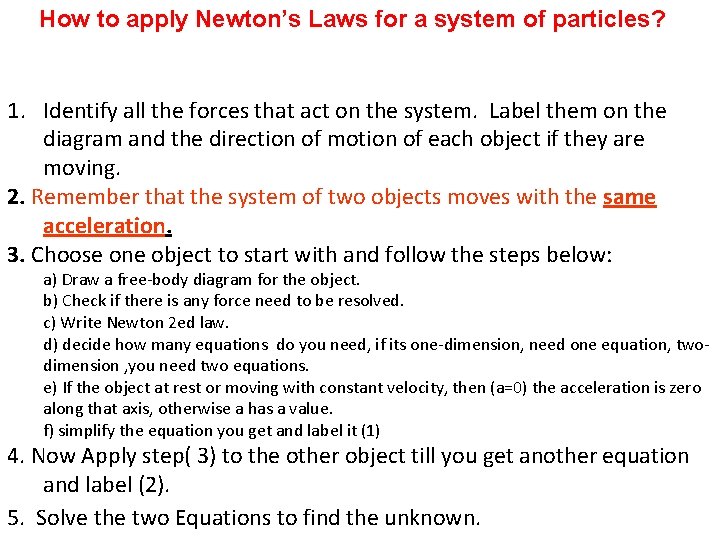
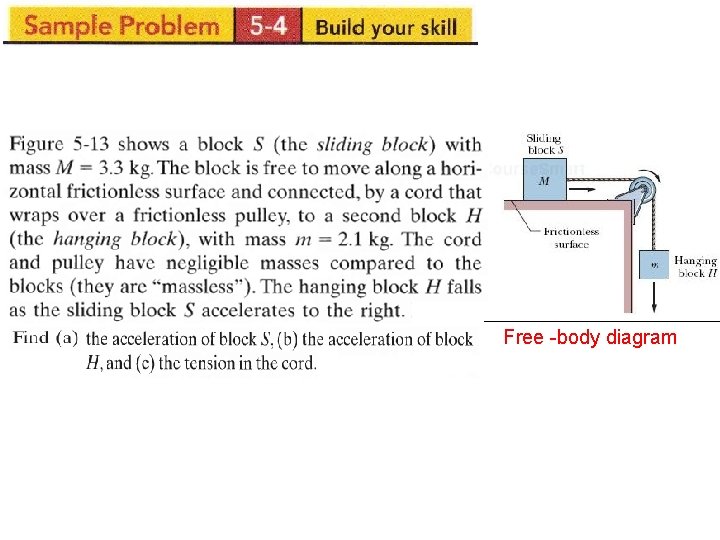
How to apply Newton’s Laws for a system of particles? 1. Identify all the forces that act on the system. Label them on the diagram and the direction of motion of each object if they are moving. 2. Remember that the system of two objects moves with the same acceleration. 3. Choose one object to start with and follow the steps below: a) Draw a free-body diagram for the object. b) Check if there is any force need to be resolved. c) Write Newton 2 ed law. d) decide how many equations do you need, if its one-dimension, need one equation, twodimension , you need two equations. e) If the object at rest or moving with constant velocity, then (a=0) the acceleration is zero along that axis, otherwise a has a value. f) simplify the equation you get and label it (1) 4. Now Apply step( 3) to the other object till you get another equation and label (2). 5. Solve the two Equations to find the unknown.
Free -body diagram
Free -body diagram
The End