Evolving Advances in HIV Care SHELLEY GILROY MD

- Slides: 64
Evolving Advances in HIV Care SHELLEY GILROY, MD ASSOCIATE PROFESSOR OF MEDICINE ALBANY MEDICAL COLLEGE JUNE 13, 2014
Disclosures �Co-Investigator for studies at Albany Medical Center sponsored by Gilead and GSK Pharmaceuticals �Thanks to Drs Monica Parker( NYS Wadsworth Laboratory), Doug Fish (Albany Medical Center) and Lou Smith (NYS BHAE) for the use of their slides
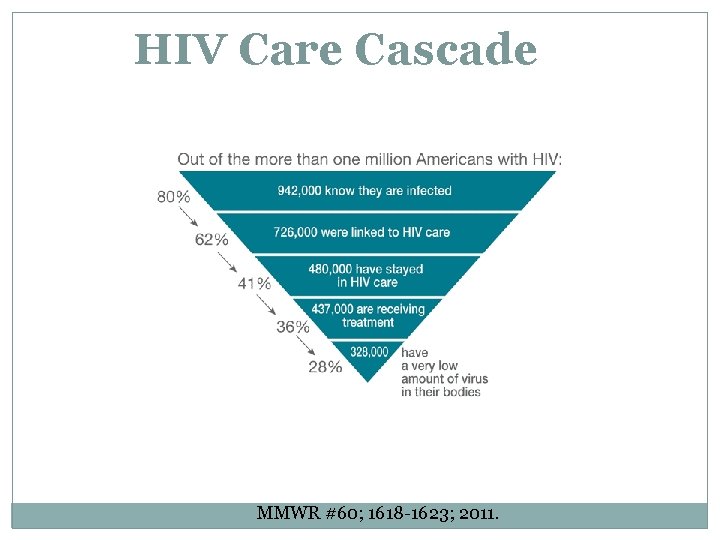
Objectives � 1) Understand recent epidemiologic trends in HIV disease � 2) Know what is new in HIV testing � 3) Know when to treat HIV infection � 4) List the preferred regimens for HIV therapy � 5) How are we doing - the HIV Care Cascade
Epidemiologic Trends in HIV Infection
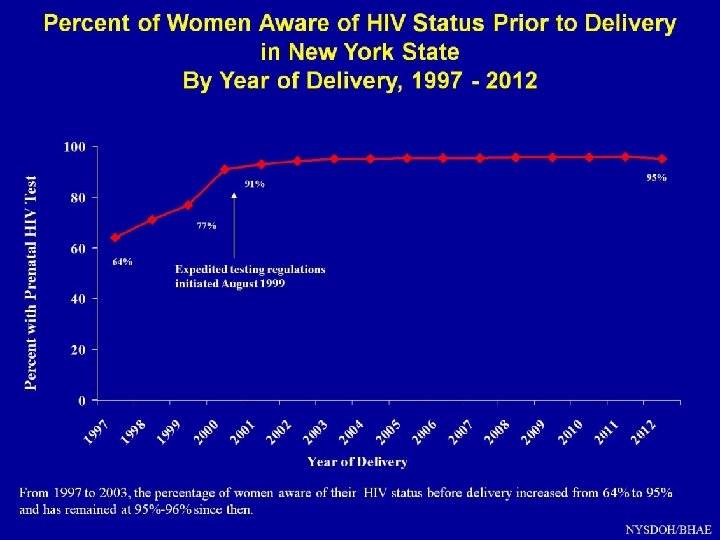
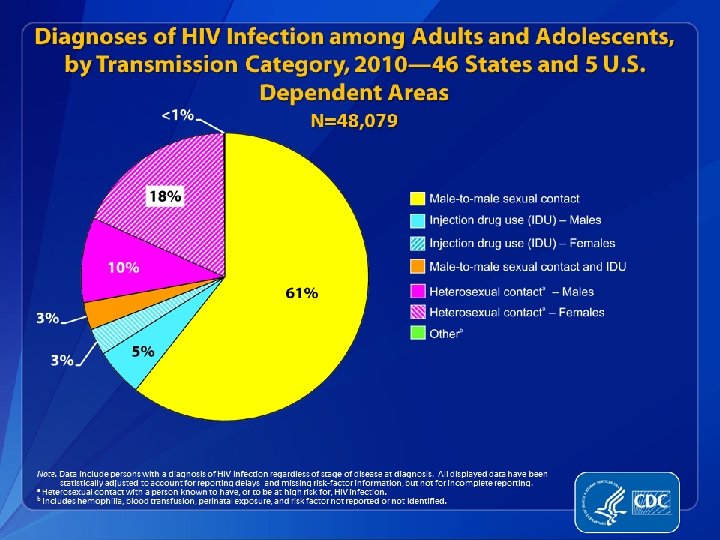
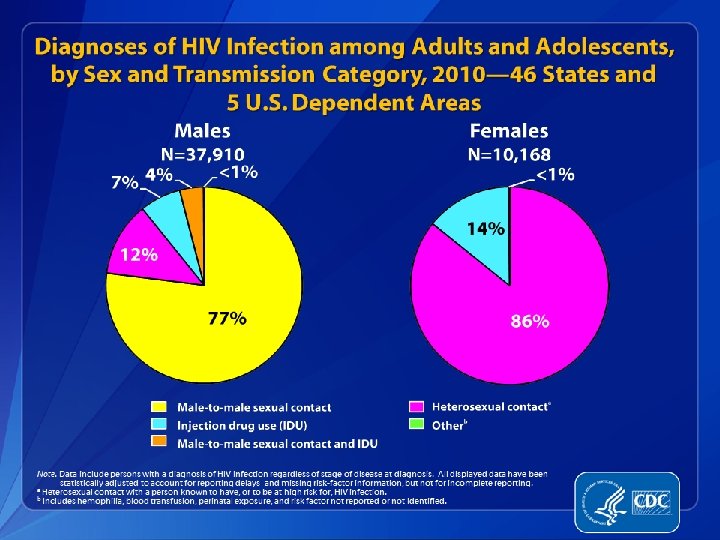
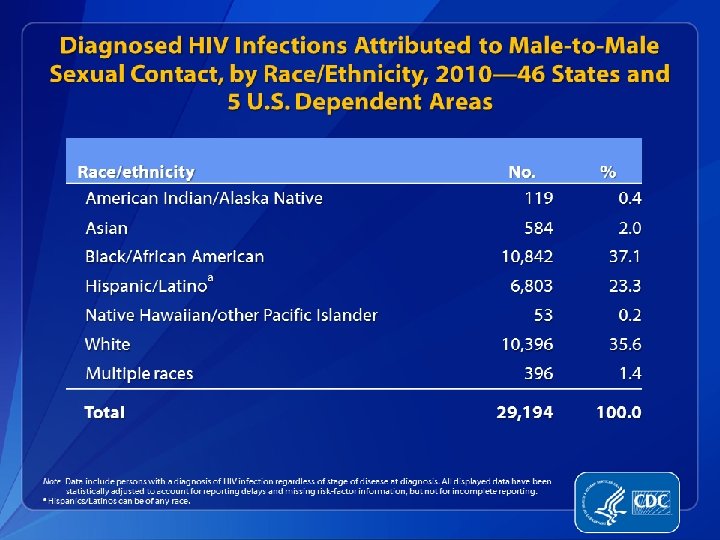
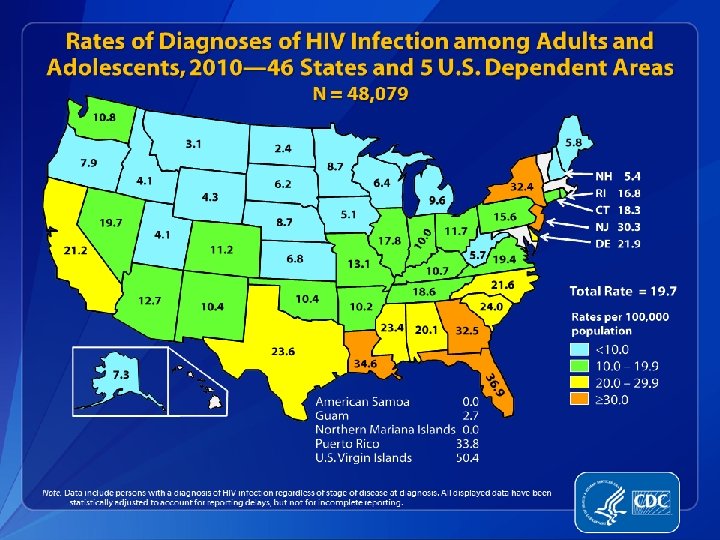
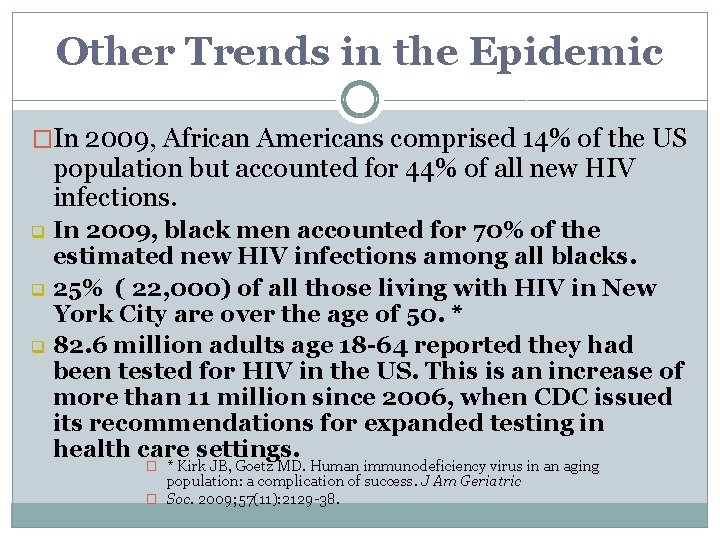
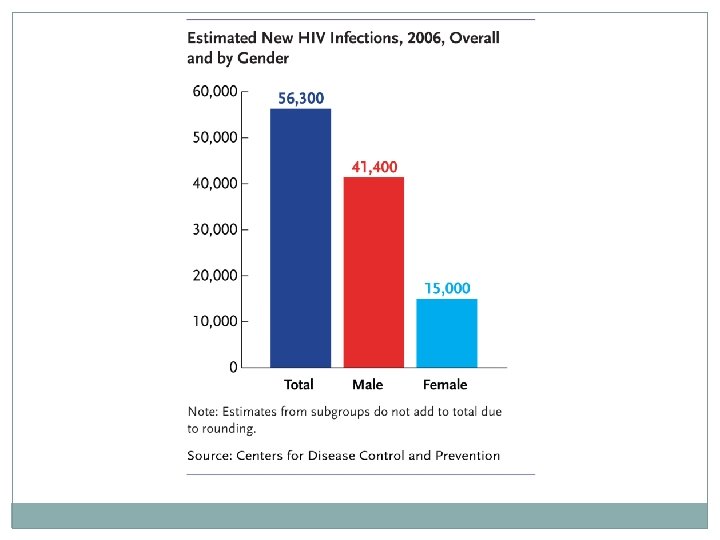
Other Trends in the Epidemic �In 2009, African Americans comprised 14% of the US population but accounted for 44% of all new HIV infections. In 2009, black men accounted for 70% of the estimated new HIV infections among all blacks. q 25% ( 22, 000) of all those living with HIV in New York City are over the age of 50. * q 82. 6 million adults age 18 -64 reported they had been tested for HIV in the US. This is an increase of more than 11 million since 2006, when CDC issued its recommendations for expanded testing in health care settings. q � * Kirk JB, Goetz MD. Human immunodeficiency virus in an aging population: a complication of success. J Am Geriatric � Soc. 2009; 57(11): 2129 -38.
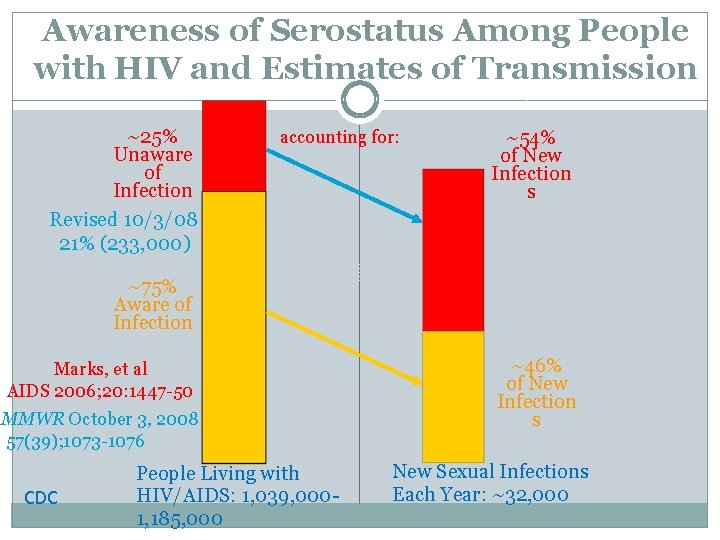
Awareness of Serostatus Among People with HIV and Estimates of Transmission ~25% Unaware of Infection Revised 10/3/08 21% (233, 000) accounting for: ~54% of New Infection s ~75% Aware of Infection Marks, et al AIDS 2006; 20: 1447 -50 MMWR October 3, 2008 57(39); 1073 -1076 CDC People Living with HIV/AIDS: 1, 039, 0001, 185, 000 ~46% of New Infection s New Sexual Infections Each Year: ~32, 000
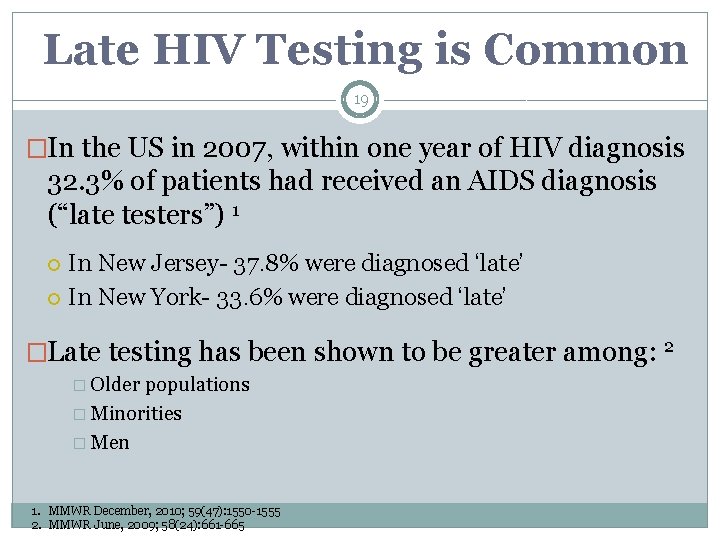
Late HIV Testing is Common 19 �In the US in 2007, within one year of HIV diagnosis 32. 3% of patients had received an AIDS diagnosis (“late testers”) 1 In New Jersey- 37. 8% were diagnosed ‘late’ In New York- 33. 6% were diagnosed ‘late’ �Late testing has been shown to be greater among: 2 � Older populations � Minorities � Men 1. MMWR December, 2010; 59(47): 1550 -1555 2. MMWR June, 2009; 58(24): 661 -665
HIV Testing
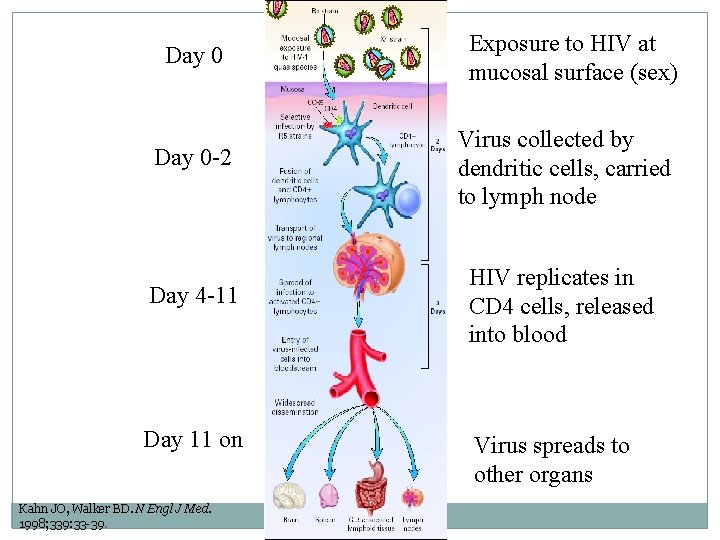
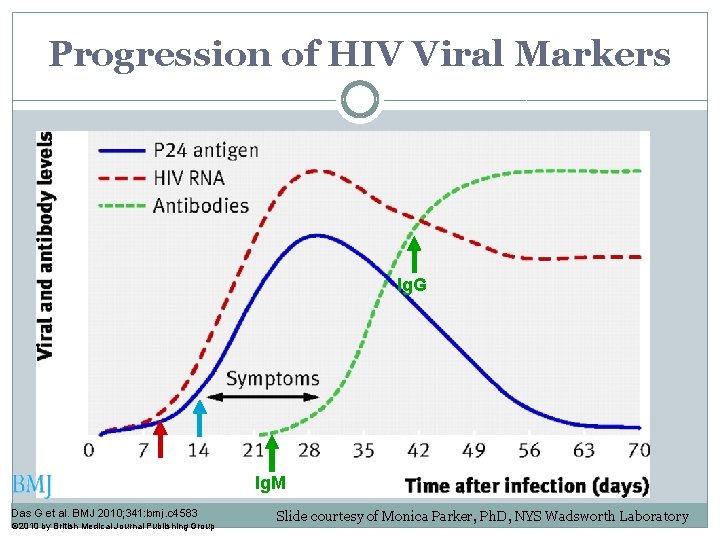
Exposure to HIV at mucosal surface (sex) Day 0 -2 Virus collected by dendritic cells, carried to lymph node Day 4 -11 HIV replicates in CD 4 cells, released into blood Day 11 on Kahn JO, Walker BD. N Engl J Med. 1998; 339: 33 -39. Virus spreads to other organs 21
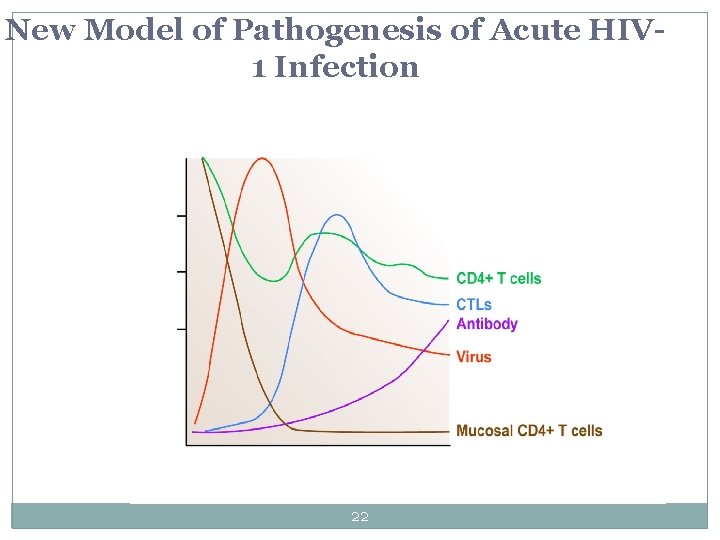
New Model of Pathogenesis of Acute HIV 1 Infection 22
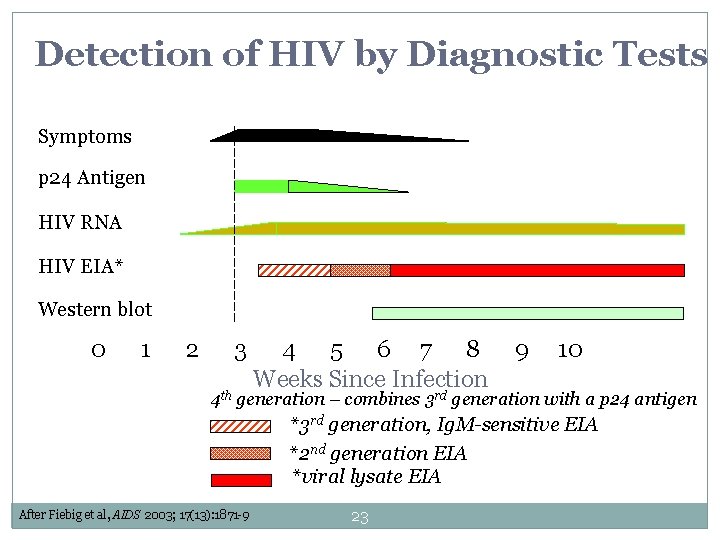
Detection of HIV by Diagnostic Tests Symptoms p 24 Antigen HIV RNA HIV EIA* Western blot 0 1 2 3 4 5 6 7 8 9 10 Weeks Since Infection 4 th generation – combines 3 rd generation with a p 24 antigen *3 rd generation, Ig. M-sensitive EIA *2 nd generation EIA *viral lysate EIA After Fiebig et al, AIDS 2003; 17(13): 1871 -9 23
Progression of HIV Viral Markers Ig. G Ig. M Das G et al. BMJ 2010; 341: bmj. c 4583 © 2010 by British Medical Journal Publishing Group Slide courtesy of Monica Parker, Ph. D, NYS Wadsworth Laboratory
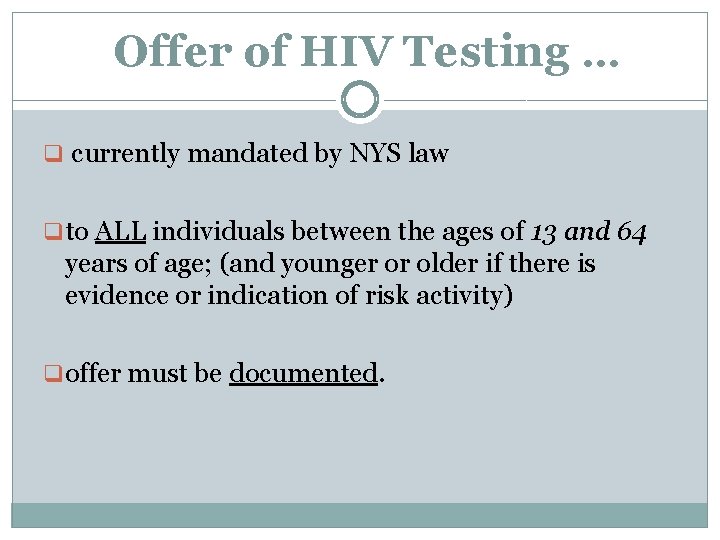
Offer of HIV Testing … q currently mandated by NYS law q to ALL individuals between the ages of 13 and 64 years of age; (and younger or older if there is evidence or indication of risk activity) q offer must be documented.
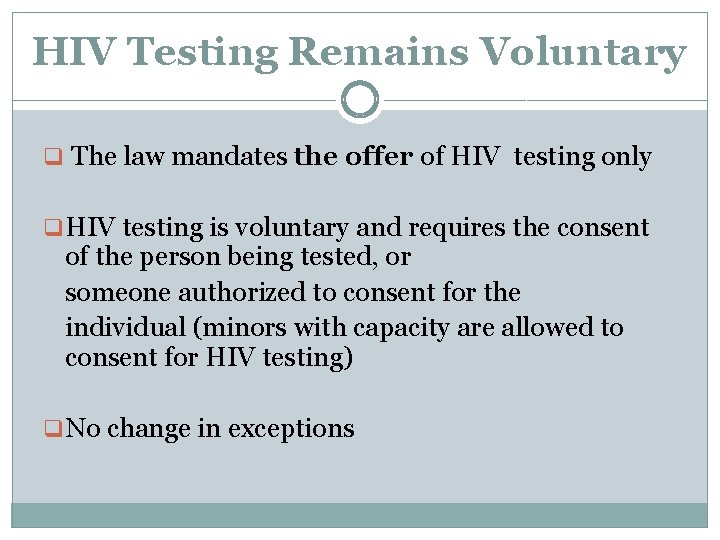
HIV Testing Remains Voluntary q The law mandates the offer of HIV testing only q HIV testing is voluntary and requires the consent of the person being tested, or someone authorized to consent for the individual (minors with capacity are allowed to consent for HIV testing) q No change in exceptions
Recommended Frequency of HIV Testing q At least once to every person between the ages of 13 and 64 (or younger or older, if indicated). q Additional offers of testing are required for those whose risk behaviors indicate need for testing. q Testing should be offered to persons of risk even if they have previously declined.
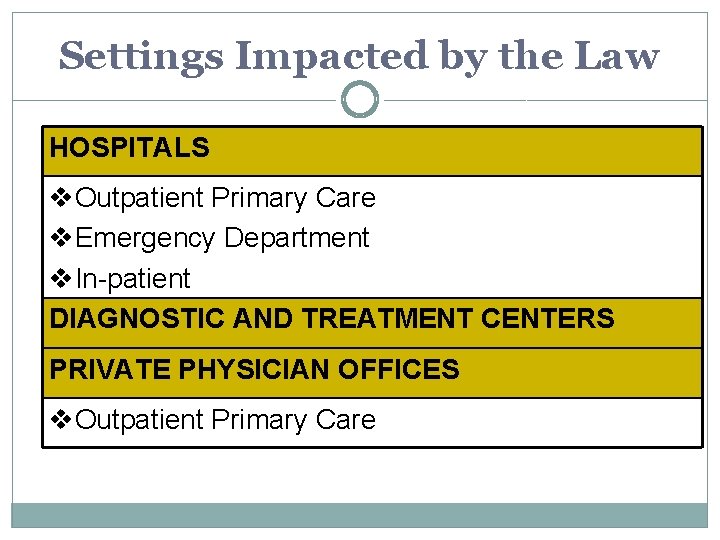
Settings Impacted by the Law HOSPITALS v. Outpatient Primary Care v. Emergency Department v. In-patient DIAGNOSTIC AND TREATMENT CENTERS PRIVATE PHYSICIAN OFFICES v. Outpatient Primary Care
HIV Confidentiality Law … q Article 27 -F NYS Public Health Law ~ Protects the confidentiality of HIV-related information about people who receive services from most health care or social services in NYS
New York State Law Article 27 -F governs… q HIV testing q HIV confidentiality q HIV case reporting & partner notification* *(NYS HIV Case Reporting and Partner Notification Law is in Public Health Law Article 21, Title III) 31
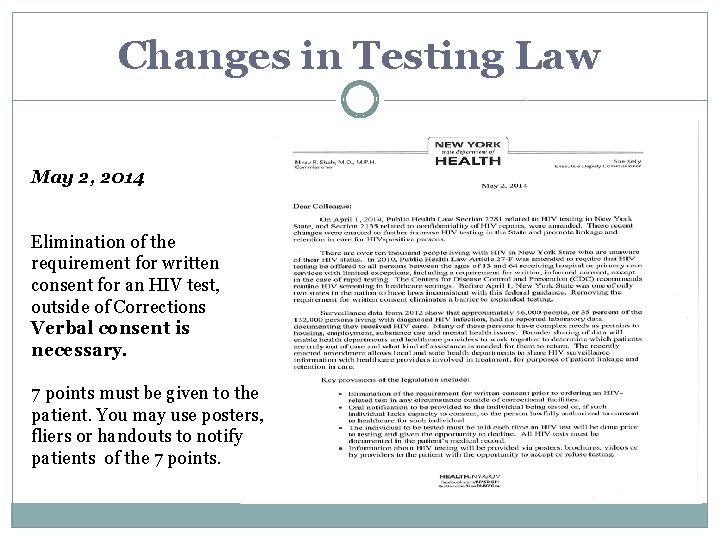
Changes in Testing Law May 2, 2014 Elimination of the requirement for written consent for an HIV test, outside of Corrections Verbal consent is necessary. 7 points must be given to the patient. You may use posters, fliers or handouts to notify patients of the 7 points.
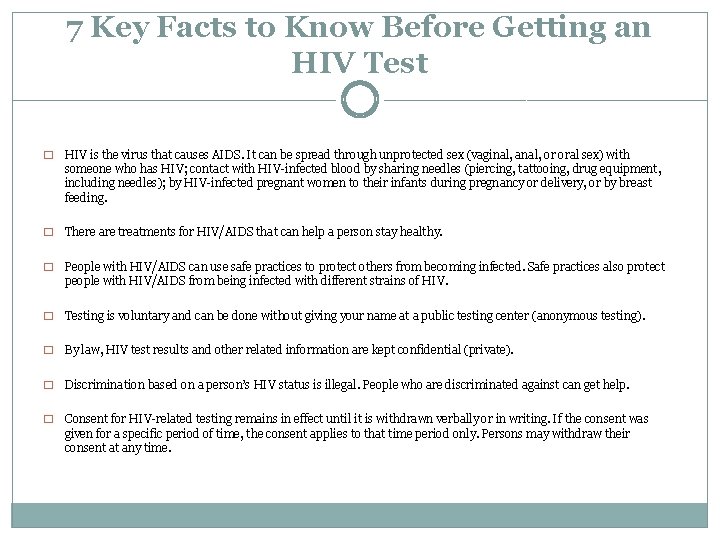
7 Key Facts to Know Before Getting an HIV Test � HIV is the virus that causes AIDS. It can be spread through unprotected sex (vaginal, anal, or oral sex) with someone who has HIV; contact with HIV-infected blood by sharing needles (piercing, tattooing, drug equipment, including needles); by HIV-infected pregnant women to their infants during pregnancy or delivery, or by breast feeding. � There are treatments for HIV/AIDS that can help a person stay healthy. � People with HIV/AIDS can use safe practices to protect others from becoming infected. Safe practices also protect people with HIV/AIDS from being infected with different strains of HIV. � Testing is voluntary and can be done without giving your name at a public testing center (anonymous testing). � By law, HIV test results and other related information are kept confidential (private). � Discrimination based on a person’s HIV status is illegal. People who are discriminated against can get help. � Consent for HIV-related testing remains in effect until it is withdrawn verbally or in writing. If the consent was given for a specific period of time, the consent applies to that time period only. Persons may withdraw their consent at any time.
HIV-related Information Includes … q q q an HIV- related test or lab test (CD-4 count, viral load, etc), regardless of result presence of HIV infection, HIV related illness or AIDS current or past treatment for HIV-specific medications a “contact” of someone with HIV (spouse, sexual or needle-sharing partner) exposure to HIV 34
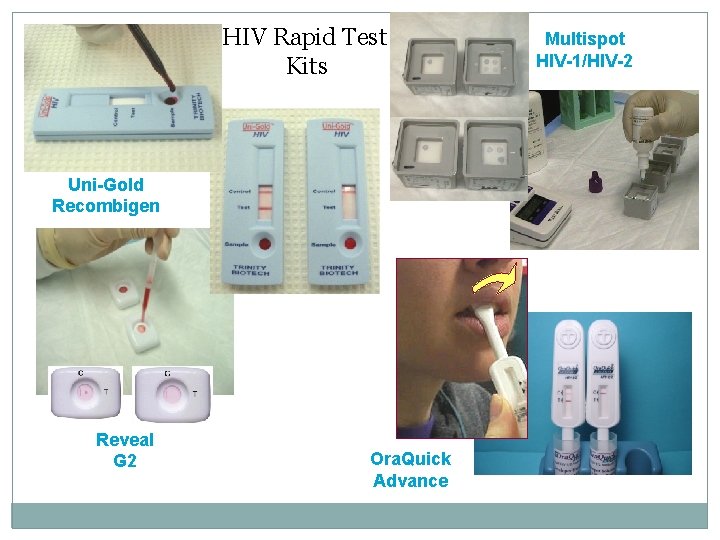
HIV Rapid Test Kits Uni-Gold Recombigen Reveal G 2 Ora. Quick Advance Multispot HIV-1/HIV-2
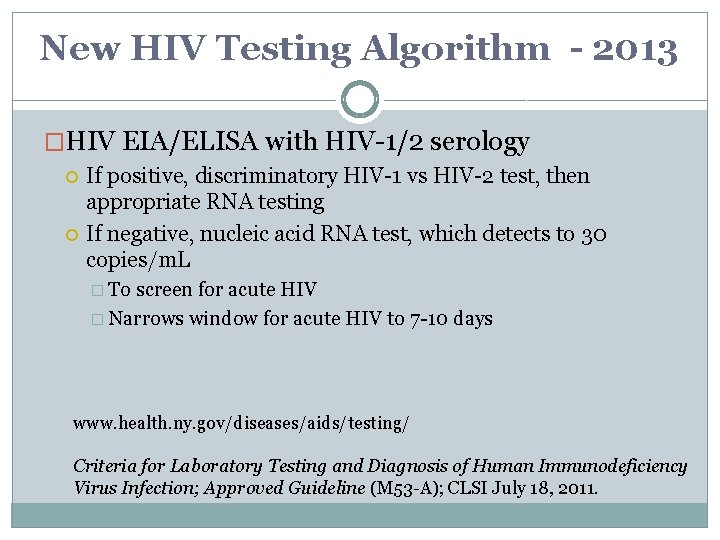
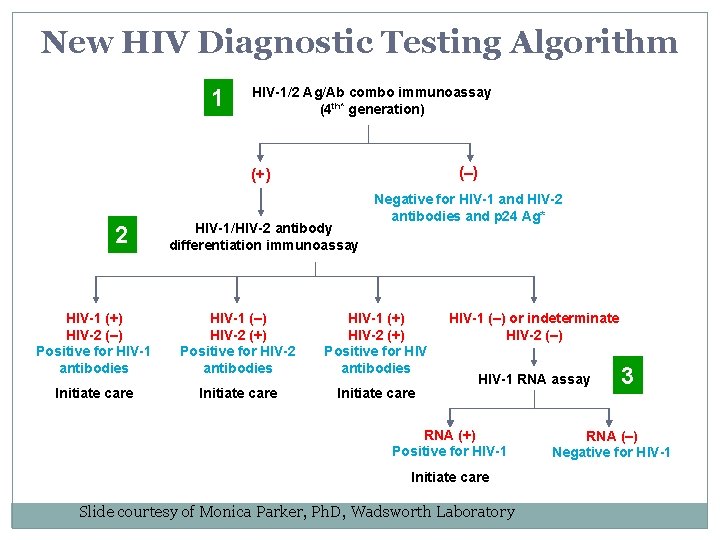
New HIV Testing Algorithm - 2013 �HIV EIA/ELISA with HIV-1/2 serology If positive, discriminatory HIV-1 vs HIV-2 test, then appropriate RNA testing If negative, nucleic acid RNA test, which detects to 30 copies/m. L � To screen for acute HIV � Narrows window for acute HIV to 7 -10 days www. health. ny. gov/diseases/aids/testing/ Criteria for Laboratory Testing and Diagnosis of Human Immunodeficiency Virus Infection; Approved Guideline (M 53 -A); CLSI July 18, 2011.
New HIV Diagnostic Testing Algorithm 1 HIV-1/2 Ag/Ab combo immunoassay (4 th* generation) (–) (+) 2 HIV-1/HIV-2 antibody differentiation immunoassay Negative for HIV-1 and HIV-2 antibodies and p 24 Ag* HIV-1 (+) HIV-2 (–) Positive for HIV-1 antibodies HIV-1 (–) HIV-2 (+) Positive for HIV-2 antibodies HIV-1 (+) HIV-2 (+) Positive for HIV antibodies Initiate care HIV-1 (–) or indeterminate HIV-2 (–) HIV-1 RNA assay RNA (+) Positive for HIV-1 Initiate care Slide courtesy of Monica Parker, Ph. D, Wadsworth Laboratory 3 RNA (–) Negative for HIV-1
When to Treat?
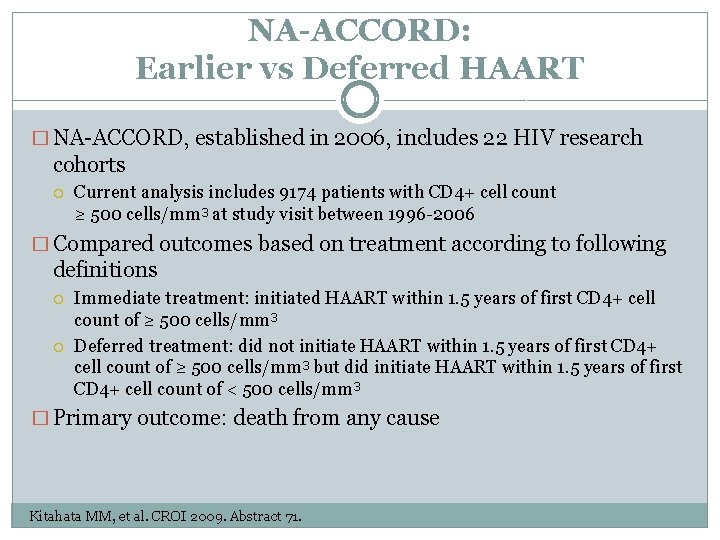
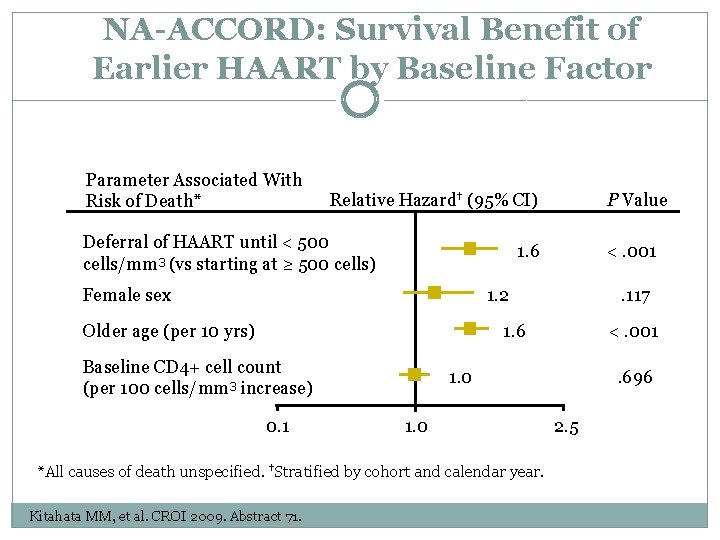
NA-ACCORD: Earlier vs Deferred HAART � NA-ACCORD, established in 2006, includes 22 HIV research cohorts Current analysis includes 9174 patients with CD 4+ cell count ≥ 500 cells/mm 3 at study visit between 1996 -2006 � Compared outcomes based on treatment according to following definitions Immediate treatment: initiated HAART within 1. 5 years of first CD 4+ cell count of ≥ 500 cells/mm 3 Deferred treatment: did not initiate HAART within 1. 5 years of first CD 4+ cell count of ≥ 500 cells/mm 3 but did initiate HAART within 1. 5 years of first CD 4+ cell count of < 500 cells/mm 3 � Primary outcome: death from any cause Kitahata MM, et al. CROI 2009. Abstract 71.
NA-ACCORD: Survival Benefit of Earlier HAART by Baseline Factor Parameter Associated With Risk of Death* Relative Hazard† (95% CI) Deferral of HAART until < 500 cells/mm 3 (vs starting at ≥ 500 cells) P Value 1. 6 Female sex <. 001. 117 1. 2 Older age (per 10 yrs) <. 001 1. 6 Baseline CD 4+ cell count (per 100 cells/mm 3 increase) 0. 1 1. 0 *All causes of death unspecified. †Stratified by cohort and calendar year. Kitahata MM, et al. CROI 2009. Abstract 71. . 696 2. 5
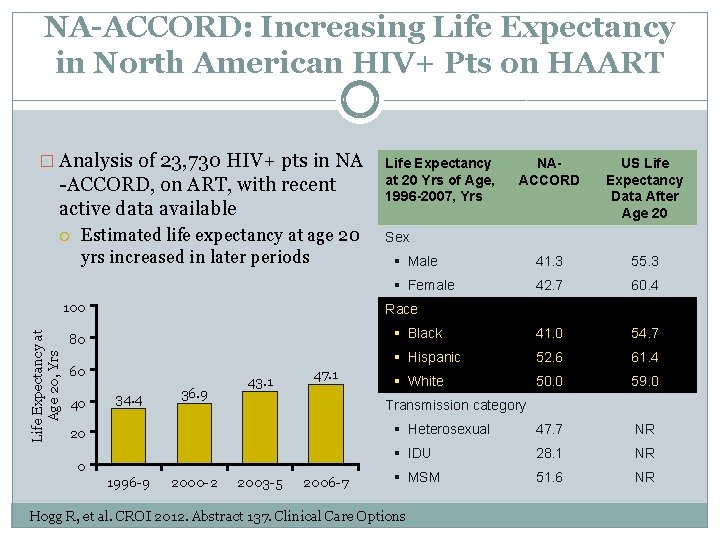
NA-ACCORD: Increasing Life Expectancy in North American HIV+ Pts on HAART � Analysis of 23, 730 HIV+ pts in NA -ACCORD, on ART, with recent active data available Estimated life expectancy at age 20 yrs increased in later periods Life Expectancy at Age 20, Yrs 100 60 34. 4 36. 9 43. 1 47. 1 US Life Expectancy Data After Age 20 § Male 41. 3 55. 3 § Female 42. 7 60. 4 § Black 41. 0 54. 7 § Hispanic 52. 6 61. 4 § White 50. 0 59. 0 § Heterosexual 47. 7 NR § IDU 28. 1 NR § MSM 51. 6 NR Sex Transmission category 20 0 NAACCORD Race 80 40 Life Expectancy at 20 Yrs of Age, 1996 -2007, Yrs 1996 -9 2000 -2 2003 -5 2006 -7 Hogg R, et al. CROI 2012. Abstract 137. Clinical Care Options
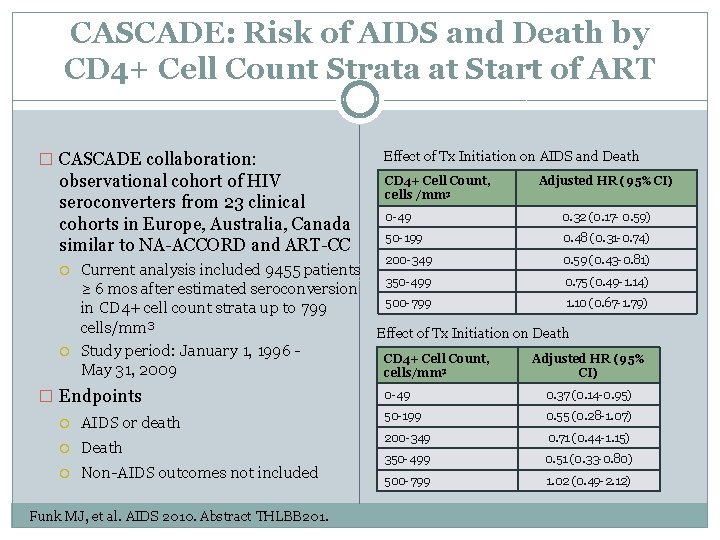
CASCADE: Risk of AIDS and Death by CD 4+ Cell Count Strata at Start of ART � CASCADE collaboration: observational cohort of HIV seroconverters from 23 clinical cohorts in Europe, Australia, Canada similar to NA-ACCORD and ART-CC Effect of Tx Initiation on AIDS and Death CD 4+ Cell Count, cells /mm 3 Adjusted HR (95% CI) 0 -49 0. 32 (0. 17 - 0. 59) 50 -199 0. 48 (0. 31 -0. 74) 200 -349 0. 59 (0. 43 -0. 81) Current analysis included 9455 patients 350 -499 0. 75 (0. 49 -1. 14) ≥ 6 mos after estimated seroconversion 500 -799 1. 10 (0. 67 -1. 79) in CD 4+ cell count strata up to 799 cells/mm³ Effect of Tx Initiation on Death Study period: January 1, 1996 - CD 4+ Cell Count, Adjusted HR (95% 3 May 31, 2009 cells/mm CI) � Endpoints AIDS or death Death Non-AIDS outcomes not included Funk MJ, et al. AIDS 2010. Abstract THLBB 201. 0 -49 0. 37 (0. 14 -0. 95) 50 -199 0. 55 (0. 28 -1. 07) 200 -349 0. 71 (0. 44 -1. 15) 350 -499 0. 51 (0. 33 -0. 80) 500 -799 1. 02 (0. 49 -2. 12)
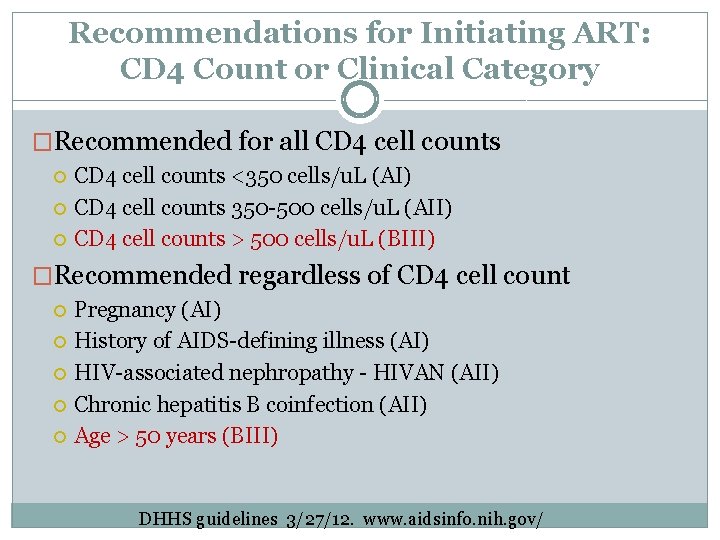
Recommendations for Initiating ART: CD 4 Count or Clinical Category �Recommended for all CD 4 cell counts <350 cells/u. L (AI) CD 4 cell counts 350 -500 cells/u. L (AII) CD 4 cell counts > 500 cells/u. L (BIII) �Recommended regardless of CD 4 cell count Pregnancy (AI) History of AIDS-defining illness (AI) HIV-associated nephropathy - HIVAN (AII) Chronic hepatitis B coinfection (AII) Age > 50 years (BIII) DHHS guidelines 3/27/12. www. aidsinfo. nih. gov/
New York City Department of Health �Antiretroviral Therapy - 2011 The Health Department now recommends offering antiretroviral treatment (ART) to any person living with HIV, regardless of the person’s CD 4 cell count. The recommendation is based on evidence that ART can improve the health of people living with HIV and that ART can prevent transmission of HIV from an HIVinfected person to an uninfected sexual partner. �San Francisco Department of Health issued similar guidance in 2010 http: //www. nyc. gov/html/doh/html/ah/ah. shtml - accessed Jan - 2012
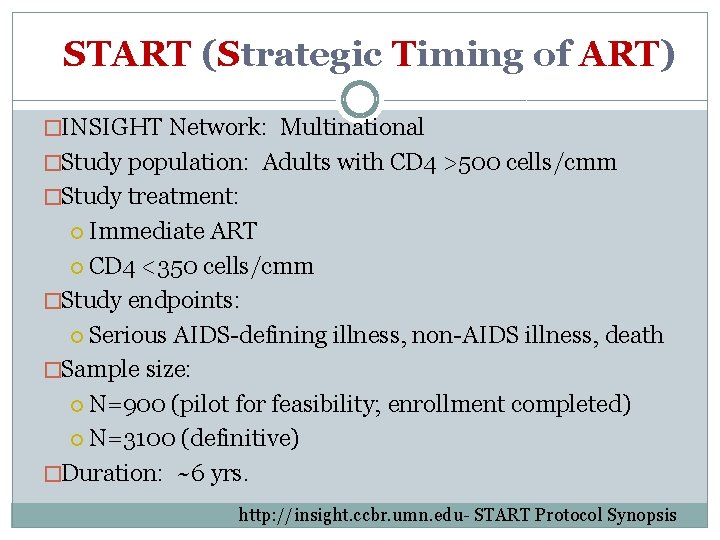
START (Strategic Timing of ART) �INSIGHT Network: Multinational �Study population: Adults with CD 4 >500 cells/cmm �Study treatment: Immediate ART CD 4 <350 cells/cmm �Study endpoints: Serious AIDS-defining illness, non-AIDS illness, death �Sample size: N=900 (pilot for feasibility; enrollment completed) N=3100 (definitive) �Duration: ~6 yrs. http: //insight. ccbr. umn. edu- START Protocol Synopsis
HIV Therapy
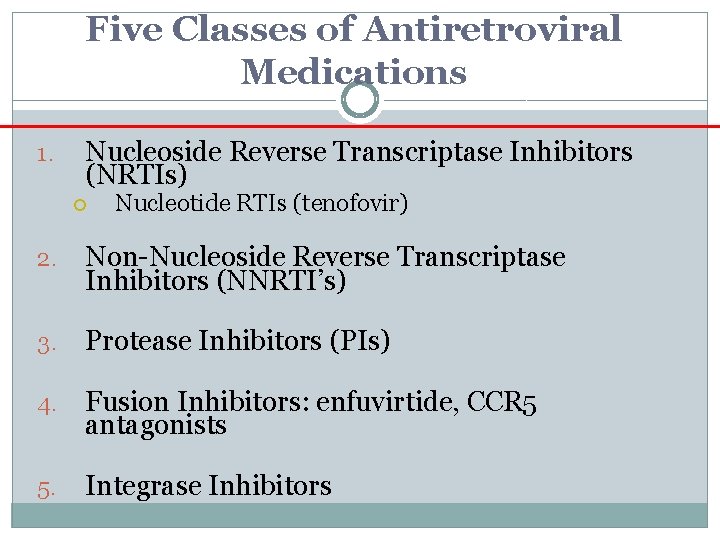
Five Classes of Antiretroviral Medications 1. Nucleoside Reverse Transcriptase Inhibitors (NRTIs) Nucleotide RTIs (tenofovir) 2. Non-Nucleoside Reverse Transcriptase Inhibitors (NNRTI’s) 3. Protease Inhibitors (PIs) 4. Fusion Inhibitors: enfuvirtide, CCR 5 antagonists 5. Integrase Inhibitors
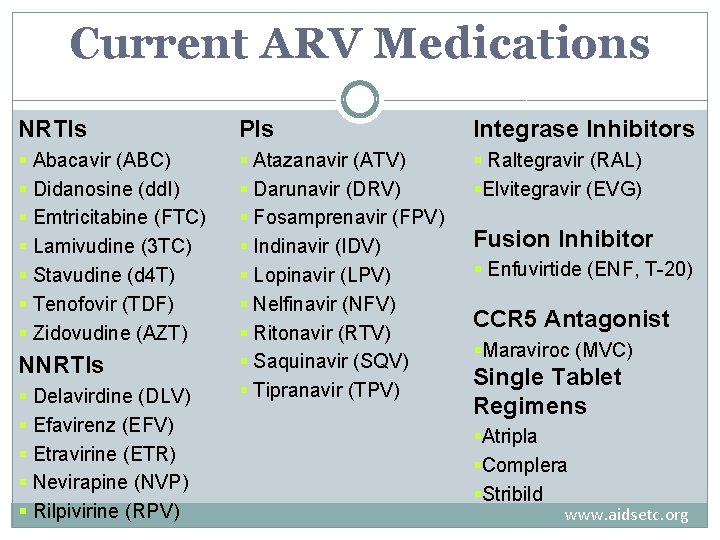
Current ARV Medications NRTIs PIs Integrase Inhibitors § Abacavir (ABC) § Didanosine (dd. I) § Emtricitabine (FTC) § Lamivudine (3 TC) § Stavudine (d 4 T) § Tenofovir (TDF) § Zidovudine (AZT) § Atazanavir (ATV) § Darunavir (DRV) § Fosamprenavir (FPV) § Indinavir (IDV) § Lopinavir (LPV) § Nelfinavir (NFV) § Ritonavir (RTV) § Saquinavir (SQV) § Tipranavir (TPV) § Raltegravir (RAL) §Elvitegravir (EVG) NNRTIs § Delavirdine (DLV) § Efavirenz (EFV) § Etravirine (ETR) § Nevirapine (NVP) § Rilpivirine (RPV) Fusion Inhibitor § Enfuvirtide (ENF, T-20) CCR 5 Antagonist §Maraviroc (MVC) Single Tablet Regimens §Atripla §Complera §Stribild www. aidsetc. org
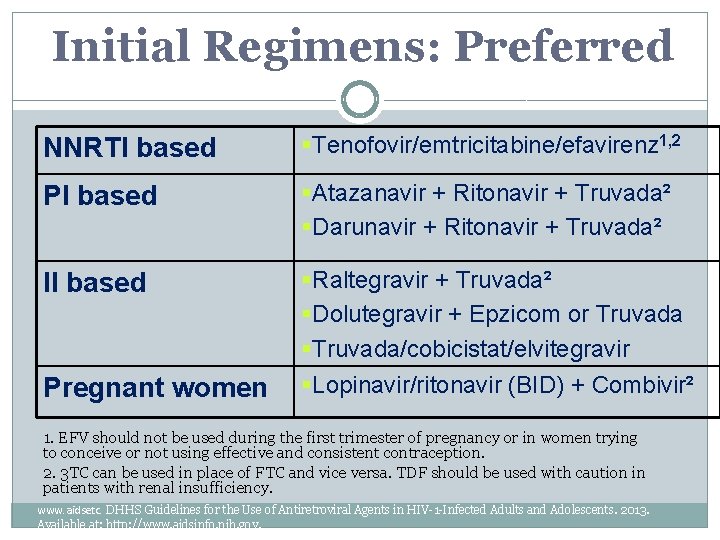
Initial Regimens: Preferred NNRTI based §Tenofovir/emtricitabine/efavirenz 1, 2 PI based §Atazanavir + Ritonavir + Truvada² §Darunavir + Ritonavir + Truvada² II based §Raltegravir + Truvada² §Dolutegravir + Epzicom or Truvada §Truvada/cobicistat/elvitegravir §Lopinavir/ritonavir (BID) + Combivir² Pregnant women 1. EFV should not be used during the first trimester of pregnancy or in women trying to conceive or not using effective and consistent contraception. 2. 3 TC can be used in place of FTC and vice versa. TDF should be used with caution in patients with renal insufficiency. www. aidsetc. DHHS Guidelines for the Use of Antiretroviral Agents in HIV-1 -Infected Adults and Adolescents. 2013. Available at: http: //www. aidsinfo. nih. gov.
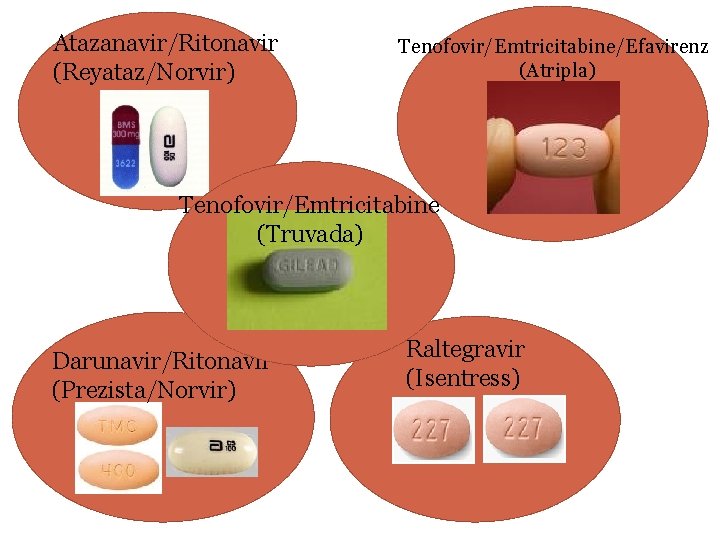
Atazanavir/Ritonavir (Reyataz/Norvir) Tenofovir/Emtricitabine/Efavirenz (Atripla) Tenofovir/Emtricitabine (Truvada) Darunavir/Ritonavir (Prezista/Norvir) Raltegravir (Isentress)
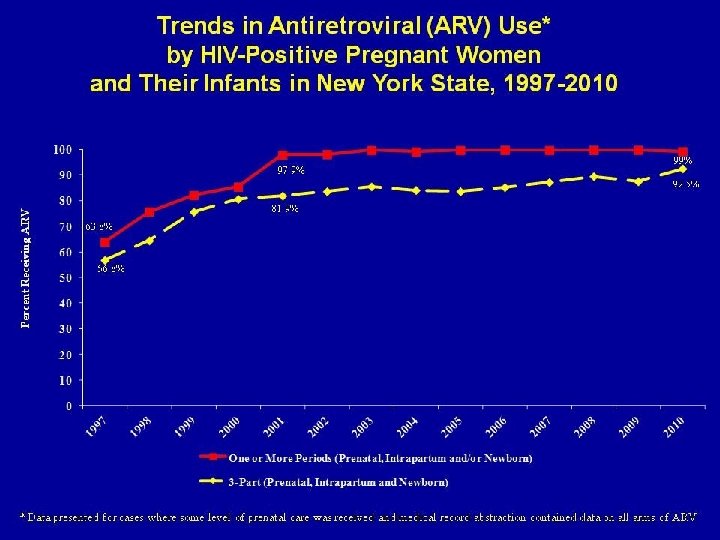
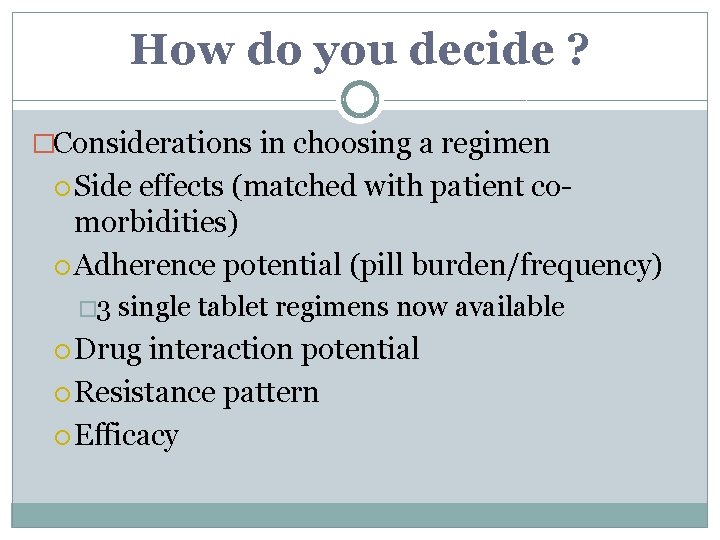
How do you decide ? �Considerations in choosing a regimen Side effects (matched with patient co- morbidities) Adherence potential (pill burden/frequency) � 3 single tablet regimens now available Drug interaction potential Resistance pattern Efficacy
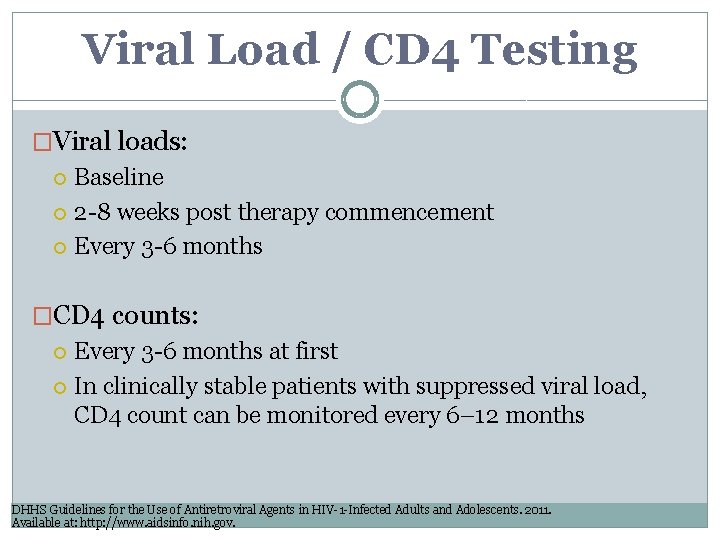
Viral Load / CD 4 Testing �Viral loads: Baseline 2 -8 weeks post therapy commencement Every 3 -6 months �CD 4 counts: Every 3 -6 months at first In clinically stable patients with suppressed viral load, CD 4 count can be monitored every 6– 12 months DHHS Guidelines for the Use of Antiretroviral Agents in HIV-1 -Infected Adults and Adolescents. 2011. Available at: http: //www. aidsinfo. nih. gov.
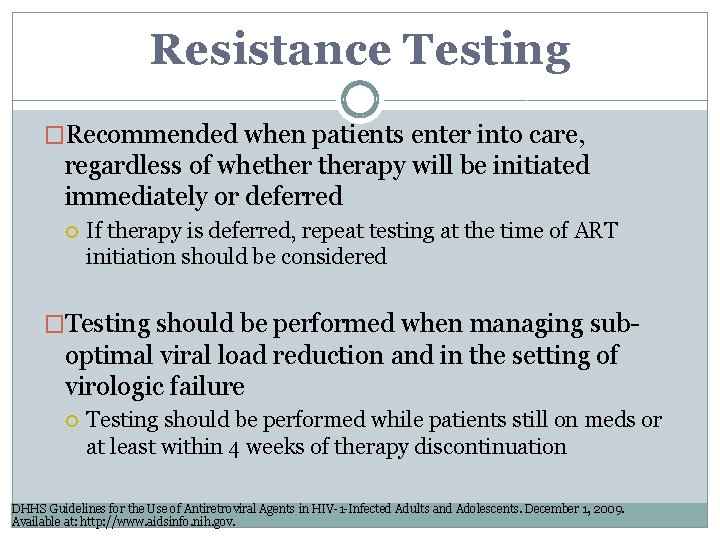
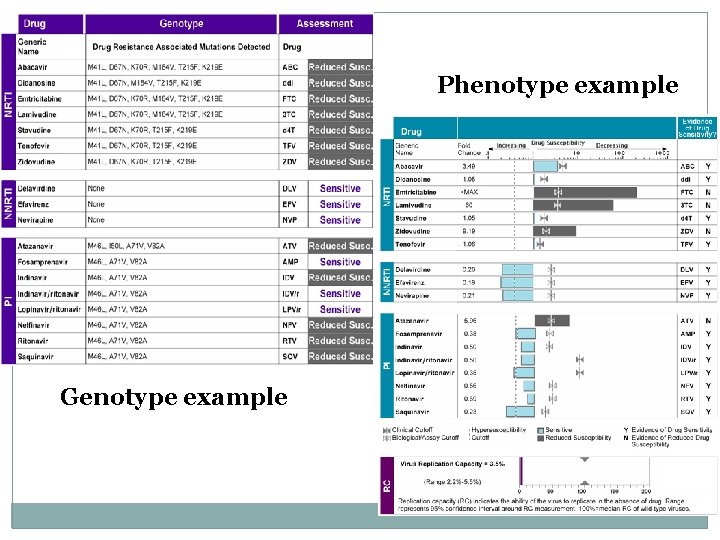
Resistance Testing �Recommended when patients enter into care, regardless of whetherapy will be initiated immediately or deferred If therapy is deferred, repeat testing at the time of ART initiation should be considered �Testing should be performed when managing sub- optimal viral load reduction and in the setting of virologic failure Testing should be performed while patients still on meds or at least within 4 weeks of therapy discontinuation DHHS Guidelines for the Use of Antiretroviral Agents in HIV-1 -Infected Adults and Adolescents. December 1, 2009. Available at: http: //www. aidsinfo. nih. gov.
Phenotype example Genotype example
HIV Care Cascade and Treatment as Prevention
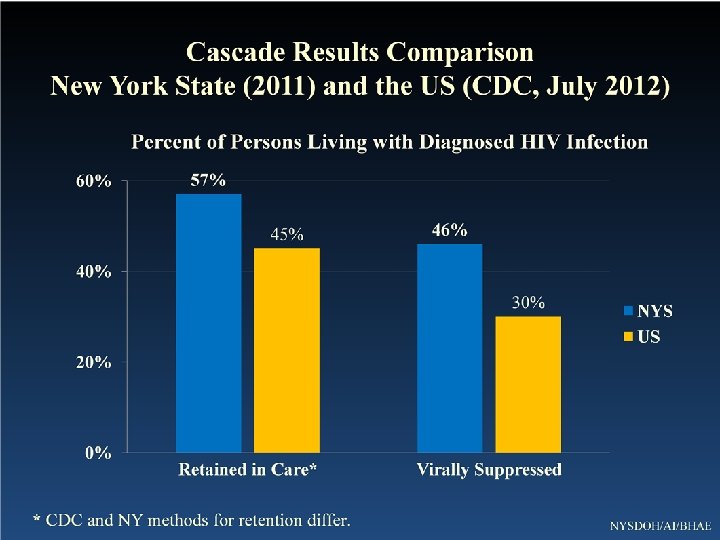
HIV Care Cascade MMWR #60; 1618 -1623; 2011.
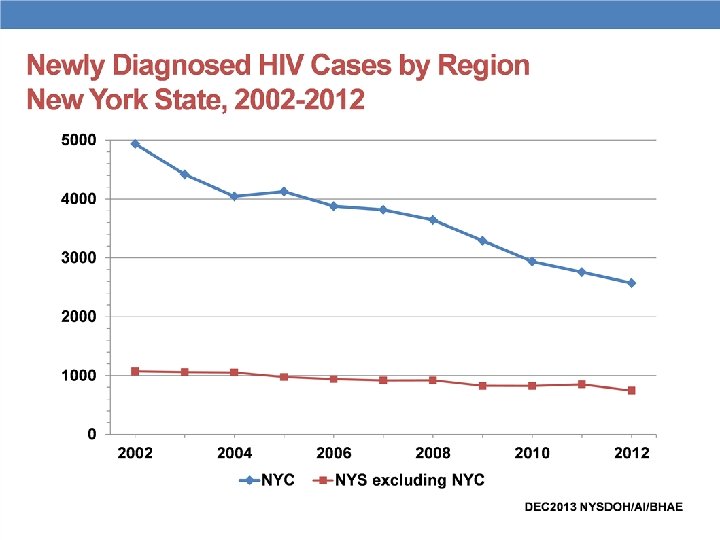
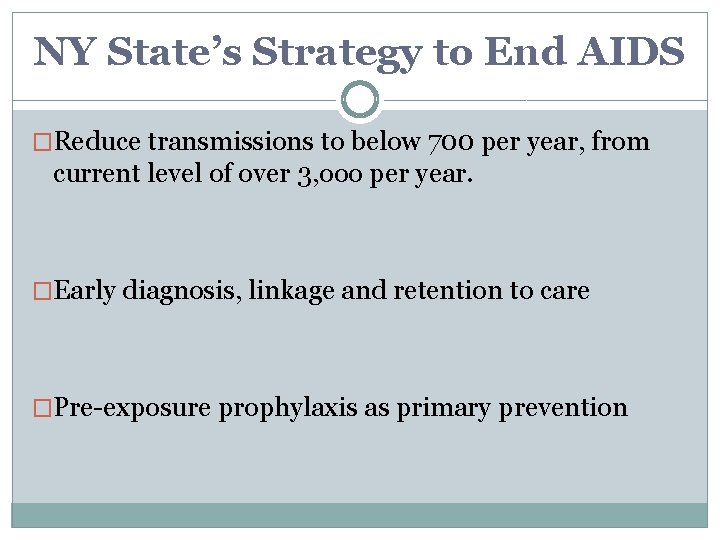
NY State’s Strategy to End AIDS �Reduce transmissions to below 700 per year, from current level of over 3, ooo per year. �Early diagnosis, linkage and retention to care �Pre-exposure prophylaxis as primary prevention
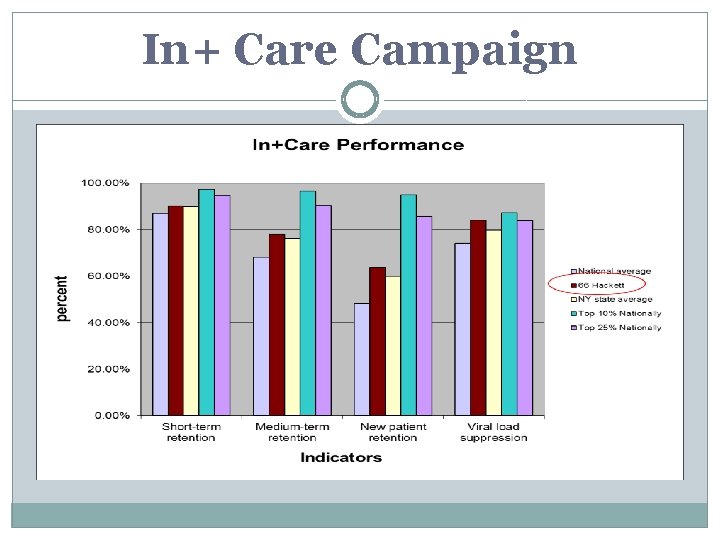
In+ Care Campaign
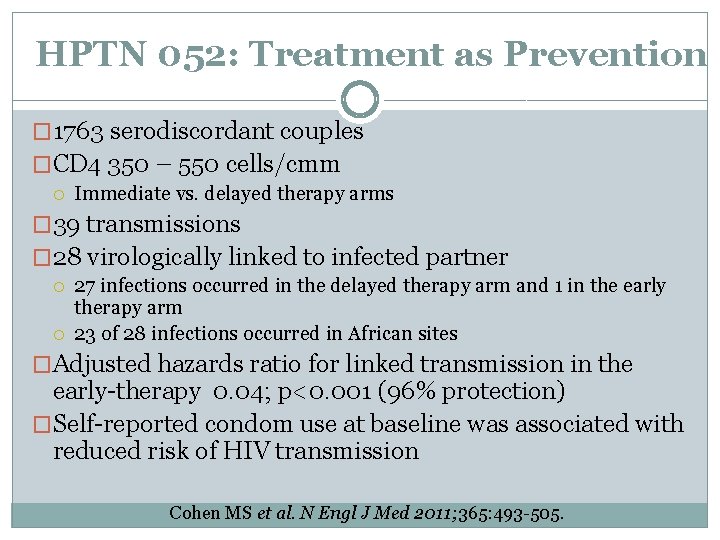
HPTN 052: Treatment as Prevention � 1763 serodiscordant couples �CD 4 350 – 550 cells/cmm Immediate vs. delayed therapy arms � 39 transmissions � 28 virologically linked to infected partner 27 infections occurred in the delayed therapy arm and 1 in the early therapy arm 23 of 28 infections occurred in African sites �Adjusted hazards ratio for linked transmission in the early-therapy 0. 04; p<0. 001 (96% protection) �Self-reported condom use at baseline was associated with reduced risk of HIV transmission Cohen MS et al. N Engl J Med 2011; 365: 493 -505.
CDC Interim Guidance on Pr. EP for Heterosexual Adults �Pr. EP = Pre-Exposure Prophylaxis �Pr. EP should be targeted to persons at very high risk for HIV acquisition, especially uninfected persons whose regular sexual partners are known to have HIV infection �Pr. EP is accompanied by monitoring of HIV status, pregnancy status, side effects, adherence, and risk behaviors at each quarterly follow-up visit. August 10, 2012 MMWR
Pre-exposure Prophylaxis �Pr. EP is delivered as part of a comprehensive set of prevention services, including risk-reduction, Pr. EP medication adherence counseling, and ready access to condoms � Sexually transmitted infection treatment is provided when indicated by laboratory screening tests conducted at least every 6 months, and �Pr. EP is accompanied by monitoring of HIV status, pregnancy status, side effects, adherence, and risk behaviors at each quarterly follow-up visit.
CDC Interim Guidance on Pre. P for Heterosexual Adults �Pr. EP should be targeted to persons at very high risk for HIV acquisition, especially uninfected persons whose regular sexual partners are known to have HIV infection �Adherence is critical to daily medication and its influence on efficacy is clearly discussed with provider prescribing �Couples understand that although no adverse effects have been found among infants exposed to TDF/FTC during pregnancy and breastfeeding, these data are incomplete for women in HIV-discordant couples using TDF/FTC to prevent acquisition of HIV August 10, 2012 MMWR
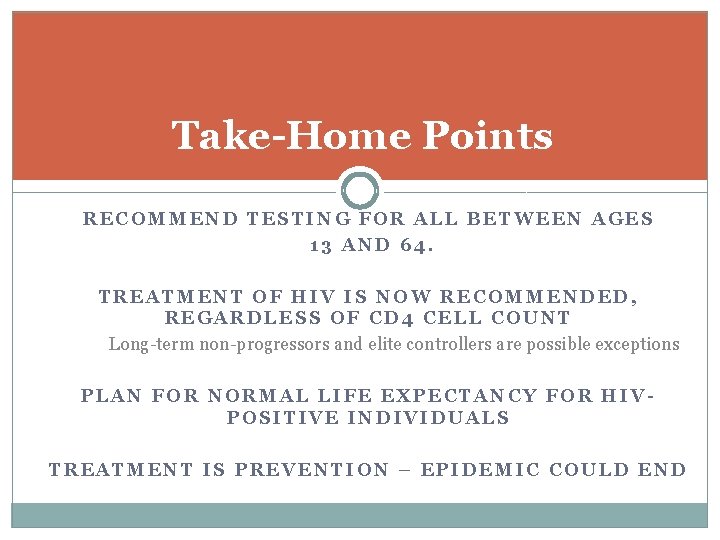
Take-Home Points RECOMMEND TESTING FOR ALL BETWEEN AGES 13 AND 64. TREATMENT OF HIV IS NOW RECOMMENDED, REGARDLESS OF CD 4 CELL COUNT Long-term non-progressors and elite controllers are possible exceptions PLAN FOR NORMAL LIFE EXPECTANCY FOR HIVPOSITIVE INDIVIDUALS TREATMENT IS PREVENTION – EPIDEMIC COULD END
Thank You! �Office 518 -262 -4438 �Pager 518 -422 -7875 �Cell 518 -577 -5256 �Clinical consult line 518 -262 -8640