Every Schools a Great School The Vision and



- Slides: 29
Every Schools a Great School – The Vision and Challenges Keynote Presentation to the i. Net Chile First National Conference Santiago, Thursday 27 th October 2005 Professor David Hopkins HSBC Chair of International Leadership
Why ‘Every School a Great School’? • What parents want most is for their local school to be a great school. (National Association of School Governors; Education and Skills Select Committee 2004). • Test of resolve: − moral purpose and social justice; − focus on enhancing teaching quality rather than simply structural change; − commitment to sustained, systemic change because a focus on individual school improvement always distorts social equity.
OECD Trends • The nature of childhood and ‘extended adolescence’ • The knowledge economy • Inequality and exclusion • Changing family and community life And more broadly: • Alarming increase in the inequalities between rich and poor countries • Patterns of population growth
Why Scenarios? Scenarios translate trends into imagined probable futures, helping us to: − understand more about our current direction of travel, our values and our principles; − imagine the preferred future we hope to shape together; − explore how school leaders and policy makers can work to make this a reality.
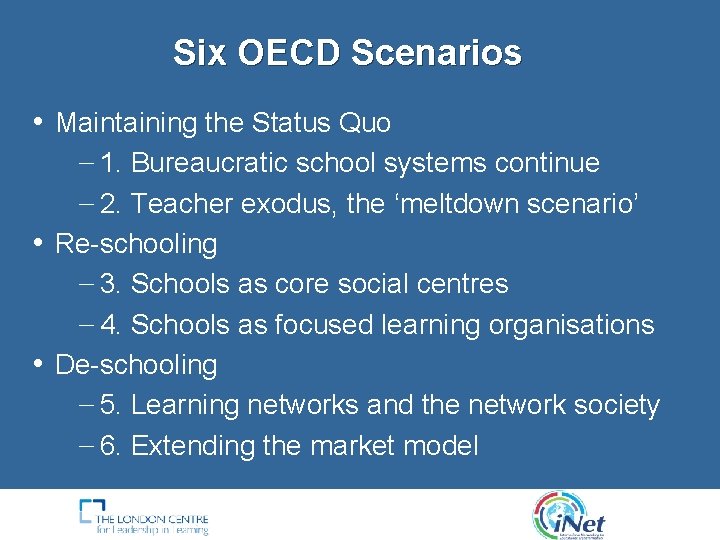
Six OECD Scenarios • Maintaining the Status Quo − 1. Bureaucratic school systems continue − 2. Teacher exodus, the ‘meltdown scenario’ • Re-schooling − 3. Schools as core social centres − 4. Schools as focused learning organisations • De-schooling − 5. Learning networks and the network society − 6. Extending the market model
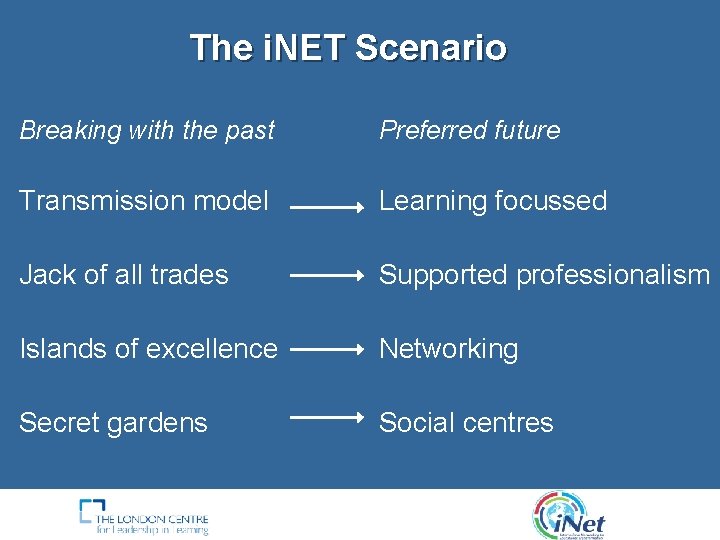
The i. NET Scenario Breaking with the past Preferred future Transmission model Learning focussed Jack of all trades Supported professionalism Islands of excellence Networking Secret gardens Social centres
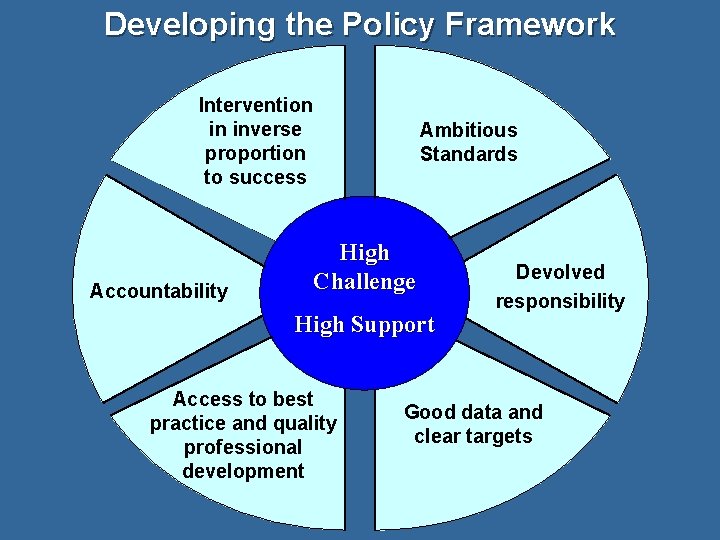
Developing the Policy Framework Intervention in inverse proportion to success Accountability Ambitious Standards High Challenge High Support Access to best practice and quality professional development Devolved responsibility Good data and clear targets
4
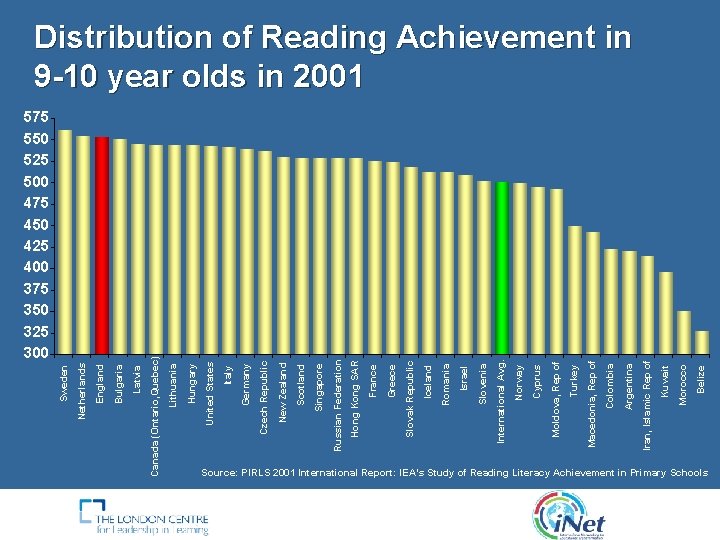
575 550 525 500 475 450 425 400 375 350 325 300 Belize Morocco Kuwait Iran, Islamic Rep of Argentina Colombia Macedonia, Rep of Turkey Moldova, Rep of Cyprus Norway International Avg. Slovenia Israel Romania Iceland Slovak Republic Greece France Hong Kong SAR Russian Federation Singapore Scotland New Zealand Czech Republic Germany Italy United States Hungary Lithuania Canada (Ontario, Quebec) Latvia Bulgaria England Netherlands Sweden Distribution of Reading Achievement in 9 -10 year olds in 2001 Source: PIRLS 2001 International Report: IEA’s Study of Reading Literacy Achievement in Primary Schools
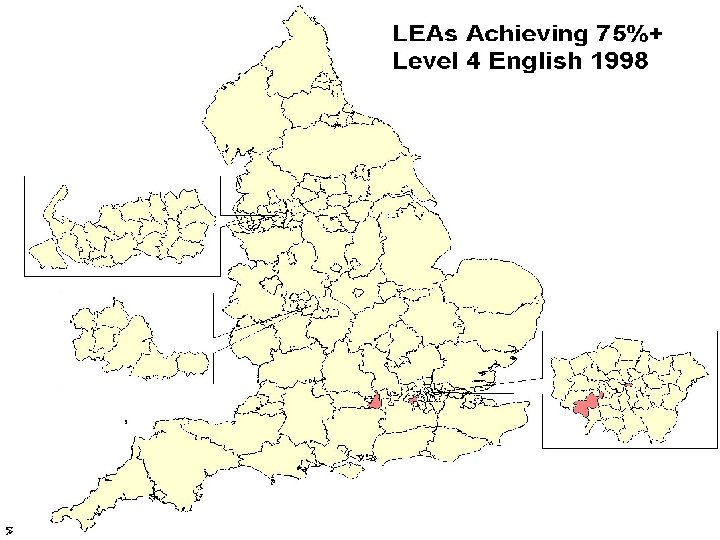
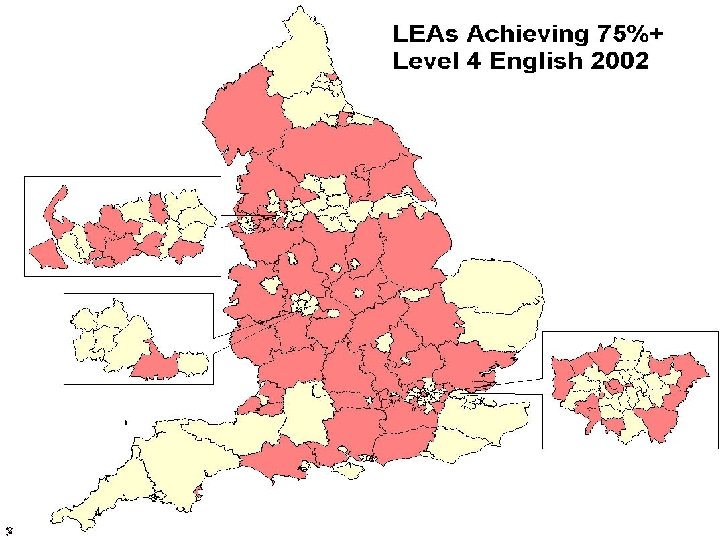
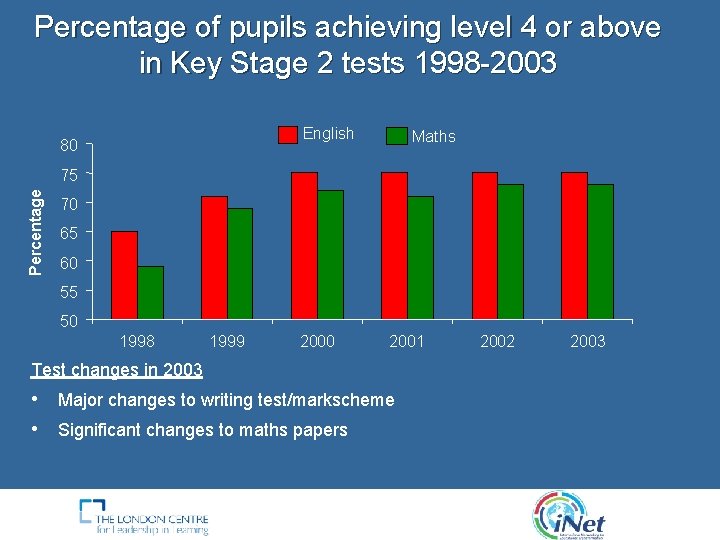
Percentage of pupils achieving level 4 or above in Key Stage 2 tests 1998 -2003 English 80 Maths Percentage 75 70 65 60 55 50 1998 1999 2000 2001 Test changes in 2003 • Major changes to writing test/markscheme • Significant changes to maths papers 2002 2003
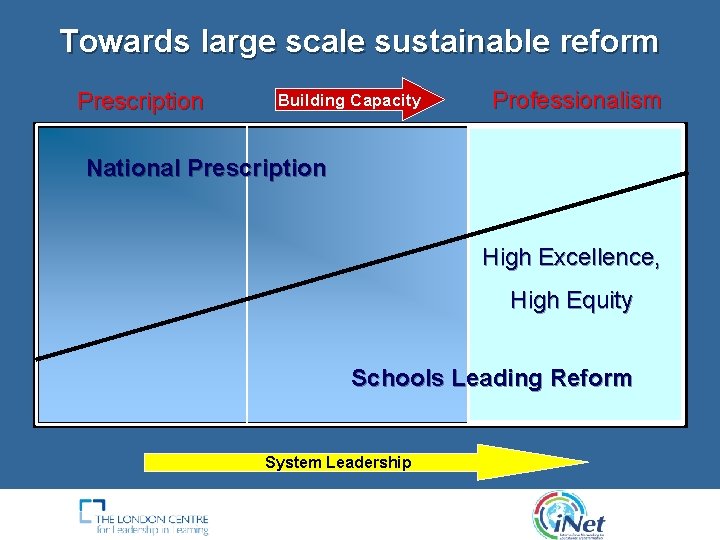
The Key Question • Most agree: • standards were too low and too varied in the 1970’s & 80’s • some form of direct state intervention was necessary • the impact of this top-down approach was to raise standards (particularly in primary schools). • But now: • progress has plateaued - while a bit more might be squeezed out nationally, and perhaps a lot in underperforming schools, must question whether this is still the recipe for sustained reform • there is a growing recognition that schools need to lead the next phase of reform. • The 64 k dollar question is how do we get there?
Towards large scale sustainable reform Prescription Building Capacity Professionalism National Prescription High Excellence, High Equity Schools Leading Reform System Leadership
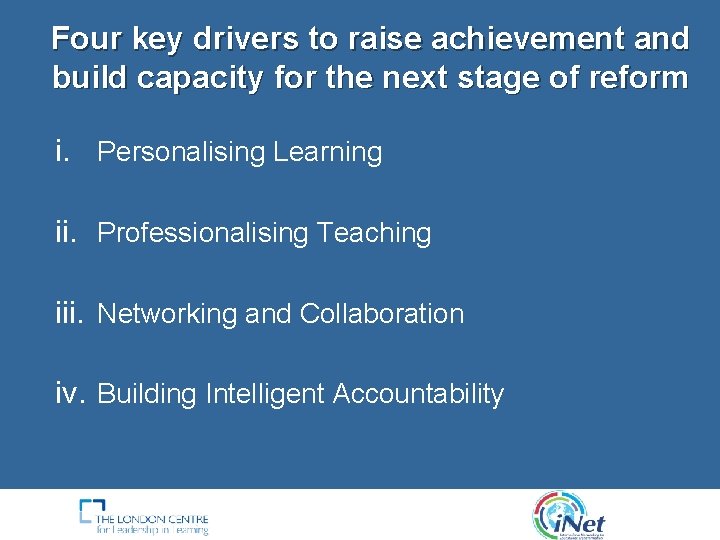
Four key drivers to raise achievement and build capacity for the next stage of reform i. Personalising Learning ii. Professionalising Teaching iii. Networking and Collaboration iv. Building Intelligent Accountability
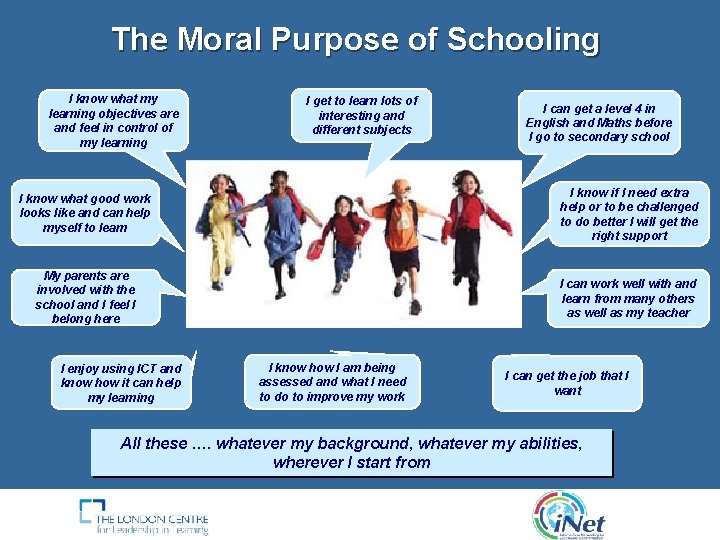
The Moral Purpose of Schooling I know what my learning objectives are and feel in control of my learning I get to learn lots of interesting and different subjects I can get a level 4 in English and Maths before I go to secondary school I know what good work looks like and can help myself to learn I know if I need extra help or to be challenged to do better I will get the right support My parents are involved with the school and I feel I belong here I can work well with and learn from many others as well as my teacher I enjoy using ICT and know how it can help my learning I know how I am being assessed and what I need to do to improve my work I can get the job that I want All these …. whatever my background, whatever my abilities, wherever I start from
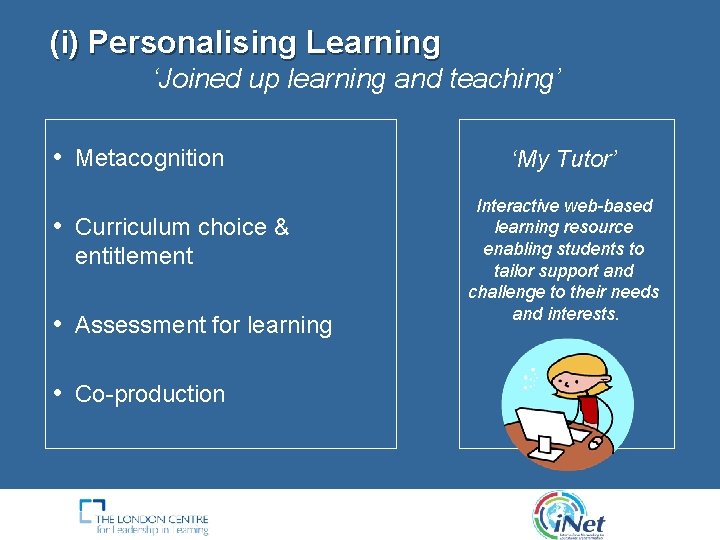
(i) Personalising Learning ‘Joined up learning and teaching’ • Metacognition • Curriculum choice & entitlement • Assessment for learning • Co-production ‘My Tutor’ Interactive web-based learning resource enabling students to tailor support and challenge to their needs and interests.
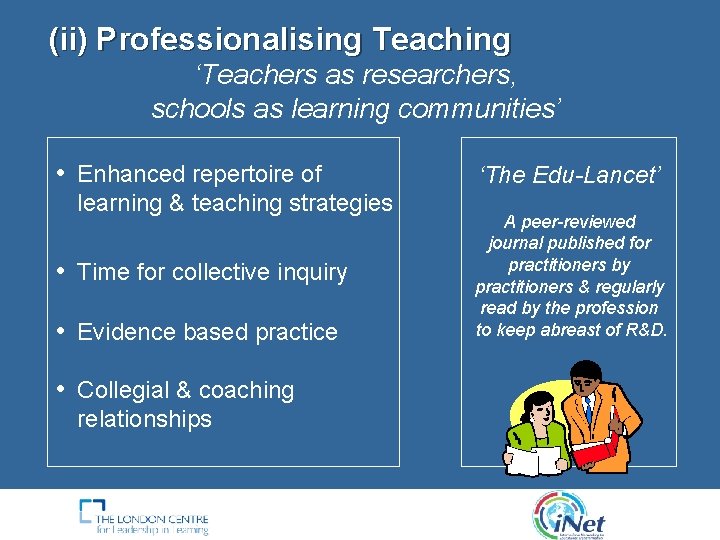
(ii) Professionalising Teaching ‘Teachers as researchers, schools as learning communities’ • Enhanced repertoire of learning & teaching strategies • Time for collective inquiry • Evidence based practice • Collegial & coaching relationships ‘The Edu-Lancet’ A peer-reviewed journal published for practitioners by practitioners & regularly read by the profession to keep abreast of R&D.
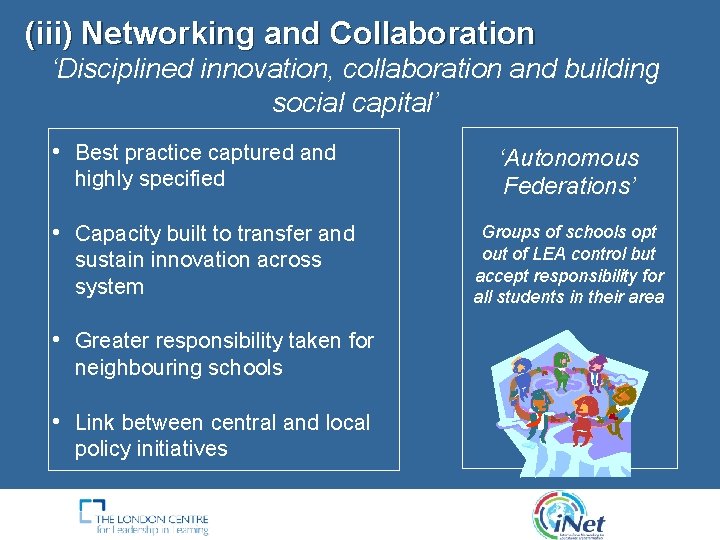
(iii) Networking and Collaboration ‘Disciplined innovation, collaboration and building social capital’ • Best practice captured and highly specified • Capacity built to transfer and sustain innovation across system • Greater responsibility taken for neighbouring schools • Link between central and local policy initiatives ‘Autonomous Federations’ Groups of schools opt out of LEA control but accept responsibility for all students in their area
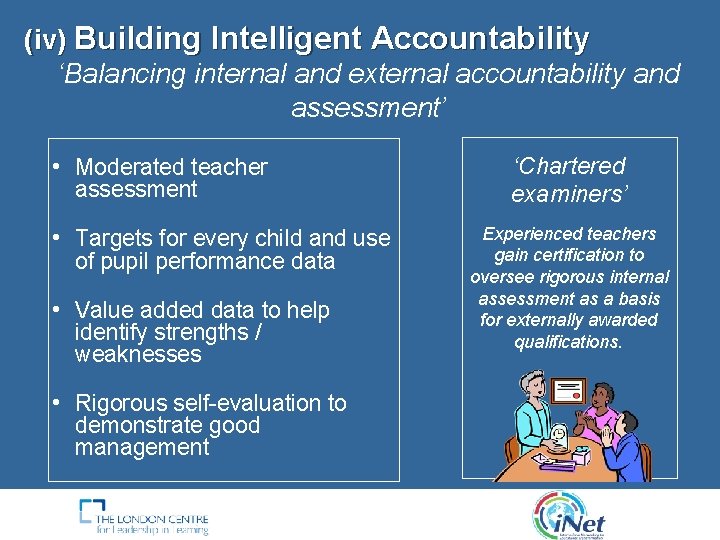
(iv) Building Intelligent Accountability ‘Balancing internal and external accountability and assessment’ • Moderated teacher assessment • Targets for every child and use of pupil performance data • Value added data to help identify strengths / weaknesses • Rigorous self-evaluation to demonstrate good management ‘Chartered examiners’ Experienced teachers gain certification to oversee rigorous internal assessment as a basis for externally awarded qualifications.
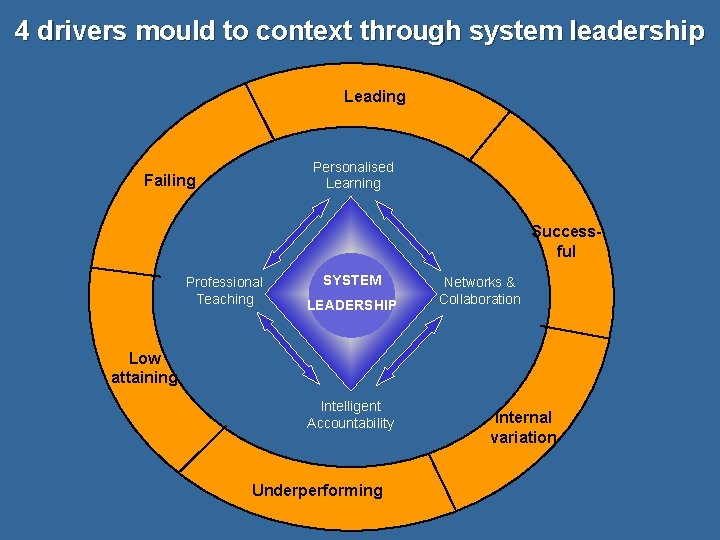
4 drivers mould to context through system leadership Leading Personalised Learning Failing Successful Professional Teaching SYSTEM LEADERSHIP Networks & Collaboration Low attaining Intelligent Accountability Underperforming Internal variation
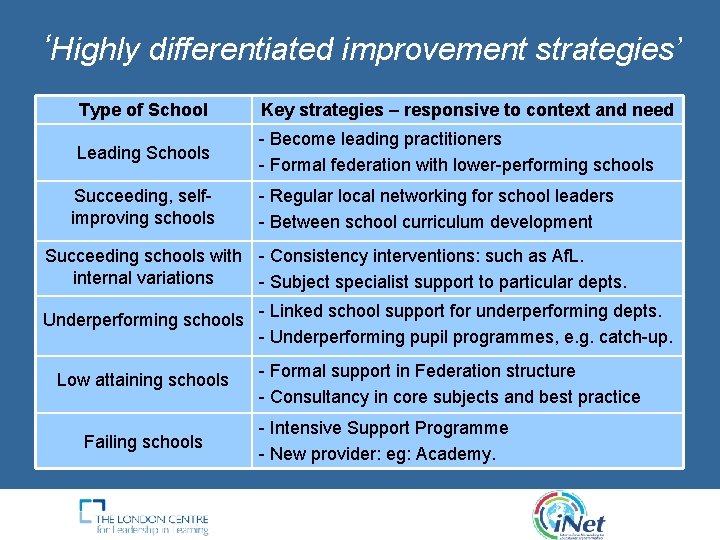
‘Highly differentiated improvement strategies’ Type of School Key strategies – responsive to context and need Leading Schools - Become leading practitioners - Formal federation with lower-performing schools Succeeding, selfimproving schools - Regular local networking for school leaders - Between school curriculum development Succeeding schools with - Consistency interventions: such as Af. L. internal variations - Subject specialist support to particular depts. Underperforming schools Low attaining schools Failing schools - Linked school support for underperforming depts. - Underperforming pupil programmes, e. g. catch-up. - Formal support in Federation structure - Consultancy in core subjects and best practice - Intensive Support Programme - New provider: eg: Academy.
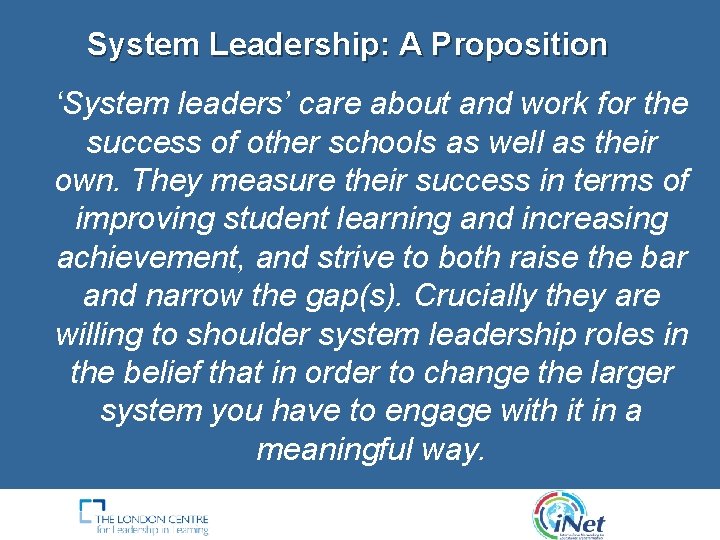
System Leadership: A Proposition ‘System leaders’ care about and work for the success of other schools as well as their own. They measure their success in terms of improving student learning and increasing achievement, and strive to both raise the bar and narrow the gap(s). Crucially they are willing to shoulder system leadership roles in the belief that in order to change the larger system you have to engage with it in a meaningful way.
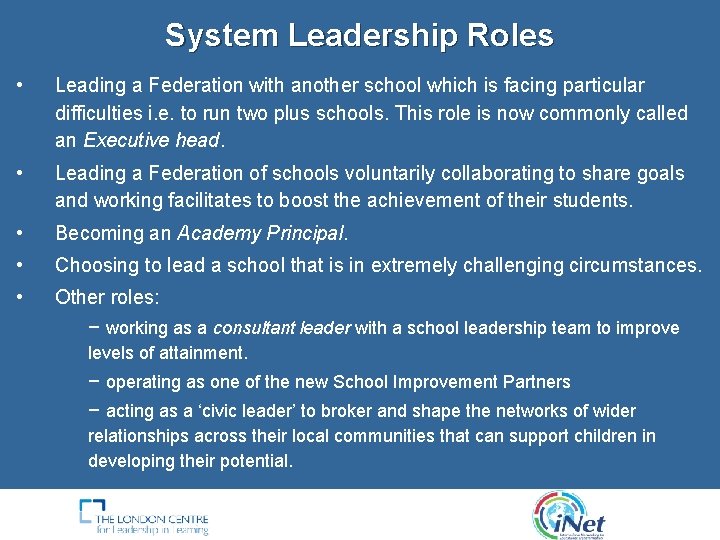
System Leadership Roles • Leading a Federation with another school which is facing particular difficulties i. e. to run two plus schools. This role is now commonly called an Executive head. • Leading a Federation of schools voluntarily collaborating to share goals and working facilitates to boost the achievement of their students. • • • Becoming an Academy Principal. Choosing to lead a school that is in extremely challenging circumstances. Other roles: − working as a consultant leader with a school leadership team to improve levels of attainment. − operating as one of the new School Improvement Partners − acting as a ‘civic leader’ to broker and shape the networks of wider relationships across their local communities that can support children in developing their potential.
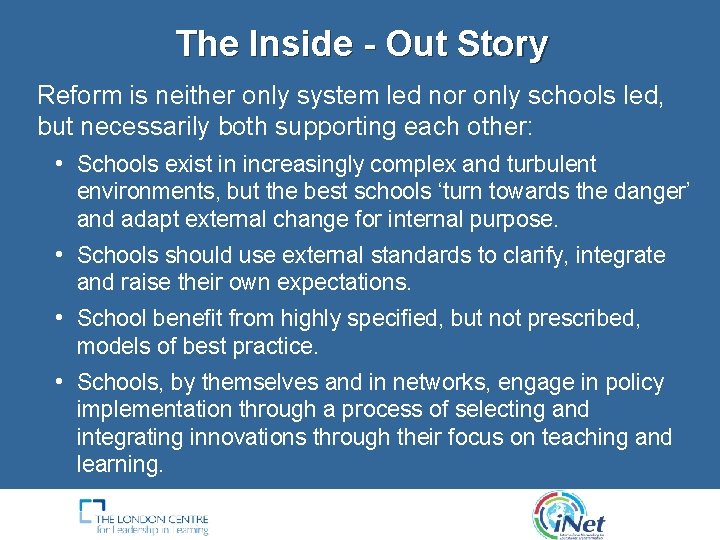
The Inside - Out Story Reform is neither only system led nor only schools led, but necessarily both supporting each other: • Schools exist in increasingly complex and turbulent environments, but the best schools ‘turn towards the danger’ and adapt external change for internal purpose. • Schools should use external standards to clarify, integrate and raise their own expectations. • School benefit from highly specified, but not prescribed, models of best practice. • Schools, by themselves and in networks, engage in policy implementation through a process of selecting and integrating innovations through their focus on teaching and learning.
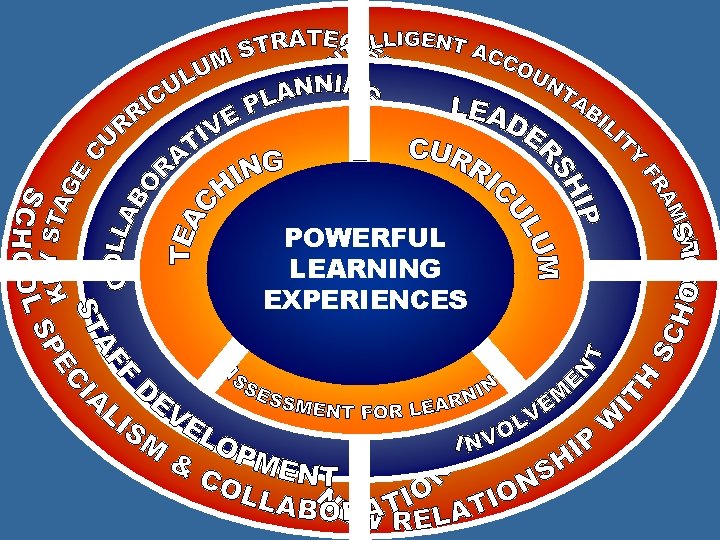
POWERFUL LEARNING EXPERIENCES
For more information: • Hopkins D (2001) School Improvement For Real, Routledge / Falmer. • Hopkins D (2002) Improving the Quality of Education for All, David Fulton Publishers. • Hopkins D (2002) A Teachers Guide to Classroom Research (3 rd Ed. ), Open University Press. • Hopkins D (2005) Every School a Great School, Specialist Schools and Academies Trust. • Hopkins D and Harris A (2000) Creating the Conditions for Teaching and Learning, David Fulton Publishers. • Joyce B, Calhoun E and Hopkins D (2001) Models of Learning – Tools for Teaching (2 nd Ed. ), Open University Press.
Professor David Hopkins HSBC Chair in International Leadership David Hopkins was recently appointed to the inaugural HSBC Chair in International Leadership, where he supports the work of i. Net, the International arm of the Specialist Schools Trust and the Leadership Centre at the Institute of Education, University of London. Between 2002 and 2005 he served three Secretary of States as the Chief Adviser on School Standards at the Department for Education and Skills. Previously, he was Chair of the Leicester City Partnership Board and Professor and Dean of the Faculty of Education at the University of Nottingham. Before that again he was a Tutor at the University of Cambridge Institute of Education, a Secondary School teacher and Outward Bound Instructor. David is also an International Mountain Guide who still climbs regularly in the Alps and Himalayas. Before becoming a civil servant he outlined his views on teaching quality, school improvement and large scale reform in Hopkins D. (2001) School Improvement for Real, London: Routledge / Falmer.