Emerging Technologies for Cold Weather Residential Heating Duluth


- Slides: 48
Emerging Technologies for Cold Weather Residential Heating Duluth Energy Design Conference February 22 -24, 2017 Josh Quinnell & Ben Schoenbauer
In accordance with the Department of Labor and Industry’s statute 326. 0981, Subd. 11, “This educational offering is recognized by the Minnesota Department of Labor and Industry as satisfying 1. 5 hours of credit toward Building Officials and Residential Contractors continuing education requirements. ” For additional continuing education approvals, please see your credit tracking card. Pg. 2
Agenda • Learning Objectives • Cold Climate Air Source Heat Pump • • What is different? Opportunity Installation and operation Preliminary results • Transport Membrane Humidifier (TMH) • • What is it? Opportunity Installation and operation Preliminary results Pg. 3
Learn about… • A new retrofit device, TMH, to increase efficiency of • • residential standard efficiency furnaces The installed energy saving potential of TMH The installation, optimization, and operation of a TMH for residential furnaces How air source heat pumps work and how the recent improvements in their operation benefit cold climate operation The proper way to size, install, and operate a ASHP for optimal performance in a heating dominated climates Pg. 4
Learn about… • The energy savings potential for ASHPs, as well as the potential for offsetting the reliance on delivered fuels in areas where natural gas is unavailable • The differences in ASHP installed performance compared to the manufacturer specified performance • The applicability of both technologies to Minnesota’s housing stock and the process that can be used to determine where the best potential exists for each technology Pg. 5
Acknowledgements • These projects are supported in part by grants from the Minnesota Department of Commerce, Division of Energy Resources through a Conservation Applied Research and Development (CARD) program • The heat pump project was also supported by Great River Energy and the Electric Power Research Institute Pg. 6
www. mncee. org Field Study of a Moisture and Heat Transfer Furnace Retrofit Device Cold Climate Air Source Heat Pump Field Assessment Pg. 7
Cold Climate Air Source Heat Pump Field Assessment Pg. 8
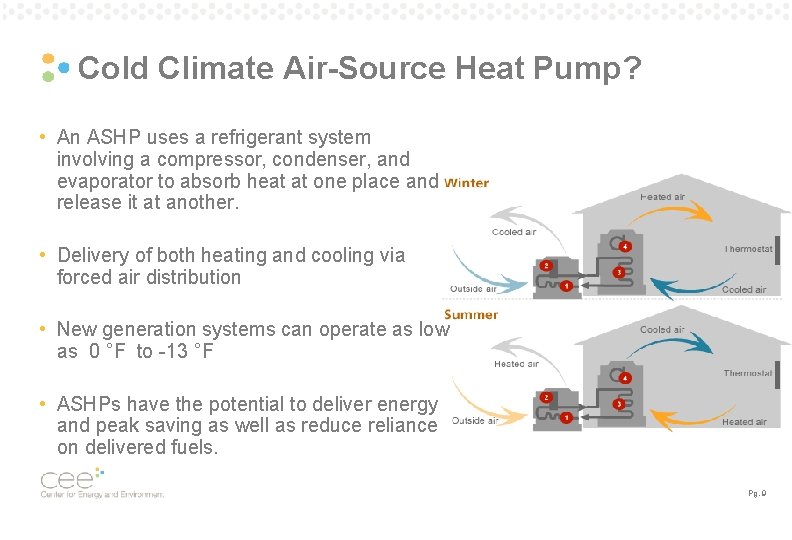
Cold Climate Air-Source Heat Pump? • An ASHP uses a refrigerant system involving a compressor, condenser, and evaporator to absorb heat at one place and release it at another. • Delivery of both heating and cooling via forced air distribution • New generation systems can operate as low as 0 °F to -13 °F • ASHPs have the potential to deliver energy and peak saving as well as reduce reliance on delivered fuels. Pg. 9
Opportunity • Winter of 2013/2014 saw delivered fuel shortages in MN • Delivered fuel expensive or unavailable • Compensation with electric resistance space heaters • Market: • Delivered fuel are the primary space heating fuel for more than 40% of homes in MN, IA, SD, ND (RECS, 2009) • Over 25% of Midwest homes rely on fuels other than natural gas for space heating (RECS, 2009) • Over 47% of homes in the US rely on fuels other than natural gas for space heating (RECS, 2009) Pg. 10
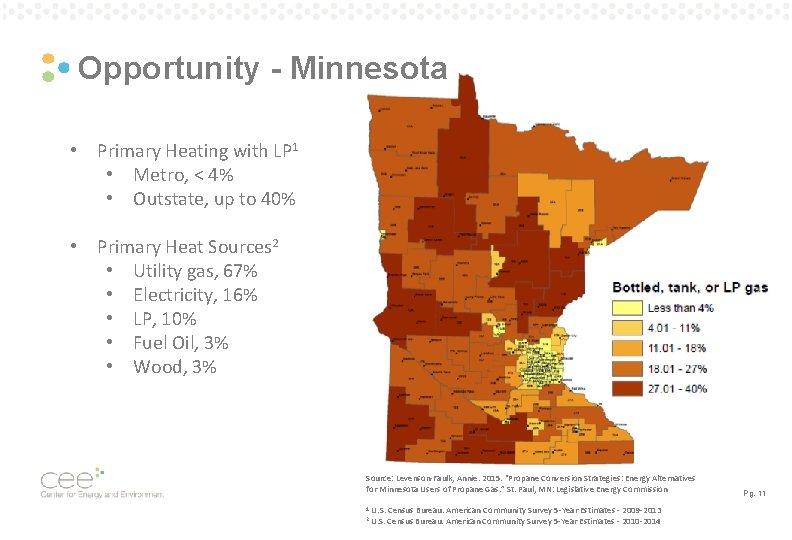
Opportunity - Minnesota • Primary Heating with LP 1 • Metro, < 4% • Outstate, up to 40% • Primary Heat Sources 2 • Utility gas, 67% • Electricity, 16% • LP, 10% • Fuel Oil, 3% • Wood, 3% Source: Levenson-Faulk, Annie. 2015. “Propane Conversion Strategies: Energy Alternatives for Minnesota Users of Propane Gas. ” St. Paul, MN: Legislative Energy Commission 1 U. S. Census Bureau. American Community Survey 5 -Year Estimates - 2009 -2013 Census Bureau. American Community Survey 5 -Year Estimates - 2010 -2014 2 U. S. Pg. 11
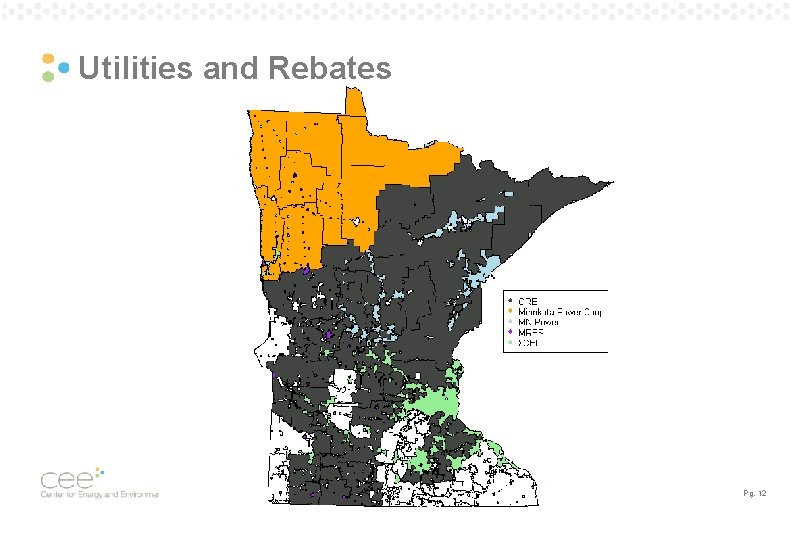
Utilities and Rebates Pg. 12
Study Overview • Field Study • Install 6 cc. ASHP in a variety of MN residences • Monitor installed field performance of ASHP and backup • Installed performance (COP, capacity, etc) • Installed energy savings vs backup • Customer satisfaction and delivered comfort • Incorporate into CIP and Energy Efficiency Programs • Working with ACEEE and DER to look into the policy and program implications of cc. ASHPs • Not covered in this talk, but updates will be available shortly at: • mncee. org/heat_pumps Pg. 13
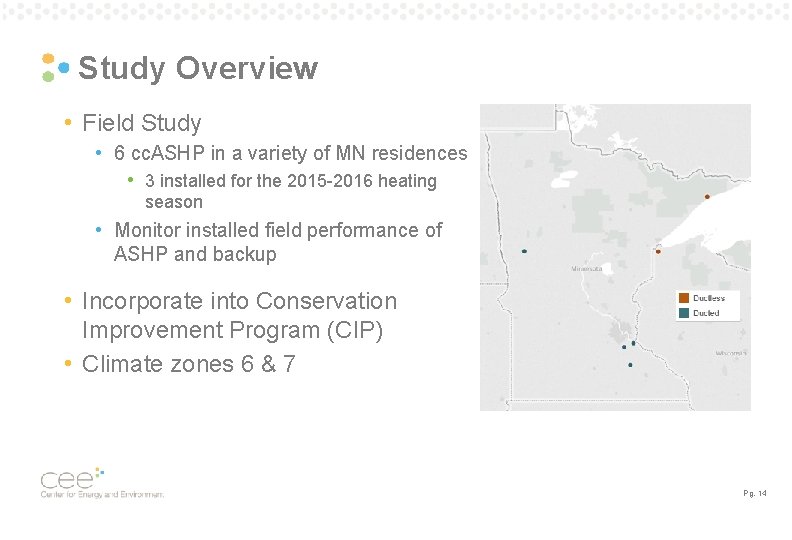
Study Overview • Field Study • 6 cc. ASHP in a variety of MN residences • 3 installed for the 2015 -2016 heating season • Monitor installed field performance of ASHP and backup • Incorporate into Conservation Improvement Program (CIP) • Climate zones 6 & 7 Pg. 14
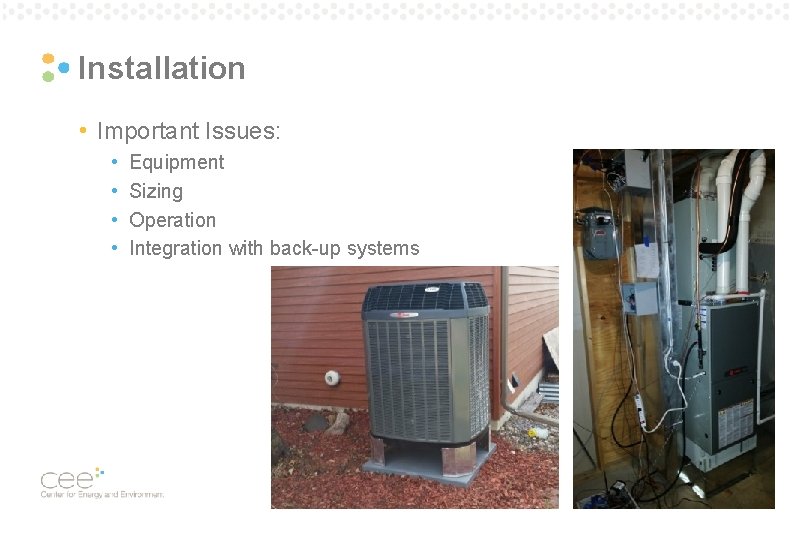
Installation • Important Issues: • • Equipment Sizing Operation Integration with back-up systems Pg. 15
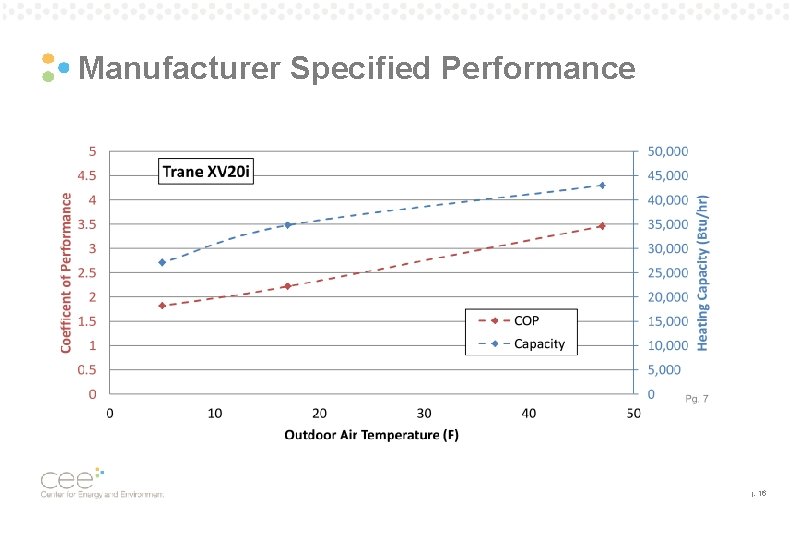
Manufacturer Specified Performance Pg. 16
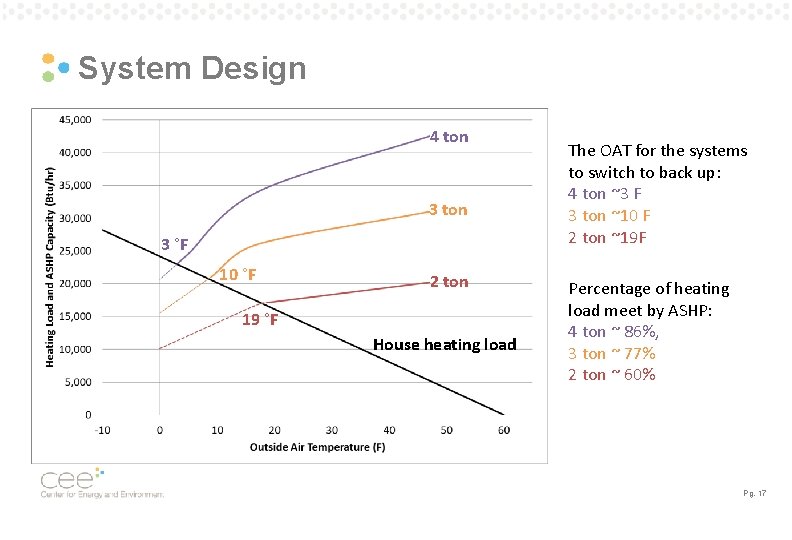
System Design 4 ton 3 °F 10 °F 2 ton 19 °F House heating load The OAT for the systems to switch to back up: 4 ton ~3 F 3 ton ~10 F 2 ton ~19 F Percentage of heating load meet by ASHP: 4 ton ~ 86%, 3 ton ~ 77% 2 ton ~ 60% Pg. 17
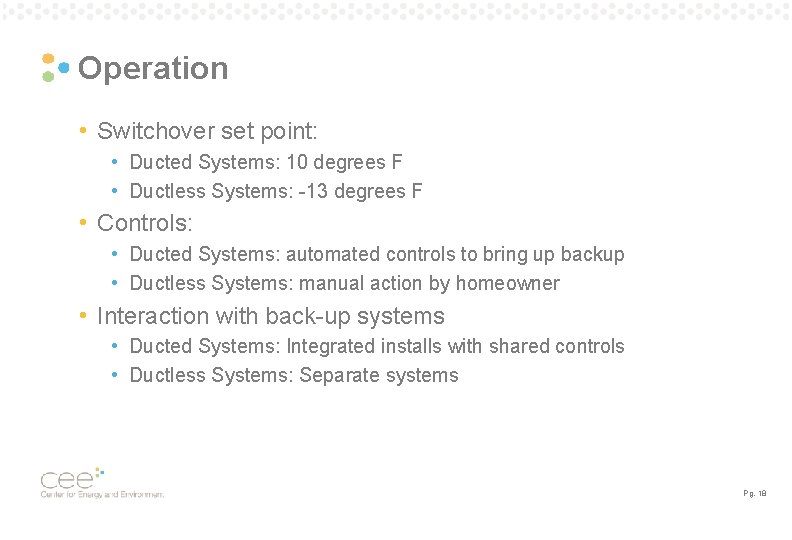
Operation • Switchover set point: • Ducted Systems: 10 degrees F • Ductless Systems: -13 degrees F • Controls: • Ducted Systems: automated controls to bring up backup • Ductless Systems: manual action by homeowner • Interaction with back-up systems • Ducted Systems: Integrated installs with shared controls • Ductless Systems: Separate systems Pg. 18
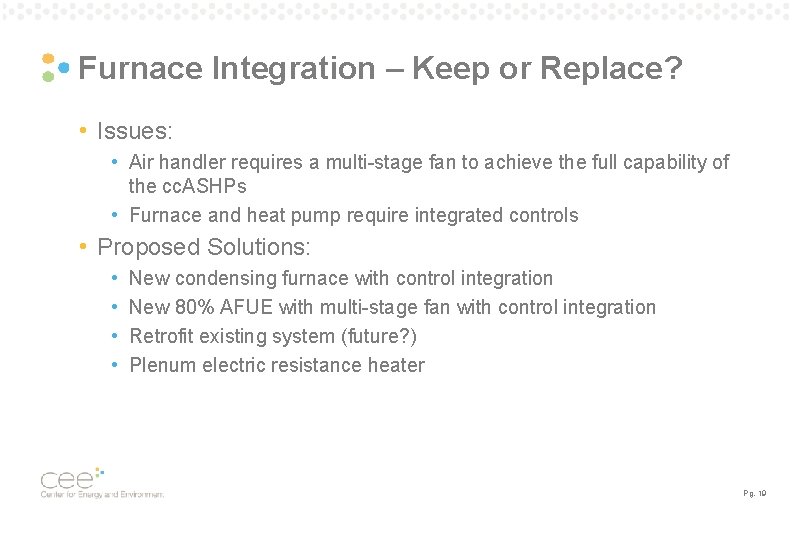
Furnace Integration – Keep or Replace? • Issues: • Air handler requires a multi-stage fan to achieve the full capability of the cc. ASHPs • Furnace and heat pump require integrated controls • Proposed Solutions: • • New condensing furnace with control integration New 80% AFUE with multi-stage fan with control integration Retrofit existing system (future? ) Plenum electric resistance heater Pg. 19
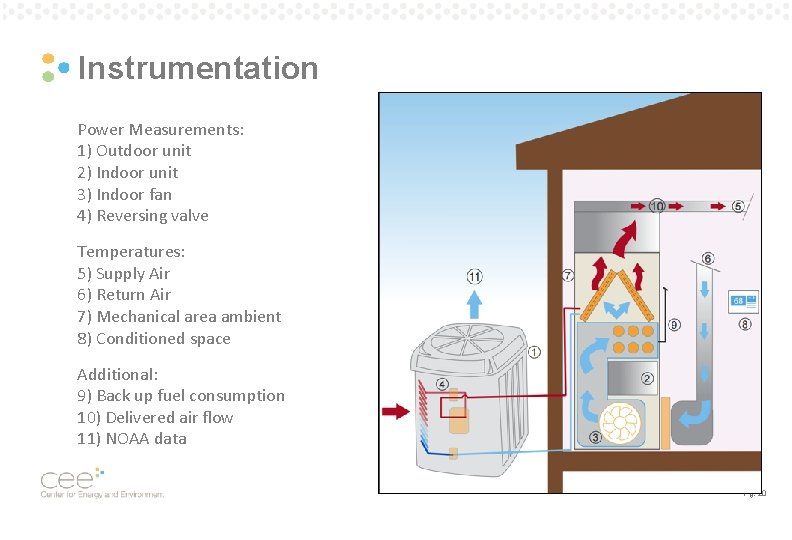
Instrumentation Power Measurements: 1) Outdoor unit 2) Indoor unit 3) Indoor fan 4) Reversing valve Temperatures: 5) Supply Air 6) Return Air 7) Mechanical area ambient 8) Conditioned space 8 11 4 12 7 6 15 12 13 3 5 14 Additional: 9) Back up fuel consumption 10) Delivered air flow 11) NOAA data Pg. 20
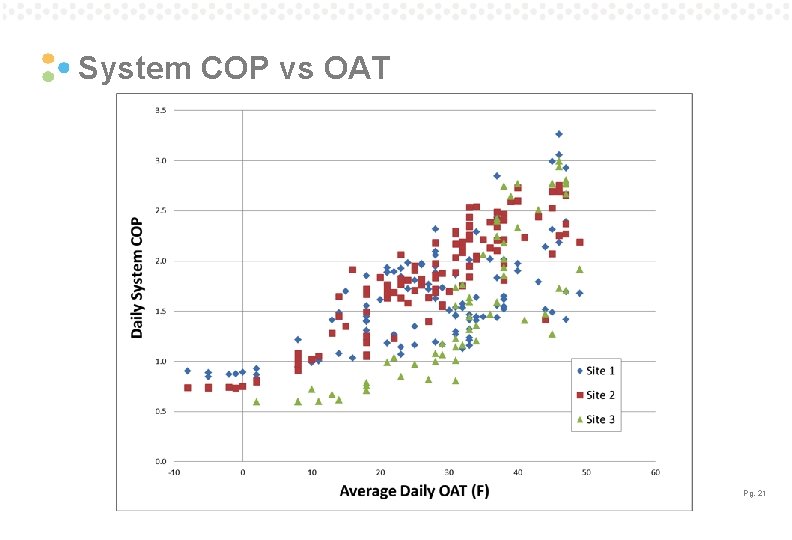
System COP vs OAT Pg. 21
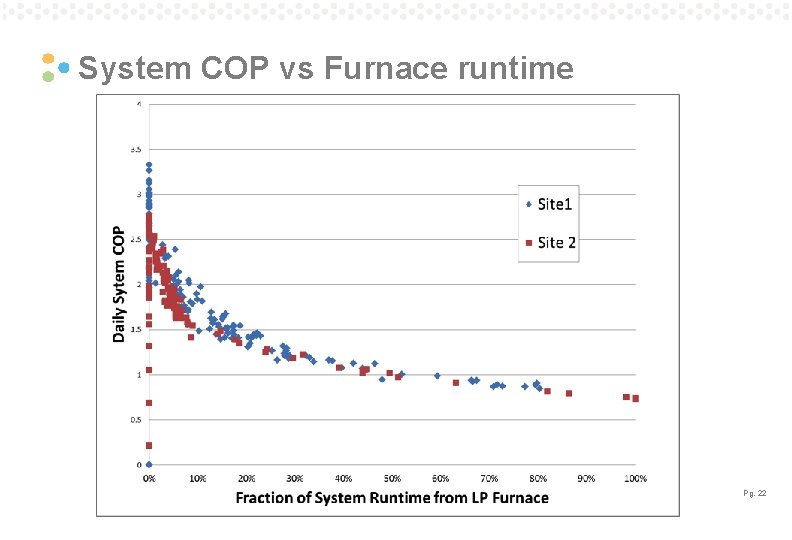
System COP vs Furnace runtime Pg. 22
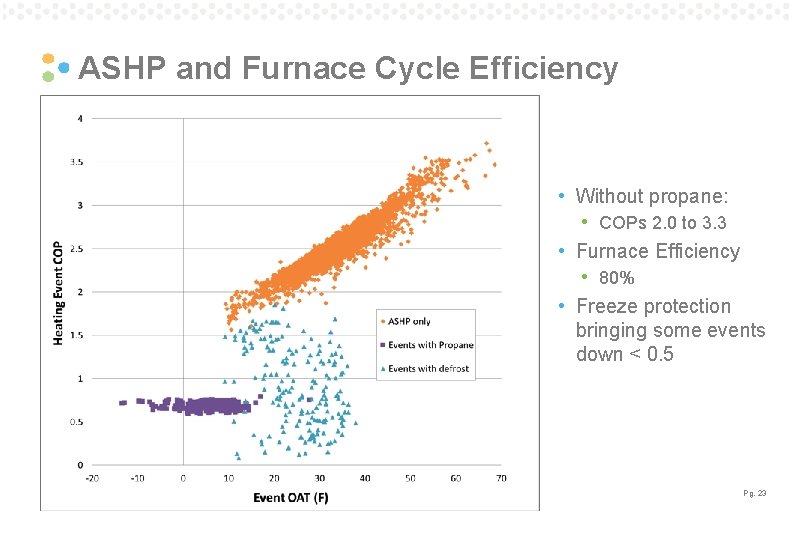
ASHP and Furnace Cycle Efficiency • Without propane: • COPs 2. 0 to 3. 3 • Furnace Efficiency • 80% • Freeze protection bringing some events down < 0. 5 Pg. 23
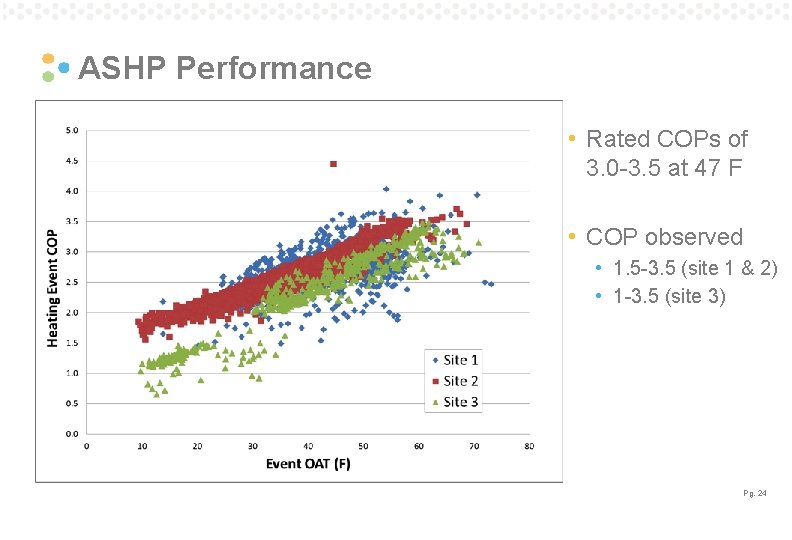
ASHP Performance • Rated COPs of 3. 0 -3. 5 at 47 F • COP observed • 1. 5 -3. 5 (site 1 & 2) • 1 -3. 5 (site 3) Pg. 24
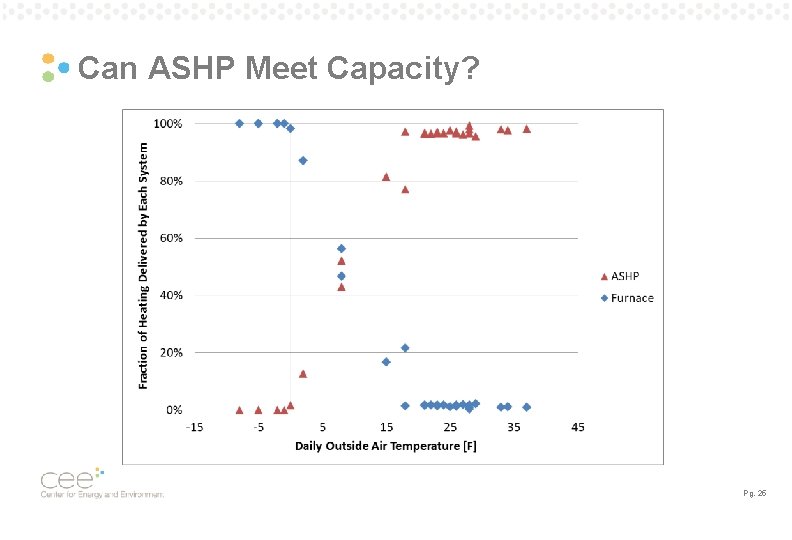
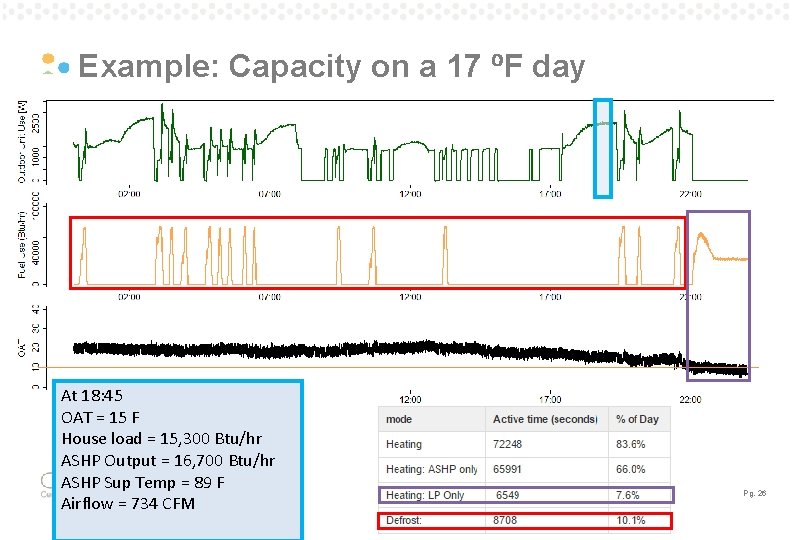
Can ASHP Meet Capacity? Pg. 25
Example: Capacity on a 17 ⁰F day At 18: 45 OAT = 15 F House load = 15, 300 Btu/hr ASHP Output = 16, 700 Btu/hr ASHP Sup Temp = 89 F Airflow = 734 CFM Pg. 26
Preliminary Results • Compared to LP furnaces the cc. ASHPs • • Reduced between 40% and 65% of site energy consumption Reduced total heating costs 19% to 35% On average cc. ASHP met 84% of the homes heating loads Reduced propane consumption by around 60%, up to 89% at one site • Compared to Electric Resistance Heat • Provided more efficient space heating (COP of 1. 6, compared to 1. 0) • Savings are largely dependent on usage and install location Pg. 27
Conclusions • Systems should sized for heating, typically results in 1 -ton larger system that if sized for cooling • With proper sizing cc. ASHPs are capable of meeting the loads in typical MN homes at or below 10 ⁰F outdoor temps. • Preliminary results show cc. ASHP COPs of 1. 5 -3. 5 and annual system COPs between 1. 4 and 1. 8. • cc. ASHPs will reduce delivered fuel consumption enough to avoid costly winter refueling in most MN homes • There is still room for improvement: • Reduce unnecessary back-up heating • Reduce upfront installation costs Pg. 28
Field Study of a Moisture and Heat Transfer Furnace Retrofit Device Pg. 29
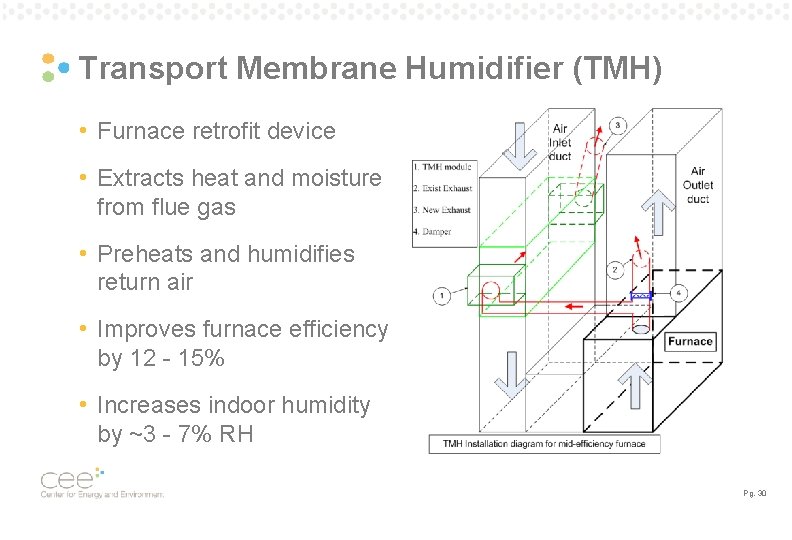
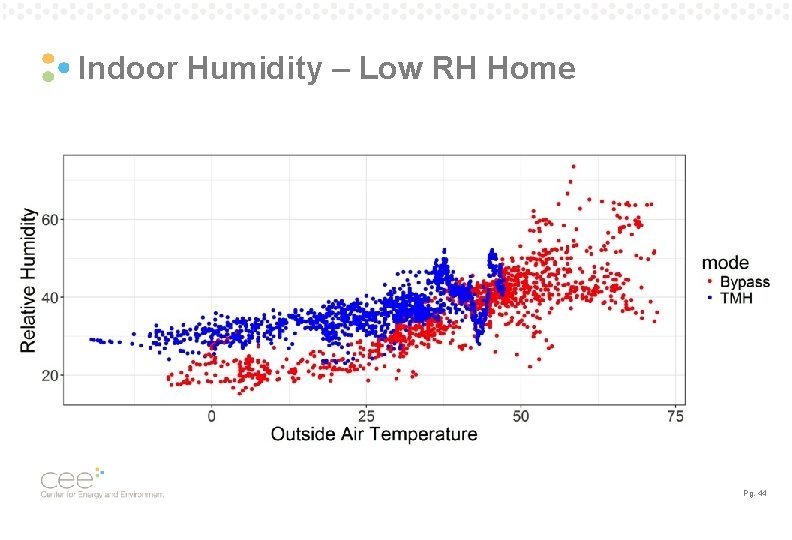
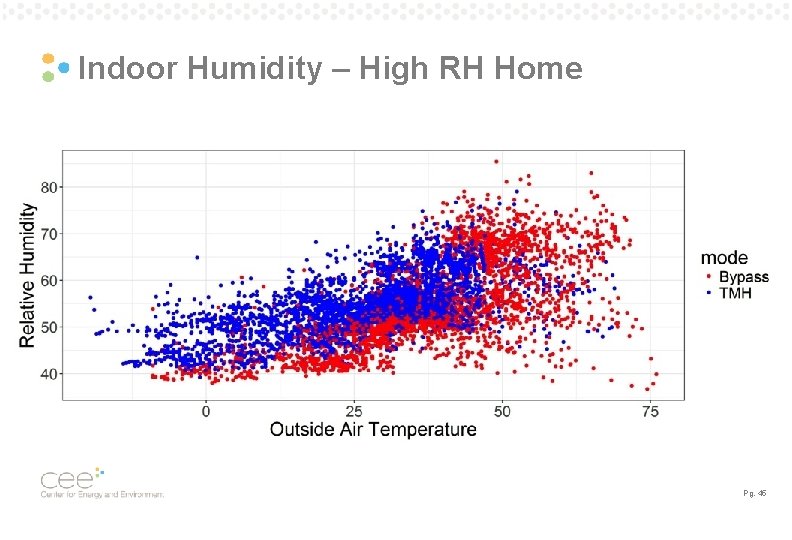
Transport Membrane Humidifier (TMH) • Furnace retrofit device • Extracts heat and moisture from flue gas • Preheats and humidifies return air • Improves furnace efficiency by 12 - 15% • Increases indoor humidity by ~3 - 7% RH Pg. 30
Pg. 31
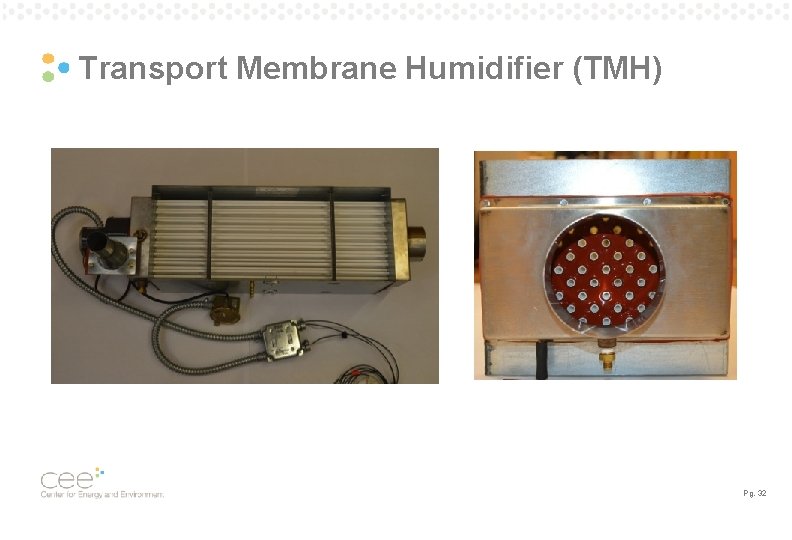
Transport Membrane Humidifier (TMH) Pg. 32
Opportunity • Large Market: • ~800, 000 80% efficiency units in Minnesota (EIA, 2009) • 50%+ of national market is standard efficiency (D+I, 2015) • High efficiency heating penetration still 20 -30 years out, potentially further as standard efficiency units maintain dominant market share • High savings potential: • Hundreds of millions of dollars in MN • Billions of dollars nationally Pg. 33
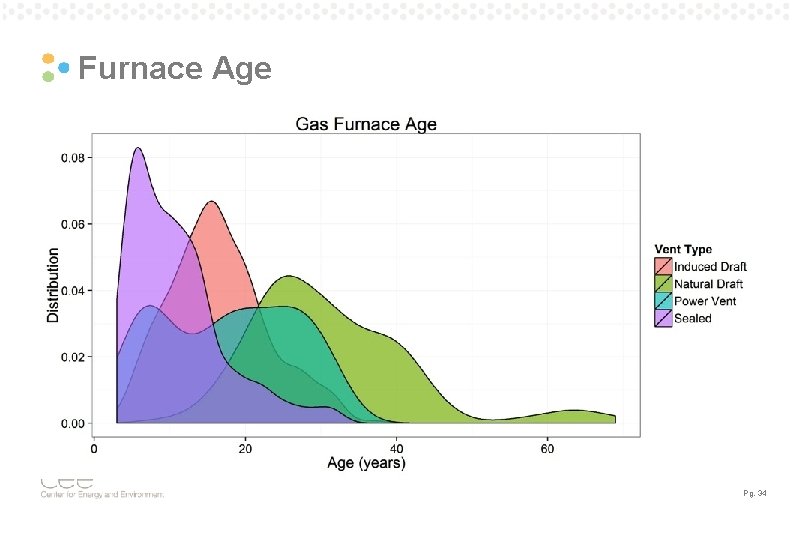
Furnace Age Pg. 34
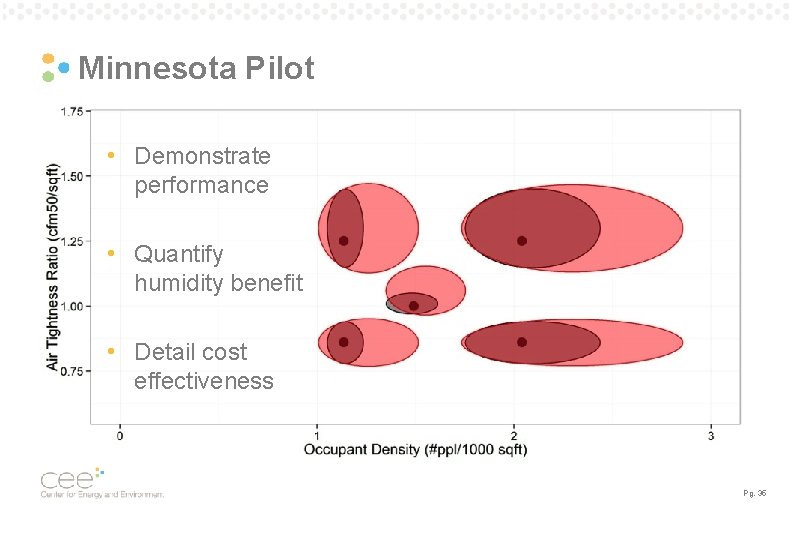
Minnesota Pilot • Demonstrate performance • Quantify humidity benefit • Detail cost effectiveness Pg. 35
Installation Pg. 36
Installation Pg. 37
Installation 30 Labor (Hours) 25 Ductwork 20 Inspection 15 Coordination 10 Callback Elec. Installation 5 0 Mech. Installation h 4 h 3 h 5 Site (Chronological Order) Labor - Min Labor - Max h 2 h 4 h 3 11 9. 5 16 10. 5 h 5 11 13 h 2 7 8 Avg 10 12 Pg. 38
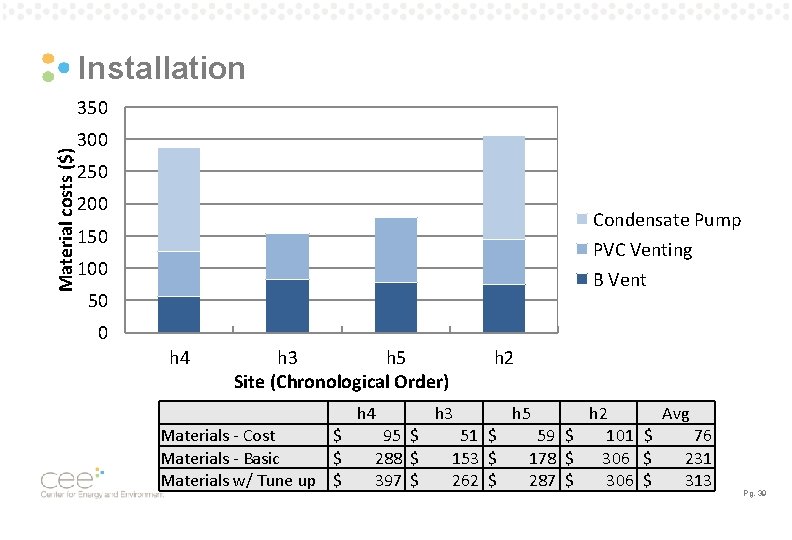
Installation Material costs ($) 350 300 250 200 Condensate Pump PVC Venting 150 100 B Vent 50 0 h 4 h 3 h 5 Site (Chronological Order) h 4 Materials - Cost $ Materials - Basic $ Materials w/ Tune up $ 95 $ 288 $ 397 $ h 2 h 3 51 $ 153 $ 262 $ h 5 h 2 Avg 59 $ 101 $ 76 178 $ 306 $ 231 287 $ 306 $ 313 Pg. 39
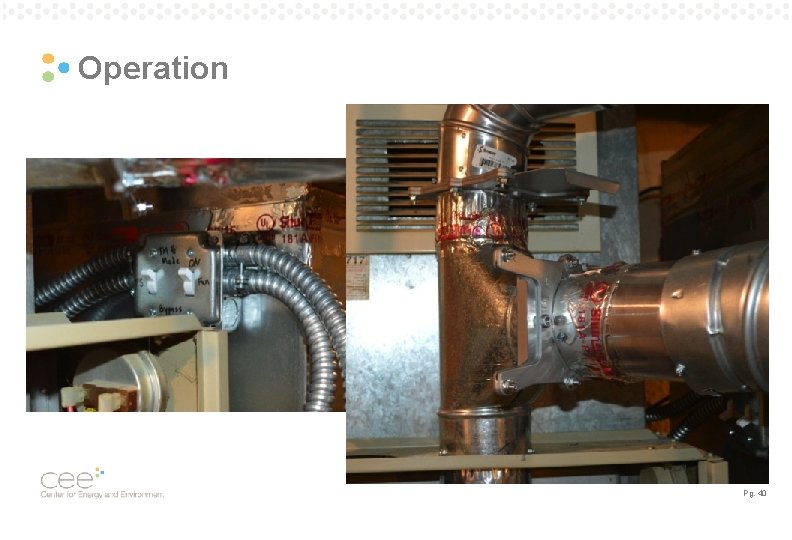
Operation Pg. 40
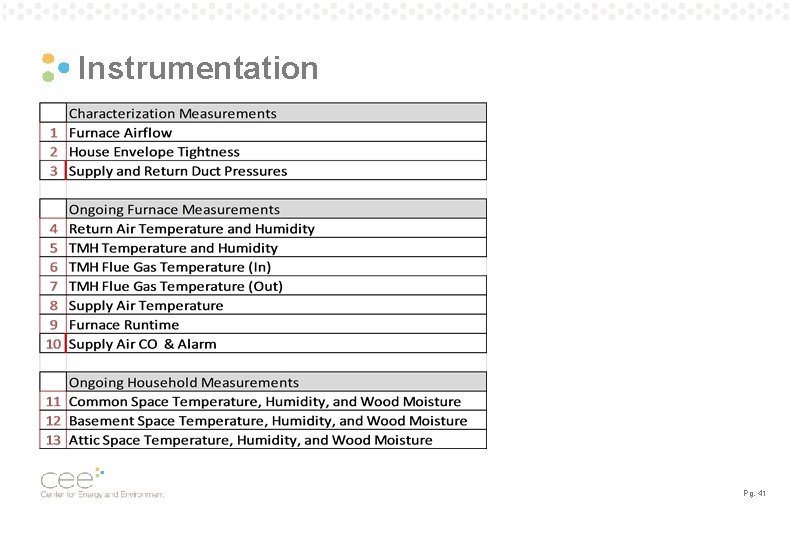
Instrumentation Pg. 41
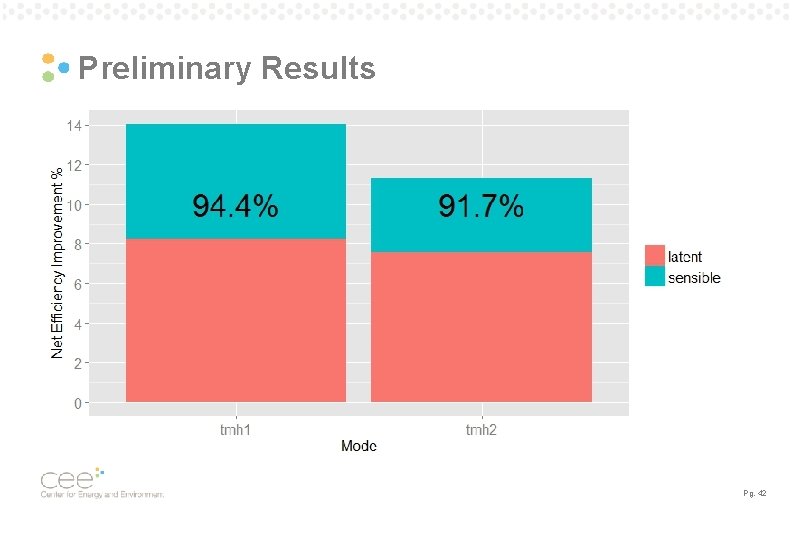
Preliminary Results • TBD monitoring underway Pg. 42
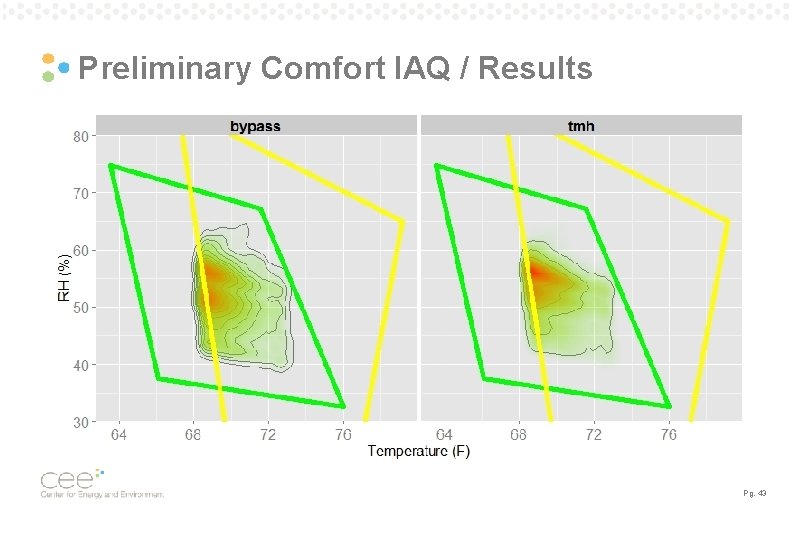
Preliminary Comfort IAQ / Results Pg. 43
Indoor Humidity – Low RH Home Pg. 44
Indoor Humidity – High RH Home Pg. 45
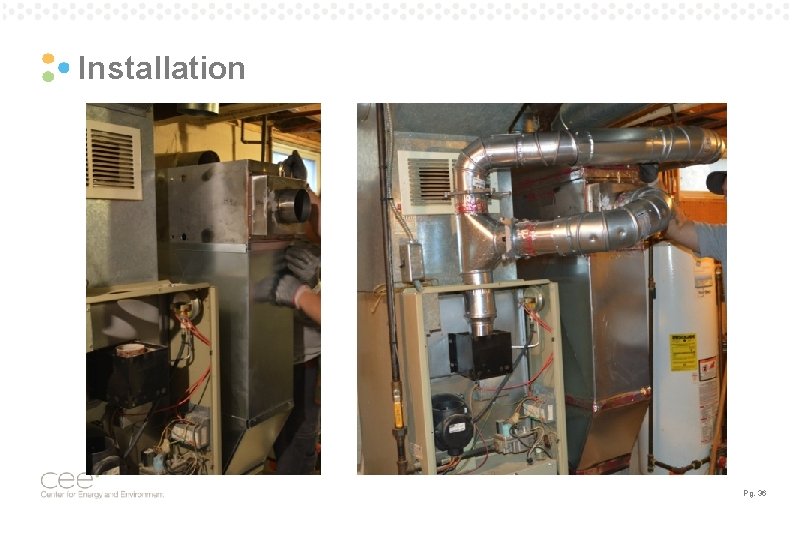
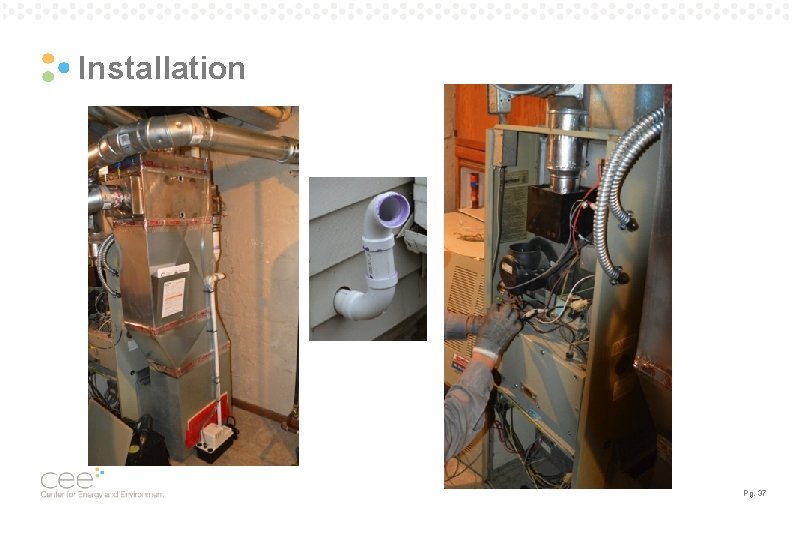
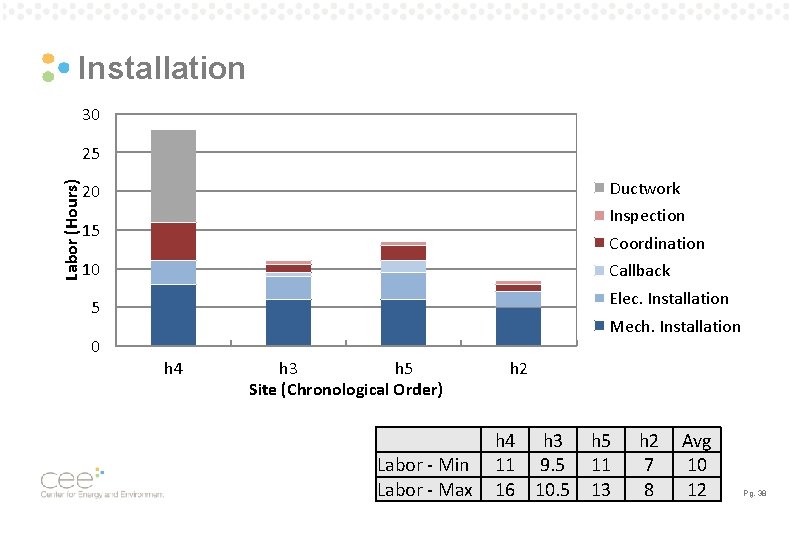
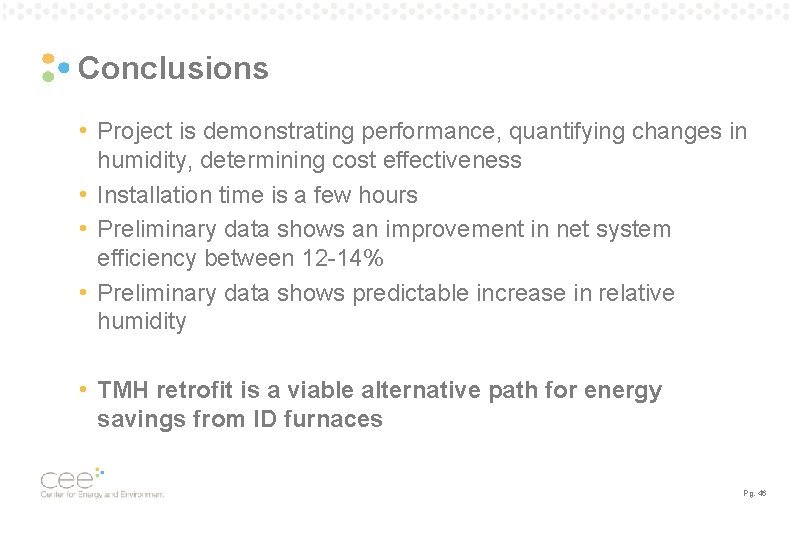
Conclusions • Project is demonstrating performance, quantifying changes in humidity, determining cost effectiveness • Installation time is a few hours • Preliminary data shows an improvement in net system efficiency between 12 -14% • Preliminary data shows predictable increase in relative humidity • TMH retrofit is a viable alternative path for energy savings from ID furnaces Pg. 46
www. mncee. org Field Study of a Moisture and Heat Transfer Furnace Retrofit Device Cold Climate Air Source Heat Pump Field Assessment Pg. 47