Dr Nicholas Taylor Consultant Forensic Psychiatrist Leicester United

- Slides: 30
Dr Nicholas Taylor Consultant Forensic Psychiatrist, Leicester, United Kingdom Training Programme Director - East Midlands Forensic Psychiatry www. forensicpsychiatrytraining. co. uk/resources
All slides and reading material available online 1. Introduction 2. Medical and psychiatric training in the UK (briefly) 3. Forensic Psychiatry training in the UK 4. Competency based training 5. Theoretical and practical difficulties 6. Summary www. forensicpsychiatrytraining. co. uk/resources
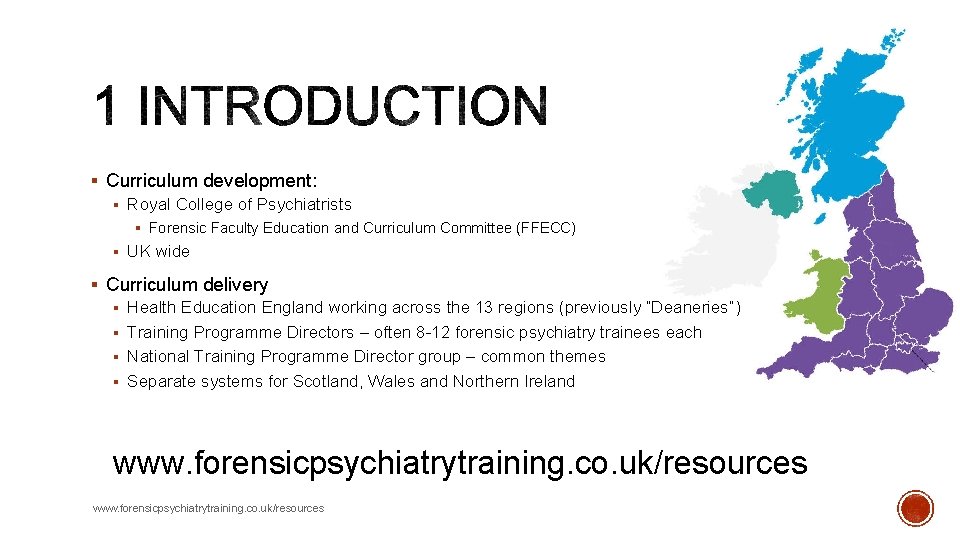
§ Curriculum development: § Royal College of Psychiatrists § Forensic Faculty Education and Curriculum Committee (FFECC) § UK wide § Curriculum delivery § Health Education England working across the 13 regions (previously “Deaneries”) § Training Programme Directors – often 8 -12 forensic psychiatry trainees each § National Training Programme Director group – common themes § Separate systems for Scotland, Wales and Northern Ireland www. forensicpsychiatrytraining. co. uk/resources
§ Medicine is primarily an undergraduate degree § 5 years, or 6 if an additional BSc degree or similar § Graduate entry § Promoted in last 20 years to reduce deficit of doctors § 4 year course § After graduation – governed by The Gold Guide – sets out the rules § 2 years of Foundation Training – 6 x 4 month placements § Wide range of medical and surgical specialties – including psychiatry § FY 1 and FY 2 years www. forensicpsychiatrytraining. co. uk/resources
§ After Foundation Training comes Core Training (CT) § Broad choice of specialty § Surgery § Psychiatry § Medicine § General Practice, etc. § 3 years of broad clinical experience § Professional exams determine entry into the relevant Royal College § CT 1, CT 2 and CT 3 www. forensicpsychiatrytraining. co. uk/resources
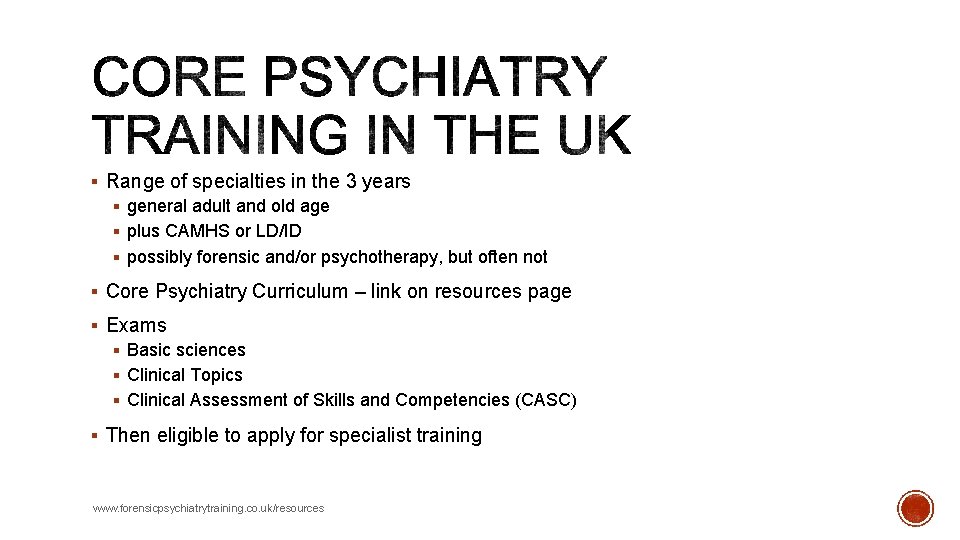
§ Range of specialties in the 3 years § general adult and old age § plus CAMHS or LD/ID § possibly forensic and/or psychotherapy, but often not § Core Psychiatry Curriculum – link on resources page § Exams § Basic sciences § Clinical Topics § Clinical Assessment of Skills and Competencies (CASC) § Then eligible to apply for specialist training www. forensicpsychiatrytraining. co. uk/resources
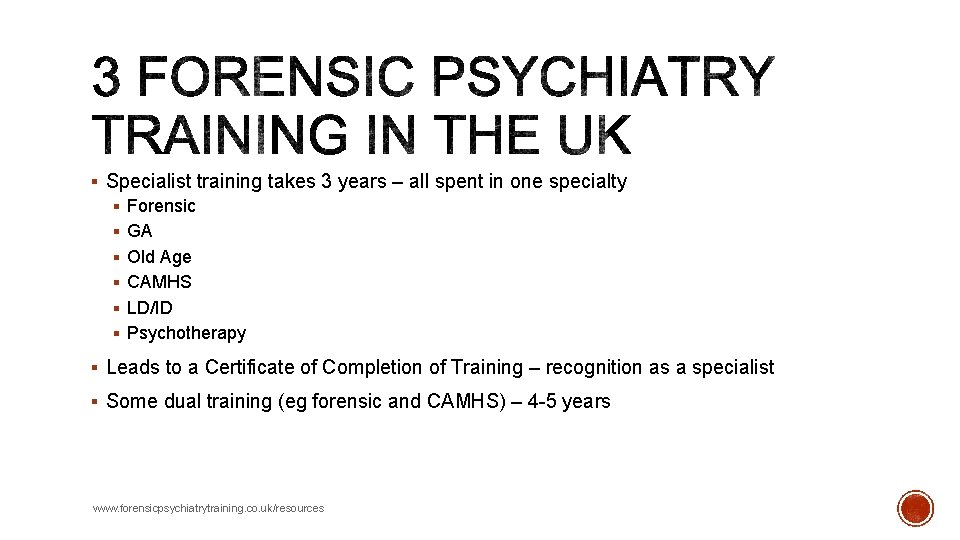
§ Specialist training takes 3 years – all spent in one specialty § Forensic § GA § Old Age § CAMHS § LD/ID § Psychotherapy § Leads to a Certificate of Completion of Training – recognition as a specialist § Some dual training (eg forensic and CAMHS) – 4 -5 years www. forensicpsychiatrytraining. co. uk/resources
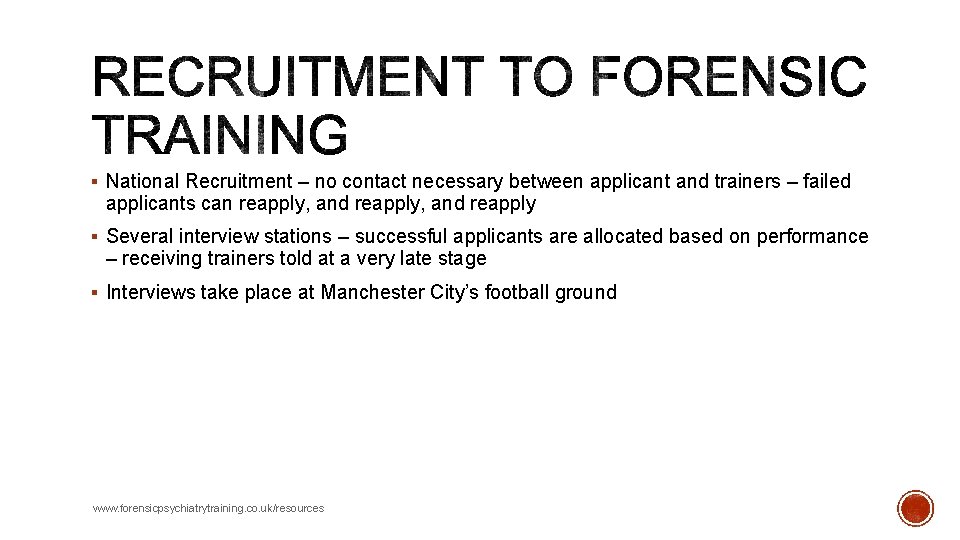
§ National Recruitment – no contact necessary between applicant and trainers – failed applicants can reapply, and reapply § Several interview stations – successful applicants are allocated based on performance – receiving trainers told at a very late stage § Interviews take place at Manchester City’s football ground www. forensicpsychiatrytraining. co. uk/resources
www. forensicpsychiatrytraining. co. uk/resources
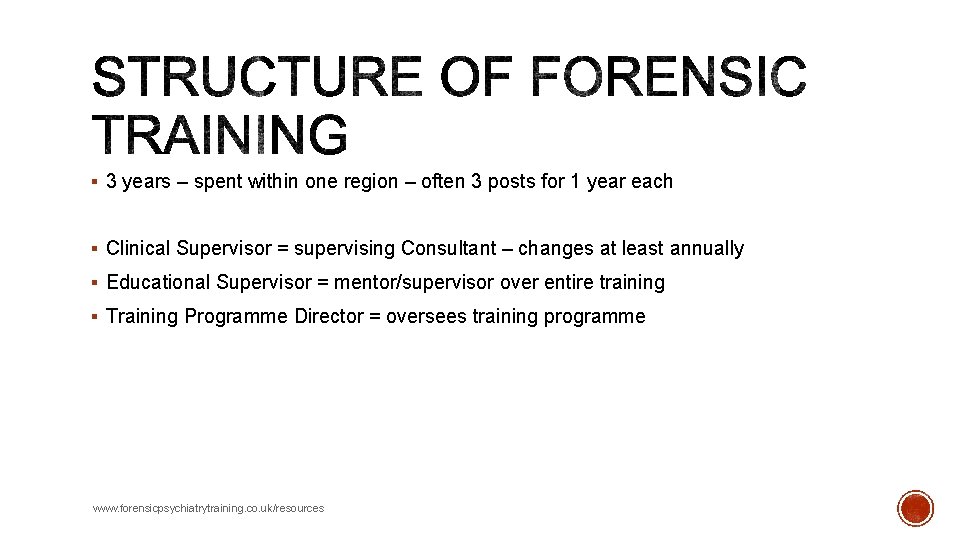
§ 3 years – spent within one region – often 3 posts for 1 year each § Clinical Supervisor = supervising Consultant – changes at least annually § Educational Supervisor = mentor/supervisor over entire training § Training Programme Director = oversees training programme www. forensicpsychiatrytraining. co. uk/resources
§ Prison experience § Reflective practice § Psychotherapy experience § 1 full day every week for Special Interest and Research (anything!) § Regular on call work – general adult or specifically forensic § Many trainees undertake Masters Degrees – often mental health law www. forensicpsychiatrytraining. co. uk/resources
www. forensicpsychiatrytraining. co. uk/resources
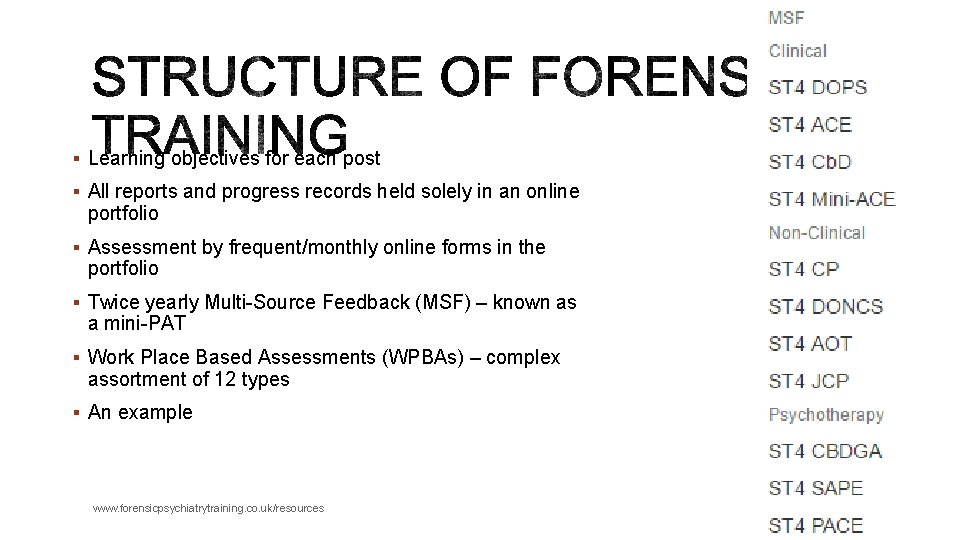
§ Learning objectives for each post § All reports and progress records held solely in an online portfolio § Assessment by frequent/monthly online forms in the portfolio § Twice yearly Multi-Source Feedback (MSF) – known as a mini-PAT § Work Place Based Assessments (WPBAs) – complex assortment of 12 types § An example www. forensicpsychiatrytraining. co. uk/resources
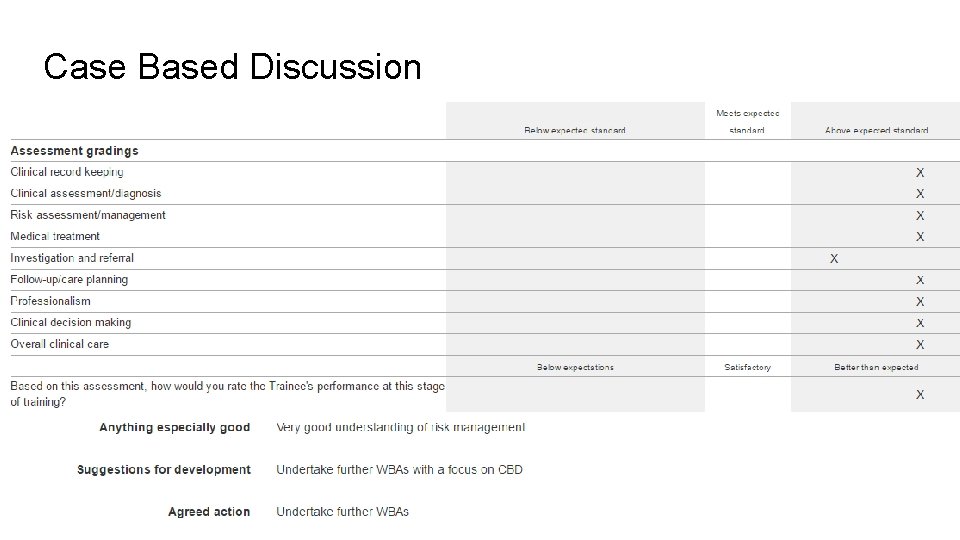
Case Based Discussion www. forensicpsychiatrytraining. co. uk/resources
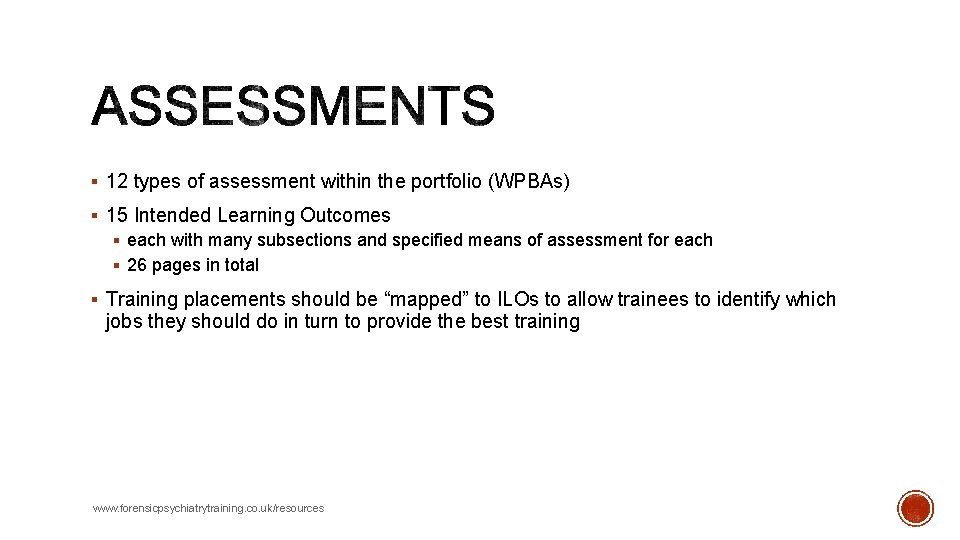
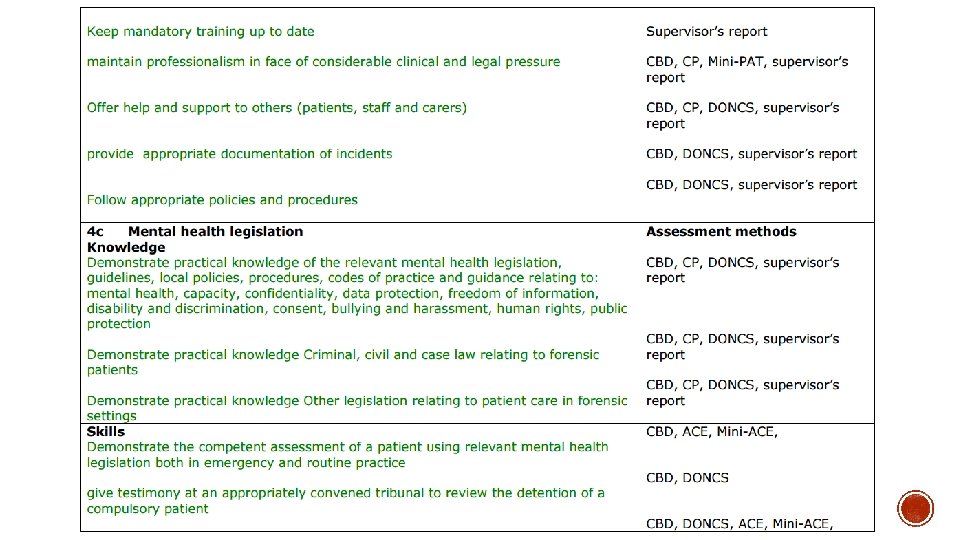
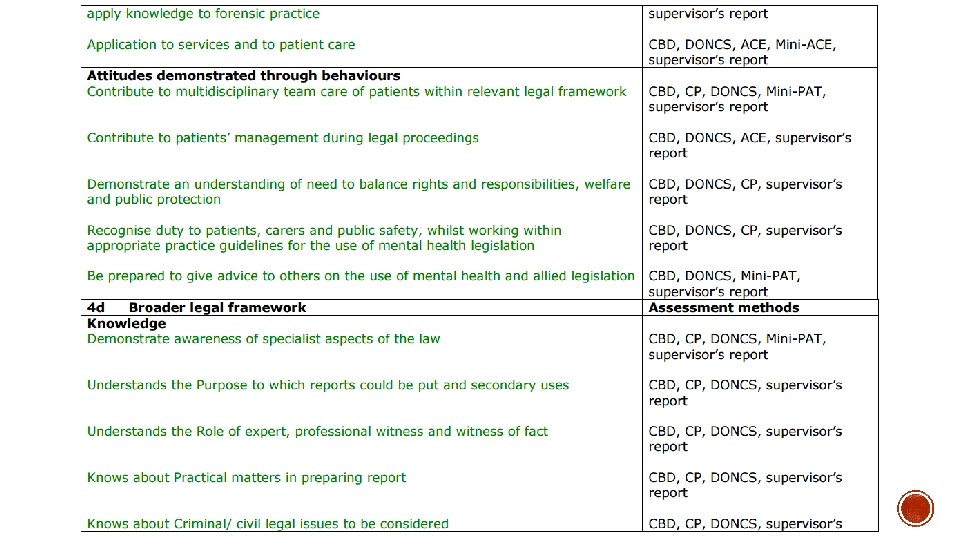
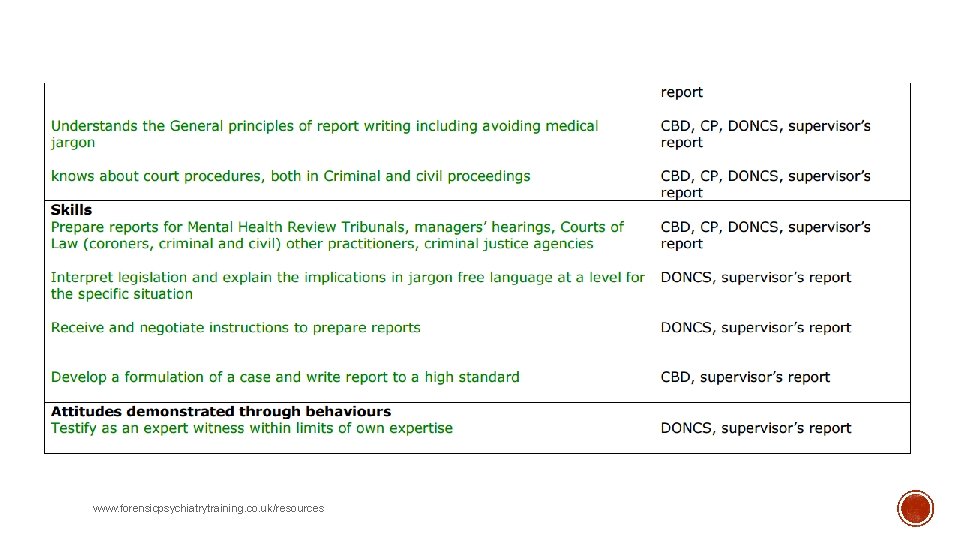
§ 12 types of assessment within the portfolio (WPBAs) § 15 Intended Learning Outcomes § each with many subsections and specified means of assessment for each § 26 pages in total § Training placements should be “mapped” to ILOs to allow trainees to identify which jobs they should do in turn to provide the best training www. forensicpsychiatrytraining. co. uk/resources
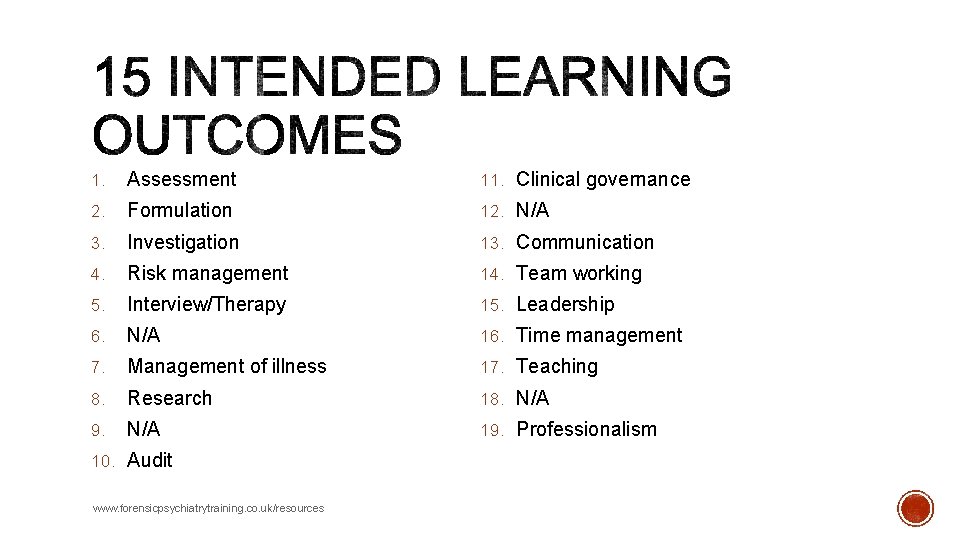
1. Assessment 11. Clinical governance 2. Formulation 12. N/A 3. Investigation 13. Communication 4. Risk management 14. Team working 5. Interview/Therapy 15. Leadership 6. N/A 16. Time management 7. Management of illness 17. Teaching 8. Research 18. N/A 9. N/A 19. Professionalism 10. Audit www. forensicpsychiatrytraining. co. uk/resources
www. forensicpsychiatrytraining. co. uk/resources
www. forensicpsychiatrytraining. co. uk/resources
www. forensicpsychiatrytraining. co. uk/resources
www. forensicpsychiatrytraining. co. uk/resources
www. forensicpsychiatrytraining. co. uk/resources
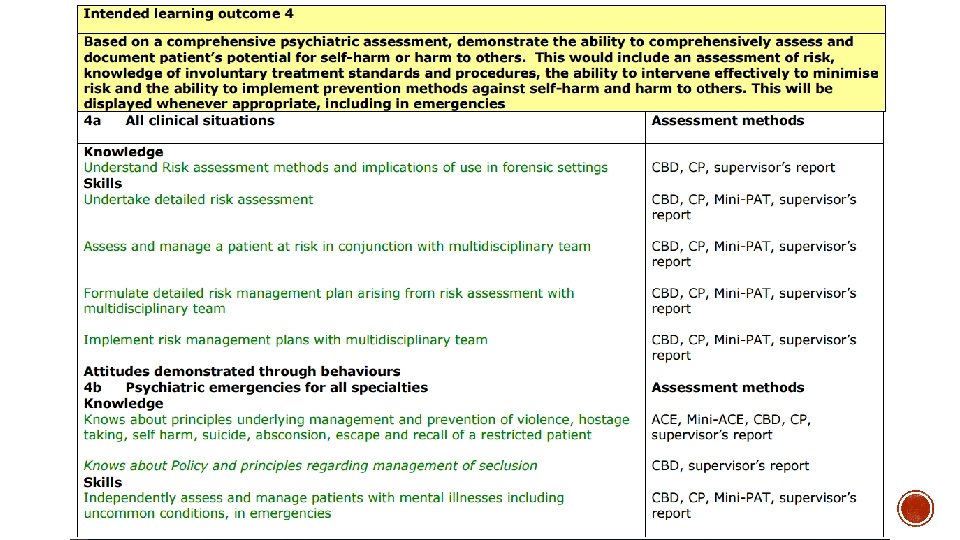
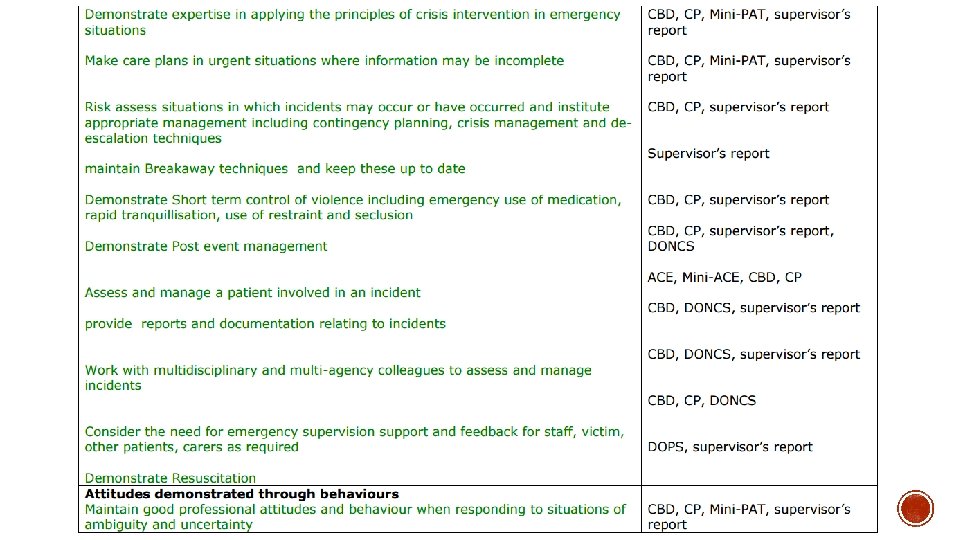
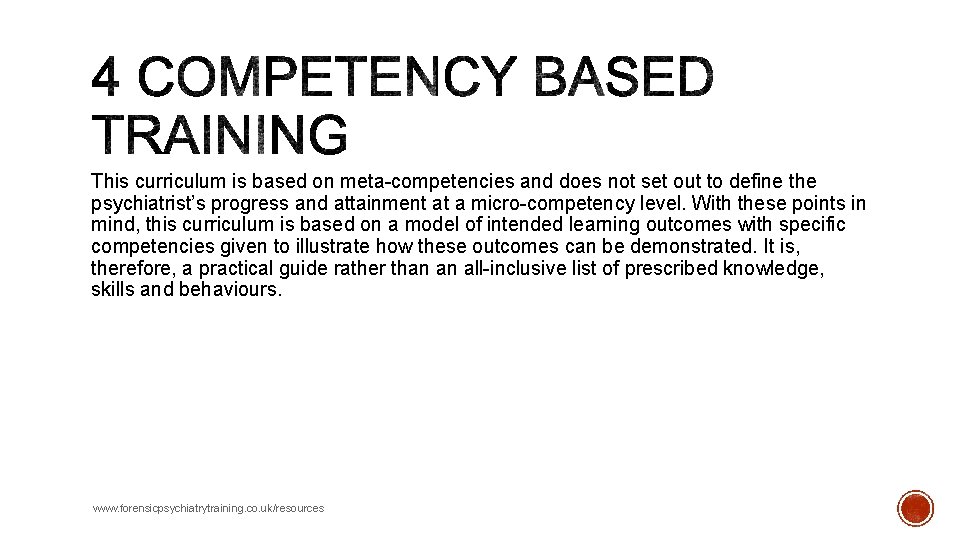
This curriculum is based on meta-competencies and does not set out to define the psychiatrist’s progress and attainment at a micro-competency level. With these points in mind, this curriculum is based on a model of intended learning outcomes with specific competencies given to illustrate how these outcomes can be demonstrated. It is, therefore, a practical guide rather than an all-inclusive list of prescribed knowledge, skills and behaviours. www. forensicpsychiatrytraining. co. uk/resources
§ How is progress reviewed? § Annual Reviews of Competency Progression (ARCPs) § Can actually be more frequent – if concerns § Chaired by Training Programme Director § Follow detailed interview and report from the ES § No exams or any form of exit exam § ARCP - Panel of Consultants review ONLY the evidence in the portfolio § Trainee must not be present – Gold Guide (but often is) § Presentation of evidence from portfolio by ES § Has the trainee developed the required competencies? www. forensicpsychiatrytraining. co. uk/resources
§ Annual Reviews of Competency Progression § If they are progressing – they move to the next year § If more information is needed, adjourn for a week or two § If they’re not progressing, set targets § With no more time required for training § With more time required for training (maximum 1 year extra) § If they are not progressing and more time won’t help – released from the training programme www. forensicpsychiatrytraining. co. uk/resources
§ Significant national variation § Medium and low secure § Some areas have high secure hospitals § Varied prison experience § Psychotherapy provision varies § Expert witness work – provision varies hugely § Often 3 x 1 year placements § Some areas provide “tapas training” – 3 x 4 month placements § Challenges www. forensicpsychiatrytraining. co. uk/resources
§ Competency based with no time requirements BUT it’s 3 years overall § Competencies are very broad and subjective § ILOs are also broad and are available in all placements – “mapping” is irrelevant § WPBAs not fit for purpose – scoring is to be removed § ARCP panels should be completely independent § ES should not be involved in decision § ? CS and TPD should not be involved § If a non-medic can demonstrate all the competencies, shouldn’t they be a Consultant Forensic Psychiatrist? www. forensicpsychiatrytraining. co. uk/resources
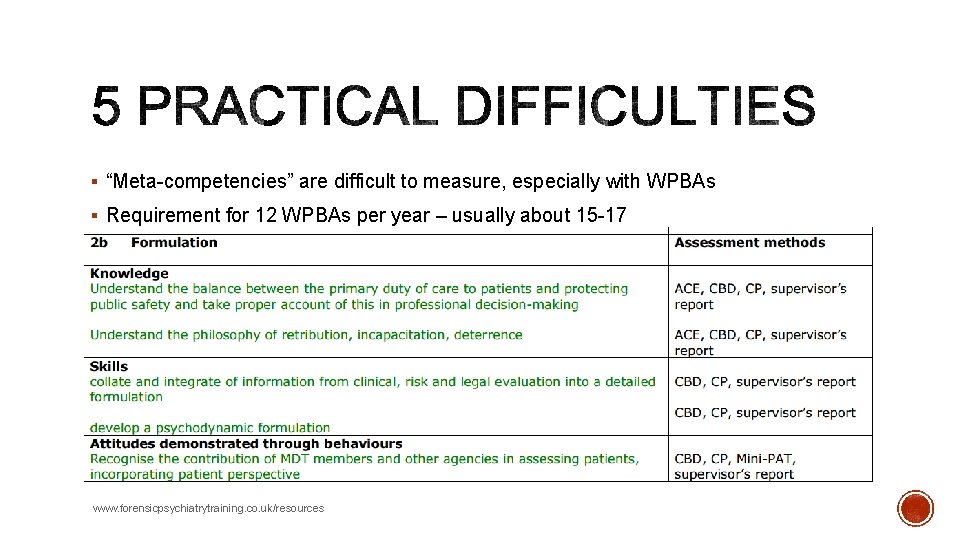
§ “Meta-competencies” are difficult to measure, especially with WPBAs § Requirement for 12 WPBAs per year – usually about 15 -17 www. forensicpsychiatrytraining. co. uk/resources
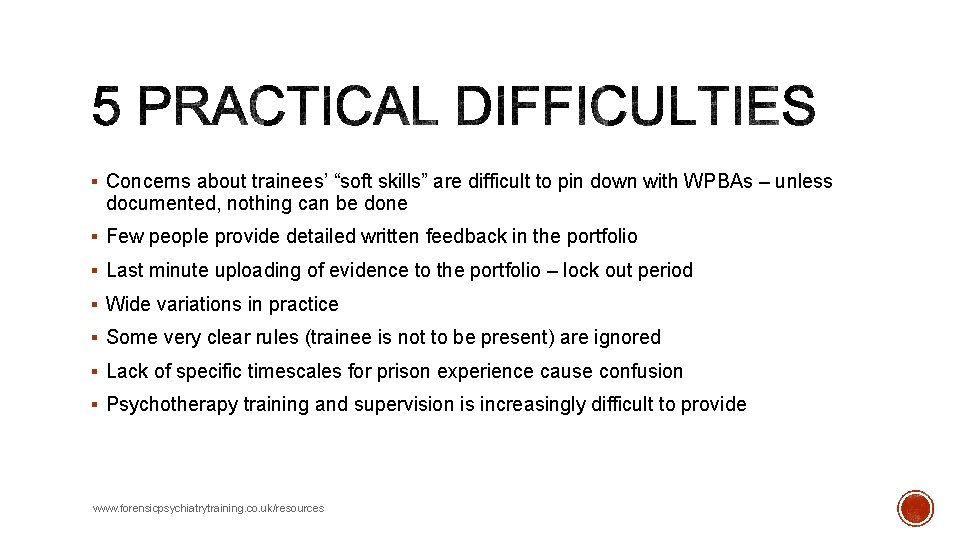
§ Concerns about trainees’ “soft skills” are difficult to pin down with WPBAs – unless documented, nothing can be done § Few people provide detailed written feedback in the portfolio § Last minute uploading of evidence to the portfolio – lock out period § Wide variations in practice § Some very clear rules (trainee is not to be present) are ignored § Lack of specific timescales for prison experience cause confusion § Psychotherapy training and supervision is increasingly difficult to provide www. forensicpsychiatrytraining. co. uk/resources
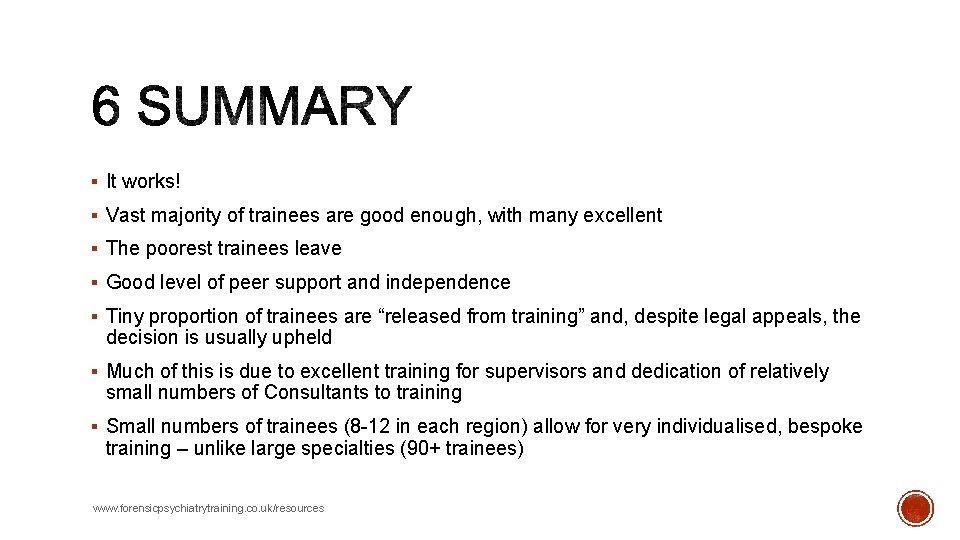
§ It works! § Vast majority of trainees are good enough, with many excellent § The poorest trainees leave § Good level of peer support and independence § Tiny proportion of trainees are “released from training” and, despite legal appeals, the decision is usually upheld § Much of this is due to excellent training for supervisors and dedication of relatively small numbers of Consultants to training § Small numbers of trainees (8 -12 in each region) allow for very individualised, bespoke training – unlike large specialties (90+ trainees) www. forensicpsychiatrytraining. co. uk/resources
www. forensicpsychiatrytraining. co. uk/resources