
Childhood Obesity Simon Howard Justine Wilkinson Risks of
Childhood Obesity Simon Howard & Justine Wilkinson
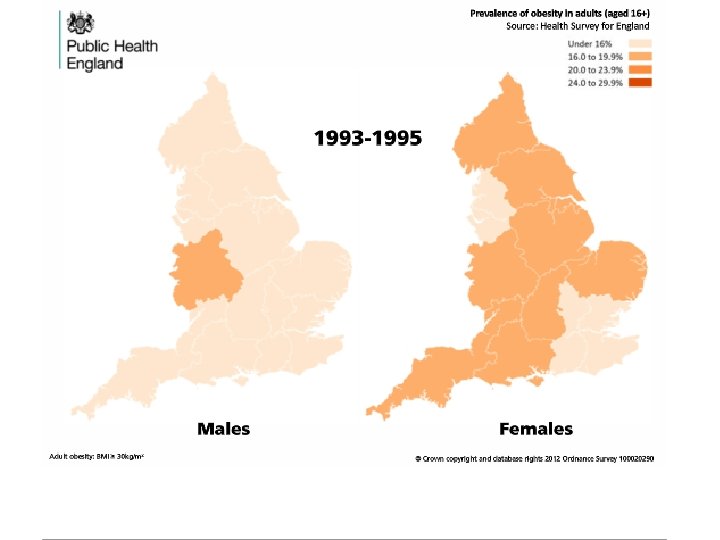
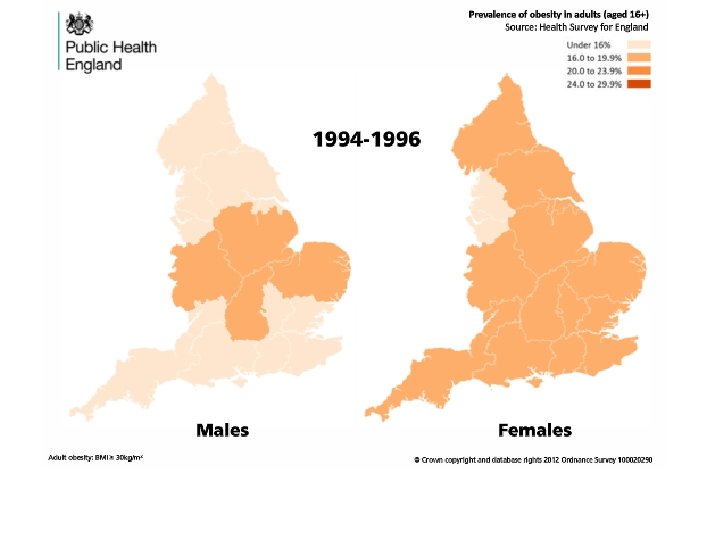
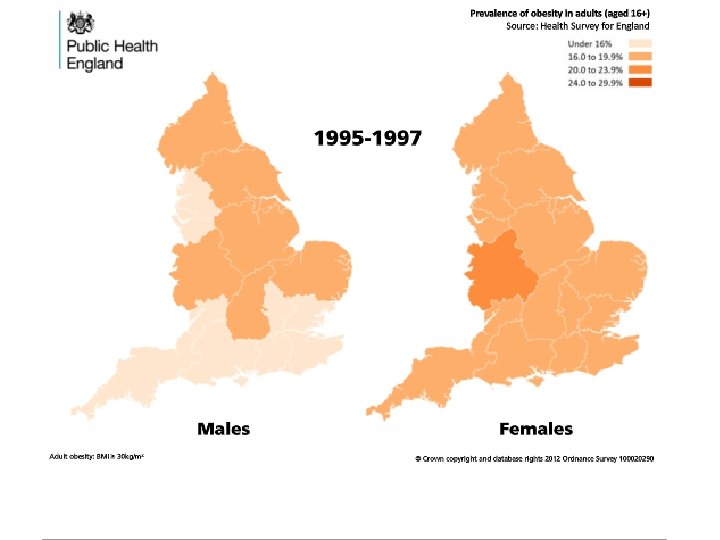
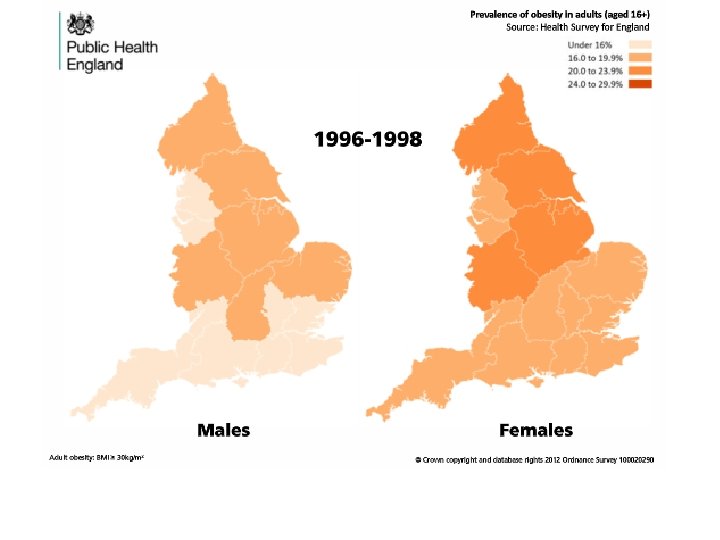
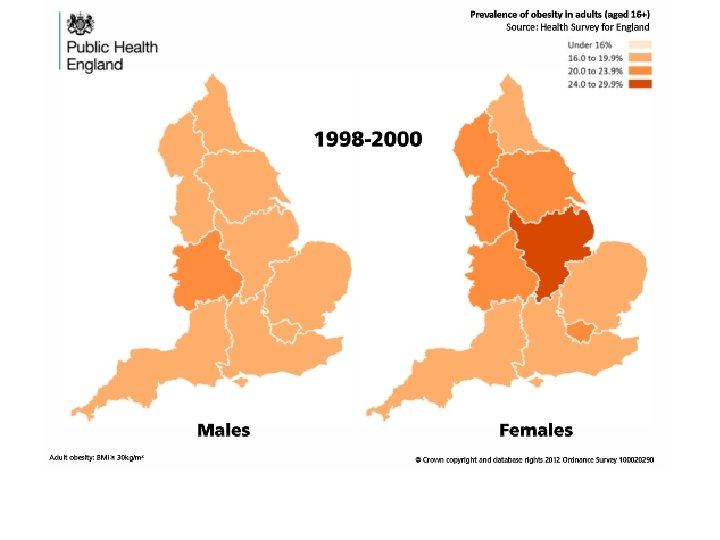
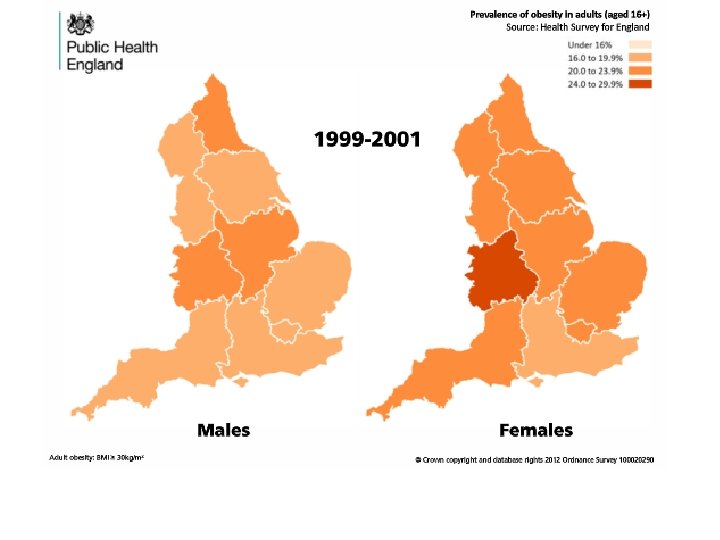
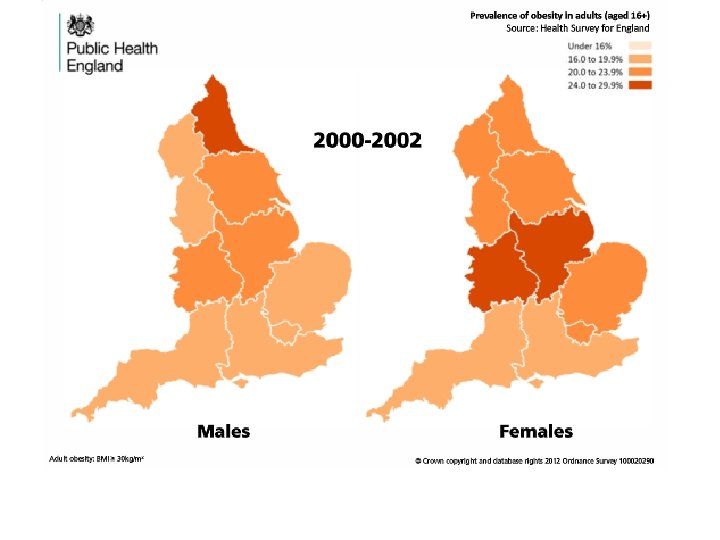
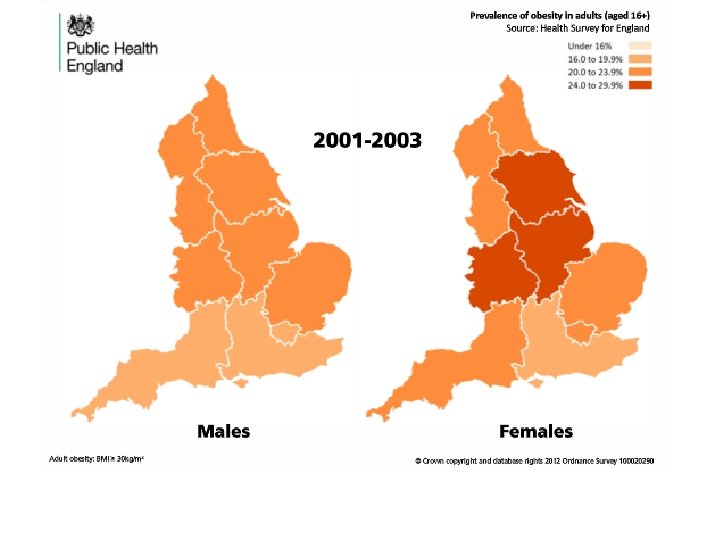
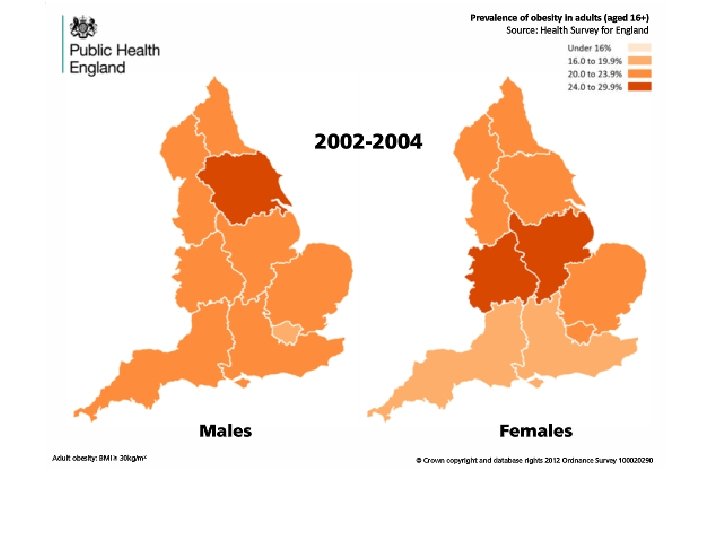
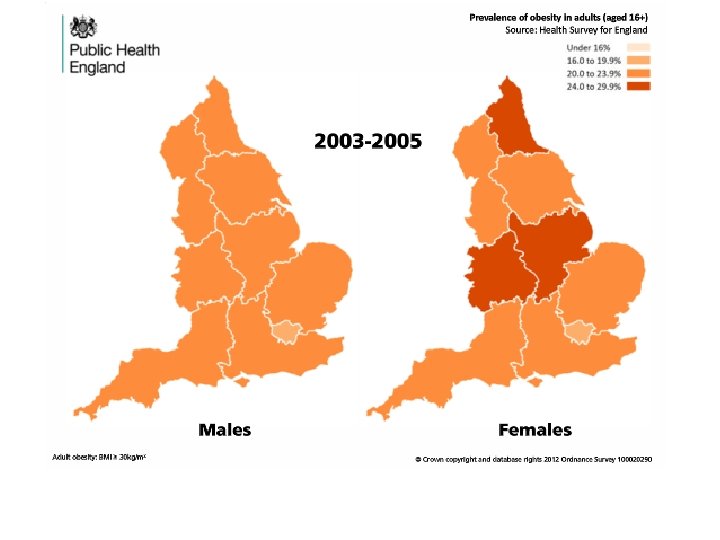
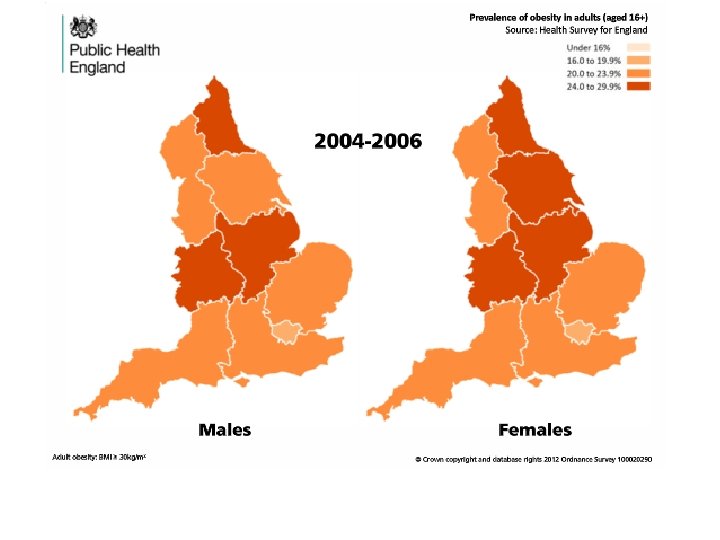
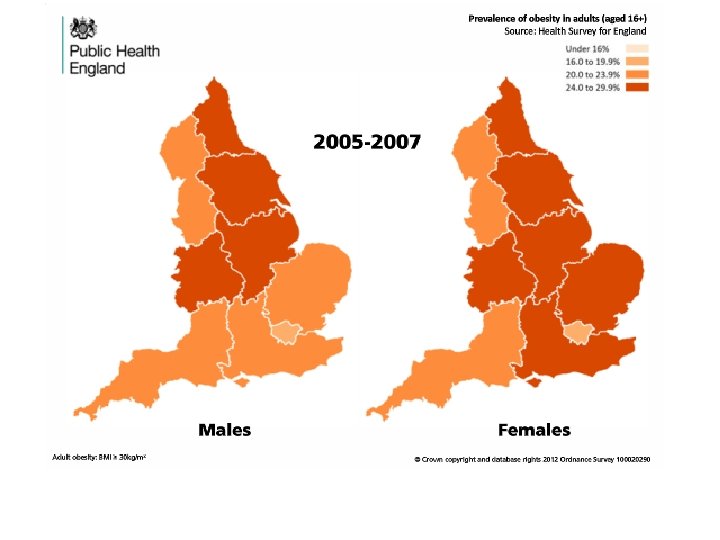
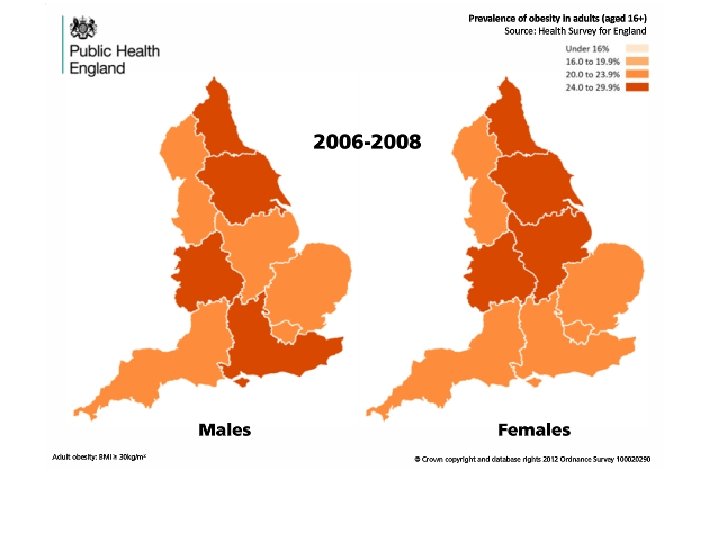
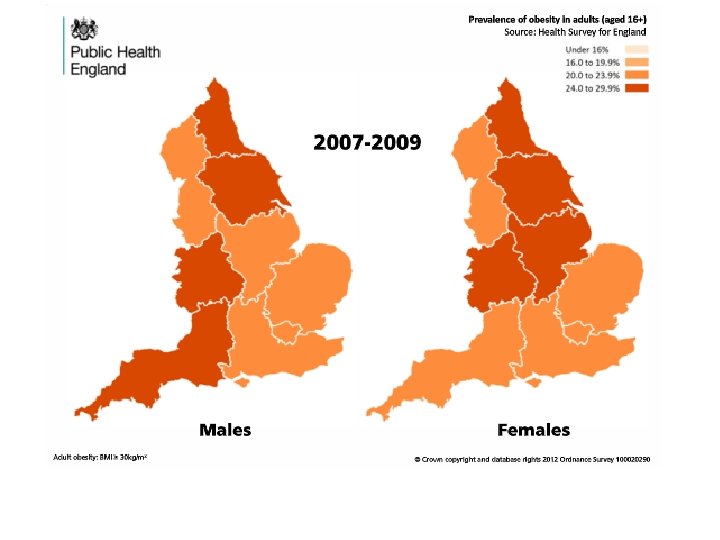
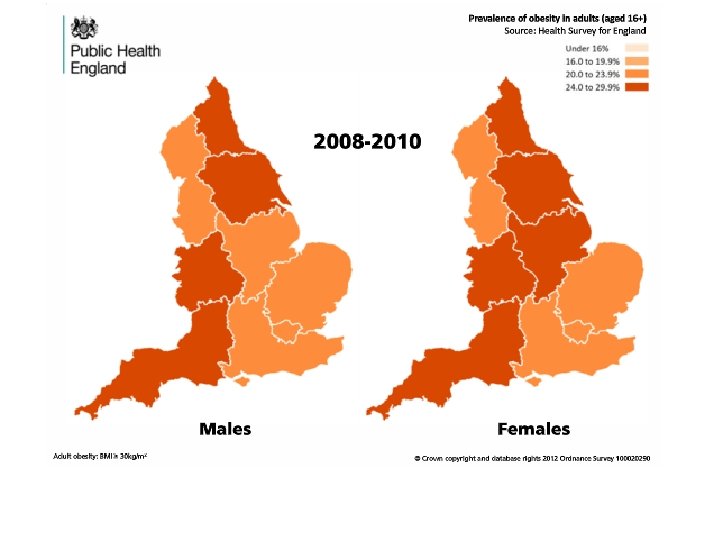
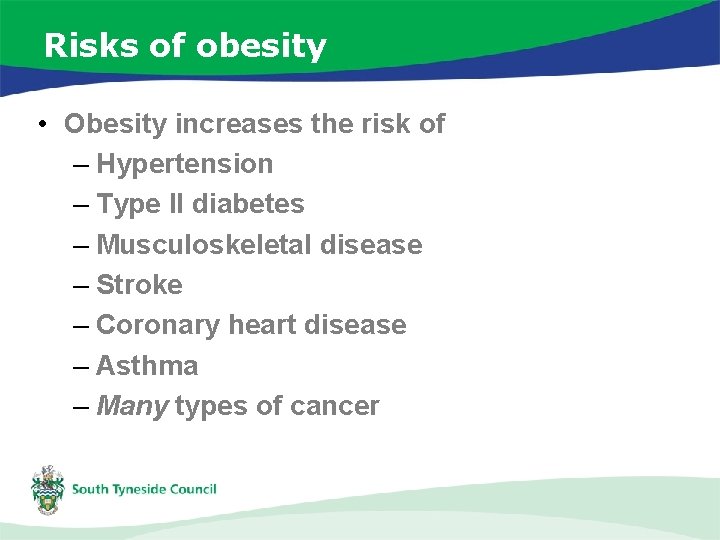
Risks of obesity • Obesity increases the risk of – Hypertension – Type II diabetes – Musculoskeletal disease – Stroke – Coronary heart disease – Asthma – Many types of cancer
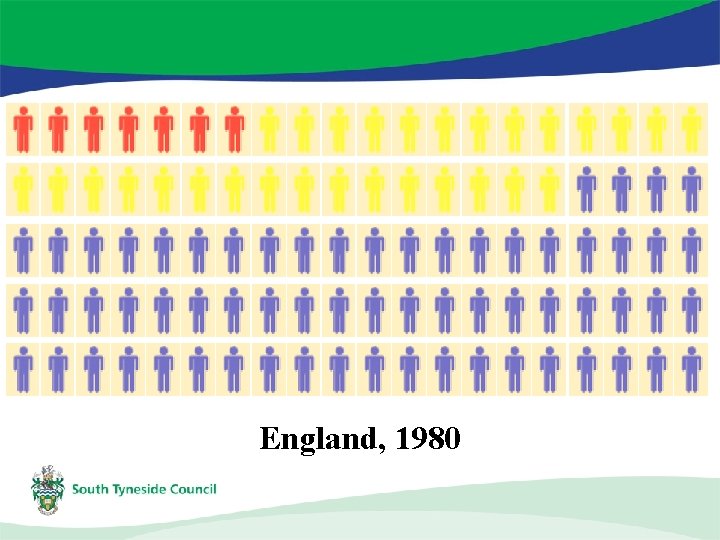
England, 1980
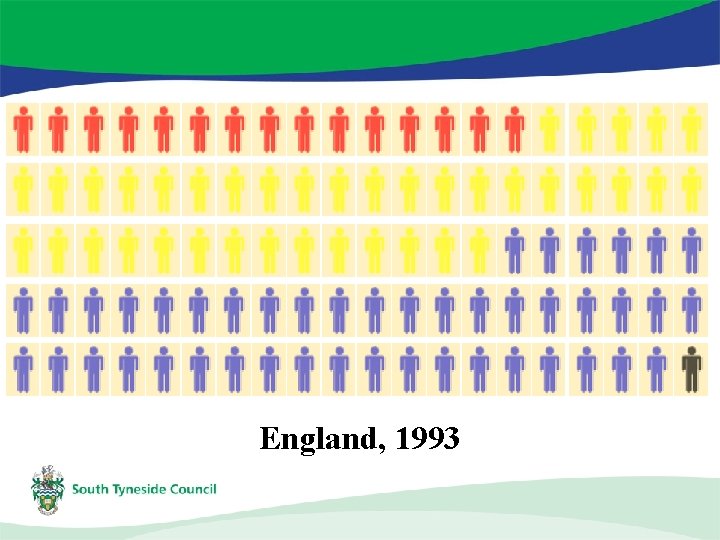
England, 1993
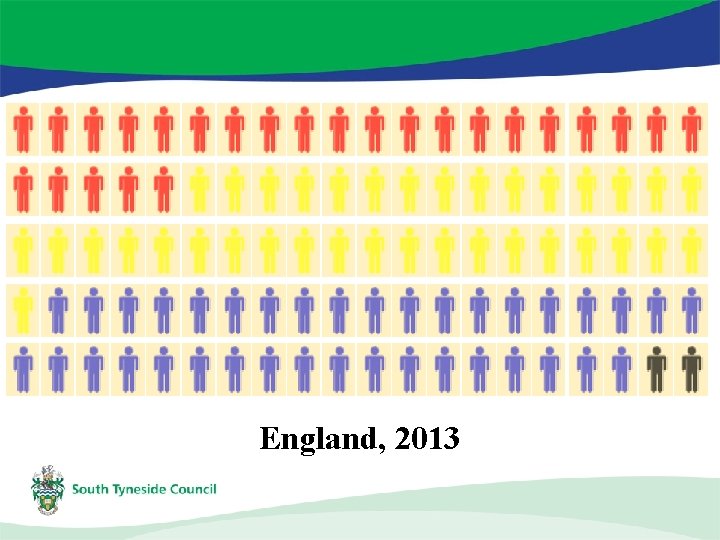
England, 2013
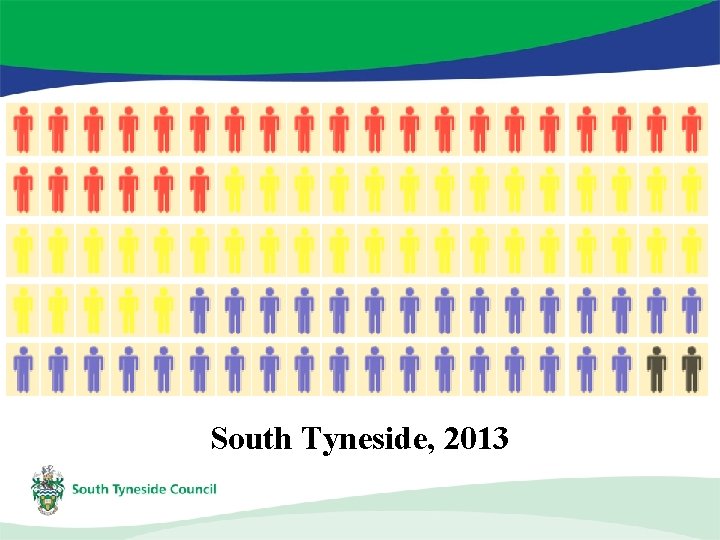
South Tyneside, 2013
Average is no longer healthy • 52% of overweight men and 30% of overweight women assess their own weight as “about right” • 77% of parents of overweight children assess their children’s weight as “about right” • Our common understanding of ‘healthy’ has been lost!
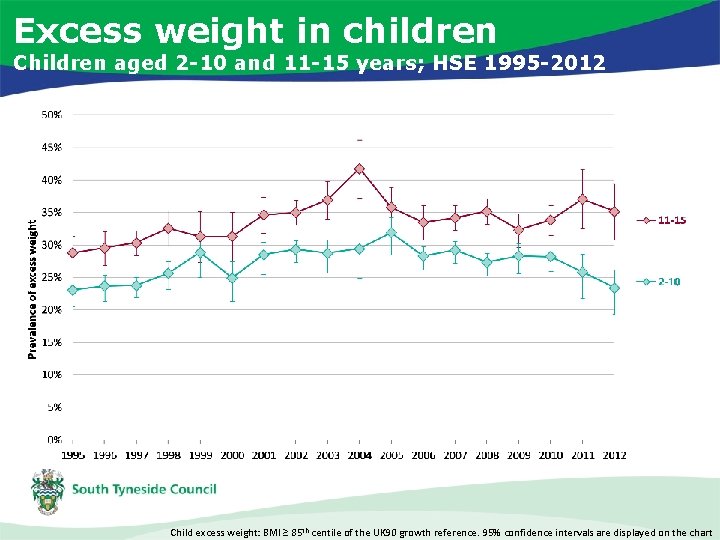
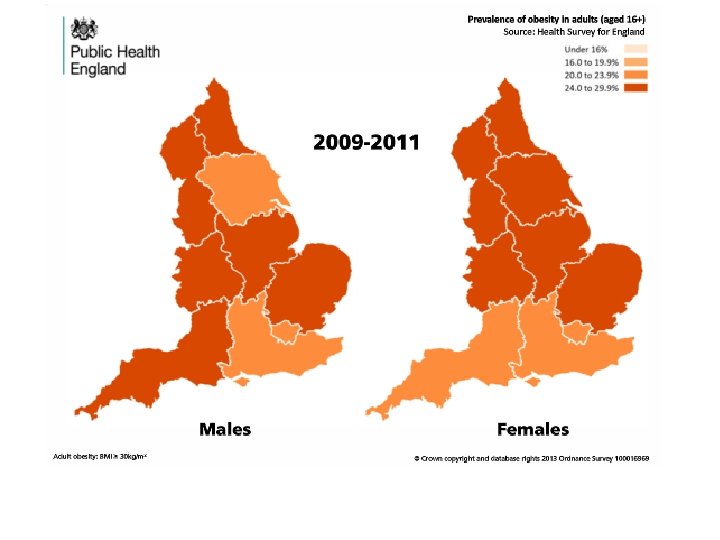
Excess weight in children Children aged 2 -10 and 11 -15 years; HSE 1995 -2012 Child excess weight: BMI ≥ 85 th centile of the UK 90 growth reference. 95% confidence intervals are displayed on the chart
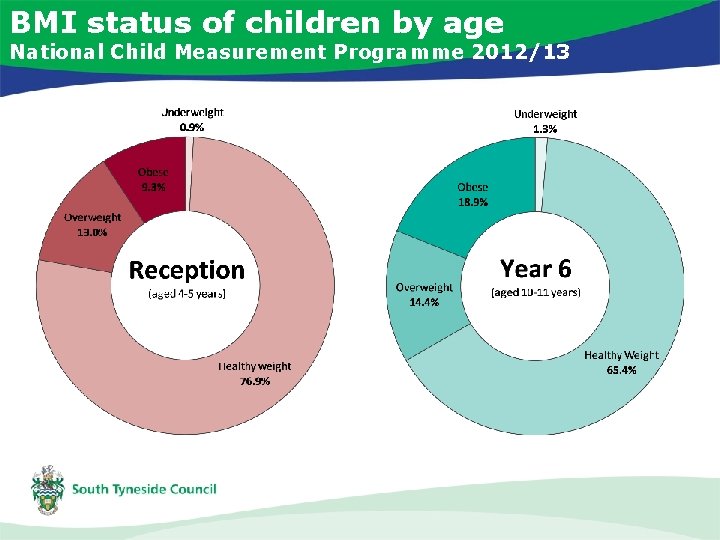
BMI status of children by age National Child Measurement Programme 2012/13
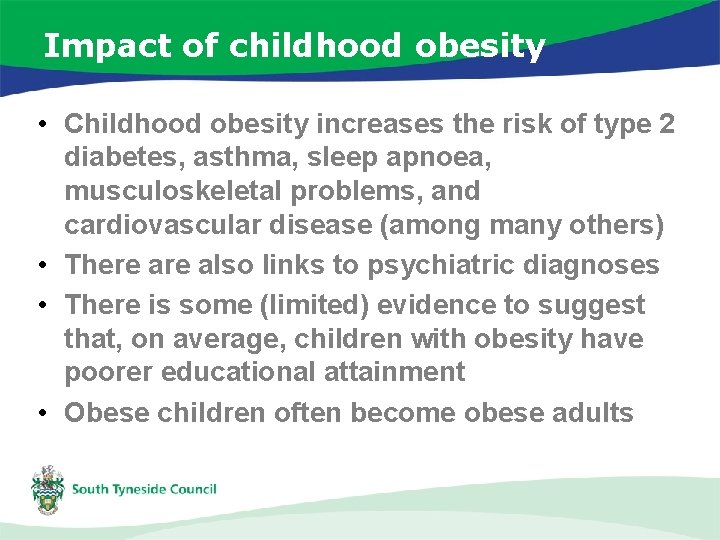
Impact of childhood obesity • Childhood obesity increases the risk of type 2 diabetes, asthma, sleep apnoea, musculoskeletal problems, and cardiovascular disease (among many others) • There also links to psychiatric diagnoses • There is some (limited) evidence to suggest that, on average, children with obesity have poorer educational attainment • Obese children often become obese adults
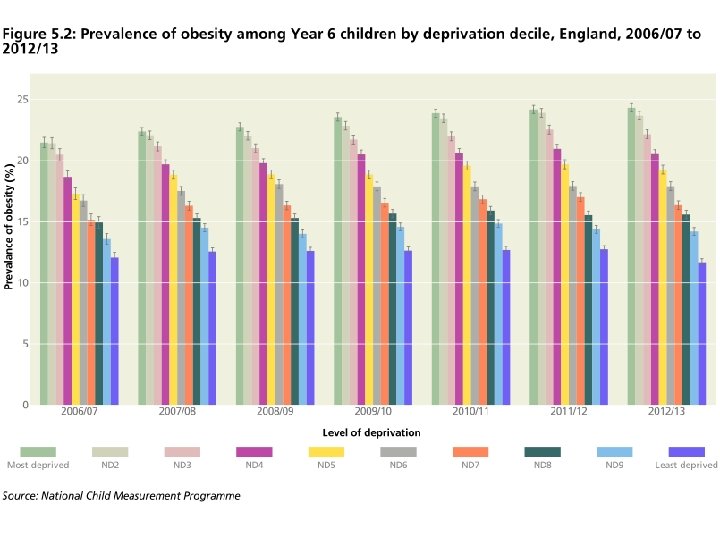
Socioeconomic patterning
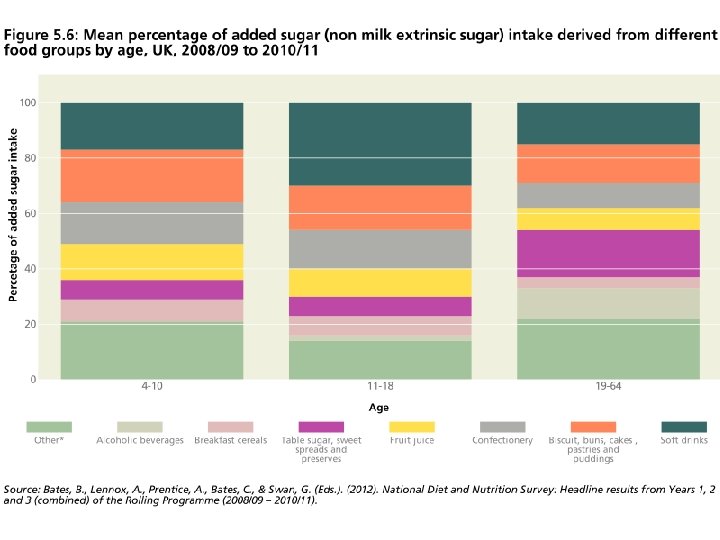
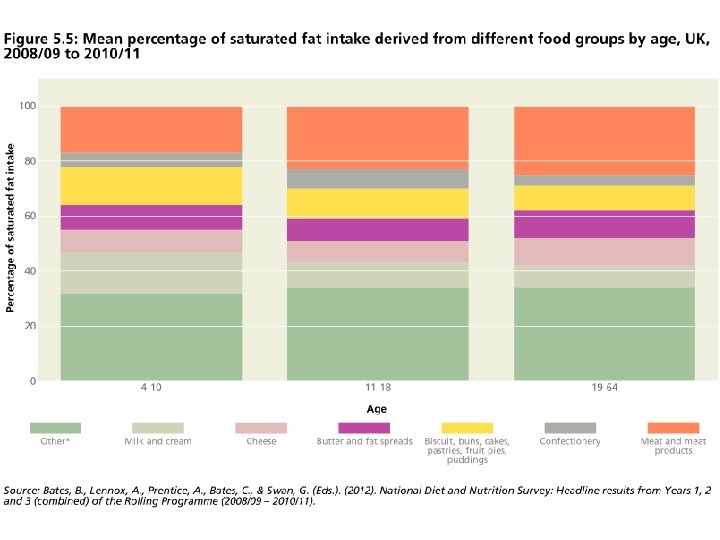
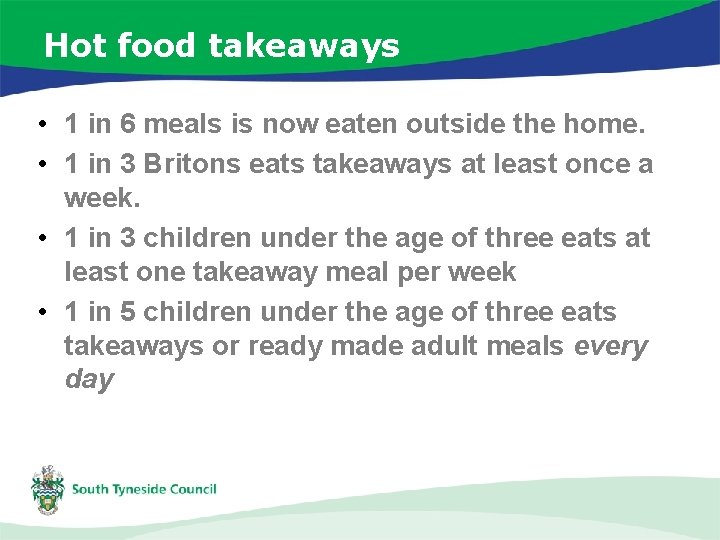
Hot food takeaways • 1 in 6 meals is now eaten outside the home. • 1 in 3 Britons eats takeaways at least once a week. • 1 in 3 children under the age of three eats at least one takeaway meal per week • 1 in 5 children under the age of three eats takeaways or ready made adult meals every day
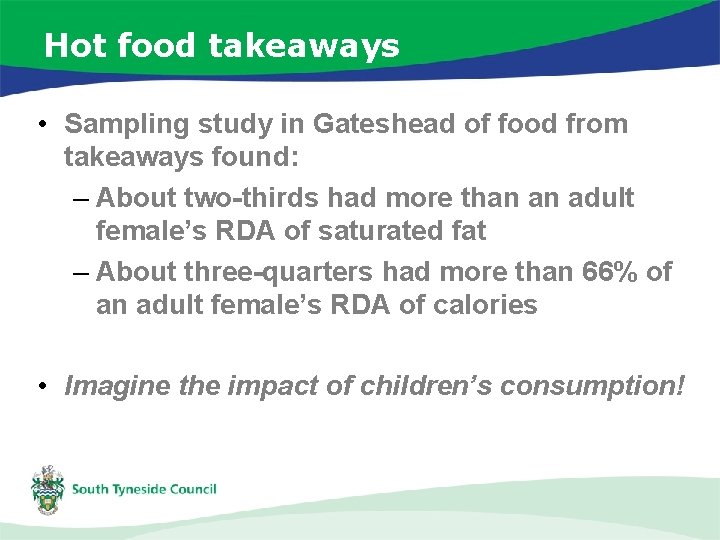
Hot food takeaways • Sampling study in Gateshead of food from takeaways found: – About two-thirds had more than an adult female’s RDA of saturated fat – About three-quarters had more than 66% of an adult female’s RDA of calories • Imagine the impact of children’s consumption!
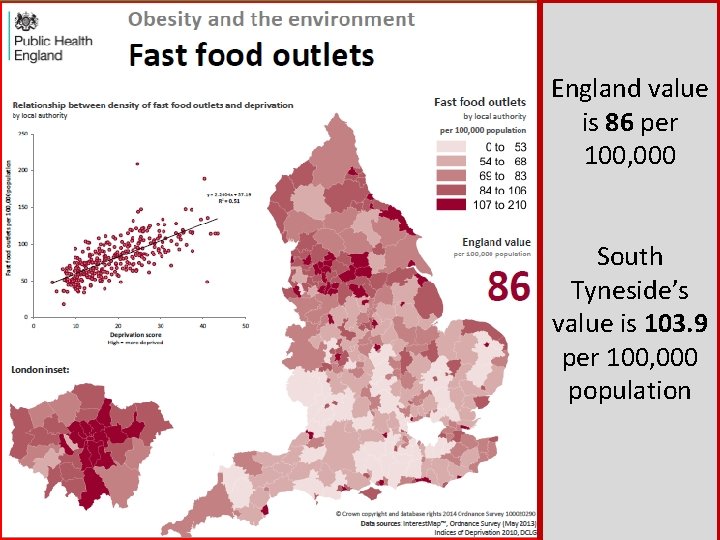
England value is 86 per 100, 000 South Tyneside’s value is 103. 9 per 100, 000 population
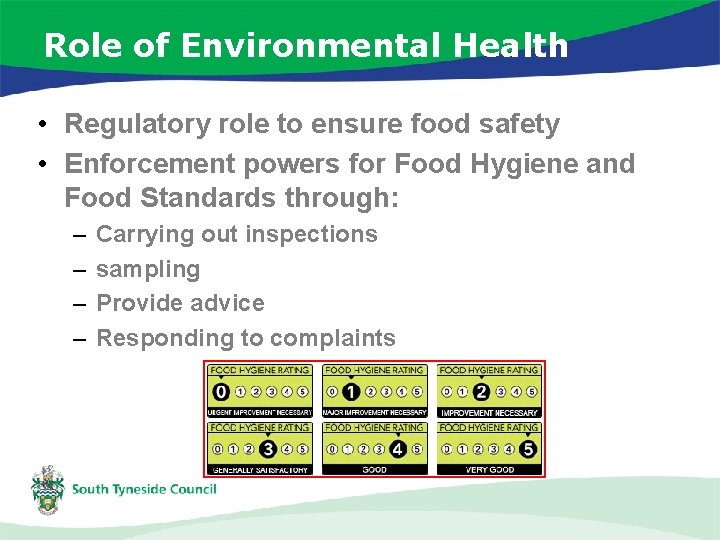
Role of Environmental Health • Regulatory role to ensure food safety • Enforcement powers for Food Hygiene and Food Standards through: – – Carrying out inspections sampling Provide advice Responding to complaints
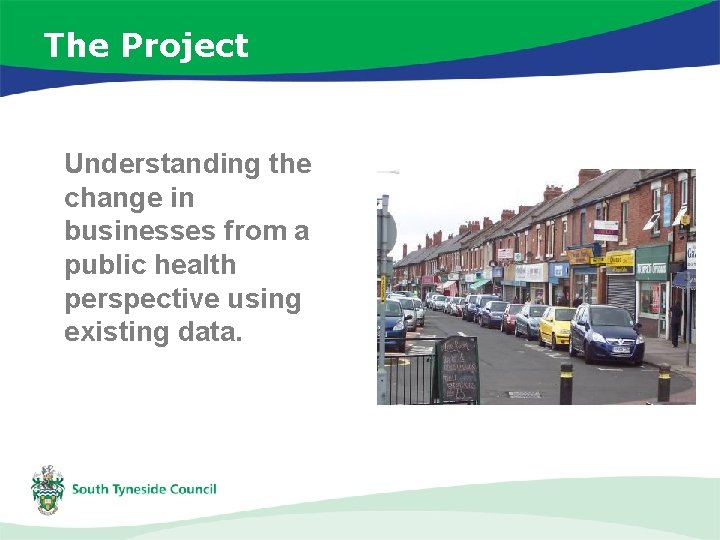
The Project Understanding the change in businesses from a public health perspective using existing data.
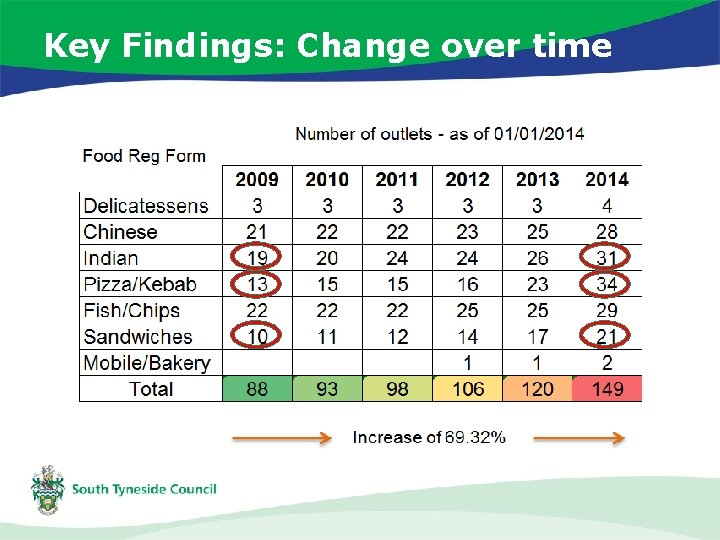
Key Findings: Change over time
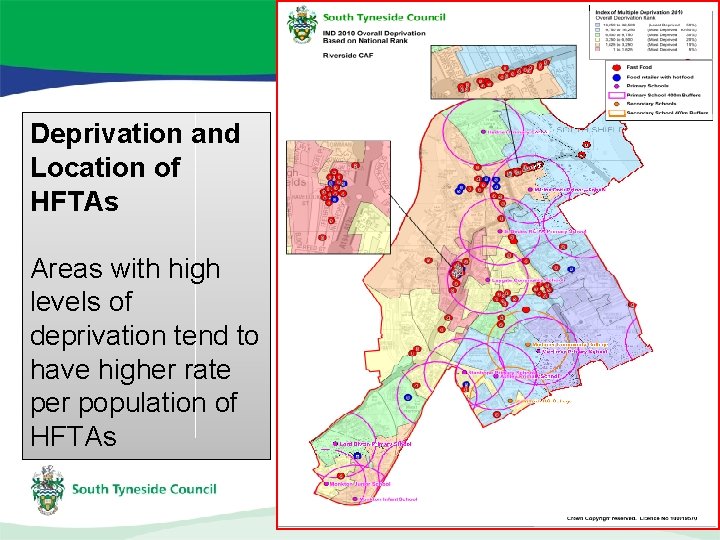
Deprivation and Location of HFTAs Areas with high levels of deprivation tend to have higher rate per population of HFTAs
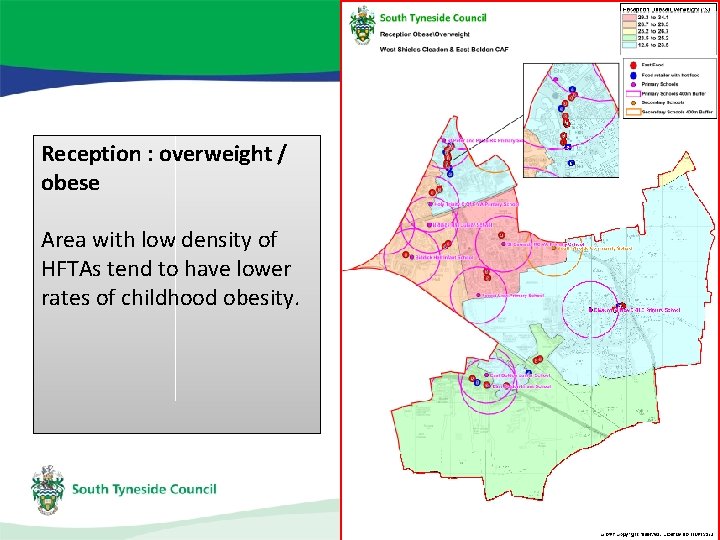
Reception : overweight / obese Area with low density of HFTAs tend to have lower rates of childhood obesity.
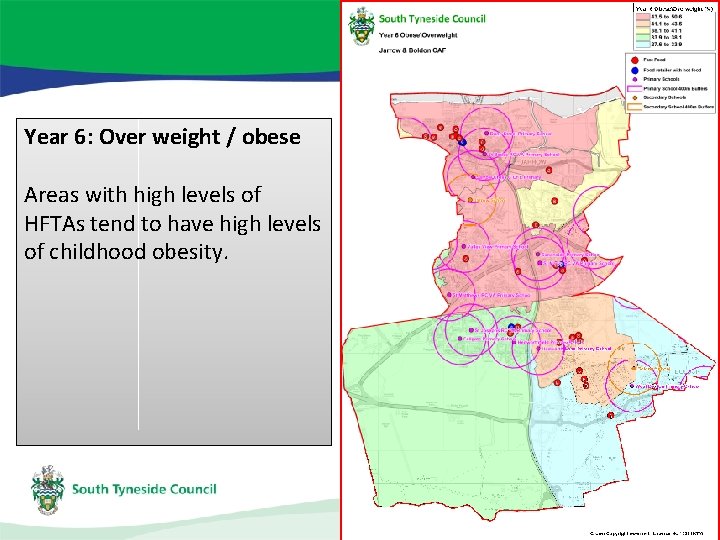
Year 6: Over weight / obese Areas with high levels of HFTAs tend to have high levels of childhood obesity.
So what next. . • Commitment from Planning, Env Health, Health and Wellbeing Board and Public Health • Looking at both regulatory and educative approaches, for example: – Targeted educative approach – Nutritional claims investigations – Planning are reviewing opportunities within Local Plan policies – PH working with schools (HSP)
Summary • The proportion of people who are overweight and obese is very large and growing. • We live in an obesogenic environment – the problem is far wider than takeaways alone. • Physical activity, though not mentioned today, has a big role to play. • Obese children often become obese adults. Early intervention can help children and families. • Local authorities are well-placed to intervene.
Thank You Justine Wilkinson Environmental Health Officer South Tyneside Council Simon Howard Public Health Registrar South Tyneside Council Tel: 0191 4247920 Email: justine. wilkinson@southtyneside. gov. uk Tel: 0191 4246442 Email: simon. howard@southtyneside. gov. uk
- Slides: 42