
Cytogenetics Chromosomal Disorders 50 of 1 st trimester
- Slides: 56
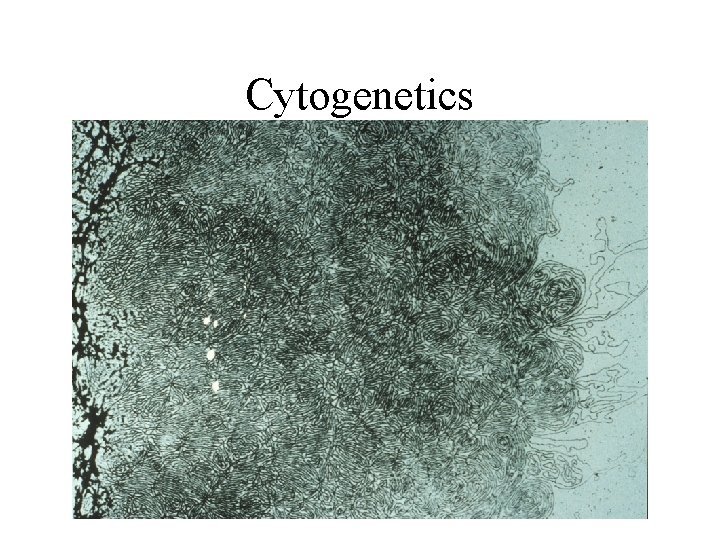
Cytogenetics
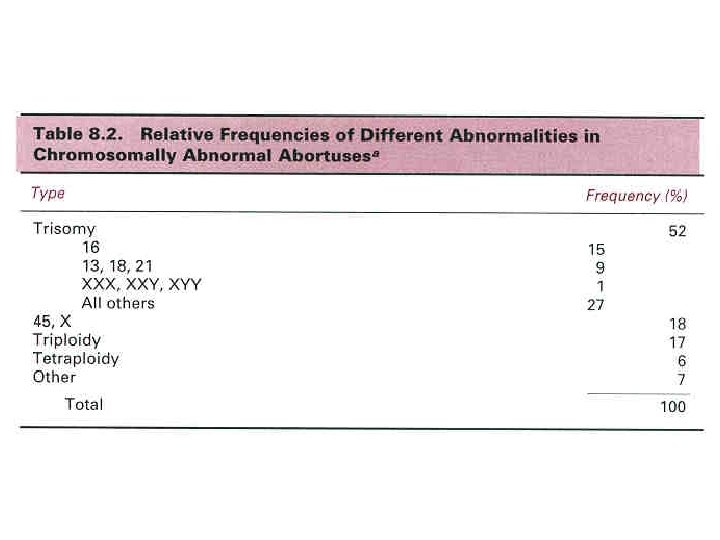
Chromosomal Disorders • 50% of 1 st trimester miscarriages • 5% of stillbirths • 0. 5% of liveborns – Down syndrome—trisomy 21 – Fragile X syndrome • Somatic cell abnormalities in cancers
History • Bateson (1916) “It is inconceivable that particles of chromatin…. can posses the powers which must be assigned to our factors(genes). ” • (~1955) Human cells were thought to have 48 chromosomes
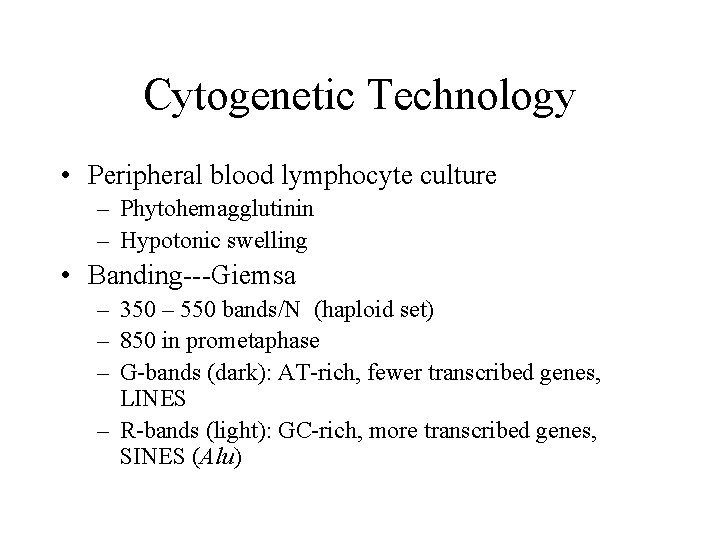
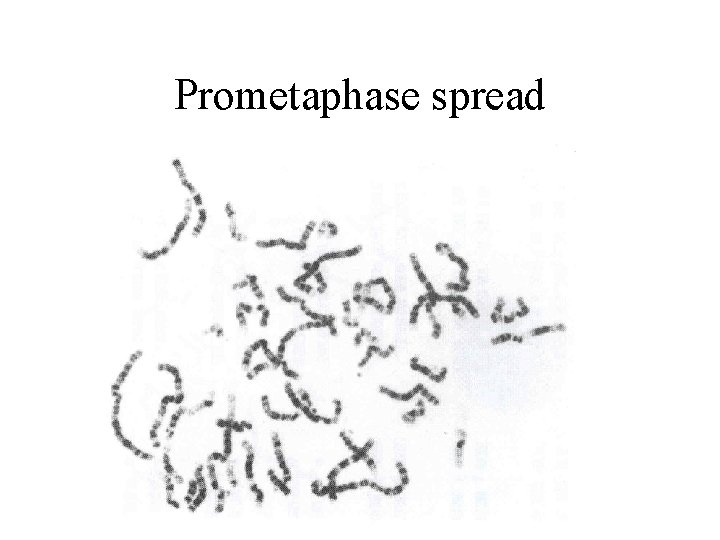
Cytogenetic Technology • Peripheral blood lymphocyte culture – Phytohemagglutinin – Hypotonic swelling • Banding---Giemsa – 350 – 550 bands/N (haploid set) – 850 in prometaphase – G-bands (dark): AT-rich, fewer transcribed genes, LINES – R-bands (light): GC-rich, more transcribed genes, SINES (Alu)
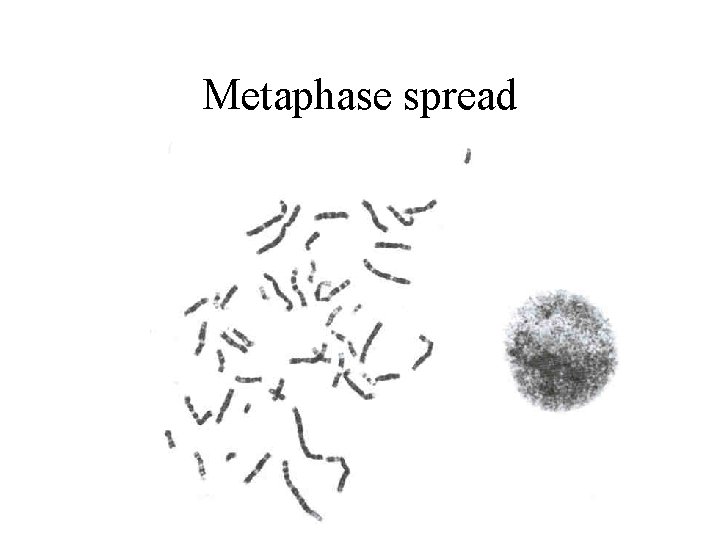
Metaphase spread
Prometaphase spread
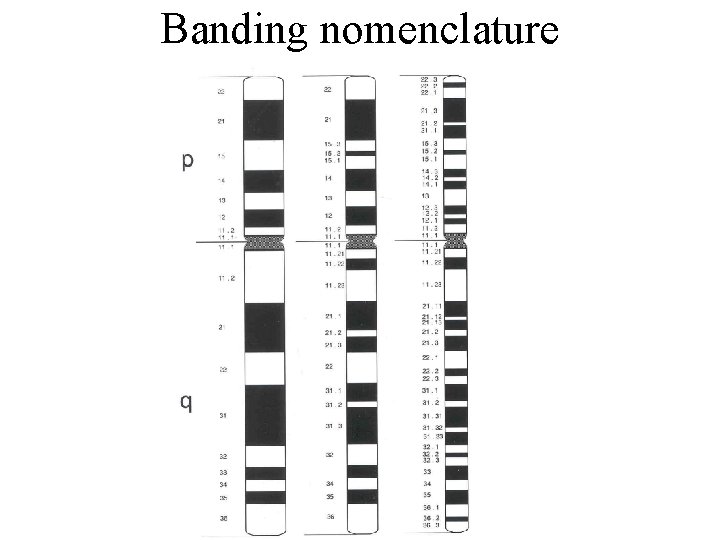
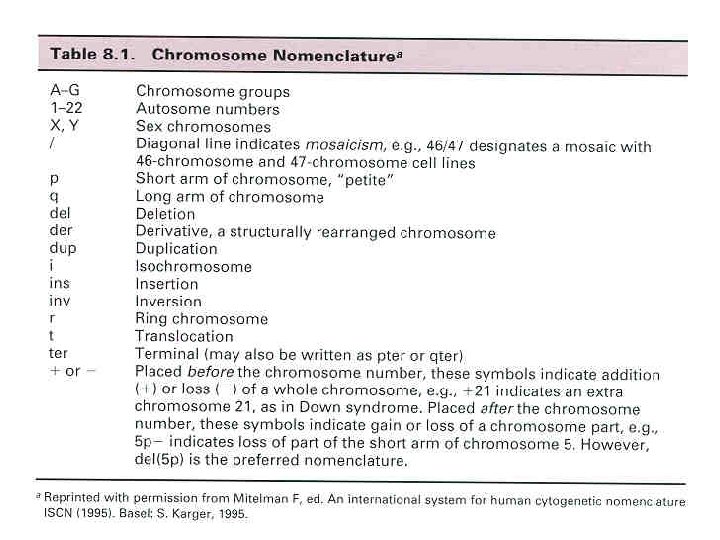
Banding nomenclature
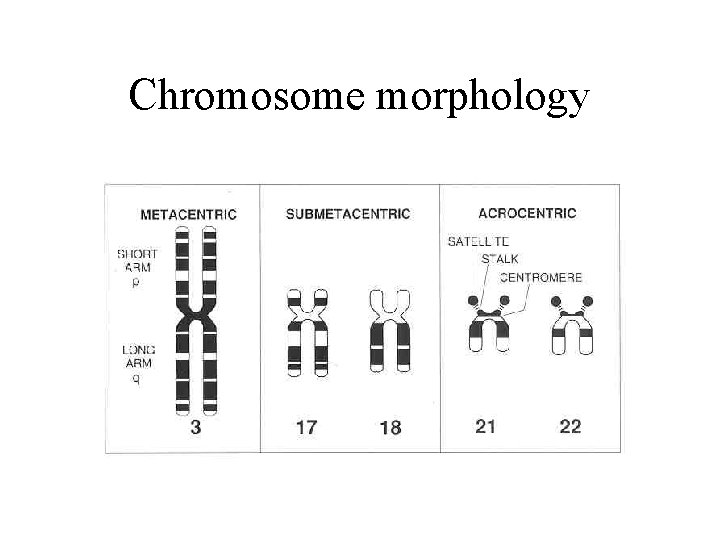
Chromosome morphology
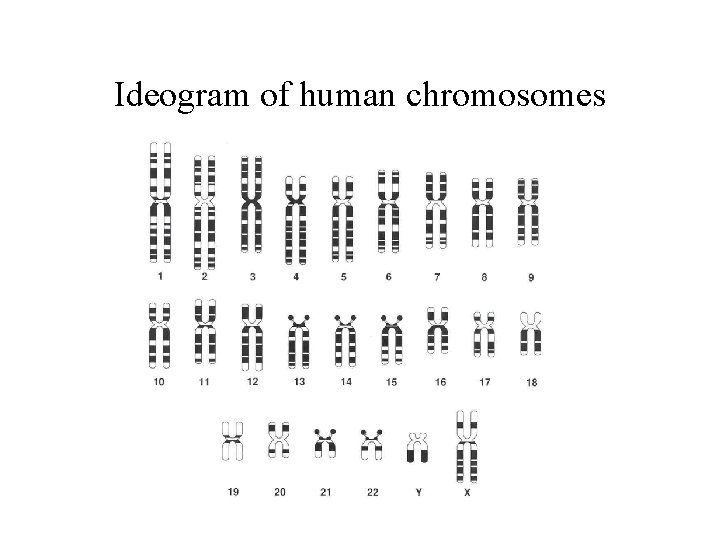
Ideogram of human chromosomes
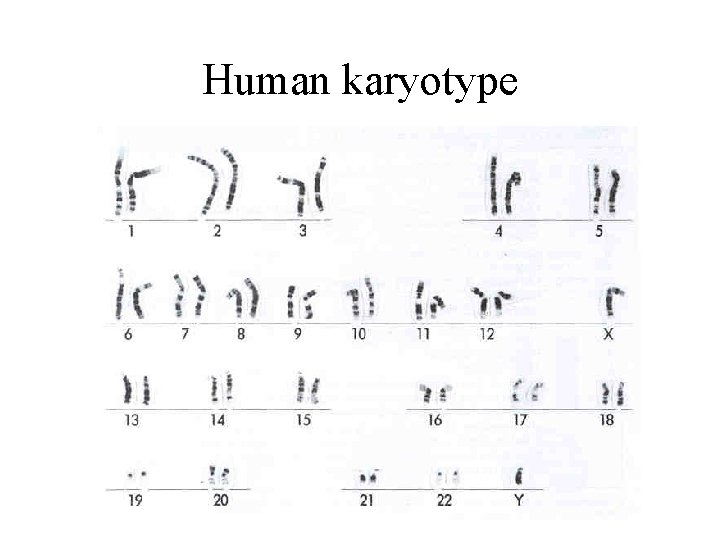
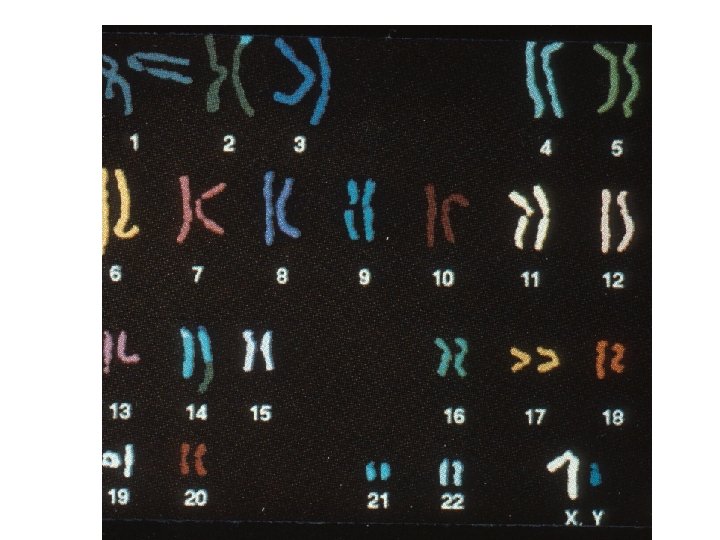
Human karyotype
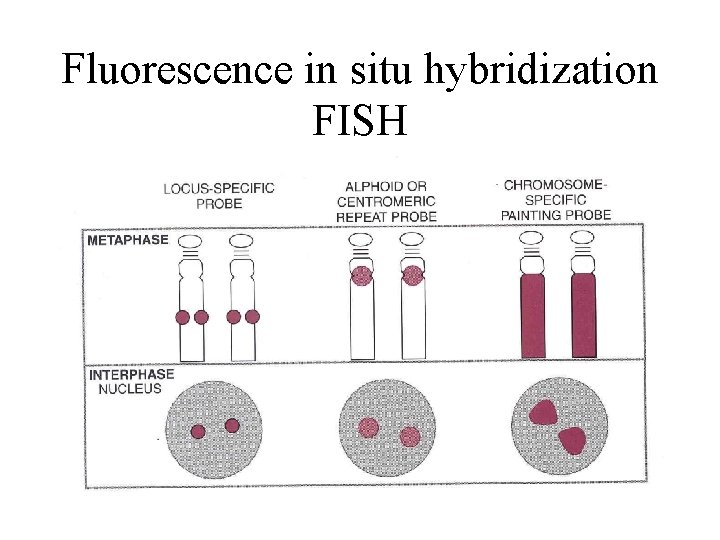
Fluorescence in situ hybridization FISH
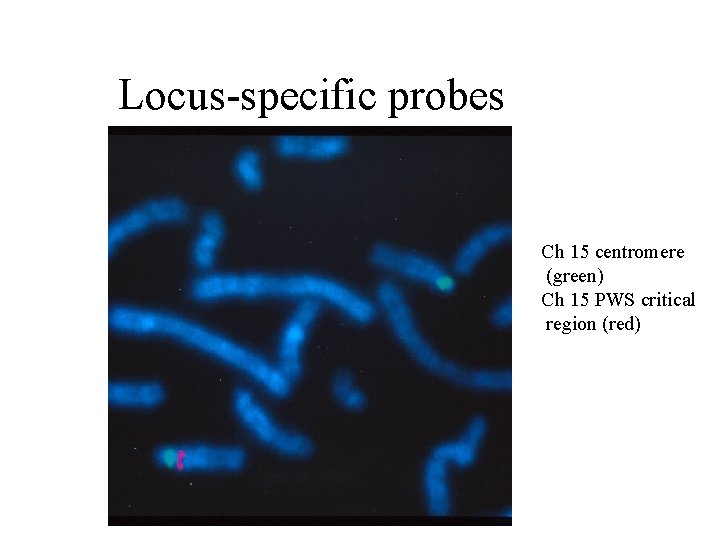
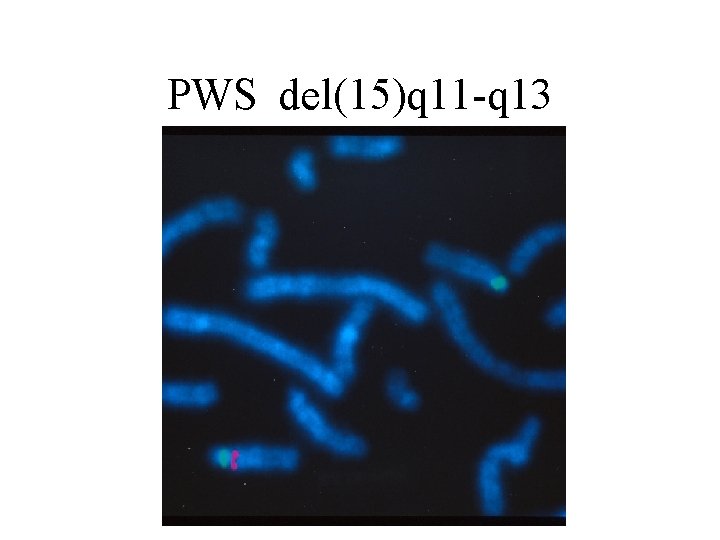
Locus-specific probes Ch 15 centromere (green) Ch 15 PWS critical region (red)
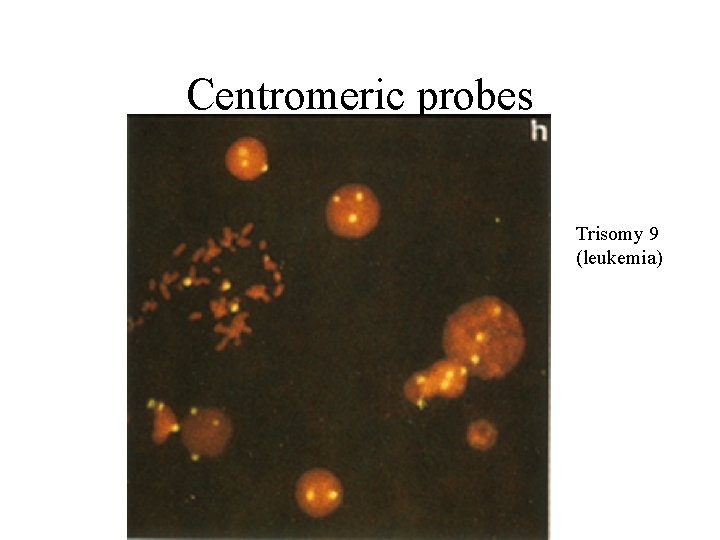
Centromeric probes Trisomy 9 (leukemia)
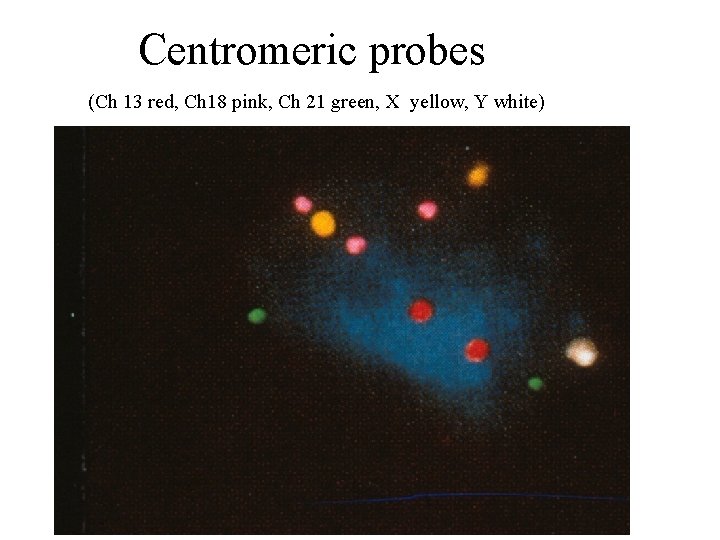
Centromeric probes (Ch 13 red, Ch 18 pink, Ch 21 green, X yellow, Y white)
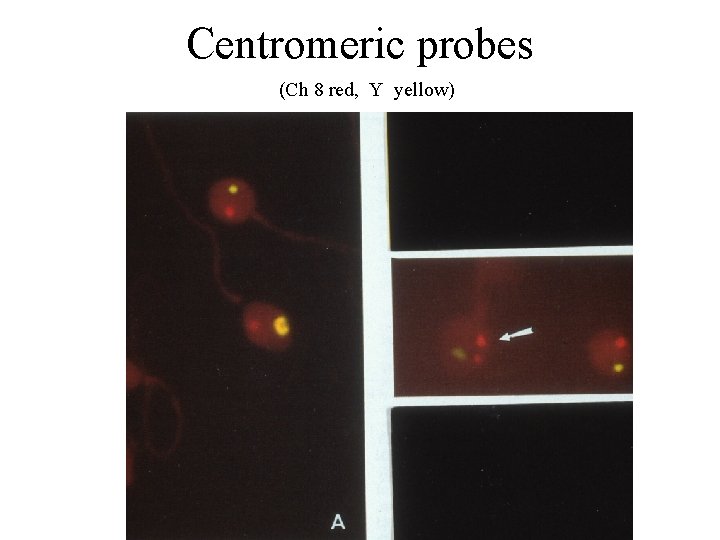
Centromeric probes (Ch 8 red, Y yellow)
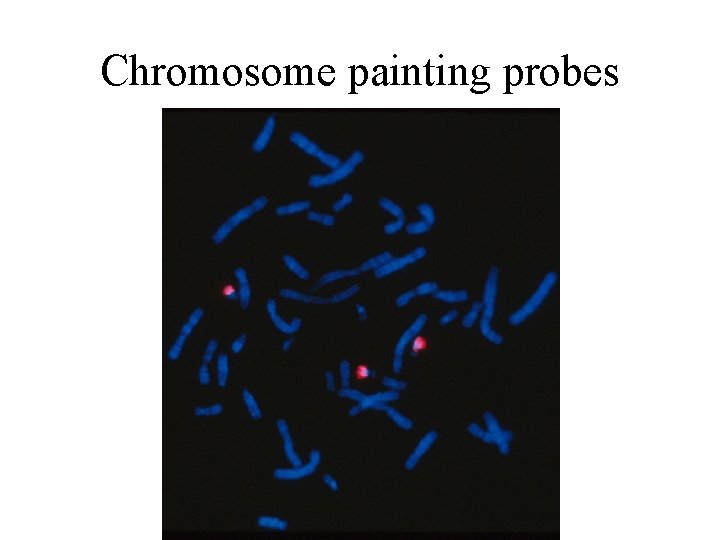
Chromosome painting probes
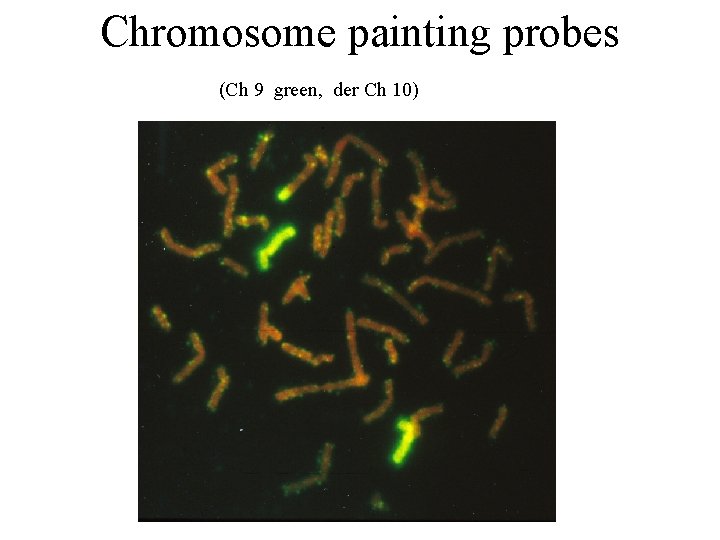
Chromosome painting probes (Ch 9 green, der Ch 10)
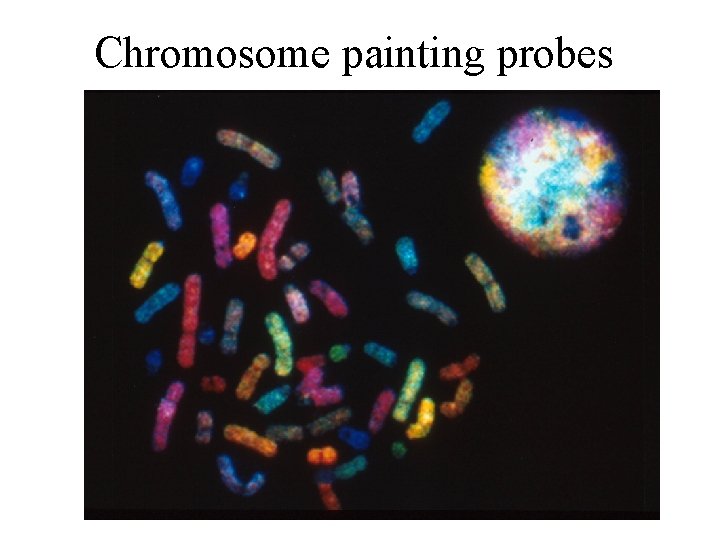
Chromosome painting probes
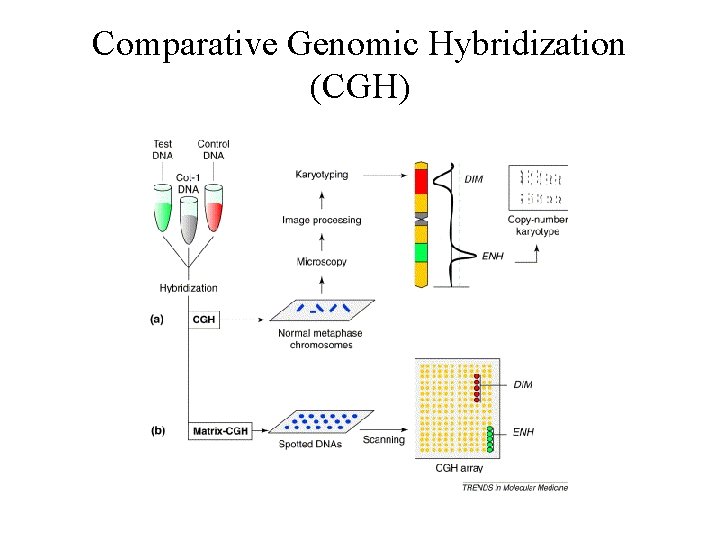
Comparative Genomic Hybridization (CGH)
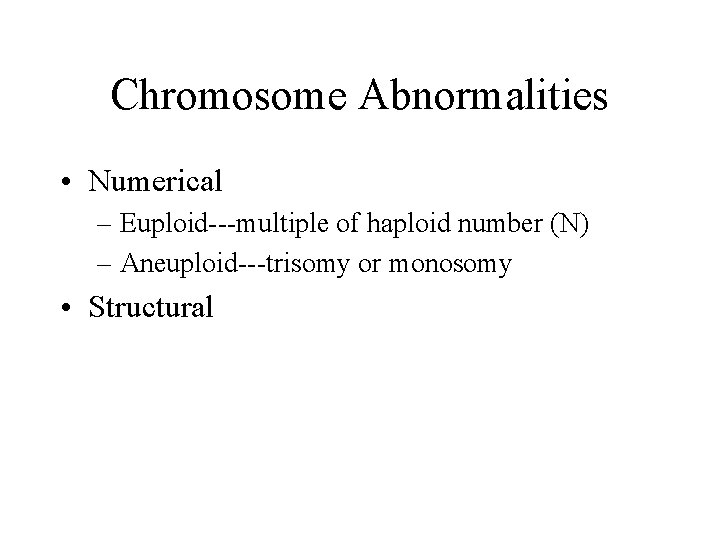
Chromosome Abnormalities • Numerical – Euploid---multiple of haploid number (N) – Aneuploid---trisomy or monosomy • Structural
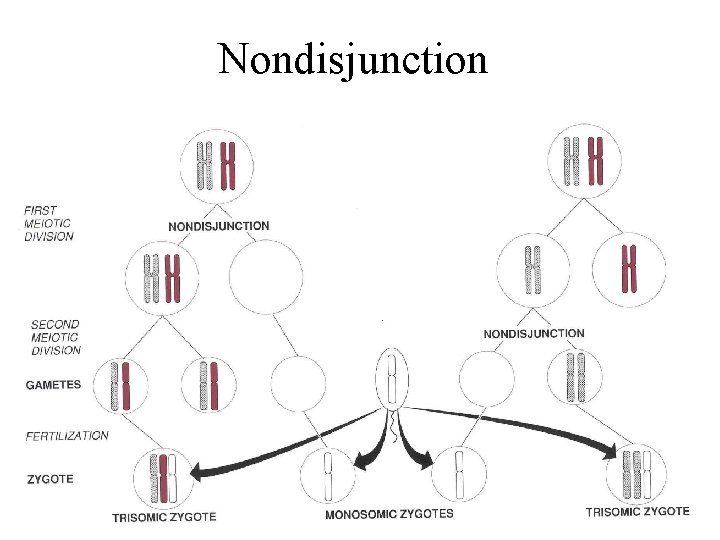
Nondisjunction
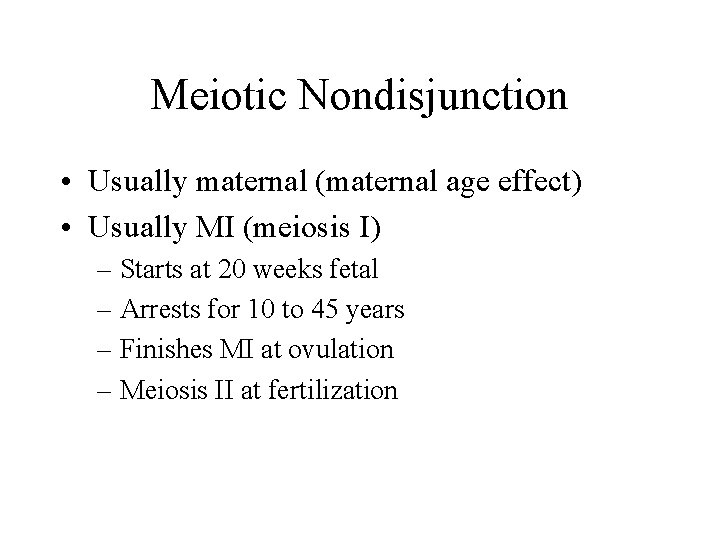
Meiotic Nondisjunction • Usually maternal (maternal age effect) • Usually MI (meiosis I) – Starts at 20 weeks fetal – Arrests for 10 to 45 years – Finishes MI at ovulation – Meiosis II at fertilization
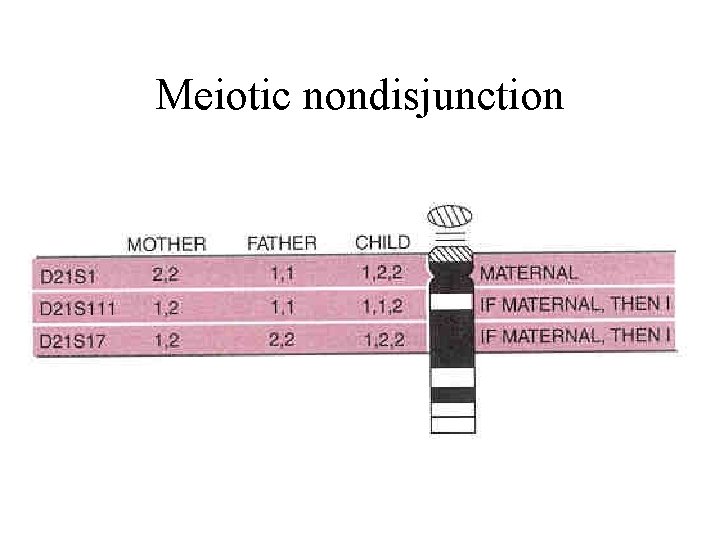
Meiotic nondisjunction
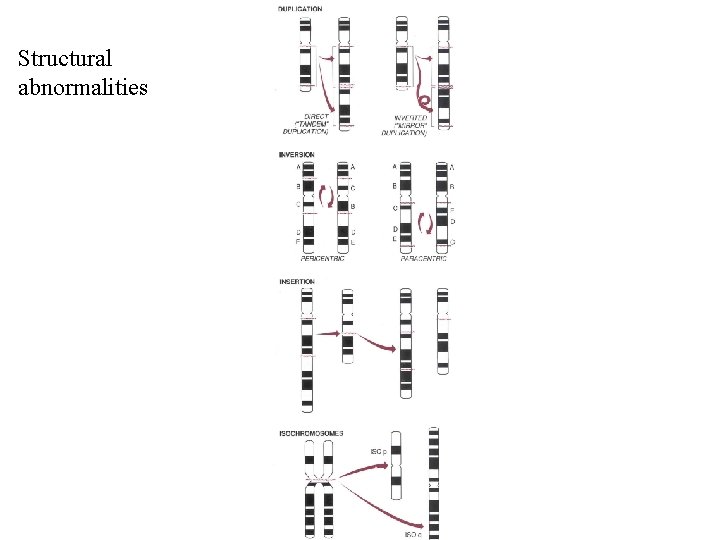
Structural abnormalities
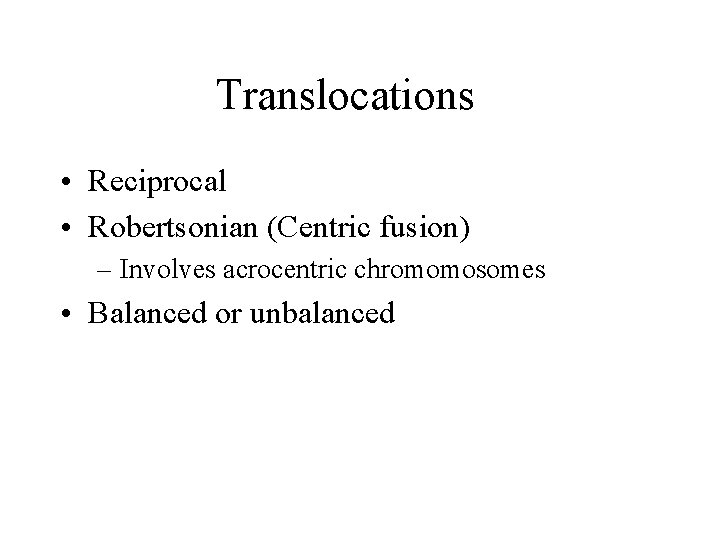
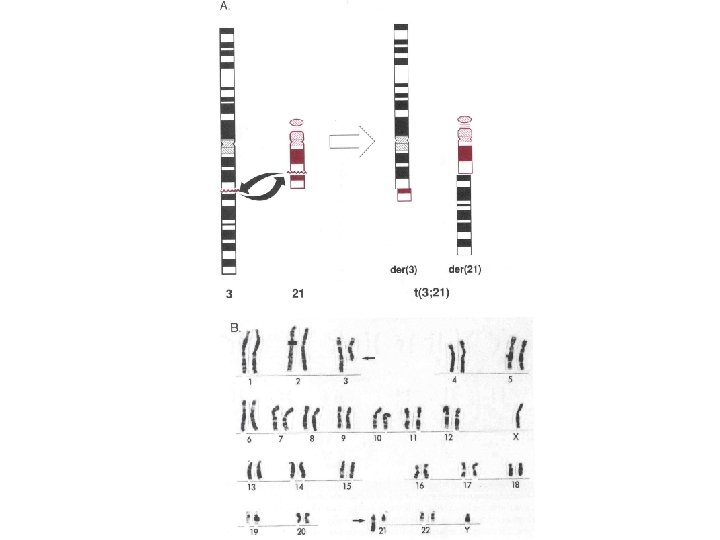
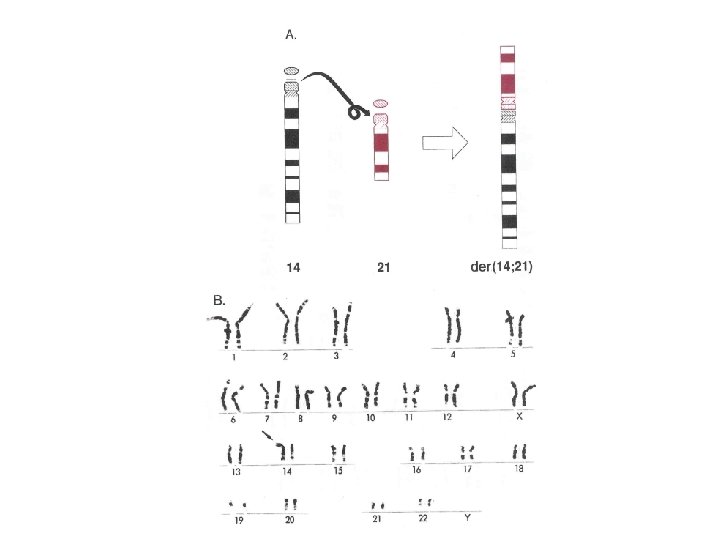
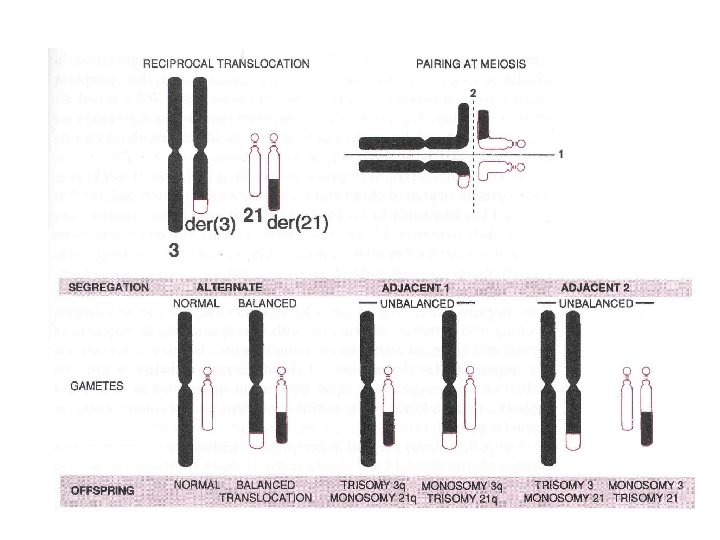
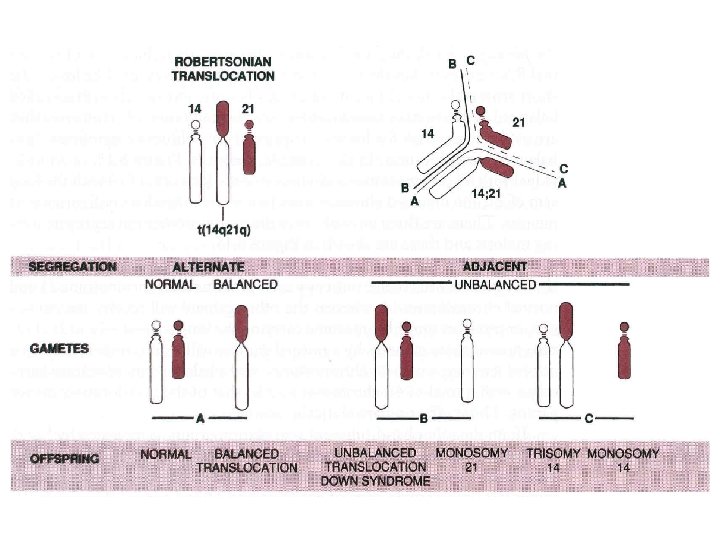
Translocations • Reciprocal • Robertsonian (Centric fusion) – Involves acrocentric chromomosomes • Balanced or unbalanced
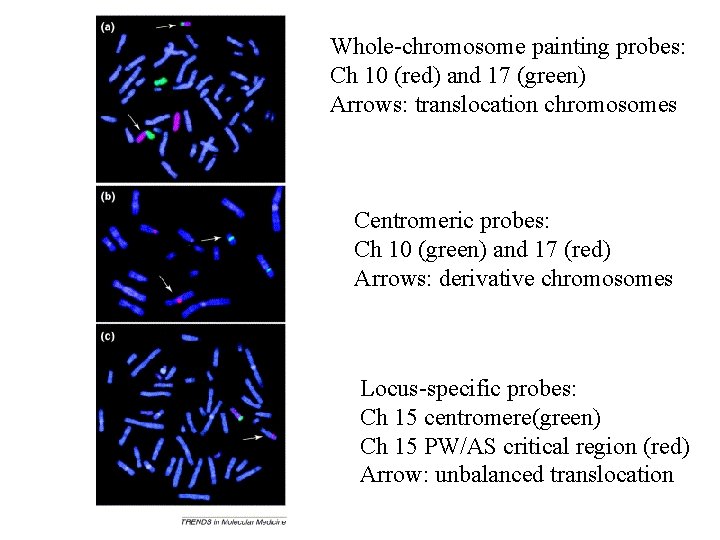
Whole-chromosome painting probes: Ch 10 (red) and 17 (green) Arrows: translocation chromosomes Centromeric probes: Ch 10 (green) and 17 (red) Arrows: derivative chromosomes Locus-specific probes: Ch 15 centromere(green) Ch 15 PW/AS critical region (red) Arrow: unbalanced translocation
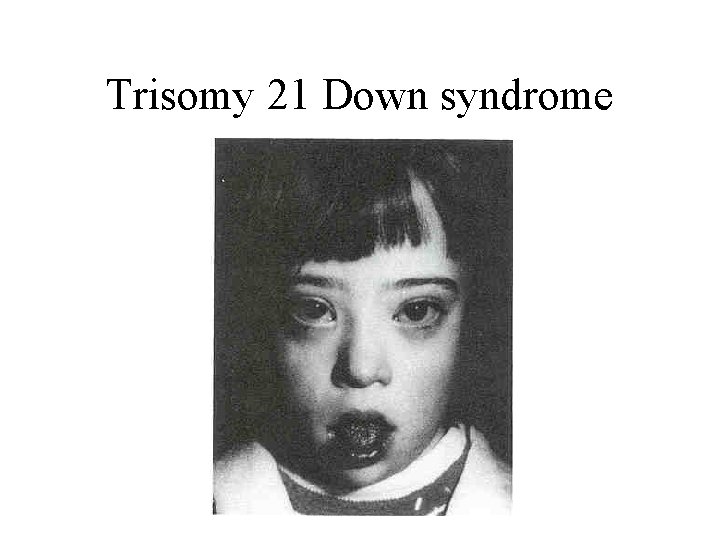
Trisomy 21 Down syndrome
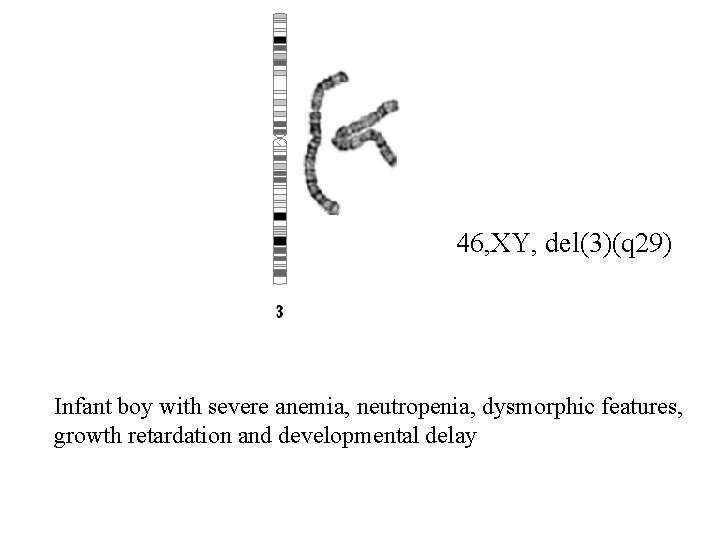
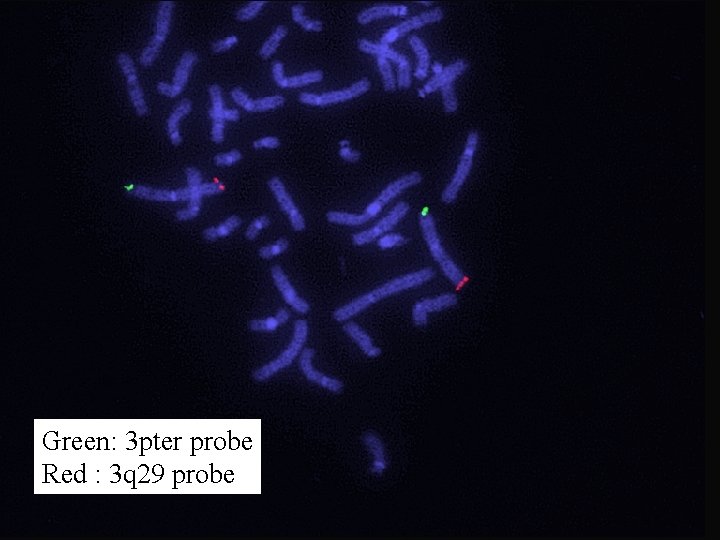
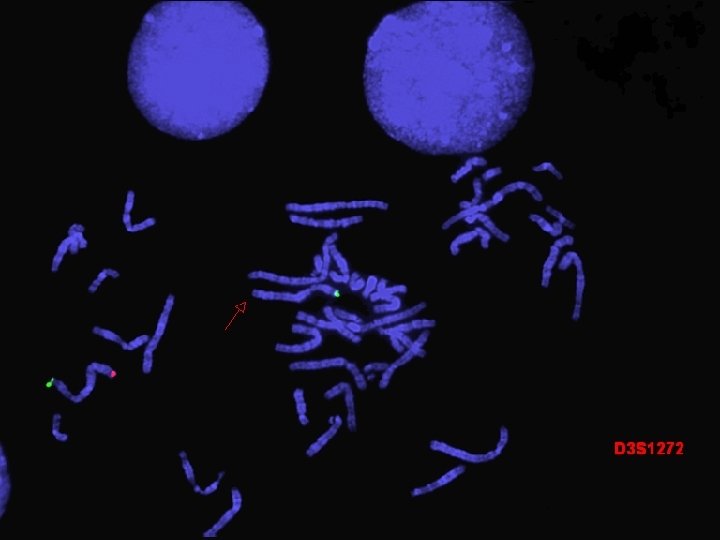
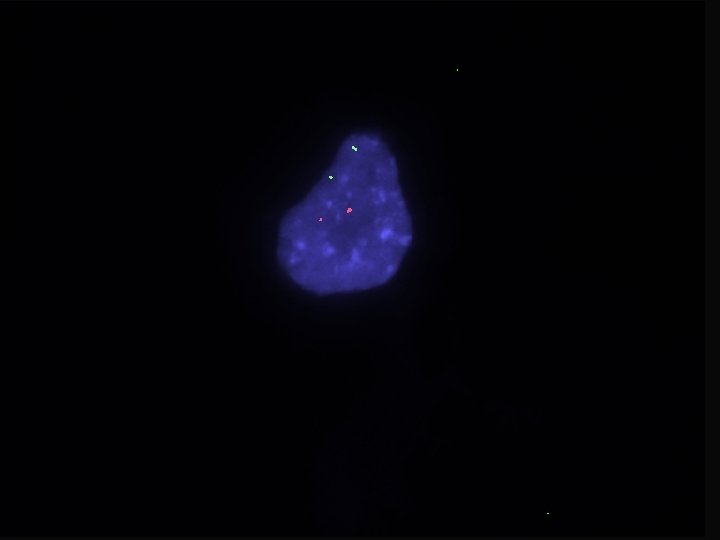
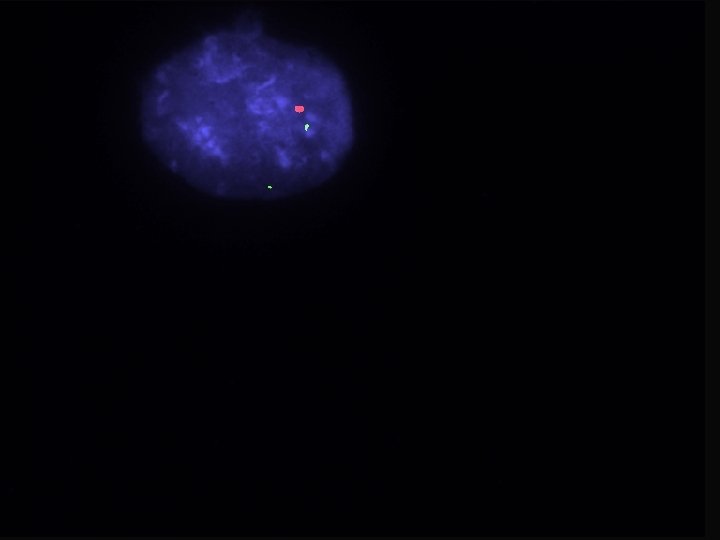
46, XY, del(3)(q 29) Infant boy with severe anemia, neutropenia, dysmorphic features, growth retardation and developmental delay
Green: 3 pter probe Red : 3 q 29 probe
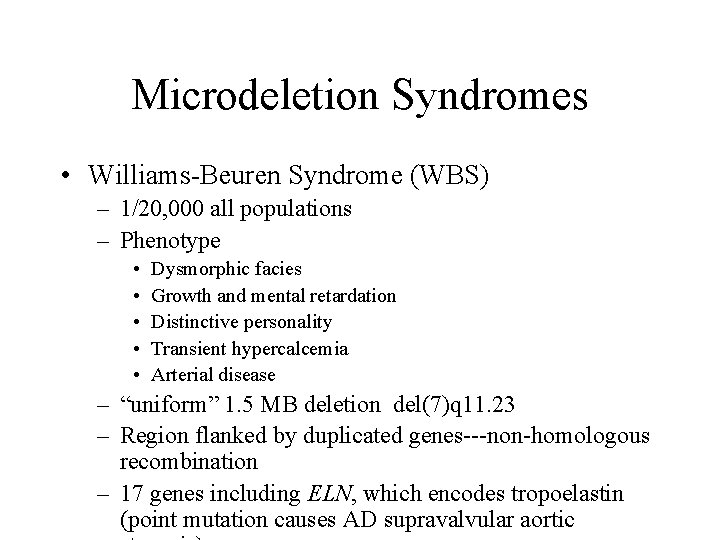
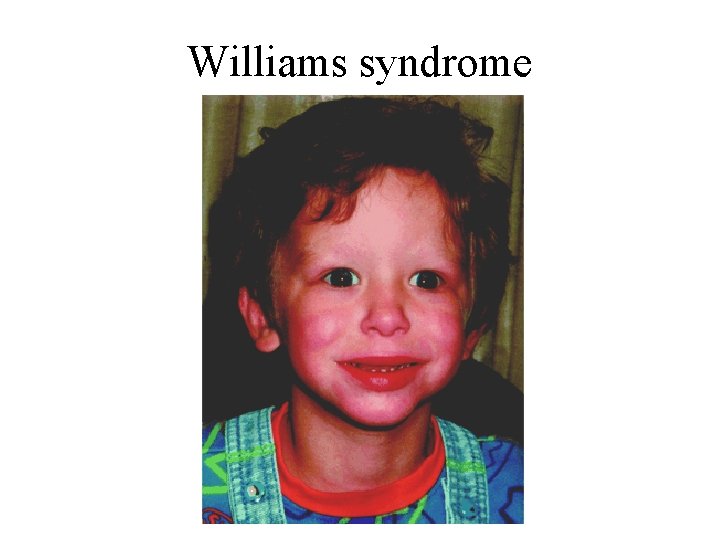
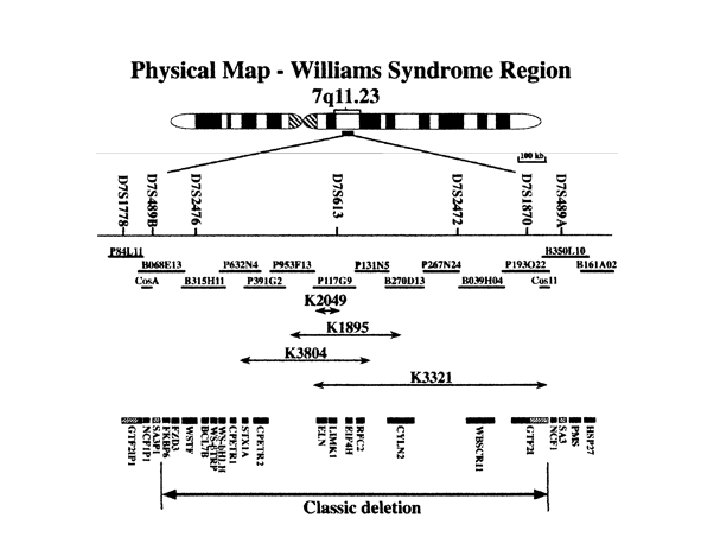
Microdeletion Syndromes • Williams-Beuren Syndrome (WBS) – 1/20, 000 all populations – Phenotype • • • Dysmorphic facies Growth and mental retardation Distinctive personality Transient hypercalcemia Arterial disease – “uniform” 1. 5 MB deletion del(7)q 11. 23 – Region flanked by duplicated genes---non-homologous recombination – 17 genes including ELN, which encodes tropoelastin (point mutation causes AD supravalvular aortic
Williams syndrome
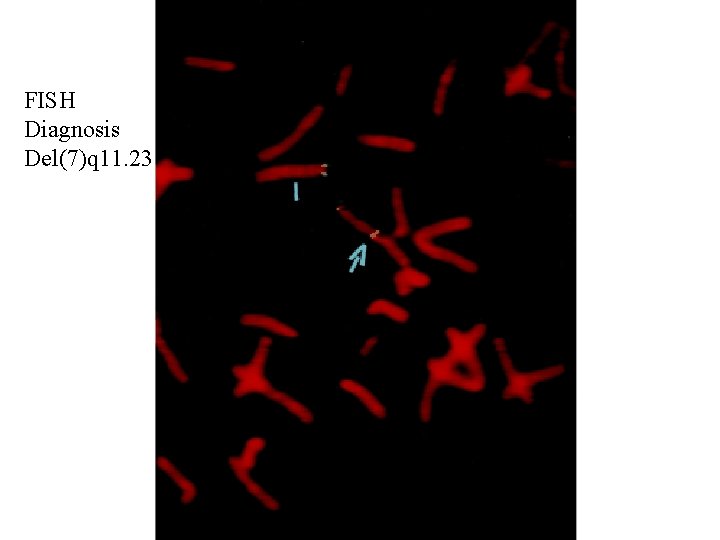
FISH Diagnosis Del(7)q 11. 23
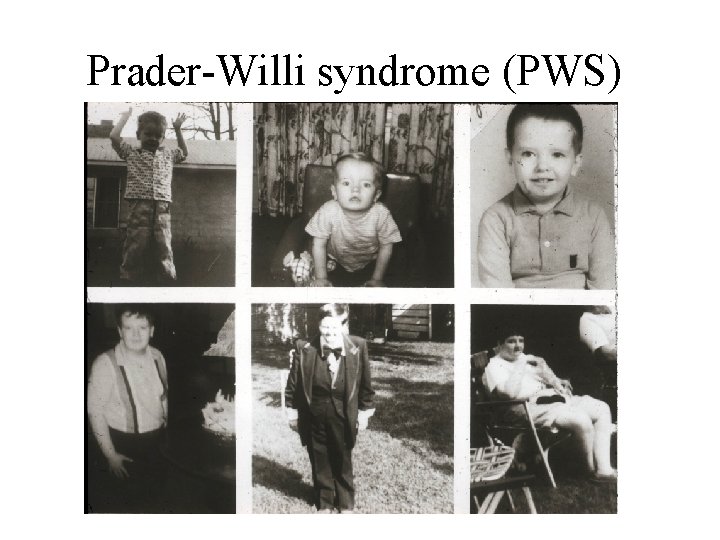
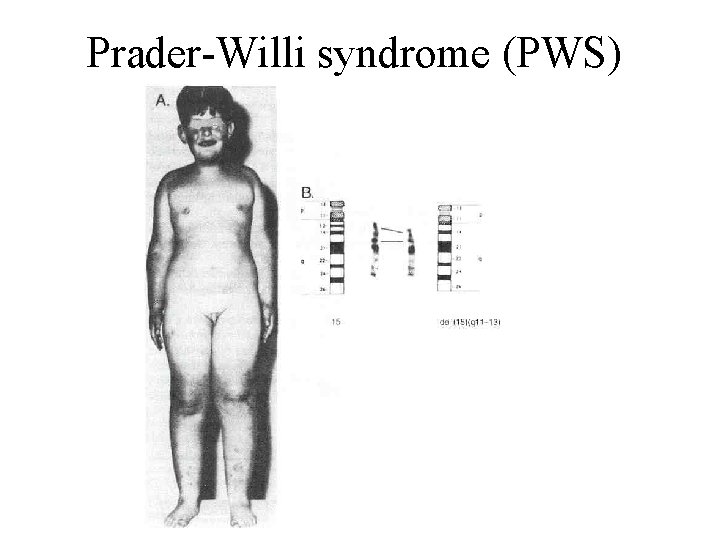
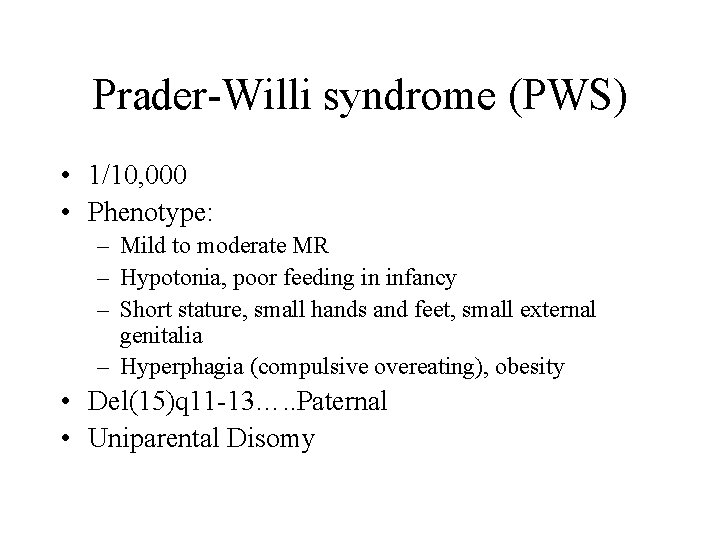
Prader-Willi syndrome (PWS) • 1/10, 000 • Phenotype: – Mild to moderate MR – Hypotonia, poor feeding in infancy – Short stature, small hands and feet, small external genitalia – Hyperphagia (compulsive overeating), obesity
Prader-Willi syndrome (PWS)
Prader-Willi syndrome (PWS)
PWS del(15)q 11 -q 13
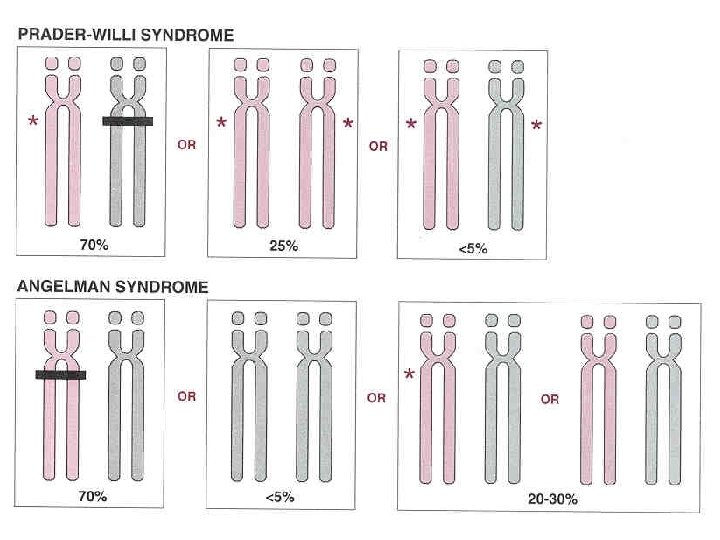
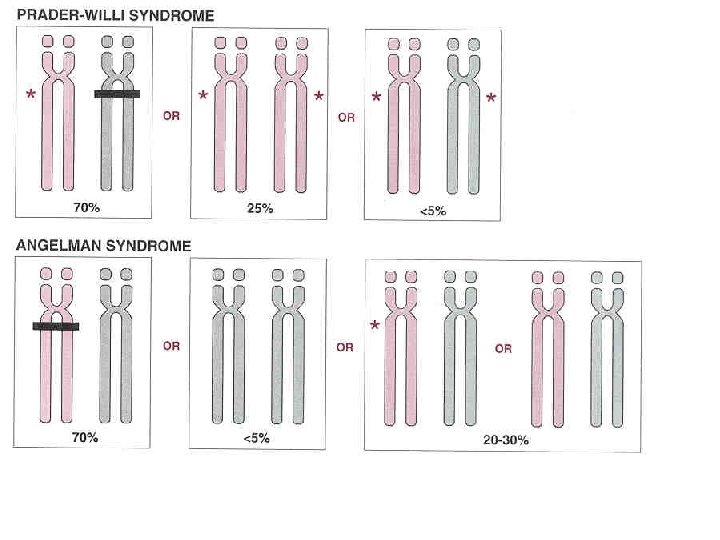
Prader-Willi syndrome (PWS) • 1/10, 000 • Phenotype: – Mild to moderate MR – Hypotonia, poor feeding in infancy – Short stature, small hands and feet, small external genitalia – Hyperphagia (compulsive overeating), obesity • Del(15)q 11 -13…. . Paternal • Uniparental Disomy
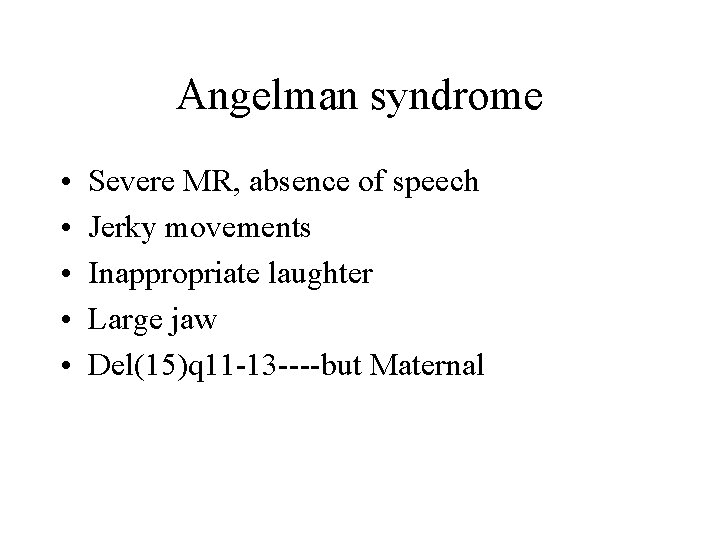
Angelman syndrome • • • Severe MR, absence of speech Jerky movements Inappropriate laughter Large jaw Del(15)q 11 -13 ----but Maternal
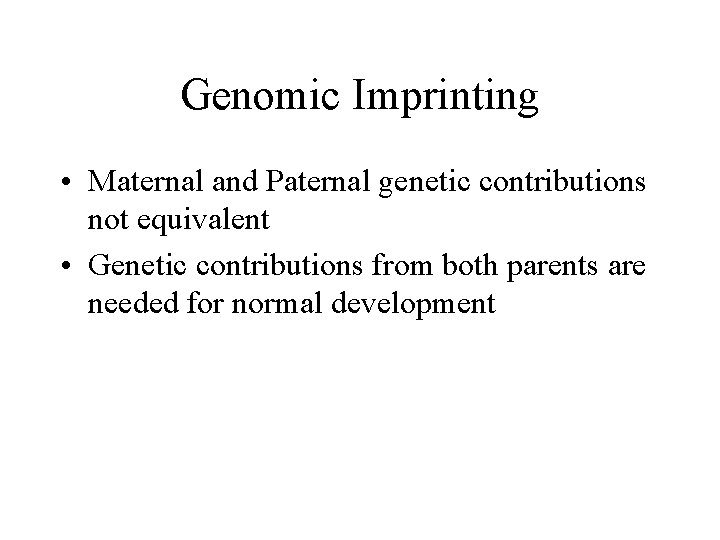
Genomic Imprinting • Maternal and Paternal genetic contributions not equivalent • Genetic contributions from both parents are needed for normal development
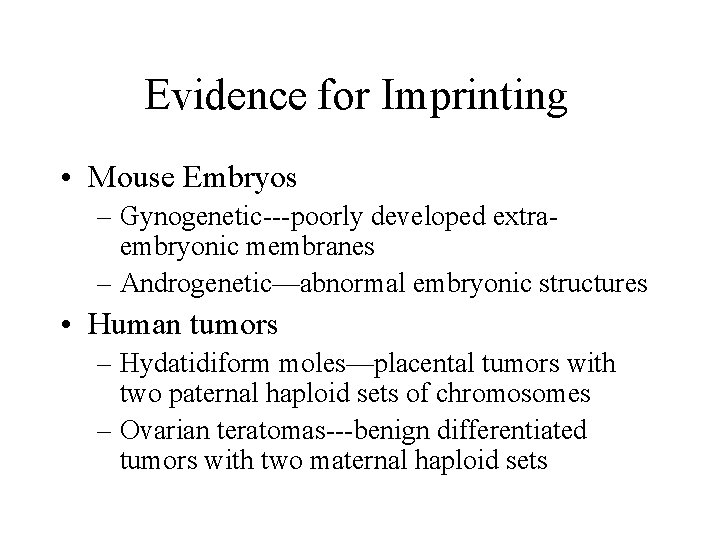
Evidence for Imprinting • Mouse Embryos – Gynogenetic---poorly developed extraembryonic membranes – Androgenetic—abnormal embryonic structures • Human tumors – Hydatidiform moles—placental tumors with two paternal haploid sets of chromosomes – Ovarian teratomas---benign differentiated tumors with two maternal haploid sets
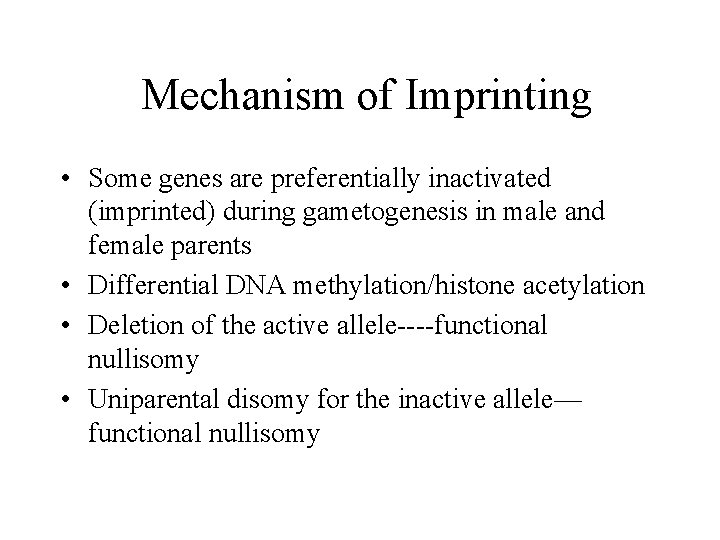
Mechanism of Imprinting • Some genes are preferentially inactivated (imprinted) during gametogenesis in male and female parents • Differential DNA methylation/histone acetylation • Deletion of the active allele----functional nullisomy • Uniparental disomy for the inactive allele— functional nullisomy
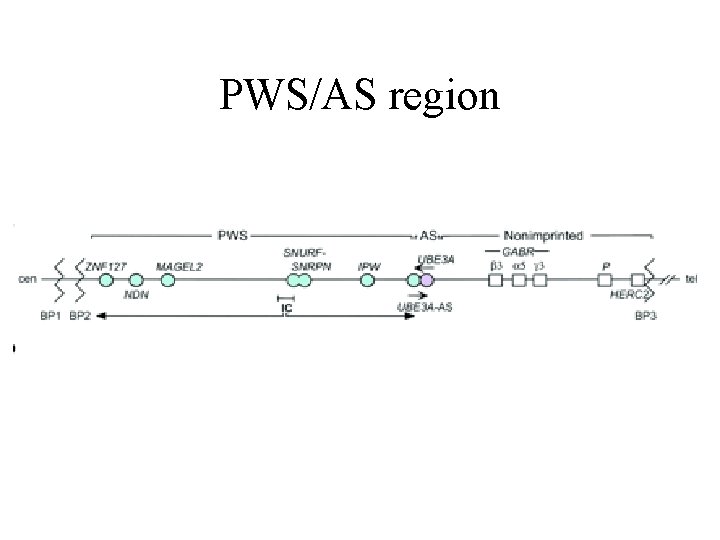
PWS/AS region