Course code ZOO 560 Week 1 Evolution of
- Slides: 77
Course code: ZOO 560 Week 1 Evolution of genes & proteins Advanced molecular biology (ZOO 560) by Rania M. H. Baleela is licensed under a Creative Commons Attribution-Non. Commercial-Share. Alike 3. 0 Unported License. 1
Information • Time: Thursday 11: 00 pm-14: 00 pm • Venues: Genetics & Physiology Lab. & ZLR • Lectures and reading can be found at: https: //lms. uofk. edu/course/view. php? id=1232 • Poor attendance will result in poor performance (a large amount of recent publications material will be included) 2
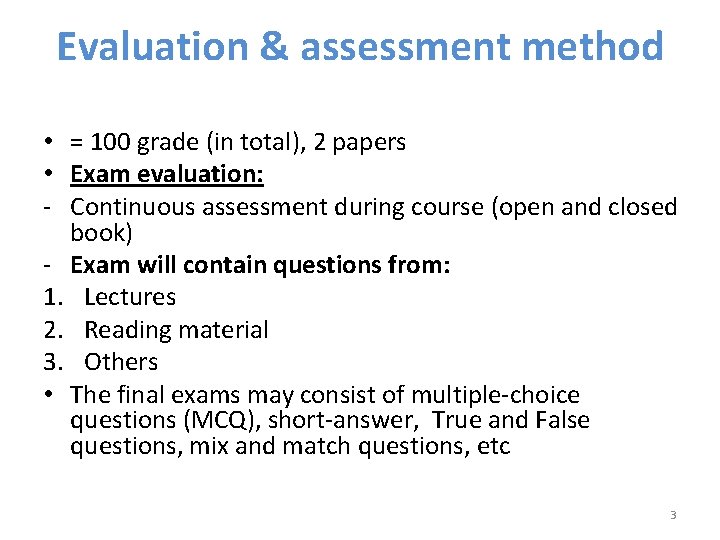
Evaluation & assessment method • = 100 grade (in total), 2 papers • Exam evaluation: - Continuous assessment during course (open and closed book) - Exam will contain questions from: 1. Lectures 2. Reading material 3. Others • The final exams may consist of multiple-choice questions (MCQ), short-answer, True and False questions, mix and match questions, etc 3
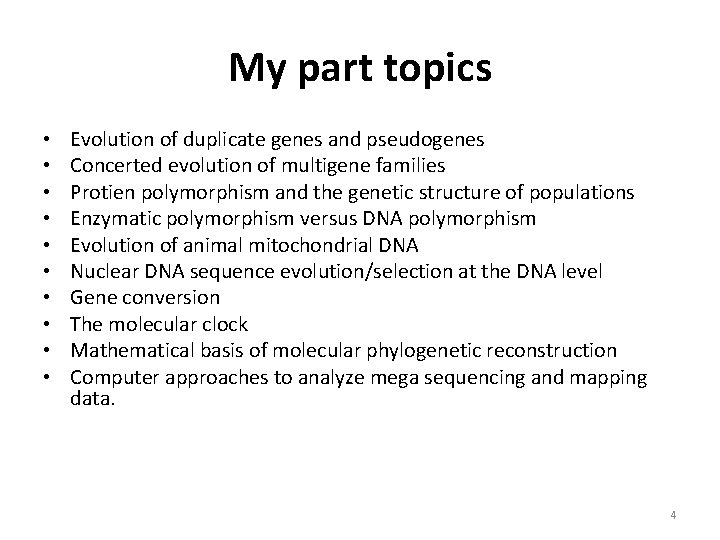
My part topics • • • Evolution of duplicate genes and pseudogenes Concerted evolution of multigene families Protien polymorphism and the genetic structure of populations Enzymatic polymorphism versus DNA polymorphism Evolution of animal mitochondrial DNA Nuclear DNA sequence evolution/selection at the DNA level Gene conversion The molecular clock Mathematical basis of molecular phylogenetic reconstruction Computer approaches to analyze mega sequencing and mapping data. 4
Seminars Thursday 11 am-12 pm 1. Evolution of animal mitochondrial DNA 29/3/2018 Wiam Hashim & Alaa Ahmed 2. Genetic structure of populations 5/4/2018 Hiba Almutaaz & Israa Yousif 3. Selection at the DNA level 12/4/2018 Arwa Ahmed Osman & Rawan Ahmed 4. Gene conversion 19/4/2018 Asawir Mohamed & Rihab Yaseen 5. Computer approaches to analyze mega sequencing and mapping data 26/4/2018 Sara Haythem & Fatima Hassan 5
This weeks • Terminology & definitions • Multigene families models of evolution • Evolution of genes and proteins 6
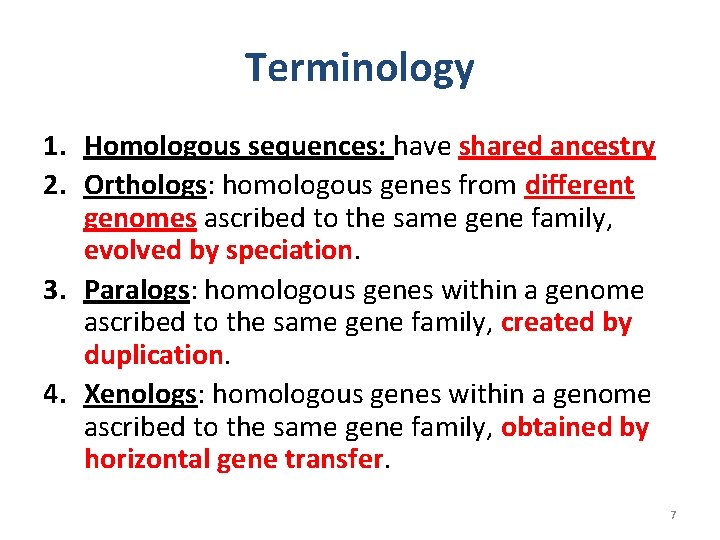
Terminology 1. Homologous sequences: have shared ancestry 2. Orthologs: homologous genes from different genomes ascribed to the same gene family, evolved by speciation. 3. Paralogs: homologous genes within a genome ascribed to the same gene family, created by duplication. 4. Xenologs: homologous genes within a genome ascribed to the same gene family, obtained by horizontal gene transfer. 7
Terminology 5. Orphans: single copy genes without any homolog. 6. Paranome: collection of paralogous genes. 7. Speciation: is a lineage-splitting event that produces 2 or >2 separate species 8
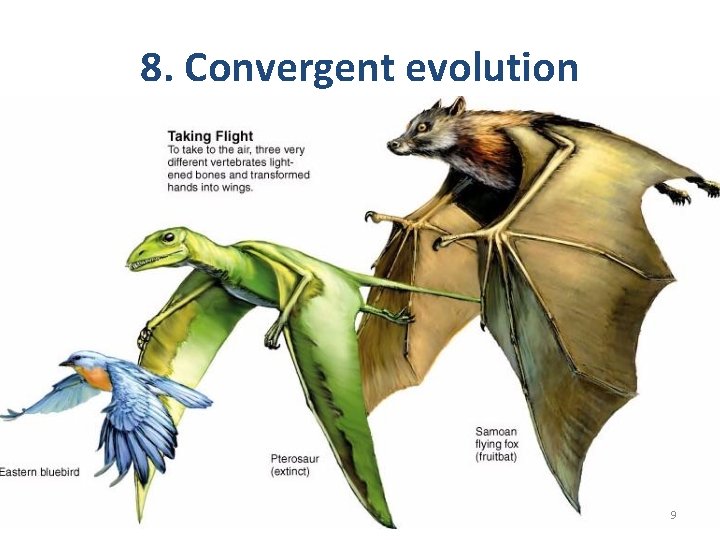
8. Convergent evolution 9
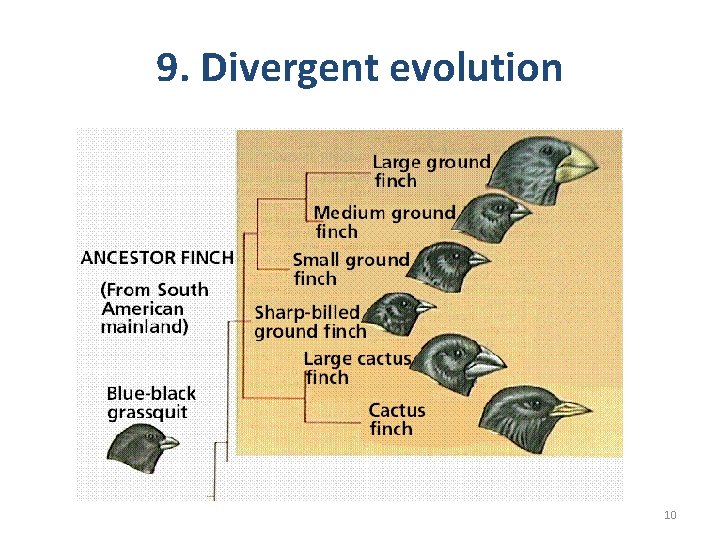
9. Divergent evolution 10
10. Concerted evolution: • A form of multigene family evolution • All the member genes are assumed to evolve as a unit in concert • A member of a gene family does not evolve independently of the other members of the family. • A mutation occurring in a repeat spreads through the entire member genes by repeated occurrence of unequal crossover or biased gene conversion 11
11. Evolution by birth-and-death • Combines the patterns seen in divergent and concerted evolution. 12
12. Multigene family • A group of genes that have descended from a common ancestral gene and therefore have similar functions and similar DNA sequences. • Supergene family =a group of related multigene families (e. g. the globin superfamily: = the α-like+ βlike+ some other gene families) • Recently duplicated gene families are generally found in close proximity on the same chromosome • Some members of multigene families serve the same function but differ in tissue specificity, developmental regulation or biochemical properties e. g. isozymes 13
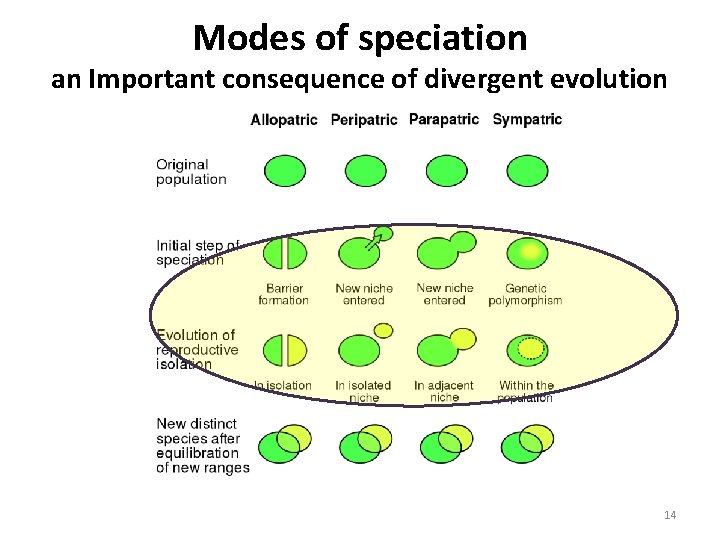
Modes of speciation an Important consequence of divergent evolution 14
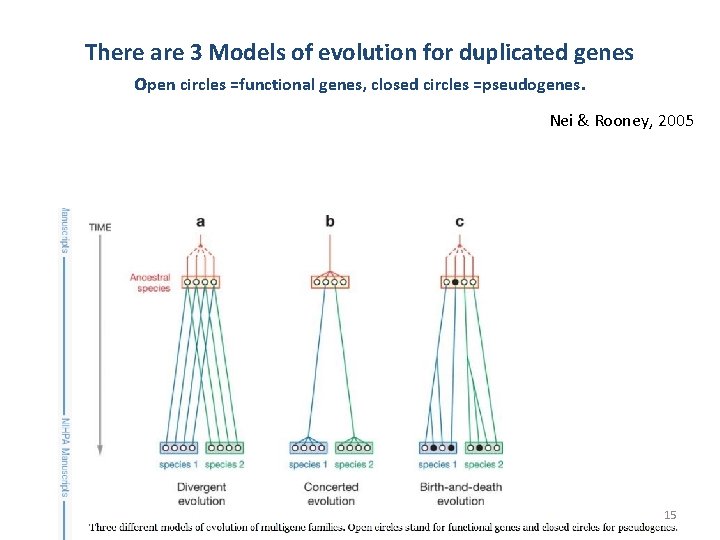
There are 3 Models of evolution for duplicated genes open circles =functional genes, closed circles =pseudogenes. Nei & Rooney, 2005 15
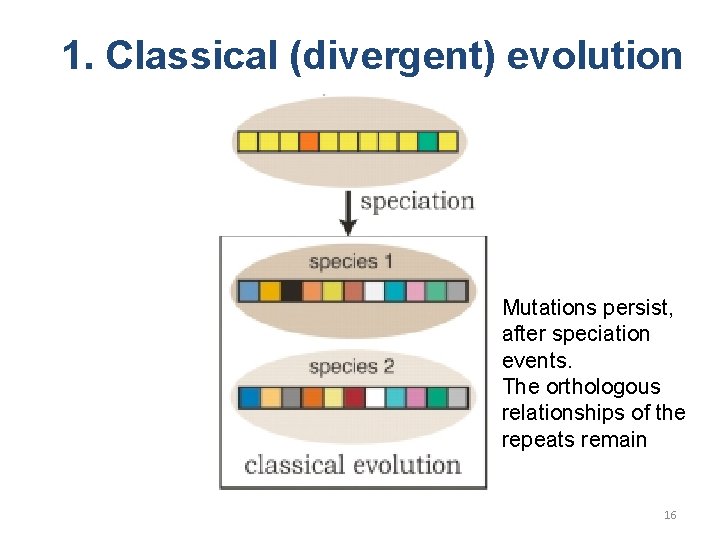
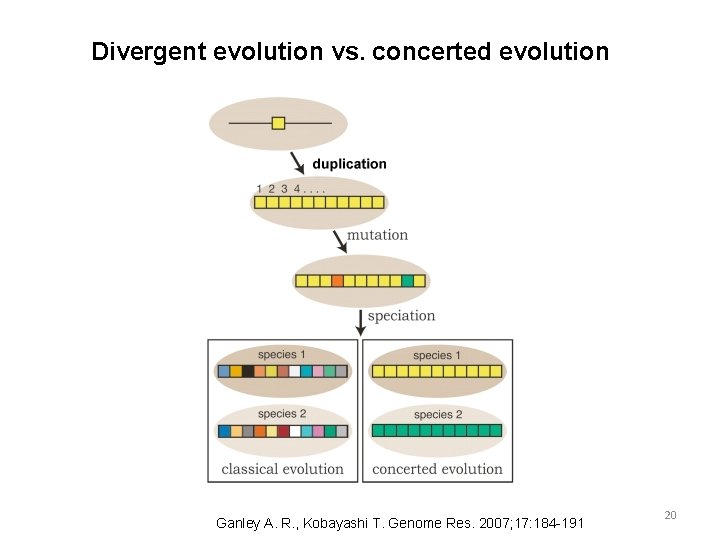
1. Classical (divergent) evolution Mutations persist, after speciation events. The orthologous relationships of the repeats remain 16
In divergent evolution repeat #1 from species 1 will resemble repeat #1 from species 2 more closely than the other repeats in species 1 17
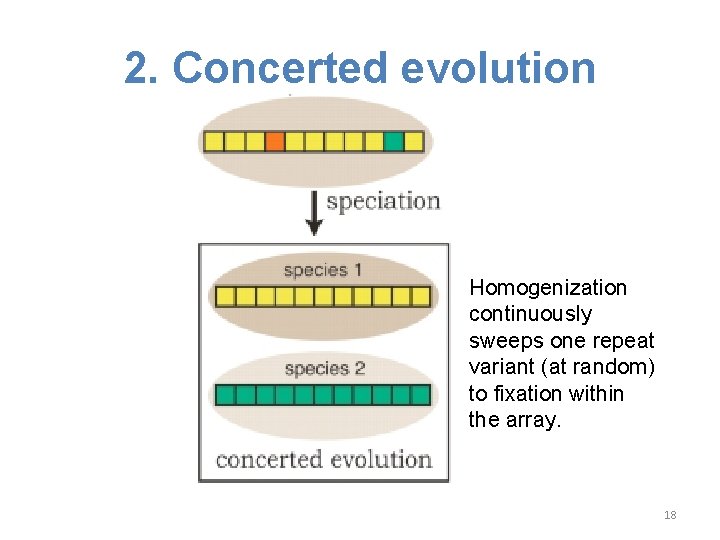
2. Concerted evolution Homogenization continuously sweeps one repeat variant (at random) to fixation within the array. 18
In concerted evolution the repeats within a genome are all expected to be similar, but differ in sequence from the repeats in a closely related species. 19
Divergent evolution vs. concerted evolution Ganley A. R. , Kobayashi T. Genome Res. 2007; 17: 184 -191 20
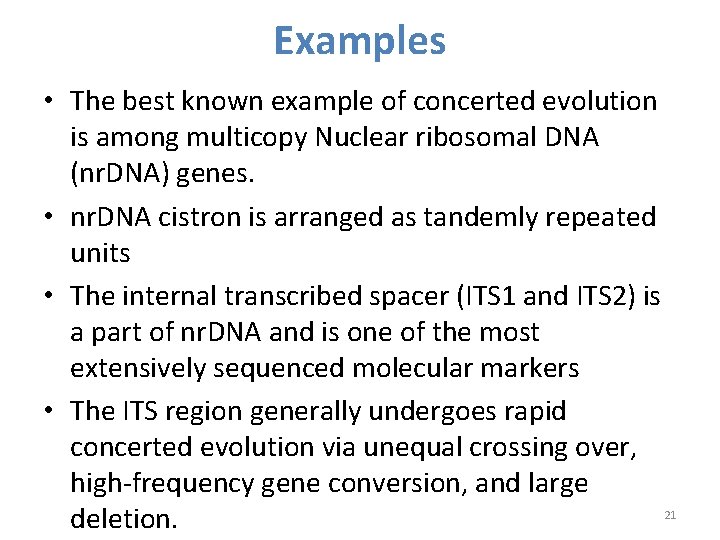
Examples • The best known example of concerted evolution is among multicopy Nuclear ribosomal DNA (nr. DNA) genes. • nr. DNA cistron is arranged as tandemly repeated units • The internal transcribed spacer (ITS 1 and ITS 2) is a part of nr. DNA and is one of the most extensively sequenced molecular markers • The ITS region generally undergoes rapid concerted evolution via unequal crossing over, high-frequency gene conversion, and large deletion. 21
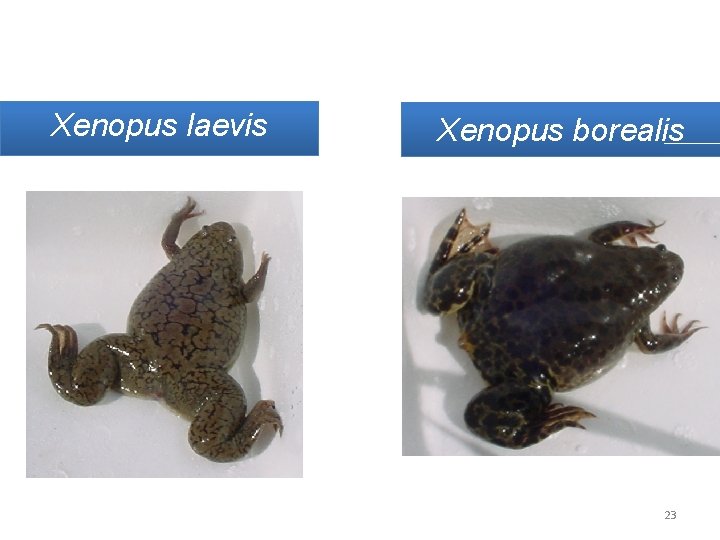
Case study Xenopus laevis & Xenopus borealis : r. RNA gene unit 22
Xenopus laevis Xenopus borealis 23
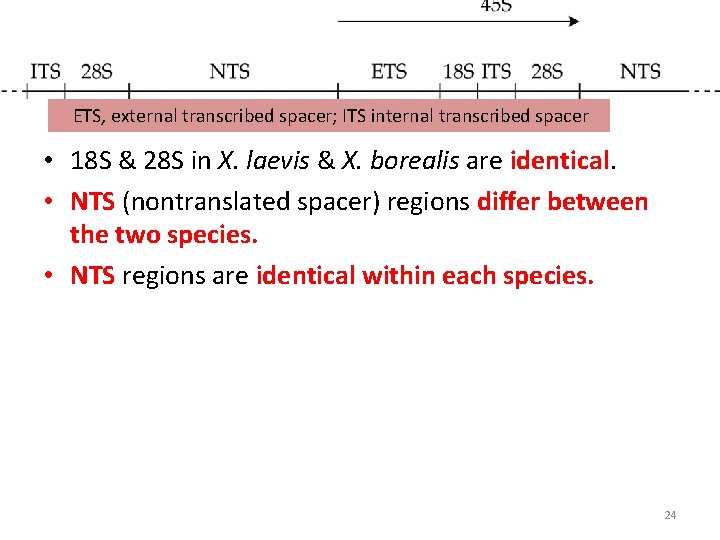
ETS, external transcribed spacer; ITS internal transcribed spacer • 18 S & 28 S in X. laevis & X. borealis are identical. • NTS (nontranslated spacer) regions differ between the two species. • NTS regions are identical within each species. 24
What are the possible causes of the differences between the 2 species’ NTS region? 25
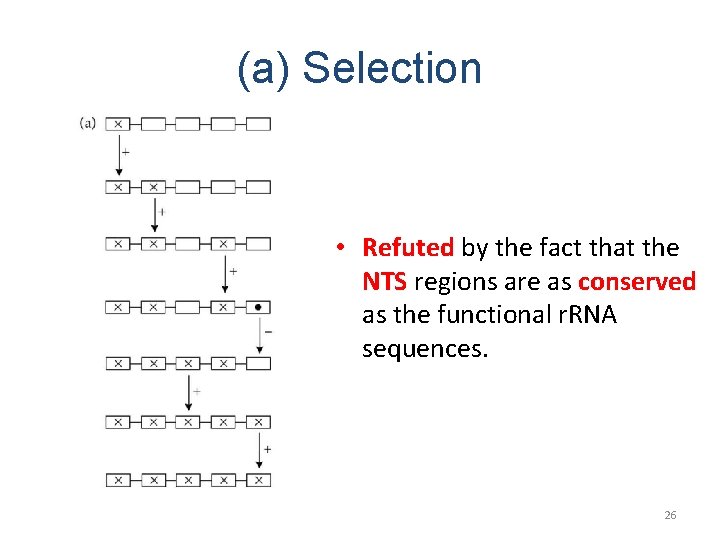
(a) Selection • Refuted by the fact that the NTS regions are as conserved as the functional r. RNA sequences. 26
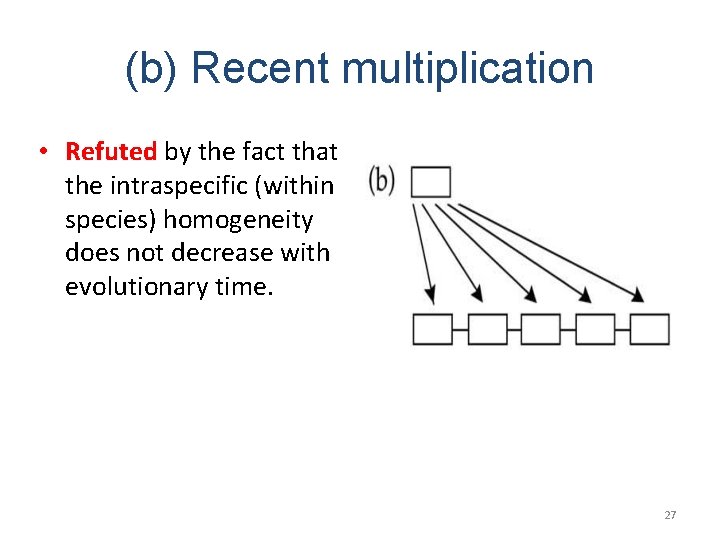
(b) Recent multiplication • Refuted by the fact that the intraspecific (within species) homogeneity does not decrease with evolutionary time. 27
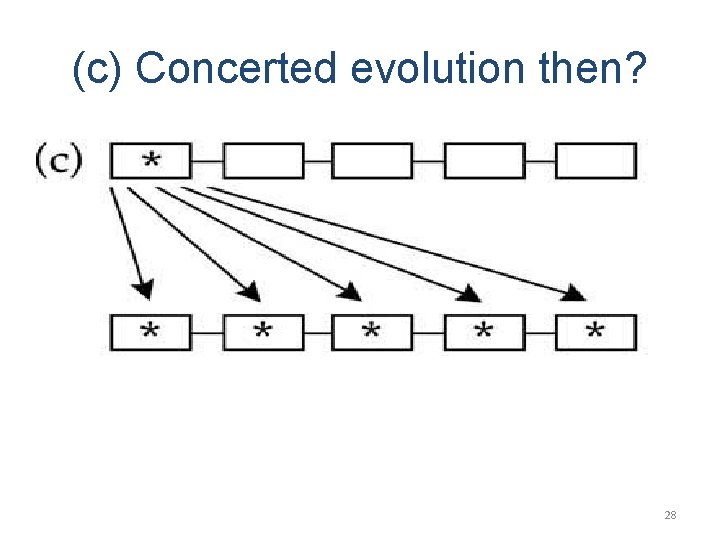
(c) Concerted evolution then? 28
Concerted evolution results in a homogenized set of non-allelic homologous sequences. 29
Conclusion: NTS regions in each species have evolved in concert, but have diverged rapidly between species. 30
Concerted evolution requires: (1) the horizontal transfer of mutations among the family members (homogenization). (2) the spread of mutations in the population (fixation). 31
Mechanisms of concerted evolution 1. Gene conversion 2. Unequal crossing-over 32
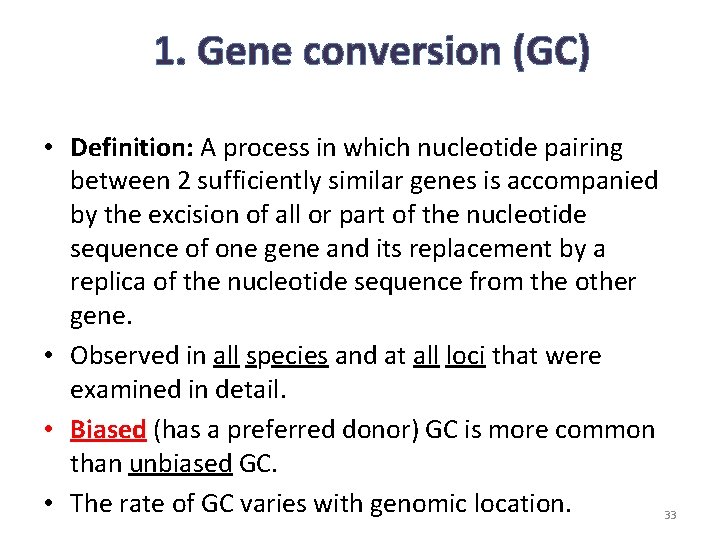
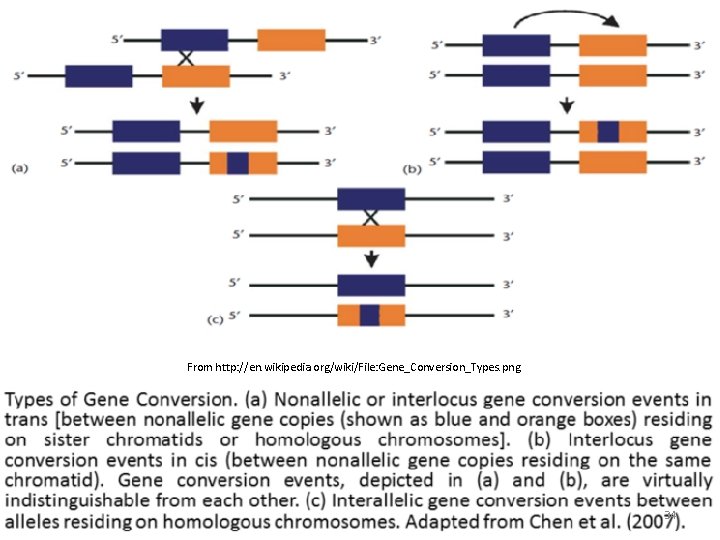
1. Gene conversion (GC) • Definition: A process in which nucleotide pairing between 2 sufficiently similar genes is accompanied by the excision of all or part of the nucleotide sequence of one gene and its replacement by a replica of the nucleotide sequence from the other gene. • Observed in all species and at all loci that were examined in detail. • Biased (has a preferred donor) GC is more common than unbiased GC. • The rate of GC varies with genomic location. 33
From http: //en. wikipedia. org/wiki/File: Gene_Conversion_Types. png 34
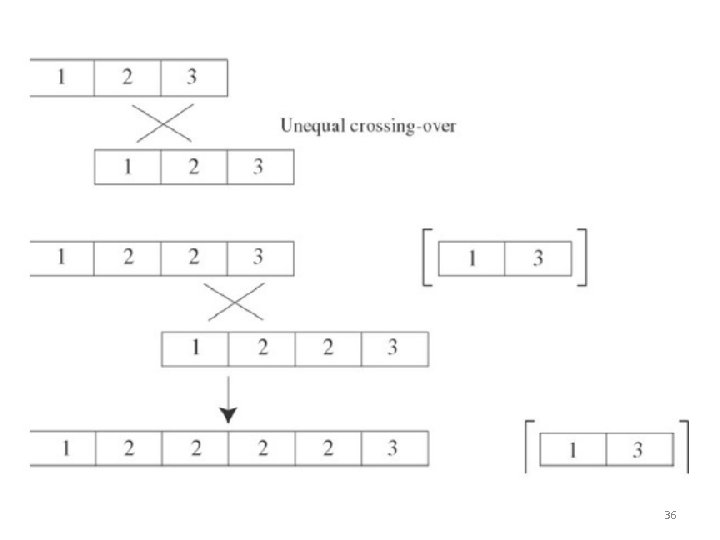
2. Unequal crossing-over (UCO) • Definition: Meiotic pairing between the tandem repeats in homologous chromosomes is out of register and crossing-over results in an increase in the number of copies in one chromosome and a corresponding decrease in the number of copies in the other chromosome. 35
36
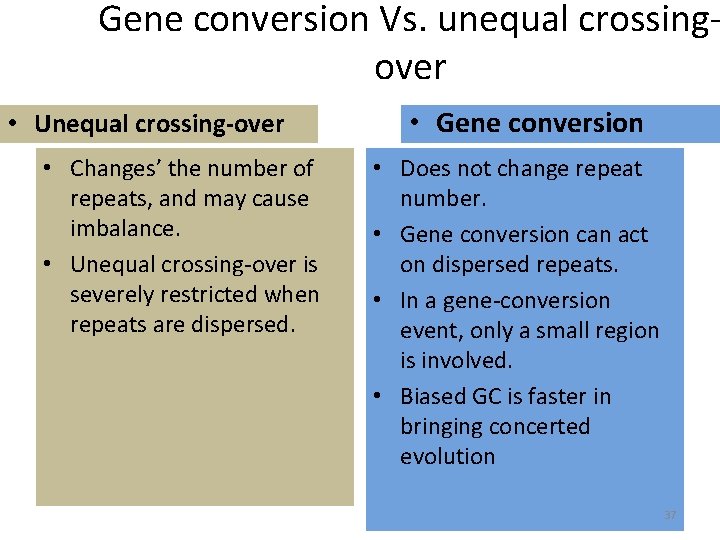
Gene conversion Vs. unequal crossingover • Unequal crossing-over • Changes’ the number of repeats, and may cause imbalance. • Unequal crossing-over is severely restricted when repeats are dispersed. • Gene conversion • Does not change repeat number. • Gene conversion can act on dispersed repeats. • In a gene-conversion event, only a small region is involved. • Biased GC is faster in bringing concerted evolution 37
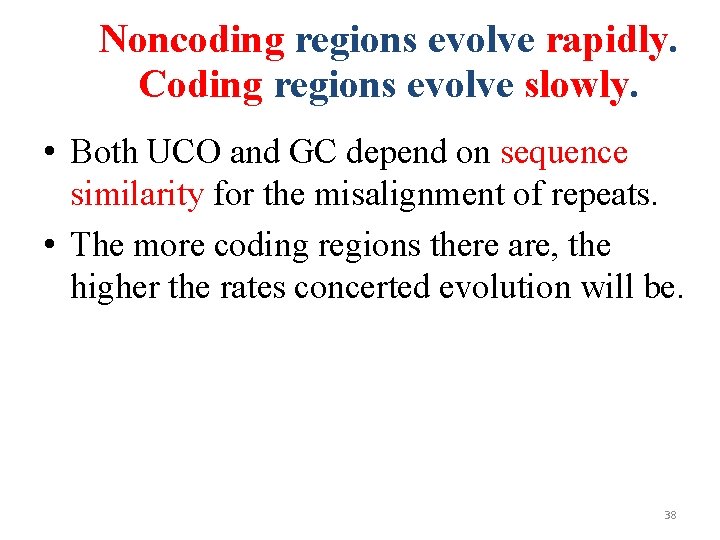
Noncoding regions evolve rapidly. Coding regions evolve slowly. • Both UCO and GC depend on sequence similarity for the misalignment of repeats. • The more coding regions there are, the higher the rates concerted evolution will be. 38
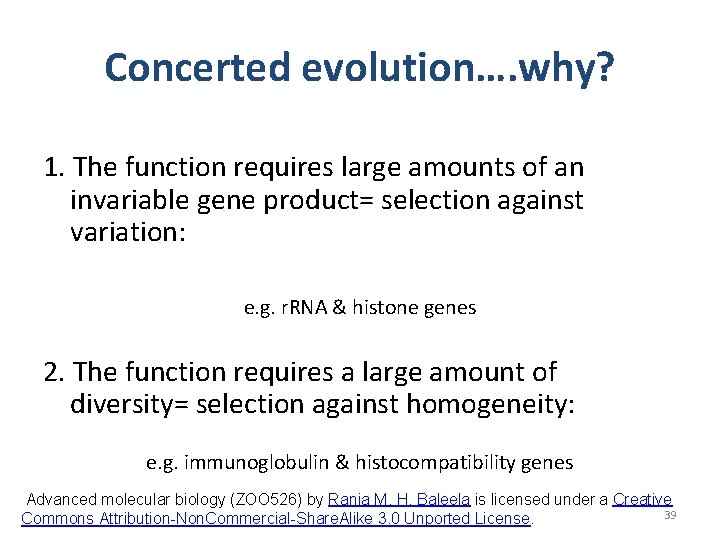
Concerted evolution…. why? 1. The function requires large amounts of an invariable gene product= selection against variation: e. g. r. RNA & histone genes 2. The function requires a large amount of diversity= selection against homogeneity: e. g. immunoglobulin & histocompatibility genes Advanced molecular biology (ZOO 526) by Rania M. H. Baleela is licensed under a Creative 39 Commons Attribution-Non. Commercial-Share. Alike 3. 0 Unported License.
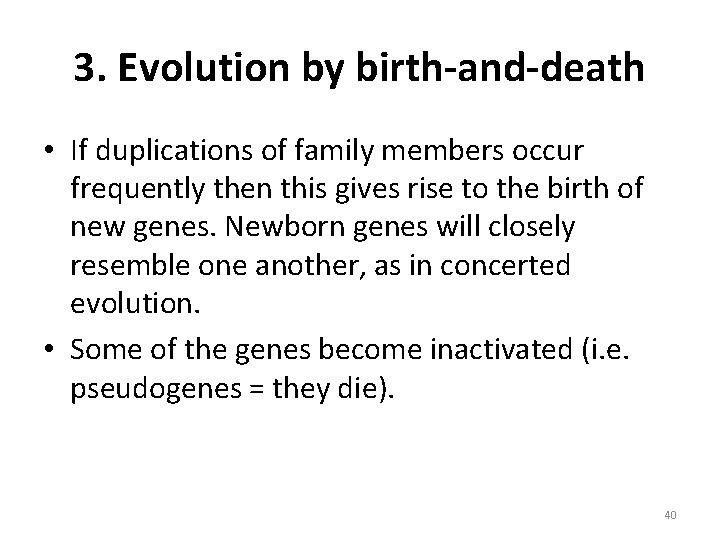
3. Evolution by birth-and-death • If duplications of family members occur frequently then this gives rise to the birth of new genes. Newborn genes will closely resemble one another, as in concerted evolution. • Some of the genes become inactivated (i. e. pseudogenes = they die). 40
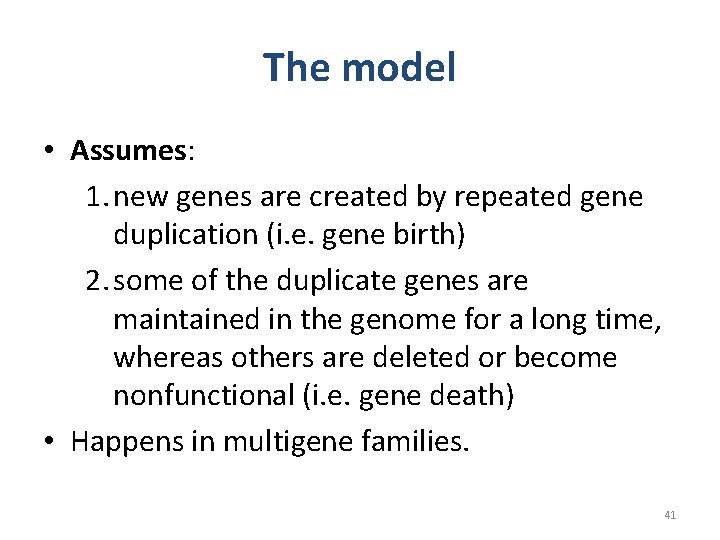
The model • Assumes: 1. new genes are created by repeated gene duplication (i. e. gene birth) 2. some of the duplicate genes are maintained in the genome for a long time, whereas others are deleted or become nonfunctional (i. e. gene death) • Happens in multigene families. 41
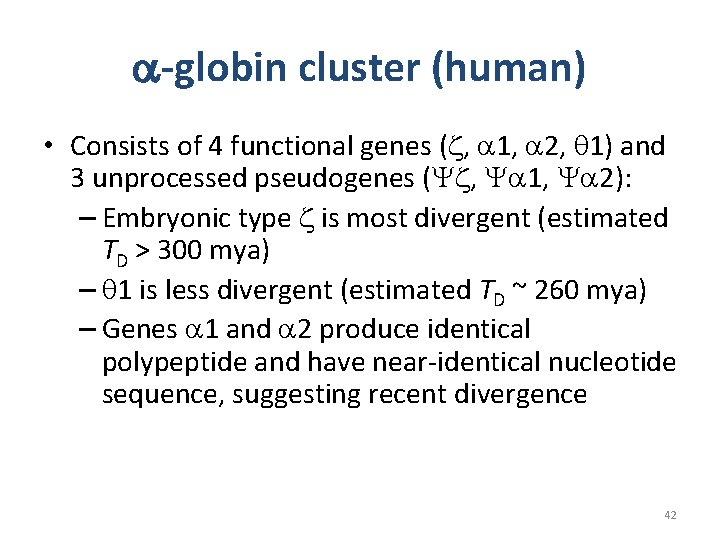
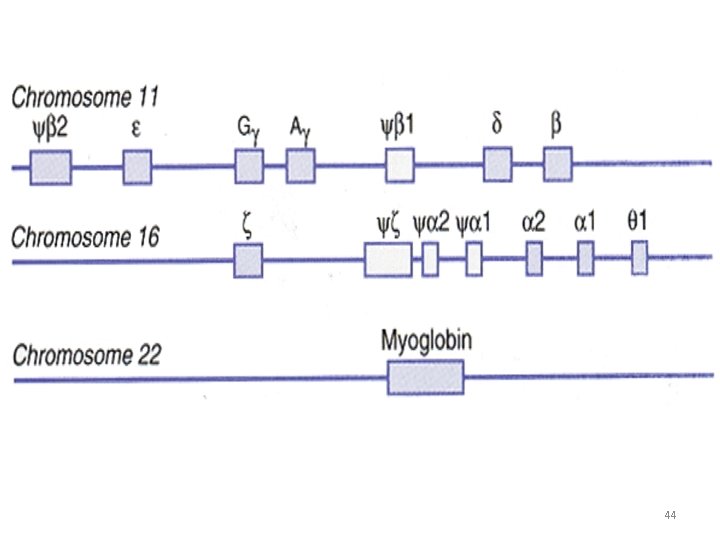
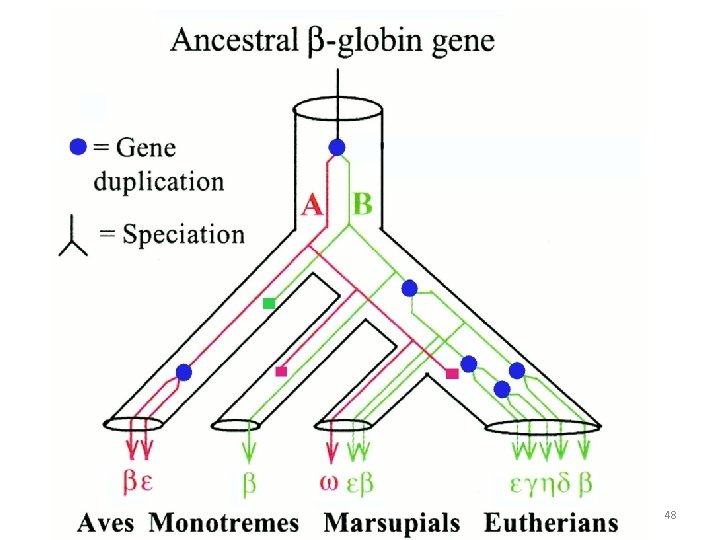
a-globin cluster (human) • Consists of 4 functional genes (z, a 1, a 2, q 1) and 3 unprocessed pseudogenes (Yz, Ya 1, Ya 2): – Embryonic type z is most divergent (estimated TD > 300 mya) – q 1 is less divergent (estimated TD ~ 260 mya) – Genes a 1 and a 2 produce identical polypeptide and have near-identical nucleotide sequence, suggesting recent divergence 42
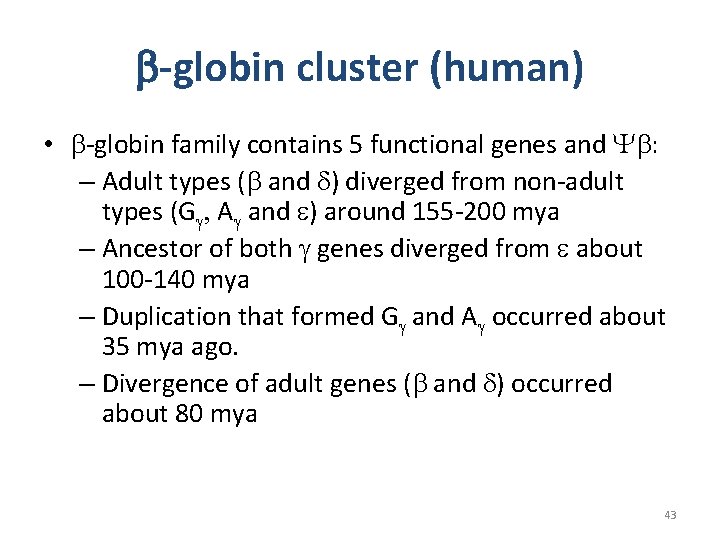
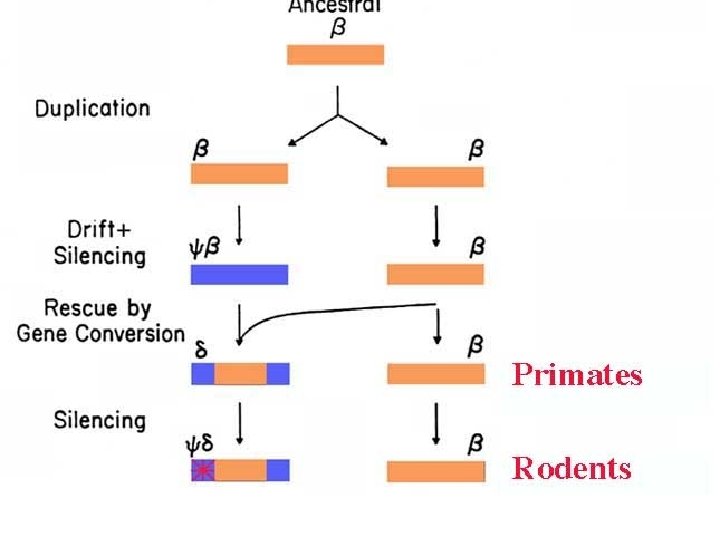
b-globin cluster (human) • b-globin family contains 5 functional genes and Yb: – Adult types (b and d) diverged from non-adult types (Gg, Ag and e) around 155 -200 mya – Ancestor of both g genes diverged from e about 100 -140 mya – Duplication that formed Gg and Ag occurred about 35 mya ago. – Divergence of adult genes (b and d) occurred about 80 mya 43
44
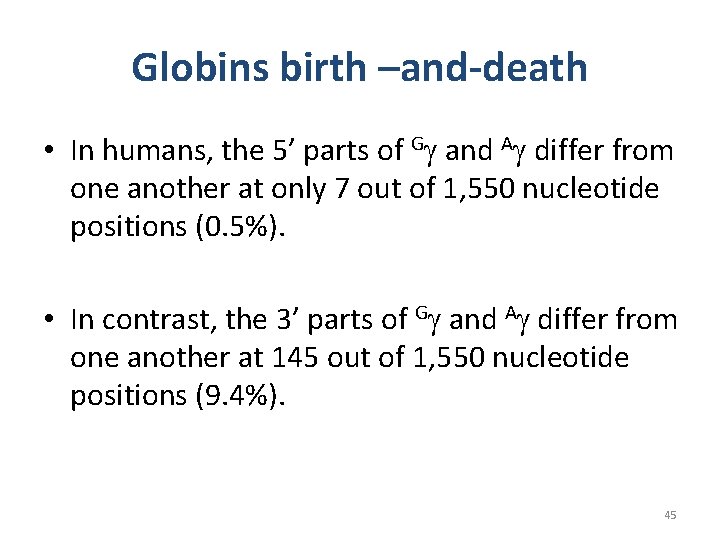
Globins birth –and-death • In humans, the 5’ parts of Gg and Ag differ from one another at only 7 out of 1, 550 nucleotide positions (0. 5%). • In contrast, the 3’ parts of Gg and Ag differ from one another at 145 out of 1, 550 nucleotide positions (9. 4%). 45
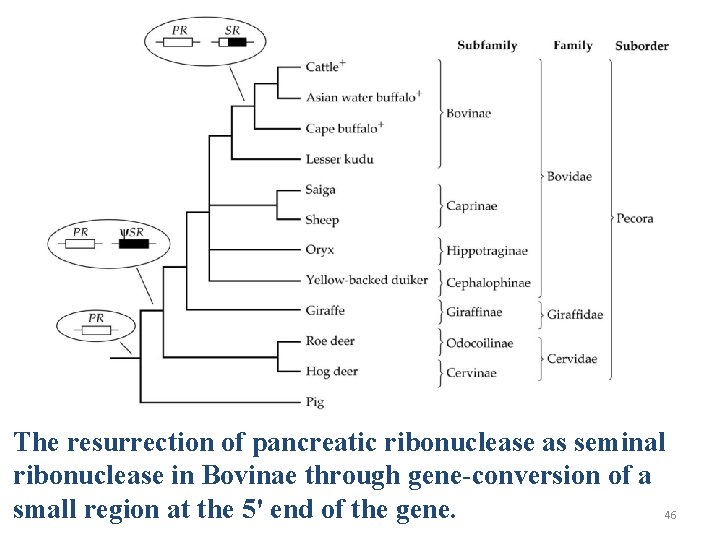
The resurrection of pancreatic ribonuclease as seminal ribonuclease in Bovinae through gene-conversion of a small region at the 5' end of the gene. 46
47
48
BIRTH-&-DEATH EVOLUTION: EXAMPLES 49
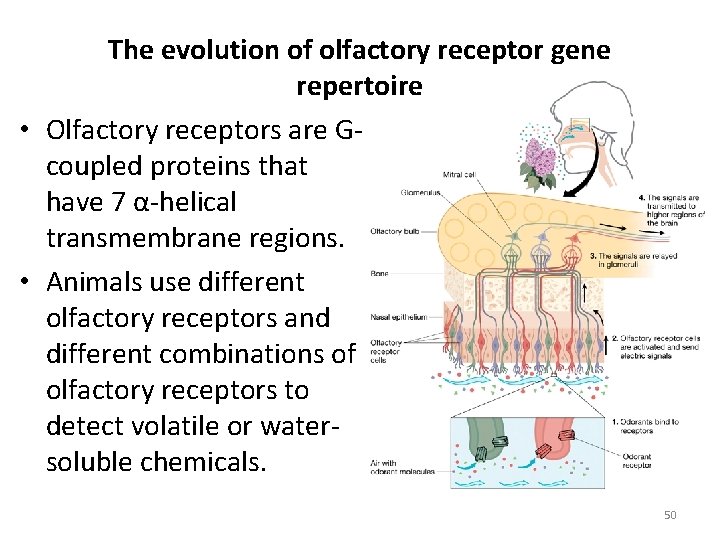
The evolution of olfactory receptor gene repertoire • Olfactory receptors are Gcoupled proteins that have 7 α-helical transmembrane regions. • Animals use different olfactory receptors and different combinations of olfactory receptors to detect volatile or watersoluble chemicals. 50
Tetrapods olfactory receptor gene • Have 400 -2100 olfactory receptor sequences, but 20 -60% are pseudogenes. • These numbers are small in comparison to the number of odorants, but olfactory receptors function in a combinatorial manner, whereby a single receptor may detect multiple odorants, and a single odorant may be detected by multiple receptors. 51
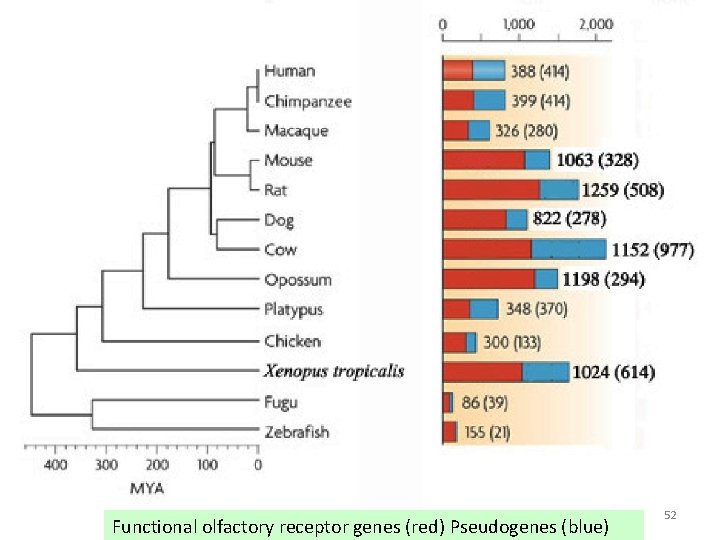
Functional olfactory receptor genes (red) Pseudogenes (blue) 52
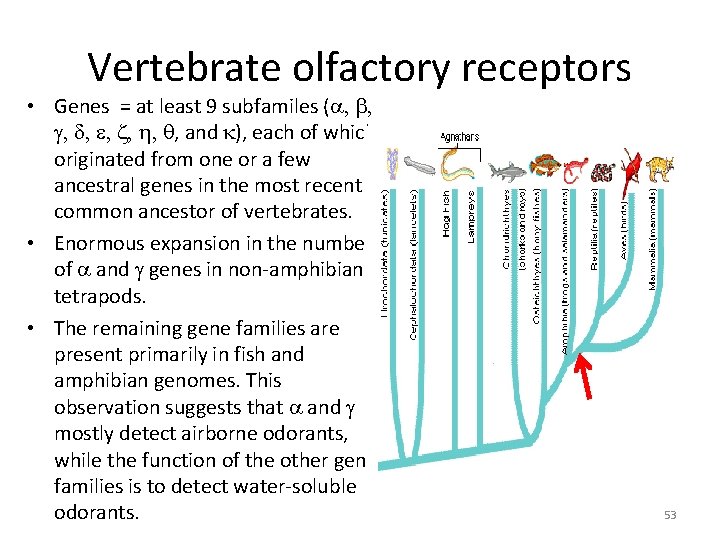
Vertebrate olfactory receptors • Genes = at least 9 subfamiles (a, b, g, d, e, z, h, q, and k), each of which originated from one or a few ancestral genes in the most recent common ancestor of vertebrates. • Enormous expansion in the number of a and g genes in non-amphibian tetrapods. • The remaining gene families are present primarily in fish and amphibian genomes. This observation suggests that a and g mostly detect airborne odorants, while the function of the other gene families is to detect water-soluble odorants. 53
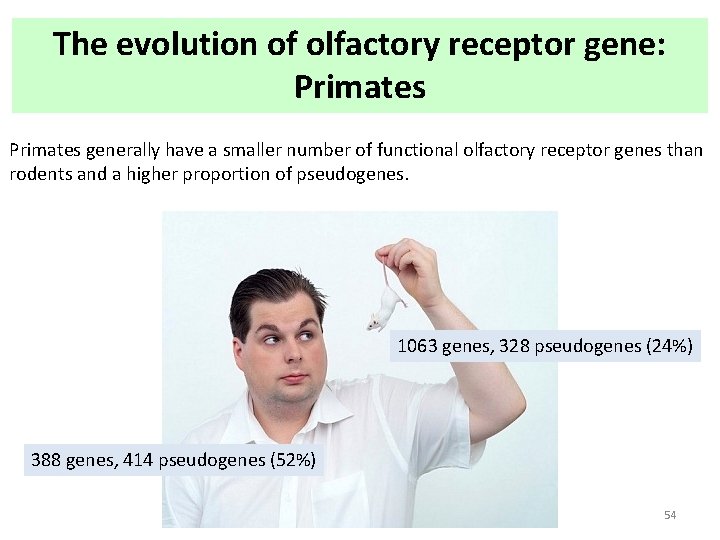
The evolution of olfactory receptor gene: Primates generally have a smaller number of functional olfactory receptor genes than rodents and a higher proportion of pseudogenes. 1063 genes, 328 pseudogenes (24%) 388 genes, 414 pseudogenes (52%) 54
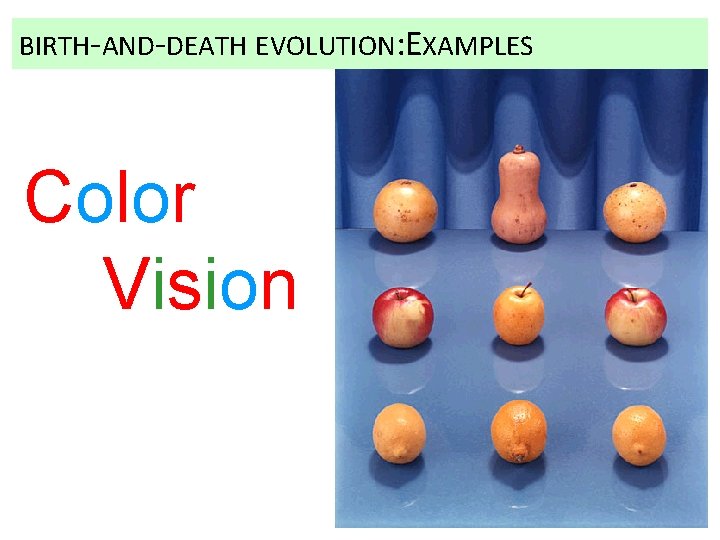
BIRTH-AND-DEATH EVOLUTION: EXAMPLES Color Vision 55
56
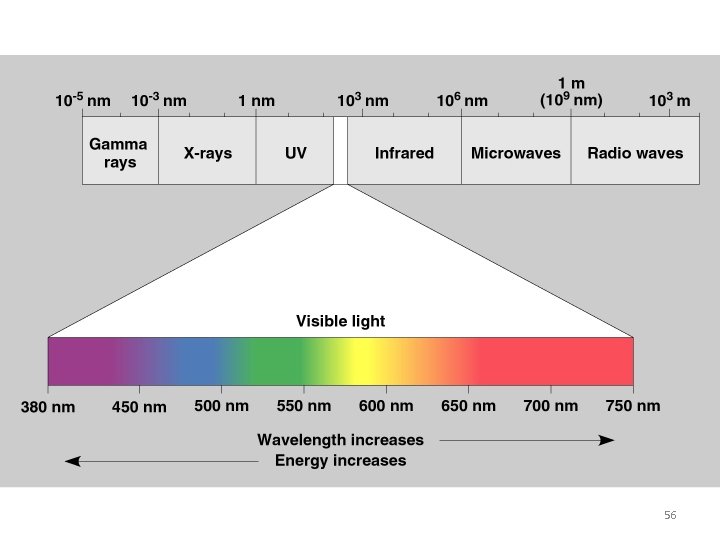
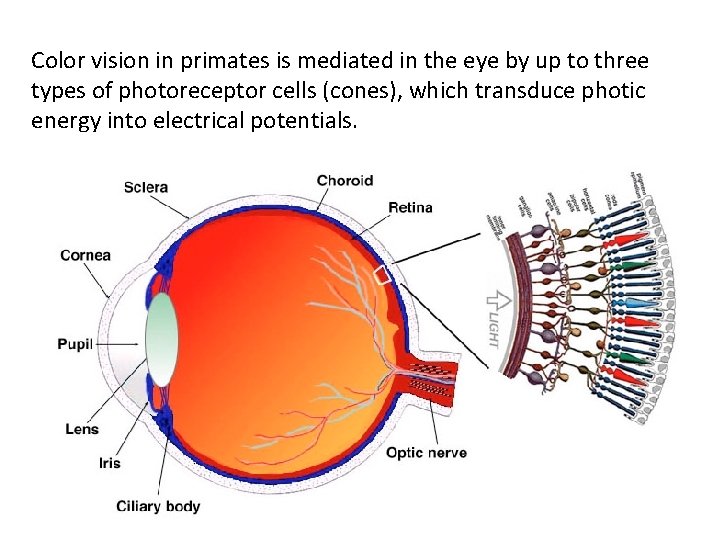
Color vision in primates is mediated in the eye by up to three types of photoreceptor cells (cones), which transduce photic energy into electrical potentials. 57
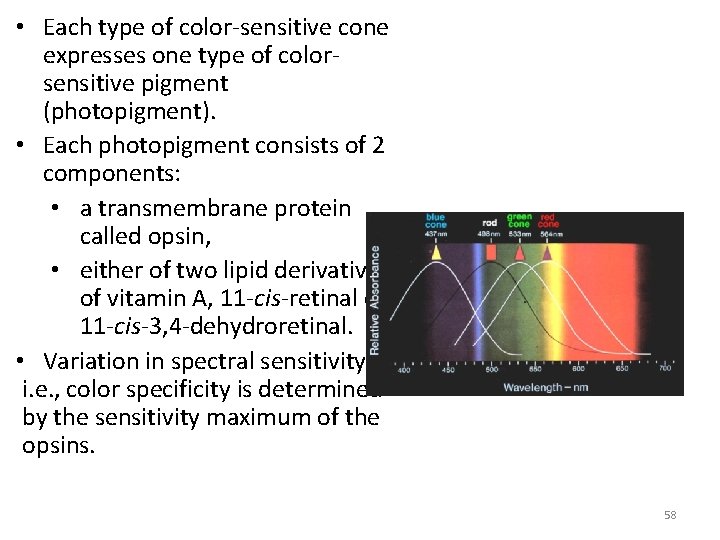
• Each type of color-sensitive cone expresses one type of colorsensitive pigment (photopigment). • Each photopigment consists of 2 components: • a transmembrane protein called opsin, • either of two lipid derivatives of vitamin A, 11 -cis-retinal or 11 -cis-3, 4 -dehydroretinal. • Variation in spectral sensitivity, i. e. , color specificity is determined by the sensitivity maximum of the opsins. 58
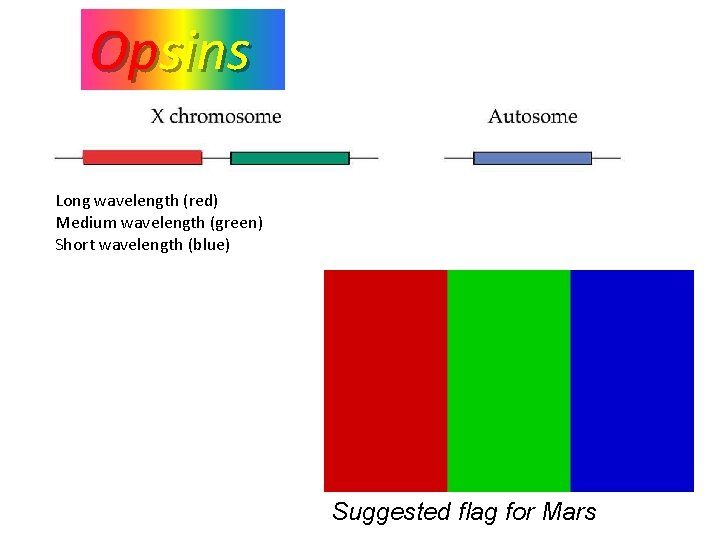
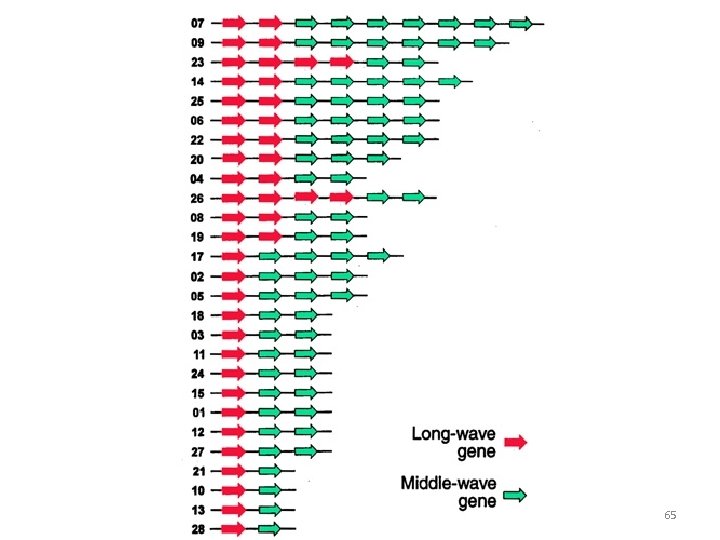
Opsins Long wavelength (red) Medium wavelength (green) Short wavelength (blue) Suggested flag for Mars 59
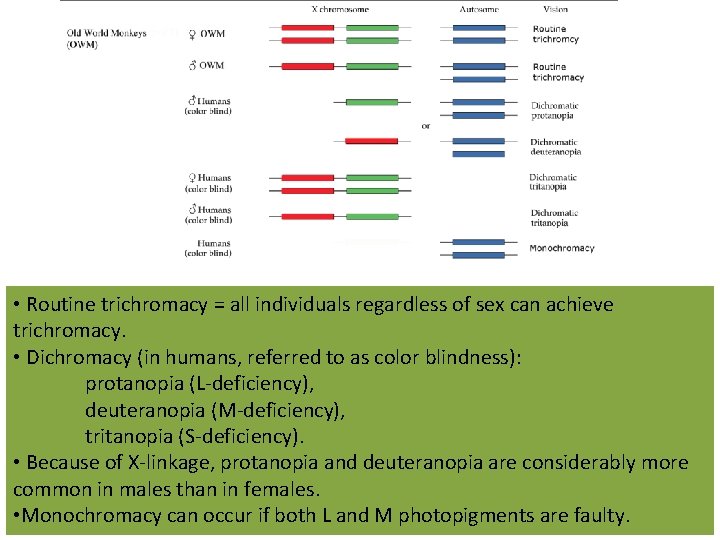
• Routine trichromacy = all individuals regardless of sex can achieve trichromacy. • Dichromacy (in humans, referred to as color blindness): protanopia (L-deficiency), deuteranopia (M-deficiency), tritanopia (S-deficiency). • Because of X-linkage, protanopia and deuteranopia are considerably more common in males than in females. • Monochromacy can occur if both L and M photopigments are faulty. 60
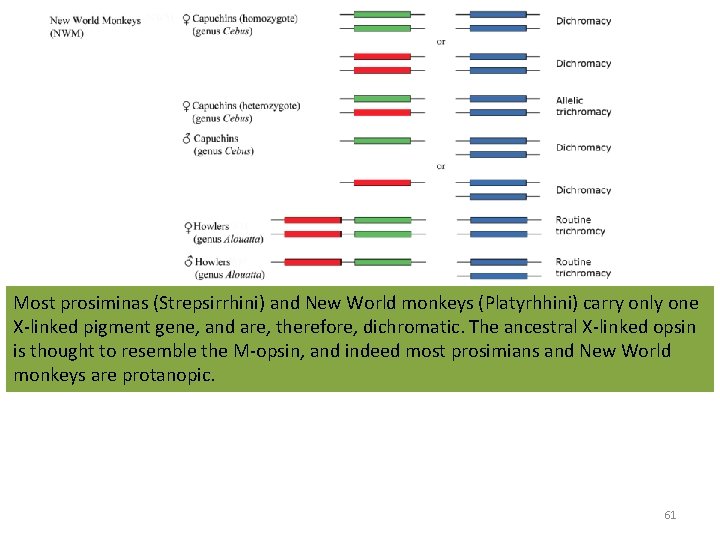
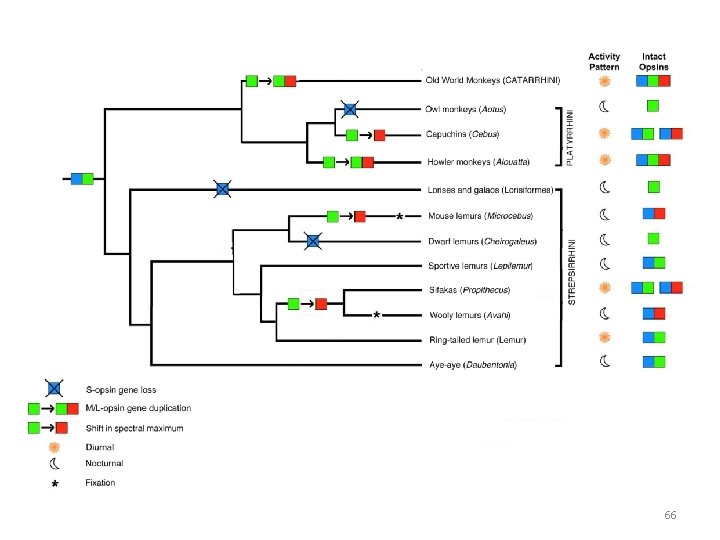
Most prosiminas (Strepsirrhini) and New World monkeys (Platyrhhini) carry only one X-linked pigment gene, and are, therefore, dichromatic. The ancestral X-linked opsin is thought to resemble the M-opsin, and indeed most prosimians and New World monkeys are protanopic. 61
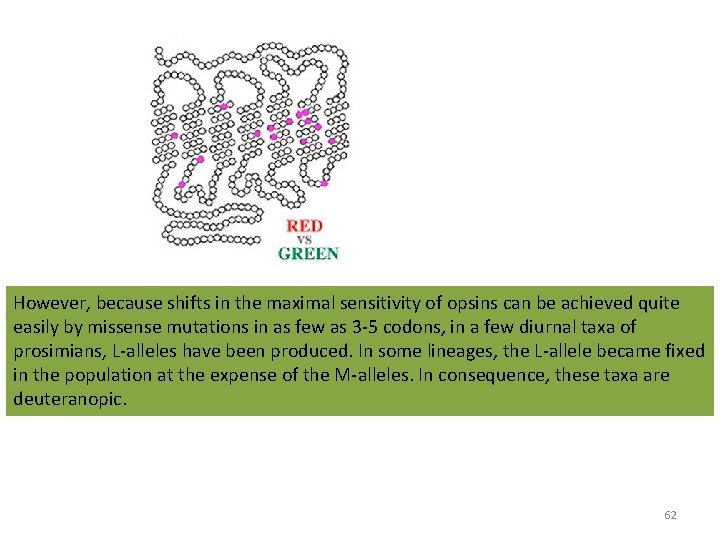
However, because shifts in the maximal sensitivity of opsins can be achieved quite easily by missense mutations in as few as 3 -5 codons, in a few diurnal taxa of prosimians, L-alleles have been produced. In some lineages, the L-allele became fixed in the population at the expense of the M-alleles. In consequence, these taxa are deuteranopic. 62
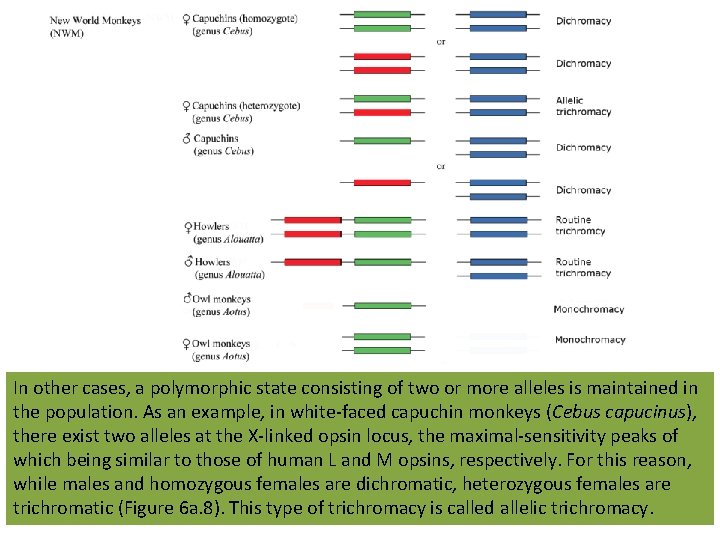
In other cases, a polymorphic state consisting of two or more alleles is maintained in the population. As an example, in white-faced capuchin monkeys (Cebus capucinus), there exist two alleles at the X-linked opsin locus, the maximal-sensitivity peaks of which being similar to those of human L and M opsins, respectively. For this reason, while males and homozygous females are dichromatic, heterozygous females are trichromatic (Figure 6 a. 8). This type of trichromacy is called allelic trichromacy. 63
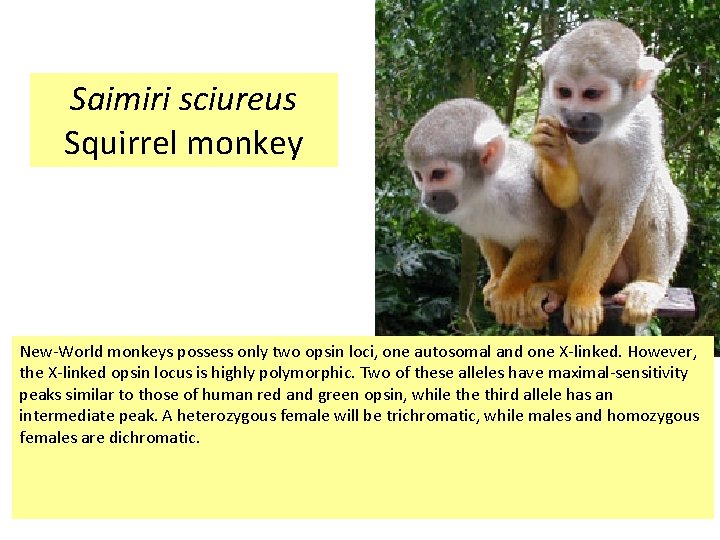
Saimiri sciureus Squirrel monkey New-World monkeys possess only two opsin loci, one autosomal and one X-linked. However, the X-linked opsin locus is highly polymorphic. Two of these alleles have maximal-sensitivity peaks similar to those of human red and green opsin, while third allele has an intermediate peak. A heterozygous female will be trichromatic, while males and homozygous females are dichromatic. 64
65
66
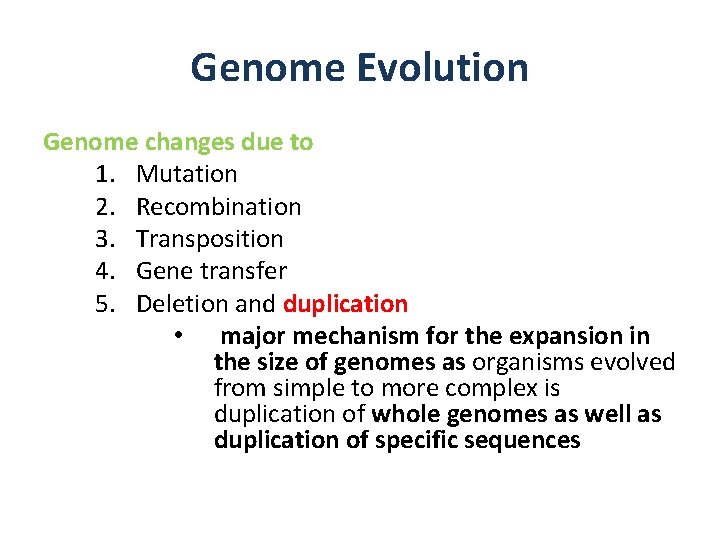
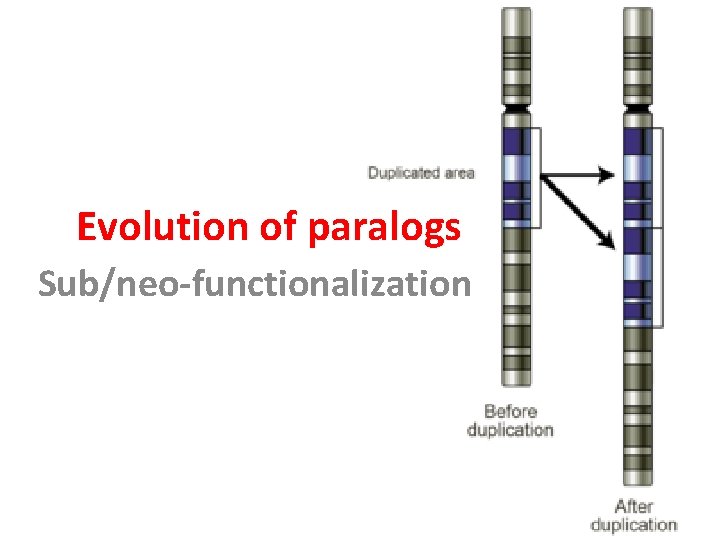
Genome Evolution Genome changes due to 1. Mutation 2. Recombination 3. Transposition 4. Gene transfer 5. Deletion and duplication • major mechanism for the expansion in the size of genomes as organisms evolved from simple to more complex is duplication of whole genomes as well as duplication of specific sequences
Gene duplication is an important source of phenotypic change and adaptive evolution (Dennis et al. , 2012)
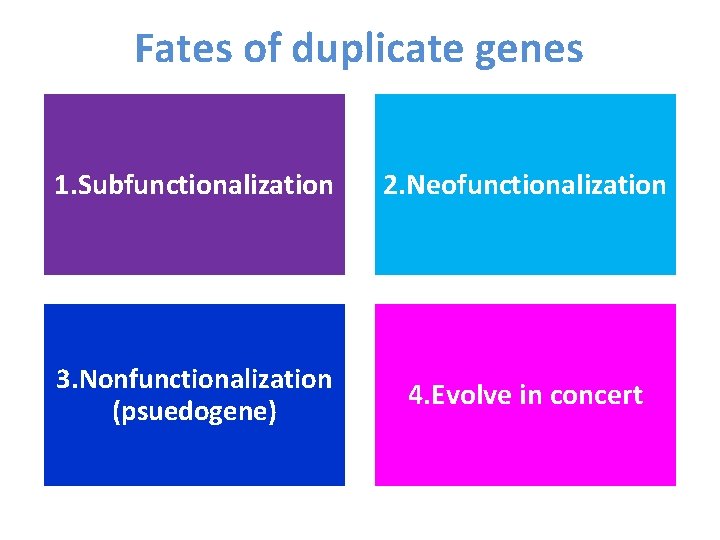
Fates of duplicate genes 1. Subfunctionalization 2. Neofunctionalization 3. Nonfunctionalization (psuedogene) 4. Evolve in concert
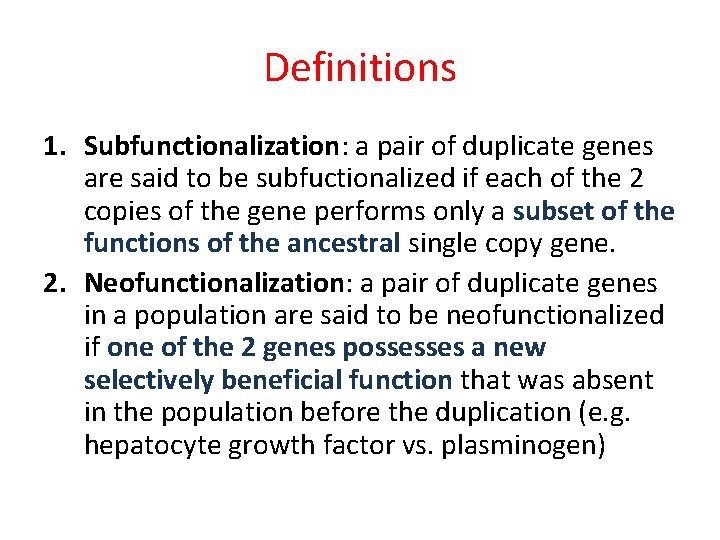
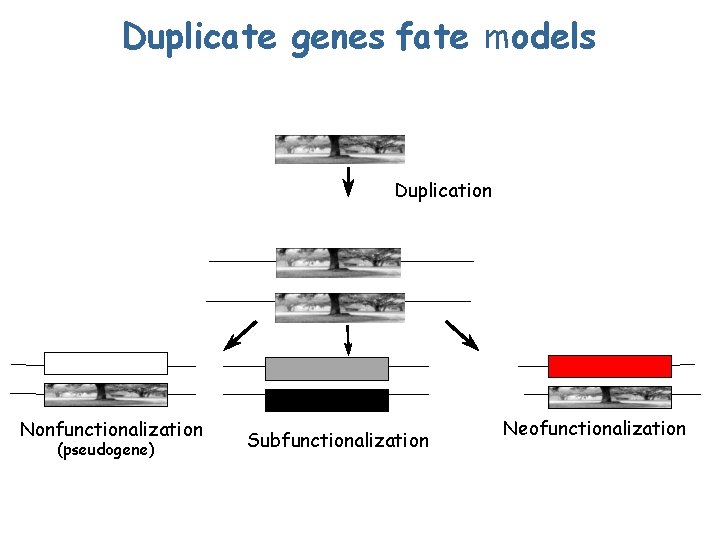
Definitions 1. Subfunctionalization: a pair of duplicate genes are said to be subfuctionalized if each of the 2 copies of the gene performs only a subset of the functions of the ancestral single copy gene. 2. Neofunctionalization: a pair of duplicate genes in a population are said to be neofunctionalized if one of the 2 genes possesses a new selectively beneficial function that was absent in the population before the duplication (e. g. hepatocyte growth factor vs. plasminogen)
Duplicate genes fate models Duplication Nonfunctionalization (pseudogene) Subfunctionalization Neofunctionalization
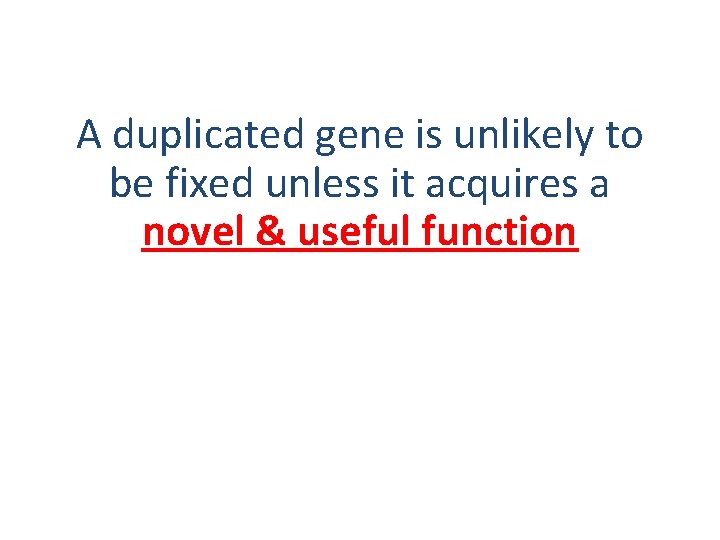
A duplicated gene is unlikely to be fixed unless it acquires a novel & useful function
Evolution of paralogs Sub/neo-functionalization
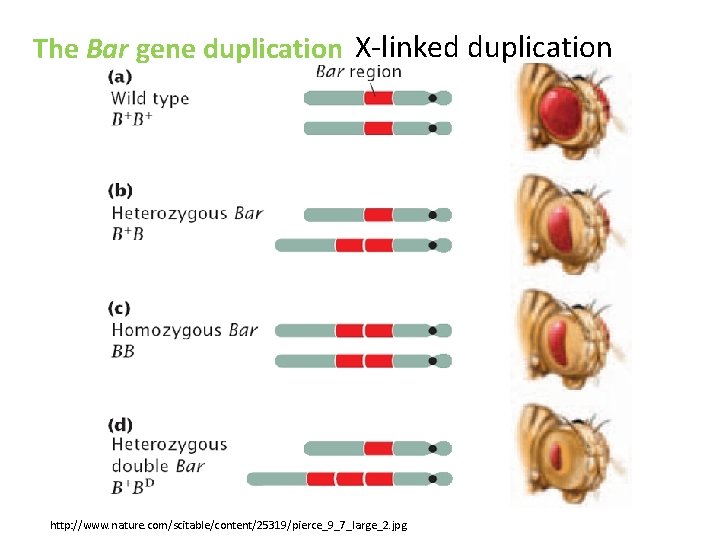
Gene duplication: history • Time= 1936, • Scientist= Bridges • Finding= gene duplication of a chromosomal band in a mutant of the fruit fly Drosophila melanogaster, • Observed result= extreme reduction in eye size Gene duplicates= paralogs
The Bar gene duplication X-linked duplication http: //www. nature. com/scitable/content/25319/pierce_9_7_large_2. jpg
Gene duplication May occur due to: 1. an error in homologous recombination, 2. a retrotransposition event, 3. duplication of an entire chromosome.
Which genes undergo duplication? Features that might allow or prohibit the fixation of a duplicate copy of a gene in the population: 1. Functional biases in the types of genes that survive in duplicate (e. g. in: yeast, humans, insects & bacteria). 2. Belong to certain categories: such as genes encoding transcription factors, kinases and particular enzymes & transporters have unexpectedly high numbers of duplicates