
thinks he What a CF physician wants from


- Slides: 37
thinks he What a CF physician wants from his microbiologist British Society for Microbiological Technology BSMT, Sheffield, 2013 Microbiology of the compromised host Frank Edenborough Consultant Physician Sheffield Adult CF Centre Northern General Hospital Sheffield Copyright Edenborough 2013 FP Edenborough 21/9/2013
• Some slides and photos have been removed from this presentation due to its size • If this is a problem to you, please contact vbevan@bsmt. org. uk Copyright Edenborough 2013 FP
Assumptions • I don’t know much about microbiology • You don’t know much about CF Blah! Z ! Z Z Z Copyright Edenborough 2013 FP
What’s on the plate for today ? • • Introduction to CF The CF chest The CF bugs A strategy for treating the chest Known unknowns What do I want? The Sheffield CF service Copyright Edenborough 2013 FP
“Woe to that child, which when kissed tastes salty for he is bewitched and soon must surely die” Swiss German folklore c. 1600 But what’s it all about? Copyright Edenborough 2013 FP Edenborough 21/9/2013
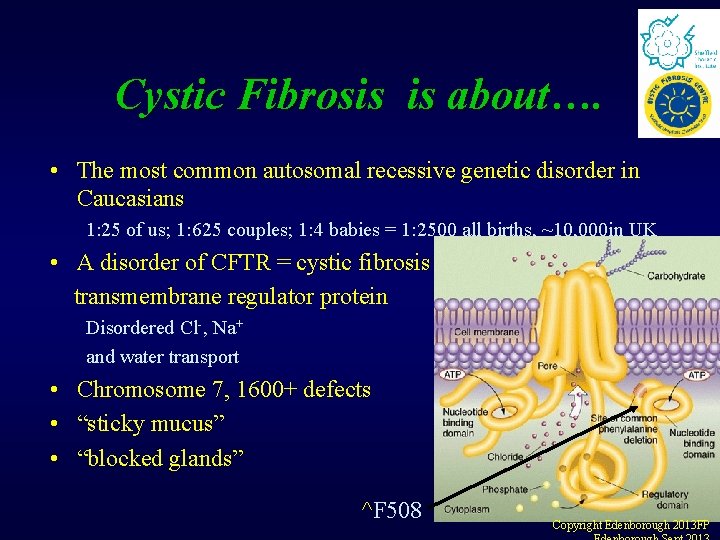
Cystic Fibrosis is about…. • The most common autosomal recessive genetic disorder in Caucasians 1: 25 of us; 1: 625 couples; 1: 4 babies = 1: 2500 all births, ~10, 000 in UK • A disorder of CFTR = cystic fibrosis transmembrane regulator protein Disordered Cl-, Na+ and water transport • Chromosome 7, 1600+ defects • “sticky mucus” • “blocked glands” ^F 508 Copyright Edenborough 2013 FP
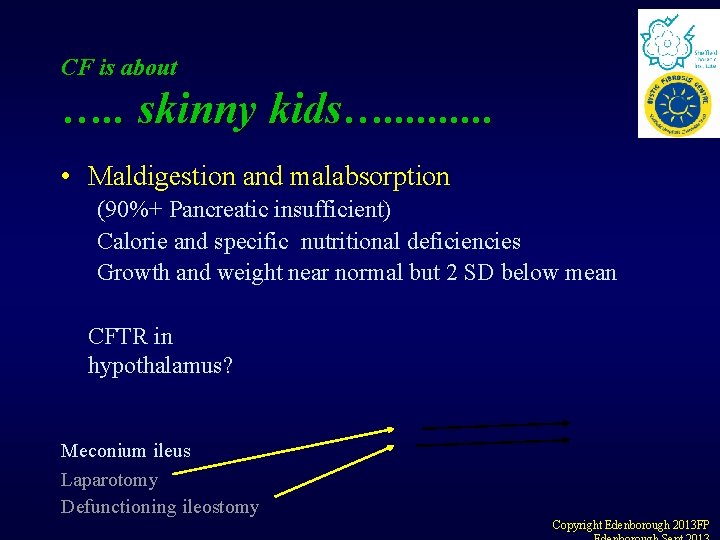
CF is about …. . skinny kids…. . • Maldigestion and malabsorption (90%+ Pancreatic insufficient) Calorie and specific nutritional deficiencies Growth and weight near normal but 2 SD below mean CFTR in hypothalamus? Meconium ileus Laparotomy Defunctioning ileostomy Copyright Edenborough 2013 FP
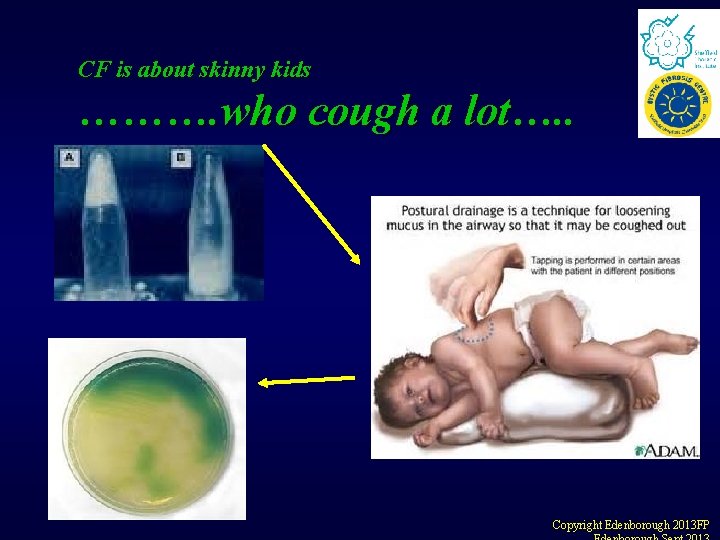
CF is about skinny kids ………. who cough a lot…. . Copyright Edenborough 2013 FP
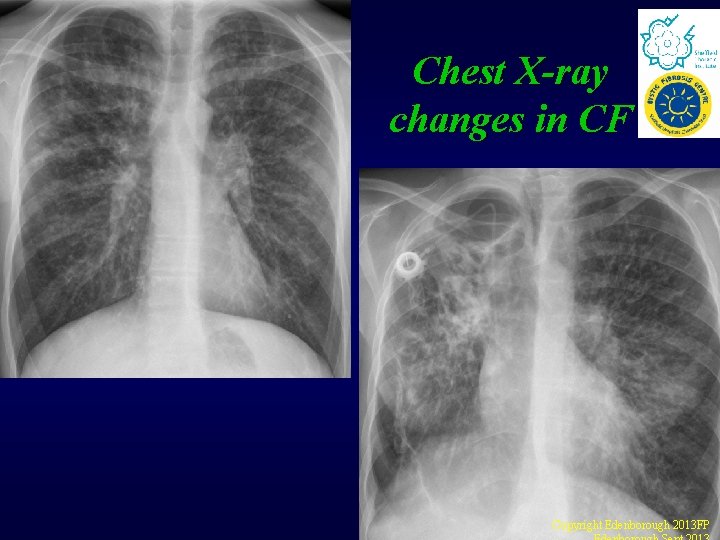
Chest X-ray changes in CF Copyright Edenborough 2013 FP
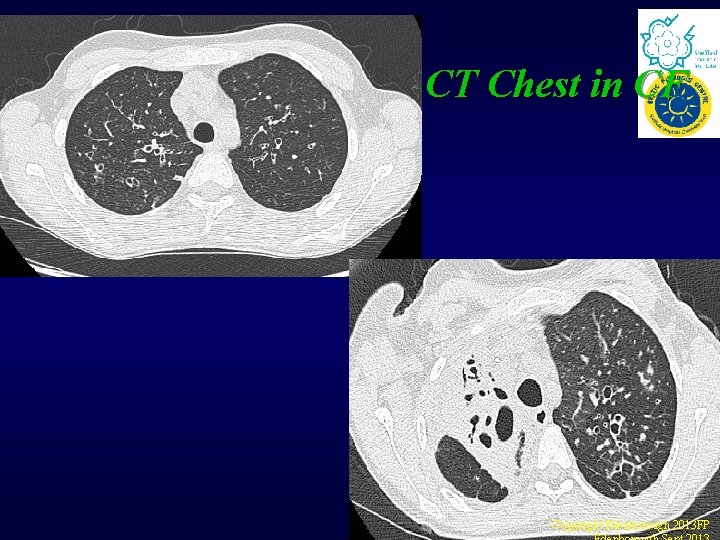
CT Chest in CF Copyright Edenborough 2013 FP
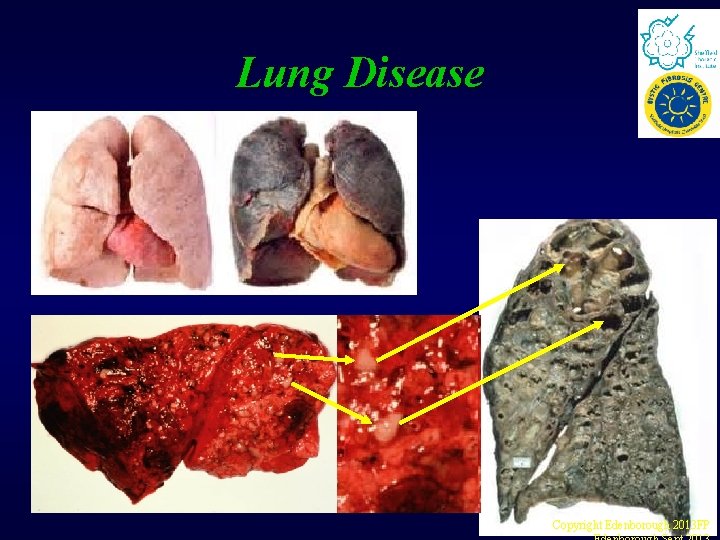
Lung Disease Copyright Edenborough 2013 FP
CF is about skinny kids who cough a lot . . . innit? But there’s more to it. . • CF related (remember – a disease of glands) Diabetes (10% increase in prevalence every decade 40+age >40 Liver disease (2 nd most common cause of death or transplant) Infertility 96% males c CF are infertile c CBAVD causes 1 -2% of male sterility, 6% of obstructive azoospermia. Rhino sinusitis and polyps Polyps in a child is CF…. , polyps in an adult is allergic – it could be CF Electrolyte abnormalities Ion transport studies: sweat test, nasal potential difference, small bowel ion transport studies Osteoporosis and #’s Copyright Edenborough 2013 FP
There’s more to CF …. “…like patting and tablets…. ” • Physiotherapy Airway clearance Posture, pelvic floor, balance, muscle strength, exercise • Drugs Tablets - Enzymes, vitamins, antacids, biliary flow Inhalers - ß 2 agonists, steroids Nebulisers - antibiotics, mucolytics, DNAse • Adjuncts O 2 PEG NIV Copyright Edenborough 2013 FP
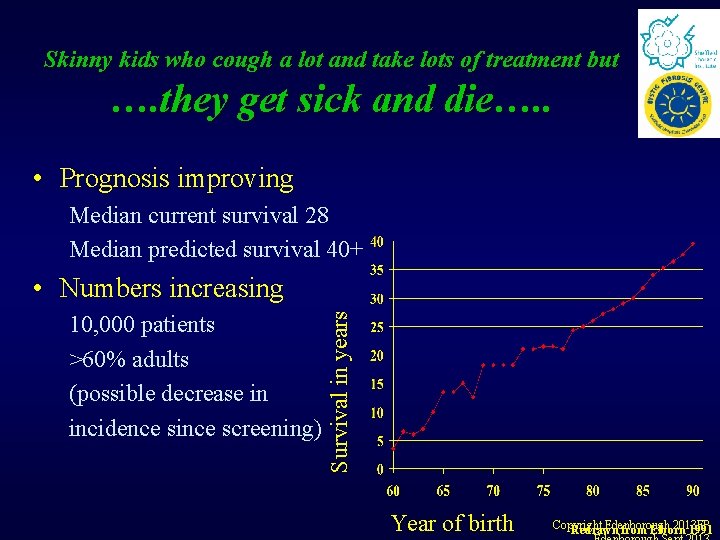
Skinny kids who cough a lot and take lots of treatment but …. they get sick and die…. . • Prognosis improving Median current survival 28 Median predicted survival 40+ Survival in years • Numbers increasing 10, 000 patients >60% adults (possible decrease in incidence since screening) Year of birth Copyright Edenborough 2013 FP Redrawn from Elborn 1991
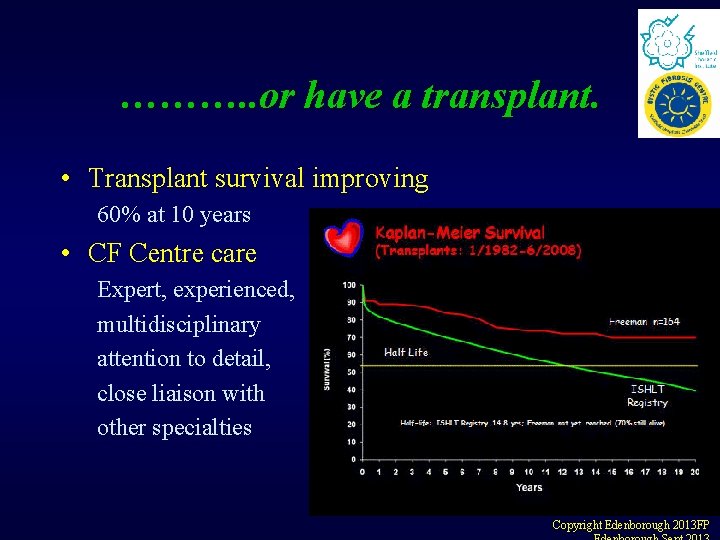
………. . or have a transplant. • Transplant survival improving 60% at 10 years • CF Centre care Expert, experienced, multidisciplinary attention to detail, close liaison with other specialties Copyright Edenborough 2013 FP
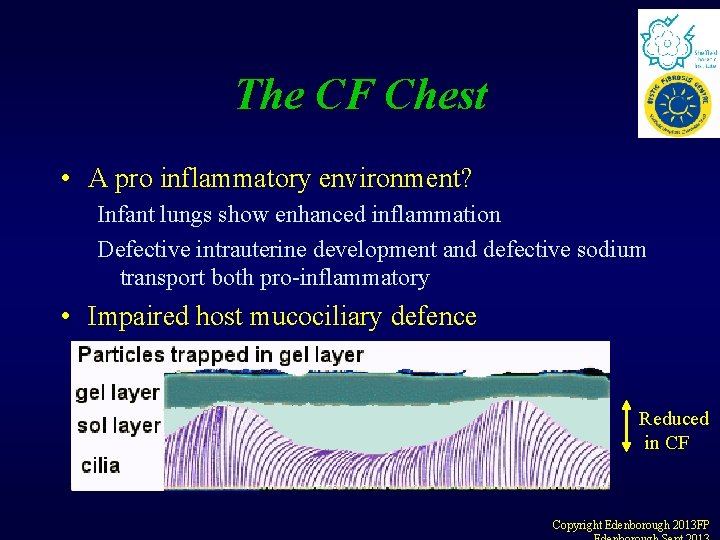
The CF Chest • A pro inflammatory environment? Infant lungs show enhanced inflammation Defective intrauterine development and defective sodium transport both pro-inflammatory • Impaired host mucociliary defence Reduced sol layer, mucociliary escalator damaged Reduced in CF Copyright Edenborough 2013 FP
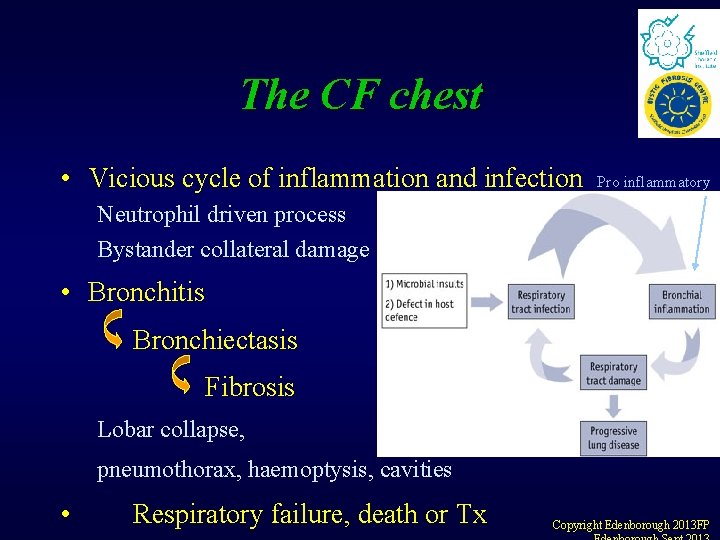
The CF chest • Vicious cycle of inflammation and infection Pro inflammatory Neutrophil driven process Bystander collateral damage • Bronchitis Bronchiectasis Fibrosis Lobar collapse, pneumothorax, haemoptysis, cavities • Respiratory failure, death or Tx Copyright Edenborough 2013 FP
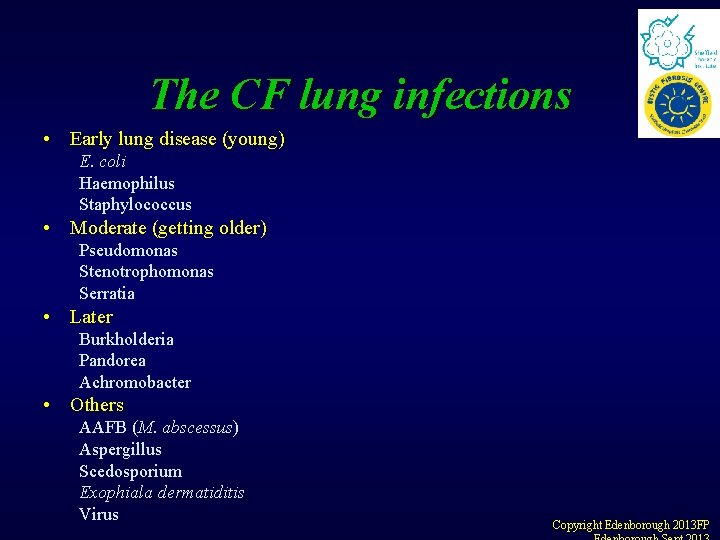
The CF lung infections • Early lung disease (young) E. coli Haemophilus Staphylococcus • Moderate (getting older) Pseudomonas Stenotrophomonas Serratia • Later Burkholderia Pandorea Achromobacter • Others AAFB (M. abscessus) Aspergillus Scedosporium Exophiala dermatiditis Virus Copyright Edenborough 2013 FP
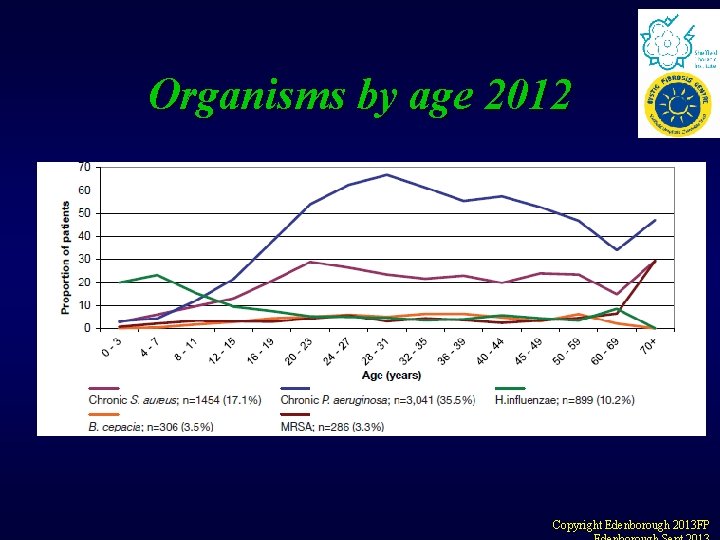
Organisms by age 2012 Copyright Edenborough 2013 FP
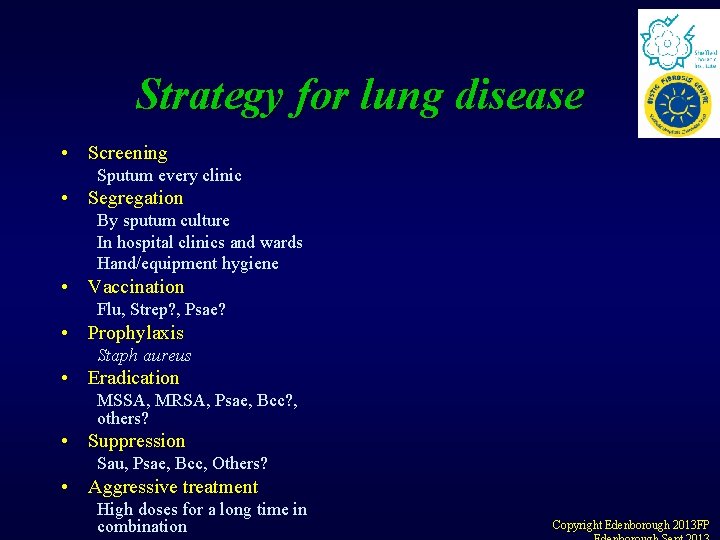
Strategy for lung disease • Screening Sputum every clinic • Segregation By sputum culture In hospital clinics and wards Hand/equipment hygiene • Vaccination Flu, Strep? , Psae? • Prophylaxis Staph aureus • Eradication MSSA, MRSA, Psae, Bcc? , others? • Suppression Sau, Psae, Bcc, Others? • Aggressive treatment High doses for a long time in combination Copyright Edenborough 2013 FP
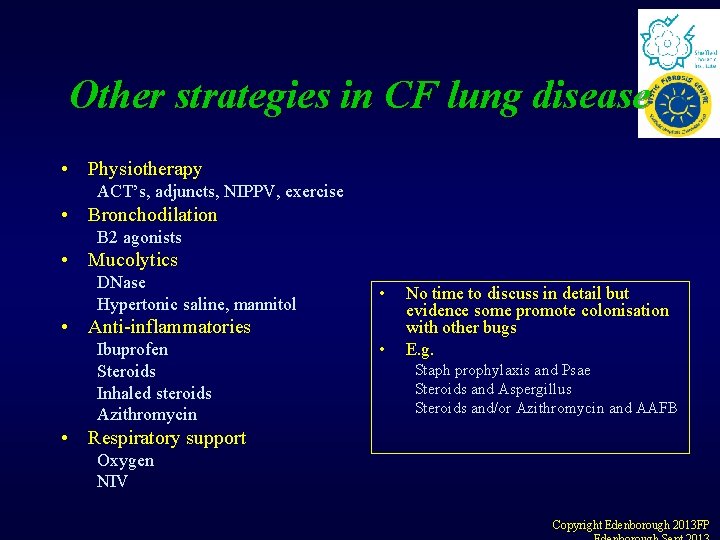
Other strategies in CF lung disease • Physiotherapy ACT’s, adjuncts, NIPPV, exercise • Bronchodilation B 2 agonists • Mucolytics DNase Hypertonic saline, mannitol • • Anti-inflammatories Ibuprofen Steroids Inhaled steroids Azithromycin • No time to discuss in detail but evidence some promote colonisation with other bugs E. g. Staph prophylaxis and Psae Steroids and Aspergillus Steroids and/or Azithromycin and AAFB • Respiratory support Oxygen NIV Copyright Edenborough 2013 FP
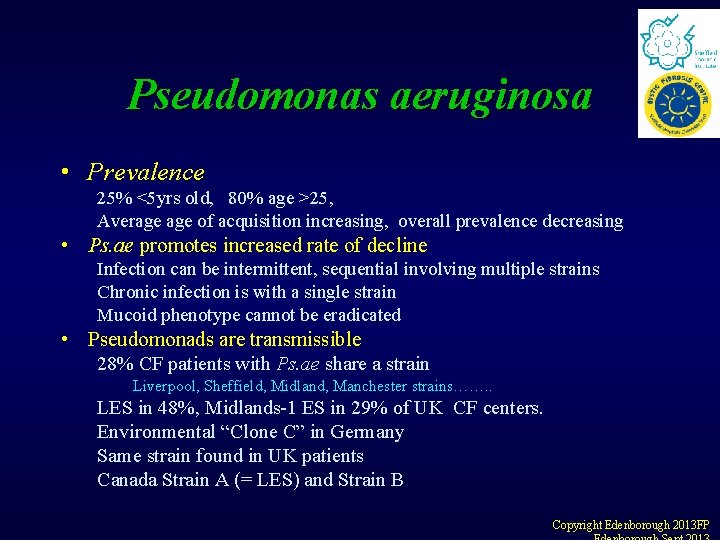
Pseudomonas aeruginosa • Prevalence 25% <5 yrs old, 80% age >25, Average of acquisition increasing, overall prevalence decreasing • Ps. ae promotes increased rate of decline Infection can be intermittent, sequential involving multiple strains Chronic infection is with a single strain Mucoid phenotype cannot be eradicated • Pseudomonads are transmissible 28% CF patients with Ps. ae share a strain Liverpool, Sheffield, Midland, Manchester strains……. . LES in 48%, Midlands-1 ES in 29% of UK CF centers. Environmental “Clone C” in Germany Same strain found in UK patients Canada Strain A (= LES) and Strain B Copyright Edenborough 2013 FP
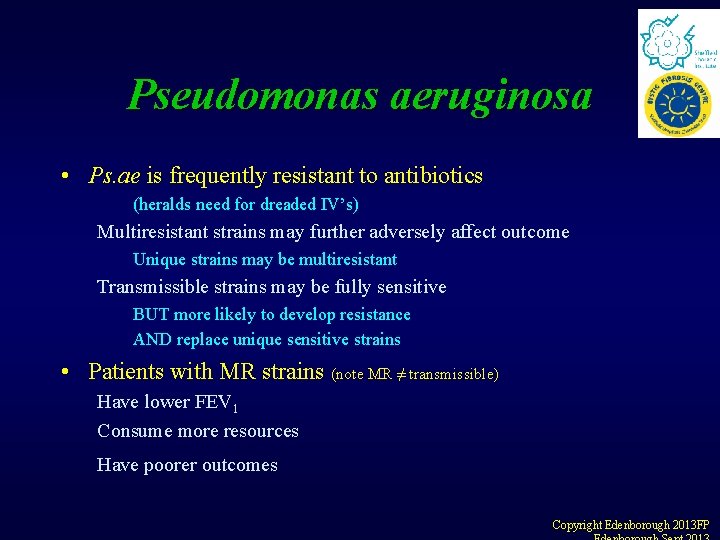
Pseudomonas aeruginosa • Ps. ae is frequently resistant to antibiotics (heralds need for dreaded IV’s) Multiresistant strains may further adversely affect outcome Unique strains may be multiresistant Transmissible strains may be fully sensitive BUT more likely to develop resistance AND replace unique sensitive strains • Patients with MR strains (note MR ≠ transmissible) Have lower FEV 1 Consume more resources Have poorer outcomes Copyright Edenborough 2013 FP
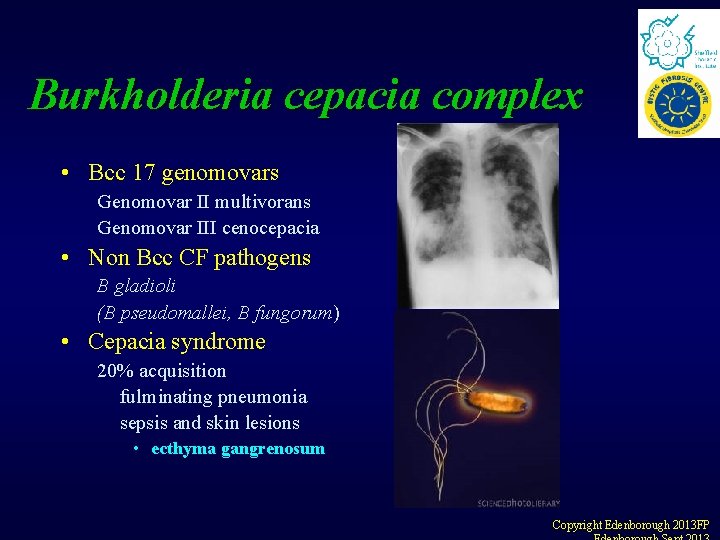
Burkholderia cepacia complex • Bcc 17 genomovars Genomovar II multivorans Genomovar III cenocepacia • Non Bcc CF pathogens B gladioli (B pseudomallei, B fungorum) • Cepacia syndrome 20% acquisition fulminating pneumonia sepsis and skin lesions • ecthyma gangrenosum Copyright Edenborough 2013 FP
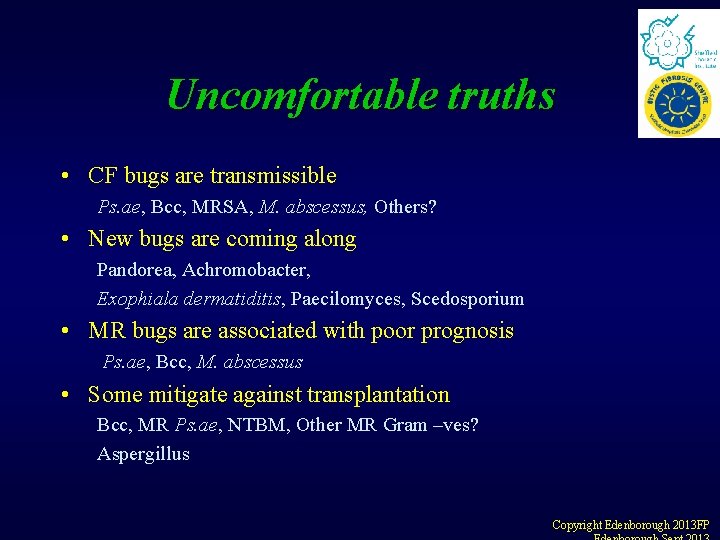
Uncomfortable truths • CF bugs are transmissible Ps. ae, Bcc, MRSA, M. abscessus, Others? • New bugs are coming along Pandorea, Achromobacter, Exophiala dermatiditis, Paecilomyces, Scedosporium • MR bugs are associated with poor prognosis Ps. ae, Bcc, M. abscessus • Some mitigate against transplantation Bcc, MR Ps. ae, NTBM, Other MR Gram –ves? Aspergillus Copyright Edenborough 2013 FP
CF bugs are contagious! • So we segregate them Brothers and sisters TWINS! Friends Girl friends/ boyfriends • Our responsibility Advice at home In clinic On the ward • Their responsibility……. . ? • Heirarchy No bug / simple bug U Ps. ae T Ps. ae Bcc • Others MRSA, M abscessus, Pandorea, Achromobacter Copyright Edenborough 2013 FP
Infection control – how far do we take it? • We only know what their last organism was They may have something unsuspected Segregation by broad groups as OP/IP Personal protection Glove and gowns For every contact For every patient A safe compromise? But arms, backside, notes, obs charts etc Quantifying the risk Reductio ad absurdum? Copyright Edenborough 2013 FP
Known Unknowns? • In vitro testing of Pseudomonas is pointless So what do we do? What is optimal treatment? • Some organisms may just pass through S maltophilia, Serratia marcescens, B maltophilia (!) Mycobacteria, fungi • When is a passenger a pathogen? Colonisation vs chronic infection • How long do tey have to be clear before a passenger has gone? What standard of culture = sputum, bronch? • How much treatment should I give? • How often should I give potentially toxic treatment? 3/12 ly? , symptom driven? NB aminoglycoside renal impairment, high tone hearing loss, vestibular damage Guess what SE of azithromycin and colistin………. Copyright Edenborough 2013 FP
What do I (think) I want? • An interested microbiologist CF MDT? • Mutual education your Sp. R’s, my Sp. R’s • A flexible service (prepared to humour me) I might be desperate! You want me to test it against what antibiotics? ? Copyright Edenborough 2013 FP
Copyright Edenborough 2013 FP
What is growing? • CF microbiological zoo RNA probes identify up to 34 different organisms in CF sputum Isolates from CF sputum > non CF Especially anaerobes Prevotella, Veillonella, Propionibacterium and Actinomyces Often very S to meropenem and Pip/ Tazo Retrospective studies using PCR identified 94% of organisms grown in sputum Failure to identify organism was associated with lack of comparator on database Copyright Edenborough 2013 FP
Mouldy toffee • Matrix-assisted laser desorption/ionization (MALDI) time-of-flight (TOF) mass spectrometer Testing cultured organisms For rapid identification much faster, more accurate and cheaper than other procedures based on immunological or biochemical tests. MALDI/TOF may become the standard method for species identification in medical microbiological laboratories over the next few years • It tells you what is there (but not what the sensitivities might be) Copyright Edenborough 2013 FP
What does sensitivity testing mean? • I want to know what ABx to use Poor repeatability of sensitivity testing within a lab, between labs (Foweraker 2005) Patients with resistant organisms get better anyway so I might ignore your advice • Our ABx choices are limited by allergy, by predictable toxicity, by side effects So I give them what I can • But what is the future of ABx testing? Synergy testing Novel antibiotics Fosfomycin, minocyclin, chloramphenicol, septrin Copyright Edenborough 2013 FP
Liaison c transplant centre • MR environmental Gram –ve’s Psae, Bcc, Pandorea, Achromobacter • MRSA Not significant in CF (? ) unless coming to transplant • AAFB Often not treated (including M. abscessus) – transplant • Aspergillus Passenger? , ABPA, Aspergillus bronchitis, Aspergilloma R angio-invasive and metastatic aspergillus disease after Tx • C diff Rare in CF, perhaps not tested for, but toxigenic forms at Tx Copyright Edenborough 2013 FP
Summary • CF is becoming more common Prevalence because survival increasing • CF microbiology is becoming more complicated New bugs and multi resistance • A good relationship with an approved laboratory is mandatory in any designated CF Centre (CF Trust Standards of Care) • Awareness of new pathogens (in individuals, in general) Because segregation matters • Transplant is a fantastic goal But it changes the way you think about organisms Copyright Edenborough 2013 FP
What do (I think) I want? • Reassurance of standards and networking (of labs) CF Trust Laboratory Standards (have you read them) Colindale, (others) • Access to (rapid) speciation and genotyping (MALDI/ TOF? ) But how often should I do it? • Reporting identification of new organisms Soon – an early warning system between lab and clinician • Sensitivities I can trust What’s the alternative to disc diffusion, chequerboard testing etc • Close liaison with transplant centre • CF doc to Tx doc, CF microbiologist to CF microbiologist (a quadrumvirate!) Meetings like this one (BSMT, Sf. AM, CF Microbiology Consortium) (AND CF Centre Microbiologists coming to CF meetings Copyright Edenborough 2013 FP
…. . the end Questions? Copyright Edenborough 2013 FP Edenborough 21/9/2013