
Plaques for Moo ZOO Animals By Mahala Moylan
Plaques for Moo. ZOO Animals By Mahala Moylan
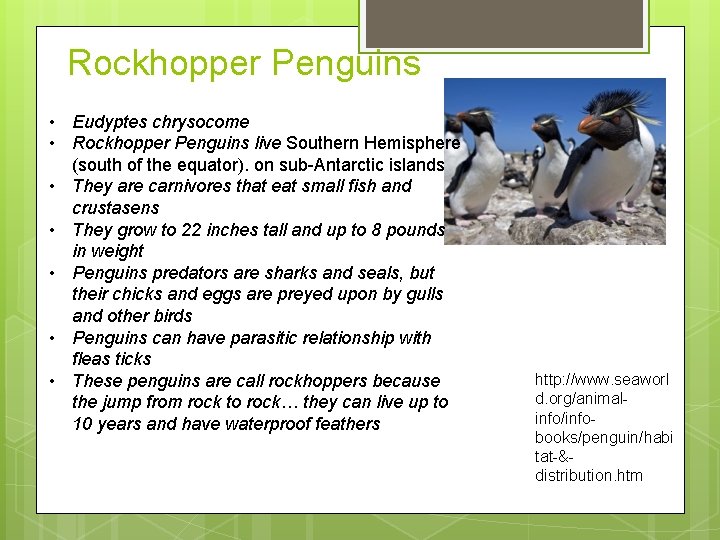
Rockhopper Penguins • Eudyptes chrysocome • Rockhopper Penguins live Southern Hemisphere (south of the equator). on sub-Antarctic islands • They are carnivores that eat small fish and crustasens • They grow to 22 inches tall and up to 8 pounds in weight • Penguins predators are sharks and seals, but their chicks and eggs are preyed upon by gulls and other birds • Penguins can have parasitic relationship with fleas ticks • These penguins are call rockhoppers because the jump from rock to rock… they can live up to 10 years and have waterproof feathers http: //www. seaworl d. org/animalinfo/infobooks/penguin/habi tat-&distribution. htm
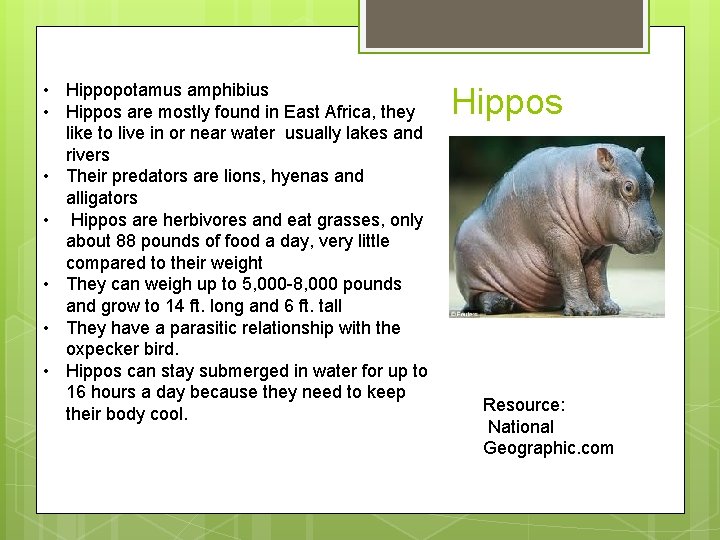
• Hippopotamus amphibius • Hippos are mostly found in East Africa, they like to live in or near water usually lakes and rivers • Their predators are lions, hyenas and alligators • Hippos are herbivores and eat grasses, only about 88 pounds of food a day, very little compared to their weight • They can weigh up to 5, 000 -8, 000 pounds and grow to 14 ft. long and 6 ft. tall • They have a parasitic relationship with the oxpecker bird. • Hippos can stay submerged in water for up to 16 hours a day because they need to keep their body cool. Hippos Resource: National Geographic. com

Vampire bat • Desmodus rotundus • The Vampire bat live in Latin America and they live in dark caves • Their predators are hawk and eagles • They are carnivore they are the only mammals that feed entirely on blood, usually cow. • They can be 3. 5 in tall their wing span is 7 in and they can weigh 2 oz • Bat are known to live more then 30 years. • During the night, vampire bats come out to hunt. Sleeping cattle and horses are their targets. • Unable to identify a symbiotic relationship. It is possible there are parasites that attach themselves but we can not confirm. Resource: National Geographic. com
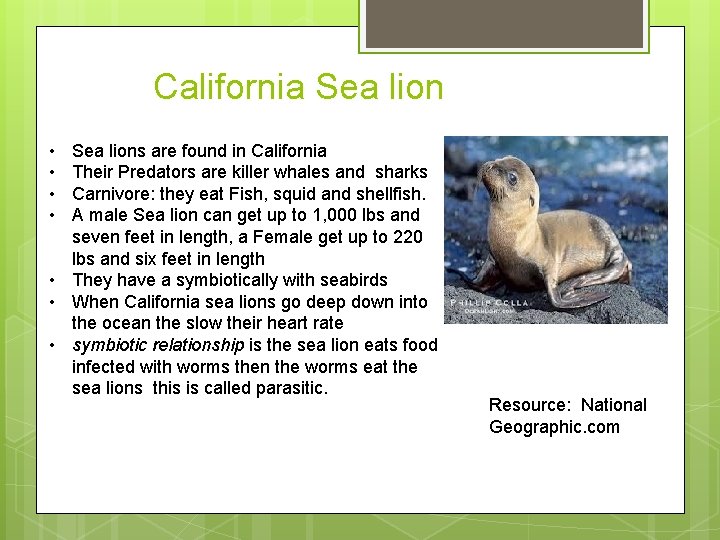
California Sea lion • • Sea lions are found in California Their Predators are killer whales and sharks Carnivore: they eat Fish, squid and shellfish. A male Sea lion can get up to 1, 000 lbs and seven feet in length, a Female get up to 220 lbs and six feet in length • They have a symbiotically with seabirds • When California sea lions go deep down into the ocean the slow their heart rate • symbiotic relationship is the sea lion eats food infected with worms then the worms eat the sea lions this is called parasitic. Resource: National Geographic. com
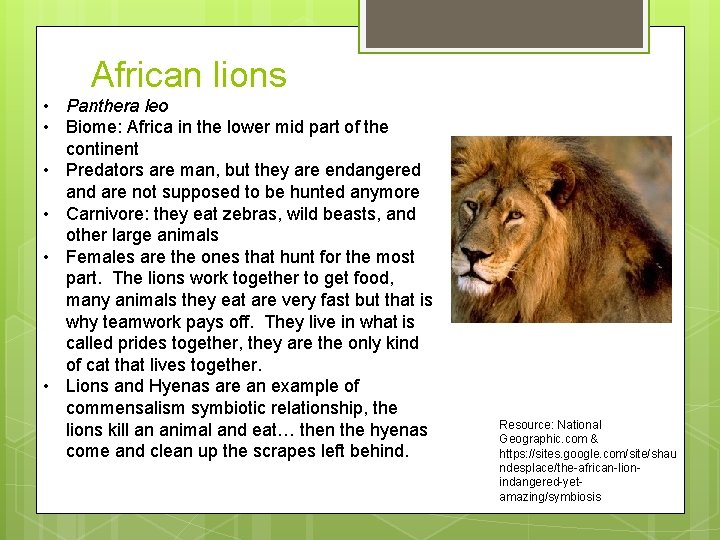
African lions • Panthera leo • Biome: Africa in the lower mid part of the continent • Predators are man, but they are endangered and are not supposed to be hunted anymore • Carnivore: they eat zebras, wild beasts, and other large animals • Females are the ones that hunt for the most part. The lions work together to get food, many animals they eat are very fast but that is why teamwork pays off. They live in what is called prides together, they are the only kind of cat that lives together. • Lions and Hyenas are an example of commensalism symbiotic relationship, the lions kill an animal and eat… then the hyenas come and clean up the scrapes left behind. Resource: National Geographic. com & https: //sites. google. com/site/shau ndesplace/the-african-lionindangered-yetamazing/symbiosis
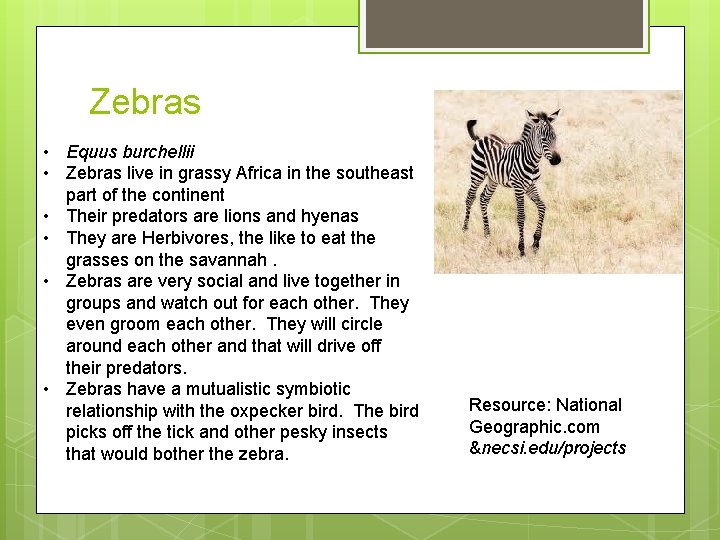
Zebras • Equus burchellii • Zebras live in grassy Africa in the southeast part of the continent • Their predators are lions and hyenas • They are Herbivores, the like to eat the grasses on the savannah. • Zebras are very social and live together in groups and watch out for each other. They even groom each other. They will circle around each other and that will drive off their predators. • Zebras have a mutualistic symbiotic relationship with the oxpecker bird. The bird picks off the tick and other pesky insects that would bother the zebra. Resource: National Geographic. com &necsi. edu/projects
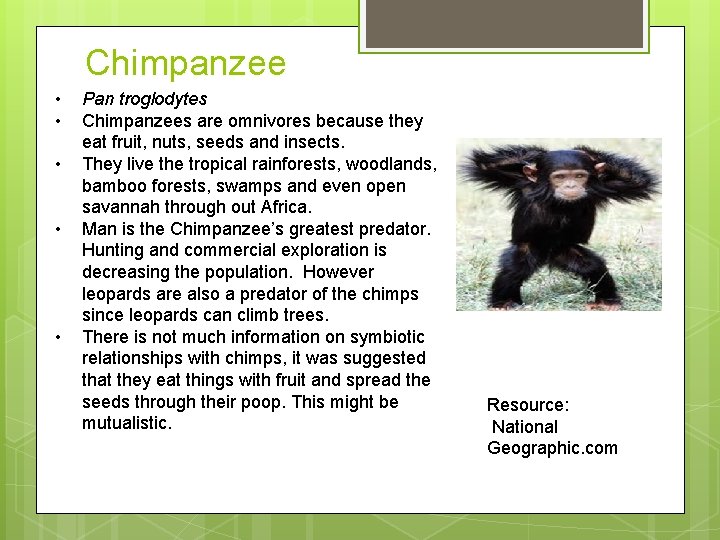
Chimpanzee • • • Pan troglodytes Chimpanzees are omnivores because they eat fruit, nuts, seeds and insects. They live the tropical rainforests, woodlands, bamboo forests, swamps and even open savannah through out Africa. Man is the Chimpanzee’s greatest predator. Hunting and commercial exploration is decreasing the population. However leopards are also a predator of the chimps since leopards can climb trees. There is not much information on symbiotic relationships with chimps, it was suggested that they eat things with fruit and spread the seeds through their poop. This might be mutualistic. Resource: National Geographic. com
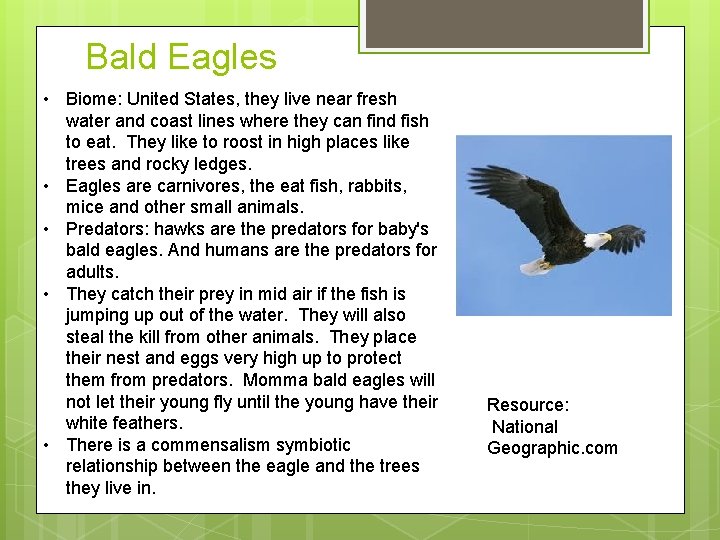
Bald Eagles • Biome: United States, they live near fresh water and coast lines where they can find fish to eat. They like to roost in high places like trees and rocky ledges. • Eagles are carnivores, the eat fish, rabbits, mice and other small animals. • Predators: hawks are the predators for baby's bald eagles. And humans are the predators for adults. • They catch their prey in mid air if the fish is jumping up out of the water. They will also steal the kill from other animals. They place their nest and eggs very high up to protect them from predators. Momma bald eagles will not let their young fly until the young have their white feathers. • There is a commensalism symbiotic relationship between the eagle and the trees they live in. Resource: National Geographic. com
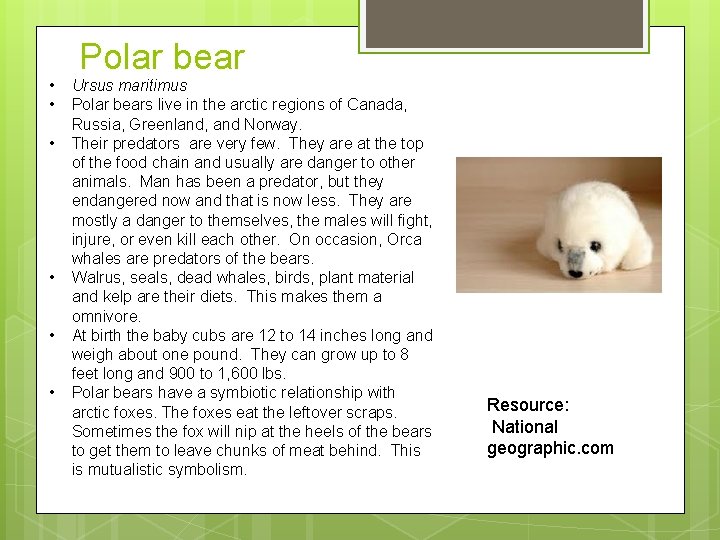
• • • Polar bear Ursus maritimus Polar bears live in the arctic regions of Canada, Russia, Greenland, and Norway. Their predators are very few. They are at the top of the food chain and usually are danger to other animals. Man has been a predator, but they endangered now and that is now less. They are mostly a danger to themselves, the males will fight, injure, or even kill each other. On occasion, Orca whales are predators of the bears. Walrus, seals, dead whales, birds, plant material and kelp are their diets. This makes them a omnivore. At birth the baby cubs are 12 to 14 inches long and weigh about one pound. They can grow up to 8 feet long and 900 to 1, 600 lbs. Polar bears have a symbiotic relationship with arctic foxes. The foxes eat the leftover scraps. Sometimes the fox will nip at the heels of the bears to get them to leave chunks of meat behind. This is mutualistic symbolism. Resource: National geographic. com
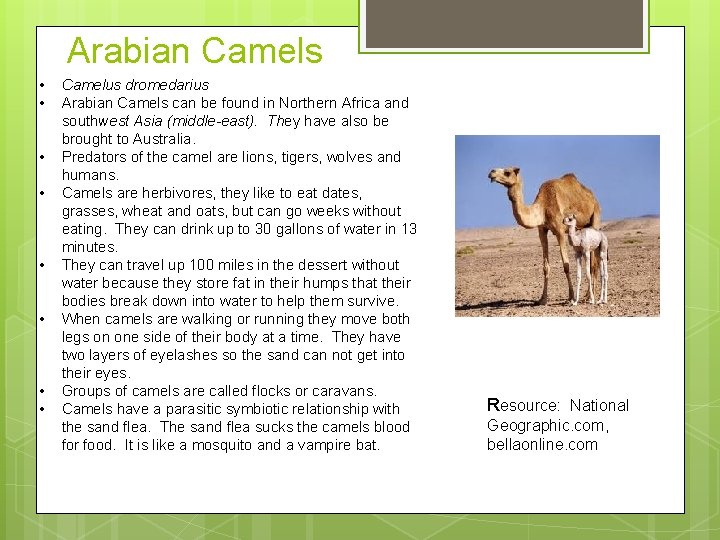
Arabian Camels • • Camelus dromedarius Arabian Camels can be found in Northern Africa and southwest Asia (middle-east). They have also be brought to Australia. Predators of the camel are lions, tigers, wolves and humans. Camels are herbivores, they like to eat dates, grasses, wheat and oats, but can go weeks without eating. They can drink up to 30 gallons of water in 13 minutes. They can travel up 100 miles in the dessert without water because they store fat in their humps that their bodies break down into water to help them survive. When camels are walking or running they move both legs on one side of their body at a time. They have two layers of eyelashes so the sand can not get into their eyes. Groups of camels are called flocks or caravans. Camels have a parasitic symbiotic relationship with the sand flea. The sand flea sucks the camels blood for food. It is like a mosquito and a vampire bat. Resource: National Geographic. com, bellaonline. com
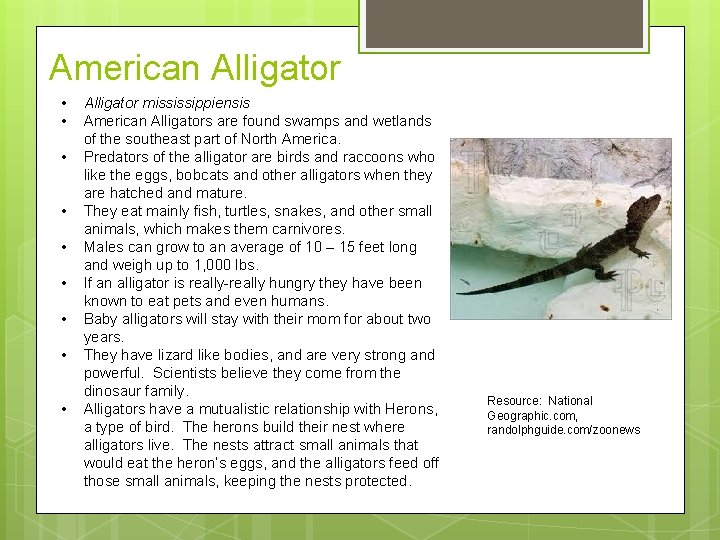
American Alligator • • • Alligator mississippiensis American Alligators are found swamps and wetlands of the southeast part of North America. Predators of the alligator are birds and raccoons who like the eggs, bobcats and other alligators when they are hatched and mature. They eat mainly fish, turtles, snakes, and other small animals, which makes them carnivores. Males can grow to an average of 10 – 15 feet long and weigh up to 1, 000 lbs. If an alligator is really-really hungry they have been known to eat pets and even humans. Baby alligators will stay with their mom for about two years. They have lizard like bodies, and are very strong and powerful. Scientists believe they come from the dinosaur family. Alligators have a mutualistic relationship with Herons, a type of bird. The herons build their nest where alligators live. The nests attract small animals that would eat the heron’s eggs, and the alligators feed off those small animals, keeping the nests protected. Resource: National Geographic. com, randolphguide. com/zoonews
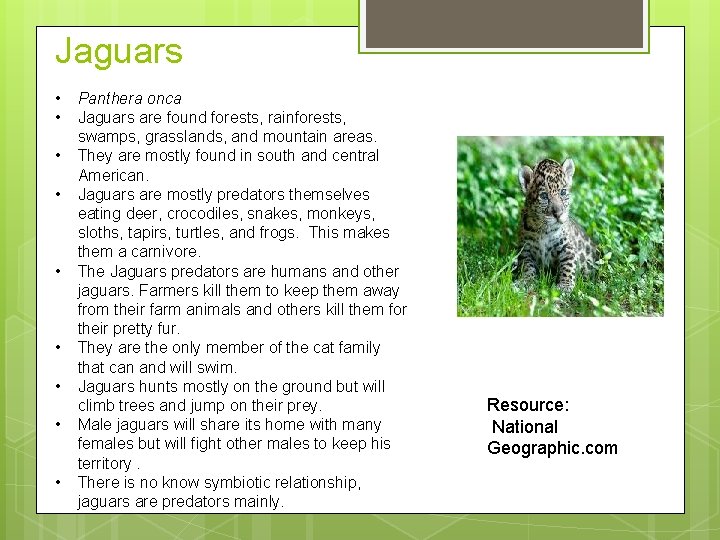
Jaguars • • • Panthera onca Jaguars are found forests, rainforests, swamps, grasslands, and mountain areas. They are mostly found in south and central American. Jaguars are mostly predators themselves eating deer, crocodiles, snakes, monkeys, sloths, tapirs, turtles, and frogs. This makes them a carnivore. The Jaguars predators are humans and other jaguars. Farmers kill them to keep them away from their farm animals and others kill them for their pretty fur. They are the only member of the cat family that can and will swim. Jaguars hunts mostly on the ground but will climb trees and jump on their prey. Male jaguars will share its home with many females but will fight other males to keep his territory. There is no know symbiotic relationship, jaguars are predators mainly. Resource: National Geographic. com
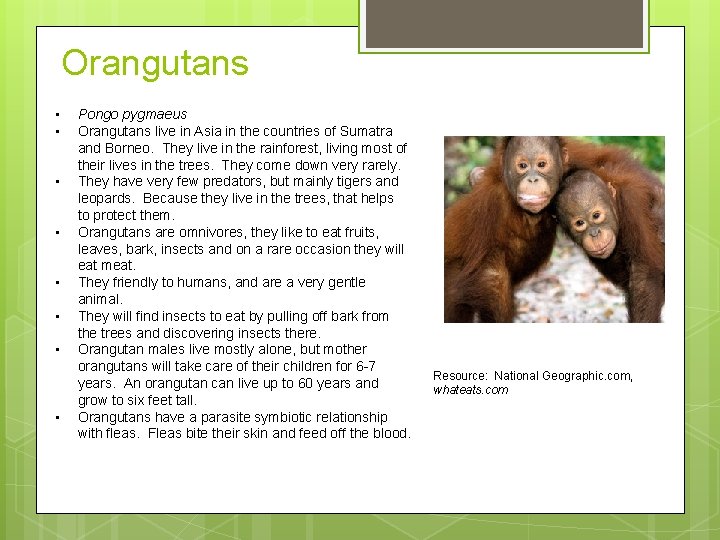
Orangutans • • Pongo pygmaeus Orangutans live in Asia in the countries of Sumatra and Borneo. They live in the rainforest, living most of their lives in the trees. They come down very rarely. They have very few predators, but mainly tigers and leopards. Because they live in the trees, that helps to protect them. Orangutans are omnivores, they like to eat fruits, leaves, bark, insects and on a rare occasion they will eat meat. They friendly to humans, and are a very gentle animal. They will find insects to eat by pulling off bark from the trees and discovering insects there. Orangutan males live mostly alone, but mother orangutans will take care of their children for 6 -7 years. An orangutan can live up to 60 years and grow to six feet tall. Orangutans have a parasite symbiotic relationship with fleas. Fleas bite their skin and feed off the blood. Resource: National Geographic. com, whateats. com
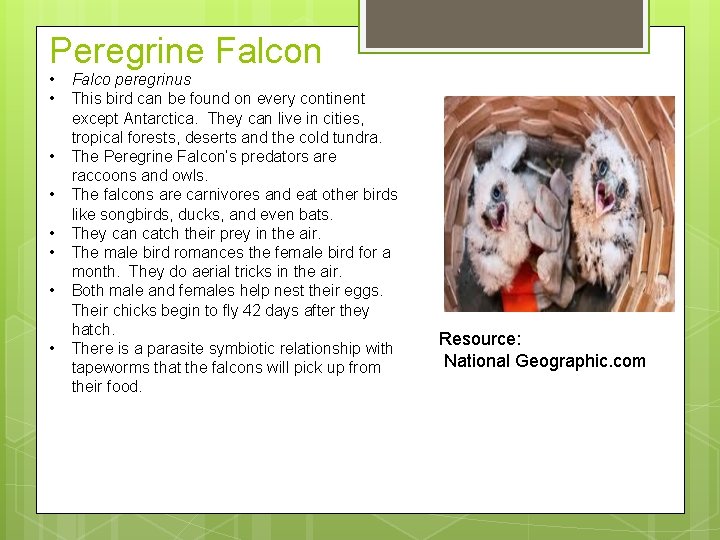
Peregrine Falcon • • Falco peregrinus This bird can be found on every continent except Antarctica. They can live in cities, tropical forests, deserts and the cold tundra. The Peregrine Falcon’s predators are raccoons and owls. The falcons are carnivores and eat other birds like songbirds, ducks, and even bats. They can catch their prey in the air. The male bird romances the female bird for a month. They do aerial tricks in the air. Both male and females help nest their eggs. Their chicks begin to fly 42 days after they hatch. There is a parasite symbiotic relationship with tapeworms that the falcons will pick up from their food. Resource: National Geographic. com
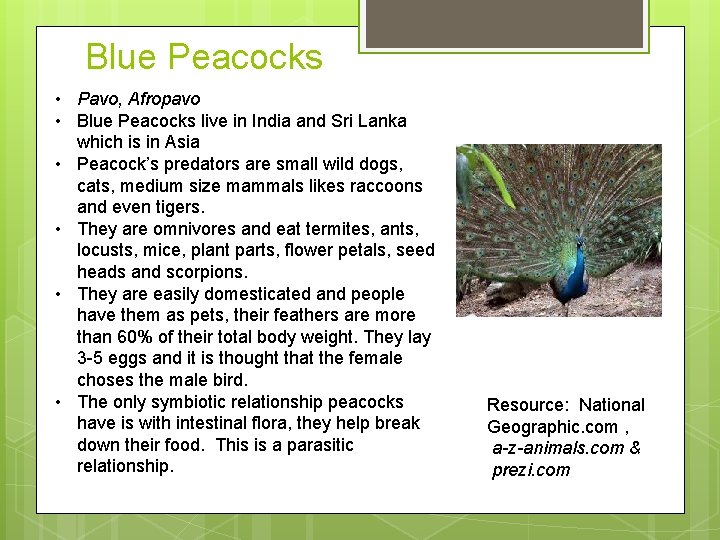
Blue Peacocks • Pavo, Afropavo • Blue Peacocks live in India and Sri Lanka which is in Asia • Peacock’s predators are small wild dogs, cats, medium size mammals likes raccoons and even tigers. • They are omnivores and eat termites, ants, locusts, mice, plant parts, flower petals, seed heads and scorpions. • They are easily domesticated and people have them as pets, their feathers are more than 60% of their total body weight. They lay 3 -5 eggs and it is thought that the female choses the male bird. • The only symbiotic relationship peacocks have is with intestinal flora, they help break down their food. This is a parasitic relationship. Resource: National Geographic. com , a-z-animals. com & prezi. com
- Slides: 16