
General comparative physiology ZOO 303 Week 3 transport




- Slides: 45
General & comparative physiology (ZOO 303) Week 3: transport, electrolytes, secretion, homeostasis & temperature regulation General & comparative physiology (ZOO 312) by Rania M. H. Baleela is licensed under a Creative Commons Attribution-Non. Commercial-Share. Alike 3. 0 Unported License.
This week content • • Osmosis Active transport Cytosis The p. H Electrolyte dissociation Secretion Homeostasis Temperature regulation 2
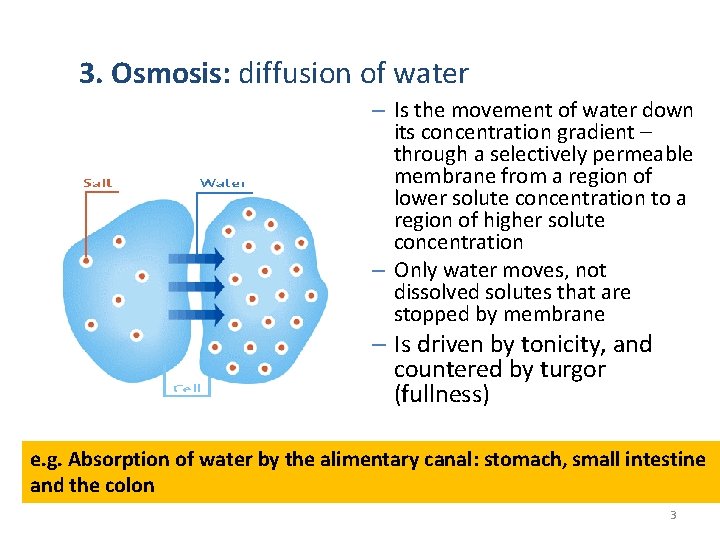
3. Osmosis: diffusion of water – Is the movement of water down its concentration gradient – through a selectively permeable membrane from a region of lower solute concentration to a region of higher solute concentration – Only water moves, not dissolved solutes that are stopped by membrane – Is driven by tonicity, and countered by turgor (fullness) e. g. Absorption of water by the alimentary canal: stomach, small intestine and the colon 3
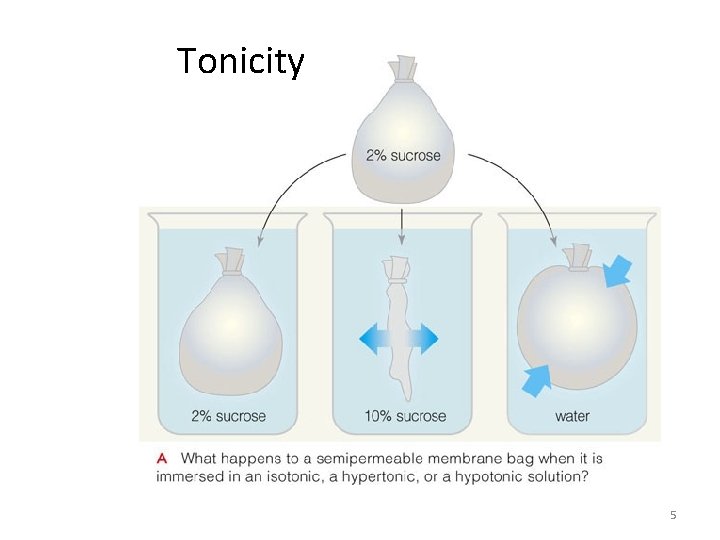
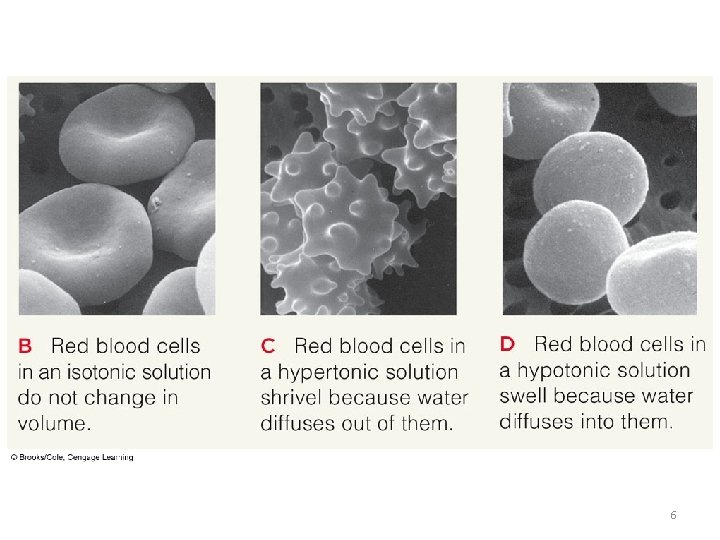
Tonicity • Defined as the ability of a solution to cause osmosis across a cell membrane 1. Hypotonic (with low solute conc. ), 2. Hypertonic (with higher solute conc. ) • H 2 O diffuses from hypotonic to hypertonic attempting to dilute the higher concentration of solutes. 3. Isotonic fluids have the same solute conc. 4
Tonicity 5
6
Osmo-regulation • Is keeping the concentration of cell cytoplasm or blood at a suitable concentration. (a) Freshwater Amoeba: uses a contractile vacuole to expel the excess water from its cytoplasm=> thus need more respiration/O 2/ATP than isotonic marine Amoebae. (b) The kidneys maintain the blood (thus, whole body) at the correct concentration. 7
2. Active transport Energy required 8
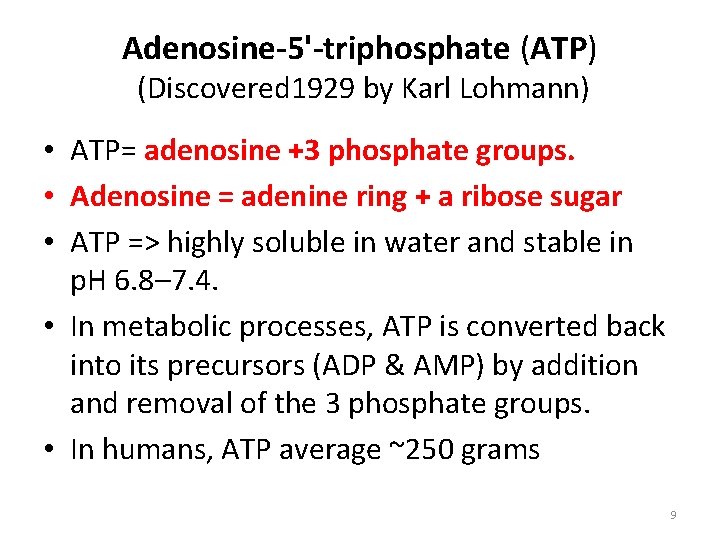
Adenosine-5'-triphosphate (ATP) (Discovered 1929 by Karl Lohmann) • ATP= adenosine +3 phosphate groups. • Adenosine = adenine ring + a ribose sugar • ATP => highly soluble in water and stable in p. H 6. 8– 7. 4. • In metabolic processes, ATP is converted back into its precursors (ADP & AMP) by addition and removal of the 3 phosphate groups. • In humans, ATP average ~250 grams 9
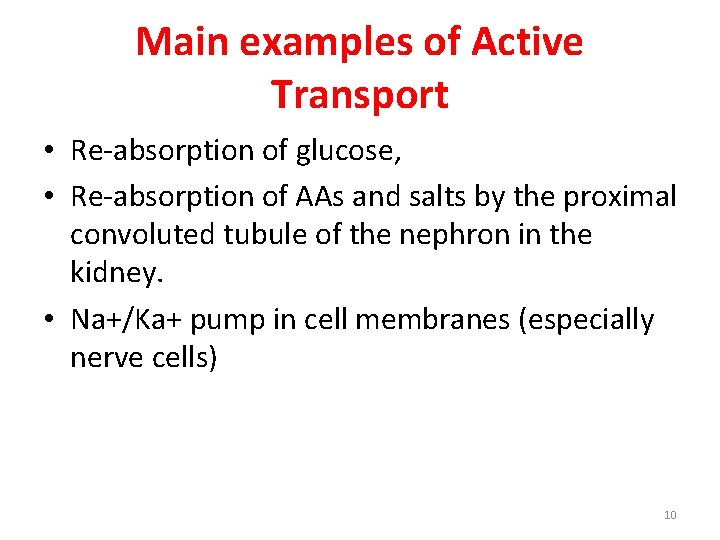
Main examples of Active Transport • Re-absorption of glucose, • Re-absorption of AAs and salts by the proximal convoluted tubule of the nephron in the kidney. • Na+/Ka+ pump in cell membranes (especially nerve cells) 10
Types of active transport Primary => Secondary => directly uses energy indirectly 11
a) Primary active transport (direct) 12
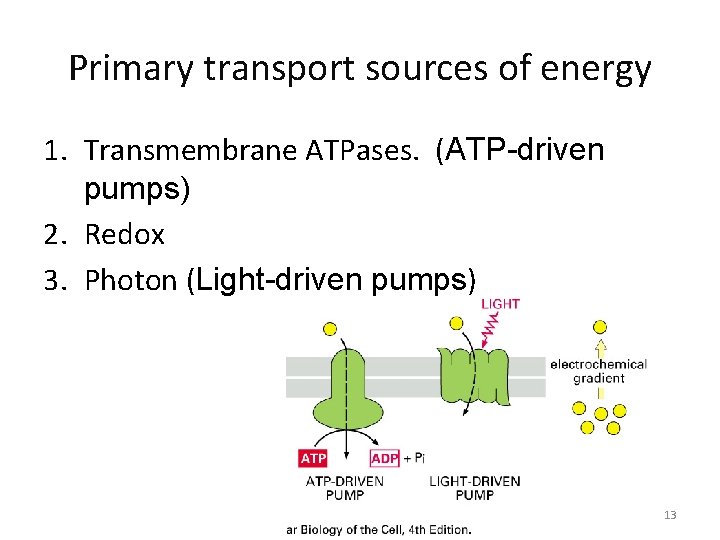
Primary transport sources of energy 1. Transmembrane ATPases. (ATP-driven pumps) 2. Redox 3. Photon (Light-driven pumps) 13
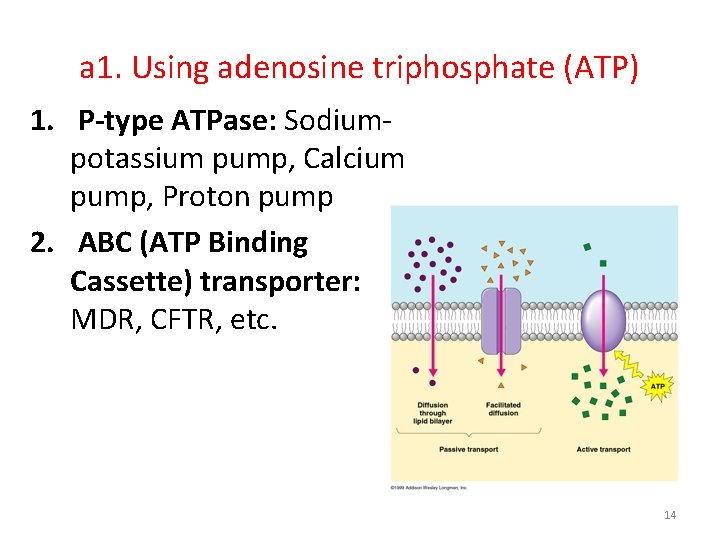
a 1. Using adenosine triphosphate (ATP) 1. P-type ATPase: Sodiumpotassium pump, Calcium pump, Proton pump 2. ABC (ATP Binding Cassette) transporter: MDR, CFTR, etc. 14
a 2. Using redox energy • Redox is the reduction energy of nicotinamide adenine dinucleotide (NADH). • e. g. the mitochondrial electron transport chain that moves protons across the inner mitochondrial membrane against their concentration gradient. 15
a 3. Using light energy • The proteins involved in photosynthesis uses energy of photons: 1. to create a proton gradient across the thylakoid membrane 2. to create reduction power in the form of nicotinamide adenine dinucleotide phosphate (NADPH). 16
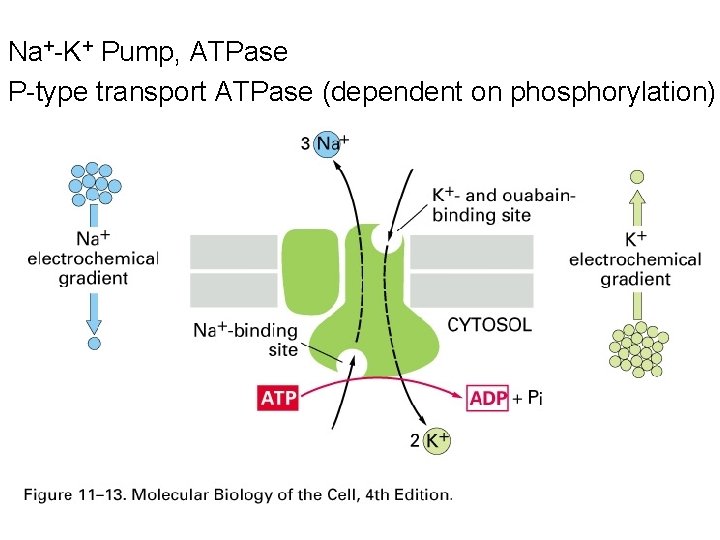
e. g. of active transport: The sodium (Na+)/potassium (K+) pump Plays a very important role in nerve cell membranes A primary ATPase universal to all cellular life is the Na+/K+ pump, 17 which helps to maintain the cell potential.
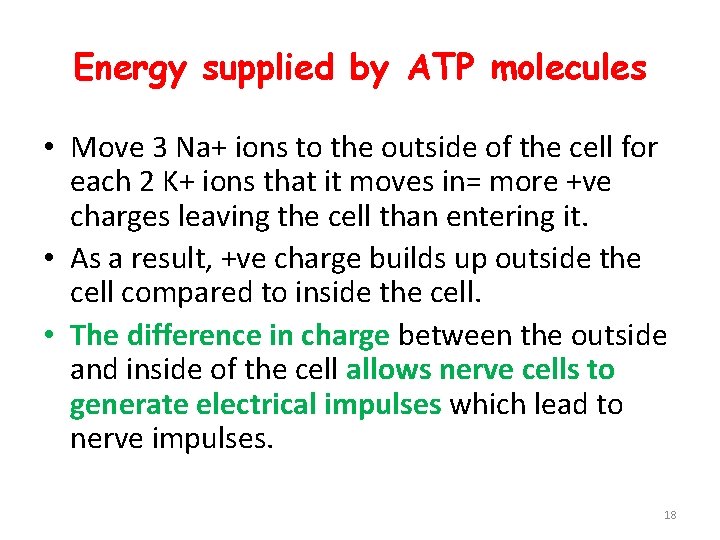
Energy supplied by ATP molecules • Move 3 Na+ ions to the outside of the cell for each 2 K+ ions that it moves in= more +ve charges leaving the cell than entering it. • As a result, +ve charge builds up outside the cell compared to inside the cell. • The difference in charge between the outside and inside of the cell allows nerve cells to generate electrical impulses which lead to nerve impulses. 18
Na+-K+ Pump, ATPase P-type transport ATPase (dependent on phosphorylation)
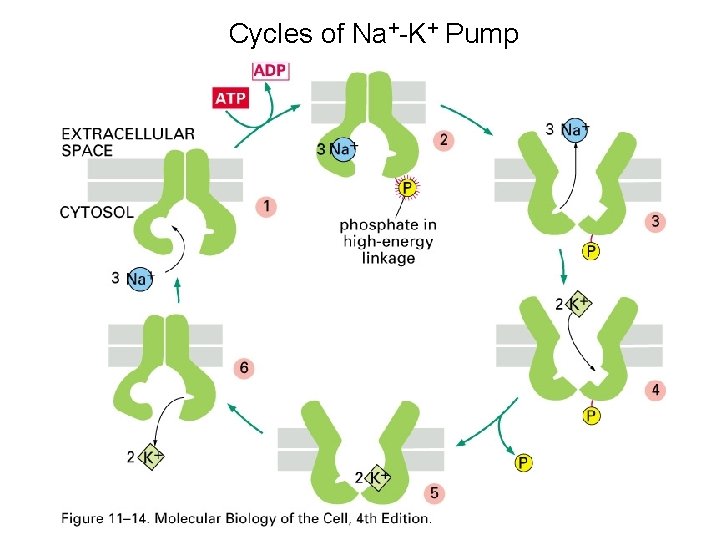
Cycles of Na+-K+ Pump
Transcellular transport Tight junction separates apical and basal/lateral spaces Apical: glucose and Na+ coupling; basal/lateral: glucose is passive, Na+ maintained by ATP-driven pump
b) Secondary active transport Uses energy indirectly/indirect active transport 22
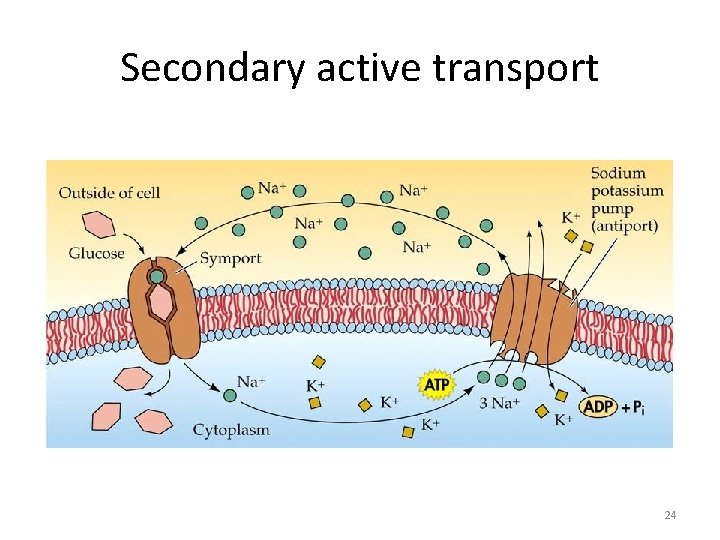
• Couples the passive movement of one solute down its concentration gradient to the movement of another solute up its concentration gradient. • Energy from ATP is used indirectly to establish the concentration gradient of the counter gradient resulting in movement of the first solute. 23
Secondary active transport 24
Active transport has 2 main forms 1. Symport: the glucose symporter SGLT 1, co -transports one glucose molecule into the cell for every 2 Na+ it imports into the cell 2. Antiport: the sodium-calcium exchanger/antiporter, allows 3 Na+ into the cell to transport 1 Ca 2+ out. 25
Cytosis 26
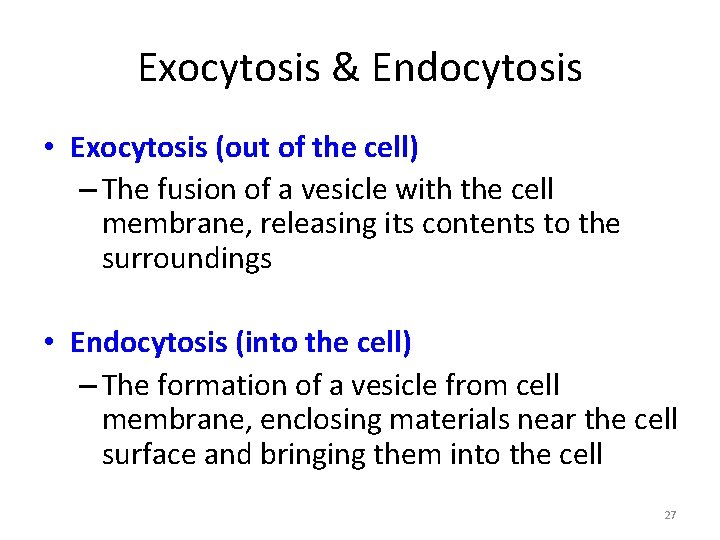
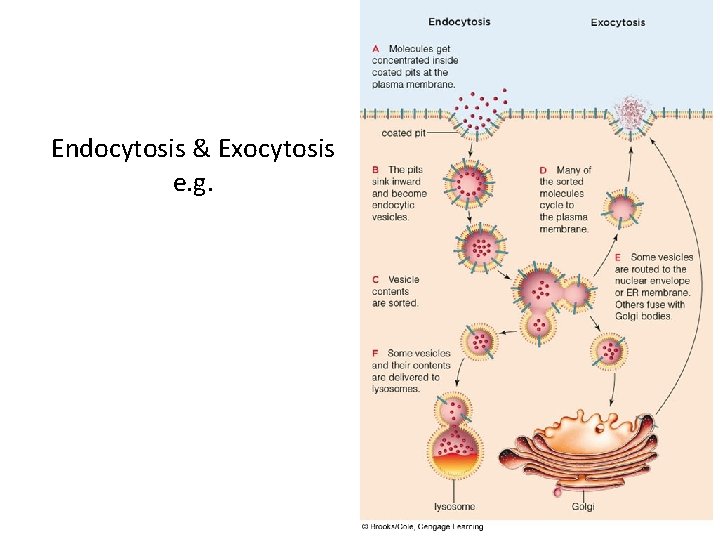
Exocytosis & Endocytosis • Exocytosis (out of the cell) – The fusion of a vesicle with the cell membrane, releasing its contents to the surroundings • Endocytosis (into the cell) – The formation of a vesicle from cell membrane, enclosing materials near the cell surface and bringing them into the cell 27
Endocytosis & Exocytosis e. g. 28
The p. H Electrolyte dissociation
The Power of Hydrogen (p. H) • A logarithmic scale to express the concentration of hydrogen ions (H+) and hydroxide ions (OH -) • Proposed by Sorensen in 1909. • This scale is known as the p. H scale. 30
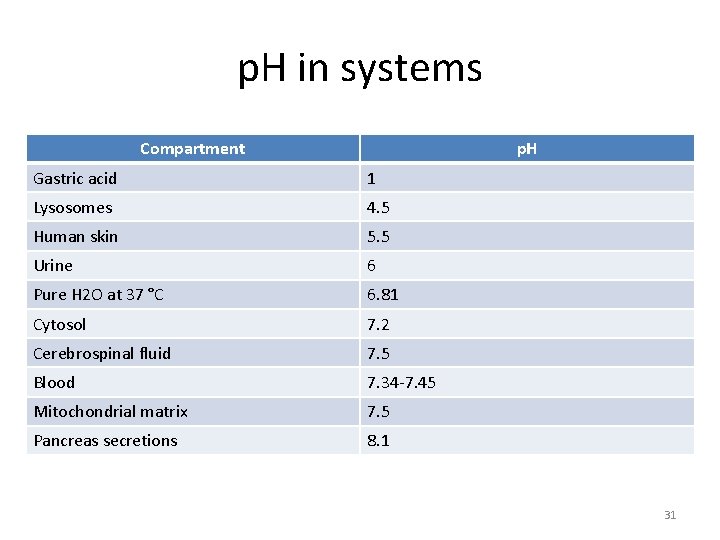
p. H in systems Compartment p. H Gastric acid 1 Lysosomes 4. 5 Human skin 5. 5 Urine 6 Pure H 2 O at 37 °C 6. 81 Cytosol 7. 2 Cerebrospinal fluid 7. 5 Blood 7. 34 -7. 45 Mitochondrial matrix 7. 5 Pancreas secretions 8. 1 31
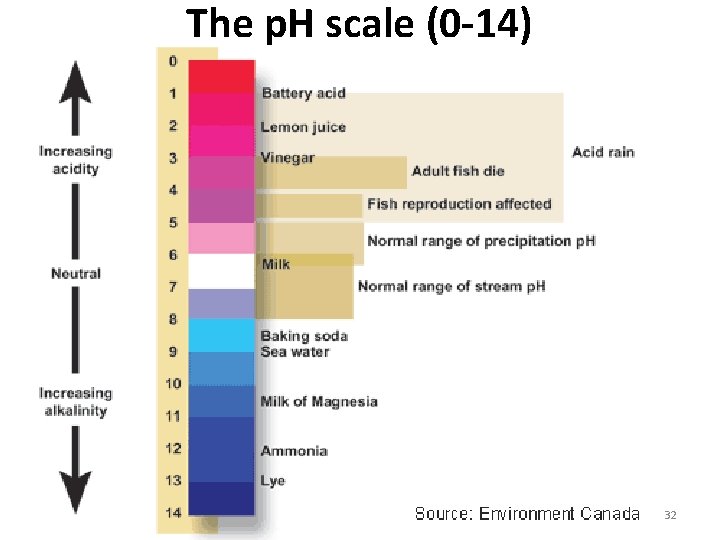
The p. H scale (0 -14) 32
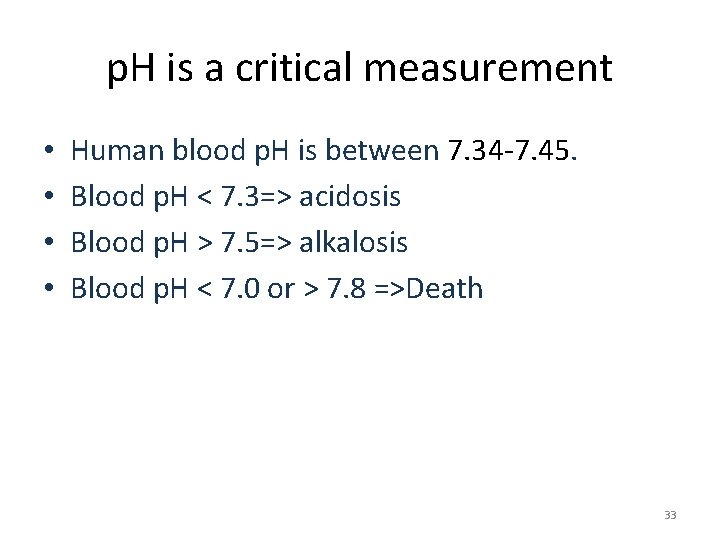
p. H is a critical measurement • • Human blood p. H is between 7. 34 -7. 45. Blood p. H < 7. 3=> acidosis Blood p. H > 7. 5=> alkalosis Blood p. H < 7. 0 or > 7. 8 =>Death 33
Electrolyte dissociation The primary ions of electrolytes, in physiology, are: Sodium Potassium Calcium Magnesium Chloride Hydrogen phosphate Hydrogen carbonate Why? 34
Electric tissues of the body & regulation • Muscles • Neurons • Electrolyte homeostasis is regulated by hormones: 1. Antidiuretic hormone 2. Aldosterone 3. Parathyroid hormone • Electrolyte disturbance may lead to cardiac and neurological complications
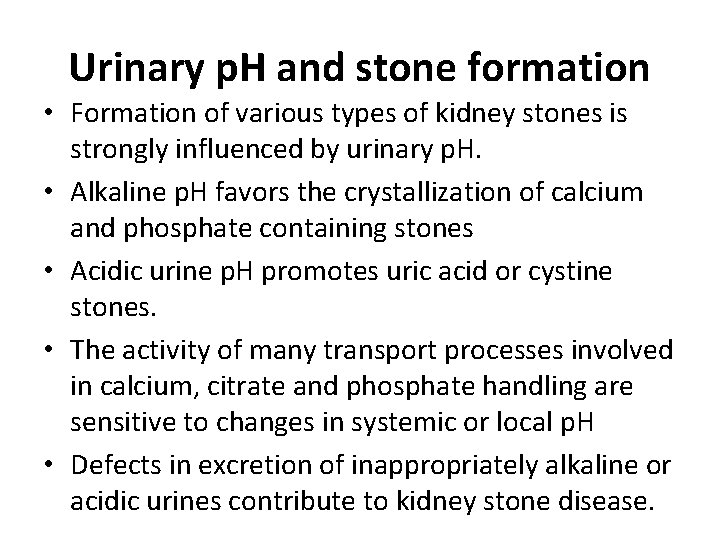
Urinary p. H and stone formation • Formation of various types of kidney stones is strongly influenced by urinary p. H. • Alkaline p. H favors the crystallization of calcium and phosphate containing stones • Acidic urine p. H promotes uric acid or cystine stones. • The activity of many transport processes involved in calcium, citrate and phosphate handling are sensitive to changes in systemic or local p. H • Defects in excretion of inappropriately alkaline or acidic urines contribute to kidney stone disease.
Secretion 37
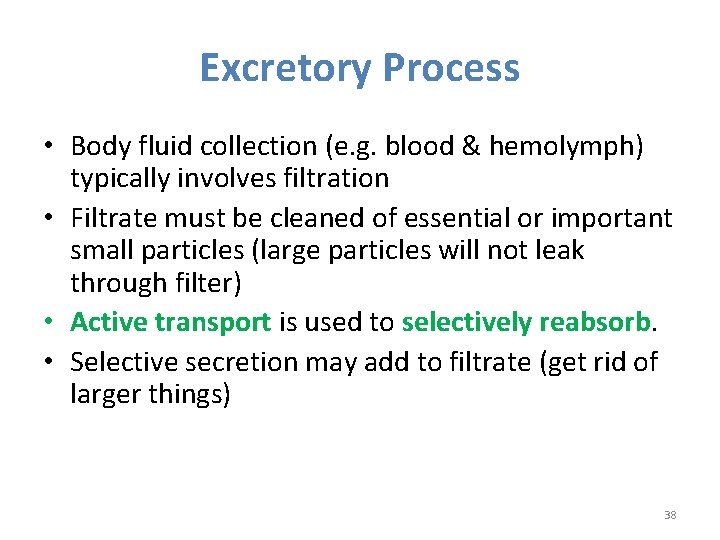
Excretory Process • Body fluid collection (e. g. blood & hemolymph) typically involves filtration • Filtrate must be cleaned of essential or important small particles (large particles will not leak through filter) • Active transport is used to selectively reabsorb. • Selective secretion may add to filtrate (get rid of larger things) 38
1. Protonephridia: Flame (bulb systems) e. g. Platyhelminthes • Dead-end tubules (no internal openings) • Tuft of cilia projecting into tubule • Beating cilia filtrate H 2 O from interstitial fluid through bulb, into tubule system • Urine move outward through tubules until exit through nephridiopores 39
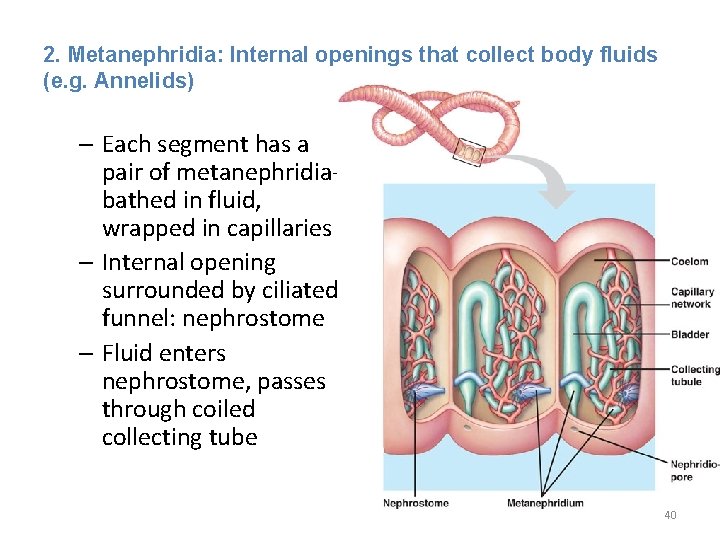
2. Metanephridia: Internal openings that collect body fluids (e. g. Annelids) – Each segment has a pair of metanephridia- bathed in fluid, wrapped in capillaries – Internal opening surrounded by ciliated funnel: nephrostome – Fluid enters nephrostome, passes through coiled collecting tube 40
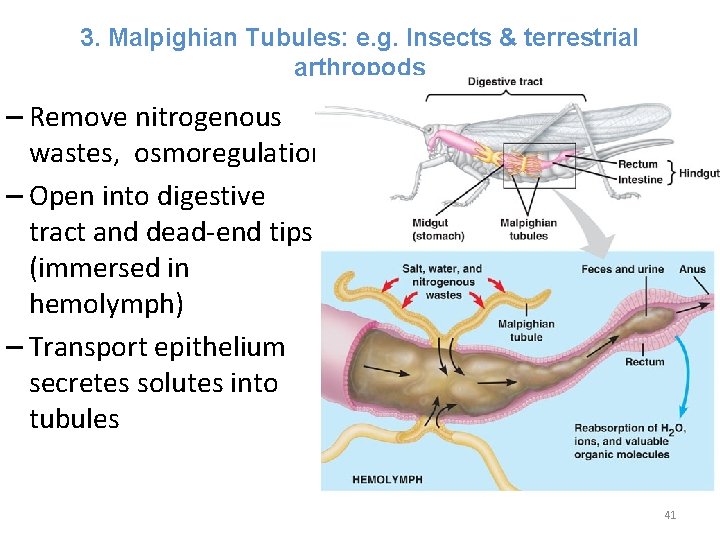
3. Malpighian Tubules: e. g. Insects & terrestrial arthropods – Remove nitrogenous wastes, osmoregulation – Open into digestive tract and dead-end tips (immersed in hemolymph) – Transport epithelium secretes solutes into tubules 41
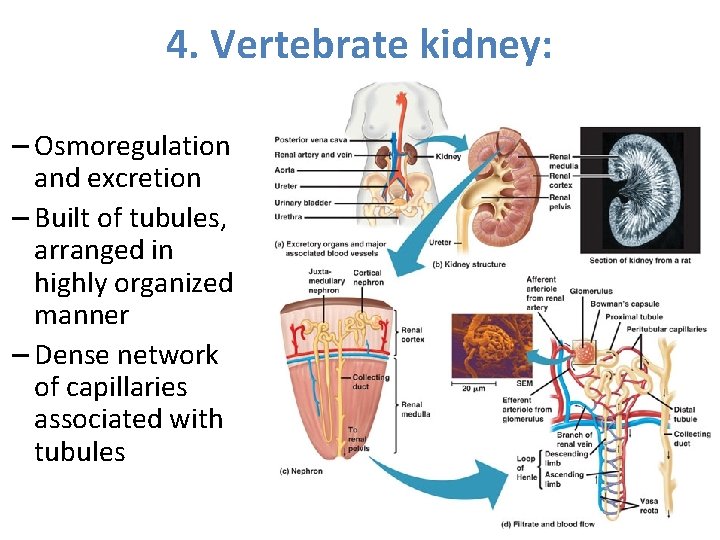
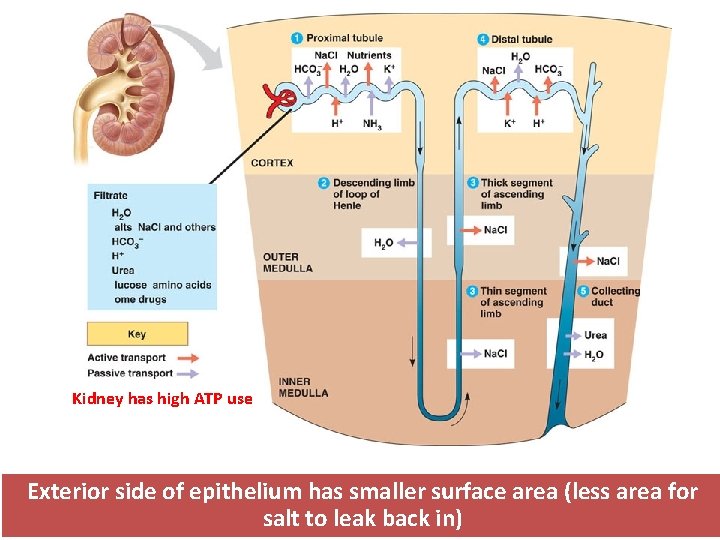
4. Vertebrate kidney: – Osmoregulation and excretion – Built of tubules, arranged in highly organized manner – Dense network of capillaries associated with tubules 42
Filtration of Blood • Blood pressure forces blood out of capillaries in glomerulus and into lumen of Bowman’s Capsule – Permeable to water, small solutes; not blood cells, plasma proteins • Filtration is non-specific (i. e. everything small enough leaves the blood) 43
From Filtrate to Urine- The Proximal Tubule • Transport epithelium: – Controls p. H (controls secretion of H+) – Produces and secretes ammonia (keeps filtrate from becoming too acidic) – Reabsorb 90% of bicarbonate (buffer) – Glucose, amino acids, K+ actively or passively transported from filtrate to the peritubular capillaries 44
Kidney has high ATP use Exterior side of epithelium has smaller surface area (less area for 45 salt to leak back in)