Congestive Heart Failure for nonclinicians Jessica Van FleetGreen

- Slides: 25
Congestive Heart Failure for non-clinicians Jessica Van Fleet-Green, MD August 21, 2018 Slide
Objectives • Understand the heart as a pump • Understand how diet and lifestyle can contribute to Congestive Heart Failure (CHF) exacerbations • Understand compensated vs. decompensated heart failure • Introduction of medications to control CHF • Apply your knowledge of CHF to help educate patients on their disease Slide 2
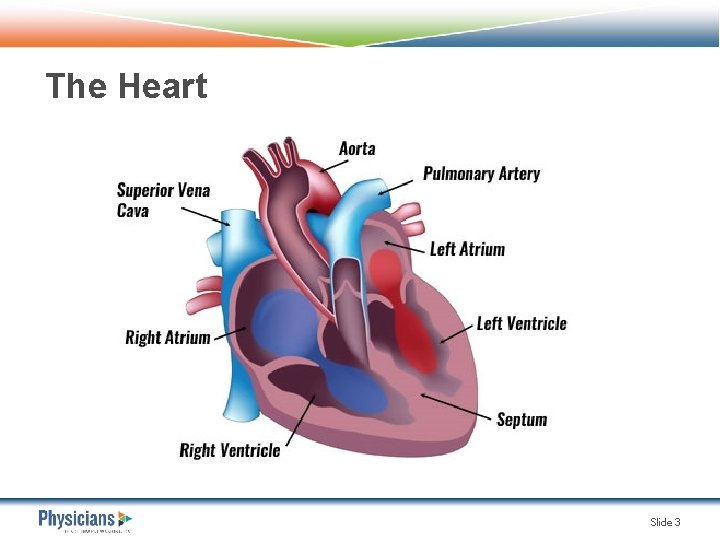
The Heart Slide 3
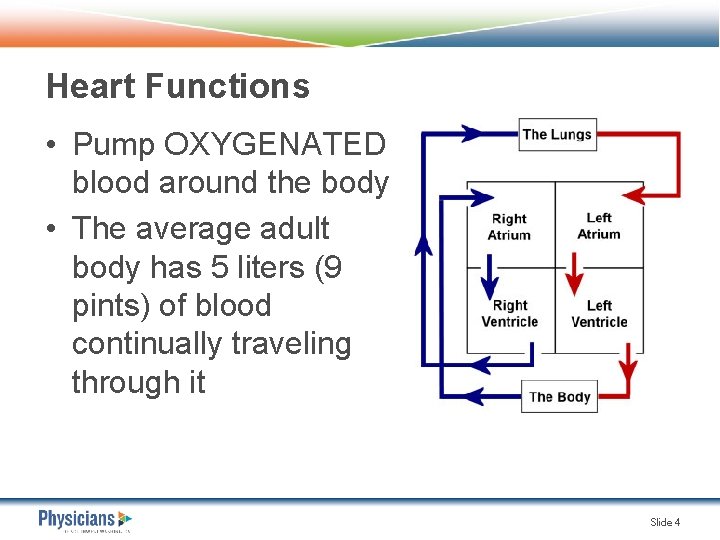
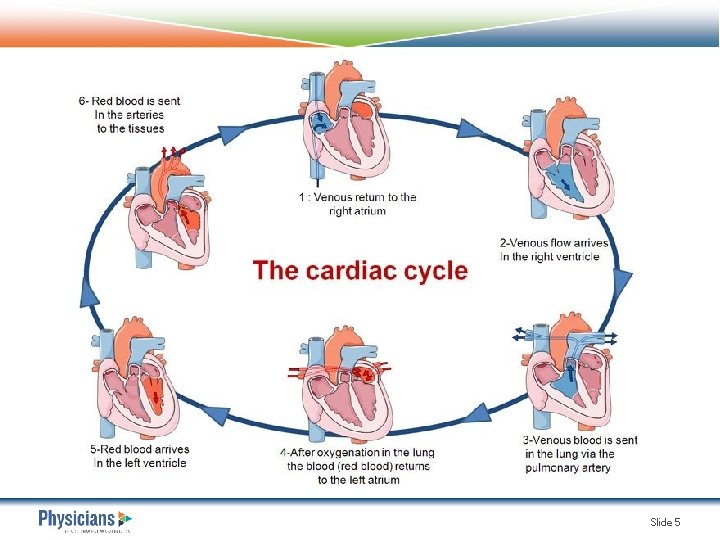
Heart Functions • Pump OXYGENATED blood around the body • The average adult body has 5 liters (9 pints) of blood continually traveling through it Slide 4
Slide 5
Video • https: //www. youtube. com/watch? v=5 t UWOF 6 w. Enk Slide 6
Diastole • Relaxation phase or “filling phase” • Diastolic BP Reading (lower number) • Impaired relaxation leads to “Diastolic Heart Failure” Slide 7
Systole • Contraction phase • Systolic BP Reading (higher number) • Impaired pumping phase leads to systolic heart failure Slide 8
So what IS heart failure? • The heart cannot keep up with its workload – Cannot pump enough blood to meet the body’s demand for blood and oxygen – Tissues don’t get enough oxygen – Blood “backs up” causing leaking vessels • Pulmonary edema (fluid in lungs) • Peripheral edema (swelling) Slide 9
Video: American Heart Association • https: //watchlearnlive. heart. org/CVML _Player. php? module. Select=hrtflr Slide 10
Heart Failure: What is happening? • Heart enlarges to try and get stronger and compensate • The heart pumps faster (heart rate goes up) to try to increase the output • Blood vessels get smaller to keep the blood pressure up • The body diverts blood away from less important tissues to oxygenate the brain and heart itself (ie: kidneys) Slide 11
Heart Failure: Types • Systolic Heart Failure: left ventricle cannot contract normally, heart doesn’t have enough force to push enough blood throughout body – “left sided” failure – Failure with reduced ejection fraction • Diastolic Heart Failure: impaired relaxation so heart doesn’t fill with enough blood during the relaxation phase – “right sided” failure – Failure with preserved ejection fraction Slide 12
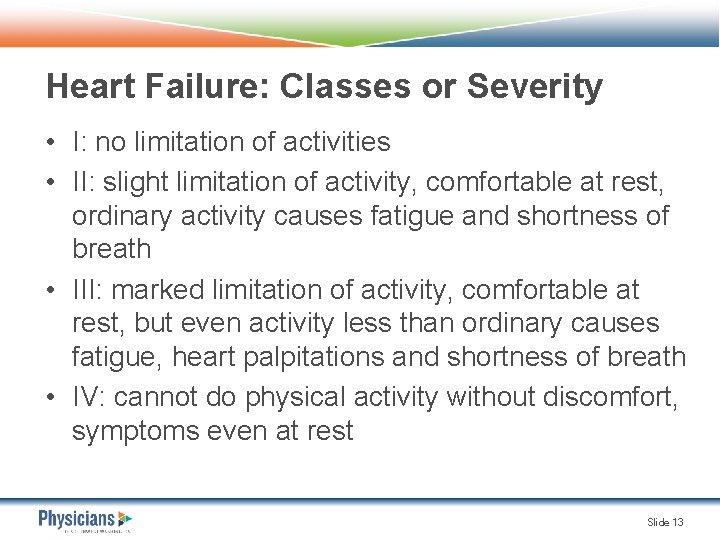
Heart Failure: Classes or Severity • I: no limitation of activities • II: slight limitation of activity, comfortable at rest, ordinary activity causes fatigue and shortness of breath • III: marked limitation of activity, comfortable at rest, but even activity less than ordinary causes fatigue, heart palpitations and shortness of breath • IV: cannot do physical activity without discomfort, symptoms even at rest Slide 13
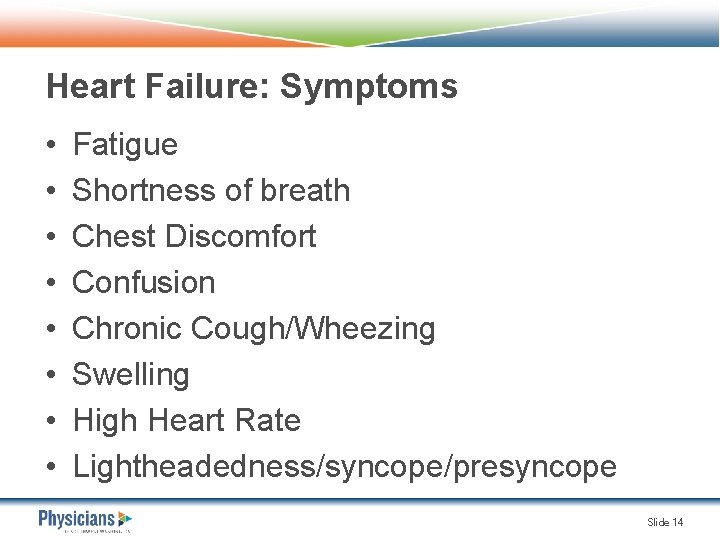
Heart Failure: Symptoms • • Fatigue Shortness of breath Chest Discomfort Confusion Chronic Cough/Wheezing Swelling High Heart Rate Lightheadedness/syncope/presyncope Slide 14
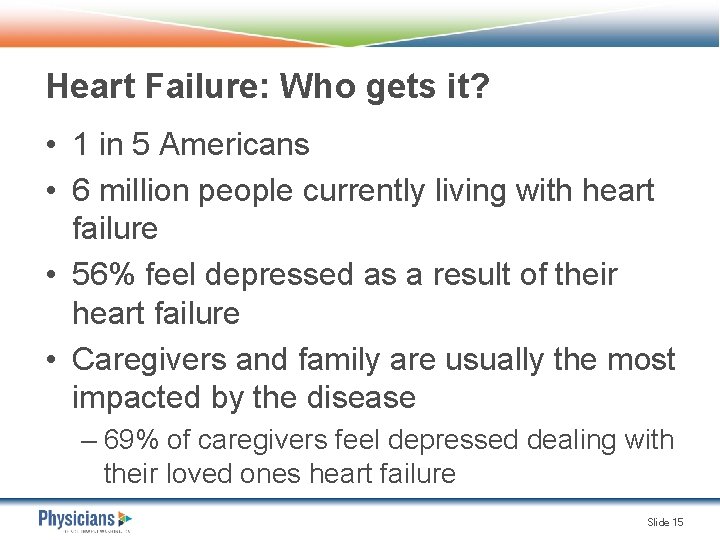
Heart Failure: Who gets it? • 1 in 5 Americans • 6 million people currently living with heart failure • 56% feel depressed as a result of their heart failure • Caregivers and family are usually the most impacted by the disease – 69% of caregivers feel depressed dealing with their loved ones heart failure Slide 15
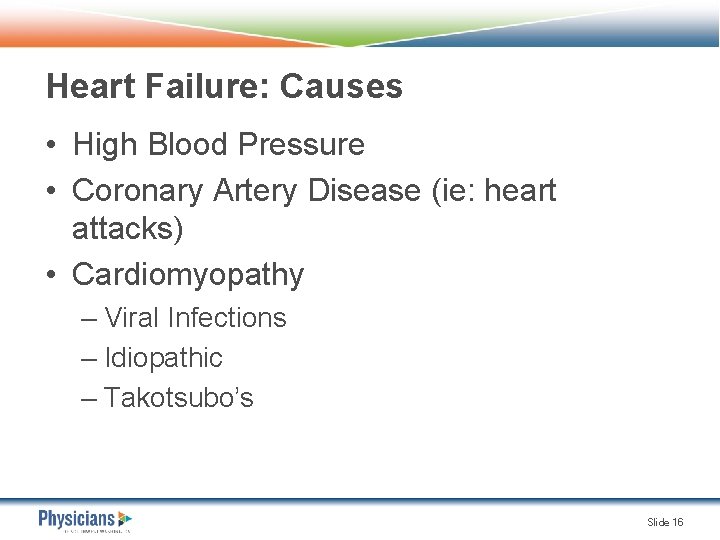
Heart Failure: Causes • High Blood Pressure • Coronary Artery Disease (ie: heart attacks) • Cardiomyopathy – Viral Infections – Idiopathic – Takotsubo’s Slide 16
Heart Failure: Now what? • Usually there is no cure – Management of heart failure with medications and healthy lifestyle can lead to leading a full, enjoyable life • 25% of patients say they don’t have enough support to manage their Heart Failure • Heart Failure is expensive! Slide 17
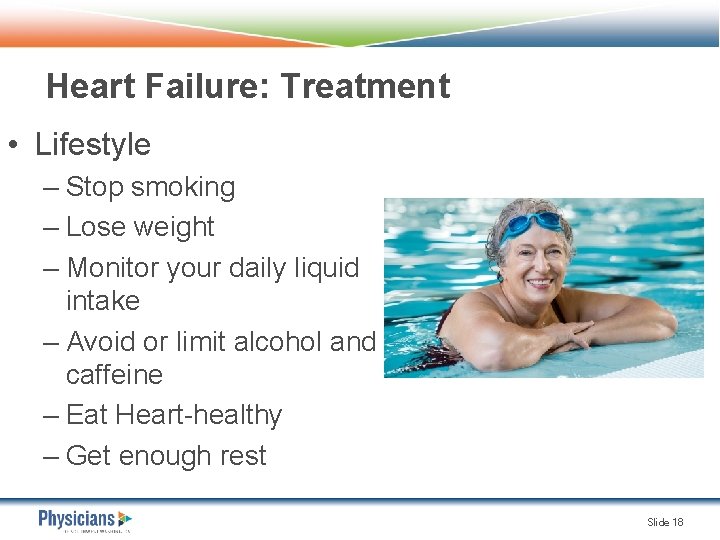
Heart Failure: Treatment • Lifestyle – Stop smoking – Lose weight – Monitor your daily liquid intake – Avoid or limit alcohol and caffeine – Eat Heart-healthy – Get enough rest Slide 18
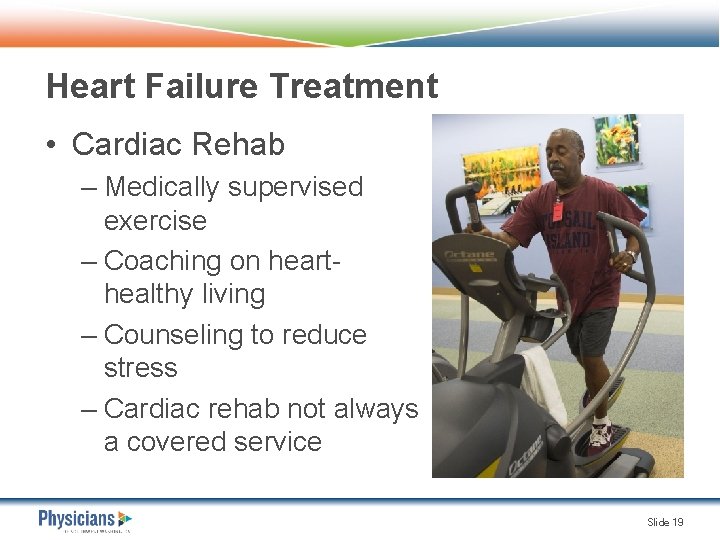
Heart Failure Treatment • Cardiac Rehab – Medically supervised exercise – Coaching on hearthealthy living – Counseling to reduce stress – Cardiac rehab not always a covered service Slide 19
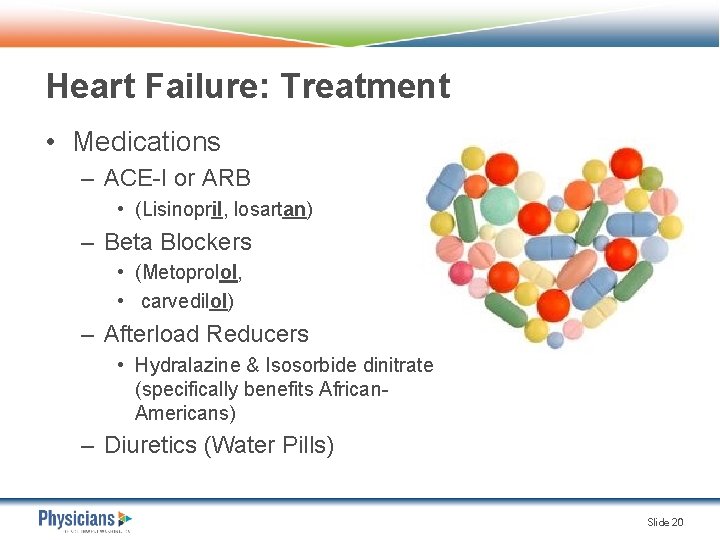
Heart Failure: Treatment • Medications – ACE-I or ARB • (Lisinopril, losartan) – Beta Blockers • (Metoprolol, • carvedilol) – Afterload Reducers • Hydralazine & Isosorbide dinitrate (specifically benefits African. Americans) – Diuretics (Water Pills) Slide 20
Diuretics “Water Pills” • The body rids excess fluids and sodium through urination • Relieves the hearts workload by reducing volume • Decreases fluid build up in lungs and other parts of body Slide 21
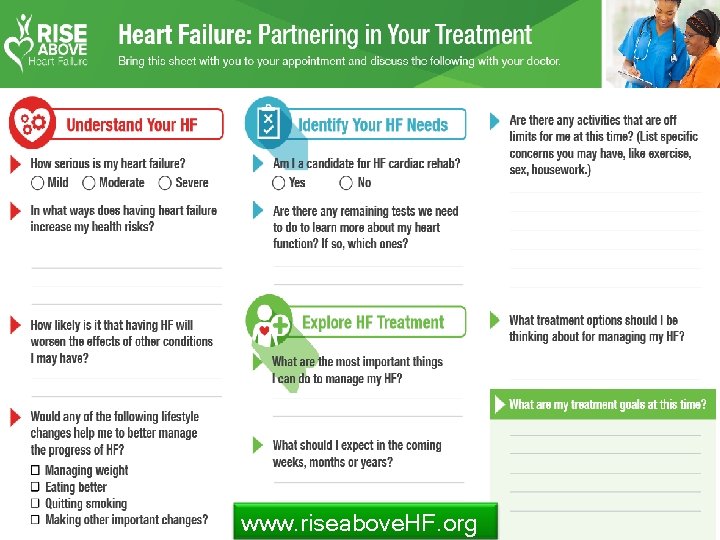
www. riseabove. HF. org Slide 22
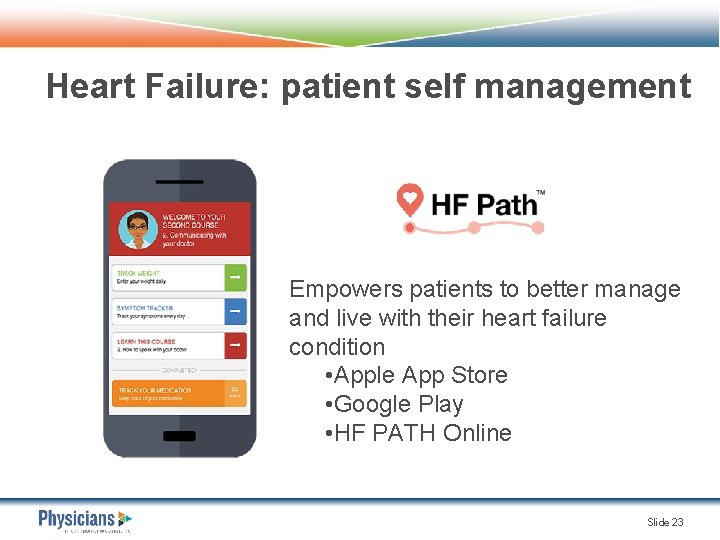
Heart Failure: patient self management Empowers patients to better manage and live with their heart failure condition • Apple App Store • Google Play • HF PATH Online Slide 23
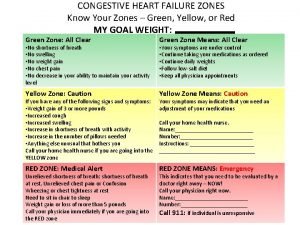
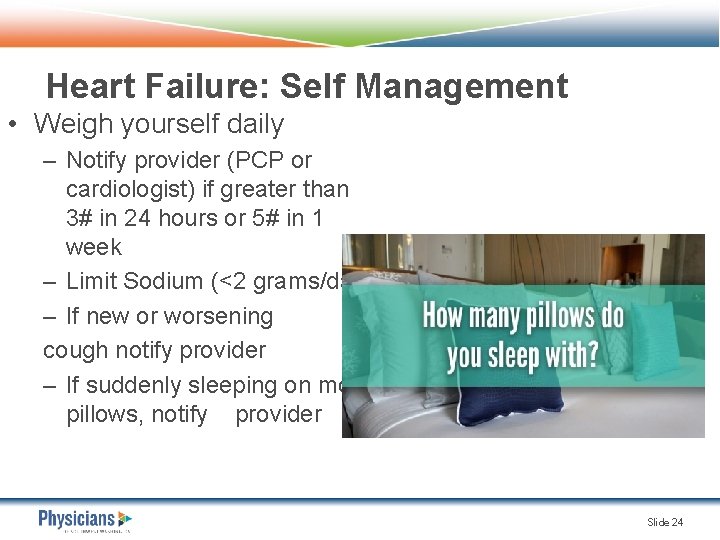
Heart Failure: Self Management • Weigh yourself daily – Notify provider (PCP or cardiologist) if greater than 3# in 24 hours or 5# in 1 week – Limit Sodium (<2 grams/day) – If new or worsening cough notify provider – If suddenly sleeping on more pillows, notify provider Slide 24
references • http: //www. efoza. com/postpic/2012/0 2/cardiac-cycle-diagram_618753. jpg • http: //www. teachpe. com/anatomyphysiology/the-circulatory-system/the -heart • American Heart Association: www. heart. org Slide 25