
The CHF Congestive Heart Failure Clinic Its Role


- Slides: 20
The CHF (Congestive Heart Failure) Clinic: Its Role in Completing What was Started in the Hospital Adrian Fluture, MD, FACC, FSCAI Director Regional Myocardial Infarction Care, Wyoming Medical Center. Heart Failure Management Program. Frontiers in Primary Care - Casper, WY, 4/21/2018
About this lecture • Goal: – Improving quality of care in CHF patients. – Reducing readmissions improving patient’s quality of life. • Quality of scientific data available: – Mostly observational studies, – Small scale RCTs, – Controversies and conflicting data extist.
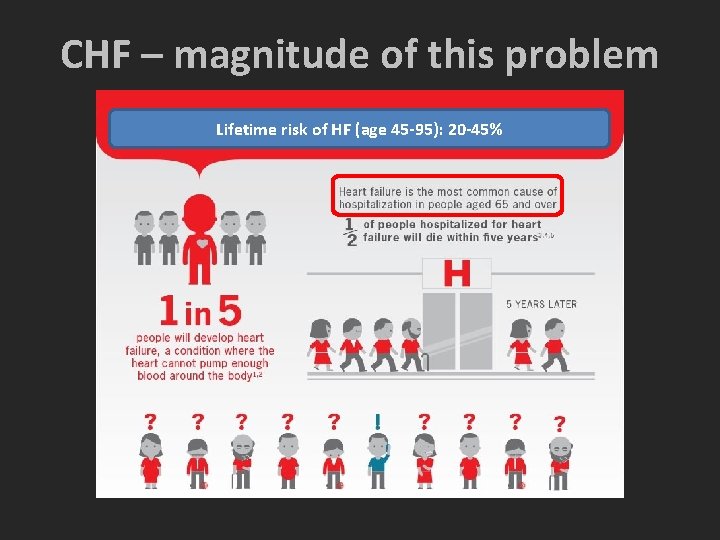
CHF – magnitude of this problem
CHF – magnitude of this problem Lifetime risk of HF (age 45 -95): 20 -45%
Reducing readmissions • Avoiding the preventable readmissions – Possible remedies suggested by research avoiding: • • Therapeutic errors and adverse drug events (med-recs…); Lack of goals of care discussions; Premature discharge; Failed hand-offs; Inadequate post discharge support; Insufficient follow-up; Nosocomial infections, patient falls etc. Auerbach AD, JAMA Intern Med 2016; 176: 484
What do we do differently ? • Working together for our patient’s benefits for more than 30 years Advancements in Heart Failure treatment quality since 2016 – new program
What is different ? • Early recognition • Early treatment • Intensive education (incl. teach-back) on: – Disease – Treatment – Self-management after discharge • Medications, symptoms, weight, diet – What to do if worsening after discharge • Adequate discharge package
Adrian Fluture, MD, FACC, FSCAI Cardiology Involvement may Improve CHF Outcomes Outpatient and inpatient settings (observational studies). 1. Ansari M, JACC 2003; 41: 62. Cardiology care independent predictor of a lower risk for [death+hospitalizations] (HR= 0. 62, [0. 42, 0. 93], p = 0. 02); • 2. Foody JM, Am J Med. 2005; 118: 1120 • Cardiology care lower 30 day mortality (vs. FP - RR = 1. 31; 95% CI: 1. 15 to 1. 49; P<0. 001).
Handling Volume Excess – Key Concept • Acute CHF – the fluid input/output balance Input Besides neurohumoral / preload – afterload treatment Output
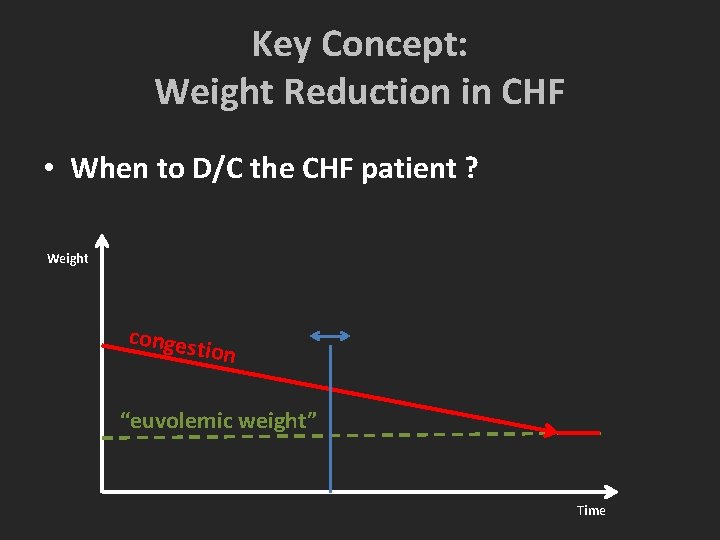
Key Concept: Weight Reduction in CHF • When to D/C the CHF patient ? Weight conges tion “euvolemic weight” Time
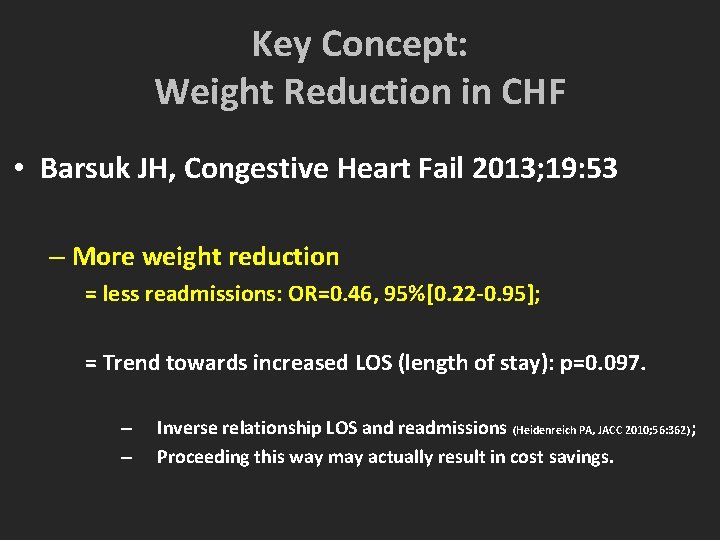
Key Concept: Weight Reduction in CHF • Barsuk JH, Congestive Heart Fail 2013; 19: 53 – More weight reduction = less readmissions: OR=0. 46, 95%[0. 22 -0. 95]; = Trend towards increased LOS (length of stay): p=0. 097. – – Inverse relationship LOS and readmissions (Heidenreich PA, JACC 2010; 56: 362) ; Proceeding this way may actually result in cost savings.
Salt (Na. Cl) - Sodium (Na) Restriction • ACC/AHA – 2013 HF guidelines. – Conflicting information regarding Na intake target • Available literature (time to hospitalization +/- death): – 2 -3 g/d better than >3 g/d Song EK, Eur Cardiovasc Nurs 2014; 13: 541 Lennie TA, J Card Fail 2011; 17: 325 – 2 -3 g/d better than <2 g/d Lennie TA, J Card Fail 2011; 17: 325
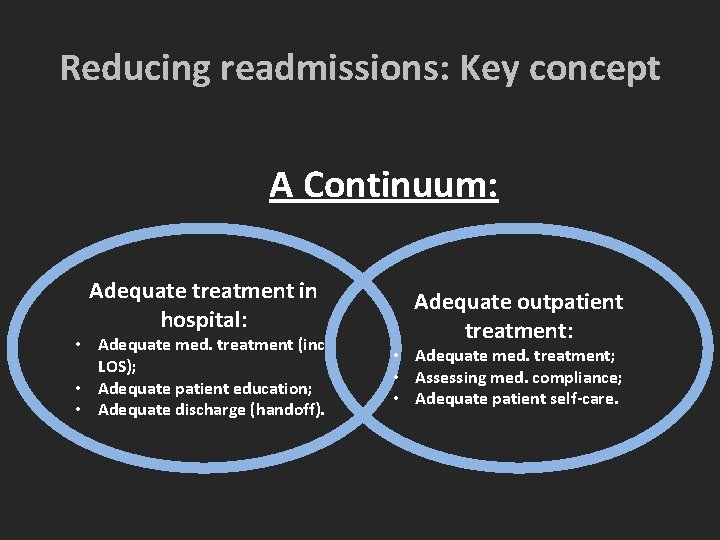
Reducing readmissions: Key concept A Continuum: Adequate treatment in hospital: • Adequate med. treatment (incl. LOS); • Adequate patient education; • Adequate discharge (handoff). Adequate outpatient treatment: • Adequate med. treatment; • Assessing med. compliance; • Adequate patient self-care.
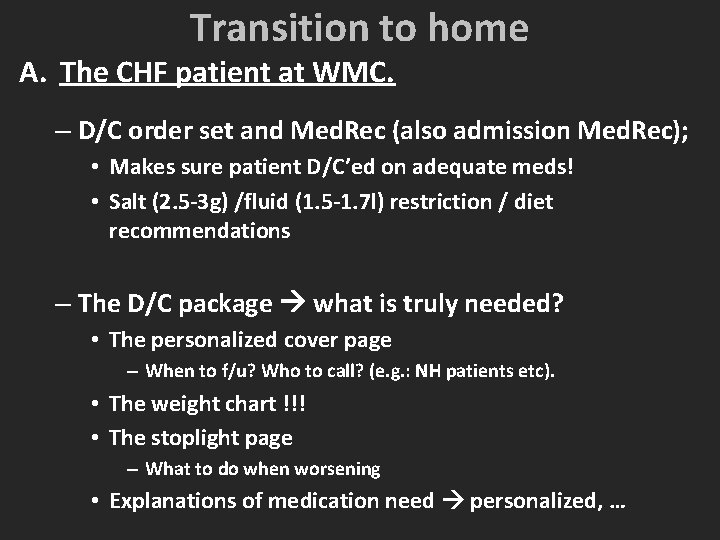
Transition to home A. The CHF patient at WMC. – D/C order set and Med. Rec (also admission Med. Rec); • Makes sure patient D/C’ed on adequate meds! • Salt (2. 5 -3 g) /fluid (1. 5 -1. 7 l) restriction / diet recommendations – The D/C package what is truly needed? • The personalized cover page – When to f/u? Who to call? (e. g. : NH patients etc). • The weight chart !!! • The stoplight page – What to do when worsening • Explanations of medication need personalized, …
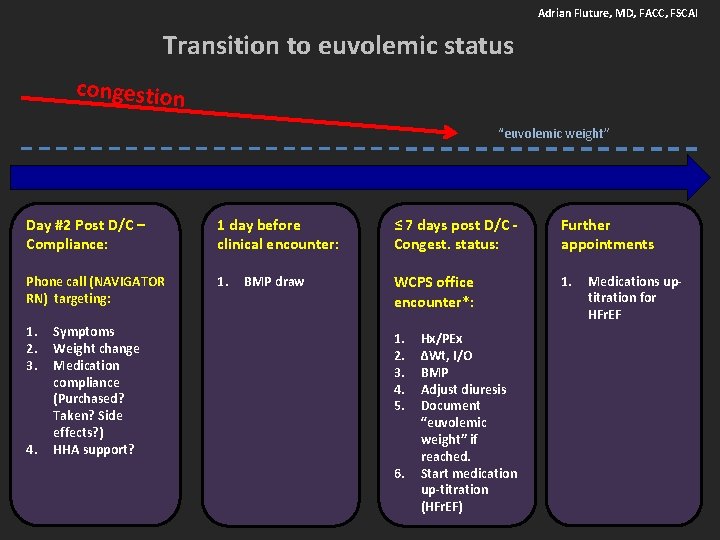
Adrian Fluture, MD, FACC, FSCAI Transition to euvolemic status congestion “euvolemic weight” Day #2 Post D/C – Compliance: 1 day before clinical encounter: ≤ 7 days post D/C - Congest. status: Further appointments Phone call (NAVIGATOR RN) targeting: 1. WCPS office encounter*: 1. 2. 3. 4. Symptoms Weight change Medication compliance (Purchased? Taken? Side effects? ) HHA support? BMP draw 1. 2. 3. 4. 5. 6. Hx/PEx ΔWt, I/O BMP Adjust diuresis Document “euvolemic weight” if reached. Start medication up-titration (HFr. EF) Medications uptitration for HFr. EF
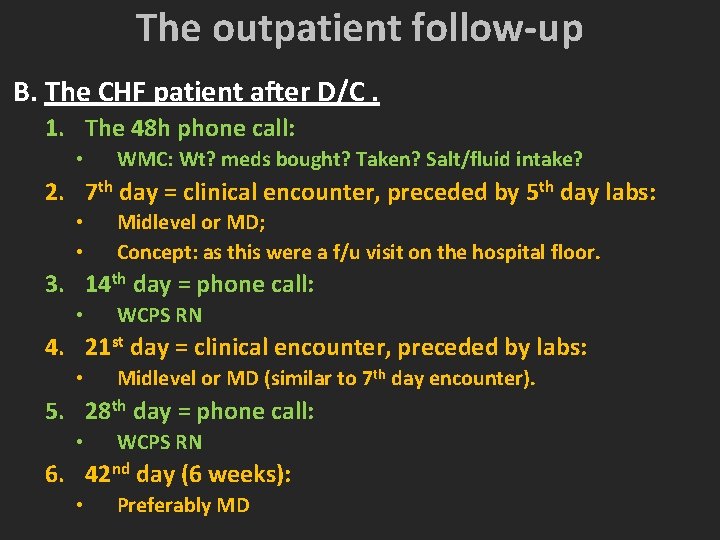
The outpatient follow-up B. The CHF patient after D/C. 1. The 48 h phone call: • WMC: Wt? meds bought? Taken? Salt/fluid intake? 2. 7 th day = clinical encounter, preceded by 5 th day labs: • • Midlevel or MD; Concept: as this were a f/u visit on the hospital floor. 3. 14 th day = phone call: • WCPS RN 4. 21 st day = clinical encounter, preceded by labs: • Midlevel or MD (similar to 7 th day encounter). 5. 28 th day = phone call: • WCPS RN 6. 42 nd day (6 weeks): • Preferably MD
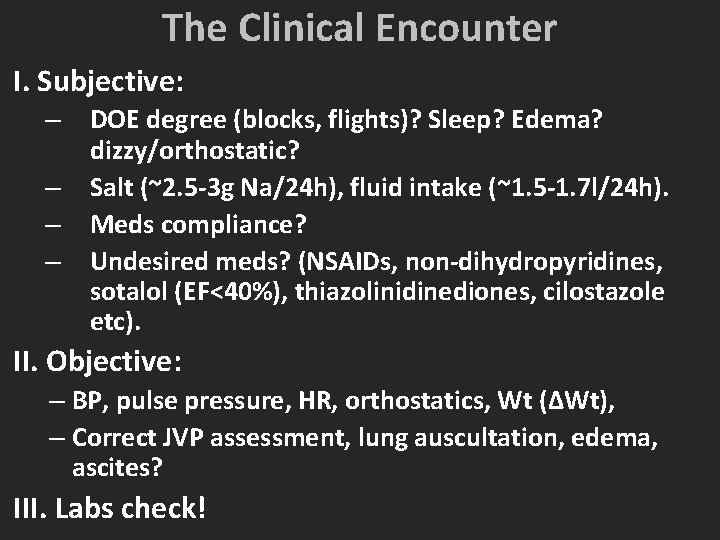
The Clinical Encounter I. Subjective: – – DOE degree (blocks, flights)? Sleep? Edema? dizzy/orthostatic? Salt (~2. 5 -3 g Na/24 h), fluid intake (~1. 5 -1. 7 l/24 h). Meds compliance? Undesired meds? (NSAIDs, non-dihydropyridines, sotalol (EF<40%), thiazolinidinediones, cilostazole etc). II. Objective: – BP, pulse pressure, HR, orthostatics, Wt (ΔWt), – Correct JVP assessment, lung auscultation, edema, ascites? III. Labs check!
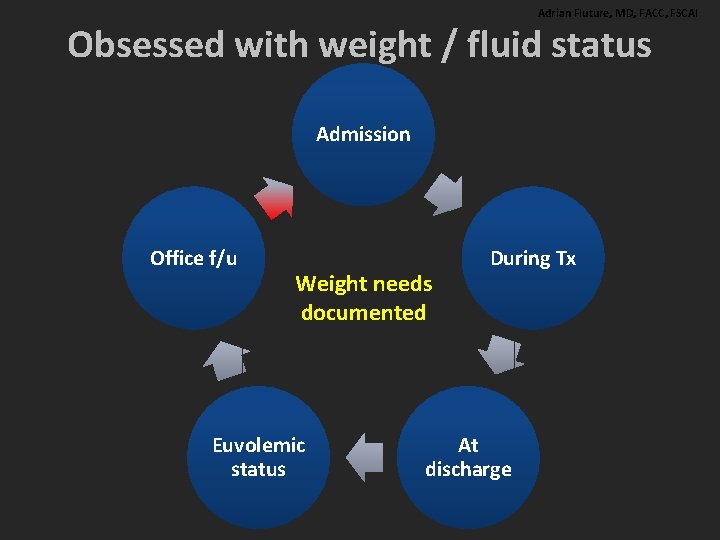
Adrian Fluture, MD, FACC, FSCAI Obsessed with weight / fluid status Admission Office f/u Weight needs documented Euvolemic status During Tx At discharge
Additional Selected References • • • • • Dudas V, Am J Med 2001; 111: 26 S. Stewart S, Arch Intern Med 1998; 158: 1067. Jack BW, Ann Inrern Med 2009; 140: 178. Stauffer BD, Arch Intern Med 2011; 171: 1238. Mueller SK, Arch Inern Med 2012; 172: 1057. Schilinger D, Arch Intern Med 2003; 163: 83. Hesselink G, Arch Intern Med 2012; 157: 417. Ansari M, JACC 2003; 41: 62. Galbreath AD; Circulation 2004; 110: 3518. Lindenfeld J, J Card Fail 2010; 16; e 1 Foody JM, Am J Med 2005; 118: 120 Jong P, Circulation 2003108; 184 ACC/AHA CHF guidelines 2013 Verbrugge FH, JACC 2015; 65: 480. Hussain-Syed F, JACC 2015; 65: 2433. Verbrugge FH, Cardiorenal Med 2014; 4: 176. Ewy, Ann Int Med 1988; 109: 456. Drazner MH, NEJM 2001; 345574
Thank you for listening !