Chapter 9 WarmUp Define Glycolysis Respiration Chemiosmosis Phosphorylation
- Slides: 52
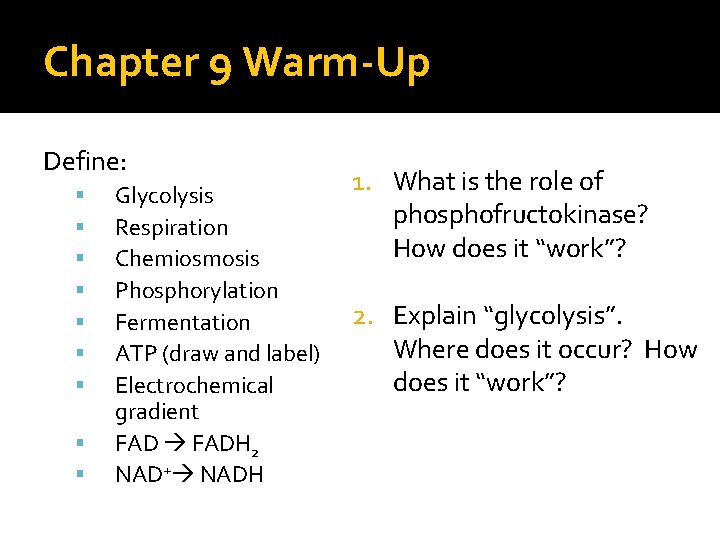
Chapter 9 Warm-Up Define: Glycolysis Respiration Chemiosmosis Phosphorylation Fermentation ATP (draw and label) Electrochemical gradient FADH 2 NAD+ NADH 1. What is the role of phosphofructokinase? How does it “work”? 2. Explain “glycolysis”. Where does it occur? How does it “work”?
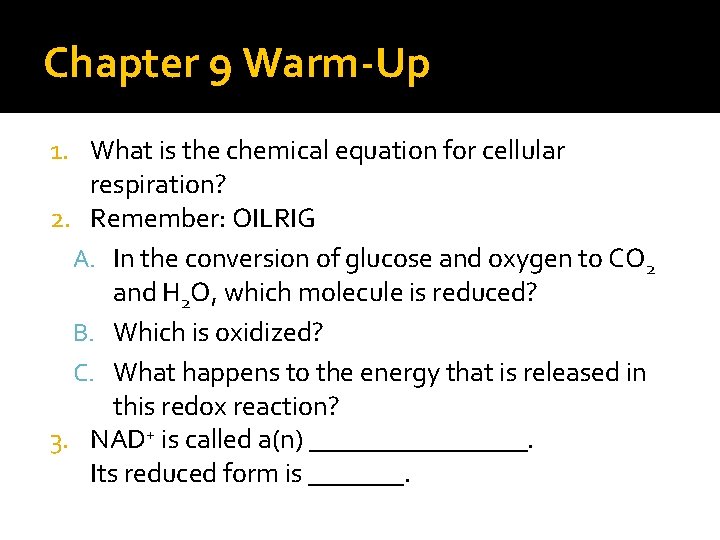
Chapter 9 Warm-Up 1. What is the chemical equation for cellular respiration? 2. Remember: OILRIG A. In the conversion of glucose and oxygen to CO 2 and H 2 O, which molecule is reduced? B. Which is oxidized? C. What happens to the energy that is released in this redox reaction? 3. NAD+ is called a(n) ________. Its reduced form is _______.
Chapter 9 Warm-Up 1. Which has more energy available: a. ADP or ATP? b. NAD+ or NADH? c. FAD+ or FADH 2? Where does the Citric Acid Cycle occur in the cell? 3. What are the main products of the CAC? 2.
Chapter 9 Warm-Up 1. How is the proton gradient generated? 2. What is its purpose? 3. Describe how ATP synthase works.
Chapter 9 Warm-Up 1. Where are the proteins of the ETC located? 2. Where does the ETC pump H+ ions into? 3. In cellular respiration, how many ATP are generated through: A. Substrate-level phosphorylation? B. Oxidative phosphorylation?
Chapter 9 Warm-Up 1. In fermentation, how is NAD+ recycled? 2. You eat a steak and salad. Which macromolecule cannot be broken down to make ATP? 3. Think about the structure of a fat molecule. What feature of its structure makes it a better fuel than a carbohydrate (like glucose)? 2. Explain where the fat goes when you lose weight.
Chapter 9 Warm-Up 1. In fermentation, how is NAD+ recycled? 2. What is the function of the enzyme phosphofructokinase? 3. You eat a steak and salad. Which macromolecule cannot be broken down to make ATP? 2. Explain where the fat goes when you lose weight.
Chapter 9: Respiration
What you need to know: The summary equation of cellular respiration. The difference between fermentation and cellular respiration. The role of glycolysis in oxidizing glucose to two molecules of pyruvate. The process that brings pyruvate from the cytosol into the mitochondria and introduces it into the citric acid cycle. How the process of chemiosmosis utilizes the electrons from NADH and FADH 2 to produce ATP.
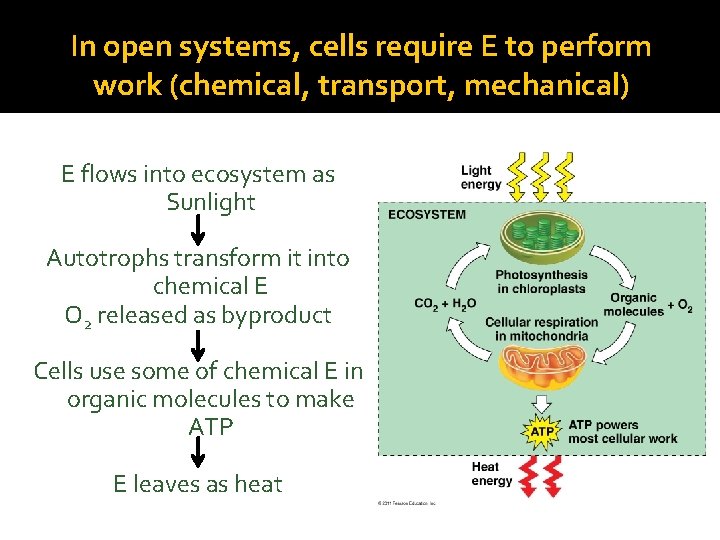
In open systems, cells require E to perform work (chemical, transport, mechanical) E flows into ecosystem as Sunlight Autotrophs transform it into chemical E O 2 released as byproduct Cells use some of chemical E in organic molecules to make ATP E leaves as heat
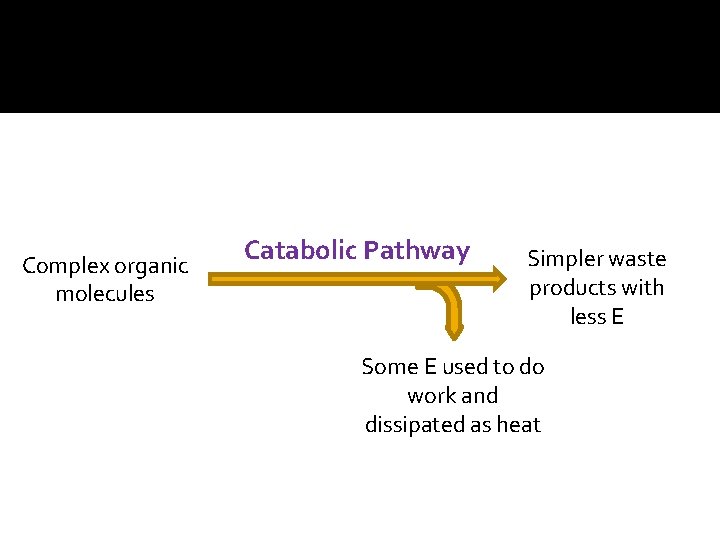
Complex organic molecules Catabolic Pathway Simpler waste products with less E Some E used to do work and dissipated as heat
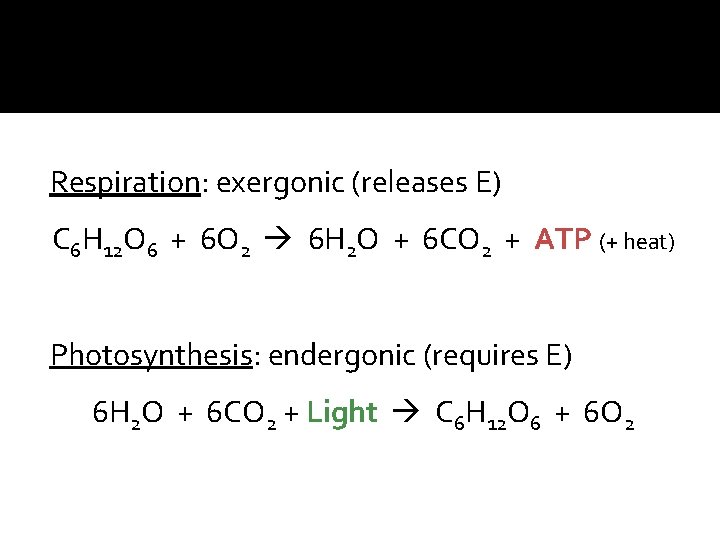
Respiration: exergonic (releases E) C 6 H 12 O 6 + 6 O 2 6 H 2 O + 6 CO 2 + ATP (+ heat) Photosynthesis: endergonic (requires E) 6 H 2 O + 6 CO 2 + Light C 6 H 12 O 6 + 6 O 2
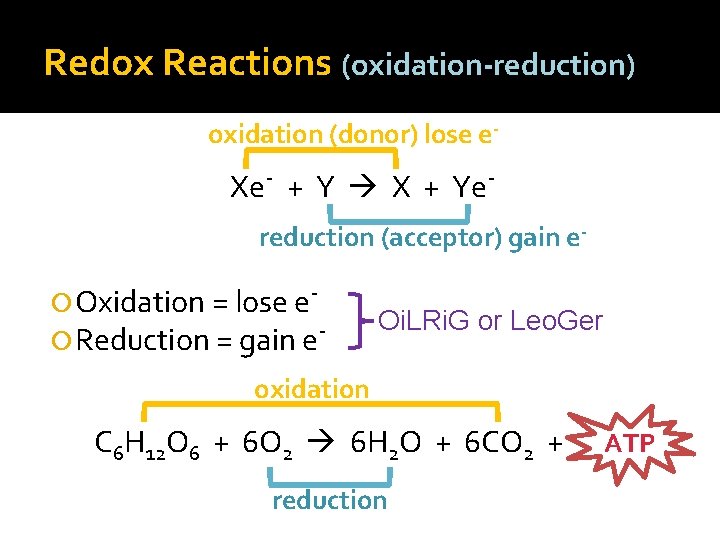
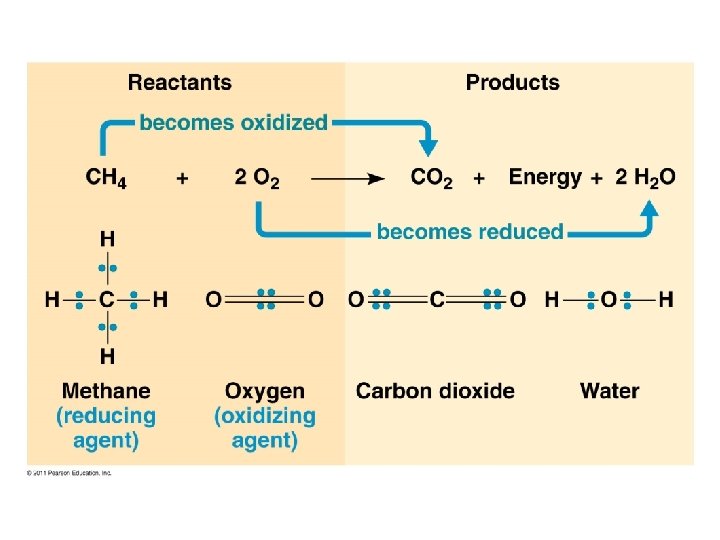
Redox Reactions (oxidation-reduction) oxidation (donor) lose e- Xe- + Y X + Yereduction (acceptor) gain e Oxidation = lose e Reduction = gain e- Oi. LRi. G or Leo. Ger oxidation C 6 H 12 O 6 + 6 O 2 6 H 2 O + 6 CO 2 + reduction ATP
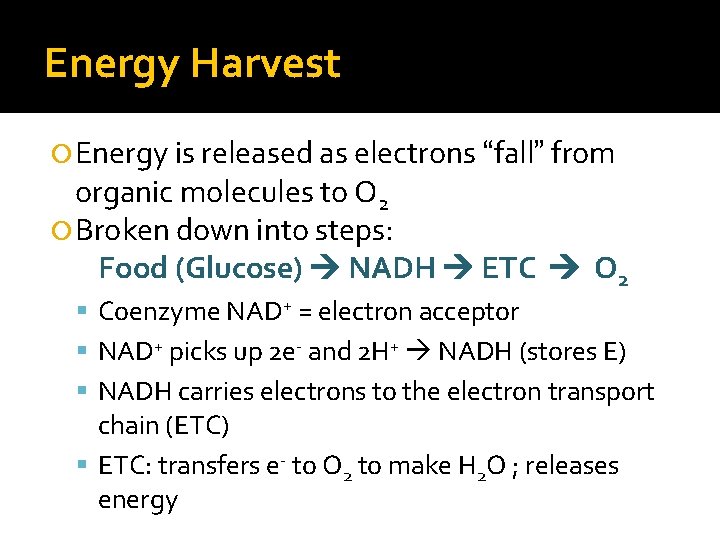
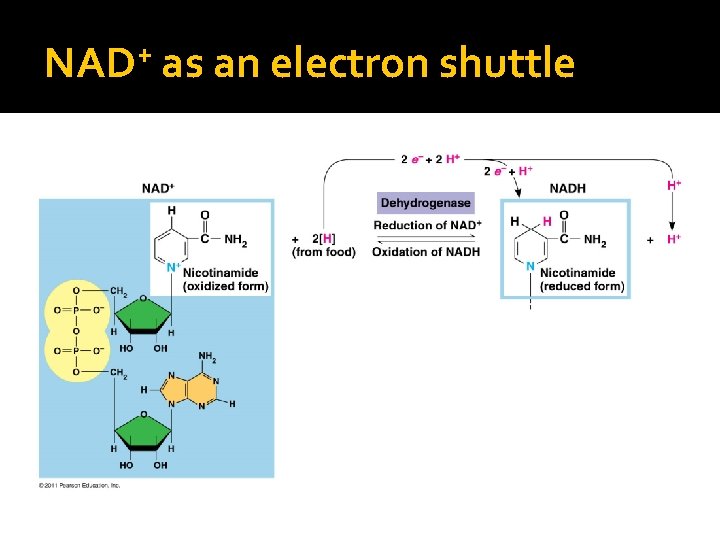
Energy Harvest Energy is released as electrons “fall” from organic molecules to O 2 Broken down into steps: Food (Glucose) NADH ETC O 2 Coenzyme NAD+ = electron acceptor NAD+ picks up 2 e- and 2 H+ NADH (stores E) NADH carries electrons to the electron transport chain (ETC) ETC: transfers e- to O 2 to make H 2 O ; releases energy
+ NAD as an electron shuttle
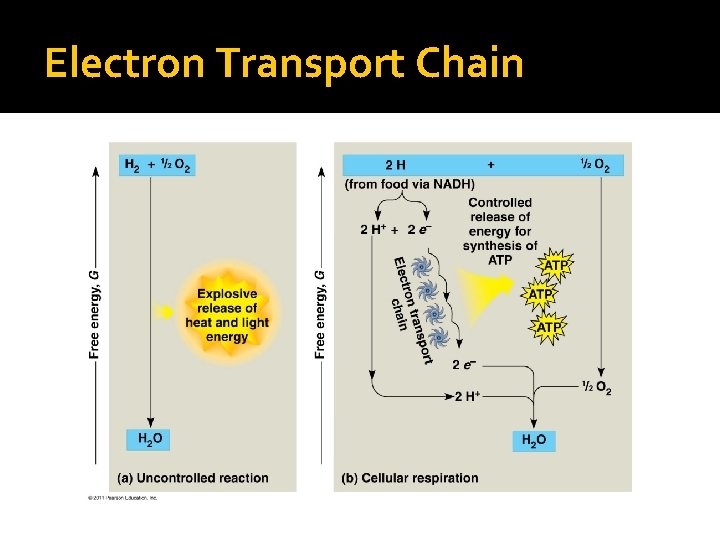
Electron Transport Chain
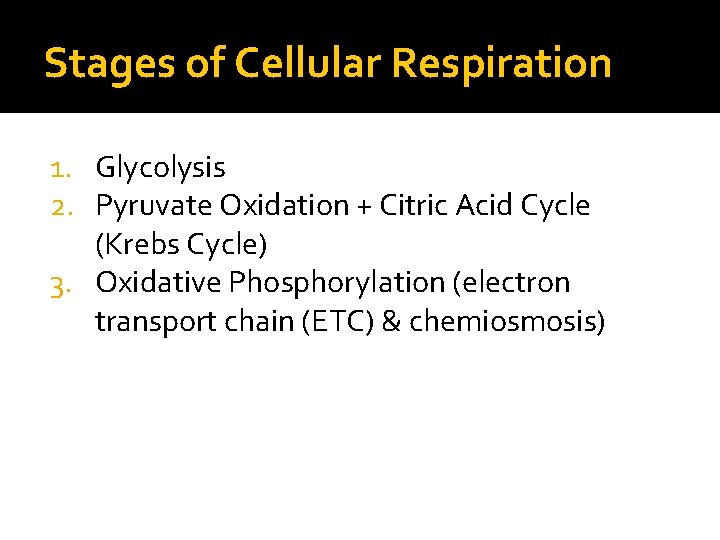
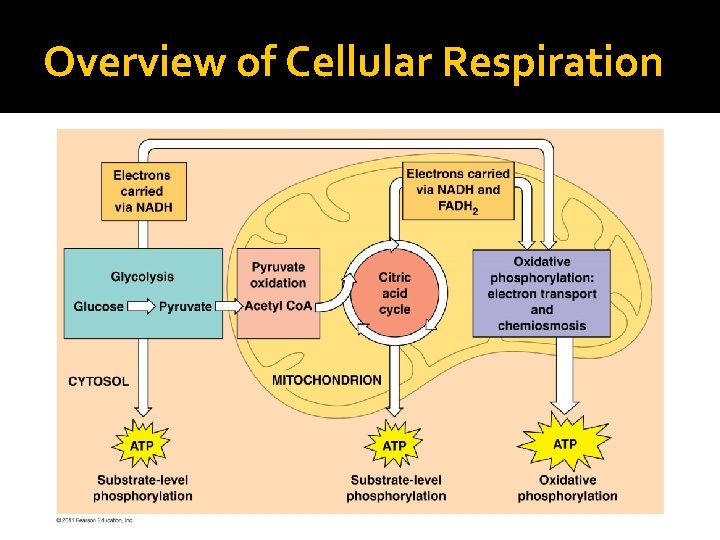
Stages of Cellular Respiration 1. Glycolysis 2. Pyruvate Oxidation + Citric Acid Cycle (Krebs Cycle) 3. Oxidative Phosphorylation (electron transport chain (ETC) & chemiosmosis)
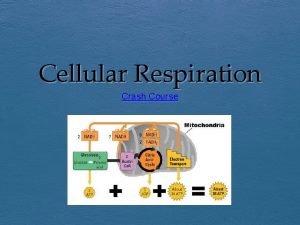
Overview of Cellular Respiration
Cellular Respiration Stage 1: Glycolysis
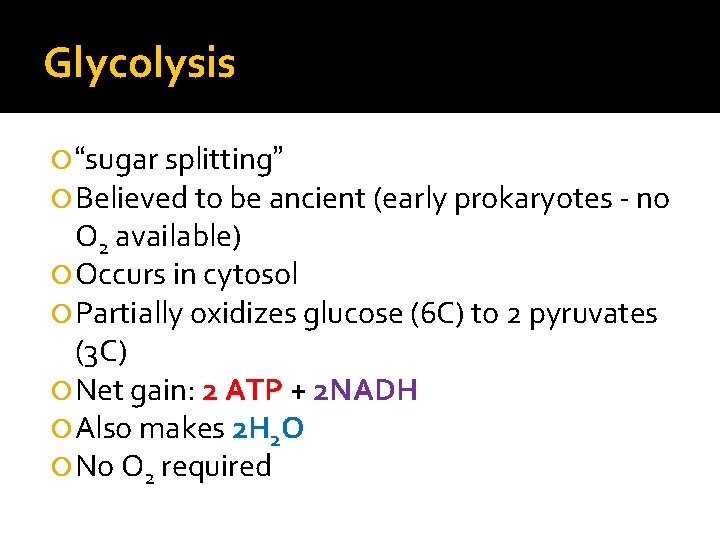
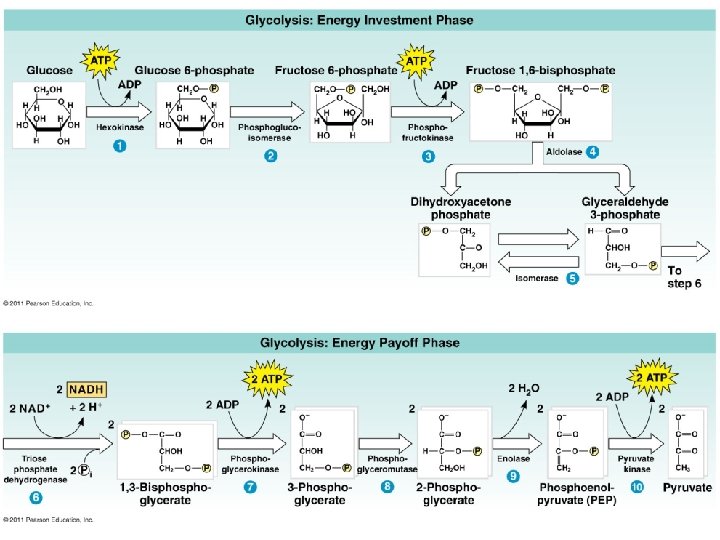
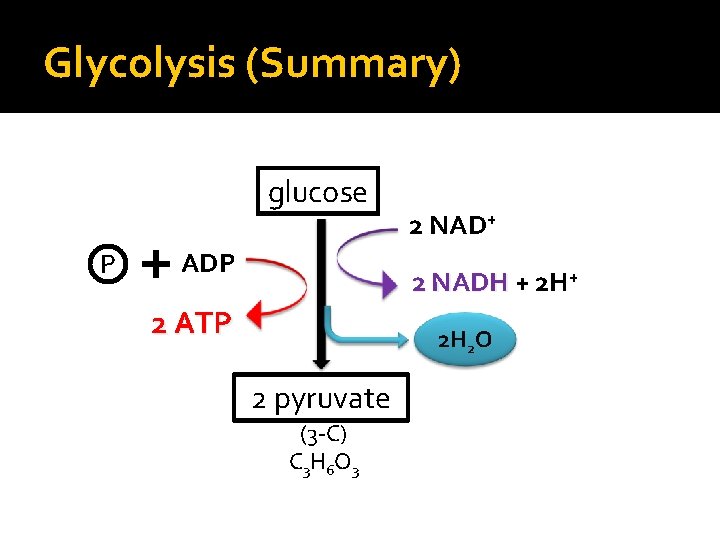
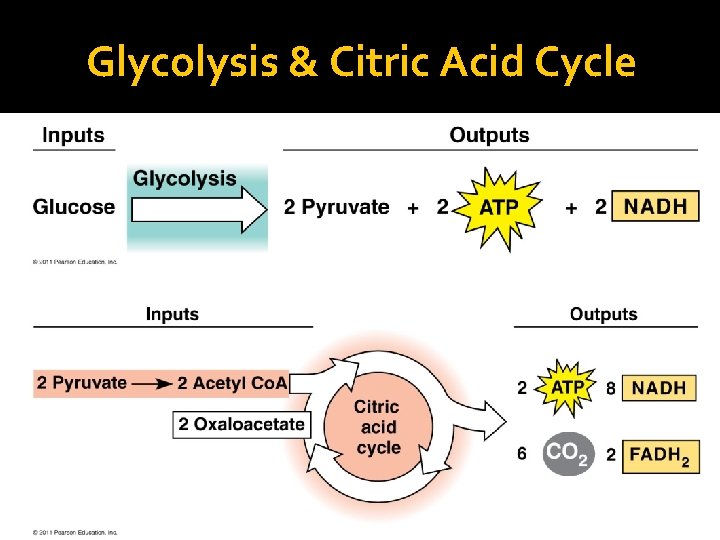
Glycolysis “sugar splitting” Believed to be ancient (early prokaryotes - no O 2 available) Occurs in cytosol Partially oxidizes glucose (6 C) to 2 pyruvates (3 C) Net gain: 2 ATP + 2 NADH Also makes 2 H 2 O No O 2 required
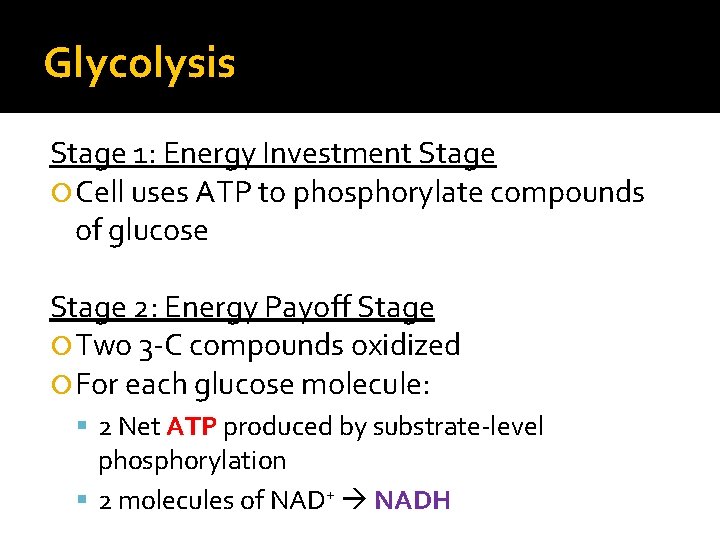
Glycolysis Stage 1: Energy Investment Stage Cell uses ATP to phosphorylate compounds of glucose Stage 2: Energy Payoff Stage Two 3 -C compounds oxidized For each glucose molecule: 2 Net ATP produced by substrate-level phosphorylation 2 molecules of NAD+ NADH
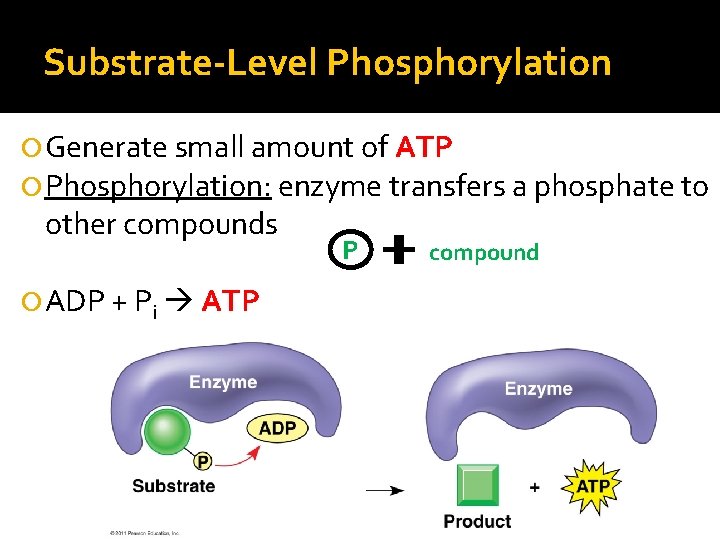
Substrate-Level Phosphorylation Generate small amount of ATP Phosphorylation: enzyme transfers a phosphate to other compounds ADP + Pi ATP P compound
Glycolysis (Summary) glucose P ADP 2 NAD+ 2 NADH + 2 H+ 2 ATP 2 H 2 O 2 pyruvate (3 -C) C 3 H 6 O 3
Cellular Respiration Stage 2: Pyruvate Oxidation + Citric Acid Cycle
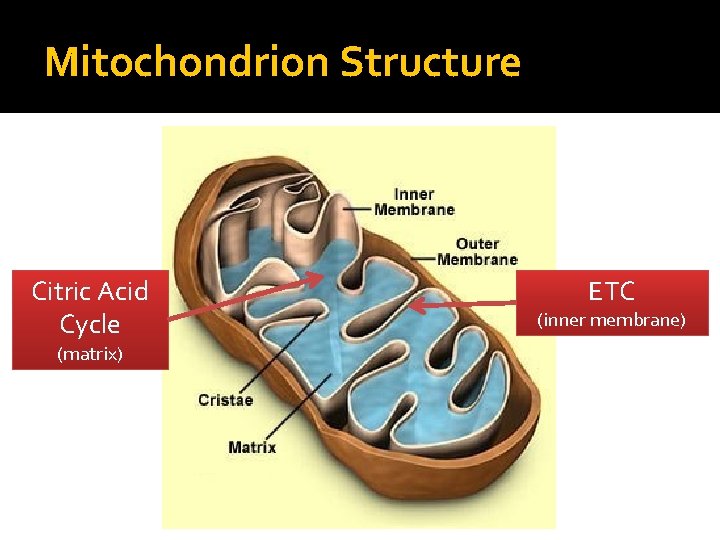
Mitochondrion Structure Citric Acid Cycle (matrix) ETC (inner membrane)
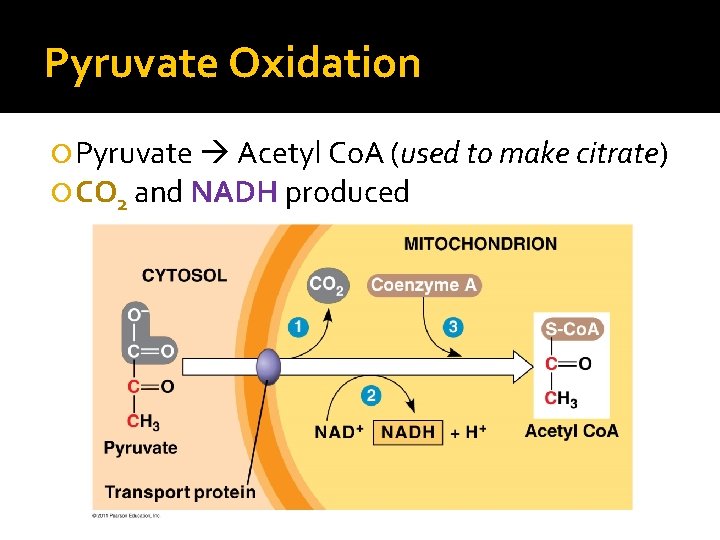
Pyruvate Oxidation Pyruvate Acetyl Co. A (used to make citrate) CO 2 and NADH produced
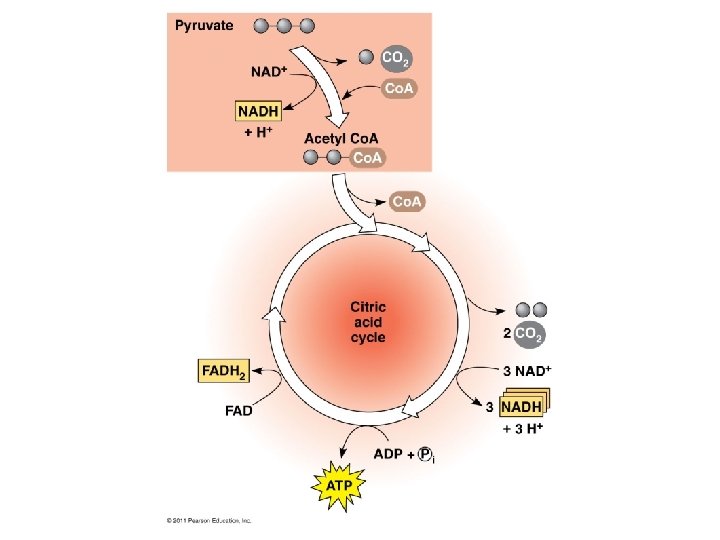
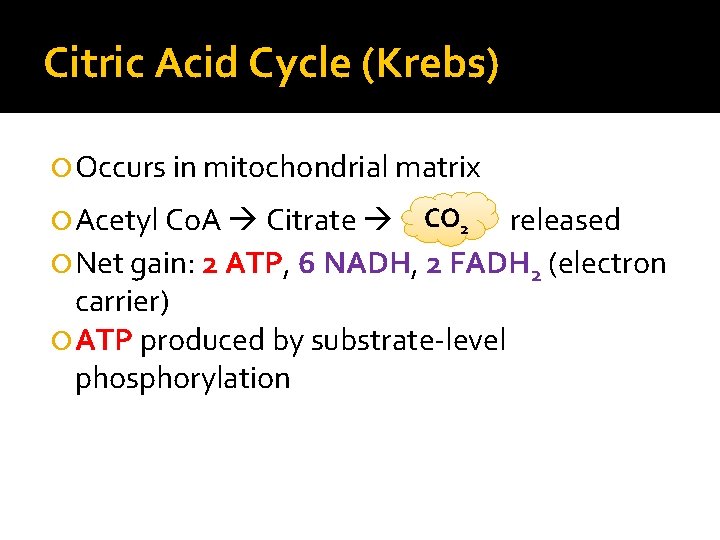
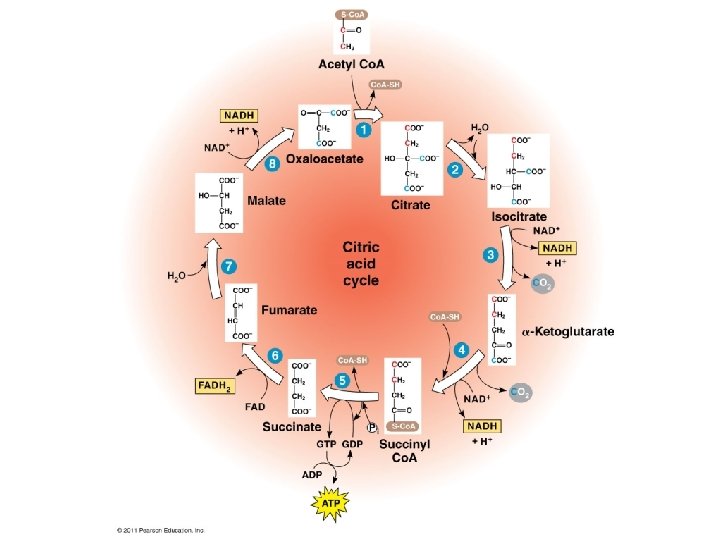
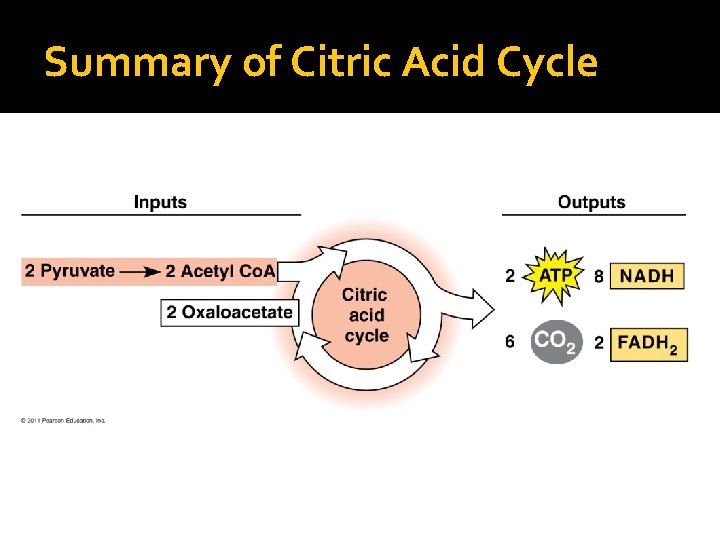
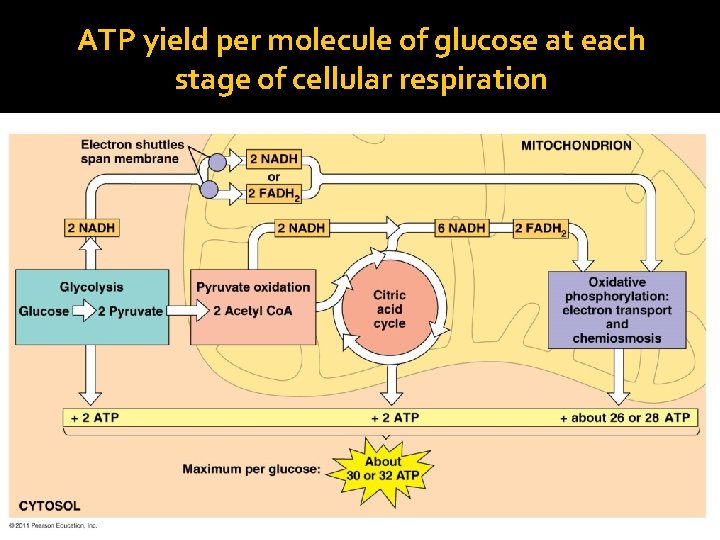
Citric Acid Cycle (Krebs) Occurs in mitochondrial matrix Acetyl Co. A Citrate released Net gain: 2 ATP, 6 NADH, 2 FADH 2 (electron carrier) ATP produced by substrate-level phosphorylation CO 2
Summary of Citric Acid Cycle
http: //multimedia. mcb. harvard. edu/anim_mitochondria. html Bio. Visions at Harvard: The Mitochondria
Cellular Respiration Stage 3: Oxidative Phosphorylation
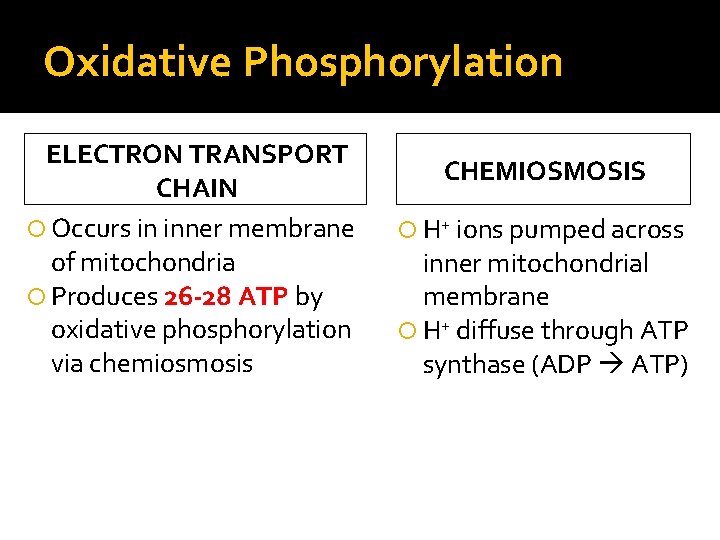
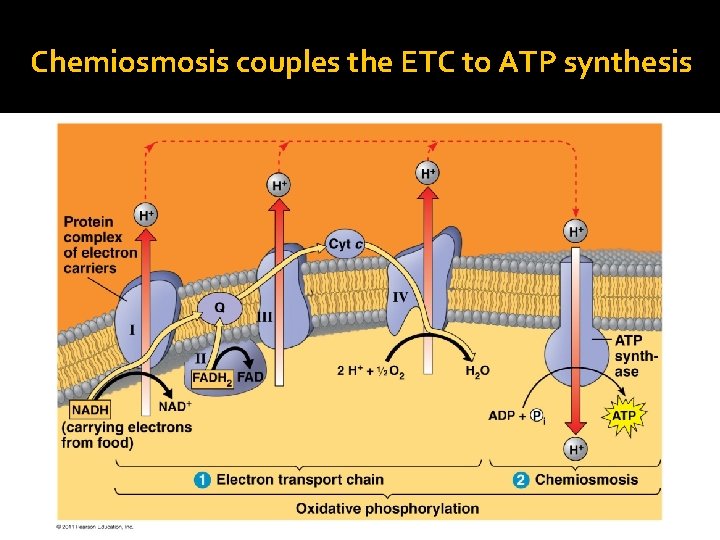
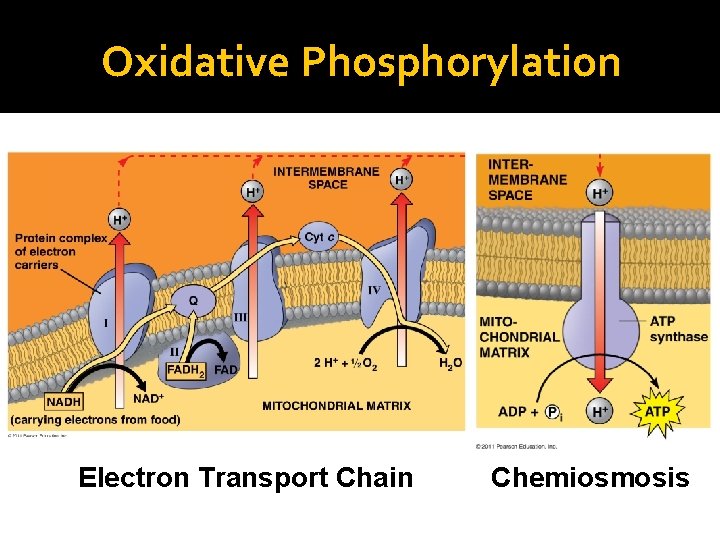
Oxidative Phosphorylation ELECTRON TRANSPORT CHAIN Occurs in inner membrane of mitochondria Produces 26 -28 ATP by oxidative phosphorylation via chemiosmosis CHEMIOSMOSIS H+ ions pumped across inner mitochondrial membrane H+ diffuse through ATP synthase (ADP ATP)
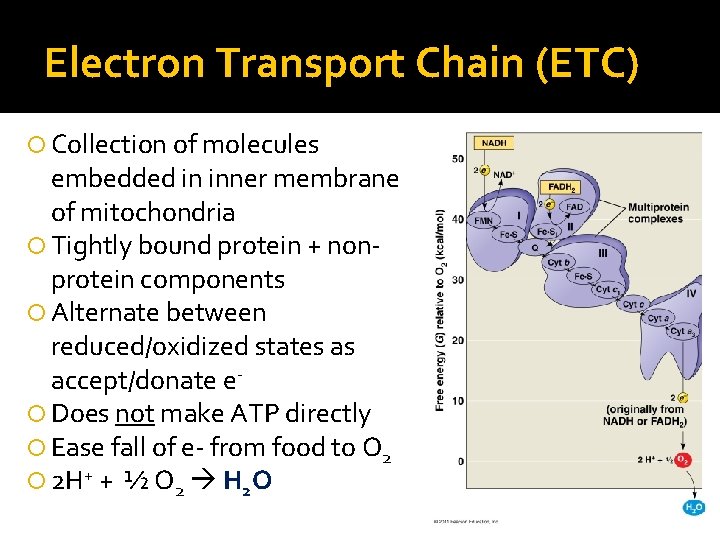
Electron Transport Chain (ETC) Collection of molecules embedded in inner membrane of mitochondria Tightly bound protein + nonprotein components Alternate between reduced/oxidized states as accept/donate e Does not make ATP directly Ease fall of e- from food to O 2 2 H+ + ½ O 2 H 2 O
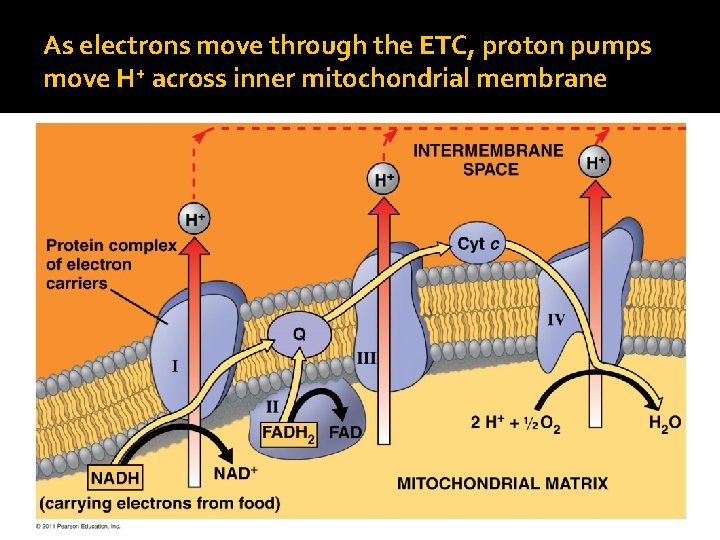
As electrons move through the ETC, proton pumps move H+ across inner mitochondrial membrane
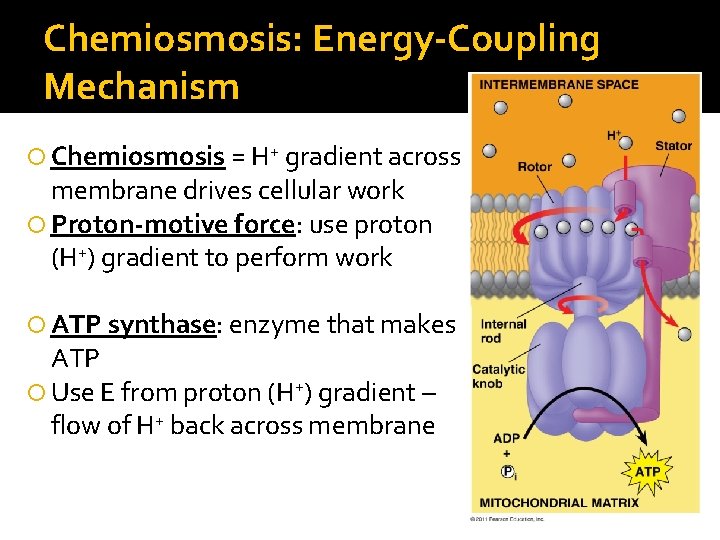
Chemiosmosis: Energy-Coupling Mechanism Chemiosmosis = H+ gradient across membrane drives cellular work Proton-motive force: use proton (H+) gradient to perform work ATP synthase: enzyme that makes ATP Use E from proton (H+) gradient – flow of H+ back across membrane
Chemiosmosis couples the ETC to ATP synthesis
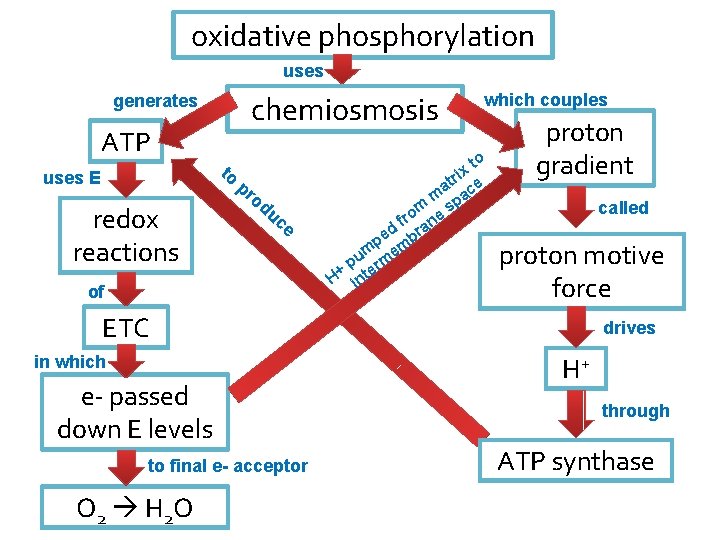
oxidative phosphorylation uses chemiosmosis generates ATP to uses E redox reactions pr od uc e of which couples to x i r at ce m pa s m fro ane d r pe mb m e pu erm H+ int proton gradient called proton motive force ETC in which e- passed down E levels to final e- acceptor O 2 H 2 O drives H+ through ATP synthase
ATP yield per molecule of glucose at each stage of cellular respiration
Bio. Flix: Cellular Respiration
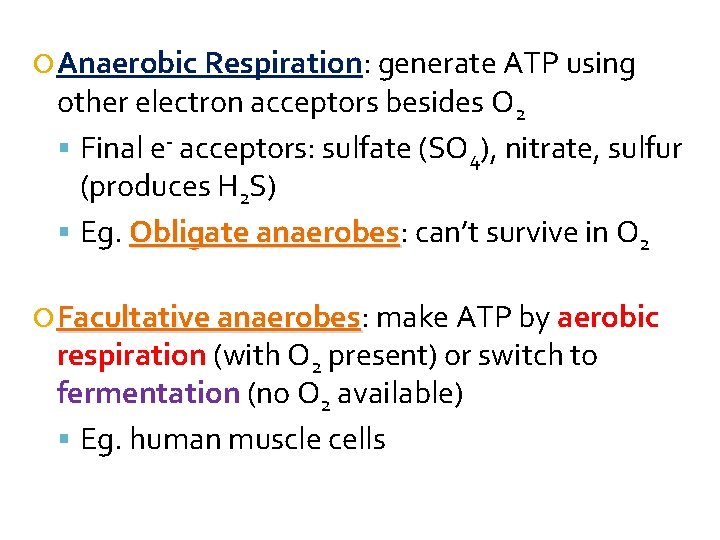
Anaerobic Respiration: generate ATP using other electron acceptors besides O 2 Final e- acceptors: sulfate (SO 4), nitrate, sulfur (produces H 2 S) Eg. Obligate anaerobes: anaerobes can’t survive in O 2 Facultative anaerobes: anaerobes make ATP by aerobic respiration (with O 2 present) or switch to fermentation (no O 2 available) Eg. human muscle cells
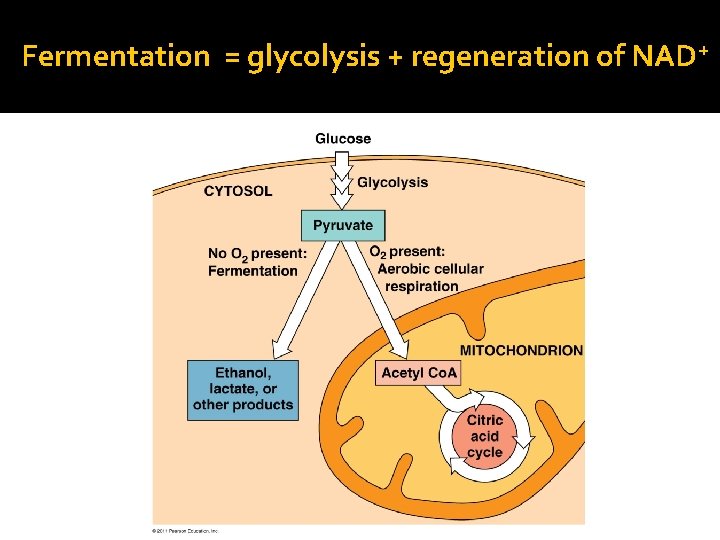
Fermentation = glycolysis + regeneration of NAD+
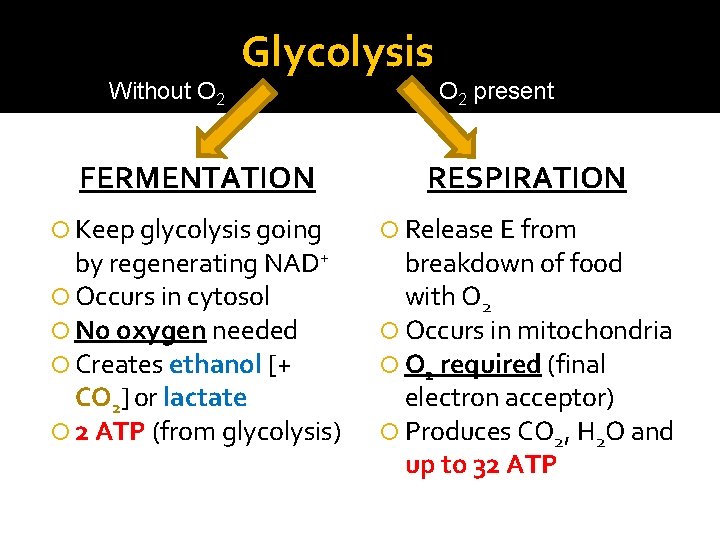
Without O 2 Glycolysis FERMENTATION Keep glycolysis going by regenerating NAD+ Occurs in cytosol No oxygen needed Creates ethanol [+ CO 2] or lactate 2 ATP (from glycolysis) O 2 present RESPIRATION Release E from breakdown of food with O 2 Occurs in mitochondria O 2 required (final electron acceptor) Produces CO 2, H 2 O and up to 32 ATP
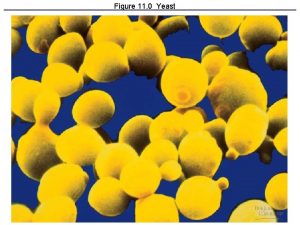
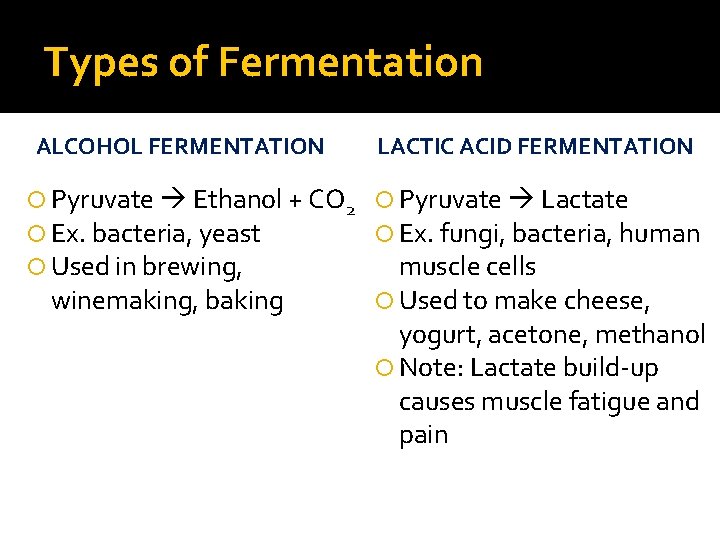
Types of Fermentation ALCOHOL FERMENTATION LACTIC ACID FERMENTATION Pyruvate Ethanol + CO 2 Pyruvate Lactate Ex. bacteria, yeast Ex. fungi, bacteria, human Used in brewing, muscle cells winemaking, baking Used to make cheese, yogurt, acetone, methanol Note: Lactate build-up causes muscle fatigue and pain
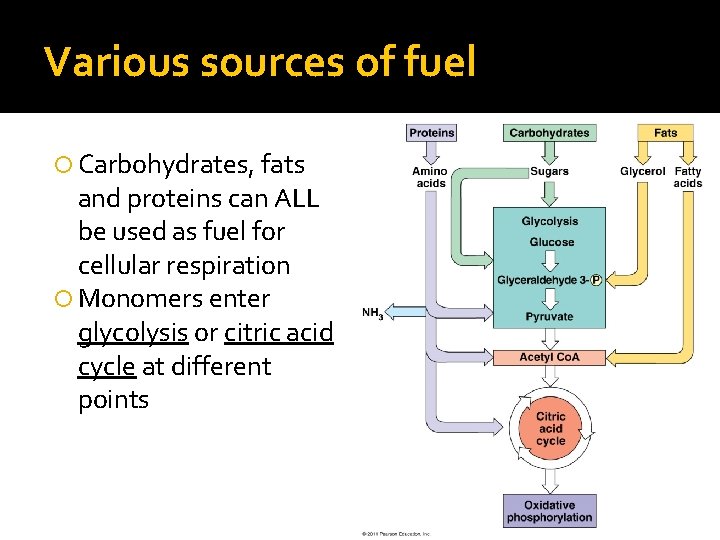
Various sources of fuel Carbohydrates, fats and proteins can ALL be used as fuel for cellular respiration Monomers enter glycolysis or citric acid cycle at different points
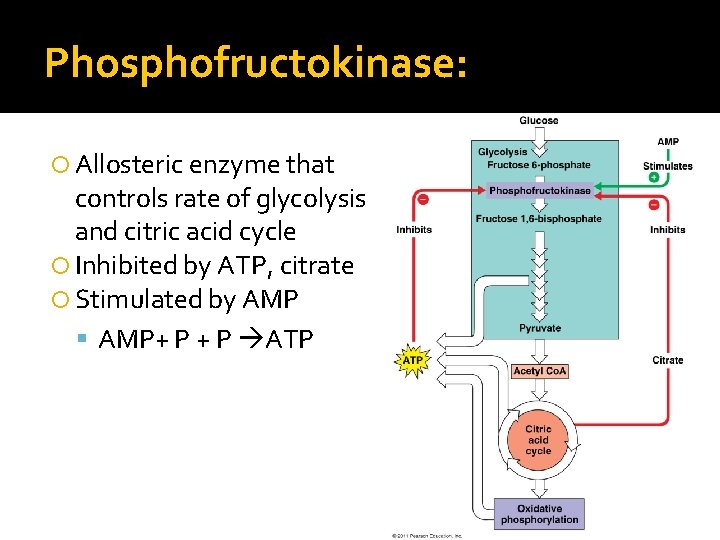
Phosphofructokinase: Allosteric enzyme that controls rate of glycolysis and citric acid cycle Inhibited by ATP, citrate Stimulated by AMP+ P ATP
Respiration: Big Picture
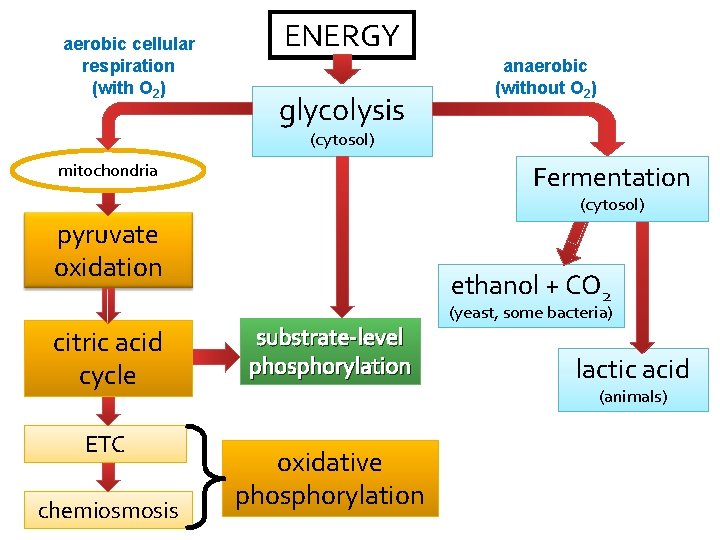
aerobic cellular respiration (with O 2) ENERGY glycolysis anaerobic (without O 2) (cytosol) Fermentation mitochondria (cytosol) pyruvate oxidation citric acid cycle ETC chemiosmosis ethanol + CO 2 substrate-level phosphorylation (yeast, some bacteria) lactic acid (animals) oxidative phosphorylation
Glycolysis & Citric Acid Cycle
Oxidative Phosphorylation Electron Transport Chain Chemiosmosis