
UNIT IV CELL ENERGY Big Campbell Ch 8
UNIT IV – CELL ENERGY Big Campbell ~ Ch 8, 9, 10 Baby Campbell Ch 6, 7, 8 Principles of Life Ch 6
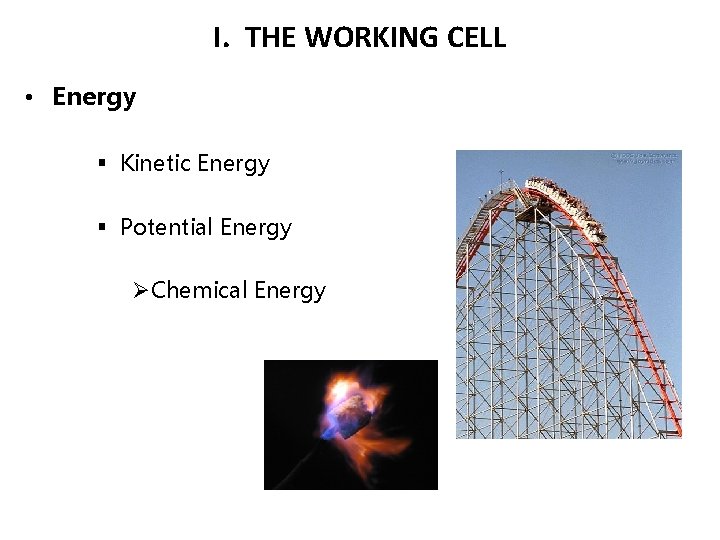
I. THE WORKING CELL • Energy § Kinetic Energy § Potential Energy ØChemical Energy
I. THE WORKING CELL, cont • Thermodynamics § First Law of Thermodynamics v. Total amount of energy in universe is constant § Second Law of Thermodynamics v. Energy is lost to the environment as heat; that is, some energy becomes unusable
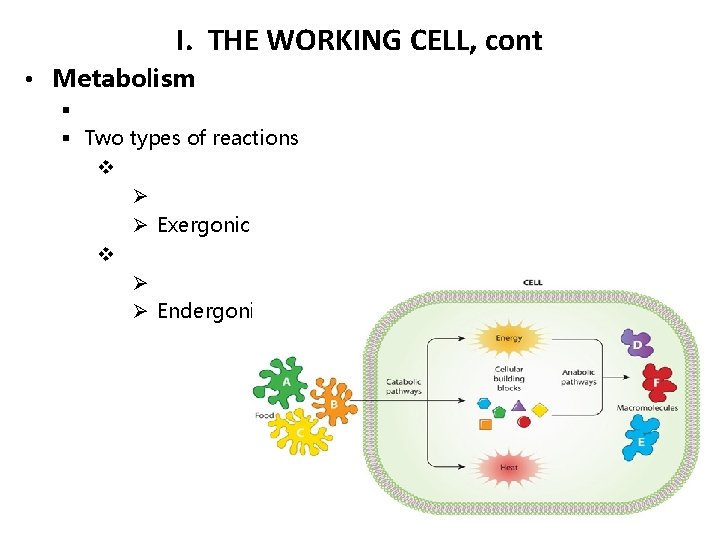
I. THE WORKING CELL, cont • Metabolism § § Two types of reactions v Ø Ø Exergonic v Ø Ø Endergonic
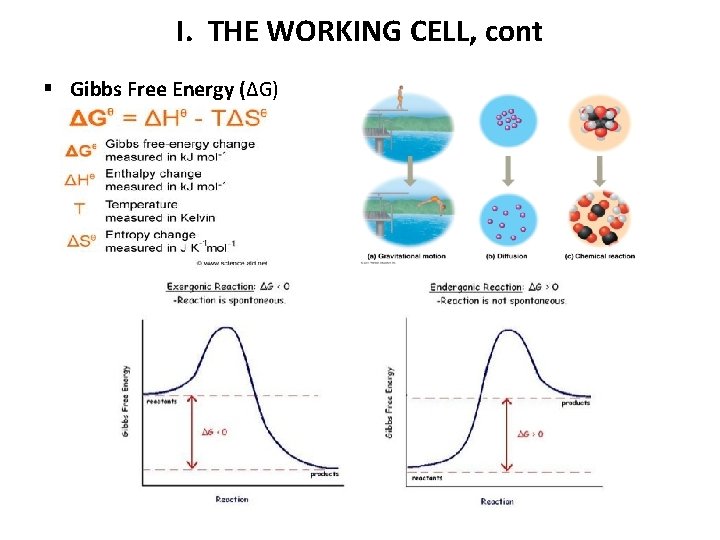
I. THE WORKING CELL, cont § Gibbs Free Energy (ΔG)
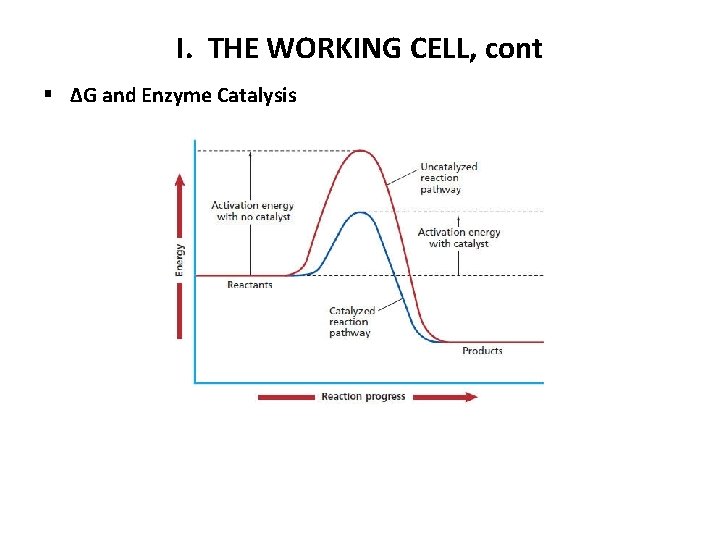
I. THE WORKING CELL, cont § ΔG and Enzyme Catalysis
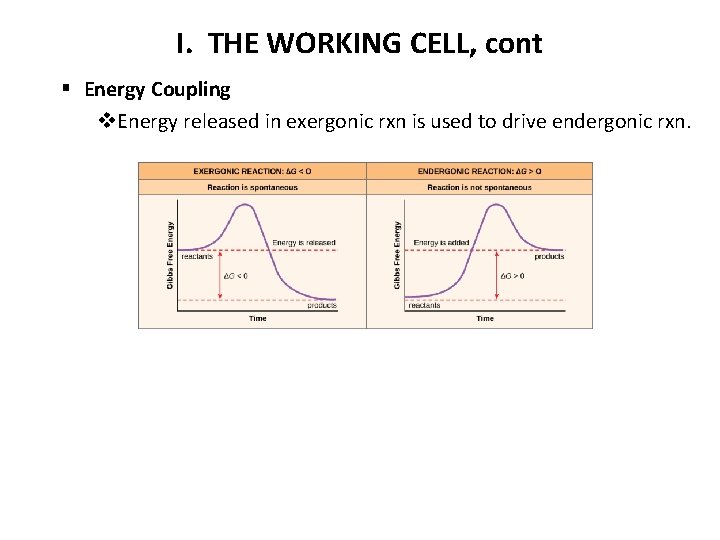
I. THE WORKING CELL, cont § Energy Coupling v. Energy released in exergonic rxn is used to drive endergonic rxn.
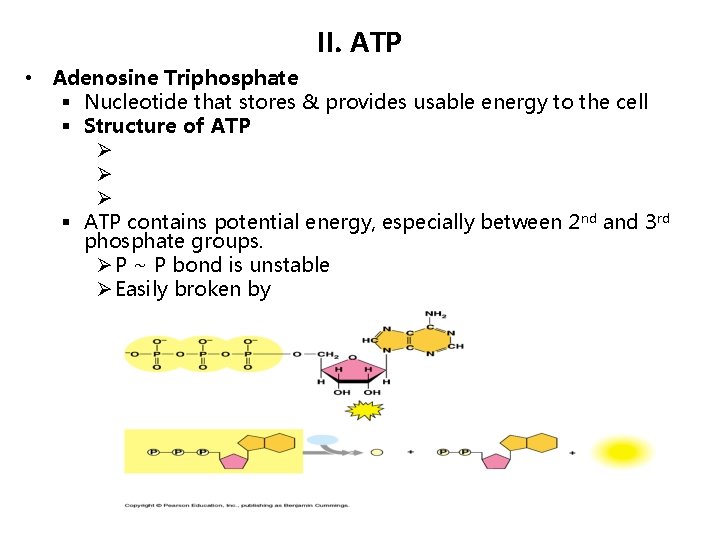
II. ATP • Adenosine Triphosphate § Nucleotide that stores & provides usable energy to the cell § Structure of ATP Ø Ø Ø § ATP contains potential energy, especially between 2 nd and 3 rd phosphate groups. Ø P ~ P bond is unstable Ø Easily broken by
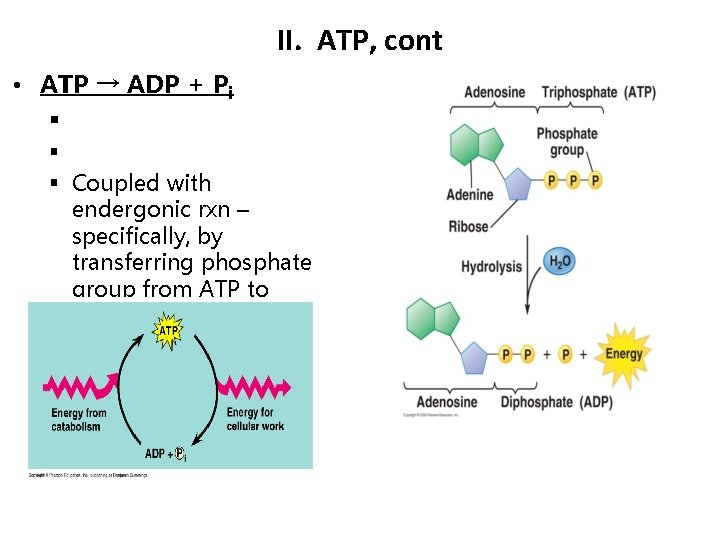
II. ATP, cont • ATP → ADP + Pi § § § Coupled with endergonic rxn – specifically, by transferring phosphate group from ATP to another molecule.
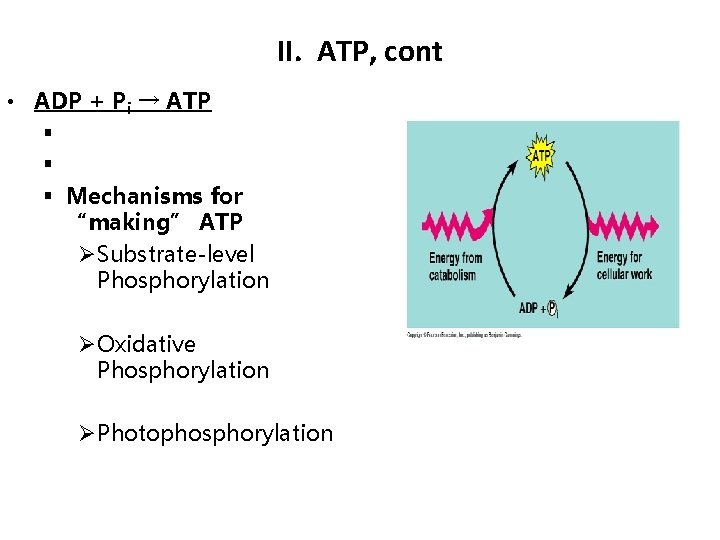
II. ATP, cont • ADP + Pi → ATP § § § Mechanisms for “making” ATP ØSubstrate-level Phosphorylation ØOxidative Phosphorylation ØPhotophosphorylation
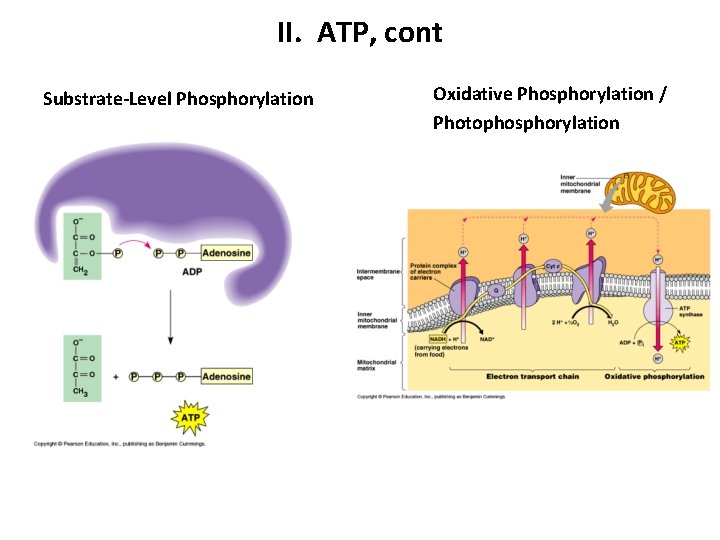
II. ATP, cont Substrate-Level Phosphorylation Oxidative Phosphorylation / Photophosphorylation
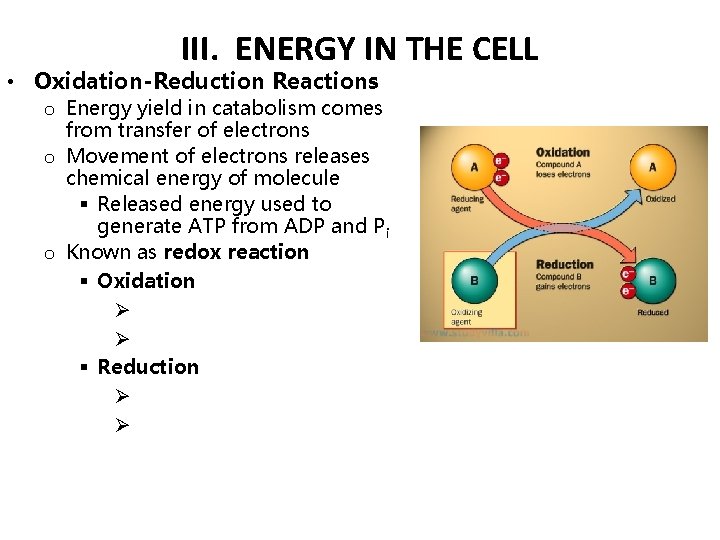
III. ENERGY IN THE CELL • Oxidation-Reduction Reactions o Energy yield in catabolism comes from transfer of electrons o Movement of electrons releases chemical energy of molecule § Released energy used to generate ATP from ADP and Pi o Known as redox reaction § Oxidation Ø Ø § Reduction Ø Ø
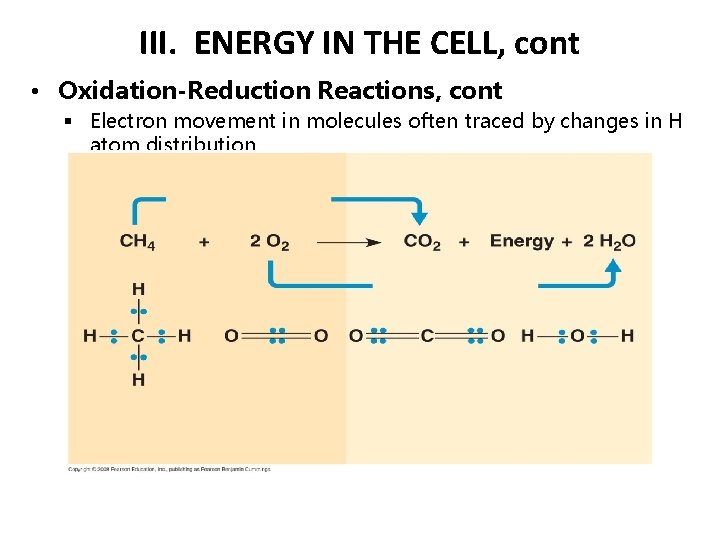
III. ENERGY IN THE CELL, cont • Oxidation-Reduction Reactions, cont § Electron movement in molecules often traced by changes in H atom distribution
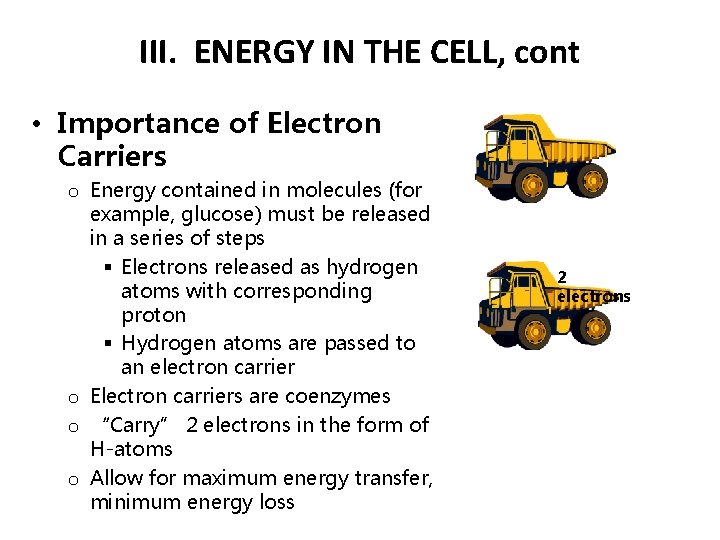
III. ENERGY IN THE CELL, cont • Importance of Electron Carriers o Energy contained in molecules (for example, glucose) must be released in a series of steps § Electrons released as hydrogen atoms with corresponding proton § Hydrogen atoms are passed to an electron carrier o Electron carriers are coenzymes o “Carry” 2 electrons in the form of H-atoms o Allow for maximum energy transfer, minimum energy loss 2 electrons
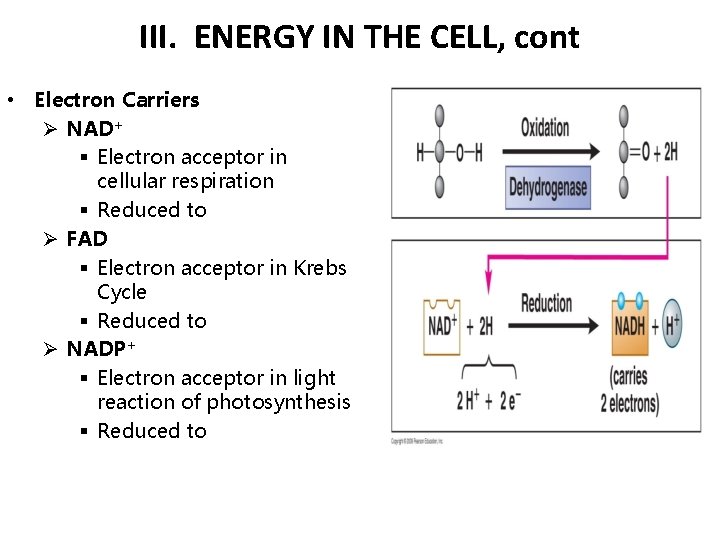
III. ENERGY IN THE CELL, cont • Electron Carriers Ø NAD+ § Electron acceptor in cellular respiration § Reduced to Ø FAD § Electron acceptor in Krebs Cycle § Reduced to Ø NADP+ § Electron acceptor in light reaction of photosynthesis § Reduced to
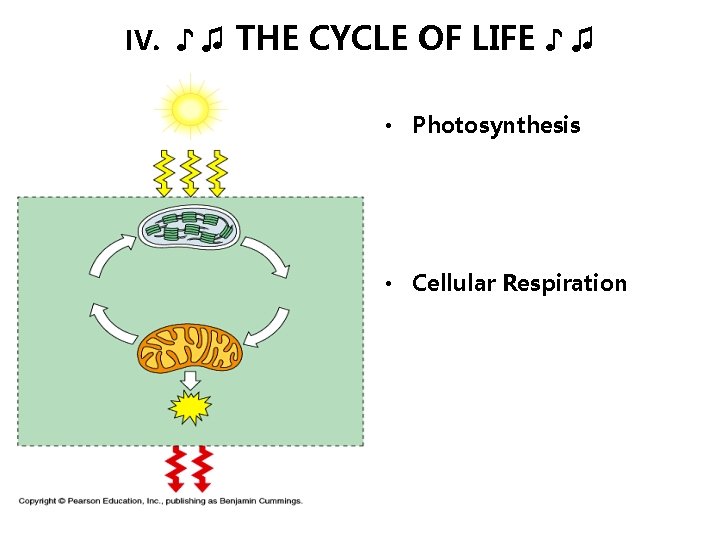
IV. ♪ ♫ THE CYCLE OF LIFE ♪ ♫ • Photosynthesis • Cellular Respiration
V. CELLULAR RESPIRATION – AN OVERVIEW • Process used by cells to convert chemical energy in glucose (and other molecules) to ATP • Primarily takes place in mitochondria of eukaryotic cells • Overall Reaction
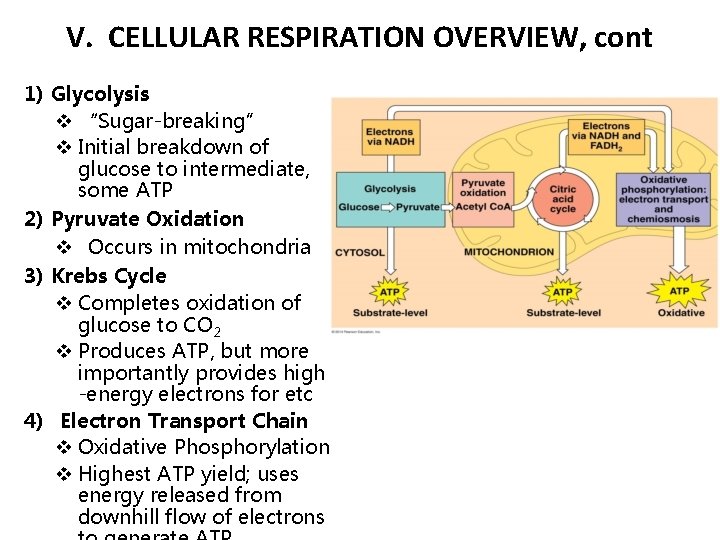
V. CELLULAR RESPIRATION OVERVIEW, cont 1) Glycolysis v “Sugar-breaking” v Initial breakdown of glucose to intermediate, some ATP 2) Pyruvate Oxidation v Occurs in mitochondria 3) Krebs Cycle v Completes oxidation of glucose to CO 2 v Produces ATP, but more importantly provides high -energy electrons for etc 4) Electron Transport Chain v Oxidative Phosphorylation v Highest ATP yield; uses energy released from downhill flow of electrons
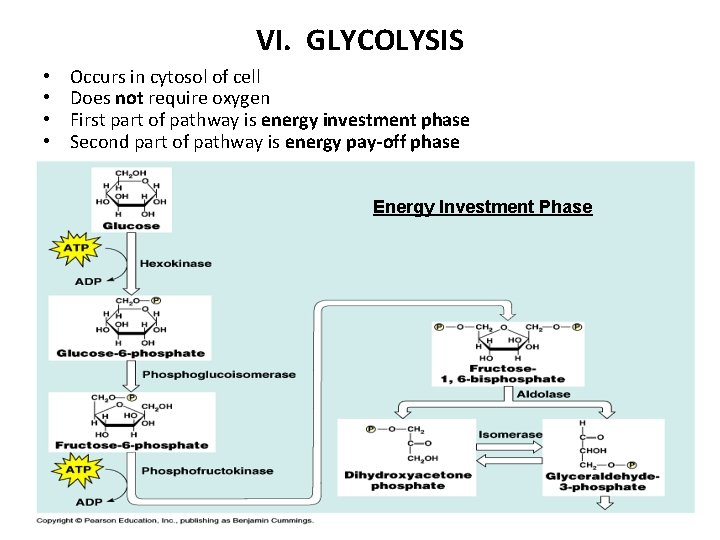
VI. GLYCOLYSIS • • Occurs in cytosol of cell Does not require oxygen First part of pathway is energy investment phase Second part of pathway is energy pay-off phase Energy Investment Phase
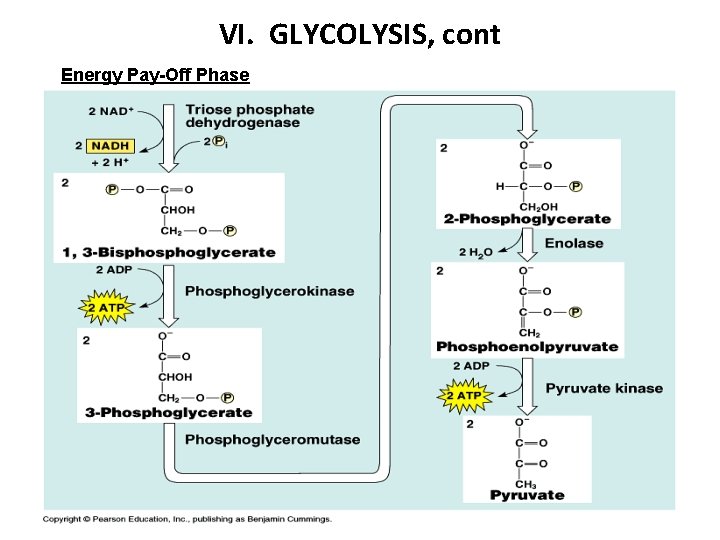
VI. GLYCOLYSIS, cont Energy Pay-Off Phase
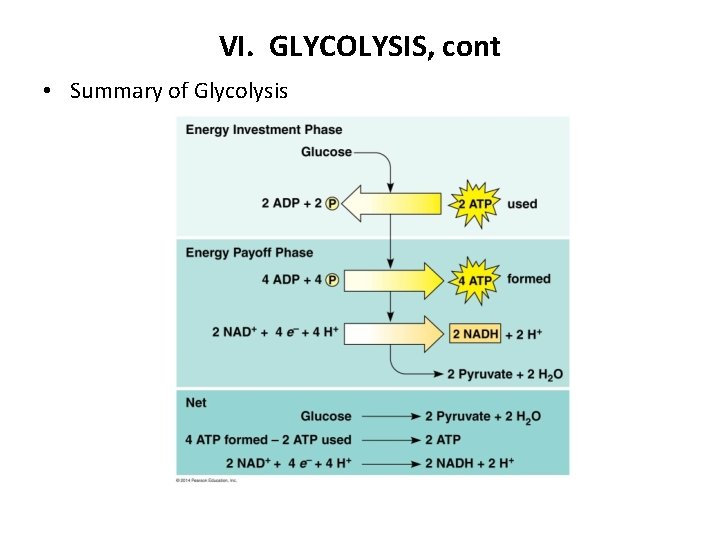
VI. GLYCOLYSIS, cont • Summary of Glycolysis
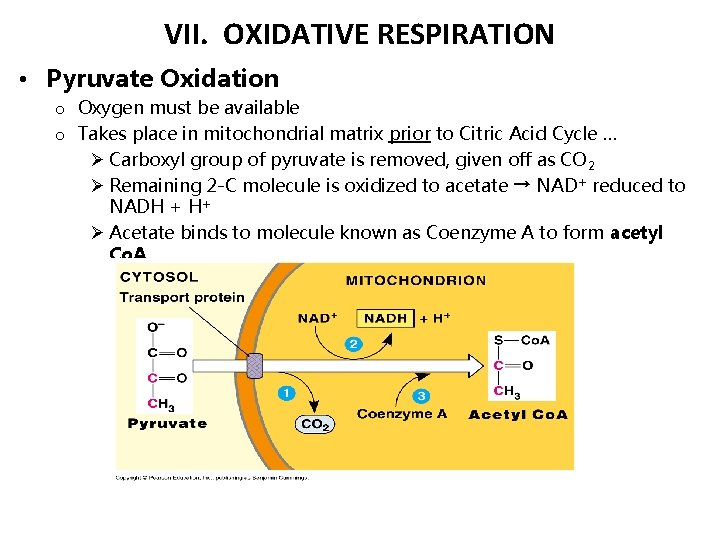
VII. OXIDATIVE RESPIRATION • Pyruvate Oxidation o Oxygen must be available o Takes place in mitochondrial matrix prior to Citric Acid Cycle … Ø Carboxyl group of pyruvate is removed, given off as CO 2 Ø Remaining 2 -C molecule is oxidized to acetate → NAD+ reduced to NADH + H+ Ø Acetate binds to molecule known as Coenzyme A to form acetyl Co. A
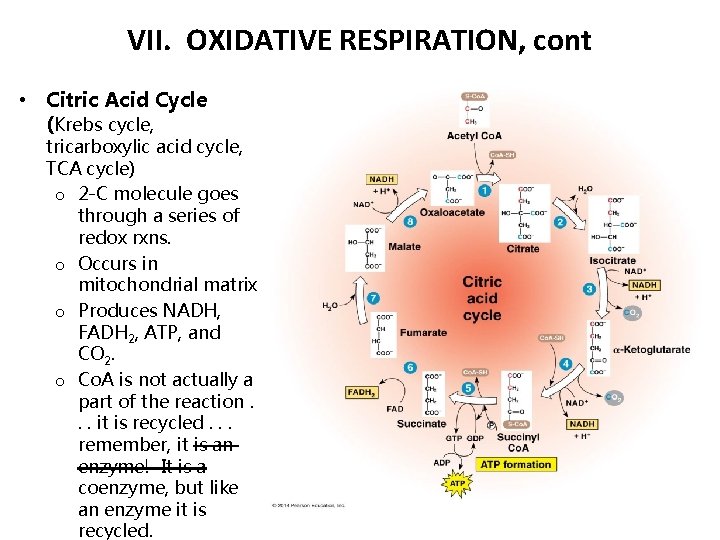
VII. OXIDATIVE RESPIRATION, cont • Citric Acid Cycle (Krebs cycle, tricarboxylic acid cycle, TCA cycle) o 2 -C molecule goes through a series of redox rxns. o Occurs in mitochondrial matrix o Produces NADH, FADH 2, ATP, and CO 2. o Co. A is not actually a part of the reaction. . . it is recycled. . . remember, it is an enzyme! It is a coenzyme, but like an enzyme it is recycled.
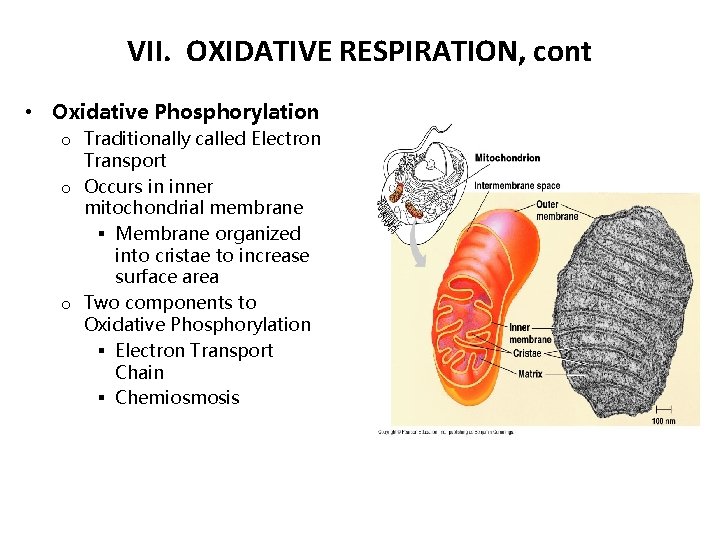
VII. OXIDATIVE RESPIRATION, cont • Oxidative Phosphorylation o Traditionally called Electron Transport o Occurs in inner mitochondrial membrane § Membrane organized into cristae to increase surface area o Two components to Oxidative Phosphorylation § Electron Transport Chain § Chemiosmosis
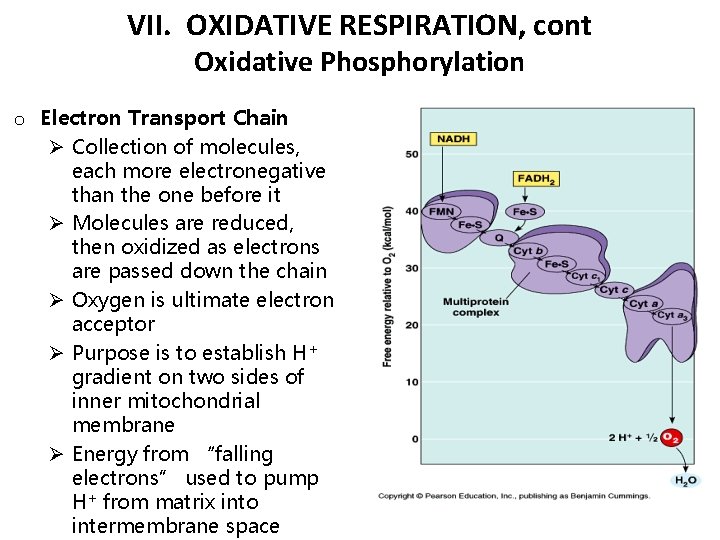
VII. OXIDATIVE RESPIRATION, cont Oxidative Phosphorylation o Electron Transport Chain Ø Collection of molecules, each more electronegative than the one before it Ø Molecules are reduced, then oxidized as electrons are passed down the chain Ø Oxygen is ultimate electron acceptor Ø Purpose is to establish H+ gradient on two sides of inner mitochondrial membrane Ø Energy from “falling electrons” used to pump H+ from matrix into intermembrane space
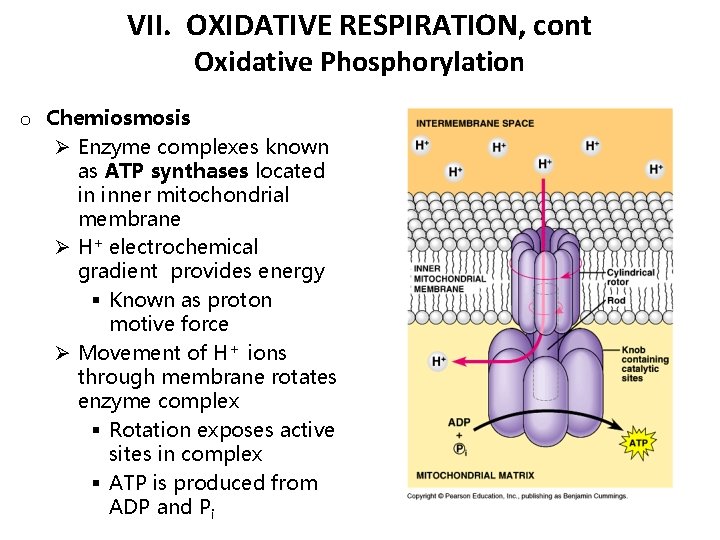
VII. OXIDATIVE RESPIRATION, cont Oxidative Phosphorylation o Chemiosmosis Ø Enzyme complexes known as ATP synthases located in inner mitochondrial membrane Ø H+ electrochemical gradient provides energy § Known as proton motive force Ø Movement of H+ ions through membrane rotates enzyme complex § Rotation exposes active sites in complex § ATP is produced from ADP and Pi
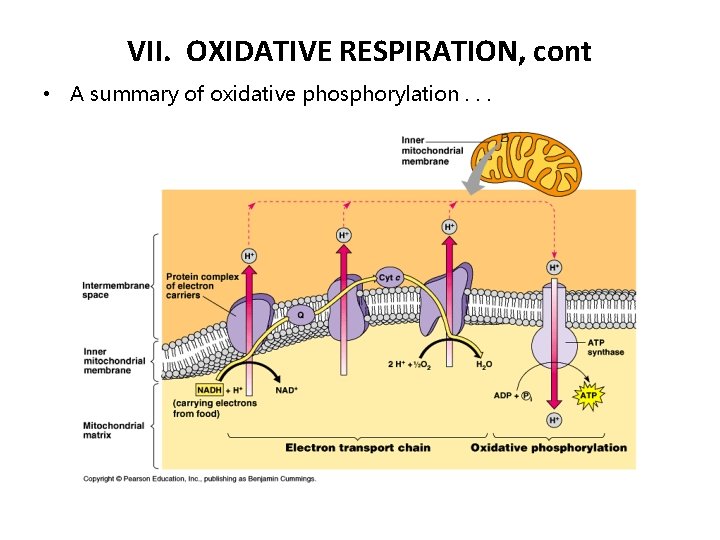
VII. OXIDATIVE RESPIRATION, cont • A summary of oxidative phosphorylation. . .
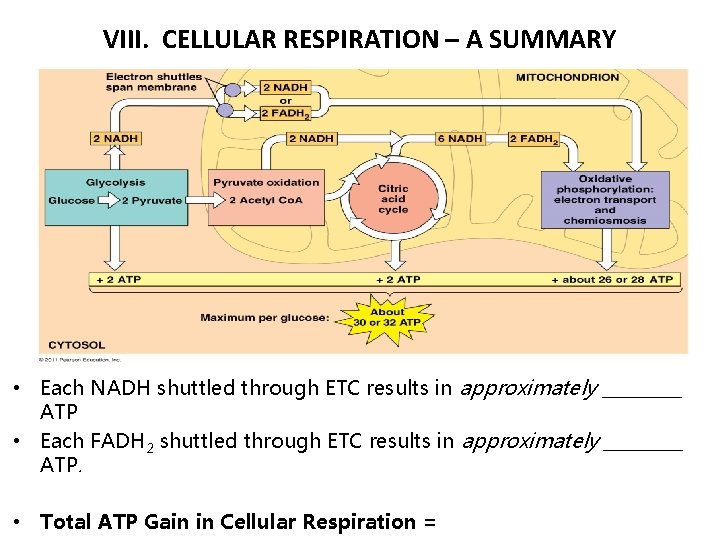
VIII. CELLULAR RESPIRATION – A SUMMARY • Each NADH shuttled through ETC results in approximately _____ ATP • Each FADH 2 shuttled through ETC results in approximately _____ ATP. • Total ATP Gain in Cellular Respiration =
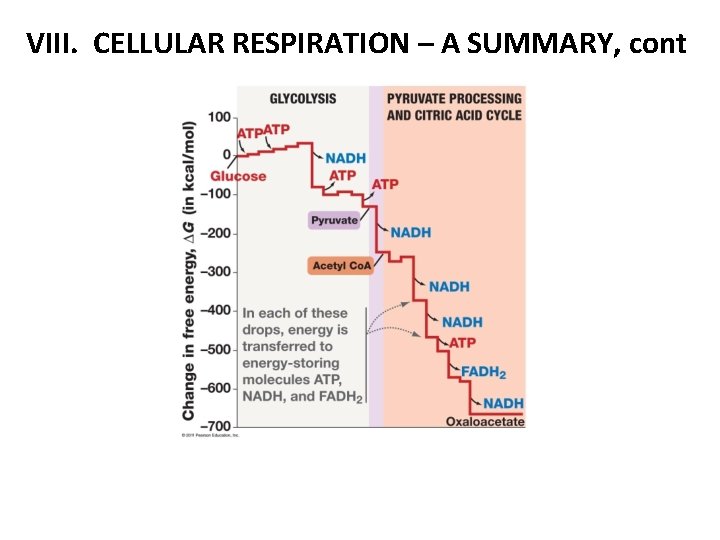
VIII. CELLULAR RESPIRATION – A SUMMARY, cont
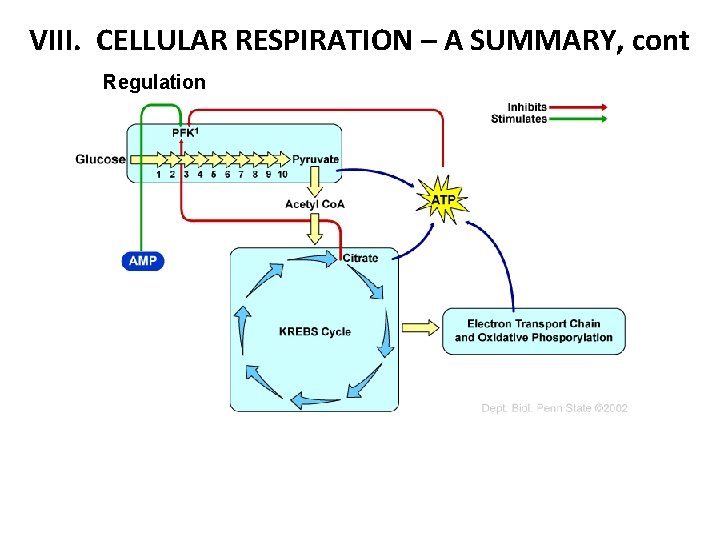
VIII. CELLULAR RESPIRATION – A SUMMARY, cont Regulation
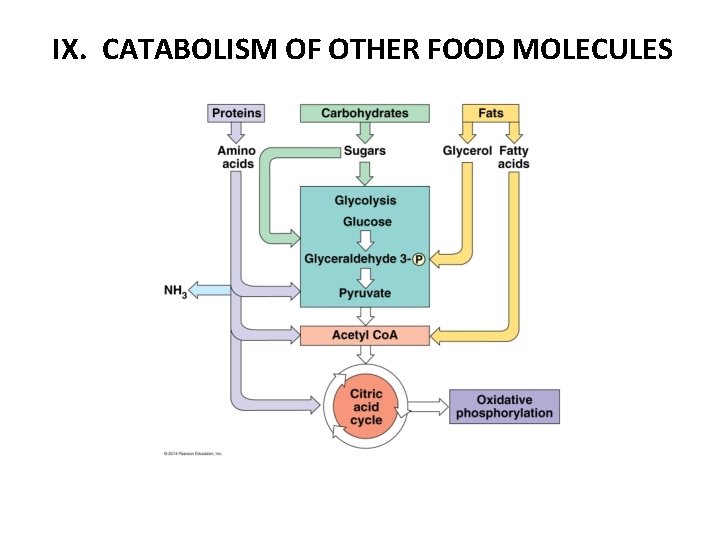
IX. CATABOLISM OF OTHER FOOD MOLECULES
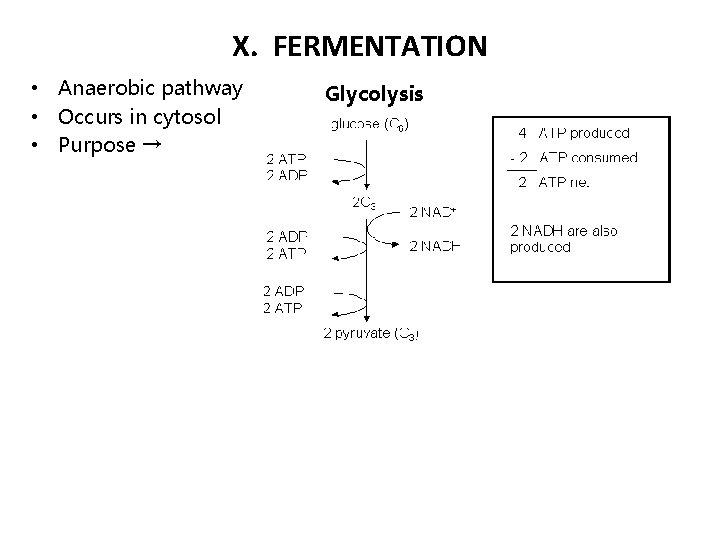
X. FERMENTATION • Anaerobic pathway • Occurs in cytosol • Purpose → Glycolysis
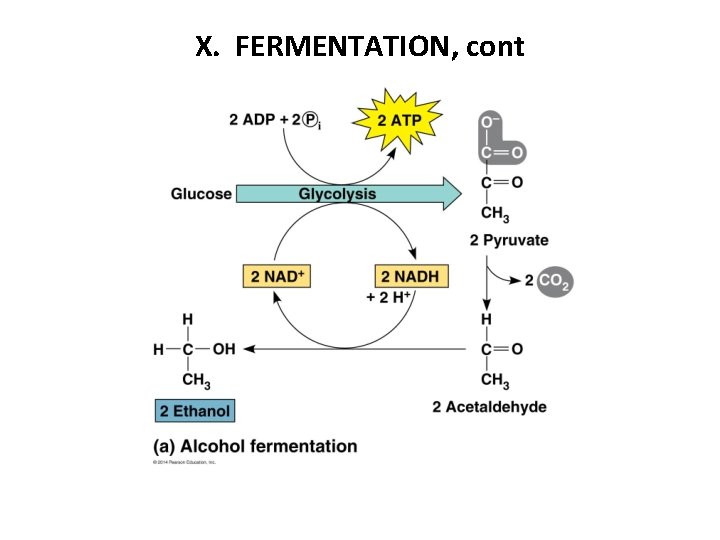
X. FERMENTATION, cont
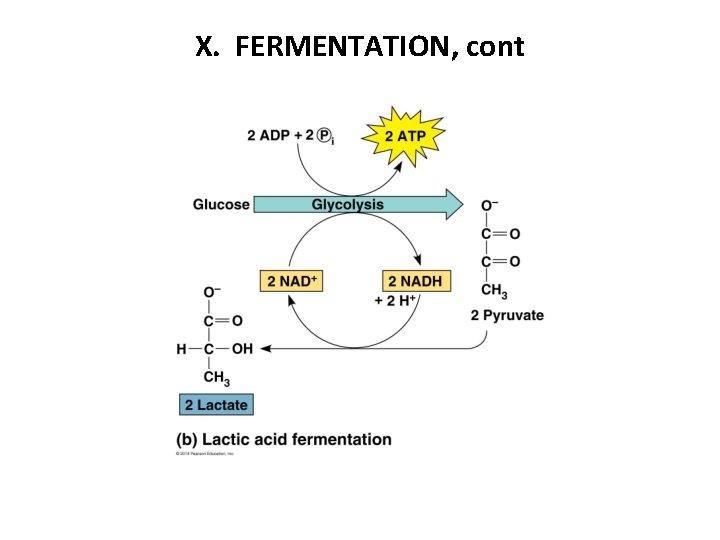
X. FERMENTATION, cont
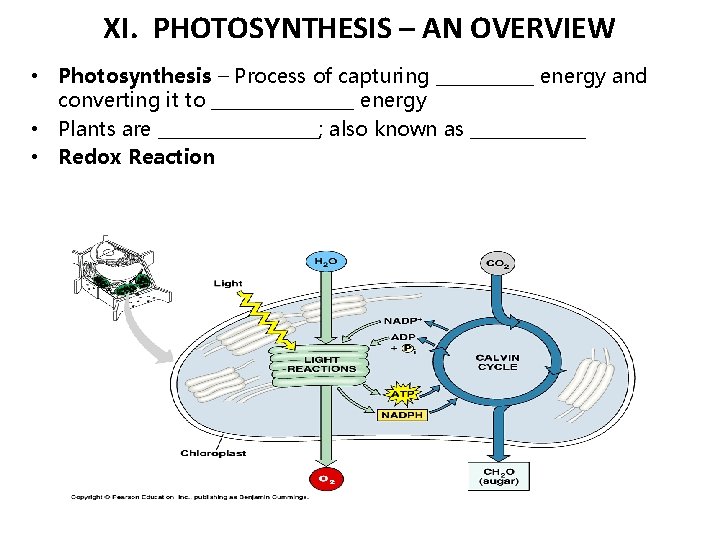
XI. PHOTOSYNTHESIS – AN OVERVIEW • Photosynthesis – Process of capturing ______ energy and converting it to ________ energy • Plants are _________; also known as _______ • Redox Reaction
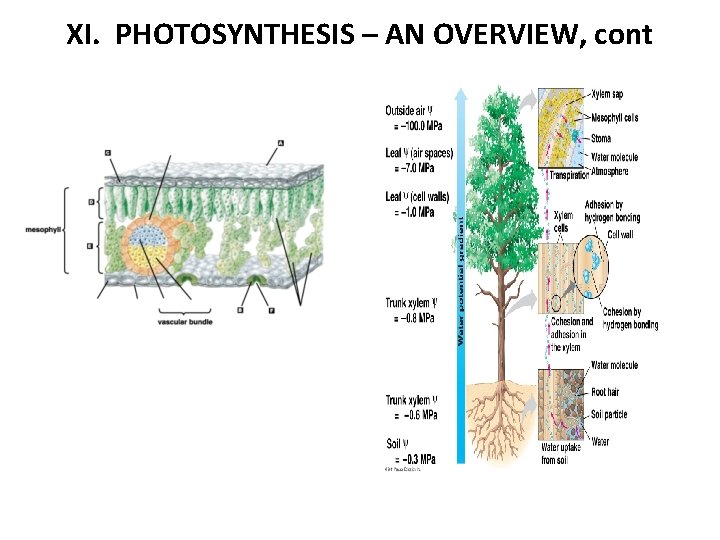
XI. PHOTOSYNTHESIS – AN OVERVIEW, cont
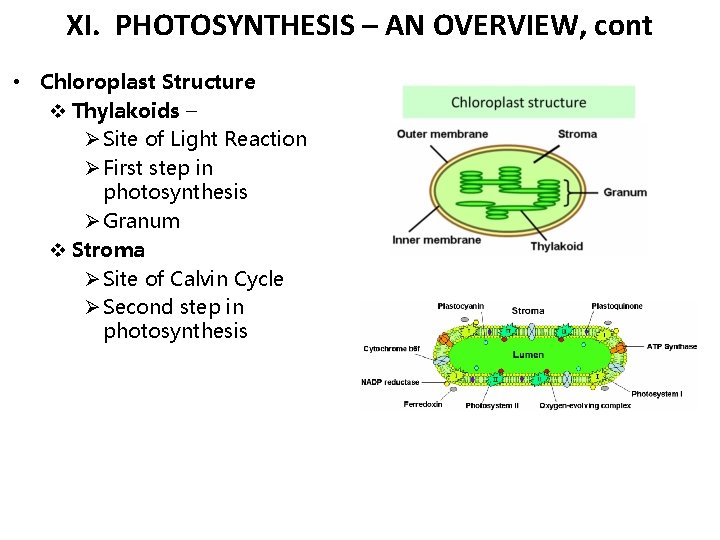
XI. PHOTOSYNTHESIS – AN OVERVIEW, cont • Chloroplast Structure v Thylakoids – Ø Site of Light Reaction Ø First step in photosynthesis Ø Granum v Stroma Ø Site of Calvin Cycle Ø Second step in photosynthesis
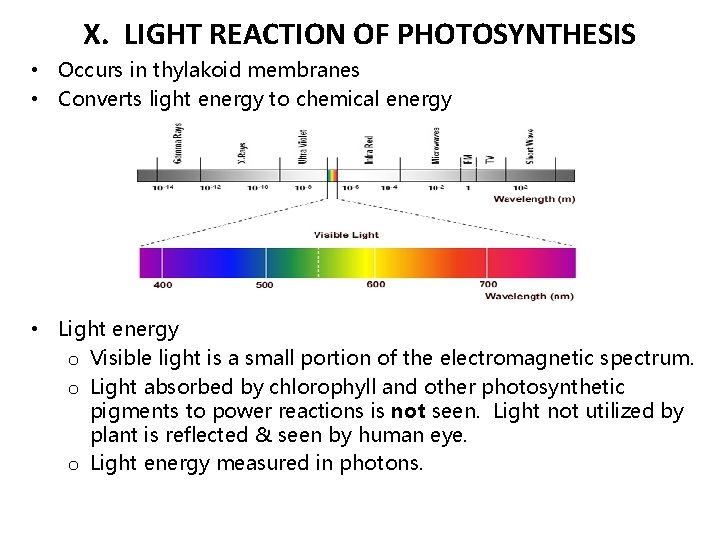
X. LIGHT REACTION OF PHOTOSYNTHESIS • Occurs in thylakoid membranes • Converts light energy to chemical energy • Light energy o Visible light is a small portion of the electromagnetic spectrum. o Light absorbed by chlorophyll and other photosynthetic pigments to power reactions is not seen. Light not utilized by plant is reflected & seen by human eye. o Light energy measured in photons.
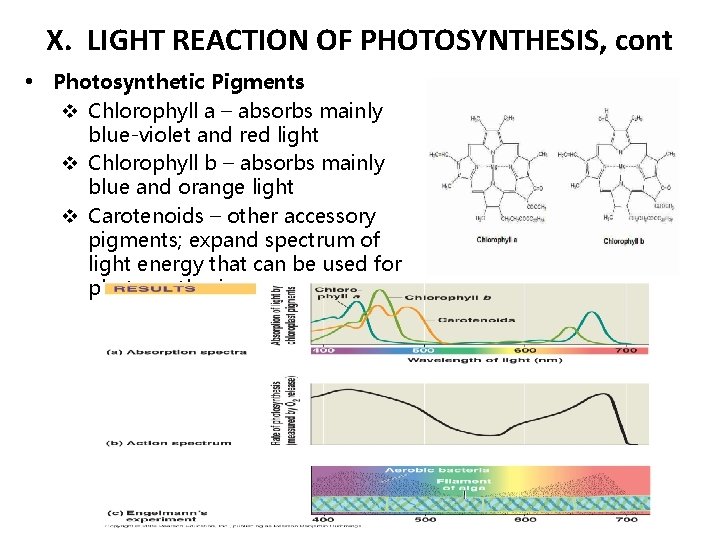
X. LIGHT REACTION OF PHOTOSYNTHESIS, cont • Photosynthetic Pigments v Chlorophyll a – absorbs mainly blue-violet and red light v Chlorophyll b – absorbs mainly blue and orange light v Carotenoids – other accessory pigments; expand spectrum of light energy that can be used for photosynthesis
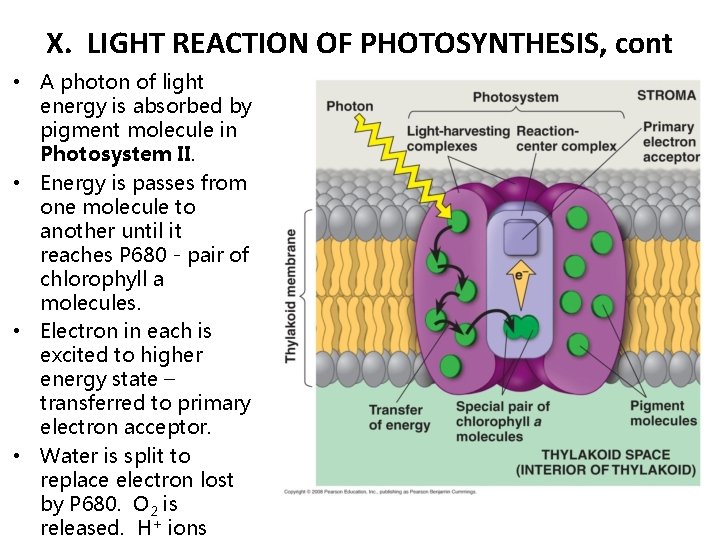
X. LIGHT REACTION OF PHOTOSYNTHESIS, cont • A photon of light energy is absorbed by pigment molecule in Photosystem II. • Energy is passes from one molecule to another until it reaches P 680 - pair of chlorophyll a molecules. • Electron in each is excited to higher energy state – transferred to primary electron acceptor. • Water is split to replace electron lost by P 680. O 2 is released. H+ ions
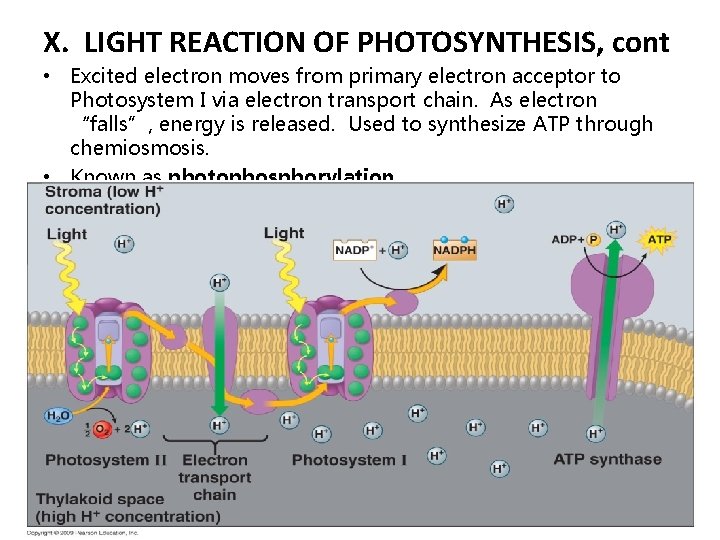
X. LIGHT REACTION OF PHOTOSYNTHESIS, cont • Excited electron moves from primary electron acceptor to Photosystem I via electron transport chain. As electron “falls”, energy is released. Used to synthesize ATP through chemiosmosis. • Known as photophosphorylation
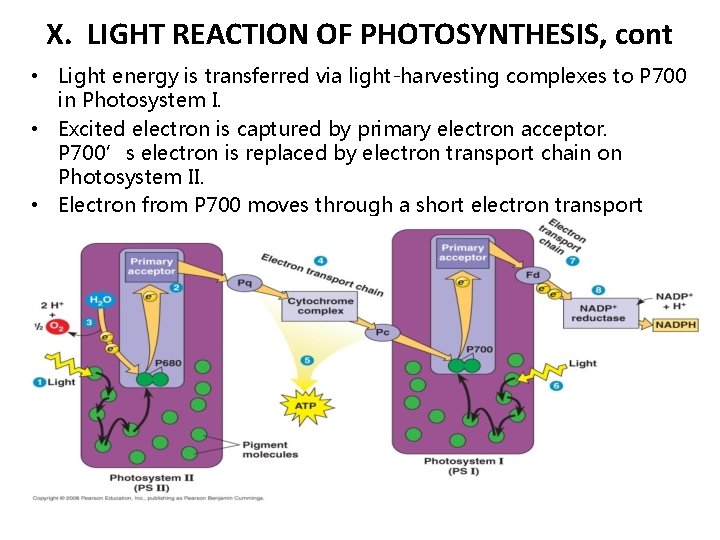
X. LIGHT REACTION OF PHOTOSYNTHESIS, cont • Light energy is transferred via light-harvesting complexes to P 700 in Photosystem I. • Excited electron is captured by primary electron acceptor. P 700’s electron is replaced by electron transport chain on Photosystem II. • Electron from P 700 moves through a short electron transport chain, reducing NADP+ to NADPH.
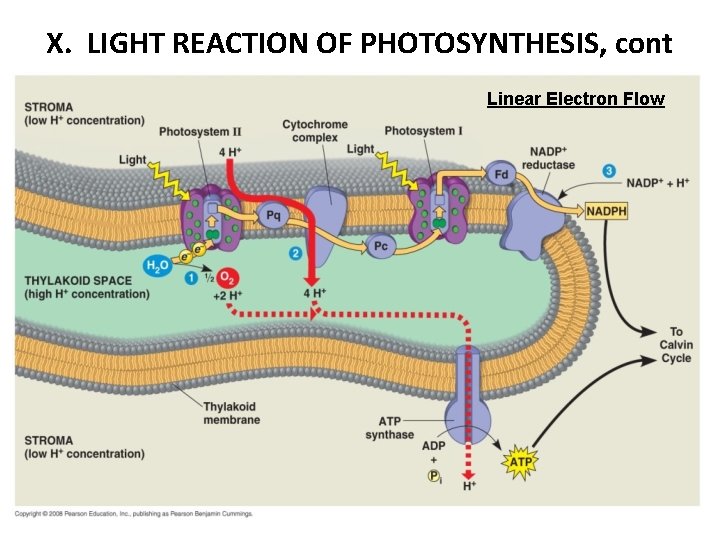
X. LIGHT REACTION OF PHOTOSYNTHESIS, cont Linear Electron Flow
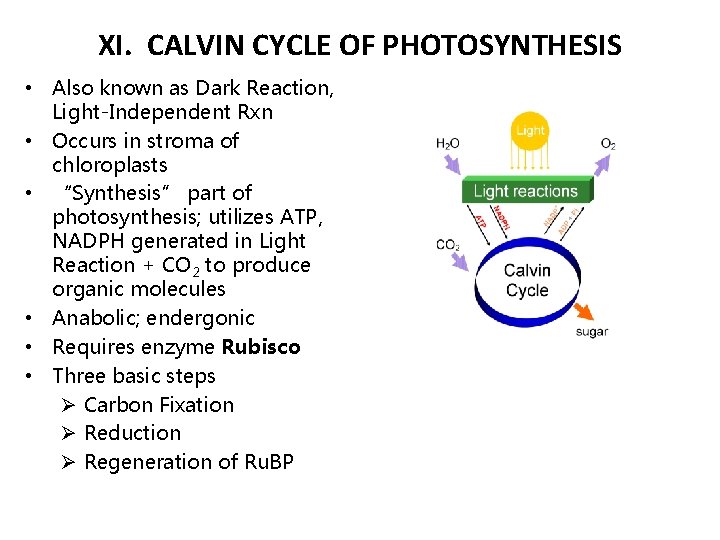
XI. CALVIN CYCLE OF PHOTOSYNTHESIS • Also known as Dark Reaction, Light-Independent Rxn • Occurs in stroma of chloroplasts • “Synthesis” part of photosynthesis; utilizes ATP, NADPH generated in Light Reaction + CO 2 to produce organic molecules • Anabolic; endergonic • Requires enzyme Rubisco • Three basic steps Ø Carbon Fixation Ø Reduction Ø Regeneration of Ru. BP
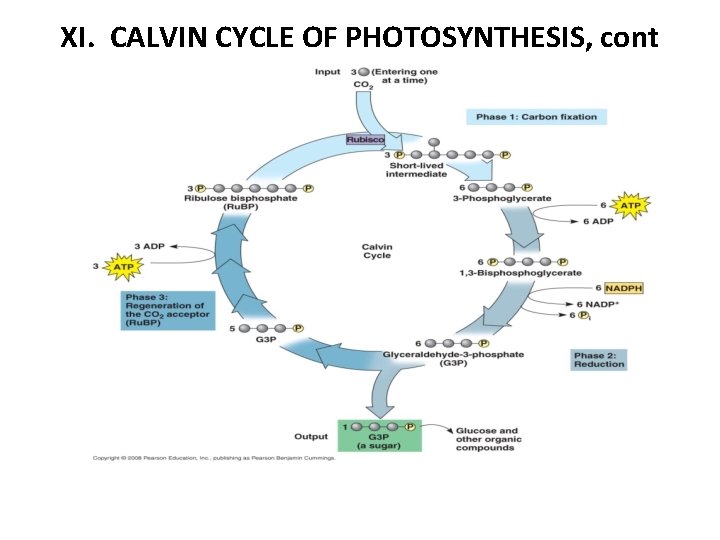
XI. CALVIN CYCLE OF PHOTOSYNTHESIS, cont
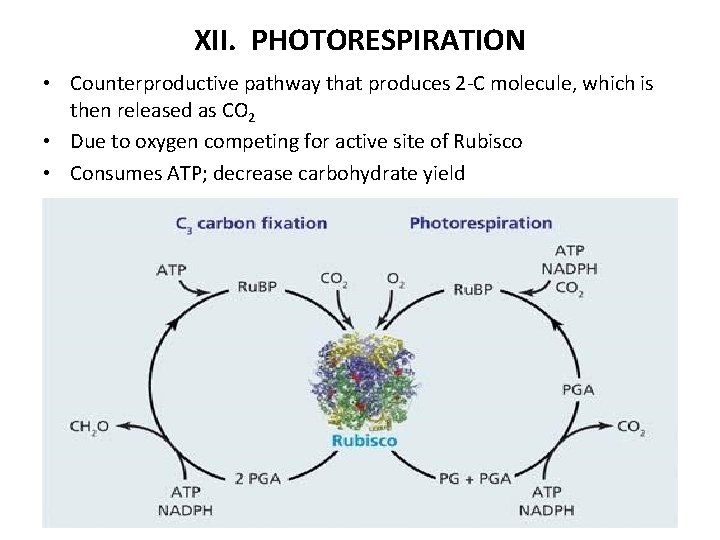
XII. PHOTORESPIRATION • Counterproductive pathway that produces 2 -C molecule, which is then released as CO 2 • Due to oxygen competing for active site of Rubisco • Consumes ATP; decrease carbohydrate yield
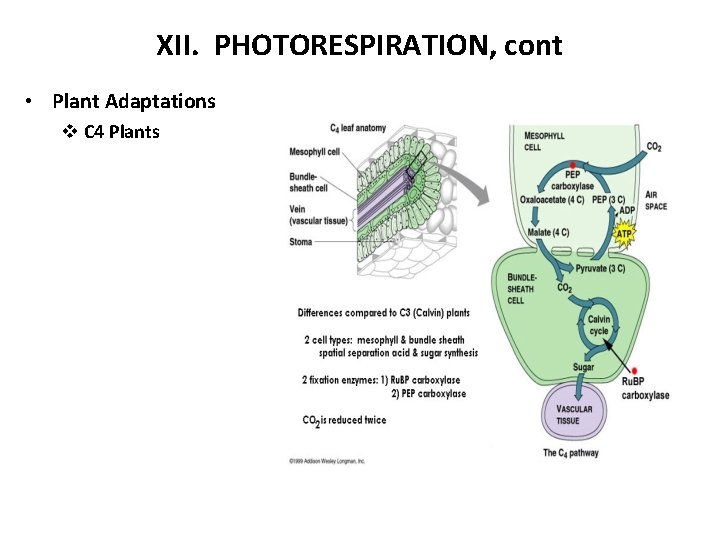
XII. PHOTORESPIRATION, cont • Plant Adaptations v C 4 Plants
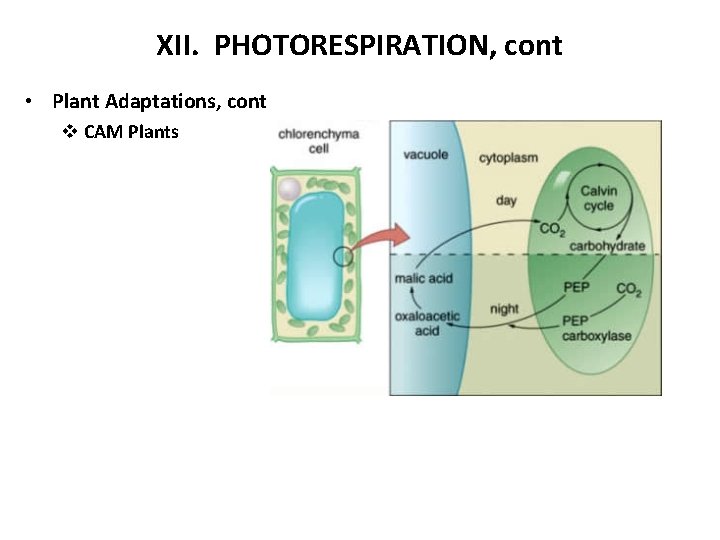
XII. PHOTORESPIRATION, cont • Plant Adaptations, cont v CAM Plants
- Slides: 48