Chapter 6 Day 2 What are Congruent and

- Slides: 31
Chapter 6 Day 2 What are Congruent and Similar figures? How are they related to Transformations?
Congruent Figures
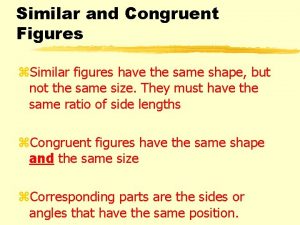
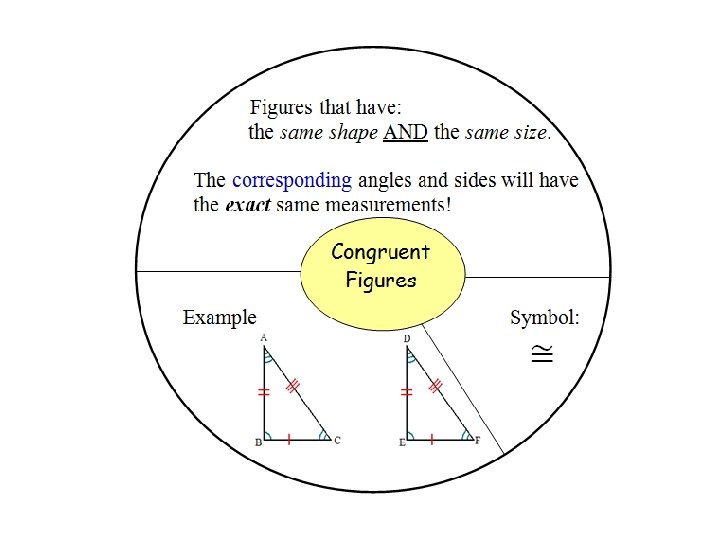
What are Congruent Figures? Congruent figures. . Are figures that have the exact same shape AND size! Why learn about Congruent Figures? Let’s see…
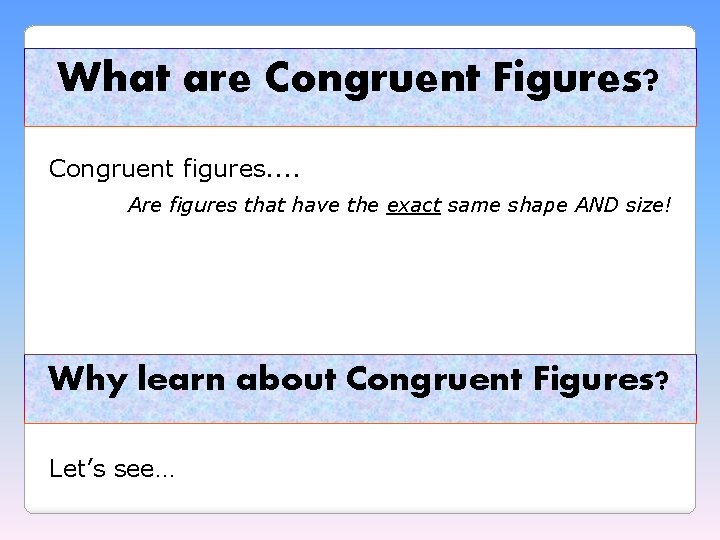
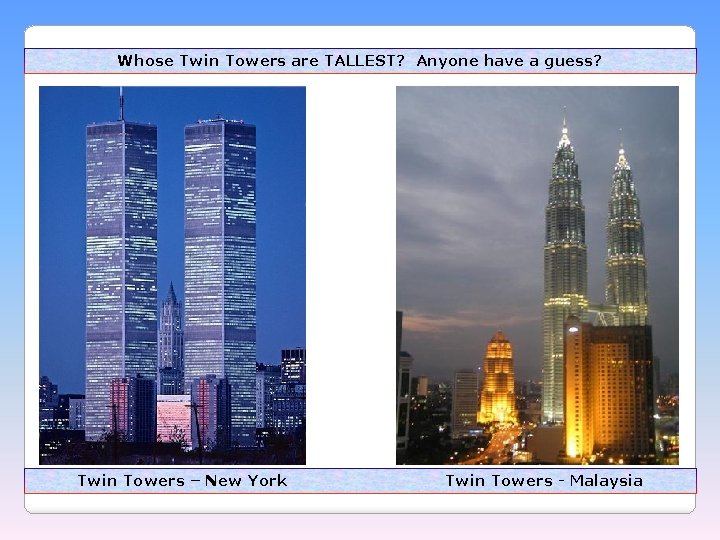
You see congruency in Architecture! World Trade Center
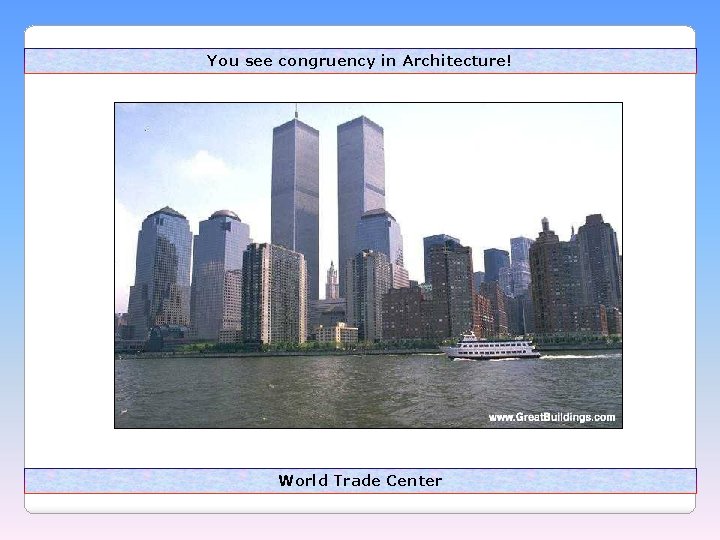
Congruency in Architecture! Petronas Twin Towers (Malaysia’s version)
Whose Twin Towers are TALLEST? Anyone have a guess? Twin Towers – New York Twin Towers - Malaysia
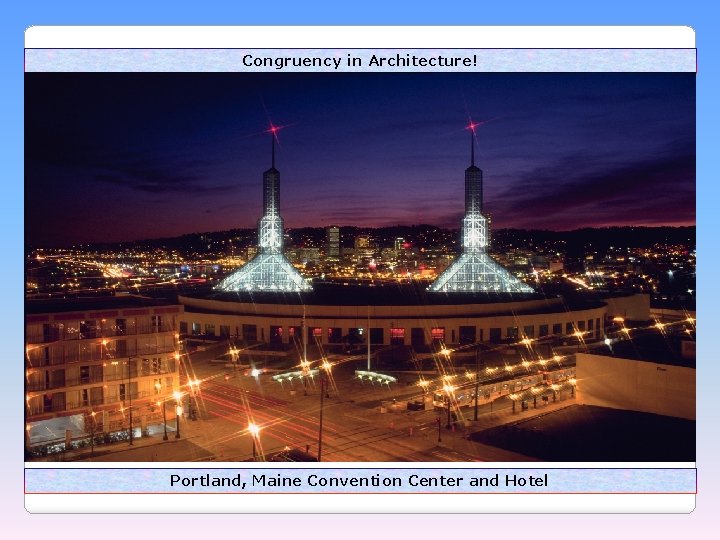
Congruency in Architecture! Portland, Maine Convention Center and Hotel
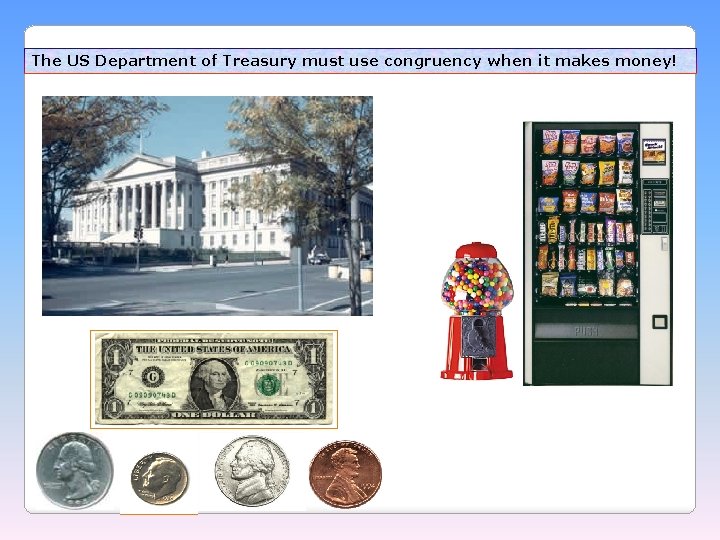
The US Department of Treasury must use congruency when it makes money!
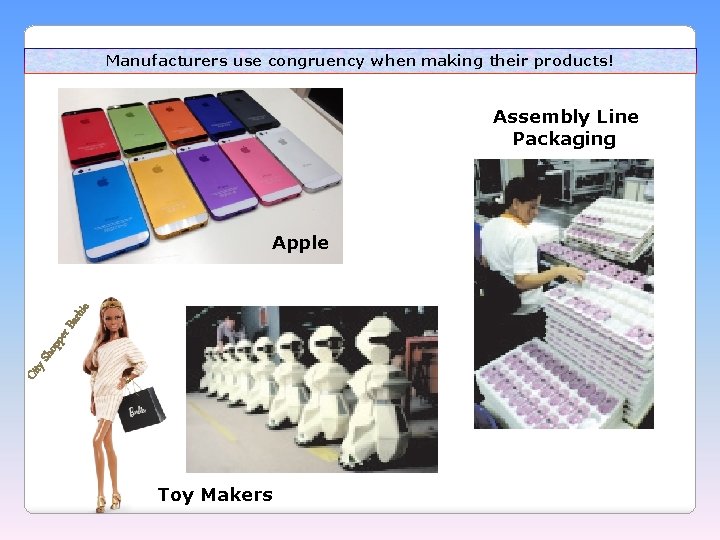
Manufacturers use congruency when making their products! Assembly Line Packaging Cit y. S hop per Bar bie Apple Toy Makers
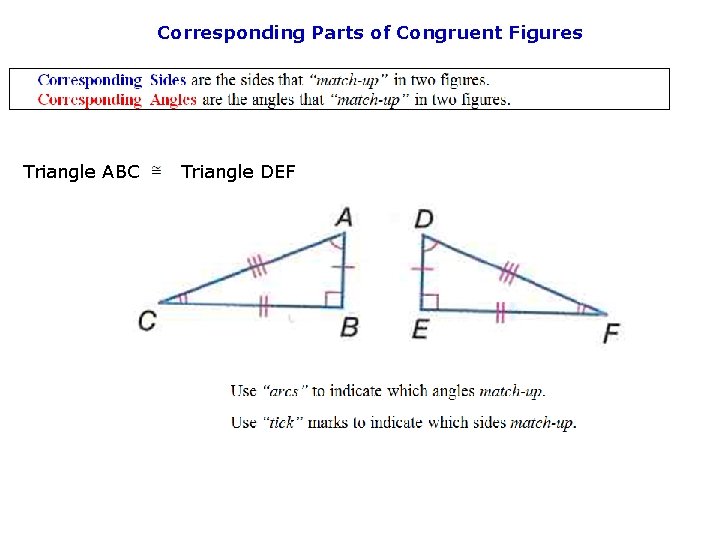
Corresponding Parts of Congruent Figures Triangle ABC Triangle DEF
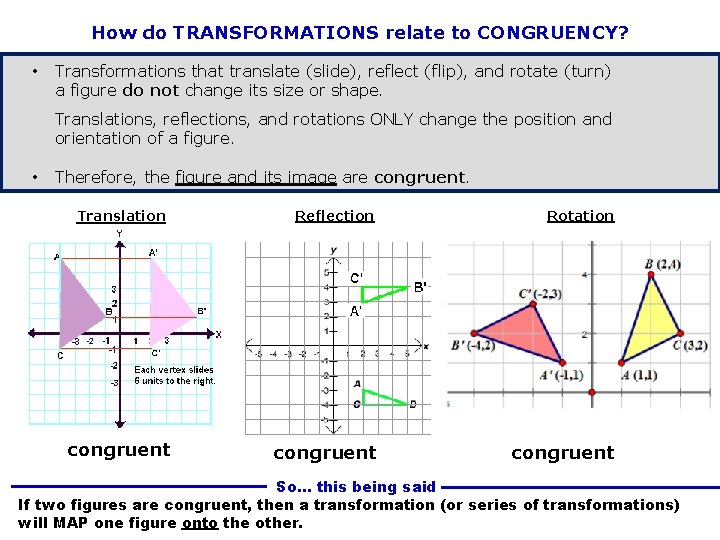
How do TRANSFORMATIONS relate to CONGRUENCY? • Transformations that translate (slide), reflect (flip), and rotate (turn) a figure do not change its size or shape. Translations, reflections, and rotations ONLY change the position and orientation of a figure. • Therefore, the figure and its image are congruent. Translation congruent Reflection Rotation congruent So… this being said If two figures are congruent, then a transformation (or series of transformations) will MAP one figure onto the other.
Similar Figures
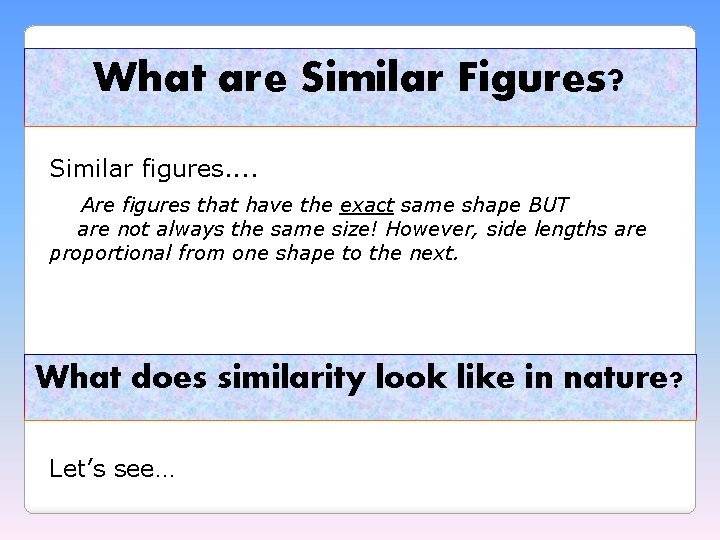
What are Similar Figures? Similar figures. . Are figures that have the exact same shape BUT are not always the same size! However, side lengths are proportional from one shape to the next. What does similarity look like in nature? Let’s see…
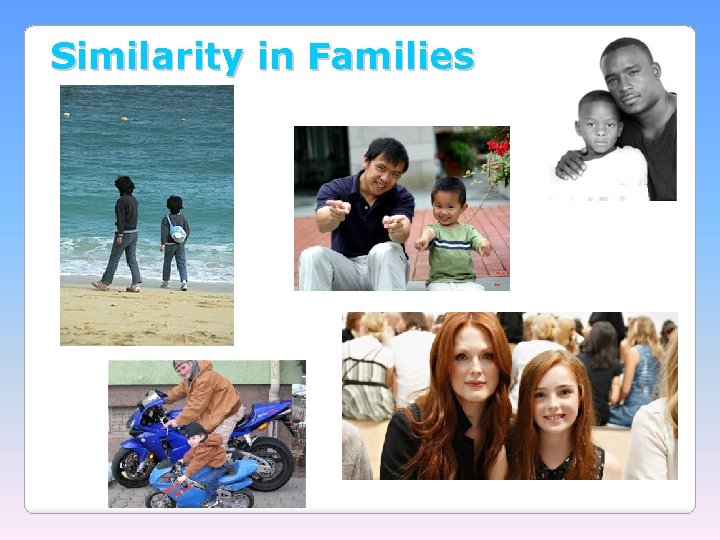
Similarity in Families
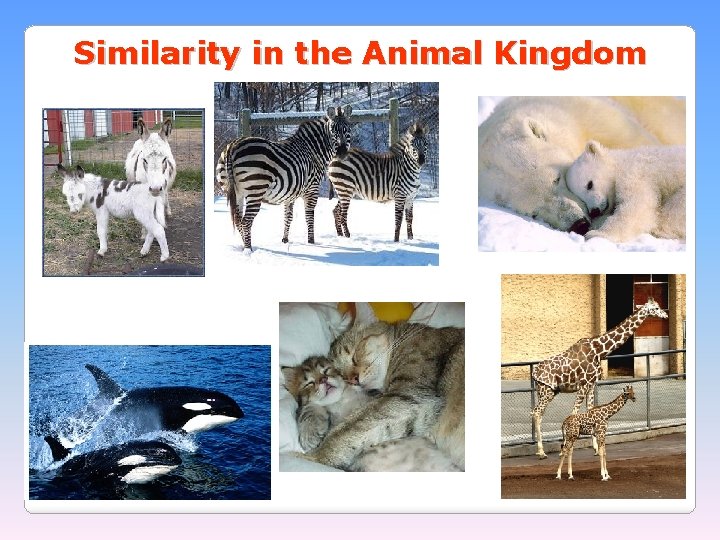
Similarity in the Animal Kingdom
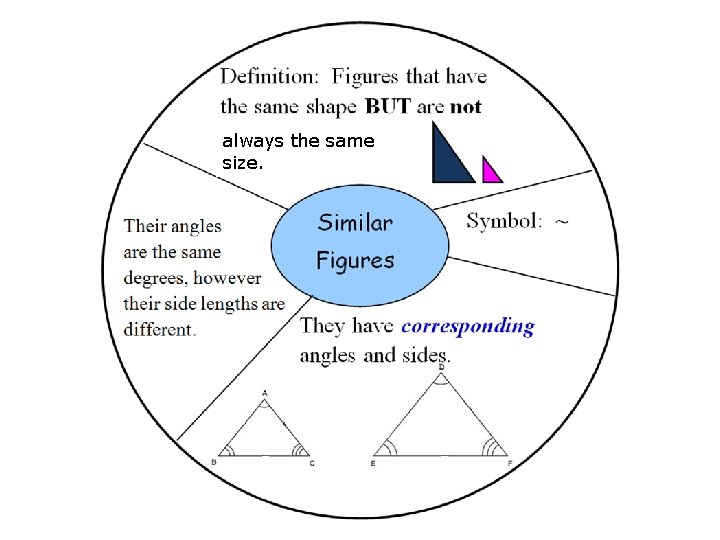
always the same size.
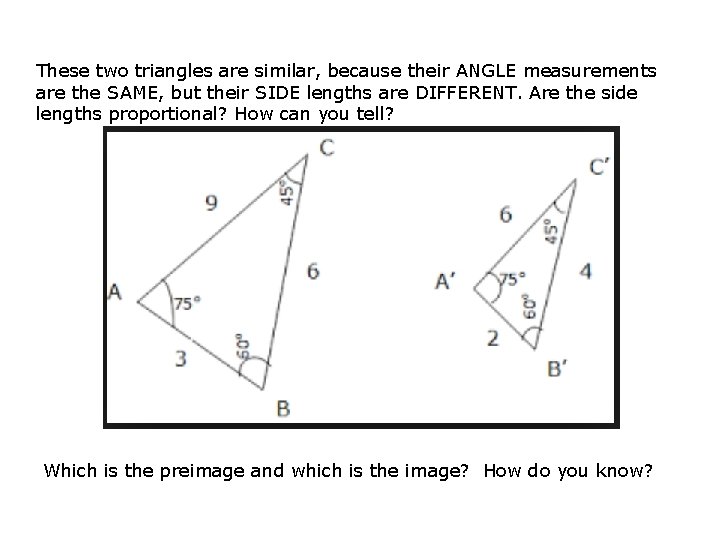
These two triangles are similar, because their ANGLE measurements are the SAME, but their SIDE lengths are DIFFERENT. Are the side lengths proportional? How can you tell? Which is the preimage and which is the image? How do you know?
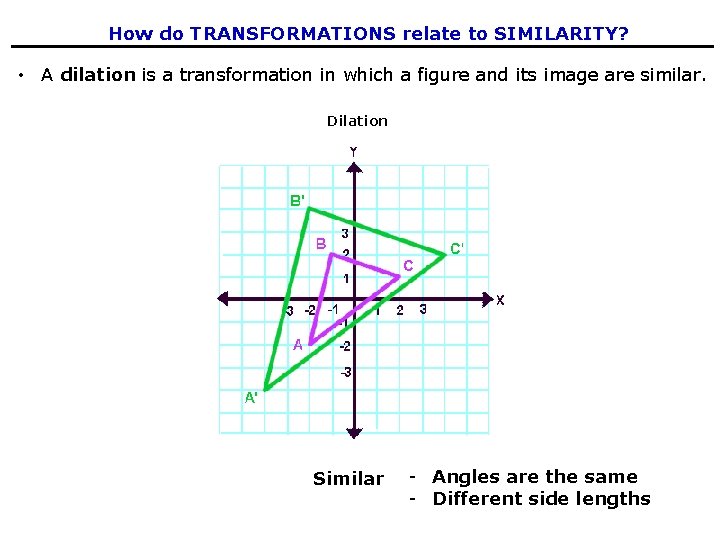
How do TRANSFORMATIONS relate to SIMILARITY? • A dilation is a transformation in which a figure and its image are similar. Dilation Similar - Angles are the same - Different side lengths
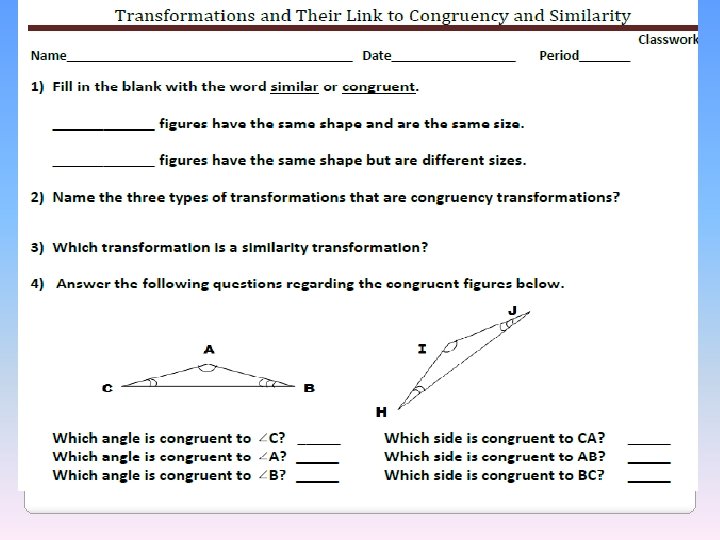
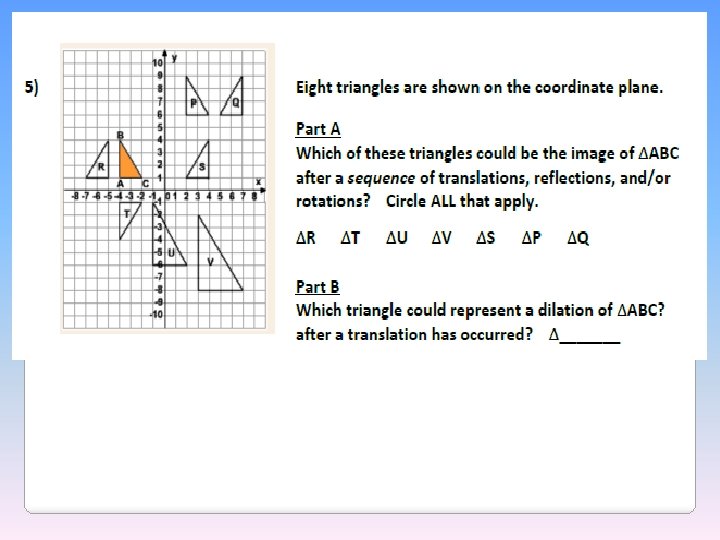
Time for Classwork
End of Power. Point