
CHAPTER 12 SURFACE AREA AND VOLUME INTRO TO
- Slides: 41
CHAPTER 12: SURFACE AREA AND VOLUME
INTRO TO SOLIDS
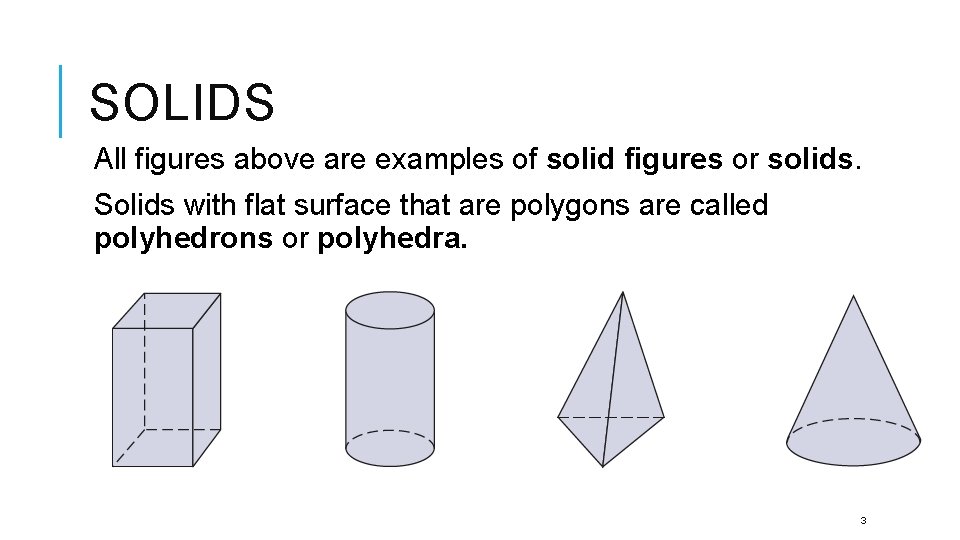
SOLIDS All figures above are examples of solid figures or solids. Solids with flat surface that are polygons are called polyhedrons or polyhedra. 3
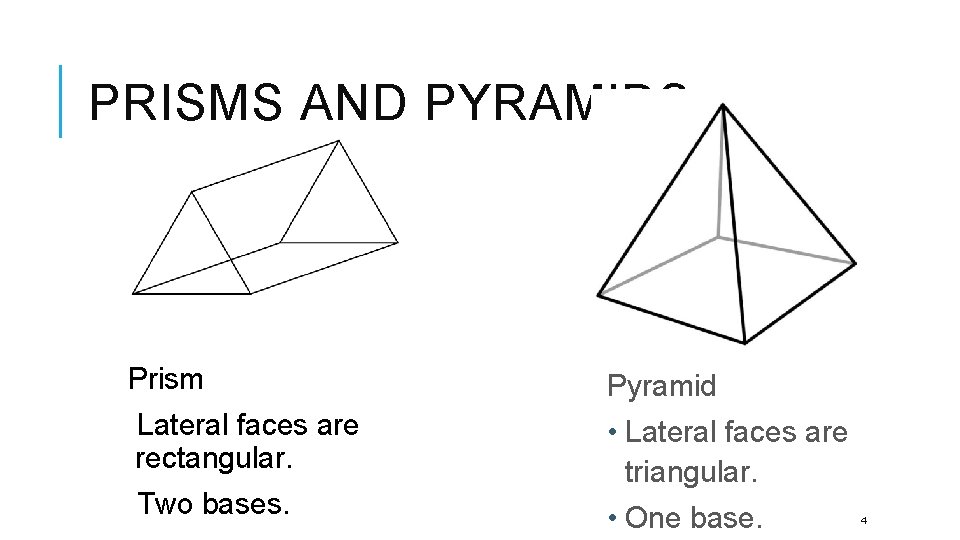
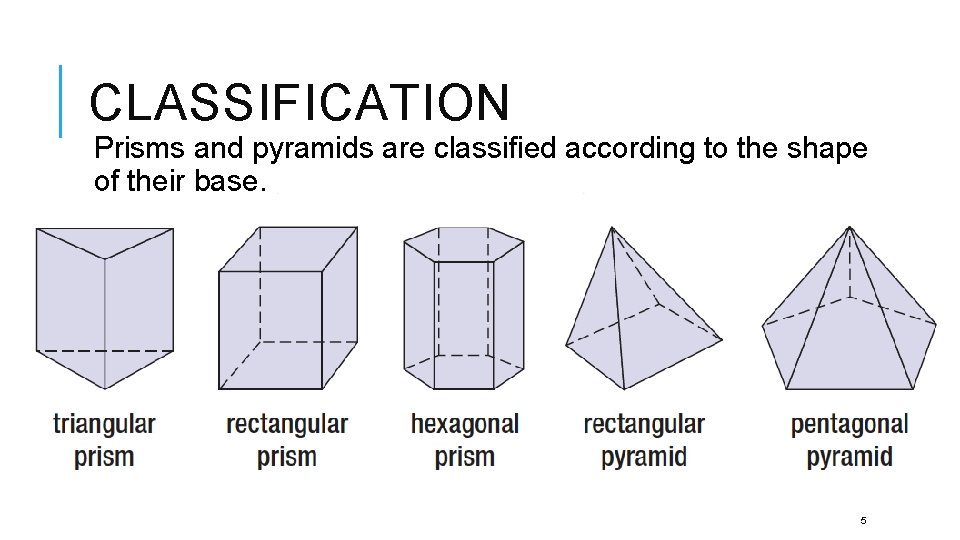
PRISMS AND PYRAMIDS Prism Pyramid Lateral faces are rectangular. • Lateral faces are triangular. Two bases. • One base. 4
CLASSIFICATION Prisms and pyramids are classified according to the shape of their base. 5
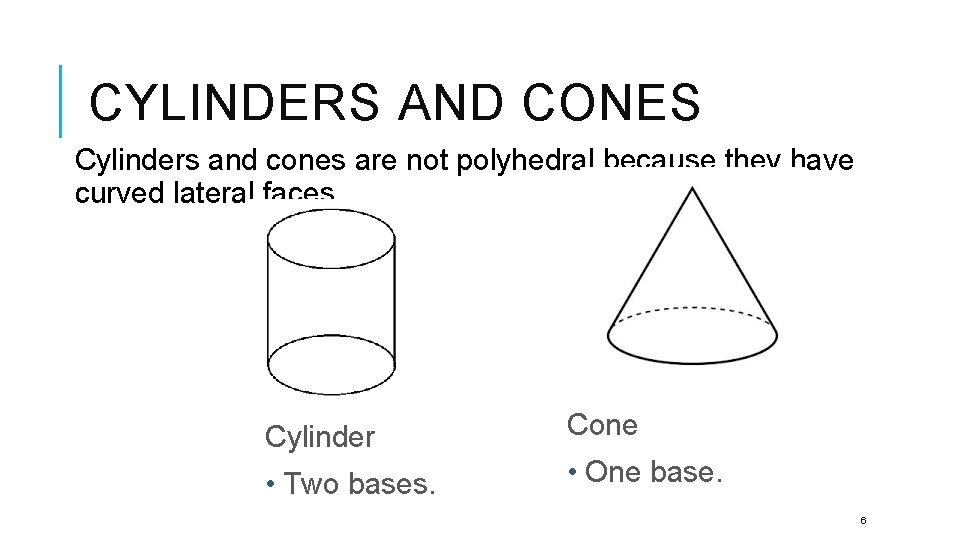
CYLINDERS AND CONES Cylinders and cones are not polyhedral because they have curved lateral faces. Cylinder Cone • Two bases. • One base. 6
12. 2 – SURFACE AREA OF PRISMS AND CYLINDERS
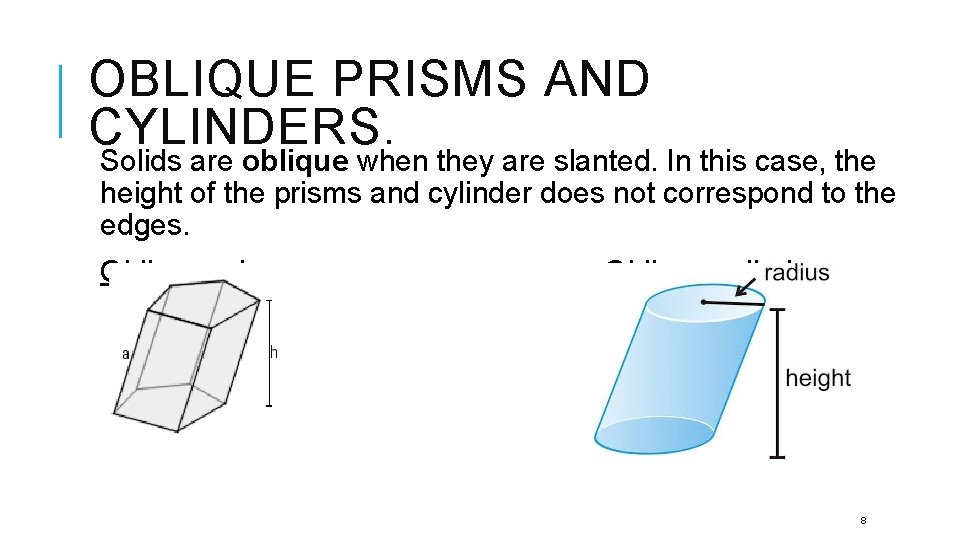
OBLIQUE PRISMS AND CYLINDERS. Solids are oblique when they are slanted. In this case, the height of the prisms and cylinder does not correspond to the edges. Oblique prism: Oblique cylinder: 8
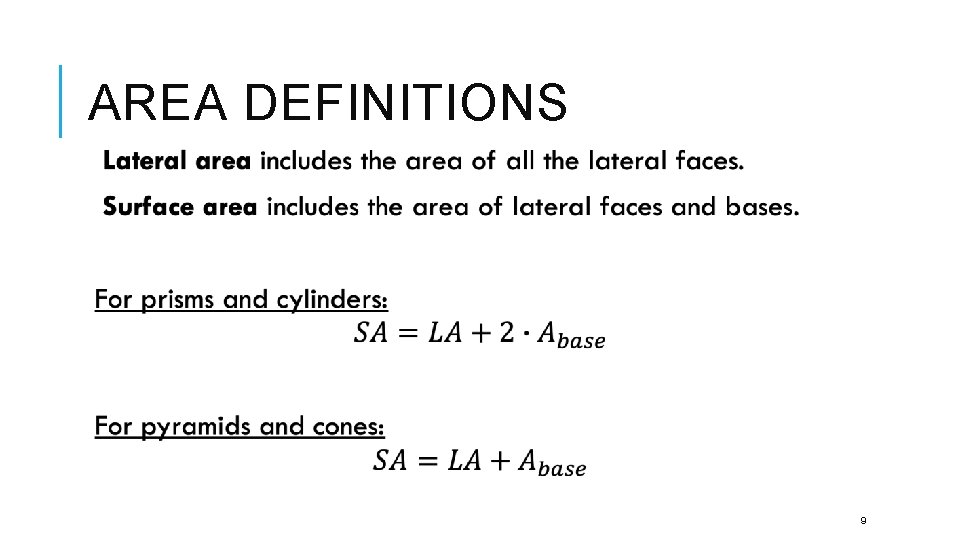
AREA DEFINITIONS 9
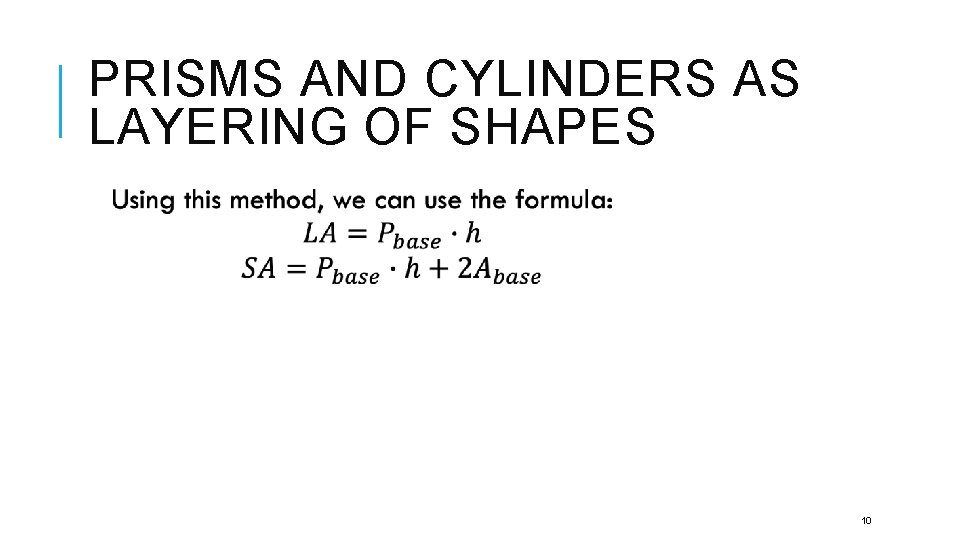
PRISMS AND CYLINDERS AS LAYERING OF SHAPES 10
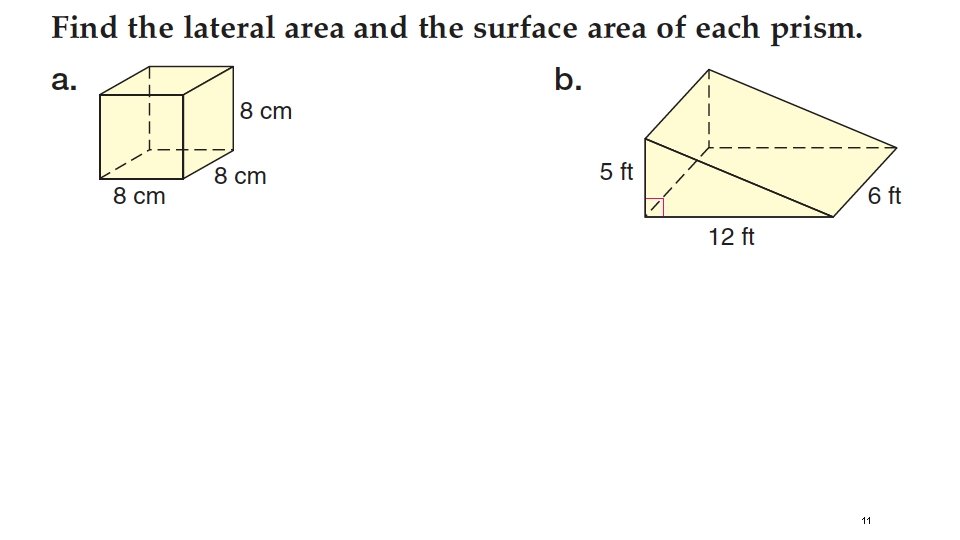
11
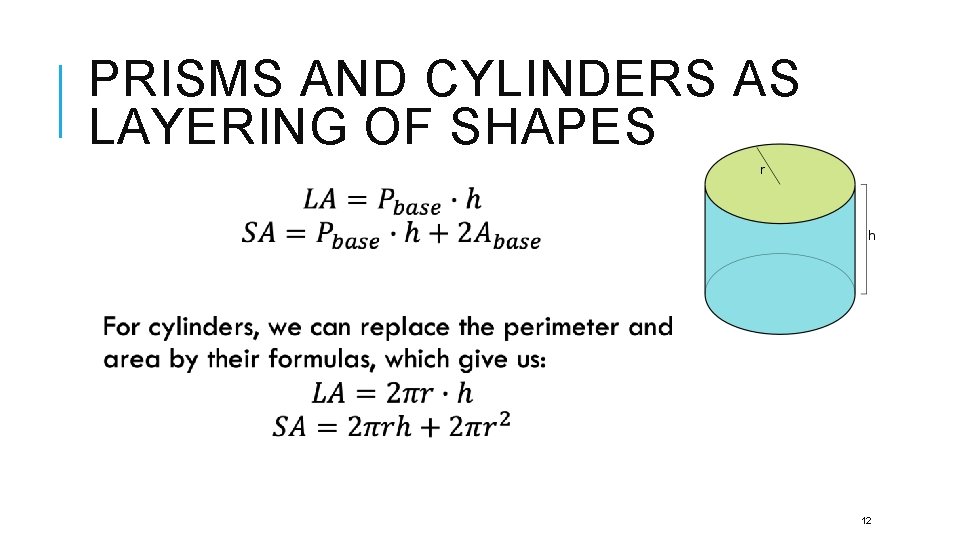
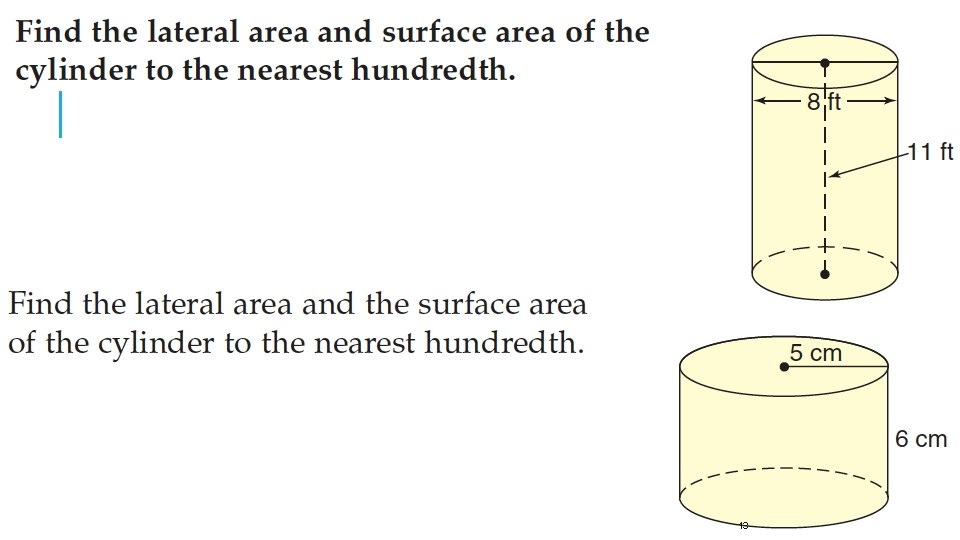
PRISMS AND CYLINDERS AS LAYERING OF SHAPES 12
13
12. 3 – SURFACE AREA OF PYRAMIDS AND CONES
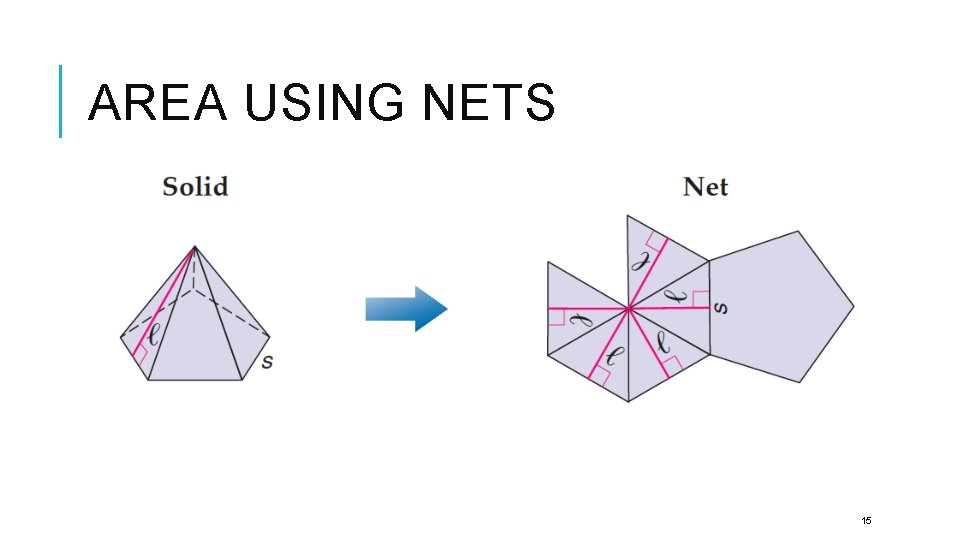
AREA USING NETS 15
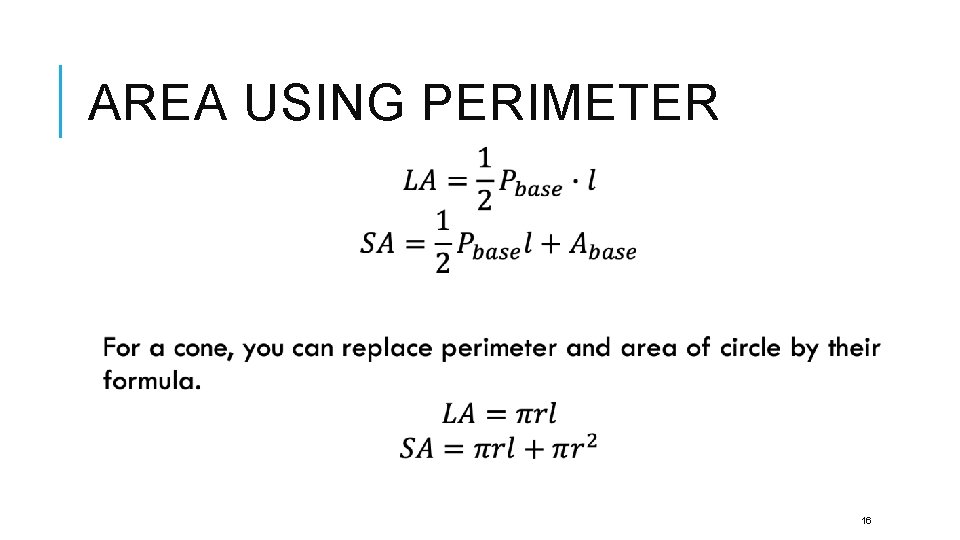
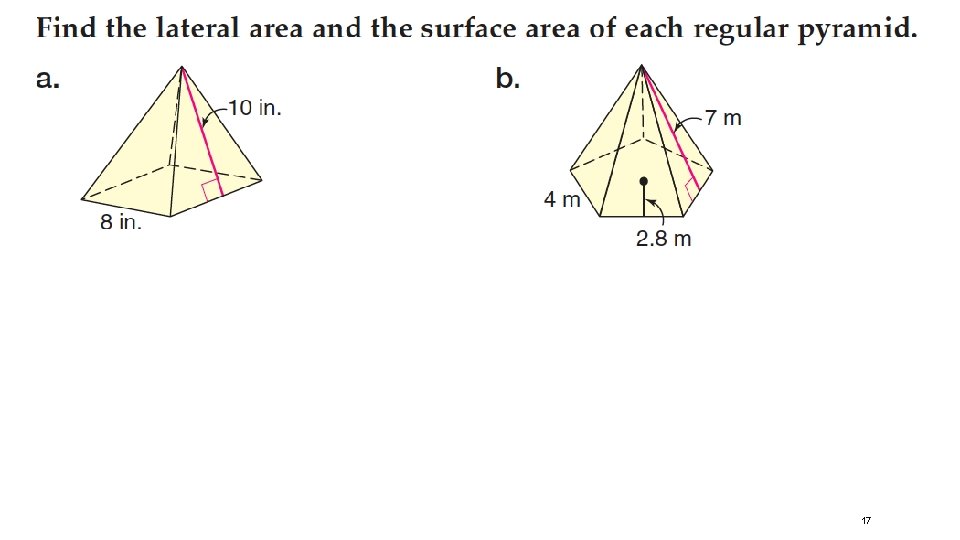
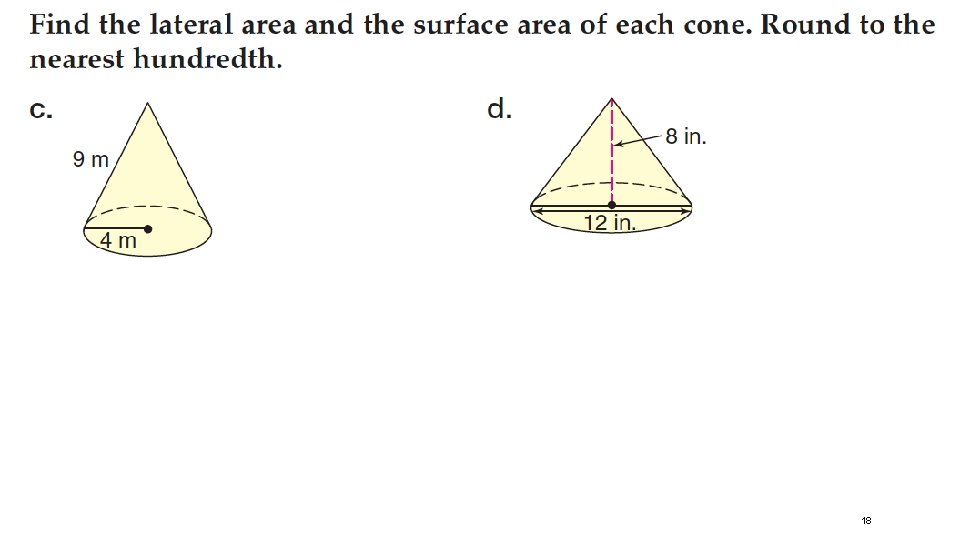
AREA USING PERIMETER 16
17
18
12. 4 – VOLUME OF PRISMS AND CYLINDERS
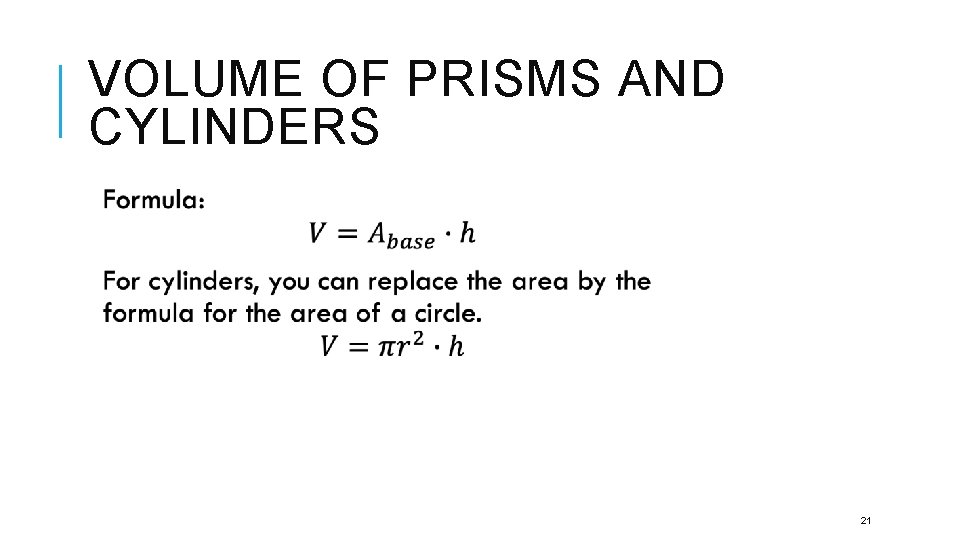
DEFINITION: VOLUME Volume is the amount of space contained in a solid. It is measured in cubic units. 20
VOLUME OF PRISMS AND CYLINDERS 21
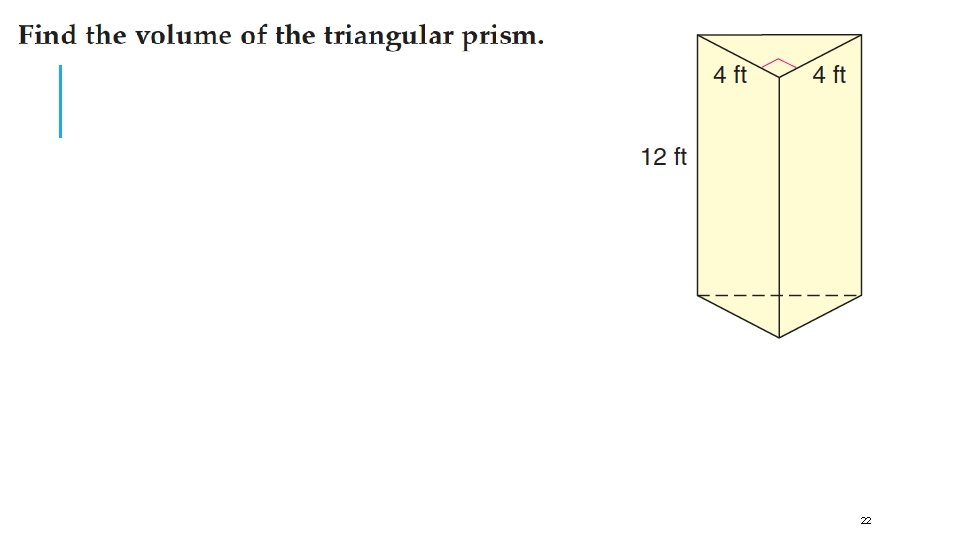
22
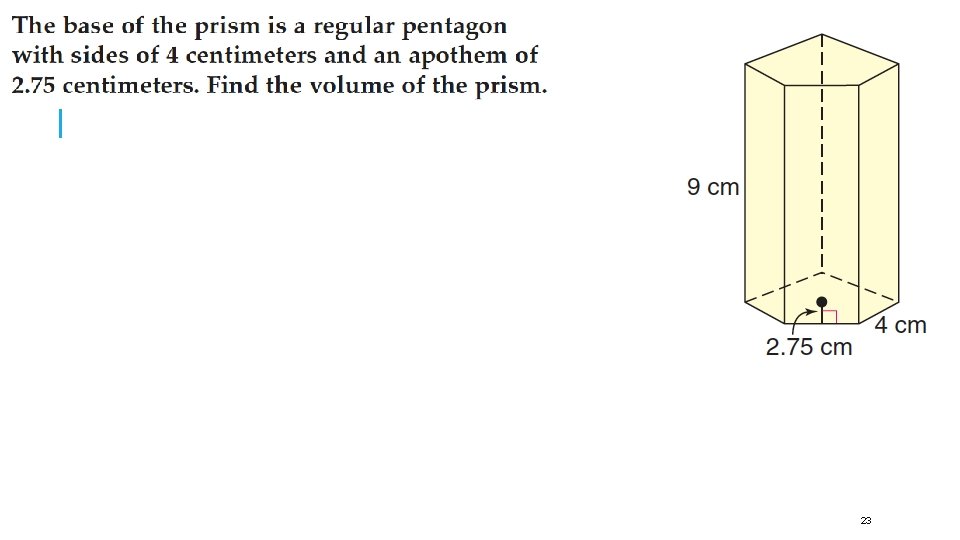
23
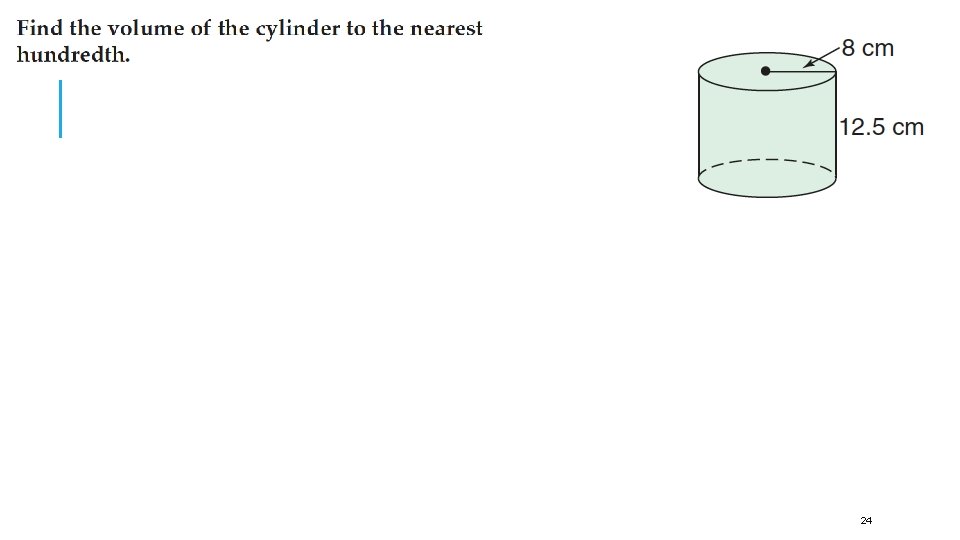
24
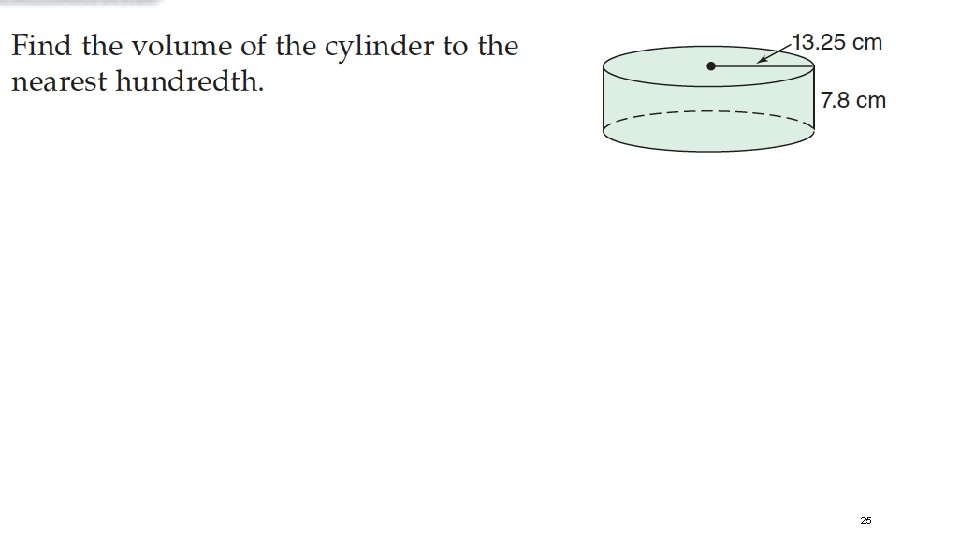
25
12. 5 – VOLUME OF PYRAMIDS AND CONES
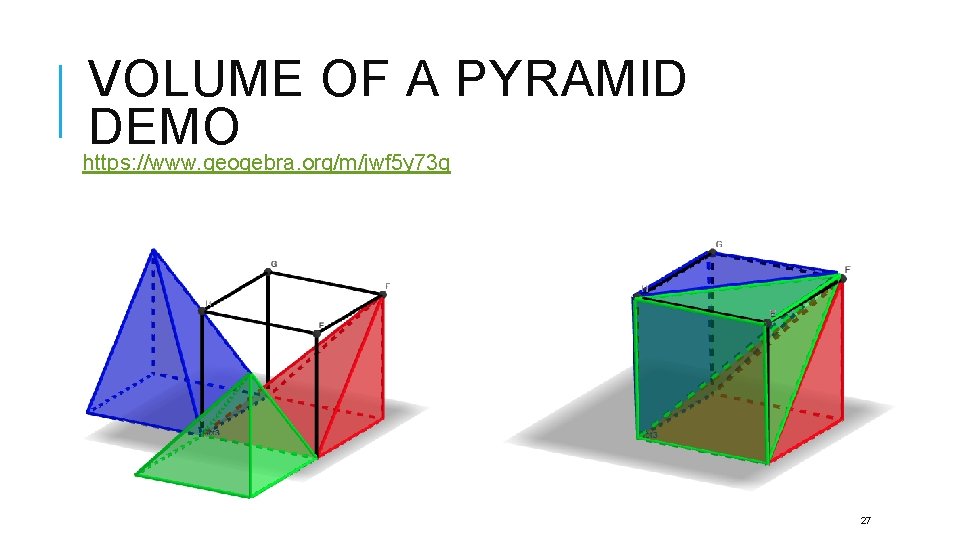
VOLUME OF A PYRAMID DEMO https: //www. geogebra. org/m/jwf 5 y 73 q 27
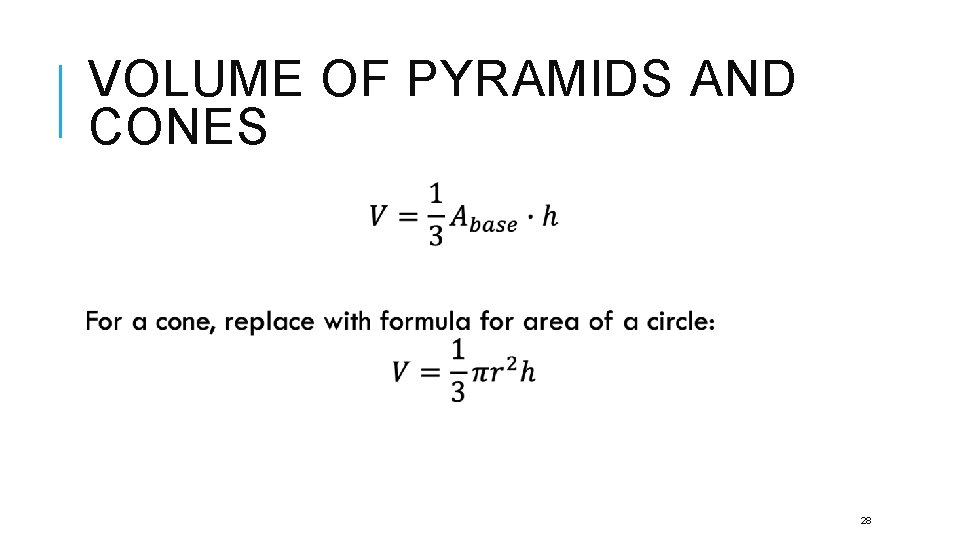
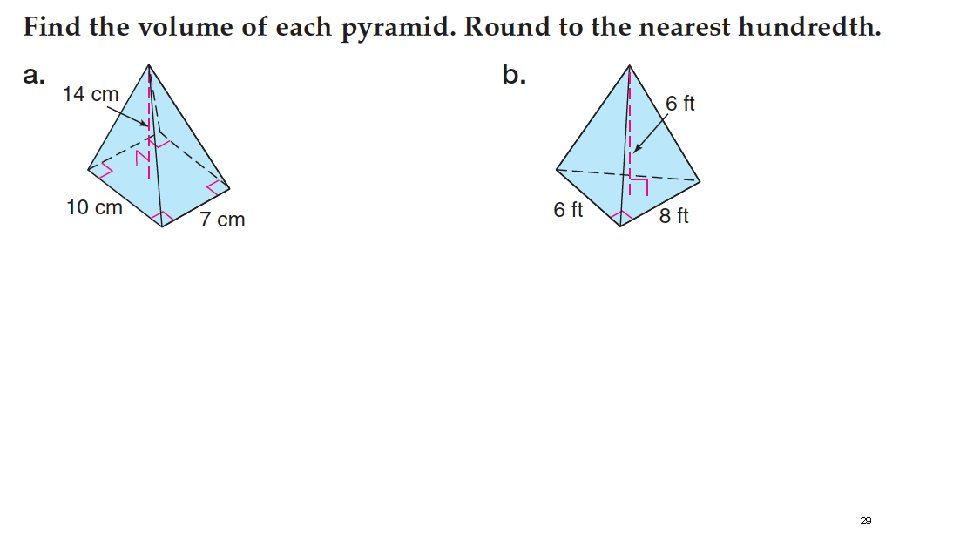
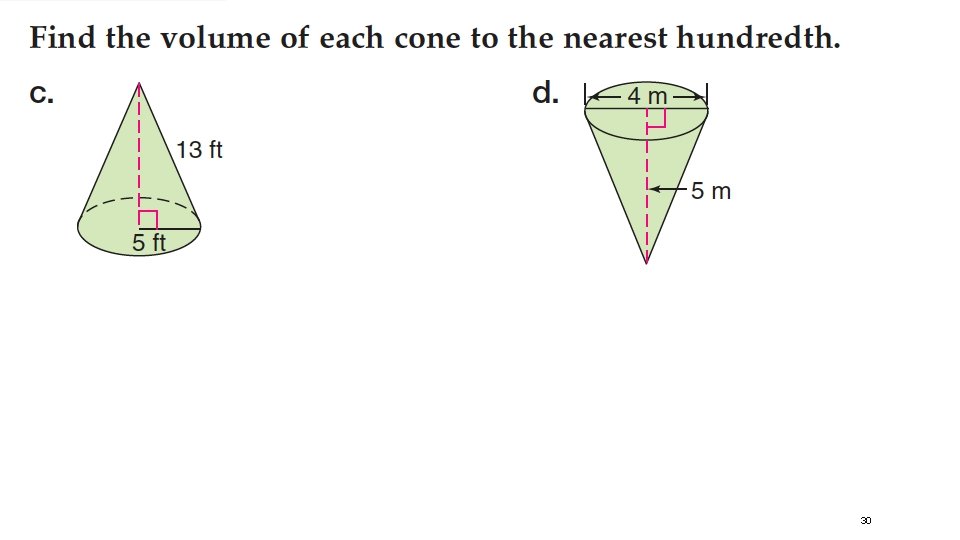
VOLUME OF PYRAMIDS AND CONES 28
29
30
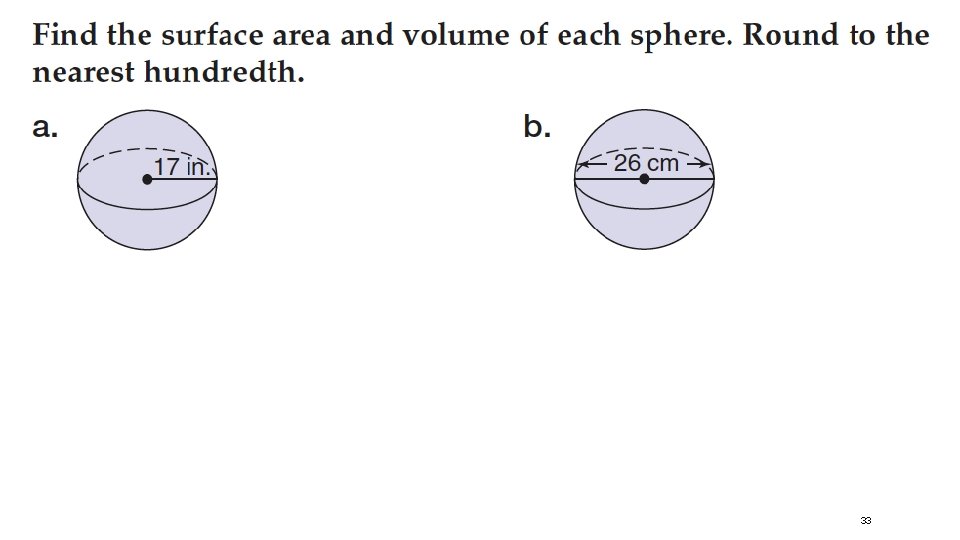
12. 6 – SURFACE AREA AND VOLUME OF SPHERES
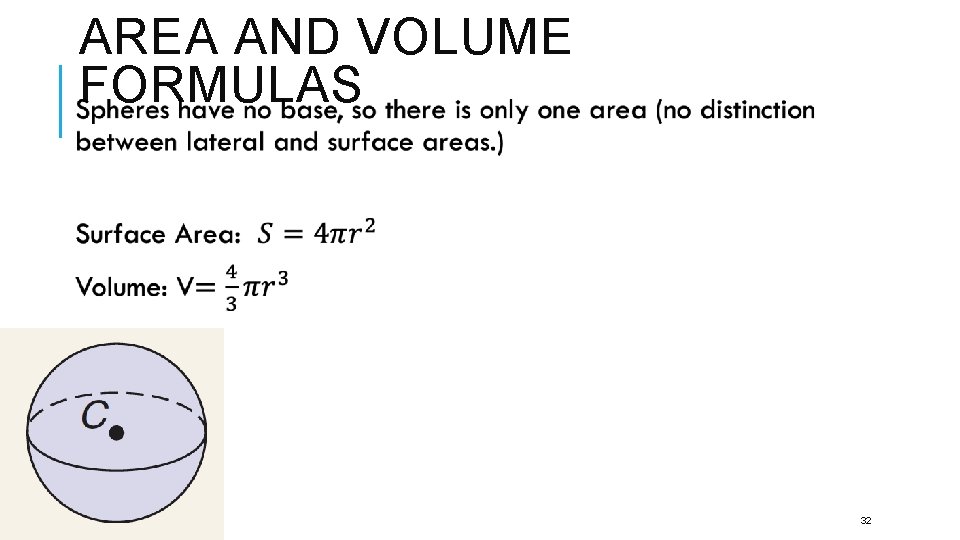
AREA AND VOLUME FORMULAS 32
33
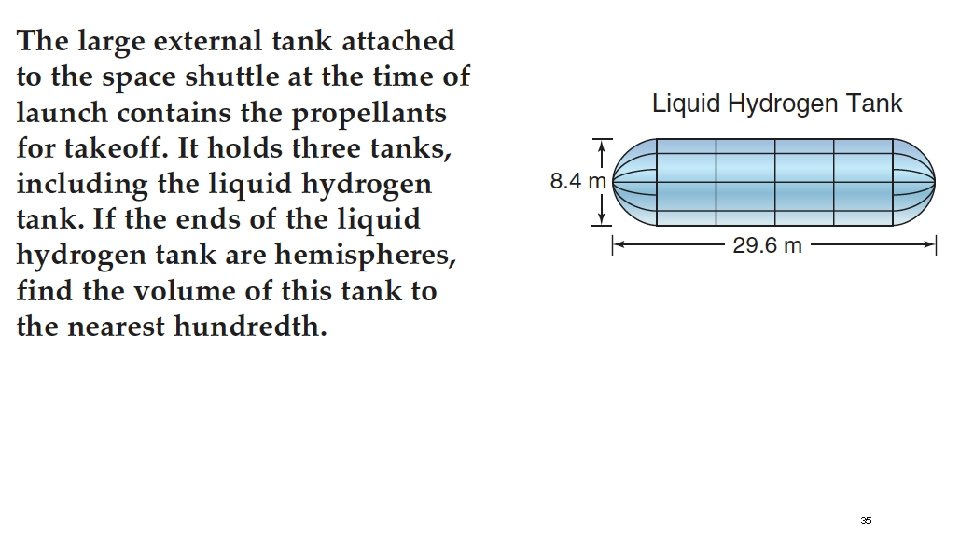
AREA AND VOLUME OF COMPOSITE SOLIDS To find the area or volume of composite solids, calculate the area or volume of the individual solids they are made up of and add them together. 34
35
12. 8 – CONGRUENT AND SIMILAR SOLIDS
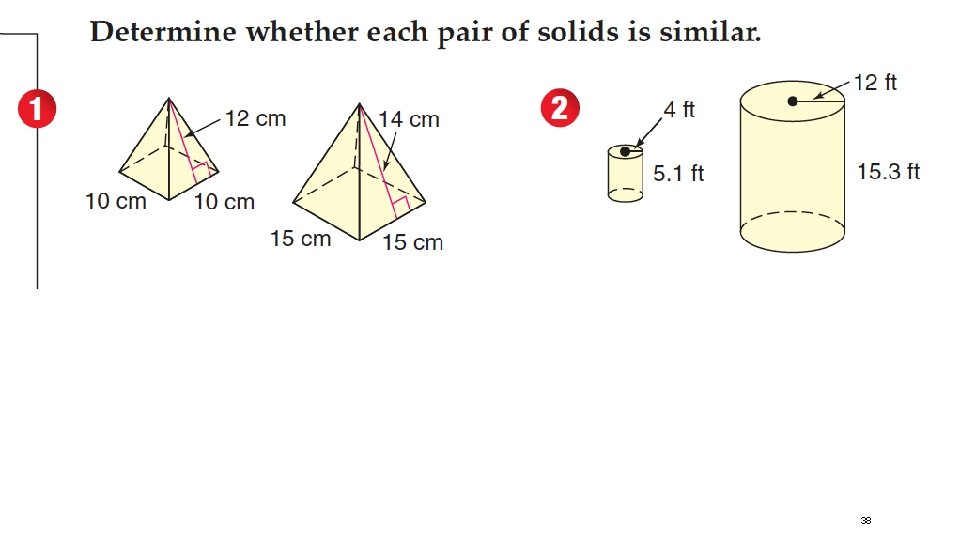
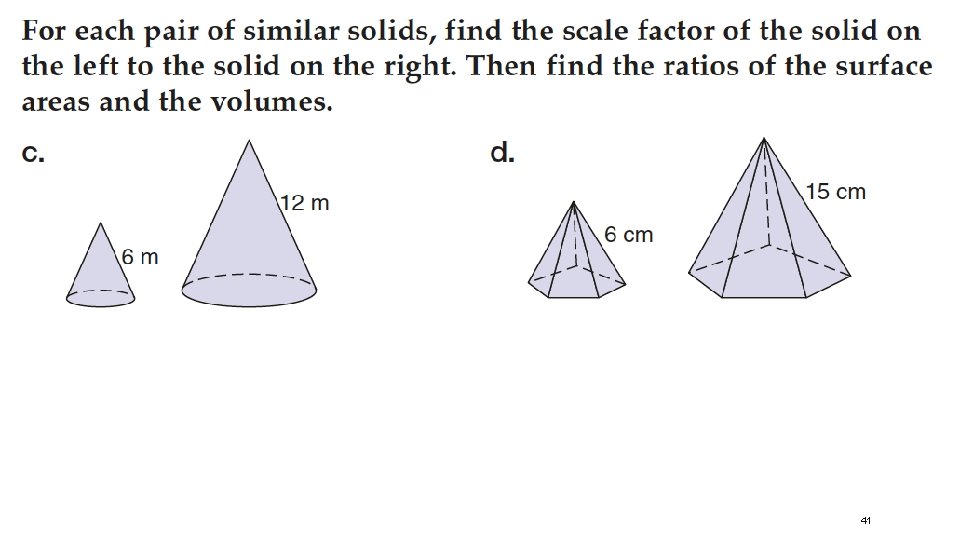
SIMILAR SOLIDS Just like similar figures, similar solids have the same shape, but not the same size. All their measures are proportional. 37
38
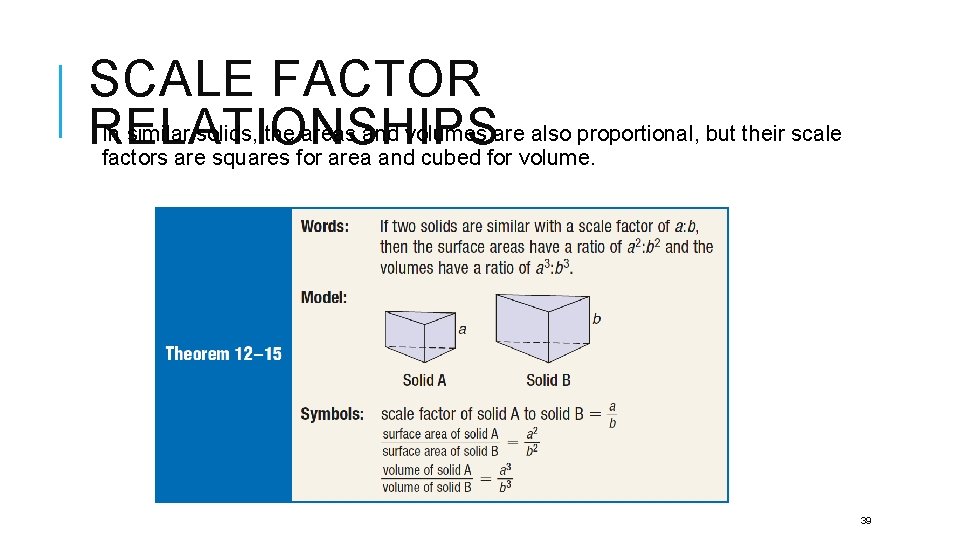
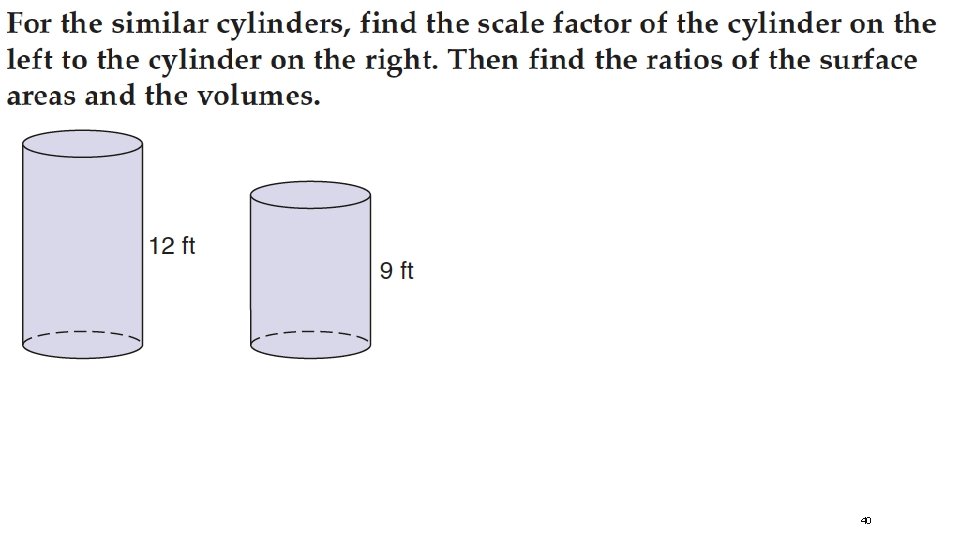
SCALE FACTOR In similar solids, the areas and volumes are also proportional, but their scale RELATIONSHIPS factors are squares for area and cubed for volume. 39
40
41