Ch 10 Foundations of Genetics Part 1 q
- Slides: 83
Ch. 10 – Foundations of Genetics Part 1 q Please use my notes for this chapter. q Textbook - What is Life? Jay Phelan
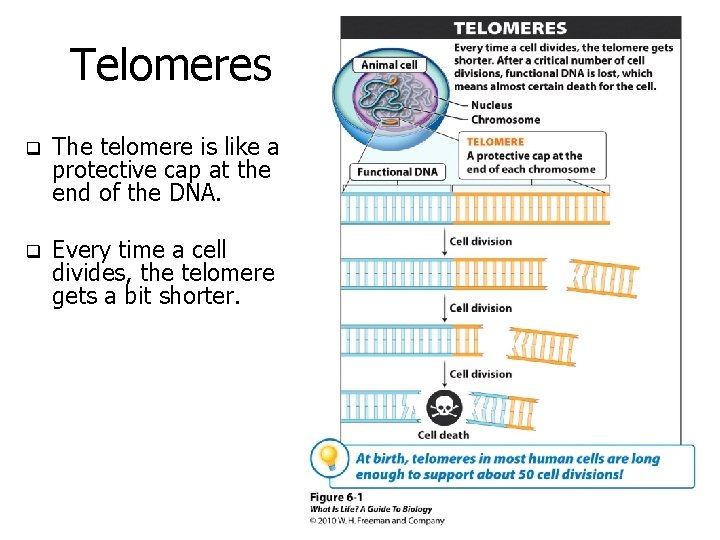
More about DNA - • New term - telomere • Just as a car comes with an odometer, which keeps track of how far the car has been driven, animal cells have a mechanism that keeps track of how many times the cell has divided. It’s a section of DNA, called the “telomere, ” at the tip of every chromosome.
What is the telomere - • Every time a cell divides, the telomere gets a bit shorter. Occurring right next to the valuable DNA sequences that specify genes, the telomere is like a protective cap at the end of the DNA.
Textbook - What is Life? Jay Phelan q But after some critical number of cell divisions, with the telomere getting shorter and shorter each time, any additional cell divisions will cause the loss of functional, essential DNA, which means almost certain death for the cell.
Telomeres q The telomere is like a protective cap at the end of the DNA. q Every time a cell divides, the telomere gets a bit shorter.
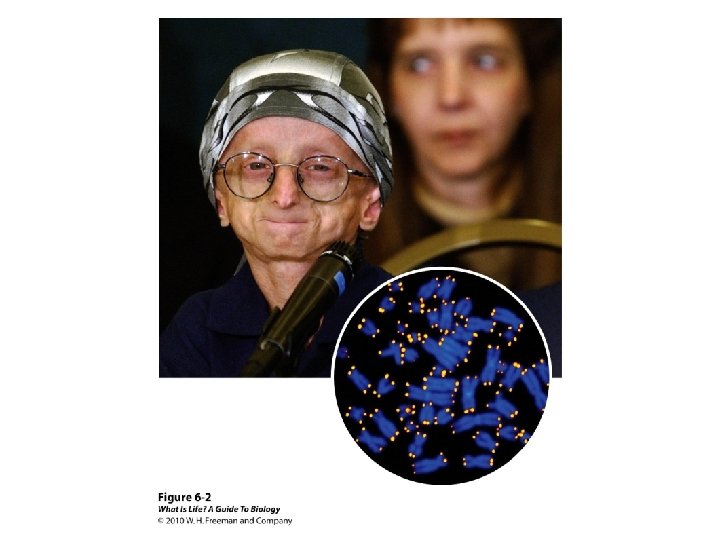
A good example - • At birth, the telomeres in most human cells are long enough to support about 50 cell divisions. Occasionally, however, people are born with telomeres that are much shorter than normal. In these people, their cells and tissue begin to appear aged very soon after birth (Figure 6 -2 Just a child). As a consequence, they rarely live beyond the age of 13.
A youth fountaion? • Just as someone might think it a good idea to disconnect their car’s odometer, they might think that disconnecting the cellular odometer would be an effective strategy for allowing the cell to function effectively for a longer time than normal. • A fountain of youth, even. It’s not.
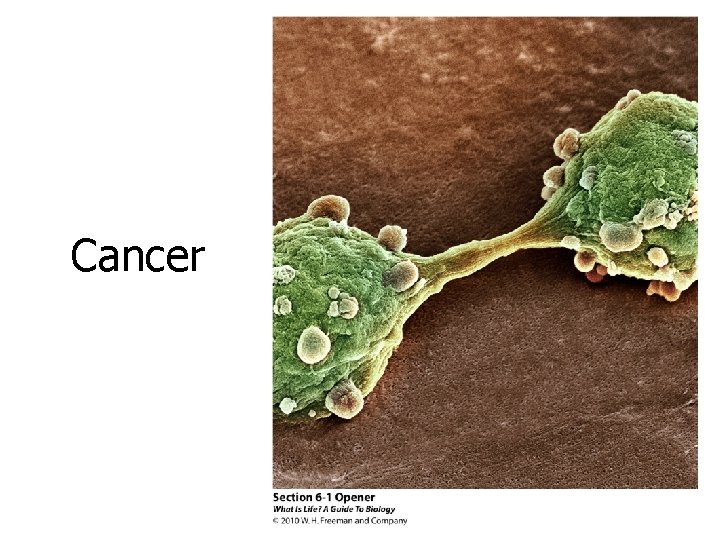
Cancer - • We know this because there are in fact some cells with a sort of disconnected odometer. These are cells that rebuild their telomeres after each cell division, restoring the protective cap. • Unfortunately, most cells that rebuild their telomeres with each cell division have a big problem: they don’t know when to stop dividing. There is a word for such cells: cancer.
Cancer
A little more about chromosomes - Some chromosomes are circular, others are linear.
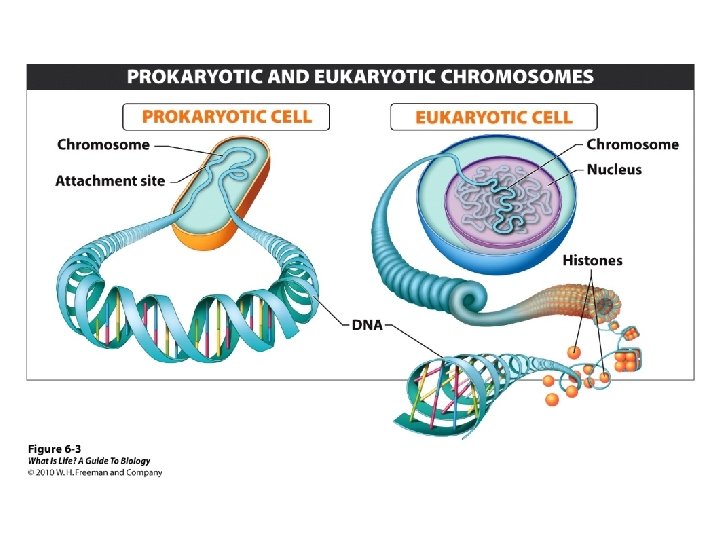
Bacteria + Prokaryotes - • In most bacteria and the other prokaryotes, the genetic information is carried in a single, round chromosome, a circular strand of DNA that is attached to the cell membrane at some point.
Eukaryotes - • Eukaryotes, on the other hand, have much more DNA than bacteria and organize it into free-floating linear chromosomes within the nucleus. • There may be as few as two of these or as many as a thousand. Usually the number is between 10 and 50.
Chromosomes - • The most important part of a eukaryotic chromosome is the DNA. It carries the actual information about how to carry out the processes needed for life. But eukaryotic chromosomes are made of more than just DNA. • Chromosomes =chromatin =40% DNA + 60% protein
New term – histones • The long, linear strand is wrapped around little proteins called histones, which keep the DNA from getting tangled and enable an orderly, tight, and efficient packing of the DNA within the cell. • Your textbook – p. 157
In summary - q In prokaryotes, genetic information is carried in a single, circular chromosome. q This strand of DNA is attached at one site to the cell membrane.
In summary - q Eukaryotes have much more DNA. q In eukaryotes, genetic information is organized into linear chromosomes. q Eukaryotic nucleus. chromosomes float freely in the
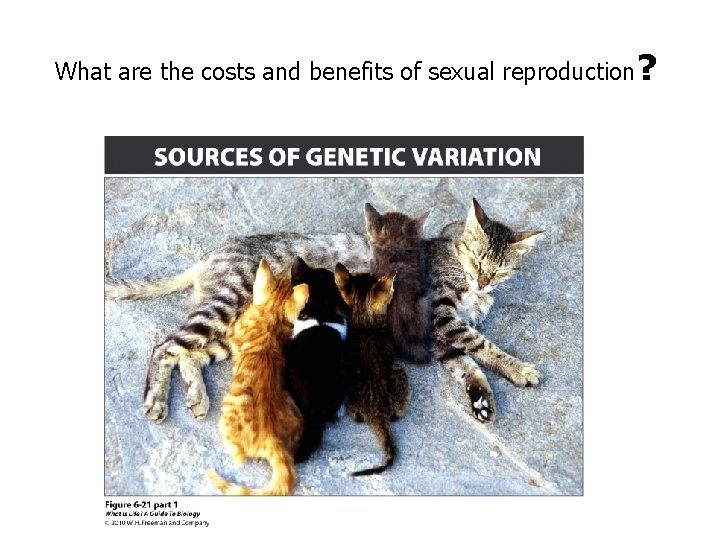
What are the costs and benefits of sexual reproduction?
Sexual reproduction vs. Asexual reproduction • There are fundamentally different ways that cells and organisms can reproduce. • On one hand there is mitosis and asexual reproduction via binary fission. On the other hand there is meiosis and sexual reproduction. Is one method better than the other?
Sexual reproduction vs. Asexual reproduction • It depends. In fact, the more appropriate question is: what are the advantages and disadvantages of each and under what conditions do the benefits outweigh the costs?
Sexual reproduction advantages? q Sexual reproduction leads to offspring that are all genetically different from each other and from either parent in three different ways: 1. Crossing over in the production of gametes 2. Shuffling and reassortment of homologues during meiosis 3. Combining alleles from two parents at fertilization
Bacteria reproduce asexually, while most plants and animals reproduce sexually. Which is a better method?
Sexual reproduction advantages? • The variability among the offspring produced by sexual reproduction enables populations of organisms to better cope with changes in their environment. After all, if the environment is gradually changing from one generation to the next, individuals producing many offspring increase the likelihood that one of their offspring will carry a set of genes particularly suited to the new environment.
A good example - • It’s like buying lottery tickets—the more different tickets that you buy, the more likely one of them will be a winner. Over time, populations of sexually reproducing organisms can quickly adapt to changing environments.
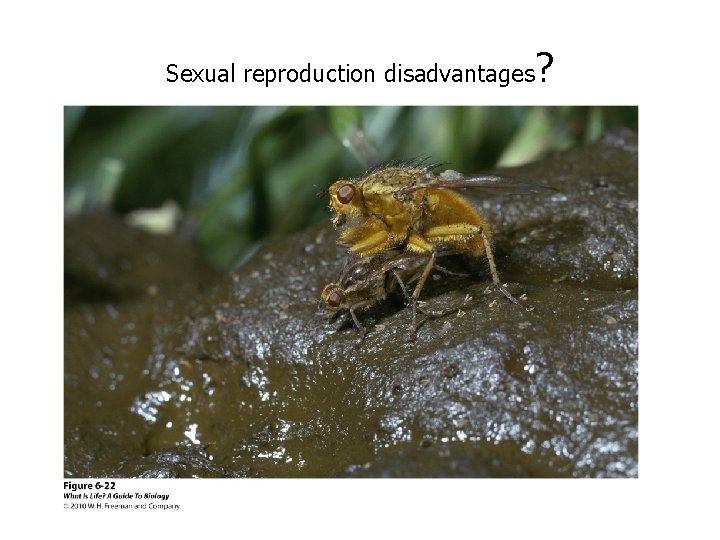
A good example - 1. In the yellow dung fly (Scathophaga stercoraria), males will sometimes wrestle with each other for mating access to a female. 2. She awaits the outcome of the battle in the same pile of dung. Occasionally, though, females drown in the dung pile as they wait. This is but one illustration that there is a downside to sexual reproduction. There are several others. 3. First, when one parent reproduces, only half of its offsprings’ alleles will come from that organism.
A good example - 4. The other half will come from the other parent. With asexual reproduction, parents produce identical offspring—their genetic makeup is virtually identical to the parent’s—a very efficient transfer of genetic information from one generation to the next. It also takes time and energy to find a partner. This is energy that asexual organisms can devote to additional reproduction. 5. Moreover, as we see with the dung flies, sex can be a risky proposition because organisms make themselves vulnerable to predation, disease, and other calamities during reproduction.
Sexual reproduction disadvantages ?
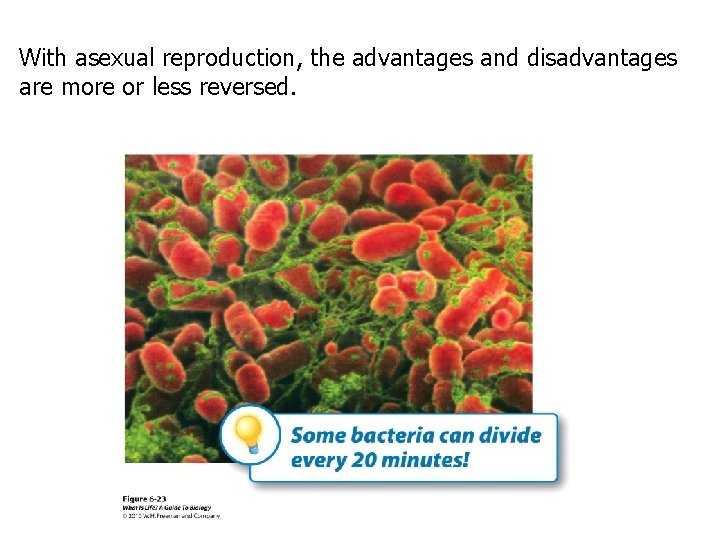
With asexual reproduction, the advantages and disadvantages are more or less reversed.
Asexual reproduction - Advantages Asexual reproduction involves only a single individual, it can be fast and easy. Some bacteria can divide, forming a new generation every 20 minutes. It is efficient, too. Offspring carry all of the genes that their parent carried —they are genetically identical. If the environment is stable, it is beneficial for organisms to produce offspring as similar to themselves as possible. •
Disadvantages - • The downside to asexual reproduction is that the more closely an offspring’s genome resembles its parent’s, the less likely it is that the offspring will be suited to the environment when it changes.
Conclusion - • In the end, we still see large numbers of species using asexual reproduction and large numbers, including the vast majority of animals and plants, that reproduce sexually. It seems that the conditions favoring each occur in the great diversity of habitats of the world. That we see both sexual and asexual reproduction also highlights the recurring theme in biology that there often is more than one way to solve a problem.
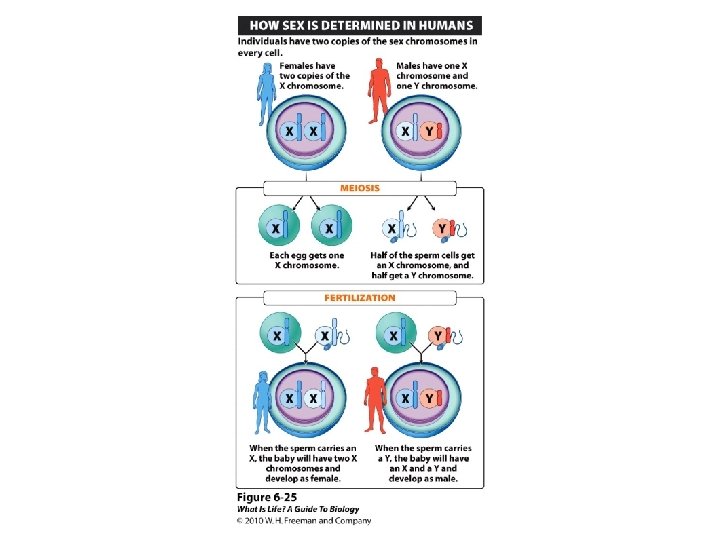
How is sex determined in humans? In humans the sex of a baby is determined by its father. Which parent determines the sex of their baby? Why?
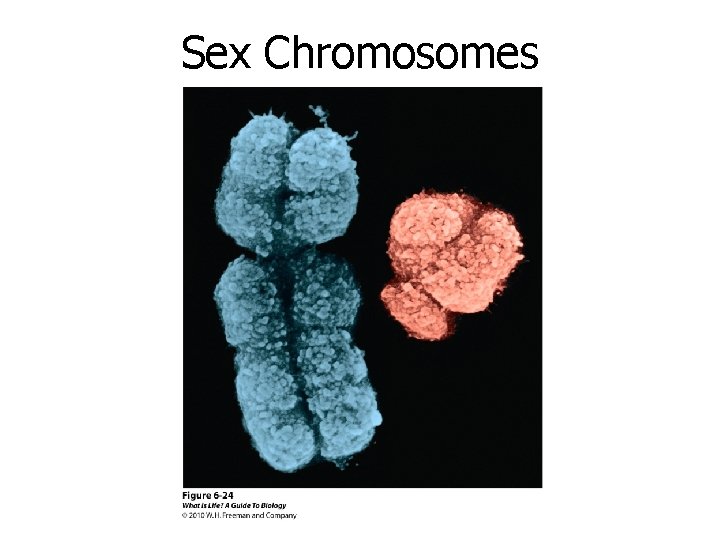
Sex Chromosomes
Father determines the sex of the baby. How? q During meiosis in females, the gametes that are produced carry only one copy of each chromosome. This is true for the sex chromosomes too. So from the two copies of the X chromosome carried by females, half of the gametes end up with a copy of one of those X chromosomes while the rest of the gametes inherit the other X chromosome. Thus, every egg has an X for its one sex chromosome.
Males - q During meiosis in males, the sperm that are produced also carry one copy of each chromosome, including the sex chromosomes, but in this case, half of the sperm produced inherit the X chromosome and the other half inherit the Y chromosome.
Fertilization - • At fertilization, an egg bearing a single X chromosome (and one copy of all the non-sex chromosomes) is fertilized by a sperm bearing one copy of all the non-sex chromosomes and either an X chromosome or a Y chromosome. When the sperm carries an X, the baby will have two X chromosomes and will develop as a female. When the sperm carries a Y, the baby will have an X and a Y and so will develop as a male.
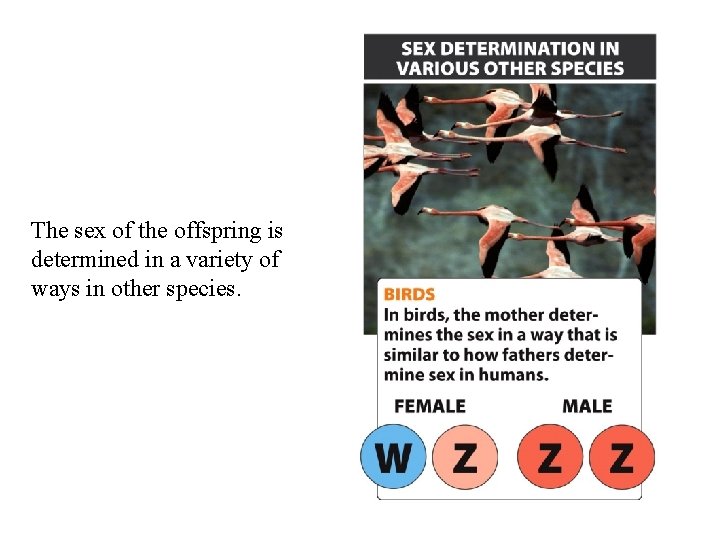
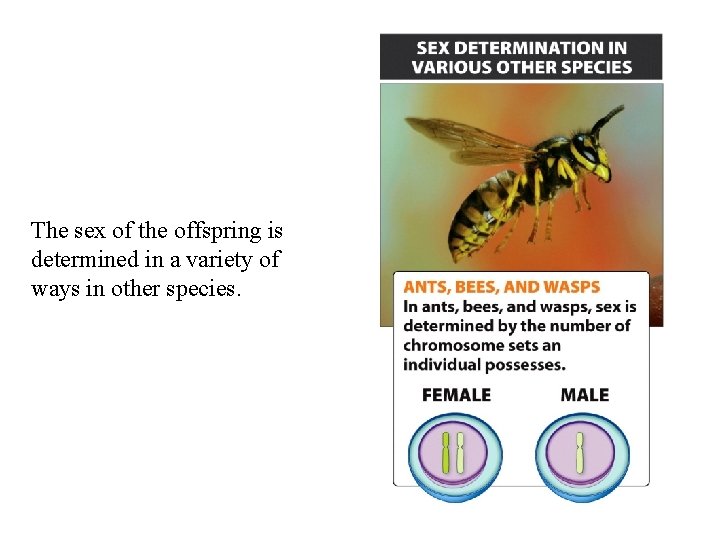
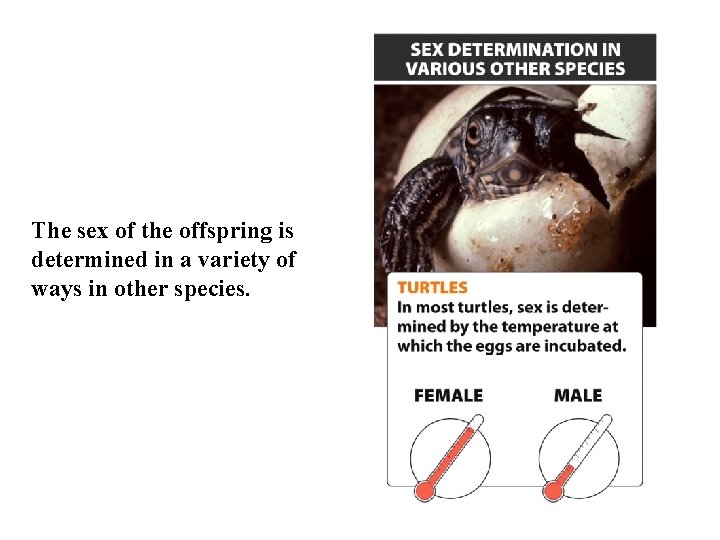
The sex of the offspring is determined in a variety of ways in other species.
Hermaphrodites - • In most plants there aren’t even distinct males and females. • In corn, for example, every individual produces both male and female gametes. In earthworms and garden snails as well, male and female gametes are produced by the same individuals, called hermaphrodites.
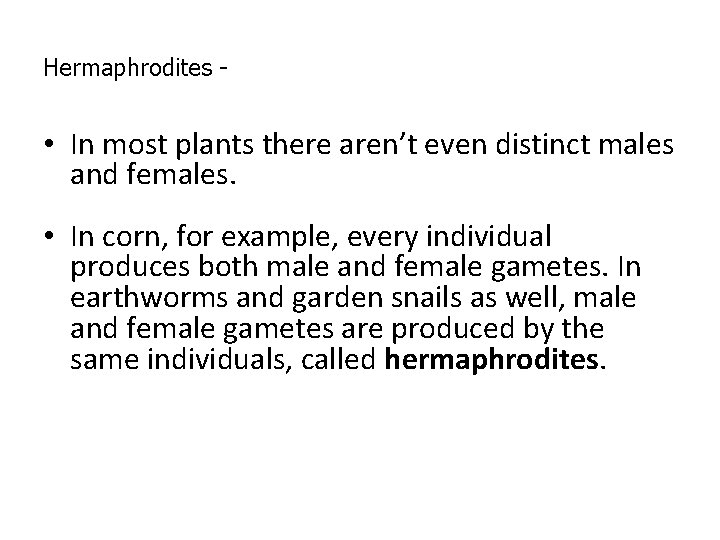
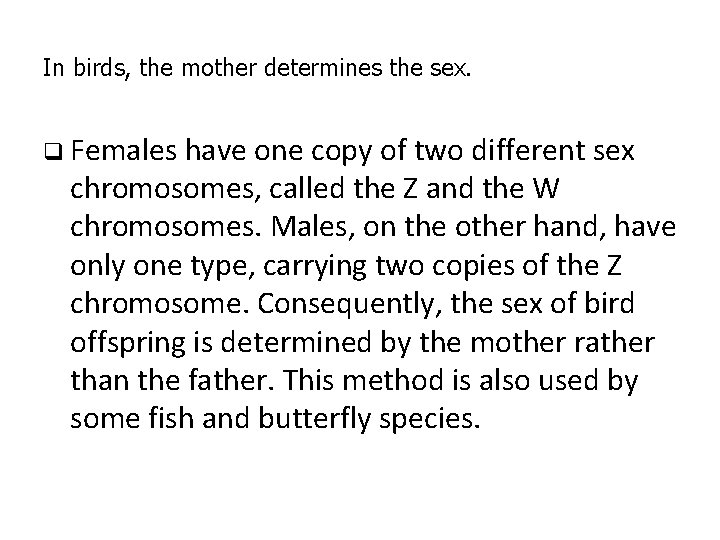
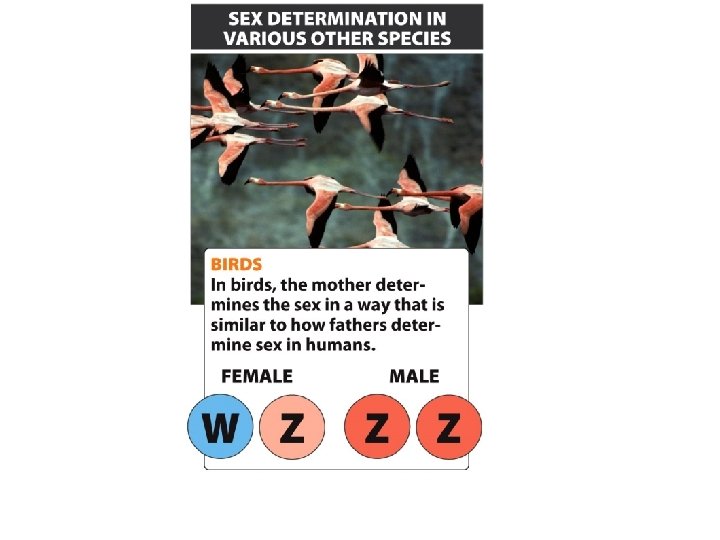
In birds, the mother determines the sex. q Females have one copy of two different sex chromosomes, called the Z and the W chromosomes. Males, on the other hand, have only one type, carrying two copies of the Z chromosome. Consequently, the sex of bird offspring is determined by the mother rather than the father. This method is also used by some fish and butterfly species.
Ants, bees, and wasps - q Sex determination by the number of chromosome sets: Among the ants, bees, and wasps, it is the number of chromosome sets that an individual has that determines the individual’s sex. q Males are haploid, having only a single set of chromosomes, and females are diploid, carrying two full sets of chromosomes.
The sex of the offspring is determined in a variety of ways in other species.
Interesting - • In this unusual method, females produce haploid eggs via meiosis. They then mate with males and store the sperm in a special sac. As each egg is produced the female can allow it to be fertilized by some of the sperm she has stored—in which case the offspring will be diploid and female. Alternatively, she can lay the unfertilized egg, which can actually develop into a haploid, male individual. Just think, in these species, males don’t have a father, yet they do have a grandfather! •
Turtles: sex determination by egg incubation temperature. 1. In some species, sex determination is controlled environmentally rather than chromosomally. 2. In most turtles, for example, eggs that are kept relatively hot during incubation become females, while the eggs incubated at slightly cooler temperatures become males. 3. Many lizards and a few snake species also have this form of sex determination.
The sex of the offspring is determined in a variety of ways in other species.
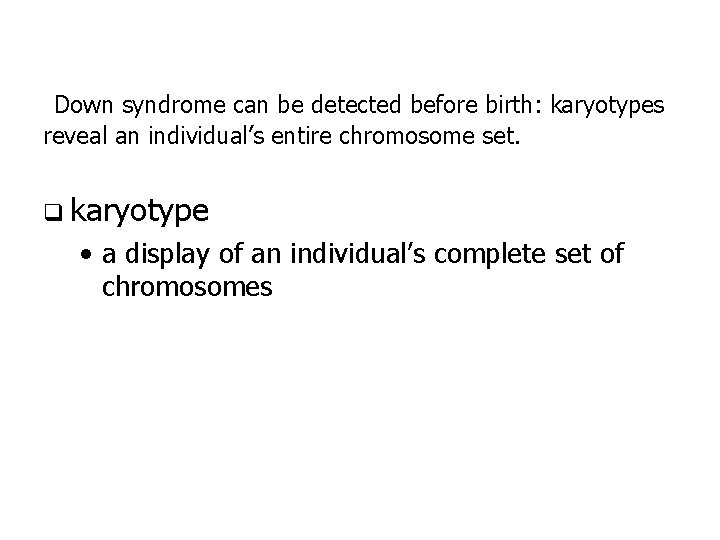
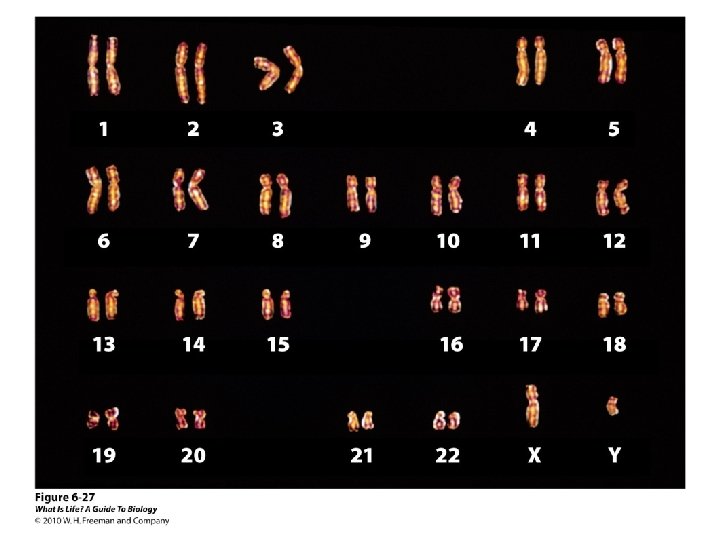
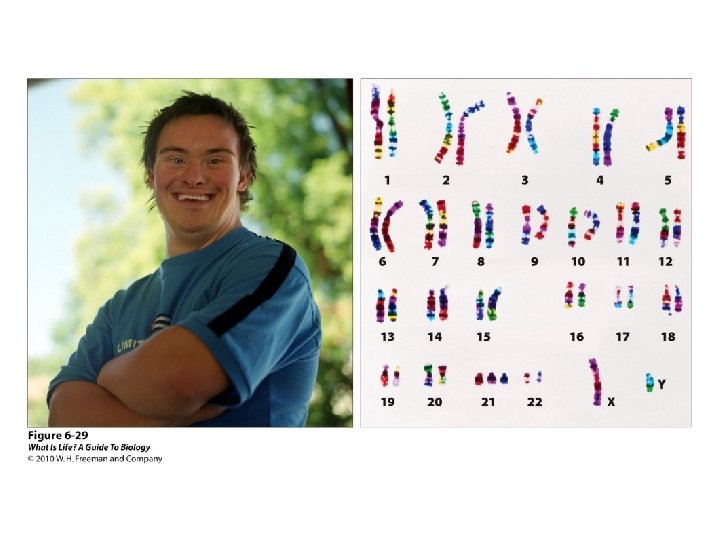
Down syndrome can be detected before birth: karyotypes reveal an individual’s entire chromosome set. q karyotype • a display of an individual’s complete set of chromosomes
FYI - Preparing a karyotype takes 5 steps - • 1) First it is necessary to obtain some cells from the individual. 2) The cells are then encouraged to divide by being cultured in a test tube with nutrients. 3) After a few days to two weeks of cell division, the cells are treated with a chemical that stops them exactly midway through cell division—a time when the chromosomes are coiled thickly and more visible than usual.
FYI - 4 -5 steps - • 4) Then the cells are placed on a microscope slide making them visible. • 5) And finally, the chromosomes are arranged by size and shape and displayed or photographed.
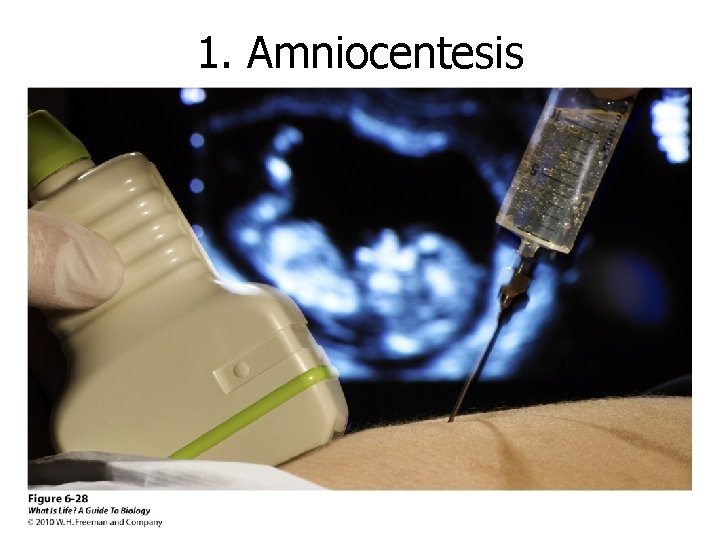
1. Amniocentesis
Amniocentesis - • This procedure can be done approximately four months into a pregnancy. In one quick motion (and without using anesthetic), a three- to four-inch needle is pushed through the abdomen, through the amniotic sac, and into the amniotic fluid, which surrounds and protects the fetus.
Amniocentesis - • Using ultrasound for guidance, the doctor aims for a small pocket of fluid as far as possible from the fetus and withdraws about two tablespoons of fluid. This fluid contains many cells from the fetus, which can then be used for karyotype analysis. Any chromosomal abnormalities in the fetus will be present in these cells.
2. Chorionic Villus Sampling (CVS) 1. 2. 3. Tissue is removed from the placenta. Because the fetus and placenta both develop from the same fertilized egg, their cells contain the same genetic composition. Can be done several weeks earlier in the pregnancy, usually between the 10 th and 12 th weeks.
FYI - CVS In this procedure, rather than sampling cells from the amniotic fluid, a small bit of tissue is removed from the placenta, the temporary organ that allows the transfer of gases, nutrients, and waste products between a mother and fetus. Specifically, a needle is inserted either through the abdomen or through the vagina and cervix, again using ultrasound for guidance.
CVS - • Then a small piece of the finger-like projections from the placenta are removed via the syringe. • Because the fetus and placenta both develop from the same fertilized egg, their cells contain the same genetic composition. The chief advantage of CVS over amniocentesis is that it can be done several weeks earlier in the pregnancy, usually between the 10 th and 12 th weeks of the pregnancy.
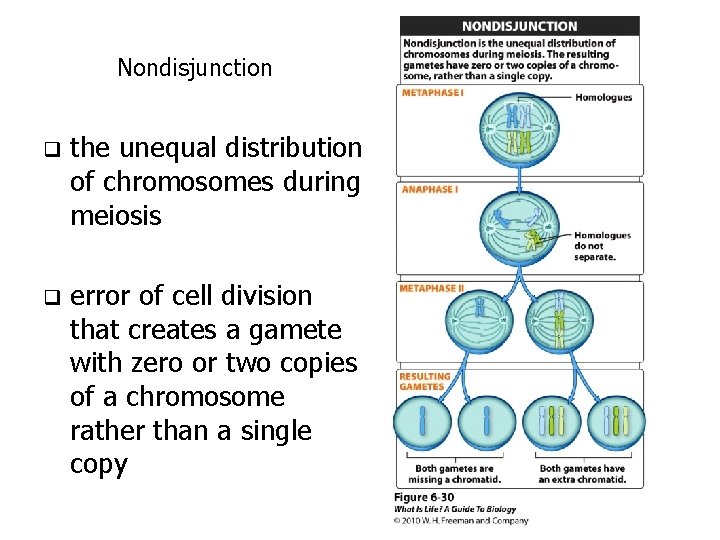
Nondisjunction q the unequal distribution of chromosomes during meiosis q error of cell division that creates a gamete with zero or two copies of a chromosome rather than a single copy
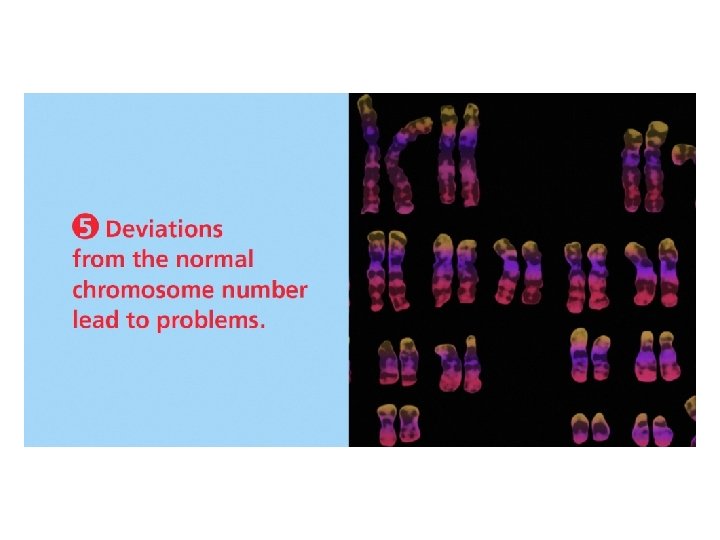
Down syndrome - q The resulting karyotype, whether from amniocentesis or CVS, will reveal whether the fetus carries an extra copy of any of the chromosomes or is perhaps lacking a copy of one or more chromosomes. Of all the chromosomal disorders detected by karyotyping, Down syndrome is the most commonly observed.
John Langdon Down - • Named after John Langdon Down, the doctor who first described it in 1866, it is revealed by the presence of an extra copy of chromosome #21. Striking about 1 out of every 1000 children born, Down syndrome is characterized by a suite of physical and mental characteristics that includes learning disabilities, a flat facial profile, heart defects, and increased susceptibility to respiratory problems.
Nondisjunction- q Down syndrome and other disorders caused by a missing chromosome or an extra copy of a chromosome are a consequence of nondisjunction, the unequal distribution of chromosomes during meiosis. This generally results from an error of cell division during the production of the egg or sperm that creates a gamete with zero or two copies of a chromosome rather than a single copy.
Trisomy - • Each of the chromosomes is approximately equally likely to fail to separate during cell division, but the ramifications of trisomy are greater for chromosomes with larger numbers of genes. When they occur, the likelihood that the developing embryo survives to birth is significantly reduced. Consequently, we tend to only see cases of trisomy involving the smallest chromosomes, with the fewest genes, such as 13, 15, 18, 21, and 22.
FYI - Trisomy - • In fact, actual observations show that trisomy 1 is never seen (all such zygotes die before implantation), trisomy-13 occurs in 1/20, 000 newborns (and most die), while trisomy 21 occurs in 1/1000 newborns (and many live long lives).
Life is possible with too many or too few sex chromosomes.
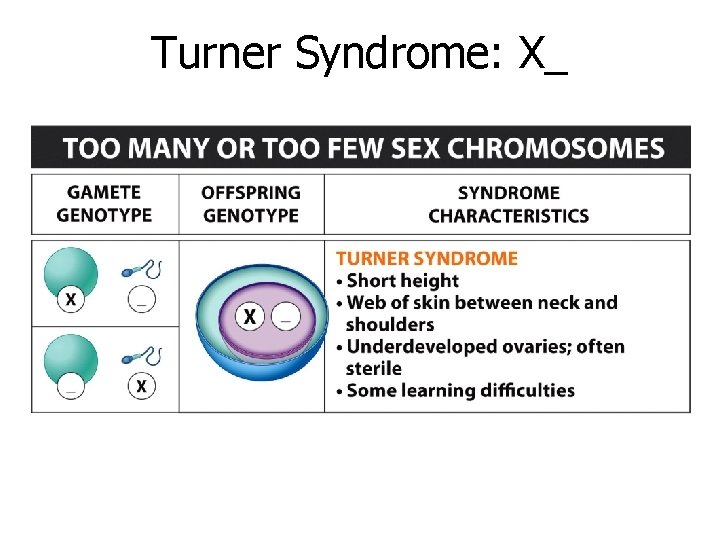
Turner Syndrome: X_
Turner syndrome: X_ • Approximately one out of 5000 females carries only one X chromosome and no Y chromosome, exhibiting a condition called Turner Syndrome. This condition, written as X_, is the only condition in humans in which a person can survive without one of the pair of chromosomes. Instead of having 46 chromosomes in every cell, these individuals have only 45.
Turner syndrome: X_ • As common as Turner Syndrome appears, 98% of the time this condition occurs the fertilized egg is spontaneously aborted long before a baby can come to term. There are both physical and mental consequences of the absence of a second sex chromosome:
Turner syndrome: X_ 1. • They are usually relatively short, averaging 4 feet 8 inches in height. 2. • They develop a web of skin between their neck and shoulders. 3. • The ovaries never fully mature, so the woman is almost always sterile. 4. • The breasts and other secondary sex characteristics develop incompletely. 5. • While intelligence is usually normal, some learning difficulties are common.
Klinefelter Syndrome: XXY
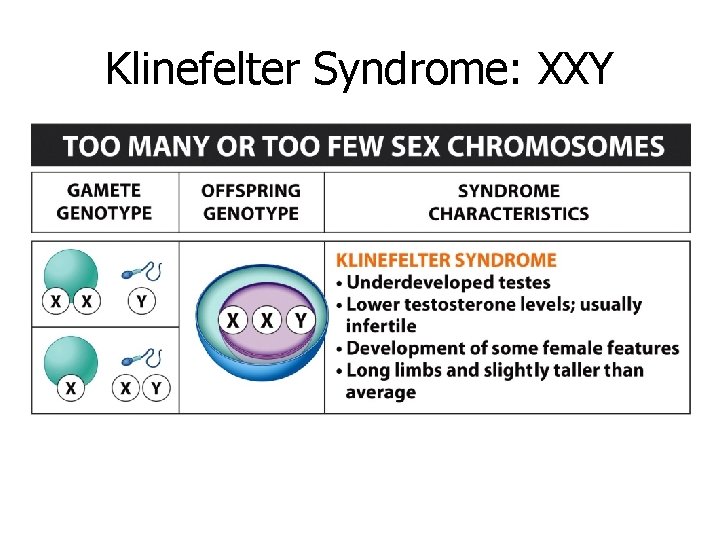
Klinefelter syndrome - XXY • An individual who has two X chromosomes is female. And an individual with an X and a Y is male. But what happens when both of those conditions are true? When an individual carries two X chromosomes and a Y chromosome, a condition known as Klinefelter syndrome, he develops as male.
Klinefelter syndrome - XXY This is because, as we saw earlier, the Y chromosome carries genetic instructions that, if present, cause fetal gonads to develop as testes and, if absent, result in the fetal gonads developing as ovaries. The extra X chromosome, however, does cause Klinefelter males to be a bit more feminized, although this can be reduced through treatments such as testosterone supplementation.
Klinefelter syndrome - XXY Approximately one out of 1000 males, has the genotype XXY, making it one of the most common genetic abnormalities in humans. Klinefelter syndrome has physical and mental consequences: The individual has testes but they are smaller than average.
Klinefelter syndrome - XXY Due to their small testes, they have low levels of testosterone and are almost always infertile. They develop some female features, including reduced facial and chest hair, and some breast development. They have long limbs and are slightly taller than average (about 6' on average).
Klinefelter syndrome - XXY They learn to speak at a later age and tend to have language impairments. • • Sometimes individuals have additional X chromosomes, exhibiting the karyotypes XXXY or even XXXXY. These individuals also exhibit Klinefelter syndrome but more frequently have mental retardation.
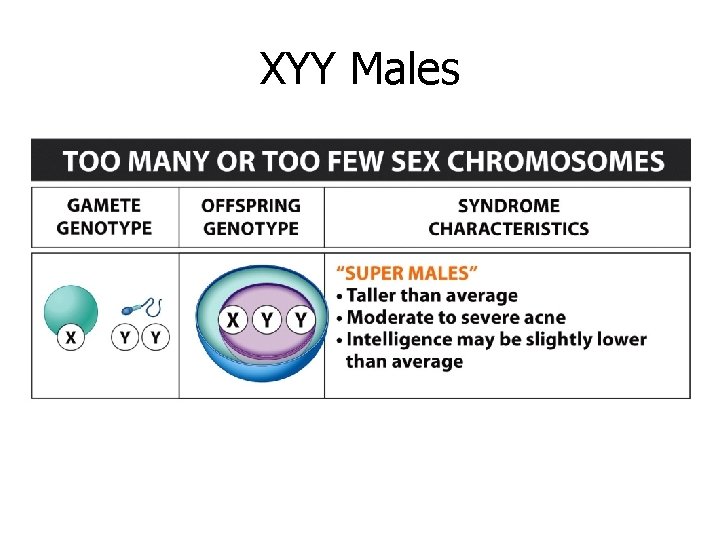
XYY Males
XYY males –super males • There is no official name for the condition in which an individual has one X chromosome and two Y chromosomes, although they are sometimes referred to as “super males. ” The chromosomal abnormality occurs in approximately one out of every 1000 males (and about one in 325 males who are 6' or taller).
XYY males –super males • Because in the United States there about 20 times as many XYY males found in prisons than in the population as a whole, there has been tremendous controversy whether the extra Y chromosome predisposes individuals to criminal behavior.
XYY males –super males Because these observations were not part of randomized, controlled, double-blind experiments, however, they are open to numerous alternative interpretations. One large study, for example, concluded that the increased representation of XYY males in prison was more likely due to the fact that taller males and males of lower intelligence
XYY males –super males are more likely to be apprehended, regardless of which chromosomes they carry. In any case, the controversy remains unresolved and the majority of XYY males are not in prison.
XXX Females
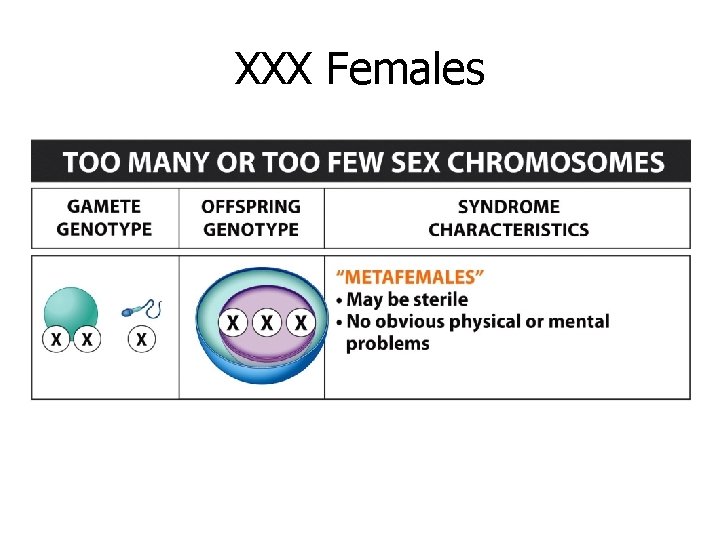
XXX females – metafemales - Sometimes called “metafemales, ” individuals with three X chromosomes occur at a frequency of about one per 1000 women. Very few studies of this condition have been completed, although initial observations suggest that some XXX females are sterile but otherwise have no obvious physical or mental problems.