
Social Emotional Foundations for Early Learning SEFEL Mindful
- Slides: 54
Social Emotional Foundations for Early Learning (SEFEL): Mindful Coaching June 27, 2013 Department of Public Instruction Office of Early Learning Preschool Exceptional Children Program
Welcome!
Objectives Participants will learn: 1. The definition of ‘mindful coaching’ 2. Key tenants of mindfulness and self awareness 3. Six voices or roles of a coach 4. The coaching cycle and tools to support these practices 5. The measurement tools used in the SEFEL project
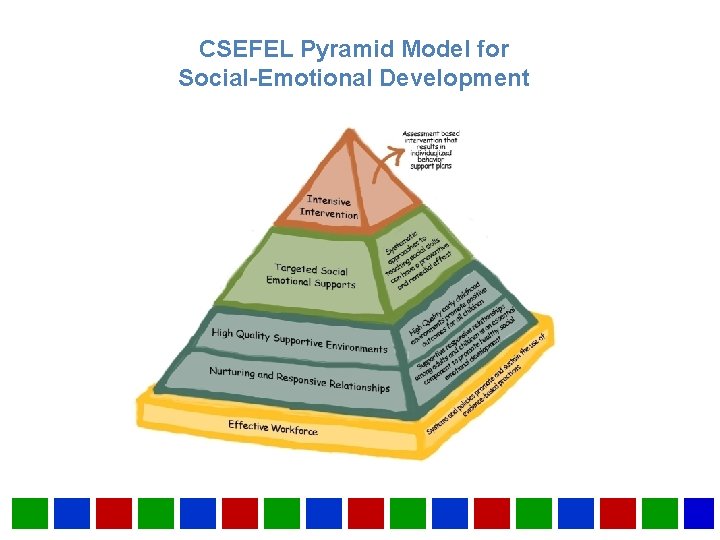
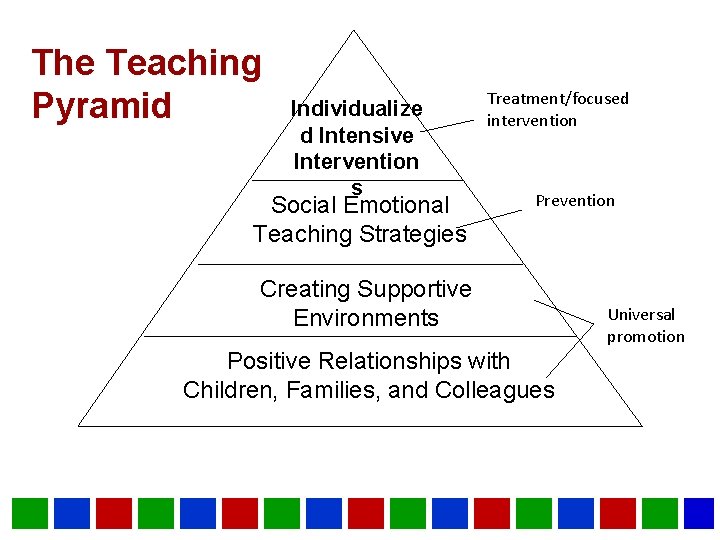
CSEFEL Pyramid Model for Social-Emotional Development
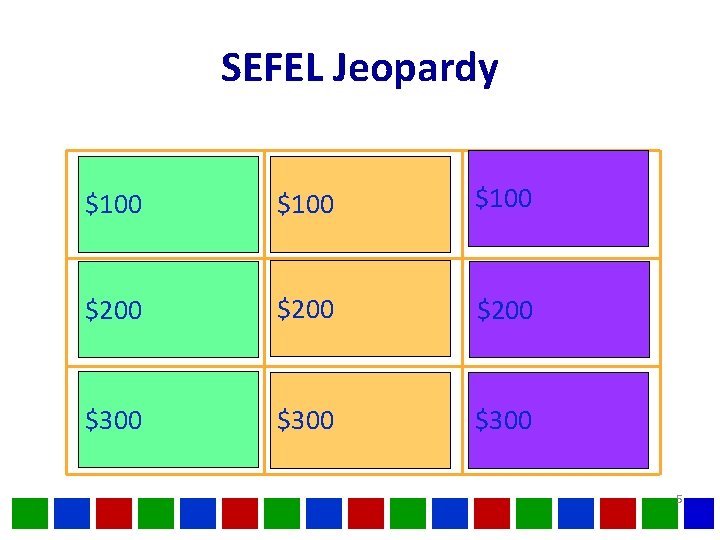
SEFEL Jeopardy Emotional $100 literacy Morning Picture $100 Greeter Apron Schedules Meaningful $200 jobs Tucker the $200 Turtle Behavior $200 Support Plan $300 Solution kit Classroom $300 Rules Building the $300 school with kindness 5
The Teaching Pyramid Individualize d Intensive Intervention s Social Emotional Teaching Strategies Treatment/focused intervention Prevention Creating Supportive Environments Positive Relationships with Children, Families, and Colleagues Universal promotion
Discussion Question According to CSEFEL, ‘Typically about 10% of the preschool children in group care described as having challenging behaviors. When developmentally appropriate, preventive strategies in the bottom levels of the triangle are practiced consistently, the percentage drops to 4%. So, only 4% actually need a behavior intervention plan. ’ • Do you agree? How does this statement compare with the children in classrooms you’ve taught/observed?
Why do we exist? • Why SEFEL? – To improve social-emotional outcomes for children in early care and education • Why SEFEL coaching? – To increase the likelihood that teachers will implement SEFEL strategies effectively
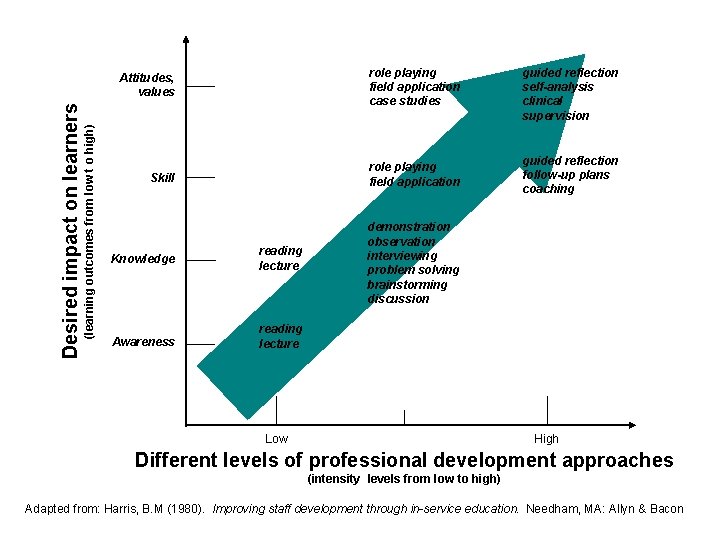
(learning outcomes from low t o high) Desired impact on learners Attitudes, values role playing field application case studies Skill role playing field application Knowledge reading lecture demonstration observation interviewing problem solving brainstorming discussion Awareness reading lecture Low guided reflection self-analysis clinical supervision guided reflection follow-up plans coaching High Different levels of professional development approaches (intensity levels from low to high) Adapted from: Harris, B. M (1980). Improving staff development through in-service education. Needham, MA: Allyn & Bacon
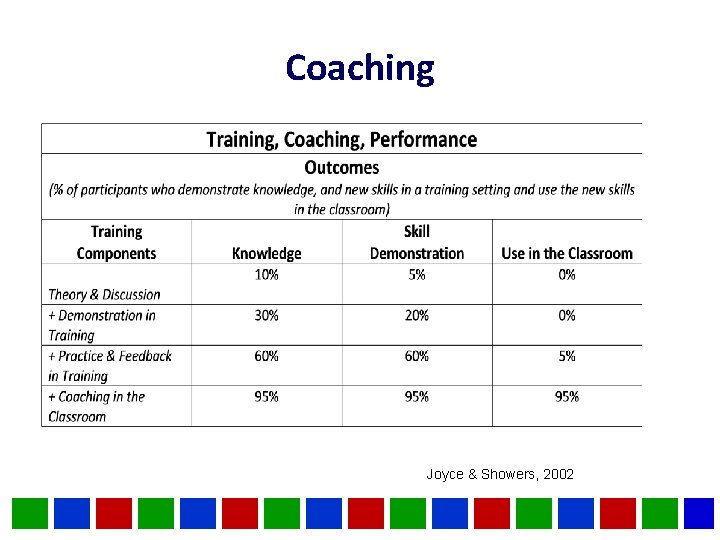
Coaching Joyce & Showers, 2002
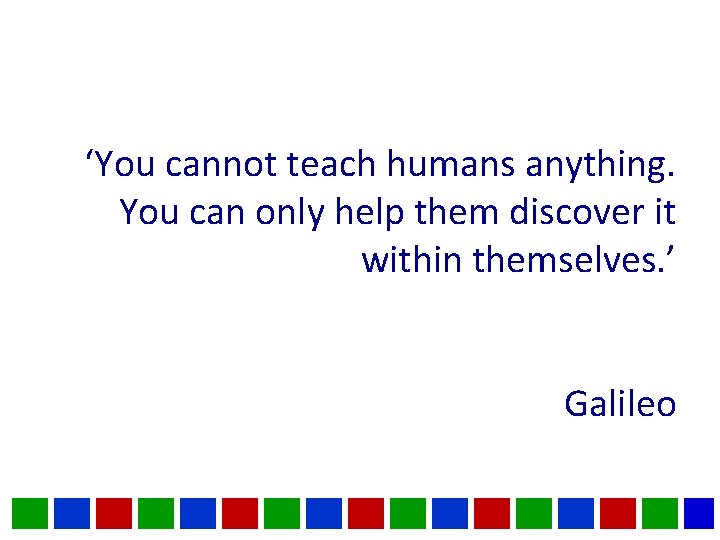
‘You cannot teach humans anything. You can only help them discover it within themselves. ’ Galileo
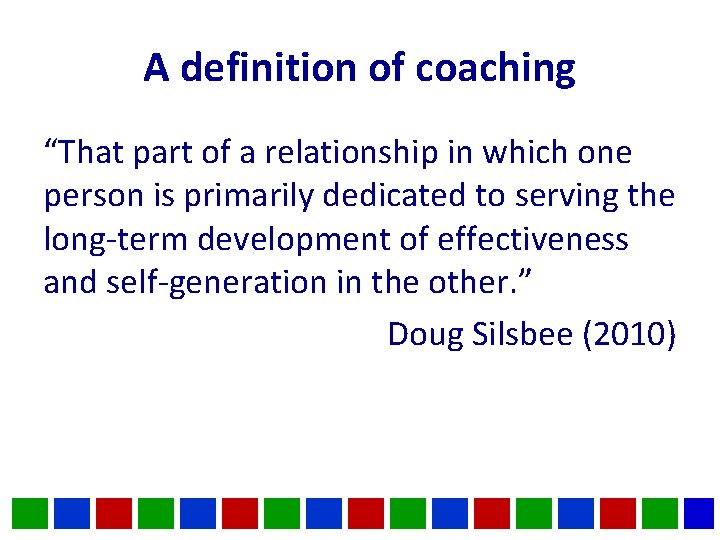
A definition of coaching “That part of a relationship in which one person is primarily dedicated to serving the long-term development of effectiveness and self-generation in the other. ” Doug Silsbee (2010)
“Service is the rent we pay to be living. It is the very purpose of life and not something you do in your spare time. ” Marian Wright Edelman
Small group discussion • Have you ever received coaching – either formally or informally? • How does this definition fit with your experience?
A definition of coaching “That part of a relationship in which one person is primarily dedicated to serving the long-term development of effectiveness and self-generation in the other. ” Doug Silsbee (2010)
Large group discussion • How does Silsbee’s definition fit with your personal definition of coaching? • With your own experience? • Have any of these definitions evolved over time?
Small group discussion Coaching/Non-coaching relationships • Think about a person you are coaching • What other relationships do you have with that person?
Helping someone think about options A. True B. False
Asking questions to encourage new thoughts A. True B. False
Lecturing about a prescribed solution A. True B. False
Conducting an annual performance review A. True B. False
Outlining a strategy for others to follow A. True B. False
Modeling a classroom strategy A. True B. False
Delegating tasks A. True B. False
The Mindful Controller “Mindfulness is the inner state in which we can observe ourselves in action. ” “It is the state of being aware of our own sensations, thoughts, feelings, and judgments. ” Mindful self-awareness is the starting point in serving our clients well. ”
Activity: Listening Exercise • • • Pair up Select a speaker and a listener Speaker describes their best vacation Listener must not say anything When facilitator calls time, the listener must repeat what was said to the speaker – How did you feel during this exercise? – What sensations and emotional reactions did you experience?
Attachments & Aversions We are drawn toward pleasure and attached to finding it/ we avoid pain We seek material gain, trying to get what we want/ we try to avoid losing what we have We want to be known and respected/ we have an intense dislike for shame, embarrassment, and loss of face We are attached to praise and to being appreciated and even adored/ we wish to avoid blame and responsibility for negative things.
Attachments & Aversions for Coaches We want to be seen as competent by the client/ we want to avoid being seen as ineffective or unhelpful We value a personal connection with the client/ we try to avoid tension or conflict in the relationship We look for a sensation of aliveness and creativity/ we are impatient with rote conversation We like the security of coaching according to a specific template or model/ we try to avoid being seen as uncertain
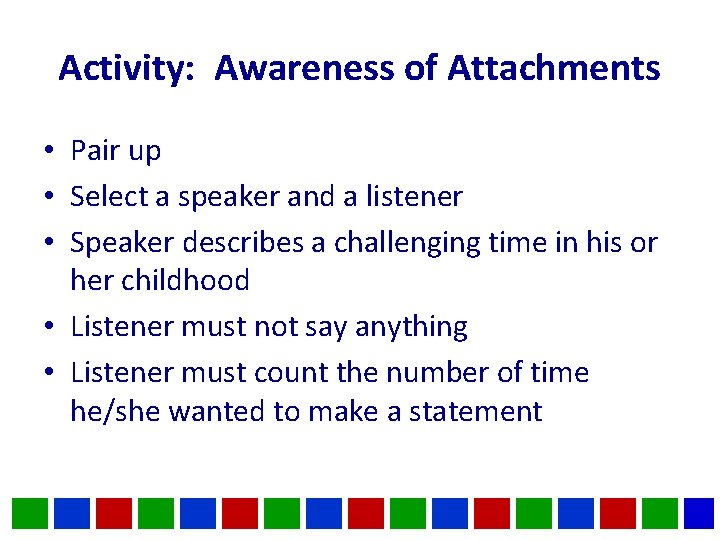
Activity: Awareness of Attachments • Pair up • Select a speaker and a listener • Speaker describes a challenging time in his or her childhood • Listener must not say anything • Listener must count the number of time he/she wanted to make a statement
How many times did you want to say something? A. Less than 5 B. Between 5 to 7 C. Greater than 7
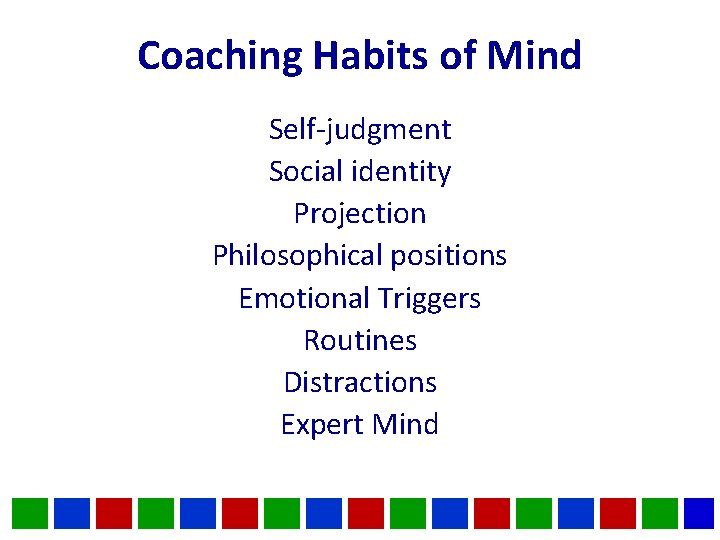
Coaching Habits of Mind Self-judgment Social identity Projection Philosophical positions Emotional Triggers Routines Distractions Expert Mind
Lunch Break
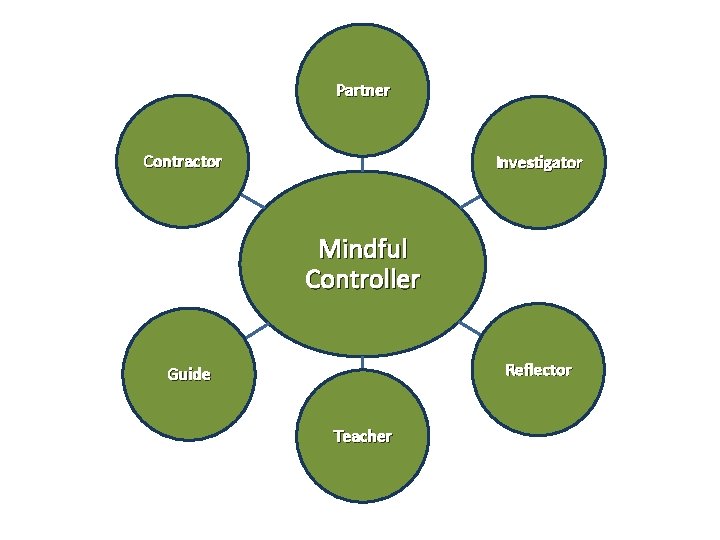
Partner Contractor Investigator Mindful Controller Reflector Guide Teacher
The Partner
The Investigator
The Reflector
The Teacher
The Guide
The Contractor
Activity: Finding your Voice Did you complete the Silsbee self-assessment? Reflect: • Which voice do you overuse? • Which voice do you underuse? • Which voice are you attached to? • Which voice do you have an aversion to? Discuss in small groups
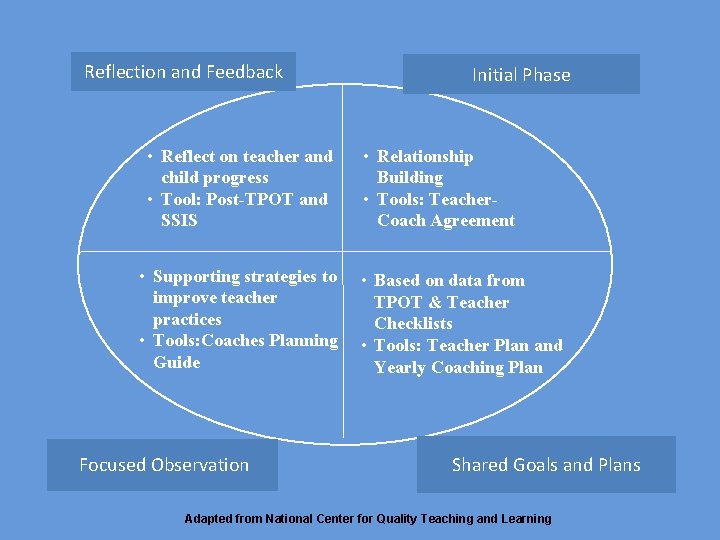
Reflection and Feedback • Reflect on teacher and child progress • Tool: Post-TPOT and SSIS • Supporting strategies to improve teacher practices • Tools: Coaches Planning Guide Focused Observation Initial Phase • Relationship Building • Tools: Teacher. Coach Agreement • Based on data from TPOT & Teacher Checklists • Tools: Teacher Plan and Yearly Coaching Plan Shared Goals and Plans Adapted from National Center for Quality Teaching and Learning
Small Group Activity • Pick a partner • Use the Coaches Planning Guide, pg. 2 and think of one question to ask the teacher in this scenario that helps her think about: 1. The Situation 2. The Outcome 3. The Actions
Training Materials and Resources • http: //csefel. vanderbilt. edu/ • http: //www. challengingbehavior. org • http: //eclkc. ohs. acf. hhs. gov/hslc/ttasystem/teaching • Talk about how training can be incorporated into coaching
Measurement Tools
Teacher Checklists • Aligned with the sections of the TPOT • Teacher self-assessment- 10 sections • Yes/No format • Identify strengths/emerging skills
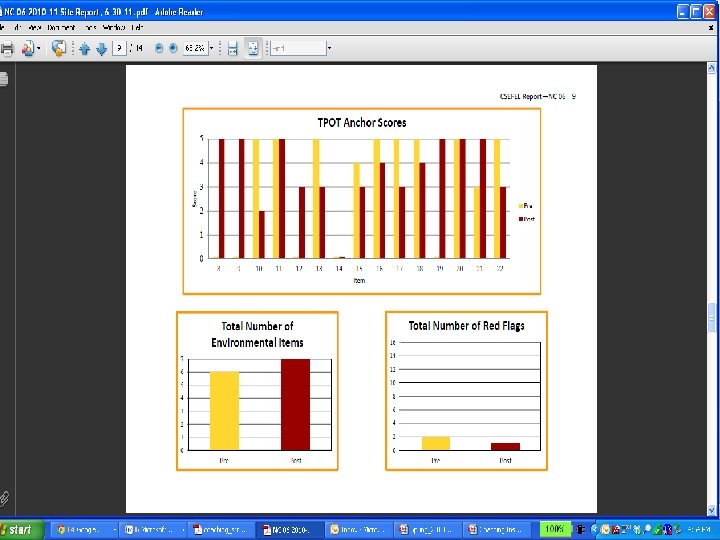
Teaching Pyramid Observation Tool (TPOT) • Purpose is Formative Assessment and Accountability: – Pre-TPOT used in conjunction with Teacher Checklists to identify target teacher behaviors to begin training and coaching efforts – Comparison of Pre and Post TPOT provides accountability measure
Using the TPOT • Observations • Conducted for a minimum of 2 hours • Must observe centers or free play and at least one teacher-directed activity • Focus of observation is lead teacher’s behavior • Interviews for those practices that cannot be observed in a 2 -hour observation
Small Group Activity Review each section of the TPOT Compare one section on the TPOT with the corresponding section on the Teacher Checklists 1. What did you notice? 2. If you were the teacher, how would you feel about using the Teacher Checklists as a self-assessment?
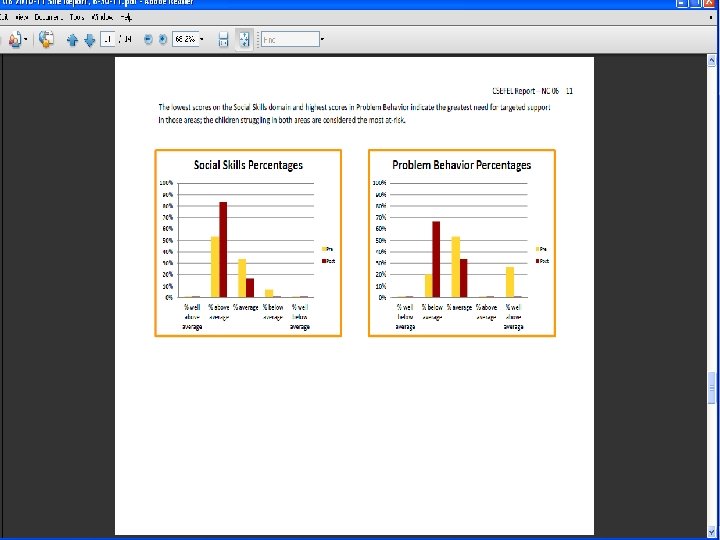
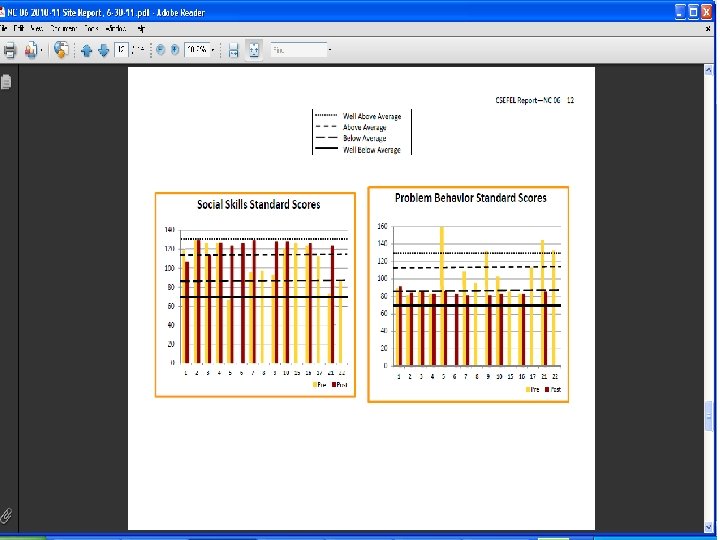
Social Skills Improvement System (SSIS) • Purpose: assesses children’s social skills and problem behaviors • Used to compare change from the beginning of the year to the end of the year • Accountability for the state
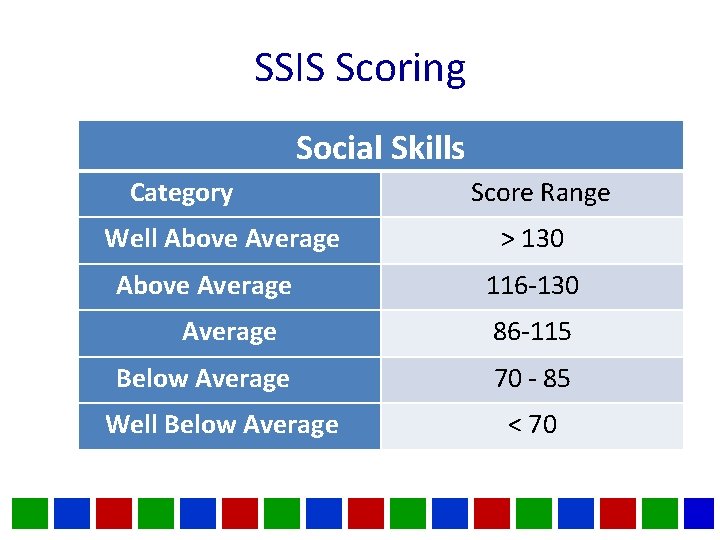
SSIS Scoring Social Skills Category Well Above Average Below Average Well Below Average Score Range > 130 116 -130 86 -115 70 - 85 < 70
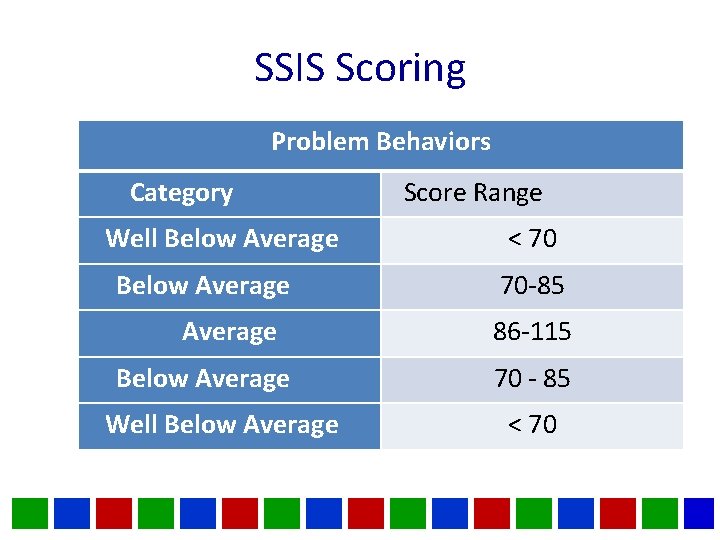
SSIS Scoring Problem Behaviors Category Well Below Average Below Average Well Below Average Score Range < 70 70 -85 86 -115 70 - 85 < 70