ANAEMIA IN PREGNANCY Dr Alaa ALNASER ANAEMIA IN

- Slides: 35
ANAEMIA IN PREGNANCY Dr. Alaa AL-NASER
ANAEMIA IN PREGNANCY Commonest medical disorder. l High incidence in underdeveloped countries l Increased Maternal morbidity & mortality l Increased perinatal mortality l
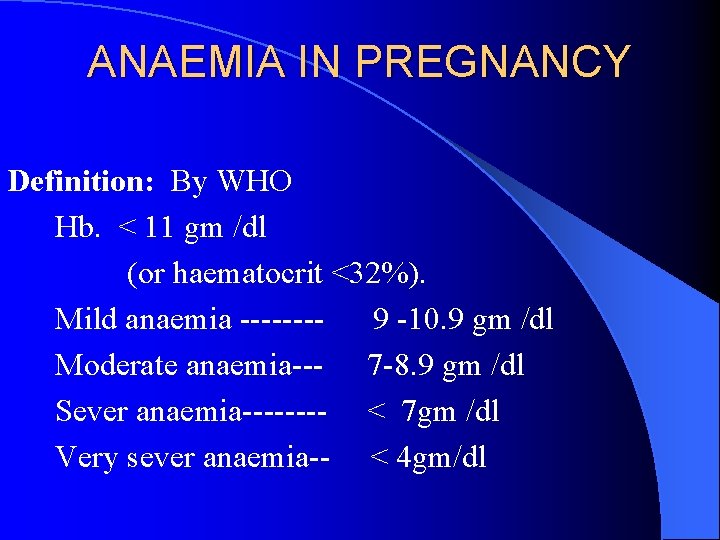
ANAEMIA IN PREGNANCY Definition: By WHO Hb. < 11 gm /dl (or haematocrit <32%). Mild anaemia -------9 -10. 9 gm /dl Moderate anaemia--- 7 -8. 9 gm /dl Sever anaemia---- < 7 gm /dl Very sever anaemia-- < 4 gm/dl
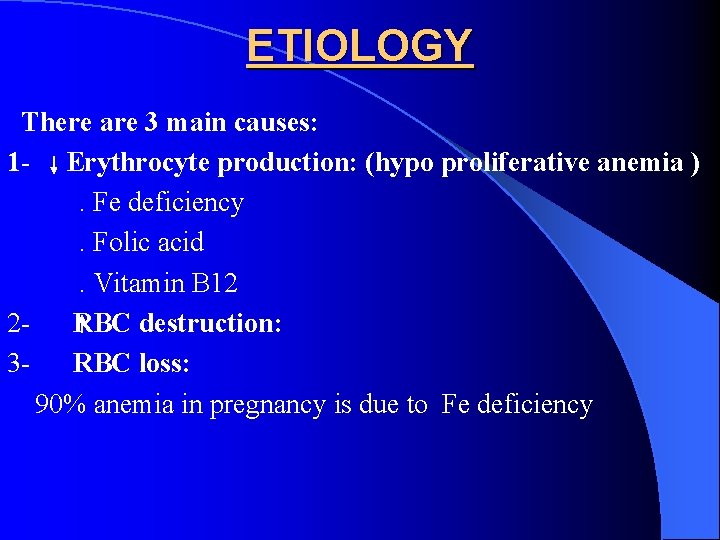
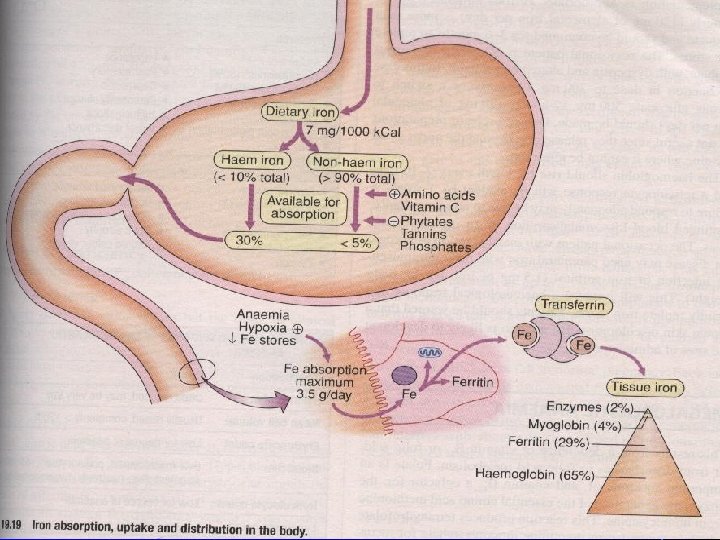
ETIOLOGY There are 3 main causes: 1 - Erythrocyte production: (hypo proliferative anemia ). Fe deficiency. Folic acid. Vitamin B 12 2 RBC destruction: 3 RBC loss: 90% anemia in pregnancy is due to Fe deficiency
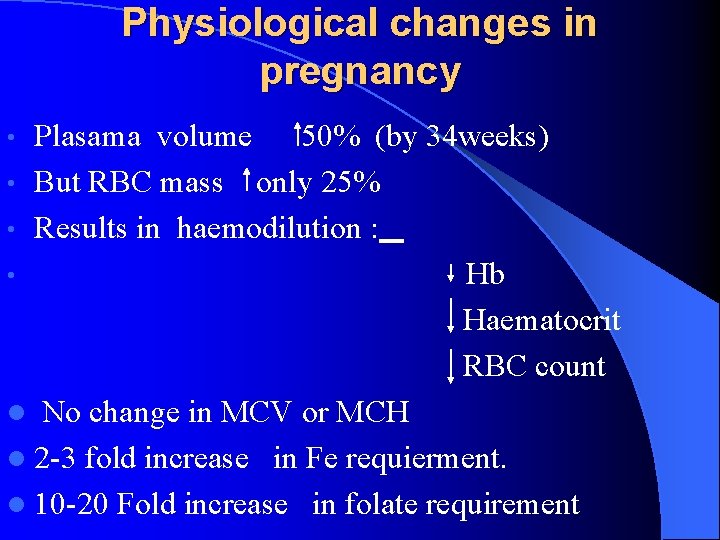
Physiological changes in pregnancy Plasama volume 50% (by 34 weeks) • But RBC mass only 25% • Results in haemodilution : • Hb Haematocrit RBC count l No change in MCV or MCH l 2 -3 fold increase in Fe requierment. l 10 -20 Fold increase in folate requirement •
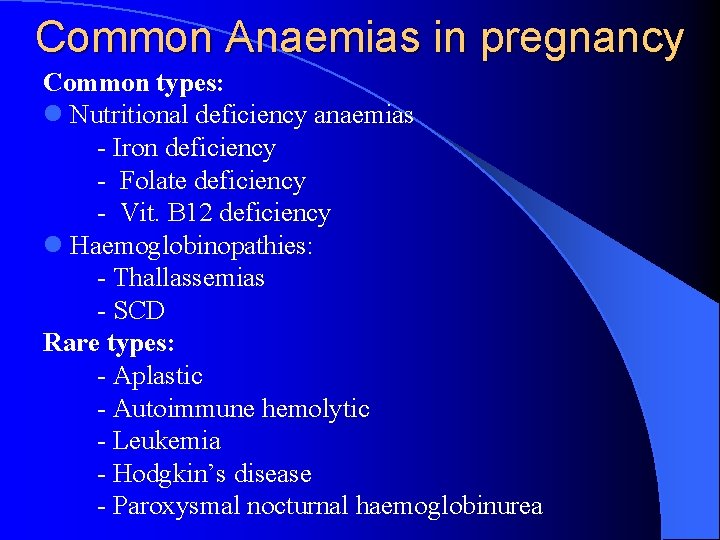
Common Anaemias in pregnancy Common types: l Nutritional deficiency anaemias - Iron deficiency - Folate deficiency - Vit. B 12 deficiency l Haemoglobinopathies: - Thallassemias - SCD Rare types: - Aplastic - Autoimmune hemolytic - Leukemia - Hodgkin’s disease - Paroxysmal nocturnal haemoglobinurea
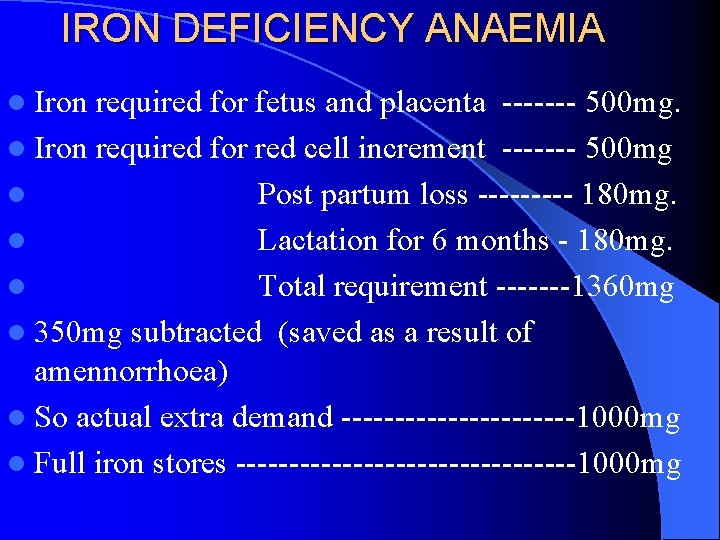
IRON DEFICIENCY ANAEMIA l Iron required for fetus and placenta ------- 500 mg. l Iron required for red cell increment ------- 500 mg l Post partum loss ----- 180 mg. l Lactation for 6 months - 180 mg. l Total requirement -------1360 mg l 350 mg subtracted (saved as a result of amennorrhoea) l So actual extra demand -----------1000 mg l Full iron stores ----------------1000 mg
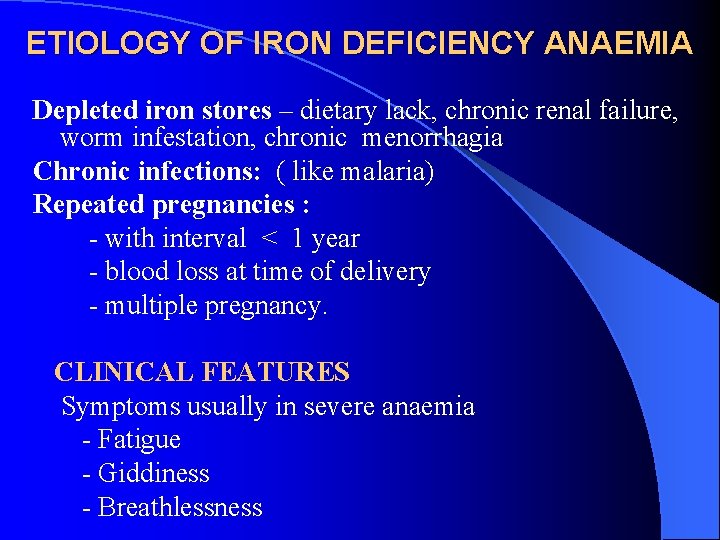
ETIOLOGY OF IRON DEFICIENCY ANAEMIA Depleted iron stores – dietary lack, chronic renal failure, worm infestation, chronic menorrhagia Chronic infections: ( like malaria) Repeated pregnancies : - with interval < 1 year - blood loss at time of delivery - multiple pregnancy. CLINICAL FEATURES Symptoms usually in severe anaemia - Fatigue - Giddiness - Breathlessness
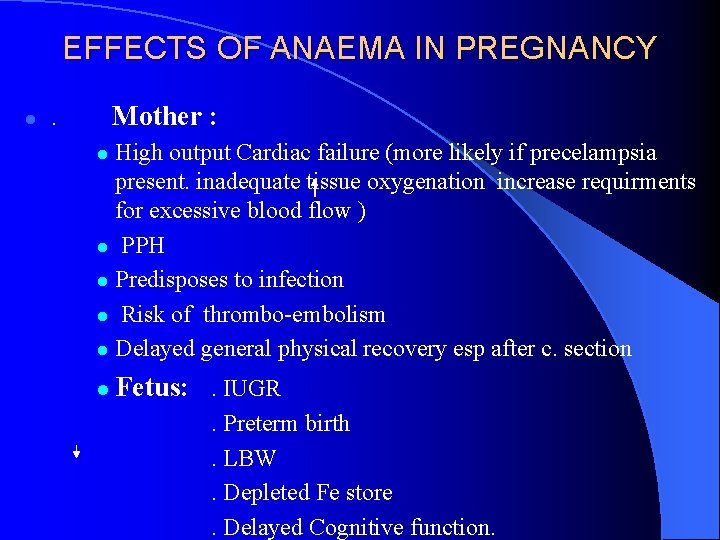
EFFECTS OF ANAEMA IN PREGNANCY l Mother : . High output Cardiac failure (more likely if precelampsia present. inadequate tissue oxygenation increase requirments for excessive blood flow ) l PPH l Predisposes to infection l Risk of thrombo-embolism l Delayed general physical recovery esp after c. section l l Fetus: . IUGR. Preterm birth. LBW. Depleted Fe store. Delayed Cognitive function.
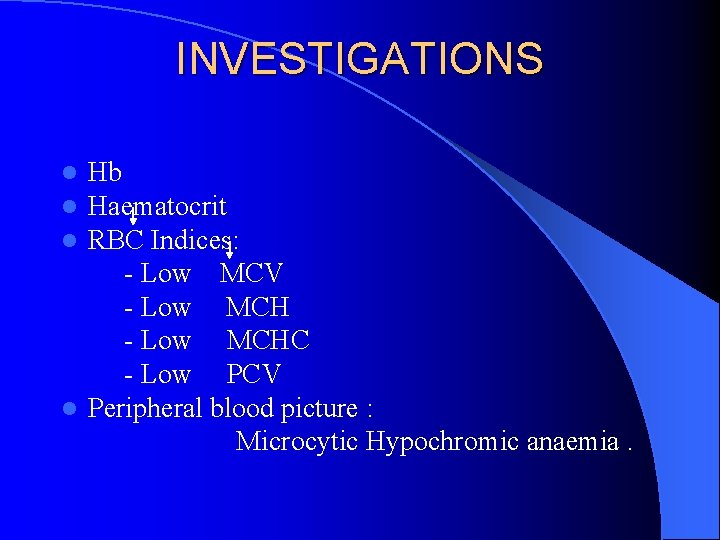
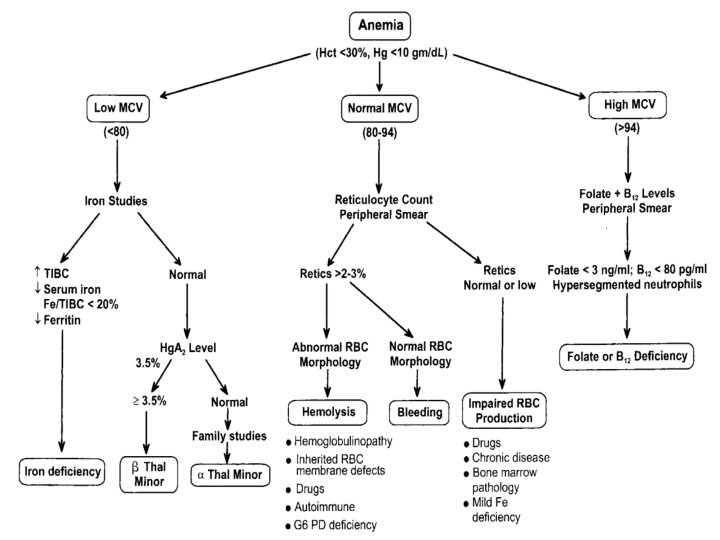
INVESTIGATIONS Hb Haematocrit RBC Indices: - Low MCV - Low MCHC - Low PCV l Peripheral blood picture : Microcytic Hypochromic anaemia. l l l
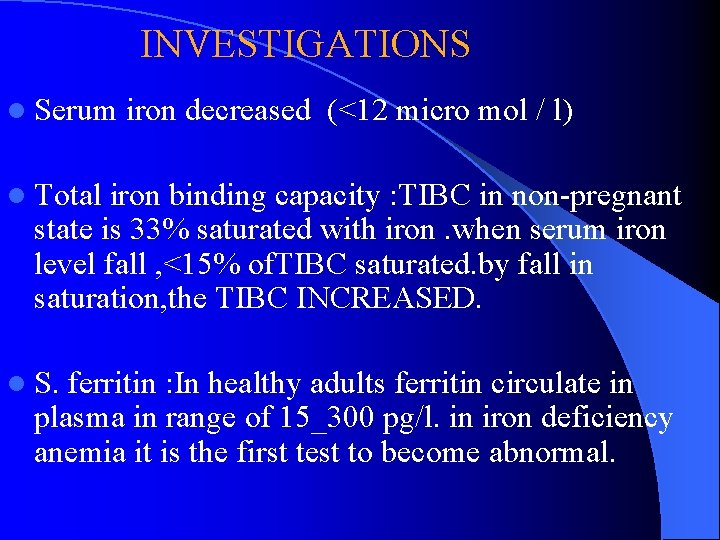
INVESTIGATIONS l Serum iron decreased (<12 micro mol / l) l Total iron binding capacity : TIBC in non-pregnant state is 33% saturated with iron. when serum iron level fall , <15% of. TIBC saturated. by fall in saturation, the TIBC INCREASED. l S. ferritin : In healthy adults ferritin circulate in plasma in range of 15_300 pg/l. in iron deficiency anemia it is the first test to become abnormal.
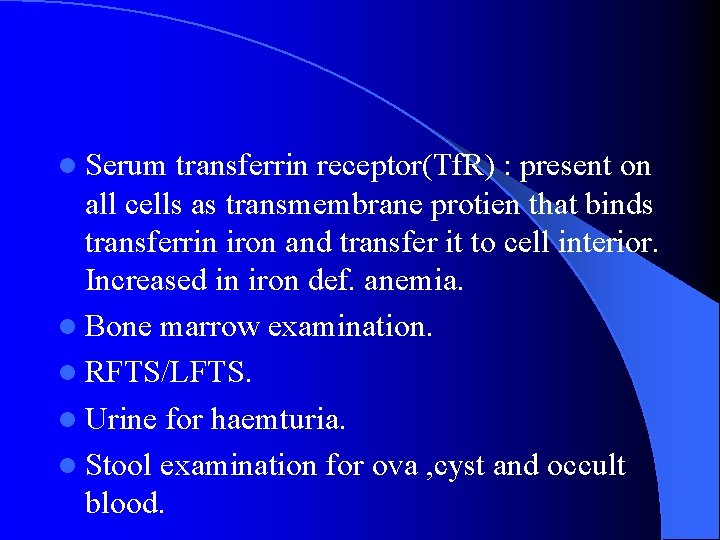
l Serum transferrin receptor(Tf. R) : present on all cells as transmembrane protien that binds transferrin iron and transfer it to cell interior. Increased in iron def. anemia. l Bone marrow examination. l RFTS/LFTS. l Urine for haemturia. l Stool examination for ova , cyst and occult blood.
MANAGEMENT Objectives: 1 - To achieve a normal Hb by end of pregnancy 2 - To replenish iron stores l Two ways to correct anaemia: I- Iron supplementation. Oral Fe. Parenteral Fe II- Blood transfurion l Choice of method: It depends on three main factors: l Severity of the anaemia l Gestational Age. l Presence of additional risk factor l
MANAGEMENT l Recommended supplementation for non-anaemiac 30 - 60 mg /day of elemental iron l Anaemic gravidas 120 – 240 mg / per day l In tolerance to iron tablets – enteric coated tablet / liquid suspension l Supplementation with folic acid + Vit C. l Therapeutic results after 3 weeks – rise in Hb % level of 0. 8 gm/dl/ week with good compliance. l Treatment continued in the postpartum period to fill the stores
MANAGEMENT l Severe anaemia: (Hb < 8 gm/dl)- preferably parenteral theraphy in the form of I/M or I/V iron - I/M : ( Iron sorbitol) with “Z” technique - I/V : (iron sucrose) l Iron neede = (Normal Hb – Pt. Hb)* Wt in Kg*2. 21+1000)
MANAGEMENT Dose given I/M or I/V by slow push 100 mg / day or the entire dose given in 500 ml N/S slow I/V infusion over 1 -6 hours l Marked increase in reticulocyte count expecred in 7 -14 d Blood transfusion: l may be required to treat severe anaemia near term or when some other complication such as placenta praevia present. l Gross anaemia l Packed red cells transfusion (Under cover of loop diuretic) l Exchange transfusion (Under cover of loop diuretic)
MANAGEMENT Side effect of Fe Oral therapy: . G. I upset. . Constipation. . Diarrhoea. Parentral: - skin discolouration - local abscess - allergic reaction - Fe over load.
MEGALOBLASTIC ANAEMIA Complicates upto 1% of pregnancies l Characterized by : - RBC with high MCV - White blood cells with altered morphology (hypersegmented neutrophils). l l Usually caused by : - Folate deficiency may occur after exposure to sulfa drugs or hydroxyurea - Vitamin B 12 deficiency
FOLATE DEFICIENCY ANAEMIA At cellular level Folic acid reduced to Dihydrofolicacid then Tetrahydro-folicacid. (THF) e is required for cell growth & division. So more active tissue reproduction & growth more dependant on supply of folic acid. So bone marrow and epithelial lining are therefore at particular risk.
FOLATE DEFICIENCY ANAEMIA Folic acid deficiency more likely if. Woman taking anticonvulsants. . Multiple pregnancy. . Hemolytic anemia; thalasemia H. spherocytosis Maternal risk: Megaloblastic anemia Fetal risk: Pre-conception deficiency cause neural tube defect and cleft palate etc.
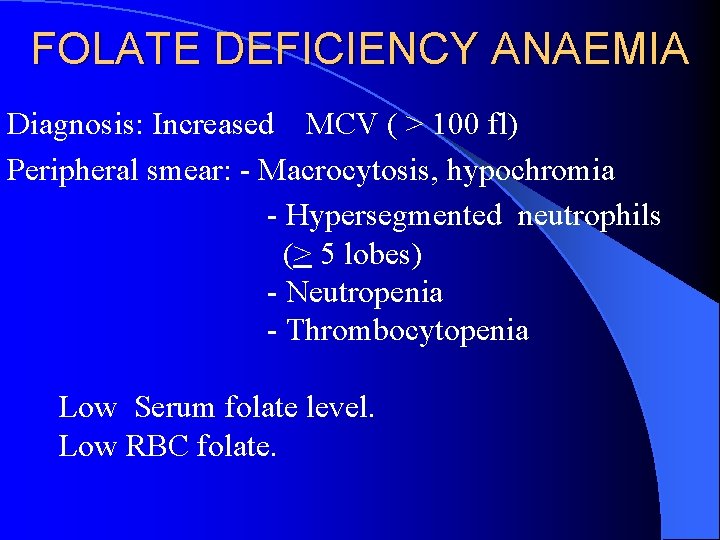
FOLATE DEFICIENCY ANAEMIA Diagnosis: Increased MCV ( > 100 fl) Peripheral smear: - Macrocytosis, hypochromia - Hypersegmented neutrophils (> 5 lobes) - Neutropenia - Thrombocytopenia Low Serum folate level. Low RBC folate.
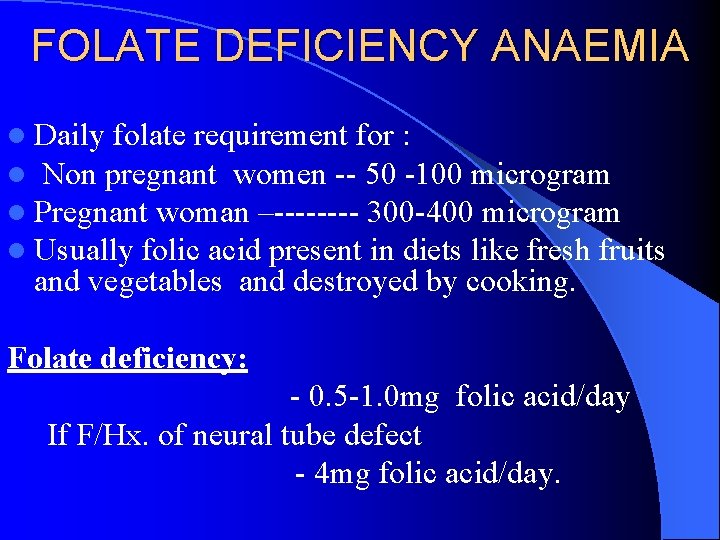
FOLATE DEFICIENCY ANAEMIA l Daily folate requirement for : l Non pregnant women -- 50 -100 microgram l Pregnant woman –---- 300 -400 microgram l Usually folic acid present in diets like fresh fruits and vegetables and destroyed by cooking. Folate deficiency: - 0. 5 -1. 0 mg folic acid/day If F/Hx. of neural tube defect - 4 mg folic acid/day.
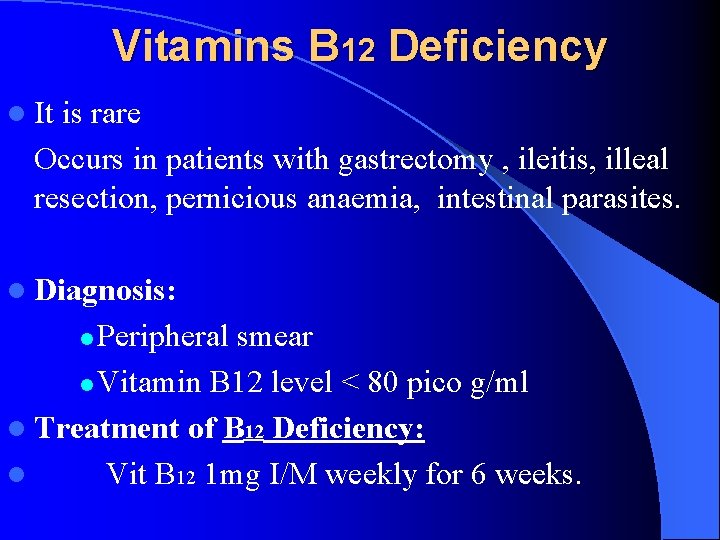
Vitamins B 12 Deficiency l It is rare Occurs in patients with gastrectomy , ileitis, illeal resection, pernicious anaemia, intestinal parasites. l Diagnosis: Peripheral smear l Vitamin B 12 level < 80 pico g/ml l Treatment of B 12 Deficiency: l Vit B 12 1 mg I/M weekly for 6 weeks. l
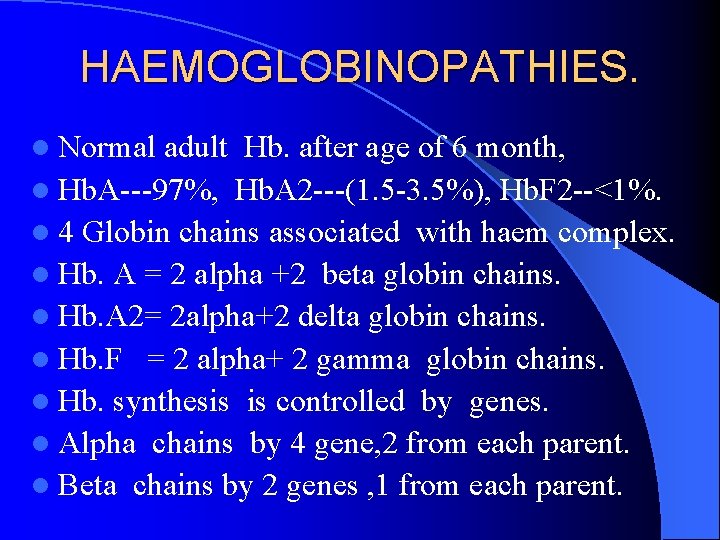
HAEMOGLOBINOPATHIES. l Normal adult Hb. after age of 6 month, l Hb. A---97%, Hb. A 2 ---(1. 5 -3. 5%), Hb. F 2 --<1%. l 4 Globin chains associated with haem complex. l Hb. A = 2 alpha +2 beta globin chains. l Hb. A 2= 2 alpha+2 delta globin chains. l Hb. F = 2 alpha+ 2 gamma globin chains. l Hb. synthesis is controlled by genes. l Alpha chains by 4 gene, 2 from each parent. l Beta chains by 2 genes , 1 from each parent.
HAEMOGLOBINOPATHIES DEFINITION: l Inherited disorders of haemoglobin. l Defect may be in: - Globin chain synthesis------thallassemia. - Structure of globin chains-sickle cell disease. l Hb. abnormalities may be: - Homozygous = inherited from both parents. (Sufferer of disease) - Hetrozygous = inherited from one parent. (Carrier/trait of disease)
THALASSAEMIAS l The synthesis of globin chain is partially or completely suppressed resulting in reduced Hb. content in red cells, which then have shortened life span. l TYPES: - Alpha thalassaemia. - Beta thalassaemia: . Major. minor
Beta thallassemia minor Beta Thallassemia trait l Heterozygous inheritance from one parent. l Most frequent encountered variety. l Partial suppression of the Hb. synthesis. l Mild anaemia. Investigations: Hb----around 10 g/dl. l Red cell indices: low MCV. low MCH. normal MCHC. l Diagnostic test: Hb. Electrophoresis. l
Beta Thallassemia Minor l Management: l Same as normal woman in pregnancy. l Frequent Hb. Testing. l Iron & folate supplements in usual dose. l Parenteral iron should be avoided. because of iron overload. l If not responded ---I/M folic acid. l blood transfusion close to time of delivery.
Beta Thallassaemia Major l Homozygous inheritance from both parents. l Sever anaemia. l Diagnosed in paediatric era. l T/m: is blood transfusion. ALPHA THALASSAEMIA: l Both heterozygous & homozygous forms exist. l Alpha thallassaemia trait. l Hb. H disease. l Alpha thallassaemia major.
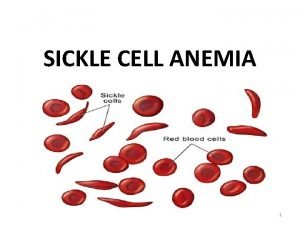
SICKLE CELL SYNDROME. l Autosomally inherited. l Structural abnormality. l Hb. S - susceptible to hypoxia, when oxygen supply is reduced. l Hb precipitates & makes the RBCs rigid & sickle shaped. l Heterozygous----Hb. AS. l Homozygous-----Hb. SS. l Compound heterozygous---Hb. SC etc.
Sickle Cell Disease (SCD) l Sickeling crises frequently occurs in pregnancy, puerperium &in state of hypoxia like G/A and Hag. l Increased incidance of abortion and still birth growth restriction, premature birth and intrapartum fetal distress with increased perinatal mortality. l Sickle cell trait: (carrier state) Does not pose any significance clinical problems
SCD l Diagnosis: - Hb. Electrophoresis - Sickledext test is screening test l Management: - No curative Tx. - only symptomatic - Well hydration, effective analgesia, prophylactic antibiotics, O 2 inhalation, folic acid, oral iron supplement (I/V iron is C/I), blood transfusion
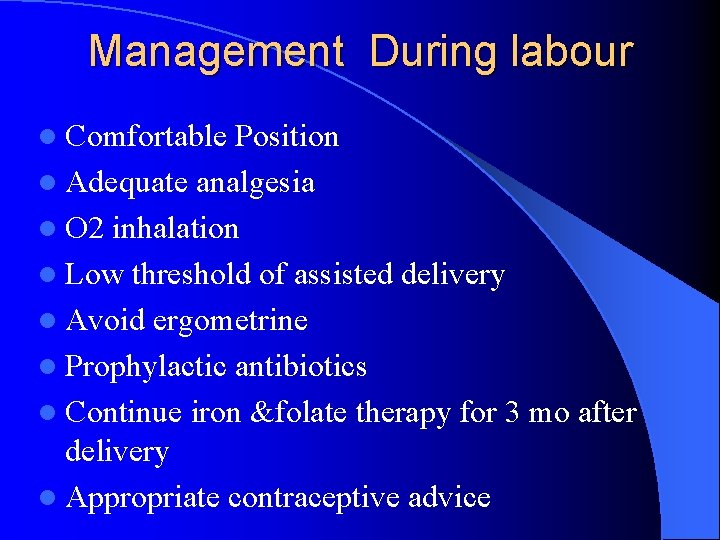
Management During labour l Comfortable Position l Adequate analgesia l O 2 inhalation l Low threshold of assisted delivery l Avoid ergometrine l Prophylactic antibiotics l Continue iron &folate therapy for 3 mo after delivery l Appropriate contraceptive advice