
Dissemination and Data to Action Dr Heba Fouad
Dissemination and Data to Action Dr Heba Fouad WHO, EMRO
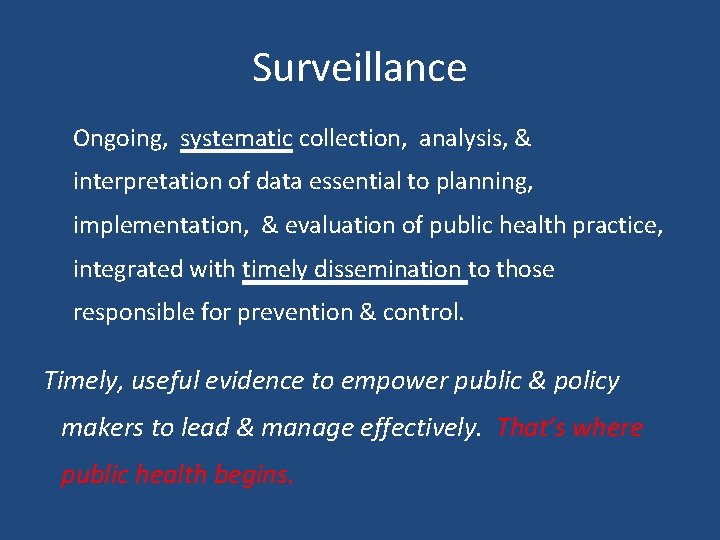
Surveillance Ongoing, systematic collection, analysis, & interpretation of data essential to planning, implementation, & evaluation of public health practice, integrated with timely dissemination to those responsible for prevention & control. Timely, useful evidence to empower public & policy makers to lead & manage effectively. That’s where public health begins.
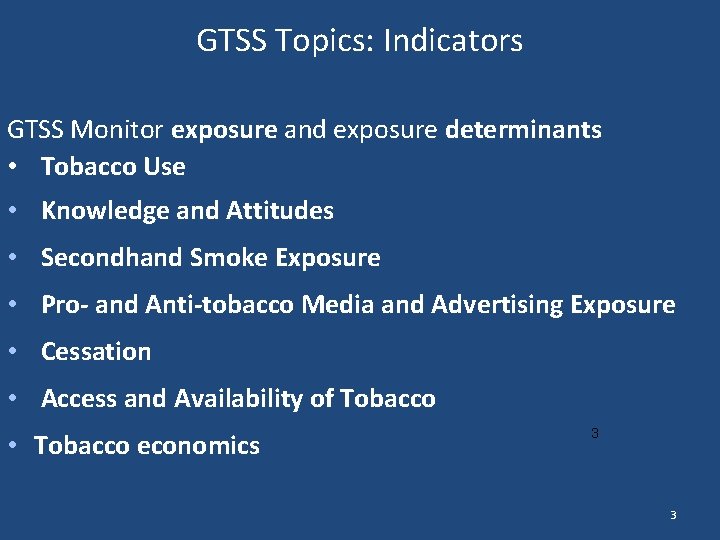
GTSS Topics: Indicators GTSS Monitor exposure and exposure determinants • Tobacco Use • Knowledge and Attitudes • Secondhand Smoke Exposure • Pro- and Anti-tobacco Media and Advertising Exposure • Cessation • Access and Availability of Tobacco • Tobacco economics 3 3
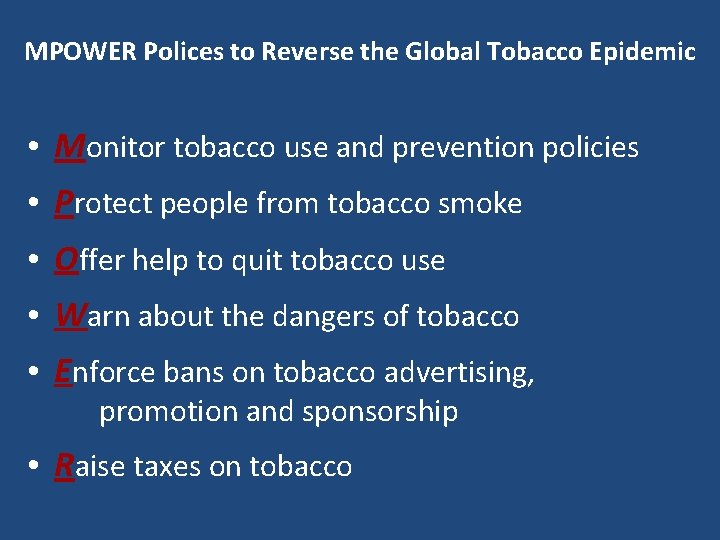
MPOWER Polices to Reverse the Global Tobacco Epidemic • Monitor tobacco use and prevention policies • Protect people from tobacco smoke • Offer help to quit tobacco use • Warn about the dangers of tobacco • Enforce bans on tobacco advertising, promotion and sponsorship • Raise taxes on tobacco
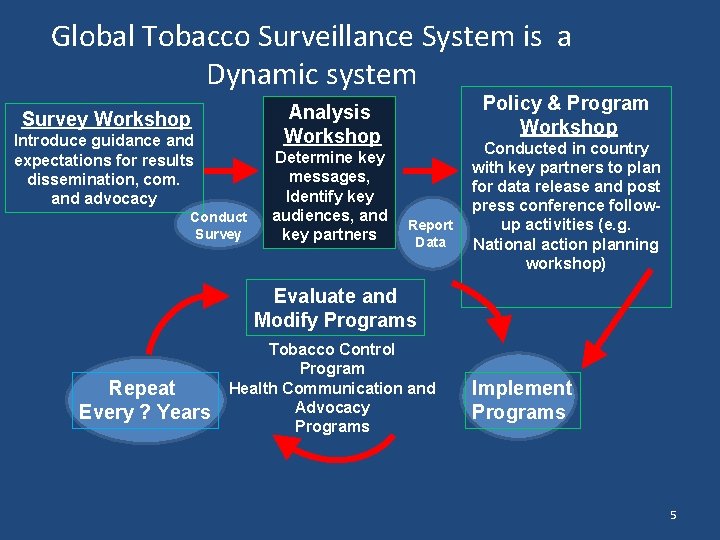
Global Tobacco Surveillance System is a Dynamic system Policy & Program Workshop Analysis Workshop Survey Workshop Introduce guidance and expectations for results dissemination, com. and advocacy Conduct Survey Determine key messages, Identify key audiences, and key partners Report Data Conducted in country with key partners to plan for data release and post press conference followup activities (e. g. National action planning workshop) Evaluate and Modify Programs Repeat Every ? Years Tobacco Control Program Health Communication and Advocacy Programs Implement Programs 5
Data dissemination GATS /TQS • GATS: 2008 -2016 – Completed in 28 countries – 30 country fact ( with repeats) – 24 country reports – 24 public use data sets • TQS: 2009 -2016 – Completed in 63 countries (3 -22 questions) – TQS available in 7 languages
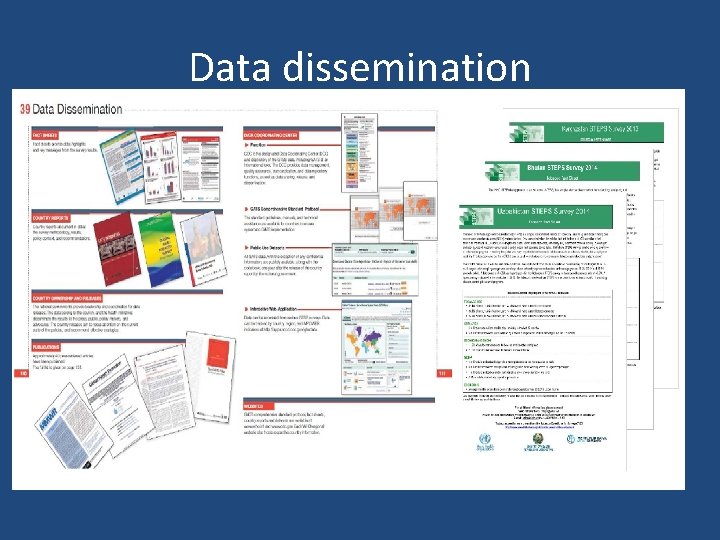
How data dissemination is done? Fact sheets Executive Summaries Country Reports Research Publications Data 2 Action (D 2 A) Workshops GATS Atlas WHO Report on the Global Tobacco epidemic; GTCR, available at: http: //www. who. int/tobacco/global_report/2015/repo rt/en • WHO , MOHs, NSO, and CDC …webistes • •
Data dissemination
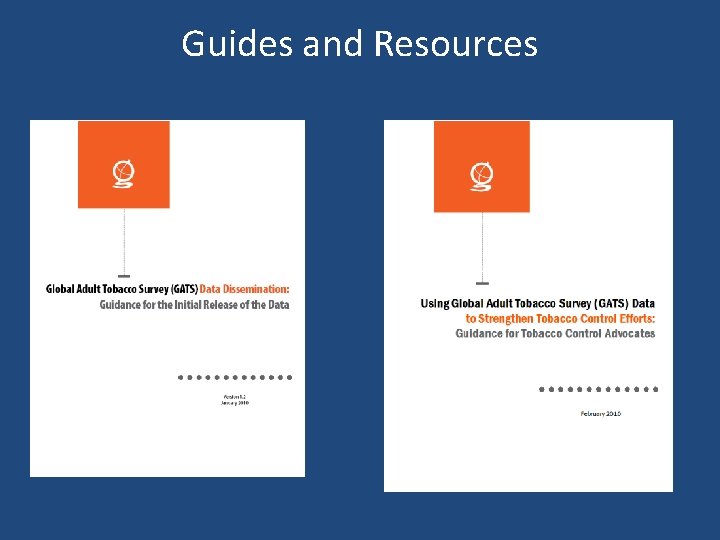
Guides and Resources
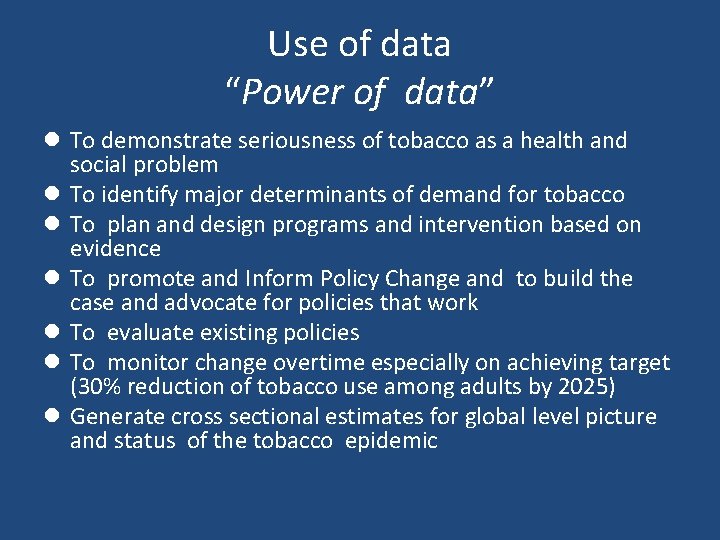
Use of data “Power of data” l To demonstrate seriousness of tobacco as a health and social problem l To identify major determinants of demand for tobacco l To plan and design programs and intervention based on evidence l To promote and Inform Policy Change and to build the case and advocate for policies that work l To evaluate existing policies l To monitor change overtime especially on achieving target (30% reduction of tobacco use among adults by 2025) l Generate cross sectional estimates for global level picture and status of the tobacco epidemic
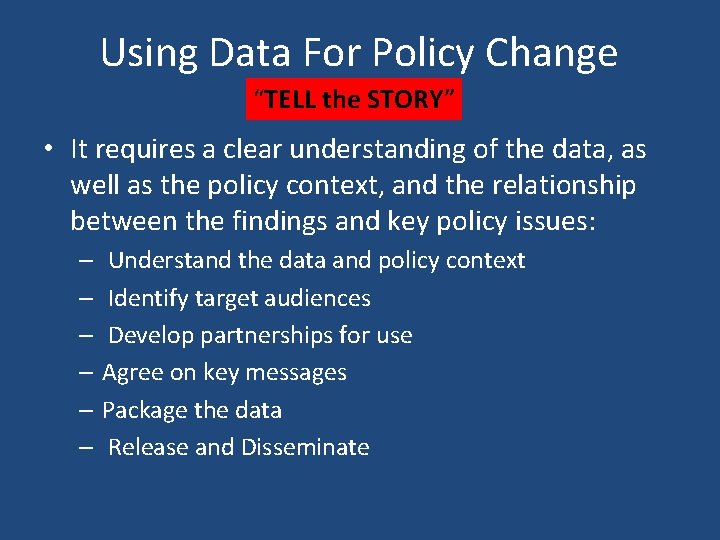
Using Data For Policy Change “TELL the STORY” • It requires a clear understanding of the data, as well as the policy context, and the relationship between the findings and key policy issues: – Understand the data and policy context – Identify target audiences – Develop partnerships for use – Agree on key messages – Package the data – Release and Disseminate
Target Audiences l Policy makers l Non-government organisations and civil societies l General public l Advocacy groups l Media outlets
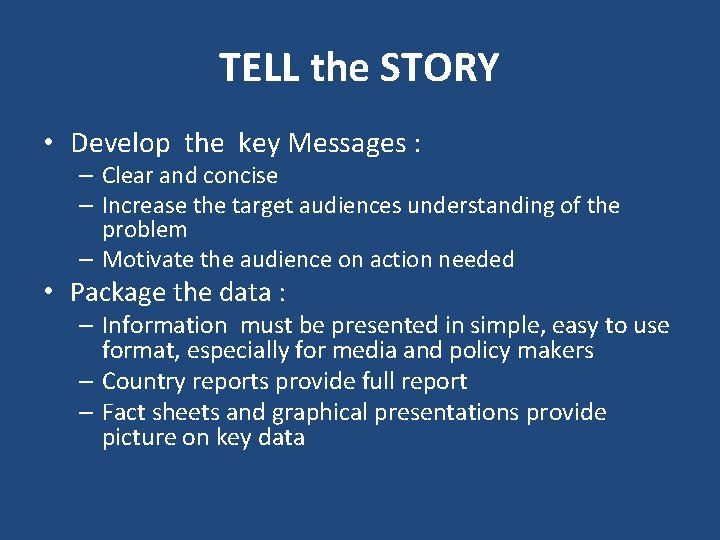
TELL the STORY • Develop the key Messages : – Clear and concise – Increase the target audiences understanding of the problem – Motivate the audience on action needed • Package the data : – Information must be presented in simple, easy to use format, especially for media and policy makers – Country reports provide full report – Fact sheets and graphical presentations provide picture on key data
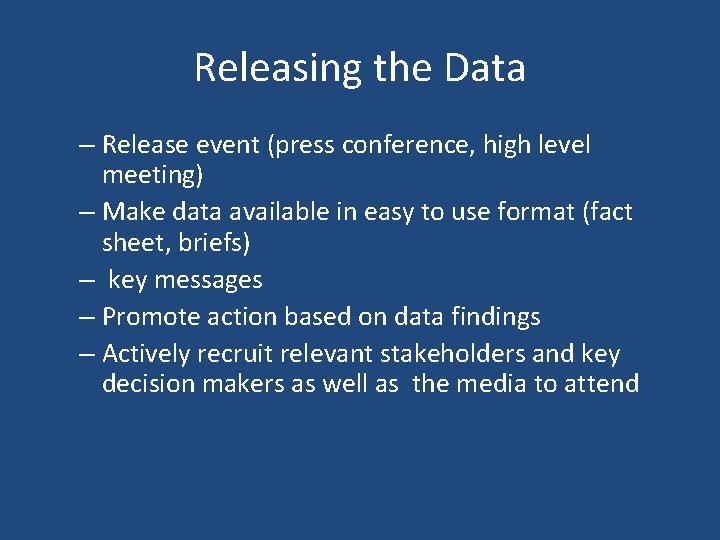
Releasing the Data – Release event (press conference, high level meeting) – Make data available in easy to use format (fact sheet, briefs) – key messages – Promote action based on data findings – Actively recruit relevant stakeholders and key decision makers as well as the media to attend
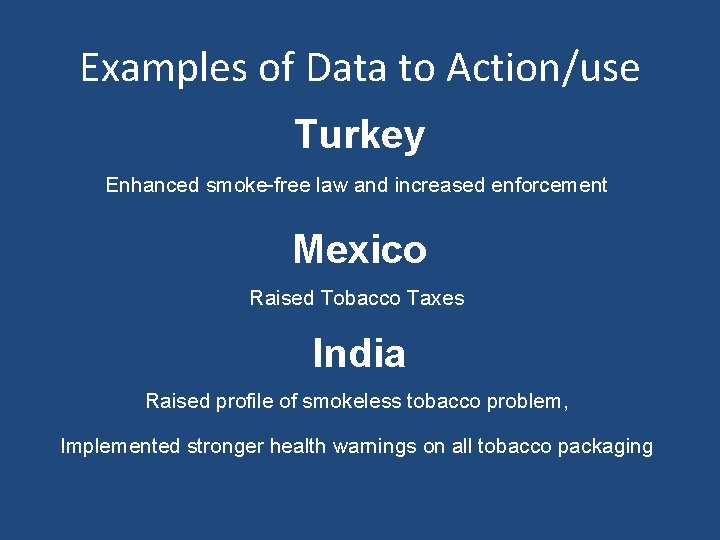
Examples of Data to Action/use Turkey Enhanced smoke-free law and increased enforcement Mexico Raised Tobacco Taxes India Raised profile of smokeless tobacco problem, Implemented stronger health warnings on all tobacco packaging
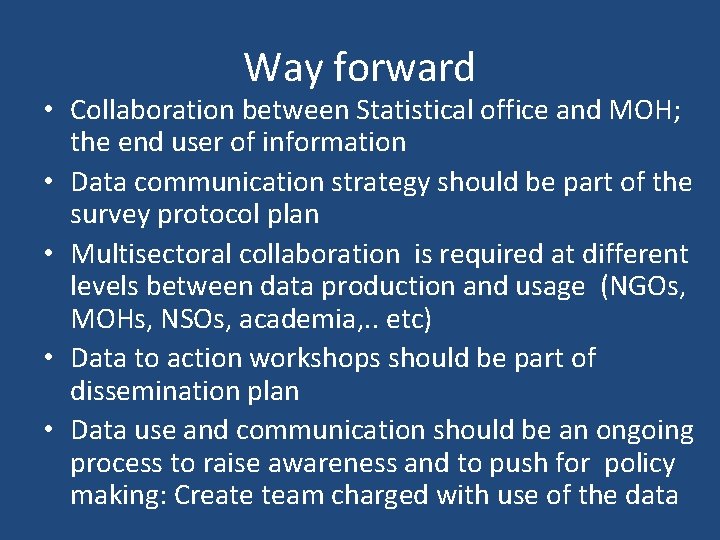
Way forward • Collaboration between Statistical office and MOH; the end user of information • Data communication strategy should be part of the survey protocol plan • Multisectoral collaboration is required at different levels between data production and usage (NGOs, MOHs, NSOs, academia, . . etc) • Data to action workshops should be part of dissemination plan • Data use and communication should be an ongoing process to raise awareness and to push for policy making: Create team charged with use of the data
What Gets Measured Gets Done
Thank you for your attention 18
- Slides: 18