Allison C Nugent Ph D Experimental Therapeutics and
- Slides: 54
Allison C Nugent, Ph. D Experimental Therapeutics and Pathophysiology Branch NIMH/NIH/DHHS MRI IN MOOD DISORDERS
Outline � What are mood disorders? � How do we treat mood disorders? � What can imaging teach us about mood disorders and their treatment?
Outline � What are mood disorders? � How do we treat mood disorders? � What can imaging teach us about mood disorders and their treatment?
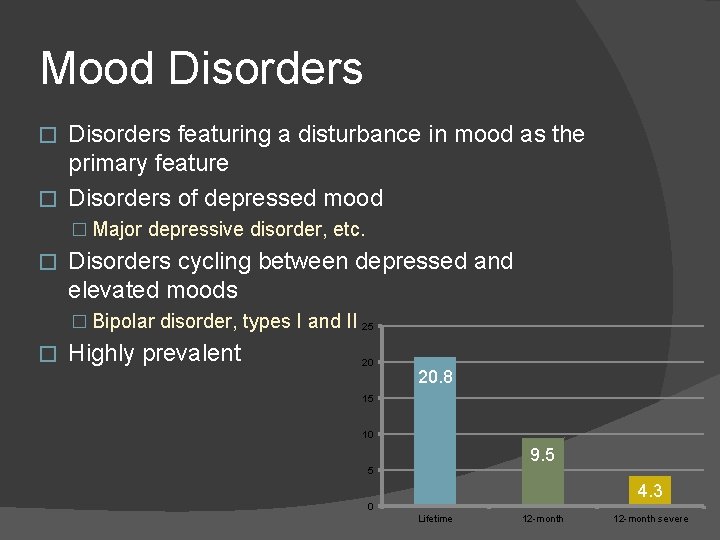
Mood Disorders featuring a disturbance in mood as the primary feature � Disorders of depressed mood � � Major depressive disorder, etc. � Disorders cycling between depressed and elevated moods � Bipolar disorder, types I and II 25 � Highly prevalent 20 20. 8 15 10 9. 5 5 4. 3 0 Lifetime 12 -month severe
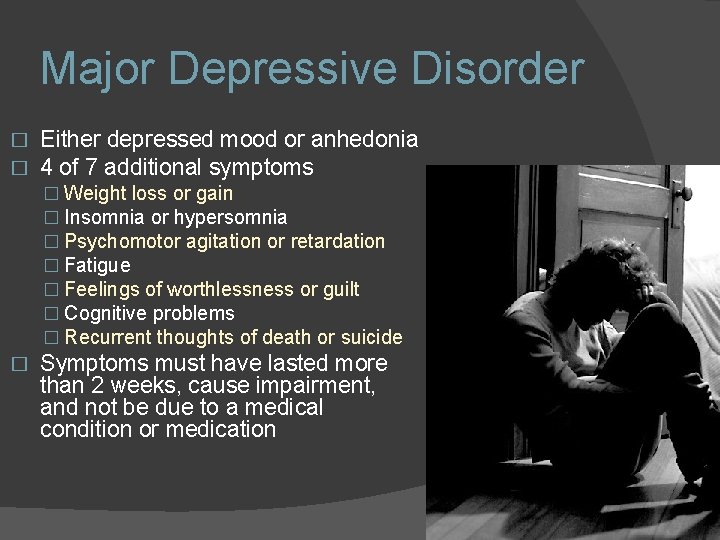
Major Depressive Disorder � � Either depressed mood or anhedonia 4 of 7 additional symptoms � Weight loss or gain � Insomnia or hypersomnia � Psychomotor agitation or retardation � Fatigue � Feelings of worthlessness or guilt � Cognitive problems � Recurrent thoughts of death or suicide � Symptoms must have lasted more than 2 weeks, cause impairment, and not be due to a medical condition or medication
Major Depressive Disorder � Highly Heterogeneous �Two patients with MDD could overlap on only one symptom � Heritable, but no clear genetic pattern � In 2012, 6. 9% of US adults had at least one episode in the past year – 16 million
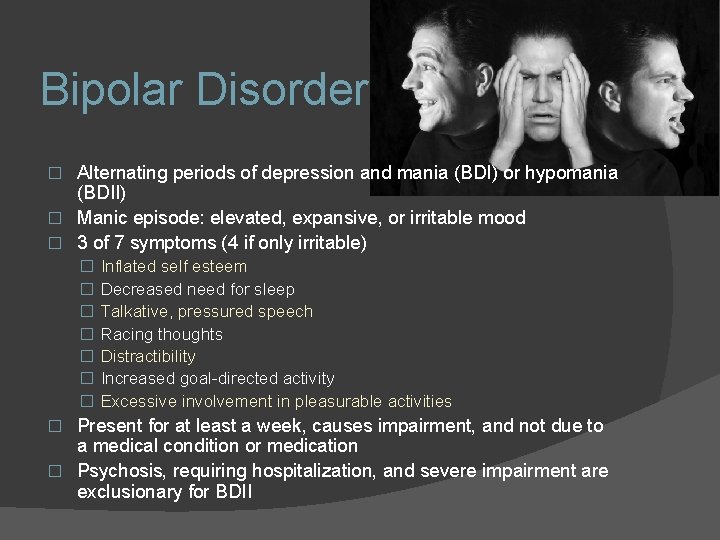
Bipolar Disorder Alternating periods of depression and mania (BDI) or hypomania (BDII) � Manic episode: elevated, expansive, or irritable mood � 3 of 7 symptoms (4 if only irritable) � � � � Inflated self esteem Decreased need for sleep Talkative, pressured speech Racing thoughts Distractibility Increased goal-directed activity Excessive involvement in pleasurable activities Present for at least a week, causes impairment, and not due to a medical condition or medication � Psychosis, requiring hospitalization, and severe impairment are exclusionary for BDII �
Bipolar Disorder � Twelve month prevalence of 2. 6%, 82. 9% of these cases are severe � Highly heritable, but no clear genetic pattern � Frequently disabling, with high prevalence of suicide
Outline � What are mood disorders? � How do we treat mood disorders? � What can imaging teach us about mood disorders and their treatment?
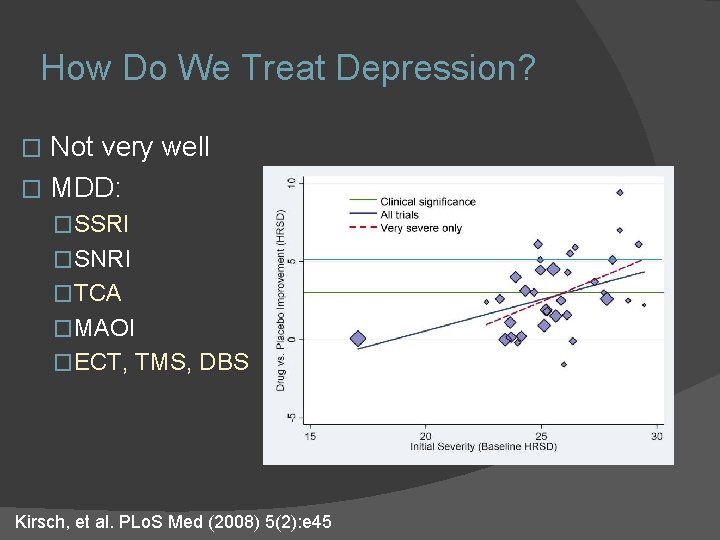
How Do We Treat Depression? Not very well � MDD: � �SSRI �SNRI �TCA �MAOI �ECT, TMS, DBS Kirsch, et al. PLo. S Med (2008) 5(2): e 45
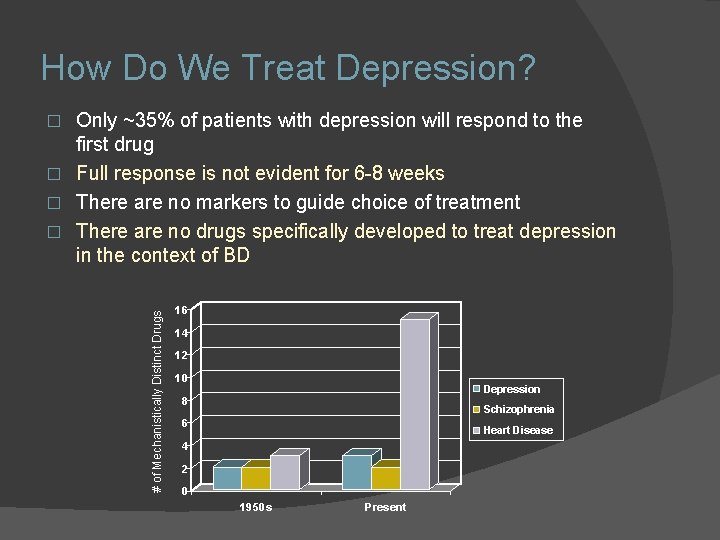
How Do We Treat Depression? Only ~35% of patients with depression will respond to the first drug � Full response is not evident for 6 -8 weeks � There are no markers to guide choice of treatment � There are no drugs specifically developed to treat depression in the context of BD # of Mechanistically Distinct Drugs � 16 14 12 10 Depression 8 Schizophrenia 6 Heart Disease 4 2 0 1950 s Present
How Do We Treat Mania? � � � Only one drug ever developed to treat BD: Lithium Alternatively treated with antipsychotics or anticonvulsants Frequently severe enough to require hospitalization In one study of patients followed after their first hospitalization, only 43% recovered their previous level of occupational and residential function (Tohen 2003). Studying bipolar mania is exceedingly difficult
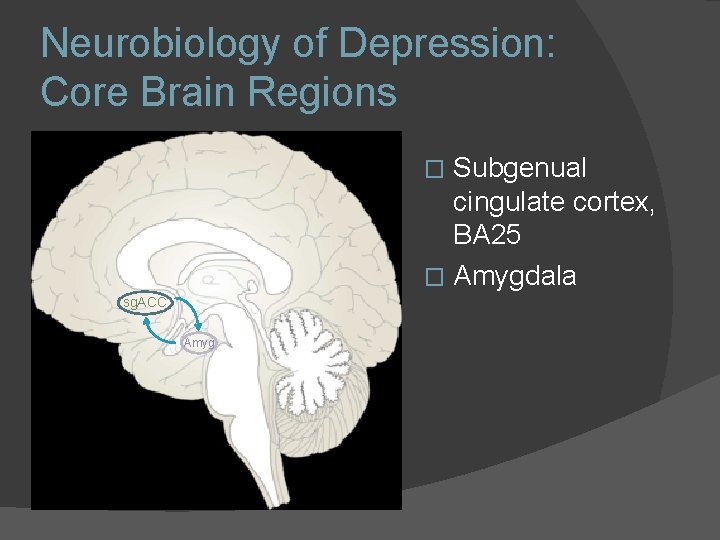
Neurobiology of Depression: Core Brain Regions Subgenual cingulate cortex, BA 25 � Amygdala � sg. ACC Amyg
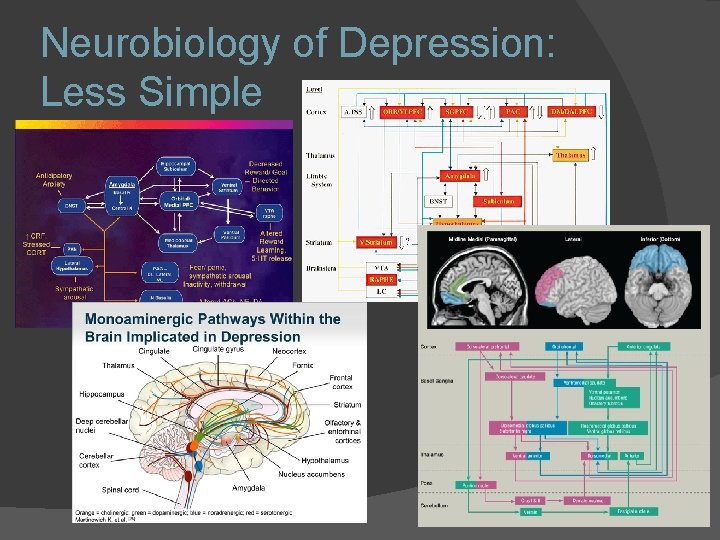
Neurobiology of Depression: Less Simple
Our Approach � Alternative Targets �Monoaminergic drugs rapidly effect the target neurotransmitter system, but effects are delayed �Downstream effects can be targeted more efficiently � Search for correlates of treatment response to identify potential biomarkers of response
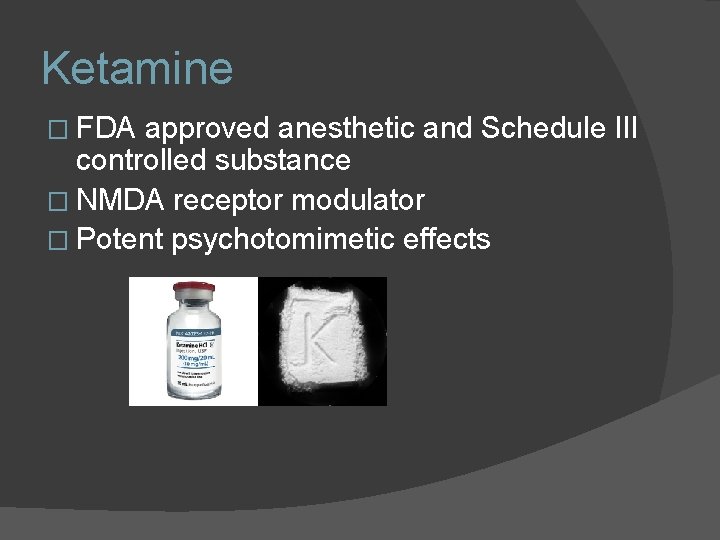
Ketamine � FDA approved anesthetic and Schedule III controlled substance � NMDA receptor modulator � Potent psychotomimetic effects
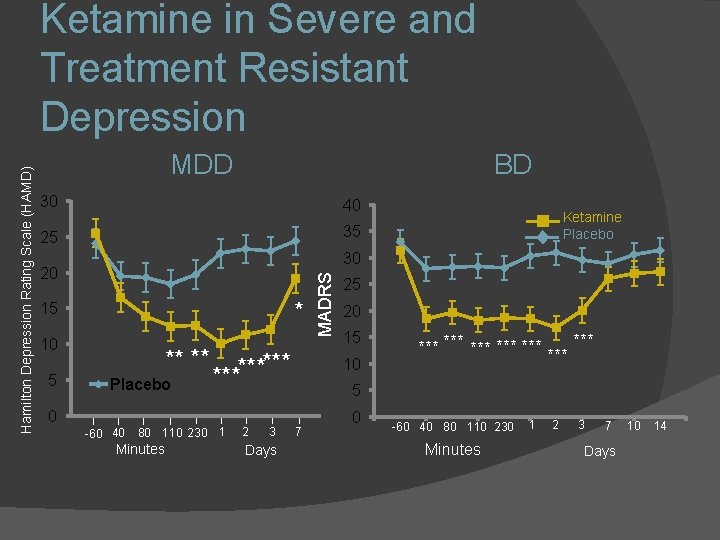
MDD BD 30 40 25 35 20 * 15 10 5 Ketamine Placebo 30 ** ** Placebo 0 -60 40 ****** 80 110 230 1 Minutes 2 3 Days MADRS Hamilton Depression Rating Scale (HAMD) Ketamine in Severe and Treatment Resistant Depression 25 20 15 10 *** *** 5 7 0 -60 40 80 110 230 Minutes 1 2 3 7 Days 10 14
Outline � What are mood disorders? � How do we treat mood disorders? � What can imaging teach us about mood disorders and their treatment?
How can we use imaging? � Find brain “biomarkers” that can subdivide MDD and BD into distinct phenotypes � Find brain “biomarkers” that can reliably predict who will respond to a given intervention � To be truly useful, any marker should be agent specific � Markers may change in response to treatment, and display a dose-response relationship
Potential Markers � Structure �Volume �White Matter �Conformation � Function �Cognitive Tasks �Resting State
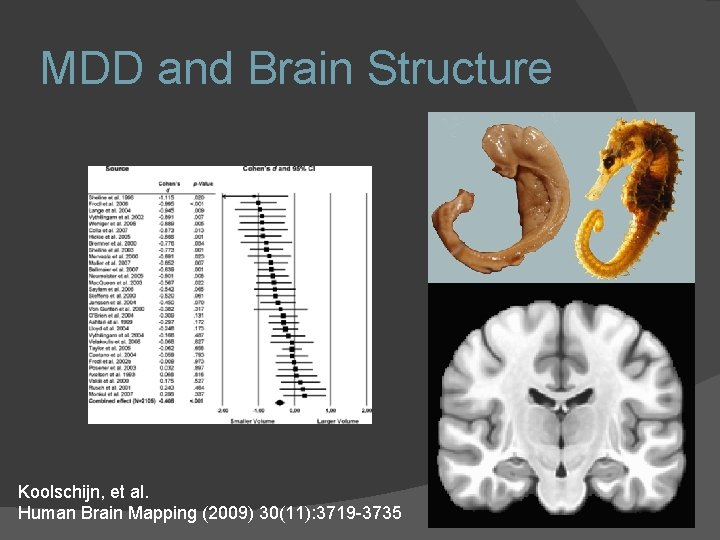
MDD and Brain Structure � Long history of manual segmentation of structures � Nearly every structure examined has been shown to be larger, smaller, or no different than in healthy control subjects � Why? Medication effects, differing segmentation techniques, etc.
MDD and Brain Structure Koolschijn, et al. Human Brain Mapping (2009) 30(11): 3719 -3735
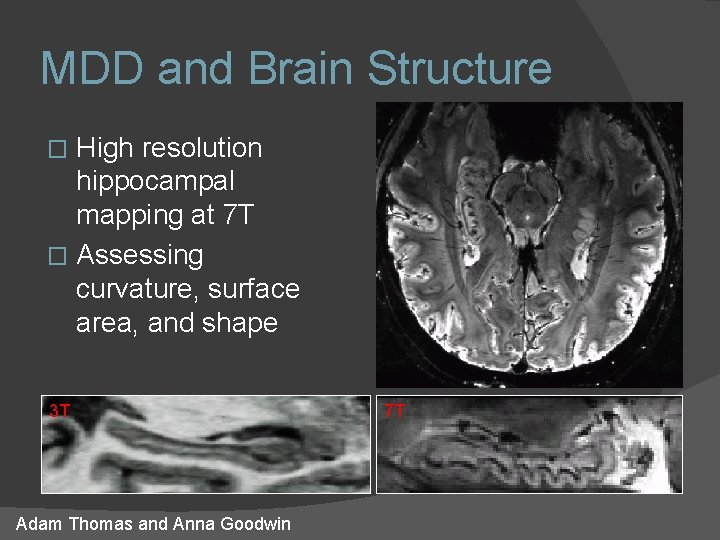
MDD and Brain Structure High resolution hippocampal mapping at 7 T � Assessing curvature, surface area, and shape � 3 T Adam Thomas and Anna Goodwin 7 T
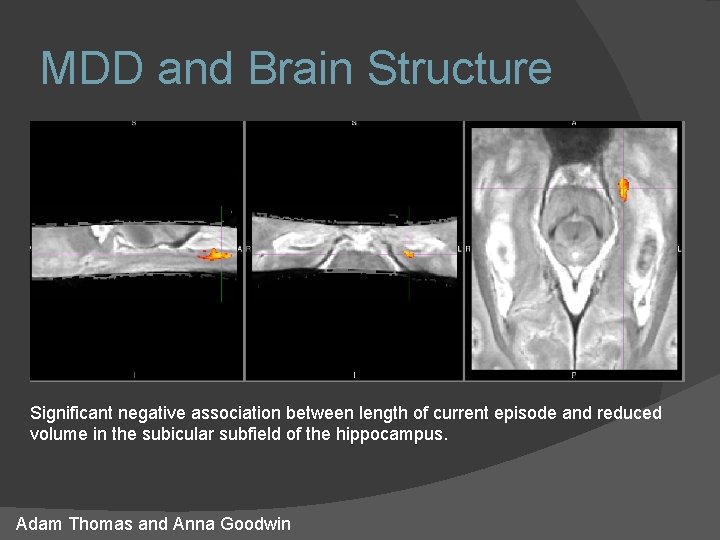
MDD and Brain Structure Significant negative association between length of current episode and reduced volume in the subicular subfield of the hippocampus. Adam Thomas and Anna Goodwin
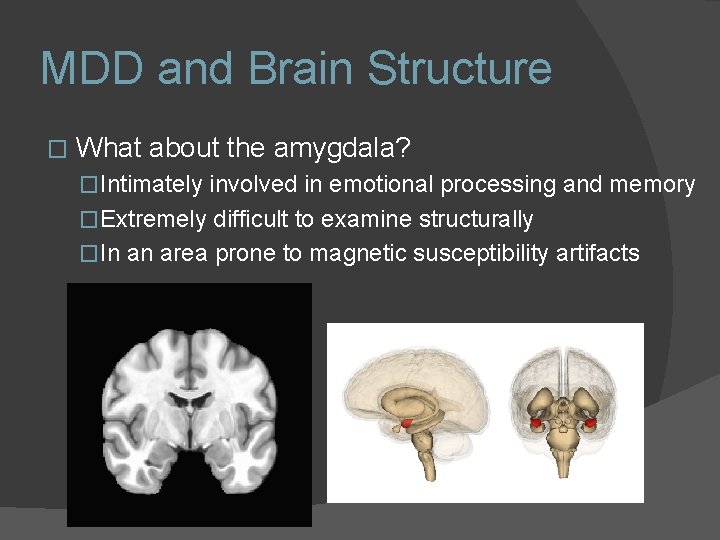
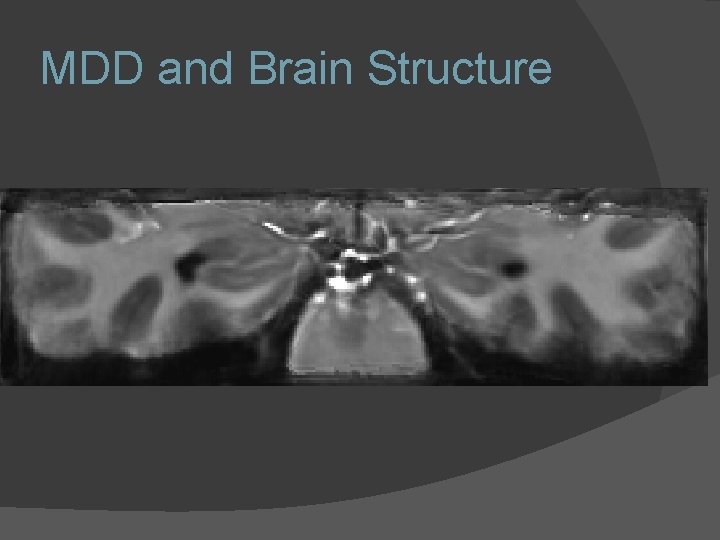
MDD and Brain Structure � What about the amygdala? �Intimately involved in emotional processing and memory �Extremely difficult to examine structurally �In an area prone to magnetic susceptibility artifacts
MDD and Brain Structure
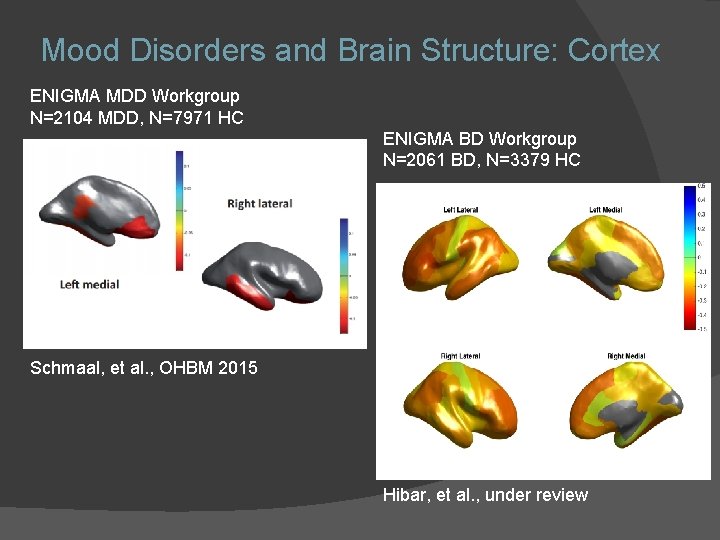
Mood Disorders and Brain Structure: Cortex ENIGMA MDD Workgroup N=2104 MDD, N=7971 HC ENIGMA BD Workgroup N=2061 BD, N=3379 HC Schmaal, et al. , OHBM 2015 Hibar, et al. , under review
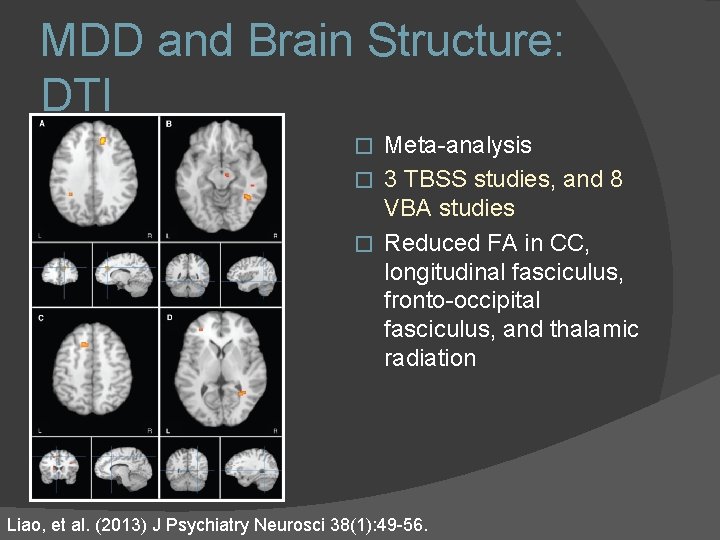
MDD and Brain Structure: DTI Meta-analysis � 3 TBSS studies, and 8 VBA studies � Reduced FA in CC, longitudinal fasciculus, fronto-occipital fasciculus, and thalamic radiation � Liao, et al. (2013) J Psychiatry Neurosci 38(1): 49 -56.
MDD and Brain Structure: DTI � Choi, et al. Neuropsychopharmacology (2014) 39(6): 1332 -1339. � MDD (N=134) and HC (N=54) � 98 treatment naïve MDD � All medication free � No differences found
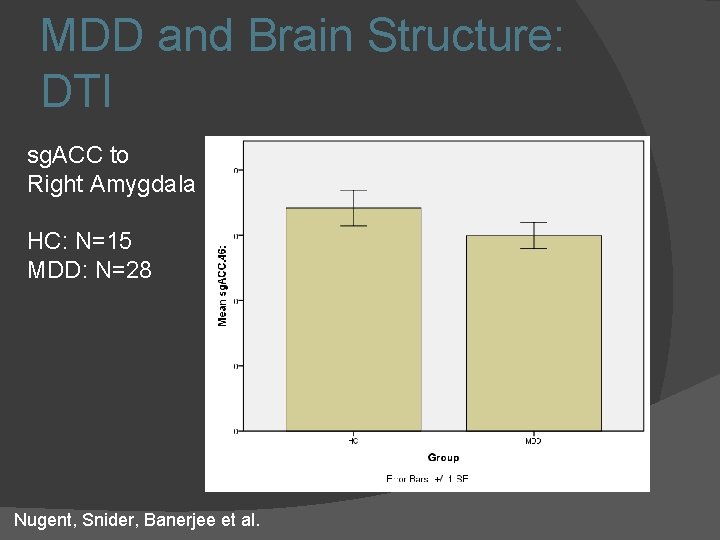
MDD and Brain Structure: DTI sg. ACC to Right Amygdala HC: N=15 MDD: N=28 Nugent, Snider, Banerjee et al.
Potential Markers � Structure �Volume �White Matter �Conformation � Function �Cognitive Tasks �Resting State
MDD and cognition � Affective Processing �Bias towards negative stimuli in depression � Attention �Dot probe tasks � Working memory and executive function �N-back task, delayed matching tasks � Reward processing
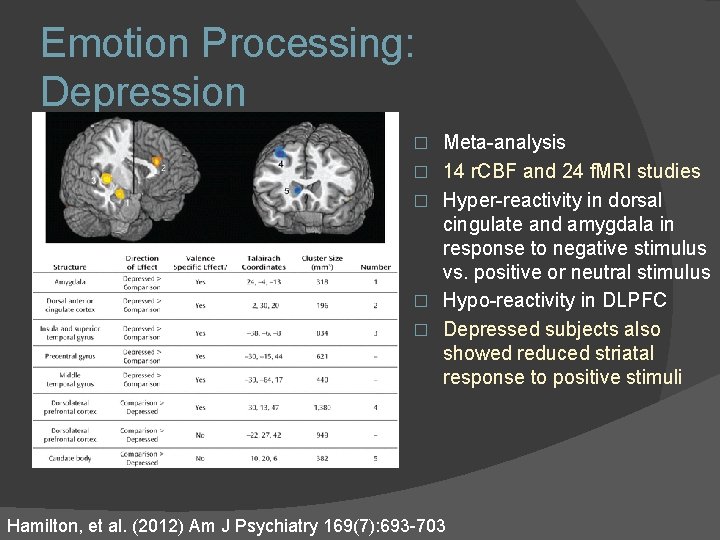
Emotion Processing: Depression � � � Meta-analysis 14 r. CBF and 24 f. MRI studies Hyper-reactivity in dorsal cingulate and amygdala in response to negative stimulus vs. positive or neutral stimulus Hypo-reactivity in DLPFC Depressed subjects also showed reduced striatal response to positive stimuli Hamilton, et al. (2012) Am J Psychiatry 169(7): 693 -703
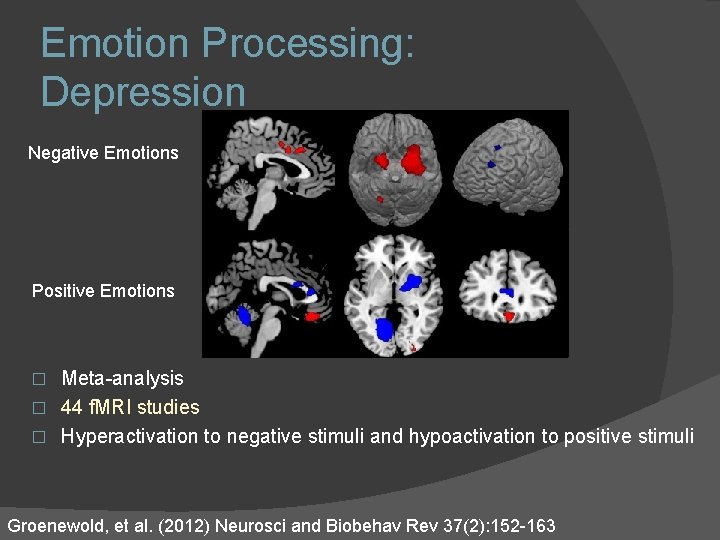
Emotion Processing: Depression Negative Emotions Positive Emotions Meta-analysis � 44 f. MRI studies � Hyperactivation to negative stimuli and hypoactivation to positive stimuli � Groenewold, et al. (2012) Neurosci and Biobehav Rev 37(2): 152 -163
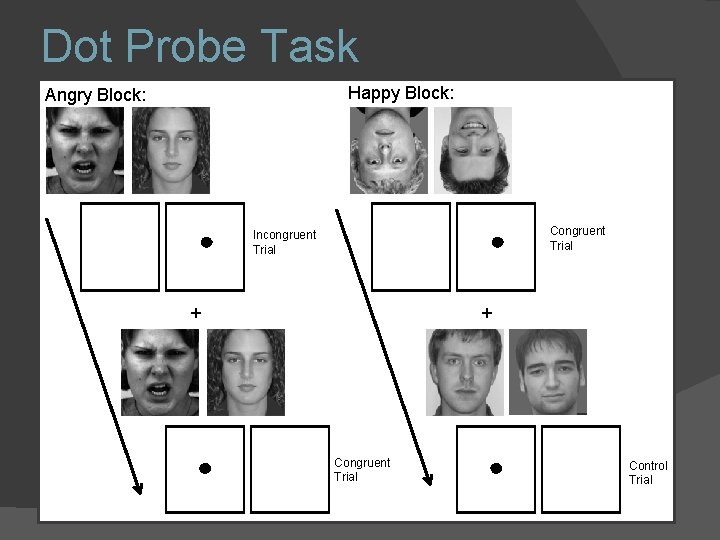
Dot Probe Task Happy Block: Angry Block: Congruent Trial Incongruent Trial + ` Congruent Trial + Control Trial
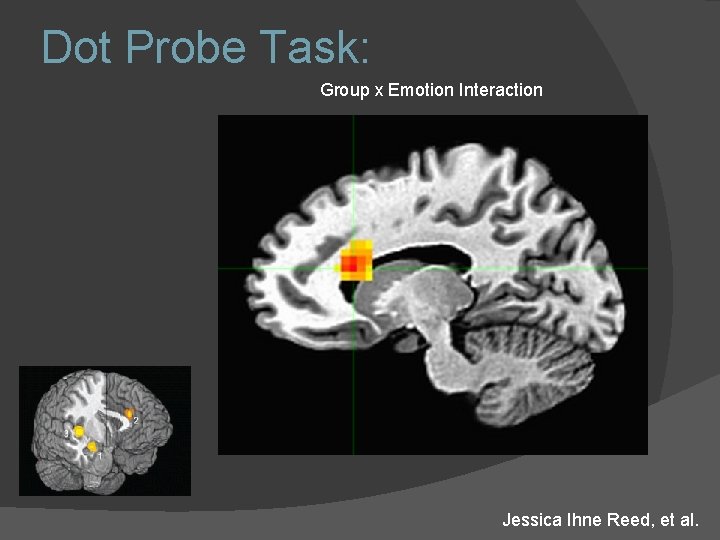
Dot Probe Task: Group x Emotion Interaction Jessica Ihne Reed, et al.
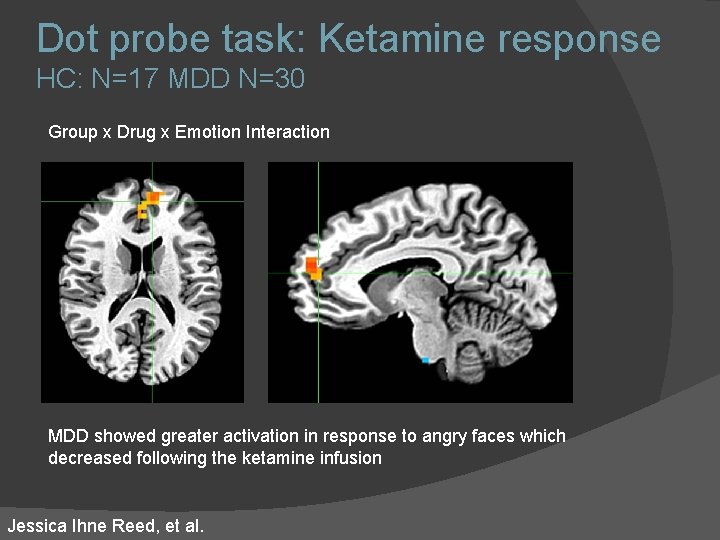
Dot probe task: Ketamine response HC: N=17 MDD N=30 Group x Drug x Emotion Interaction MDD showed greater activation in response to angry faces which decreased following the ketamine infusion Jessica Ihne Reed, et al.
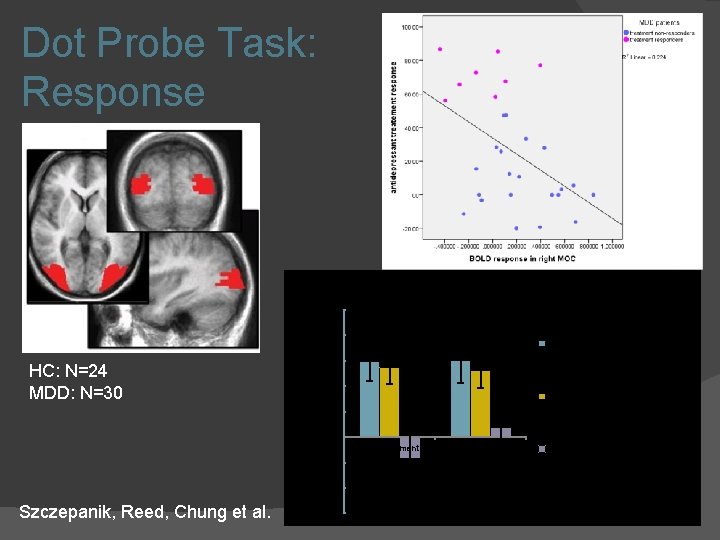
HC: N=24 MDD: N=30 Mean BOLD Signal in Right MOC Dot Probe Task: Response 0. 50 0. 40 p=0. 012 p=0. 09 p=0. 141 Healthy 0. 30 0. 20 MDD Patients: Treatment Non-Responders 0. 10 0. 00 Pre Treatment -0. 10 -0. 20 Szczepanik, Reed, Chung et al. p=0. 007 -0. 30 Post Ketamine MDD Patients: Treatment Responders
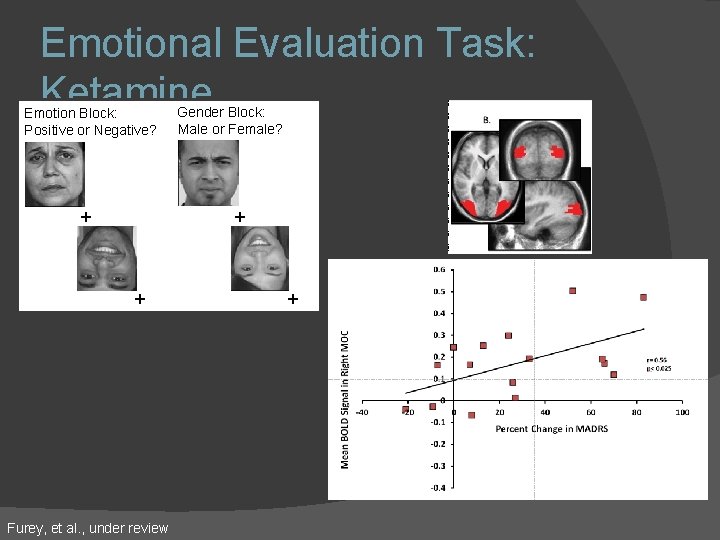
Emotional Evaluation Task: Ketamine Gender Block: Male or Female? Emotion Block: Positive or Negative? ` + + Furey, et al. , under review + +
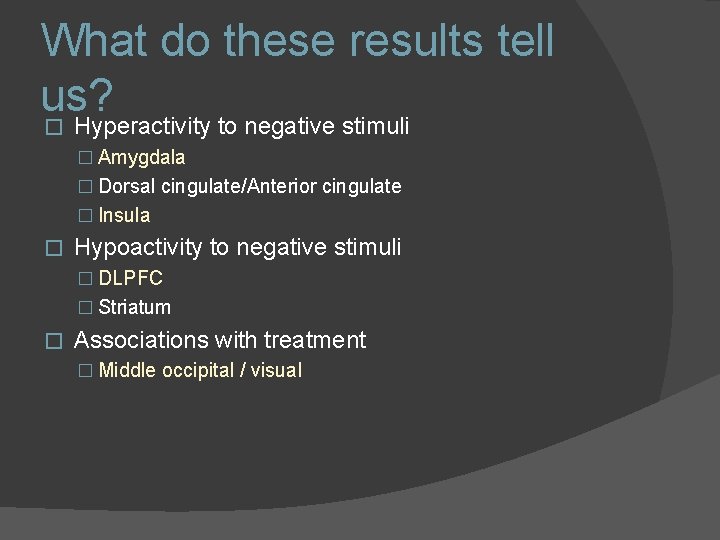
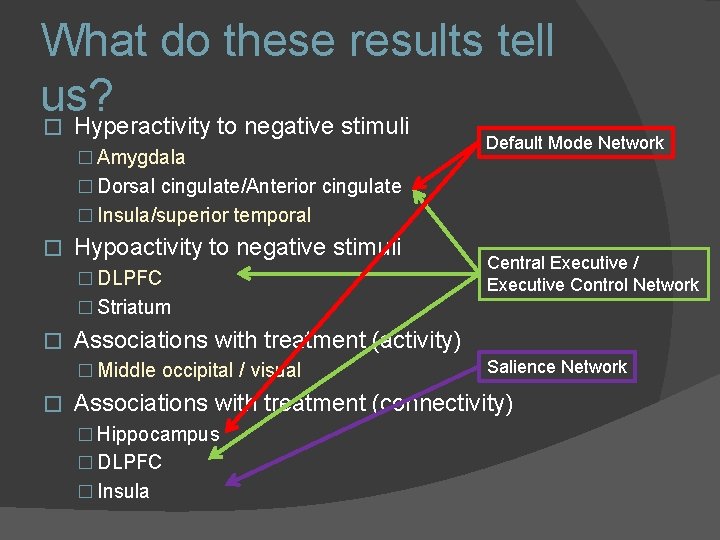
What do these results tell us? � Hyperactivity to negative stimuli � Amygdala � Dorsal cingulate/Anterior cingulate � Insula � Hypoactivity to negative stimuli � DLPFC � Striatum � Associations with treatment � Middle occipital / visual
MDD and the Resting State VS.
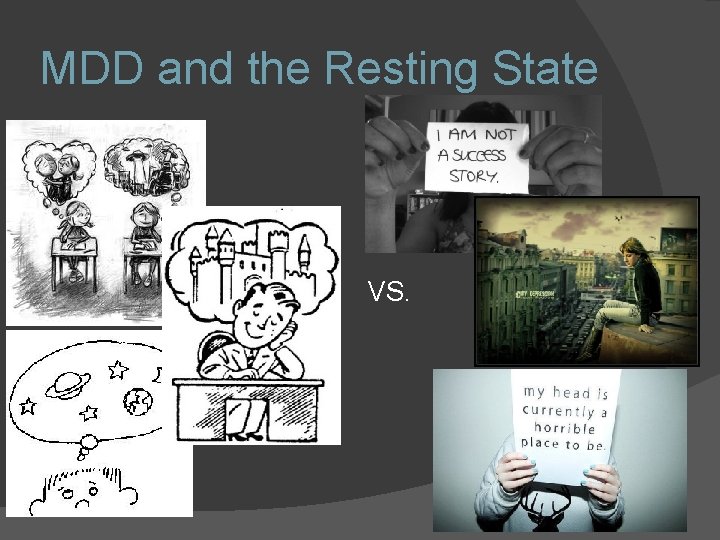
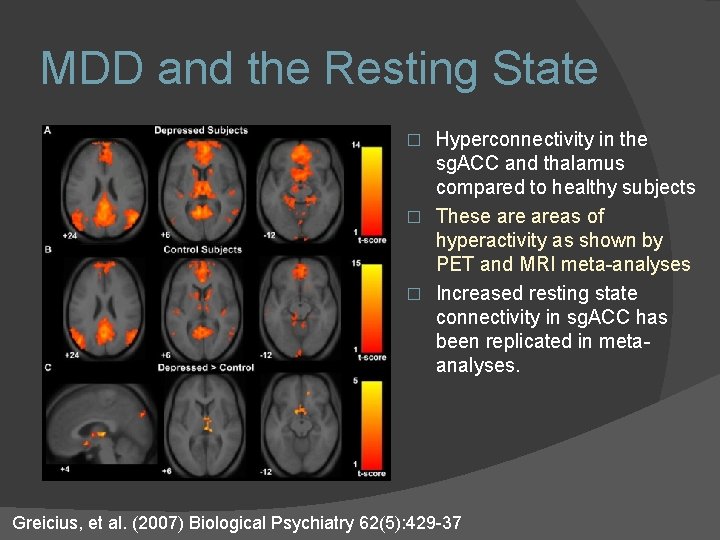
MDD and the Resting State Hyperconnectivity in the sg. ACC and thalamus compared to healthy subjects � These areas of hyperactivity as shown by PET and MRI meta-analyses � Increased resting state connectivity in sg. ACC has been replicated in metaanalyses. � Greicius, et al. (2007) Biological Psychiatry 62(5): 429 -37
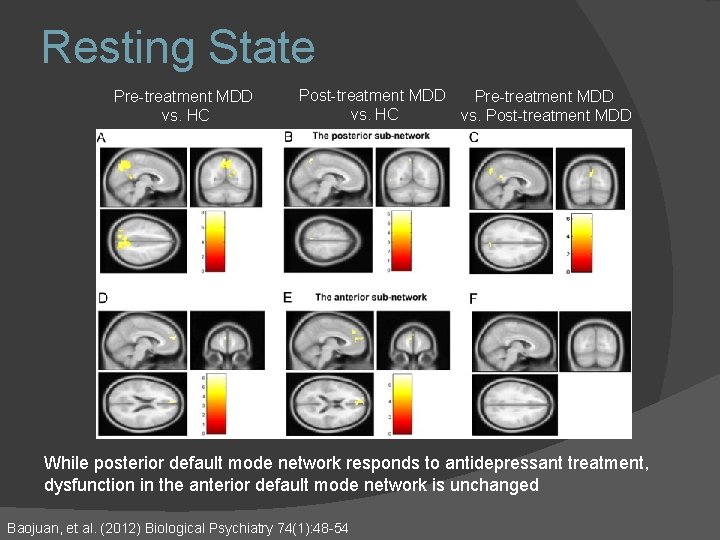
Resting State Pre-treatment MDD vs. HC Post-treatment MDD Pre-treatment MDD vs. HC vs. Post-treatment MDD While posterior default mode network responds to antidepressant treatment, dysfunction in the anterior default mode network is unchanged Baojuan, et al. (2012) Biological Psychiatry 74(1): 48 -54
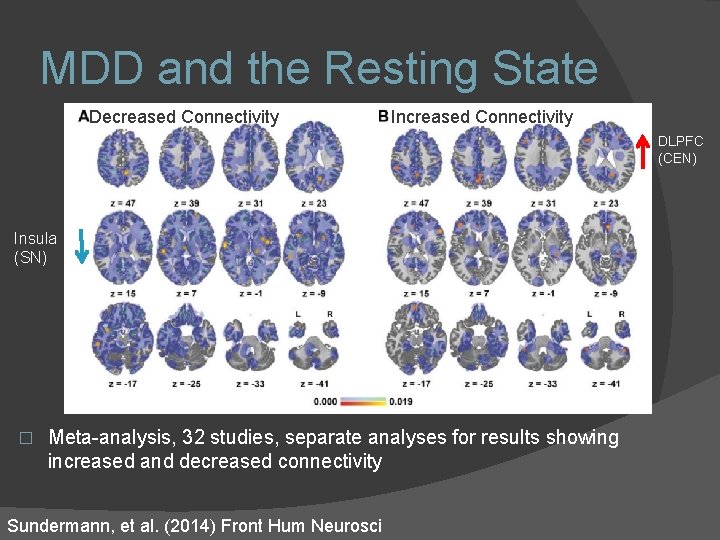
MDD and the Resting State Decreased Connectivity Increased Connectivity DLPFC (CEN) Insula (SN) � Meta-analysis, 32 studies, separate analyses for results showing increased and decreased connectivity Sundermann, et al. (2014) Front Hum Neurosci
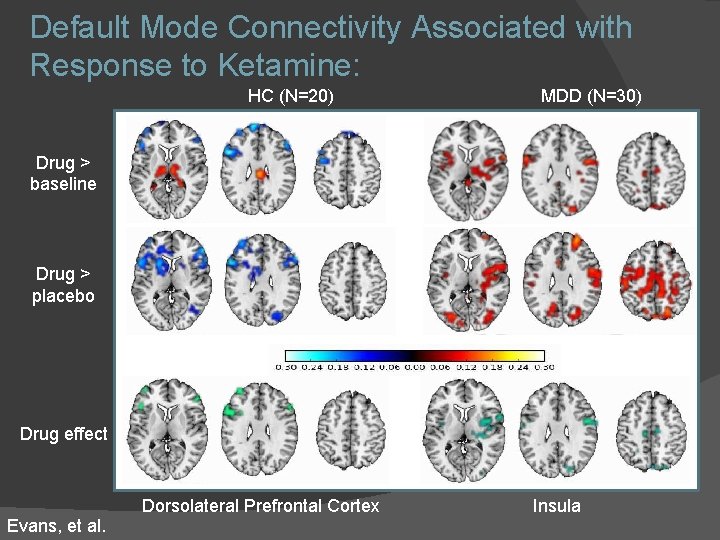
Default Mode Connectivity Associated with Response to Ketamine: HC (N=20) MDD (N=30) Drug > baseline Drug > placebo Drug effect Dorsolateral Prefrontal Cortex Evans, et al. Insula
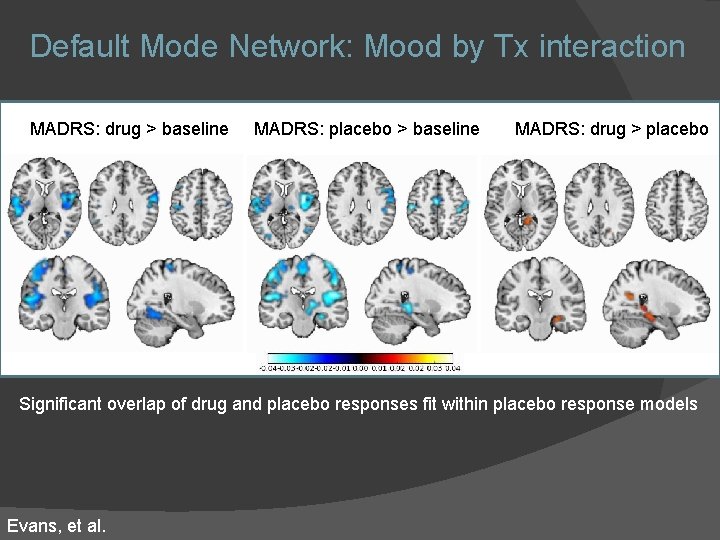
Default Mode Network: Mood by Tx interaction MADRS: drug > baseline MADRS: placebo > baseline MADRS: drug > placebo Significant overlap of drug and placebo responses fit within placebo response models Evans, et al.
What do these results tell us? � Hyperactivity to negative stimuli � Amygdala Default Mode Network � Dorsal cingulate/Anterior cingulate � Insula/superior temporal � Hypoactivity to negative stimuli � DLPFC Central Executive / Executive Control Network � Striatum � Associations with treatment (activity) � Middle occipital / visual � Salience Network Associations with treatment (connectivity) � Hippocampus � DLPFC � Insula
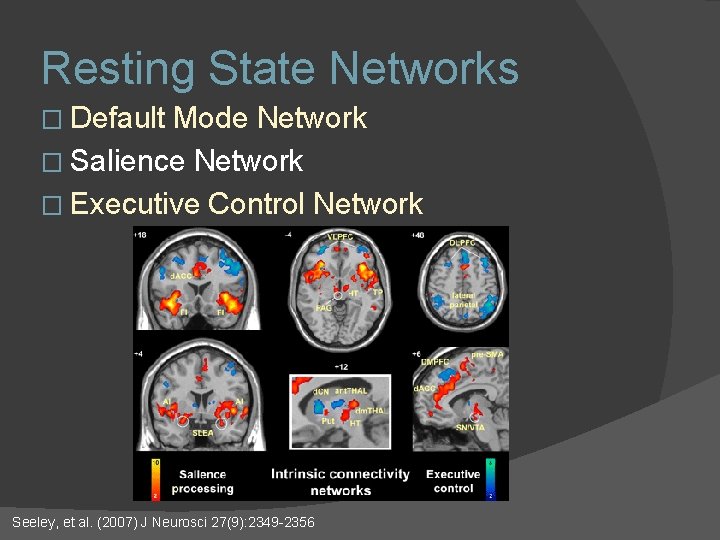
Resting State Networks � Default Mode Network � Salience Network � Executive Control Network Seeley, et al. (2007) J Neurosci 27(9): 2349 -2356
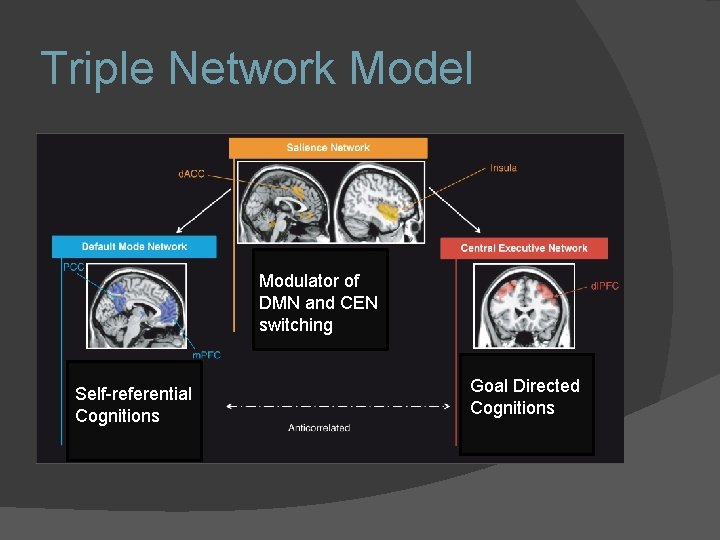
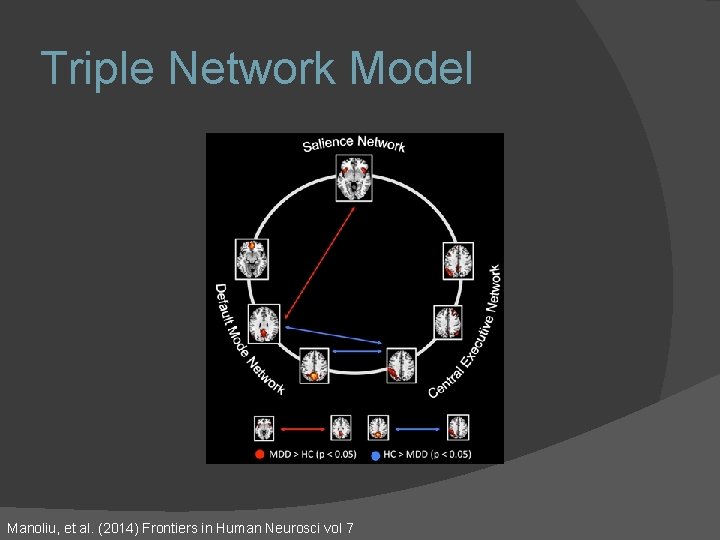
Triple Network Model Modulator of DMN and CEN switching Self-referential Cognitions Goal Directed Cognitions
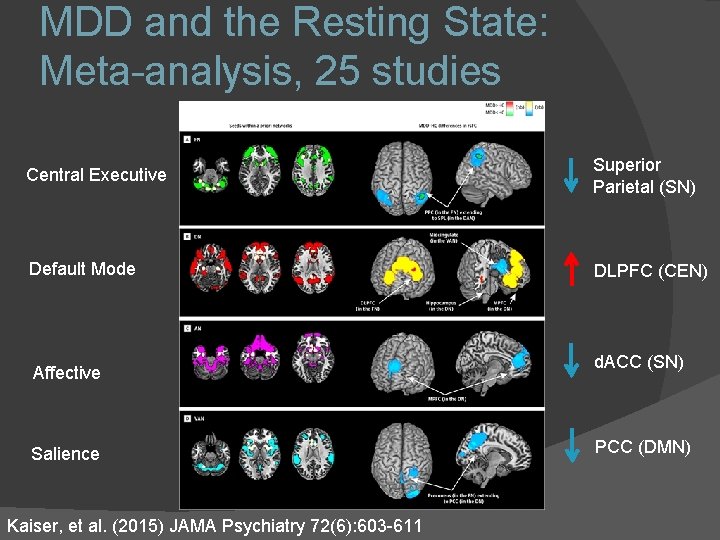
MDD and the Resting State: Meta-analysis, 25 studies Central Executive Superior Parietal (SN) Default Mode DLPFC (CEN) Affective Salience Kaiser, et al. (2015) JAMA Psychiatry 72(6): 603 -611 d. ACC (SN) PCC (DMN)
Triple Network Model Manoliu, et al. (2014) Frontiers in Human Neurosci vol 7
What isn’t known � How does treatment affect the interplay between these networks? � Are there dynamic changes in the relationship between these networks? � Are there fundamental differences in network function at a neuronal level?
Conclusions Mood disorders are frequently disabling, but poorly understood and ineffectively treated � New models are emerging, such as the triple network model, which may be significant in understanding brain function in mood disorders � Translation of these models into new drug targets is not obvious � Full understanding will likely involve multimodality approaches, integrating structure, function and other diverse modalities �
Acknowledgements Chief: Carlos A. Zarate Scientific Staff: Rodrigo Machado-Vieira David Luckenbaugh Joanna Szczepanik Clinical Staff: Larry Park, Clinical Director Rezvan Ameli Nancy Brutsche Yamila Carmona Madeline Gupta Libby Jolkovsky Immaculata Ukoh 7 SE and OP 4 staff Support Staff: Brenda Gray Eva Kakoza Clinical Fellows: Marc Lener Mark Niciu Post doctoral fellows: Elizabeth Ballard Jennifer Evans Jessica Ihne Reed Post-baccalaureate IRTAs Meg Airey Laura Newman Bridget Shovestul Sam Snider Kathleen Wills Julia Yarrington Kevin Yu Summer IRTA Eunice Chung Anna Goodwin NIH Contributors: Staff of the f. MRIF Staff of the MRS Core Staff of the SSCC Li An Adam Thomas Daniel Handwerker