Acute fatty liver disease a rare serious condition






- Slides: 41
• • Acute fatty liver disease a rare serious condition uncertain etiology it is part of the preeclampsia spectrum. • Women with a raised body mass index (BMI), primigravidae and women with a multiple pregnancy appear to be at risk.
• -Five out of the following symptoms • -usually present after 30 weeks of pregnancy: • -nausea, vomiting, polyuria, polydipsia, fever, headache, encephalopathy, pruritus, abdominal pain, tiredness, confusion, jaundice, anorexia, ascites, coagulopathy, hypertension, proteinuria, liver failure and hepatic encephalopathy
• - deteriorate rapidly, especially liver function, a�ecting both maternal and fetal morbidity and mortality. • - Te woman must be referred to a specialist hepatologist for further investigation and to exclude alternative diagnoses such as HELLP.
• -Management is to hasten the birth of the baby , prepare the woman for a preterm birth. • - Careful fluid balance • - DIC is a significant risk. • -Following the birth the woman is likely to be transferred to an ICU/HDCU where her condition should begin to improve after 48 hours
Metabolic disorders • Obesity • -one of the most significant health concerns a�ecting society, with significant impact on the maternity services • - serious morbidity or mortality is related to increasing weight & development of disease e. g. cardiovascular disease, certain cancers and type 2 diabetes mellitus.
• -The increasing prevalence of obesity is commonly called an epidemic , although obesity does not resemble an infectious disease; • - Using BMI classification, statistics demonstrate 25% of adults over 16 years are obese (BMI ≥ 30 kg/m 2) of which 18. 5% are women of childbearing age
• 5% of the population having a BMI ≥ 40 kg/m 2 Classifying size using body mass index (BMI) • -Obesity is diagnosed using the BMI as a measure of fatness, • - assessing a person's level of body fat than measuring solely height and weight • - Obesity is defined as a BMI ≥ 30 kg/m 2 and can be subdivided into classes I, II and III
• - As a screening tool for fatness, the BMI is considered accurate body fat distributions, muscle and bone density, ethnic variations, gender specifics or age effect.
• - As a screening tool for fatness, the BMI is considered accurate body fat distributions, muscle and bone density, ethnic variations, gender specifics or age effect.
W HO int e r na t io na l bo dy m a ss inde x ( BM I ) cla ssifica t io ns ( kg / m 2 ) – Under-weight = <18. 5 – Normal range = 18. 5– 24. 9 • • Pre-obese = 25. 0– 29. 9 – Obese = ≥ 30. 0 • Obese Class I = 30. 0– 34. 9 • Obese Class II = 35. 0– 39. 9 • Obese Class III = ≥ 40. 0
• Distribution of body fat and disease • -a disordered glucose tolerance which ohen contributes to medical complications such as type 2 diabetes mellitus. • - visceral fat (fat retained abdominally) is metabolically more active, contributing to metabolic syndrome which is directly associated with cardiovascular disease and type 2 diabetes
• Obesity as a concept • - risk of developing chronic disease • - Social scientists would agree that obesity is not a disease, but is a social construct defined as a disease, because it is considered abnormal in current Western culture • - significant stigma and discrimination the cause of obesity is multifactorial:
• genetics, biology and behaviour on a background of cultural, environmental and socialfactors, where the individual plays a passive role within an obesogenic society
• Obesity demographics • - increased rates of obesity in poorer societal groups, especially younger age groups. • -Children born into lower social class families are likely to become obese • more in women than in men, probably because of the complexity of the role of women in society.
Pathophysiology of obesity • increasing their risk of developing metabolic syndrome. • - central obesity, causes metabolic dysfunction involving primarily lipids and glucose, results in organ dysfunction within many of the body systems, especially the cardiovascular system. • - Other risk factors for metabolic syndrome include family history, poor diet and a sedentary lifestyle.
• -Metabolic syndrome is thought to be caused by visceral adipose tissue causing the release of pro-inflammatory cytokines, known as adipokines, which promote insulin resistance. • - This causes a systemic inflammatory response, which over time results in microvascular and endothelial dysfunction in all of the body systems.
• -The individual will have atherogenic dyslipidaemia, identified by: • @ low high density lipoprotein (HDL) • @ raised triglycerides • @, hypertension • @raised fasting blood glucose levels. • - As well as insulin resistance, such individuals develop a prothrombotic state with raised fibrinogen and plasminogen-activator-inhibitor levels
• Nutritional needs in pregnancy • -Weight gain is usual at certain times in a female's life, ; • - e. g. during infancy • -between the ages of 5 and 7 years • - adolescence • - pregnancy • - menopause.
• -Maternal over nutrition has permanent e�ects on a fetus, that is, a higher birth weight tends to result in a higher BMI as an adult • - Physiological changes in pregnancy predispose to weight gain, essentially to provide energy for labour and lactation, and this storage is facilitated by the e�ect that increases in estrogen, progesterone and human placental lactogen (HPL) have on glucose metabolism • -Women with a raised BMI should be advised and encouraged to lose weight pre-conceptually to optimize pregnancy outcomes
• -A woman's basal metabolic rate (BMR) increases during pregnancy due to : • *the increased metabolic activity of the maternal and fetal tissues. • *The increased body weight • * the increased maternal cardiovascular, renal and respiratory load influence a rise in the basal metabolic rate (BMR), but in part this is counterbalanced by a general decrease in activity.
• -The resulting increase in required calorie intake is therefore relatively small; an extra 200 kcal per day are required during the third trimester for most women • -Weight gain in pregnancy is dependent on factors: • diet, activity and maternal wellbeing
Antenatal care • The BMI is routinely calculated at the initial visit with the midwife (booking) • - a raised BMI are ohen referred to a multiprofessional antenatal clinic, which involves specialist midwives, obstetricians and dieticians ( • - lifestyle interventions were introduced for obese and overweight women during pregnancy, the gestational weight gain was reduced, along with a reduction in the prevalence of gestational diabetes.
• -Obesity is a significant risk factor for maternal mortality • & poor perinatal outcomes, • -Women with obesity might find some minor disorders of pregnancy, such as back pain and fatigue, are exacerbated
Risks a sso cia t e d wit h o be sit y in pr e g na ncy Maternal – Miscarriage and stillbirth – Gestational diabetes: offered a glucose tolerance test (GTT) at 24– 28 weeks if BMI ≥ 30 – Hypertension: ensure correct size cuff and increase surveillance if BMI ≥ 35; increase antenatal appointments to screen for PET to every 3 weeks between 24 and 32 weeks and refer to specialist care if one or more additional risk factors are present, e. g. first baby, raised BP at booking
• Venous thromboembolism: assess risk at every visit; prophylaxis is recommended if two or more risk factors are present – Prolonged pregnancy: risks associated with induction of labour – Presence of pre-existing medical conditions, e. g. ischaemic heart disease – Poorer mental health, e. g. depression
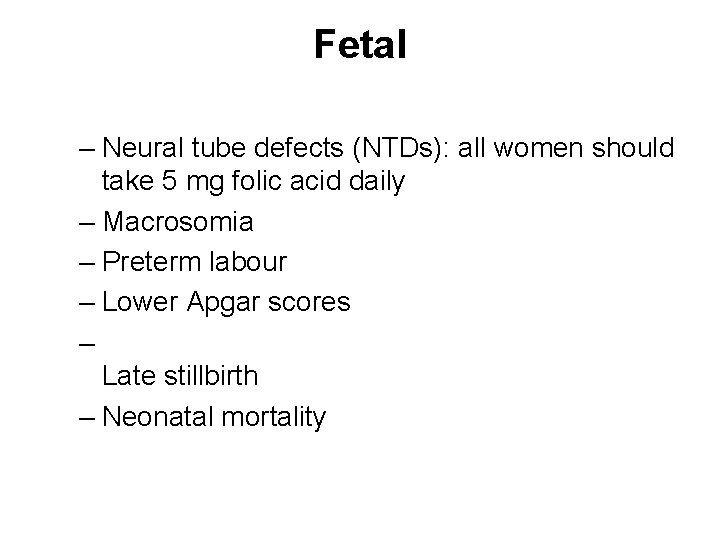
Fetal – Neural tube defects (NTDs): all women should take 5 mg folic acid daily – Macrosomia – Preterm labour – Lower Apgar scores – Late stillbirth – Neonatal mortality
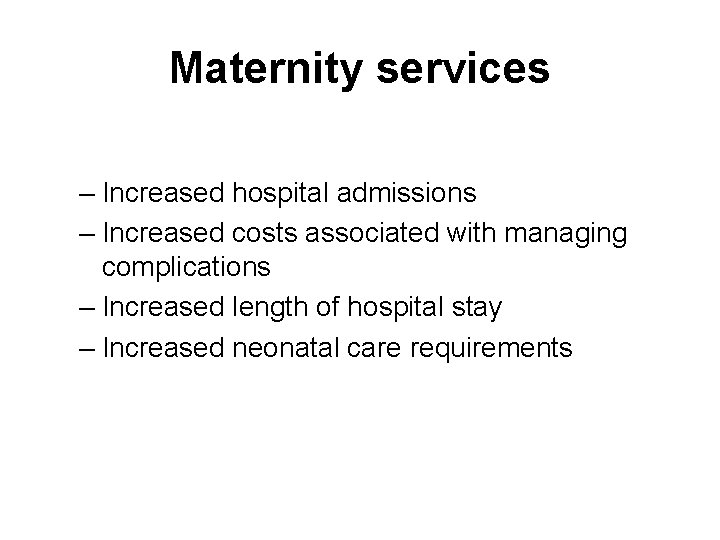
Maternity services – Increased hospital admissions – Increased costs associated with managing complications – Increased length of hospital stay – Increased neonatal care requirements
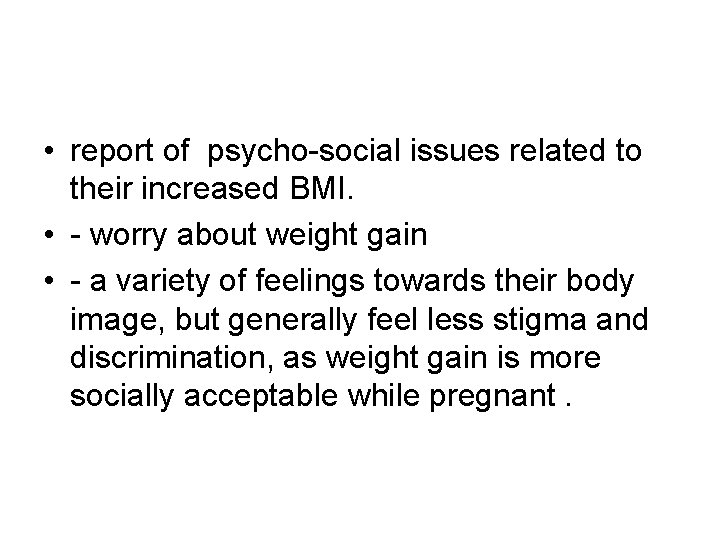
• report of psycho-social issues related to their increased BMI. • - worry about weight gain • - a variety of feelings towards their body image, but generally feel less stigma and discrimination, as weight gain is more socially acceptable while pregnant.
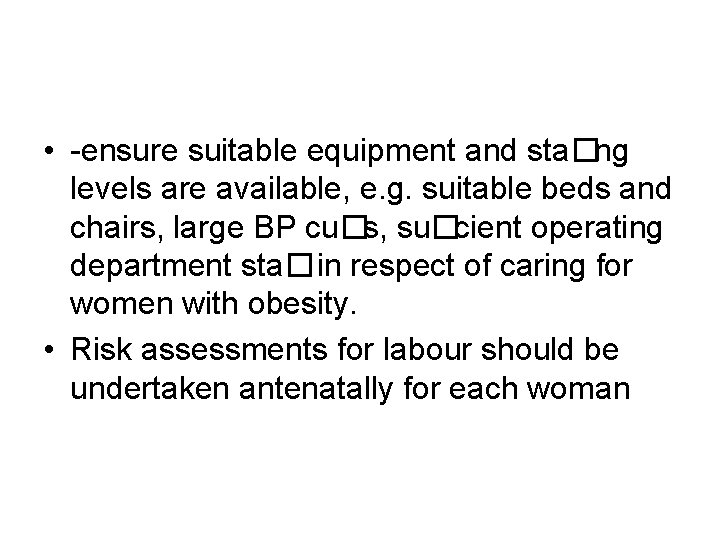
• -ensure suitable equipment and sta�ng levels are available, e. g. suitable beds and chairs, large BP cu�s, su�cient operating department sta�in respect of caring for women with obesity. • Risk assessments for labour should be undertaken antenatally for each woman
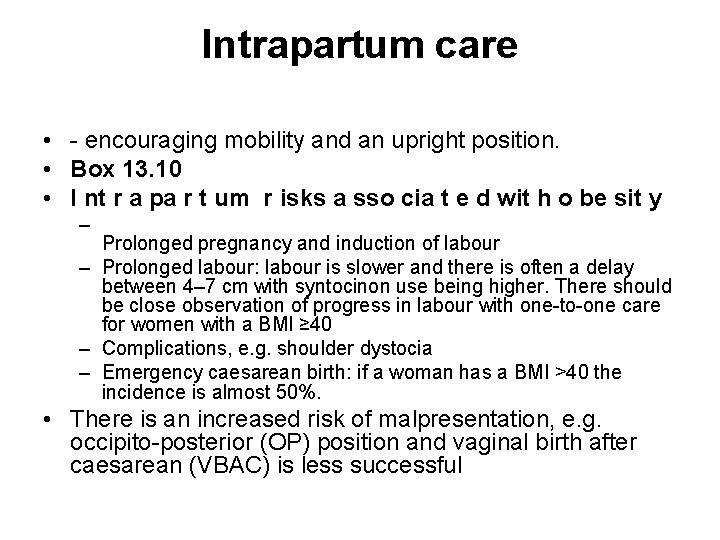
Intrapartum care • - encouraging mobility and an upright position. • Box 13. 10 • I nt r a pa r t um r isks a sso cia t e d wit h o be sit y – Prolonged pregnancy and induction of labour – Prolonged labour: labour is slower and there is often a delay between 4– 7 cm with syntocinon use being higher. There should be close observation of progress in labour with one-to-one care for women with a BMI ≥ 40 – Complications, e. g. shoulder dystocia – Emergency caesarean birth: if a woman has a BMI >40 the incidence is almost 50%. • There is an increased risk of malpresentation, e. g. occipito-posterior (OP) position and vaginal birth after caesarean (VBAC) is less successful
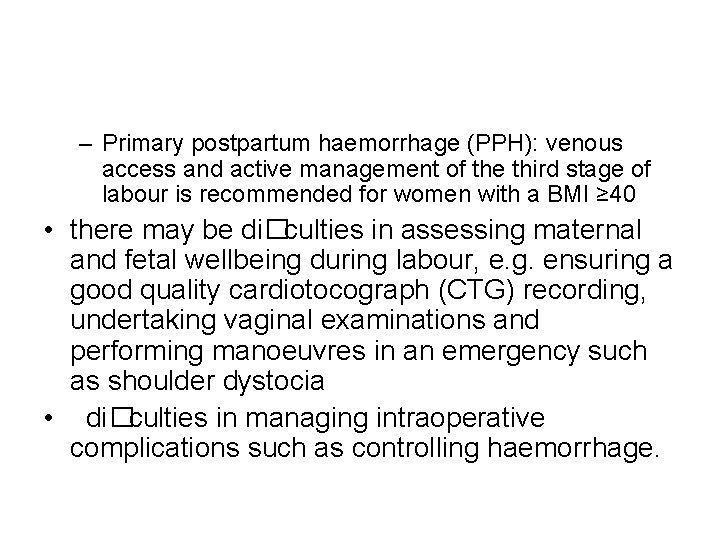
– Primary postpartum haemorrhage (PPH): venous access and active management of the third stage of labour is recommended for women with a BMI ≥ 40 • there may be di�culties in assessing maternal and fetal wellbeing during labour, e. g. ensuring a good quality cardiotocograph (CTG) recording, undertaking vaginal examinations and performing manoeuvres in an emergency such as shoulder dystocia • di�culties in managing intraoperative complications such as controlling haemorrhage.
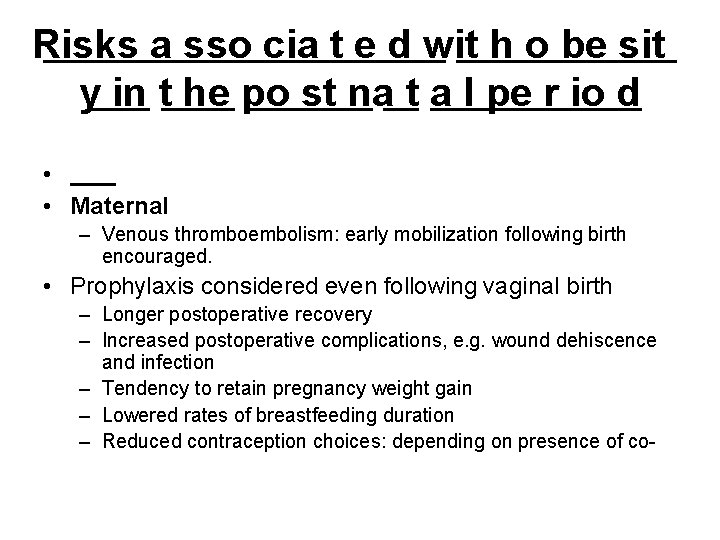
Risks a sso cia t e d wit h o be sit y in t he po st na t a l pe r io d • • Maternal – Venous thromboembolism: early mobilization following birth encouraged. • Prophylaxis considered even following vaginal birth – Longer postoperative recovery – Increased postoperative complications, e. g. wound dehiscence and infection – Tendency to retain pregnancy weight gain – Lowered rates of breastfeeding duration – Reduced contraception choices: depending on presence of co-
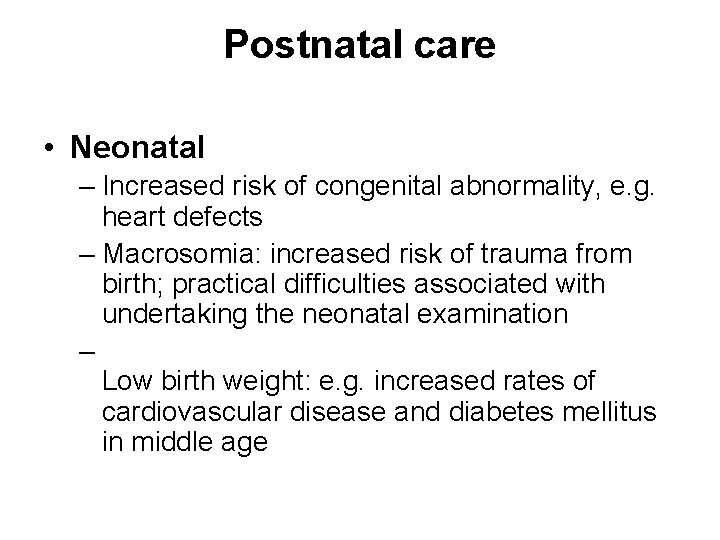
Postnatal care • Neonatal – Increased risk of congenital abnormality, e. g. heart defects – Macrosomia: increased risk of trauma from birth; practical difficulties associated with undertaking the neonatal examination – Low birth weight: e. g. increased rates of cardiovascular disease and diabetes mellitus in middle age
• Breastfeeding reduce the weight a woman has gained in pregnancy • -It is known that obese women have delayed lactogenesis and a lowered response of prolactin to suckling, leading to reduced milk production and premature cessation of breastfeeding. • However, the response to prolactin is reduced over time so extended support from midwives skilled at supporting the continuance of breastfeeding is especially important in this group of women.
• -Weight gained in pregnancy is di�cult to lose postnatally due to a number of factors such as : • 1 -the demands of caring for a new baby, • 2 - eating irregular meals • 3 - an inability to exercise as frequently. This may result in higher rates of obesity in later life (Gardner et al 2011). Women who were obese during pregnancy also exhibit a tendency to retain
• -weight reduction has been shown to improve outcomes in any subsequent pregnancy Discussions around weight, activity and healthy lifestyle modification behaviours by healthcare professionals during the 6– 8 weeks postnatal examination are recommended.
• -If co-morbidities such as gestational diabetes have been diagnosed during pregnancy a glucose tolerance test (GTT) should be undertaken at the postnatal examination and the woman should continue to have annual cardiometabolic screening