A Concept of Environmental Forecasting and Variational Organization
- Slides: 34
A Concept of Environmental Forecasting and Variational Organization of Modeling Technology Vladimir Penenko Institute of Computational Mathematics and Mathematical Geophysics SD RAS
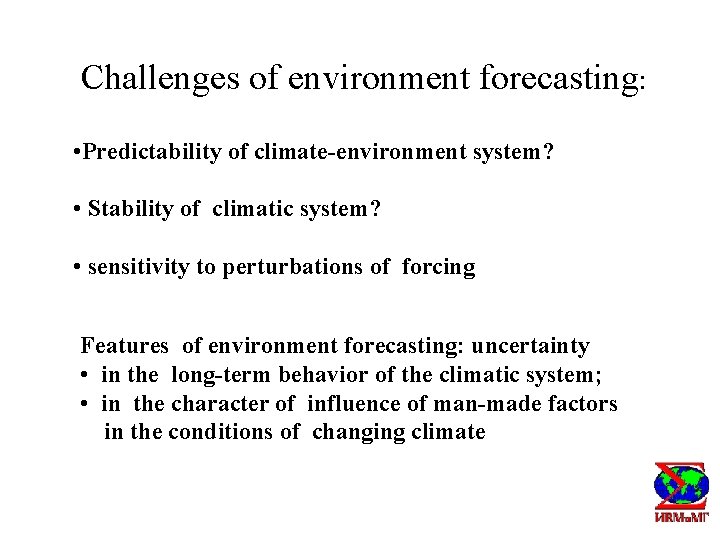
Challenges of environment forecasting: • Predictability of climate-environment system? • Stability of climatic system? • sensitivity to perturbations of forcing Features of environment forecasting: uncertainty • in the long-term behavior of the climatic system; • in the character of influence of man-made factors in the conditions of changing climate
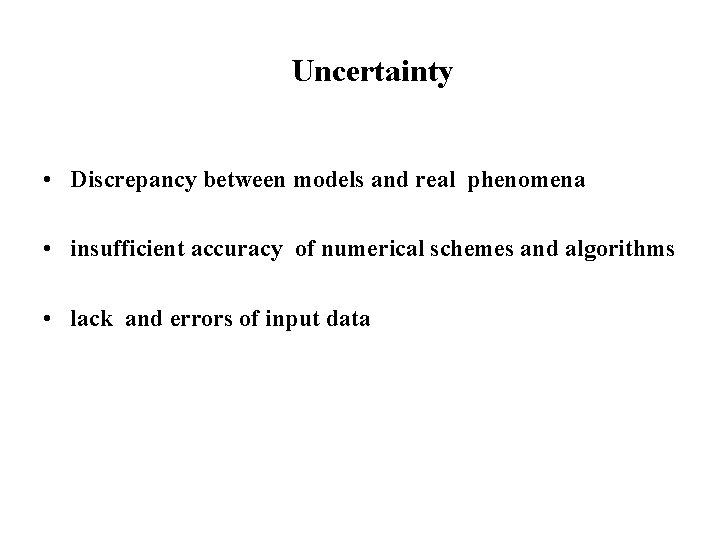
Uncertainty • Discrepancy between models and real phenomena • insufficient accuracy of numerical schemes and algorithms • lack and errors of input data
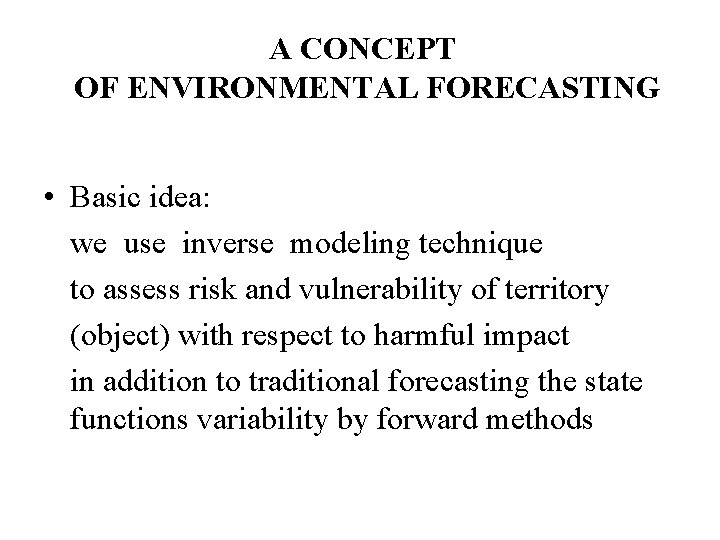
A CONCEPT OF ENVIRONMENTAL FORECASTING • Basic idea: we use inverse modeling technique to assess risk and vulnerability of territory (object) with respect to harmful impact in addition to traditional forecasting the state functions variability by forward methods
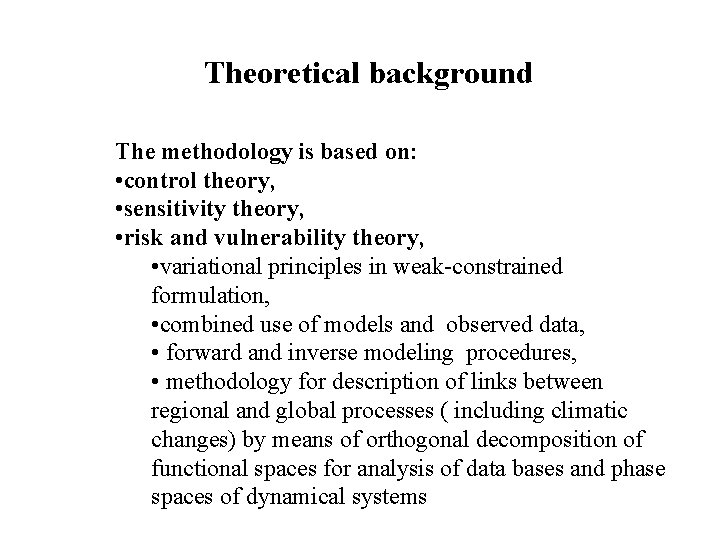
Theoretical background The methodology is based on: • control theory, • sensitivity theory, • risk and vulnerability theory, • variational principles in weak-constrained formulation, • combined use of models and observed data, • forward and inverse modeling procedures, • methodology for description of links between regional and global processes ( including climatic changes) by means of orthogonal decomposition of functional spaces for analysis of data bases and phase spaces of dynamical systems
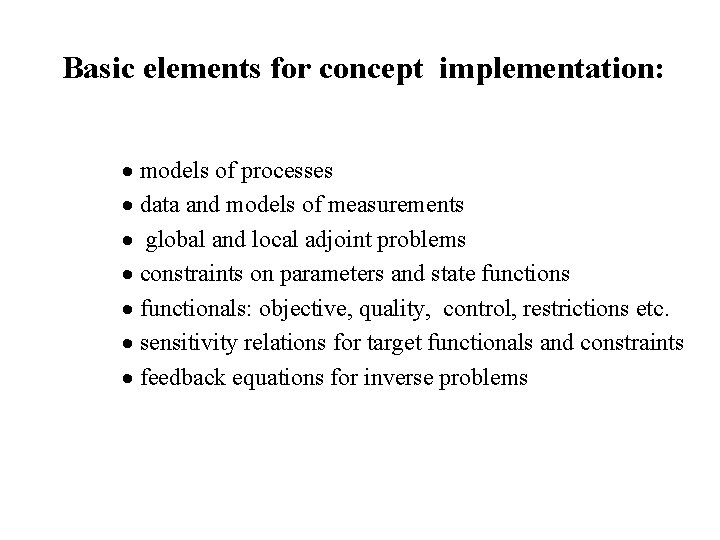
Basic elements for concept implementation: · models of processes · data and models of measurements · global and local adjoint problems · constraints on parameters and state functions · functionals: objective, quality, control, restrictions etc. · sensitivity relations for target functionals and constraints · feedback equations for inverse problems
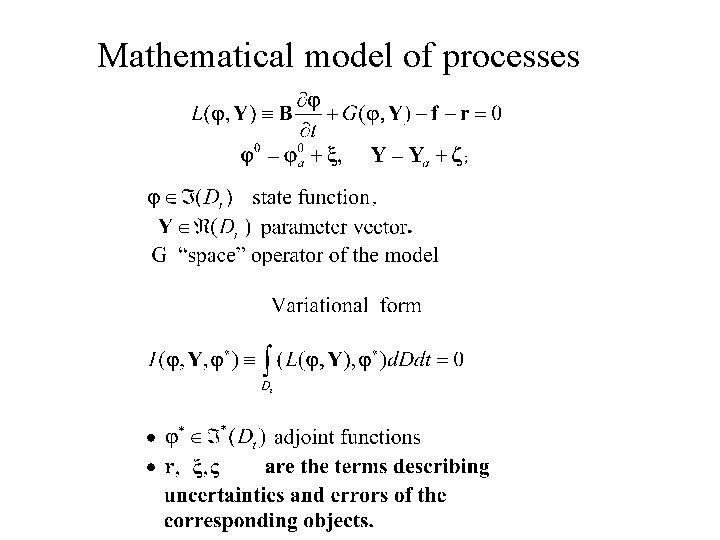
Mathematical model of processes
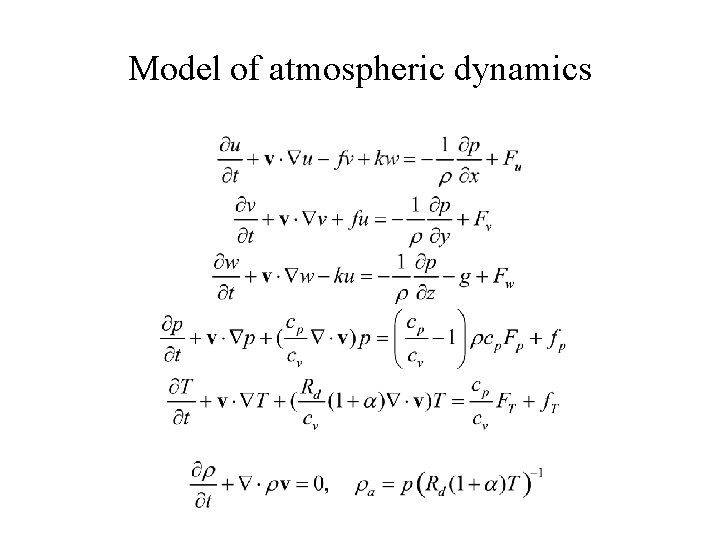
Model of atmospheric dynamics
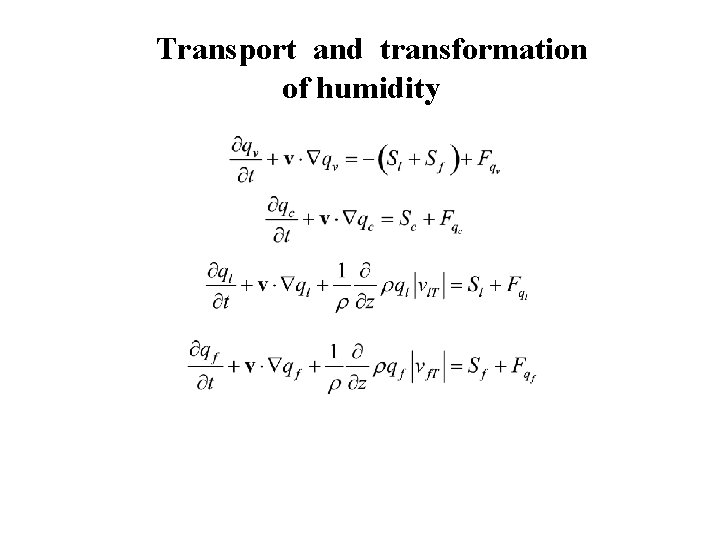
Transport and transformation of humidity
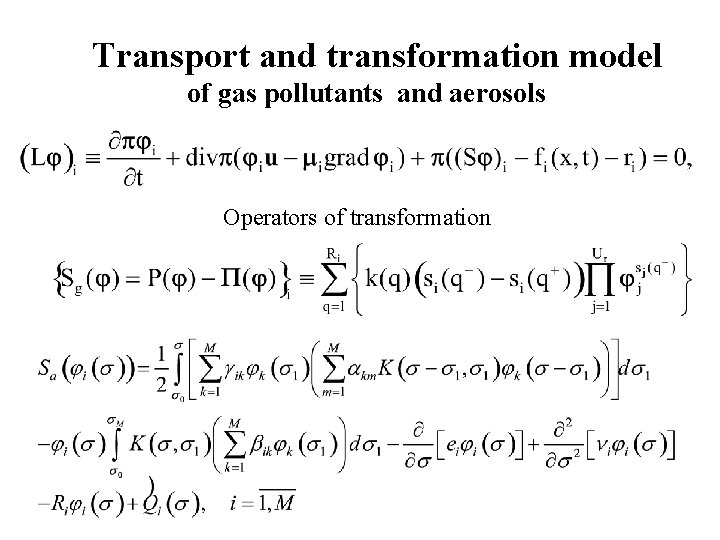
Transport and transformation model of gas pollutants and aerosols Operators of transformation
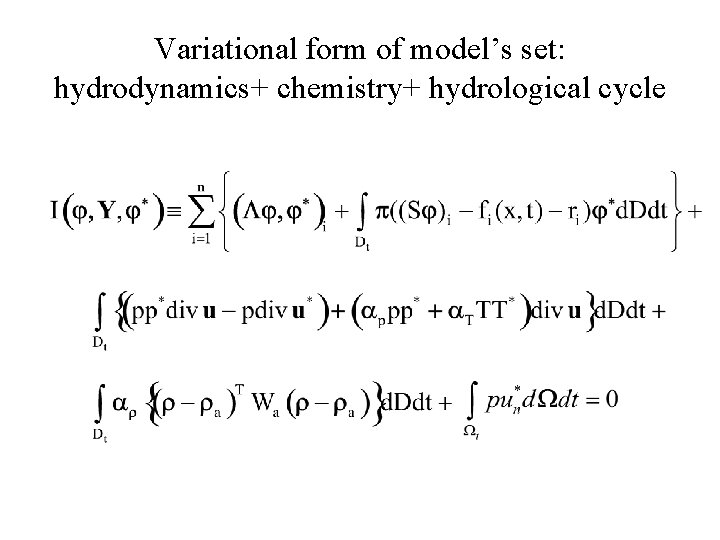
Variational form of model’s set: hydrodynamics+ chemistry+ hydrological cycle
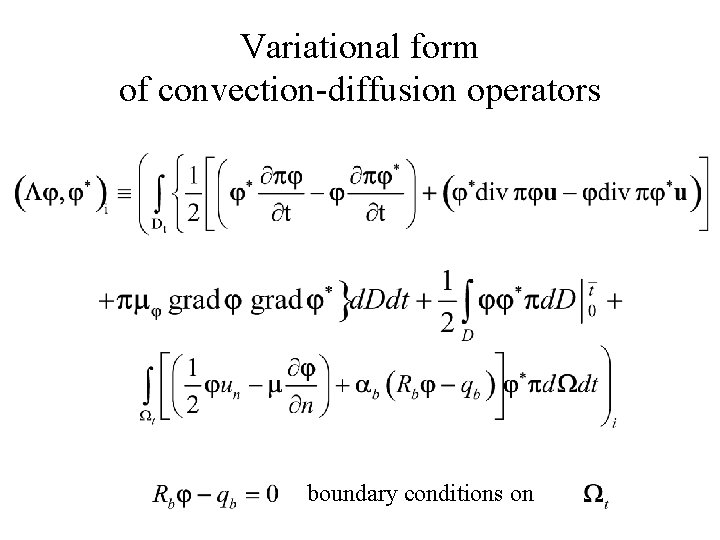
Variational form of convection-diffusion operators boundary conditions on
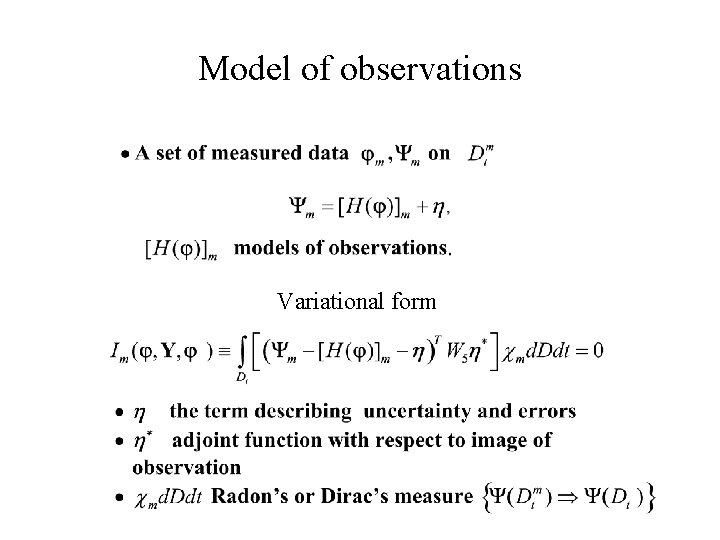
Model of observations Variational form
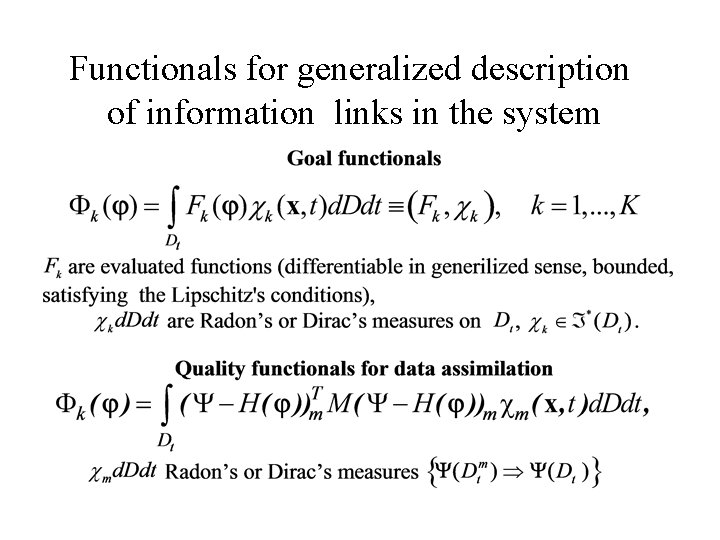
Functionals for generalized description of information links in the system
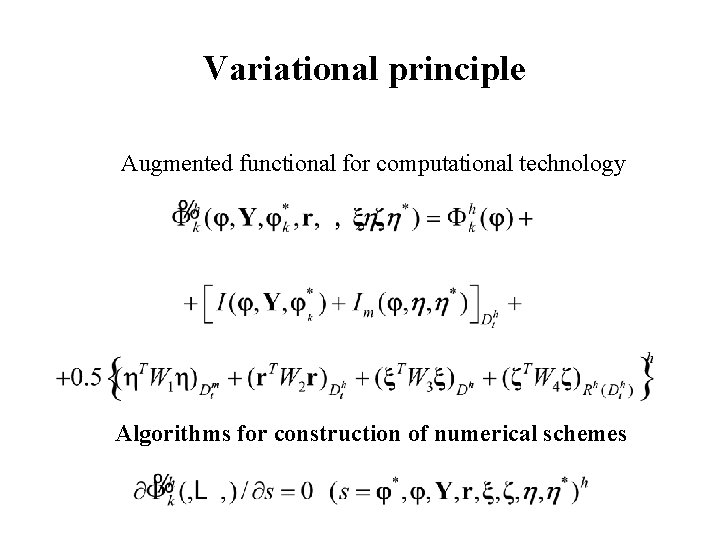
Variational principle Augmented functional for computational technology Algorithms for construction of numerical schemes
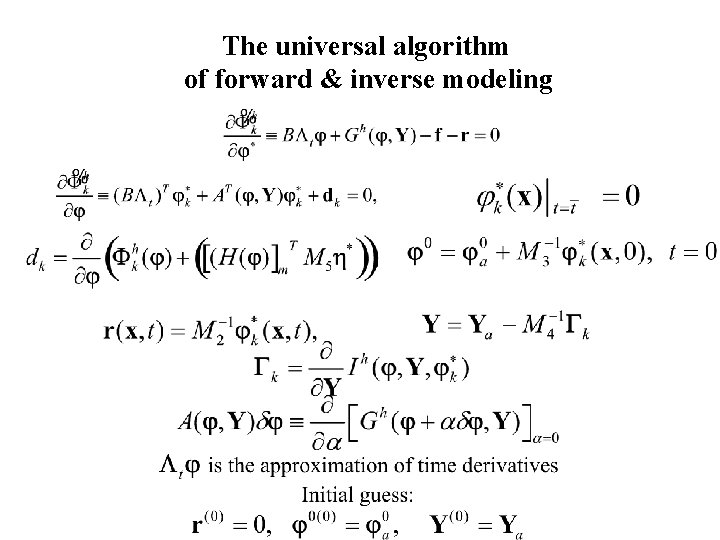
The universal algorithm of forward & inverse modeling
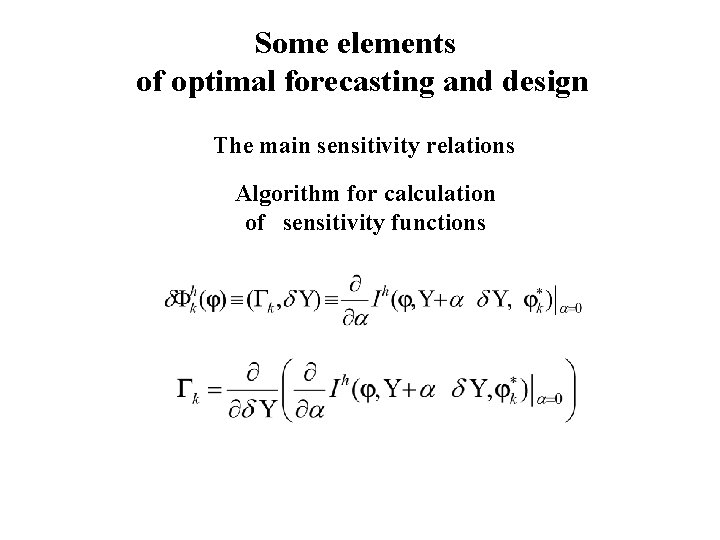
Some elements of optimal forecasting and design The main sensitivity relations Algorithm for calculation of sensitivity functions
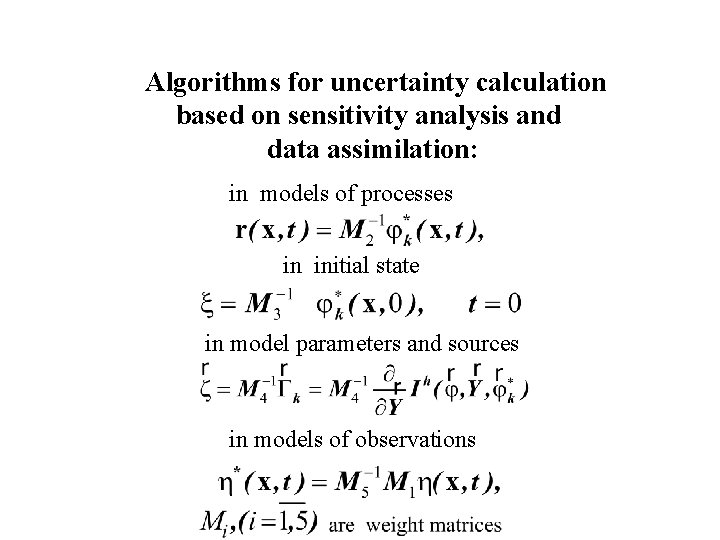
Algorithms for uncertainty calculation based on sensitivity analysis and data assimilation: in models of processes in initial state in model parameters and sources in models of observations
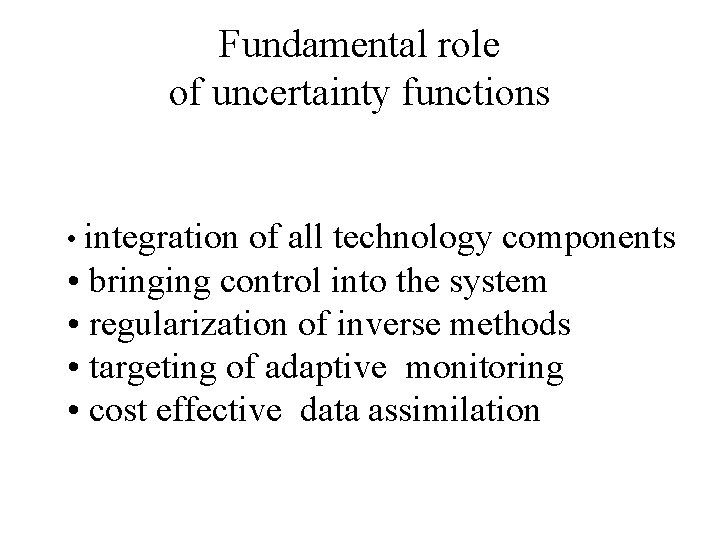
Fundamental role of uncertainty functions • integration of all technology components • bringing control into the system • regularization of inverse methods • targeting of adaptive monitoring • cost effective data assimilation
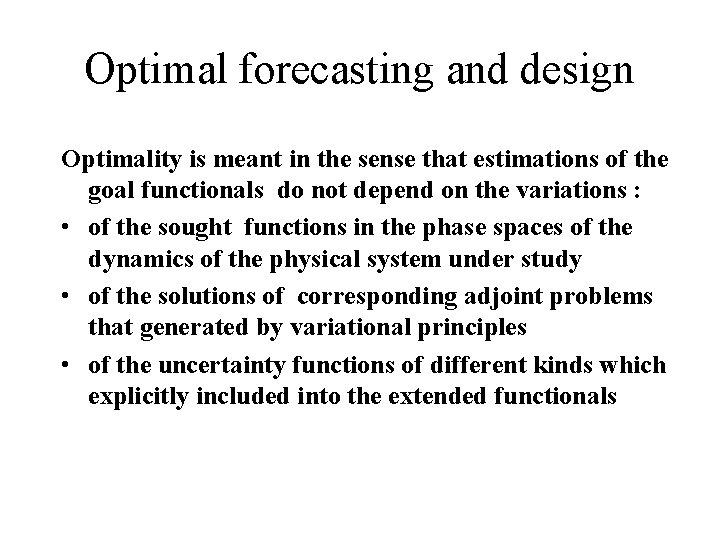
Optimal forecasting and design Optimality is meant in the sense that estimations of the goal functionals do not depend on the variations : • of the sought functions in the phase spaces of the dynamics of the physical system under study • of the solutions of corresponding adjoint problems that generated by variational principles • of the uncertainty functions of different kinds which explicitly included into the extended functionals
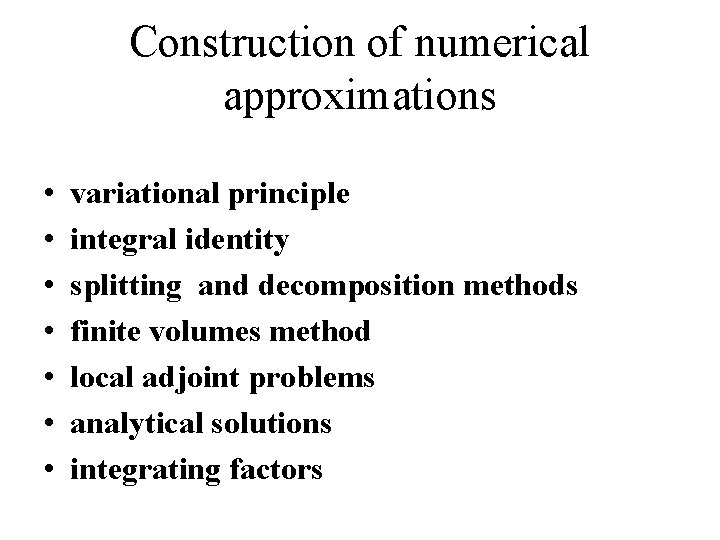
Construction of numerical approximations • • variational principle integral identity splitting and decomposition methods finite volumes method local adjoint problems analytical solutions integrating factors
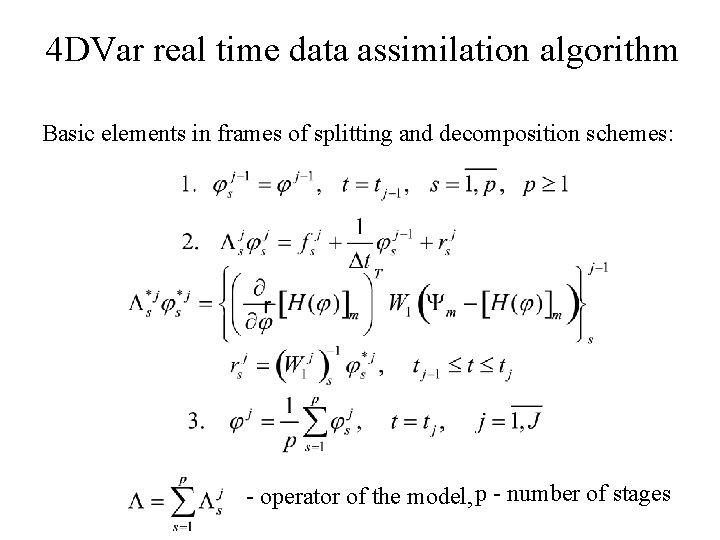
4 DVar real time data assimilation algorithm Basic elements in frames of splitting and decomposition schemes: - operator of the model, p - number of stages
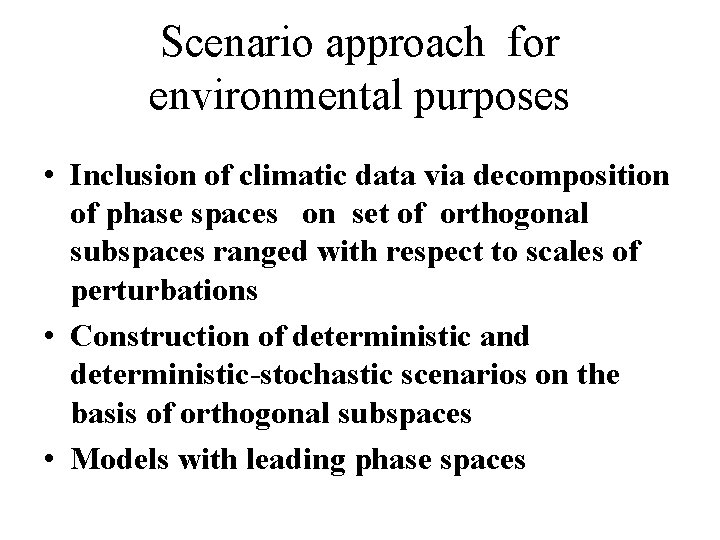
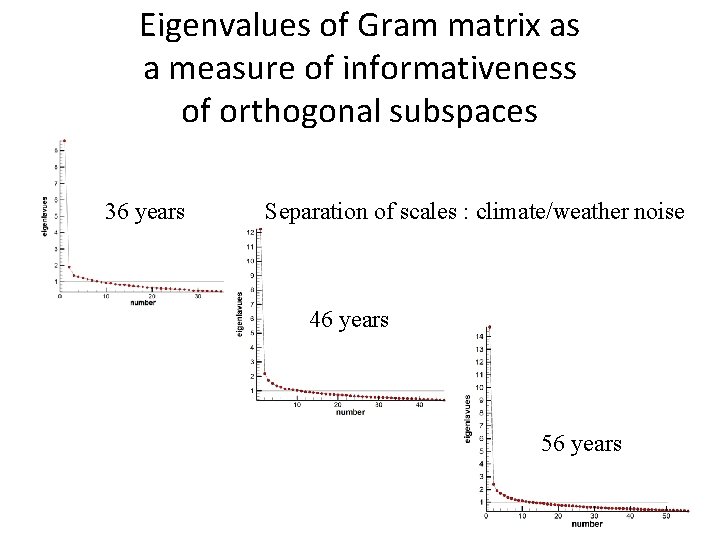
Scenario approach for environmental purposes • Inclusion of climatic data via decomposition of phase spaces on set of orthogonal subspaces ranged with respect to scales of perturbations • Construction of deterministic and deterministic-stochastic scenarios on the basis of orthogonal subspaces • Models with leading phase spaces
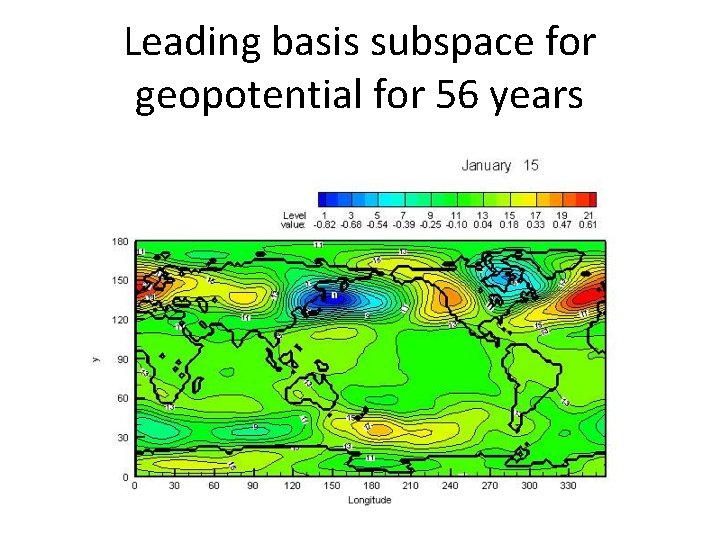
Leading basis subspace for geopotential for 56 years
Leading basis subspace for horizontal velocities for 56 years
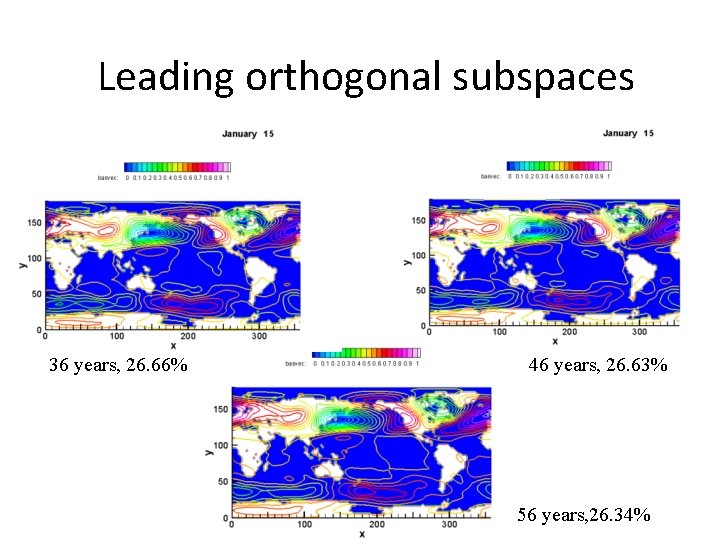
Leading orthogonal subspaces 36 years, 26. 66% 46 years, 26. 63% 56 years, 26. 34%
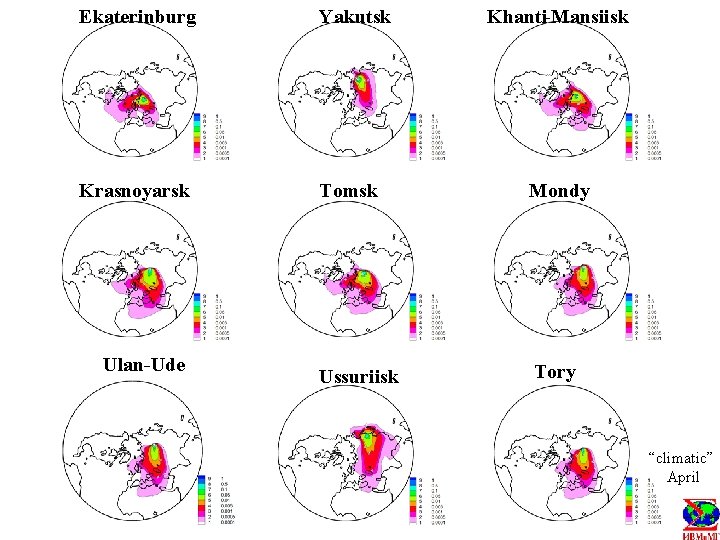
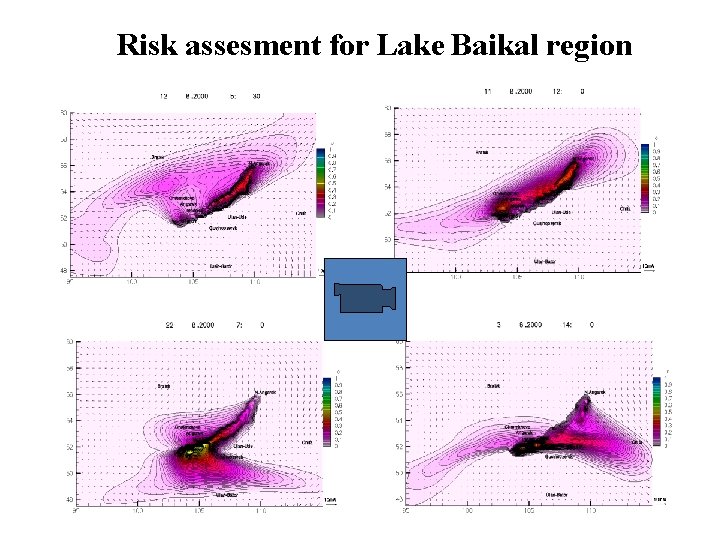
Risk/vulnerability assessment Some scenarios for receptors in Siberia
Ekaterinburg Yakutsk Krasnoyarsk Tomsk Mondy Ussuriisk Tory Ulan-Ude Khanti-Mansiisk “climatic” April
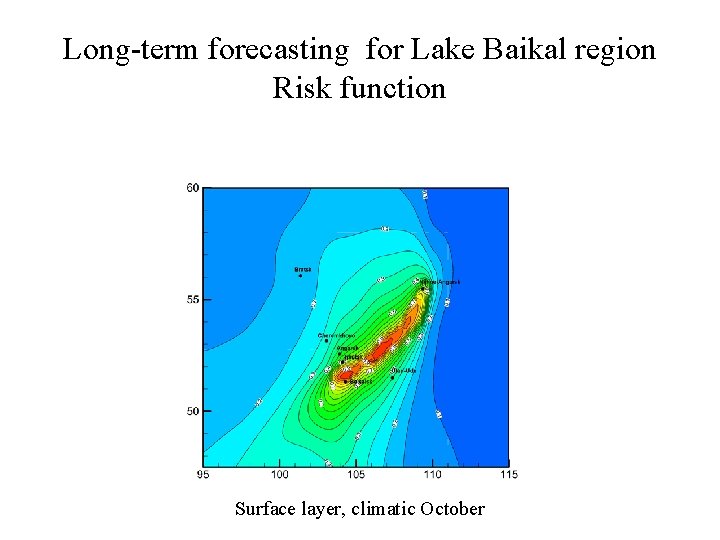
Long-term forecasting for Lake Baikal region Risk function Surface layer, climatic October
Conclusion • Algorithms for optimal environmental forecasting and design are proposed • The fundamental role of uncertainty is highlighted
Thank you for your time!
Eigenvalues of Gram matrix as a measure of informativeness of orthogonal subspaces 36 years Separation of scales : climate/weather noise 46 years 56 years
Risk assesment for Lake Baikal region
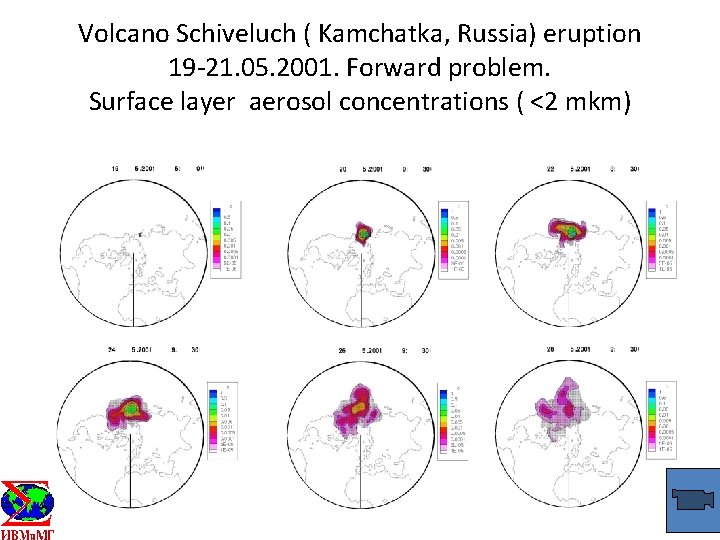
Volcano Schiveluch ( Kamchatka, Russia) eruption 19 -21. 05. 2001. Forward problem. Surface layer aerosol concentrations ( <2 mkm)