
Chapter 3 Collecting Information and Forecasting Demand Copyright

- Slides: 29
Chapter 3 Collecting Information and Forecasting Demand Copyright © 2016 Pearson Education Ltd. 3 -
Learning Objectives 1. 2. 3. 4. 5. What are the components of a modern marketing information system? What are useful internal records for a marketing information system? What makes up a marketing intelligence system? What are some influential macroenvironment developments? How can companies accurately measure and forecast demand Copyright © 2016 Pearson Education Ltd. 3 -2
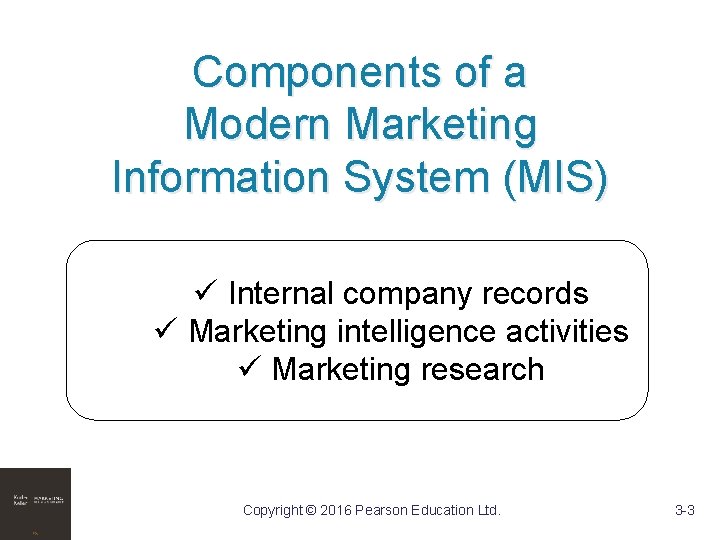
Components of a Modern Marketing Information System (MIS) ü Internal company records ü Marketing intelligence activities ü Marketing research Copyright © 2016 Pearson Education Ltd. 3 -3
Internal records • • Internal reports of orders Sales Prices Costs Inventory levels Receivables Payables Copyright © 2016 Pearson Education Ltd. 3 -4
Marketing intelligence • Marketing intelligence system: a set of procedures and sources that managers use to obtain everyday information about developments in the marketing environment Copyright © 2016 Pearson Education Ltd. 3 -5
Improving marketing intelligence ü Motivate sales force to report new developments ü Motivate intermediaries to pass along intelligence ü Hire external experts to collect intelligence ü Network internally and externally ü Set up a customer advisory panel ü Take advantage of government-related data ü Purchase information from outside research vendors ü Collect marketing intelligence on Internet Copyright © 2016 Pearson Education Ltd. 3 -6
Marketing Intelligence on the internet • Independent customer goods and service review forums • Distributor or sales agent feedback sites • Combo sites offering customer reviews and expert opinions • Customer complaint sites • Public blogs Copyright © 2016 Pearson Education Ltd. 3 -7
Communicating & Acting on Marketing intelligence • The competitive intelligence function works best when it is closely coordinated with the decision-making process – Given the speed of the Internet, it is important to act quickly on information gleaned online Copyright © 2016 Pearson Education Ltd. 3 -8
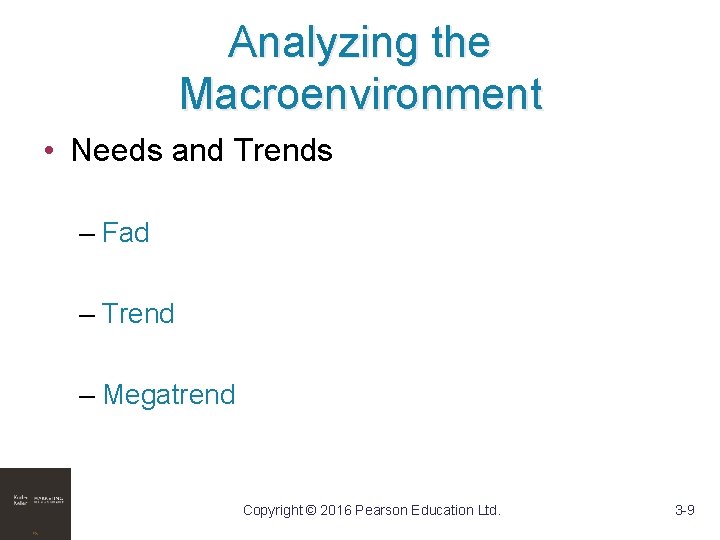
Analyzing the Macroenvironment • Needs and Trends – Fad – Trend – Megatrend Copyright © 2016 Pearson Education Ltd. 3 -9
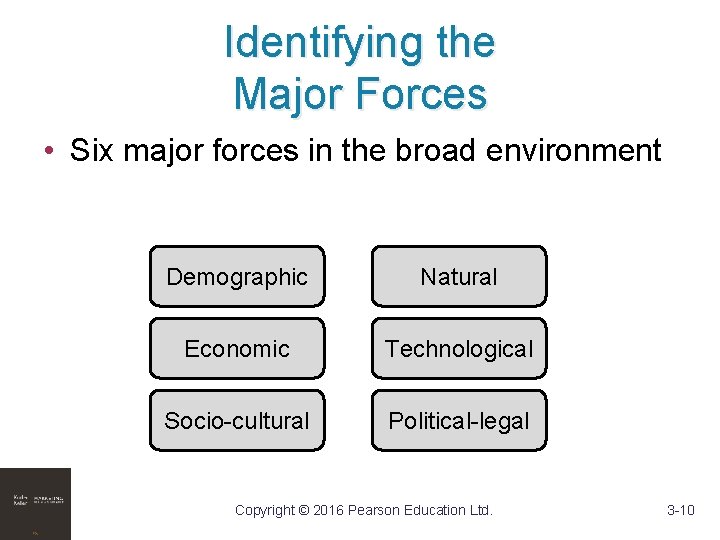
Identifying the Major Forces • Six major forces in the broad environment Demographic Natural Economic Technological Socio-cultural Political-legal Copyright © 2016 Pearson Education Ltd. 3 -10
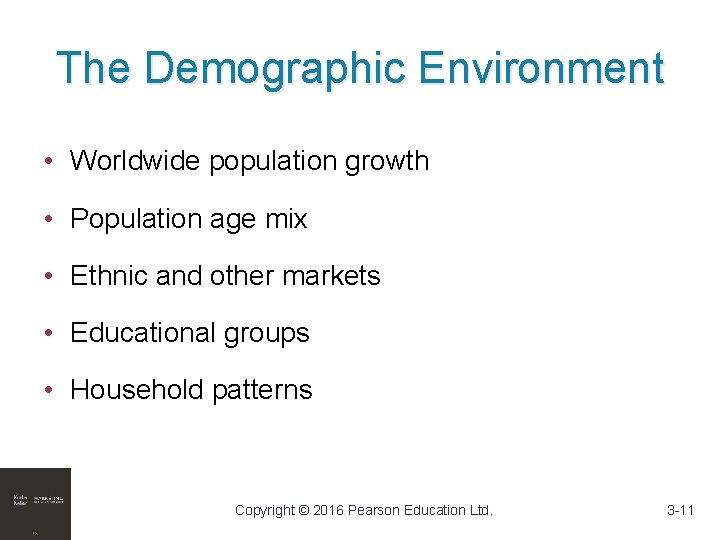
The Demographic Environment • Worldwide population growth • Population age mix • Ethnic and other markets • Educational groups • Household patterns Copyright © 2016 Pearson Education Ltd. 3 -11
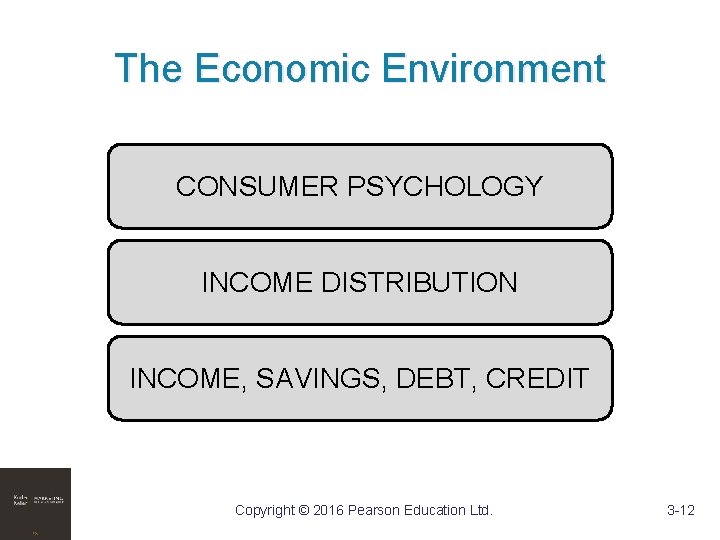
The Economic Environment CONSUMER PSYCHOLOGY INCOME DISTRIBUTION INCOME, SAVINGS, DEBT, CREDIT Copyright © 2016 Pearson Education Ltd. 3 -12
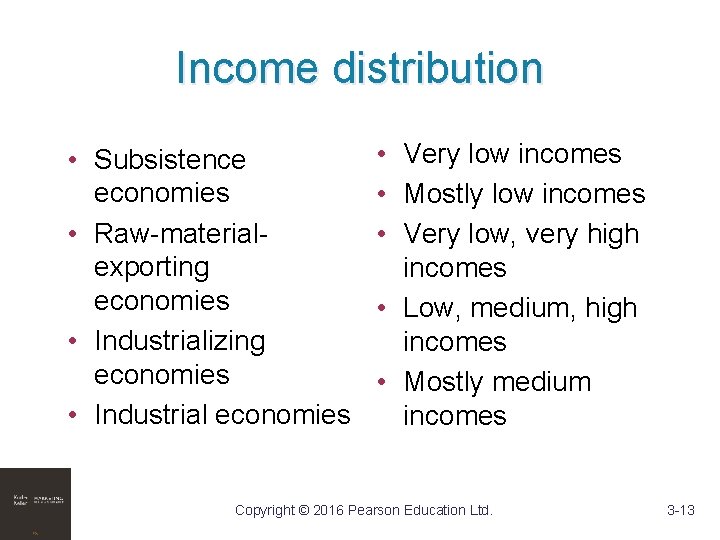
Income distribution • Subsistence economies • Raw-materialexporting economies • Industrializing economies • Industrial economies • Very low incomes • Mostly low incomes • Very low, very high incomes • Low, medium, high incomes • Mostly medium incomes Copyright © 2016 Pearson Education Ltd. 3 -13
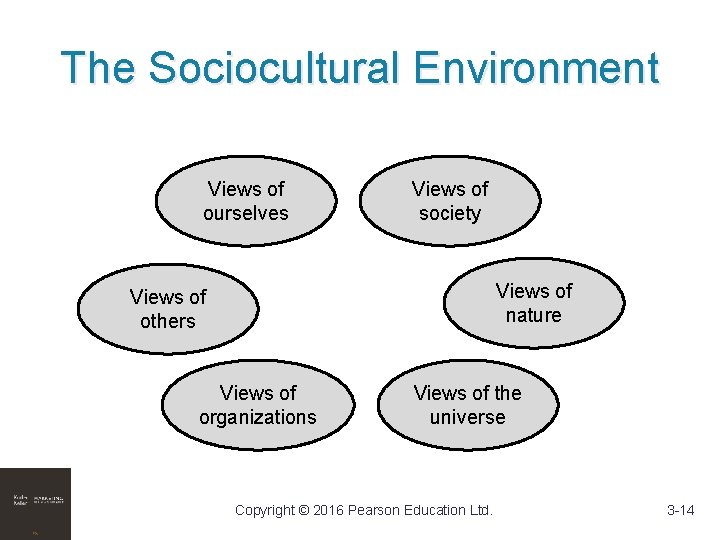
The Sociocultural Environment Views of ourselves Views of society Views of nature Views of others Views of organizations Views of the universe Copyright © 2016 Pearson Education Ltd. 3 -14
The Sociocultural Environment • Core cultural values – Values are passed from parents to children and reinforced by social institutions • Subcultures – Groups with shared values, beliefs, preferences, and behaviors emerging from their special life experiences or circumstances Copyright © 2016 Pearson Education Ltd. 3 -15
The natural environment • Corporate environmentalism – Opportunities await those who can reconcile prosperity with environmental protection Copyright © 2016 Pearson Education Ltd. 3 -16
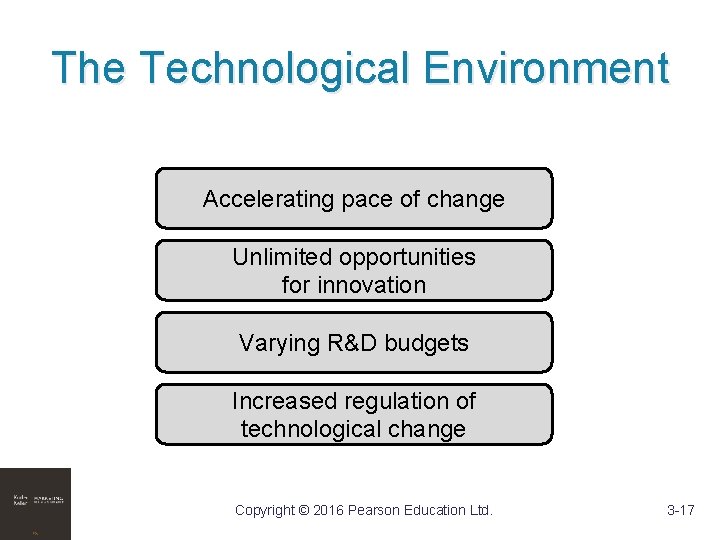
The Technological Environment Accelerating pace of change Unlimited opportunities for innovation Varying R&D budgets Increased regulation of technological change Copyright © 2016 Pearson Education Ltd. 3 -17
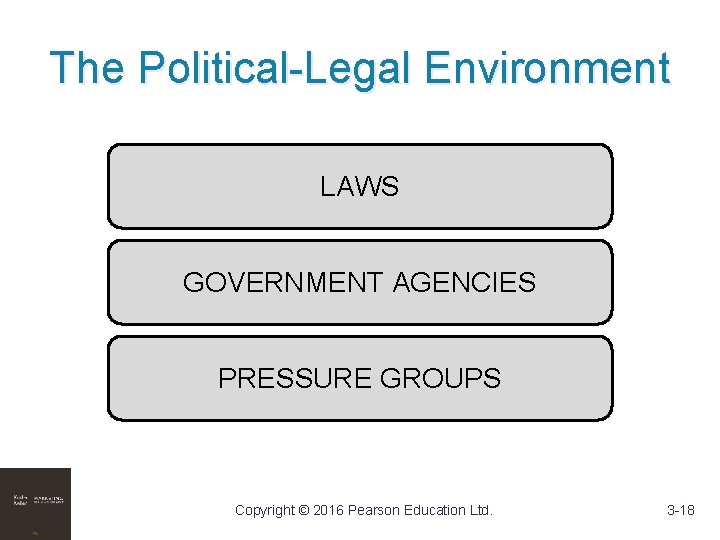
The Political-Legal Environment LAWS GOVERNMENT AGENCIES PRESSURE GROUPS Copyright © 2016 Pearson Education Ltd. 3 -18
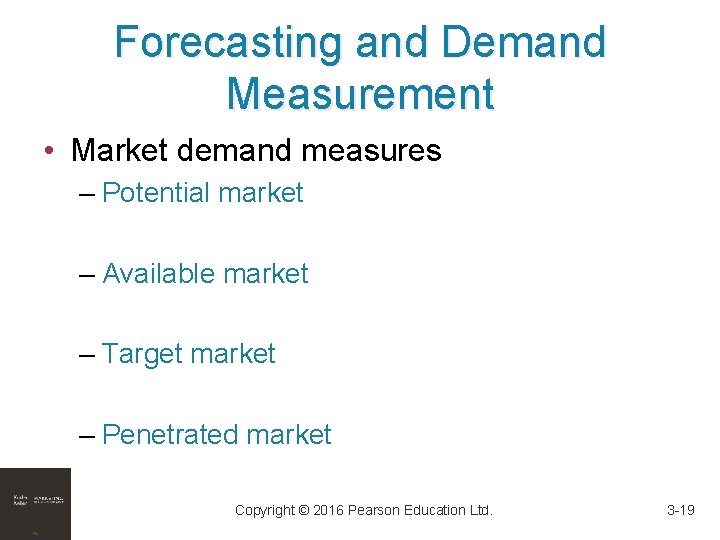
Forecasting and Demand Measurement • Market demand measures – Potential market – Available market – Target market – Penetrated market Copyright © 2016 Pearson Education Ltd. 3 -19
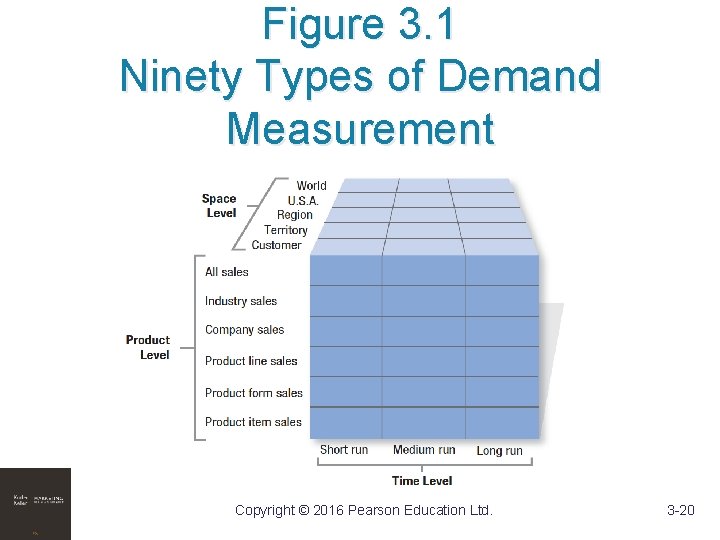
Figure 3. 1 Ninety Types of Demand Measurement Copyright © 2016 Pearson Education Ltd. 3 -20
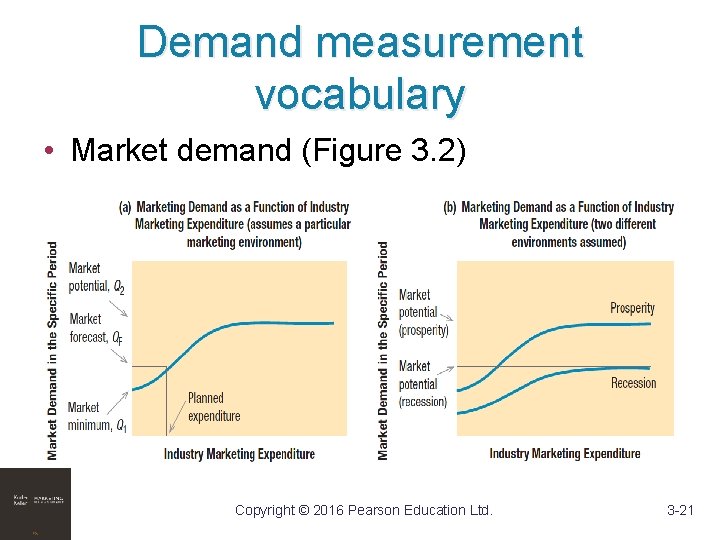
Demand measurement vocabulary • Market demand (Figure 3. 2) Copyright © 2016 Pearson Education Ltd. 3 -21
Market demand vocabulary • Market share • Market-penetration index • Share-penetration index Copyright © 2016 Pearson Education Ltd. 3 -22
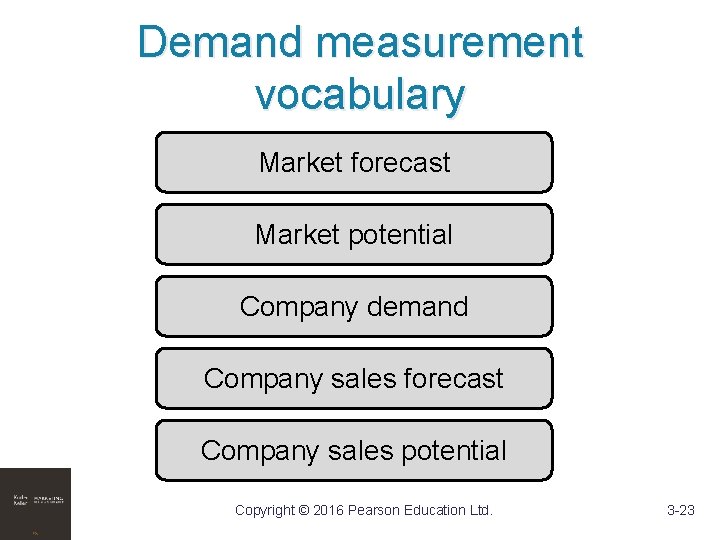
Demand measurement vocabulary Market forecast Market potential Company demand Company sales forecast Company sales potential Copyright © 2016 Pearson Education Ltd. 3 -23
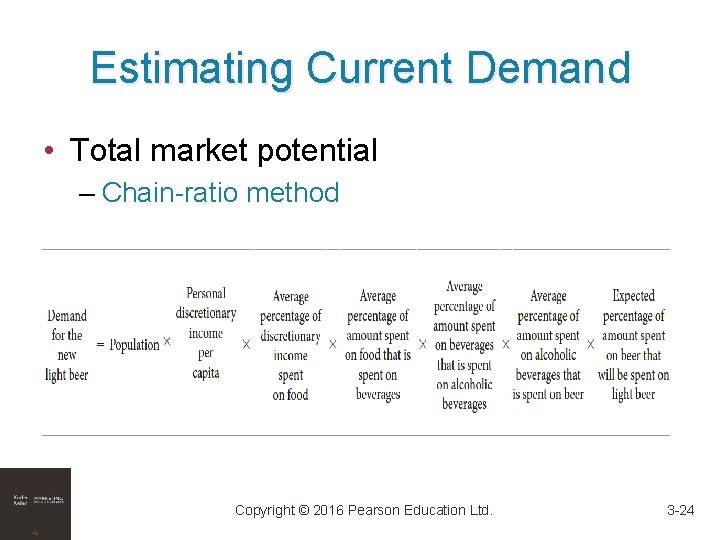
Estimating Current Demand • Total market potential – Chain-ratio method Copyright © 2016 Pearson Education Ltd. 3 -24
Estimating Current Demand • Area market potential – Market-buildup method – Multiple-factor index method Copyright © 2016 Pearson Education Ltd. 3 -25
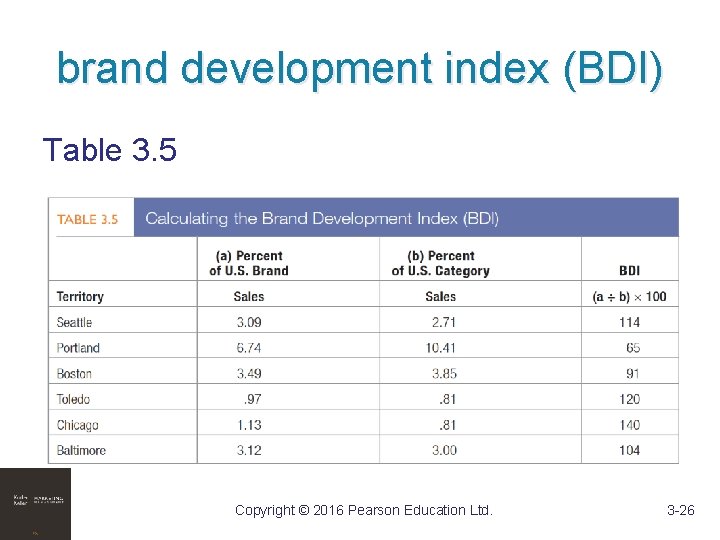
brand development index (BDI) Table 3. 5 Copyright © 2016 Pearson Education Ltd. 3 -26
Estimating Current Demand • Industry sales and market share Copyright © 2016 Pearson Education Ltd. 3 -27
Estimating future demand • Survey of buyers’ intentions – Forecasting and purchase probability scale • • Composite of sales force opinions Expert opinion Past-sales analysis Market-test method Copyright © 2016 Pearson Education Ltd. 3 -28
Copyright © 2016 Pearson Education Ltd. 3 -29