A Case For Soft Skills in IT Developing
- Slides: 41
A Case For Soft Skills in IT Developing Balanced IT Professionals Presenter: James E. Taylor, Ph. D Blue. Cross Blue. Shield of South Carolina
James E. Taylor, Ph. D Personal & Professional Introduction § SC Native: Live in Chapin, SC (Columbia area) § Retired Air Force 1985 -2005 (Avionics/Instructor) § § Program Manager Entry-Level & Development Programs BS in Workforce Education & Development § Training Analysis § MA in Management and Leadership § Comp. Tia Future IT Skills Committee § Ph. D in Organization Management (Spec: Leadership) § Volunteer for IT-o. Logy (SC IT Summit) § Senior Professional in Human Resources (SPHR) § Lifelong Clemson Football Fan § SNHU MBA Professor: Consulting; Non-Profit Management & Leadership; Change Management 3
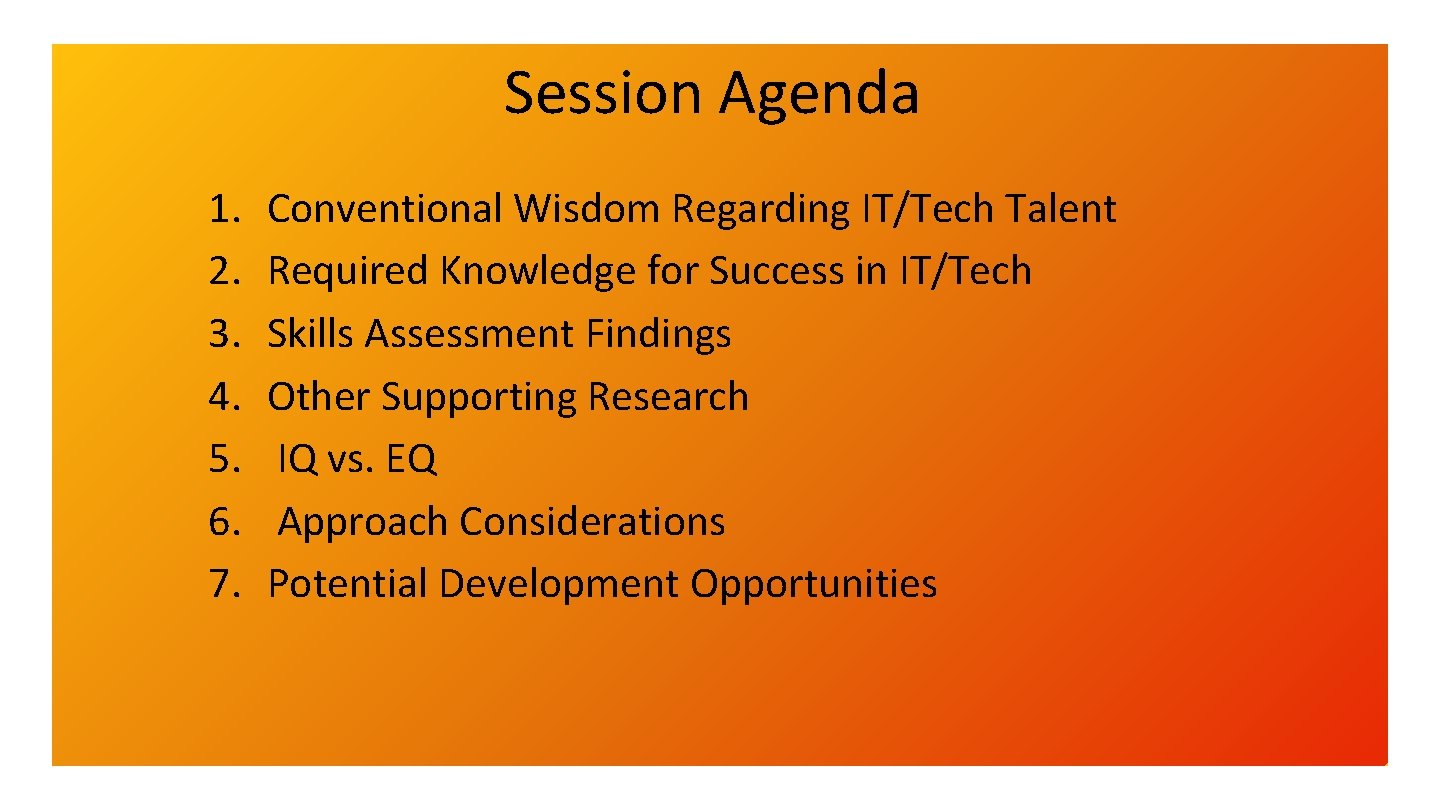
Session Agenda 1. 2. 3. 4. 5. 6. 7. Conventional Wisdom Regarding IT/Tech Talent Required Knowledge for Success in IT/Tech Skills Assessment Findings Other Supporting Research IQ vs. EQ Approach Considerations Potential Development Opportunities
What are the top skills that make an employee successful within your organization? At your table take a moment to write down top 3 skills required for success within your organization. Top Skills for Success 1. 2. 3.
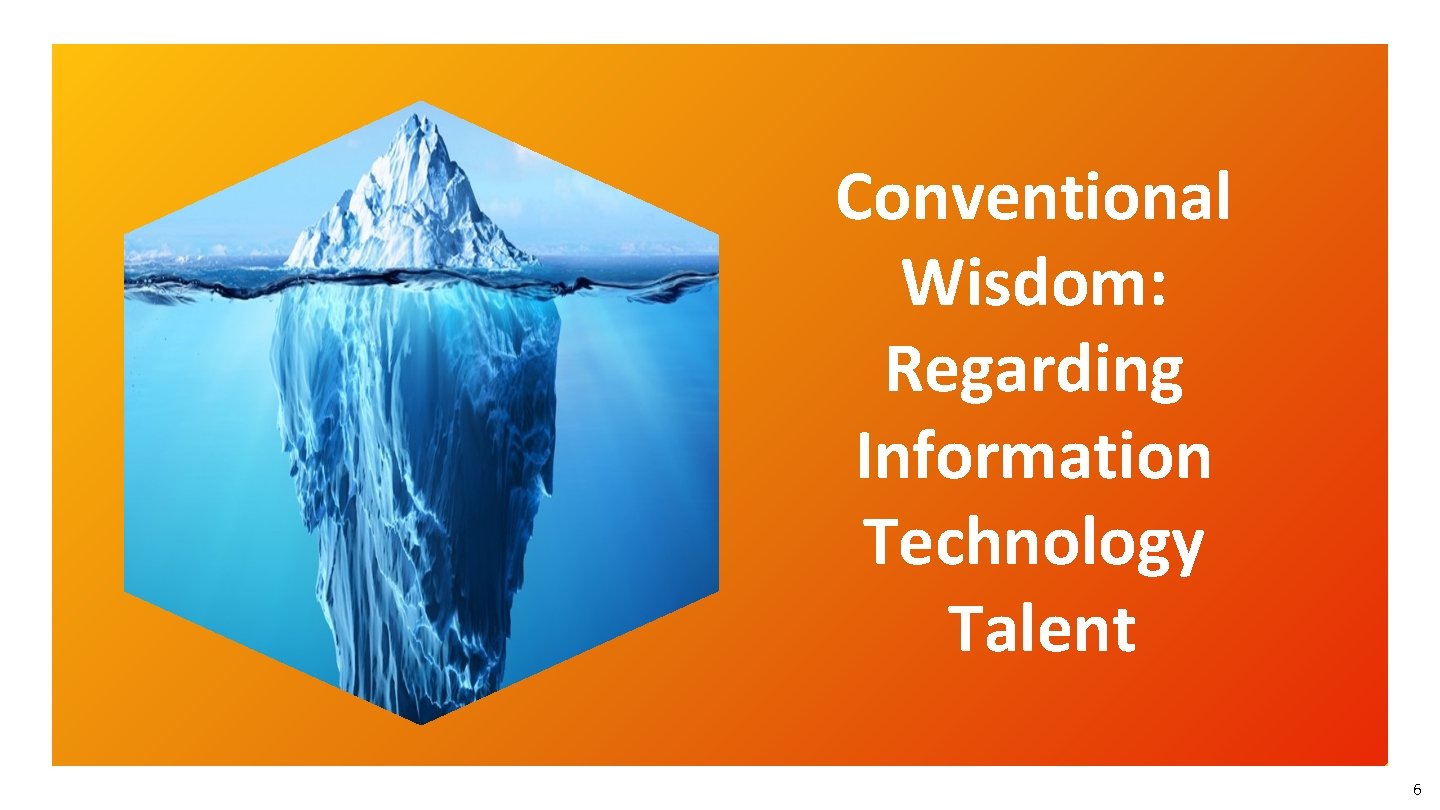
Conventional Wisdom: Regarding Information Technology Talent 6
Conventional Wisdom - Importance of STEM • To achieve success, regardless of Career Path we all need some level of focus and/or mastery in: • Science • Technology • Engineering • Math • Information Technology – (Learning Code, Security, Networking) Because that’s where the jobs are…ALL TRUE! A GROSS OVER SIMPLIFICATION! 7 7
Conventional Wisdom – Business Integration • Information Technology has becomes more integrated with business • The day when IT Professional could sit behind a computer in an isolated office with no need (or desire) to interact with others is GONE! Because that’s what technology jobs require…ALSO TRUE! A GROSS MISUNDERSTANDING!
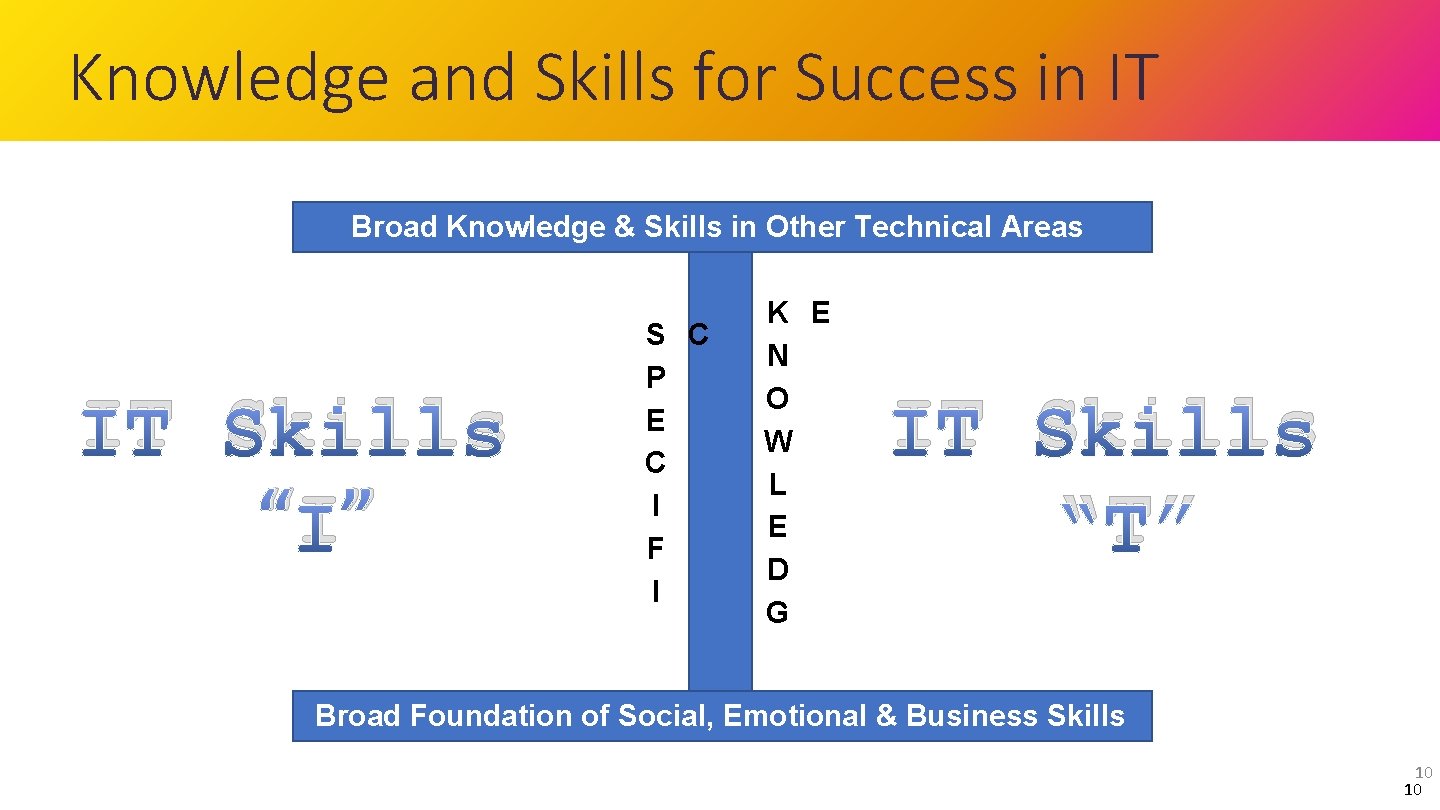
The BIG QUESTION… WHAT DO WE NEED OUR IT PROFESSIONALS TO KNOW TO BE SUCCESSFUL IN THEIR CAREERS?
Knowledge and Skills for Success in IT Broad Knowledge & Skills in Other Technical Areas IT Skills “I” S C P E C I F I K E N O W L E D G IT Skills “T” Broad Foundation of Social, Emotional & Business Skills 10 10
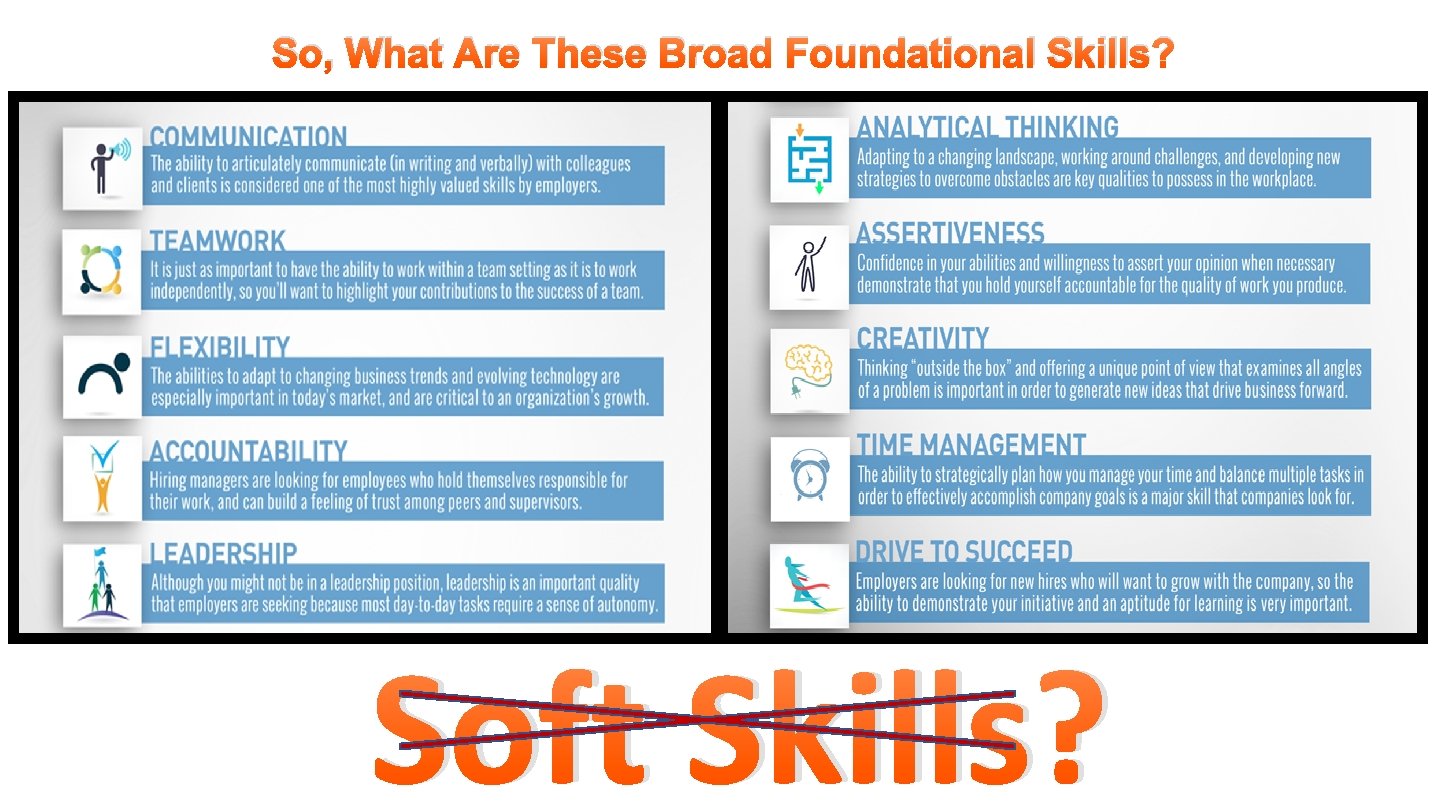
So, What Are These Broad Foundational Skills? Soft Skills?
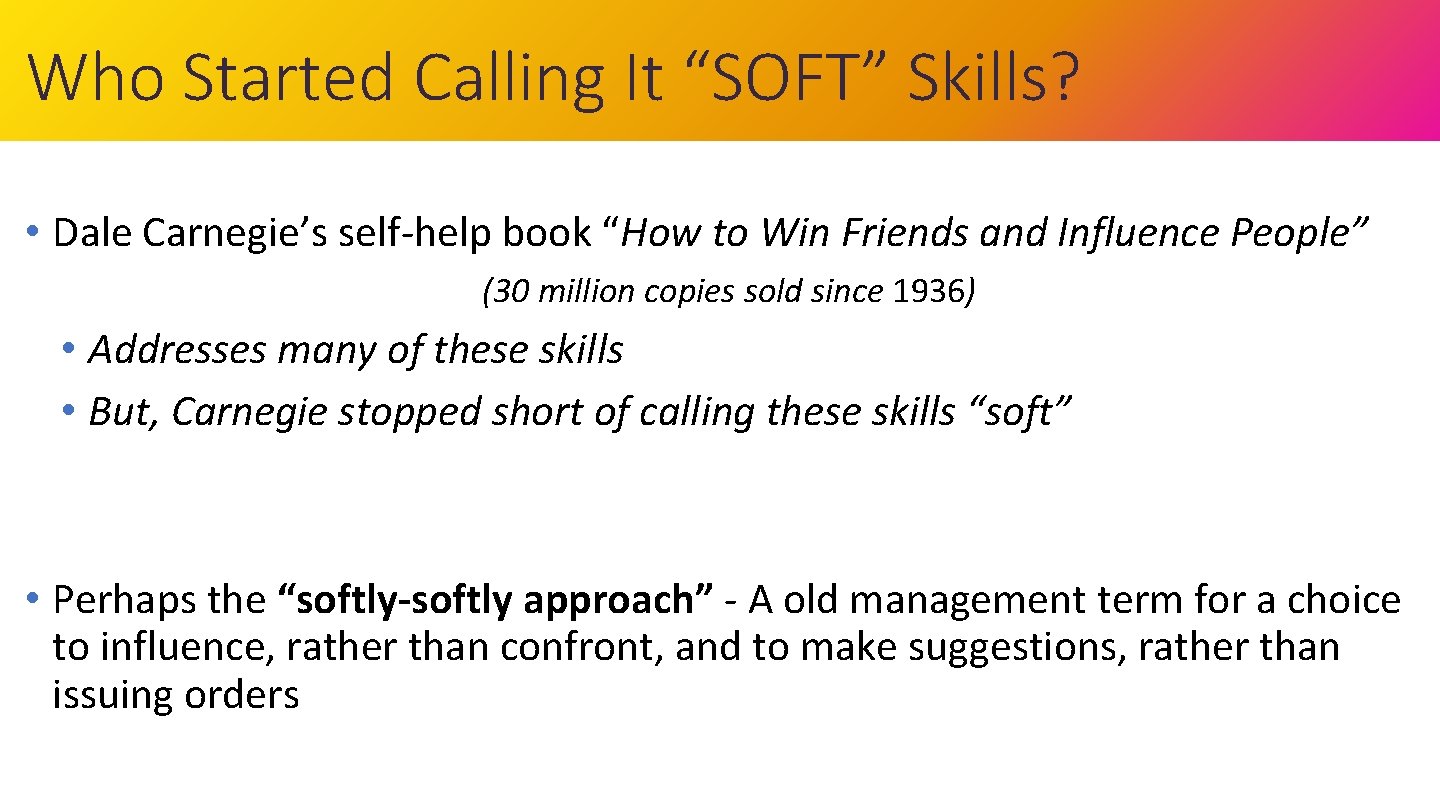
Who Started Calling It “SOFT” Skills? • Dale Carnegie’s self-help book “How to Win Friends and Influence People” (30 million copies sold since 1936) • Addresses many of these skills • But, Carnegie stopped short of calling these skills “soft” • Perhaps the “softly-softly approach” - A old management term for a choice to influence, rather than confront, and to make suggestions, rather than issuing orders
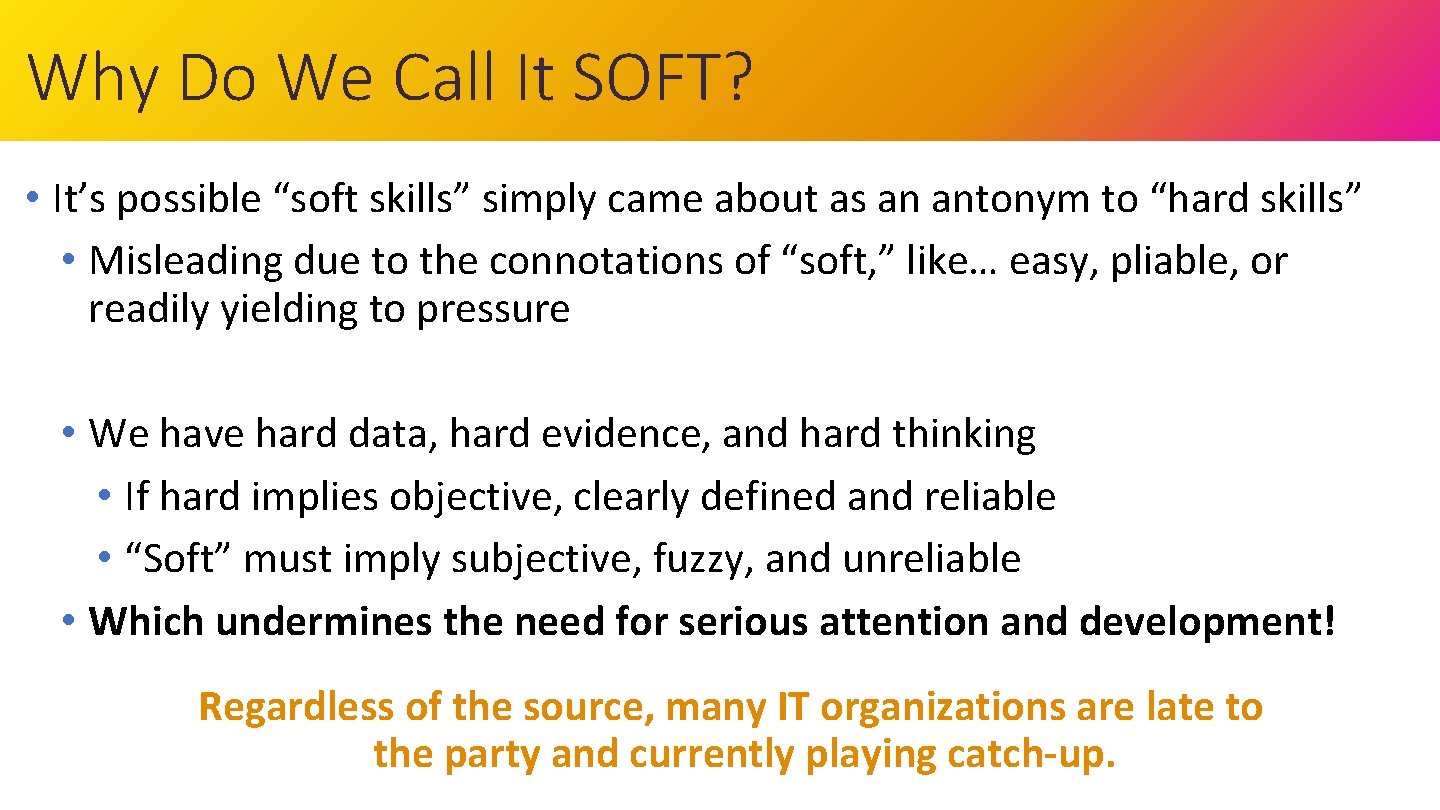
Why Do We Call It SOFT? • It’s possible “soft skills” simply came about as an antonym to “hard skills” • Misleading due to the connotations of “soft, ” like… easy, pliable, or readily yielding to pressure • We have hard data, hard evidence, and hard thinking • If hard implies objective, clearly defined and reliable • “Soft” must imply subjective, fuzzy, and unreliable • Which undermines the need for serious attention and development! Regardless of the source, many IT organizations are late to the party and currently playing catch-up.
Skills Assessment Findings: Organizational Research on IT Skill Needs 14
Security Area Assessment Driving Factors • Like many of you, my organization’s security posture had formalized, changed, and evolved at an ever-increasing pace • Sr. Management were uncertain that they had the right mix of skills and staffing to address organizational needs in Cyber-Security and Information Security Compliance areas • There was also a need to reflect Security’s increased responsibility as an enterprise-wide entity
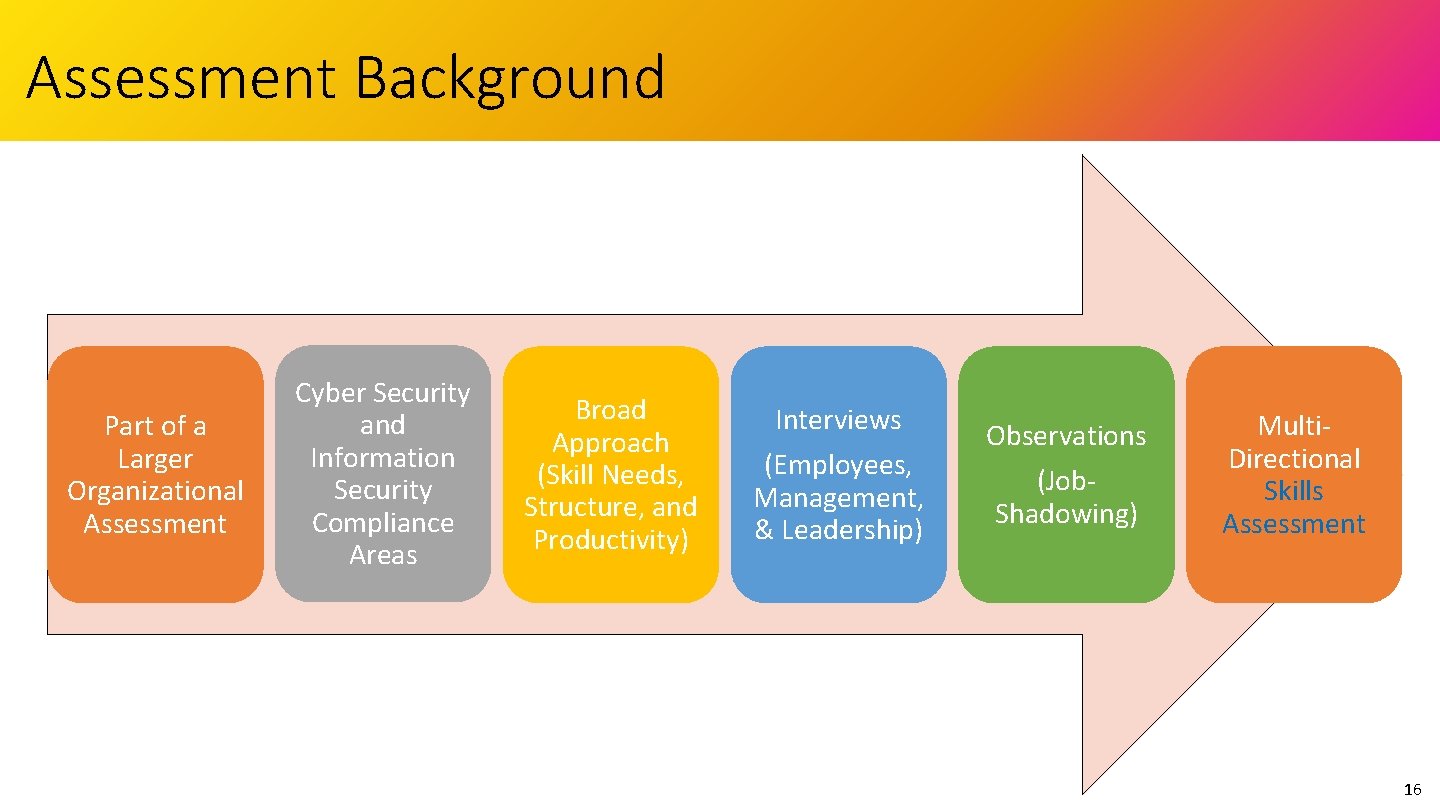
Assessment Background Part of a Larger Organizational Assessment Cyber Security and Information Security Compliance Areas Broad Approach (Skill Needs, Structure, and Productivity) Interviews (Employees, Management, & Leadership) Observations (Job. Shadowing) Multi. Directional Skills Assessment 16
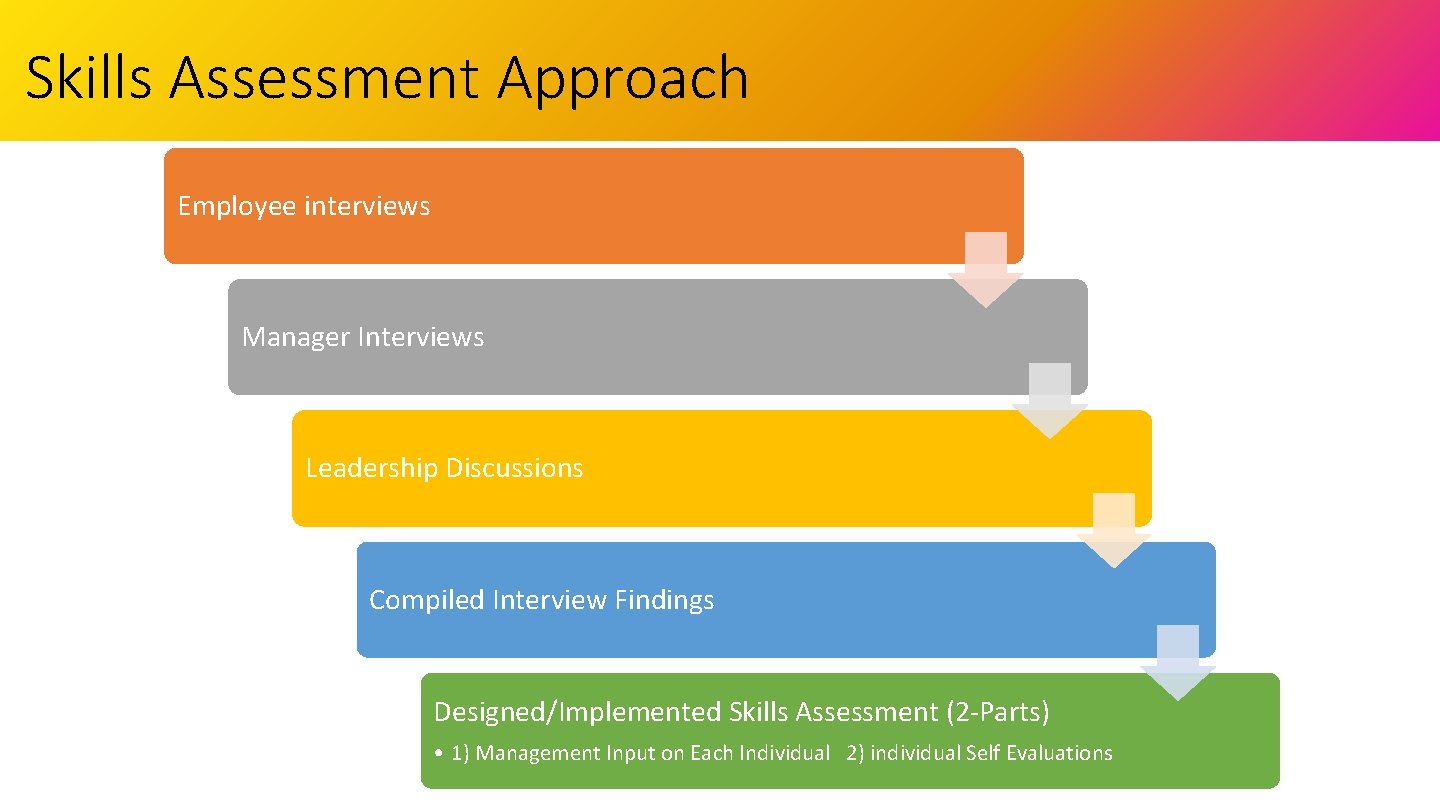
Skills Assessment Approach Employee interviews Manager Interviews Leadership Discussions Compiled Interview Findings Designed/Implemented Skills Assessment (2 -Parts) • 1) Management Input on Each Individual 2) individual Self Evaluations
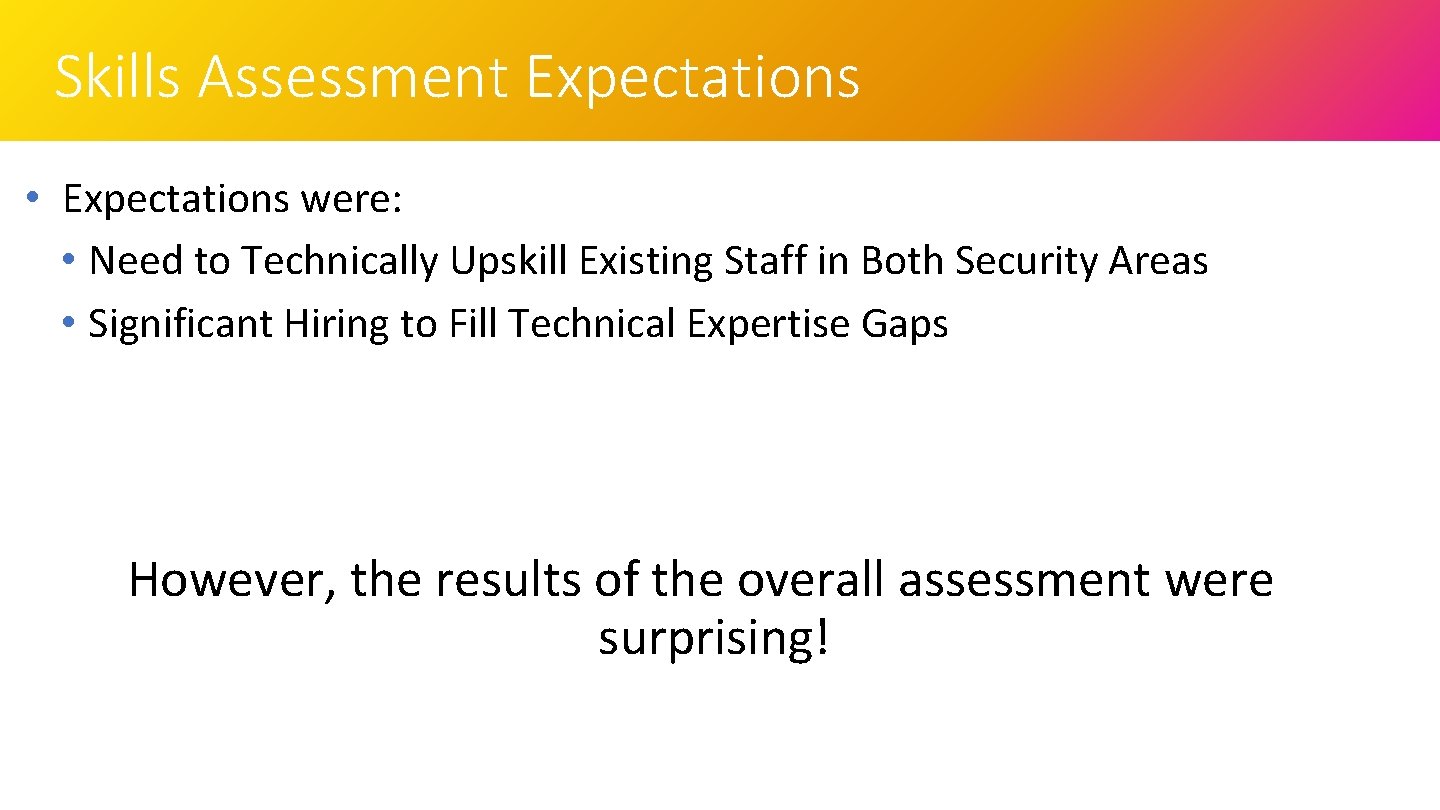
Skills Assessment Expectations • Expectations were: • Need to Technically Upskill Existing Staff in Both Security Areas • Significant Hiring to Fill Technical Expertise Gaps However, the results of the overall assessment were surprising!
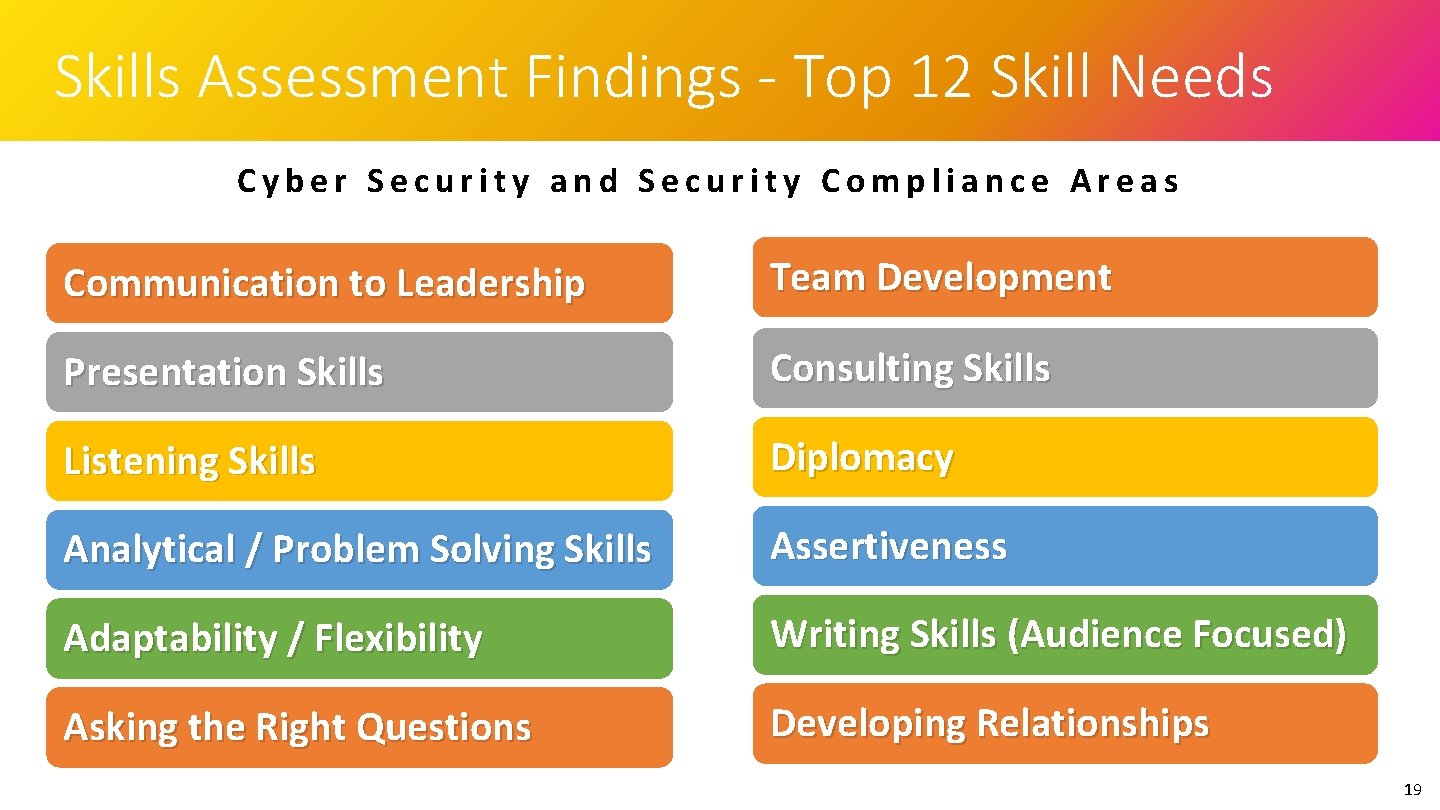
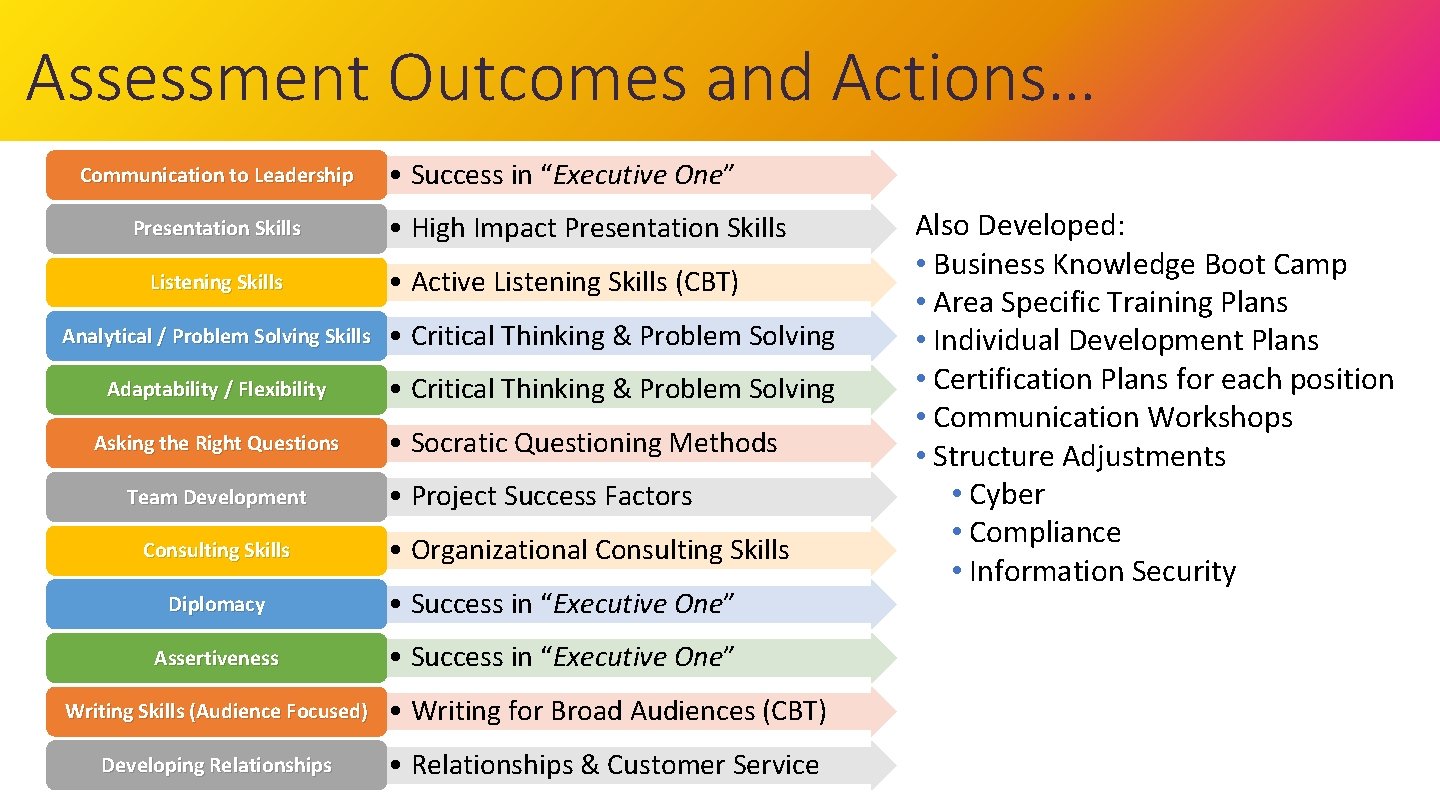
Skills Assessment Findings - Top 12 Skill Needs Cyber Security and Security Compliance Areas Communication to Leadership Team Development Presentation Skills Consulting Skills Listening Skills Diplomacy Analytical / Problem Solving Skills Assertiveness Adaptability / Flexibility Writing Skills (Audience Focused) Asking the Right Questions Developing Relationships 19
Google’s Project Oxygen & Project Aristotle SUPPORTING RESEARCH: IT SKILL NEEDS 20
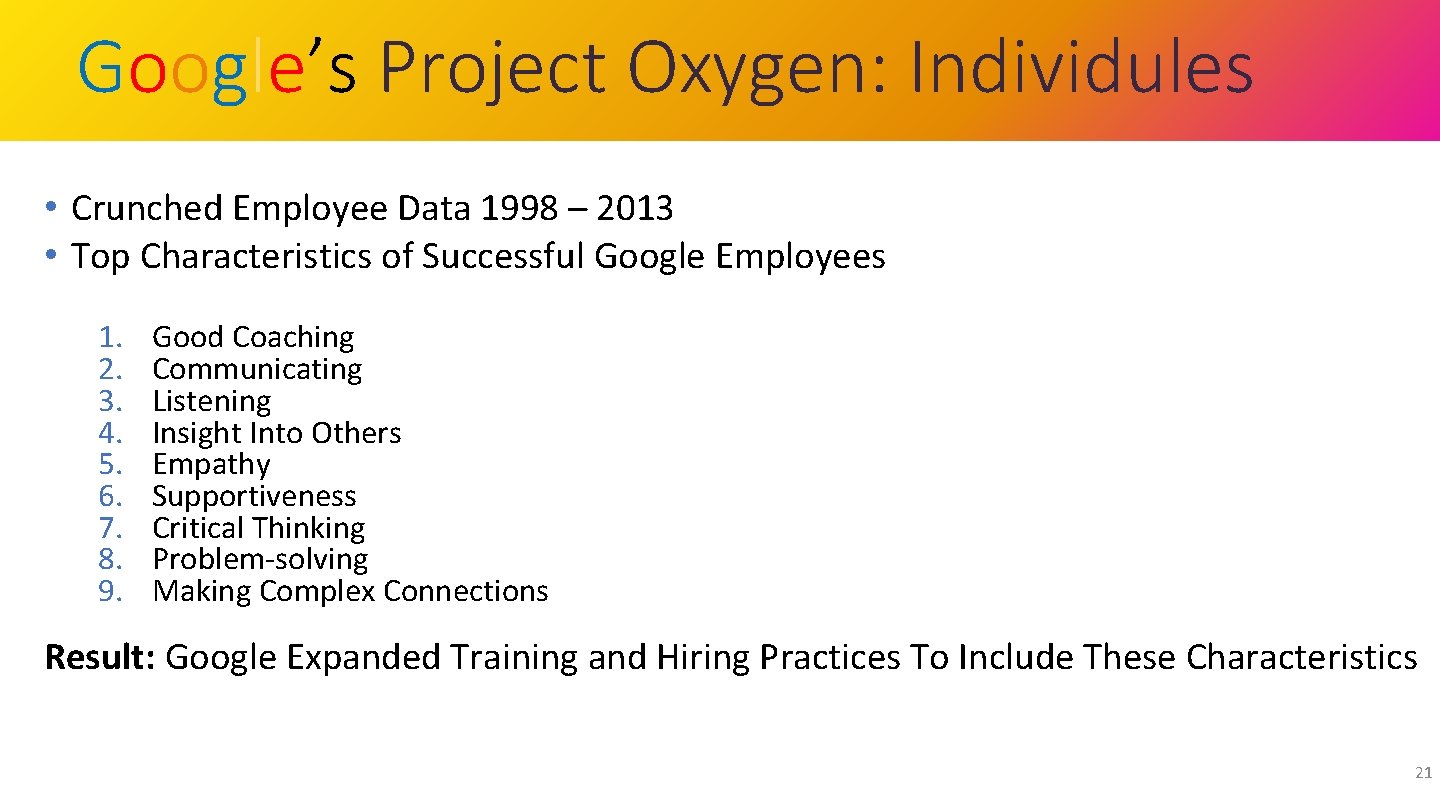
Google’s Project Oxygen: Individules • NON-TECH INDIVIDUAL CHARACTERISTICS RANK HIGHEST • Crunched Employee Data 1998 – 2013 • Top Characteristics of Successful Google Employees 1. 2. 3. 4. 5. 6. 7. 8. 9. Good Coaching Communicating Listening Insight Into Others Empathy Supportiveness Critical Thinking Problem-solving Making Complex Connections Result: Google Expanded Training and Hiring Practices To Include These Characteristics 21
Google’s Project Aristotle: Teams • Analyzed Similar Data from Most Inventive and Productive Teams to Identify Best Team Characteristics • Highest Ranked Team Characteristics (Non-Technical) • Equality (Empowerment) • Generosity (Shared Credit) • Curiosity toward Others Ideas (Active Listening & Understanding) • Empathy • Emotional Intelligence • Too Succeed Every Team Member: • Must Feel Confident Speaking-up • Comfortable Making Mistakes 22
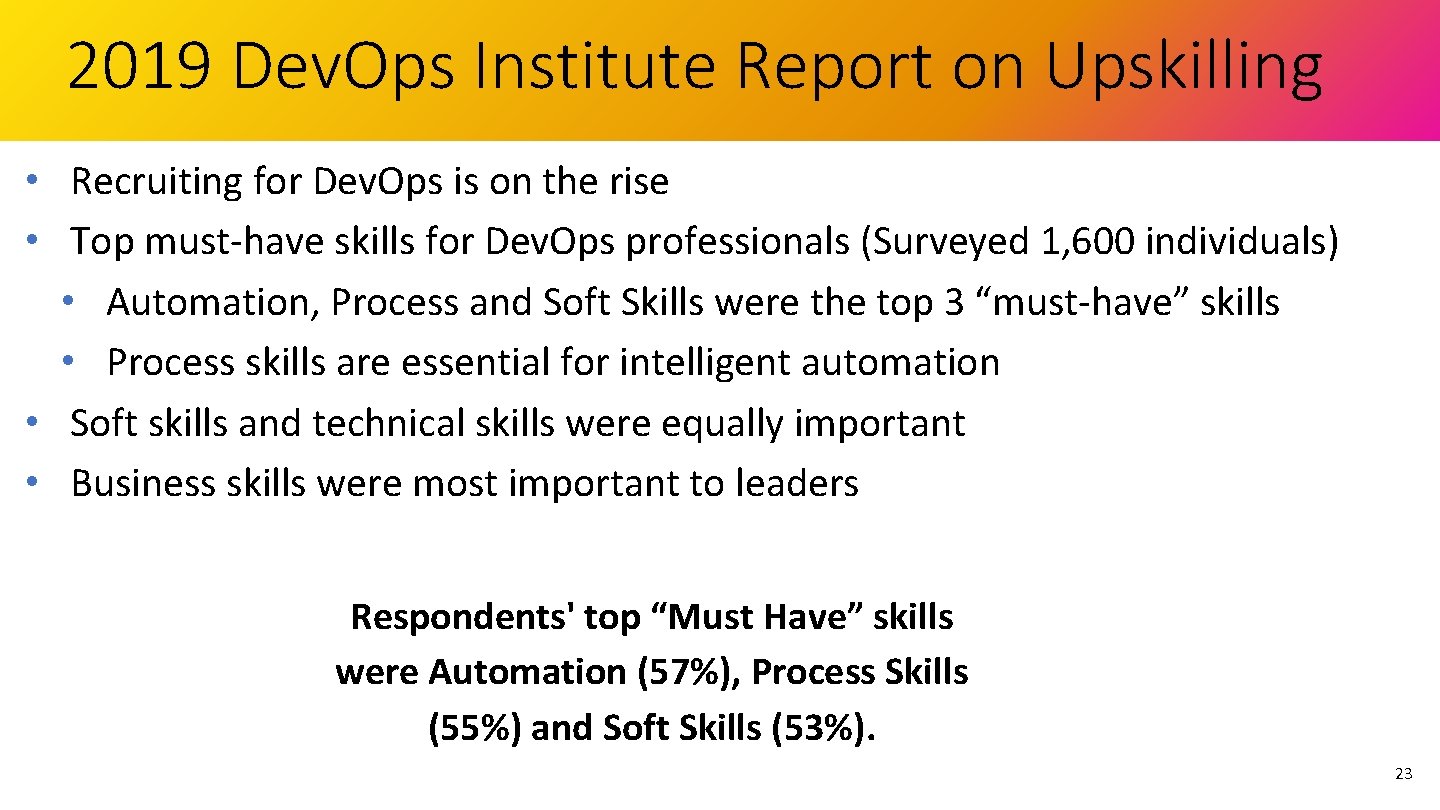
2019 Dev. Ops Institute Report on Upskilling • Recruiting for Dev. Ops is on the rise • Top must-have skills for Dev. Ops professionals (Surveyed 1, 600 individuals) • Automation, Process and Soft Skills were the top 3 “must-have” skills • Process skills are essential for intelligent automation • Soft skills and technical skills were equally important • Business skills were most important to leaders Respondents' top “Must Have” skills were Automation (57%), Process Skills (55%) and Soft Skills (53%). 23
Which Is More Important? • A 2016 Study of 73 U. S. and international employers suggest that “soft skills are significantly more important than hard skills for entry-level IT positions” The most important Soft Skills were: • Willingness to Learn - Critical Thinking - Attitude The most important Hard Skills were: • Microsoft Knowledge / Database / Data / SQL / Security • Interestingly, industry, organization size, or location did not affect importance K. Jones, L. Leonard & G. Lang (2016) Desired Skills for Entry Level IS Positions: Identification and Assessment
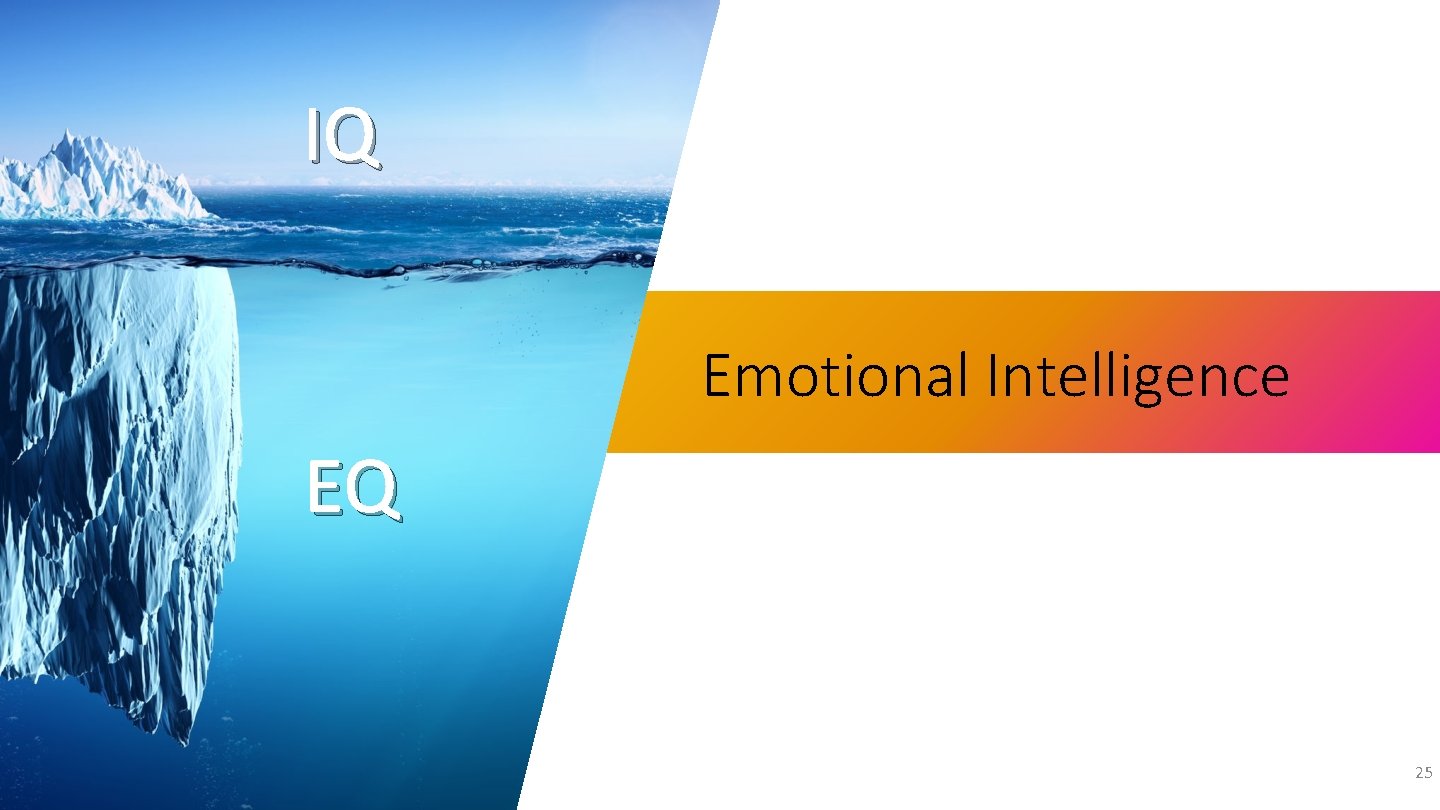
IQ Emotional Intelligence EQ • SUBTITLE GOES HERE 25
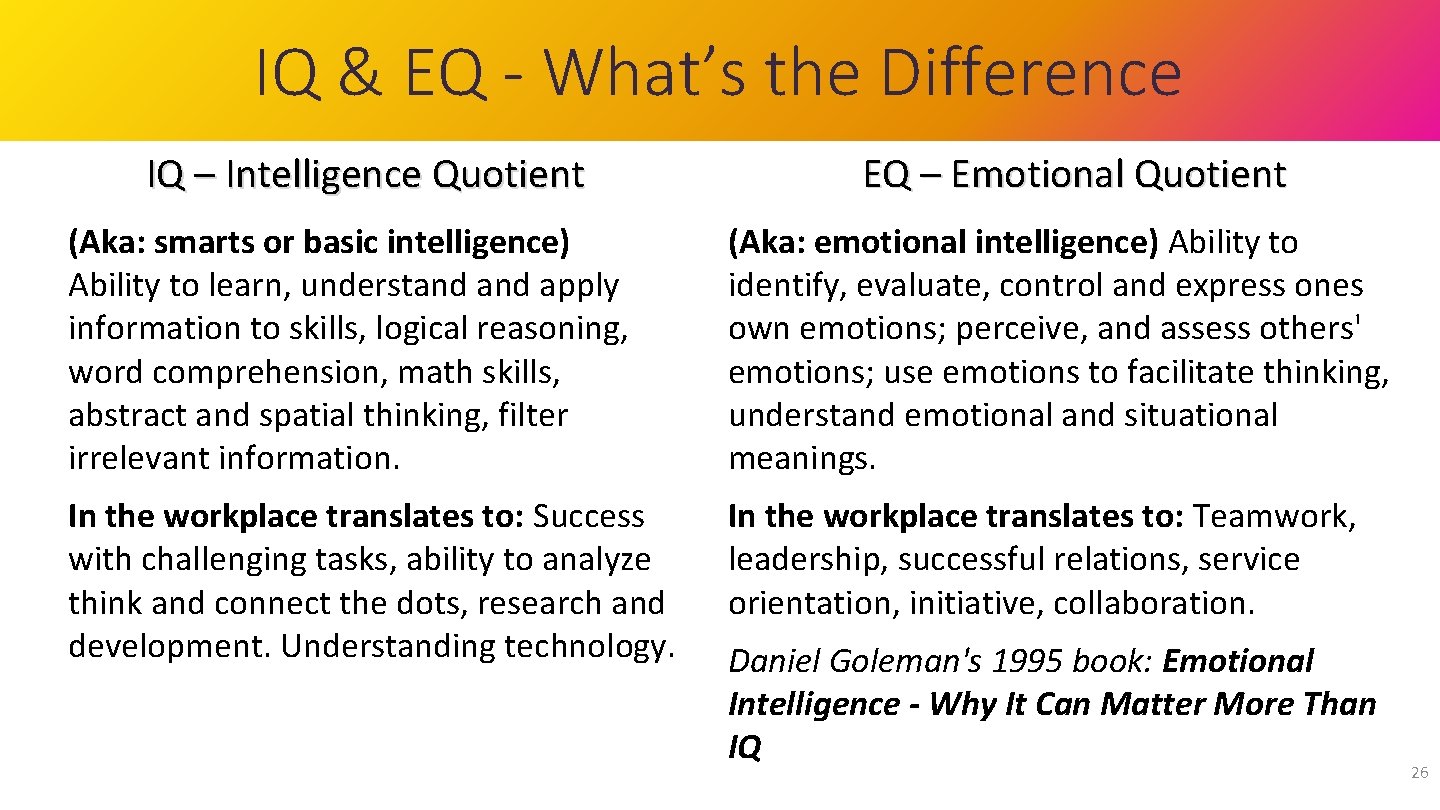
IQ & EQ - What’s the Difference IQ – Intelligence Quotient EQ – Emotional Quotient (Aka: smarts or basic intelligence) Ability to learn, understand apply information to skills, logical reasoning, word comprehension, math skills, abstract and spatial thinking, filter irrelevant information. (Aka: emotional intelligence) Ability to identify, evaluate, control and express ones own emotions; perceive, and assess others' emotions; use emotions to facilitate thinking, understand emotional and situational meanings. In the workplace translates to: Success with challenging tasks, ability to analyze think and connect the dots, research and development. Understanding technology. In the workplace translates to: Teamwork, leadership, successful relations, service orientation, initiative, collaboration. Daniel Goleman's 1995 book: Emotional Intelligence - Why It Can Matter More Than IQ 26
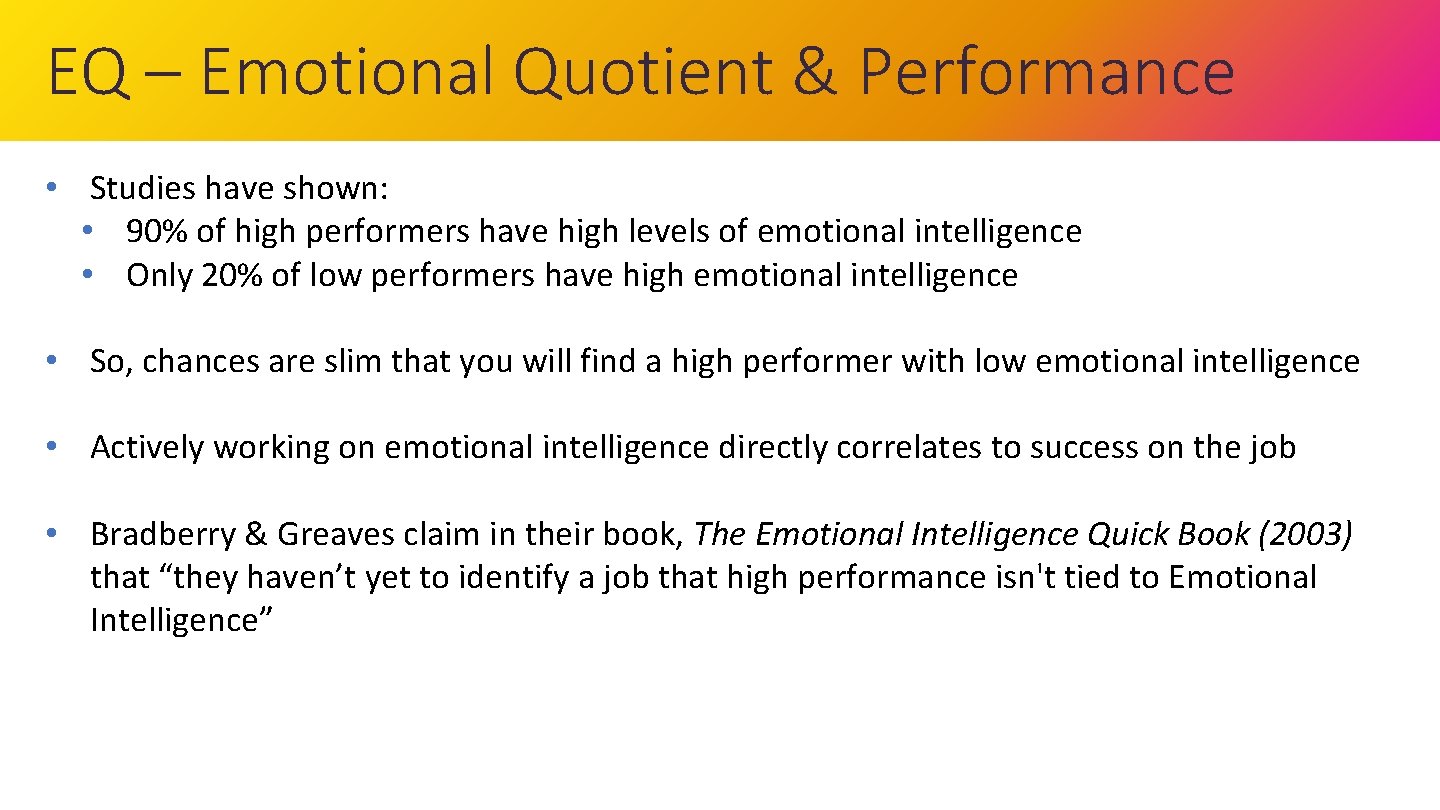
EQ – Emotional Quotient & Performance • Studies have shown: • 90% of high performers have high levels of emotional intelligence • Only 20% of low performers have high emotional intelligence • So, chances are slim that you will find a high performer with low emotional intelligence • Actively working on emotional intelligence directly correlates to success on the job • Bradberry & Greaves claim in their book, The Emotional Intelligence Quick Book (2003) that “they haven’t yet to identify a job that high performance isn't tied to Emotional Intelligence”
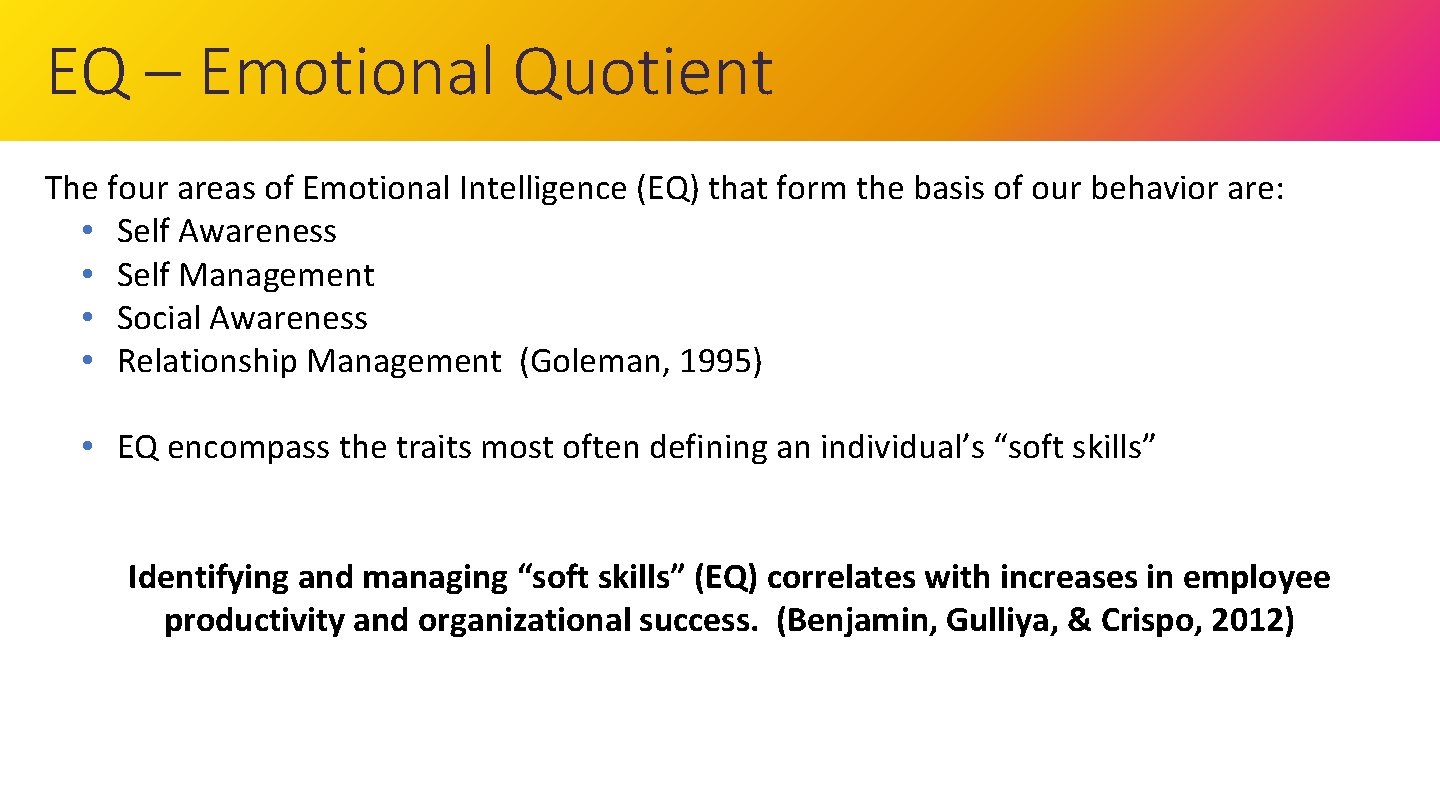
EQ – Emotional Quotient The four areas of Emotional Intelligence (EQ) that form the basis of our behavior are: • Self Awareness • Self Management • Social Awareness • Relationship Management (Goleman, 1995) • EQ encompass the traits most often defining an individual’s “soft skills” Identifying and managing “soft skills” (EQ) correlates with increases in employee productivity and organizational success. (Benjamin, Gulliya, & Crispo, 2012)
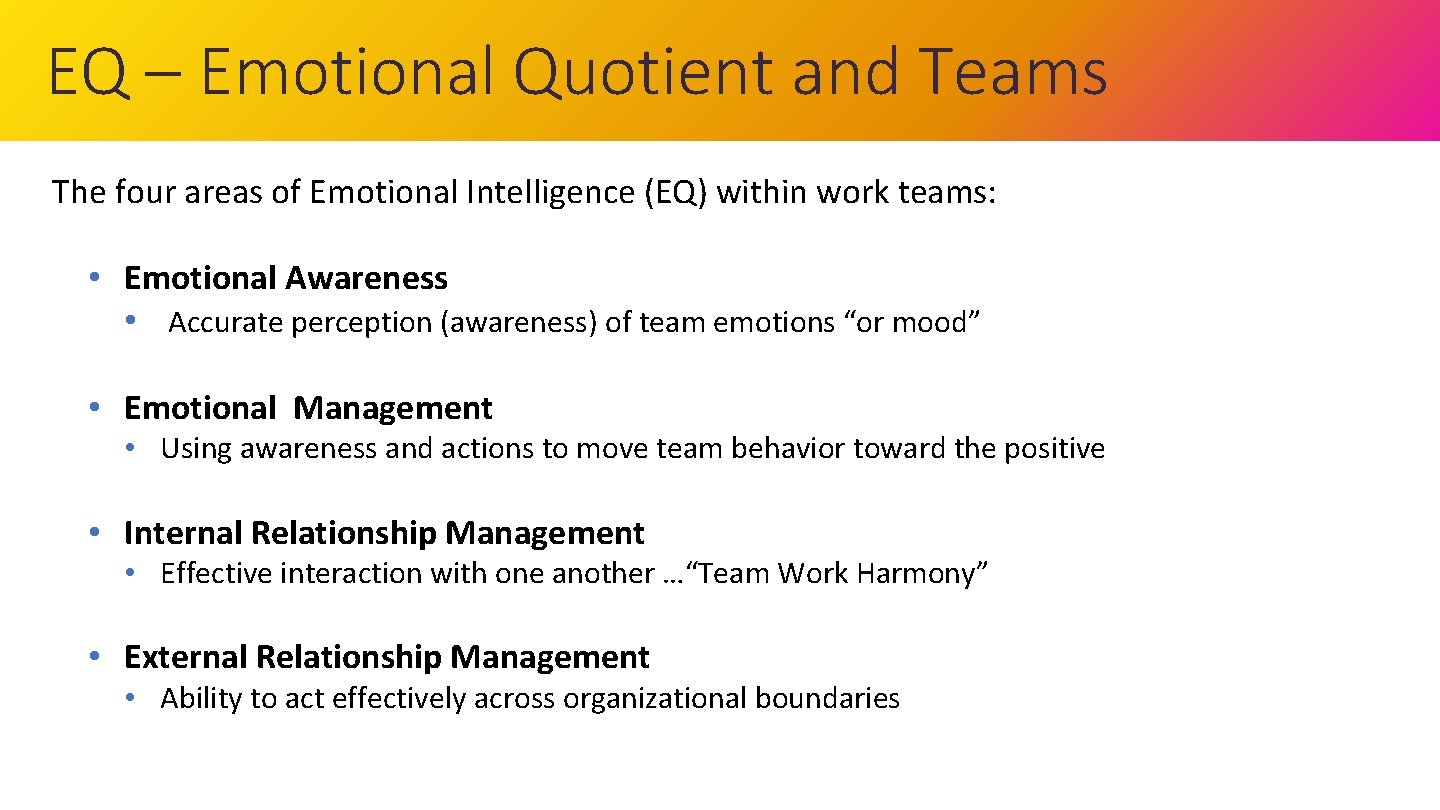
EQ – Emotional Quotient and Teams The four areas of Emotional Intelligence (EQ) within work teams: • Emotional Awareness • Accurate perception (awareness) of team emotions “or mood” • Emotional Management • Using awareness and actions to move team behavior toward the positive • Internal Relationship Management • Effective interaction with one another …“Team Work Harmony” • External Relationship Management • Ability to act effectively across organizational boundaries
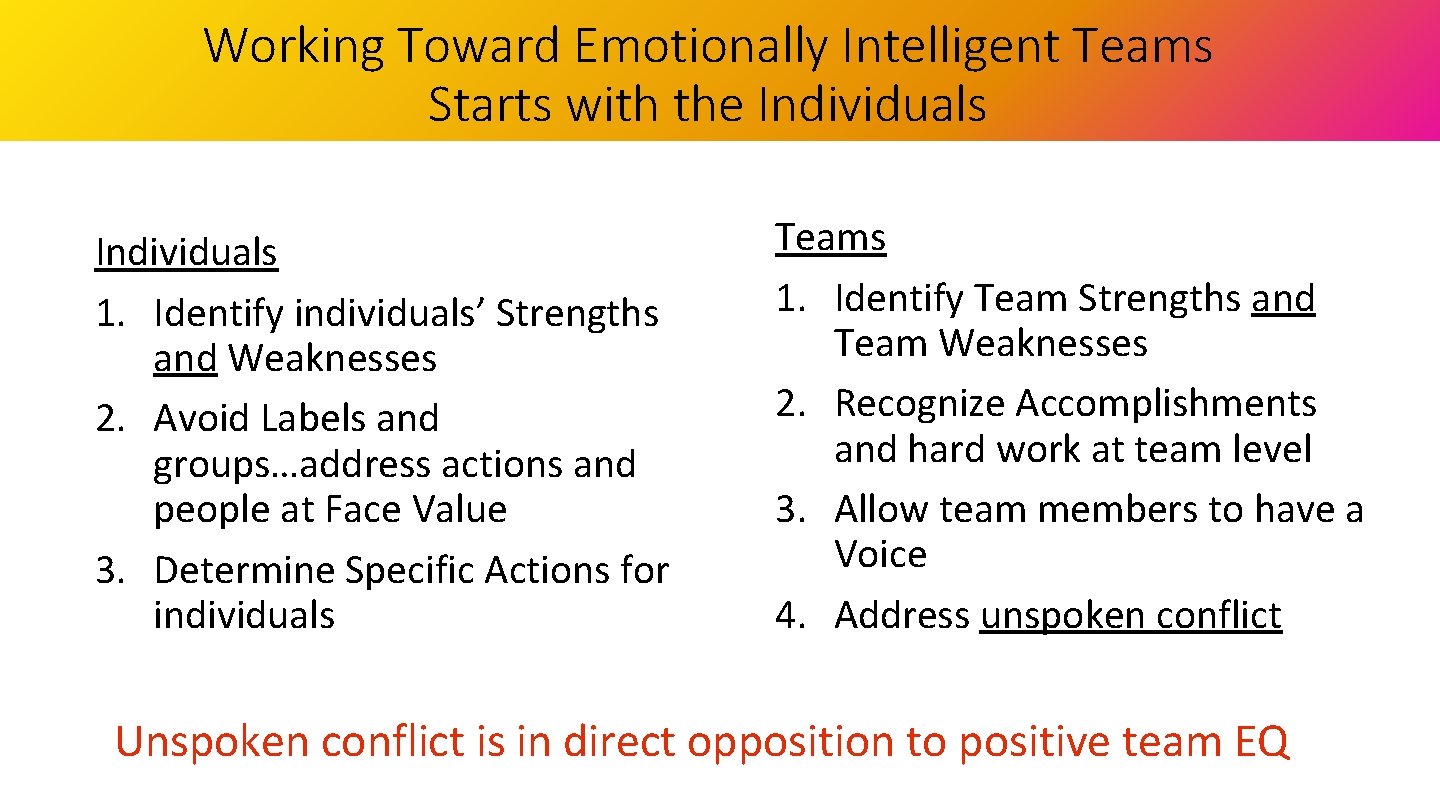
Working Toward Emotionally Intelligent Teams Starts with the Individuals 1. Identify individuals’ Strengths and Weaknesses 2. Avoid Labels and groups…address actions and people at Face Value 3. Determine Specific Actions for individuals Teams 1. Identify Team Strengths and Team Weaknesses 2. Recognize Accomplishments and hard work at team level 3. Allow team members to have a Voice 4. Address unspoken conflict Unspoken conflict is in direct opposition to positive team EQ
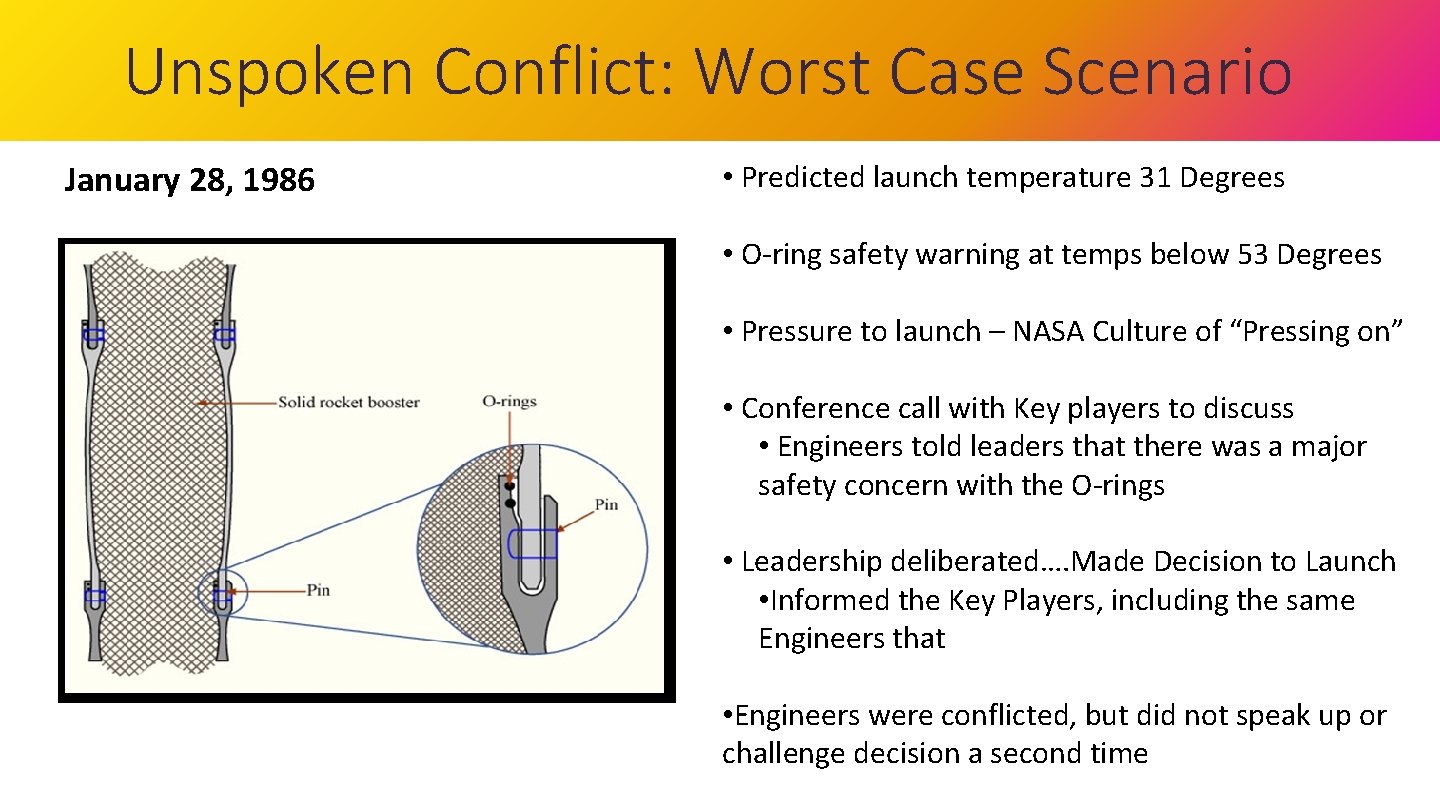
Unspoken Conflict: Worst Case Scenario January 28, 1986 • Predicted launch temperature 31 Degrees • O-ring safety warning at temps below 53 Degrees • Pressure to launch – NASA Culture of “Pressing on” • Conference call with Key players to discuss • Engineers told leaders that there was a major safety concern with the O-rings • Leadership deliberated…. Made Decision to Launch • Informed the Key Players, including the same Engineers that • Engineers were conflicted, but did not speak up or challenge decision a second time
How Do We as IT Organizations Approach Needs? 32
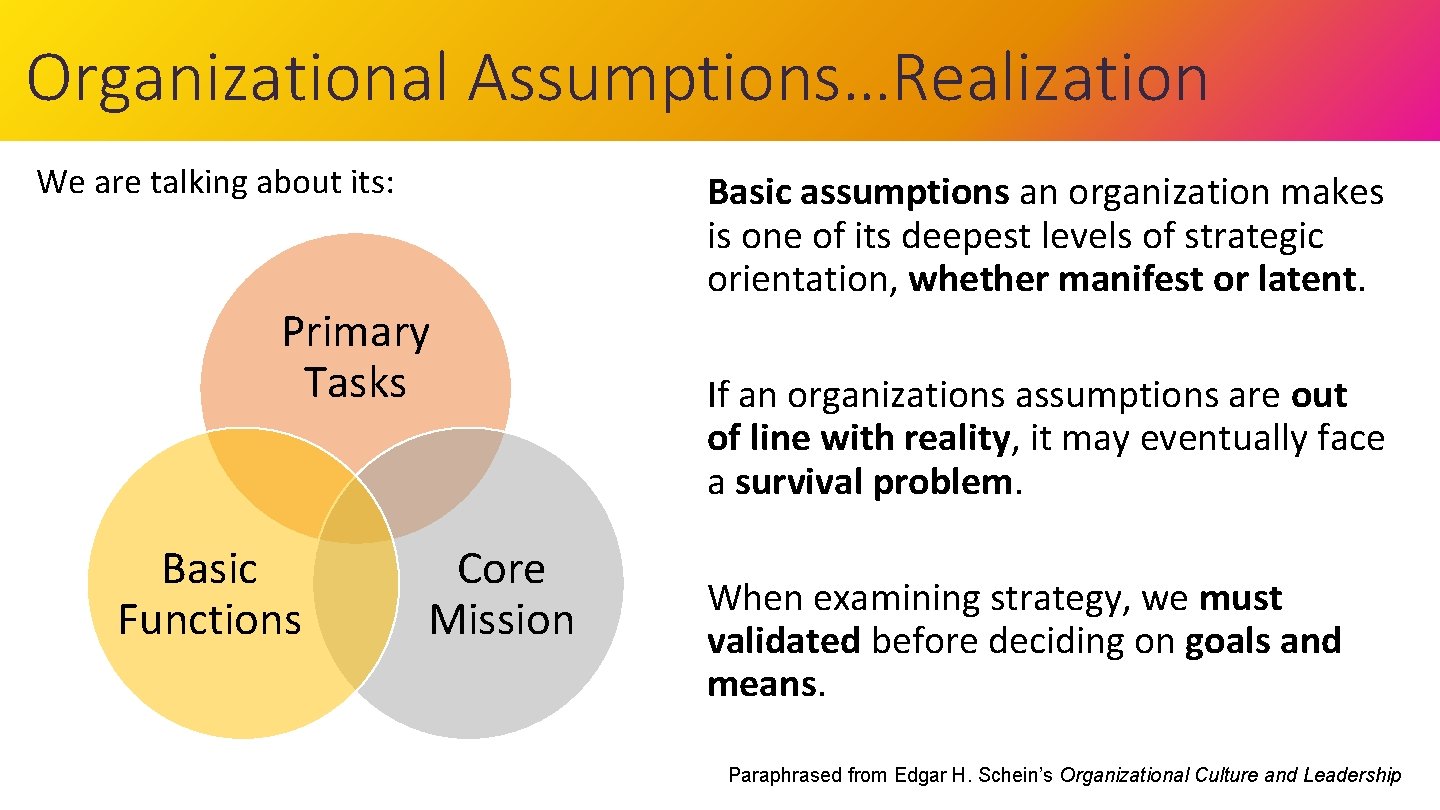
Organizational Assumptions…Realization We are talking about its: Primary Tasks Basic Functions Core Mission Basic assumptions an organization makes is one of its deepest levels of strategic orientation, whether manifest or latent. If an organizations assumptions are out of line with reality, it may eventually face a survival problem. When examining strategy, we must validated before deciding on goals and means. Paraphrased from Edgar H. Schein’s Organizational Culture and Leadership
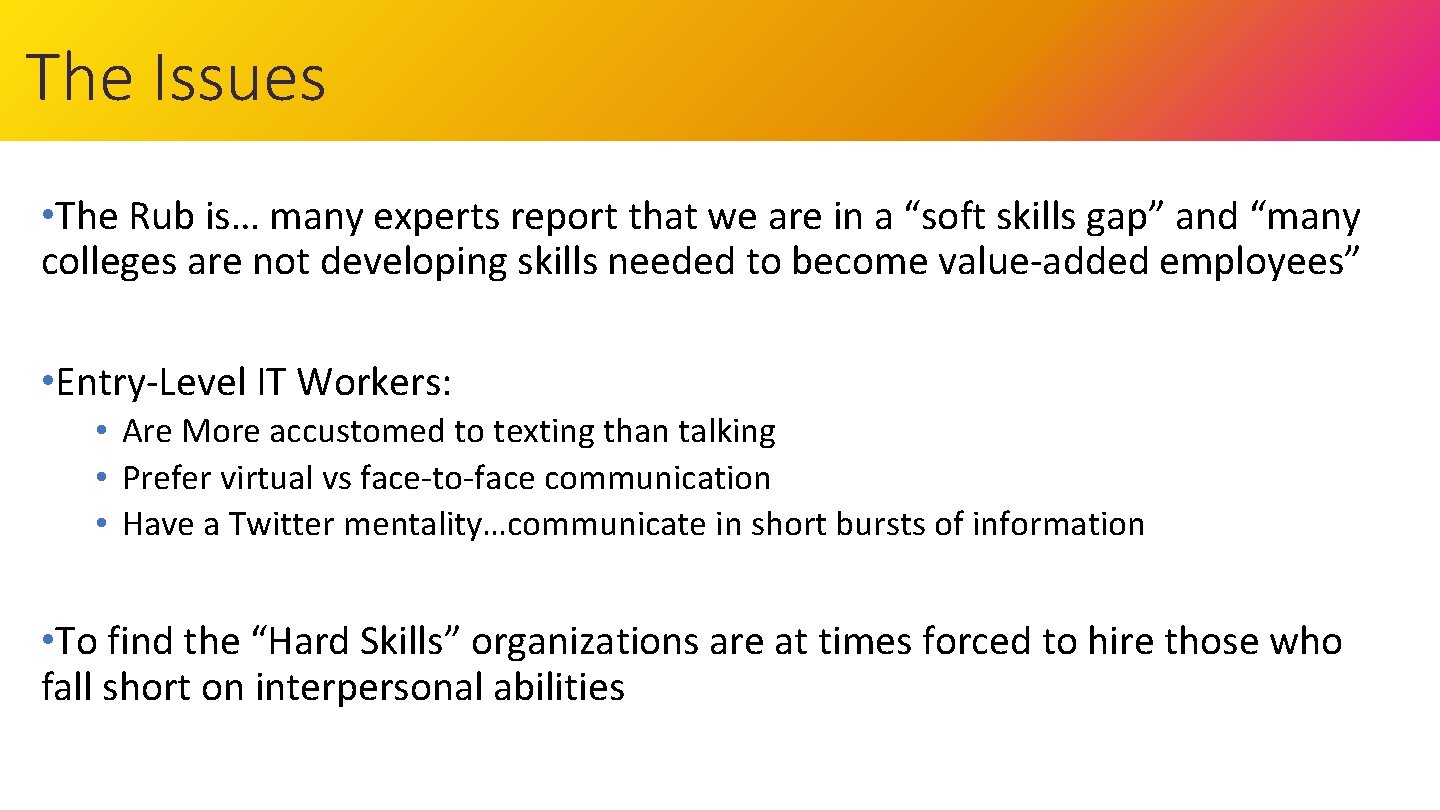
The Issues • The Rub is… many experts report that we are in a “soft skills gap” and “many colleges are not developing skills needed to become value-added employees” • Entry-Level IT Workers: • Are More accustomed to texting than talking • Prefer virtual vs face-to-face communication • Have a Twitter mentality…communicate in short bursts of information • To find the “Hard Skills” organizations are at times forced to hire those who fall short on interpersonal abilities
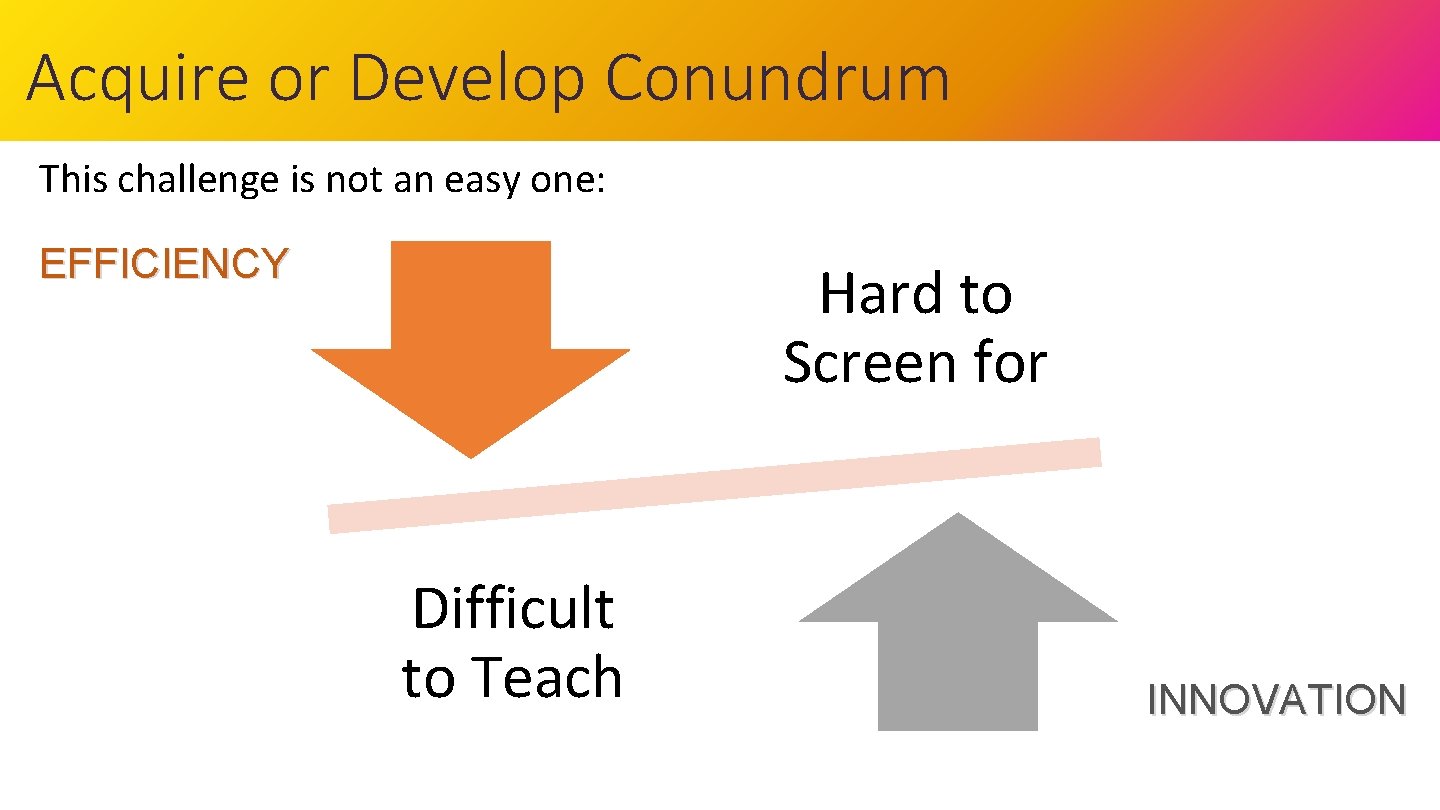
Acquire or Develop Conundrum This challenge is not an easy one: EFFICIENCY Hard to Screen for Difficult to Teach INNOVATION
WAYS TO DEVELOP THESE REQUIRED SKILLS ADDRESSING THE IDENTIFIED SKILLS GAP
Assessment Outcomes and Actions… Communication to Leadership Presentation Skills Listening Skills • Success in “Executive One” • High Impact Presentation Skills • Active Listening Skills (CBT) Analytical / Problem Solving Skills • Critical Thinking & Problem Solving Adaptability / Flexibility • Critical Thinking & Problem Solving Asking the Right Questions Team Development Consulting Skills • Socratic Questioning Methods • Project Success Factors • Organizational Consulting Skills Diplomacy • Success in “Executive One” Assertiveness • Success in “Executive One” Writing Skills (Audience Focused) • Writing for Broad Audiences (CBT) Developing Relationships • Relationships & Customer Service Also Developed: • Business Knowledge Boot Camp • Area Specific Training Plans • Individual Development Plans • Certification Plans for each position • Communication Workshops • Structure Adjustments • Cyber • Compliance • Information Security
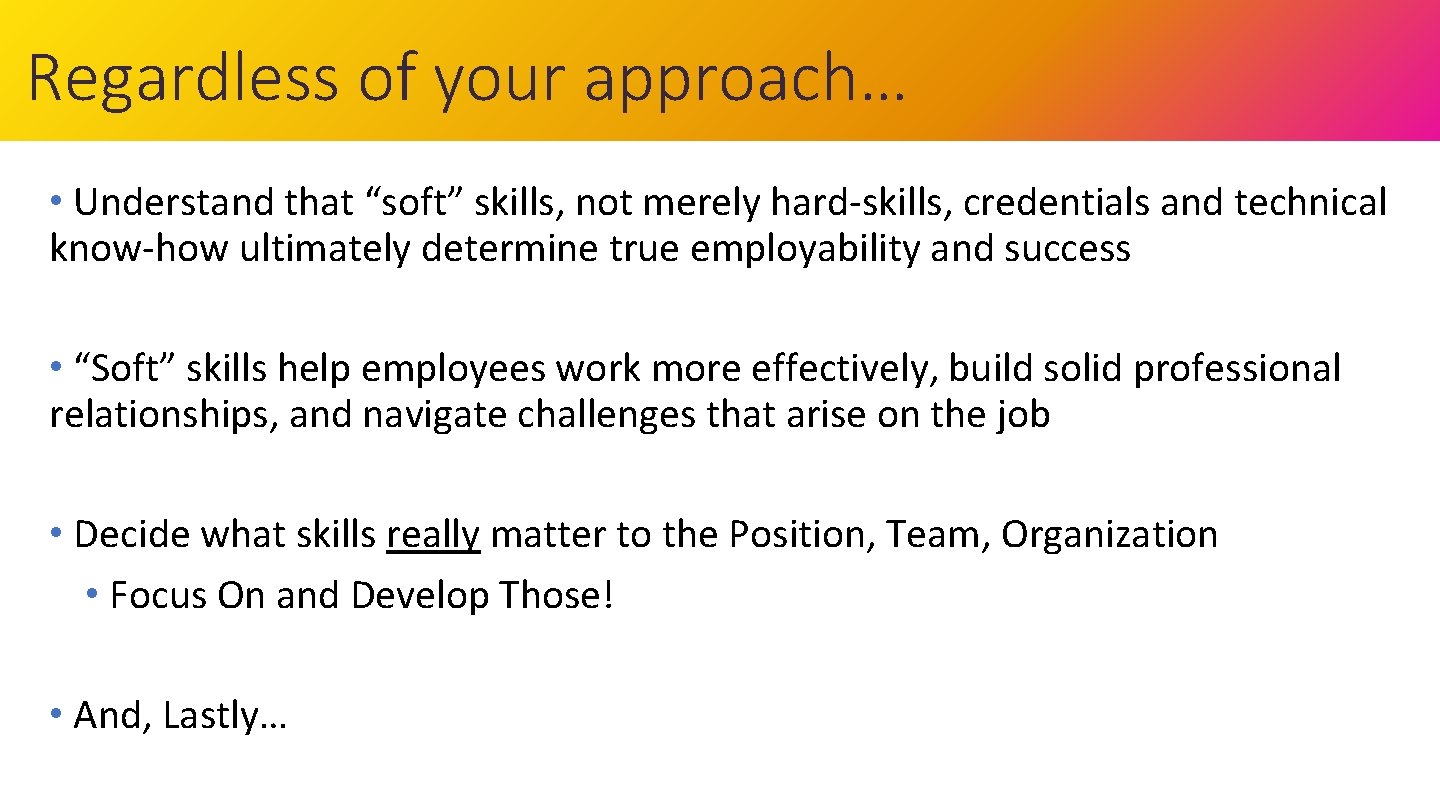
Regardless of your approach… • Understand that “soft” skills, not merely hard-skills, credentials and technical know-how ultimately determine true employability and success • “Soft” skills help employees work more effectively, build solid professional relationships, and navigate challenges that arise on the job • Decide what skills really matter to the Position, Team, Organization • Focus On and Develop Those! • And, Lastly…
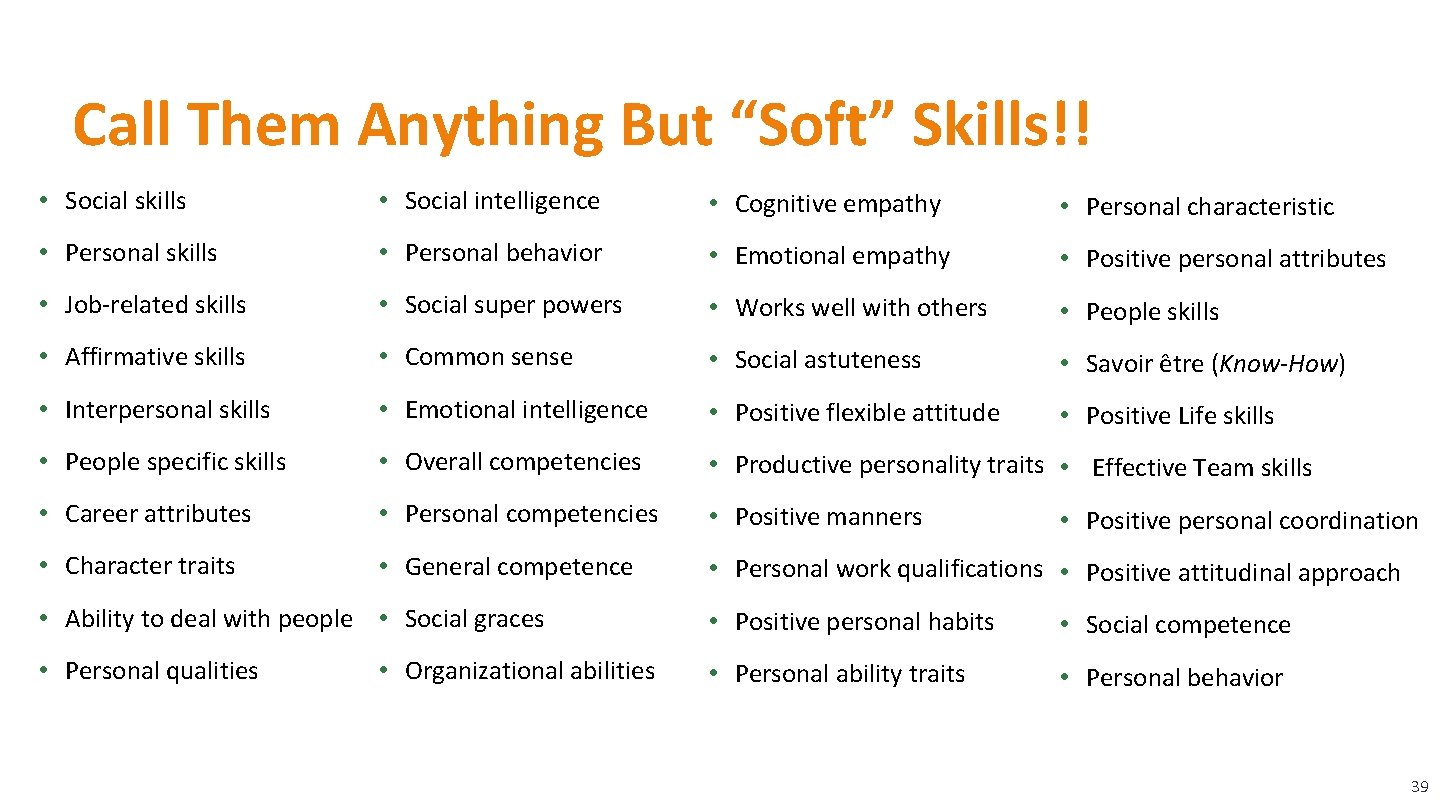
Call Them Anything But “Soft” Skills!! • Social skills • Social intelligence • Cognitive empathy • Personal characteristic • Personal skills • Personal behavior • Emotional empathy • Positive personal attributes • Job-related skills • Social super powers • Works well with others • People skills • Affirmative skills • Common sense • Social astuteness • Savoir être (Know-How) • Interpersonal skills • Emotional intelligence • Positive flexible attitude • Positive Life skills • People specific skills • Overall competencies • Productive personality traits • Effective Team skills • Career attributes • Personal competencies • Positive manners • Character traits • General competence • Personal work qualifications • Positive attitudinal approach • Positive personal coordination • Ability to deal with people • Social graces • Positive personal habits • Social competence • Personal qualities • Personal ability traits • Personal behavior • Organizational abilities 39
? QUESTION TIME ?
UP NEXT • 3: 30 PM - Applying Competency Mapping and Assessments to Build a Cyber Workforce Baseline • 4: 30 PM - Comp. TIA Partner Summit Networking