Water and Atmospheric Moisture Moisture Clouds and Precipitatoin
- Slides: 35
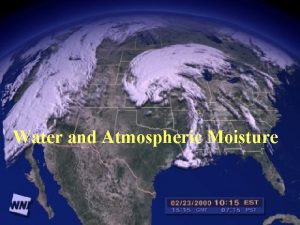
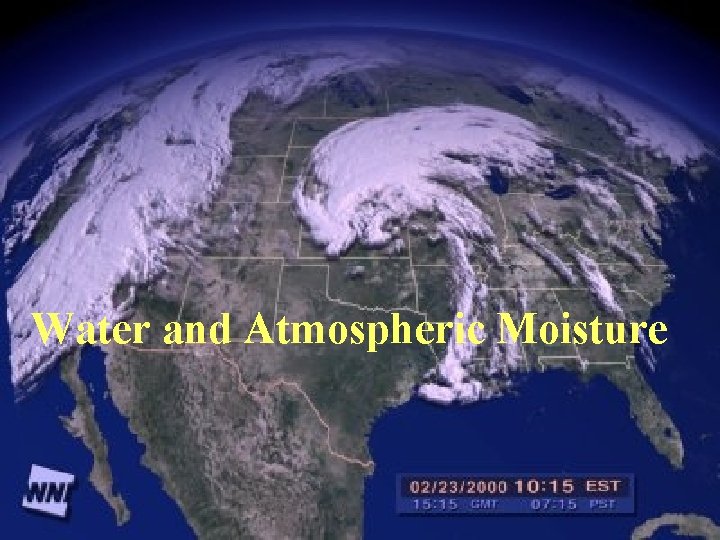
Water and Atmospheric Moisture
Moisture, Clouds, and Precipitatoin • • Humidity Global Precipitation Processes Lifting Mechanisms Big Question: What Causes Air to Precipitate?
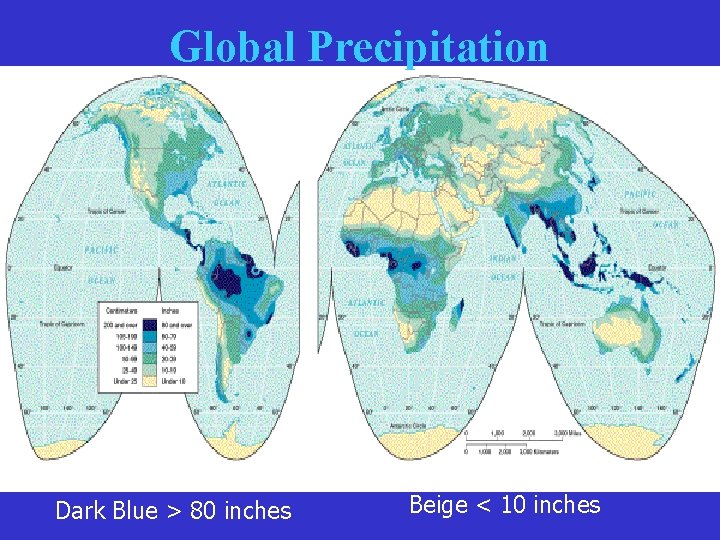
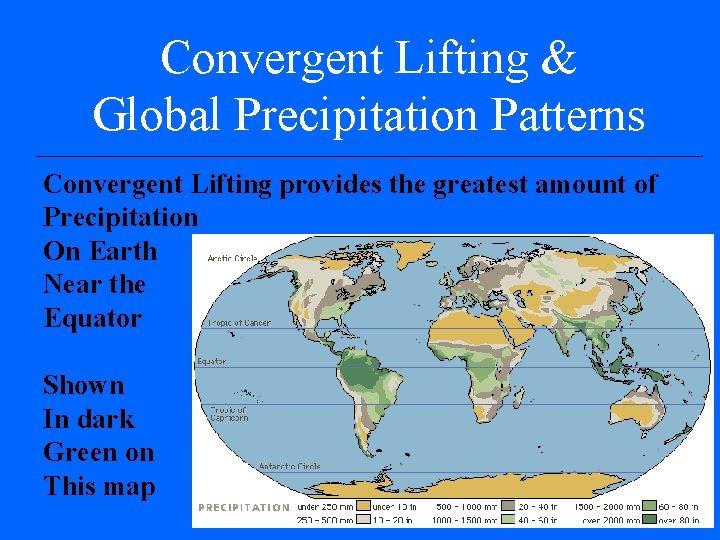
Global Precipitation Dark Blue > 80 inches Beige < 10 inches
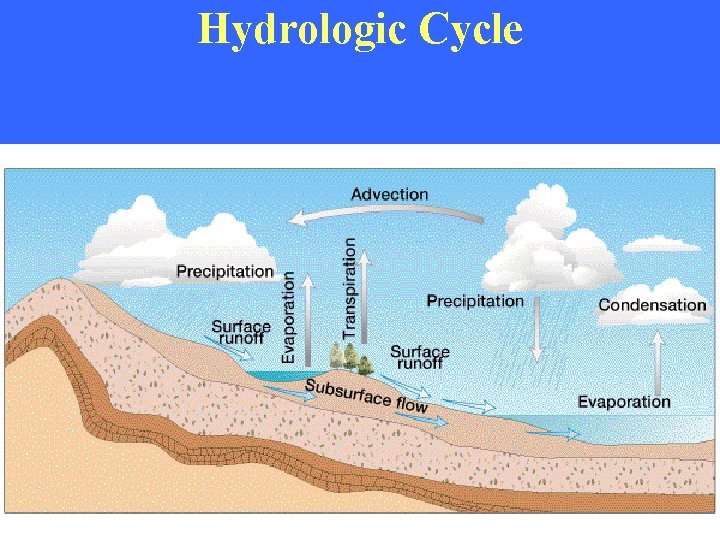
Hydrologic Cycle
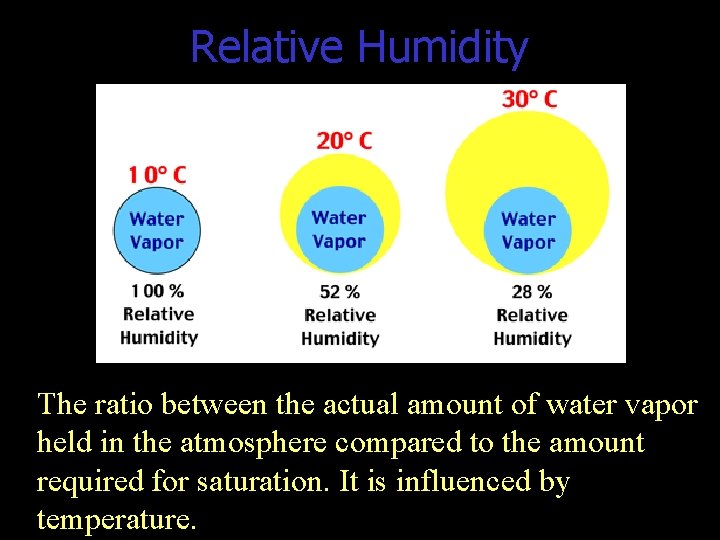
Relative Humidity The ratio between the actual amount of water vapor held in the atmosphere compared to the amount required for saturation. It is influenced by temperature.
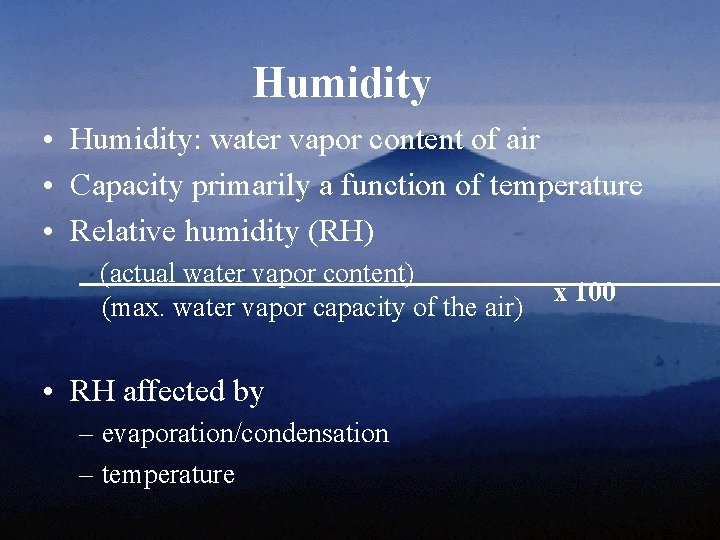
Humidity • Humidity: water vapor content of air • Capacity primarily a function of temperature • Relative humidity (RH) (actual water vapor content) (max. water vapor capacity of the air) • RH affected by – evaporation/condensation – temperature x 100
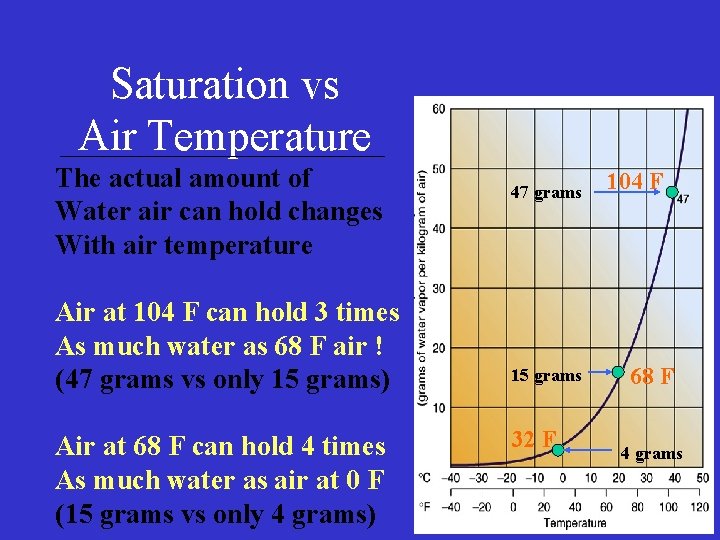
Saturation vs Air Temperature The actual amount of Water air can hold changes With air temperature Air at 104 F can hold 3 times As much water as 68 F air ! (47 grams vs only 15 grams) Air at 68 F can hold 4 times As much water as air at 0 F (15 grams vs only 4 grams) 47 grams 15 grams 32 F 104 F 68 F 4 grams
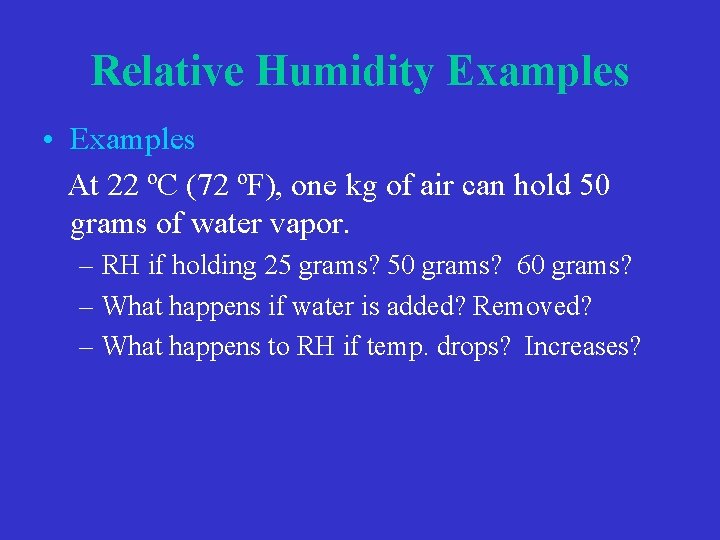
Relative Humidity Examples • Examples At 22 ºC (72 ºF), one kg of air can hold 50 grams of water vapor. – RH if holding 25 grams? 50 grams? 60 grams? – What happens if water is added? Removed? – What happens to RH if temp. drops? Increases?
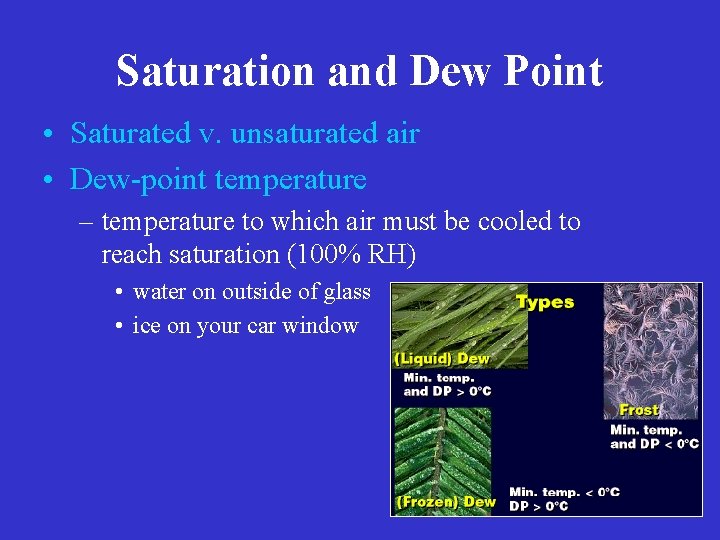
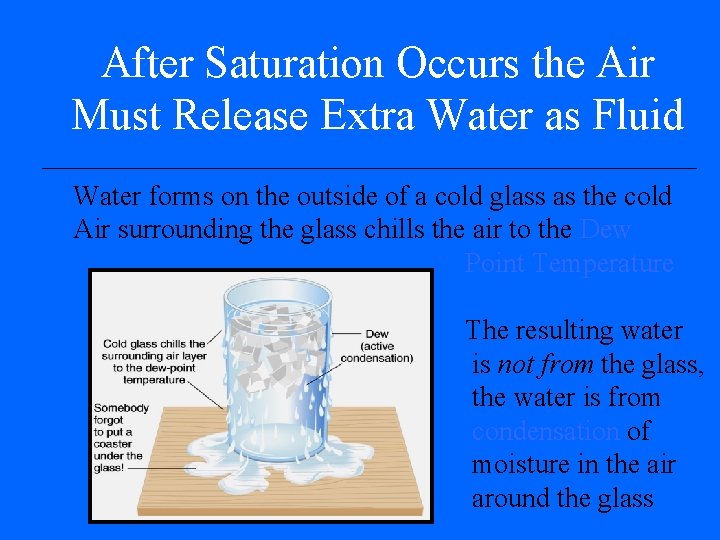
Saturation and Dew Point • Saturated v. unsaturated air • Dew-point temperature – temperature to which air must be cooled to reach saturation (100% RH) • water on outside of glass • ice on your car window
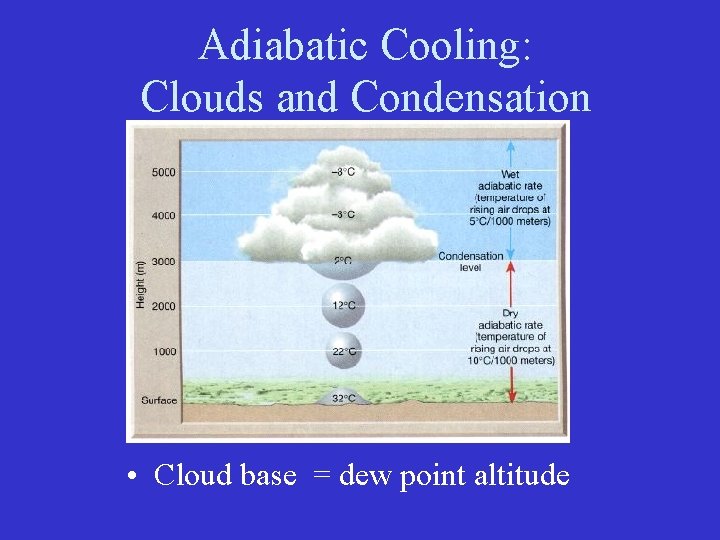
Adiabatic Cooling: Clouds and Condensation • Cloud base = dew point altitude
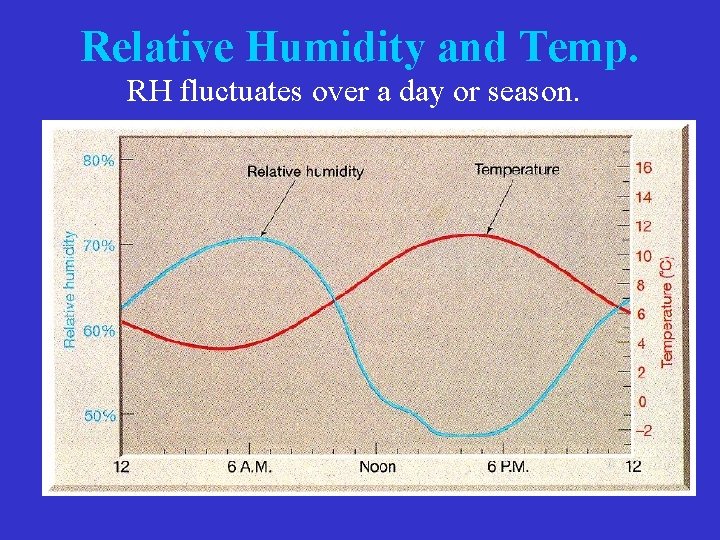
Relative Humidity and Temp. RH fluctuates over a day or season.
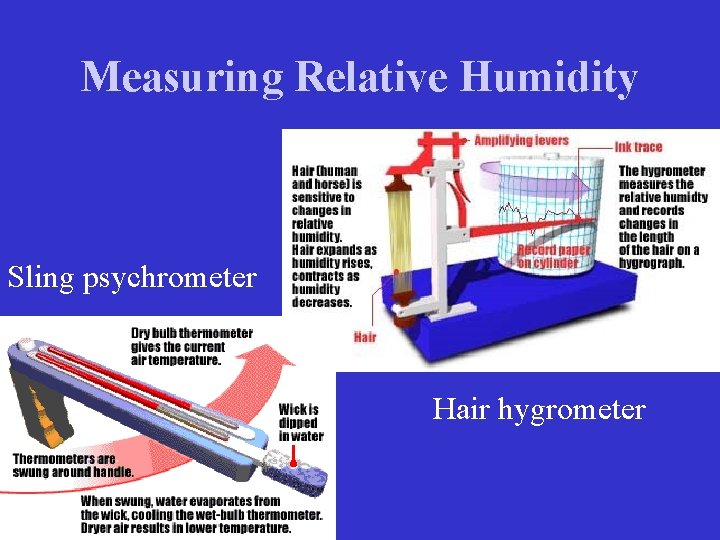
Measuring Relative Humidity Sling psychrometer Hair hygrometer
After Saturation Occurs the Air Must Release Extra Water as Fluid Water forms on the outside of a cold glass as the cold Air surrounding the glass chills the air to the Dew Point Temperature The resulting water is not from the glass, the water is from condensation of moisture in the air around the glass
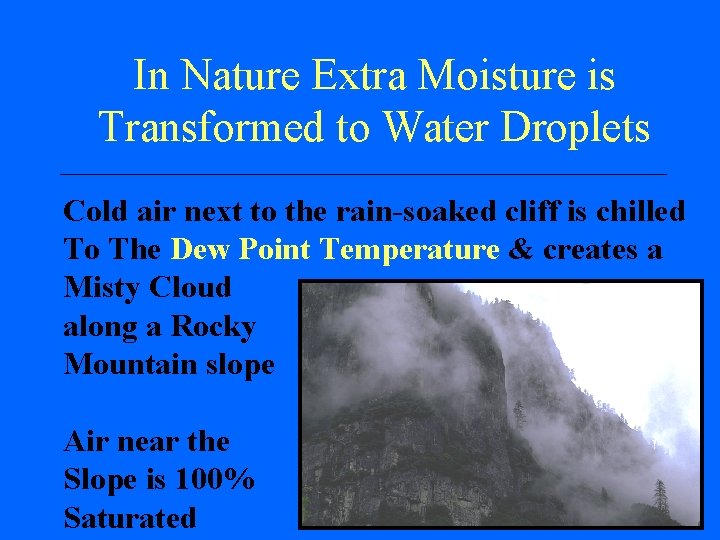
In Nature Extra Moisture is Transformed to Water Droplets Cold air next to the rain-soaked cliff is chilled To The Dew Point Temperature & creates a Misty Cloud along a Rocky Mountain slope Air near the Slope is 100% Saturated
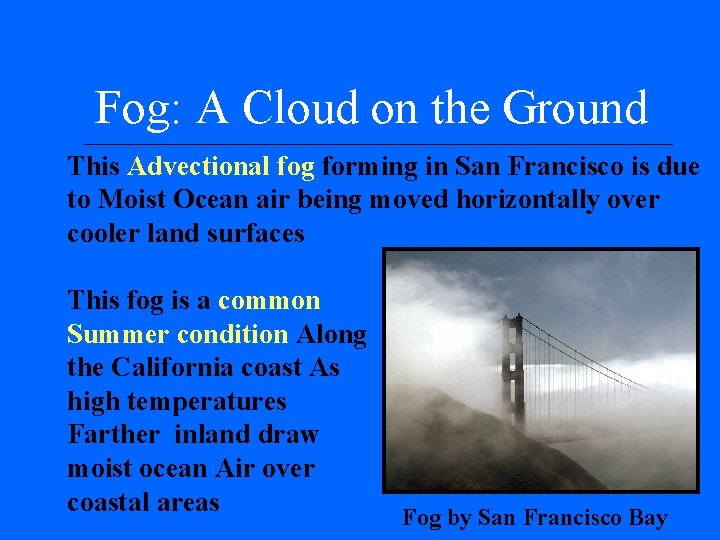
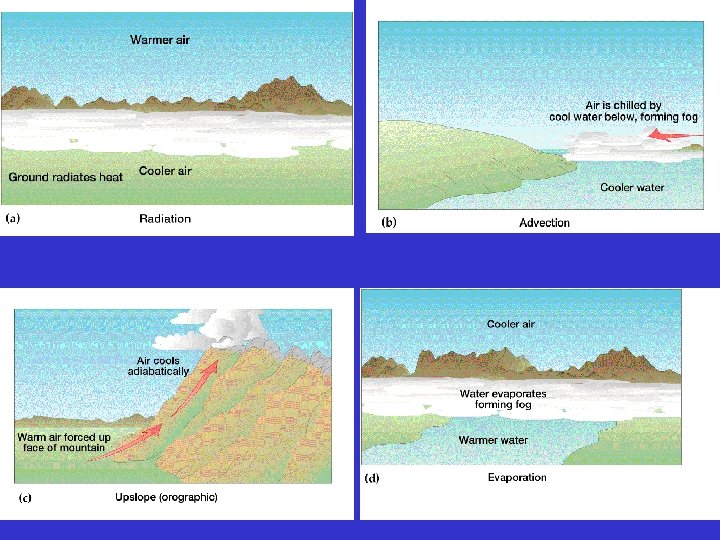
Fog: A Cloud on the Ground This Advectional fog forming in San Francisco is due to Moist Ocean air being moved horizontally over cooler land surfaces This fog is a common Summer condition Along the California coast As high temperatures Farther inland draw moist ocean Air over coastal areas Fog by San Francisco Bay
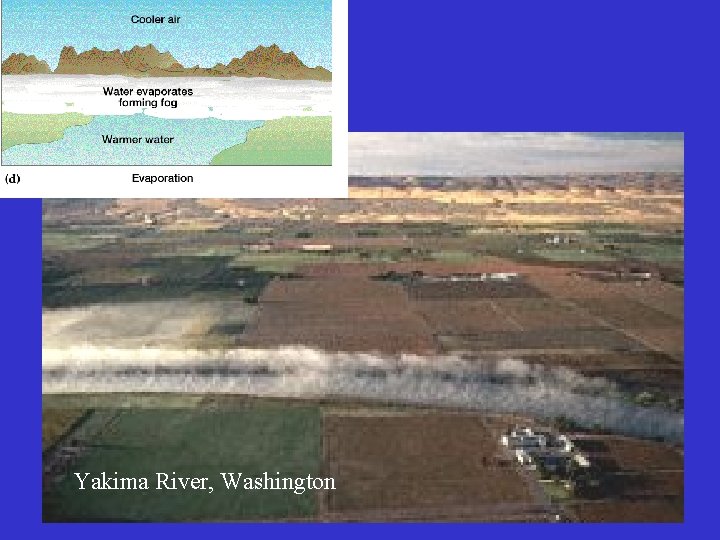
Yakima River, Washington
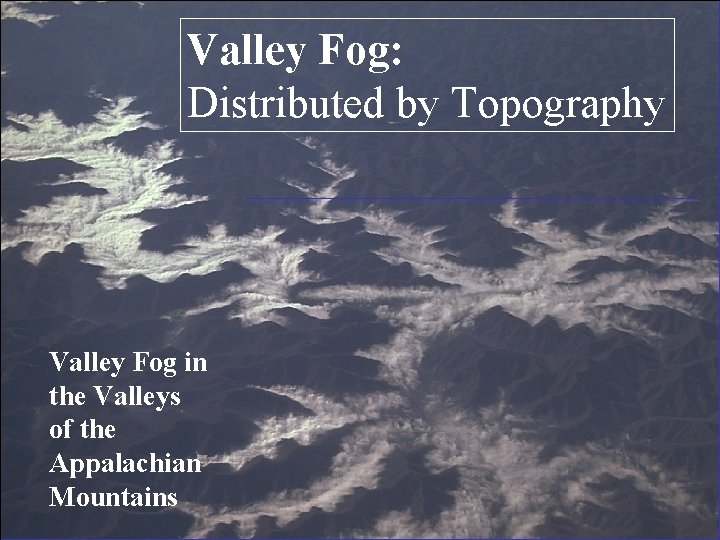
Valley Fog: Distributed by Topography Valley Fog in the Valleys of the Appalachian Mountains
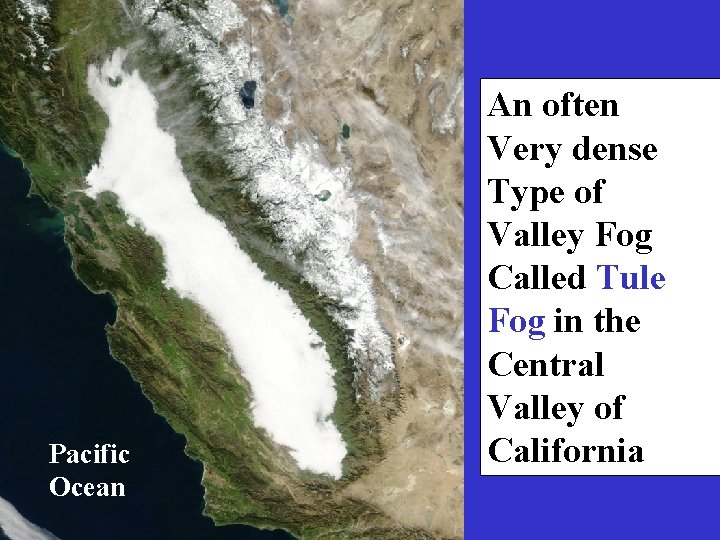
Pacific Ocean An often Very dense Type of Valley Fog Called Tule Fog in the Central Valley of California
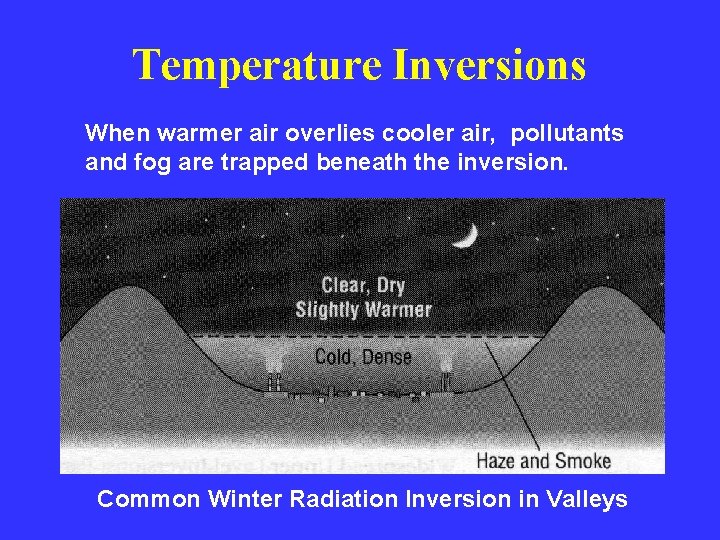
Temperature Inversions When warmer air overlies cooler air, pollutants and fog are trapped beneath the inversion. Common Winter Radiation Inversion in Valleys
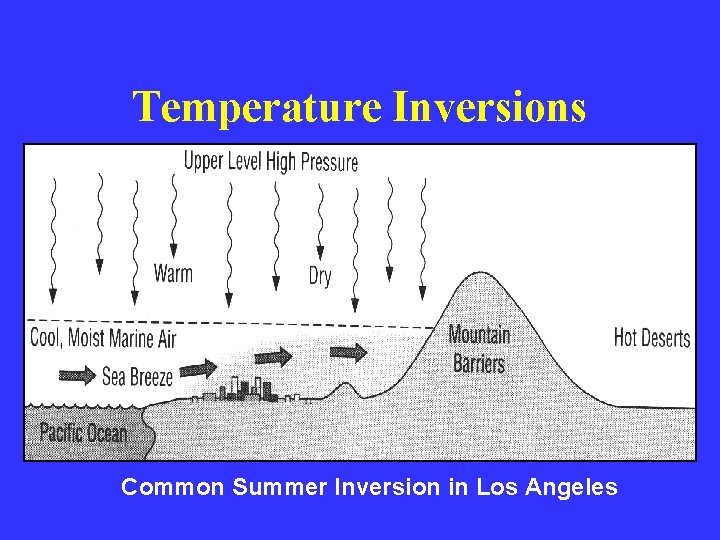
Temperature Inversions Common Summer Inversion in Los Angeles
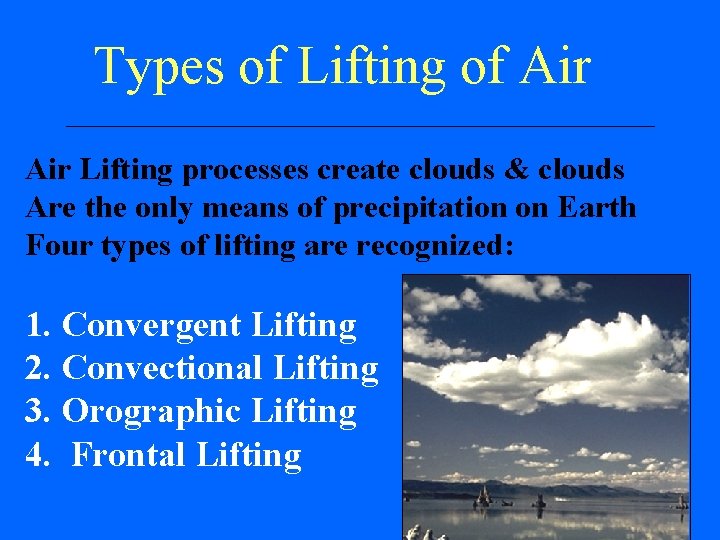
Types of Lifting of Air Lifting processes create clouds & clouds Are the only means of precipitation on Earth Four types of lifting are recognized: 1. Convergent Lifting 2. Convectional Lifting 3. Orographic Lifting 4. Frontal Lifting
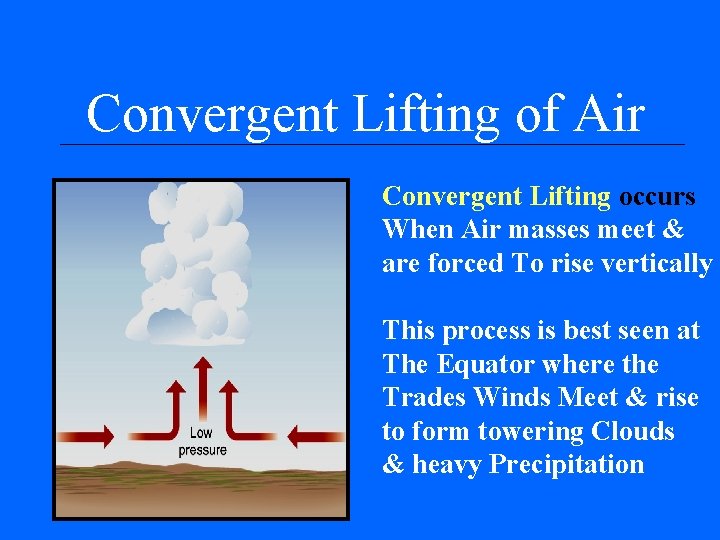
Convergent Lifting of Air Convergent Lifting occurs When Air masses meet & are forced To rise vertically This process is best seen at The Equator where the Trades Winds Meet & rise to form towering Clouds & heavy Precipitation
Convergent Lifting & Global Precipitation Patterns Convergent Lifting provides the greatest amount of Precipitation On Earth Near the Equator Shown In dark Green on This map
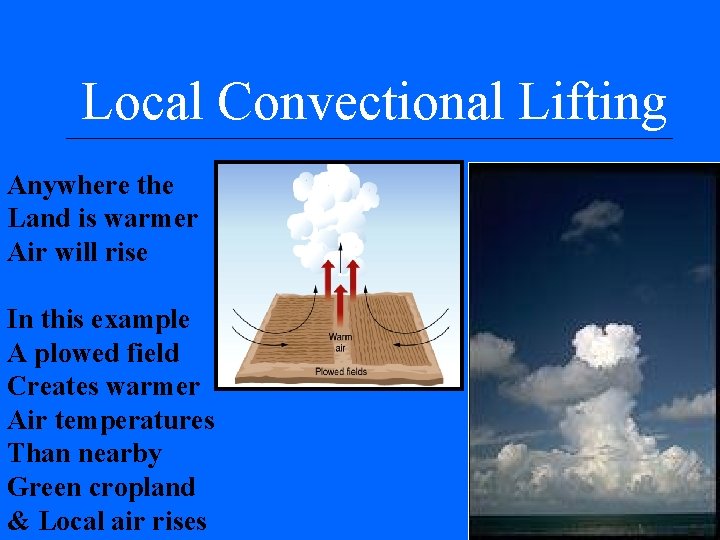
Local Convectional Lifting Anywhere the Land is warmer Air will rise In this example A plowed field Creates warmer Air temperatures Than nearby Green cropland & Local air rises
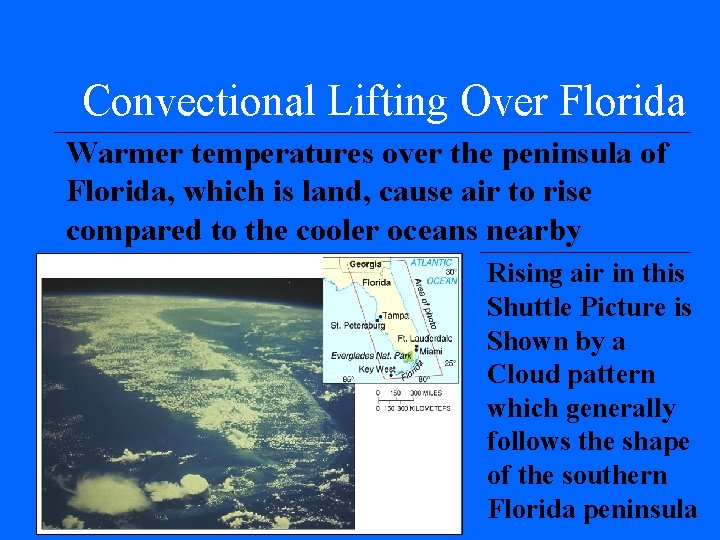
Convectional Lifting Over Florida Warmer temperatures over the peninsula of Florida, which is land, cause air to rise compared to the cooler oceans nearby Rising air in this Shuttle Picture is Shown by a Cloud pattern which generally follows the shape of the southern Florida peninsula
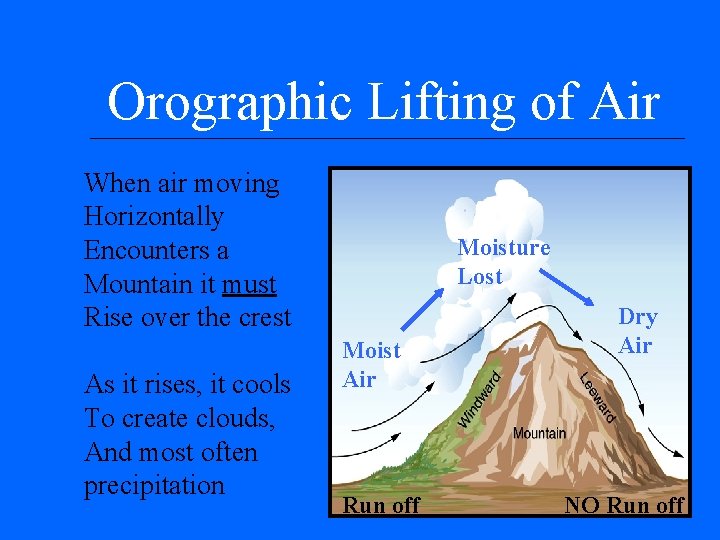
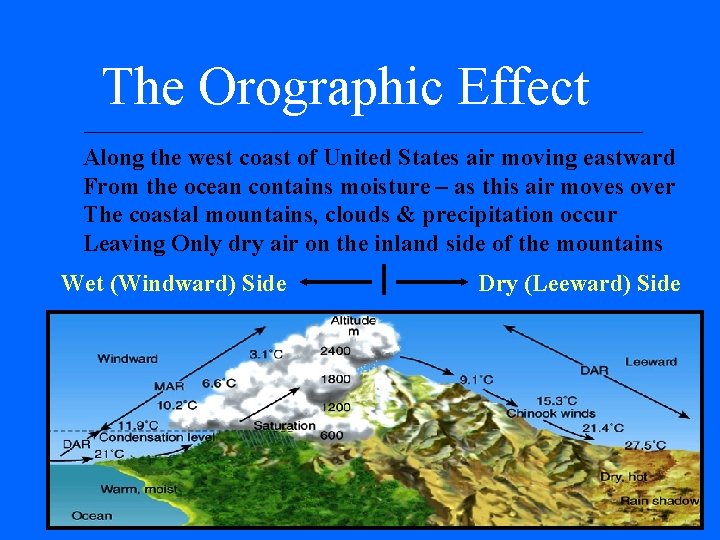
Orographic Lifting of Air When air moving Horizontally Encounters a Mountain it must Rise over the crest As it rises, it cools To create clouds, And most often precipitation Moisture Lost Moist Air Run off Dry Air NO Run off
The Orographic Effect Along the west coast of United States air moving eastward From the ocean contains moisture – as this air moves over The coastal mountains, clouds & precipitation occur Leaving Only dry air on the inland side of the mountains Wet (Windward) Side Dry (Leeward) Side
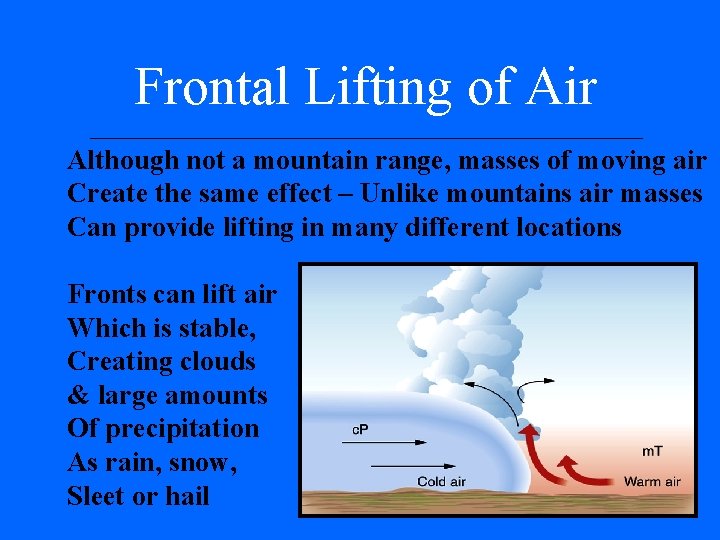
Frontal Lifting of Air Although not a mountain range, masses of moving air Create the same effect – Unlike mountains air masses Can provide lifting in many different locations Fronts can lift air Which is stable, Creating clouds & large amounts Of precipitation As rain, snow, Sleet or hail
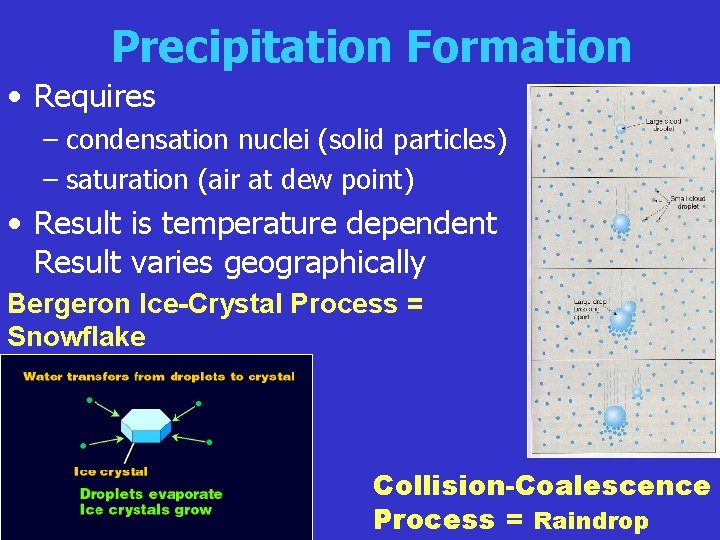
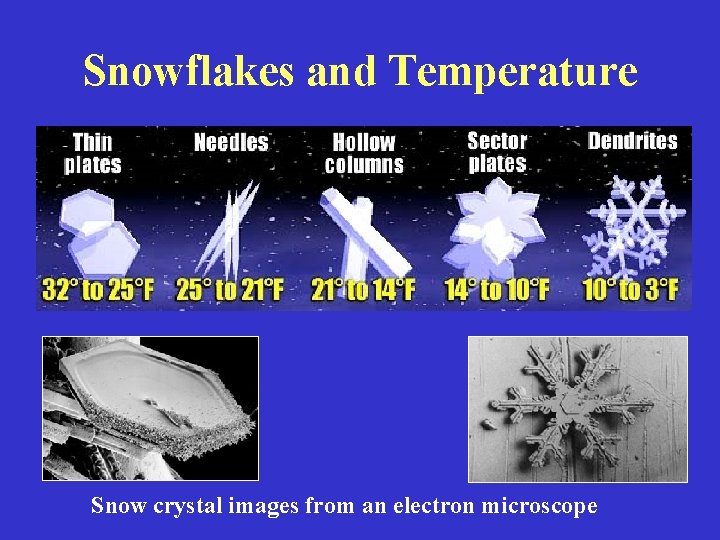
Precipitation Formation • Requires – condensation nuclei (solid particles) – saturation (air at dew point) • Result is temperature dependent Result varies geographically Bergeron Ice-Crystal Process = Snowflake Collision-Coalescence Process = Raindrop
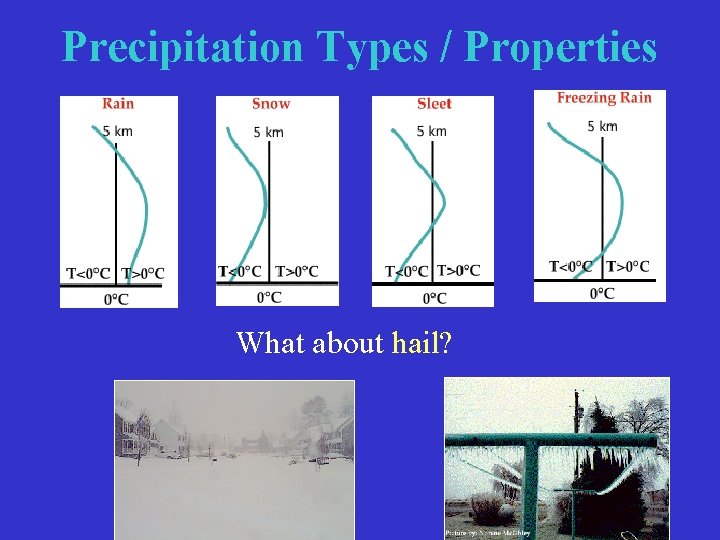
Precipitation Types / Properties What about hail?
Snowflakes and Temperature Snow crystal images from an electron microscope
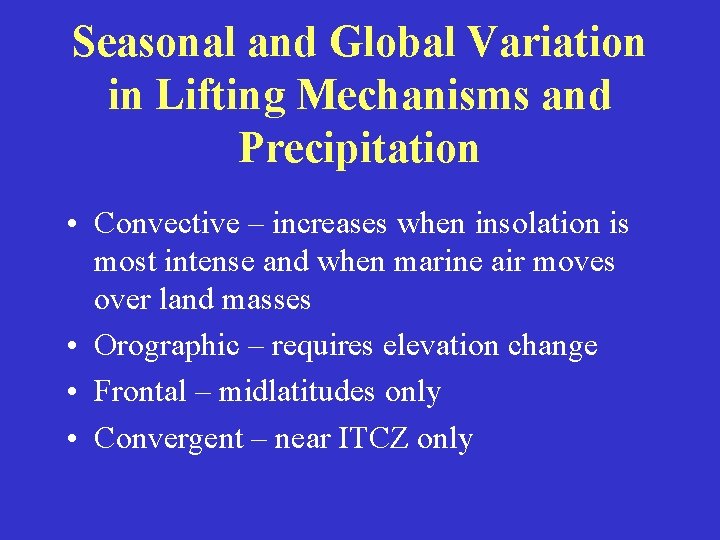
Seasonal and Global Variation in Lifting Mechanisms and Precipitation • Convective – increases when insolation is most intense and when marine air moves over land masses • Orographic – requires elevation change • Frontal – midlatitudes only • Convergent – near ITCZ only
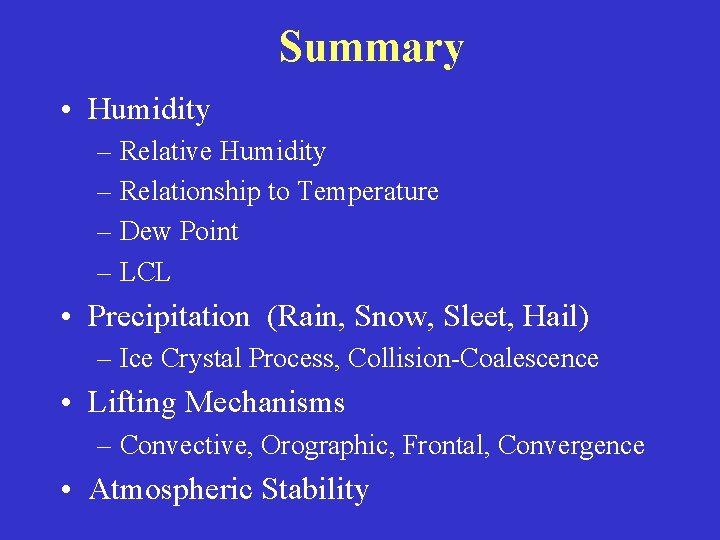
Summary • Humidity – Relative Humidity – Relationship to Temperature – Dew Point – LCL • Precipitation (Rain, Snow, Sleet, Hail) – Ice Crystal Process, Collision-Coalescence • Lifting Mechanisms – Convective, Orographic, Frontal, Convergence • Atmospheric Stability