Victorian Curriculum F 10 Online professional learning session

- Slides: 43
Victorian Curriculum F– 10 Online professional learning session Introduction to the Arts: Dance, Drama, Media Arts, Music, Visual Arts Kathy Hendy-Ekers and Helen Champion Curriculum Managers
Session overview • • The Arts in the Victorian Curriculum • Learning area structure • Organising ideas • Working with interdependent strands • Using the web site Curriculum planning for Arts learning • Whole school, learning area, year, units/sequences of learning • Roles for generalist and specialist teachers • Partnerships, incursions, excursions and residencies What’s in the curriculum? Dance, Drama, Media Arts, Music and Visual Arts Starting local
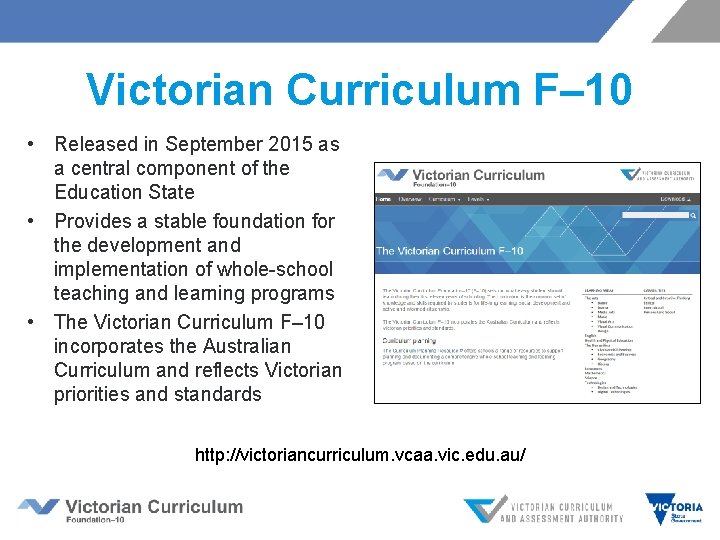
Victorian Curriculum F– 10 • Released in September 2015 as a central component of the Education State • Provides a stable foundation for the development and implementation of whole-school teaching and learning programs • The Victorian Curriculum F– 10 incorporates the Australian Curriculum and reflects Victorian priorities and standards http: //victoriancurriculum. vcaa. vic. edu. au/
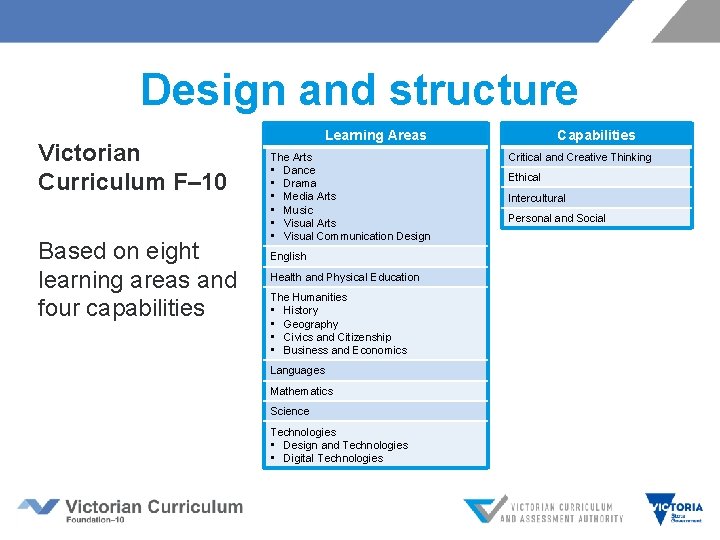
Design and structure Victorian Curriculum F– 10 Based on eight learning areas and four capabilities Learning Areas The Arts • Dance • Drama • Media Arts • Music • Visual Arts • Visual Communication Design English Health and Physical Education The Humanities • History • Geography • Civics and Citizenship • Business and Economics Languages Mathematics Science Technologies • Design and Technologies • Digital Technologies Capabilities Critical and Creative Thinking Ethical Intercultural Personal and Social
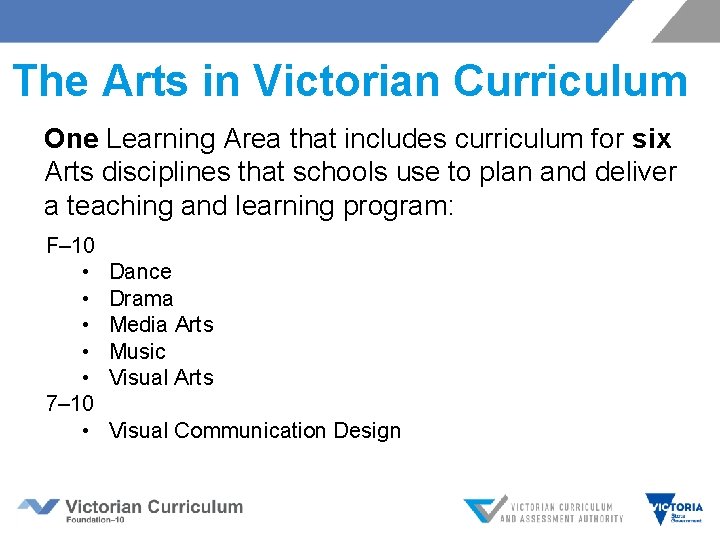
The Arts in Victorian Curriculum One Learning Area that includes curriculum for six Arts disciplines that schools use to plan and deliver a teaching and learning program: F– 10 • • • 7– 10 • Dance Drama Media Arts Music Visual Arts Visual Communication Design
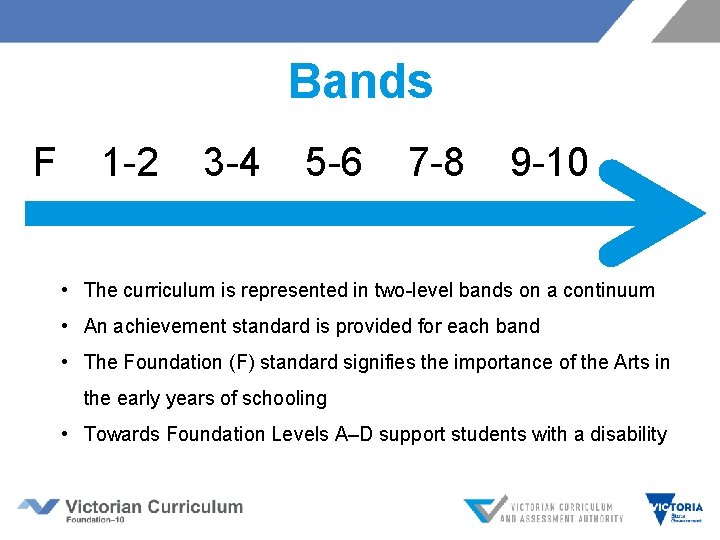
Bands F 1 -2 3 -4 5 -6 7 -8 9 -10 • The curriculum is represented in two-level bands on a continuum • An achievement standard is provided for each band • The Foundation (F) standard signifies the importance of the Arts in the early years of schooling • Towards Foundation Levels A–D support students with a disability
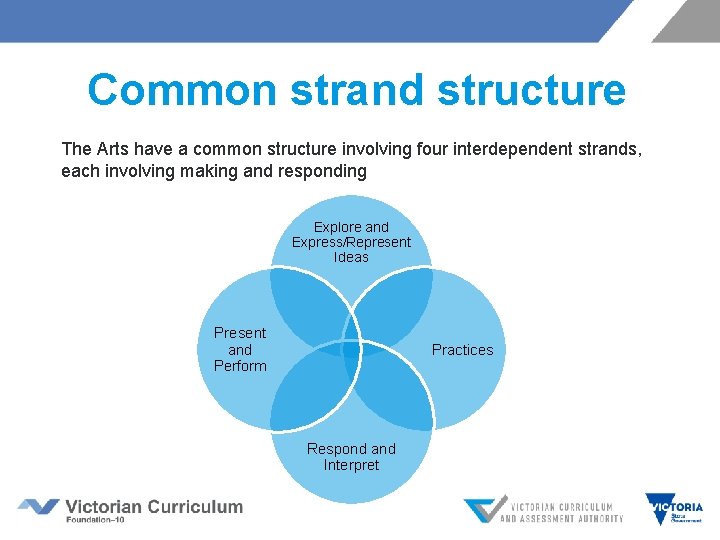
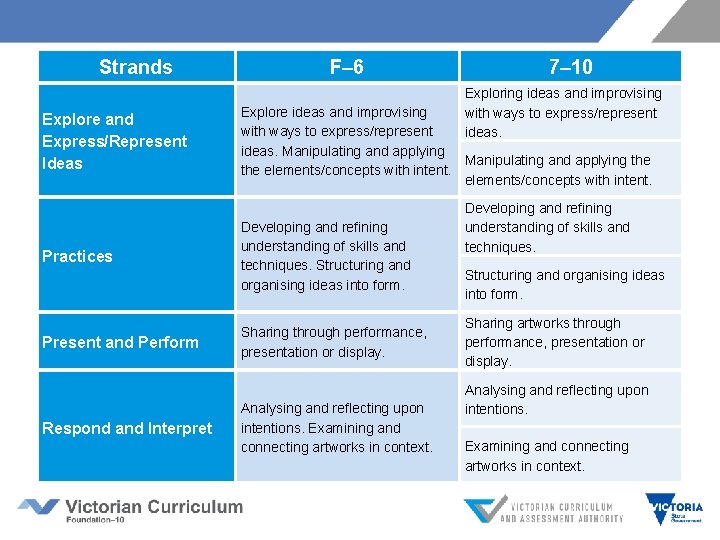
Common strand structure The Arts have a common structure involving four interdependent strands, each involving making and responding Explore and Express/Represent Ideas Present and Perform Practices Respond and Interpret
Strands Explore and Express/Represent Ideas Practices Present and Perform Respond and Interpret F– 6 7– 10 Exploring ideas and improvising with ways to express/represent ideas. Explore ideas and improvising with ways to express/represent ideas. Manipulating and applying the elements/concepts with intent. Developing and refining understanding of skills and techniques. Structuring and organising ideas into form. Sharing through performance, presentation or display. Analysing and reflecting upon intentions. Examining and connecting artworks in context. Developing and refining understanding of skills and techniques. Structuring and organising ideas into form. Sharing artworks through performance, presentation or display. Analysing and reflecting upon intentions. Examining and connecting artworks in context.
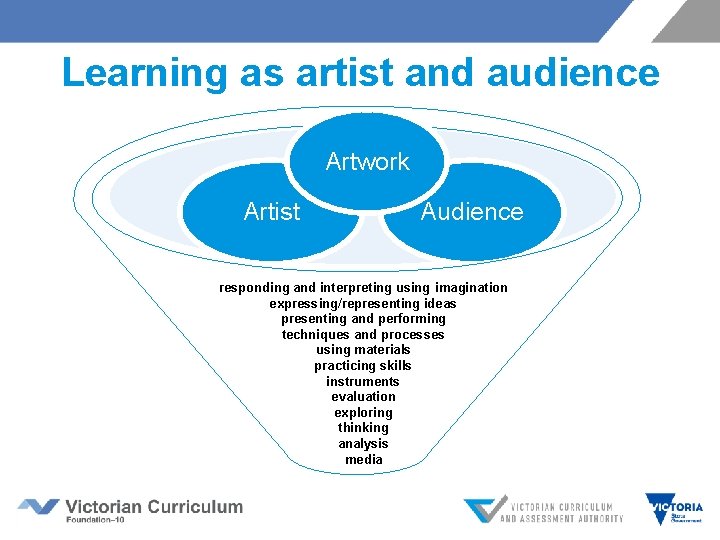
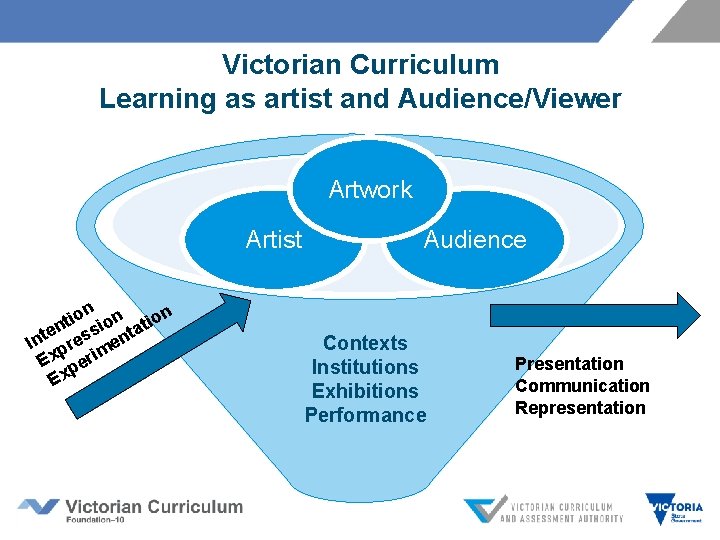
Learning as artist and audience Artwork Artist Audience responding and interpreting using imagination expressing/representing ideas presenting and performing techniques and processes using materials practicing skills instruments evaluation exploring thinking analysis media
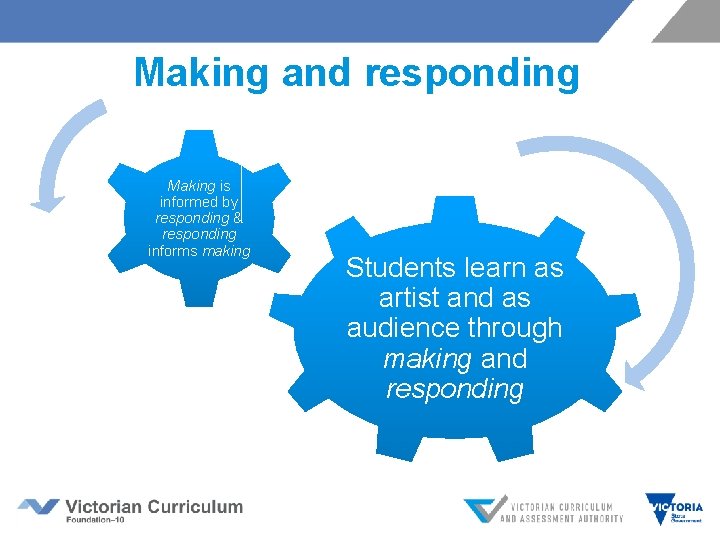
Making and responding Making is informed by responding & responding informs making Students learn as artist and as audience through making and responding
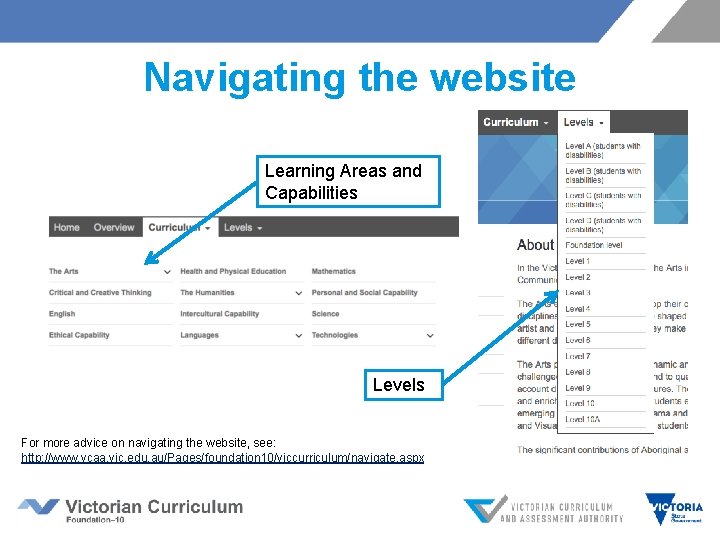
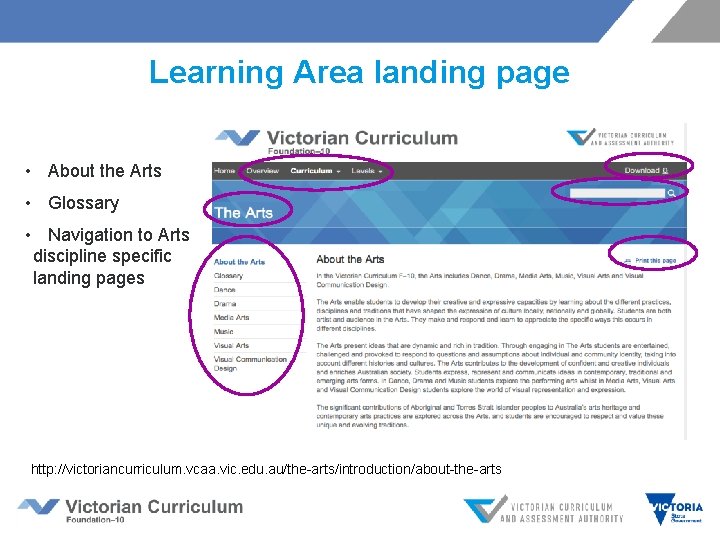
Navigating the website Learning Areas and Capabilities Levels For more advice on navigating the website, see: http: //www. vcaa. vic. edu. au/Pages/foundation 10/viccurriculum/navigate. aspx
Learning Area landing page • About the Arts • Glossary • Navigation to Arts discipline specific landing pages http: //victoriancurriculum. vcaa. vic. edu. au/the-arts/introduction/about-the-arts
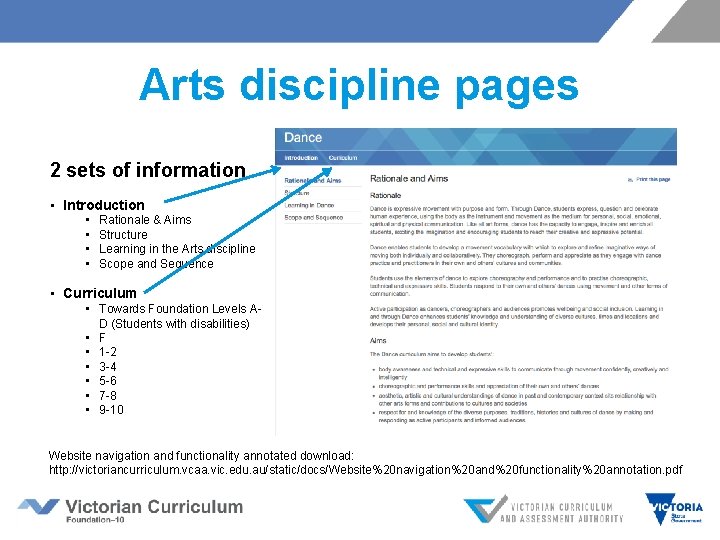
Arts discipline pages 2 sets of information • Introduction • • Rationale & Aims Structure Learning in the Arts discipline Scope and Sequence • Curriculum • Towards Foundation Levels AD (Students with disabilities) • F • 1 -2 • 3 -4 • 5 -6 • 7 -8 • 9 -10 Website navigation and functionality annotated download: http: //victoriancurriculum. vcaa. vic. edu. au/static/docs/Website%20 navigation%20 and%20 functionality%20 annotation. pdf
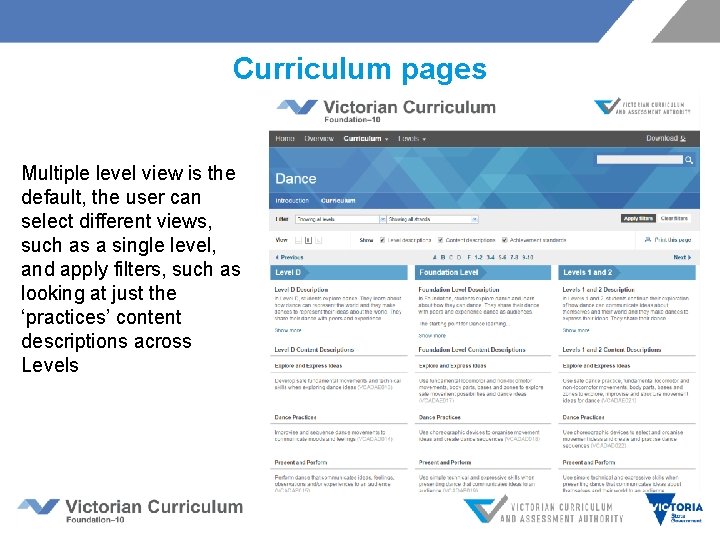
Curriculum pages Multiple level view is the default, the user can select different views, such as a single level, and apply filters, such as looking at just the ‘practices’ content descriptions across Levels
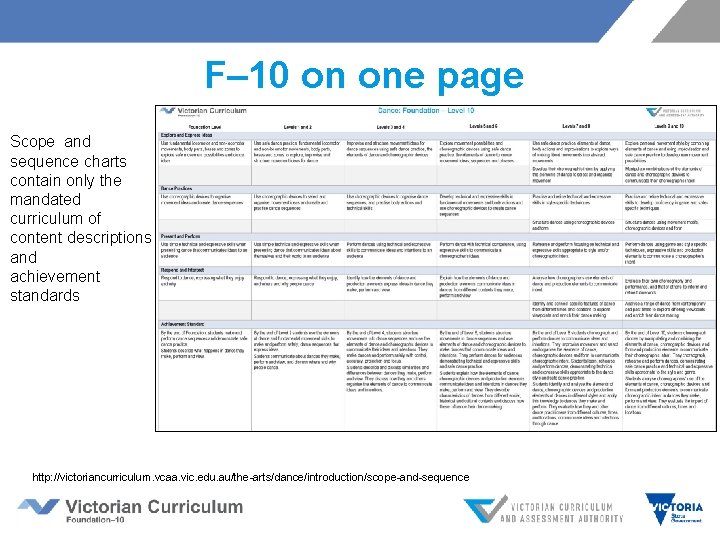
F– 10 on one page Scope and sequence charts contain only the mandated curriculum of content descriptions and achievement standards http: //victoriancurriculum. vcaa. vic. edu. au/the-arts/dance/introduction/scope-and-sequence
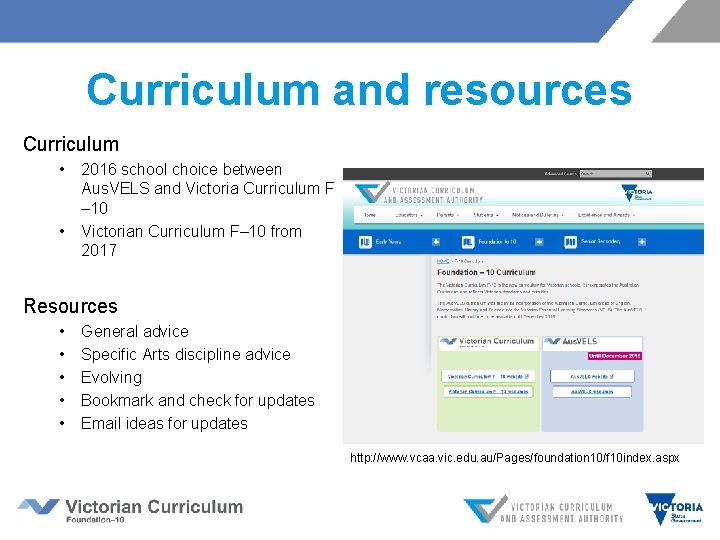
Curriculum and resources Curriculum • • 2016 school choice between Aus. VELS and Victoria Curriculum F – 10 Victorian Curriculum F– 10 from 2017 Resources • • • General advice Specific Arts discipline advice Evolving Bookmark and check for updates Email ideas for updates http: //www. vcaa. vic. edu. au/Pages/foundation 10/f 10 index. aspx
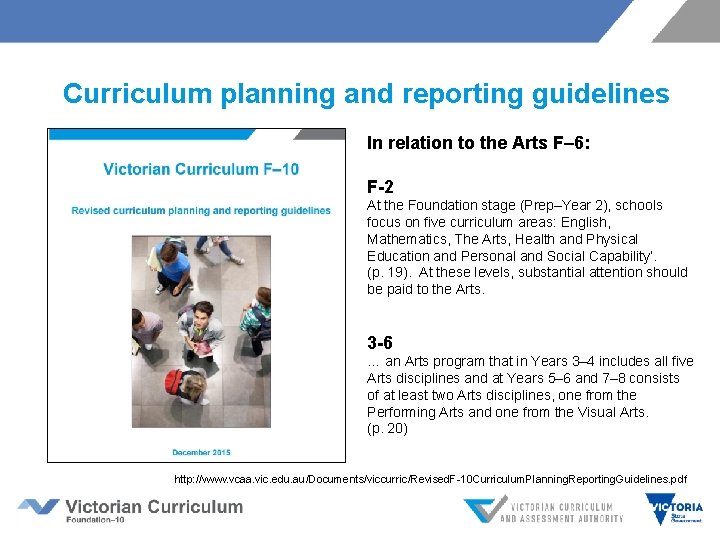
Curriculum planning and reporting guidelines In relation to the Arts F– 6: F-2 At the Foundation stage (Prep–Year 2), schools focus on five curriculum areas: English, Mathematics, The Arts, Health and Physical Education and Personal and Social Capability’. (p. 19). At these levels, substantial attention should be paid to the Arts. 3 -6 … an Arts program that in Years 3– 4 includes all five Arts disciplines and at Years 5– 6 and 7– 8 consists of at least two Arts disciplines, one from the Performing Arts and one from the Visual Arts. (p. 20) http: //www. vcaa. vic. edu. au/Documents/viccurric/Revised. F-10 Curriculum. Planning. Reporting. Guidelines. pdf
What’s happening now? How are The Arts delivered at your school in • • • Prep (foundation) 1 -2 3 -4 5 -6 Whole-school events or projects?
Developing Arts teaching and learning programs The common strand structure for each of the Arts discipline-specific curricula allows schools to continue to deliver The Arts through § Sequential, developmental teaching and learning programs that focus on one or more arts disciplines, for example: • • § a visual arts program a music program a performing arts program with dance, drama and music components a literacy program that draws on curriculum from English and Media Arts. Project-based learning where Arts learning is aligned to themes or inquiry questions, for example: Who are we? A celebration of school and community and identity expressed through presentations and performances created by the students in consultation with local Koorie elders and members of the community undertaken featuring performances developed from • units of work undertaken in Dance, Drama, Media Arts, Music, and/or Visual Arts classes • work developed in other learning areas where an Arts form (film, play, song, dance) is used to communicate knowledge and understanding • work developed with an artist-in-residence (physically or virtually) or local artist /s or arts organisation
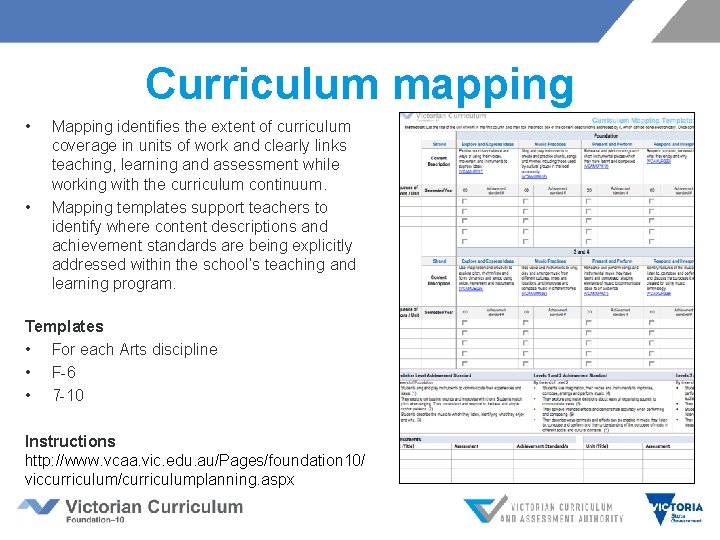
Curriculum mapping • • Mapping identifies the extent of curriculum coverage in units of work and clearly links teaching, learning and assessment while working with the curriculum continuum. Mapping templates support teachers to identify where content descriptions and achievement standards are being explicitly addressed within the school’s teaching and learning program. Templates • For each Arts discipline • F-6 • 7 -10 Instructions http: //www. vcaa. vic. edu. au/Pages/foundation 10/ viccurriculum/curriculumplanning. aspx
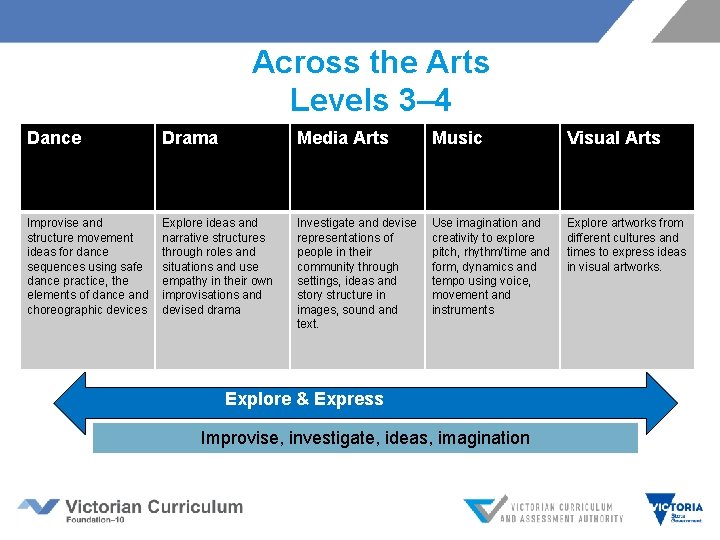
Across the Arts Levels 3– 4 Dance Drama Media Arts Music Visual Arts Improvise and structure movement ideas for dance sequences using safe dance practice, the elements of dance and choreographic devices Explore ideas and narrative structures through roles and situations and use empathy in their own improvisations and devised drama Investigate and devise representations of people in their community through settings, ideas and story structure in images, sound and text. Use imagination and creativity to explore pitch, rhythm/time and form, dynamics and tempo using voice, movement and instruments Explore artworks from different cultures and times to express ideas in visual artworks. Explore & Express Improvise, investigate, ideas, imagination
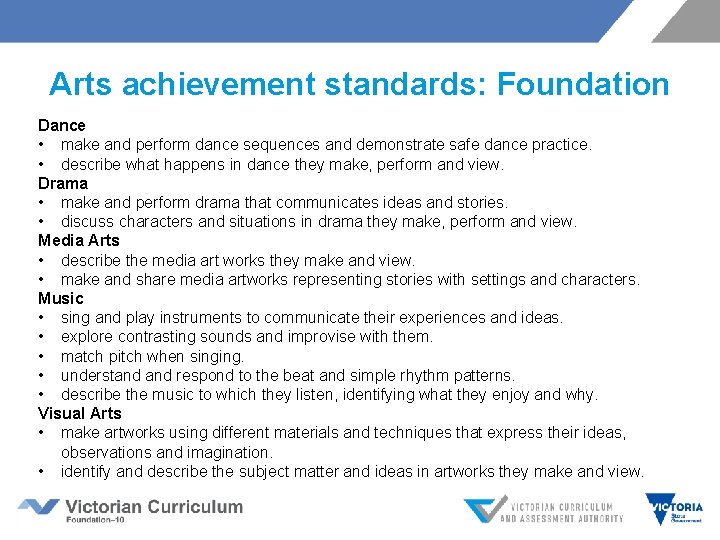
Arts achievement standards: Foundation Dance • make and perform dance sequences and demonstrate safe dance practice. • describe what happens in dance they make, perform and view. Drama • make and perform drama that communicates ideas and stories. • discuss characters and situations in drama they make, perform and view. Media Arts • describe the media art works they make and view. • make and share media artworks representing stories with settings and characters. Music • sing and play instruments to communicate their experiences and ideas. • explore contrasting sounds and improvise with them. • match pitch when singing. • understand respond to the beat and simple rhythm patterns. • describe the music to which they listen, identifying what they enjoy and why. Visual Arts • make artworks using different materials and techniques that express their ideas, observations and imagination. • identify and describe the subject matter and ideas in artworks they make and view.
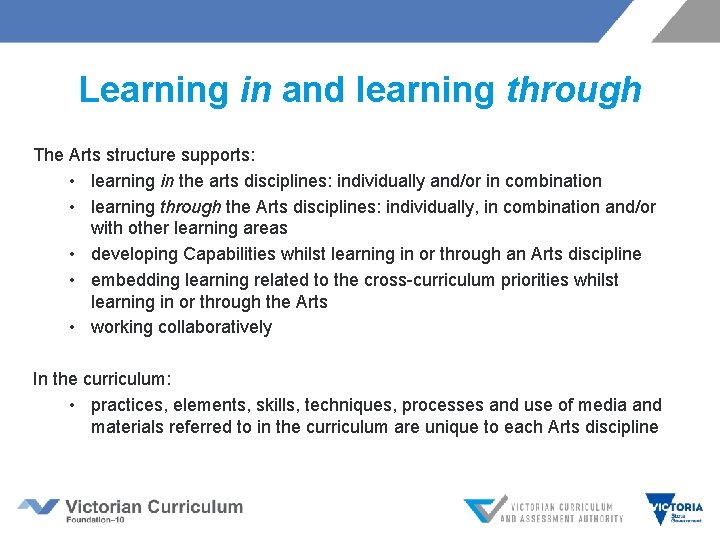
Learning in and learning through The Arts structure supports: • learning in the arts disciplines: individually and/or in combination • learning through the Arts disciplines: individually, in combination and/or with other learning areas • developing Capabilities whilst learning in or through an Arts discipline • embedding learning related to the cross-curriculum priorities whilst learning in or through the Arts • working collaboratively In the curriculum: • practices, elements, skills, techniques, processes and use of media and materials referred to in the curriculum are unique to each Arts discipline
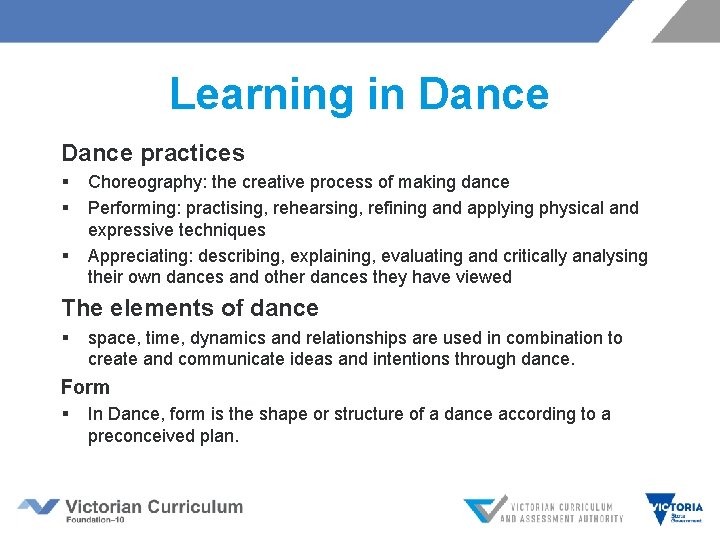
Learning in Dance practices § § § Choreography: the creative process of making dance Performing: practising, rehearsing, refining and applying physical and expressive techniques Appreciating: describing, explaining, evaluating and critically analysing their own dances and other dances they have viewed The elements of dance § space, time, dynamics and relationships are used in combination to create and communicate ideas and intentions through dance. Form § In Dance, form is the shape or structure of a dance according to a preconceived plan.
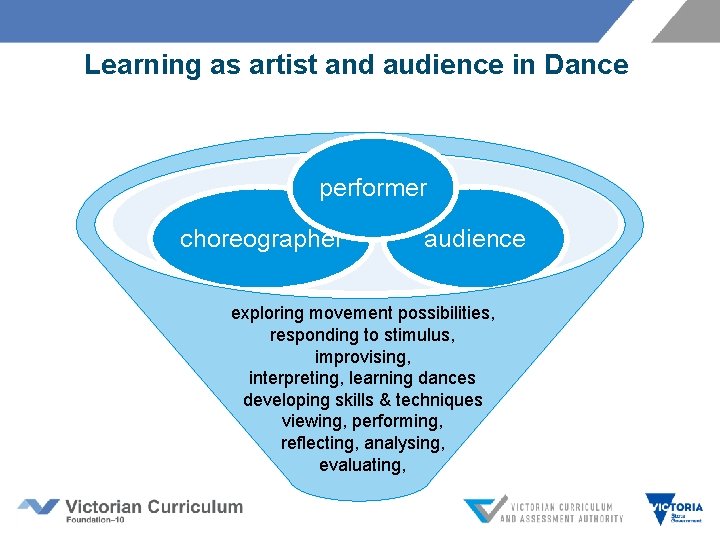
Learning as artist and audience in Dance performer choreographer audience exploring movement possibilities, responding to stimulus, improvising, interpreting, learning dances developing skills & techniques viewing, performing, reflecting, analysing, evaluating,
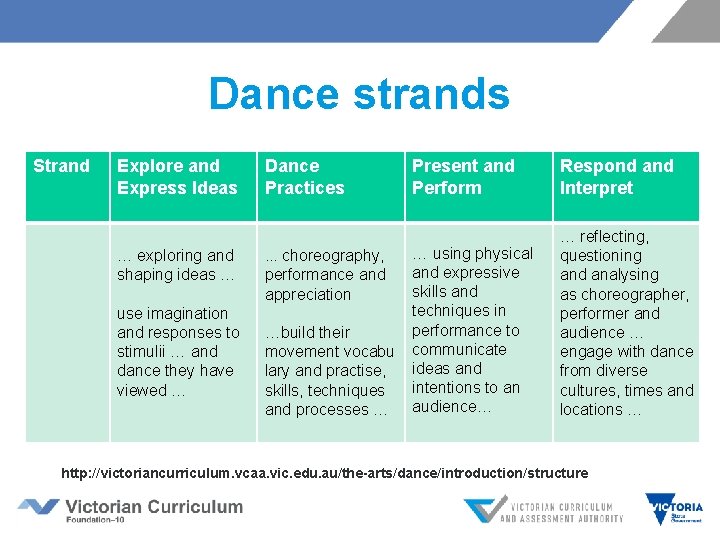
Dance strands Strand Explore and Express Ideas … exploring and shaping ideas … use imagination and responses to stimulii … and dance they have viewed … Dance Practices . . . choreography, performance and appreciation …build their movement vocabu lary and practise, skills, techniques and processes … Present and Perform Respond and Interpret … using physical and expressive skills and techniques in performance to communicate ideas and intentions to an audience… … reflecting, questioning and analysing as choreographer, performer and audience … engage with dance from diverse cultures, times and locations … http: //victoriancurriculum. vcaa. vic. edu. au/the-arts/dance/introduction/structure
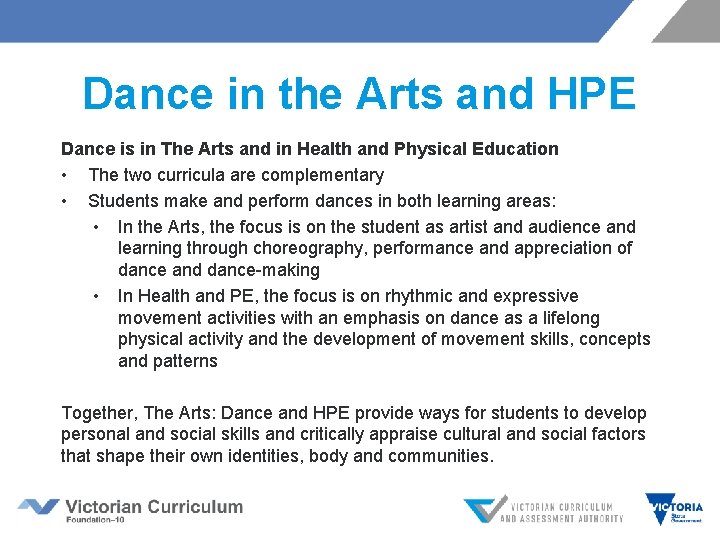
Dance in the Arts and HPE Dance is in The Arts and in Health and Physical Education • The two curricula are complementary • Students make and perform dances in both learning areas: • In the Arts, the focus is on the student as artist and audience and learning through choreography, performance and appreciation of dance and dance-making • In Health and PE, the focus is on rhythmic and expressive movement activities with an emphasis on dance as a lifelong physical activity and the development of movement skills, concepts and patterns Together, The Arts: Dance and HPE provide ways for students to develop personal and social skills and critically appraise cultural and social factors that shape their own identities, body and communities.
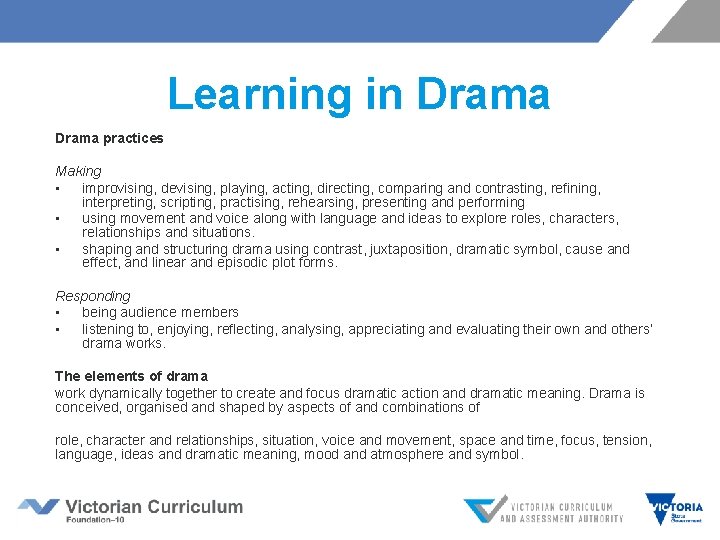
Learning in Drama practices Making • improvising, devising, playing, acting, directing, comparing and contrasting, refining, interpreting, scripting, practising, rehearsing, presenting and performing • using movement and voice along with language and ideas to explore roles, characters, relationships and situations. • shaping and structuring drama using contrast, juxtaposition, dramatic symbol, cause and effect, and linear and episodic plot forms. Responding • being audience members • listening to, enjoying, reflecting, analysing, appreciating and evaluating their own and others’ drama works. The elements of drama work dynamically together to create and focus dramatic action and dramatic meaning. Drama is conceived, organised and shaped by aspects of and combinations of role, character and relationships, situation, voice and movement, space and time, focus, tension, language, ideas and dramatic meaning, mood and atmosphere and symbol.
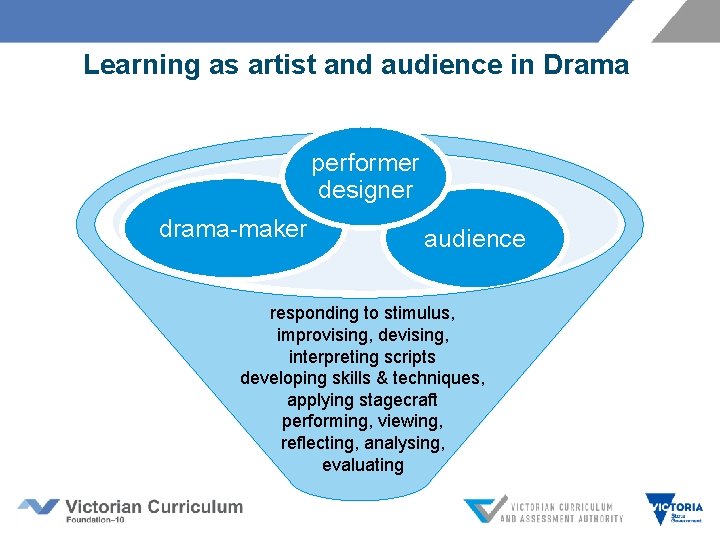
Learning as artist and audience in Drama performer designer drama-maker audience responding to stimulus, improvising, devising, interpreting scripts developing skills & techniques, applying stagecraft performing, viewing, reflecting, analysing, evaluating
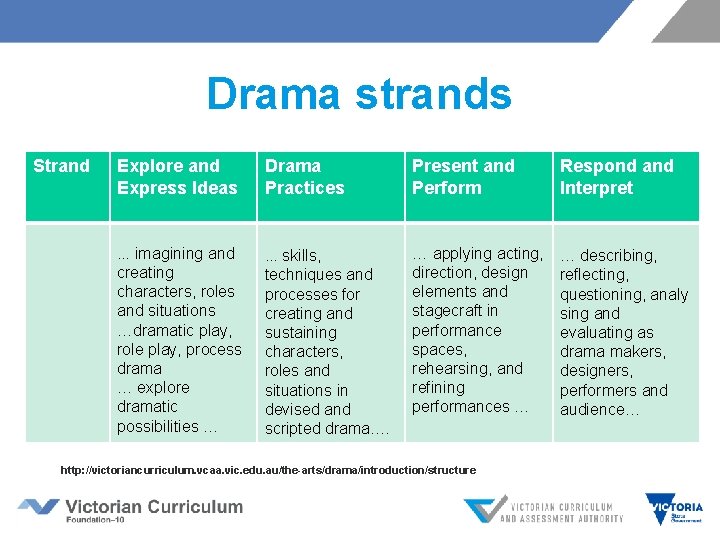
Drama strands Strand Explore and Express Ideas Drama Practices Present and Perform Respond and Interpret … imagining and . . . skills, techniques and processes for creating and sustaining characters, roles and situations in devised and scripted drama. … … applying acting, direction, design elements and stagecraft in performance spaces, rehearsing, and refining performances … … describing, reflecting, questioning, analy sing and evaluating as drama makers, designers, performers and audience… creating characters, roles and situations …dramatic play, role play, process drama … explore dramatic possibilities … http: //victoriancurriculum. vcaa. vic. edu. au/the-arts/drama/introduction/structure
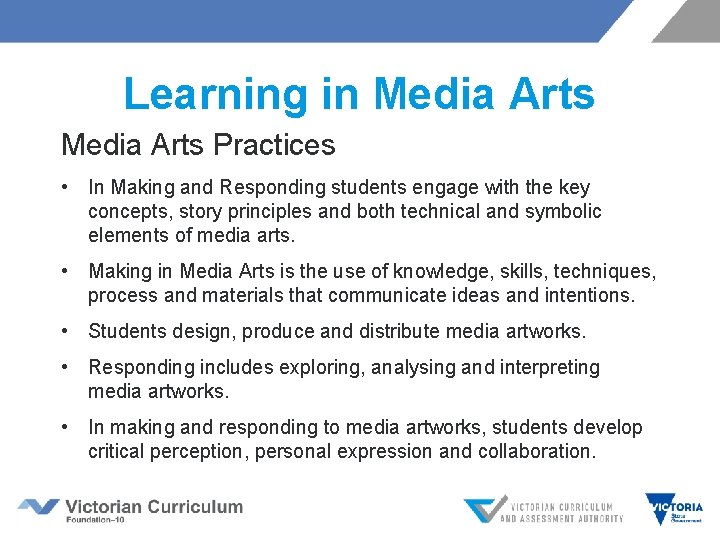
Learning in Media Arts Practices • In Making and Responding students engage with the key concepts, story principles and both technical and symbolic elements of media arts. • Making in Media Arts is the use of knowledge, skills, techniques, process and materials that communicate ideas and intentions. • Students design, produce and distribute media artworks. • Responding includes exploring, analysing and interpreting media artworks. • In making and responding to media artworks, students develop critical perception, personal expression and collaboration.
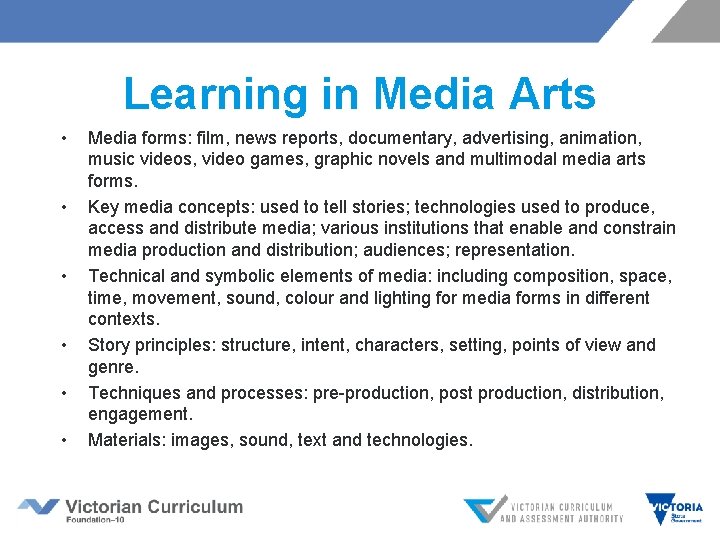
Learning in Media Arts • • • Media forms: film, news reports, documentary, advertising, animation, music videos, video games, graphic novels and multimodal media arts forms. Key media concepts: used to tell stories; technologies used to produce, access and distribute media; various institutions that enable and constrain media production and distribution; audiences; representation. Technical and symbolic elements of media: including composition, space, time, movement, sound, colour and lighting for media forms in different contexts. Story principles: structure, intent, characters, setting, points of view and genre. Techniques and processes: pre-production, post production, distribution, engagement. Materials: images, sound, text and technologies.
Victorian Curriculum Learning as artist and Audience/Viewer Artwork Artist on on i t n si tat e t In pres men Ex peri Ex Audience Contexts Institutions Exhibitions Performance Presentation Communication Representation
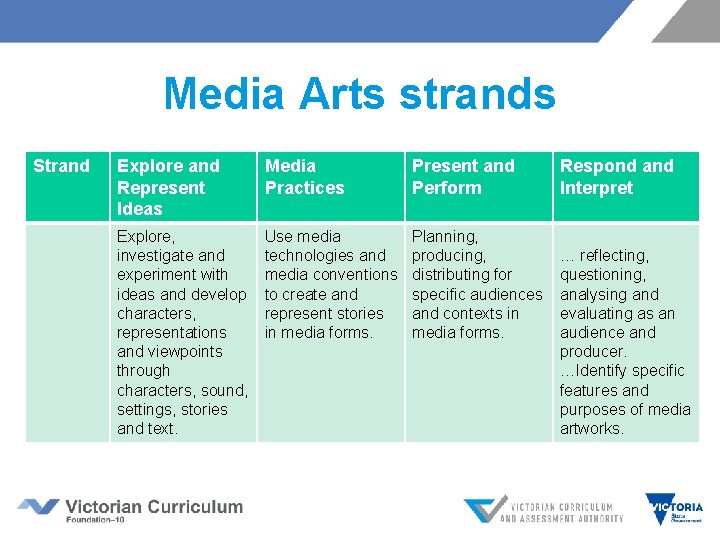
Media Arts strands Strand Explore and Represent Ideas Media Practices Present and Perform Explore, investigate and experiment with ideas and develop characters, representations and viewpoints through characters, sound, settings, stories and text. Use media technologies and media conventions to create and represent stories in media forms. Planning, producing, distributing for specific audiences and contexts in media forms. Respond and Interpret … reflecting, questioning, analysing and evaluating as an audience and producer. …Identify specific features and purposes of media artworks.
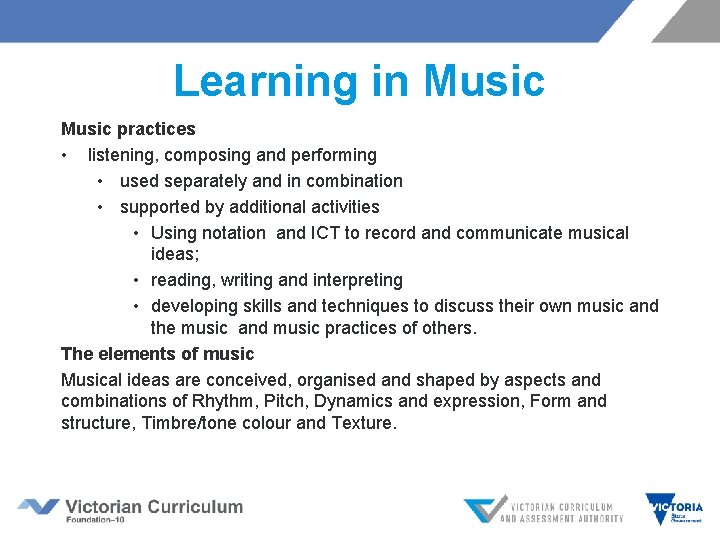
Learning in Music practices • listening, composing and performing • used separately and in combination • supported by additional activities • Using notation and ICT to record and communicate musical ideas; • reading, writing and interpreting • developing skills and techniques to discuss their own music and the music and music practices of others. The elements of music Musical ideas are conceived, organised and shaped by aspects and combinations of Rhythm, Pitch, Dynamics and expression, Form and structure, Timbre/tone colour and Texture.
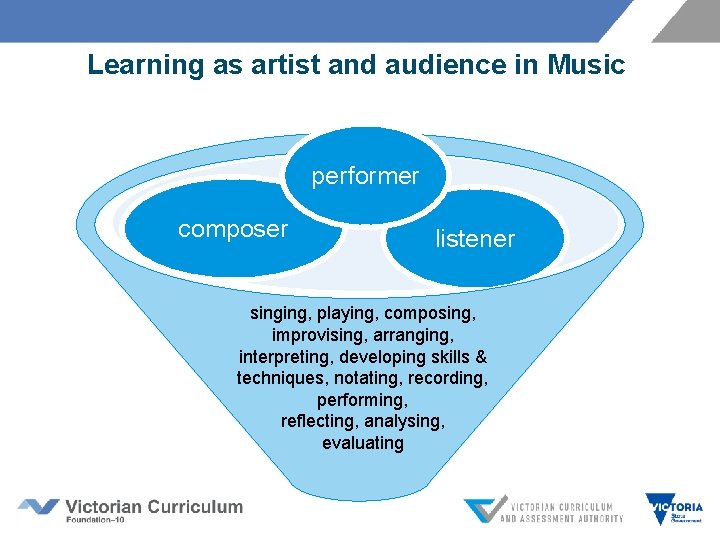
Learning as artist and audience in Music performer composer listener singing, playing, composing, improvising, arranging, interpreting, developing skills & techniques, notating, recording, performing, reflecting, analysing, evaluating
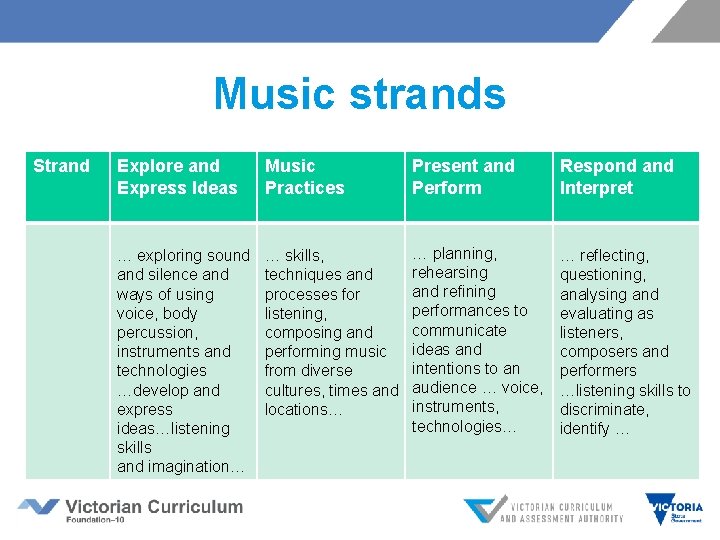
Music strands Strand Explore and Express Ideas Music Practices Present and Perform Respond and Interpret … planning, … exploring sound … skills, … reflecting, rehearsing and silence and techniques and questioning, and refining ways of using processes for analysing and performances to voice, body listening, evaluating as communicate percussion, composing and listeners, instruments and performing music ideas and composers and intentions to an technologies from diverse performers …develop and cultures, times and audience … voice, …listening skills to instruments, express locations… discriminate, technologies… ideas…listening identify … skills and imagination… http: //victoriancurriculum. vcaa. vic. edu. au/the-arts/music/introduction/structure
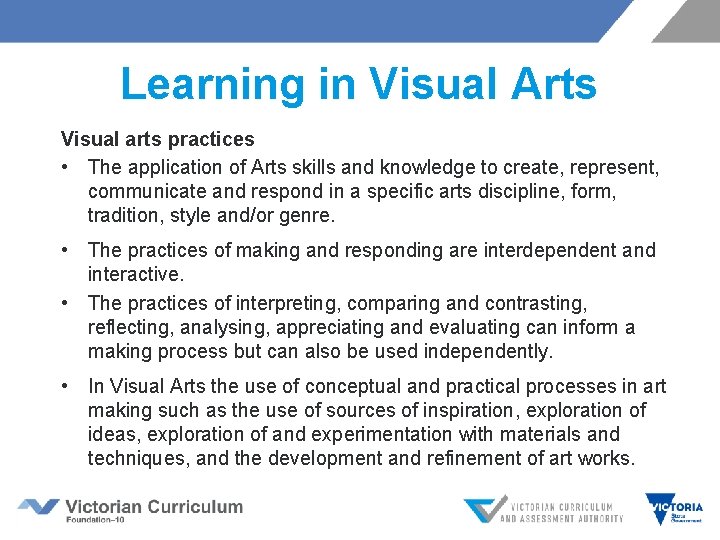
Learning in Visual Arts Visual arts practices • The application of Arts skills and knowledge to create, represent, communicate and respond in a specific arts discipline, form, tradition, style and/or genre. • The practices of making and responding are interdependent and interactive. • The practices of interpreting, comparing and contrasting, reflecting, analysing, appreciating and evaluating can inform a making process but can also be used independently. • In Visual Arts the use of conceptual and practical processes in art making such as the use of sources of inspiration, exploration of ideas, exploration of and experimentation with materials and techniques, and the development and refinement of art works.
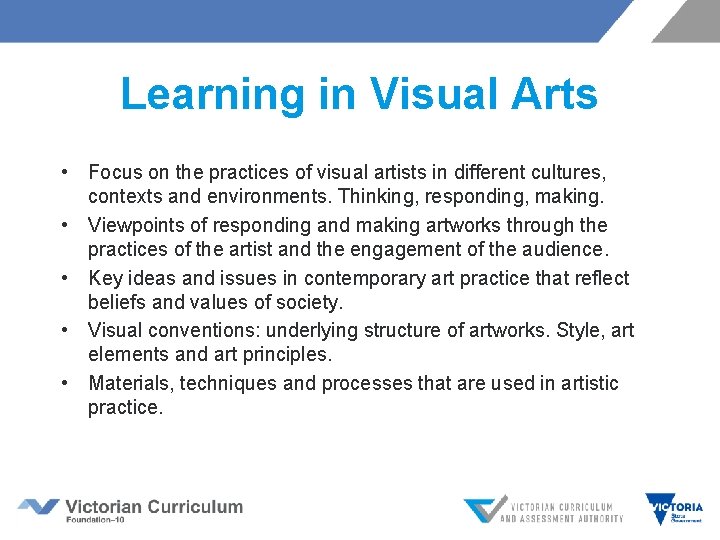
Learning in Visual Arts • Focus on the practices of visual artists in different cultures, contexts and environments. Thinking, responding, making. • Viewpoints of responding and making artworks through the practices of the artist and the engagement of the audience. • Key ideas and issues in contemporary art practice that reflect beliefs and values of society. • Visual conventions: underlying structure of artworks. Style, art elements and art principles. • Materials, techniques and processes that are used in artistic practice.
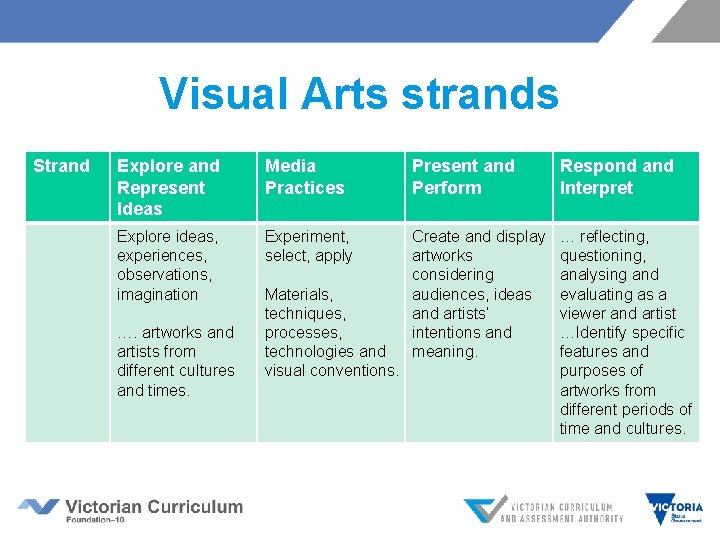
Visual Arts strands Strand Explore and Represent Ideas Media Practices Present and Perform Respond and Interpret Explore ideas, experiences, observations, imagination …. artworks and artists from different cultures and times. Experiment, select, apply Create and display artworks considering audiences, ideas and artists’ intentions and meaning. … reflecting, questioning, analysing and evaluating as a viewer and artist …Identify specific features and purposes of artworks from different periods of time and cultures. Materials, techniques, processes, technologies and visual conventions.
Making choices about teaching materials No specific materials or stimulus are stipulated in The Arts curriculum When the curriculum mentions ‘starting locally’ or ‘across a range of styles, forms’ etc. teachers have the opportunity need to choose teaching resources or stimulus materials that are relevant for their students. For example, teachers can make choices based on • cultures that students in the class identify with • the culture of the Country on which the school in situated, in consultation with the local Koorie, Aboriginal or Torres Strait Islander community • opportunities to connect with artists and arts organisations in the local community
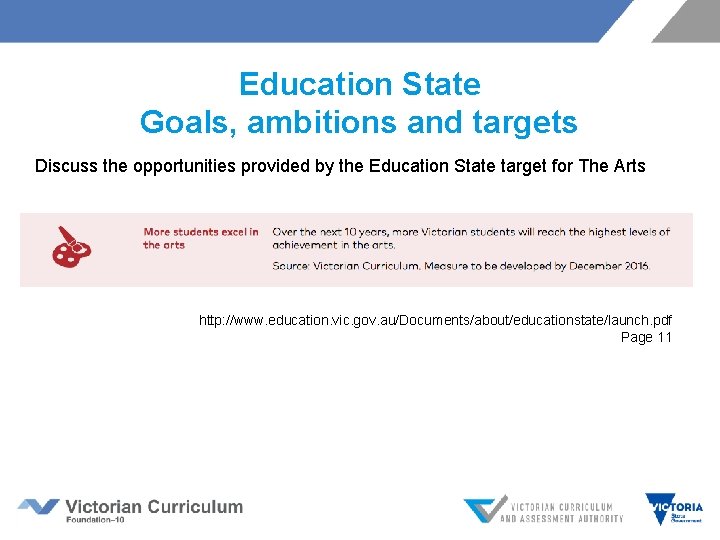
Education State Goals, ambitions and targets Discuss the opportunities provided by the Education State target for The Arts http: //www. education. vic. gov. au/Documents/about/educationstate/launch. pdf Page 11
Contacts Curriculum Manager: Performing Arts Helen Champion PH: 9032 1723 Email: champion. helen. h@edumail. vic. gov. au Curriculum Manager: Visual Arts Kathryn Hendy-Ekers PH: 9032 1697 Email: Hendy-Ekers. Kathryn. L@edumail. vic. gov. au